

Composition of the adult digestive tract bacterial microbiome based on seven mouth surfaces, tonsils, throat and stool samples
Open accessThe DOI matches its Crossref record; 104 of the 104 references it cites were found in a registry or an index.
Abstract
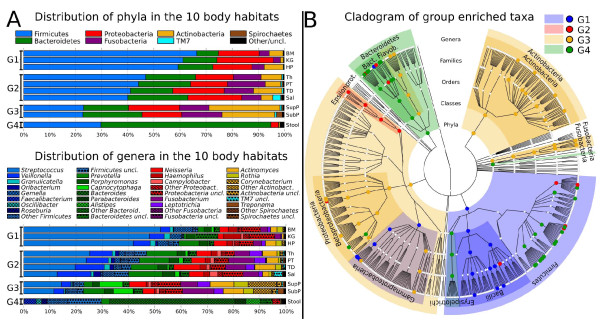
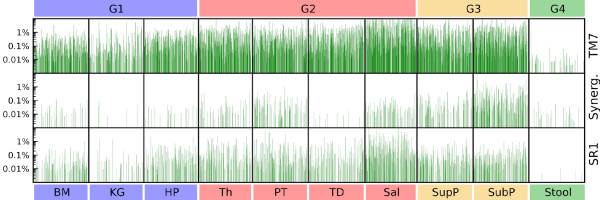
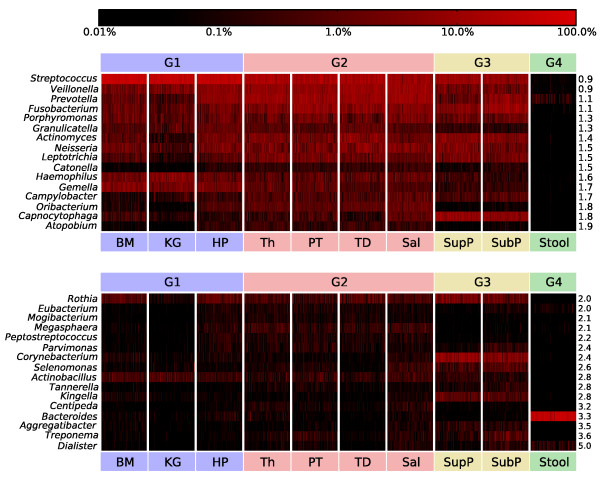
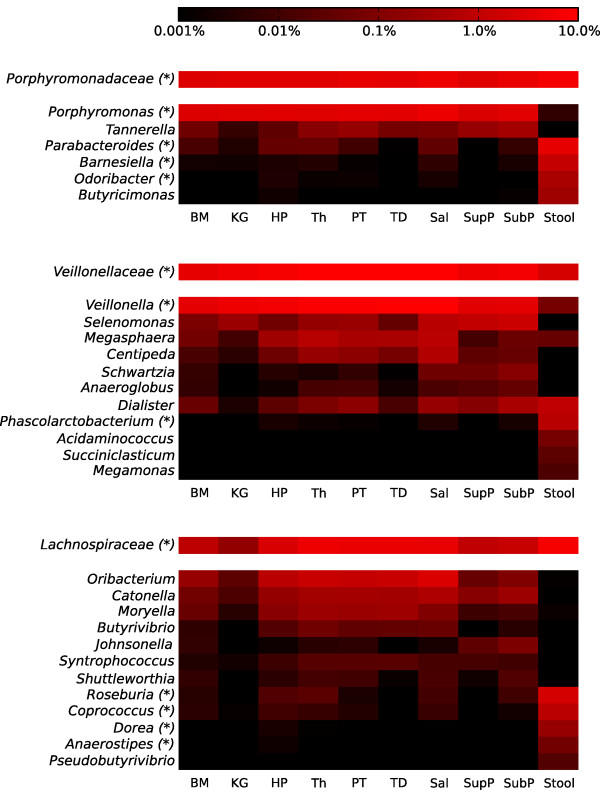
Background: To understand the relationship between our bacterial microbiome and health, it is essential to define the microbiome in the absence of disease. The digestive tract includes diverse habitats and hosts the human body's greatest bacterial density. We describe the bacterial community composition of ten digestive tract sites from more than 200 normal adults enrolled in the Human Microbiome Project, and metagenomically determined metabolic potentials of four representative sites. Results: The microbiota of these diverse habitats formed four groups based on similar community compositions: buccal mucosa, keratinized gingiva, hard palate; saliva, tongue, tonsils, throat; sub- and supra-gingival plaques; and stool. Phyla initially identified from environmental samples were detected throughout this population, primarily TM7, SR1, and Synergistetes. Genera with pathogenic members were well-represented among this disease-free cohort. Tooth-associated communities were distinct, but not entirely dissimilar, from other oral surfaces. The Porphyromonadaceae, Veillonellaceae and Lachnospiraceae families were common to all sites, but the distributions of their genera varied significantly. Most metabolic processes were distributed widely throughout the digestive tract microbiota, with variations in metagenomic abundance between body habitats. These included shifts in sugar transporter types between the supragingival plaque, other oral surfaces, and stool; hydrogen and hydrogen sulfide production were also differentially distributed. Conclusions: The microbiomes of ten digestive tract sites separated into four types based on composition. A core set of metabolic pathways was present across these diverse digestive tract habitats. These data provide a critical baseline for future studies investigating local and systemic diseases affecting human health.
Overview
The claims and statistics of this paper haven’t been checked yet.
Free: it reads the open-access text and checks the first 5 claims that cite a source we can check. Create a free account to check every claim.
Integrity signals
Registry
Cites
Statistics
Figures
Verification
Claims the paper makes
The claims and statistics of this paper haven’t been checked yet.
Free: it reads the open-access text and checks the first 5 claims that cite a source we can check. Create a free account to check every claim.
Claims other papers make about this one
Each is checked against this paper’s own text: does it say what the citing paper says it does?
The source backs part of the claim, not all of it — or backs it for a different population, condition or comparison.
In the citing paper
“The oropharynx, which is lined with a non-keratinized stratified squamous epithelium, has more diverse bacterial communities than the nasopharynx41, which are characterized by streptococcal species, Neisseria spp., Rothia spp. and anaerobes, including Veillonella spp., Prevotella spp. and Leptotrichia spp.39,41,51,52.”
From The microbiota of the respiratory tract: gatekeeper to respiratory health (2017) · cites this paper as [51]
Experimental — accuracy not yet measuredThe source backs part of the claim, not all of it — or backs it for a different population, condition or comparison.
In the citing paper
“Up to 80% of oral bacteria are dominated by about 200 species in the Phyla Firmicutes (esp. Streptococcus, Veillonella, Granulicatella, Gemella spp.) and Proteobacteria (esp. Neisseria, Haemophilus spp.), with contributions from Bacteroidetes, Actinobacteria and Fusobacteria totaling upwards of 95% of all identified oral microbiota (Figure 2)[171–177].”
From Enterosalivary nitrate metabolism and the microbiome: Intersection of microbial metabolism, nitric oxide and diet in cardiac and pulmonary vascular health (2017) · cites this paper as [173]
Experimental — accuracy not yet measuredThe cited source says what the claim attributes to it.
In the citing paper
“Further diversity exists between the varied micro-ecologies of the mouth[174,178], such as the tooth surface, gingiva, hard and soft palate, and even regionally on the tongue (Figure 2)[173,176,179].”
From Enterosalivary nitrate metabolism and the microbiome: Intersection of microbial metabolism, nitric oxide and diet in cardiac and pulmonary vascular health (2017) · cites this paper as [173]
In the citing paper
“Ecological conditions vary immensely along both the length of the GI tract as well as in cross-section from lumen to the mucosal brush-border[173,267,308,309].”
From Enterosalivary nitrate metabolism and the microbiome: Intersection of microbial metabolism, nitric oxide and diet in cardiac and pulmonary vascular health (2017) · cites this paper as [173]
Self-check
Percentages, sums and reported differences re-computed from the paper’s own numbers.
The self-check needs the paper’s full text.
Citations
Cites
Schloss, P. D., Westcott, S. L., Ryabin, T., Hall, J. R., Hartmann, M., Hollister, E. B., Lesniewski, R. A., Oakley, B. B., Parks, D. H., Robinson, C. J., et al. (2009) · Applied and Environmental Microbiology · doi:10.1128/aem.01541-09 · Cited by 19,549
Metagenomic biomarker discovery and explanation
Segata, N., Izard, J., Waldron, L., Gevers, D., Miropolsky, L., Garrett, W. S., & Huttenhower, C. (2011) · Genome Biology · doi:10.1186/gb-2011-12-6-r60 · Cited by 16,192 · cited 11×
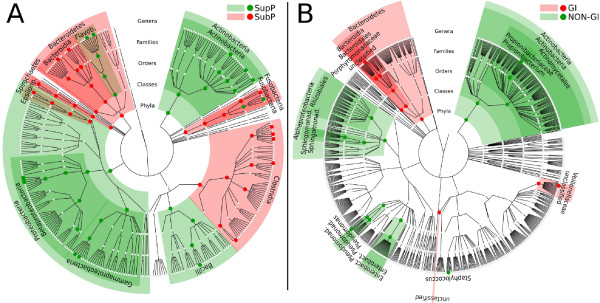
“Clades showing a statistically significant difference (by LEfSe) specifically between oral and stool samples are indiocated with asterisks.”
MethodInfluentialSelf-citationSIMPSON, E. H. (1949) · Nature · doi:10.1038/163688a0 · Cited by 14,164
Structure, function and diversity of the healthy human microbiome
The Human Microbiome Project Consortium (2012) · Nature · doi:10.1038/nature11234 · Cited by 11,726
Self-citationAn Ordination of the Upland Forest Communities of Southern Wisconsin
Bray, J. R., & Curtis, J. T. (1957) · Ecological Monographs · doi:10.2307/1942268 · Cited by 11,716 · cited 2×
“For assessing bacterial community structure similarities between different samples and body sites, we compared the relative abundances of every pair of samples in our dataset using the Bray-Curtis measure of beta diversity [31].”
MethodA human gut microbial gene catalogue established by metagenomic sequencing
MetaHIT Consortium, Qin, J., Li, R., Raes, J., Arumugam, M., Burgdorf, K. S., Manichanh, C., Nielsen, T., Pons, N., Levenez, F., et al. (2010) · Nature · doi:10.1038/nature08821 · Cited by 11,624 · cited 1×
“Previous studies of the healthy adult digestive tract microbiota have typically included less than 20 individuals [11-21] and the studies with over 100 individuals have most often focused on a single body site [22-26].”
BackgroundHuman gut microbes associated with obesity
Ley, R. E., Turnbaugh, P. J., Klein, S., & Gordon, J. I. (2006) · Nature · doi:10.1038/4441022a · Cited by 8,785 · cited 20×
“For example, using endoscopic biopsies from just two subjects, Wang et al. [77] reported 49% of 16S rRNA gene clones were from the Firmicutes and 27.7% were from Bacteroidetes.”
ResultInfluentialDiversity of the Human Intestinal Microbial Flora
Eckburg, P. B., Bik, E. M., Bernstein, C. N., Purdom, E., Dethlefsen, L., Sargent, M., Gill, S. R., Nelson, K. E., & Relman, D. A. (2005) · Science · doi:10.1126/science.1110591 · Cited by 7,913
A core gut microbiome in obese and lean twins
Turnbaugh, P. J., Hamady, M., Yatsunenko, T., Cantarel, B. L., Duncan, A., Ley, R. E., Sogin, M. L., Jones, W. J., Roe, B. A., Affourtit, J. P., et al. (2009) · Nature · doi:10.1038/nature07540 · Cited by 7,823 · cited 2×
“In a study of stool from 154 adult women (twins and their mothers), Firmicutes had a mean relative abundance of >60% using several different methods to assess the 16S rRNA gene content of stool [24].”
BackgroundMethodEnterotypes of the human gut microbiome
MetaHIT Consortium (additional members), Arumugam, M., Raes, J., Pelletier, E., Le Paslier, D., Yamada, T., Mende, D. R., Fernandes, G. R., Tap, J., Bruls, T., et al. (2011) · Nature · doi:10.1038/nature09944 · Cited by 7,548 · cited 2×
“By surveying the HMP population, these results can be further integrated into other currently ongoing studies of the cohort’s core microbiome [9] or enterotype structure [25], if any.”
BackgroundResult
Research works printed but not linked: 1
- NIH Human Microbiome Project - Core Microbiome Sampling Protocol A (HMP-A). http://www.ncbi.nlm.nih.gov/projects/gap/cgi-bin/study.cgi?study_id=phs000228.v3.p1
Cited by
Items 501–600 of 1,000
Loughman, A., Adler, C. J., & Macpherson, H. (2023) · Journal of Alzheimer s Disease · doi:10.3233/jad-220760 · Cited by 26
Does “all disease begin in the gut”? The gut-organ cross talk in the microbiome
Chaudhary, P. P., Kaur, M., & Myles, I. A. (2024) · Applied Microbiology and Biotechnology · doi:10.1007/s00253-024-13180-9 · Cited by 30
“The oral cavity which serves as a reservoir for diverse microbial populations, and disturbances in oral microbiota composition can have downstream effects on gut microbial ecology (Segata et al. 2012; Elzayat et al. 2023).”
BackgroundFilthy lucre: A metagenomic pilot study of microbes found on circulating currency in New York City
Maritz, J. M., Sullivan, S. A., Prill, R. J., Aksoy, E., Scheid, P. E., & Carlton, J. M. (2017) · PLoS ONE · doi:10.1371/journal.pone.0175527 · Cited by 26
Lingual microbiota profiles of patients with geographic tongue
Dafar, A., Bankvall, M., Çevik‐Aras, H., Jontell, M., & Sjöberg, F. (2017) · Journal of Oral Microbiology · doi:10.1080/20002297.2017.1355206 · Cited by 26
“detailed description of the bacterial community composition of the tongue dorsum has been given [34].”
BackgroundSu, C.-Y., Shigeishi, H., Nishimura, R., Ohta, K., & Sugiyama, M. (2018) · Biomedical Reports · doi:10.3892/br.2018.1175 · Cited by 30
Kageyama, S., Asakawa, M., Takeshita, T., Ihara, Y., Kanno, S., Hara, T., Takahashi, I., & Yamashita, Y. (2019) · mSphere · doi:10.1128/msphere.00187-19 · Cited by 28
“Although the phylum Firmicutes predominates in both oral and gut microbiota, the genus Streptococcus within the phylum Firmicutes is rarely detected in gut microbiota (1).”
BackgroundConsumer Safety Considerations of Skin and Oral Microbiome Perturbation
McBain, A. J., O’Neill, C. A., Amézquita, A., Price, L. J., Faust, K., Tett, A., Segata, N., Swann, J. R., Smith, A. M., Murphy, B., et al. (2019) · Clinical Microbiology Reviews · doi:10.1128/cmr.00051-19 · Cited by 29
Self-citationEkine-Afolabi, B. A., Njan, A. A., Rotimi, S. O., I, A. R., Elbehi, M. A., Cash, E. D., & Adeyeye, A. A. (2020) · Frontiers in Oncology · doi:10.3389/fonc.2020.583372 · Cited by 27
“Approximately 10 (11) bacteria from the upper part get injected daily, into the lower part, and bacteria from the oral cavity overlaps with intestinal microbiota in ~45% of tested individuals (63).”
BackgroundTongue Microbiota Composition and Dental Caries Experience in Primary School Children
Zhang, D., Takeshita, T., Furuta, M., Kageyama, S., Asakawa, M., Nambu, K., & Yamashita, Y. (2021) · mSphere · doi:10.1128/msphere.01252-20 · Cited by 29
Cancer microbiota: a focus on tumor-resident bacteria
Vella, G., & Rescigno, M. (2025) · EMBO Reports · doi:10.1038/s44319-025-00482-w · Cited by 26
“Fusobacterium nucleatum , a well-studied bacterium in the context of cancer, is a normal inhabitant of the oral cavity (Abed et al, 2020; Segata et al, 2012).”
Xu, H., Tian, B., Shi, W., Tian, J., Zhang, X., Zeng, J., & Qin, M. (2022) · Frontiers in Cellular and Infection Microbiology · doi:10.3389/fcimb.2021.724142 · Cited by 29
Oral microbiome and risk of incident head and neck cancer: A nested case-control study
Wu, Z., Han, Y., Wan, Y., Hua, X., Chill, S. S., Teshome, K., Zhou, W., Liu, J., Wu, D., Hutchinson, A. A., et al. (2023) · Oral Oncology · doi:10.1016/j.oraloncology.2022.106305 · Cited by 25
Galvin, S., Anishchuk, S., Healy, C. M., & Moran, G. P. (2023) · Journal of Oral Microbiology · doi:10.1080/20002297.2023.2263971 · Cited by 26
Toll‐like receptors ‐4 and ‐5 in oral and cutaneous squamous cell carcinomas
Omar, A. A. H., Korvala, J., Haglund, C. H., Virolainen, S., Häyry, V., Atula, T. S., Kontio, R. K., Rihtniemi, J., Pihakari, A., Sorsa, T. A., et al. (2014) · Journal of Oral Pathology and Medicine · doi:10.1111/jop.12233 · Cited by 25
“As the microbial composition in skin and the oral cavity differs from each other, the amount and composition of TLR-ligands most likely vary (21, 22).”
BackgroundJohnston, J. J., Hoggard, M., Biswas, K., Astudillo‐García, C., Radcliff, F. J., Mahadevan, M., & Douglas, R. G. (2018) · International Journal of Pediatric Otorhinolaryngology · doi:10.1016/j.ijporl.2018.07.024 · Cited by 25
Lebovitz, Y., Ringel-Scaia, V. M., Allen, I., & Theus, M. (2018) · Frontiers in Immunology · doi:10.3389/fimmu.2018.01993 · Cited by 23
“Within each physiological niche, microbial compositions can vary widely according to the environment and mutualistic functions that they may serve in conjunction with the host (2).”
BackgroundChanges in the gut microbiota of mice orally exposed to methylimidazolium ionic liquids
Young, G. R., Abdelghany, T. M., Leitch, A. C., Dunn, M. P., Blain, P. G., Lanyon, C. V., & Wright, M. C. (2020) · PLoS ONE · doi:10.1371/journal.pone.0229745 · Cited by 25
“Despite such findings and the abundance of Veillonella in the adult GI-tract [68,69], there were no changes in Veillonella relative abundance observed in this study.”
ResultHandsley‐Davis, M., Jamieson, L., Kapellas, K., Hedges, J., & Weyrich, L. S. (2020) · BMC Oral Health · doi:10.1186/s12903-020-01308-y · Cited by 28
“Although saliva may not represent a true microbial ‘community’, it can provide broad insight into the microbes present throughout the oral cavity [47, 50].”
BackgroundEffect of Probiotic Supplements on the Oral Microbiota—A Narrative Review
Lundtorp-Olsen, C., Markvart, M., Twetman, S., & Belstrøm, D. (2024) · Pathogens · doi:10.3390/pathogens13050419 · Cited by 31
“In addition, the composition of the oral microbiota is highly site-specific [106], and influenced not only by oral health status, but also by general medical disorders and age [107–109].”
BackgroundThe physical biogeography of Fusobacterium nucleatum in health and disease
Connolly, J. P., & Kelly, L. (2025) · mBio · doi:10.1128/mbio.02989-24 · Cited by 25
“That the gut cutoff is so much lower than the oral can be explained by the abundance of Fusobacterium in the latter environment and a paucity in the former (29, 30).”
Deciphering the personalized functional redundancy hierarchy in the gut microbiome
Jiang, Y., Che, L., & Li, S. C. (2025) · Microbiome · doi:10.1186/s40168-025-02273-w · Cited by 26
Naito, M., Shoji, M., Sato, K., & Nakayama, K. (2022) · Journal of Bacteriology · doi:10.1128/jb.00203-22 · Cited by 24
“and intestinal microbiota (39), and some Prevotella species have been implicated in”
BackgroundCulturomics, a potential approach paving the way toward bacteriotherapy
Matar, G. M., & Bilen, M. (2022) · Current Opinion in Microbiology · doi:10.1016/j.mib.2022.102194 · Cited by 31
Liu, F., Su, D., Zhang, H., Lin, H., Zhou, Q., Cao, B., & Ren, D. (2022) · Oncology Reports · doi:10.3892/or.2022.8407 · Cited by 24
Correlation analysis between gut microbiota characteristics and melasma
Liu, C., He, D., Yu, A., Deng, Y., Wang, L., & Song, Z. (2022) · Frontiers in Microbiology · doi:10.3389/fmicb.2022.1051653 · Cited by 30
“org homeostasis, while Proteobacteria and Actinobacteria only account for nearly 10% (Arumugam et al., 2011; Segata et al., 2012).”
BackgroundIrie, K., Azuma, T., Tomofuji, T., & Yamamoto, T. (2023) · Dentistry Journal · doi:10.3390/dj11080194 · Cited by 26
“However, inter-individual variations are influenced by several factors, such as environmental conditions, genetic makeup, age, lifestyle, dietary habits, and oral hygiene [7].”
BackgroundMichaud, D. S., Izard, J., Rubin, Z., Johansson, I., Weiderpass, E., Tjønneland, A. M., Olsen, A., Overvad, K., Boutron‐Ruault, M., Clavel‐Chapelon, F., et al. (2013) · Cancer Causes & Control · doi:10.1007/s10552-013-0265-2 · Cited by 25
“This ecological equilibrium is marked by the stable and diverse composition of the bacterial community and maintains the health of the oral cavity [3, 4].”
Self-citationCan prebiotics assist in the management of cognition and weight gain in schizophrenia?
Kao, A. C.-C., Burnet, P. W. J., & Lennox, B. (2018) · Psychoneuroendocrinology · doi:10.1016/j.psyneuen.2018.05.027 · Cited by 24
Insights into the Human Virome Using CRISPR Spacers from Microbiomes
Hidalgo-Cantabrana, C., Sanozky-Dawes, R., & Barrangou, R. (2018) · Viruses · doi:10.3390/v10090479 · Cited by 27
“The oral virome plays an important role in health and disease, even more so than the oral microbiome [1,48].”
BackgroundBacterial viability in oral biofilm after tooth brushing with amine fluoride or sodium fluoride
Naumova, E. A., Weber, L. P., Pankratz, V., Czenskowski, V., & Arnold, W. H. (2018) · Archives of Oral Biology · doi:10.1016/j.archoralbio.2018.10.013 · Cited by 25
Human papillomavirus DNA detection, p16INK4a, and oral cavity cancer in a U.S. population
Hernandez, B. Y., Lynch, C. F., Chan, O. T. M., Goodman, M. T., Unger, E. R., Steinau, M., Thompson, T., Gillison, M. L., Lyu, C. W., & Saraiya, M. (2019) · Oral Oncology · doi:10.1016/j.oraloncology.2019.03.001 · Cited by 24
“In particular, the gingiva, including the sub-gingiva and supra-gingiva, have been shown to have the most distinct bacterial composition within oral cavity subsites, including the buccal mucosa, hard palate, and tongue [28].”
Modulation of Gut Microbiota in Korean Navy Trainees following a Healthy Lifestyle Change
Jung, Y., Tagele, S. B., Son, H., Ibal, J. C., Kerfahi, D., Yun, H., Lee, B., Park, C. Y., Kim, E. S., Kim, S.-J., et al. (2020) · Microorganisms · doi:10.3390/microorganisms8091265 · Cited by 24
“In our study, Porphyromonas, which had previously been classified in the genus Bacteroides with Prevotella, was be more abundant in the navy trainees who quit smoking for eight weeks compared to the abundance at T0 [94]; Porphyromonas is part of the salivary microbiome and is found in healthy people [95].”
BackgroundDiurnal and eating-associated microbial patterns revealed via high-frequency saliva sampling
Hu, Y., Amir, A., Huang, X., Li, Y., Huang, S. W., Wolfe, E., Weiss, S. J., Knight, R. D., & Xu, Z. Z. (2022) · Genome Research · doi:10.1101/gr.276482.121 · Cited by 24
“We downloaded the 16S v3-v5 OTU table from HMP (https:// hmpdacc.org/hmp/HMQCP/).”
InfluentialGut-lung microbiota dynamics in mice exposed to Nanoplastics
Kaluç, N., Bertorello, S., Tombul, O. K., Baldi, S., Nannini, G., Bartolucci, G., Niccolai, E., & Amedei, A. (2024) · NanoImpact · doi:10.1016/j.impact.2024.100531 · Cited by 23
Narayanan, A., Söder, B., Meurman, J. H., Lundmark, A., Hu, Y. O. O., Neogi, U., & Yucel‐Lindberg, T. (2023) · Frontiers in Microbiology · doi:10.3389/fmicb.2023.1172340 · Cited by 24
“Firmicutes and Bacteroidetes were more abundant in the periodontitis group compared to the non-periodontitis group, also confirming previous findings reporting an increased abundance of Bacteroidetes and Firmicutes in periodontitis (Segata et al., 2012; Sedghi et al., 2021).”
ResultProbing Oral Microbial Functionality – Expression of spxB in Plaque Samples
Zhu, L. D., Xu, Y., Ferretti, J. J., & Kreth, J. (2014) · PLoS ONE · doi:10.1371/journal.pone.0086685 · Cited by 24
“An eminent question is what kind of information can be extracted from the deposited sequence data which goes beyond the determination of what is present in the oral cavity or what kind of potential metabolic pathways are encoded [3,22].”
BackgroundBallarini, A., Segata, N., Huttenhower, C., & Jousson, O. (2013) · PLoS ONE · doi:10.1371/journal.pone.0055764 · Cited by 24
Self-citationRed fluorescence of dental plaque in children —A cross-sectional study
Volgenant, C. M. C., Zaura, E., Brandt, B. W., Buijs, M. J., Téllez, M., Malik, G., Ismail, A. I., ten Cate, J. M., & van der Veen, M. H. (2017) · Journal of Dentistry · doi:10.1016/j.jdent.2017.01.007 · Cited by 28
“The microbial composition of saliva is more similar to the microbial composition of tongue and throat and less to the composition of dental plaque [51].”
Kim, J., Lee, H., Kim, H., Kim, J. Y., & Kim, K. H. (2017) · Evidence-based Complementary and Alternative Medicine · doi:10.1155/2017/6435702 · Cited by 24
“Fourth, from the perspective of Western medicine, the tongue coating is dependent on the microcirculation, such as fluid circulation, hemodynamic parameters, body temperature, and hormones [36].”
BackgroundDetermination of the Role of Fusobacterium Nucleatum in the Pathogenesis in and Out the Mouth
Tefiku, U., Поповска, М., Cana, A., Bedhxeti, L. Z., Bilbil, R., Spasovska-Gjorgovska, A., & Spasovski, S. (2020) · PRILOZI · doi:10.2478/prilozi-2020-0026 · Cited by 25
Wang, R., Zhang, L., Chen, L., Wang, J., Zhang, L., Xu, Y., Yang, P.-L., Ji, G., & Liu, B. (2021) · Oxidative Medicine and Cellular Longevity · doi:10.1155/2021/2234695 · Cited by 27
“Moreover, many species from Desulfovibrio-naceae could release high content of LPS which shows high endotoxin activity and could metabolize SCFA which deprives colonic cells from their main energy source [48 – 52].”
Portulaca oleracea Polysaccharides Modulate Intestinal Microflora in Aged Rats in vitro
Fu, Q., Zhou, S., Yu, M., Lu, Y., He, G., Huang, X. B., & Huang, Y. (2022) · Frontiers in Microbiology · doi:10.3389/fmicb.2022.841397 · Cited by 23
The Lung Microbiome. A New Frontier in Pulmonary Medicine
Kiley, J. P., & Caler, E. V. (2014) · Annals of the American Thoracic Society · doi:10.1513/annalsats.201308-285mg · Cited by 23
Cholewińska, P., Wołoszyńska, M., Michalak, M., Czyż, K., Rant, W., Smoliński, J., Wyrostek, A., & Wojnarowski, K. (2021) · Scientific Reports · doi:10.1038/s41598-021-03207-w · Cited by 23
Chen, L., Wang, B., Liu, J., Wu, X., Xu, X., Cao, H., Ji, X., Zhang, P., Li, X., Hou, Z., et al. (2022) · Frontiers in Nutrition · doi:10.3389/fnut.2022.974694 · Cited by 24
“In addition, Rothia, Haemophilus, and Alloprevotella are normal in the oral cavity (70); Anaerostipes and Weissella are common in the intestine, with Anaerostipes facilitating acetate formation (89, 90), whereas Weissella is an emerging genus with potential health benefits, capable of inhibiting pathogenic microbial g…”
BackgroundLiu, J., Ni, P., Wang, Y., Zhou, Z., Li, J., Chen, T., Yuan, T., Liang, J., Fan, Y., Shan, J., et al. (2023) · Biomaterials Advances · doi:10.1016/j.bioadv.2023.213286 · Cited by 23
Vīksne, R., Rācenis, K., Broks, R., Balode, A. O., Kise, L., & Kroiča, J. (2023) · Microorganisms · doi:10.3390/microorganisms11020258 · Cited by 22
“Less dominant taxa are highly specific to both individuals and body habitats [8].”
BackgroundProblems and prospects of current studies on the microecology of tongue coating
Ye, J., Cai, X., & Cao, P. (2014) · Chinese Medicine · doi:10.1186/1749-8546-9-9 · Cited by 23
“The microbial flora on the tongue coating form one of the major microbiota in the human body, and are at the forefront of the alimentary system [10,11].”
BackgroundNakano, M., Wakabayashi, H., Sugahara, H., Odamaki, T., Yamauchi, K., Abe, F., Xiao, J., Murakami, K., Ishikawa, K., & Hironaka, S. (2017) · Microbiology and Immunology · doi:10.1111/1348-0421.12537 · Cited by 22
Feng, R., Zhang, T., Kayani, M. U. R., Wang, Z., Shen, Y., Su, K. L., Bielike, K., & Chen, L. (2022) · Frontiers in Cellular and Infection Microbiology · doi:10.3389/fcimb.2022.881489 · Cited by 23
“Among the detected genera, Propionibacterium is considered as a biomarker for the non-mucosal site of the digestive tract (Segata et al., 2012).”
BackgroundLu, H., Qian, G., Ren, Z., Zhang, C., Zhang, H., Xu, W., Ye, P., Yang, Y., & Li, L. (2015) · BMC Infectious Diseases · doi:10.1186/s12879-015-0977-x · Cited by 22
“The oropharynx serves the respiratory and digestive systems and is colonized by bacterial pathogens that affect healthy or immunocompromised individuals [6].”
BackgroundSalivary microbiota reflecting changes in subgingival microbiota
Jung, J.-S., Kook, J., Park, S.-N., Lim, Y. K., Choi, G. H., Kim, S., & Ji, S. (2024) · Microbiology Spectrum · doi:10.1128/spectrum.01030-24 · Cited by 21
Roles of oral and gut microbiota in acute myocardial infarction
Li, Y., Chen, B., Feng, Z., Zhou, L.-J., Liu, T., Lin, W.-Z., Zhu, H., Xu, S., Bai, X., Meng, X.-Q., et al. (2024) · Journal of Advanced Research · doi:10.1016/j.jare.2024.10.009 · Cited by 22
“Meanwhile, as an anoxic habitat, the subgingival plaques are the most distinct and differed strongly from the other habitats [22].”
Wu, Z., Hullings, A. G., Ghanbari, R., Etemadi, A., Wan, Y., Zhu, B., Poustchi, H., Bagheri-Fahraji, B., Sakhvidi, M. J. Z., Shi, J., et al. (2021) · BMC Microbiology · doi:10.1186/s12866-021-02387-9 · Cited by 22
“Since there is no community gold standard method for oral microbiota due to oral community differences by site in the oral cavity, [16] other collection methods such as the OMNIgene oral collection kit and Scope mouthwash must be compared to each other.”
MethodRelationships Between Diurnal Changes of Tongue Coating Microbiota and Intestinal Microbiota
Guo, X., Jiang, T., Ma, X.-X., Hu, X., Huang, J.-B., Cui, L., Cui, J., Yao, X., Shi, Y., Li, J., et al. (2022) · Frontiers in Cellular and Infection Microbiology · doi:10.3389/fcimb.2022.813790 · Cited by 24
Exploring the oral microbiome: an updated multidisciplinary oral healthcare perspective
Chowdhry, A., Kapoor, P., Bhargava, D., & Bagga, D. K. (2023) · Discoveries · doi:10.15190/d.2023.4 · Cited by 22
A Spectrum of Solutions: Unveiling Non-Pharmacological Approaches to Manage Autism Spectrum Disorder
Mondal, A., Sharma, R., Abiha, U., Ahmad, F., Karan, A., Jayaraj, R. L., & Sundar, V. (2023) · Medicina · doi:10.3390/medicina59091584 · Cited by 26
“Oral bacteria enter the brain, causing responses like inflammation, metabolism disturbance, and spinal cord infection [187].”
BackgroundThe Intestinal Microbiota in the Development of Chronic Liver Disease: Current Status
Stojić, J., Kukla, M., & Grgurević, I. (2023) · Diagnostics · doi:10.3390/diagnostics13182960 · Cited by 25
Causal Relationship between Gut Microbiota and Gout: A Two-Sample Mendelian Randomization Study
Wang, M., Fan, J., Huang, Z., Zhou, D., & Wang, X. (2023) · Nutrients · doi:10.3390/nu15194260 · Cited by 23
“Firmicutes and Bacteroidetes are predominant in healthy adults [43].”
BackgroundAhmed, H. S. (2024) · Molecular Neurobiology · doi:10.1007/s12035-024-04156-x · Cited by 22
“Yet, microbial profiling shows that Prevotella species are common in mammal-associated microbial communities like the skin, mouth, vagina, and gut [19–21].”
Unraveling the pathogenesis of Barrett’s esophagus and esophageal adenocarcinoma: the “omics” era
Barchi, A., Dell’Anna, G., Massimino, L., Mandarino, F. V., Vespa, E., Viale, E., Passaretti, S. M., Annese, V., Malesci, A., Danese, S., et al. (2025) · Frontiers in Oncology · doi:10.3389/fonc.2024.1458138 · Cited by 22
Integrating the microbiota of the respiratory tract with the unified airway model
Hanshew, A. S., Jetté, M. E., Rosen, S. P., & Thibeault, S. L. (2017) · Respiratory Medicine · doi:10.1016/j.rmed.2017.03.019 · Cited by 22
The Impact of Various Time Intervals on the Supragingival Plaque Dynamic Core Microbiome
Jiang, W.-X., Hu, Y.-J., Gao, L., He, Z.-Y., Zhu, C.-L., Ma, R., & Huang, Z.-W. (2015) · PLOS ONE · doi:10.1371/journal.pone.0124631 · Cited by 20
“The “core microbiome” is considered to be the essential part for comprehending the oral microecosystem [5].”
BackgroundDevelopment and establishment of oral microbiota in early life
Kageyama, S., & Takeshita, T. (2024) · Journal of Oral Biosciences · doi:10.1016/j.job.2024.05.001 · Cited by 22
Chen, H., Xu, Y., Qiu, J., Guan, Z., Yu, S., & Ding, Y. (2026) · European journal of medical research · doi:10.1186/s40001-025-03666-1 · Cited by 25
“…a healthy human body is composed of trillions of microorganisms, among which bacteria are predominant (mainly belonging to the phyla Firmicutes and Bacteroidetes), but it also includes archaea, fungi (such as Candida species), viruses (especially bacteriophages), and other microbial members [11].”
In Vitro Modelling of Oral Microbial Invasion in the Human Colon
Etienne‐Mesmin, L., Meslier, V., Uriot, O., Fournier, E., Deschamps, C., Denis, S., David, A., Jégou, S., Morabito, C., Quinquis, B., et al. (2023) · Microbiology Spectrum · doi:10.1128/spectrum.04344-22 · Cited by 21
“transmission of microbes through the GI tract (11, 21).”
BackgroundThe Link between Periodontal Disease and Asthma: How Do These Two Diseases Affect Each Other?
Tamiya, H., Abe, M., Nagase, T., & Mitani, A. (2023) · Journal of Clinical Medicine · doi:10.3390/jcm12216747 · Cited by 25
“More than 700 bacterial species have been recognized in the oral microflora, with Firmicutes being the most frequent bacteria phylum found in human saliva [104,105].”
BackgroundMolecular Principles of Adhesion and Biofilm Formation
Kreth, J., & Herzberg, M. C. (2015) · Springer series on biofilms · doi:10.1007/978-3-662-47415-0_2 · Cited by 28
“Genera with pathogenic members were well represented among this disease-free cohort (Segata et al. 2012).”
BackgroundZhang, Y., & Zhang, Q. (2019) · Antimicrobial Resistance and Infection Control · doi:10.1186/s13756-019-0483-9 · Cited by 21
Lerner, A., Lieber, A. D., Nelson‐Dooley, C., Leu, A. F., Perro, M., Koch, G. M., Benzvi, C., & Smith, J. (2026) · Microorganisms · doi:10.3390/microorganisms14020467 · Cited by 23
“Humans swallow approximately 140 billion bacteria into the gastrointestinal tract each day [65–67].”
Oral Microbiota Variation: A Risk Factor for Development and Poor Prognosis of Esophageal Cancer
Song, X., Greiner-Tollersrud, O. K., & Zhou, H. (2021) · Digestive Diseases and Sciences · doi:10.1007/s10620-021-07245-2 · Cited by 22
Alterations in the saliva microbiome in patients with gastritis and small bowel inflammation
Chen, M., Fan, H., Chen, X., Yi, Y.-C., Zhang, J., & Zhu, J. (2022) · Microbial Pathogenesis · doi:10.1016/j.micpath.2022.105491 · Cited by 22
Oka, I., Shigeishi, H., & Ohta, K. (2022) · Medicina · doi:10.3390/medicina58060723 · Cited by 19
“divided the oral microbiome into three categories according to the location in the oral cavity: category 1 (microbiome of buccal mucosa, gingiva, and hard palate), category 2 (microbiome of saliva and tongue), and category 3 (microbiome of gingival plaque) [22].”
BackgroundReddahi, S., Bouziane, A., Dib, K., Tligui, H., & Ennibi, O. K. (2023) · Pathogens · doi:10.3390/pathogens12010076 · Cited by 22
“However, several studies have shown that the bacterial composition of saliva differs significantly from that of dental biofilm, including both supra- and subgingival microbiota [16,17].”
BackgroundCharacterization of tongue coating microbiome from patients with colorectal cancer
Chen, Q., Huang, X., Zhang, H., Jiang, X., Zeng, X., Li, W., Su, H., Chen, Y., Lin, F., Li, M., et al. (2024) · Journal of Oral Microbiology · doi:10.1080/20002297.2024.2344278 · Cited by 20
“Our data of the 10 most abundant bacterial genera across all three group samples were Neisseria, Prevotella, Fusobacterium, Actinomyces, Streptococcus, Rothia, Porphyromonas, Veillonella, Haemophilus, and Capnocytophaga, which are similar to previous studies of the oral microbiota [41–43].”
Personalized microbial network inference via co-regularized spectral clustering
Imangaliyev, S., Keijser, B. J. F., Crielaard, W., & Tsivtsivadze, E. (2015) · Methods · doi:10.1016/j.ymeth.2015.03.017 · Cited by 22
Microbiome associated with denture malodour
Yitzhaki, S., Reshef, L., Gophna, U., Rosenberg, M., & Sterer, N. (2017) · Journal of Breath Research · doi:10.1088/1752-7163/aa95e0 · Cited by 19
Oral Microbiome of Children Living in an Isolated Area in Myanmar
Nomura, Y., Otsuka, R., Hasegawa, R., & Hanada, N. (2020) · International Journal of Environmental Research and Public Health · doi:10.3390/ijerph17114033 · Cited by 19
“The tongue, teeth, mucosa, plate and gingiva have distinctive profiles [13].”
BackgroundSiemińska, K., Cierpisz, P., Śmiga, M., & Olczak, T. (2021) · International Journal of Molecular Sciences · doi:10.3390/ijms22052237 · Cited by 19
Associations of sex, oral hygiene and smoking with oral species in distinct habitats at age 32 years
Benn, A. M. L., Heng, N. C. K., Thomson, W. M., Sissons, C. H., Gellen, L. S., Gray, A. R., & Broadbent, J. M. (2021) · European Journal Of Oral Sciences · doi:10.1111/eos.12829 · Cited by 19
Multi-cohort shotgun metagenomic analysis of oral and gut microbiota overlap in healthy adults
Rashidi, A., Gem, H., McLean, J. S., Kerns, K. A., Dean, D. R., Dey, N., & Minot, S. S. (2024) · Scientific Data · doi:10.1038/s41597-024-02916-x · Cited by 20
Infections as ecosystems: community metabolic interactions in microbial pathogenesis
Adekoya, A. E., West, S. R., Arriaga, S. K., & Ibberson, C. B. (2025) · Infection and Immunity · doi:10.1128/iai.00530-24 · Cited by 18
“The Human Oral Microbiome Project (55) is a classic example of a study demonstrating how structural complexity in the oral cavity contributed directly to the microbial community composition, even in a non-disease state, with the drier and keratinized surfaces, such as the buccal mucosa, keratinized gingiva, and the ha…”
Takenaka, I. K. T. M., Bartelli, T. F., Defelicibus, A., Sendoya, J. M., Golubicki, M., Robbio, J., Serpa, M. S., Branco, G. P., Santos, L. B. C., Claro, L. C. L., et al. (2022) · Frontiers in Oncology · doi:10.3389/fonc.2022.809441 · Cited by 18
Zhang, Z., Feng, Q., Li, M., Li, Z., Xu, Q., Pan, X., & Chen, W. (2022) · Frontiers in Microbiology · doi:10.3389/fmicb.2022.852566 · Cited by 21
“Prevotella has been well studied in the oral microbiota; it is the second most abundant oral genus in the mouth, exceeding 10% of the whole microbiome (Segata et al., 2012).”
BackgroundManoil, D., Cerit, E. E., Fang, H., Durual, S., Brundin, M., & Belibasakis, G. N. (2023) · Antibiotics · doi:10.3390/antibiotics13010018 · Cited by 19
“However, because it is often reported in low abundances in community profiling studies [9,10], its ecological role and potential pathogenicity remain incompletely understood.”
BackgroundEfflux in the Oral Metagenome: The Discovery of a Novel Tetracycline and Tigecycline ABC Transporter
Reynolds, L. J., Roberts, A. P., & Anjum, M. F. (2016) · Frontiers in Microbiology · doi:10.3389/fmicb.2016.01923 · Cited by 23
“Streptococcus spp. are predominant in the oral cavity although to the best of our knowledge Streptococcus sp. 263_SSPC has not been identified (Segata et al., 2012).”
BackgroundSun, B., Zhou, D., Tu, J., & Lu, Z. (2017) · BioMed Research International · doi:10.1155/2017/8184160 · Cited by 19
Dental black plaque: metagenomic characterization and comparative analysis with white-plaque
Veses, V., González‐Torres, P., Carbonetto, B., Jovani‐Sancho, M., González-Martínez, R., Cortell‐Ballester, I., & Sheth, C. C. (2020) · Scientific Reports · doi:10.1038/s41598-020-72460-2 · Cited by 19
Srivastava, A., Mishra, S., & Verma, D. (2021) · Microbial Ecology · doi:10.1007/s00248-021-01711-0 · Cited by 23
“prominent in fecal samples; therefore, their occurrence in the oral cavity may be considered as conjectural [53, 54].”
BackgroundDysbiosis in Head and Neck Cancer: Determining Optimal Sampling Site for Oral Microbiome Collection
Pandey, D., Szczesniak, M. M., Maclean, J., Yim, H. C. H., Zhang, F., Graham, P., El-Omar, E. M., & Wu, P. Z. (2022) · Pathogens · doi:10.3390/pathogens11121550 · Cited by 18
Subgingival microbiota of Sri Lankan tea labourers naïve to oral hygiene measures
Zhuang, L., Watt, R. M., Steiner, S., Lang‐Hua, B. H., Wang, R., Ramseier, C. A., & Lang, N. P. (2014) · Journal Of Clinical Periodontology · doi:10.1111/jcpe.12230 · Cited by 19
Cho, T., Nagao, J.-I., Imayoshi, R., & Tanaka, Y. (2014) · International Journal of Dentistry · doi:10.1155/2014/454391 · Cited by 18
“…22 April 2014 Academic Editor: Masahiro Yoneda Copyright © 2014 Tamaki Cho et al. This is an open access article distributed under the Creative Commons Attribution License, which permits unrestricted use, distribution, and reproduction in any medium, provided the original work is properly cited.”
MethodNaumova, E. A., Dickten, C., Jung, R., Krauss, F., Rübesamen, H., Schmütsch, K., Sandulescu, T., Zimmer, S., & Arnold, W. H. (2016) · Scientific Reports · doi:10.1038/srep18729 · Cited by 20
Ikeda, E., Shiba, T., Ikeda, Y., Suda, W., Nakasato, A., Takeuchi, Y., Azuma, M., Hattori, M., & Izumi, Y. (2019) · Clinical Oral Investigations · doi:10.1007/s00784-019-02805-3 · Cited by 18
Tapioca Starch Modulates Cellular Events in Oral Probiotic Streptococcus salivarius Strains
Gurbanov, R., Karadağ, H., Karaçam, S., & Samgane, G. (2020) · Probiotics and Antimicrobial Proteins · doi:10.1007/s12602-020-09678-z · Cited by 23
“The bacterial genera of stool and the oral cavity were found to be identical in more than 45% of the subjects analyzed in the Human Microbiome Project [17].”
Isenring, J., Geirnaert, A., Hall, A. R., Jans, C., Lacroix, C., & Stevens, M. J. A. (2021) · mSystems · doi:10.1128/msystems.01085-20 · Cited by 17
Oral pathogens meet the gut microbiome: new mechanistic insights on systemic disease
Gan, G., Chen, R., Zheng, P., Long, K., Ma, K. K., Sulaiman, J. E., & Huang, X. (2026) · Frontiers in Cellular and Infection Microbiology · doi:10.3389/fcimb.2025.1673512 · Cited by 23
Ritz, T., Salsman, M. L., Young, D. A., Lippert, A. R., Khan, D. A., & Ginty, A. T. (2021) · Brain, Behavior, & Immunity - Health · doi:10.1016/j.bbih.2021.100255 · Cited by 17
“There is up to 45% species overlap of bacteria found in the large intestine and oral cavity, and disruptions in one bacterial community within the body often elucidate changes in another (Segata et al., 2012).”
de Arruda, J. A. A., Corrêa, J. D., Singh, Y., Oliveira, S. R., Machado, C. C., Schneider, A. H., Medeiros, J. D., Fernandes, G. D. R., Macari, S., Barrioni, B. R., et al. (2022) · Anaerobe · doi:10.1016/j.anaerobe.2022.102577 · Cited by 18
Managing the Skin Microbiome as a New Bacteriotherapy for Inflammatory Atopic Dermatitis
Dewi, D. A. R., Perdiyana, A., Wiliantari, N. M., Nadhira, F., Arkania, N., Salsabila, C. A., Allun, C. V., Allatib, A., & Dewantara, K. (2023) · Cureus · doi:10.7759/cureus.48803 · Cited by 19
Metadata
- Authors
- Segata, N., Haake, S. K., Mannon, P., Lemon, K. P., Waldron, L., Gevers, D., Huttenhower, C., & Izard, J.
- Affiliations
- Harvard University (US)
- University of California, Los Angeles (US)
- University of Alabama at Birmingham (US)
- Boston Children's Hospital (US)
- Broad Institute (US)
- Corresponding author
- Izard, Jacques
- ORCID
- Venue
- Genome Biology
- Published
- 2012-06-14
- Volume
- 13
- Issue
- 6
- Pages
- R42-R42
- ISSN
- 1465-6906 (ISSN-L)
- 1474-760X
- PMC
- PMC3446314
- OpenAlex
- W2170196186
- Cited by
- 1,076
- References
- 104
- Citations by year
- 2026: 57 · 2025: 77 · 2024: 108 · 2023: 85 · 2022: 103 · 2021: 123 · 2020: 120 · 2019: 64 · 2018: 61 · 2017: 66 · 2016: 52 · 2015: 51 · 2014: 59 · 2013: 40 · 2012: 9
- FWCI
- 20.46
- Type
- journal article
- Language
- en
- Open access
- gold
- doi.org
- Licence
- cc-by
- creativecommons.org/licenses/by/2.0/ (tdm)
- creativecommons.org/licenses/by/2.0/ (vor)
- Locations
- Genome biology (publishedVersion, cc-by)
- PubMed Central (publishedVersion, cc-by)
- PubMed (publishedVersion)
- Institutional Research Information System (Università degli Studi di Trento) (submittedVersion, cc-by)
- CUNY Academic Works (City University of New York) (submittedVersion, cc-by)
- Digital Access to Scholarship at Harvard (DASH) (Harvard University) (submittedVersion, cc-by)
- Lincoln (University of Nebraska) (submittedVersion)
- eScholarship (California Digital Library) (submittedVersion)
- Funders
- National Science Foundation (1053486)
- National Institutes of Health (DBI-1053486)
- National Human Genome Research Institute (HG005969, U54HG004969, R01HG005969, HG004969)
- National Cancer Institute (R21CA139193, CA139193)
- National Institute of Dental and Craniofacial Research (DE020298, P30DE020751, R01DE021574, DE021574, RC1DE020298, DE020751)
- Army Research Office (W911NF-11-1-0473, W911NF, W911NF-11)
- Topics
- Life Sciences › Biochemistry, Genetics and Molecular Biology › Molecular Biology › Gut microbiota and health
- Health Sciences › Dentistry › Periodontics › Oral microbiology and periodontitis research
- Physical Sciences › Environmental Science › Ecology › Microbial Community Ecology and Physiology
- Keywords
- human gut microbiome, oral microbiota, buccal mucosa, gingival plaque, tongue microbiota, tonsil, saliva, stool microbiome, Porphyromonadaceae, Veillonellaceae, Lachnospiraceae, hydrogen sulfide production, sugar transporters, core metabolic pathways, healthy adults
- MeSH terms
- Adolescent, Adult, Feces, Female, Humans, Male, Mouth, Pharynx, Phylogeny, RNA, Ribosomal, 16S, Saliva, Palatine Tonsil, Bacterial Typing Techniques, Genes, rRNA, Actinobacteria, Bacteroidetes, Veillonellaceae, Metagenome, Young Adult, Biota
About these checks
Registry, retraction, Cites and statistics results are computed, not judged, with one exception: a printed reference that no index lists is read once by a model before it counts as a citation error. Claims are extracted by a model and kept only when their quote appears verbatim in the text; each cited source is then checked, with a model’s help, for whether it says what the claim relies on. Those verdicts can be wrong — read the claim’s quote and the cited source before relying on one.
Statistics and arithmetic are recomputed, not judged.
Confidence bands are shown only for fields calibrated on our annotated test set. None is calibrated yet, so no band is shown.
What counts as a claim ›How we measure confidence ›How we check this ›
Are you an author, or do you see a problem with this page? Request a review
Data sources
Bibliographic data: Semantic Scholar, OpenAlex, Crossref.
Contains information from the Semantic Scholar Academic Graph Datasets, made available under the ODC Attribution License (ODC-BY 1.0).
Semantic Scholar’s data is described in: Kinney, R., et al. (2023). The Semantic Scholar Open Data Platform. arXiv:2301.10140.
