

Composition of the adult digestive tract bacterial microbiome based on seven mouth surfaces, tonsils, throat and stool samples
Open accessThe DOI matches its Crossref record; 104 of the 104 references it cites were found in a registry or an index.
Abstract
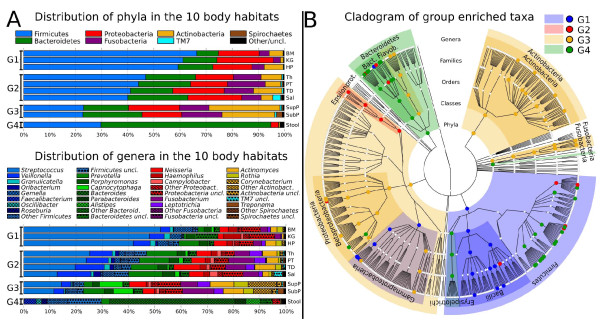
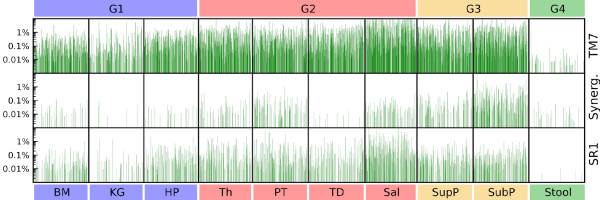
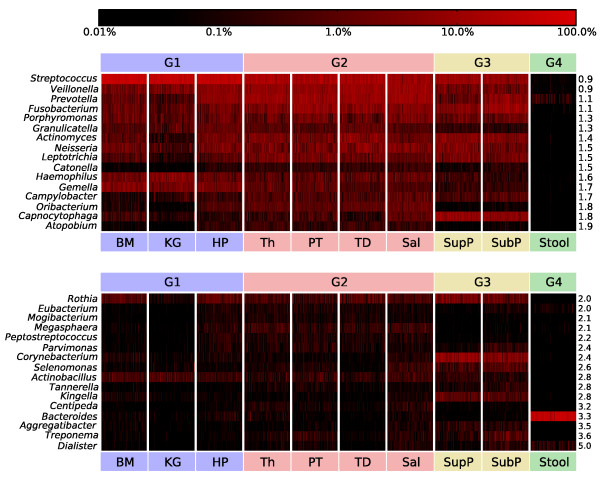
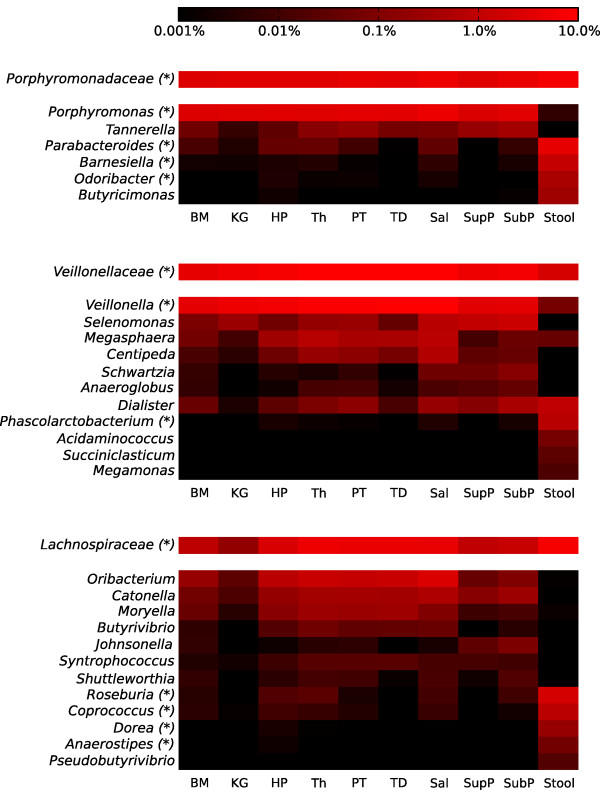
Background: To understand the relationship between our bacterial microbiome and health, it is essential to define the microbiome in the absence of disease. The digestive tract includes diverse habitats and hosts the human body's greatest bacterial density. We describe the bacterial community composition of ten digestive tract sites from more than 200 normal adults enrolled in the Human Microbiome Project, and metagenomically determined metabolic potentials of four representative sites. Results: The microbiota of these diverse habitats formed four groups based on similar community compositions: buccal mucosa, keratinized gingiva, hard palate; saliva, tongue, tonsils, throat; sub- and supra-gingival plaques; and stool. Phyla initially identified from environmental samples were detected throughout this population, primarily TM7, SR1, and Synergistetes. Genera with pathogenic members were well-represented among this disease-free cohort. Tooth-associated communities were distinct, but not entirely dissimilar, from other oral surfaces. The Porphyromonadaceae, Veillonellaceae and Lachnospiraceae families were common to all sites, but the distributions of their genera varied significantly. Most metabolic processes were distributed widely throughout the digestive tract microbiota, with variations in metagenomic abundance between body habitats. These included shifts in sugar transporter types between the supragingival plaque, other oral surfaces, and stool; hydrogen and hydrogen sulfide production were also differentially distributed. Conclusions: The microbiomes of ten digestive tract sites separated into four types based on composition. A core set of metabolic pathways was present across these diverse digestive tract habitats. These data provide a critical baseline for future studies investigating local and systemic diseases affecting human health.
Overview
The claims and statistics of this paper haven’t been checked yet.
Free: it reads the open-access text and checks the first 5 claims that cite a source we can check. Create a free account to check every claim.
Integrity signals
Registry
Cites
Statistics
Figures
Verification
Claims the paper makes
The claims and statistics of this paper haven’t been checked yet.
Free: it reads the open-access text and checks the first 5 claims that cite a source we can check. Create a free account to check every claim.
Claims other papers make about this one
Each is checked against this paper’s own text: does it say what the citing paper says it does?
The source backs part of the claim, not all of it — or backs it for a different population, condition or comparison.
In the citing paper
“The oropharynx, which is lined with a non-keratinized stratified squamous epithelium, has more diverse bacterial communities than the nasopharynx41, which are characterized by streptococcal species, Neisseria spp., Rothia spp. and anaerobes, including Veillonella spp., Prevotella spp. and Leptotrichia spp.39,41,51,52.”
From The microbiota of the respiratory tract: gatekeeper to respiratory health (2017) · cites this paper as [51]
Experimental — accuracy not yet measuredThe source backs part of the claim, not all of it — or backs it for a different population, condition or comparison.
In the citing paper
“Up to 80% of oral bacteria are dominated by about 200 species in the Phyla Firmicutes (esp. Streptococcus, Veillonella, Granulicatella, Gemella spp.) and Proteobacteria (esp. Neisseria, Haemophilus spp.), with contributions from Bacteroidetes, Actinobacteria and Fusobacteria totaling upwards of 95% of all identified oral microbiota (Figure 2)[171–177].”
From Enterosalivary nitrate metabolism and the microbiome: Intersection of microbial metabolism, nitric oxide and diet in cardiac and pulmonary vascular health (2017) · cites this paper as [173]
Experimental — accuracy not yet measuredThe cited source says what the claim attributes to it.
In the citing paper
“Further diversity exists between the varied micro-ecologies of the mouth[174,178], such as the tooth surface, gingiva, hard and soft palate, and even regionally on the tongue (Figure 2)[173,176,179].”
From Enterosalivary nitrate metabolism and the microbiome: Intersection of microbial metabolism, nitric oxide and diet in cardiac and pulmonary vascular health (2017) · cites this paper as [173]
In the citing paper
“Ecological conditions vary immensely along both the length of the GI tract as well as in cross-section from lumen to the mucosal brush-border[173,267,308,309].”
From Enterosalivary nitrate metabolism and the microbiome: Intersection of microbial metabolism, nitric oxide and diet in cardiac and pulmonary vascular health (2017) · cites this paper as [173]
Self-check
Percentages, sums and reported differences re-computed from the paper’s own numbers.
The self-check needs the paper’s full text.
Citations
Cites
Schloss, P. D., Westcott, S. L., Ryabin, T., Hall, J. R., Hartmann, M., Hollister, E. B., Lesniewski, R. A., Oakley, B. B., Parks, D. H., Robinson, C. J., et al. (2009) · Applied and Environmental Microbiology · doi:10.1128/aem.01541-09 · Cited by 19,549
Metagenomic biomarker discovery and explanation
Segata, N., Izard, J., Waldron, L., Gevers, D., Miropolsky, L., Garrett, W. S., & Huttenhower, C. (2011) · Genome Biology · doi:10.1186/gb-2011-12-6-r60 · Cited by 16,192 · cited 11×
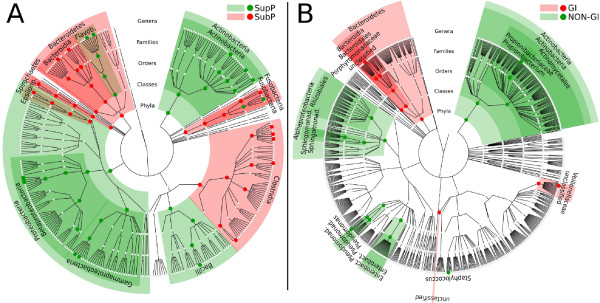
“Clades showing a statistically significant difference (by LEfSe) specifically between oral and stool samples are indiocated with asterisks.”
MethodInfluentialSelf-citationSIMPSON, E. H. (1949) · Nature · doi:10.1038/163688a0 · Cited by 14,164
Structure, function and diversity of the healthy human microbiome
The Human Microbiome Project Consortium (2012) · Nature · doi:10.1038/nature11234 · Cited by 11,726
Self-citationAn Ordination of the Upland Forest Communities of Southern Wisconsin
Bray, J. R., & Curtis, J. T. (1957) · Ecological Monographs · doi:10.2307/1942268 · Cited by 11,716 · cited 2×
“For assessing bacterial community structure similarities between different samples and body sites, we compared the relative abundances of every pair of samples in our dataset using the Bray-Curtis measure of beta diversity [31].”
MethodA human gut microbial gene catalogue established by metagenomic sequencing
MetaHIT Consortium, Qin, J., Li, R., Raes, J., Arumugam, M., Burgdorf, K. S., Manichanh, C., Nielsen, T., Pons, N., Levenez, F., et al. (2010) · Nature · doi:10.1038/nature08821 · Cited by 11,624 · cited 1×
“Previous studies of the healthy adult digestive tract microbiota have typically included less than 20 individuals [11-21] and the studies with over 100 individuals have most often focused on a single body site [22-26].”
BackgroundHuman gut microbes associated with obesity
Ley, R. E., Turnbaugh, P. J., Klein, S., & Gordon, J. I. (2006) · Nature · doi:10.1038/4441022a · Cited by 8,785 · cited 20×
“For example, using endoscopic biopsies from just two subjects, Wang et al. [77] reported 49% of 16S rRNA gene clones were from the Firmicutes and 27.7% were from Bacteroidetes.”
ResultInfluentialDiversity of the Human Intestinal Microbial Flora
Eckburg, P. B., Bik, E. M., Bernstein, C. N., Purdom, E., Dethlefsen, L., Sargent, M., Gill, S. R., Nelson, K. E., & Relman, D. A. (2005) · Science · doi:10.1126/science.1110591 · Cited by 7,913
A core gut microbiome in obese and lean twins
Turnbaugh, P. J., Hamady, M., Yatsunenko, T., Cantarel, B. L., Duncan, A., Ley, R. E., Sogin, M. L., Jones, W. J., Roe, B. A., Affourtit, J. P., et al. (2009) · Nature · doi:10.1038/nature07540 · Cited by 7,823 · cited 2×
“In a study of stool from 154 adult women (twins and their mothers), Firmicutes had a mean relative abundance of >60% using several different methods to assess the 16S rRNA gene content of stool [24].”
BackgroundMethodEnterotypes of the human gut microbiome
MetaHIT Consortium (additional members), Arumugam, M., Raes, J., Pelletier, E., Le Paslier, D., Yamada, T., Mende, D. R., Fernandes, G. R., Tap, J., Bruls, T., et al. (2011) · Nature · doi:10.1038/nature09944 · Cited by 7,548 · cited 2×
“By surveying the HMP population, these results can be further integrated into other currently ongoing studies of the cohort’s core microbiome [9] or enterotype structure [25], if any.”
BackgroundResult
Research works printed but not linked: 1
- NIH Human Microbiome Project - Core Microbiome Sampling Protocol A (HMP-A). http://www.ncbi.nlm.nih.gov/projects/gap/cgi-bin/study.cgi?study_id=phs000228.v3.p1
Cited by
Items 801–900 of 1,000
SOCIETY OF ENVIRONMENTAL NICHE: ORAL CAVITY OF THE HEALTHY CHILDREN
Burmistrova, A. L., Filippova, Y. Y., Nokhrin, D. Y., & Timofeeva, A. V. (2018) · Russian Journal of Infection and Immunity · doi:10.15789/2220-7619-2018-1-54-60 · Cited by 4
“chaetes и Fusobacteria) — презентуют множество (96%) филотипов на уровне видов [9, 18, 19].”
InfluentialOral Metagenomic Analysis Techniques
Chung, S.-K. (2019) · Journal of dental hygiene science · doi:10.17135/jdhs.2019.19.2.86 · Cited by 5
Structural and functional variation of human oral microbiome in health and disease
Khan, M. F., Khan, M. I., & Kato, I. (2023) · Elsevier eBooks · doi:10.1016/b978-0-323-98338-9.00002-5 · Cited by 4
Random Graphical Model of Microbiome Interactions in Related Environments
Vinciotti, V., Wit, E. C., & Richter, F. (2024) · Journal of Agricultural Biological and Environmental Statistics · doi:10.1007/s13253-024-00638-6 · Cited by 4
“This is in line with the analysis of Segata et al. (2012), which find four groups of body sites based on similar community compositions, namely: cheek , ker-gingiva , palate ; saliva , tongue , tonsils , throat ; sub-gingiva and sup-gingiva ; and stool .”
Turco, L., Monica, R. D., Giordano, P., Cuomo, M., Biazzo, M., Mateu, B., Liello, R. D., Daniele, B., Normanno, N., Luca, A. D., et al. (2024) · Frontiers in Oncology · doi:10.3389/fonc.2024.1458990 · Cited by 4
Wang, X., Jiao, S.-Y., Wang, J., Wu, R.-R., Zhang, T.-T., Wang, C.-M., & Li, X. (2025) · Anaerobe · doi:10.1016/j.anaerobe.2025.102948 · Cited by 4
Supragingival Microbiota Alterations in Individuals With Sleep Bruxism: A Pilot Study
Collard, A., Mathieu, A., Landa, P., Pelletier, A., Lavigne, G. J., Droit, A., Huynh, N. T., & Houde, V. P. (2025) · Journal of Oral Rehabilitation · doi:10.1111/joor.13983 · Cited by 4
Role of Oral and Esophageal Microbiota in Esophageal Squamous Cell Carcinoma
Kong, J., Jian, W., Liu, Y., Li, R., & Gao, S. (2025) · Clinical Medicine Insights Oncology · doi:10.1177/11795549251350185 · Cited by 5
Das Mikrobiom des Darms beim kritisch kranken Patienten
Salzberger, B., & Rauscher, C. (2015) · Medizinische Klinik - Intensivmedizin und Notfallmedizin · doi:10.1007/s00063-015-0078-z · Cited by 4
Uncovering the hidden villain within the human respiratory microbiome
Lee, C. K., & Bent, S. J. (2014) · Diagnosis · doi:10.1515/dx-2014-0039 · Cited by 6
“findings indicate that distinct microbial communities are found even between body sites with very similar conditions [44, 45].”
BackgroundZhong, C., Yang, Y., & Yooseph, S. (2016) · BMC Bioinformatics · doi:10.1186/s12859-016-1119-1 · Cited by 4
Kim, S., Thapa, I., & Ali, H. (2018) · IEEE International Conference on Bioinformatics and Biomedicine (BIBM) · doi:10.1109/bibm.2018.8621179 · Cited by 4
“Using 16s rRNA data, recent findings show that the interactions between intestinal microbiota and host play a significant role in human health and disease [1],[2],[3].”
BackgroundINFLUENCE OF ORAL MICROBIOME ON HUMAN HEALTH: AN OVERVIEW
De, M., Bhattacharya, M., ., A. C. S., Basu, I., Ganguli, S., & Dey, S. R. (2019) · International Journal of Advancement in Life Sciences Research · doi:10.31632/ijalsr.2019v02i01.003 · Cited by 4
“Several papers analyzed the HMP oral datasets (Segata et al., 2012; Huse et al., 2012; Li et al., 2013) revealing great variability of the oral microbiome among and within healthy individuals.”
BackgroundStudy of Fermented Mealworm (Tenebrio molitor L.) as a Novel Prebiotic for Intestinal Microbiota
Lee, S. J., Kwon, G. T., Chung, Y. H., Yoo, J.-S., Cho, K.-H., Kim, Y. S., & Jang, H. S. (2021) · Journal of the Korean Society of Food Science and Nutrition · doi:10.3746/jkfn.2021.50.6.543 · Cited by 4
Microbiome and gastroesophageal disease: Pathogenesis and implications for therapy
D’Souza, S. M., Cundra, L. B., Yoo, B. S., Parekh, P. J., & Johnson, D. A. (2020) · Gastroenterology Hepatology and Endoscopy · doi:10.15761/ghe.1000199 · Cited by 4
Current and Future Applications to Control Polymicrobial Biofilms Associated with Oral Disease
Zilm, P. S., Weyrich, L. S., Bright, R., Gatej, S., Rossi‐Fedele, G., Selbach, S., Ketagoda, D. H. K., Alani, A., Lekkas, D., & Vasilev, K. A. (2022) · Springer series on biofilms · doi:10.1007/978-3-031-10992-8_16 · Cited by 6
The prevalence of motility-related genes within the human oral microbiota
Rocha, S. T., Shah, D. D., Zhu, Q., & Shrivastava, A. (2024) · Microbiology Spectrum · doi:10.1128/spectrum.01264-24 · Cited by 4
Salivary Bioscience and Periodontal Medicine
Wei, C. X., Yu, Y., Aleti, G., Torralba, M., Edlund, A., Nelson, K. E., & Freire, M. (2020) · Springer eBooks · doi:10.1007/978-3-030-35784-9_18 · Cited by 4
Second brain: reviewing the gut microbiome’s role in lifestyle diseases
Ray, H., Khatum, J., Haldar, S., & Bhowmik, P. (2025) · Biotechnologia · doi:10.5114/bta/195495 · Cited by 3
The role of theranostic nanoparticles in dental infectious diseases: A review
Rostami, M., Farahani, P., Karimzadeh, M., Esmaelian, S., Hussein, A. F., Nasiri, K., Alrikabi, H. A., & Shenasa, N. (2025) · Journal of Drug Delivery Science and Technology · doi:10.1016/j.jddst.2025.107223 · Cited by 3
Schwendenmann, N., Burger, S., Steiner, L., Seufert, L., Kohl, M., Mack, M., & Egert, M. (2025) · Folia Microbiologica · doi:10.1007/s12223-025-01317-w · Cited by 3
Ma, J., Kageyama, S., Asakawa, M., Furuta, M., Yamashita, Y., & Takeshita, T. (2025) · Scientific Reports · doi:10.1038/s41598-025-30064-8 · Cited by 3
“A more comprehensive assessment and understanding of the specificity of the SUBP microbiota can be achieved by including other distinct oral niches, such as the buccal mucosa, keratinized gingiva, and hard palate, as characterized previously 35,36 .”
The Oral Microbiota and Its Implications for Inflammatory Bowel Disease: A Literature Review
Chen, X., Mao, T., Song, X., & Ren, L. (2025) · International Journal of General Medicine · doi:10.2147/ijgm.s549434 · Cited by 4
“28 The salivary microbiota of IBD patients differs from that of healthy individuals, 49 with lower biodiversity and more severe dysbiosis.”
Oral–Gut Microbial Crosstalk and Therapeutic Applications of Bacterial Extracellular Vesicles
Fu, W., Yang, N., Yan, J., Han, B., Niu, Q., Li, Z., Bai, R., & Yu, T. (2025) · Biomolecules · doi:10.3390/biom16010026 · Cited by 4
“Despite their close proximity, these sites demonstrate a degree of taxonomic continuity in microbial distribution, yet their community structures differ significantly in relative abundance and composition [24].”
The Oral Microbiome–Nitrate–Nitrite–Nitric Oxide Axis and Cardiovascular Health: A Narrative Review
Salama, R. A. A., Msalat, O. F., Fouad, M. M., Alhammadi, M., Elsheikh, S., & Nasser, R. A. S. (2026) · Journal of Clinical Medicine · doi:10.3390/jcm15134871 · Cited by 3
Chen, H., Yi, B., Liu, Q., Xu, X., Dai, L., & Ma, Z. S. (2021) · Frontiers in Genetics · doi:10.3389/fgene.2021.724661 · Cited by 3
“In fact, the DT is differentiated as four different niches hosting some functionally different microbial species as revealed in the original study of Segata et al. (2012), upon the datasets of which our study is based.”
BackgroundMethodInfluentialEvaluation of an Adapted Semi-Automated DNA Extraction for Human Salivary Shotgun Metagenomics
Meslier, V., Menozzi, E., David, A., Morabito, C., Pozo, S. L. D., Famechon, A., North, J. M., Quinquis, B., Koletsi, S., Macnaughtan, J., et al. (2023) · Biomolecules · doi:10.3390/biom13101505 · Cited by 3
“The saliva is nonetheless a complex ecosystem to study, as it is one of the most diverse human microbial ecosystems with fecal microbiota, with diverse microorganisms detected such as bacteria, fungus, and viruses [17–19].”
Meiller, T. F., Fraser, C. M., Grant-Beurmann, S., Humphrys, M. S., Tallon, L. J., Sadzewicz, L., Jabra‐Rizk, M. A., Alfaifi, A. A., Kensara, A. A., Molitoris, J. K., et al. (2024) · Journal of Cancer & Allied Specialties · doi:10.37029/jcas.v10i1.579 · Cited by 3
Loewe, M. F., Doll‐Nikutta, K., Stiesch, M., & Schwestka‐Polly, R. (2024) · Journal of Orofacial Orthopedics / Fortschritte der Kieferorthopädie · doi:10.1007/s00056-024-00515-4 · Cited by 3
“Interestingly, it has been shown that biofilm growth depends on intraoral location [5, 58].”
Oral microbiota of patients with phenylketonuria: A nation‐based cross‐sectional study
Bingöl, M., Cardilli, A., Bingöl, A. C., Löber, U., Bang, C., Franke, A., Bartzela, T. N., Beblo, S., Mönch, E., Stolz, S., et al. (2024) · Journal Of Clinical Periodontology · doi:10.1111/jcpe.13998 · Cited by 4
“Haemophilus is a commensal with varying abundances in saliva, with H. parainfluenzae being the most prevalent species (Eren et al., 2014; Mark Welch et al., 2016; Segata et al., 2012).”
BackgroundFrom Global to Nano: A Geographical Perspective of Aggregatibacter actinomycetemcomitans
Ryder, M. I., Fine, D. H., & Barron, A. E. (2024) · Pathogens · doi:10.3390/pathogens13100837 · Cited by 3
Jiang, Y., Wang, K., Zhang, Y., Yuan, K., Huai, Y., & Cui, Y. (2025) · Discover Medicine · doi:10.1007/s44337-025-00244-6 · Cited by 3
Alqaderi, H. E., Batorsky, R., Azar, G., Malik, M. Z., Nizam, R., Altabtbaei, K., Devarajan, S., Ahmad, R., Michaud, D. S., Zhao, N., et al. (2026) · Frontiers in Microbiology · doi:10.3389/fmicb.2026.1735375 · Cited by 3
“While the oral and gut micro-biomes have distinct signatures (Park et al., 2021), 45% of the gut microbiome overlap with the oral microbiome, influencing gut bacteria through enteral and hematogenous routes (Park et al., 2021; Maki et al., 2021; Segata et al., 2012).”
Metagenomic Study of Human Gastrointestinal Tracts in Health and Diseases
Abbasian, F., & Saberbaghi, T. (2013) · Journal of Gastroenterology and Hepatology Research · Cited by 4
Harris, D. T. (2018) · Frontiers in Biology · doi:10.1007/s11515-018-1505-3 · Cited by 3
Airflow limitation and tongue microbiota in community-dwelling elderly individuals
Takeshita, T., Matsumoto, K., Furuta, M., Fukuyama, S., Takeuchi, K., Ogata, H., Asakawa, M., Kageyama, S., Hata, J., Ninomiya, T., et al. (2021) · ERJ Open Research · doi:10.1183/23120541.00616-2020 · Cited by 3
Composition and Diversity of Salivary Microbiome Affected by Sample Collection Method
Lee, Y., Hong, J., & Lee, G. (2022) · Journal of Oral Medicine and Pain · doi:10.14476/jomp.2022.47.1.10 · Cited by 5
Behavioral Abnormalities of Gut Microbiota and Progression of Dementia
Zubair, M., Fatima, F., & Husain, F. M. (2022) · Springer eBooks · doi:10.1007/978-981-16-7606-2_11 · Cited by 4
Sharma, M. K., Srivastav, V. K., Joshi, C. K., Kumar, M., & Bhat, K. M. (2022) · Bioinformation · doi:10.6026/97320630018757 · Cited by 3
Ishiguro, E. E., Haskey, N., & Campbell, K. (2023) · Elsevier eBooks · doi:10.1016/b978-0-323-91387-4.00001-6 · Cited by 3
Kirby, T. O., Sapp, P. A., Townsend, J. R., Govaert, M., Duysburgh, C., Marzorati, M., Marshall, T. M., & Esposito, R. (2024) · Current Issues in Molecular Biology · doi:10.3390/cimb46010036 · Cited by 3
Yamaki, K., Tamahara, T., Washio, J., Sato, T., Shimizu, R., & Yamada, S. (2024) · Clinical and Experimental Dental Research · doi:10.1002/cre2.862 · Cited by 3
“Many oral bacteria have a known site ‐ specific habitat within the human oral cavity (Aas et al., 2005; Paster et al., 2006; Segata et al., 2012; Simón ‐ Soro et al., 2013), so that the bacterial composition at an oral niche is distinctive and unique to the site.”
BackgroundThe microbiome and acute organ injury: focus on kidneys
Patel, S. K., Gooya, M. F., Guo, Q., Noel, S., & Rabb, H. (2024) · Nephrology Dialysis Transplantation · doi:10.1093/ndt/gfae196 · Cited by 4
Seah, A. C. W., Shi, S., Xie, H., Leung, Y. Y., Hu, M., & An, R. (2024) · Asian Journal of Periodontics and Orthodontics · doi:10.51847/eavf5wcgwg · Cited by 3
Lactobacillus characterization and effects on oral biofilm composition
Vestman, N. R. (2013) · Cited by 3
DNA profiling of bacteria from human hair
Tridico, S. R., Murray, D. C., Bunce, M., & Kirkbride, K. P. (2017) · Wiley eBooks · doi:10.1002/9781119062585.ch15 · Cited by 3
Kopetskiy, I., Pobozhieva, L. V., Kopetskaya, A. I., & Shevelyuk, Y. V. (2021) · Russian Medicine · doi:10.17816/0869-2106-2021-27-4-365-372 · Cited by 2
Advances in Probiotics for Health and Nutrition
Zambare, V., Din, M. F. M., Gupta, P., & Prajapati, B. G. (2023) · IntechOpen eBooks · doi:10.5772/intechopen.104299 · Cited by 6
Introduction to microbiomes in health and diseases
Agrawal, P., Mendhey, P., Kumar, R., Patel, S., Kaushik, P. K., Dadsena, A., & Kumar, S. (2025) · International review of cytology · doi:10.1016/bs.ircmb.2024.12.010 · Cited by 3
Hisamatsu, D., Ogata, Y., Suda, W., Mabuchi, Y., Naraoka, Y., Yamato, T., Ikeba, A., Kumagai, K., Hattori, M., & Akazawa, C. (2025) · Frontiers in Pharmacology · doi:10.3389/fphar.2025.1455753 · Cited by 2
“Streptococcus is one of the dominant genera, along with Veillonella , Prevotella , Neisseria , Haemophilus , and Gemella , in the human salivary microbiome (Nearing et al., 2020; Segata et al., 2012).”
Regueira‐Iglesias, A., Suárez‐Rodríguez, B., Blanco‐Pintos, T., Sánchez‐Barco, A., Relvas, M., Balsa‐Castro, C., & Tomás, I. (2025) · Journal of Periodontology · doi:10.1002/jper.70000 · Cited by 2
“7 These discrepancies could be due to local selective pressures on community composition in health.”
InfluentialAdenotonsillar Microbiome Shifts in Children With Obstructive Sleep Apnea Syndrome
Kraus, O., Schwarz, Y., Motro, Y., Marom, T., Lamdan, R., Kapuller, V. M., Tamir, S. O., & Moran‐Gilad, J. (2025) · The Laryngoscope · doi:10.1002/lary.70119 · Cited by 2
A Review of the Impact of Green Tea (Camellia sinensis L.) on Oral Health
Karthikeyan, A., Chaiyasut, C., Kesika, P., & Sivamaruthi, B. S. (2025) · Current Pharmaceutical Design · doi:10.2174/0113816128393965250927115025 · Cited by 2
Seo, Y., Kim, K., Lee, S., Lim, Y., Seo, Y., Kim, T. K., Kim, C. H., Kim, Y., Jereis, F., Kim, W. K., et al. (2025) · International Journal of Molecular Sciences · doi:10.3390/ijms262311319 · Cited by 2
Tatarciuc, D., Ghica, D. C., Darnea, M., Eşanu, I., Vasluianu, R.-I., Stamatin, O., Indrei, L. L., Antohe, M. E., Lupu, I. C., Bobu, L., et al. (2025) · Medicina · doi:10.3390/medicina61122222 · Cited by 2
“This “oralization” of the gastric microbiome is significantly more pronounced in individuals with poor oral health, suggesting that a diseased oral cavity directly seeds the stomach with its dysbiotic microbiota [37,102–104].”
Effects of cigarette smoking on the oral microbiome in adolescents
Schaefer-Dreyer, P., Behrens, W. K., Winkel, A., Pott, P., Paulsen, M., Stanislawski, N., Tanisik, F., Melk, A., Schmidt, B. M. W., Lucas, H., et al. (2026) · Scientific Reports · doi:10.1038/s41598-025-32650-2 · Cited by 2
“This resembles the composition of healthy oral microbiomes in adults 41,43,44 and young adults 45 , and is also similar to the saliva microbiome of children 45 .”
The Nasal Microbiome in Inflammation and Disease: Bridging Mechanisms to Therapeutics
Zhang, X., Yu, C., Zhang, Z. Y., Liu, M., Huang, X., Bai, D., Yang, R., Wang, P., & Yang, C. (2026) · Annals of the New York Academy of Sciences · doi:10.1111/nyas.70258 · Cited by 2
Srisanoi, K., Curado, T. F. F., Leles, C. R., Egli, A., Rooney, A. M., & Srinivasan, M. (2026) · BMC Oral Health · doi:10.1186/s12903-026-08387-3 · Cited by 3
“Moreover, the tongue microbiome closely mirrors the saliva microbiome in healthy individuals [94–96].”
DeClercq, V., Murphy, R. E., Zinck, N., Langille, M. G. I., & Wallace, A. (2026) · Journal of Oral Microbiology · doi:10.1080/20002297.2026.2675065 · Cited by 2
“Taxa that may translocate from the oral cavity to the gastrointestinal tract [62–64].”
Oral microbiome signatures of post-stroke cognitive impairment
Xu, J., Chang, Y., Ma, J., Wang, H. X., Li, X., Chen, X., Niu, S., An, Y., & Zhao, Y. (2026) · Frontiers in Microbiology · doi:10.3389/fmicb.2026.1722999 · Cited by 4
Jang, L.-G., Huh, J.-W., Kim, S., Lee, J.-Y., Hwang, H.-S., Yoon, J., Lee, H. G., Kim, T. I., Lee, Y. C., Jee, S. H., et al. (2026) · Cell Host & Microbe · doi:10.1016/j.chom.2026.07.007 · Cited by 2
Alternation of supragingival microbiome in patients with cirrhosis of different Child‐Pugh scores
Bai, R., Bai, M., Zhao, Z., Chen, N., Yang, Y. L., & Tang, Z. (2020) · Oral Diseases · doi:10.1111/odi.13743 · Cited by 2
Understanding Oral Diseases: Exploring Opportunities from Filipino Oral Microbiome Research
Balolong, M. P., & Mendoza, M. A. F. (2021) · IntechOpen eBooks · doi:10.5772/intechopen.94751 · Cited by 3
Chudzicka-Strugała, I., Gołębiewska, I., Brudecki, G. P., & Zwoździak, B. (2021) · The Open Microbiology Journal · doi:10.2174/1874285802115010120 · Cited by 2
Tsigalou, C., Konstantinidis, T., Aloizou, A., Bezirtzoglou, E., & Tsakris, A. (2022) · Springer eBooks · doi:10.1007/978-981-19-4800-8_25 · Cited by 5
Diel modifications in the oral and anal microflora of the Pygoscelis papua Penguins
Kong, Z., Wei, T., Liu, B., Li, Y., Wang, Y., Ma, Z., Tian, J., & Li, Y. (2023) · Biological Rhythm Research · doi:10.1080/09291016.2023.2185388 · Cited by 2
“…microflora is unclear, previous studies in humans have shown that population duplication rates can reach up to 45% between these two microbiomes (Segata et al. 2012), although the dominant bacteria may significantly differ due to epithelial tissue affinities and oxygen content (Li et al. 2013).”
BackgroundThe modulatory approaches of microbiome therapeutics
Tembhre, M. K., Shipra, Imran, S., & Jaiswal, K. P. (2023) · Elsevier eBooks · doi:10.1016/b978-0-323-99336-4.00013-6 · Cited by 4
Liver Abscesses Due to Fusobacterium nucleatum: A Case Series
Elkhapery, A. M. R., Malik, S., Chaudhary, P., Abdalla, Z., Niu, C., Jain, T., Low, S. K., Abdelhay, A., Portales-Castillo, C., Ali, O. A., et al. (2023) · Infectious Diseases in Clinical Practice · doi:10.1097/ipc.0000000000001326 · Cited by 2
Long, C., Wu, J., & Liu, J. (2024) · PLoS ONE · doi:10.1371/journal.pone.0302522 · Cited by 2
Oda, G., Kaya, D. E., Kaynar, T. B., Topçuoğlu, N., Coşkun, M., & Aren, G. (2024) · Research in Autism · doi:10.1016/j.rasd.2024.102480 · Cited by 3
Mancini, A., Vitucci, D., Lasorsa, V. A., Lupo, C., Brustio, P. R., Capasso, M., Orrù, S., Rainoldi, A., Schena, F. F., & Buono, P. (2024) · Frontiers in Nutrition · doi:10.3389/fnut.2024.1465707 · Cited by 2
Epigenetic Modulations by Microbiome in Breast Cancer
Zhao, Y., & Bhatnagar, S. (2024) · Advances in experimental medicine and biology · doi:10.1007/978-3-031-66686-5_4 · Cited by 2
Khzam, N., Kujan, O., Haubek, D., Arslan, A., Johansson, A., Oscarsson, J., Razooqi, Z., & Miranda, L. A. (2024) · Pathogens · doi:10.3390/pathogens13121073 · Cited by 3
“However, several studies have shown that the bacterial composition of saliva differs significantly from that of dental biofilm in the gingival crevicular fluid [36].”
Bacteriome-based oral dysbiosis index in patients with oral squamous cell carcinoma
Szaraz, D., Böhm, J., Machacek, C., Salokova, G., Gachová, D., Ruzicka, F., Daněk, Z., Gheit, T., Zavadil, J., & Linhartová, P. B. (2025) · Journal of Oral Microbiology · doi:10.1080/20002297.2026.2668149 · Cited by 2
“This is important as different sites of the oral cavity have been shown to differ in bacterial composition [48].”
Microbiome, dysbiosis and use of probiotics in various diseases
Önata, E. T., & Özdemır, Ö. (2025) · World Journal of Virology · doi:10.5501/wjv.v14.i2.99574 · Cited by 4
Salivary Microbiota in Oral Health and Disease
Belstrøm, D. (2015) · Springer eBooks · doi:10.1007/978-3-319-25091-5_11 · Cited by 2
Community structure of oral microbiota and oral health
Takeshita, T., & Yamashita, Y. (2016) · Japanese Journal of Lactic Acid Bacteria · doi:10.4109/jslab.27.3 · Cited by 2
Oral Bacteria Transmissible by Saliva and Kissing
Posse, J. L., Dios, P. D., & Scully, C. M. (2017) · Elsevier eBooks · doi:10.1016/b978-0-12-813681-2.00002-0 · Cited by 2
Impact of short‐term saliva storage at room temperature on the microbial composition
Enomoto, A., Nambu, T., Kashiwagi, K., Okinaga, T., & Baba, S. (2020) · Journal of Osaka Dental University · doi:10.18905/jodu.54.1_73 · Cited by 5
Gut microbiota: its development and relation to certain diseases
Sepová, H. K., Dudík, B., & Bilková, A. (2017) · Česká a slovenská farmacie · doi:10.36290/csf.2017.038 · Cited by 3
Stoll, M. L., Bridges, S. L., & Danila, M. I. (2018) · Springer eBooks · doi:10.1007/978-3-319-79026-8_15 · Cited by 2
Chen, H., & Ma, Z. S. (2022) · Frontiers in Microbiology · doi:10.3389/fmicb.2022.912240 · Cited by 2
The oral microbiota as part of the human microbiota – links to general health
Belstrøm, D. (2020) · Den norske tannlegeforenings Tidende · doi:10.56373/2020-2-5 · Cited by 3
Konyshko, N. A., & Konyshko, G. S. (2023) · Modern Rheumatology Journal · doi:10.14412/1996-7012-2023-5-118-122 · Cited by 2
Tang, L., Lv, J., Zhang, X., Wang, C., & Wang, D. (2024) · Journal of Experimental Biology · doi:10.1242/jeb.249264 · Cited by 2
Ma, M. (2019) · UA Campus Repository (The University of Arizona) · Cited by 2
Băncescu, G., Davila", C., Sfetcu, L., Didilescu, A. C., & Băncescu, A. (2020) · STOMATOLOGY EDU JOURNAL · doi:10.25241/stomaeduj.2020.7(2).art.1 · Cited by 2
“Most Gram-negative anaerobic bacteria colonizing the oropharynx in healthy adults belong to the following genera: Prevotella, Fusobacterium, Leptotrichia and Veillonella [2,18-22].”
BackgroundInfluentialSun, J., Sun, Y., Zou, Y., Wang, H., Rao, B., Zhang, X., Liu, L., Zhang, G., Cui, G., Liu, Q., et al. (2025) · Infectious Microbes & Diseases · doi:10.1097/im9.0000000000000175 · Cited by 1
“Previous studies have found a correlation between the tongue-coating and oropharyngeal microbiota in health or disease conditions, 33 which is in line with our findings.”
Co-Morbid Disease as Risk Factors Associated with Alzheimer’s Disease- An Overview
Tyagi, A., Shekhar, N., & Tyagi, S. (2025) · Current Behavioral Neuroscience Reports · doi:10.1007/s40473-025-00307-z · Cited by 1
“Each person's oral cavity can contain up to 200 distinct bacterial taxa, and the microbiota at various oral regions varies greatly [73, 75].”
Fong, J. Y. H., Yeung, M. L., Li, T. T., Li, W. H., Ma, Y., Zhao, Y. G., Leung, W. K., & Teng, J. L. L. (2025) · Molecular Oral Microbiology · doi:10.1111/omi.70009 · Cited by 1
“Despite comprising less than 2% of the healthy human oral microbiome, the diversity of treponemes plays a significant role in the development and progression of periodontitis (Segata et al. 2012; Zeng et al. 2021).”
Prevotella denticola promotes caries by inducing oral microbial dysbiosis
Wu, H., Li, N. D., Yang, S. J., Qiu, J., Zhang, M., Wang, L., Gao, R., Wu, L., Yu, Q., & Cheng, X. (2026) · BMC Oral Health · doi:10.1186/s12903-026-07876-9 · Cited by 3
“According to 16 S rDNA sequencing results, the total abundance of Prevotella exceeds 10% of the entire oral cavity microbiome in the healthy population [10].”
Interkingdom Interactions in the Gut: Ecological Mechanisms, Homeostasis, and Therapeutic Modulation
Wei, R., Sun, X., Huang, H., Zhao, Y., Liu, S., & Liu, C. (2026) · Gut Medicine · doi:10.1002/gtm2.70009 · Cited by 1
Periodontitis and Inflammatory Bowel Diseases: Mechanistic Evidence
Colombo, A. P. V., de Oliveira, A. M., Kamada, N., & Kitamoto, S. (2026) · Journal of Periodontal Research · doi:10.1111/jre.70124 · Cited by 1
Oral Microbiota Characteristics in Relation to Different Dietary Patterns: A Systematic Review
Chiesa, A., Generali, L., Butera, A., Filippini, T., Lanteri, V., & Veneri, F. (2026) · Nutrients · doi:10.3390/nu18111717 · Cited by 1
“Although their ecological roles differ according to the anatomical niche, this overlap may reflect broader host-associated microbial networks and shared metabolic capabilities across mucosal microbial ecosystems [46].”
McCartney, C., Hajjar, R., & Santos, M. M. (2026) · Frontiers in Microbiology · doi:10.3389/fmicb.2026.1774501 · Cited by 1
“Fusobacterium species, which make up 0.01% of the gut microbiota composition in healthy individuals (Segata et al., 2012), are more abundant in stool and enriched in tissue samples from patients with adenocarcinomas (Kostic et al., 2013).”
InfluentialPeng, P., Cai, J., Zhang, L., Lu, Y., & Kuang, P. (2026) · Frontiers in Microbiology · doi:10.3389/fmicb.2026.1906205 · Cited by 2
del Castillo, E., & Izard, J. (2014) · Elsevier eBooks · doi:10.1016/b978-0-12-410472-3.00008-7 · Cited by 3
Self-citationGerritsen, J., & Younes, J. A. (2017) · Wageningen Academic Publishers eBooks · doi:10.3920/978-90-8686-839-1_13 · Cited by 1
Microbiome of the Palatine Tonsils in Children: 16S rRNA Analysis
Takahashi, N., Aizawa, N., Baba, H., Kubota, Y., Tsuchiya, A., Yamamoto, Y., Takahashi, S., Watanabe, H., Goto, S., Narita, I., et al. (2016) · Nippon Jibiinkoka Gakkai Kaiho · doi:10.3950/jibiinkoka.119.29 · Cited by 1
Metadata
- Authors
- Segata, N., Haake, S. K., Mannon, P., Lemon, K. P., Waldron, L., Gevers, D., Huttenhower, C., & Izard, J.
- Affiliations
- Harvard University (US)
- University of California, Los Angeles (US)
- University of Alabama at Birmingham (US)
- Boston Children's Hospital (US)
- Broad Institute (US)
- Corresponding author
- Izard, Jacques
- ORCID
- Venue
- Genome Biology
- Published
- 2012-06-14
- Volume
- 13
- Issue
- 6
- Pages
- R42-R42
- ISSN
- 1465-6906 (ISSN-L)
- 1474-760X
- PMC
- PMC3446314
- OpenAlex
- W2170196186
- Cited by
- 1,076
- References
- 104
- Citations by year
- 2026: 57 · 2025: 77 · 2024: 108 · 2023: 85 · 2022: 103 · 2021: 123 · 2020: 120 · 2019: 64 · 2018: 61 · 2017: 66 · 2016: 52 · 2015: 51 · 2014: 59 · 2013: 40 · 2012: 9
- FWCI
- 20.46
- Type
- journal article
- Language
- en
- Open access
- gold
- doi.org
- Licence
- cc-by
- creativecommons.org/licenses/by/2.0/ (tdm)
- creativecommons.org/licenses/by/2.0/ (vor)
- Locations
- Genome biology (publishedVersion, cc-by)
- PubMed Central (publishedVersion, cc-by)
- PubMed (publishedVersion)
- Institutional Research Information System (Università degli Studi di Trento) (submittedVersion, cc-by)
- CUNY Academic Works (City University of New York) (submittedVersion, cc-by)
- Digital Access to Scholarship at Harvard (DASH) (Harvard University) (submittedVersion, cc-by)
- Lincoln (University of Nebraska) (submittedVersion)
- eScholarship (California Digital Library) (submittedVersion)
- Funders
- National Science Foundation (1053486)
- National Institutes of Health (DBI-1053486)
- National Human Genome Research Institute (HG005969, U54HG004969, R01HG005969, HG004969)
- National Cancer Institute (R21CA139193, CA139193)
- National Institute of Dental and Craniofacial Research (DE020298, P30DE020751, R01DE021574, DE021574, RC1DE020298, DE020751)
- Army Research Office (W911NF-11-1-0473, W911NF, W911NF-11)
- Topics
- Life Sciences › Biochemistry, Genetics and Molecular Biology › Molecular Biology › Gut microbiota and health
- Health Sciences › Dentistry › Periodontics › Oral microbiology and periodontitis research
- Physical Sciences › Environmental Science › Ecology › Microbial Community Ecology and Physiology
- Keywords
- human gut microbiome, oral microbiota, buccal mucosa, gingival plaque, tongue microbiota, tonsil, saliva, stool microbiome, Porphyromonadaceae, Veillonellaceae, Lachnospiraceae, hydrogen sulfide production, sugar transporters, core metabolic pathways, healthy adults
- MeSH terms
- Adolescent, Adult, Feces, Female, Humans, Male, Mouth, Pharynx, Phylogeny, RNA, Ribosomal, 16S, Saliva, Palatine Tonsil, Bacterial Typing Techniques, Genes, rRNA, Actinobacteria, Bacteroidetes, Veillonellaceae, Metagenome, Young Adult, Biota
About these checks
Registry, retraction, Cites and statistics results are computed, not judged, with one exception: a printed reference that no index lists is read once by a model before it counts as a citation error. Claims are extracted by a model and kept only when their quote appears verbatim in the text; each cited source is then checked, with a model’s help, for whether it says what the claim relies on. Those verdicts can be wrong — read the claim’s quote and the cited source before relying on one.
Statistics and arithmetic are recomputed, not judged.
Confidence bands are shown only for fields calibrated on our annotated test set. None is calibrated yet, so no band is shown.
What counts as a claim ›How we measure confidence ›How we check this ›
Are you an author, or do you see a problem with this page? Request a review
Data sources
Bibliographic data: Semantic Scholar, OpenAlex, Crossref.
Contains information from the Semantic Scholar Academic Graph Datasets, made available under the ODC Attribution License (ODC-BY 1.0).
Semantic Scholar’s data is described in: Kinney, R., et al. (2023). The Semantic Scholar Open Data Platform. arXiv:2301.10140.
