

Composition of the adult digestive tract bacterial microbiome based on seven mouth surfaces, tonsils, throat and stool samples
Open accessThe DOI matches its Crossref record; 104 of the 104 references it cites were found in a registry or an index.
Abstract
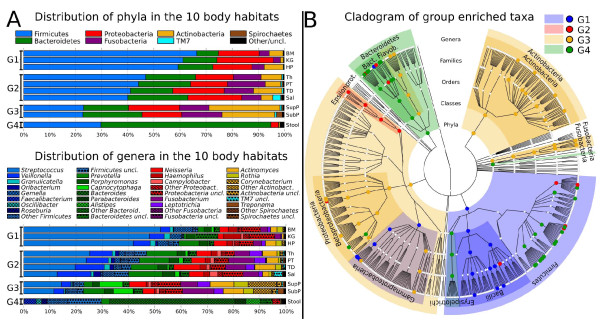
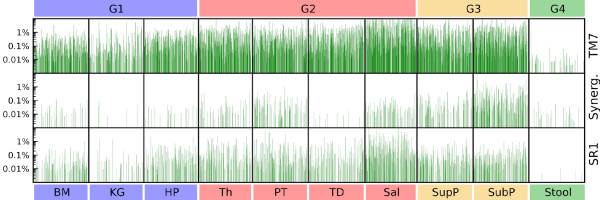
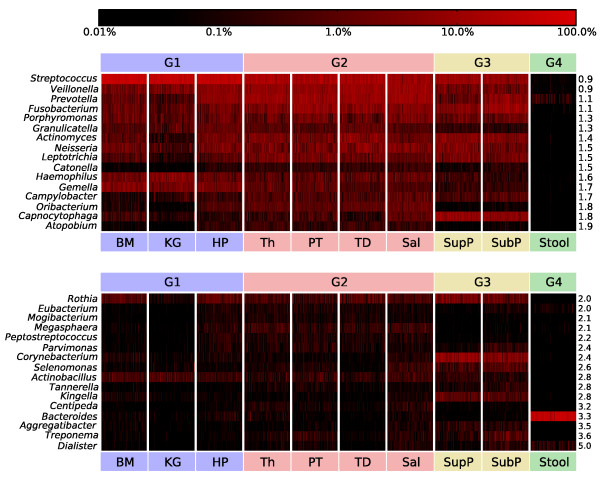
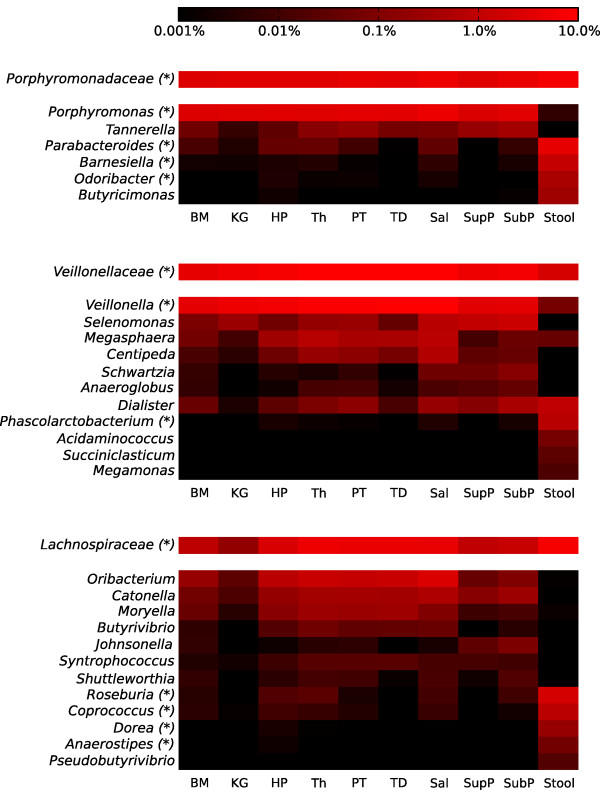
Background: To understand the relationship between our bacterial microbiome and health, it is essential to define the microbiome in the absence of disease. The digestive tract includes diverse habitats and hosts the human body's greatest bacterial density. We describe the bacterial community composition of ten digestive tract sites from more than 200 normal adults enrolled in the Human Microbiome Project, and metagenomically determined metabolic potentials of four representative sites. Results: The microbiota of these diverse habitats formed four groups based on similar community compositions: buccal mucosa, keratinized gingiva, hard palate; saliva, tongue, tonsils, throat; sub- and supra-gingival plaques; and stool. Phyla initially identified from environmental samples were detected throughout this population, primarily TM7, SR1, and Synergistetes. Genera with pathogenic members were well-represented among this disease-free cohort. Tooth-associated communities were distinct, but not entirely dissimilar, from other oral surfaces. The Porphyromonadaceae, Veillonellaceae and Lachnospiraceae families were common to all sites, but the distributions of their genera varied significantly. Most metabolic processes were distributed widely throughout the digestive tract microbiota, with variations in metagenomic abundance between body habitats. These included shifts in sugar transporter types between the supragingival plaque, other oral surfaces, and stool; hydrogen and hydrogen sulfide production were also differentially distributed. Conclusions: The microbiomes of ten digestive tract sites separated into four types based on composition. A core set of metabolic pathways was present across these diverse digestive tract habitats. These data provide a critical baseline for future studies investigating local and systemic diseases affecting human health.
Overview
The claims and statistics of this paper haven’t been checked yet.
Free: it reads the open-access text and checks the first 5 claims that cite a source we can check. Create a free account to check every claim.
Integrity signals
Registry
Cites
Statistics
Figures
Verification
Claims the paper makes
The claims and statistics of this paper haven’t been checked yet.
Free: it reads the open-access text and checks the first 5 claims that cite a source we can check. Create a free account to check every claim.
Claims other papers make about this one
Each is checked against this paper’s own text: does it say what the citing paper says it does?
The source backs part of the claim, not all of it — or backs it for a different population, condition or comparison.
In the citing paper
“The oropharynx, which is lined with a non-keratinized stratified squamous epithelium, has more diverse bacterial communities than the nasopharynx41, which are characterized by streptococcal species, Neisseria spp., Rothia spp. and anaerobes, including Veillonella spp., Prevotella spp. and Leptotrichia spp.39,41,51,52.”
From The microbiota of the respiratory tract: gatekeeper to respiratory health (2017) · cites this paper as [51]
Experimental — accuracy not yet measuredThe source backs part of the claim, not all of it — or backs it for a different population, condition or comparison.
In the citing paper
“Up to 80% of oral bacteria are dominated by about 200 species in the Phyla Firmicutes (esp. Streptococcus, Veillonella, Granulicatella, Gemella spp.) and Proteobacteria (esp. Neisseria, Haemophilus spp.), with contributions from Bacteroidetes, Actinobacteria and Fusobacteria totaling upwards of 95% of all identified oral microbiota (Figure 2)[171–177].”
From Enterosalivary nitrate metabolism and the microbiome: Intersection of microbial metabolism, nitric oxide and diet in cardiac and pulmonary vascular health (2017) · cites this paper as [173]
Experimental — accuracy not yet measuredThe cited source says what the claim attributes to it.
In the citing paper
“Further diversity exists between the varied micro-ecologies of the mouth[174,178], such as the tooth surface, gingiva, hard and soft palate, and even regionally on the tongue (Figure 2)[173,176,179].”
From Enterosalivary nitrate metabolism and the microbiome: Intersection of microbial metabolism, nitric oxide and diet in cardiac and pulmonary vascular health (2017) · cites this paper as [173]
In the citing paper
“Ecological conditions vary immensely along both the length of the GI tract as well as in cross-section from lumen to the mucosal brush-border[173,267,308,309].”
From Enterosalivary nitrate metabolism and the microbiome: Intersection of microbial metabolism, nitric oxide and diet in cardiac and pulmonary vascular health (2017) · cites this paper as [173]
Self-check
Percentages, sums and reported differences re-computed from the paper’s own numbers.
The self-check needs the paper’s full text.
Citations
Cites
Schloss, P. D., Westcott, S. L., Ryabin, T., Hall, J. R., Hartmann, M., Hollister, E. B., Lesniewski, R. A., Oakley, B. B., Parks, D. H., Robinson, C. J., et al. (2009) · Applied and Environmental Microbiology · doi:10.1128/aem.01541-09 · Cited by 19,549
Metagenomic biomarker discovery and explanation
Segata, N., Izard, J., Waldron, L., Gevers, D., Miropolsky, L., Garrett, W. S., & Huttenhower, C. (2011) · Genome Biology · doi:10.1186/gb-2011-12-6-r60 · Cited by 16,192 · cited 11×
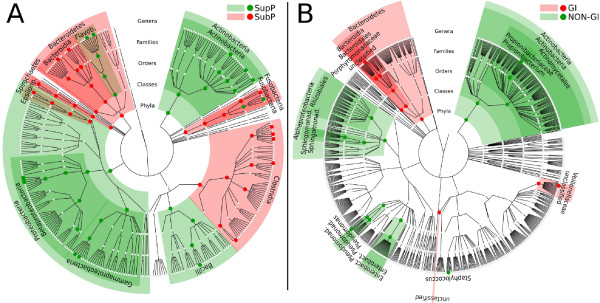
“Clades showing a statistically significant difference (by LEfSe) specifically between oral and stool samples are indiocated with asterisks.”
MethodInfluentialSelf-citationSIMPSON, E. H. (1949) · Nature · doi:10.1038/163688a0 · Cited by 14,164
Structure, function and diversity of the healthy human microbiome
The Human Microbiome Project Consortium (2012) · Nature · doi:10.1038/nature11234 · Cited by 11,726
Self-citationAn Ordination of the Upland Forest Communities of Southern Wisconsin
Bray, J. R., & Curtis, J. T. (1957) · Ecological Monographs · doi:10.2307/1942268 · Cited by 11,716 · cited 2×
“For assessing bacterial community structure similarities between different samples and body sites, we compared the relative abundances of every pair of samples in our dataset using the Bray-Curtis measure of beta diversity [31].”
MethodA human gut microbial gene catalogue established by metagenomic sequencing
MetaHIT Consortium, Qin, J., Li, R., Raes, J., Arumugam, M., Burgdorf, K. S., Manichanh, C., Nielsen, T., Pons, N., Levenez, F., et al. (2010) · Nature · doi:10.1038/nature08821 · Cited by 11,624 · cited 1×
“Previous studies of the healthy adult digestive tract microbiota have typically included less than 20 individuals [11-21] and the studies with over 100 individuals have most often focused on a single body site [22-26].”
BackgroundHuman gut microbes associated with obesity
Ley, R. E., Turnbaugh, P. J., Klein, S., & Gordon, J. I. (2006) · Nature · doi:10.1038/4441022a · Cited by 8,785 · cited 20×
“For example, using endoscopic biopsies from just two subjects, Wang et al. [77] reported 49% of 16S rRNA gene clones were from the Firmicutes and 27.7% were from Bacteroidetes.”
ResultInfluentialDiversity of the Human Intestinal Microbial Flora
Eckburg, P. B., Bik, E. M., Bernstein, C. N., Purdom, E., Dethlefsen, L., Sargent, M., Gill, S. R., Nelson, K. E., & Relman, D. A. (2005) · Science · doi:10.1126/science.1110591 · Cited by 7,913
A core gut microbiome in obese and lean twins
Turnbaugh, P. J., Hamady, M., Yatsunenko, T., Cantarel, B. L., Duncan, A., Ley, R. E., Sogin, M. L., Jones, W. J., Roe, B. A., Affourtit, J. P., et al. (2009) · Nature · doi:10.1038/nature07540 · Cited by 7,823 · cited 2×
“In a study of stool from 154 adult women (twins and their mothers), Firmicutes had a mean relative abundance of >60% using several different methods to assess the 16S rRNA gene content of stool [24].”
BackgroundMethodEnterotypes of the human gut microbiome
MetaHIT Consortium (additional members), Arumugam, M., Raes, J., Pelletier, E., Le Paslier, D., Yamada, T., Mende, D. R., Fernandes, G. R., Tap, J., Bruls, T., et al. (2011) · Nature · doi:10.1038/nature09944 · Cited by 7,548 · cited 2×
“By surveying the HMP population, these results can be further integrated into other currently ongoing studies of the cohort’s core microbiome [9] or enterotype structure [25], if any.”
BackgroundResult
Research works printed but not linked: 1
- NIH Human Microbiome Project - Core Microbiome Sampling Protocol A (HMP-A). http://www.ncbi.nlm.nih.gov/projects/gap/cgi-bin/study.cgi?study_id=phs000228.v3.p1
Cited by
Items 601–700 of 1,000
McCune, E., Sharma, A., Johnson, B., O’Meara, T. A., Theiner, S., Campos, M., Heditsian, D. M., Brain, S., Gilbert, J. A., Esserman, L. J., et al. (2024) · mSystems · doi:10.1128/msystems.01237-24 · Cited by 18
Beversdorf, D. Q., Sohl, K., Levitskiy, D., Tennant, P., Goin‐Kochel, R. P., Shaffer, R. C., Confair, A., Middleton, F. A., & Hicks, S. D. (2022) · Frontiers in Psychiatry · doi:10.3389/fpsyt.2021.824933 · Cited by 18
Associations between PM2.5 exposure and infant growth: A mediation analysis of oral microbiota
Wu, H., Dong, C., Xiao, W., Wei, H., Shao, Y., Chen, T., & Xia, Y. (2022) · The Science of The Total Environment · doi:10.1016/j.scitotenv.2022.153688 · Cited by 17
Unraveling the Antibiofilm Activity of a New Nanogold Resin for Dentures and Epithesis
Ivanovic, V., Popović, D., Petrović, S., Rudolf, R., Majerič, P., Lazarević, M. M., Djordjević, I., Lazić, V., & Radunović, M. (2022) · Pharmaceutics · doi:10.3390/pharmaceutics14071513 · Cited by 41
“Within the healthy oral cavity, there are several special ecosystem niche levels, consisting of shedding epithelium and non-shedding hard tissues and, the most specific, the junction of these two tissues, the periodontal sulcus [2,3].”
BackgroundGuevarra, R. B., Hwang, J., Lee, H., Kim, H. J., Lee, Y., Danko, D., Ryon, K. A., Young, B. G., Mason, C. E., & Jang, S. (2022) · Ecotoxicology and Environmental Safety · doi:10.1016/j.ecoenv.2022.114176 · Cited by 19
Yin, J., Dong, L., Zhao, J., Shao, D., Li, J., Li, J., Yu, A., Wei, W., & Chen, W. (2020) · Scandinavian Journal of Gastroenterology · doi:10.1080/00365521.2020.1839961 · Cited by 18
Dan, W., Peng, L., Yan, B., Li, Z., & Pan, F. (2022) · Frontiers in Microbiology · doi:10.3389/fmicb.2021.791274 · Cited by 19
Zhang, Z., Bao, C., Li, Z., He, C., Jin, W., Li, C., & Chen, Y. (2024) · Applied Microbiology and Biotechnology · doi:10.1007/s00253-023-12841-5 · Cited by 16
“The remaining 10% is made up of Actinobacteria and Proteobacteria (Arumugam et al. 2011; Segata et al. 2012).”
Modulation of the Immune Environment in Glioblastoma by the Gut Microbiota
Green, G. B. H., Cox-Holmes, A. N., Potier, A. C. E., Marlow, G. H., & McFarland, B. C. (2024) · Biomedicines · doi:10.3390/biomedicines12112429 · Cited by 16
Similarity of salivary microbiome in parents and adult children
Sundström, K., Mishra, P. P., Pyysalo, M. J., Lehtimäki, T. J., Karhunen, P. J., & Pessi, T. (2020) · PeerJ · doi:10.7717/peerj.8799 · Cited by 17
“Salivary microbiota can also be distinguished from other oral microbiomes, such as gingival or tongue microbiome (Segata et al., 2012).”
BackgroundModulation of oral microbiota: A new frontier in exercise supplementation
Bescós, R., Brookes, Z. L. S., Belfield, L., Fernández‐Sanjurjo, M., & Casas‐Agustench, P. (2020) · PharmaNutrition · doi:10.1016/j.phanu.2020.100230 · Cited by 16
“Both microbiomes seem to be very well linked and it has been suggested that about 45% of the bacteria of the large intestine and the oral cavity overlap (79).”
BackgroundBachtiar, B. M., Theodorea, C. F., Tahapary, D. L., Astrella, C., Natalina, & Bachtiar, E. W. (2021) · F1000Research · doi:10.12688/f1000research.28216.4 · Cited by 18
“For Treponems , which are typically restricted to the subgingival crevice 29 , the full length of 16S RNA gene belonging to this genus were found in six species and one subspecies in DP group, i.e. T. medium, T. denticola, T. lecithinolyticum, T. maltophilum, T. amylovorum, and T. socranskii as…”
Bio‐therapeutics from human milk: prospects and perspectives
Singh, K. S., Singh, B. P., Rokana, N., Singh, N., Kaur, J., Singh, A., & Panwar, H. (2021) · Journal of Applied Microbiology · doi:10.1111/jam.15078 · Cited by 18
“Furthermore, probiotic micro-organisms play a major role in health and disease in humans through development of mucosal barrier function and immune responses (Clemente et al. 2012; Segata et al. 2012; Rokana et al. 2017).”
BackgroundLópez, C. D., González, D. M., Vidaki, A., & Kayser, M. (2022) · Frontiers in Microbiology · doi:10.3389/fmicb.2022.886201 · Cited by 17
Choi, W., & Hong, J. (2025) · Biomaterials · doi:10.1016/j.biomaterials.2025.123610 · Cited by 16
Licandro, H., Truntzer, C., Fromentin, S., Morabito, C., Quinquis, B., Pons, N., Martin, C., Blottière, H. M., & Neyraud, E. (2023) · Scientific Reports · doi:10.1038/s41598-023-47636-1 · Cited by 17
“On average, the saliva and lingual film microbiota profiles are characterized by an overrepresentation of the Proteobacteria, Firmicutes and Bacteroidota phyla comparable to the profiles found recently by other authors using metagenomics 27 and 16S rRNA data from the eHOMD 28–30 .”
ResultZhou, L., Mao, H., Li, J., Chen, Z., & Zhang, L. (2023) · The FASEB Journal · doi:10.1096/fj.202301648r · Cited by 15
The oral cavity and intestinal microbiome in children with functional constipation
Kwiatkowska, M., Gołębiewski, M., Sikora, M., Łoś-Rycharska, E., & Krogulska, A. (2024) · Scientific Reports · doi:10.1038/s41598-024-58642-2 · Cited by 15
“The oral cavity is directly exposed to a number of external factors, and is characterised by diverse physicochemical conditions; this creates opportunities for the existence of a greater variety of inhabiting microorganisms and their uneven distribution 50 .”
BackgroundShigeishi, H., Sugiyama, M., Ohta, K., Yokoyama, S., Sakuma, M., Murozumi, H., Kato, H., & Takechi, M. (2017) · Biomedical Reports · doi:10.3892/br.2017.1025 · Cited by 16
Of fungi and men: role of fungi in pancreatic cancer carcinogenesis
Wang, H., Capula, M., Krom, B. P., Yee, D., Giovannetti, E., & Deng, D. (2020) · Annals of Translational Medicine · doi:10.21037/atm-20-2723 · Cited by 16
“It has been suggested that part of the intestinal bacteria and fungi are of oral origin, with more than 45% overlap in the microbiota between oral cavity and gut (20,21).”
BackgroundMella, M. A., Lavrinienko, A., Akhi, R., Hindström, R., Nissinen, A. E. T., Wang, C., Kullaa, A. M., Salo, T. A., AUVINEN, J. P., Koskimäki, J. J., et al. (2021) · ImmunoHorizons · doi:10.4049/immunohorizons.2100014 · Cited by 15
Takeuchi, Y., Mizukami, H., Kudoh, K., Osonoi, S., Sasaki, T., Kushibiki, H., Ogasawara, S., Hara, Y., Igawa, A., Pan, X., et al. (2022) · Neurobiology of Disease · doi:10.1016/j.nbd.2022.105839 · Cited by 15
Xu, H., Jurado‐Fasoli, L., Ortiz-Alvarez, L., Osuna‐Prieto, F. J., Köhler, I., Di, X., Vilchez‐Vargas, R., Link, A., Plaza‐Díaz, J., Gil, Á., et al. (2022) · Nutrients · doi:10.3390/nu14234991 · Cited by 17
Kumari, M., Bhushan, B., Eslavath, M. R., Srivastava, A. K., Meena, R. C., Varshney, R. K., & Ganju, L. (2023) · Scientific Reports · doi:10.1038/s41598-023-30963-8 · Cited by 15
Galvin, S., Moran, G. P., & Healy, C. M. (2023) · Frontiers in Oral Health · doi:10.3389/froh.2023.1166037 · Cited by 17
“However, saliva collection does not allow for sampling of specific sites/ lesions and has also been shown to be strongly biased towards tongue and palate communities (12, 13, 31).”
BackgroundAntonyuk, S. V., Siemińska, K., Śmiga, M., Strange, R. W., Wagner, M. M., Barnett, K. J., & Olczak, T. (2023) · The FASEB Journal · doi:10.1096/fj.202300366r · Cited by 16
The oral microbial odyssey influencing chronic metabolic disease
Gupta, U., & Dey, P. (2023) · Archives of Physiology and Biochemistry · doi:10.1080/13813455.2023.2296346 · Cited by 15
“…of the oropharyngeal and oral microbiota to enter the stomach. indeed, approximately 45% of the participants in the Human Microbiome Project had oral cavity and stool bacteria in common (Figure 2) (Segata et al. 2012), indicating the possibilities of intestinal translocation of the oral microbes.”
Exploring Host–Commensal Interactions in the Respiratory Tract
Shekhar, S., Schenck, K., & Petersen, F. C. (2018) · Frontiers in Immunology · doi:10.3389/fimmu.2017.01971 · Cited by 15
“Larsen et al. analyzed the phenotypic and functional changes in human DCs in response to respiratory bacterial commensals (Prevotella spp. and Veillonella spp.) and pathogens (Actinomyces spp.) (6).”
BackgroundInfluentialSabella, F. M., de Feiria, S. N. B., Ribeiro, A. A., Theodoro, L. H., Höfling, J. F., Parisotto, T. M., & Duque, C. (2021) · Frontiers in Dental Medicine · doi:10.3389/fdmed.2021.718441 · Cited by 20
Decoding the microbial blueprint of pancreatic cancer
Bautista, J., Bedón-Galarza, R., Martínez-Hidalgo, F., Masache-Cruz, M. J., Benítez-Núñez, M., Valencia-Arroyo, C., & López‐Cortés, A. (2026) · Frontiers in Medicine · doi:10.3389/fmed.2026.1737582 · Cited by 15
Evaluation of alcohol-free mouthwash for studies of the oral microbiome
Yano, Y., Vogtmann, E., Shreves, A. H., Weinstein, S. J., Black, A., Diaz-Mayoral, N. A., Wan, Y., Zhou, W., Hua, X., Dagnall, C. L., et al. (2023) · PLoS ONE · doi:10.1371/journal.pone.0284956 · Cited by 16
“Different types of samples have been used to study the oral microbiome, including saliva, supra- and sub-gingival plaque, and oral swabs from the cheeks, gums, and tongue [9,10].”
BackgroundOral mucosa immunity: ultimate strategy to stop spreading of pandemic viruses
Jang, H., Matsuoka, M., & Freire, M. (2023) · Frontiers in Immunology · doi:10.3389/fimmu.2023.1220610 · Cited by 16
Oral microbiota and gastric cancer: recent highlights and knowledge gaps
Xia, R., Jiang, Z., Zhou, Y., Pan, L., Wang, Y., Ma, Y., Fan, L., Yuan, L., & Cheng, X. (2024) · Journal of Oral Microbiology · doi:10.1080/20002297.2024.2391640 · Cited by 17
“The oral cavity contains unique ecological niches that support diverse microbial communities, with microbes in tongue coating, saliva, and dental plaque niches being particularly distinct [22,23].”
BackgroundOral microbiota in head and neck cancer patients during radiotherapy: a systematic review
Kwiatkowski, D., Schuch, L. F., Klaus, N. M., Martins, M. D., Hilgert, J. B., & Hashizume, L. N. (2025) · Supportive Care in Cancer · doi:10.1007/s00520-025-09191-5 · Cited by 18
Zhang, Q., Abel, H., Wells, A., Lenzini, P. A., Gomez, F., Province, M. A., Templeton, A. R., Weinstock, G. M., Salzman, N. H., & Borecki, I. B. (2015) · Bioinformatics · doi:10.1093/bioinformatics/btu855 · Cited by 16
Ishiguro, E. E., Haskey, N., & Campbell, K. (2018) · Elsevier eBooks · doi:10.1016/b978-0-12-810541-2.00002-6 · Cited by 29
Bastard, Q. L., Vangay, P., Batard, É., Knights, D., & Montassier, E. (2019) · Clinical Infectious Diseases · doi:10.1093/cid/ciz1087 · Cited by 14
Franklin, S., Aitken, S. L., Shi, Y., Sahasrabhojane, P. V., Robinson, S., Peterson, C. B., Daver, N. G., Ajami, N., Kontoyiannis, D. P., Shelburne, S. A., et al. (2022) · Frontiers in Cellular and Infection Microbiology · doi:10.3389/fcimb.2022.848580 · Cited by 15
“As expected, Veillonella, Oribacterium, Neisseria, Actinomyces, Leptotrichia, and Fusobacterium abundances were significantly higher in oral samples than stool in both coalesced and non-coalesced patients (Figure S4) (Segata et al., 2012; Horvath et al., 2019; Rashidi et al., 2021; Park et al., 2021).”
BackgroundPoulsen, C. S., Nygaard, N., Constancias, F., Stankevič, E., Kern, T., Witte, D. R., Vistisen, D., Grarup, N., Pedersen, O. B., Belstrøm, D., et al. (2022) · Frontiers in Cellular and Infection Microbiology · doi:10.3389/fcimb.2022.1055117 · Cited by 14
“Prime donor sites are the tongue, the throat and the palatine tonsils (Segata et al., 2012).”
BackgroundZhao, Y., Ye, Q., Feng, Y., Chen, Y., Tan, L., Ouyang, Z., Zhao, J., Hu, J., Chen, N., Su, X., et al. (2022) · Frontiers in Microbiology · doi:10.3389/fmicb.2022.1049525 · Cited by 15
“Prevotella is a genus of Gram-negative bacteria and is one of the most important genera of bacteria in the oral cavity (Segata et al., 2012; Tett et al., 2021).”
BackgroundVelsko, I. M., Gallois, S., Stahl, R., Henry, A. G., & Warinner, C. (2023) · Molecular Ecology · doi:10.1111/mec.16988 · Cited by 16
“Saliva, which is easy and non-invasive to collect, is not a true microbiome, but rather a dynamic assemblage of microbes shed from other oral sites, especially the tongue, oral mucosa and throat (Belstrøm, 2020 ; Segata et al., 2012; Zaura et al., 2021 ) that is open to the environment.”
Henne, K., Li, J., Stoneking, M., Kessler, O., Schilling, H., Sonanini, A., Conrads, G., & Horz, H. (2014) · BMC Evolutionary Biology · doi:10.1186/s12862-014-0190-3 · Cited by 14
“In addition, the salivary microbiome constitutes a rich source of hundreds of very diverse bacterial species reflecting the numerous oral niches, such as the tongue, tonsils, throat, hard and soft palate, buccal surfaces and gingivae [13].”
BackgroundIntroductory Overview of Statistical Analysis of Microbiome Data
Xia, Y., Sun, J., & Chen, D. (2018) · ICSA book series in statistics · doi:10.1007/978-981-13-1534-3_3 · Cited by 16
Jayasinghe, T. N., Vatanen, T., Chiavaroli, V., Jayan, S., McKenzie, E. J., Adriaenssens, E. M., Derraik, J. G. B., Ekblad, C., Schierding, W. S., BATTIN, M. R., et al. (2020) · Frontiers in Cellular and Infection Microbiology · doi:10.3389/fcimb.2020.00276 · Cited by 15
Liwinski, T., Auer, M. K., Schröder, J., Pieknik, I., Casar, C., Schwinge, D., Henze, L., Stalla, G. K., Lang, U. E., von Klitzing, A., et al. (2024) · BMC Medicine · doi:10.1186/s12916-024-03548-z · Cited by 14
“Coprococcus species inhabit the human colon and are strictly anaerobic bacteria [56].”
Xu, Y., Yu, M., Huang, X., Wang, G., Wang, H., Zhang, F., Zhang, J., & Gao, X. (2024) · mSystems · doi:10.1128/msystems.00968-24 · Cited by 16
“Moreover, existing studies have indicated that saliva and the tonsillar surface share a significant portion of their microbial composition (32, 33).”
Baschal, E. E., Larson, E. D., Bootpetch, T. C., Pathak, S., Frank, G., Handley, E., Dinwiddie, J., Moloney, M. K., Yoon, P. J., Gubbels, S. P., et al. (2020) · Frontiers in Genetics · doi:10.3389/fgene.2019.01352 · Cited by 14
Colonic biogeography in health and ulcerative colitis
Lavelle, A., Lennon, G., Winter, D. C., & O’Connell, P. R. (2016) · Gut Microbes · doi:10.1080/19490976.2016.1216748 · Cited by 13
Characterization of the gastrointestinal microbiota in paddlefish (Polyodon spathula)
Yang, G., Tao, Z., Xiao, J., Tu, G., Kumar, V., & Wen, C. (2020) · Aquaculture Reports · doi:10.1016/j.aqrep.2020.100402 · Cited by 13
The effects of smoking and drinking on the oral and esophageal microbiota of healthy people
Li, Z., Liu, Y., Dou, L., Zhang, Y., He, S., Zhao, D., Zhang, W., & Wang, G. (2021) · Annals of Translational Medicine · doi:10.21037/atm-21-3264 · Cited by 14
“The internal balance of microbial diversity is critical to the development of mucus barrier function and immune response to pathogen invasion (2,3).”
BackgroundOkuda, T., Jo, R., Tsutsumi, K., Watai, D., Ishihara, C., Yama, K., Aita, Y., Inokuchi, T., Kimura, M., Chikazawa, T., et al. (2022) · Journal of Oral Biosciences · doi:10.1016/j.job.2022.11.003 · Cited by 13
Contribution of a tannase from Atopobium parvulum DSM 20469T in the oral processing of food tannins
Jiménez, N., Santamaría, L., Esteban-Torres, M., Rivas, B. D. L., & Múñoz, R. (2014) · Food Research International · doi:10.1016/j.foodres.2014.03.042 · Cited by 16
“The oral cavity of humans hosts several hundred taxa, with remarkable diversity even among saliva, tongue, teeth, and other substrates (Dewhirst et al., 2010; Segata et al., 2012).”
BackgroundHwang, J., Lee, J.-H., Kim, Y.-J., Hwang, I., Kim, Y.-Y., Kim, H.-S., & Park, D.-Y. (2024) · Journal of Periodontal & Implant Science · doi:10.5051/jpis.2304520226 · Cited by 12
“This can cause inconsistencies between studies, as results for the absolute abundance are often affected by the methods used to collect samples, unlike relative abundance [21].”
Zhou, X., Cai, X., Tang, Q., Zhang, J., Bai, J., Jing, F., Gao, L., Zhang, H., & Li, T. (2024) · BMC Microbiology · doi:10.1186/s12866-024-03458-3 · Cited by 12
“Furthermore, various oral regions, including the hard palate, soft palate, gingiva, posterior tongue, oral floor, and tooth surfaces, exhibit distinct bacterial characteristics [5].”
BackgroundLuppi, S., Aldegheri, L., Azzalini, E., Pacetti, E., Sebastiani, G. B., Fabiani, C., Robino, A., & Comar, M. (2024) · International Journal of Molecular Sciences · doi:10.3390/ijms251910611 · Cited by 16
“…exert a bactericidal effect between the oral and gut compartments, shared microbial species have been identified between the two sites [35,112]. periodontopathogenic bacteria ( Porphyromonas It is conceivable that oral and gut bacteria may contribute to the development of systemic…”
BackgroundSong, Y., Li, M., Liu, J., Wang, J., Zhou, A., Cao, Y., Duan, S., & Wang, Q. (2024) · Journal of Food Science · doi:10.1111/1750-3841.17609 · Cited by 13
Dental problems and oral microbiome alterations in ulcerative colitis
Kucharski, R., Sobocki, B. K., Stachowska, E., Bulman, N., Kalinowski, L., & Kaźmierczak-Siedlecka, K. (2025) · Frontiers in Immunology · doi:10.3389/fimmu.2025.1502605 · Cited by 12
Biodiversity and biogeography of the multi-kingdom cancer microbiome
Dohlman, A. B., Mjelle, R., Wood, H. M., Jiang, K., Shumate, A., Lee, I., Piccinno, G., Serna, G., Yakubu, A.-R., Nuciforo, P. G., et al. (2026) · Cell · doi:10.1016/j.cell.2026.04.015 · Cited by 16
Self-citationCapturing the most wanted taxa through cross-sample correlations
Almeida, M., Pop, M., Chatelier, E. L., Prifti, E., Pons, N., Ghozlane, A., & Ehrlich, S. D. (2016) · The ISME Journal · doi:10.1038/ismej.2016.35 · Cited by 12
“Another 15% were abundant in oral samples consistent with the well-documented transit of oral microbes through the digestive tract (Segata et al. , 2012).”
BackgroundChen, Y., Xu, C. B., Zhong, C.-F., Lyu, Z., Liu, J., Chen, Z., Dun, H., Xin, B., & Xie, Q. (2021) · Frontiers in Microbiology · doi:10.3389/fmicb.2020.617696 · Cited by 12
“Metagenomic sequencing has proved that the pharynx of a healthy adult is colonized by pathogenic bacteria such as Streptococcus,Haemophilus andNeisseria (Segata et al., 2012; Ver Heul et al., 2019).”
BackgroundLundtorp-Olsen, C., Enevold, C., Twetman, S., & Belstrøm, D. (2021) · Pathogens · doi:10.3390/pathogens10040391 · Cited by 12
“The oral microbiota is constituted by a diverse range of bacteria comprising more than 700 unique species [3], and the composition of the oral microbiota is a reflection of different ecological niches found in the oral cavity [4,5].”
BackgroundButyrate as a Potential Driver of a Dysbiotic Shift of the Tongue Microbiota
Chen, B.-J., Takeshita, T., Tajikara, T., Asakawa, M., Kageyama, S., Shibata, Y., Ayukawa, Y., Yano, Y., & Yamashita, Y. (2022) · mSphere · doi:10.1128/msphere.00490-22 · Cited by 13
Impact of oral microbiota on pathophysiology of GVHD
Yamamoto, A., Kambara, Y., & Fujiwara, H. (2023) · Frontiers in Immunology · doi:10.3389/fimmu.2023.1132983 · Cited by 12
“The oral cavity has multiple commensal environments, each with different microbiota, but the microbiomes of the tongue and saliva are consistent (63, 64).”
BackgroundRecanatini, C., van Werkhoven, C. H., van der Schalk, T. E., Paling, F. P., Hazard, D. Y., Timbermont, L., Torrens, G., DiGiandomenico, A., Esser, M. T., Wolkewitz, M., et al. (2024) · Clinical Microbiology and Infection · doi:10.1016/j.cmi.2024.11.007 · Cited by 14
How Intraday Index Changes Influence Periodontal Assessment: A Preliminary Study
Bertoldi, C., Forabosco, A., Lalla, M., Generali, L., Zaffe, D., & Cortellini, P. (2017) · International Journal of Dentistry · doi:10.1155/2017/7912158 · Cited by 16
“However, outside of dental circles, little attention has been paid to this fact until now [24] or to the 45% overlap of microbes found both in the mouth and in the colon [25].”
BackgroundInsights Into the Oral Microbiome and Barrett's Esophagus Early Detection: A Narrative Review
Zhang, Z., Curran, G., Dindar, D. A., Wu, Y. X., Wu, H., Sharpton, T. J., Zhao, L., Lieberman, D. A., & Otaki, F. A. (2021) · Clinical and Translational Gastroenterology · doi:10.14309/ctg.0000000000000390 · Cited by 15
The Function of the Oral Microbiome in Health and Disease
Frias‐Lopez, J., & Duran-Pinedo, A. E. (2020) · Springer eBooks · doi:10.1007/978-3-030-42990-4_10 · Cited by 16
Upadhyay, G., Gowda, S. G. B., Mishra, S. P., Nath, L. R., James, A. S., Kulkarni, A., Srikant, Y., Upendram, R., Marimuthu, M., Hui, S., et al. (2024) · Biochimica et Biophysica Acta (BBA) - Molecular and Cell Biology of Lipids · doi:10.1016/j.bbalip.2024.159542 · Cited by 14
Bustos-Caparros, E., Viver, T., Gago, J. F., Rodriguez‐R, L. M., Hatt, J. K., Venter, S. N., Fuchs, B. M., Amann, R., Bosch, R., Konstantinidis, K. T., et al. (2024) · The ISME Journal · doi:10.1093/ismejo/wrae215 · Cited by 11
“1.2 [57].”
InfluentialDeciphering the influence of gut and oral microbiomes on menopause for healthy aging
Yu, S., Huang, F., Huang, Y., Yan, F., Li, L., Xu, S., Zhao, Y., Zhang, X., Chen, R., Chen, X., et al. (2024) · Journal of genetics and genomics/Journal of Genetics and Genomics · doi:10.1016/j.jgg.2024.11.010 · Cited by 11
Microbiome analysis in individuals with human papillomavirus oral infection
Marcillo, D. I. E., Privitera, G. F., Rollo, F., Latini, A., Giuliani, E., Benevolo, M., Giuliani, M., Pichi, B., Pellini, R., & Donà, M. G. (2025) · Scientific Reports · doi:10.1038/s41598-024-81607-4 · Cited by 12
Miranda, V., Laarej, K., & Cavaliere, C. (2026) · Cells · doi:10.3390/cells15010082 · Cited by 13
RetractedProgress of Nanomaterials in Preventative and Restorative Dentistry
Rattan, S., Fawcett, D., Tennant, M., Granich, J., & Poinern, G. E. J. (2021) · Recent Progress in Materials · doi:10.21926/rpm.2101007 · Cited by 11
Shitozawa, Y., Haro, K., Ogawa, M., Miyawaki, A., Saito, M., & Fukuda, K. (2022) · Scientific Reports · doi:10.1038/s41598-022-21031-8 · Cited by 11
Chung, R. S., Wong, S., Lin, D., Kokot, N., Sinha, U. K., & Han, A. Y. (2024) · Frontiers in Oncology · doi:10.3389/fonc.2024.1425545 · Cited by 11
“%) as comprising over 99% of the microbiome (Table 1) (37).”
BackgroundAnalysis of the microbial community diversity in various regions of the healthy oral cavity
Liu, Y., Qiao, F., Wang, Z., Meng, G., Gu, Y., Wu, H., Liu, D., & Niu, K. (2024) · BMC Oral Health · doi:10.1186/s12903-024-04677-w · Cited by 15
“However, Segata and his colleagues’ study implied that saliva has more bias on the tongue and palate [20].”
BackgroundLink Between Oral and Gut Microbiomes: The Oral–Gut Axis
Colombo, A. P. V., Lourenço, T. G. B., de Oliveira, A. M., & da Costa, A. L. A. (2025) · Advances in experimental medicine and biology · doi:10.1007/978-3-031-79146-8_5 · Cited by 13
Evaluation of the oral microbiome as a biomarker for early detection of human oral carcinomas
Warnke-Sommer, J. D., & Ali, H. (2017) · IEEE International Conference on Bioinformatics and Biomedicine (BIBM) · doi:10.1109/bibm.2017.8217979 · Cited by 13
“Enriched functions in oral carcinoma samples include porphyrin metabolism, which has been linked to increased Prevotella and Porphyromonas [26].”
BackgroundBoehlke, C., Rupf, S., Tenniswood, M., Chittur, S. V., Hannig, C., & Zierau, O. (2020) · Archives of Oral Biology · doi:10.1016/j.archoralbio.2020.104648 · Cited by 13
Oral microbiome as a new research-target for supportive care and precision oncology
Bruno, J. S., & Fregnani, E. R. (2023) · Current Opinion in Oncology · doi:10.1097/cco.0000000000000947 · Cited by 11
Huang, Z., & Cheng, Y. (2024) · BMC Microbiology · doi:10.1186/s12866-024-03322-4 · Cited by 12
“…the second most complex microeco-logical system after intestinal microecology, has numerous colonizing ecological sites, which Nicola Segata et al. [10] grouped into three groups according to the ratio of Firmicutes and Bacteroidetes : (i) oral mucosa, keratin-ized gingiva and hard palate; (ii)…”
BackgroundCzarnowski, M., Wnorowska, U., Łuckiewicz, M., Dargiewicz, E., Spałek, J., Okła, S., Sawczuk, B., Savage, P. B., Bucki, R., & Piktel, E. (2024) · Pharmaceuticals · doi:10.3390/ph17121725 · Cited by 11
Yao, L., Li, L., Chen, J., Ma, Y., Alalawy, A. I., Jiang, Y., Zhang, W., Gu, Y., & Xi, Y.-M. (2025) · Archives of Microbiology · doi:10.1007/s00203-025-04494-x · Cited by 12
“…of oral bacteria within the intestine is recognized as a primary factor in disturbing gut homeo - stasis, potentially inciting an inflammatory response and fostering the transition of the intestinal microenvironment from a healthy to a diseased condition (Segata et al. 2012; Kitamoto et al. 2020 ).”
Fecal microbial signatures of healthy Han individuals from three bio-geographical zones in Guangdong
Huang, L., Deng, L., Liu, C., Huang, E., Han, X., Xiao, C., Liang, X., Sun, H., Liu, C., & Chen, L. (2022) · Frontiers in Microbiology · doi:10.3389/fmicb.2022.920780 · Cited by 10
“In addition, more than 45% of the common bacterial genera could be detected in both feces and oral cavities (Segata et al., 2012).”
BackgroundMeng, J., Tao, J., Abu, Y. F., Sussman, D. A., Girotra, M., Franceschi, D., & Roy, S. (2022) · Microbiology Spectrum · doi:10.1128/spectrum.02472-22 · Cited by 11
Danielsen, A. K., Damgaard, C., Massarenti, L., Østrup, P., Hansen, P. R., Holmstrup, P., & Nielsen, C. H. (2023) · Journal of Periodontology · doi:10.1002/jper.22-0438 · Cited by 11
Cho, Y., Cho, E. S., Song, J. S., Kim, Y.-Y., Hwang, I., & Kim, S. (2023) · Journal of Periodontal & Implant Science · doi:10.5051/jpis.2203680184 · Cited by 10
“For microbiome research, approximately 0.25 mL of saliva can yield enough DNA for microbial profiling, which is reportedly biased toward tongue and palate communities [9].”
BackgroundInfluentialAppraisal and characterization of candida load isolated from the oral cavity of smokers
El-Sakhawy, M. A.-M., Elsehrawy, M. G., Waggiallah, H. A., Ibrahim, A. M., & Ateya, A. A. E.-S. (2023) · Saudi Journal of Biological Sciences · doi:10.1016/j.sjbs.2023.103657 · Cited by 12
“Actinomycetes, Proteobacteria, Bacillus, and Firmicutes are among the bacteria that predominate in the mouth’s ecosystem (Segata et al., 2012; Mark Welch et al., 2016).”
BackgroundEstablishment of tongue microbiota by 18 months of age and determinants of its microbial profile
Kageyama, S., Ma, J., Furuta, M., Takeshita, T., Asakawa, M., Okabe, Y., & Yamashita, Y. (2023) · mBio · doi:10.1128/mbio.01337-23 · Cited by 12
Microbiome miracles and their pioneering advances and future frontiers in cardiovascular disease
Safdar, M., Ullah, M., Hamayun, S., Wahab, A., Khan, S. U., Abdikakhorovich, S. A., Haq, Z. U., Mehreen, A., Naeem, M., Mustopa, A. Z., et al. (2024) · Current Problems in Cardiology · doi:10.1016/j.cpcardiol.2024.102686 · Cited by 10
Gut–Oral Microbial Dysbiosis: A Correlated Ecosystem
Siddiqui, Z. R., Rahman, S., Verma, N., Srivastava, A. K., Jahan, N., Mohanty, S., & Suman, S. (2025) · Advanced Gut & Microbiome Research · doi:10.1155/agm3/7351229 · Cited by 13
“This distinction may be attributed to gastric acid in the stomach and bile acids in the duodenum [18].”
Sohn, J., Sun, Y., Genco, R. J., & Kirkwood, K. L. (2020) · Current Oral Health Reports · doi:10.1007/s40496-020-00251-9 · Cited by 13
“However, the analysis of the Human Microbiome Project data showed that about half (45%) of the bacteria in the oral cavity overlap with the bacteria in feces [53, 54].”
MethodRungrueang, K., Yuma, S., Tantipoj, C., Khovidhunkit, S.-O. P., Fuangtharnthip, P., Thuramonwong, T., Suwattipong, M., & Supa-amornkul, S. (2021) · International Journal of Environmental Research and Public Health · doi:10.3390/ijerph18147436 · Cited by 10
“Oribacterium is a strictly anaerobic bacteria that can be used as a biomarker for saliva microbiome [46].”
BackgroundPeripheral blood microbial signatures in current and former smokers
Morrow, J. D., Castaldi, P. J., Chase, R., Yun, J. H., Lee, S., Liu, Y., Hersh, C. P., & the COPDGene Investigators (2021) · Scientific Reports · doi:10.1038/s41598-021-99238-4 · Cited by 10
Indiani, C. M. D. S. P., Rizzardi, K. F., Crescente, C. L., Steiner‐Oliveira, C., Nobre‐dos‐Santos, M., & Parisotto, T. M. (2020) · Frontiers in Pediatrics · doi:10.3389/fped.2020.588965 · Cited by 11
Hobbs, E., Pereira, T., O’Neill, P. K., & Erill, I. (2016) · Algorithms for Molecular Biology · doi:10.1186/s13015-016-0082-8 · Cited by 13
“Metagenom-ics techniques allow the detailed investigation of bacterial communities, their shared metabolic pathways and their interaction with environment and hosts [2–7], but they also pose many challenges regarding data standardization, processing and analysis [8, 9].”
BackgroundIntratumoral microbiome of adenoid cystic carcinomas and comparison with other head and neck cancers
Karpinets, T. V., Mitani, Y., Chang, C., Wu, X., Song, X., Flores, I. I., McDaniel, L. K., Hoballah, Y. M., Veguilla, F. J., Ferrarotto, R., et al. (2024) · Scientific Reports · doi:10.1038/s41598-024-65939-9 · Cited by 10
“Other uncommon ACC colonizers, including gut microbes from the Genera Bacteroides, Akkermansia, Blautia, Enterococcus, Faecalibacterium, Fusobacterium, and Bifidobacterium 57,68 , can also be linked to metabolic and structural changes in tumor tissues 69 .”
Dong, J., Wang, L., Bai, Y., Huang, X., Chen, C., & Liu, Y. (2024) · International Journal of Biological Macromolecules · doi:10.1016/j.ijbiomac.2024.137696 · Cited by 10
Influence of Bariatric Surgery on Oral Microbiota: A Systematic Review
Adawi, H., Aggarwal, A., Jain, S., Othman, M. A., Othman, A. A. A., Zakri, R. A., Namazi, S. A. M., Sori, S. A., Abuzawah, L. H. A., & Madkhali, Z. M. A. (2022) · European Journal of Dentistry · doi:10.1055/s-0042-1753471 · Cited by 9
Integrated analysis of gut and oral microbiome in men who have sex with men with HIV Infection
Li, S., Su, B., Wu, H., He, Q., & Zhang, T. (2023) · Microbiology Spectrum · doi:10.1128/spectrum.01064-23 · Cited by 10
“Segata et al. have compared the composition and phylogenetic and metabolic characteristics of the bacterial microbiome of 10 digestive tract sites in normal adults and described the importance of the human microbiome in local and systemic diseases affecting human health (47).”
Background
Metadata
- Authors
- Segata, N., Haake, S. K., Mannon, P., Lemon, K. P., Waldron, L., Gevers, D., Huttenhower, C., & Izard, J.
- Affiliations
- Harvard University (US)
- University of California, Los Angeles (US)
- University of Alabama at Birmingham (US)
- Boston Children's Hospital (US)
- Broad Institute (US)
- Corresponding author
- Izard, Jacques
- ORCID
- Venue
- Genome Biology
- Published
- 2012-06-14
- Volume
- 13
- Issue
- 6
- Pages
- R42-R42
- ISSN
- 1465-6906 (ISSN-L)
- 1474-760X
- PMC
- PMC3446314
- OpenAlex
- W2170196186
- Cited by
- 1,076
- References
- 104
- Citations by year
- 2026: 57 · 2025: 77 · 2024: 108 · 2023: 85 · 2022: 103 · 2021: 123 · 2020: 120 · 2019: 64 · 2018: 61 · 2017: 66 · 2016: 52 · 2015: 51 · 2014: 59 · 2013: 40 · 2012: 9
- FWCI
- 20.46
- Type
- journal article
- Language
- en
- Open access
- gold
- doi.org
- Licence
- cc-by
- creativecommons.org/licenses/by/2.0/ (tdm)
- creativecommons.org/licenses/by/2.0/ (vor)
- Locations
- Genome biology (publishedVersion, cc-by)
- PubMed Central (publishedVersion, cc-by)
- PubMed (publishedVersion)
- Institutional Research Information System (Università degli Studi di Trento) (submittedVersion, cc-by)
- CUNY Academic Works (City University of New York) (submittedVersion, cc-by)
- Digital Access to Scholarship at Harvard (DASH) (Harvard University) (submittedVersion, cc-by)
- Lincoln (University of Nebraska) (submittedVersion)
- eScholarship (California Digital Library) (submittedVersion)
- Funders
- National Science Foundation (1053486)
- National Institutes of Health (DBI-1053486)
- National Human Genome Research Institute (HG005969, U54HG004969, R01HG005969, HG004969)
- National Cancer Institute (R21CA139193, CA139193)
- National Institute of Dental and Craniofacial Research (DE020298, P30DE020751, R01DE021574, DE021574, RC1DE020298, DE020751)
- Army Research Office (W911NF-11-1-0473, W911NF, W911NF-11)
- Topics
- Life Sciences › Biochemistry, Genetics and Molecular Biology › Molecular Biology › Gut microbiota and health
- Health Sciences › Dentistry › Periodontics › Oral microbiology and periodontitis research
- Physical Sciences › Environmental Science › Ecology › Microbial Community Ecology and Physiology
- Keywords
- human gut microbiome, oral microbiota, buccal mucosa, gingival plaque, tongue microbiota, tonsil, saliva, stool microbiome, Porphyromonadaceae, Veillonellaceae, Lachnospiraceae, hydrogen sulfide production, sugar transporters, core metabolic pathways, healthy adults
- MeSH terms
- Adolescent, Adult, Feces, Female, Humans, Male, Mouth, Pharynx, Phylogeny, RNA, Ribosomal, 16S, Saliva, Palatine Tonsil, Bacterial Typing Techniques, Genes, rRNA, Actinobacteria, Bacteroidetes, Veillonellaceae, Metagenome, Young Adult, Biota
About these checks
Registry, retraction, Cites and statistics results are computed, not judged, with one exception: a printed reference that no index lists is read once by a model before it counts as a citation error. Claims are extracted by a model and kept only when their quote appears verbatim in the text; each cited source is then checked, with a model’s help, for whether it says what the claim relies on. Those verdicts can be wrong — read the claim’s quote and the cited source before relying on one.
Statistics and arithmetic are recomputed, not judged.
Confidence bands are shown only for fields calibrated on our annotated test set. None is calibrated yet, so no band is shown.
What counts as a claim ›How we measure confidence ›How we check this ›
Are you an author, or do you see a problem with this page? Request a review
Data sources
Bibliographic data: Semantic Scholar, OpenAlex, Crossref.
Contains information from the Semantic Scholar Academic Graph Datasets, made available under the ODC Attribution License (ODC-BY 1.0).
Semantic Scholar’s data is described in: Kinney, R., et al. (2023). The Semantic Scholar Open Data Platform. arXiv:2301.10140.
