

voom: precision weights unlock linear model analysis tools for RNA-seq read counts
Open accessThe DOI matches its Crossref record; 65 of the 67 references it cites were found in a registry or an index; 1 of the 51 sources its claims cite were checked for support.
Abstract
New normal linear modeling strategies are presented for analyzing read counts from RNA-seq experiments. The voom method estimates the mean-variance relationship of the log-counts, generates a precision weight for each observation and enters these into the limma empirical Bayes analysis pipeline. This opens access for RNA-seq analysts to a large body of methodology developed for microarrays. Simulation studies show that voom performs as well or better than count-based RNA-seq methods even when the data are generated according to the assumptions of the earlier methods. Two case studies illustrate the use of linear modeling and gene set testing methods.
Overview
CoChat Summary
TL;DR
voom estimates the mean-variance relationship of log-counts per million and generates observation-level precision weights for limma, allowing normal-based linear model analysis of RNA-seq read counts. Simulations and case studies show voom controls error rates well and often has better power or lower FDR than negative binomial/Poisson methods, especially when library sizes are unequal.
Key findings
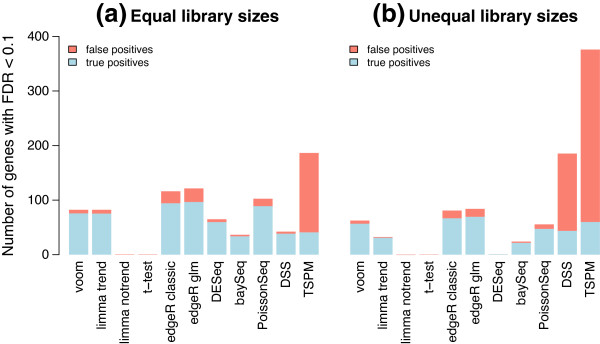
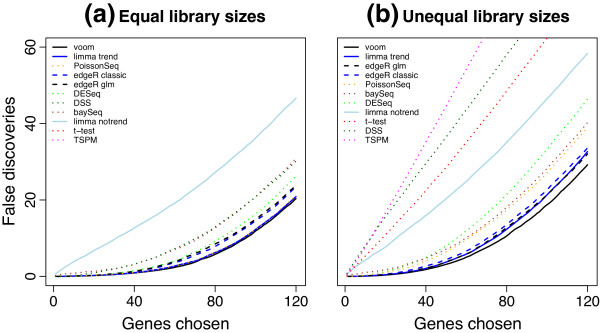
- In simulations with 6 libraries, 10,000 genes, and 100 upregulated plus 100 downregulated genes, voom had the best power among methods that controlled type I and FDR error rates; with unequal library sizes, voom had the best power except for edgeR while maintaining low FDR. edgeR and PoissonSeq were somewhat liberal, while DESeq and DSS became very conservative when library sizes were unequal.
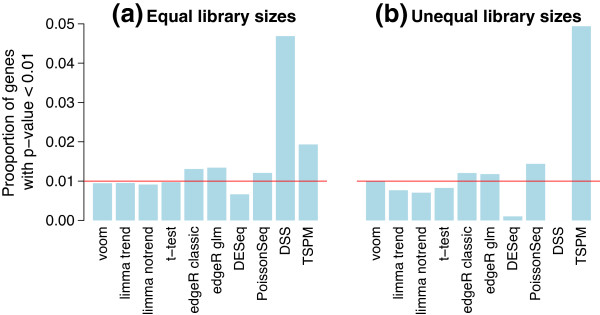
- For type I error at P<0.01, NB/Poisson methods did not control error accurately; voom was close to the nominal rate in both equal and unequal library size scenarios, while limma-trend was similar when sizes were equal but conservative when unequal. In SEQC HBRR technical replicates, voom returned no DE genes at 5% FDR for 6 of 7 possible partitions.
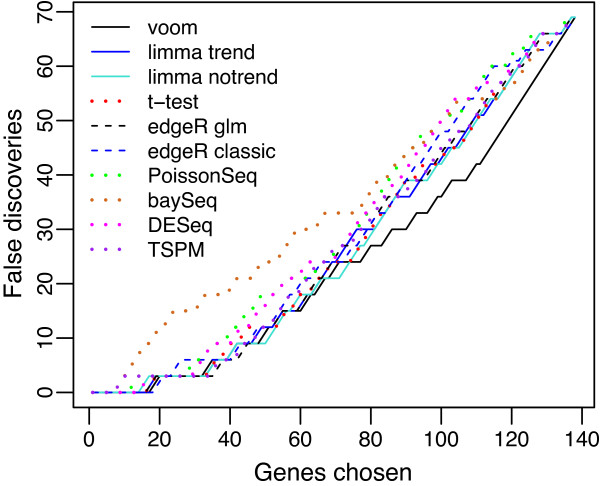
- voom had the lowest FDR at any cutoff in simulations and in SEQC spike-in data; the spike-in analysis used 138 transcripts, half truly DE and half non-DE.
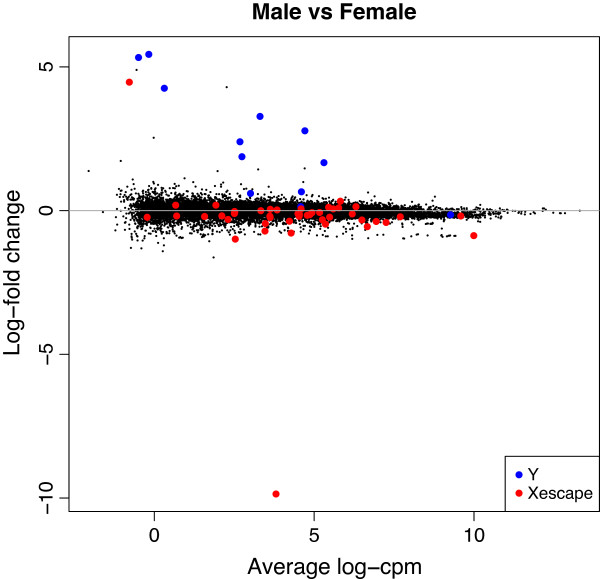
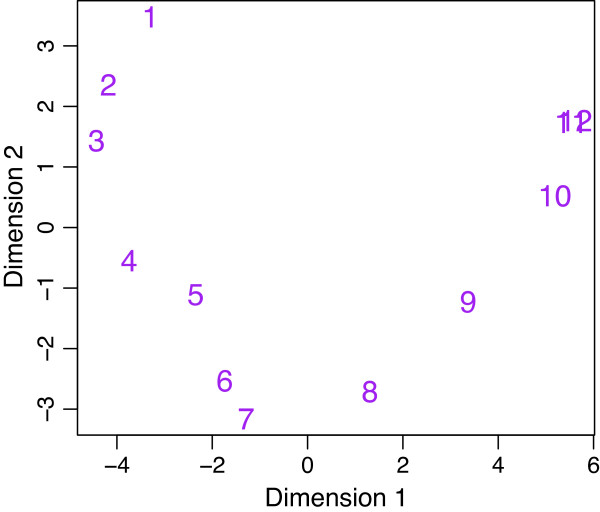
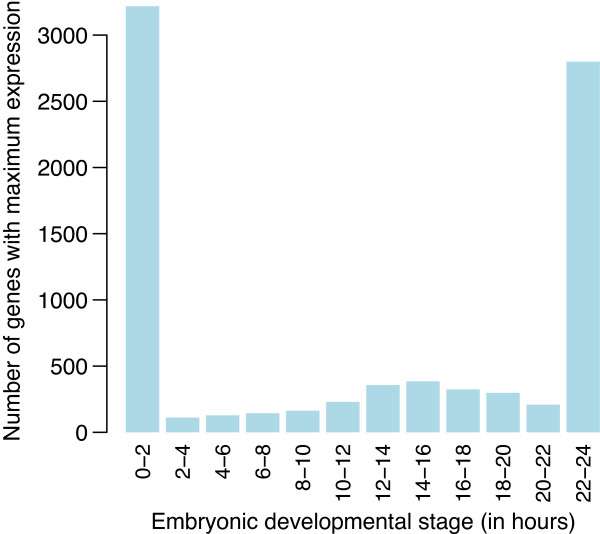
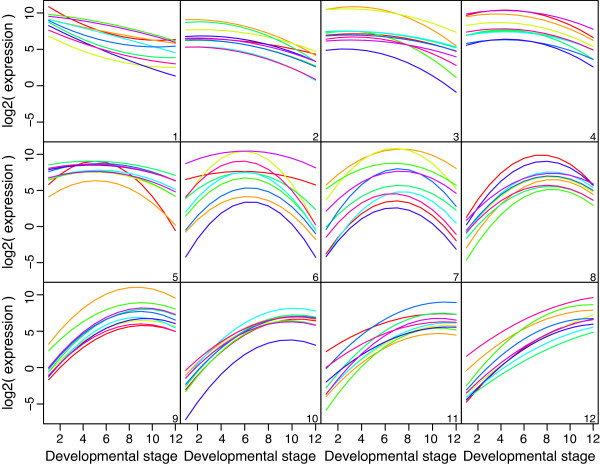
- In the Nigerian lymphoblastoid dataset (29 males, 40 females), voom found 16 genes upregulated in males and 43 upregulated in females at 5% FDR, with XIST the top gene; ROAST and CAMERA confirmed male-specific Y chromosome genes and X-inactivation escape genes. In Drosophila embryonic stages, 8,366 of 14,869 expressed genes showed a significant trend at 5% FDR.
Methods
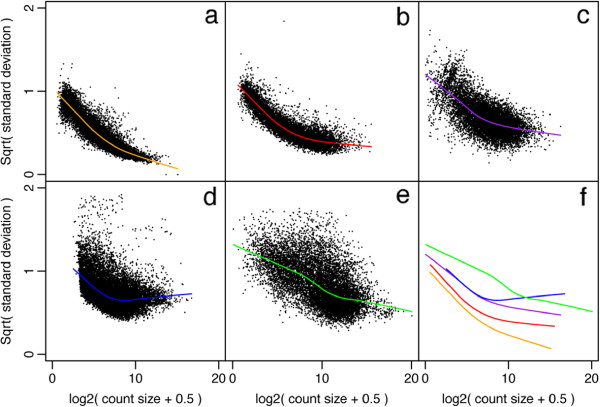
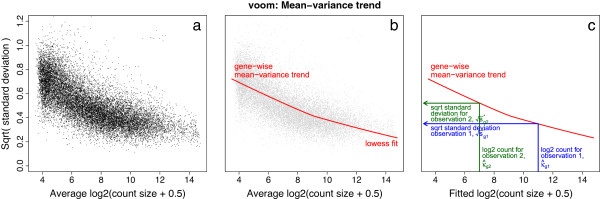
- voom works on log-cpm values: fit gene-wise linear models, estimate residual standard deviations as a function of average log-count using a robust LOWESS trend, interpolate that trend to each observation’s predicted count, and use inverse squared predicted standard deviation as a precision weight in limma’s empirical Bayes pipeline. limma-trend applies the mean-variance trend at the gene level instead.
- Simulations generated NB counts for 6 libraries and 10,000 genes, with baseline cpm distribution matched to real data and dispersion trend ψ^1/2 = 0.2 + λ^-1/2; gene-wise dispersions were drawn from an inverse chi-square with 40 degrees of freedom. Equal library sizes used 11 million reads per library; unequal sizes used 20 million for odd libraries and 2 million for even libraries. Results were averaged over 100 simulations and compared with edgeR, DESeq, baySeq, TSPM, PoissonSeq, and DSS.
- Case studies used SEQC pilot libraries (16 libraries in groups A–D; 4 HBRR libraries; 92 spike-in transcripts expanded to 138), Nigerian lymphoblastoid cell lines from 69 unrelated individuals, Drosophila melanogaster embryonic stages (12 libraries), and C57BL/6J versus DBA/2J mouse striatum data. Gene set testing used ROAST and CAMERA.
Limitations
- Stated: gene-level analysis does not allow different isoforms of the same gene to be differentially expressed in different directions, though voom can be run at exon level. The Drosophila quadratic time trends do not match all intricacies of gene expression over time. Simulations were generated under NB assumptions, and other scenarios may differ. baySeq was excluded from the type I error comparison because it does not return P values.
- Evident: the Drosophila analysis has no replicate libraries, so variances are estimated by assuming smooth expression over time and fitting quadratic trends. Performance comparisons rely on specific simulation settings and default software pipelines, and the case studies illustrate use rather than provide independent experimental validation.
Model-written summary. Check it against the paper before relying on it.
Integrity signals
Registry
Cites
Statistics
Figures
Verification
Claims the paper makes
1 Valid · 4 Not valid · 34 Not checked · 142 Own results and interpretations
The cited sources support only part of this claim — read each source’s verdict below.
In the paper
“voom and limma could be used to analyze any gene-level RNA-seq differential expression experiment, including those with multiple experimental factors [34].”
§ voom: precision weights unlock linear model analysis tools for RNA-seq read counts > Results > Development stages of Drosophila melanogaster
What the sources say
- Partly supportedcites [34] McCarthy DJ Chen Y Smyth GK Differential expression analysis of multifactor RNA-Seq experiments with respect to biological variation Nucleic Acids Res 2012 40 4288 4297 10.1093/nar/gks042 22287627 PMC3378882 sourceExperimental — accuracy not yet measured
Our copy of McCarthy et al. (2012) supports the scope part of the claim: the INTRODUCTION states 'The methodology provides a pipeline for analysing arbitrarily complex RNA-Seq experiments provided that there is some degree of biological replication', the Abstract describes analysis of 'complex experiments involving multiple treatment conditions and blocking variables', and the article's focus is gene-level counts ('For simplicity... counts are summarized at the gene level', RESULTS > Technical and biological variation). However, the capability is attributed to negative-binomial generalized linear models implemented in the edgeR package (DISCUSSION: 'The methods described in this article are implemented in the software package edgeR'), and no passage of our copy mentions voom or limma at all — the closest the paper comes to normal-linear-model analysis of transformed counts is a critique in the INTRODUCTION that transforming counts to approximate normality and analysing as for microarray data 'is however not fully tuned to the characteristics of read count data'. Thus the specific tools named in the citing sentence (voom and limma) are not this paper's methods, while the multifactor/gene-level applicability is. (LLM, conf=0.72)
hedged- Asserted: passes — The authors put it forward as true.
- Checkable: passes — It can be checked against evidence.
- Load-bearing: unclear — It is unclear whether the paper’s conclusions depend on it.
- Based: passes — The paper gives a reason why it holds.
- Rests on an assumption not shown here.
- Partly supported
A result the paper reports from its own data — it cites no other source for it, so there is none to check. The quote shows it is in the paper.
In the paper
“When the library sizes are unequal, DSS and DESeq became extremely conservative.”
§ voom: precision weights unlock linear model analysis tools for RNA-seq read counts > Results > voom and limma-trend control the type I error rate correctly
plainstates a cause- Asserted: passes — The authors put it forward as true.
- Checkable: passes — It can be checked against evidence.
- Load-bearing: unclear — It is unclear whether the paper’s conclusions depend on it.
- Based: passes — The paper gives a reason why it holds.
A result the paper reports from its own data — it cites no other source for it, so there is none to check. The quote shows it is in the paper.
In the paper
“Figures 3 and 4 together show that voom has the best power of those methods that correctly control the type I and FDR error rates.”
§ voom: precision weights unlock linear model analysis tools for RNA-seq read counts > Results > voom has the best power of methods that control the type I error rate
plain- Asserted: passes — The authors put it forward as true.
- Checkable: passes — It can be checked against evidence.
- Load-bearing: passes — The paper’s conclusions depend on it.
- Based: passes — The paper gives a reason why it holds.
- Rests on an assumption not shown here.
A result the paper reports from its own data — it cites no other source for it, so there is none to check. The quote shows it is in the paper.
In the paper
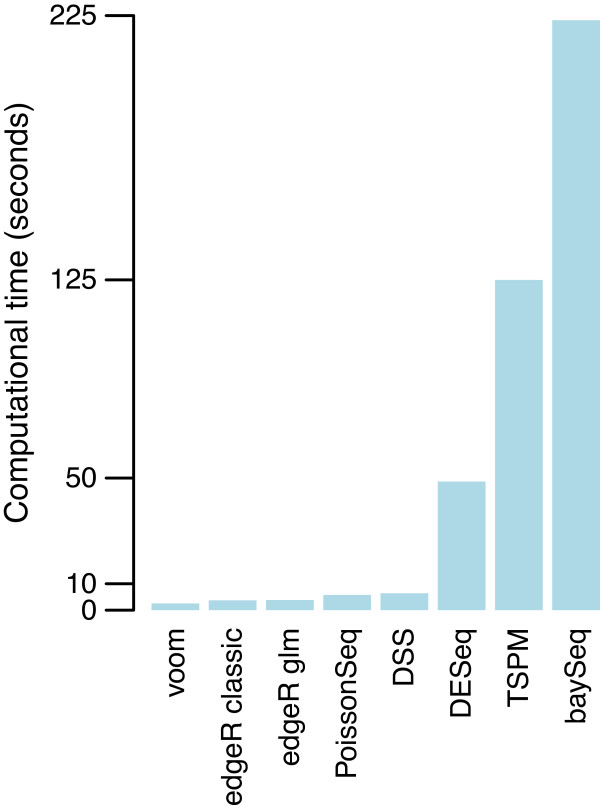
“voom is easily the fastest of the methods compared, with edgeR-classic next fastest (Figure 7).”
§ voom: precision weights unlock linear model analysis tools for RNA-seq read counts > Results > voom and limma-trend are faster than specialist RNA-seq methods
plain- Asserted: passes — The authors put it forward as true.
- Checkable: passes — It can be checked against evidence.
- Load-bearing: unclear — It is unclear whether the paper’s conclusions depend on it.
- Based: passes — The paper gives a reason why it holds.
A result the paper reports from its own data — it cites no other source for it, so there is none to check. The quote shows it is in the paper.
In the paper
“Genes peaking at the last stage tended to be associated with precursor metabolites and energy, the oxidation-reduction process and with metabolic pathways.”
§ voom: precision weights unlock linear model analysis tools for RNA-seq read counts > Results > Development stages of Drosophila melanogaster
plainstates an association- Asserted: passes — The authors put it forward as true.
- Checkable: passes — It can be checked against evidence.
- Load-bearing: unclear — It is unclear whether the paper’s conclusions depend on it.
- Based: passes — The paper gives a reason why it holds.
79 more claims
Create a free account to see all 181 claims and to verify the 45 references still open.
- It may state two separate claims as one. 48
- Probably not a substantial claim. 68
- The quote only partly states this claim. 2
Claims other papers make about this one
Each is checked against this paper’s own text: does it say what the citing paper says it does?
The source backs part of the claim, not all of it — or backs it for a different population, condition or comparison.
In the citing paper
“First, specific caution is needed with all the methods when the number of replicate samples is very small or for genes that are expressed at very low levels [55, 64, 209].”
From A survey of best practices for RNA-seq data analysis (2016) · cites this paper as [55]
Experimental — accuracy not yet measuredThe cited source says what the claim attributes to it.
In the citing paper
“Methods for transforming normalized counts of RNA-seq reads while learning the variance structure of the data have been shown to perform well in comparison to the discrete distribution approaches described above [55, 56].”
From A survey of best practices for RNA-seq data analysis (2016) · cites this paper as [55]
The cited source says what the claim attributes to it.
In the citing paper
“First, the global variance estimate can now incorporate a mean-variance trend (10,17,18).”
From limma powers differential expression analyses for RNA-sequencing and microarray studies (2015) · cites this paper as [10]
The cited source says what the claim attributes to it.
In the citing paper
“This approach is commonly applied in learning error models for bulk RNA-seq in the context of differential expression analysis [22–25], but to our knowledge has not been previously applied in this context for single-cell normalization.”
From Normalization and variance stabilization of single-cell RNA-seq data using regularized negative binomial regression (2019) · cites this paper as [25]
The check wasn’t confident either way, so it gives no verdict — never disputed.
In the citing paper
“SAMseq performs well in terms of FDR but presents an acceptable sensitivity when the number of replicates is relatively high, at least 10 [20, 55, 209].”
From A survey of best practices for RNA-seq data analysis (2016) · cites this paper as [55]
Experimental — accuracy not yet measured
12 more claims about this paper
Create a free account to see every claim other papers make about this one.
Self-check
Percentages, sums and reported differences re-computed from the paper’s own numbers.
Each contradiction between two passages listed here was confirmed by an independent check.
Rated minor: it would not touch a result — a value no result rests on, a p-value that stays on the same side of the significance level, or a conflict that is clerical, resolved elsewhere in the paper, or outside its own findings.
In the paper
§ voom: precision weights unlock linear model analysis tools for RNA-seq read counts > Materials and methods > Lymphoblastoid cell lines from Nigerian individuals
“Read counts, summarized by Ensembl gene, and transcript annotations were obtained from version 1.0.9 of the tweeDEseqCountData Bioconductor package [43]”
§ voom: precision weights unlock linear model analysis tools for RNA-seq read counts > Materials and methods > Software
“The results presented in this article were obtained using R version 3.0.0 and the software packages limma 3.16.2, edgeR 3.2.3, baySeq 1.14.1, DESeq 1.12.0, DSS 1.4.0, PoissonSeq 1.1.2 and tweeDEseqCountData 1.0.8.”
Citations
Cites
Subramanian, A., Tamayo, P., Mootha, V. K., Mukherjee, S., Ebert, B. L., Gillette, M. A., Paulovich, A., Pomeroy, S. L., Golub, T. R., Lander, E. S., et al. (2005) · Proceedings of the National Academy of Sciences · doi:10.1073/pnas.0506580102 · Cited by 53,625 · cited 1×
“This includes methods for differential expression analysis [1, 2, 3], random effects [4, 5], gene set enrichment [6], gene set testing [7, 8] and so on.”
MethodRobinson, M. D., McCarthy, D. J., & Smyth, G. K. (2010) · Bioinformatics · doi:10.1093/bioinformatics/btp616 · Cited by 41,364 · cited 2×
“Specifically we used the goodTuringProportions function of the edgeR package [12], which implements the Good-Turing algorithm [55], to predict the true proportion of total RNA attributable to each gene.”
BackgroundMethodSelf-citationfeatureCounts: an efficient general purpose program for assigning sequence reads to genomic features
Liao, Y., Smyth, G. K., & Shi, W. (2014) · Bioinformatics · doi:10.1093/bioinformatics/btt656 · Cited by 27,219
Self-citation(2005) · Statistics for Biology and Health · doi:10.1007/0-387-27255-0_9 · Cited by 20,133
McCullagh, P., & Nelder, J. A. (1989) · doi:10.1007/978-1-4899-3242-6 · Cited by 16,836
Differential expression analysis for sequence count data
Anders, S., & Huber, W. (2010) · Genome Biology · doi:10.1186/gb-2010-11-10-r106 · Cited by 15,581
Mapping and quantifying mammalian transcriptomes by RNA-Seq
Mortazavi, A., Williams, B. A., McCue, K., Schaeffer, L., & Wold, B. (2008) · Nature Methods · doi:10.1038/nmeth.1226 · Cited by 13,696
RNA-Seq: a revolutionary tool for transcriptomics
Wang, Z., Gerstein, M., & Snyder, M. (2009) · Nature Reviews Genetics · doi:10.1038/nrg2484 · Cited by 13,174 · cited 1×
“olutionary new technology for expression profiling [10].”
Bioconductor: open software development for computational biology and bioinformatics
Gentleman, R. C., Carey, V. J., Bates, D. M., Bolstad, B., Dettling, M., Dudoit, S., Ellis, B., Gautier, L., Ge, Y., Gentry, J., et al. (2004) · Genome Biology · doi:10.1186/gb-2004-5-10-r80 · Cited by 12,172 · cited 1×
“All of these packages are part of the Bioconductor project [67,68], except for PoissonSeq, which is part of the Comprehensive R Archive Network [69].”
BackgroundSelf-citationSmyth, G. K. (2004) · Statistical Applications in Genetics and Molecular Biology · doi:10.2202/1544-6115.1027 · Cited by 11,829
Self-citation
Research works printed but not linked: 2
- Law CW Chen Y Shi W Smyth GK Supplementary information for ‘Voom: precision weights unlock linear model analysis tools for RNA-seq read counts’ [ http://bioinf.wehi.edu.au/voom] PMC4053721 24485249
- Frazee A Langmead B Leek J ReCount: a multi-experiment resource of analysis-ready RNA-seq gene count datasets [ http://bowtie-bio.sourceforge.net/recount] PMC3229291 22087737
Cited by
Items 201–300 of 7,059
M3Drop: dropout-based feature selection for scRNASeq
Andrews, T. S., & Hemberg, M. (2019) · Bioinformatics · doi:10.1093/bioinformatics/bty1044 · Cited by 288
Lee, J. H., Shklovskaya, E., Lim, S. Y., Carlino, M. S., Menzies, A. M., Stewart, A., Pedersen, B., Irvine, M., Alavi, S., Yang, J. Y. H., et al. (2020) · Nature Communications · doi:10.1038/s41467-020-15726-7 · Cited by 288
Kong, Y., Rose, C. M., Cass, A. A., Williams, A. G., Darwish, M., Lianoglou, S., Haverty, P. M., Tong, A.-J., Blanchette, C., Albert, M. L., et al. (2019) · Nature Communications · doi:10.1038/s41467-019-13035-2 · Cited by 285
Distinct structural classes of activating FOXA1 alterations in advanced prostate cancer
Parolia, A., Cieslik, M., Chu, S.-C., Xiao, L., Ouchi, T., Zhang, Y., Wang, X., Vats, P., Cao, X., Pitchiaya, S., et al. (2019) · Nature · doi:10.1038/s41586-019-1347-4 · Cited by 284
Transcriptional Programming of Normal and Inflamed Human Epidermis at Single-Cell Resolution
Cheng, J. B., Sedgewick, A. J., Finnegan, A. I., Harirchian, P., Lee, J., Kwon, S., Fassett, M. S., Golovato, J., Gray, M., Ghadially, R., et al. (2018) · Cell Reports · doi:10.1016/j.celrep.2018.09.006 · Cited by 284
scVAE: variational auto-encoders for single-cell gene expression data
Grønbech, C. H., Vording, M. F., Timshel, P. N., Sønderby, C. K., Pers, T. H., & Winther, O. (2020) · Bioinformatics · doi:10.1093/bioinformatics/btaa293 · Cited by 281
Advanced Applications of RNA Sequencing and Challenges
Han, Y., Gao, S., Muegge, K., Zhang, W., & Zhou, B. (2015) · Bioinformatics and Biology Insights · doi:10.4137/bbi.s28991 · Cited by 281
Birkenbihl, R. P., Kracher, B., Roccaro, M., & Somssich, I. E. (2017) · The Plant Cell · doi:10.1105/tpc.16.00681 · Cited by 281
“Geneswith <100 reads in all samples together were discarded; subsequently, the count data of the remaining genes were TMM normalized and log2 transformed using functions ‘calcNormFactors’ (R package EdgeR; Robinson et al., 2010) and ‘voom’ (R package limma; Law et al., 2014).”
Pisu, D., Huang, L., Grenier, J. K., & Russell, D. G. (2020) · Cell Reports · doi:10.1016/j.celrep.2019.12.033 · Cited by 280
“…sequenced to saturation (Table 1) and a range of different statistical approaches for RNA-seq analysis (edgeR [Robinson et al., 2010], limma-voom [Law et al., 2014; Ritchie et al., 2015], DESeq2 [Love et al., 2014], IHW [Ignatiadis et al., 2016], Cuffdiff [Trapnell et al., 2012], and APEGLM [Zhu…”
Kleppe, M., Koche, R., Zou, L., van Galen, P., Hill, C. E., Dong, L., De Groote, S., Papalexi, E., Hanasoge Somasundara, A. V., Cordner, K., et al. (2018) · Cancer Cell · doi:10.1016/j.ccell.2017.11.009 · Cited by 279
Lehmann, B. D., Colaprico, A., Silva, T. C., Chen, J., An, H., Ban, Y., Huang, H., Wang, L., James, J. L., Balko, J. M., et al. (2021) · Nature Communications · doi:10.1038/s41467-021-26502-6 · Cited by 279
Accurate estimation of cell-type composition from gene expression data
Tsoucas, D., Dong, R., Chen, H., Zhu, Q., Guo, G., & Yuan, G.-C. (2019) · Nature Communications · doi:10.1038/s41467-019-10802-z · Cited by 278
Landscape of stimulation-responsive chromatin across diverse human immune cells
Calderon, D., Nguyen, M. L. T., Mezger, A., Kathiria, A., Müller, F., Nguyen, V., Lescano, N., Wu, B., Trombetta, J., Ribado, J. V., et al. (2019) · Nature Genetics · doi:10.1038/s41588-019-0505-9 · Cited by 278
“After using trimmed mean of M-values (TMM) to estimate scaling factors (56) and applying the voom transformation (57), we used the ‘removeBatchEffect’ function from limma to regress out batch and sample quality effects (58).”
Guler, G. D., Tindell, C. A., Pitti, R., Wilson, C., Nichols, K., KaiWai Cheung, T., Kim, H.-J., Wongchenko, M., Yan, Y., Haley, B., et al. (2017) · Cancer Cell · doi:10.1016/j.ccell.2017.07.002 · Cited by 277
Glodde, N., Bald, T., van den Boorn-Konijnenberg, D., Nakamura, K., O’Donnell, J. S., Szczepanski, S., Brandes, M., Eickhoff, S., Das, I., Shridhar, N., et al. (2017) · Immunity · doi:10.1016/j.immuni.2017.09.012 · Cited by 277
“…Genomics Data Server Package author: Jacobsen, A. https://CRAN.R-project.org/packages/cgdsr/ index.html Voom - algorithm (implemented in limma) Law et al., 2014 https://doi.org/10.1186/gb-2014-15-2-r29 https://bioconductor.org/packages/release/ bioc/html/limma.html RNA-seq algorithm As…”
InfluentialSebestyén, E., Singh, B., Miñana, B., Pagès, A., Mateo, F., Pujana, M. A., Valcárcel, J., & Eyras, E. (2016) · Genome Research · doi:10.1101/gr.199935.115 · Cited by 276
“Differential expression Quantile normalization and voom (Law et al. 2014) transformation were performed on gene read counts.”
MethodWeisel, F. J., Mullett, S. J., Elsner, R. A., Menk, A. V., Trivedi, N., Luo, W., Wikenheiser, D., Hawse, W. F., Chikina, M., Smita, S., et al. (2020) · Nature Immunology · doi:10.1038/s41590-020-0598-4 · Cited by 274
“Gene-level counts were determined using featureCounts 58 , and raw counts were analyzed for differential expression using the voom method 59 in the limma R package 60 .”
Lopes, K. D. P., Snijders, G. J. L., Humphrey, J., Allan, A., Sneeboer, M. A. M., Navarro, E., Schilder, B. M., Vialle, R. A., Parks, M., Missall, R., et al. (2022) · Nature Genetics · doi:10.1038/s41588-021-00976-y · Cited by 273
A statistical approach for identifying differential distributions in single-cell RNA-seq experiments
Korthauer, K. D., Chu, L.-F., Newton, M. A., Li, Y., Thomson, J., Stewart, R., & Kendziorski, C. (2016) · Genome Biology · doi:10.1186/s13059-016-1077-y · Cited by 273
“The analysis of log-transformed counts from bulk RNA-seq has been shown to perform as well as utilizing count-based modeling assumptions [33, 34].”
MethodTranscriptome-Wide Mapping of RNA 5-Methylcytosine in Arabidopsis mRNAs and Noncoding RNAs
David, R., Burgess, A., Parker, B., Li, J., Pulsford, K., Sibbritt, T., Preiss, T., & Searle, I. R. (2017) · The Plant Cell · doi:10.1105/tpc.16.00751 · Cited by 273
“by applying cyclic loess normalization (Law et al., 2014)”
diffcyt: Differential discovery in high-dimensional cytometry via high-resolution clustering
Weber, L. M., Nowicka, M., Soneson, C., & Robinson, M. D. (2019) · Communications Biology · doi:10.1038/s42003-019-0415-5 · Cited by 273
“For the differential analyses, we use methods from edgeR 53 [15, 16], limma [17], and voom [18], which are widely used in transcriptomics; in addition, we 54 include alternative methods adapted from the classic regression-based framework [12].”
MethodFisch, K. M., Gamini, R., Alvarez-Garcia, O., Akagi, R., Saito, M., Muramatsu, Y., Sasho, T., Koziol, J. A., Su, A. I., & Lotz, M. K. (2018) · Osteoarthritis and Cartilage · doi:10.1016/j.joca.2018.07.012 · Cited by 270
“Differential expression analysis was performed with limma-voom [26] with the design ~0+condition.”
Cancer transcriptome profiling at the juncture of clinical translation
Cieślik, M., & Chinnaiyan, A. M. (2018) · Nature Reviews Genetics · doi:10.1038/nrg.2017.96 · Cited by 269
The genetic basis of parental care evolution in monogamous mice
Bendesky, A., Kwon, Y.-M., Lassance, J.-M., Lewarch, C. L., Yao, S., Peterson, B. K., He, M. X., Dulac, C., & Hoekstra, H. E. (2017) · Nature · doi:10.1038/nature22074 · Cited by 268
Klein, H.-U., McCabe, C., Gjoneska, E., Sullivan, S. E., Kaskow, B. J., Tang, A., Smith, R. V., Xu, J., Pfenning, A. R., Bernstein, B. E., et al. (2019) · Nature Neuroscience · doi:10.1038/s41593-018-0291-1 · Cited by 267
“Mouse H3K9ac data were analyzed using the voom method implemented in the R package limma 49 .”
InfluentialA systematic evaluation of single cell RNA-seq analysis pipelines
Vieth, B., Parekh, S., Ziegenhain, C., Enard, W., & Hellmann, I. (2019) · Nature Communications · doi:10.1038/s41467-019-12266-7 · Cited by 265
Programmable RNA targeting with the single-protein CRISPR effector Cas7-11
Özcan, A., Krajeski, R., Ioannidi, E., Lee, B., Gardner, A., Makarova, K. S., Koonin, E. V., Abudayyeh, O. O., & Gootenberg, J. S. (2021) · Nature · doi:10.1038/s41586-021-03886-5 · Cited by 263
MYB orchestrates T cell exhaustion and response to checkpoint inhibition
Tsui, C., Kretschmer, L., Rapelius, S., Gabriel, S. S., Chisanga, D., Knöpper, K., Utzschneider, D. T., Nüssing, S., Liao, Y., Mason, T., et al. (2022) · Nature · doi:10.1038/s41586-022-05105-1 · Cited by 263
Self-citationThe Dynamic Epigenetic Landscape of the Retina During Development, Reprogramming, and Tumorigenesis
Aldiri, I., Xu, B., Wang, L., Chen, X., Hiler, D., Griffiths, L., Valentine, M., Shirinifard, A., Thiagarajan, S., Sablauer, A., et al. (2017) · Neuron · doi:10.1016/j.neuron.2017.04.022 · Cited by 262
“…version 1.0-6 R package https://cran.r-project.org/web/packages/ bitops/index.html Voom function from edgeR 3.12.1, limma 3.26.9 Law et al., 2014 http://dx.doi.org/10.1186/gb-2014-15-2-r29 ggplot2 version 2.2.1 Wickham, 2009 http://ggplot2.org StrongARM Downing et al., 2012…”
BackgroundInfluentialTranslation control of the immune checkpoint in cancer and its therapeutic targeting
Xu, Y., Poggio, M., Jin, H. Y., Shi, Z., Forester, C. M., Wang, Y., Stumpf, C. R., Xue, L., Devericks, E., So, L., et al. (2019) · Nature Medicine · doi:10.1038/s41591-018-0321-2 · Cited by 261
St. Jude Cloud: A Pediatric Cancer Genomic Data-Sharing Ecosystem
McLeod, C., Gout, A. M., Zhou, X., Thrasher, A., Rahbarinia, D., Brady, S. W., Macias, M., Birch, K., Finkelstein, D., Sunny, J., et al. (2021) · Cancer Discovery · doi:10.1158/2159-8290.cd-20-1230 · Cited by 259
Perez-Bermejo, J. A., Kang, S., Rockwood, S. J., Simoneau, C. R., Joy, D. A., Silva, A. C., Ramadoss, G. N., Flanigan, W. R., Fozouni, P., Li, H., et al. (2021) · Science Translational Medicine · doi:10.1126/scitranslmed.abf7872 · Cited by 259
Teixeira, V. H., Pipinikas, C. P., Pennycuick, A., Lee-Six, H., Chandrasekharan, D., Beane, J., Morris, T. J., Karpathakis, A., Feber, A., Breeze, C. E., et al. (2019) · Nature Medicine · doi:10.1038/s41591-018-0323-0 · Cited by 259
The androgen receptor is a tumor suppressor in estrogen receptor–positive breast cancer
Hickey, T. E., Selth, L. A., Chia, K. M., Laven-Law, G., Milioli, H. H., Roden, D., Jindal, S., Hui, M., Finlay-Schultz, J., Ebrahimie, E., et al. (2021) · Nature Medicine · doi:10.1038/s41591-020-01168-7 · Cited by 257
Sensitive and powerful single-cell RNA sequencing using mcSCRB-seq
Bagnoli, J. W., Ziegenhain, C., Janjic, A., Wange, L. E., Vieth, B., Parekh, S., Geuder, J., Hellmann, I., & Enard, W. (2018) · Nature Communications · doi:10.1038/s41467-018-05347-6 · Cited by 255
Browder, K. C., Reddy, P., Yamamoto, M., Haghani, A., Guillen, I. G., Sahu, S., Wang, C., Luque, Y., Prieto, J., Shi, L., et al. (2022) · Nature Aging · doi:10.1038/s43587-022-00183-2 · Cited by 253
Evaluation of variability in human kidney organoids
Phipson, B., Er, P. X., Combes, A. N., Forbes, T. A., Howden, S. E., Zappia, L., Yen, H.-J., Lawlor, K. T., Hale, L. J., Sun, J., et al. (2019) · Nature Methods · doi:10.1038/s41592-018-0253-2 · Cited by 253
Molecular Anatomy of the Developing Human Retina
Hoshino, A., Ratnapriya, R., Brooks, M. J., Chaitankar, V., Wilken, M. S., Zhang, C., Starostik, M. R., Gieser, L., La Torre, A., Nishio, M., et al. (2017) · Developmental Cell · doi:10.1016/j.devcel.2017.10.029 · Cited by 251
“30.12) (Law et al., 2014).”
InfluentialPartial exhaustion of CD8 T cells and clinical response to teplizumab in new-onset type 1 diabetes
Long, S. A., Thorpe, J., DeBerg, H. A., Gersuk, V., Eddy, J. A., Harris, K. M., Ehlers, M., Herold, K. C., Nepom, G. T., & Linsley, P. S. (2016) · Science Immunology · doi:10.1126/sciimmunol.aai7793 · Cited by 250
Transposable Elements and Their KRAB-ZFP Controllers Regulate Gene Expression in Adult Tissues
Ecco, G., Cassano, M., Kauzlaric, A., Duc, J., Coluccio, A., Offner, S., Imbeault, M., Rowe, H. M., Turelli, P., & Trono, D. (2016) · Developmental Cell · doi:10.1016/j.devcel.2016.02.024 · Cited by 250
“Sequencing depth normalization and differential expression analyses were performed using the voom function of the Bioconductor package LIMMA (Law et al., 2014).”
MethodProteobacteria explain significant functional variability in the human gut microbiome
Bradley, P. H., & Pollard, K. S. (2017) · Microbiome · doi:10.1186/s40168-017-0244-z · Cited by 249
“Similar mean-variance relationships are actually observed in other high-throughput sequencing applications, such as RNAseq [39, 40] (which is why standard hypothesis tests based on assuming normality are inappropriate for RNAseq data, if the correct variance-stabilizing transformations are not applied [40]).”
BackgroundInfluentialGenetic alterations of the cohesin complex genes in myeloid malignancies
Thota, S., Viny, A. D., Makishima, H., Spitzer, B., Radivoyevitch, T., Przychodzen, B., Sekeres, M. A., Levine, R. L., & Maciejewski, J. P. (2014) · Blood · doi:10.1182/blood-2014-04-567057 · Cited by 249
“eBayes(), which can be applied to both microarray and RNA-sequencing data.(24) Further analyses were performed using oncomine (https://www.”
MethodSacco, K., Castagnoli, R., Vakkilainen, S., Liu, C., Delmonte, O. M., Oguz, C., Kaplan, I. M., Alehashemi, S., Burbelo, P. D., Bhuyan, F., et al. (2022) · Nature Medicine · doi:10.1038/s41591-022-01724-3 · Cited by 247
Alvarez, M., Schrey, A. W., & Richards, C. L. (2015) · Molecular Ecology · doi:10.1111/mec.13055 · Cited by 247
“Law et al. (2014) have proposed a newer methodology, which generates a precision weight for each observation.”
MethodCollado-Torres, L., Burke, E. E., Peterson, A., Shin, J., Straub, R. E., Rajpurohit, A., Semick, S. A., Ulrich, W. S., Price, A. J., Valencia, C., et al. (2019) · Neuron · doi:10.1016/j.neuron.2019.05.013 · Cited by 242
Cell type-specific transcriptomics of hypothalamic energy-sensing neuron responses to weight-loss
Henry, F. E., Sugino, K., Tozer, A., Branco, T., & Sternson, S. M. (2015) · eLife · doi:10.7554/elife.09800 · Cited by 240
“To detect DEG, we used limma-voom packages (Law et al., 2014; Ritchie et al., 2015).”
MethodThe genomic landscape of tuberous sclerosis complex
Martin, K. R., Zhou, W., Bowman, M. J., Shih, J., Au, K. S., Dittenhafer-Reed, K. E., Sisson, K. A., Koeman, J., Weisenberger, D. J., Cottingham, S. L., et al. (2017) · Nature Communications · doi:10.1038/ncomms15816 · Cited by 238
“Raw read counts obtained using FeatureCounts were imported into R for differential expression analysis via limma 38 and counts per million (CPM) calculated and log2-transformed using voom 69 followed by trimmed mean of M-values (TMM) normalization.”
Herring, C. A., Simmons, R. K., Freytag, S., Poppe, D., Moffet, J. J. D., Pflueger, J., Buckberry, S., Vargas-Landin, D. B., Clément, O., Echeverría, E. G., et al. (2022) · Cell · doi:10.1016/j.cell.2022.09.039 · Cited by 238
“Differential expression analysis of genes over development Differential expression analysis was carried out with the limma-voom pipeline (Law et al., 2014) from the edgeR (Robinson et al.”
Measuring differential gene expression with RNA-seq: challenges and strategies for data analysis
Finotello, F., & Di Camillo, B. (2015) · Briefings in Functional Genomics · doi:10.1093/bfgp/elu035 · Cited by 238
“proposed to apply ‘limma’ [83], a method developed for microarrays and based on the normal distribution, to analyze RNA-seq data [78].”
Methodm6A mRNA methylation regulates human β-cell biology in physiological states and in type 2 diabetes
De Jesus, D. F., Zhang, Z., Kahraman, S., Brown, N. K., Chen, M., Hu, J., Gupta, M. K., He, C., & Kulkarni, R. N. (2019) · Nature Metabolism · doi:10.1038/s42255-019-0089-9 · Cited by 238
A community approach to mortality prediction in sepsis via gene expression analysis
Sweeney, T. E., Perumal, T. M., Henao, R., Nichols, M., Howrylak, J. A., Choi, A. M., Bermejo-Martin, J. F., Almansa, R., Tamayo, E., Davenport, E. E., et al. (2018) · Nature Communications · doi:10.1038/s41467-018-03078-2 · Cited by 237
Yi, M., Nissley, D. V., McCormick, F., & Stephens, R. M. (2020) · Scientific Reports · doi:10.1038/s41598-020-66986-8 · Cited by 235
Immune Cytolytic Activity Stratifies Molecular Subsets of Human Pancreatic Cancer
Balli, D., Rech, A. J., Stanger, B. Z., & Vonderheide, R. H. (2017) · Clinical Cancer Research · doi:10.1158/1078-0432.ccr-16-2128 · Cited by 235
“between cytolytic-high (top 10th decile cytolytic index) and cytolytic-low (bottom 25th quartile cytolytic index) across TCGA datasets was calculated using gene-level raw counts with the R/Bioconductor package "limma" with voom transformation withquantile normalization (22).”
MethodKowanetz, M., Zou, W., Gettinger, S. N., Koeppen, H., Kockx, M., Schmid, P., Kadel, E. E., Wistuba, I., Chaft, J., Rizvi, N. A., et al. (2018) · Proceedings of the National Academy of Sciences · doi:10.1073/pnas.1802166115 · Cited by 235
“RNAseq data were normalized via voom (42) using size factors estimated by DESeq2 (43) within individual trials and were log2 transformed for nontrial samples.”
MethodSex-specific adipose tissue imprinting of regulatory T cells
Vasanthakumar, A., Chisanga, D., Blume, J., Gloury, R., Britt, K., Henstridge, D. C., Zhan, Y., Torres, S. V., Liene, S., Collins, N., et al. (2020) · Nature · doi:10.1038/s41586-020-2040-3 · Cited by 234
Self-citationZhang, Y., Pitchiaya, S., Cieślik, M., Niknafs, Y. S., Tien, J. C.-Y., Hosono, Y., Iyer, M. K., Yazdani, S., Subramaniam, S., Shukla, S. K., et al. (2018) · Nature Genetics · doi:10.1038/s41588-018-0120-1 · Cited by 232
High-fidelity Cas13 variants for targeted RNA degradation with minimal collateral effects
Tong, H., Huang, J., Xiao, Q., He, B., Dong, X., Liu, Y., Yang, X., Han, D., Wang, Z., Wang, X., et al. (2023) · Nature Biotechnology · doi:10.1038/s41587-022-01419-7 · Cited by 230
Virassamy, B., Caramia, F., Savas, P., Sant, S., Wang, J., Christo, S. N., Byrne, A., Clarke, K., Brown, E., Teo, Z. L., et al. (2023) · Cancer Cell · doi:10.1016/j.ccell.2023.01.004 · Cited by 230
Microglia affect α-synuclein cell-to-cell transfer in a mouse model of Parkinson’s disease
George, S., Rey, N. L., Tyson, T., Esquibel, C., Meyerdirk, L., Schulz, E., Pierce, S., Burmeister, A. R., Madaj, Z., Steiner, J. A., et al. (2019) · Molecular Neurodegeneration · doi:10.1186/s13024-019-0335-3 · Cited by 229
Sack, L. M., Davoli, T., Li, M. Z., Li, Y., Xu, Q., Naxerova, K., Wooten, E. C., Bernardi, R. J., Martin, T. D., Chen, T., et al. (2018) · Cell · doi:10.1016/j.cell.2018.02.037 · Cited by 229
Tape strips detect distinct immune and barrier profiles in atopic dermatitis and psoriasis
He, H., Bissonnette, R., Wu, J., Diaz, A., Saint-Cyr Proulx, E., Maari, C., Jack, C., Louis, M., Estrada, Y., Krueger, J. G., et al. (2021) · Journal of Allergy and Clinical Immunology · doi:10.1016/j.jaci.2020.05.048 · Cited by 229
Observation weights unlock bulk RNA-seq tools for zero inflation and single-cell applications
Van den Berge, K., Perraudeau, F., Soneson, C., Love, M. I., Risso, D., Vert, J.-P., Robinson, M. D., Dudoit, S., & Clement, L. (2018) · Genome Biology · doi:10.1186/s13059-018-1406-4 · Cited by 228
“limma-voom For the limma-voom approach [3], implemented in the voom function from the LIMMA package, heteroscedastic weights are estimated based on the mean–variance relationship of the log-transformed counts.”
MethodUnleashing floret fertility in wheat through the mutation of a homeobox gene
Sakuma, S., Golan, G., Guo, Z., Ogawa, T., Tagiri, A., Sugimoto, K., Bernhardt, N., Brassac, J., Mascher, M., Hensel, G., et al. (2019) · Proceedings of the National Academy of Sciences · doi:10.1073/pnas.1815465116 · Cited by 227
Dual targeting of p53 and c-MYC selectively eliminates leukaemic stem cells
Abraham, S. A., Hopcroft, L. E. M., Carrick, E., Drotar, M. E., Dunn, K., Williamson, A. J. K., Korfi, K., Baquero, P., Park, L. E., Scott, M. T., et al. (2016) · Nature · doi:10.1038/nature18288 · Cited by 225
Hoffman, G. E., Bendl, J., Voloudakis, G., Montgomery, K. S., Sloofman, L., Wang, Y.-C., Shah, H. R., Hauberg, M. E., Johnson, J. S., Girdhar, K., et al. (2019) · Scientific Data · doi:10.1038/s41597-019-0183-6 · Cited by 225
Sarkar, A., & Stephens, M. (2021) · Nature Genetics · doi:10.1038/s41588-021-00873-4 · Cited by 224
Ducie, J., Dao, F., Considine, M., Olvera, N., Shaw, P. A., Kurman, R. J., Shih, I.-M., Soslow, R. A., Cope, L., & Levine, D. A. (2017) · Nature Communications · doi:10.1038/s41467-017-01217-9 · Cited by 224
3D organoid-derived human glomeruli for personalised podocyte disease modelling and drug screening
Hale, L. J., Howden, S. E., Phipson, B., Lonsdale, A., Er, P. X., Ghobrial, I., Hosawi, S., Wilson, S., Lawlor, K. T., Khan, S., et al. (2018) · Nature Communications · doi:10.1038/s41467-018-07594-z · Cited by 224
Orozco, L. D., Chen, H.-H., Cox, C., Katschke, K. J., Arceo, R., Espiritu, C., Caplazi, P., Nghiem, S. S., Chen, Y.-J., Modrusan, Z., et al. (2020) · Cell Reports · doi:10.1016/j.celrep.2019.12.082 · Cited by 222
Self-citationRibosome biogenesis during cell cycle arrest fuels EMT in development and disease
Prakash, V., Carson, B. B., Feenstra, J. M., Dass, R. A., Sekyrova, P., Hoshino, A., Petersen, J., Guo, Y., Parks, M. M., Kurylo, C. M., et al. (2019) · Nature Communications · doi:10.1038/s41467-019-10100-8 · Cited by 221
The human lncRNA LINC-PINT inhibits tumor cell invasion through a highly conserved sequence element
Marín-Béjar, O., Mas, A. M., González, J., Martinez, D., Athie, A., Morales, X., Galduroz, M., Raimondi, I., Grossi, E., Guo, S., et al. (2017) · Genome Biology · doi:10.1186/s13059-017-1331-y · Cited by 221
“In each dataset, the gene enrichment was calculated using R/Bioconductor package limma using voom [49] normalization.”
MethodLight-entrained and brain-tuned circadian circuits regulate ILC3s and gut homeostasis
Godinho-Silva, C., Domingues, R. G., Rendas, M., Raposo, B., Ribeiro, H., da Silva, J. A., Vieira, A., Costa, R. M., Barbosa-Morais, N. L., Carvalho, T., et al. (2019) · Nature · doi:10.1038/s41586-019-1579-3 · Cited by 219
Large-Scale Topological Changes Restrain Malignant Progression in Colorectal Cancer
Johnstone, S. E., Reyes, A., Qi, Y., Adriaens, C., Hegazi, E., Pelka, K., Chen, J. H., Zou, L. S., Drier, Y., Hecht, V., et al. (2020) · Cell · doi:10.1016/j.cell.2020.07.030 · Cited by 219
Best, S. A., De Souza, D. P., Kersbergen, A., Policheni, A. N., Dayalan, S., Tull, D., Rathi, V., Gray, D. H., Ritchie, M. E., McConville, M. J., et al. (2018) · Cell Metabolism · doi:10.1016/j.cmet.2018.02.006 · Cited by 217
Lipid-mediated regulation of SKN-1/Nrf in response to germ cell absence
Steinbaugh, M. J., Narasimhan, S. D., Robida-Stubbs, S., Moronetti Mazzeo, L. E., Dreyfuss, J. M., Hourihan, J. M., Raghavan, P., Operaña, T. N., Esmaillie, R., & Blackwell, T. K. (2015) · eLife · doi:10.7554/elife.07836 · Cited by 217
“Quantile normalization and estimation of the mean–variance relationship of the log counts was performed by voom (Law et al., 2014).”
MethodTsoi, L. C., Rodriguez, E., Stölzl, D., Wehkamp, U., Sun, J., Gerdes, S., Sarkar, M. K., Hübenthal, M., Zeng, C., Uppala, R., et al. (2020) · Journal of Allergy and Clinical Immunology · doi:10.1016/j.jaci.2019.11.047 · Cited by 216
Transcriptome analysis of IL-10-stimulated (M2c) macrophages by next-generation sequencing
Lurier, E. B., Dalton, D., Dampier, W., Raman, P., Nassiri, S., Ferraro, N. M., Rajagopalan, R., Sarmady, M., & Spiller, K. L. (2017) · Immunobiology · doi:10.1016/j.imbio.2017.02.006 · Cited by 216
Time-resolved systems immunology reveals a late juncture linked to fatal COVID-19
Liu, C., Martins, A. J., Lau, W. W., Rachmaninoff, N., Chen, J., Imberti, L., Mostaghimi, D., Fink, D. L., Burbelo, P. D., Dobbs, K., et al. (2021) · Cell · doi:10.1016/j.cell.2021.02.018 · Cited by 216
“Differentially expressed genes were identified using the limma voom (Law et al., 2014) workflow which models the log of the counts per million (cpm) of each gene.”
Metabolic heterogeneity underlies reciprocal fates of TH17 cell stemness and plasticity
Karmaus, P. W. F., Chen, X., Lim, S. A., Herrada, A. A., Nguyen, T.-L. M., Xu, B., Dhungana, Y., Rankin, S., Chen, W., Rosencrance, C., et al. (2019) · Nature · doi:10.1038/s41586-018-0806-7 · Cited by 215
Bosse, K. R., Raman, P., Zhu, Z., Lane, M., Martinez, D., Heitzeneder, S., Rathi, K. S., Kendsersky, N. M., Randall, M., Donovan, L., et al. (2017) · Cancer Cell · doi:10.1016/j.ccell.2017.08.003 · Cited by 215
“REAGENT or RESOURCE SOURCE IDENTIFIER GPC2 pLenti CMV Puro Vector (GPC2=GPC2-001) This paper N/A GPC2-003 pLenti CMV Puro Vector This paper N/A MYCN pCMV6-XL4 Vector Origene Cat# SC116780 MYCN pLenti CMV Puro Vector This paper N/A GPC2 pLightSwitch Promoter Reporter Vector (pLightSwitch_Prom) Switchgear Genomics Cat#…”
InfluentialGrillet, F., Bayet, E., Villeronce, O., Zappia, L., Lagerqvist, E. L., Lunke, S., Charafe-Jauffret, E., Pham, K., Molck, C., Rolland, N., et al. (2017) · Gut · doi:10.1136/gutjnl-2016-311447 · Cited by 215
“As a proof of concept for CTCs from patients with CRC, we quanti fi ed the sensitivity of our CTC lines to an in vitro cytotoxic y op y r i regimen inspired by standard-of-care chemotherapy combinations for patients with CRC (FIRI: 5-fl uorouracil fi gh t the same conditions ( fi gure 4A).”
(2020) · Progress in Molecular Biology and Translational Science · doi:10.1016/bs.pmbts.2020.04.003 · Cited by 212
Meilandt, W. J., Ngu, H., Gogineni, A., Lalehzadeh, G., Lee, S.-H., Srinivasan, K., Imperio, J., Wu, T., Weber, M., Kruse, A. J., et al. (2020) · The Journal of Neuroscience · doi:10.1523/jneurosci.1871-19.2019 · Cited by 210
“Differential expression was performed using voom limma (Law et al., 2014).”
MethodCuartero, S., Weiss, F. D., Dharmalingam, G., Guo, Y., Ing-Simmons, E., Masella, S., Robles-Rebollo, I., Xiao, X., Wang, Y.-F., Barozzi, I., et al. (2018) · Nature Immunology · doi:10.1038/s41590-018-0184-1 · Cited by 210
Early Alzheimer’s disease pathology in human cortex involves transient cell states
Gazestani, V., Kamath, T., Nadaf, N. M., Dougalis, A., Burris, S. J., Rooney, B., Junkkari, A., Vanderburg, C., Pelkonen, A., Gomez-Budia, M., et al. (2023) · Cell · doi:10.1016/j.cell.2023.08.005 · Cited by 209
Geffen, Y., Anand, S., Akiyama, Y., Yaron, T. M., Song, Y., Johnson, J. L., Govindan, A., Babur, Ö., Li, Y., Huntsman, E., et al. (2023) · Cell · doi:10.1016/j.cell.2023.07.013 · Cited by 209
“Differential Expression RNA Differential expression was performed using Limma-Voom.(166) The trimmed mean of M values (TMM) between-sample normalization(167) was applied to counts using calcNormFactors, the voom transformation was applied using limma::voom, and limma::lmFit was used for the moderated t-test, followed…”
Machine learning and applications in microbiology
Goodswen, S. J., Barratt, J. L. N., Kennedy, P. J., Kaufer, A., Calarco, L., & Ellis, J. T. (2021) · FEMS Microbiology Reviews · doi:10.1093/femsre/fuab015 · Cited by 209
“…et al. 2013) online resource and processed by Kraken (assigns taxonomic labels to metagenomic DNA sequences) (Wood and Salzberg 2014), Voom (transforms RNA-Seq data ready for linear modelling) (Law et al. 2014) and SNM R package (performs supervised normalisation) (Mecham, Nelson and Storey 2010).”
Cenik, C., Cenik, E. S., Byeon, G. W., Grubert, F., Candille, S. I., Spacek, D., Alsallakh, B., Tilgner, H., Araya, C. L., Tang, H., et al. (2015) · Genome Research · doi:10.1101/gr.193342.115 · Cited by 208
“We used trimmed mean of M -values to account for differences in library size (Robinson and Oshlack 2010) and estimated the mean to variance relationship in the data using the voom method (Law et al. 2014).”
Caloric restriction disrupts the microbiota and colonization resistance
von Schwartzenberg, R. J., Bisanz, J. E., Lyalina, S., Spanogiannopoulos, P., Ang, Q. Y., Cai, J., Dickmann, S., Friedrich, M., Liu, S.-Y., Collins, S. L., et al. (2021) · Nature · doi:10.1038/s41586-021-03663-4 · Cited by 208
Down-Regulation ofEPAS1Transcription and Genetic Adaptation of Tibetans to High-Altitude Hypoxia
Peng, Y., Cui, C., He, Y., Ouzhuluobu, Zhang, H., Yang, D., Zhang, Q., Bianbazhuoma, Yang, L., He, Y., et al. (2017) · Molecular Biology and Evolution · doi:10.1093/molbev/msw280 · Cited by 208
“2015) to count the number of reads mapped to each gene, and then applied the voom method embedded in the R package limma (Law et al. 2014), which is a Bayesian method accounting for mean–variance relationship.”
MethodChen, G. M., Chen, C., Das, R. K., Gao, P., Chen, C.-H., Bandyopadhyay, S., Ding, Y.-Y., Uzun, Y., Yu, W., Zhu, Q., et al. (2021) · Cancer Discovery · doi:10.1158/2159-8290.cd-20-1677 · Cited by 207
“Differential expression analysis with Linear Models for Microarray Data (Limma) (10,11) revealed 6,953 differentially expressed genes associated with T-cell type (FDR < 0.”
MethodAtopic dermatitis in African American patients is TH2/TH22-skewed with TH1/TH17 attenuation
Sanyal, R. D., Pavel, A. B., Glickman, J., Chan, T. C., Zheng, X., Zhang, N., Cueto, I., Peng, X., Estrada, Y., Fuentes-Duculan, J., et al. (2019) · Annals of Allergy, Asthma & Immunology · doi:10.1016/j.anai.2018.08.024 · Cited by 207
Datta, M., Staszewski, O., Raschi, E., Frosch, M., Hagemeyer, N., Tay, T. L., Blank, T., Kreutzfeldt, M., Merkler, D., Ziegler-Waldkirch, S., et al. (2018) · Immunity · doi:10.1016/j.immuni.2018.02.016 · Cited by 206
“…Dobin et al., 2013 https://github.com/alexdobin/STAR featureCounts Liao et al., 2014 http://subread.sourceforge.net/ limma Law et al., 2014 http://bioconductor.org/packages/release/ bioc/html/limma.html R The R Project for…”
BackgroundLandscape of cohesin-mediated chromatin loops in the human genome
Grubert, F., Srivas, R., Spacek, D. V., Kasowski, M., Ruiz-Velasco, M., Sinnott-Armstrong, N., Greenside, P., Narasimha, A., Liu, Q., Geller, B., et al. (2020) · Nature · doi:10.1038/s41586-020-2151-x · Cited by 206
Ullman, J. C., Arguello, A., Getz, J. A., Bhalla, A., Mahon, C. S., Wang, J., Giese, T., Bedard, C., Kim, D. J., Blumenfeld, J. R., et al. (2020) · Science Translational Medicine · doi:10.1126/scitranslmed.aay1163 · Cited by 205
Recurrent mTORC1-activating RRAGC mutations in follicular lymphoma
Okosun, J., Wolfson, R. L., Wang, J., Araf, S., Wilkins, L., Castellano, B. M., Escudero-Ibarz, L., Al Seraihi, A. F., Richter, J., Bernhart, S. H., et al. (2016) · Nature Genetics · doi:10.1038/ng.3473 · Cited by 205
Ng, E. S., Azzola, L., Bruveris, F. F., Calvanese, V., Phipson, B., Vlahos, K., Hirst, C., Jokubaitis, V. J., Yu, Q. C., Maksimovic, J., et al. (2016) · Nature Biotechnology · doi:10.1038/nbt.3702 · Cited by 205
Comprehensive Genomic Characterization of RNA-Binding Proteins across Human Cancers
Wang, Z.-L., Li, B., Luo, Y.-X., Lin, Q., Liu, S.-R., Zhang, X.-Q., Zhou, H., Yang, J.-H., & Qu, L.-H. (2018) · Cell Reports · doi:10.1016/j.celrep.2017.12.035 · Cited by 204
DRIMSeq: a Dirichlet-multinomial framework for multivariate count outcomes in genomics
Nowicka, M., & Robinson, M. D. (2016) · F1000Research · doi:10.12688/f1000research.8900.2 · Cited by 203
Regulation of amino-acid metabolism controls flux to lipid accumulation in Yarrowia lipolytica
Kerkhoven, E. J., Pomraning, K. R., Baker, S. E., & Nielsen, J. (2016) · npj Systems Biology and Applications · doi:10.1038/npjsba.2016.5 · Cited by 203
Metadata
- Authors
- Law, C. W., Chen, Y., Shi, W., & Smyth, G. K.
- Affiliations
- The University of Melbourne (AU)
- Corresponding author
- Smyth, Gordon K
- Venue
- Genome Biology
- Published
- 2014-02-03
- Volume
- 15
- Issue
- 2
- Pages
- R29-R29
- ISSN
- 1465-6906 (ISSN-L)
- 1474-760X
- PMC
- PMC4053721
- OpenAlex
- W2137526110
- Semantic Scholar
- f85a6cb90dbe6f064e37b427a129e3976e87a86d
- Cited by
- 6,155
- References
- 67
- Citations by year
- 2026: 472 · 2025: 640 · 2024: 713 · 2023: 671 · 2022: 664 · 2021: 761 · 2020: 586 · 2019: 471 · 2018: 420 · 2017: 307 · 2016: 241 · 2015: 145 · 2014: 52
- FWCI
- 101.89
- Type
- journal article
- Language
- en
- Open access
- gold
- doi.org
- Licence
- cc-by
- creativecommons.org/licenses/by/2.0/ (tdm)
- creativecommons.org/licenses/by/2.0/ (vor)
- Locations
- Genome biology (publishedVersion, cc-by)
- Europe PMC (PubMed Central) (publishedVersion, cc-by)
- PubMed Central (publishedVersion, cc-by)
- PubMed (publishedVersion)
- Minerva Access (University of Melbourne) (submittedVersion, cc-by)
- Topics
- Life Sciences › Biochemistry, Genetics and Molecular Biology › Molecular Biology › Gene expression and cancer classification
- Life Sciences › Biochemistry, Genetics and Molecular Biology › Molecular Biology › Genomics and Phylogenetic Studies
- Life Sciences › Biochemistry, Genetics and Molecular Biology › Molecular Biology › Single-cell and spatial transcriptomics
- Keywords
- RNA-seq read counts, mean-variance relationship, limma, empirical Bayes, linear modeling, differential gene expression
- MeSH terms
- Algorithms, Base Sequence, Bayes Theorem, Computer Simulation, RNA, Linear Models, Sequence Analysis, RNA, Gene Expression Profiling, High-Throughput Nucleotide Sequencing
About these checks
Registry, retraction, Cites and statistics results are computed, not judged, with one exception: a printed reference that no index lists is read once by a model before it counts as a citation error. Claims are extracted by a model and kept only when their quote appears verbatim in the text; each cited source is then checked, with a model’s help, for whether it says what the claim relies on. Those verdicts can be wrong — read the claim’s quote and the cited source before relying on one.
The claim verdicts this report counts are experimental: their accuracy is not yet measured.
A language model drew the claims from the paper on 2026-11-23, under version 3 of the claim definition (model deepseek-v4.1-flash, prompt extract-v3).
A second model labelled each claim on 2026-11-23 (model jev-1.13-20260917, definition revision gold-guideline-v0.2).
Cited sources are checked with a language model’s help (qwen3.8-omni-flash).
Statistics and arithmetic are recomputed, not judged.
Confidence bands are shown only for fields calibrated on our annotated test set. None is calibrated yet, so no band is shown.
What counts as a claim ›How we measure confidence ›How we check this ›
Are you an author, or do you see a problem with this page? Request a review
Data sources
Bibliographic data: Semantic Scholar, OpenAlex, Crossref.
Contains information from the Semantic Scholar Academic Graph Datasets, made available under the ODC Attribution License (ODC-BY 1.0).
Semantic Scholar’s data is described in: Kinney, R., et al. (2023). The Semantic Scholar Open Data Platform. arXiv:2301.10140.
