

voom: precision weights unlock linear model analysis tools for RNA-seq read counts
Open accessThe DOI matches its Crossref record; 65 of the 67 references it cites were found in a registry or an index; 1 of the 51 sources its claims cite were checked for support.
Abstract
New normal linear modeling strategies are presented for analyzing read counts from RNA-seq experiments. The voom method estimates the mean-variance relationship of the log-counts, generates a precision weight for each observation and enters these into the limma empirical Bayes analysis pipeline. This opens access for RNA-seq analysts to a large body of methodology developed for microarrays. Simulation studies show that voom performs as well or better than count-based RNA-seq methods even when the data are generated according to the assumptions of the earlier methods. Two case studies illustrate the use of linear modeling and gene set testing methods.
Overview
CoChat Summary
TL;DR
voom estimates the mean-variance relationship of log-counts per million and generates observation-level precision weights for limma, allowing normal-based linear model analysis of RNA-seq read counts. Simulations and case studies show voom controls error rates well and often has better power or lower FDR than negative binomial/Poisson methods, especially when library sizes are unequal.
Key findings
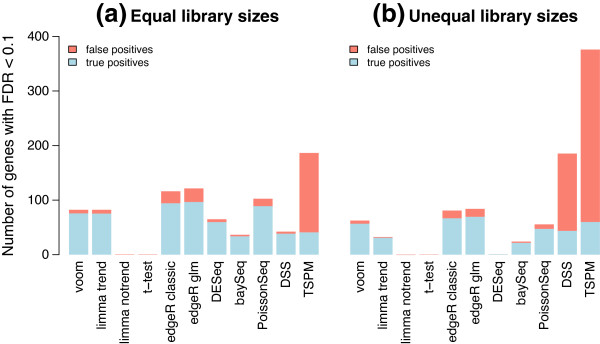
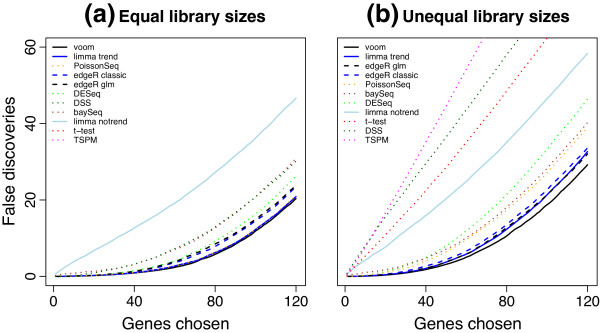
- In simulations with 6 libraries, 10,000 genes, and 100 upregulated plus 100 downregulated genes, voom had the best power among methods that controlled type I and FDR error rates; with unequal library sizes, voom had the best power except for edgeR while maintaining low FDR. edgeR and PoissonSeq were somewhat liberal, while DESeq and DSS became very conservative when library sizes were unequal.
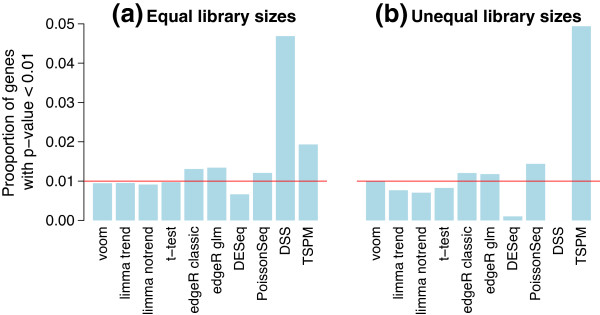
- For type I error at P<0.01, NB/Poisson methods did not control error accurately; voom was close to the nominal rate in both equal and unequal library size scenarios, while limma-trend was similar when sizes were equal but conservative when unequal. In SEQC HBRR technical replicates, voom returned no DE genes at 5% FDR for 6 of 7 possible partitions.
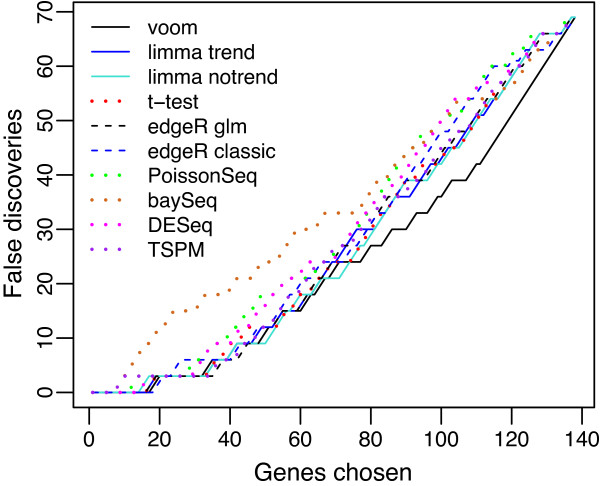
- voom had the lowest FDR at any cutoff in simulations and in SEQC spike-in data; the spike-in analysis used 138 transcripts, half truly DE and half non-DE.
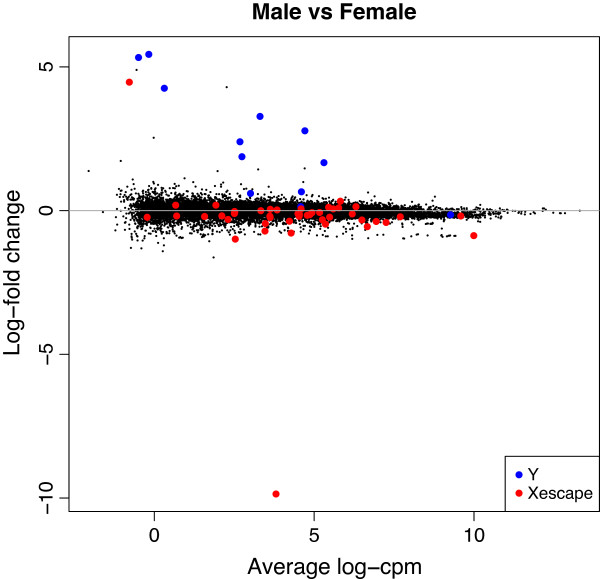
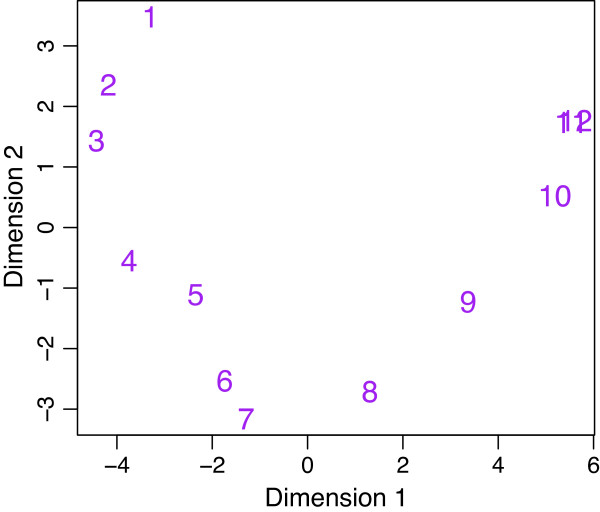
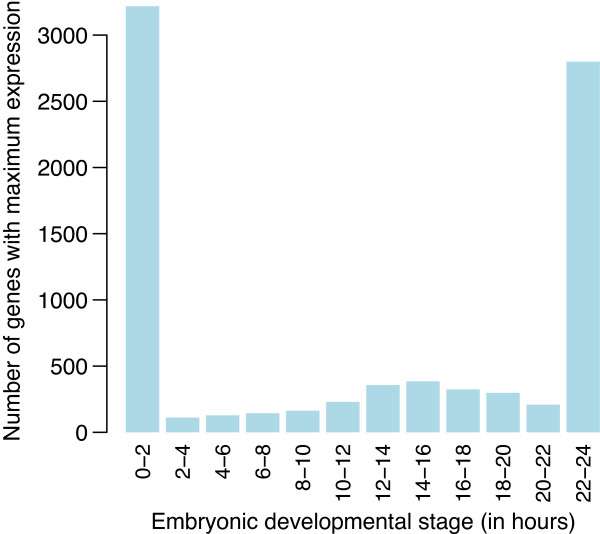
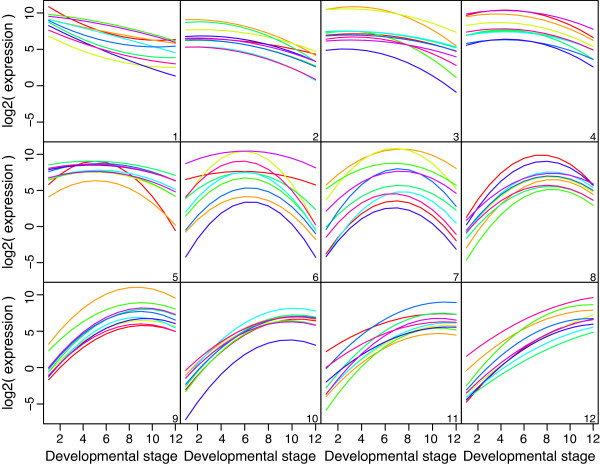
- In the Nigerian lymphoblastoid dataset (29 males, 40 females), voom found 16 genes upregulated in males and 43 upregulated in females at 5% FDR, with XIST the top gene; ROAST and CAMERA confirmed male-specific Y chromosome genes and X-inactivation escape genes. In Drosophila embryonic stages, 8,366 of 14,869 expressed genes showed a significant trend at 5% FDR.
Methods
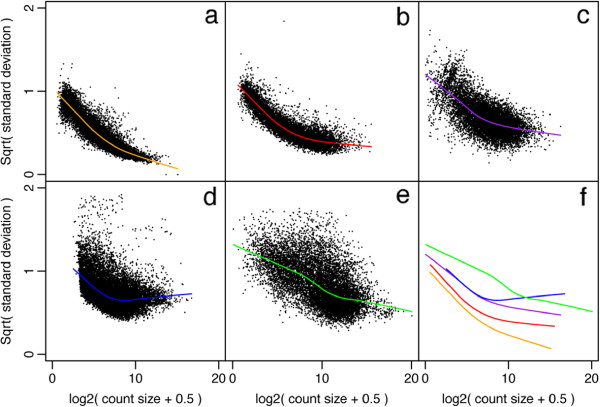
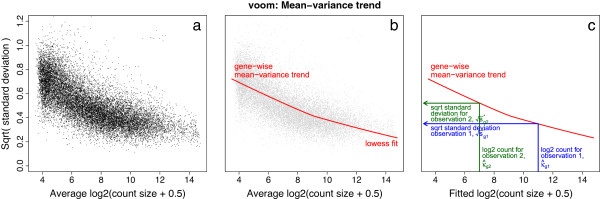
- voom works on log-cpm values: fit gene-wise linear models, estimate residual standard deviations as a function of average log-count using a robust LOWESS trend, interpolate that trend to each observation’s predicted count, and use inverse squared predicted standard deviation as a precision weight in limma’s empirical Bayes pipeline. limma-trend applies the mean-variance trend at the gene level instead.
- Simulations generated NB counts for 6 libraries and 10,000 genes, with baseline cpm distribution matched to real data and dispersion trend ψ^1/2 = 0.2 + λ^-1/2; gene-wise dispersions were drawn from an inverse chi-square with 40 degrees of freedom. Equal library sizes used 11 million reads per library; unequal sizes used 20 million for odd libraries and 2 million for even libraries. Results were averaged over 100 simulations and compared with edgeR, DESeq, baySeq, TSPM, PoissonSeq, and DSS.
- Case studies used SEQC pilot libraries (16 libraries in groups A–D; 4 HBRR libraries; 92 spike-in transcripts expanded to 138), Nigerian lymphoblastoid cell lines from 69 unrelated individuals, Drosophila melanogaster embryonic stages (12 libraries), and C57BL/6J versus DBA/2J mouse striatum data. Gene set testing used ROAST and CAMERA.
Limitations
- Stated: gene-level analysis does not allow different isoforms of the same gene to be differentially expressed in different directions, though voom can be run at exon level. The Drosophila quadratic time trends do not match all intricacies of gene expression over time. Simulations were generated under NB assumptions, and other scenarios may differ. baySeq was excluded from the type I error comparison because it does not return P values.
- Evident: the Drosophila analysis has no replicate libraries, so variances are estimated by assuming smooth expression over time and fitting quadratic trends. Performance comparisons rely on specific simulation settings and default software pipelines, and the case studies illustrate use rather than provide independent experimental validation.
Model-written summary. Check it against the paper before relying on it.
Integrity signals
Registry
Cites
Statistics
Figures
Verification
Claims the paper makes
1 Valid · 4 Not valid · 34 Not checked · 142 Own results and interpretations
The cited sources support only part of this claim — read each source’s verdict below.
In the paper
“voom and limma could be used to analyze any gene-level RNA-seq differential expression experiment, including those with multiple experimental factors [34].”
§ voom: precision weights unlock linear model analysis tools for RNA-seq read counts > Results > Development stages of Drosophila melanogaster
What the sources say
- Partly supportedcites [34] McCarthy DJ Chen Y Smyth GK Differential expression analysis of multifactor RNA-Seq experiments with respect to biological variation Nucleic Acids Res 2012 40 4288 4297 10.1093/nar/gks042 22287627 PMC3378882 sourceExperimental — accuracy not yet measured
Our copy of McCarthy et al. (2012) supports the scope part of the claim: the INTRODUCTION states 'The methodology provides a pipeline for analysing arbitrarily complex RNA-Seq experiments provided that there is some degree of biological replication', the Abstract describes analysis of 'complex experiments involving multiple treatment conditions and blocking variables', and the article's focus is gene-level counts ('For simplicity... counts are summarized at the gene level', RESULTS > Technical and biological variation). However, the capability is attributed to negative-binomial generalized linear models implemented in the edgeR package (DISCUSSION: 'The methods described in this article are implemented in the software package edgeR'), and no passage of our copy mentions voom or limma at all — the closest the paper comes to normal-linear-model analysis of transformed counts is a critique in the INTRODUCTION that transforming counts to approximate normality and analysing as for microarray data 'is however not fully tuned to the characteristics of read count data'. Thus the specific tools named in the citing sentence (voom and limma) are not this paper's methods, while the multifactor/gene-level applicability is. (LLM, conf=0.72)
hedged- Asserted: passes — The authors put it forward as true.
- Checkable: passes — It can be checked against evidence.
- Load-bearing: unclear — It is unclear whether the paper’s conclusions depend on it.
- Based: passes — The paper gives a reason why it holds.
- Rests on an assumption not shown here.
- Partly supported
A result the paper reports from its own data — it cites no other source for it, so there is none to check. The quote shows it is in the paper.
In the paper
“When the library sizes are unequal, DSS and DESeq became extremely conservative.”
§ voom: precision weights unlock linear model analysis tools for RNA-seq read counts > Results > voom and limma-trend control the type I error rate correctly
plainstates a cause- Asserted: passes — The authors put it forward as true.
- Checkable: passes — It can be checked against evidence.
- Load-bearing: unclear — It is unclear whether the paper’s conclusions depend on it.
- Based: passes — The paper gives a reason why it holds.
A result the paper reports from its own data — it cites no other source for it, so there is none to check. The quote shows it is in the paper.
In the paper
“Figures 3 and 4 together show that voom has the best power of those methods that correctly control the type I and FDR error rates.”
§ voom: precision weights unlock linear model analysis tools for RNA-seq read counts > Results > voom has the best power of methods that control the type I error rate
plain- Asserted: passes — The authors put it forward as true.
- Checkable: passes — It can be checked against evidence.
- Load-bearing: passes — The paper’s conclusions depend on it.
- Based: passes — The paper gives a reason why it holds.
- Rests on an assumption not shown here.
A result the paper reports from its own data — it cites no other source for it, so there is none to check. The quote shows it is in the paper.
In the paper
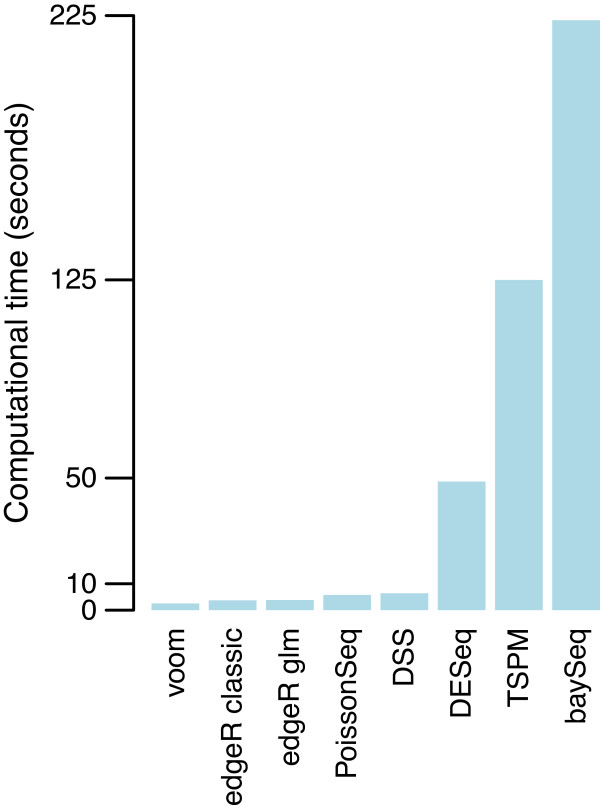
“voom is easily the fastest of the methods compared, with edgeR-classic next fastest (Figure 7).”
§ voom: precision weights unlock linear model analysis tools for RNA-seq read counts > Results > voom and limma-trend are faster than specialist RNA-seq methods
plain- Asserted: passes — The authors put it forward as true.
- Checkable: passes — It can be checked against evidence.
- Load-bearing: unclear — It is unclear whether the paper’s conclusions depend on it.
- Based: passes — The paper gives a reason why it holds.
A result the paper reports from its own data — it cites no other source for it, so there is none to check. The quote shows it is in the paper.
In the paper
“Genes peaking at the last stage tended to be associated with precursor metabolites and energy, the oxidation-reduction process and with metabolic pathways.”
§ voom: precision weights unlock linear model analysis tools for RNA-seq read counts > Results > Development stages of Drosophila melanogaster
plainstates an association- Asserted: passes — The authors put it forward as true.
- Checkable: passes — It can be checked against evidence.
- Load-bearing: unclear — It is unclear whether the paper’s conclusions depend on it.
- Based: passes — The paper gives a reason why it holds.
79 more claims
Create a free account to see all 181 claims and to verify the 45 references still open.
- It may state two separate claims as one. 48
- Probably not a substantial claim. 68
- The quote only partly states this claim. 2
Claims other papers make about this one
Each is checked against this paper’s own text: does it say what the citing paper says it does?
The source backs part of the claim, not all of it — or backs it for a different population, condition or comparison.
In the citing paper
“First, specific caution is needed with all the methods when the number of replicate samples is very small or for genes that are expressed at very low levels [55, 64, 209].”
From A survey of best practices for RNA-seq data analysis (2016) · cites this paper as [55]
Experimental — accuracy not yet measuredThe cited source says what the claim attributes to it.
In the citing paper
“Methods for transforming normalized counts of RNA-seq reads while learning the variance structure of the data have been shown to perform well in comparison to the discrete distribution approaches described above [55, 56].”
From A survey of best practices for RNA-seq data analysis (2016) · cites this paper as [55]
The cited source says what the claim attributes to it.
In the citing paper
“First, the global variance estimate can now incorporate a mean-variance trend (10,17,18).”
From limma powers differential expression analyses for RNA-sequencing and microarray studies (2015) · cites this paper as [10]
The cited source says what the claim attributes to it.
In the citing paper
“This approach is commonly applied in learning error models for bulk RNA-seq in the context of differential expression analysis [22–25], but to our knowledge has not been previously applied in this context for single-cell normalization.”
From Normalization and variance stabilization of single-cell RNA-seq data using regularized negative binomial regression (2019) · cites this paper as [25]
The check wasn’t confident either way, so it gives no verdict — never disputed.
In the citing paper
“SAMseq performs well in terms of FDR but presents an acceptable sensitivity when the number of replicates is relatively high, at least 10 [20, 55, 209].”
From A survey of best practices for RNA-seq data analysis (2016) · cites this paper as [55]
Experimental — accuracy not yet measured
12 more claims about this paper
Create a free account to see every claim other papers make about this one.
Self-check
Percentages, sums and reported differences re-computed from the paper’s own numbers.
Each contradiction between two passages listed here was confirmed by an independent check.
Rated minor: it would not touch a result — a value no result rests on, a p-value that stays on the same side of the significance level, or a conflict that is clerical, resolved elsewhere in the paper, or outside its own findings.
In the paper
§ voom: precision weights unlock linear model analysis tools for RNA-seq read counts > Materials and methods > Lymphoblastoid cell lines from Nigerian individuals
“Read counts, summarized by Ensembl gene, and transcript annotations were obtained from version 1.0.9 of the tweeDEseqCountData Bioconductor package [43]”
§ voom: precision weights unlock linear model analysis tools for RNA-seq read counts > Materials and methods > Software
“The results presented in this article were obtained using R version 3.0.0 and the software packages limma 3.16.2, edgeR 3.2.3, baySeq 1.14.1, DESeq 1.12.0, DSS 1.4.0, PoissonSeq 1.1.2 and tweeDEseqCountData 1.0.8.”
Citations
Cites
Subramanian, A., Tamayo, P., Mootha, V. K., Mukherjee, S., Ebert, B. L., Gillette, M. A., Paulovich, A., Pomeroy, S. L., Golub, T. R., Lander, E. S., et al. (2005) · Proceedings of the National Academy of Sciences · doi:10.1073/pnas.0506580102 · Cited by 53,625 · cited 1×
“This includes methods for differential expression analysis [1, 2, 3], random effects [4, 5], gene set enrichment [6], gene set testing [7, 8] and so on.”
MethodRobinson, M. D., McCarthy, D. J., & Smyth, G. K. (2010) · Bioinformatics · doi:10.1093/bioinformatics/btp616 · Cited by 41,364 · cited 2×
“Specifically we used the goodTuringProportions function of the edgeR package [12], which implements the Good-Turing algorithm [55], to predict the true proportion of total RNA attributable to each gene.”
BackgroundMethodSelf-citationfeatureCounts: an efficient general purpose program for assigning sequence reads to genomic features
Liao, Y., Smyth, G. K., & Shi, W. (2014) · Bioinformatics · doi:10.1093/bioinformatics/btt656 · Cited by 27,219
Self-citation(2005) · Statistics for Biology and Health · doi:10.1007/0-387-27255-0_9 · Cited by 20,133
McCullagh, P., & Nelder, J. A. (1989) · doi:10.1007/978-1-4899-3242-6 · Cited by 16,836
Differential expression analysis for sequence count data
Anders, S., & Huber, W. (2010) · Genome Biology · doi:10.1186/gb-2010-11-10-r106 · Cited by 15,581
Mapping and quantifying mammalian transcriptomes by RNA-Seq
Mortazavi, A., Williams, B. A., McCue, K., Schaeffer, L., & Wold, B. (2008) · Nature Methods · doi:10.1038/nmeth.1226 · Cited by 13,696
RNA-Seq: a revolutionary tool for transcriptomics
Wang, Z., Gerstein, M., & Snyder, M. (2009) · Nature Reviews Genetics · doi:10.1038/nrg2484 · Cited by 13,174 · cited 1×
“olutionary new technology for expression profiling [10].”
Bioconductor: open software development for computational biology and bioinformatics
Gentleman, R. C., Carey, V. J., Bates, D. M., Bolstad, B., Dettling, M., Dudoit, S., Ellis, B., Gautier, L., Ge, Y., Gentry, J., et al. (2004) · Genome Biology · doi:10.1186/gb-2004-5-10-r80 · Cited by 12,172 · cited 1×
“All of these packages are part of the Bioconductor project [67,68], except for PoissonSeq, which is part of the Comprehensive R Archive Network [69].”
BackgroundSelf-citationSmyth, G. K. (2004) · Statistical Applications in Genetics and Molecular Biology · doi:10.2202/1544-6115.1027 · Cited by 11,829
Self-citation
Research works printed but not linked: 2
- Law CW Chen Y Shi W Smyth GK Supplementary information for ‘Voom: precision weights unlock linear model analysis tools for RNA-seq read counts’ [ http://bioinf.wehi.edu.au/voom] PMC4053721 24485249
- Frazee A Langmead B Leek J ReCount: a multi-experiment resource of analysis-ready RNA-seq gene count datasets [ http://bowtie-bio.sourceforge.net/recount] PMC3229291 22087737
Cited by
Items 501–600 of 7,059
Babelomics 5.0: functional interpretation for new generations of genomic data
Alonso, R., Salavert, F., Garcia-Garcia, F., Carbonell-Caballero, J., Bleda, M., Garcia-Alonso, L., Sanchis-Juan, A., Perez-Gil, D., Marin-Garcia, P., Sanchez, R., et al. (2015) · Nucleic Acids Research · doi:10.1093/nar/gkv384 · Cited by 125
“RNA-seq counts are transformed with the Voom method (23) that allows subsequent linear analysis using limma (24).”
MethodThe transcriptomic landscape of yaks reveals molecular pathways for high altitude adaptation
Qi, X., Zhang, Q., He, Y., Yang, L., Zhang, X., Shi, P., Yang, L., Liu, Z., Zhang, F., Liu, F., et al. (2018) · Genome Biology and Evolution · doi:10.1093/gbe/evy264 · Cited by 125
Xia, D., Lianoglou, S., Sandmann, T., Calvert, M., Suh, J. H., Thomsen, E., Dugas, J., Pizzo, M. E., DeVos, S. L., Earr, T. K., et al. (2022) · Molecular Neurodegeneration · doi:10.1186/s13024-022-00547-7 · Cited by 124
“RNA‐seq data analysis Following alignment and expression quantitation, lowly expressed genes were removed, and differential expression analysis was performed using the limma/ voom with sample weighting framework [39, 40].”
Willis, S. N., Good-Jacobson, K. L., Curtis, J., Light, A., Tellier, J., Shi, W., Smyth, G. K., Tarlinton, D. M., Belz, G. T., Corcoran, L. M., et al. (2014) · The Journal of Immunology · doi:10.4049/jimmunol.1303216 · Cited by 124
“Genewise counts were obtained using featureCounts (32), and log2-reads per kilobase per million reads were averaged over replicates using voom (33).”
MethodSelf-citationA Conserved Mito-Cytosolic Translational Balance Links Two Longevity Pathways
Molenaars, M., Janssens, G. E., Williams, E. G., Jongejan, A., Lan, J., Rabot, S., Joly, F., Moerland, P. D., Schomakers, B. V., Lezzerini, M., et al. (2020) · Cell Metabolism · doi:10.1016/j.cmet.2020.01.011 · Cited by 124
Portraying breast cancers with long noncoding RNAs
Grembergen, O. V., Bizet, M., de Bony, E. J., Calonne, E., Putmans, P., Brohée, S., Olsen, C., Guo, M., Bontempi, G., Sotiriou, C. P., et al. (2016) · Science Advances · doi:10.1126/sciadv.1600220 · Cited by 124
Hoefflin, R., Geißler, A.-L., Fritsch, R., Claus, R., Wehrle, J., Metzger, P., Reiser, M., Mehmed, L., Fauth, L., Heiland, D. H., et al. (2018) · JCO Precision Oncology · doi:10.1200/po.18.00105 · Cited by 124
“6) Age, years, median (range) 58 (1-85) Time interval from diagnosis to first MTB, months, median (range) 33.”
BackgroundRetinoblastoma from human stem cell-derived retinal organoids
Norrie, J. L., Nityanandam, A., Lai, K., Chen, X. '., Wilson, M. W., Stewart, E. A., Griffiths, L. M., Jin, H., Wu, G., Orr, B. A., et al. (2021) · Nature Communications · doi:10.1038/s41467-021-24781-7 · Cited by 124
Nonparametric expression analysis using inferential replicate counts
Zhu, A., Srivastava, A., Ibrahim, J. G., Patro, R., & Love, M. I. (2019) · Nucleic Acids Research · doi:10.1093/nar/gkz622 · Cited by 124
“The methods compared include Swish, DESeq2 (11), EBSeq (2), limma with voom transformation (35), SAMseq (9), and sleuth (5).”
MethodLercher, A., Bhattacharya, A., Popa, A. M., Caldera, M., Schlapansky, M. F., Baazim, H., Agerer, B., Gürtl, B., Kosack, L., Májek, P., et al. (2019) · Immunity · doi:10.1016/j.immuni.2019.10.014 · Cited by 123
“Raw read counts were normalized with the voom (Law et al., 2014) function of the limma package (Smyth, 2004).”
MethodContext-Specific Striatal Astrocyte Molecular Responses Are Phenotypically Exploitable
Yu, X., Nagai, J., Marti-Solano, M., Soto, J. S., Coppola, G., Babu, M. M., & Khakh, B. S. (2020) · Neuron · doi:10.1016/j.neuron.2020.09.021 · Cited by 123
Bi, R., & Liu, P. (2016) · BMC Bioinformatics · doi:10.1186/s12859-016-0994-9 · Cited by 123
“However, the recently proposed voom and limma analysis for RNA-seq data [8, 24] is based on weighted linear models and we can obtain tractable formulae for power and type I error rate.”
MethodInfluentialThe immune contexture of hepatocellular carcinoma predicts clinical outcome
Foerster, F., Hess, M., Gerhold‐Ay, A., Marquardt, J. U., Becker, D., Galle, P. R., Schuppan, D., Binder, H., & Bockamp, E. (2018) · Scientific Reports · doi:10.1038/s41598-018-21937-2 · Cited by 123
The genomic landscape of Mongolian hepatocellular carcinoma
Candia, J., Bayarsaikhan, E., Tandon, M., Budhu, A., Forgues, M., Товуу, Л.-О., Tudev, U., Lack, J., Chao, A., Chinburen, J., et al. (2020) · Nature Communications · doi:10.1038/s41467-020-18186-1 · Cited by 123
Martinez-Soria, N., McKenzie, L., Draper, J. E., Ptasinska, A., Issa, H., Potluri, S., Blair, H. J., Pickin, A., Isa, A., Chin, P. S., et al. (2018) · Cancer Cell · doi:10.1016/j.ccell.2018.08.015 · Cited by 123
A comparison of marker gene selection methods for single-cell RNA sequencing data
Pullin, J. M., & McCarthy, D. J. (2022) · doi:10.1101/2022.05.09.490241 · Cited by 122
Rechtien, A., Richert, L., Lorenzo, H., Martrus, G., Hejblum, B., Dahlke, C., Kasonta, R., Zinser, M., Stubbe, H., Matschl, U., et al. (2017) · Cell Reports · doi:10.1016/j.celrep.2017.08.023 · Cited by 122
“Differential gene expression from the day 0 baseline was investigated gene-wise using the voom/limma method (Law et al., 2014).”
Ng, E., Sarila, G., Li, J. Y., Edirisinghe, H. S., Saxena, R., Sun, S., Bruveris, F., Labonne, T., Sleebs, N., Maytum, A., et al. (2024) · Nature Biotechnology · doi:10.1038/s41587-024-02360-7 · Cited by 122
The Hippo Pathway Prevents YAP/TAZ-Driven Hypertranscription and Controls Neural Progenitor Number
Lavado, A., Park, J. Y., Paré, J., Finkelstein, D., Pan, H., Xu, B., Fan, Y., Kumar, R. P., Neale, G. A. M., Kwak, Y. D., et al. (2018) · Developmental Cell · doi:10.1016/j.devcel.2018.09.021 · Cited by 122
The Hippo pathway oncoprotein YAP promotes melanoma cell invasion and spontaneous metastasis
Zhang, X., Yang, L., Szeto, P., Abali, G. K., Zhang, Y., Kulkarni, A., Amarasinghe, K. C., Li, J., Vergara, I. A., Molania, R., et al. (2020) · Oncogene · doi:10.1038/s41388-020-1362-9 · Cited by 122
Linnorm: improved statistical analysis for single cell RNA-seq expression data
Yip, S. H., Wang, P., Kocher, J.-P. A., Sham, P. C., & Wang, J. (2017) · Nucleic Acids Research · doi:10.1093/nar/gkx828 · Cited by 121
“While this slope is naturally occurring (7,11) and is utilized by Linnorm to filter low count genes, it violates the homoscedasticity assumption.”
BackgroundMethodResultInfluentialEpigenetic dysregulation of naive CD4+ T-cell activation genes in childhood food allergy
Martino, D., Neeland, M. R., Dang, T. D., Cobb, J. E., Ellis, J. A., Barnett, A., Tang, M. L. K., Vuillermin, P., Allen, K. J., & Saffery, R. (2018) · Nature Communications · doi:10.1038/s41467-018-05608-4 · Cited by 121
Rahmoun, M., Lavery, R., Laurent‐Chabalier, S., Bellora, N., Philip, G. K., Rossitto, M., Symon, A., Pailhoux, É., Cammas, F. M., Chung, J., et al. (2017) · Nucleic Acids Research · doi:10.1093/nar/gkx328 · Cited by 121
Meyran, D., Zhu, J. J., Butler, J., Tantalo, D. G. M., Macdonald, S., Nguyen, T. N., Wang, M., Thio, N., D’Souza, C., Qin, V. M., et al. (2023) · Science Translational Medicine · doi:10.1126/scitranslmed.abk1900 · Cited by 121
“Differential expression analysis was performed using the LIMMA-Voomworkflow (74, 75).”
MethodSpatiotemporally resolved colorectal oncogenesis in mini-colons ex vivo
Lorenzo‐Martín, L. F., Hübscher, T., Bowler, A. D., Broguière, N., Langer, J., Tillard, L., Nikolaev, M., Radtke, F., & Lütolf, M. P. (2024) · Nature · doi:10.1038/s41586-024-07330-2 · Cited by 121
An evaluation of RNA-seq differential analysis methods
Li, D., Zand, M. S., Dye, T., Goniewicz, M. L., Rahman, I., & Xie, Z. (2022) · PLoS ONE · doi:10.1371/journal.pone.0264246 · Cited by 121
“Parametric methods implemented in open source packages include edgeR [3], DESeq [4], DESeq2 [5], NBPSeq [6], TSPM [7], baySeq [8], EBSeq [9], ShrinkSeq [10], Voom/vst [11,12] in R or Bioconductor, and Cuffdiff2 in Cufflinks [13].”
MethodMezö, C., Dokalis, N., Mossad, O., Staszewski, O., Neuber, J., Yilmaz, B., Schnepf, D., de Agüero, M. G., Ganal-Vonarburg, S. C., Macpherson, A. J., et al. (2020) · Acta Neuropathologica Communications · doi:10.1186/s40478-020-00988-5 · Cited by 120
“Differential gene expression analysis was performed using the limma/voomWithQualityWeights pipeline in R [29, 31].”
MethodGut microbiota composition during infancy and subsequent behavioural outcomes
Loughman, A., Ponsonby, A.-L., O'Hely, M., Symeonides, C., Collier, F., Tang, M. L. K., Carlin, J., Ranganathan, S., Allen, K., Pezic, A., et al. (2020) · EBioMedicine · doi:10.1016/j.ebiom.2020.102640 · Cited by 120
“DESeq2) for highly variable library sizes, which are typical in 16S sequencing studies [16].”
BackgroundDarnell, M., O’Neil, A., Mao, A., Gu, L., Rubin, L. L., & Mooney, D. J. (2018) · Proceedings of the National Academy of Sciences · doi:10.1073/pnas.1802568115 · Cited by 120
“Voom (51) and Limma (52) were then used to perform DE analysis using a multilevel factorial design.”
MethodSharon, N., Chawla, R., Mueller, J., Vanderhooft, J., Whitehorn, L. J., Rosenthal, B., Gürtler, M., Estanboulieh, R. R., Shvartsman, D., Gifford, D. K., et al. (2019) · Cell · doi:10.1016/j.cell.2018.12.003 · Cited by 120
Analysis and correction of compositional bias in sparse sequencing count data
Kumar, M. S., Slud, E. V., Okrah, K., Hicks, S. C., Hannenhalli, S., & Corrada Bravo, H. (2018) · BMC Genomics · doi:10.1186/s12864-018-5160-5 · Cited by 120
“We find that techniques based only on library size (e.g. unaltered RPKM/CPM [34], rarefication/subsampling in metagenomics [35, 36]) are provably bad.”
MethodPlacental superoxide dismutase 3 mediates benefits of maternal exercise on offspring health
Kusuyama, J., Alves-Wagner, A. B., Conlin, R. H., Makarewicz, N., Albertson, B. G., Prince, N. B., Kobayashi, S., Kozuka, C., Leth‐Møller, M., Bjerre, M., et al. (2021) · Cell Metabolism · doi:10.1016/j.cmet.2021.03.004 · Cited by 120
An aspartyl protease defines a novel pathway for export of Toxoplasma proteins into the host cell
Coffey, M. J., Sleebs, B. E., Uboldi, A. D., Garnham, A. L., Franco, M., Marino, N. D., Panas, M. W., Ferguson, D. J. P., Enciso, M., O’Neill, M. T., et al. (2015) · eLife · doi:10.7554/elife.10809 · Cited by 120
“All counts were then transformed to log2-counts per million (logCPM) with associated precision weights using voom (Law et al., 2014).”
MethodSelf-citationMoulos, P., & Hatzis, P. (2014) · Nucleic Acids Research · doi:10.1093/nar/gku1273 · Cited by 120
“ROC analysis using simulated data and the six individual statistical tests is in accordance with previous studies (5,26).”
Extensive tissue-specific transcriptomic plasticity in maize primary roots upon water deficit
Opitz, N., Marcon, C., Paschold, A., Malik, W. A., Lithio, A., Brandt, R., Piepho, H., Nettleton, D. S., & Hochholdinger, F. (2015) · Journal of Experimental Botany · doi:10.1093/jxb/erv453 · Cited by 120
“Based on the predicted variance, weights were assigned to each observation to adjust for heteroscedasticity in the linear modelling process (Law et al., 2014).”
MethodMatoba, N., Liang, D., Sun, H., Aygün, N., McAfee, J. C., Davis, J. E., Raffield, L. M., Qian, H., Piven, J., Li, Y., et al. (2020) · Translational Psychiatry · doi:10.1038/s41398-020-00953-9 · Cited by 120
Simonson, B., Chaffin, M. D., Hill, M. C., Atwa, O., Guedira, Y., Bhasin, H., Hall, A. W., Hayat, S., Baumgart, S. J., Bedi, K. C., et al. (2023) · Cell Reports · doi:10.1016/j.celrep.2023.112086 · Cited by 120
“79,80 All tests were adjusted for age and sex.”
An Introduction to the Analysis of Single-Cell RNA-Sequencing Data
AlJanahi, A. A., Danielsen, M., & Dunbar, C. E. (2018) · Molecular Therapy - Methods & Clinical Development · doi:10.1016/j.omtm.2018.07.003 · Cited by 119
Campbell, K. R., Steif, A., Laks, E., Zahn, H., Lai, D., McPherson, A., Farahani, H., Kabeer, F., O’Flanagan, C., Biele, J., et al. (2019) · Genome Biology · doi:10.1186/s13059-019-1645-z · Cited by 119
“Differential expression (DE) analysis was performed using Limma Voom [16] version 3.36.0.”
InfluentialShemesh, N., Jubran, J., Dror, S., Simonovsky, E., Basha, O., Argov, C. M., Hekselman, I., Abu‐Qarn, M., Vinogradov, E., Mauer, O., et al. (2021) · Nature Communications · doi:10.1038/s41467-021-22369-9 · Cited by 119
“In each sample, we transformed the normalized counts using the voom method (86).”
MethodInterferon-driven deletion of antiviral B cells at the onset of chronic infection
Fallet, B., Narr, K., Ertuna, Y. I., Remy, M. M., Sommerstein, R., Cornille, K., Kreutzfeldt, M., Pagé, N., Zimmer, G., Geier, F., et al. (2016) · Science Immunology · doi:10.1126/sciimmunol.aah6817 · Cited by 119
Evidence for widespread dysregulation of circadian clock progression in human cancer
Shilts, J., Chen, G., & Hughey, J. (2018) · PeerJ · doi:10.7717/peerj.4327 · Cited by 119
Xu, J., Sun, Y., Li, Y., Ruthel, G. T., Weiss, S. R., Raj, A., Beiting, D. P., & López, C. B. (2017) · Nature Communications · doi:10.1038/s41467-017-00909-6 · Cited by 119
Dinh, H. Q., Eggert, T., Meyer, M. A., Zhu, Y. P., Olingy, C. E., Llewellyn, R., Wu, R., & Hedrick, C. C. (2020) · Immunity · doi:10.1016/j.immuni.2020.07.017 · Cited by 118
Chen, A., & Kong, L. (2018) · Journal of genetics and genomics/Journal of Genetics and Genomics · doi:10.1016/j.jgg.2018.08.002 · Cited by 118
Innovation, Conservation and Repurposing of Gene Function in Plant Root Cell Type Development
Kajala, K., Gouran, M., Shaar‐Moshe, L., Mason, G. A., Rodríguez-Medina, J., Kawa, D., Pauluzzi, G. C., Reynoso, M. A., Cantó‐Pastor, A., Manzano, C., et al. (2020) · Cell · doi:10.1016/j.cell.2021.04.024 · Cited by 118
“CPM values were normalizedwith the voom function (Law et al., 2014) using quantile normalization with a design matrix that included identifiers for the marker line populations and the sequencing replicates (batch).”
DUX is a non-essential synchronizer of zygotic genome activation
Iaco, A. D., Verp, S., Offner, S., Grün, D., & Trono, D. (2020) · Development · doi:10.1242/dev.177725 · Cited by 118
“Differential gene expression analysis was performed using voom (Law et al., 2014) as it has been implemented in the limma package of Bioconductor.”
MethodLi, H., Su, Q., Li, B., Lan, L., Wang, C., Li, W., Wang, G., Chen, W., He, Y., & Zhang, C. (2020) · Journal of Cellular and Molecular Medicine · doi:10.1111/jcmm.15104 · Cited by 118
Scabia, V., Ayyanan, A., Martino, F. D., Agnoletto, A., Battista, L., László, C., Ifticene‐Treboux, A., Zaman, K., Stravodimou, A., Jallut, D., et al. (2022) · Nature Communications · doi:10.1038/s41467-022-30898-0 · Cited by 118
Endogenous rRNA Sequence Variation Can Regulate Stress Response Gene Expression and Phenotype
Kurylo, C. M., Parks, M. M., Juette, M. F., Zinshteyn, B., Altman, R. B., Thibado, J. K., Vincent, C. T., & Blanchard, S. C. (2018) · Cell Reports · doi:10.1016/j.celrep.2018.08.093 · Cited by 117
“, 2010) Gene expression was variance-stabilized with voom (Law et al., 2014), and differential expression between pairs of conditions was calculated with limma (Ritchie et al.”
Widespread Post-transcriptional Attenuation of Genomic Copy-Number Variation in Cancer
Gonçalves, E., Fragoulis, A., Garcia-Alonso, L., Cramer, T., Saez-Rodriguez, J., & Beltrao, P. (2017) · Cell Systems · doi:10.1016/j.cels.2017.08.013 · Cited by 117
Duncan, C. J. A., Thompson, B. J., Chen, R., Rice, G. I., Gothe, F., Young, D. F., Lovell, S. C., Shuttleworth, V. G., Brocklebank, V., Corner, B., et al. (2019) · Science Immunology · doi:10.1126/sciimmunol.aav7501 · Cited by 117
Gaudette, B. T., Jones, D. D., Bortnick, A., Argon, Y., & Allman, D. (2020) · Nature Communications · doi:10.1038/s41467-019-14032-1 · Cited by 117
STRONG: metagenomics strain resolution on assembly graphs
Quince, C., Nurk, S., Raguideau, S., James, R. S., Soyer, O. S., Summers, J. K., Limasset, A., Eren, A. M., Chikhi, R., & Darling, A. E. (2021) · Genome biology · doi:10.1186/s13059-021-02419-7 · Cited by 117
Attema, B. J., Janssen, A. W. F., Rijkers, D., van Schothorst, E. M., Hooiveld, G. J. E. J., & Kersten, S. (2022) · Molecular Metabolism · doi:10.1016/j.molmet.2022.101602 · Cited by 117
Systematic analysis of somatic mutations impacting gene expression in 12 tumour types
Ding, J., McConechy, M. K., Horlings, H. M., Ha, G., Chan, F. C., Funnell, T., Mullaly, S. C., Reimand, J., Bashashati, A., Bader, G. D., et al. (2015) · Nature Communications · doi:10.1038/ncomms9554 · Cited by 117
Viant, C., Rankin, L. C., Girard-Madoux, M. J. H., Seillet, C., Shi, W., Smyth, M. J., Bartholin, L., Walzer, T., Huntington, N. D., Vivier, É., et al. (2016) · Science Signaling · doi:10.1126/scisignal.aaf2176 · Cited by 117
Self-citationLea, A. J., Tung, J., & Zhou, X. (2015) · PLoS Genetics · doi:10.1371/journal.pgen.1005650 · Cited by 117
“a negative binomial distribution that models the extra variation observed in the real 781 data: 782 ~ $, , , (5) where t and p are site specific parameters estimated from the real data.”
BackgroundGenomics pipelines and data integration: challenges and opportunities in the research setting
Davis‐Turak, J., Courtney, S. M., Hazard, E. S., Glen, W. B., da Silveira, W. A., Wesselman, T., Harbin, L. P., Wolf, B. J., Chung, D., & Hardiman, G. (2017) · Expert Review of Molecular Diagnostics · doi:10.1080/14737159.2017.1282822 · Cited by 117
“The function ‘ voom ’ transforms HTS count values to logarithmic values, adding a precision weight for each observation and allowing exploitation of the Limma pipeline with this data [34].”
MethodGao, Y., Chi, Y., Chen, Y., Wang, W., Li, H., Zheng, W., Zhu, P., An, J., Duan, Y., Sun, T., et al. (2023) · Nature Communications · doi:10.1038/s41467-023-39958-5 · Cited by 116
Self-citationCross-platform normalization of microarray and RNA-seq data for machine learning applications
Thompson, J. A., Tan, J., & Greene, C. S. (2016) · PeerJ · doi:10.7717/peerj.1621 · Cited by 116
“VOOM is designed to work with a priori knowledge of conditions in the data for its transformation that will often not be known in cases where clustering or classification techniques are being applied.”
MethodInfluentialHunter, Z. R., Xu, L., Yang, G., Tsakmaklis, N., Vos, J. M. I., Liu, X., Chen, J., Manning, R. J., Chen, J. G., Brodsky, P., et al. (2016) · Blood · doi:10.1182/blood-2016-03-708263 · Cited by 116
Hypertranscription in Development, Stem Cells, and Regeneration
Percharde, M., Bulut-Karslioglu, A., & Ramalho-Santos, M. (2017) · Developmental Cell · doi:10.1016/j.devcel.2016.11.010 · Cited by 115
“We have also analyzed CNN RNA-seq data using Limma’s Voom transformation (Law et al., 2014; Ritchie et al., 2015) and normalizing to ERCCs, with comparable results to loess normalization (Percharde et al, unpublished data).”
MethodMellone, M., Hanley, C. J., Thirdborough, S., Mellows, T., Garcia, E., Woo, J., Tod, J., Frampton, S., Jenei, V., Moutasim, K. A., et al. (2016) · Aging · doi:10.18632/aging.101127 · Cited by 114
“Data acquisition and processing CEL files were imported from the HNSCC dataset from Cancer Genome Atlas Network [35] into the R/Bioconductor package ‘limma’ and normalized using the voom algorithm [56, 57].”
MethodJaffe, A. E., Hoeppner, D. J., Saito, T., Blanpain, L. T., Ukaigwe, J., Burke, E. E., Collado‐Torres, L., Tao, R., Tajinda, K., Maynard, K. R., et al. (2020) · Nature Neuroscience · doi:10.1038/s41593-020-0604-z · Cited by 114
Radzisheuskaya, A., Shliaha, P. V., Grinev, V. V., Shlyueva, D., Damhofer, H., Koche, R. P., Gorshkov, V., Kovalchuk, S. I., Zhan, Y. A., Rodriguez, K. L., et al. (2021) · Molecular Cell · doi:10.1016/j.molcel.2021.02.012 · Cited by 114
A molecular quantitative trait locus map for osteoarthritis
Steinberg, J., Southam, L., Butterfield, N. C., Roumeliotis, T. I., Fontalis, A., Clark, M. J. R., Jayasuriya, R. L., Swift, D., Shah, K. M., Curry, K. F., et al. (2021) · Nature Communications · doi:10.1038/s41467-021-21593-7 · Cited by 114
Huang, X., Poelchau, M. F., & Armbruster, P. (2015) · PLoS neglected tropical diseases · doi:10.1371/journal.pntd.0003724 · Cited by 114
“Distance matrices of gene expression across the libraries (R function dist) were visualized using multi-dimensional scaling (R function cmdscale) after raw read counts were transformed for linear modeling via the function voom [73,74] in limma [75,76].”
MethodCraig, D. W., Hutchins, E. D., Violich, I., Alsop, E. B., Gibbs, J. R., Levy, S. A., Robison, M., Prasad, N., Foroud, T., Crawford, K. L., et al. (2021) · Nature Aging · doi:10.1038/s43587-021-00088-6 · Cited by 114
Mahmood, M., Liu, E. M., Shergold, A. L., Tolla, E., Tait-Mulder, J., Uribe, A. H., Shokry, E., Young, A. L., Lilla, S., Kim, M., et al. (2024) · Nature Cancer · doi:10.1038/s43018-023-00721-w · Cited by 114
Lun, A. T. L., & Smyth, G. K. (2014) · Nucleic Acids Research · doi:10.1093/nar/gku351 · Cited by 113
“The performance of USeq is attributable to the conservativeness of DESeq compared to edgeR (40).”
MethodSelf-citationGeneration of mesenchyme free intestinal organoids from human induced pluripotent stem cells
Mithal, A., Capilla, A., Heinze, D., Berical, A., Villacorta-Martin, C., Vedaie, M., Jacob, A., Abo, K., Szymaniak, A., Peasley, M., et al. (2020) · Nature Communications · doi:10.1038/s41467-019-13916-6 · Cited by 113
Co-expression analysis of high-throughput transcriptome sequencing data with Poisson mixture models
Rau, A., Maugis-Rabusseau, C., Martin‐Magniette, M., & Celeux, G. (2015) · Bioinformatics · doi:10.1093/bioinformatics/btu845 · Cited by 113
“…analysis of RNA-seq data have dealt with the issues of experimental design (Auer and Doerge, 2010), normalization (Robinson and Oshlack, 2010) and the analysis of differential expression (Anders and Huber, 2010; Auer et al. , 2012; Law et al. , 2014; McCarthy et al. , 2012; Zhou et al. , 2014).”
MethodRai, M. F., Tycksen, E., Sandell, L. J., & Brophy, R. H. (2017) · Journal of Orthopaedic Research® · doi:10.1002/jor.23661 · Cited by 113
Environmental sensing by mature B cells is controlled by the transcription factors PU.1 and SpiB
Willis, S. N., Tellier, J., Liao, Y., Trezise, S., Light, A., O’Donnell, K., Garrett-Sinha, L. A., Shi, W., Tarlinton, D. M., & Nutt, S. L. (2017) · Nature Communications · doi:10.1038/s41467-017-01605-1 · Cited by 112
Self-citationDrewry, M. D., Challa, P., Kuchtey, J., Navarro, I. D., Helwa, I., Hu, Y., Mu, H., Stamer, W. D., Kuchtey, R. W., & Liu, Y. (2018) · Human Molecular Genetics · doi:10.1093/hmg/ddy040 · Cited by 112
Fagone, P., Ciurleo, R., Lombardo, S. D., Iacobello, C., Palermo, C. I., Shoenfeld, Y., Bendtzen, K., Bramanti, P., & Nicoletti, F. (2020) · Autoimmunity Reviews · doi:10.1016/j.autrev.2020.102571 · Cited by 112
“The VOOM method estimates the mean-variance relationship of the log-counts, generates a precision weight for each observation and enters these into the limma empirical Bayes analysis [16].”
Germline-activating mutations in PIK3CD compromise B cell development and function
Avery, D. T., Kane, A., Nguyen, T., Lau, A., Nguyen, A., Lenthall, H., Payne, K. J., Shi, W., Brigden, H., French, E., et al. (2018) · The Journal of Experimental Medicine · doi:10.1084/jem.20180010 · Cited by 112
“Counts were converted to log2-CPM, quantile normalized and precision weighted with the voom function of the limma package (Law et al., 2014; Ritchie et al., 2015).”
MethodSelf-citationApplications and Trends of Machine Learning in Genomics and Phenomics for Next-Generation Breeding
Esposito, S., Carputo, D., Cardi, T., & Tripodi, P. (2019) · Plants · doi:10.3390/plants9010034 · Cited by 112
“By contrast, variance modeling at the observational level (Voom) method has been proposed to analyze transcriptomic data derived from RNA-Seq studies aimed at identifying relevant genes across contrasting conditions (e.g., disease and non-disease conditions) [62].”
Host and parasite responses in human diffuse cutaneous leishmaniasis caused by L. amazonensis
Christensen, S. M., Belew, A. T., El-Sayed, N. M., Tafuri, W. L., Sílveira, F. T., & Mosser, D. M. (2019) · PLoS neglected tropical diseases · doi:10.1371/journal.pntd.0007152 · Cited by 111
Carbohydrate-active enzymes from Akkermansia muciniphila break down mucin O-glycans to completion
Bakshani, C. R., Ojuri, T. O., Pilgaard, B., Holck, J., McInnes, R. S., Kozak, R. P., Zakhour, M. I., Çakaj, S., Kerouedan, M., Newton, E., et al. (2025) · Nature Microbiology · doi:10.1038/s41564-024-01911-7 · Cited by 111
Genome-wide binding and mechanistic analyses of Smchd1-mediated epigenetic regulation
Chen, K., Hu, J. Y., Moore, D., Liu, R., Kessans, S. A., Breslin, K. A., Lucet, I. S., Keniry, A., Leong, H. S., Parish, C. L., et al. (2015) · Proceedings of the National Academy of Sciences · doi:10.1073/pnas.1504232112 · Cited by 111
A robust neuromuscular system protects rat and human skeletal muscle from sarcopenia
Pannérec, A., Springer, M., Migliavacca, E., Ireland, A., Piasecki, M., Karaz, S., Jacot, G., Métairon, S., Danenberg, E., Raymond, F., et al. (2016) · Aging · doi:10.18632/aging.100926 · Cited by 110
“We provided an estimate of the within-animal correlation via the duplicate Correlation function available in Limma since we had two muscles from each animal [59].”
BackgroundMethodInfluentialDillon, L. A. L., Suresh, R., Okrah, K., Bravo, H. C., Mosser, D. M., & El-Sayed, N. M. (2015) · BMC Genomics · doi:10.1186/s12864-015-2237-2 · Cited by 110
“derived from the mean-variance relationship prior to statistical modeling [100] (Additional file 2: Figure S6).”
MethodTransformation and model choice for RNA-seq co-expression analysis
Rau, A., & Maugis-Rabusseau, C. (2017) · Briefings in Bioinformatics · doi:10.1093/bib/bbw128 · Cited by 110
Junttila, S., Smolander, J., & Elo, L. L. (2022) · Briefings in Bioinformatics · doi:10.1093/bib/bbac286 · Cited by 109
“The muscat R package includes a mixed model (muscat_MM), which uses the lme4 linear mixed model with voom weights [6, 21, 22].”
MethodTranscriptomic characterization of fibrolamellar hepatocellular carcinoma
Simon, E. P., Freije, C. A., Farber, B. A., Lalazar, G., Darcy, D. G., Honeyman, J. N., Chiaroni-Clarke, R., Dill, B. D., Molina, H., Bhanot, U. K., et al. (2015) · Proceedings of the National Academy of Sciences · doi:10.1073/pnas.1424894112 · Cited by 109
“Differential expression analysis was performed with voomlimma (103, 104), with an experimental design comparing the differences in FLHCC (tumor vs.”
MethodBenchmarking long-read RNA-sequencing analysis tools using in silico mixtures
Dong, X., Du, M. R. M., Gouil, Q. A., Tian, L., Jabbari, J. S., Bowden, R. J., Baldoni, P. L., Chen, Y., Smyth, G. K., Amarasinghe, S. L., et al. (2023) · Nature Methods · doi:10.1038/s41592-023-02026-3 · Cited by 109
Self-citationStable gene expression for normalisation and single-sample scoring
Bhuva, D. D., Cursons, J., & Davis, M. J. (2020) · Nucleic Acids Research · doi:10.1093/nar/gkaa802 · Cited by 109
“This is likely a result of using multiple measures of variation which reduced biases resulting from the mean-variance relationship often observed in RNA-seq data (43).”
BackgroundBest, S. A., Ding, S., Kersbergen, A., Dong, X., Song, J.-Y., Xie, Y., Reljic, B., Li, K., Vince, J. E., Rathi, V., et al. (2019) · Nature Communications · doi:10.1038/s41467-019-12164-y · Cited by 108
Lactobacillus paracasei feeding improves immune control of influenza infection in mice
Belkacem, N., Serafini, N., Wheeler, R., Derrien, M., Boucinha, L., Couesnon, A., Cerf-Bensussan, N., Gomperts Boneca, I., Di Santo, J. P., Taha, M.-K., et al. (2017) · PLOS ONE · doi:10.1371/journal.pone.0184976 · Cited by 108
“Normalized counts were converted to log2(CPM), counts per million (voom function, limma package) [51].”
MethodscPower accelerates and optimizes the design of multi-sample single cell transcriptomic studies
Schmid, K. T., Höllbacher, B., Cruceanu, C., Böttcher, A., Lickert, H., Binder, E. B., Theis, F. J., & Heinig, M. (2021) · Nature Communications · doi:10.1038/s41467-021-26779-7 · Cited by 108
Senescent cells suppress macrophage-mediated corpse removal via upregulation of the CD47-QPCT/L axis
Schloesser, D., Lindenthal, L., Sauer, J., Chung, K.-J., Chavakis, T., Griesser, E., Baskaran, P., Maier-Habelsberger, U., Fundel-Clemens, K., Schlotthauer, I., et al. (2023) · Journal of Cell Biology · doi:10.1083/jcb.202207097 · Cited by 108
“Statistical significance in the reanalyzed RNAseq rat liver fibrosis datasets was determined by limma/ voom (Law et al., 2014; Ritchie et al., 2015) based on counts derived from featureCounts (Liao et al., 2014).”
NKX2-5 regulates human cardiomyogenesis via a HEY2 dependent transcriptional network
Anderson, D. J., Kaplan, D. I., Bell, K. M., Koutsis, K., Haynes, J. M., Mills, R. J., Phelan, D. G., Qian, E. L., Leitoguinho, A. R., Arasaratnam, D., et al. (2018) · Nature Communications · doi:10.1038/s41467-018-03714-x · Cited by 108
Testosterone is an endogenous regulator of BAFF and splenic B cell number
Wilhelmson, A. S., Rodriguez, M. L., Stubelius, A., Fogelstrand, P., Johansson, I., Buechler, M. B., Lianoglou, S., Kapoor, V. N., Johansson, M. E., Fagman, J. B., et al. (2018) · Nature Communications · doi:10.1038/s41467-018-04408-0 · Cited by 108
Autoreactive CD8+ T cells are restrained by an exhaustion-like program that is maintained by LAG3
Grebinoski, S., Zhang, Q., Cillo, A. R., Manne, S., Xiao, H., Brunazzi, E. A., Tabib, T., Cardello, C., Lian, C. G., Murphy, G. F., et al. (2022) · Nature Immunology · doi:10.1038/s41590-022-01210-5 · Cited by 107
Generally applicable transcriptome-wide analysis of translation using anota2seq
Oertlin, C., Lorent, J., Murie, C., Furic, L., Topisirovic, I., & Larsson, O. (2019) · Nucleic Acids Research · doi:10.1093/nar/gkz223 · Cited by 107
“In anota2seq, counts are either rlog (24) or TMM-log2 (39) normalized/transformed.”
BackgroundMethodInfluentialConvergence of coronary artery disease genes onto endothelial cell programs
Schnitzler, G. R., Kang, H., Fang, S., Angom, R. S., Lee-Kim, V. S., Ma, X. R., Zhou, R., Zeng, T., Guo, K., Taylor, M. S., et al. (2024) · Nature · doi:10.1038/s41586-024-07022-x · Cited by 107
Davies, L. C., Rice, C. M., Palmieri, E. M., Taylor, P. R., Kuhns, D. B., & McVicar, D. W. (2017) · Nature Communications · doi:10.1038/s41467-017-02092-0 · Cited by 107
Bergholtz, H., Carter, J. M., Cesano, A., Cheang, M. C. U., Church, S., Divakar, P., Fuhrman, C. A., Goel, S., Gong, J., Guerriero, J. L., et al. (2021) · Cancers · doi:10.3390/cancers13174456 · Cited by 107
Metadata
- Authors
- Law, C. W., Chen, Y., Shi, W., & Smyth, G. K.
- Affiliations
- The University of Melbourne (AU)
- Corresponding author
- Smyth, Gordon K
- Venue
- Genome Biology
- Published
- 2014-02-03
- Volume
- 15
- Issue
- 2
- Pages
- R29-R29
- ISSN
- 1465-6906 (ISSN-L)
- 1474-760X
- PMC
- PMC4053721
- OpenAlex
- W2137526110
- Semantic Scholar
- f85a6cb90dbe6f064e37b427a129e3976e87a86d
- Cited by
- 6,155
- References
- 67
- Citations by year
- 2026: 472 · 2025: 640 · 2024: 713 · 2023: 671 · 2022: 664 · 2021: 761 · 2020: 586 · 2019: 471 · 2018: 420 · 2017: 307 · 2016: 241 · 2015: 145 · 2014: 52
- FWCI
- 101.89
- Type
- journal article
- Language
- en
- Open access
- gold
- doi.org
- Licence
- cc-by
- creativecommons.org/licenses/by/2.0/ (tdm)
- creativecommons.org/licenses/by/2.0/ (vor)
- Locations
- Genome biology (publishedVersion, cc-by)
- Europe PMC (PubMed Central) (publishedVersion, cc-by)
- PubMed Central (publishedVersion, cc-by)
- PubMed (publishedVersion)
- Minerva Access (University of Melbourne) (submittedVersion, cc-by)
- Topics
- Life Sciences › Biochemistry, Genetics and Molecular Biology › Molecular Biology › Gene expression and cancer classification
- Life Sciences › Biochemistry, Genetics and Molecular Biology › Molecular Biology › Genomics and Phylogenetic Studies
- Life Sciences › Biochemistry, Genetics and Molecular Biology › Molecular Biology › Single-cell and spatial transcriptomics
- Keywords
- RNA-seq read counts, mean-variance relationship, limma, empirical Bayes, linear modeling, differential gene expression
- MeSH terms
- Algorithms, Base Sequence, Bayes Theorem, Computer Simulation, RNA, Linear Models, Sequence Analysis, RNA, Gene Expression Profiling, High-Throughput Nucleotide Sequencing
About these checks
Registry, retraction, Cites and statistics results are computed, not judged, with one exception: a printed reference that no index lists is read once by a model before it counts as a citation error. Claims are extracted by a model and kept only when their quote appears verbatim in the text; each cited source is then checked, with a model’s help, for whether it says what the claim relies on. Those verdicts can be wrong — read the claim’s quote and the cited source before relying on one.
The claim verdicts this report counts are experimental: their accuracy is not yet measured.
A language model drew the claims from the paper on 2026-11-23, under version 3 of the claim definition (model deepseek-v4.1-flash, prompt extract-v3).
A second model labelled each claim on 2026-11-23 (model jev-1.13-20260917, definition revision gold-guideline-v0.2).
Cited sources are checked with a language model’s help (qwen3.8-omni-flash).
Statistics and arithmetic are recomputed, not judged.
Confidence bands are shown only for fields calibrated on our annotated test set. None is calibrated yet, so no band is shown.
What counts as a claim ›How we measure confidence ›How we check this ›
Are you an author, or do you see a problem with this page? Request a review
Data sources
Bibliographic data: Semantic Scholar, OpenAlex, Crossref.
Contains information from the Semantic Scholar Academic Graph Datasets, made available under the ODC Attribution License (ODC-BY 1.0).
Semantic Scholar’s data is described in: Kinney, R., et al. (2023). The Semantic Scholar Open Data Platform. arXiv:2301.10140.
