

The DOI matches its Crossref record; 31 of the 32 references it cites were found in a registry or an index.
Ranking treatments in frequentist network meta-analysis works without resampling methods
Open accessAbstract
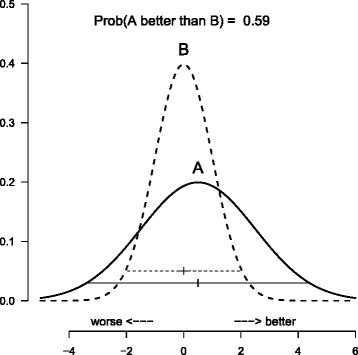
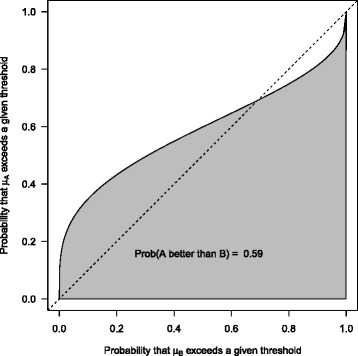
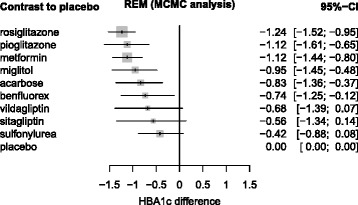
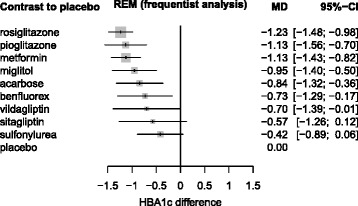
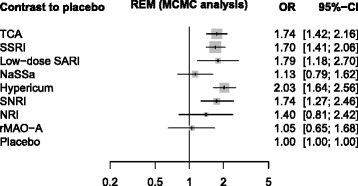
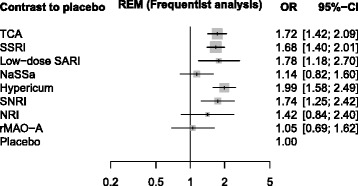
BACKGROUND: Network meta-analysis is used to compare three or more treatments for the same condition. Within a Bayesian framework, for each treatment the probability of being best, or, more general, the probability that it has a certain rank can be derived from the posterior distributions of all treatments. The treatments can then be ranked by the surface under the cumulative ranking curve (SUCRA). For comparing treatments in a network meta-analysis, we propose a frequentist analogue to SUCRA which we call P-score that works without resampling. METHODS: P-scores are based solely on the point estimates and standard errors of the frequentist network meta-analysis estimates under normality assumption and can easily be calculated as means of one-sided p-values. They measure the mean extent of certainty that a treatment is better than the competing treatments. RESULTS: Using case studies of network meta-analysis in diabetes and depression, we demonstrate that the numerical values of SUCRA and P-Score are nearly identical. CONCLUSIONS: Ranking treatments in frequentist network meta-analysis works without resampling. Like the SUCRA values, P-scores induce a ranking of all treatments that mostly follows that of the point estimates, but takes precision into account. However, neither SUCRA nor P-score offer a major advantage compared to looking at credible or confidence intervals.
Overview
The claims and statistics of this paper haven’t been checked yet.
Run the check — free, no account needed. It reads the open-access text and checks the sources it cites.
Integrity signals
Registry
Cites
Statistics
Figures
Verification
Claims the paper makes
The claims and statistics of this paper haven’t been checked yet.
Run the check — free, no account needed. It reads the open-access text and checks the sources it cites.
Claims other papers make about this one
Each is checked against this paper’s own text: does it say what the citing paper says it does?
The source backs part of the claim, not all of it — or backs it for a different population, condition or comparison.
In the citing paper
“This approach is often misleading, as it considers only the point estimate of effect and not the associated precision or certainty of evidence and ignores absolute differences between treatment alternatives.[56][57][58]”
From Management of chronic pain secondary to temporomandibular disorders: a systematic review and network meta-analysis of randomised trials (2023) · cites this paper as [57]
Experimental — accuracy not yet measured
Self-check
Percentages, sums and reported differences re-computed from the paper’s own numbers.
The self-check needs the paper’s full text.
Citations
Cites
R: A Language and Environment for Statistical Computing
R Core Team (2000) · doi:10.32614/r.manuals · Cited by 355,893
Statistical significance for genomewide studies
Storey, J. D., & Tibshirani, R. (2003) · Proceedings of the National Academy of Sciences · doi:10.1073/pnas.1530509100 · Cited by 9,692
Salanti, G., Ades, A. E., & Ioannidis, J. P. A. (2011) · Journal of Clinical Epidemiology · doi:10.1016/j.jclinepi.2010.03.016 · Cited by 3,766
Graphical tools for network meta-analysis in STATA
Chaimani, A., Higgins, J. P. T., Mavridis, D., Spyridonos, P., & Salanti, G. (2013) · PLoS ONE · doi:10.1371/journal.pone.0076654 · Cited by 2,473
Salanti, G. (2012) · Research Synthesis Methods · doi:10.1002/jrsm.1037 · Cited by 1,729
Cipriani, A., Furukawa, T. A., Salanti, G., Geddes, J. R., Higgins, J. P., Churchill, R., Watanabe, N., Nakagawa, A., Omori, I. M., McGuire, H., et al. (2009) · The Lancet · doi:10.1016/s0140-6736(09)60046-5 · Cited by 1,654
Dias, S., Sutton, A. J., Ades, A. E., & Welton, N. J. (2013) · Medical Decision Making · doi:10.1177/0272989x12458724 · Cited by 1,207
White, I. R., Barrett, J. K., Jackson, D., & Higgins, J. P. T. (2012) · Research Synthesis Methods · doi:10.1002/jrsm.1045 · Cited by 1,114
Jansen, J. P., Fleurence, R., Devine, B., Itzler, R. F., Barrett, A., Hawkins, N., Lee, K., Boersma, C., Annemans, L., & Cappelleri, J. C. (2011) · Value in Health · doi:10.1016/j.jval.2011.04.002 · Cited by 1,029
Hoaglin, D. C., Hawkins, N., Jansen, J. P., Scott, D. A., Itzler, R. F., Cappelleri, J. C., Boersma, C., Thompson, D., Larholt, K. M., Díaz, M., et al. (2011) · Value in Health · doi:10.1016/j.jval.2011.01.011 · Cited by 769
Cited by
Sorted by citations
Items 901–1,000 of 1,003
Xie, B.-J., Zhu, L.-N., Ma, C., Li, J., Dong, L., Zhu, Z., Ding, T., & Gu, X. (2019) · Breast Cancer · doi:10.1007/s12282-019-01007-9 · Cited by 7
Johnston, B. W., Hill, R. A., Duarte, R. V., Chean, C. S., McAuley, D. F., Blackwood, B., Pace, N. L., & Welters, I. D. (2019) · Systematic Reviews · doi:10.1186/s13643-019-1149-7 · Cited by 7
Salman, S., Shehata, M., Ibrahim, A. M., Awad, M., Sarsik, S. M., El-Shirbiny, H., Fathi, M. M., Agha, N. A. Y., Anis, R., & Abdel‐Daim, M. M. (2021) · Dermatologic Therapy · doi:10.1111/dth.14793 · Cited by 7
“The ranking of treatments was generated using the P-scores; the larger the P-score is, the higher the rank of the intervention would be.(17) The net split function was employed to evaluate the consistency between direct and indirect evidence and was used only if the data consist of three direct estimated treatments (t…”
MethodYang, J., Wen, S., Kong, J., Yue, P., Cao, W., Xu, X., Zhang, Y., Chen, J., Liu, M., Fan, Y., et al. (2021) · Microbiology Spectrum · doi:10.1128/spectrum.00761-21 · Cited by 7
“Next, we ranked the efficacy, safety, and therapy duration of antibiotics by calculating their P score, which is used to measure the extent of certainty that a treatment is better than others, averaged over all competing treatments (56).”
Buti, S., Bersanelli, M., Mazzaschi, G., Cattrini, C., Brunelli, M., & Maïo, M. D. (2021) · Immunotherapy · doi:10.2217/imt-2021-0157 · Cited by 7
Issa, P. P., Hussein, M. H., Omar, M., Munshi, R., Attia, A. S., Buti, Y. J., Aboueisha, M. A., Shama, M., Toraih, E. A., & Kandil, E. H. (2022) · Journal of Surgical Research · doi:10.1016/j.jss.2022.10.043 · Cited by 7
Chen, H.-T., Luo, T., Jiang, Z., Dai, S., Xia, H.-A., Yang, S., Huang, S., & Chen, L. (2023) · Medicine · doi:10.1097/md.0000000000035399 · Cited by 7
“The surfaces under the cumulative ranking probability(SUCRA) was used to rank the probability of different noninvasive TCM external treatments as the best interventions; the SUCRA value ranged from 0% to 100%, and the closer it was to 100%, indicating that the intervention is more likely to be the best intervention me…”
MethodNetwork meta‐regression for ordinal outcomes: Applications in comparing Crohn's disease treatments
Gwon, Y., Mo, M. F., Chen, M., Chi, Z., Li, J., Xia, A. H., & Ibrahim, J. G. (2020) · Statistics in Medicine · doi:10.1002/sim.8518 · Cited by 7
“5 mg/kg 26 13 (50) 7 (27) Sandborn et al36 52 placebo 26 9 (35) 6 (23) Phase 2 90 mg 25 12 (48) 6 (24) Sandborn et al37 53 placebo 132 33 (25) Phase 2 6 mg/kg 131 73 (55.”
InfluentialRoheger, M., Ernst, M., Folkerts, A., Krohm, F., Liebermann‐Jordanidis, H., Chakraverty, D., Droz, M., Adams, A., Eggers, C., Monsef, I., et al. (2021) · Cochrane Database of Systematic Reviews · doi:10.1002/14651858.cd013856 · Cited by 8
Satheeshkumar, P. S., & Sonis, S. T. (2021) · Clinical Oral Investigations · doi:10.1007/s00784-021-03802-1 · Cited by 7
Wang, W., Wang, W., Wang, S., & Pan, L. (2022) · Annals of Translational Medicine · doi:10.21037/atm-22-1849 · Cited by 6
“Therapeutic ranking depended on the P value being the frequentist form of the surface under the cumulative ranking (SUCRA) (22).”
Third-line Treatment for Metastatic Triple-negative Breast Cancer
Shi, M., Li, Z., Wang, T., Wang, M., Liu, Z., Zhao, F., Ren, D., & Zhao, J. (2023) · American Journal of Clinical Oncology · doi:10.1097/coc.0000000000001073 · Cited by 6
Osorio, D. L. S., Maldonado, D., Rijs, K., van der Marel, C., Klimek, M., & Calvache, J. A. (2024) · Canadian Journal of Anesthesia/Journal canadien d anesthésie · doi:10.1007/s12630-024-02760-y · Cited by 6
Zhao, S., Hao, R. X., Zhao, J., Ma, K., Li, J., Tian, C., Guan, H., & Li, M. (2024) · Heliyon · doi:10.1016/j.heliyon.2024.e35811 · Cited by 6
Hinojosa-Gonzalez, D. E., Saffati, G., Kronstedt, S., Rodriguez, C., La, T. M., Link, R. E., & Mayer, W. A. (2024) · Urology · doi:10.1016/j.urology.2024.12.030 · Cited by 6
Sun, X., Zhang, Y., Lu, Z. Y., Shu, Z., Zhang, K., & Chen, Y. (2025) · Sleep And Breathing · doi:10.1007/s11325-025-03300-8 · Cited by 7
“Treatment hierarchies were established using P-scores (range: 0–1) reflecting comparative effectiveness prob - abilities [37 ].”
Li, T., Zheng, Q., Xu, J., Li, Y., Zhang, M., Zhang, B., Zhou, L. N., & Tian, J. (2025) · Journal of Evidence-Based Medicine · doi:10.1111/jebm.70026 · Cited by 6
“We calculated the surface under the cumulative ranking curve (SUCRA) value for all the formulas and used probability ranking histograms to rank the interventions in the NMA [26].”
Dry Eye Disease Management Via Technological Methods: A Systematic Review and Network Meta-analysis
Noyman, D. B. E., Chan, C. C., Teichman, J. C., Arbel, I., Yosefi, O., Lapid‐Gortzak, R., Mimouni, M., & Safir, M. (2025) · Ophthalmology and Therapy · doi:10.1007/s40123-025-01187-y · Cited by 6
“In addition, all treatments (including placebo) were ranked according to their individual treat‑ ment effect, as measured by the P ‑score—a fre‑ quentist statistical value that measures the mean extent of certainty that a treatment is better than the competing treatments [31].”
Huang, T., Feng, H., Xie, Z., Wang, Y., Wang, Q., & Wang, Z. (2025) · Frontiers in Public Health · doi:10.3389/fpubh.2025.1624562 · Cited by 17
“Existing literature indicates that AT has significant long-term benefits for cardiopulmonary function, especially for improving aerobic endurance and metabolic adaptability (34, 35).”
No Superiority of Total Knee Arthroplasty Alignment Philosophies
Gusho, C., Hoskins, W. T., & Ghanem, E. S. (2025) · JBJS Reviews · doi:10.2106/jbjs.rvw.25.00101 · Cited by 6
Network Meta-Analysis of Quality of Life in Heart Failure With Reduced Ejection Fraction
Margaryan, R., Sepehrvand, N., Ouwerkerk, W., Tromp, J., Turgeon, R. D., & Ezekowitz, J. A. (2025) · Circulation Heart Failure · doi:10.1161/circheartfailure.125.013074 · Cited by 6
Deng, L., Zhao, C., Zhou, L., Mu, X., Sun, H., Li, L., & Zhang, Y. (2025) · Stem Cell Research & Therapy · doi:10.1186/s13287-025-04638-2 · Cited by 8
“Additionally, the surface under the cumulative ranking (SUCRA) was used to rank the interventions based on outcome measures, providing a direct interpretation of the probability that each intervention was the most effective [35].”
Aljalfan, A. A. N., Maniya, M. T., Sachedina, D., Almuhaidib, S. R., Alharbi, A., Alamrie, R. M., Aziz, U., & Farid, A. A. M. (2025) · Journal of the European Academy of Dermatology and Venereology · doi:10.1111/jdv.70084 · Cited by 6
“28 The greater the SUCRA score, the higher the relative ranking of a specific therapy.”
Zou, H., Liu, M., Lu, Z., Wang, J., & Zhao, P. (2025) · Journal of Orthopaedic and Sports Physical Therapy · doi:10.2519/jospt.2025.13366 · Cited by 6
Lin, R., Hsu, C., Shih, M., Chien, K., & Wu, H. (2025) · Diabetes Obesity and Metabolism · doi:10.1111/dom.70224 · Cited by 6
Chachlioutaki, K., Liogka, M., Petinari, P. M., Koltsakidis, S., Papadimitriou‐Tsantarliotou, A., Bekiari, C., Vizirianakis, I. S., Tzetzis, D., Bouropoulos, N., & Fatouros, D. G. (2025) · Journal of Drug Delivery Science and Technology · doi:10.1016/j.jddst.2025.107552 · Cited by 6
Hu, L., Xu, Y., Wang, A., Qiao, Y., & Dai, Q. (2025) · ANZ Journal of Surgery · doi:10.1111/ans.70438 · Cited by 6
Aho, S., Simon, E. G., Bouit, C., Serrand, M., Filipuzzi, L., Sagot, P., Astruc, K., & Kadhel, P. (2024) · Journal of Hospital Infection · doi:10.1016/j.jhin.2024.03.021 · Cited by 6
Xu, L., Yu, H., Xu, S., Wang, Y., & Cao, Y. (2024) · Skin Research and Technology · doi:10.1111/srt.13749 · Cited by 5
“28,29 The comparisons between each pair of interventions within each outcome are presented in the league table.”
BackgroundHu, W., Wang, M., & Sun, F. (2024) · BMC Pediatrics · doi:10.1186/s12887-024-04832-w · Cited by 6
Hirohama, K., Imura, T., Hori, T., Deguchi, N., Mitsutake, T., & Tanaka, R. (2024) · PLoS ONE · doi:10.1371/journal.pone.0301616 · Cited by 6
“Moreover, the P-score was used to assess relative effectiveness, as it measures the certainty that one intervention is better than the other, averaging over all competing interventions; the P-score has been shown to be equivalent to the SUCRA score [43].”
MethodSiafis, S., Lorenz, C., Wu, H., Zhu, Y., Schneider‐Thoma, J., Bighelli, I., Li, C., Hansen, W., Padberg, F., Salanti, G., et al. (2024) · Systematic Reviews · doi:10.1186/s13643-024-02585-2 · Cited by 6
“If heterogeneity is not large and treatment effects are estimated with comparable uncertainty, treatments will be ranked in the network meta-analysis using P -scores, the frequentist analog of the surface under the cumulative ranking curve (SUCRA) [53].”
MethodSecuring skin grafts: A network meta-analysis
Seretis, K. G., & Bounas, N. (2024) · Journal of Plastic Reconstructive & Aesthetic Surgery · doi:10.1016/j.bjps.2024.07.005 · Cited by 6
Effectiveness of safety-netting approaches for acutely ill children: a network meta-analysis
Burvenich, R., Bos, D. A. G., Lowie, L., Peeters, K., Toelen, J., Wynants, L., & Verbakel, J. Y. J. (2024) · British Journal of General Practice · doi:10.3399/bjgp.2024.0141 · Cited by 6
Nutraceutical interventions for erectile dysfunction: a systematic review and network meta-analysis
Barbonetti, A., Tienforti, D., Antolini, F., Spagnolo, L., Cavallo, F., Pasquale, A. B. D., Maggi, M., & Corona, G. (2024) · The Journal of Sexual Medicine · doi:10.1093/jsxmed/qdae123 · Cited by 7
“23 The SUCRA expresses the percentage of efficacy of each treatment compared with an “ideal” treat-ment always ranked first without uncertainty.”
Moćko, P., Koperny, M., Śladowska, K., Holko, P., Kowalska‐Bobko, I., & Kawalec, P. (2024) · Pharmacotherapy The Journal of Human Pharmacology and Drug Therapy · doi:10.1002/phar.4611 · Cited by 6
Novel Therapies to Reduce Rehospitalization Risk in Worsening Heart Failure
Lima, I. G. C. V., Nunes, J. T., Godoy, L. C., McDonald, M., & Bocchi, E. A. (2024) · JACC Advances · doi:10.1016/j.jacadv.2024.101451 · Cited by 8
Chierici, A. P., Vinci, D., Liddo, G., Granieri, S., Loi, M., Alifano, M., & Iannelli, A. (2025) · Colorectal Disease · doi:10.1111/codi.70002 · Cited by 6
Bianjiang, Z., Jianchun, Z., Xiaoyu, S., & Yang, J. (2025) · BMC Psychiatry · doi:10.1186/s12888-025-06620-x · Cited by 12
Lee, C., Kang, Y., Ho, C., Lin, C. S., Chen, P., Wu, Y., & Huang, T. (2020) · Medicine · doi:10.1097/md.0000000000019618 · Cited by 7
“The larger the SUCRA value (ie, closer to 1) is, the better the rank of the intervention.([28]) Forest plots summary relative mean effects, 95% CIs and predictions for all comparisons together.”
Network meta-analysis of palliative treatments in patients with esophageal cancer
Doosti‐Irani, A., Mansournia, M. A., Cheraghi, Z., Rahimiforoushani, A., Haddad, P., & Holakouie‐Naieni, K. (2021) · Critical Reviews in Oncology/Hematology · doi:10.1016/j.critrevonc.2021.103506 · Cited by 6
Different venous approaches for implantation of cardiac electronic devices. A network meta‐analysis
Anagnostopoulos, I., Kossyvakis, C., Kousta, M. S., Verikokkou, C., Lakka, E., Karakanas, A., Deftereos, G., Spanou, P., Giotaki, S. G., Vrachatis, D. A., et al. (2022) · Pacing and Clinical Electrophysiology · doi:10.1111/pace.14510 · Cited by 6
Shim, S. R., Kim, S., Hong, M., Lee, J. H., Kang, M., & Han, H. W. (2022) · Diagnostics · doi:10.3390/diagnostics12061302 · Cited by 7
“The surface under the cumulative ranking curve (SUCRA) was used to calculate the probability of each index test being the most effective diagnostic method based on a Bayesian approach using probability values to facilitate interpretation of diagnostic performance; the larger the SUCRA value was, the higher the rank of…”
MethodA Network Meta-Analysis of Intravenous Versus Oral Acetaminophen for Patent Ductus Arteriosus
Olowoyeye, A., Nnamdi-Nwosu, O., Manalastas, M., & Okwundu, C. I. (2022) · Pediatric Cardiology · doi:10.1007/s00246-022-03053-1 · Cited by 6
Kendziora, B., Frey, J., Reinholz, M., Ruëff, F., Oppel, E. M., Zuberbier, T., Hartmann, D., Schlager, J. G., & French, L. E. (2022) · Allergo Journal International · doi:10.1007/s40629-022-00235-4 · Cited by 6
“5 lists the estimated odds ratios for the occurrence of an adverse event for all medications with placebo as comparator and the treatment ranking according to calculated P-scores.”
BackgroundInfluentialAbdallaoui, O. E. A. E., Tornyos, D., Lukács, R., & Komócsi, A. (2023) · Frontiers in Cardiovascular Medicine · doi:10.3389/fcvm.2022.1008914 · Cited by 6
Tian, X., Wang, Y., Qi, M., Lu, X., & Lei, J. (2023) · BMJ Open · doi:10.1136/bmjopen-2022-062555 · Cited by 8
“Patients and/or the public were not involved in the design, or conduct, or reporting, or dissemination plans of this research.”
Zheng, B., Jiang, H., Yang, W., Li, Y., Liang, B., Zhu, J., Chen, N., Chen, M., & Zhang, M. (2023) · Cancer Medicine · doi:10.1002/cam4.6241 · Cited by 7
Digital devices for tuberculosis treatment adherence
Vilyte, G., Fox, T., Rohwer, A. C., Volmink, J. A., & McCaul, M. (2023) · Cochrane Database of Systematic Reviews · doi:10.1002/14651858.cd015709 · Cited by 6
Mi, K., Wu, S., Lv, C., Meng, Y., Yin, W., Li, H., Li, J., & Yuan, H. (2023) · Frontiers in Cardiovascular Medicine · doi:10.3389/fcvm.2023.1190181 · Cited by 6
Fong, K. Y., Foo, J. C. H., Chan, Y. H., Aslim, E. J., Ng, L. G., Gan, V. H. L., & Lim, E. J. (2023) · Transplantation Reviews · doi:10.1016/j.trre.2023.100813 · Cited by 6
Chu, H., Lin, L., Wang, Z., Wang, Z., Chen, Y., & Cappelleri, J. C. (2023) · Wiley Interdisciplinary Reviews Computational Statistics · doi:10.1002/wics.1639 · Cited by 6
“Statistically, both frequentist methods (Bucher et al., 1997; Lumley, 2002; Rucker & Schwarzer, 2015) and Bayesian hierarchical models (Hong et al., 2016; Lu & Ades, 2004; Lu & Ades, 2006; Lu & Ades, 2009; Zhang et al., 2014; Zhang et al., 2017) have been developed.”
MethodSaid, S. A., Kaier, K., Sumaya, W., Alsaid, D., Duerschmied, D., Storey, R. F., Gibson, C. M., Westermann, D., & Alabed, S. (2024) · Cochrane Database of Systematic Reviews · doi:10.1002/14651858.cd014678.pub2 · Cited by 6
Popovic, J., Bee, C. J., Beam, K. H., Dovantzis, K., Stapleton, J. M., Barba, M. A., Callier, M. R. P., & Yoon, W. (2024) · Environmental Science & Technology Letters · doi:10.1021/acs.estlett.4c00119 · Cited by 6
Malik, A. H., & Aronow, W. S. (2018) · American Journal of Therapeutics · doi:10.1097/mjt.0000000000000892 · Cited by 6
Treatment for acute flares of gout
Tang, H., Xu, G., Zheng, Q., Cheng, Y., Zheng, H., Li, J., Yin, Z., Liang, F., & Chen, J. (2020) · Medicine · doi:10.1097/md.0000000000019668 · Cited by 6
“the best and 0% of a P-score indicates a treatment to be the worst.([22])”
Afify, M. A., Ahmed, I. G. G., Alkahtani, T. A., Altulayhi, R. I., Alrowili, A. S. M., Ghozy, S. A., Bin-Jumah, M. N., & Abdel‐Daim, M. M. (2020) · Environmental Science and Pollution Research · doi:10.1007/s11356-020-11267-0 · Cited by 6
“Ranking of treatment was based on P score which is the frequentist approach analogue to surface under the cumulative ranking (SUCRA) (Rücker and Schwarzer 2015).”
MethodPharmacological Interventions for Post-operative Sore Throat (POST): A Network Meta-analysis
(2020) · Signa Vitae · doi:10.22514/sv.2020.16.0085 · Cited by 6
“Ranking of treatment was based on P-score, which is the frequentist approach analogue to surface under the cumulative ranking (SUCRA) [17].”
Hoshijima, H., Mihara, T., Kokubu, S., Takeda, S., Shiga, T., & Mizuta, K. (2022) · Children · doi:10.3390/children9091280 · Cited by 6
“The P score was used to rank the effectiveness of each device and identify the best device in terms of each outcome [14].”
MethodPFMT relevant strategies to prevent perineal trauma: a systematic review and network meta-analysis
Cao, X. Q., Yang, Q., Wang, Q., Hu, S., Hou, L., Sun, M., Lai, H., Wu, C., Wu, Y. F., Xiao, L., et al. (2022) · Archives of Gynecology and Obstetrics · doi:10.1007/s00404-022-06769-w · Cited by 8
Munkholm, K., Ussing, A., Brink, M., Edemann-Callesen, H., Canbolat, S. S., Christensen, R., Dahl, K. S., Ebdrup, B. H., Jensen, M. E. J., Kierulf-Lassen, C., et al. (2023) · European Archives of Psychiatry and Clinical Neuroscience · doi:10.1007/s00406-023-01680-0 · Cited by 5
“We estimated the SMD with corresponding 95% CIs for each treatment comparison, and estimated the p-scores [55].”
MethodEffect of nonpharmacological interventions on poststroke depression: a network meta-analysis
Li, Y., Wang, Y. Y., Gao, L., Meng, X., & Deng, Q. (2024) · Frontiers in Neurology · doi:10.3389/fneur.2024.1376336 · Cited by 5
Ramadanov, N., Voss, M., Jóźwiak, K., Prill, R., Hakam, H. T., Salzmann, M., Dimitrov, D., & Becker, R. (2024) · Medicine · doi:10.1097/md.0000000000039068 · Cited by 5
“[20] A professional statistician (KJ) performed all statistical calculations using the R packages meta and metafor.”
MethodSex Differences in the Safety and Efficacy of Different Durations of DAPT After PCI
Park, D. Y., Mahajan, S., Fishman, E., Ambrosini, A. P., Acero, L. M. R., Hu, J., Campbell, G., Babapour, G., Kelsey, M. D., Douglas, P. S., et al. (2025) · JACC Advances · doi:10.1016/j.jacadv.2024.101543 · Cited by 6
Plitman, E., Mohammed, A. A. S., Rajaleelan, W., Nakatani, R., Englesakis, M. F., Shankar, J., Venkatraghavan, L., & Chowdhury, T. (2025) · Anesthesia & Analgesia · doi:10.1213/ane.0000000000007357 · Cited by 5
Comparative efficacy of leading COVID-19 vaccines: A network meta-analysis
Rai, S., & Tripathi, S. S. (2025) · The Indian Journal of Medical Research · doi:10.25259/ijmr_750_2024 · Cited by 5
Vo, A., Ta, K.-N. T., & Chuang, K.-J. (2025) · Asia-Pacific Journal of Oncology Nursing · doi:10.1016/j.apjon.2025.100671 · Cited by 9
Wu, R., Zhang, Y., Yuan, X., Yan, X., & Fu, X. (2025) · Frontiers in Cardiovascular Medicine · doi:10.3389/fcvm.2025.1489382 · Cited by 6
“The size of each node and the thickness of connecting lines re fl ected the number of studies (68).”
Tan, L., Huang, D., Liu, B., Ossowski, Z. M., Wang, N., & Yan, W. (2025) · International Journal of Obesity · doi:10.1038/s41366-025-01777-7 · Cited by 10
“Ultimately, we retained 75 articles for quantitative synthesis.”
Efficacy of PD-1/PDL-1 inhibitors for ovarian cancer: a systematic review and network meta-analysis
Ahmadi, N., Kadi, C., Benlamari, M., Gaouzi, Z., Ouali, E. M. E., Bouziane, A., Abouqal, R., & Ibrahimi, A. (2025) · Future Oncology · doi:10.1080/14796694.2025.2530378 · Cited by 5
Khan, S., Dahiya, D. S., Jadoon, A. K., Khan, D. A., Khan, M. A., Hamo, F., Ullah, H., Bharadwaj, H. R., Zafar, Y., Basida, S. D., et al. (2025) · Journal of Crohn s and Colitis · doi:10.1093/ecco-jcc/jjaf127 · Cited by 7
Martino, E. A., Caridà, G., Lofaro, D., Bruzzese, A., Labanca, C., Mendicino, F., Lucia, E., Olivito, V., Puccio, N., Neri, A., et al. (2025) · ESMO Open · doi:10.1016/j.esmoop.2025.105514 · Cited by 7
Efficacy and Drug Interactions of Glaucoma Medications
Hsia, Y., Wang, C., Su, C., Huang, J., Wang, T.-H., & Tu, Y. (2025) · Ophthalmology · doi:10.1016/j.ophtha.2025.07.009 · Cited by 6
Bramlage, P., Vijayan, A., Varghese, T. P., Sadanandan, D. M., Lanzinger, S., & Rodriguez, C. F. (2025) · Diabetes Obesity and Metabolism · doi:10.1111/dom.70010 · Cited by 6
Versteegh, M., Idema, D. L., Huygens, S. A., Jenniskens, K., Pierik, M. J., Römkens, T. E. H., van Schaik, F. D. M., Wahab, P. J., Veld, L. F. H. I. ’., Kusters, M. P. T., et al. (2025) · Gastro Hep Advances · doi:10.1016/j.gastha.2025.100764 · Cited by 5
Du, M., Chen, L., Xia, L., Li, Y., Ma, E., Hu, Z., & Gao, X. (2025) · BMC Sports Science Medicine and Rehabilitation · doi:10.1186/s13102-025-01267-3 · Cited by 6
“A higher SUCRA value indicated a higher ranking of an exercise intervention in improving specific indicators in stroke patients [37, 38].”
Antal, R., Benyó, Z., Nagy, Z. Z., Kovács, I., Fekete, J. T., Győrffy, B., & Kovács, K. A. (2025) · GeroScience · doi:10.1007/s11357-025-01921-1 · Cited by 5
Hinojosa-Gonzalez, D. E., Escarcega‐Bordagaray, J. A., Murillo‐Torres, R. M., Torres‐Martinez, M., & Heredia, F. M. (2025) · International Journal of Gynecology & Obstetrics · doi:10.1002/ijgo.70648 · Cited by 5
“14,15 As both yielded comparable results, we selected the Bayesian framework due to greater familiarity.”
Davis, J. W., Mai, S. L., Harmouch, W., Reisler, J., MacKay, M., Davis, E. A., Osmancik, P. P., & Rich, M. W. (2025) · Clinical Cardiology · doi:10.1002/clc.70217 · Cited by 5
“However, we used a frequentist tool ( “ netrank ” command in the netmeta package) [11, 15] to quantify the certainty that one intervention was superior to alternatives when at least one comparison was significantly different.”
InfluentialNetwork meta-analysis of treatment strategies for calcified coronary lesions
Maremmani, M., Gasparini, G. L., Bruno, F., Berti, S. L., Digiacomo, S., Ebrahimi, R., Templin, C., Canova, P. A., Pesarini, G., & Vece, D. D. (2025) · Cardiovascular Intervention and Therapeutics · doi:10.1007/s12928-025-01214-6 · Cited by 5
Vasireddy, S., Biswas, S. K., Kollu, R., Krishnan, E., Khan, M. S., Dr.Mohammed Fasil, C., Jayakumar, A. A., & Acharya, R. (2025) · BMC Neurology · doi:10.1186/s12883-025-04490-0 · Cited by 7
“Treatment rankings were calculated using P-scores [18].”
Racher, M. L., Morris, M., Scott, A. P., Ounpraseuth, S., Hu, Z., Whittington, J. R., Quick, C. M., & Magann, E. F. (2021) · Archives of Gynecology and Obstetrics · doi:10.1007/s00404-021-06253-x · Cited by 5
Qin, S., Xv, Z., Chen, X., Wang, S., Lu, H., Li, J., Guo, X., Yang, J.-H., Liu, C., Wang, Y., et al. (2023) · Frontiers in Oncology · doi:10.3389/fonc.2023.1072634 · Cited by 5
Kunze, K. N., Kay, J., Pareek, A., Dahmen, J., Chahla, J. A., Nho, S. J., Williams, R. J., de SA, D. L., & KARLSSON, J. L. (2023) · Knee Surgery Sports Traumatology Arthroscopy · doi:10.1007/s00167-023-07419-7 · Cited by 5
“After performing the network meta-analysis, the comparative effectiveness of each treatment with respect to the primary outcome can be ranked from most effective to least effective using statistical probabilities and estimations of uncertainty [10].”
BackgroundMethodInfluentialMorsali, M., Doosti‐Irani, A., Amini, S., Nazemipour, M., Mansournia, M. A., & Aliannejad, R. (2023) · Global Epidemiology · doi:10.1016/j.gloepi.2023.100116 · Cited by 5
“The closer the P-score value is to one, the higher the rank of the treatment [21].”
BackgroundStahl‐Pehe, A., Schlesinger, S., Kuß, O., Mashhadi, N. S., Bächle, C., Warz, K.-D., Bürger-Büsing, J., Holl, R. W., Spörkel, O., & Rosenbauer, J. (2023) · BMJ Open · doi:10.1136/bmjopen-2023-074317 · Cited by 7
“40 Ranking results will be presented in tabular and graphical modes.”
BackgroundPreventing postpartum hemorrhage: A network meta-analysis on routes of administration of uterotonics
Papadopoulou, A., Tournas, G., Georgiopoulos, G. A., Antsaklis, P., Daskalakis, G., Coomarasamy, A., & Devall, A. (2024) · European Journal of Obstetrics & Gynecology and Reproductive Biology · doi:10.1016/j.ejogrb.2024.02.021 · Cited by 5
Nie, X., Yang, T., Nie, X., & Yuan, J. (2024) · Heliyon · doi:10.1016/j.heliyon.2024.e31555 · Cited by 7
“We created league tables to show the effect of all exercise interventions on HRQoL and ranked the therapeutic effects of exercise using P-scores [29].”
MethodHinojosa-Gonzalez, D. E., Mendoza, A., Torres‐Martinez, M., Diaz-Garza, K., Hernandez, B. S., Muñoz‐Hibert, M. I., Ramírez-Mulhern, I., Morales-Palomino, K. L., & González-Oyervides, R. (2024) · International Journal of Impotence Research · doi:10.1038/s41443-024-00910-w · Cited by 5
“Higher SUCRA scores re fl ect a better theoretical treatment [18, 19].”
Salani, F., Vetere, G., Rossini, D., Genovesi, V., Carullo, M., Bartalini, L., Massa, V., Bernardini, L., Caccese, M., Cesario, S., et al. (2024) · Liver International · doi:10.1111/liv.16047 · Cited by 5
“P - score is a measure of certainty of one treatment superiority to another, averaged over all competing treatments 14 ; its value ranges between 0 and 1 and positively correlates to rankings (i.e. the higher the P - score the higher the ranking).”
Favre-Bulle, E., Nyfeler, S., Schorderet, C., Risso, G., Bassolino, M., & Sattelmayer, M. (2024) · PeerJ · doi:10.7717/peerj.17799 · Cited by 6
“P-Scores were used to produce a treatment ranking of the included interventions ( Rücker & Schwarzer, 2015 ).”
MethodBahji, A., Forth, E., Nasar, A., Waqas, A., Hawken, E. R., & Ayub, M. (2024) · Journal of Psychopharmacology · doi:10.1177/02698811241303654 · Cited by 6
“Additional post hoc analyses included P -scores (Rücker and Schwarzer, 2015) for ranking treatments – where higher P -scores indicate a greater likelihood of a treatment being among the most effective.”
Goulart, L. T., Matsunaga, F. T., Belloti, J. C., Netto, N. A., Paim, T. S., & Tamaoki, M. J. S. (2025) · World Journal of Orthopedics · doi:10.5312/wjo.v16.i2.102856 · Cited by 5
Comprehensive evaluation of siRNA therapeutics on Lp(a): A network meta‐analysis
Liu, S., Wang, X., Hu, J., Zhao, C., & Qin, X. (2025) · Diabetes Obesity and Metabolism · doi:10.1111/dom.16355 · Cited by 7
“30 Additionally, heterogeneity was quantified using the I 2 statistic and Q statistics for both within-design and between-design variability.”
Pharmacotherapies for Binge Eating Disorder: Systematic Review and Network Meta‐Analysis
Costa, G. P. A., de Assunção, B. R., Belfort‐DeAguiar, R., & Nunes, J. C. (2025) · Obesity Reviews · doi:10.1111/obr.13936 · Cited by 7
“We ranked treatments based on their p - scores, which have been shown to be equivalent to the SUCRA (surface under the cumulative ranking curve) values [31].”
Kino, T., Kagimoto, M., Yamada, T., Ishii, S., Asai, M., Asano, S., Yano, H., Ishikawa, T., & Ishigami, T. (2022) · Journal of Clinical Medicine · doi:10.3390/jcm11071872 · Cited by 5
“Additionally, we calculated the P-score and the surface under the cumulative ranking (SUCRA) to evaluate and rank the anticoagulant strategies and regimens [28,29].”
MethodLiao, W., Zhong, Z., Su, G., Feng, X., & Yang, P. (2022) · Frontiers in Pharmacology · doi:10.3389/fphar.2022.749312 · Cited by 7
“(Rücker and Schwarzer, 2015) We created a ranking on the safety of IOP rising in RCTs.”
BackgroundShi, Y., Tao, Q., Qin, D., Chen, M., Yu, S., & Zheng, H. (2022) · Frontiers in Physiology · doi:10.3389/fphys.2022.1001978 · Cited by 5
“Besides, the effectiveness of acupuncture and different antispasmodics were ranked by the P-scores method (Rücker and Schwarzer, 2015).”
MethodJunior, L. C. S., dos Santos, J. R., Reis, A., Faria‐e‐Silva, A. L., & Leal, P. C. (2023) · Clinical Oral Investigations · doi:10.1007/s00784-023-04981-9 · Cited by 5
“We estimated the relative ranking of the different interventions for each outcome using P-scores [18], the frequentist analog to SUCRA (surface under a cumulative ranking curse) used in the Bayesian network meta-analysis approach.”
MethodEffectiveness of Thromboprophylaxis Agents Following Hip Fracture
Negm, A. M., Yamaura, L., Clarke, A., Chaudhry, D., Cherppukaran, T., & Schneider, P. (2023) · JBJS Open Access · doi:10.2106/jbjs.oa.23.00064 · Cited by 5
Metadata
- Authors
- Rücker, G., & Schwarzer, G.
- Affiliations
- University of Freiburg (DE)
- Corresponding author
- Rücker, Gerta
- Venue
- BMC Medical Research Methodology
- Published
- 2015-07-31
- Volume
- 15
- Issue
- 1
- Pages
- 58-58
- ISSN
- 1471-2288 (ISSN-L)
- PMC
- PMC4521472
- OpenAlex
- W2111999709
- Cited by
- 1,732
- References
- 32
- Citations by year
- 2026: 249 · 2025: 253 · 2024: 267 · 2023: 229 · 2022: 226 · 2021: 191 · 2020: 148 · 2019: 76 · 2018: 52 · 2017: 32 · 2016: 8 · 2015: 1
- FWCI
- 28.58
- Type
- journal article
- Language
- en
- Open access
- gold
- doi.org
- Licence
- Locations
- BMC Medical Research Methodology (publishedVersion, other-oa)
- PubMed Central (publishedVersion, cc-by)
- PubMed (publishedVersion)
- FreiDok plus (Universitätsbibliothek Freiburg) (submittedVersion)
- Funders
- Deutsche Forschungsgemeinschaft (RU1747/1-1)
- Topics
- Social Sciences › Decision Sciences › Statistics, Probability and Uncertainty › Meta-analysis and systematic reviews
- Physical Sciences › Mathematics › Statistics and Probability › Statistical Methods in Clinical Trials
- Social Sciences › Sociology and Political Science › Delphi Technique in Research
- Keywords
- treatment ranking, P-score, surface under the cumulative ranking curve, confidence intervals, diabetes mellitus, depression
- MeSH terms
- Algorithms, Bayes Theorem, Biometry, Data Interpretation, Statistical, Humans, Review Literature as Topic, Meta-Analysis as Topic, Reproducibility of Results, Biomedical Research
About these checks
Registry, retraction, Cites and statistics results are computed, not judged, with one exception: a printed reference that no index lists is read once by a model before it counts as a citation error. Claims are extracted by a model and kept only when their quote appears verbatim in the text; each cited source is then checked, with a model’s help, for whether it says what the claim relies on. Those verdicts can be wrong — read the claim’s quote and the cited source before relying on one.
Statistics and arithmetic are recomputed, not judged.
Confidence bands are shown only for fields calibrated on our annotated test set. None is calibrated yet, so no band is shown.
What counts as a claim ›How we measure confidence ›How we check this ›
Are you an author, or do you see a problem with this page? Request a review
