

The DOI matches its Crossref record; 31 of the 32 references it cites were found in a registry or an index.
Ranking treatments in frequentist network meta-analysis works without resampling methods
Open accessAbstract
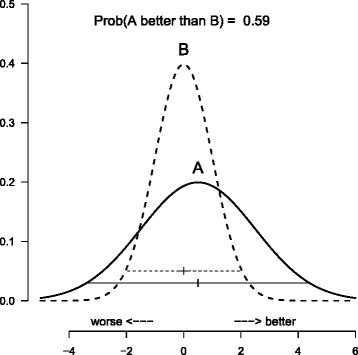
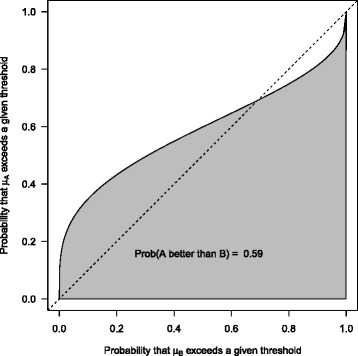
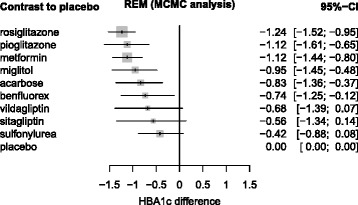
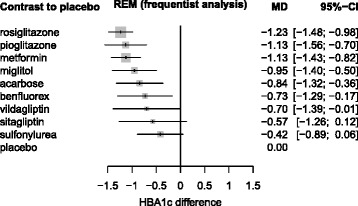
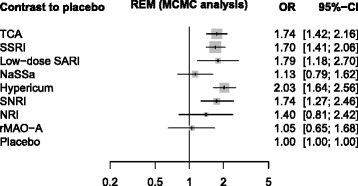
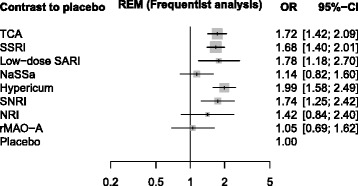
BACKGROUND: Network meta-analysis is used to compare three or more treatments for the same condition. Within a Bayesian framework, for each treatment the probability of being best, or, more general, the probability that it has a certain rank can be derived from the posterior distributions of all treatments. The treatments can then be ranked by the surface under the cumulative ranking curve (SUCRA). For comparing treatments in a network meta-analysis, we propose a frequentist analogue to SUCRA which we call P-score that works without resampling. METHODS: P-scores are based solely on the point estimates and standard errors of the frequentist network meta-analysis estimates under normality assumption and can easily be calculated as means of one-sided p-values. They measure the mean extent of certainty that a treatment is better than the competing treatments. RESULTS: Using case studies of network meta-analysis in diabetes and depression, we demonstrate that the numerical values of SUCRA and P-Score are nearly identical. CONCLUSIONS: Ranking treatments in frequentist network meta-analysis works without resampling. Like the SUCRA values, P-scores induce a ranking of all treatments that mostly follows that of the point estimates, but takes precision into account. However, neither SUCRA nor P-score offer a major advantage compared to looking at credible or confidence intervals.
Overview
The claims and statistics of this paper haven’t been checked yet.
Run the check — free, no account needed. It reads the open-access text and checks the sources it cites.
Integrity signals
Registry
Cites
Statistics
Figures
Verification
Claims the paper makes
The claims and statistics of this paper haven’t been checked yet.
Run the check — free, no account needed. It reads the open-access text and checks the sources it cites.
Claims other papers make about this one
Each is checked against this paper’s own text: does it say what the citing paper says it does?
The source backs part of the claim, not all of it — or backs it for a different population, condition or comparison.
In the citing paper
“This approach is often misleading, as it considers only the point estimate of effect and not the associated precision or certainty of evidence and ignores absolute differences between treatment alternatives.[56][57][58]”
From Management of chronic pain secondary to temporomandibular disorders: a systematic review and network meta-analysis of randomised trials (2023) · cites this paper as [57]
Experimental — accuracy not yet measured
Self-check
Percentages, sums and reported differences re-computed from the paper’s own numbers.
The self-check needs the paper’s full text.
Citations
Cites
R: A Language and Environment for Statistical Computing
R Core Team (2000) · doi:10.32614/r.manuals · Cited by 355,893
Statistical significance for genomewide studies
Storey, J. D., & Tibshirani, R. (2003) · Proceedings of the National Academy of Sciences · doi:10.1073/pnas.1530509100 · Cited by 9,692
Salanti, G., Ades, A. E., & Ioannidis, J. P. A. (2011) · Journal of Clinical Epidemiology · doi:10.1016/j.jclinepi.2010.03.016 · Cited by 3,766
Graphical tools for network meta-analysis in STATA
Chaimani, A., Higgins, J. P. T., Mavridis, D., Spyridonos, P., & Salanti, G. (2013) · PLoS ONE · doi:10.1371/journal.pone.0076654 · Cited by 2,473
Salanti, G. (2012) · Research Synthesis Methods · doi:10.1002/jrsm.1037 · Cited by 1,729
Cipriani, A., Furukawa, T. A., Salanti, G., Geddes, J. R., Higgins, J. P., Churchill, R., Watanabe, N., Nakagawa, A., Omori, I. M., McGuire, H., et al. (2009) · The Lancet · doi:10.1016/s0140-6736(09)60046-5 · Cited by 1,654
Dias, S., Sutton, A. J., Ades, A. E., & Welton, N. J. (2013) · Medical Decision Making · doi:10.1177/0272989x12458724 · Cited by 1,207
White, I. R., Barrett, J. K., Jackson, D., & Higgins, J. P. T. (2012) · Research Synthesis Methods · doi:10.1002/jrsm.1045 · Cited by 1,114
Jansen, J. P., Fleurence, R., Devine, B., Itzler, R. F., Barrett, A., Hawkins, N., Lee, K., Boersma, C., Annemans, L., & Cappelleri, J. C. (2011) · Value in Health · doi:10.1016/j.jval.2011.04.002 · Cited by 1,029
Hoaglin, D. C., Hawkins, N., Jansen, J. P., Scott, D. A., Itzler, R. F., Cappelleri, J. C., Boersma, C., Thompson, D., Larholt, K. M., Díaz, M., et al. (2011) · Value in Health · doi:10.1016/j.jval.2011.01.011 · Cited by 769
Cited by
Sorted by citations
Items 601–700 of 1,003
Papageorgiou, S. N., Konstantinidis, I., Papadopoulou, A. K., Apostolidou-Kiouti, F., Avgerinos, I., Pataka, A., Eliades, T., Τσάπας, Α., & Haidich, A. (2025) · Sleep Medicine · doi:10.1016/j.sleep.2025.02.008 · Cited by 15
Samara, M. T., Lappas, A. S., Pinioti, E., Glarou, E., Fober, I., Christogiannis, C., Siafis, S., Christodoulou, G. N., Helfer, B., Mavridis, D., et al. (2025) · EClinicalMedicine · doi:10.1016/j.eclinm.2025.103291 · Cited by 17
“35 The transitivity assumption was evaluated by comparing the distribution of potential effect modifiers (publication year, sample size, baseline severity, mean age, and percentage of male participants) across studies grouped by comparison (Appendix 9).”
Efficacy and Safety of Medical Interventions for Moderate to Severe Hidradenitis Suppurativa
Garg, A., Cohn, E., Midgette, B., Frasier, K. M., & Strunk, A. (2025) · JAMA Dermatology · doi:10.1001/jamadermatol.2025.1976 · Cited by 17
Ma, Z., Cao, F., Liao, M., Min, R., Zheng, R., Sun, X., Chen, X., Gong, Y., Ai, S., & Kang, X. (2025) · BMJ · doi:10.1136/bmj-2024-082834 · Cited by 15
“57 We used the node splitting method to assess consistency between direct and indirect comparisons within closed loops.”
Bayesian unanchored additive models for component network meta‐analysis
Wigle, A., & Béliveau, A. (2022) · Statistics in Medicine · doi:10.1002/sim.9520 · Cited by 15
Seok, J., Vaughan, B. S., Lew, B. J., Ahmad, A., Blair, J., & Hwang, S. (2023) · Scientific Reports · doi:10.1038/s41598-023-33979-2 · Cited by 18
Park, D. Y., An, S., Jolly, N., Attanasio, S., Yadav, N., Gutierrez, J. A., Nanna, M. G., Rao, S. V., & Vij, A. (2023) · Catheterization and Cardiovascular Interventions · doi:10.1002/ccd.30784 · Cited by 15
“Briefly, P scores denote the mean extent of certainty that one imaging modality is better than its competitors averaged over all competitors with equal weights.(14)”
BackgroundBi, A. S., Anil, U., Colasanti, C. A., Kwon, Y. W., Virk, M. S., Zuckerman, J. D., & Rokito, A. S. (2024) · The American Journal of Sports Medicine · doi:10.1177/03635465231204623 · Cited by 15
Maher, D., Reeve, E., Hopkins, A. M., Tan, J. M., Tantiongco, M., Ailabouni, N. J., Woodman, R. J., Stamp, L. K., Bursill, D., Proudman, S., et al. (2024) · Arthritis Care & Research · doi:10.1002/acr.25309 · Cited by 16
“22 Interventions with larger P -score were considered more bene fi cial.”
BackgroundDu, P., Jin, S., Lu, S., Wang, L., Ma, X., Wang, J., Huang, R., Luo, Q., Yang, S., & Feng, X. (2024) · Age and Ageing · doi:10.1093/ageing/afae035 · Cited by 15
Safabakhsh, M., Imani, H., Shahinfar, H., Mohammadpour, M., Rohani, P., & Shab‐Bidar, S. (2024) · Clinical Nutrition · doi:10.1016/j.clnu.2024.03.030 · Cited by 18
Veroniki, A. A., Thirugnanasampanthar, S. S., Konstantinidis, M., Dourka, J., Ghassemi, M., Neupane, D., Khan, P. A., Nincic, V., Corry, M., Robson, R. C., et al. (2024) · BMJ Evidence-Based Medicine · doi:10.1136/bmjebm-2023-112767 · Cited by 18
“37 We conducted an NMA under the transitivity assumption, where trial participants are equally likely to be randomised to any of the network interventions and the included trials are sufficiently similar across intervention comparisons with respect to the distribution of effect modifiers.”
MethodLopes, T. C. P., Vieira, A. G. D. S., Cordeiro, S. A., Miralha, A. L., Andrade, E. D. O., de Lima, R. L., Filho, M. F. D. V., Boechat, A. L., & Gonçalves, R. L. (2024) · Intensive and Critical Care Nursing · doi:10.1016/j.iccn.2024.103742 · Cited by 15
Vita, G., Pollini, D., Canozzi, A., Papola, D., Gastaldon, C., Correll, C. U., Barbui, C., & Ostuzzi, G. (2024) · Psychiatry Research · doi:10.1016/j.psychres.2024.116124 · Cited by 15
“Treatment rankings were generated using P-scores (Rücker and Schwarzer, 2015).”
MethodLiu, M., You, W., Song, Y.-B., Miao, J., Zhong, X.-B., Cai, D.-K., Xu, L., Xie, L.-F., & Gao, Y. (2018) · Frontiers in Oncology · doi:10.3389/fonc.2018.00597 · Cited by 15
“Therefore, we should interpret the P-score discreetly, and clinical treatment strategies should not only refer to it.”
MethodInfluentialLin, S., Shi, Q., Yang, F., Wang, X., & Mao, J. (2020) · BMJ Open · doi:10.1136/bmjopen-2020-037331 · Cited by 15
Antibiotics for hospital-acquired pneumonia in neonates and children
Korang, S. K., Nava, C., Mohana, S. P., Nygaard, U., & Jakobsen, J. C. (2021) · Cochrane Database of Systematic Reviews · doi:10.1002/14651858.cd013864.pub2 · Cited by 17
Kuno, T., Yokoyama, Y., Briasoulis, Α., Mori, M., Iwagami, M., Ando, T., Takagi, H., & Bangalore, S. (2021) · Journal of the American Heart Association · doi:10.1161/jaha.120.019490 · Cited by 15
“22 Potential publication bias was assessed by the Funnel plot asymmetry.”
Quhal, F., Mori, K., Mesut Remzi, A., Fajković, H., Shariat, S. F., & Schmidinger, M. (2021) · Current Opinion in Urology · doi:10.1097/mou.0000000000000889 · Cited by 15
“Relative rankings of the different regimens were estimated for each outcome using the P score, which can be considered a frequentist analog to the surface under the cumulative ranking curves [9,10].”
MethodMuthu, S., Patel, S., Gobbur, A., Patil, S. C., Ks, K. H., Yadav, V., & Jeyaraman, M. (2022) · Expert Opinion on Biological Therapy · doi:10.1080/14712598.2022.2032638 · Cited by 15
“We ranked the treatments based on the p-score approach where the probability of an intervention being the best possible treatment is evaluated and the p-score ranges from 0 for the worst treatment to 1 for the best treatment [16].”
MethodHong, Y., Huang, W., Cao, D., Xu, J., Wei, H., Zhang, J., & Wang, L. (2022) · Psychopharmacology · doi:10.1007/s00213-022-06230-5 · Cited by 15
“…compared treatment regimens in terms of probability of ranking, as indicated by the fact that the closer the probability and SUCRA (surface under the cumulative ranking) values of the corresponding ranking are to 1 (Rücker & Schwarzer, 2015), the more effective the related treatment regimen is.”
BackgroundMethodSeretis, K. G., & Bounas, N. (2022) · Aesthetic Surgery Journal · doi:10.1093/asj/sjac319 · Cited by 15
Said, S. A., Alabed, S., Kaier, K., Tan, A. R., Bode, C., Meerpohl, J. J., & Duerschmied, D. (2019) · Cochrane Database of Systematic Reviews · doi:10.1002/14651858.cd013252.pub2 · Cited by 17
Weibel, S., Jelting, Y., Pace, N. L., Rücker, G., Raj, D., Schaefer, M. S., Backhaus, I., Kienbaum, P., Eberhart, L. H. J., & Kranke, P. (2017) · Cochrane Database of Systematic Reviews · doi:10.1002/14651858.cd012859 · Cited by 15
Self-citationRanking of treatments in network meta-analysis: incorporating minimally important differences
Curteis, T., Wigle, A., Michaels, C. J., & Nikolakopoulou, A. (2025) · BMC Medical Research Methodology · doi:10.1186/s12874-025-02499-0 · Cited by 14
“As derived in Rücker 2015, P-scores have been shown to be equal to SUCRA values when probabilities are considered to be known [10].”
InfluentialGil‐Mata, S., Vieira, R. J., Borowiack, E., Sadowska, E., Bognanni, A., Cardoso‐Fernandes, A., Ferreira‐Cardoso, H., Castro‐Teles, J., Soprani, J., Pinheiro, L., et al. (2025) · The Journal of Allergy and Clinical Immunology In Practice · doi:10.1016/j.jaip.2025.07.004 · Cited by 14
Chen, Y.-E., Tsai, H.-L., Tu, Y., & Chen, L. (2026) · BMJ Medicine · doi:10.1136/bmjmed-2024-001071 · Cited by 15
“28 To evaluate the transitivity assumption, the base-line distribution of body weight, systolic blood pressure, fasting blood glucose levels, and total cholesterol levels was assessed for all treatment comparisons.”
Diniz, P., Pacheco, J., Fernandes, R. M., Pereira, H., Ferreira, F. C., & Kerkhoffs, G. M. M. J. (2021) · Knee Surgery Sports Traumatology Arthroscopy · doi:10.1007/s00167-021-06613-9 · Cited by 14
Cao, Z., Guo, J., Li, Q., Wu, J., & Li, Y. (2021) · Annals of Medicine · doi:10.1080/07853890.2021.1991588 · Cited by 14
Network Meta-Analysis for Single-Case Design Studies: An Illustration
Mendes, A. B., Jamshidi, L., Noortgate, W. V. D., & Fernández‐Castilla, B. (2022) · Evaluation & the Health Professions · doi:10.1177/01632787211067532 · Cited by 14
“Another advantage of NMA is that it is possible to rank the different treatments or interventions by their relative efficacy (Rücker & Schwarzer, 2015; Salanti et al., 2011), which may even be more relevant to practitioners than comparisons of treatments to a control condition.”
BackgroundMethodJalalzadeh, H., Wolfhagen, N., Harmsen, W. J., Griekspoor, M., & Boermeester, M. A. (2022) · Annals of Surgery Open · doi:10.1097/as9.0000000000000175 · Cited by 14
“24 A high P -score (nearing 1) means that the treat-ment modality is preferable, a score nearing 0 means the treat-ment is least preferable.”
Wu, S., He, Y., Wu, Y., Ji, Y., Hou, L., Liu, X., Ge, Y., Yu, Y., Yu, Y., Wei, Y., et al. (2022) · Frontiers in Endocrinology · doi:10.3389/fendo.2022.897776 · Cited by 15
Wen, J., Cao, Y., Chang, S., Huang, Q.-Y., Zhang, Z., Wei, W., Yao, J., Pei, H., & Li, H. (2022) · Frontiers in Neuroscience · doi:10.3389/fnins.2022.1053283 · Cited by 14
“We used a node-splitting method (Rücker and Schwarzer, 2015) to evaluate the inconsistency between direct and indirect comparisons.”
MethodBarbonetti, A., Tienforti, D., Castellini, C., Giulio, F. D., Muselli, M., Pizzocaro, A., Vena, W., Baroni, M. G., Pivonello, R., Isidori, A. M., et al. (2023) · Andrology · doi:10.1111/andr.13498 · Cited by 14
“32 The SUCRA expresses the percentage of efficacy of each treatment compared with an “ideal” treatment always ranked first without uncertainty.”
Wen, L., Xie, L., Gong, F., Zhang, S., & Xi, T. (2023) · Frontiers in Pharmacology · doi:10.3389/fphar.2023.1277284 · Cited by 15
Tsokani, S., Seitidis, G., Christogiannis, C., Kontouli, K., Nikolakopoulos, S., Zevgiti, S., Orrego, C., Ballester, M., Suñol, R., Heijmans, M., et al. (2023) · Healthcare · doi:10.3390/healthcare12010027 · Cited by 17
“We also provide P-scores (the probability for each intervention to be better than all competing interventions) for all interventions per network [29].”
BackgroundLin, C.-Y., Chang, C.-H., Chang, C., Ko, J., Wu, S., & Kuo, P. (2024) · International Journal of Audiology · doi:10.1080/14992027.2024.2303037 · Cited by 14
Gusho, C., Hoskins, W. T., & Ghanem, E. S. (2024) · JBJS Reviews · doi:10.2106/jbjs.rvw.24.00067 · Cited by 14
Hao, F., Qiu, F., Liang, Z., & Li, P. (2024) · Asian Journal of Psychiatry · doi:10.1016/j.ajp.2024.104133 · Cited by 16
Doleman, B., Jakobsen, J. C., Mathiesen, O., Cooper, N. J., Sutton, A. J., & Hardman, J. G. (2025) · British Journal of Anaesthesia · doi:10.1016/j.bja.2024.12.039 · Cited by 14
Jeremic, D., Navarro‐López, J. D., & Jiménez‐Díaz, L. (2025) · Journal of Medical Internet Research · doi:10.2196/68454 · Cited by 18
“The interventions have been ranked by P-score [46], representing the mean extent of certainty that a treatment is better than the competing treatments.”
Barberio, B., Gracie, D. J., Black, C. J., & Ford, A. C. (2025) · Alimentary Pharmacology & Therapeutics · doi:10.1111/apt.70209 · Cited by 14
“The use of a frequentist network meta-analysis model and the p - score methodology for ranking interventions provides a ranking system that is more transparent and less prone to bias [27].”
Shi, Q., Tan, L., Chen, Z., Ge, L., Zhang, X., Yang, F., Liu, C., & Zhang, J. (2020) · Frontiers in Pharmacology · doi:10.3389/fphar.2020.592075 · Cited by 14
“In both SUCRA and P-scores, it was shown that three interventions had more risk of adverse effects than others, which included OA+PDT, TR+BPO+OA, and OA 7C ).”
Topiramate, acupuncture, and BoNT‐A for chronic migraine: a network meta‐analysis
Zheng, H., Huang, S., Chen, Y., Tang, T., Qin, D., & Chen, M. (2021) · Acta Neurologica Scandinavica · doi:10.1111/ane.13391 · Cited by 14
Silverwatch, J., Marti, K. E., Phan, M. T., Amin, H., Roman, Y. M., Pasupuleti, V., Banach, M., Barboza, J. J., & Hernández, A. V. (2021) · Journal of Clinical Medicine · doi:10.3390/jcm10040782 · Cited by 14
“The Preferred Reporting Items for Systematic Reviews and Meta-Analyses Network Meta-Analyses (PRISMA-NMA) guidelines were used to report this systematic review [11].”
MethodInfluentialTawfik, G. M., Makram, O. M., Zayan, A. H., Ghozy, S. A., Eid, P. S., Mahmoud, M. H., Abdelaal, A., Abdelghany, S. M., Sayed, A. M., Sang, T. K., et al. (2021) · Journal of Speech Language and Hearing Research · doi:10.1044/2021_jslhr-20-00597 · Cited by 14
“Choosing the NMA approach resulted in applying evidence to a wider range of patients giving more reliable results and usage of p values ranking in scatter plots giving a higher applicability according to partial ranking order assumption (Rücker & Schwarzer, 2015).”
MethodZhou, W., Huang, Z., Wu, C., Lu, S., Fu, C., Ye, P., Tan, Y., Wu, Z., Fan, X., Zhang, J., et al. (2021) · Journal of Ethnopharmacology · doi:10.1016/j.jep.2021.114386 · Cited by 14
Asha, M. Z., Al-Asaad, Y., & Khalil, S. F. H. (2021) · IBRO Neuroscience Reports · doi:10.1016/j.ibneur.2021.08.003 · Cited by 14
“Treatment ranking was expressed as P-scores, which represent the frequentist alternative of the Surface Under the Cumulative Ranking curve (SUCRA) (Rücker and Schwarzer, 2015).”
MethodChockalingam, A., Koo, B., Moon, J. T., Konstantinidis, M., Tran, A., Nourouzpour, S., Lawson, E., Fox, K. A., Habibollahi, P., Odisio, B. C., et al. (2022) · BMJ Open · doi:10.1136/bmjopen-2021-057638 · Cited by 14
Aziz, M., Khan, Z. H., Haghbin, H., Kamal, F., Sharma, S., Lee‐Smith, W., Pervez, A., Alastal, Y., Nawras, A. T., & Thosani, N. C. (2022) · Endoscopy International Open · doi:10.1055/a-1958-2348 · Cited by 14
“For each outcome, a P score was generated [7].”
MethodObed, D., Salim, M., Schlottmann, F., Bingoel, A. S., Panayi, A. C., Dastagir, K., Vogt, P. M., & Könneker, S. (2022) · BMC Musculoskeletal Disorders · doi:10.1186/s12891-022-05894-6 · Cited by 14
“Point estimates of the effect sizes were used to rank treatments [16].”
MethodKuno, T., Ueyama, H. A., Takagi, H., & Bangalore, S. (2020) · American Heart Journal · doi:10.1016/j.ahj.2020.06.008 · Cited by 14
Impact of Different Annuloplasty Methods for Tricuspid Regurgitation: A Network Meta-Analysis
Yokoyama, Y., Takagi, H., & Kuno, T. (2020) · The Annals of Thoracic Surgery · doi:10.1016/j.athoracsur.2020.07.044 · Cited by 14
de Melo, S. M., Marta, G. N., Latorraca, C. D. O. C., Martins, C. B., Efthimiou, O., & Riera, R. (2021) · PLoS ONE · doi:10.1371/journal.pone.0257384 · Cited by 14
“We used the p-score to rank the investigated hypofractionated schemes [22].”
BackgroundMethodKunze, K. N., Farivar, D., Premkumar, A., Cross, M. B., Valle, A. G. D., & Pearle, A. D. (2021) · Journal of Orthopaedics · doi:10.1016/j.jor.2021.05.012 · Cited by 13
Eisele‐Metzger, A., Schoser, D. S., Klein, M. D., Grummich, K., Schwarzer, G., Schwingshackl, L., Hermann, R. M., Biallas, B., Wilke, C., Meerpohl, J. J., et al. (2022) · Scandinavian Journal of Work Environment & Health · doi:10.5271/sjweh.4070 · Cited by 20
“In a second step, we conducted NMA using a fre - quentist approach (37) including all available interven - tions categorized as described above.”
Self-citationMalandris, K., Papandreou, S., Avgerinos, I., Karagiannis, T., Paschos, P., Michailidis, T., Liakos, A., Bekiari, E., Sinakos, E., & Τσάπας, Α. (2023) · HORMONES · doi:10.1007/s42000-023-00493-z · Cited by 13
Mori, K., Yanagisawa, T., Fukuokaya, W., Iwatani, K., Matsukawa, A., Katayama, S., Pradère, B., Laukhtina, E., Rajwa, P., Moschini, M., et al. (2023) · International Journal of Urology · doi:10.1111/iju.15319 · Cited by 13
Zhang, M., Liang, Z., Li, Y., Meng, J., Jiang, X., Xu, B.-C., Li, H., & Liu, T. (2023) · Frontiers in Neurology · doi:10.3389/fneur.2023.1234017 · Cited by 17
Schmidt, J., Proesl, S., Schulz‐Kornas, E., Haak, R., Meyer‐Lueckel, H., Campus, G., & Esteves‐Oliveira, M. (2023) · Journal of Dentistry · doi:10.1016/j.jdent.2023.104776 · Cited by 14
Radadiya, D. K., Desai, M., Patel, H. K., Srinivasan, S., Chandrasekar, V. T., Hassan, C., Repici, A., Rex, D. K., & Sharma, P. (2023) · Gastrointestinal Endoscopy · doi:10.1016/j.gie.2023.11.060 · Cited by 13
Colasanti, C. A., Anil, U., Rodriguez, K. A., Levin, J. M., Leucht, P., Simovitch, R. W., & Zuckerman, J. D. (2024) · Journal of Shoulder and Elbow Surgery · doi:10.1016/j.jse.2024.03.040 · Cited by 13
Kim, H., Kim, M. G., Kim, S., Lee, J., Byun, Y., Park, J., & Kim, K. (2024) · World Allergy Organization Journal · doi:10.1016/j.waojou.2024.100934 · Cited by 13
“24 In accordance with the basic NMA assumptions, outcomes were computed as multiple treatment comparisons only if a head-to-head trial existed; otherwise, an indirect treatment comparison was utilized.”
MethodFang, C., Tu, Y., Chou, F., Fang, C., & Chang, S. (2024) · Journal of Clinical Nursing · doi:10.1111/jocn.17368 · Cited by 13
Huang, W., He, S., Liu, M., & Xu, J. (2024) · Molecular Psychiatry · doi:10.1038/s41380-024-02705-3 · Cited by 13
“3).”
Liu, A., Wang, X., Wang, L., Han, Z., Xiong, L., Gan, X., Wang, Q., & Tao, G. (2024) · BMC Cancer · doi:10.1186/s12885-024-13168-8 · Cited by 14
“Still, they do not directly quantify the certainty of one treatment being superior to another [44].”
Al-Hourani, K., Donovan, R. L., Stoddart, M. T., Foote, C. J., Kelly, M. B., & Tornetta, P. (2021) · Journal of Orthopaedic Trauma · doi:10.1097/bot.0000000000002090 · Cited by 13
Supermicrosurgical treatment for lymphedema: a systematic review and network meta-analysis protocol
Will, P. A., Wan, Z., Seide, S., Berner, J. E., Kneser, U., Gazyakan, E., & Hirche, C. R. (2022) · Systematic Reviews · doi:10.1186/s13643-022-01885-9 · Cited by 13
Kovalic, A. J. (2022) · Journal of Clinical and Experimental Hepatology · doi:10.1016/j.jceh.2022.01.011 · Cited by 14
Bian, Z., Yu, J., Tu, M., Liao, B., Huang, J., Izumoji, G., Sun, R., Xu, Y., Jiang, Y., He, X., et al. (2022) · BMJ Open · doi:10.1136/bmjopen-2021-056632 · Cited by 13
Naik, A., Smith, E. J., Dharnipragada, R., Catapano, J. S., Cramer, S. W., Johnson, R. W., Khanam, R., Hassaneen, W., Lawton, M. T., & Arnold, P. M. (2022) · World Neurosurgery · doi:10.1016/j.wneu.2022.05.142 · Cited by 13
Zhan, S., Ye, H., Li, N., Zhang, Y., Cheng, Y., Wang, Y., Hu, S.-M., & Hou, Y. (2023) · Nature and Science of Sleep · doi:10.2147/nss.s404113 · Cited by 8
“A p-score of “one” is ranked as best, whereas “zero” is ranked as least.(35) A two-sided p-value of <0.”
BackgroundMethodQuantifying and presenting overall evidence in network meta‐analysis
Lin, L. (2018) · Statistics in Medicine · doi:10.1002/sim.7905 · Cited by 14
“The treatment IDs are as follows: (1) usual control; (2) educational; (3) behavioral; (4) cognitive; (5) support; (6) educational + behavioral; (7) educational + cognitive; (8) educational + relaxation; (9) behavioral + cognitive; (10) behavioral + relaxation; (11) cognitive + relaxation; (12) cognitive + support; (13…”
Steeb, T., Wessely, A., Schmitz, L., Heppt, F., Kirchberger, M. C., Berking, C., & Heppt, M. V. (2020) · Journal of Investigative Dermatology · doi:10.1016/j.jid.2020.06.021 · Cited by 13
“Forest plots and two-dimensional graphical presentations of the network structure were created with the same package in R (Rücker and Schwarzer, 2015).”
MethodReporting of Cochrane systematic review protocols with network meta‐analyses—A scoping review
Wang, R., Dwan, K. M., Showell, M. G., van Wely, M., Mol, B. W., Askie, L. M., & Seidler, A. L. (2021) · Research Synthesis Methods · doi:10.1002/jrsm.1531 · Cited by 12
Network meta‐analysis and random walks
Davies, A. L., Papakonstantinou, T., Nikolakopoulou, A., Rücker, G., & Galla, T. (2022) · Statistics in Medicine · doi:10.1002/sim.9346 · Cited by 13
“635 (23) S2 = ( 2, 2) ∶ 2 = 1 ← → 3 ← → 2 2 = U (1-2) 1-3 U (1-2) 3-2 = 0.”
Self-citationTang, H., Kimmel, S. E., Smith, S. M., Cusi, K. J., Shi, W., Gurka, M. J., Winterstein, A. G., & Guo, J. S. (2022) · Diabetes Care · doi:10.2337/dc21-1722 · Cited by 13
Beis, G., & Papasotiriou, I. (2023) · In Vivo · doi:10.21873/invivo.13171 · Cited by 13
Herranz‐Gómez, A., Suso‐Martí, L., Varangot‐Reille, C., Barrachina-Gauchia, L., Casaña, J., López, L., Calatayud, J., & Cuenca‐Martínez, F. (2023) · Physical Therapy · doi:10.1093/ptj/pzad132 · Cited by 12
Guo, H., Zhu, M., Yu, R., Li, X., & Zhao, Q. (2023) · Frontiers in Cardiovascular Medicine · doi:10.3389/fcvm.2023.1255940 · Cited by 13
“The SUCRA-based probabilistic ranking results ( Table 5 , Figure 5D ) indicated that QSYQDP + CWM (86.76”
MethodInfluentialFeng, X., Chen, Y., Yan, T., Lu, H., Wang, C., & Zhao, L. (2024) · PLoS ONE · doi:10.1371/journal.pone.0297007 · Cited by 12
Zarrintan, A., Musmar, B., Ghozy, S. A., Mansour, M., Kadirvel, R., & Kallmes, D. F. (2024) · European Journal of Radiology · doi:10.1016/j.ejrad.2024.111506 · Cited by 12
Wong, H. C. Y., Lee, S. F., Caini, S., Chan, A. W., Kwan, J. Y. Y., Waddle, M. R., Sonis, S. T., Herst, P. M., Alcorn, S. R., Bonomo, P., et al. (2024) · Breast Cancer Research and Treatment · doi:10.1007/s10549-024-07435-2 · Cited by 12
“The P-score, which is analogous to the surface under the cumulative ranking curve (SUCRA) and estimates the extent of certainty that a treatment is better than another treatment, was adopted to rank treatment arms [24].”
la Cruz-Mena, J. E. D., Veroniki, A.-A., Acosta-Reyes, J. L., Estupiñán-Bohorquez, A. F., Burgos, J. A. I., Pana, M., Sierra, J. M., & Flórez, I. D. (2024) · PEDIATRICS · doi:10.1542/peds.2023-065390 · Cited by 14
Sobhrakhshankhah, E., Farahmand, M., Rashedi, M. H., Shahinfar, H., Shab‐Bidar, S., Dinari, S., & Doustmohammadian, A. (2025) · BMC Nutrition · doi:10.1186/s40795-025-01028-y · Cited by 12
“We generated P-scores to determine the relative ranking of interventions [17].”
Beese, S. E., Price, M. J., Tomlinson, C. L., Sharma, P., Harris, I. M., Adriano, A., Quinn, L. M., Gada, R., Horgan, T. J., Maggs, F., et al. (2025) · BMC Medicine · doi:10.1186/s12916-025-04201-z · Cited by 18
Janitra, F. E., Chen, R., Sung, C., Wang, C., Wibawa, Y. A., Banda, K. J., Chiang, K., & Chou, K. (2025) · International Journal of Nursing Studies · doi:10.1016/j.ijnurstu.2025.105151 · Cited by 12
Sridharan, K., & Sivaramakrishnan, G. (2017) · Clinical Drug Investigation · doi:10.1007/s40261-017-0553-9 · Cited by 13
Treatment for gastrointestinal and pancreatic neuroendocrine tumours: a network meta-analysis
Walter, M. A., Nesti, C., Spanjol, M., Kollár, A., Bütikofer, L., Gloy, V., Dumont, R. A., Seiler, C. A., Christ, E., Radojewski, P., et al. (2021) · Cochrane Database of Systematic Reviews · doi:10.1002/14651858.cd013700.pub2 · Cited by 12
Nikolakopoulou, A., Mavridis, D., Chiocchia, V., Papakonstantinou, T., Furukawa, T. A., & Salanti, G. (2020) · Research Synthesis Methods · doi:10.1002/jrsm.1463 · Cited by 12
“Other ranking metrics include the surface under the cumulative ranking curve (SUCRA), that averages across all ranking probabilities for each treatment, and its frequentist analogue, P-score, which is calculated analytically.(6,7) SUCRA and P-score can be interpreted as the mean extent of certainty that a treatment is…”
BackgroundMethodInfluentialKamarajah, S. K., Bundred, J., Littler, P., Reeves, H. L., Manas, D., & White, S. A. (2020) · HPB · doi:10.1016/j.hpb.2020.10.031 · Cited by 12
Kim, K., Shim, S. R., & Kim, S. (2021) · American Journal of Clinical Oncology · doi:10.1097/coc.0000000000000831 · Cited by 11
“Yutani et al46 Japan R 40 HP 34 IDC, 2 MUC, 4 others NR NR 51 (25-86) B F Zhao et al47 China P 78 HP 66 IDC, 4 MC, 3 ILC, 3 MP, 1 MUC NR NR 52.”
InfluentialTaslimi, S., Brar, K., Ellenbogen, Y., Deng, J., Hou, W., de Moraes, F. Y., Glantz, M., Zacharia, B. E., Tan, A. C., Ahluwalia, M. S., et al. (2021) · Frontiers in Oncology · doi:10.3389/fonc.2021.739765 · Cited by 12
“We then used the R̈cker & Schwarzer method to rank treatments (14).”
MethodPark, H., Huh, J.-Y., Lee, J. S., Lee, J. S., Oh, Y., & Lee, S. W. (2022) · Scientific Reports · doi:10.1038/s41598-022-09941-z · Cited by 12
Adams, A., Scheckel, B., Habsaoui, A., Haque, M., Kuhr, K., Monsef, I., Bohlius, J., & Skoetz, N. (2022) · Cochrane Database of Systematic Reviews · doi:10.1002/14651858.cd012633.pub2 · Cited by 12
Huang, I., Yu, C., Tai, C., Tu, Y., & Chi, C. (2022) · JDDG Journal der Deutschen Dermatologischen Gesellschaft · doi:10.1111/ddg.14832 · Cited by 12
Multicriteria Decision-Making Methods for Optimal Treatment Selection in Network Meta-Analysis
Bellos, I. (2022) · Medical Decision Making · doi:10.1177/0272989x221126678 · Cited by 12
“Correspondingly, in the frequentist framework, the P-score has been proposed as a ranking tool, expressing the degree of certainty that a treatment is better than its alternatives.(4) Decision making in health care is multifactorial, since selecting an optimal treatment plan relies on the interplay of various factors,…”
BackgroundHou, X., Cen, K., Cui, Y., Zhang, Y., & Xu, F. (2022) · European Journal of Clinical Pharmacology · doi:10.1007/s00228-022-03413-z · Cited by 11
“The value of the surface under the cumulative ranking (SUCRA) was used to represent the ranking of the efficacy of each antiplatelet therapy [16].”
MethodKovalic, A. J., Gozar, M., Da, B. L., Bernstein, D., & Satapathy, S. K. (2022) · European Journal of Gastroenterology & Hepatology · doi:10.1097/meg.0000000000002463 · Cited by 13
Kim, M. S., Kim, J. H., Ryu, S., Lee, S. W., Yon, D. K., Kim, E. Y., Koyanagi, A., Dragioti, E., Shin, J. I., & Smith, L. (2023) · World Journal of Pediatrics · doi:10.1007/s12519-023-00716-8 · Cited by 12
“We performed frequentist NMA, a method for comparing the efficacy of multiple interventions simultaneously by pooling direct and indirect comparisons [16].”
Metadata
- Authors
- Rücker, G., & Schwarzer, G.
- Affiliations
- University of Freiburg (DE)
- Corresponding author
- Rücker, Gerta
- Venue
- BMC Medical Research Methodology
- Published
- 2015-07-31
- Volume
- 15
- Issue
- 1
- Pages
- 58-58
- ISSN
- 1471-2288 (ISSN-L)
- PMC
- PMC4521472
- OpenAlex
- W2111999709
- Cited by
- 1,732
- References
- 32
- Citations by year
- 2026: 249 · 2025: 253 · 2024: 267 · 2023: 229 · 2022: 226 · 2021: 191 · 2020: 148 · 2019: 76 · 2018: 52 · 2017: 32 · 2016: 8 · 2015: 1
- FWCI
- 28.58
- Type
- journal article
- Language
- en
- Open access
- gold
- doi.org
- Licence
- Locations
- BMC Medical Research Methodology (publishedVersion, other-oa)
- PubMed Central (publishedVersion, cc-by)
- PubMed (publishedVersion)
- FreiDok plus (Universitätsbibliothek Freiburg) (submittedVersion)
- Funders
- Deutsche Forschungsgemeinschaft (RU1747/1-1)
- Topics
- Social Sciences › Decision Sciences › Statistics, Probability and Uncertainty › Meta-analysis and systematic reviews
- Physical Sciences › Mathematics › Statistics and Probability › Statistical Methods in Clinical Trials
- Social Sciences › Sociology and Political Science › Delphi Technique in Research
- Keywords
- treatment ranking, P-score, surface under the cumulative ranking curve, confidence intervals, diabetes mellitus, depression
- MeSH terms
- Algorithms, Bayes Theorem, Biometry, Data Interpretation, Statistical, Humans, Review Literature as Topic, Meta-Analysis as Topic, Reproducibility of Results, Biomedical Research
About these checks
Registry, retraction, Cites and statistics results are computed, not judged, with one exception: a printed reference that no index lists is read once by a model before it counts as a citation error. Claims are extracted by a model and kept only when their quote appears verbatim in the text; each cited source is then checked, with a model’s help, for whether it says what the claim relies on. Those verdicts can be wrong — read the claim’s quote and the cited source before relying on one.
Statistics and arithmetic are recomputed, not judged.
Confidence bands are shown only for fields calibrated on our annotated test set. None is calibrated yet, so no band is shown.
What counts as a claim ›How we measure confidence ›How we check this ›
Are you an author, or do you see a problem with this page? Request a review
