

The DOI matches its Crossref record; 31 of the 32 references it cites were found in a registry or an index.
Ranking treatments in frequentist network meta-analysis works without resampling methods
Open accessAbstract
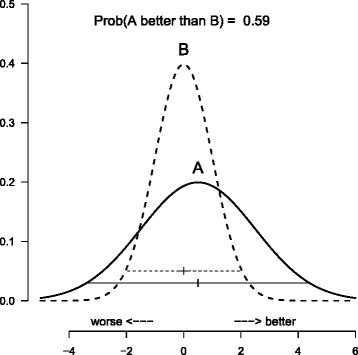
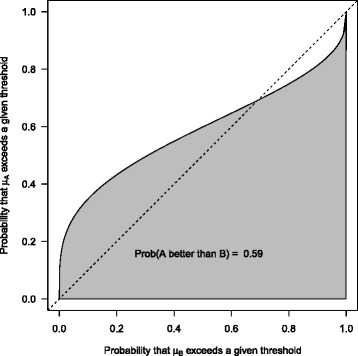
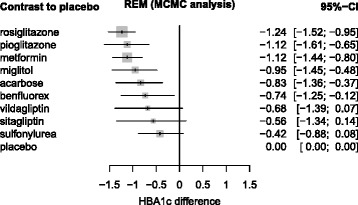
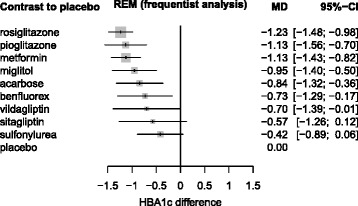
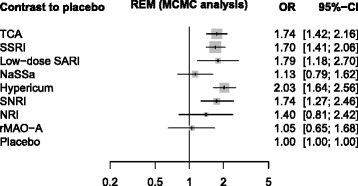
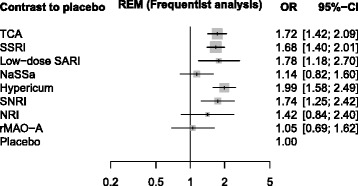
BACKGROUND: Network meta-analysis is used to compare three or more treatments for the same condition. Within a Bayesian framework, for each treatment the probability of being best, or, more general, the probability that it has a certain rank can be derived from the posterior distributions of all treatments. The treatments can then be ranked by the surface under the cumulative ranking curve (SUCRA). For comparing treatments in a network meta-analysis, we propose a frequentist analogue to SUCRA which we call P-score that works without resampling. METHODS: P-scores are based solely on the point estimates and standard errors of the frequentist network meta-analysis estimates under normality assumption and can easily be calculated as means of one-sided p-values. They measure the mean extent of certainty that a treatment is better than the competing treatments. RESULTS: Using case studies of network meta-analysis in diabetes and depression, we demonstrate that the numerical values of SUCRA and P-Score are nearly identical. CONCLUSIONS: Ranking treatments in frequentist network meta-analysis works without resampling. Like the SUCRA values, P-scores induce a ranking of all treatments that mostly follows that of the point estimates, but takes precision into account. However, neither SUCRA nor P-score offer a major advantage compared to looking at credible or confidence intervals.
Overview
The claims and statistics of this paper haven’t been checked yet.
Run the check — free, no account needed. It reads the open-access text and checks the sources it cites.
Integrity signals
Registry
Cites
Statistics
Figures
Verification
Claims the paper makes
The claims and statistics of this paper haven’t been checked yet.
Run the check — free, no account needed. It reads the open-access text and checks the sources it cites.
Claims other papers make about this one
Each is checked against this paper’s own text: does it say what the citing paper says it does?
The source backs part of the claim, not all of it — or backs it for a different population, condition or comparison.
In the citing paper
“This approach is often misleading, as it considers only the point estimate of effect and not the associated precision or certainty of evidence and ignores absolute differences between treatment alternatives.[56][57][58]”
From Management of chronic pain secondary to temporomandibular disorders: a systematic review and network meta-analysis of randomised trials (2023) · cites this paper as [57]
Experimental — accuracy not yet measured
Self-check
Percentages, sums and reported differences re-computed from the paper’s own numbers.
The self-check needs the paper’s full text.
Citations
Cites
R: A Language and Environment for Statistical Computing
R Core Team (2000) · doi:10.32614/r.manuals · Cited by 355,893
Statistical significance for genomewide studies
Storey, J. D., & Tibshirani, R. (2003) · Proceedings of the National Academy of Sciences · doi:10.1073/pnas.1530509100 · Cited by 9,692
Salanti, G., Ades, A. E., & Ioannidis, J. P. A. (2011) · Journal of Clinical Epidemiology · doi:10.1016/j.jclinepi.2010.03.016 · Cited by 3,766
Graphical tools for network meta-analysis in STATA
Chaimani, A., Higgins, J. P. T., Mavridis, D., Spyridonos, P., & Salanti, G. (2013) · PLoS ONE · doi:10.1371/journal.pone.0076654 · Cited by 2,473
Salanti, G. (2012) · Research Synthesis Methods · doi:10.1002/jrsm.1037 · Cited by 1,729
Cipriani, A., Furukawa, T. A., Salanti, G., Geddes, J. R., Higgins, J. P., Churchill, R., Watanabe, N., Nakagawa, A., Omori, I. M., McGuire, H., et al. (2009) · The Lancet · doi:10.1016/s0140-6736(09)60046-5 · Cited by 1,654
Dias, S., Sutton, A. J., Ades, A. E., & Welton, N. J. (2013) · Medical Decision Making · doi:10.1177/0272989x12458724 · Cited by 1,207
White, I. R., Barrett, J. K., Jackson, D., & Higgins, J. P. T. (2012) · Research Synthesis Methods · doi:10.1002/jrsm.1045 · Cited by 1,114
Jansen, J. P., Fleurence, R., Devine, B., Itzler, R. F., Barrett, A., Hawkins, N., Lee, K., Boersma, C., Annemans, L., & Cappelleri, J. C. (2011) · Value in Health · doi:10.1016/j.jval.2011.04.002 · Cited by 1,029
Hoaglin, D. C., Hawkins, N., Jansen, J. P., Scott, D. A., Itzler, R. F., Cappelleri, J. C., Boersma, C., Thompson, D., Larholt, K. M., Díaz, M., et al. (2011) · Value in Health · doi:10.1016/j.jval.2011.01.011 · Cited by 769
Cited by
Sorted by citations
Items 101–200 of 1,003
Slot, D. E., Valkenburg, C., & van der Weijden, G. A. (2020) · Journal Of Clinical Periodontology · doi:10.1111/jcpe.13275 · Cited by 93
“At least under normal assumption the order depends largely on the point estimates (Rücker & Schwarzer, 2015) MTB, Manual toothbrush; PTB, power toothbrush; OI, oral irrigator; IDB, interdental brush; SMD, Standardized Mean Difference; 95%CI, 95% Confidence Interval [Colour figure can be viewed at…”
MethodGao, Y., Ge, L., Liu, M., Niu, M., Chen, Y., Sun, Y., Chen, J., Yao, L., Wang, Q., Li, Z., et al. (2022) · Sleep Medicine Reviews · doi:10.1016/j.smrv.2022.101648 · Cited by 89
Daly, C., Neupane, B., Beyene, J., Thabane, L., Straus, S. E., & Hamid, J. S. (2019) · BMJ Open · doi:10.1136/bmjopen-2018-024625 · Cited by 93
“Alternatively, in a frequentist framework, ranks may be based on a measure similar to SUCRA, referred to as the P-score.(11) The probability of a treatment ranking best is appealing in terms of the ease of its interpretation, and a large value (eg, >0.”
MethodInfluentialSchwarzer, G. (2022) · Wiley eBooks · doi:10.1002/9781119099369.ch26 · Cited by 91
Self-citationSafety and Outcomes of Different Surgical Techniques for Cubital Tunnel Decompression
Wade, R. G., Griffiths, T. T., Flather, R., Burr, N. E., Teo, M., & Bourke, G. (2020) · JAMA Network Open · doi:10.1001/jamanetworkopen.2020.24352 · Cited by 89
Nevill, C. R., Cooper, N. J., & Sutton, A. J. (2023) · Journal of Clinical Epidemiology · doi:10.1016/j.jclinepi.2023.02.016 · Cited by 96
Athanasiou, A., Veroniki, A. A., Efthimiou, O., Kalliala, I., Naci, H., Bowden, S., Paraskevaidi, M., Arbyn, M., Lyons, D., Martin-Hirsch, P., et al. (2022) · The Lancet Oncology · doi:10.1016/s1470-2045(22)00334-5 · Cited by 85
Schwingshackl, L., Krause, M., Schmucker, C. M., HOFFMANN, G. E., Rücker, G., & Meerpohl, J. J. (2019) · Nutrition Metabolism and Cardiovascular Diseases · doi:10.1016/j.numecd.2019.07.001 · Cited by 89
Self-citationIs providing uncertainty intervals in treatment ranking helpful in a network meta-analysis?
Veroniki, A. A., Straus, S. E., Rücker, G., & Tricco, A. C. (2018) · Journal of Clinical Epidemiology · doi:10.1016/j.jclinepi.2018.02.009 · Cited by 84
Self-citationBeinortas, T., Burr, N. E., Wilcox, M. H., & Subramanian, V. (2018) · The Lancet Infectious Diseases · doi:10.1016/s1473-3099(18)30285-8 · Cited by 87
Seide, S., Jensen, K., & Kieser, M. (2020) · Research Synthesis Methods · doi:10.1002/jrsm.1397 · Cited by 86
“The P-score evaluates the certainty that a treatment is better than another one, averaged over all competing treatments except the one under consideration.(37)”
BackgroundDin, S., Selinger, C. P., Black, C. J., & Ford, A. C. (2022) · Alimentary Pharmacology & Therapeutics · doi:10.1111/apt.17379 · Cited by 86
Kunze, K. N., Moran, J. T., Polce, E. M., Pareek, A., Strickland, S. M., & Williams, R. J. (2023) · Knee Surgery Sports Traumatology Arthroscopy · doi:10.1007/s00167-023-07402-2 · Cited by 84
“P-scores represent a measure of certainty that a specific treatment is superior to other treatments in the network model for a given outcome.”
MethodHuang, R., Ning, J., Chuter, V., Taylor, J. B., Demoulin, C., Meng, Z., Xu, Y., & Jiang, L. (2019) · British Journal of Sports Medicine · doi:10.1136/bjsports-2018-100035 · Cited by 90
“21”
Plyukhova, A. A., Budzinskaya, M. V., Starostin, K. M., Ręjdak, R., Bucolo, C., Reibaldi, M., & Toro, M. D. (2020) · Journal of Clinical Medicine · doi:10.3390/jcm9051522 · Cited by 86
“Graph-theoretical method was applied for network meta-analysis using “netmeta” R package (equivalent to the frequentist approach) [12].”
Armstrong, A. W., Soliman, A. M., Betts, K. A., Wang, Y., Gao, Y., Puig, L., & Augustin, M. (2021) · Dermatology and Therapy · doi:10.1007/s13555-021-00511-1 · Cited by 83
Efthimiou, O., Taipale, H. T., Raduà, J., Schneider‐Thoma, J., Pinzón-Espinosa, J., Ortuño, M., Vinkers, C. H., Mittendorfer‐Rutz, E., Cardoner, N., Tanskanen, A., et al. (2024) · The Lancet Psychiatry · doi:10.1016/s2215-0366(23)00366-8 · Cited by 93
Therapeutic Options for Neuroendocrine Tumors
Kaderli, R. M., Spanjol, M., Kollár, A., Bütikofer, L., Gloy, V., Dumont, R. A., Seiler, C. A., Christ, E., Radojewski, P., Briel, M., et al. (2019) · JAMA Oncology · doi:10.1001/jamaoncol.2018.6720 · Cited by 83
Mori, K., Mostafaei, H., Pradère, B., Motlagh, R. S., Quhal, F., Laukhtina, E., Schuettfort, V. M., Abufaraj, M. M., Karakiewicz, P. I., Kimura, T., et al. (2020) · International Journal of Clinical Oncology · doi:10.1007/s10147-020-01777-9 · Cited by 83
Lai, C., Chen, C., Wang, C., Chen, K.-H., Wang, Y., & Hsueh, P. (2021) · Journal of Antimicrobial Chemotherapy · doi:10.1093/jac/dkab093 · Cited by 81
The efficacy of powered toothbrushes: A systematic review and network meta‐analysis
Thomassen, T. M. J. A., van der Weijden, G. A., & Slot, D. E. (2021) · International Journal of Dental Hygiene · doi:10.1111/idh.12563 · Cited by 90
Henry, J. H., Amoo, M., Taylor, J., & O’Brien, D. P. (2021) · Neurosurgery · doi:10.1093/neuros/nyab180 · Cited by 85
Piechotta, V., Adams, A., Haque, M., Scheckel, B., Kreuzberger, N., Monsef, I., Jordan, K., Kuhr, K., & Skoetz, N. (2021) · Cochrane Database of Systematic Reviews · doi:10.1002/14651858.cd012775.pub2 · Cited by 79
Fong, K. M., Au, S. Y., & Ng, G. W. Y. (2019) · Critical Care · doi:10.1186/s13054-019-2596-1 · Cited by 79
“We ranked the treatment using the P-score which are based on the frequentist point estimates and their standard errors [14].”
MethodMundre, P., Black, C. J., Mohammed, N., & Ford, A. C. (2020) · The Lancet. Gastroenterology & hepatology · doi:10.1016/s2468-1253(20)30296-x · Cited by 81
Efficacy and Safety of Dietary Therapies for Childhood Drug-Resistant Epilepsy
Devi, N., Madaan, P., Kandoth, N., Bansal, D., & Sahu, J. K. (2023) · Archives of Pediatrics and Adolescent Medicine · doi:10.1001/jamapediatrics.2022.5648 · Cited by 79
Riaz, I. B., He, H., Ryu, A. J., Siddiqi, R. L., Naqvi, S. A. A., Yao, Y., Husnain, M., Narasimhulu, D. M., Mathew, J., Sipra, Q. U. A. R., et al. (2021) · European Urology · doi:10.1016/j.eururo.2021.03.016 · Cited by 79
Petit, C., Lee, A., Ma, J., Lacas, B., Ng, W. T., Chan, A. T. �., Hong, R., Chen, M., Chen, L., Li, W., et al. (2023) · The Lancet Oncology · doi:10.1016/s1470-2045(23)00163-8 · Cited by 77
Self-citationPhysical exercise for people with Parkinson’s disease: a systematic review and network meta-analysis
Ernst, M., Folkerts, A., Gollan, R., Lieker, E., Caro-Valenzuela, J., Adams, A., Cryns, N., Monsef, I., Dresen, A., Roheger, M., et al. (2024) · Cochrane Database of Systematic Reviews · doi:10.1002/14651858.cd013856.pub3 · Cited by 94
Wangdi, K., Furuya‐Kanamori, L., Clark, J. M., Barendregt, J. J., Gatton, M. L., Banwell, C. L., Kelly, G. C., Doi, S. A. R., & Clements, A. (2018) · Parasites & Vectors · doi:10.1186/s13071-018-2783-y · Cited by 81
“ranking treatments by their point estimates [30].”
Akenroye, A. T., Lassiter, G., Jackson, J. W., Keet, C. A., Segal, J. B., Alexander, G. C., & Hong, H. (2022) · Journal of Allergy and Clinical Immunology · doi:10.1016/j.jaci.2022.05.024 · Cited by 79
Cornu, J., Zantek, P. F., Burtt, G., Martin, C., Martin, A. E., Springate, C., & Chughtai, B. I. (2023) · European Urology · doi:10.1016/j.eururo.2023.02.028 · Cited by 76
Farhat, L. C., Behling, E., Landeros‐Weisenberger, A., Levine, J. L. S., de Barros, P. M. F., Wang, Z., & Bloch, M. H. (2022) · The Lancet Child & Adolescent Health · doi:10.1016/s2352-4642(22)00316-9 · Cited by 77
Torres‐Navarro, I., Briz‐Redón, Á., & Estrada, R. B. (2020) · Journal of the European Academy of Dermatology and Venereology · doi:10.1111/jdv.16685 · Cited by 74
You, R., Cao, Y.-S., Huang, P., Chen, L., Yang, Q., Liu, Y.-P., Zou, X., Zhang, Y.-N., Jiang, R., Zhang, M., et al. (2017) · Theranostics · doi:10.7150/thno.21815 · Cited by 72
“The treatments were ranked using the P-score, which was considered 100% when a treatment was certain to be the best and 0% when a treatment was certain to be the worst [12].”
MethodGorelik, E., Masarwa, R., Perlman, A., Rotshild, V., Muszkat, M., & Matok, I. (2018) · Antimicrobial Agents and Chemotherapy · doi:10.1128/aac.00438-18 · Cited by 62
“The P score of a treatment in this analysis can be interpreted as the mean extent of certainty that the treatment has greater risk of MI among the included treatments, measured on a scale from 1 (worst) to 0 (best) (53).”
Kamarajah, S. K., Bundred, J., Saint‐Marc, O., Jiao, L. R., Hilal, M. A., Manas, D., & White, S. A. (2019) · HPB · doi:10.1016/j.hpb.2019.09.016 · Cited by 74
Comparison of Antiviral Agents for Seasonal Influenza Outcomes in Healthy Adults and Children
Liu, J.-W., Lin, S.-H., Wang, L.-C., Chiu, H.-Y., & Lee, J. (2021) · JAMA Network Open · doi:10.1001/jamanetworkopen.2021.19151 · Cited by 73
Bahji, A., Bach, P., Danilewitz, M., Crockford, D. N., Devoe, D. J. A., el‐Guebaly, N., & Saitz, R. (2022) · Journal of Addiction Medicine · doi:10.1097/adm.0000000000000992 · Cited by 80
Yunitri, N., Chu, H., Kang, X. L., Wiratama, B. S., Lee, T., Chang, L., Liu, D., Kustanti, C. Y., Chiang, K., Chen, R., et al. (2023) · Psychological Medicine · doi:10.1017/s0033291722003737 · Cited by 77
“We also calculated the p score to estimate the best to least ranked treatment (Rücker & Schwarzer, 2015).”
MethodLi, Y., Lei, Y., Hou, L., Zhang, X., Zhao, H., Yan, C., Li, X., Li, Y., Chen, X., & Ding, X. (2023) · Frontiers in Public Health · doi:10.3389/fpubh.2023.1155225 · Cited by 105
Comparative efficacy of methods for surfactant administration: a network meta-analysis
Bellos, I., Fitrou, G., Panza, R., & Pandita, A. (2021) · Archives of Disease in Childhood Fetal & Neonatal · doi:10.1136/archdischild-2020-319763 · Cited by 71
Vuong, N. L., Elshafay, A., Thao, L. P., Abdalla, A. R., Mohyeldin, I. A., Elsabaa, K. I., Omran, E. S., Yu, F., Hirayama, K., & Huy, N. T. (2018) · Respiratory Medicine · doi:10.1016/j.rmed.2018.03.009 · Cited by 71
Juul, S., Nielsen, N., Bentzer, P., Veroniki, A. A., Thabane, L., Linder, A., Klingenberg, S. L., Gluud, C. N., & Jakobsen, J. C. (2020) · Systematic Reviews · doi:10.1186/s13643-020-01371-0 · Cited by 71
Jalalzadeh, H., Groenen, H., Buis, D. R., Dreissen, Y. E. M., Goosen, J. H. M., IJpma, F. F. A., van der Laan, M. J., Schaad, R. R., Segers, P., van der Zwet, W. C., et al. (2022) · The Lancet Microbe · doi:10.1016/s2666-5247(22)00187-2 · Cited by 78
Mori, K., Abufaraj, M. M., Mostafaei, H., Quhal, F., Fajković, H., Mesut Remzi, A., Karakiewicz, P. I., Egawa, S., Schmidinger, M., Shariat, S. F., et al. (2020) · European Urology · doi:10.1016/j.eururo.2020.10.006 · Cited by 68
Systemic therapies for metastatic hormone‐sensitive prostate cancer: network meta‐analysis
Mori, K., Mostafaei, H., Motlagh, R. S., Pradère, B., Quhal, F., Laukhtina, E., Schuettfort, V. M., Kramer, G., Abufaraj, M. M., Karakiewicz, P. I., et al. (2021) · British Journal of Urology · doi:10.1111/bju.15507 · Cited by 66
Davey, M. S., Hurley, E. T., Anil, U., Condren, S., Kearney, J., O'Tuile, C., Gaafar, M., Mullett, H., & Pauzenberger, L. (2021) · Injury · doi:10.1016/j.injury.2021.12.022 · Cited by 66
Visaggi, P., Barberio, B., Corso, G. D., de Bortoli, N., Black, C. J., Ford, A. C., & Savarino, E. V. (2023) · Gut · doi:10.1136/gutjnl-2023-329873 · Cited by 69
Kim, R., Keam, B., Hahn, S., Ock, C.-Y., Kim, M., Kim, T. M., Kim, D., & Heo, D. S. (2019) · Clinical Lung Cancer · doi:10.1016/j.cllc.2019.05.009 · Cited by 65
Wenzel, M., Würnschimmel, C., Nocera, L., Ruvolo, C. C., Tian, Z., Shariat, S. F., Fred Saad, C., Briganti, A., Tilki, D., Graefen, M., et al. (2021) · European Urology Focus · doi:10.1016/j.euf.2021.04.003 · Cited by 65
De-Escalation of Dual Antiplatelet Therapy in Patients With Acute Coronary Syndromes
Shoji, S., Kuno, T., Fujisaki, T., Takagi, H., Briasoulis, Α., Deharo, P., Cuisset, T., Latib, A., & Kohsaka, S. (2021) · Journal of the American College of Cardiology · doi:10.1016/j.jacc.2021.06.012 · Cited by 66
Burr, N. E., Hall, B. J., Hamlin, P. J., Selinger, C. P., Ford, A. C., & O’Connor, A. (2018) · Journal of Crohn s and Colitis · doi:10.1093/ecco-jcc/jjy216 · Cited by 65
Direct Comparison of Preoperative Imaging Modalities for Localization of Primary Hyperparathyroidism
Lee, S., Shim, S. R., Jeong, S. Y., & Kim, S. (2021) · JAMA Otolaryngology–Head & Neck Surgery · doi:10.1001/jamaoto.2021.0915 · Cited by 68
Lai, C., Wang, Y., Chen, K.-H., Chen, C., & Wang, C. (2022) · Viruses · doi:10.3390/v14081706 · Cited by 63
“The ranking of treatment that is an analogue of the surface under the cumulative ranking (SUCRA) was calculated using the P-score; a higher probability indicated better treatment [15].”
MethodOh, S., Choi, J., Han, D. H., & Kim, E. (2024) · European Child & Adolescent Psychiatry · doi:10.1007/s00787-023-02174-z · Cited by 63
“It measured the mean extent of the network estimates and the mean extent of certainty that one intervention was superior to another and was averaged over all competing interventions [37].”
Barberio, B., Segal, J. P., Quraishi, M. N., Black, C. J., Savarino, E. V., & Ford, A. C. (2021) · Journal of Crohn s and Colitis · doi:10.1093/ecco-jcc/jjab010 · Cited by 68
Solimando, A. G., Susca, N., Argentiero, A., Brunetti, O., Leone, P., Re, V. D., Fasano, R., Krebs, M., Petracci, E., Azzali, I., et al. (2021) · Clinical and Experimental Medicine · doi:10.1007/s10238-021-00727-7 · Cited by 63
“In the overall sample and for each of the subgroups analyses, treatments were ranked employing the P-score, a frequentist analog of SUCRA, as described by Rücker & Schwarzer [31].”
Kim, M. S., Seong, D., Li, H., Chung, S. K., Park, Y., Lee, M., Lee, S. W., Yon, D. K., Kim, J. H., Lee, K. H., et al. (2022) · Reviews in Medical Virology · doi:10.1002/rmv.2336 · Cited by 65
“In this NMA, the rank hierarchy for each mask type was investigated using the surface under the cumulative rank curve (SUCRA) of the P rank score of R.(34) We assessed the consistency of evidence between direct and indirect comparisons where p < 0.”
MethodÖberg, S., Andresen, K., Klausen, T. W., & Rosenberg, J. (2018) · Surgery · doi:10.1016/j.surg.2017.12.017 · Cited by 62
Botta, C., Ciliberto, D., Rossi, M., Staropoli, N., Cucè, M., Galeano, T., Tagliaferri, P., & Tassone, P. (2017) · Blood Advances · doi:10.1182/bloodadvances.2016003905 · Cited by 60
“The frequentist equivalent of the SUCRA, the P-score, was further used to confirm the results of the NMA.20”
MethodResultInfluentialRossel, A., Robert‐Ebadi, H., Combescure, C., Grosgurin, O., Stirnemann, J., Addeo, A., Garin, N., Agoritsas, T., Reny, J., & Marti, C. (2019) · PLoS ONE · doi:10.1371/journal.pone.0213940 · Cited by 63
Dost, B., CASSAI, A. D., Balzani, E., Tulgar, S., & Ahişkalıoğlu, A. (2022) · BMC Anesthesiology · doi:10.1186/s12871-022-01952-7 · Cited by 61
Wewege, M. A., Bagg, M. K., Jones, M. D., Ferraro, M. C., Cashin, A. G., Rizzo, R. R. N., Leake, H. B., Hagstrom, A. D., Sharma, S., McLachlan, A. J., et al. (2023) · BMJ · doi:10.1136/bmj-2022-072962 · Cited by 69
Hao, J., He, Z., Yu, X., & Remis, A. (2023) · Neurological Sciences · doi:10.1007/s10072-023-06742-8 · Cited by 68
“We used P-scores to rank rehabilitation programs on upper extremity function improvements [18].”
MethodLuthra, P., Burr, N. E., Brenner, D. M., & Ford, A. C. (2018) · Gut · doi:10.1136/gutjnl-2018-316001 · Cited by 61
Intralesional immunotherapy for the treatment of warts: A network meta-analysis
Salman, S., Ahmed, M. S., Ibrahim, A. M., Mattar, O. M., El-Shirbiny, H., Sarsik, S. M., Afifi, A. M., Anis, R., Agha, N. A. Y., & Abushouk, A. I. (2018) · Journal of the American Academy of Dermatology · doi:10.1016/j.jaad.2018.07.003 · Cited by 61
“It is based on frequentist point estimates and standard errors.(12) We used the net split function in R package netmeta to assess the consistency and inconsistency between direct and indirect evidence.”
Pope, J. E., Sawant, R., Tundia, N. L., Du, E. X., Qi, C. Z., Song, Y., Tang, P., & Betts, K. A. (2020) · Advances in Therapy · doi:10.1007/s12325-020-01303-3 · Cited by 63
Mori, K., Mostafaei, H., Miura, N., Karakiewicz, P. I., Luzzago, S., Schmidinger, M., Bruchbacher, A., Pradère, B., Egawa, S., & Shariat, S. F. (2020) · Cancer Immunology Immunotherapy · doi:10.1007/s00262-020-02684-8 · Cited by 61
Planer, D., Yanko, S., Matok, I., Paltiel, O., Zmiro, R., Rotshild, V., Amir, O., Elbaz‐Greener, G., & Raccah, B. H. (2023) · Canadian Medical Association Journal · doi:10.1503/cmaj.220960 · Cited by 65
Goodoory, V. C., Khasawneh, M., Thakur, E. R., Everitt, H., Gudleski, G. D., Lackner, J. M., Moss-Morris, R. E., Simrén, M., Vasant, D. H., Moayyedi, P., et al. (2024) · Gastroenterology · doi:10.1053/j.gastro.2024.05.010 · Cited by 67
The Optimal Treatment for Stage IIIA-N2 Non-Small Cell Lung Cancer: A Network Meta-Analysis
Zhao, Y., Wang, W., Liang, H., Yang, C. J., D’Amico, T. A., Ng, C. S. H., Liu, C., Petersen, R. H., Rocco, G., Brunelli, A., et al. (2018) · The Annals of Thoracic Surgery · doi:10.1016/j.athoracsur.2018.11.024 · Cited by 61
Williams, T., McCaul, M., Schwarzer, G., Cipriani, A., Stein, D. J., & Ipser, J. (2020) · Acta Neuropsychiatrica · doi:10.1017/neu.2020.6 · Cited by 59
“Furthermore, we calculated P-scores, as a frequentist analogue to SUCRAs (Rücker & Schwarzer, 2015), to rank the treatments.”
MethodSelf-citationSamy, A., Abbas, A. M., Mahmoud, M., Taher, A. M., Awad, M. H., Husseiny, T. E., Hussein, M., Ramadan, M. C., Shalaby, M. A. W., Sharkawy, M. E., et al. (2019) · Fertility and Sterility · doi:10.1016/j.fertnstert.2018.11.012 · Cited by 63
Zhang, Q., Schwade, M. J., Smith, Y. N., Wood, R. L., & Young, L. (2020) · International Journal of Nursing Studies · doi:10.1016/j.ijnurstu.2020.103738 · Cited by 59
Wenzel, M., Nocera, L., Ruvolo, C. C., Würnschimmel, C., Tian, Z., Shariat, S. F., Fred Saad, C., Tilki, D., Graefen, M., Kluth, L. A., et al. (2021) · Prostate Cancer and Prostatic Diseases · doi:10.1038/s41391-021-00395-4 · Cited by 60
“In addition, we estimated the relative ranking of different treatments for each outcome by using the P-score, according to previous methodology [4, 19, 20].”
MethodBalasubramanian, P., Abia‐Trujillo, D., Barrios-Ruiz, A., Garza-Salas, A., Koratala, A., Chandra, N. C., Lee‐Mateus, A. Y., Gonzalo Labarca, T., & Fernández-Bussy, S. (2024) · European Respiratory Review · doi:10.1183/16000617.0046-2024 · Cited by 61
“The overall ranking of each diagnostic modality relative to each other in the network model was calculated using the p-score [19].”
MethodDong, S., Schneider-Thoma, J., Bighelli, I., Siafis, S., Wang, D., Burschinski, A., Schestag, K., Samara, M., & Leucht, S. (2024) · European Archives of Psychiatry and Clinical Neuroscience · doi:10.1007/s00406-023-01654-2 · Cited by 68
Sibley, K. M., Thomas, S. M., Veroniki, A. A., Rodrigues, M., Hamid, J. S., Lachance, C. C., Cogo, E., Khan, P. A., Riva, J. J., Thavorn, K., et al. (2020) · Experimental Gerontology · doi:10.1016/j.exger.2020.111151 · Cited by 60
Kawalec, P., Holko, P., Moćko, P., & Pilc, A. (2017) · Rheumatology International · doi:10.1007/s00296-017-3919-7 · Cited by 59
“, lower risk of adverse events (AEs)] [26].”
BackgroundForget, P., Borovac, J. A., Thackeray, E. M., & Pace, N. L. (2019) · Cochrane Database of Systematic Reviews · doi:10.1002/14651858.cd003006.pub4 · Cited by 60
Yao, L., Sadeghirad, B., Li, M., Li, J., Wang, Q., Crandon, H. N., Martin, G., Morgan, R., Florez, I. D., Hunskaar, B. S., et al. (2023) · BMJ · doi:10.1136/bmj-2023-076226 · Cited by 57
Kim, M. S., Rhim, H. C., Park, A., Kim, H., Han, K., Patkar, A. A., Pae, C., & Han, C. (2020) · Journal of Psychiatric Research · doi:10.1016/j.jpsychires.2020.03.012 · Cited by 64
Association of dengue disease severity and blood group: A systematic review and meta‐analysis
Hashan, M. R., Ghozy, S. A., El‐Qushayri, A. E., Pial, R. H., Hossain, M. A., & Kibria, G. M. A. (2020) · Reviews in Medical Virology · doi:10.1002/rmv.2147 · Cited by 59
“Ranking of treatment was based on P-score which is the frequentist approach analogue to surface under the cumulative ranking (SUCRA).(39) To assess the risk of bias and small-study effects, comparison-adjusted funnel plots were developed.”
MethodFactors correlated with pain after total knee arthroplasty: A systematic review and meta-analysis
Olsen, U., Lindberg, M. F., Rose, C. J., Denison, E., Gay, C., Aamodt, A., Brox, J. I., Skare, Ø., Furnes, O. N., Lee, K. A., et al. (2023) · PLoS ONE · doi:10.1371/journal.pone.0283446 · Cited by 58
“P scores were calculated to evaluate the certainty that the mean correlation for each factor is larger in magnitude than the mean correlations for all other factors [32].”
Wankhede, D., Yuan, T., Kloor, M., Halama, N., Brenner, H., & Hoffmeister, M. (2024) · The Lancet. Gastroenterology & hepatology · doi:10.1016/s2468-1253(24)00091-8 · Cited by 61
Morze, J., Rücker, G., Danielewicz, A., Przybyłowicz, K., Neuenschwander, M., Schlesinger, S., & Schwingshackl, L. (2021) · Obesity Reviews · doi:10.1111/obr.13218 · Cited by 55
“P-score is a frequentist analogue of the surface under the cumulative ranking curves available in the Bayesian approach.(36) The P-score value ranges between 0 and 1, indicating the intervention ranked as the worst and the best.”
Self-citationHou, L., Wang, Q., Pan, B., Li, R., Li, Y., He, J., Qin, T., Cao, L., Zhang, N., Cao, C., et al. (2023) · Diabetes/Metabolism Research and Reviews · doi:10.1002/dmrr.3591 · Cited by 56
“P‐scores were solely based on the point estimates and SEs of the network estimates and a measure of the mean extent of certainty that one exercise training modality is better than another, averaged over all competing strategies.(34) Higher scores indicate a greater probability of the exercise training modality being r…”
BackgroundHuang, L., Fang, Y., & Tang, L. (2021) · BMC Endocrine Disorders · doi:10.1186/s12902-021-00846-y · Cited by 55
Yanes‐Lane, M., Ortíz‐Brizuela, E., Campbell, J. R., Benedetti, A., Churchyard, G., Oxlade, O., & Menzies, D. (2021) · PLoS Medicine · doi:10.1371/journal.pmed.1003738 · Cited by 55
“We used a frequentist approach to calculate the average treatment ranking (P-score) [21].”
MethodLee, S., Shim, S. R., Jeong, S. Y., & Kim, S. (2020) · Clinical Nuclear Medicine · doi:10.1097/rlu.0000000000002940 · Cited by 55
“To provide assistance in the interpretation of ORs, the surface under the cumulative ranking curve (SUCRA) was used to calculate the probability of each PET modality, being the most effective diagnostic method based on a Bayesian approach using probability values, and the larger was the SUCRAvalue, the better was the…”
MethodYe, Z., Wang, Y., Ge, L., Guyatt, G. H., Collister, D., Alhazzani, W. A., Bagshaw, S. M., Belley‐Côté, E. P., Fang, F., Hou, L., et al. (2021) · Critical Care Explorations · doi:10.1097/cce.0000000000000399 · Cited by 60
“We calculated the ranking of treatment as P-score (frequentist analogue of the surface under the cumulative ranking curve [SUCRA]) for each treatment (16).”
MethodGhozy, S. A., Kacimi, S. E. O., Azzam, A. Y., Farahat, R. A., Abdelaal, A., Kallmes, K. M., Adusumilli, G., Heit, J. J., Kadirvel, R., & Kallmes, D. F. (2022) · Journal of NeuroInterventional Surgery · doi:10.1136/neurintsurg-2021-018436 · Cited by 54
Chen, T.-R., Huang, H., Hsu, J., Ouyang, W.-C., & Lin, K. (2019) · Journal of Psychiatric Research · doi:10.1016/j.jpsychires.2019.08.014 · Cited by 64
Jakob, T., Tesfamariam, Y. M., Macherey‐Meyer, S., Kuhr, K., Adams, A., Monsef, I., Heidenreich, A., & Skoetz, N. (2020) · Cochrane Database of Systematic Reviews · doi:10.1002/14651858.cd013020.pub2 · Cited by 54
Efficacy and Safety of Drugs for Gastroparesis: Systematic Review and Network Meta-analysis
Ingrosso, M. R., Camilleri, M., Tack, J., Ianiro, G., Black, C. J., & Ford, A. C. (2023) · Gastroenterology · doi:10.1053/j.gastro.2022.12.014 · Cited by 53
Network Meta-Analysis of Initial Antithrombotic Regimens After Left Atrial Appendage Occlusion
Carvalho, P. E. P., Gewehr, D. M., Miyawaki, I. A., Nogueira, A., Felix, N. S., Garot, P., Darmon, A., Mazzone, P., Preda, A., Nascimento, B. R., et al. (2023) · Journal of the American College of Cardiology · doi:10.1016/j.jacc.2023.08.010 · Cited by 53
Moncion, K., Rodrigues, L., Wiley, E., Noguchi, K. S., Negm, A. M., Richardson, J. A., MacDonald, M. J., Roig, M., & Tang, A. (2024) · British Journal of Sports Medicine · doi:10.1136/bjsports-2023-107956 · Cited by 52
Jung, Y. S., Park, C. H., Nam, E., Eun, C. S., Park, D. I., & Han, D. S. (2017) · Surgical Endoscopy · doi:10.1007/s00464-017-5786-4 · Cited by 53
“In addition, ranking among cold polypectomy techniques was performed by calculating P-scores [20], which measured the extent of certainty that one treatment was better than another treatment, averaged over all competing treatments [20].”
Management of Patellar Instability: A Network Meta-analysis of Randomized Control Trials
Hurley, E. T., Colasanti, C. A., Anil, U., McAllister, D., Matache, B. A., Alaia, M. J., Strauss, E. J., & Campbell, K. A. (2021) · The American Journal of Sports Medicine · doi:10.1177/03635465211020000 · Cited by 52
Metadata
- Authors
- Rücker, G., & Schwarzer, G.
- Affiliations
- University of Freiburg (DE)
- Corresponding author
- Rücker, Gerta
- Venue
- BMC Medical Research Methodology
- Published
- 2015-07-31
- Volume
- 15
- Issue
- 1
- Pages
- 58-58
- ISSN
- 1471-2288 (ISSN-L)
- PMC
- PMC4521472
- OpenAlex
- W2111999709
- Cited by
- 1,732
- References
- 32
- Citations by year
- 2026: 249 · 2025: 253 · 2024: 267 · 2023: 229 · 2022: 226 · 2021: 191 · 2020: 148 · 2019: 76 · 2018: 52 · 2017: 32 · 2016: 8 · 2015: 1
- FWCI
- 28.58
- Type
- journal article
- Language
- en
- Open access
- gold
- doi.org
- Licence
- Locations
- BMC Medical Research Methodology (publishedVersion, other-oa)
- PubMed Central (publishedVersion, cc-by)
- PubMed (publishedVersion)
- FreiDok plus (Universitätsbibliothek Freiburg) (submittedVersion)
- Funders
- Deutsche Forschungsgemeinschaft (RU1747/1-1)
- Topics
- Social Sciences › Decision Sciences › Statistics, Probability and Uncertainty › Meta-analysis and systematic reviews
- Physical Sciences › Mathematics › Statistics and Probability › Statistical Methods in Clinical Trials
- Social Sciences › Sociology and Political Science › Delphi Technique in Research
- Keywords
- treatment ranking, P-score, surface under the cumulative ranking curve, confidence intervals, diabetes mellitus, depression
- MeSH terms
- Algorithms, Bayes Theorem, Biometry, Data Interpretation, Statistical, Humans, Review Literature as Topic, Meta-Analysis as Topic, Reproducibility of Results, Biomedical Research
About these checks
Registry, retraction, Cites and statistics results are computed, not judged, with one exception: a printed reference that no index lists is read once by a model before it counts as a citation error. Claims are extracted by a model and kept only when their quote appears verbatim in the text; each cited source is then checked, with a model’s help, for whether it says what the claim relies on. Those verdicts can be wrong — read the claim’s quote and the cited source before relying on one.
Statistics and arithmetic are recomputed, not judged.
Confidence bands are shown only for fields calibrated on our annotated test set. None is calibrated yet, so no band is shown.
What counts as a claim ›How we measure confidence ›How we check this ›
Are you an author, or do you see a problem with this page? Request a review
