

The DOI matches its Crossref record; 31 of the 32 references it cites were found in a registry or an index.
Ranking treatments in frequentist network meta-analysis works without resampling methods
Open accessAbstract
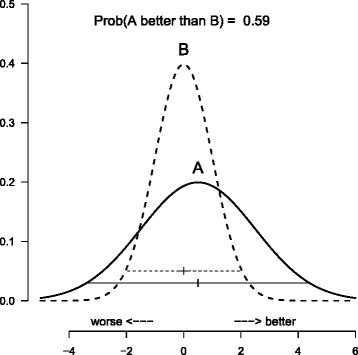
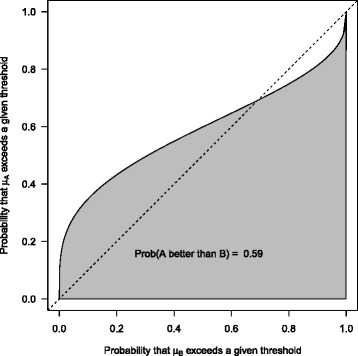
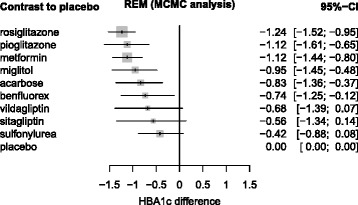
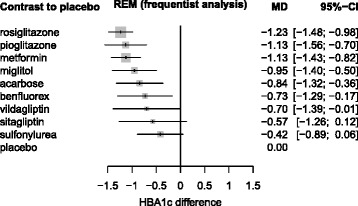
BACKGROUND: Network meta-analysis is used to compare three or more treatments for the same condition. Within a Bayesian framework, for each treatment the probability of being best, or, more general, the probability that it has a certain rank can be derived from the posterior distributions of all treatments. The treatments can then be ranked by the surface under the cumulative ranking curve (SUCRA). For comparing treatments in a network meta-analysis, we propose a frequentist analogue to SUCRA which we call P-score that works without resampling. METHODS: P-scores are based solely on the point estimates and standard errors of the frequentist network meta-analysis estimates under normality assumption and can easily be calculated as means of one-sided p-values. They measure the mean extent of certainty that a treatment is better than the competing treatments. RESULTS: Using case studies of network meta-analysis in diabetes and depression, we demonstrate that the numerical values of SUCRA and P-Score are nearly identical. CONCLUSIONS: Ranking treatments in frequentist network meta-analysis works without resampling. Like the SUCRA values, P-scores induce a ranking of all treatments that mostly follows that of the point estimates, but takes precision into account. However, neither SUCRA nor P-score offer a major advantage compared to looking at credible or confidence intervals.
Overview
The claims and statistics of this paper haven’t been checked yet.
Run the check — free, no account needed. It reads the open-access text and checks the sources it cites.
Integrity signals
Registry
Cites
Statistics
Figures
Verification
Claims the paper makes
The claims and statistics of this paper haven’t been checked yet.
Run the check — free, no account needed. It reads the open-access text and checks the sources it cites.
Claims other papers make about this one
Each is checked against this paper’s own text: does it say what the citing paper says it does?
The source backs part of the claim, not all of it — or backs it for a different population, condition or comparison.
In the citing paper
“This approach is often misleading, as it considers only the point estimate of effect and not the associated precision or certainty of evidence and ignores absolute differences between treatment alternatives.[56][57][58]”
From Management of chronic pain secondary to temporomandibular disorders: a systematic review and network meta-analysis of randomised trials (2023) · cites this paper as [57]
Experimental — accuracy not yet measured
Self-check
Percentages, sums and reported differences re-computed from the paper’s own numbers.
The self-check needs the paper’s full text.
Citations
Cites
R: A Language and Environment for Statistical Computing
R Core Team (2000) · doi:10.32614/r.manuals · Cited by 355,893
Statistical significance for genomewide studies
Storey, J. D., & Tibshirani, R. (2003) · Proceedings of the National Academy of Sciences · doi:10.1073/pnas.1530509100 · Cited by 9,692
Salanti, G., Ades, A. E., & Ioannidis, J. P. A. (2011) · Journal of Clinical Epidemiology · doi:10.1016/j.jclinepi.2010.03.016 · Cited by 3,766
Graphical tools for network meta-analysis in STATA
Chaimani, A., Higgins, J. P. T., Mavridis, D., Spyridonos, P., & Salanti, G. (2013) · PLoS ONE · doi:10.1371/journal.pone.0076654 · Cited by 2,473
Salanti, G. (2012) · Research Synthesis Methods · doi:10.1002/jrsm.1037 · Cited by 1,729
Cipriani, A., Furukawa, T. A., Salanti, G., Geddes, J. R., Higgins, J. P., Churchill, R., Watanabe, N., Nakagawa, A., Omori, I. M., McGuire, H., et al. (2009) · The Lancet · doi:10.1016/s0140-6736(09)60046-5 · Cited by 1,654
Dias, S., Sutton, A. J., Ades, A. E., & Welton, N. J. (2013) · Medical Decision Making · doi:10.1177/0272989x12458724 · Cited by 1,207
White, I. R., Barrett, J. K., Jackson, D., & Higgins, J. P. T. (2012) · Research Synthesis Methods · doi:10.1002/jrsm.1045 · Cited by 1,114
Jansen, J. P., Fleurence, R., Devine, B., Itzler, R. F., Barrett, A., Hawkins, N., Lee, K., Boersma, C., Annemans, L., & Cappelleri, J. C. (2011) · Value in Health · doi:10.1016/j.jval.2011.04.002 · Cited by 1,029
Hoaglin, D. C., Hawkins, N., Jansen, J. P., Scott, D. A., Itzler, R. F., Cappelleri, J. C., Boersma, C., Thompson, D., Larholt, K. M., Díaz, M., et al. (2011) · Value in Health · doi:10.1016/j.jval.2011.01.011 · Cited by 769
Cited by
Sorted by citations
Items 801–900 of 1,003
Bacteraemia of oral origin in children—A Systematic review and network meta‐analysis
Höfer, K. C., Graf, I., Adams, A., Kuhr, K., Plum, G., Schwendicke, F., Brockmeier, K., & Noack, M. J. (2021) · Oral Diseases · doi:10.1111/odi.13957 · Cited by 10
Helali, A. E., Wong, C. H. L., Choi, C., Chan, W., Dickson, N., Siu, S. W. K., Chan, K. K. L., Ngan, H., Ngan, R. K. C., & Kennedy, R. D. (2022) · Scientific Reports · doi:10.1038/s41598-022-07731-1 · Cited by 9
Piasecka‐Stryczynska, K., Kaczyński, Ł., Rolka, M., Homa, M., Staśkiewicz, W., Paczwa, P., Wójcik, R., Kaczor, M., & Rejdak, K. (2022) · Neurologia i Neurochirurgia Polska · doi:10.5603/pjnns.a2022.0068 · Cited by 9
Bloom, D. A., Lin, C. C., Manzi, J. E., Mojica, E. S., Telgheder, Z. L., Chapman, C. B., & Konda, S. R. (2023) · Journal of Orthopaedic Trauma · doi:10.1097/bot.0000000000002583 · Cited by 9
mihit, F. Z. M., Zubizarreta‐Macho, Á., & Martínez, A. A. (2023) · BMC Oral Health · doi:10.1186/s12903-023-03079-8 · Cited by 9
“The four techniques were ranked from a scale of 0 to 1 using a P-score to measure the degree of certainty and determining whether one orthodontic mini-implant placement technique was superior to another [11].”
MethodPharmaceutical Therapies for the Treatment of Obesity: A Network Meta-analysis
Morsali, M., Poorolajal, J., Shahbazi, F., Vahidinia, A., & Doosti‐Irani, A. (2023) · Clinical Therapeutics · doi:10.1016/j.clinthera.2023.06.003 · Cited by 11
Dinges, H., Al-Dahna, T., Rücker, G., Wulf, H., Eberhart, L. H. J., Wiesmann, T., & Schubert, A. (2023) · Minerva Anestesiologica · doi:10.23736/s0375-9393.23.17410-4 · Cited by 9
Self-citationGuo, X., Zhou, Y., Zhang, K., Lü, W., Zhong, X. Z., Wu, S., Shen, L., Chen, H., & Chen, Y. (2023) · Journal of Evidence-Based Medicine · doi:10.1111/jebm.12571 · Cited by 10
Li, Y., Gao, L., Chao, Y., Lan, T., Zhang, J., Li, R., Zhang, Z., Li, S., Lian, J., Wang, Z., et al. (2024) · Frontiers in Oncology · doi:10.3389/fonc.2024.1341927 · Cited by 9
Surgical interventions for treating intracapsular hip fractures in adults: a network meta-analysis
Sreekanta, A., Eardley, W. G., Wood, H., Glanville, J., Cook, J. A., & Griffin, X. L. (2019) · Cochrane Database of Systematic Reviews · doi:10.1002/14651858.cd013404 · Cited by 10
Saglietto, A., D’Ascenzo, F., Errigo, D., Leonardi, S., Dewilde, W. J. M., Conrotto, F., Omedè, P., Montefusco, A., Angelini, F., FILIPPO, O. D., et al. (2020) · Catheterization and Cardiovascular Interventions · doi:10.1002/ccd.29192 · Cited by 10
Torbahn, G., Schoene, D., Schwingshackl, L., Rücker, G., Knüttel, H., KEMMLER, W. K., Sieber, C. C., Batsis, J. A., Villareal, D. T., Stroebele‐Benschop, N., et al. (2020) · BMJ Open · doi:10.1136/bmjopen-2020-038330 · Cited by 9
Self-citationLosik, D., Козлова, С. Н., Krivosheev, Y. S., Ponomarenko, A., Ponomarev, D., Pokushalov, E. A., Bolshakova, O. O., Жабина, Е. С., Lyasnikova, E. A., Корельская, Н. А., et al. (2021) · Russian Journal of Cardiology · doi:10.15829/1560-4071-2021-4406 · Cited by 9
Utility of 3-Dimensional Intraoperative Imaging in Pelvic and Acetabular Fractures
Pisquiy, J. J., Toraih, E. A., Hussein, M. H., Khalifa, R., Shoulah, S., Abdelgawad, A. H. K., & Thabet, A. M. (2021) · JBJS Reviews · doi:10.2106/jbjs.rvw.20.00129 · Cited by 9
Efficacy of pharmacological interventions in COVID‐19: A network meta‐analysis
Selvarajan, S., Anandaradje, A., Shivabasappa, S., Sadanandan, D. M., Nair, N. S., & George, M. (2022) · British Journal of Clinical Pharmacology · doi:10.1111/bcp.15338 · Cited by 10
“P-score, a frequentist equivalent of the surface under the cumulative ranking (SUCRA) value was estimated in order to rank the treatments.(14) P-score (range from 0 to 1) represents the mean extent of certainty that a treatment is superior to other treatments, averaged over all competing treatments.”
MethodSaid, S. A., Alabed, S., Kaier, K., Bode, C., Meerpohl, J. J., & Duerschmied, D. (2019) · Cochrane Database of Systematic Reviews · doi:10.1002/14651858.cd013252 · Cited by 9
Zhang, T., Zhang, S., Yang, F., Wang, L., Si-gang, Z. H. U., Qiu, B. Q., Li, S., & Deng, Z. (2017) · Journal of Cellular Biochemistry · doi:10.1002/jcb.25976 · Cited by 9
Morze, J., Osadnik, T., Osadnik, K., Lejawa, M., Jakubiak, G. K., Pawlas, N., Gąsior, M., Schwingshackl, L., & Banach, M. (2020) · BMJ Open · doi:10.1136/bmjopen-2019-032755 · Cited by 9
Lin, Y.-C., Lai, T.-S., Chen, Y.-T., Chou, Y.-H., Chen, Y.-M., Hung, K.-Y., & Tu, Y.-K. (2025) · Journal of the Formosan Medical Association · doi:10.1016/j.jfma.2024.09.037 · Cited by 8
Dardas, L. A., Xu, H., Franklin, M. S., Scott, J., Vance, A. J., van de Water, B. J., & Pan, W. (2023) · Behavioural and Cognitive Psychotherapy · doi:10.1017/s1352465822000662 · Cited by 8
“In addition to forest plots of head-to-head comparisons between treatment effects estimated from network meta-analysis, the treatment ranking p-scores (Rücker and Schwarzer, 2015) were also estimated for measuring the probability that a treatment is better than the competing treatments.”
MethodResultInfluentialGuo, C.-H., Zhong, J., Jin, X., & Zhang, J.-E. (2023) · International Journal of Nursing Studies · doi:10.1016/j.ijnurstu.2023.104680 · Cited by 8
Saleem, A., Lin, C. C., Anil, U., & Rivero, S. M. (2024) · Injury · doi:10.1016/j.injury.2024.111875 · Cited by 8
Zeng, Z., Ho, C. Y., Sit, C. H. P., Wong, S. H.-S., Liao, J., & Yang, Y. (2024) · Archives of Physical Medicine and Rehabilitation · doi:10.1016/j.apmr.2024.12.002 · Cited by 11
Acute pain service for postoperative pain in adults: a network meta-analysis
Chen, L., Feng, X., Ye, L., Yang, J., Zhou, R., Qiu, Y., Chen, G., & Zhu, T. (2025) · International Journal of Surgery · doi:10.1097/js9.0000000000002419 · Cited by 10
“Furthermore, a cumulative ranking graph and the surface under the cumulative ranking (SUCRA) were used to evaluate the probability of each management strategy being the most effective [19] .”
Cuijpers, P. J., Harrer, M., Miguel, C., Donker, T., Keshen, A. R., Karyotaki, E., & Linardon, J. (2025) · Cognitive Behaviour Therapy · doi:10.1080/16506073.2025.2495950 · Cited by 8
“The P-score has been shown to be equivalent to the SUCRA score (Rücker & Schwarzer, 2015).”
Wang, Q., Zhang, J., Li, K., Miao, X., Wang, Y., & Zhang, L. (2025) · Research in Social and Administrative Pharmacy · doi:10.1016/j.sapharm.2025.05.011 · Cited by 10
Fornaro, M., Caiazza, C., Pistone, L., Lorenzo, C. D., Crincoli, W., Pezone, R., Tufano, G., Oliva, V., Prisco, M. D., Miola, A., et al. (2025) · European Neuropsychopharmacology · doi:10.1016/j.euroneuro.2025.04.003 · Cited by 8
Hussain, N., Brull, R., Freedenberg, A. T., Vannabouathong, C., D'Souza, R. S., Havlik, S., Beachy, P., Gunawan, A., Weaver, T. E., McIsaac, D. I., et al. (2025) · Anesthesiology · doi:10.1097/aln.0000000000005607 · Cited by 8
Gemelli, M. T., Cortinovis, D. L., Carola, G., Moretti, L., Piazza, F., Calza, S., Ricotta, R., Grisanti, S., & Rota, M. (2025) · Lung Cancer · doi:10.1016/j.lungcan.2025.108621 · Cited by 9
Analysing complex interventions using component network meta-analysis
Veroniki, A.-A., Wolfe, D. M., Hutton, B., Schwarzer, G., McIsaac, D. I., Straus, S. E., Jackson, D., & Tricco, A. C. (2026) · BMJ · doi:10.1136/bmj-2024-083075 · Cited by 8
“We calculated P scores 37 to rank interventions and used a rank heat plot 38 for their presentation across the different models.”
Self-citationNøhr, N., Zangger, G., Dalum, F. B., Skou, S. T., Juhl, C. B., & Bricca, A. (2025) · Journal of Physical Activity and Health · doi:10.1123/jpah.2025-0014 · Cited by 9
Xu, K., Jukić, I., Cross, M. R., Hicks, D. S., Yin, M., Zhong, Y., Tang, W., Li, Y., Liang, Z., Wang, R., et al. (2025) · Scandinavian Journal of Medicine and Science in Sports · doi:10.1111/sms.70182 · Cited by 14
“P-source was also used for comparison [106].”
Wu, D., Wang, S., Wen, X., Han, X., Wang, Y., Shen, M., Fan, S., Zhang, Z.-F., Zhuang, J., Shan, Q., et al. (2018) · Frontiers in Pharmacology · doi:10.3389/fphar.2018.00929 · Cited by 8
“Based on the point estimates and standard errors of the frequentist network meta-analysis estimates under normality assumption, Pscores can be computed as unilateral p-values in order tomeasure the mean probability that one regimen is better than the others (Rücker and Schwarzer, 2015).”
MethodThe efficacy and safety of treatments for infantile hemangiomas: a Bayesian network meta‐analysis
Yang, H., Hu, D., Xuan, X.-X., Chen, J., Xu, S., Wu, X., Zhang, H., Shu, Q., & Guo, X. (2020) · International Journal of Dermatology · doi:10.1111/ijd.15015 · Cited by 8
Lee, S., Shim, S. R., Jeong, S. Y., & Kim, S. (2022) · Clinical Nuclear Medicine · doi:10.1097/rlu.0000000000004323 · Cited by 8
Shaffer, A. L., Naik, A., MacInnis, B., Chen, M., Ivankovic, S., Paisan, G. M., Garst, J. R., Hassaneen, W., & Arnold, P. M. (2022) · Journal of Neurosurgery Pediatrics · doi:10.3171/2022.9.peds22316 · Cited by 8
Nim, C. G., Aspinall, S. L., Cook, C. E., Corrêa, L. A., Donaldson, M. B., Downie, A., Harsted, S., Hartvigsen, J., Jenkins, H. J., McNaughton, D., et al. (2023) · Chiropractic & Manual Therapies · doi:10.1186/s12998-023-00487-z · Cited by 8
“Next, probability values will be summarized and reported as the surface under the cumulative ranking (SUCRA) [32].”
BackgroundInfluentialSamacá-Samacá, D., Prieto‐Pinto, L., Yepes, A., Valderrama, C., & Hernández, F. (2023) · Lung Cancer Management · doi:10.2217/lmt-2022-0018 · Cited by 8
Boosting obstructive sleep apnea therapy by non-pharmacological approaches: A network meta-analysis
Sforza, M., Salibba, A., Carollo, G., Scarpellino, A., Bertone, J. M., Zucconi, M., Casoni, F. M., Castronovo, V., Galbiati, A., & Ferini‐Strambi, L. (2024) · Sleep Medicine · doi:10.1016/j.sleep.2024.01.029 · Cited by 8
Naito, N., & Takagi, H. (2024) · Journal of Endovascular Therapy · doi:10.1177/15266028241245282 · Cited by 8
“13 In instances where HR was not explicitly reported in a study, the following approach was under taken to calculate it.”
Løvsletten, P. O., Wang, X., Pitre, T., Ødegaard, M., Veroniki, A. A., Lunny, C., Tricco, A. C., Agoritsas, T., & Vandvik, P. O. (2024) · Journal of Clinical Epidemiology · doi:10.1016/j.jclinepi.2024.111445 · Cited by 7
Farhat, L. C., Behling, E., Landeros‐Weisenberger, A., de Barros, P. M. F., Polanczyk, G. V., Cortese, S., & Bloch, M. H. (2024) · Journal of Child and Adolescent Psychopharmacology · doi:10.1089/cap.2024.0049 · Cited by 10
Li, P., Ma, X., Zhang, M., Cao, L., Duan, R., & Li, J. (2025) · BMC Anesthesiology · doi:10.1186/s12871-025-03014-0 · Cited by 8
“A higher SUCRA value corresponds to a higher ranking compared with other treatments [10].”
Chang, L., & Guo, R. (2017) · Oncotarget · doi:10.18632/oncotarget.17259 · Cited by 8
“And then, the optimal treatment would have the highest cumulative probability [72].”
BackgroundLi, L., Liang, W., Zhu, J., Dong, C.-J., Zou, Y.-M., Ye, B.-C., & Gao, L. (2019) · Cancer Management and Research · doi:10.2147/cmar.s185932 · Cited by 8
Spineli, L. M., & Kalyvas, C. (2020) · BMC Medical Research Methodology · doi:10.1186/s12874-020-00929-9 · Cited by 8
Wei, L., Zhu, M., Peng, T., Xiong, W., & Hou, X. (2020) · Medicine · doi:10.1097/md.0000000000023085 · Cited by 8
“In Stata software, calculate the SUCRA (surfaceunder the cumulative ranking curves, SUCRA) value and area under the curve by sucra prob command.([24]) It is convenient to sort the effects of various interventions.”
Sbarigia, U., Vincken, T., Wigfield, P., Hashim, M., Heeg, B. M. S., & Postma, M. J. (2020) · Journal of Comparative Effectiveness Research · doi:10.2217/cer-2020-0068 · Cited by 8
Ni, M., Wang, H., Wang, M., Zhou, W., Wu, J., Sun, B., Zhang, Q., Fan, X., Zhang, D., Jing, Z., et al. (2020) · Evidence-based Complementary and Alternative Medicine · doi:10.1155/2020/1824536 · Cited by 8
Bisphosphonates as Supplement to Dental Treatment: A Network Meta-Analysis
Zymperdikas, V. F., Yavropoulou, M. P., Kaklamanos, E. G., & Papadopoulos, M. A. A. P. (2020) · Journal of Dental Research · doi:10.1177/0022034520972945 · Cited by 8
Taslimi, S., Ye, V. C., & Zadeh, G. M. (2021) · Neuro-Oncology Advances · doi:10.1093/noajnl/vdab028 · Cited by 8
Taslimi, S., Ye, V. C., Wen, P. Y., & Zadeh, G. M. (2021) · Neuro-Oncology Advances · doi:10.1093/noajnl/vdab029 · Cited by 8
Colleran, R., Byrne, R. A., Ndrepepa, G., Alvarez‐Covarrubias, H. A., Mayer, K., Kuna, C., Rai, H., Kastrati, A., & Cassese, S. (2021) · Cardiovascular revascularization medicine · doi:10.1016/j.carrev.2021.05.013 · Cited by 8
Ni, M., Wu, Z., Wang, H., Zhou, W., Wu, C., Stalin, A., Fu, C., Ye, P., Lu, S., Tan, Y., et al. (2021) · Frontiers in Pharmacology · doi:10.3389/fphar.2021.739673 · Cited by 8
Yokoyama, Y., Kuno, T., Takagi, H., Briasoulis, Α., & Ota, T. (2021) · The Journal of Cardiovascular Surgery · doi:10.23736/s0021-9509.21.11902-0 · Cited by 8
Riaz, I. B., Sipra, Q. U. A. R., Naqvi, S. A. A., He, H., Siddiqi, R. L., Islam, M., Asghar, N., Ikram, W., Xu, W. V., Liu, H., et al. (2022) · Critical Reviews in Oncology/Hematology · doi:10.1016/j.critrevonc.2022.103706 · Cited by 7
Okuya, Y., Gohil, K., & Moussa, I. D. (2022) · Catheterization and Cardiovascular Interventions · doi:10.1002/ccd.30304 · Cited by 8
“P score values vary between 0 and 1, that is, the higher the value, the higher the likelihood that the treatment is in the top rank or highly effective.(8) Forest plots were used to illustrate the results.”
Mehta, V. S., Ayis, S. A., Elliott, M. K., Widjesuriya, N., Kardaman, N., Gould, J., Behar, J. M., Chiribiri, A., Razavi, R., Niederer, S., et al. (2022) · Heart Rhythm O2 · doi:10.1016/j.hroo.2022.07.005 · Cited by 8
“Rank scores with probability ranks of different treatment groups were calculated.(15) These statistics are used to measure the extent of certainty that a treatment is better than another treatment (ranks closest to 1, being best), averaged over all competing treatments.”
MethodChien, P.-Y., Kuo, C., Lin, M.-H., Chang, Y.-J., & Hung, C. (2022) · Journal of Clinical Medicine · doi:10.3390/jcm11216302 · Cited by 8
“A random-effects frequentist network meta-analysis was conducted to converge direct (within-trial comparisons) and indirect (between-trial comparisons) evidence [23].”
MethodBa, H., Zhu, F., Zhang, X., Mei, Z., & Zhu, Y. (2023) · Therapeutic Advances in Medical Oncology · doi:10.1177/17588359221148918 · Cited by 8
Tehrani, H. D., Yamini, S., & Vazsonyi, A. T. (2023) · Journal of Experimental Criminology · doi:10.1007/s11292-023-09562-0 · Cited by 10
“…by p -scores, which is the frequentist version of the surface under the cumulative ranking curve (SUCRA) (Chu et al., 2021; Fong et al., 2021; Rücker & Schwarzer, 2015). p -score values range from 0 to 1, where the highest value reveals the best intervention, while the lowest value indicates…”
Abdelaal, S. A., Abdelrahim, N. A., Mamdouh, M., Ahmed, N., Ahmed, T. R., Hefnawy, M. T., Alaqori, L. K., & Abozaid, M. (2023) · BMC Cardiovascular Disorders · doi:10.1186/s12872-023-03410-9 · Cited by 8
“The P-score ranking method was used to rank the interventions, indicating higher ranking suggested that the specified approach was more likely to be beneficial [14].”
MethodKunze, K. N., Fury, M. S., Pareek, A., Camp, C. L., Altchek, D. W., & Dines, J. S. (2024) · The American Journal of Sports Medicine · doi:10.1177/03635465231188691 · Cited by 8
“29 P scores represent a measure of certainty that a specific treatment is superior to other treatments in the network model for a given outcome.”
BackgroundQi, L., Ding, L., Wang, S., Zhong, Y., Zhao, D., Gao, L., Wang, W., Lv, P., Xu, Y., & Wang, S. (2016) · Oncotarget · doi:10.18632/oncotarget.10763 · Cited by 8
Wang, Z., Zheng, J., Zhao, Y., Xiang, Y., Chen, X., & Jin, Y. (2017) · Cellular Physiology and Biochemistry · doi:10.1159/000479840 · Cited by 8
Yang, H., Fang, Y., Xu, H., Li, X., SHANG, J., & Yin, Y. (2017) · 世界针灸杂志:英文版 · doi:10.1016/s1003-5257(17)30137-x · Cited by 8
Garg, A., Rout, A., Sharma, A., Sargsyan, D., Beavers, T., Tantry, U. S., Gurbel, P. A., Rao, S. V., Kostis, J. B., & Cohen, M. C. (2020) · Progress in Cardiovascular Diseases · doi:10.1016/j.pcad.2020.03.018 · Cited by 8
Acupuncture and related therapies for stress urinary incontinence
Yang, J., Cheng, Y., Zhao, L., Chen, J., Zheng, Q., Guo, Y., & Liang, F. (2020) · Medicine · doi:10.1097/md.0000000000021033 · Cited by 7
“The different acupuncture methods will be ranked by using P-score that measures the extent of certainty that a treatment is better than a control.([31]) 100% of the P-score indicates a”
On evidence cycles in network meta-analysis
Lin, L., Chu, H., & Hodges, J. S. (2020) · Statistics and Its Interface · doi:10.4310/sii.2020.v13.n4.a1 · Cited by 8
Comparison of modafinil and pitolisant in narcolepsy: a non-inferiority metaanalytical approach
Lehert, P., & Szoeke, C. E. I. (2020) · Drugs in Context · doi:10.7573/dic.2020-6-2 · Cited by 8
McIsaac, D. I., Hutton, B., Veroniki, A., Gill, M., Boland, L., Branje, K., Grudzinski, A. L., Hladkowicz, E., Shaw, J., & Gillis, C. (2022) · BMJ Open · doi:10.1136/bmjopen-2022-068797 · Cited by 7
A Network Meta-Analysis on the Effects of Different Exercise Types in Patients With COPD
Jian, C., Peng, X., Yang, Y., Xu, Y., Wang, L., & Cai, D. (2024) · Respiratory Care · doi:10.4187/respcare.11476 · Cited by 8
“22,23 A league Tables 3–7 was generated to present the comparisons between each pair of interventions for each outcome.”
Montezuma, T., Probst, L. F., & de Almeida, M. O. (2024) · Revista Brasileira de Reumatologia · doi:10.1186/s42358-024-00361-3 · Cited by 7
“The treatment hierarchy was presented using the P-score , which ranges from 0 to 1 and represents the average degree of certainty for a treatment to be superior to the others in the network meta-analysis (when using the frequentist approach) [18].”
MethodMaraziti, G., Mosconi, M. G., & Paciaroni, M. (2024) · International Journal of Stroke · doi:10.1177/17474930241248542 · Cited by 7
Agbaedeng, T. A., Noubiap, J. J., Roberts, K. A., Chew, D. P., Psaltis, P. J., & Amare, A. T. (2024) · Drugs · doi:10.1007/s40265-024-02034-3 · Cited by 7
Kukendrarajah, K., Ahmad, M., Carrington, M., Ioannou, A., Taylor, J., Razvi, Y., Παπαγεωργίου, Ν., Mead, G. E., Nevis, I., D’Ascenzo, F., et al. (2024) · Cochrane Database of Systematic Reviews · doi:10.1002/14651858.cd013255.pub2 · Cited by 8
Li, W., Han, H., Meng, J., Li, X., & Yao, Q.-P. (2024) · World Journal of Clinical Cases · doi:10.12998/wjcc.v12.i22.5083 · Cited by 7
“Most studies concluded that acupuncture and carbamazepine were effective in pain management, although one earlier study indicated no significant difference between carbamazepine and acupuncture in terms of analgesia[33-37].”
Noyman, D. B. E., Sommer, A. C., Naaman, E., Gonzalez-Lugo, J. H., & Mimouni, M. (2024) · Journal of Cataract & Refractive Surgery · doi:10.1097/j.jcrs.0000000000001525 · Cited by 7
“42 The pairwise differences between treatment effects were visualized using league tables, showing both direct (above the diagonal axis, when available) and indirect (below the diagonal axis) effects for all possible pairwise comparisons.”
Tian, S., Liang, Z., Qiu, F., Yu, Y., Mou, H., Zhang, G., & Zhang, H. (2024) · Applied Psychology Health and Well-Being · doi:10.1111/aphw.12573 · Cited by 11
Kim, S. H., Kim, K., Na, B.-G., Kim, S., & Oh, R.-K. (2024) · Annals of Hepato-Biliary-Pancreatic Surgery · doi:10.14701/ahbps.24-103 · Cited by 7
Yi, X., Yang, S., Yang, J., Chen, X., Zhang, A., Zeng, Q., Luo, W., Li, Q., & Hu, J. (2024) · Drugs · doi:10.1007/s40265-024-02092-7 · Cited by 9
“We chose the P-score to rank the mean extent of treatment efficacy, and a greater P-score value suggested a more beneficial effect or a higher risk of adverse events, depending on the main outcome of the analysis [23].”
Burkhardt, B. E. U., Hummel, J., Rücker, G., & Stiller, B. (2024) · Cochrane Database of Systematic Reviews · doi:10.1002/14651858.cd013707.pub2 · Cited by 7
Self-citationChang, C.-Y., Lee, K.-H., Wang, J.-C., Tsai, S., Chen, C., Wu, P., & Chen, W.-M. (2025) · EFORT Open Reviews · doi:10.1530/eor-2024-0070 · Cited by 7
“The P score of the treatment ranking, which was demonstrated to be equivalent to the SUCRA score, was applied to incorporate the ranking and possibility of a certain treatment being the best (31).”
Tian, J., He, X., & Guo, Z. (2025) · Behavioral Sciences · doi:10.3390/bs15010098 · Cited by 9
“Since the SUCRA (surface under the cumulative ranking curve) values reflect the efficacy of an intervention, higher SUCRA values indicate more effective interventions (Rücker & Schwarzer, 2015).”
Tsiogkas, S. G., Gkouvi, A., Kontouli, K., Simopoulou, T., Grammatikopoulou, M. G., & Bogdanos, D. P. (2025) · Autoimmunity Reviews · doi:10.1016/j.autrev.2025.103819 · Cited by 7
Deng, N., Li, X., Zhang, Z., Xian‐Yu, C., Tao, Y., Ma, Y.-T., Li, H., Gao, T., Liu, X., Luo, J., et al. (2025) · Frontiers in Pharmacology · doi:10.3389/fphar.2025.1500475 · Cited by 7
“By de fi nition, the surface under the cumulative ranking curve (SUCRA) values re fl ect the effectiveness and safety of ASMs as adjunctive therapy; thus, a rank plot with larger SUCRA scores implies more effective or safe ASMs as adjunctive therapy (Rücker and Schwarzer, 2015).”
Sharifnia, A. M., Chu, G., Manias, E., Davidson, P. M., & Fernandez, R. S. (2025) · International Journal of Nursing Studies · doi:10.1016/j.ijnurstu.2025.105123 · Cited by 7
Liao, Y.-L., Hsu, P.-S., Lee, C.-T., Su, L., Shen, Y.-Y., Tsou, A., Lan, C., Tzeng, I., Liu, G., & Hsieh, P. (2025) · Frontiers in Aging Neuroscience · doi:10.3389/fnagi.2025.1559388 · Cited by 7
Oh, S., Park, S., & Kim, E. Y. (2025) · Archives of Pharmacal Research · doi:10.1007/s12272-025-01552-2 · Cited by 7
“It measures the mean extent of the network estimates and the mean extent of certainty that one intervention is superior to another and is averaged over all competing interventions (Rücker and Schwarzer 2015).”
Hsiao, C.-C., Lin, C., Hasan, F., Romadlon, D. S., Traynor, V., Hulu, S. R. K., & Chiu, H. (2025) · Age and Ageing · doi:10.1093/ageing/afaf264 · Cited by 7
Zaccoletti, D., Mosconi, C., Gastaldon, C., Benedetti, L., Gottardi, C., Papola, D., Ponzi, O., Purgato, M., Naudet, F., Cristea, I. A., et al. (2025) · The Lancet Psychiatry · doi:10.1016/s2215-0366(25)00330-x · Cited by 12
Baek, J., Lee, S., Kim, D., Jin, H. K., & Kim, E. (2026) · Cancer Immunology Immunotherapy · doi:10.1007/s00262-025-04277-9 · Cited by 8
“P-score measures the mean extent of certainty that a treatment is better than the competing treatments [21].”
Song, J., Dong, H., Wang, C., Zheng, Y., Huang, Y., Wei, Y., Zhang, K., Qing, H., Xiong, Z., Pan, Y., et al. (2026) · BMC Medicine · doi:10.1186/s12916-026-04682-6 · Cited by 8
“Intervention rankings were generated using P -scores, which range from 0 to 1 and summarize the relative performance of interventions based on the extent to which they are superior to competing alternatives [38, 39].”
Ma, Y., Chen, J., Huang, X., & Liu, Y. (2022) · Frontiers in Pharmacology · doi:10.3389/fphar.2022.957483 · Cited by 8
Pan, R.-J., Gui, S., He, Y., Fang, N., Ni, X.-Y., Zhou, Y., Wang, M., Wu, J.-J., Zeng, G., Liang, J., et al. (2023) · Scientific Reports · doi:10.1038/s41598-023-37509-y · Cited by 7
Gao, X., Zhang, H., Fu, X., Yang, Y., & Dou, J. (2024) · Journal of Clinical Nursing · doi:10.1111/jocn.17136 · Cited by 7
Furukawa, Y., Imai, K., Takahashi, Y., Efthimiou, O., & Leucht, S. (2024) · Schizophrenia Bulletin · doi:10.1093/schbul/sbae098 · Cited by 8
Sethasathien, S., Phinyo, P., Sittiwangkul, R., & Silvilairat, S. (2024) · Thrombosis Research · doi:10.1016/j.thromres.2024.109093 · Cited by 7
Zhong, M., Sun, Q., Ren, B., Yu, C., Zhou, S., Gao, Q., Wang, X., Yuan, C., Lu, J., Peng, Q., et al. (2025) · Medicine · doi:10.1097/md.0000000000041137 · Cited by 17
Ma, D., Zhao, P., Gao, J., Suo, H., Guo, X., Han, M., Zan, X., Chen, C., Lyu, X., Wang, H., et al. (2025) · Nutrition Research · doi:10.1016/j.nutres.2025.03.002 · Cited by 7
Metadata
- Authors
- Rücker, G., & Schwarzer, G.
- Affiliations
- University of Freiburg (DE)
- Corresponding author
- Rücker, Gerta
- Venue
- BMC Medical Research Methodology
- Published
- 2015-07-31
- Volume
- 15
- Issue
- 1
- Pages
- 58-58
- ISSN
- 1471-2288 (ISSN-L)
- PMC
- PMC4521472
- OpenAlex
- W2111999709
- Cited by
- 1,732
- References
- 32
- Citations by year
- 2026: 249 · 2025: 253 · 2024: 267 · 2023: 229 · 2022: 226 · 2021: 191 · 2020: 148 · 2019: 76 · 2018: 52 · 2017: 32 · 2016: 8 · 2015: 1
- FWCI
- 28.58
- Type
- journal article
- Language
- en
- Open access
- gold
- doi.org
- Licence
- Locations
- BMC Medical Research Methodology (publishedVersion, other-oa)
- PubMed Central (publishedVersion, cc-by)
- PubMed (publishedVersion)
- FreiDok plus (Universitätsbibliothek Freiburg) (submittedVersion)
- Funders
- Deutsche Forschungsgemeinschaft (RU1747/1-1)
- Topics
- Social Sciences › Decision Sciences › Statistics, Probability and Uncertainty › Meta-analysis and systematic reviews
- Physical Sciences › Mathematics › Statistics and Probability › Statistical Methods in Clinical Trials
- Social Sciences › Sociology and Political Science › Delphi Technique in Research
- Keywords
- treatment ranking, P-score, surface under the cumulative ranking curve, confidence intervals, diabetes mellitus, depression
- MeSH terms
- Algorithms, Bayes Theorem, Biometry, Data Interpretation, Statistical, Humans, Review Literature as Topic, Meta-Analysis as Topic, Reproducibility of Results, Biomedical Research
About these checks
Registry, retraction, Cites and statistics results are computed, not judged, with one exception: a printed reference that no index lists is read once by a model before it counts as a citation error. Claims are extracted by a model and kept only when their quote appears verbatim in the text; each cited source is then checked, with a model’s help, for whether it says what the claim relies on. Those verdicts can be wrong — read the claim’s quote and the cited source before relying on one.
Statistics and arithmetic are recomputed, not judged.
Confidence bands are shown only for fields calibrated on our annotated test set. None is calibrated yet, so no band is shown.
What counts as a claim ›How we measure confidence ›How we check this ›
Are you an author, or do you see a problem with this page? Request a review
