

The DOI matches its Crossref record; 31 of the 32 references it cites were found in a registry or an index.
Ranking treatments in frequentist network meta-analysis works without resampling methods
Open accessAbstract
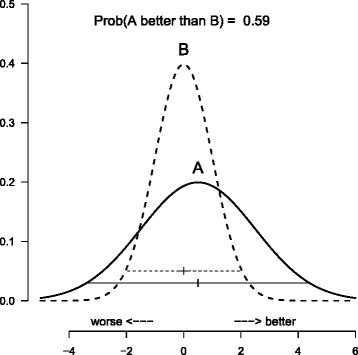
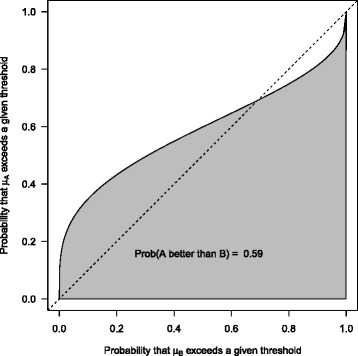
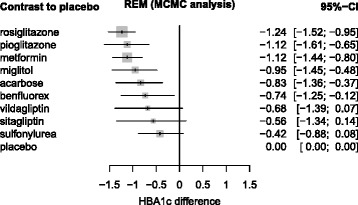
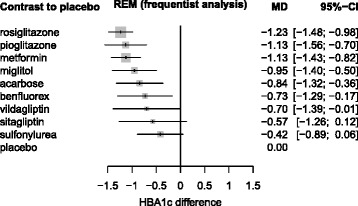
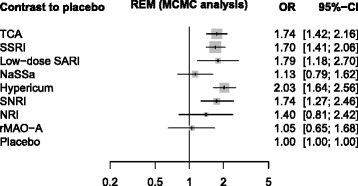
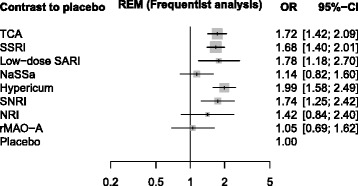
BACKGROUND: Network meta-analysis is used to compare three or more treatments for the same condition. Within a Bayesian framework, for each treatment the probability of being best, or, more general, the probability that it has a certain rank can be derived from the posterior distributions of all treatments. The treatments can then be ranked by the surface under the cumulative ranking curve (SUCRA). For comparing treatments in a network meta-analysis, we propose a frequentist analogue to SUCRA which we call P-score that works without resampling. METHODS: P-scores are based solely on the point estimates and standard errors of the frequentist network meta-analysis estimates under normality assumption and can easily be calculated as means of one-sided p-values. They measure the mean extent of certainty that a treatment is better than the competing treatments. RESULTS: Using case studies of network meta-analysis in diabetes and depression, we demonstrate that the numerical values of SUCRA and P-Score are nearly identical. CONCLUSIONS: Ranking treatments in frequentist network meta-analysis works without resampling. Like the SUCRA values, P-scores induce a ranking of all treatments that mostly follows that of the point estimates, but takes precision into account. However, neither SUCRA nor P-score offer a major advantage compared to looking at credible or confidence intervals.
Overview
The claims and statistics of this paper haven’t been checked yet.
Run the check — free, no account needed. It reads the open-access text and checks the sources it cites.
Integrity signals
Registry
Cites
Statistics
Figures
Verification
Claims the paper makes
The claims and statistics of this paper haven’t been checked yet.
Run the check — free, no account needed. It reads the open-access text and checks the sources it cites.
Claims other papers make about this one
Each is checked against this paper’s own text: does it say what the citing paper says it does?
The source backs part of the claim, not all of it — or backs it for a different population, condition or comparison.
In the citing paper
“This approach is often misleading, as it considers only the point estimate of effect and not the associated precision or certainty of evidence and ignores absolute differences between treatment alternatives.[56][57][58]”
From Management of chronic pain secondary to temporomandibular disorders: a systematic review and network meta-analysis of randomised trials (2023) · cites this paper as [57]
Experimental — accuracy not yet measured
Self-check
Percentages, sums and reported differences re-computed from the paper’s own numbers.
The self-check needs the paper’s full text.
Citations
Cites
R: A Language and Environment for Statistical Computing
R Core Team (2000) · doi:10.32614/r.manuals · Cited by 355,893
Statistical significance for genomewide studies
Storey, J. D., & Tibshirani, R. (2003) · Proceedings of the National Academy of Sciences · doi:10.1073/pnas.1530509100 · Cited by 9,692
Salanti, G., Ades, A. E., & Ioannidis, J. P. A. (2011) · Journal of Clinical Epidemiology · doi:10.1016/j.jclinepi.2010.03.016 · Cited by 3,766
Graphical tools for network meta-analysis in STATA
Chaimani, A., Higgins, J. P. T., Mavridis, D., Spyridonos, P., & Salanti, G. (2013) · PLoS ONE · doi:10.1371/journal.pone.0076654 · Cited by 2,473
Salanti, G. (2012) · Research Synthesis Methods · doi:10.1002/jrsm.1037 · Cited by 1,729
Cipriani, A., Furukawa, T. A., Salanti, G., Geddes, J. R., Higgins, J. P., Churchill, R., Watanabe, N., Nakagawa, A., Omori, I. M., McGuire, H., et al. (2009) · The Lancet · doi:10.1016/s0140-6736(09)60046-5 · Cited by 1,654
Dias, S., Sutton, A. J., Ades, A. E., & Welton, N. J. (2013) · Medical Decision Making · doi:10.1177/0272989x12458724 · Cited by 1,207
White, I. R., Barrett, J. K., Jackson, D., & Higgins, J. P. T. (2012) · Research Synthesis Methods · doi:10.1002/jrsm.1045 · Cited by 1,114
Jansen, J. P., Fleurence, R., Devine, B., Itzler, R. F., Barrett, A., Hawkins, N., Lee, K., Boersma, C., Annemans, L., & Cappelleri, J. C. (2011) · Value in Health · doi:10.1016/j.jval.2011.04.002 · Cited by 1,029
Hoaglin, D. C., Hawkins, N., Jansen, J. P., Scott, D. A., Itzler, R. F., Cappelleri, J. C., Boersma, C., Thompson, D., Larholt, K. M., Díaz, M., et al. (2011) · Value in Health · doi:10.1016/j.jval.2011.01.011 · Cited by 769
Cited by
Sorted by citations
Items 501–600 of 1,003
Jiang, X., Luo, Y., Wang, X., Chen, Y., Wang, T., He, J., Xia, Y., Zhao, J., Chai, X., Yao, L., et al. (2021) · Phytomedicine · doi:10.1016/j.phymed.2021.153832 · Cited by 21
Frampton, J., Edinburgh, R. M., Ogden, H. B., Gonzalez, J. T., & Chambers, E. S. (2021) · International Journal of Obesity · doi:10.1038/s41366-021-00993-1 · Cited by 20
“Pooled mean differences with 95% confidence intervals were calculated for each outcome with interventions being ranked based on their P-score [23].”
MethodInfluentialThe complexity underlying treatment rankings: how to use them and what to look at
Chiocchia, V., White, I. R., & Salanti, G. (2022) · BMJ Evidence-Based Medicine · doi:10.1136/bmjebm-2021-111904 · Cited by 20
Chao, Y.-C., Chen, P., Su, W., Yeh, H.-W., Su, C.-C., Wu, Y., Chiang, H.-S., Jhou, H., & Shieh, Y. (2022) · Journal of Dental Sciences · doi:10.1016/j.jds.2022.05.013 · Cited by 24
“When the P-score was larger, the material had a higher rank with regards to the success rate.(28) Forest plots represented the summary of these results within the NMA, including the relative mean effects, 95% CIs, and P-scores for all interventions.”
BackgroundYang, F.-A., Chen, S.-C., Chiu, J.-F., Shih, Y.-C., Liou, T., Escorpizo, R. S., & Chen, H. (2022) · Scientific Reports · doi:10.1038/s41598-022-23873-8 · Cited by 20
Liu, F., Wang, Z., Li, X., Zhang, Z., Yang, Y., Chen, J., Chen, D., Wu, L., Liu, X., Han, S., et al. (2022) · 癌症:英文版 · doi:10.1002/cac2.12396 · Cited by 21
“The treatments were ranked based on the P-score; a P-score of 100% suggests the best treatment,whereas a P-score of 0% suggests theworst treatment [25].”
Shaffer, A. L., Naik, A., Bederson, M. M., Arnold, P. M., & Hassaneen, W. (2023) · Neurosurgical FOCUS · doi:10.3171/2022.11.focus22616 · Cited by 20
Feber, L., Peter, N. L., Schneider‐Thoma, J., Siafis, S., Bighelli, I., Hansen, W., Baldez, D. P., Salanti, G., Keefe, R. S. E., Engel, R. R., et al. (2023) · Systematic Reviews · doi:10.1186/s13643-023-02213-5 · Cited by 19
“We will present the results for all cognition outcomes ranking the interventions by their P-Score [34].”
MethodSequí‐Domínguez, I., Mavridis, D., Cavero‐Redondo, I., Saz‐Lara, A., Martínez‐Vizcaíno, V., & de Arenas‐Arroyo, S. N. (2023) · British Journal of Sports Medicine · doi:10.1136/bjsports-2022-106285 · Cited by 20
Chen, D., Niu, Y., Liu, F., Yang, Y., Wang, X., Li, P., & Chen, X. (2023) · Frontiers in Pharmacology · doi:10.3389/fphar.2023.1163908 · Cited by 24
“Rankings of treatments were generated by estimating their surface under the cumulative ranking (SUCRA) scores, which is a metric to assess which treatment is likely to be the most efficacious (0: treatment is certain to be the worst; 1: treatment is certain to be the best) in the context of network metaanalyses (Salan…”
MethodStubnya, B. G., Kocsis, K., Váncsa, S., Kovács, K., Agócs, G., Stubnya, M. P., Suskó, E., Hegyi, P., & Bejek, Z. (2023) · The Journal of Arthroplasty · doi:10.1016/j.arth.2023.06.004 · Cited by 20
Krawczyk, K., Śladowska, K., Holko, P., & Kawalec, P. (2023) · Frontiers in Pharmacology · doi:10.3389/fphar.2023.1223929 · Cited by 22
Adverse effects of immunotherapies for multiple sclerosis: a network meta-analysis
Tramacere, I., Virgili, G., Perduca, V., Lucenteforte, E., Benedetti, M. D., Capobussi, M., Castellini, G., Frau, S., González‐Lorenzo, M., Featherstone, R. M., et al. (2023) · Cochrane Database of Systematic Reviews · doi:10.1002/14651858.cd012186.pub2 · Cited by 20
An, Q., & Liu, Z. (2019) · BMC Cancer · doi:10.1186/s12885-018-5259-8 · Cited by 21
“Ranking the different treatments in terms of their likelihood of showing the best results was performed using the P-score for each outcome [18].”
Orjuela, N. G., Prieto‐Pinto, L., Lasalvia, P., Herrera, D., Castrillon, J., González-Bravo, D. C., Castañeda‐Cardona, C., & Rosselli, D. (2019) · Dermatologic Therapy · doi:10.1111/dth.13145 · Cited by 20
“The estimation of rankings was also carried out, accompanied by the p score, the frequentist analogue of the surface under the cumulative ranking curve (SUCRA) (Rücker & Schwarzer, 2015).”
MethodThe effectiveness of voice therapy on voice‐related handicap: A network meta‐analysis
Latoszek, B. B. V., Watts, C. R., & Neumann, K. (2020) · Clinical Otolaryngology · doi:10.1111/coa.13596 · Cited by 20
Montalto, C., Morici, N., Munafò, A. R., Mangieri, A., Mirizzi, A. M., D’Ascenzo, F., Oreglia, J., Latib, A., Porto, I., Colombo, A., et al. (2020) · European Heart Journal - Cardiovascular Pharmacotherapy · doi:10.1093/ehjcvp/pvaa101 · Cited by 20
Ji, Z., Jian, M., Su, X., Pan, Y., Duan, Y., Ma, W., Zhong, L., Yang, J., Song, J., Wu, X., et al. (2024) · Systematic Reviews · doi:10.1186/s13643-024-02519-y · Cited by 19
“We used p scores to measure the extent of certainty that a treat-ment was better than others, averaged over all competing therapies [22].”
MethodLi, J., Zhou, Z., Hao, S., & Zang, L. (2024) · European Journal of Applied Physiology · doi:10.1007/s00421-024-05688-9 · Cited by 26
“Transitivity assumptions were assessed by evaluating the inclusion criteria for individual studies, by determining whether all participants in the network could be randomly subjected to any intervention, and using consistency models (Rücker and Schwarzer 2015).”
Villacampa, G. J., Eminowicz, G., Navarro, V., Carità, L., García-Illescas, D., Oaknin, A., & Fidalgo, J. A. P. (2025) · European Journal of Cancer · doi:10.1016/j.ejca.2025.115329 · Cited by 21
Calabrese, L., Cartocci, A., Rubegni, P., French, L. E., & Kendziora, B. (2025) · Journal of the European Academy of Dermatology and Venereology · doi:10.1111/jdv.20617 · Cited by 19
Tripodi, V. F., Sardo, S., Ippolito, M., & Cortegiani, A. (2025) · Journal of Anesthesia Analgesia and Critical Care · doi:10.1186/s44158-025-00272-9 · Cited by 19
“The surface under the cumulative ranking curve (SUCRA), which indicates the degree of confidence in a treat-ment surpassing all other treatments, was then used to describe the hierarchy of treatments [23].”
The efficacy of baking soda dentifrice in controlling plaque and gingivitis: A systematic review
Valkenburg, C., Kashmour, Y., Dao, A., van der Weijden, G. A., & Slot, D. E. (2019) · International Journal of Dental Hygiene · doi:10.1111/idh.12390 · Cited by 19
Musa, O. A. H., Syed, A., Mohamed, A. M., Chivese, T., Clark, J. M., Furuya‐Kanamori, L., Xu, C., Toft, E. S., Bashir, M., Abou‐Samra, A., et al. (2021) · Pharmacological Research · doi:10.1016/j.phrs.2021.105546 · Cited by 19
Bozzo, A., Deng, J., Abbas, U., Bhasin, R., Deodat, M., Wariach, S., Sanger, S., Axelrod, D. E., Masrouha, K. Z., TURCOTTE, R. E., et al. (2021) · Clinical Orthopaedics and Related Research · doi:10.1097/corr.0000000000001749 · Cited by 19
“The P-score, based on point estimates and standard error, represents the likelihood that a given treatment will rank first in a specific category; a score closer to100% represents a greater chance that treatment is best [37].”
BackgroundTheodoridis, X., Kalopitas, G., Vadarlis, A., Bakaloudi, D. R., Gkiourtzis, Ν., Dionysopoulos, G., Karanika, E., Tsekitsidi, E., & Chourdakis, M. (2022) · Pharmacology & Therapeutics · doi:10.1016/j.pharmthera.2022.108294 · Cited by 19
Guedeney, P., Roule, V., Mesnier, J., Chapelle, C., Portal, J.-J., Laporte, S., Ollier, É., Zeitouni, M., Kernéis, M., Procopi, N., et al. (2023) · European Heart Journal - Cardiovascular Pharmacotherapy · doi:10.1093/ehjcvp/pvad003 · Cited by 19
Jeong, H., Yim, H. W., Lee, S., Potenza, M. N., & Kim, N. J. (2023) · Psychotherapy and Psychosomatics · doi:10.1159/000529753 · Cited by 19
Hinojosa-Gonzalez, D. E., Segall, M. R., & Eisner, B. H. (2023) · The Journal of Urology · doi:10.1097/ju.0000000000003616 · Cited by 19
Shorter Dual Antiplatelet Therapy for Older Adults After Percutaneous Coronary Intervention
Park, D. Y., Hu, J., Jamil, Y., Kelsey, M. D., Jones, W. S., Frampton, J., Kochar, A., Aronow, W. S., Damluji, A. A., & Nanna, M. G. (2024) · JAMA Network Open · doi:10.1001/jamanetworkopen.2024.4000 · Cited by 19
Cavarretta, E., Marullo, A. G. M., Sciarretta, S., Benedetto, U., Greco, E., Roever, L., Tonelli, E., Peruzzi, M., Iaccarino, A., Biondi‐Zoccai, G., et al. (2018) · European Journal of Cardio-Thoracic Surgery · doi:10.1093/ejcts/ezy285 · Cited by 19
“into account precision and accuracy of effect [15].”
Arcuri, L. J., & Américo, A. D. (2021) · Annals of Hematology · doi:10.1007/s00277-021-04404-3 · Cited by 18
Mori, K., Pradère, B., Quhal, F., Katayama, S., Mostafaei, H., Laukhtina, E., Schuettfort, V. M., D’Andrea, D., Egawa, S., Bensalah, K., et al. (2021) · Cancer Treatment Reviews · doi:10.1016/j.ctrv.2021.102242 · Cited by 18
Chen, H., Lu, W., Zhang, Y., Zhu, X., Zhou, J., & Chen, Y. (2018) · Cancer Medicine · doi:10.1002/cam4.1892 · Cited by 19
Sun, Y., Ji, M., Zhang, X., Chen, J., Wang, Y., & Wang, Z. (2022) · Journal of Affective Disorders · doi:10.1016/j.jad.2022.06.017 · Cited by 19
Ricci, C., Serbassi, F., Alberici, L., Ingaldi, C., Gaetani, L., Raffele, E. D., Pironi, L., Sasdelli, A. S., Mosconi, C., Marco, M. D., et al. (2023) · Surgery · doi:10.1016/j.surg.2023.08.005 · Cited by 20
Fornaro, M., Caiazza, C., Rossano, F., Cilmi, F., Prisco, M. D., Vieta, E., Thompson, T., Solmi, M., Carvalho, A. F., Iasevoli, F., et al. (2024) · European Neuropsychopharmacology · doi:10.1016/j.euroneuro.2024.01.011 · Cited by 18
Wallerer, S., Papakonstantinou, T., Morze, J., Stadelmaier, J., Kiesswetter, E., Gorenflo, L., Barbaresko, J., Szczerba, E., Neuenschwander, M., Bell, W., et al. (2024) · EClinicalMedicine · doi:10.1016/j.eclinm.2024.102807 · Cited by 22
“28 Transitivity assumption was evaluated by comparing baseline characteristic (age, sex, geographical location, and body mass index) across all comparisons.”
Cai, W., Zhang, H., Wu, Y., Yao, Y., & Zhang, J. (2025) · Frontiers in Aging Neuroscience · doi:10.3389/fnagi.2024.1465871 · Cited by 19
Rodríguez‐Domínguez, Á., Rebollo‐Salas, M., Chillón‐Martínez, R., Rosales‐Tristancho, A., Villa-Del-Pino, I., & Jiménez‐Rejano, J. (2025) · Brazilian Journal of Physical Therapy · doi:10.1016/j.bjpt.2025.101226 · Cited by 18
“35”
Malik, A. H., Yandrapalli, S., Goldberg, M. D., Jain, D., Frishman, W. H., & Aronow, W. S. (2019) · Cardiology in Review · doi:10.1097/crd.0000000000000265 · Cited by 19
“Also, the P-score ranking system based on frequentist analog of SUrface under the Cumulative Ranking curve was used to comparatively rank the treatments.(38) It was not possible to conduct a formal assessment of consistency due to the lack of loops in the studies included forming the network of direct and indirect evi…”
MethodTan, O. L., Safii, S. H., & Razali, M. (2020) · Pharmaceutics · doi:10.3390/pharmaceutics12111086 · Cited by 18
“A higher P-score represents a greater likelihood for the treatment to be ranked as best among the other competing treatments [38].”
BackgroundZhang, Y., Ma, H., Nan, T., Li, Y., Zheng, W., Zhou, Z., & Gong, X. (2021) · Frontiers in Pharmacology · doi:10.3389/fphar.2021.649470 · Cited by 18
Chen, D., Zhao, G., Fu, J., Sun, S., Huang, X., Su, L., He, Z., Huang, T. M., Chen, R., Hu, X., et al. (2022) · International Journal of Environmental Research and Public Health · doi:10.3390/ijerph19148276 · Cited by 18
“In addition, a node-splitting analysis was performed to estimate inconsistencies by comparing the differences between direct and indirect evidence [23].”
MethodCao, Z., Guo, J., Li, Q., Li, Y., & Wu, J. (2022) · BioMed Research International · doi:10.1155/2022/8316106 · Cited by 18
“The surface under the cumulative ranking (SUCRA) was calculated to rank the drugs ’ relative e ffi cacies and safeties [26].”
Sonbol, M. B., Siddiqi, R. L., Usón, P. L. S., Pathak, S., Firwana, B., Botrus, G., Almader‐Douglas, D., Ahn, D. H., Borad, M. J., Starr, J. S., et al. (2022) · The Oncologist · doi:10.1093/oncolo/oyac212 · Cited by 18
Liu, M., Fan, Y., Chen, J., Yang, J., Gao, L., Wu, X., Xu, X., Zhang, Y., Yue, P., Cao, W., et al. (2022) · Microbiology Spectrum · doi:10.1128/spectrum.02977-22 · Cited by 18
“Cumulative probability ranking of antibiotic efficacy was performed to measure the degree of certainty regarding the superiority of one treatment over the other (38).”
BackgroundPillado, C. M., Fernández‐Castilla, B., Sánchez‐Gutiérrez, T., González–Fraile, E., Barbeito, S., & Calvo, A. (2022) · Psychological Medicine · doi:10.1017/s0033291722003610 · Cited by 20
“The resulting rank of therapies ( p scores, Rücker & Schwarzer, 2015) highlights the TBIs that are more effective for each type of outcome.”
BackgroundBae, K., Lamoury, G., Carroll, S., Morgia, M., Lim, S. H.-S., Baron-Hay, S. E., Shin, I., Park, S.-J., & Oh, B. (2022) · Critical Reviews in Oncology/Hematology · doi:10.1016/j.critrevonc.2022.103898 · Cited by 21
Qian, G., Cai, X., Xu, K., Tian, H., Meng, Q., Ossowski, Z. M., & Liang, J. (2023) · Frontiers in Neurology · doi:10.3389/fneur.2022.1005485 · Cited by 20
Hinojosa-Gonzalez, D. E., Estrada-Mendizábal, R. J., Bueno‐Gutierrez, L. C., Roblesgil‐Medrano, A., Tellez‐Garcia, E., Galindo-Garza, C. A., Villarreal‐Espinosa, J. B., Rodriguez-Barreda, J. R., Ortiz-Perez, J. M., & Figueroa-Sanchez, J. A. (2023) · Spine Surgery and Related Research · doi:10.22603/ssrr.2022-0196 · Cited by 18
“Further high-quality evidence is needed to guide the selection of the optimal surgical approach, and the decision should remain an individualized process, considering several factors, such as surgeon experience and resource availability 28) .”
Palliative procedures for malignant gastric outlet obstruction: a network meta-analysis
Tran, K. V., Vo, N.-P., Nguyen, H. S., Vo, N. T., Thai, T. B. T., Pham, V. A., Loh, E., & Tam, K. (2024) · Endoscopy · doi:10.1055/a-2309-7683 · Cited by 18
Samaranayake, C. B., Anderson, J., McCabe, C., Zahir, S. F., Upham, J. W., & Keir, G. J. (2020) · Internal Medicine Journal · doi:10.1111/imj.15049 · Cited by 18
Keun-young Kim, A., Shim, S. R., Lee, S., & Kim, S. (2021) · British Journal of Radiology · doi:10.1259/bjr.20201076 · Cited by 19
Chen, Y.-Y., Ye, X.-Q., Tang, T., She, T., Chen, M., & Zheng, H. (2021) · Frontiers in Pharmacology · doi:10.3389/fphar.2021.671845 · Cited by 18
“We assessed the P-score of CGRPmAbs or BoNT-A, which measures the extent of certainty that a treatment is better than another (Rücker and Schwarzer, 2015) and is commonly used to rank treatments in a networkmeta-analysis.”
MethodLiu, S., Hu, J., Zhao, C., Liu, H., & He, C. (2025) · Frontiers in Endocrinology · doi:10.3389/fendo.2025.1513641 · Cited by 17
Sun, W., Han, Y., & Gu, S. (2024) · PeerJ · doi:10.7717/peerj.17621 · Cited by 23
“Consistency models are then used to evaluate the assumption of transitivity ( Rücker & Schwarzer, 2015 ).”
MethodGoudman, L., Russo, M. A., Pilitsis, J. G., Eldabe, S. S., Duarte, R. V., Billot, M., Manuel Roulaud, B., Rigoard, P., & Moens, M. (2025) · Communications Medicine · doi:10.1038/s43856-025-00778-x · Cited by 17
Choi, C., Chan, S.-K., Lam, K. O., Chan, S., Chau, S.-C., Kwong, D. L., Leung, T., Luk, M., Lee, A. W. M., & Lee, V. H.-F. (2021) · Frontiers in Oncology · doi:10.3389/fonc.2021.626145 · Cited by 17
“using the P-score where regimens having higher P-score represent better performance (20).”
BackgroundMethodMontes-Andujar, L., Tinoco, E., Pravia, O. V. B., Saborido, C. M., Blanco-Schweizer, P., Segura, C., Silva, E. P., Reyes, V., Cobo, A. R., Zurdo, C., et al. (2021) · Thorax · doi:10.1136/thoraxjnl-2019-214054 · Cited by 19
Sun, Y., Ji, M., Leng, M., & Wang, Z. (2022) · Journal of Affective Disorders · doi:10.1016/j.jad.2022.04.055 · Cited by 17
Hadilou, M., Dolatabadi, A., Ghojazadeh, M., Hosseinifard, H., Oskoee, P. A., & Azar, F. P. (2022) · BioMed Research International · doi:10.1155/2022/7708643 · Cited by 17
“Higher P scores demonstrate a higher likelihood that the intervention is superior to other comparisons [41].”
Almadhoon, H. W., Hamdallah, A., Eida, M. A., Al‐kafarna, M., Atallah, D. A., AbuIriban, R. W., Asla, M. M., Abdelsalam, A., Awad, A. A., Nawar, A. A., et al. (2022) · The Journal of the American Dental Association · doi:10.1016/j.adaj.2022.08.017 · Cited by 17
Choi, J. H., Lee, S. H., Kim, J. S., Park, N., Lee, M. H., Lee, M. W., Cho, I. R., Paik, W. H., Ryu, J. K., & Kim, Y. (2022) · Gut and Liver · doi:10.5009/gnl220268 · Cited by 18
“15,16 Sensitivity analyses were performed on: (1) studies that were evaluated as having low level study specific risk of bias except for blinding-related categories, because bias for blinding was inevitable within comparison studies between prophylactic PS and control; and (2) with studies that…”
Mathew, A., Ramachandra, D., Goyal, A., Karthyarth, M. N., Joseph, P., Rakesh, N. R., Kaushal, G., Agrawal, A., Bhadoria, A. S., & Dhar, P. (2023) · British journal of surgery · doi:10.1093/bjs/znac400 · Cited by 17
Bi, A. S., Robinson, J., Anil, U., Hurley, E. T., Klifto, C. S., Gonzalez-Lomas, G. P., Alaia, M. J., Strauss, E. J., & Jazrawi, L. M. (2023) · Journal of Shoulder and Elbow Surgery · doi:10.1016/j.jse.2023.01.039 · Cited by 17
Lee, Y. J., Ha, A., Kang, D., Shim, S. R., Jeoung, J. W., Park, K. H., & Kim, Y. K. (2023) · International Journal of Surgery · doi:10.1097/js9.0000000000000283 · Cited by 17
“The P-score, as valued between 0 and 1, is the probability that a certain treatment is among the best ones([27,35]).”
BackgroundDong, L., Jiang, L., Xu, Z., & Zhang, X. (2024) · Frontiers in Pharmacology · doi:10.3389/fphar.2024.1336075 · Cited by 18
Adams, A., Jakob, T., Huth, A., Monsef, I., Ernst, M., Kopp, M., Caro-Valenzuela, J., Wöckel, A., & Skoetz, N. (2024) · Cochrane Database of Systematic Reviews · doi:10.1002/14651858.cd013451.pub2 · Cited by 17
Shi, J., Lu, D., Wei, P., Yang, Y., Dong, H., Lei, J., Sander, J. W. A. S., Shan, Y., & Zhao, G. (2024) · World Neurosurgery · doi:10.1016/j.wneu.2024.09.084 · Cited by 19
Shen, Y., Fujii, T., Ueno, N. T., Tripathy, D., Fu, N., Zhou, H., Ning, J., & Xiao, L. (2018) · Breast Cancer Research and Treatment · doi:10.1007/s10549-018-4969-6 · Cited by 17
Petit, C., Blanchard, P., Pignon, J., & Lueza, B. (2019) · Systematic Reviews · doi:10.1186/s13643-019-0984-x · Cited by 17
Zheng, B., Zhang, X., Wang, X., Ge, L., Wei, M., Bi, L., Deng, X., Wang, Q., Li, J., & Wang, Z. (2019) · Colorectal Disease · doi:10.1111/codi.14872 · Cited by 17
Luo, Z., Wang, Y., Zhang, T., & Wang, J. (2025) · Frontiers in Bioengineering and Biotechnology · doi:10.3389/fbioe.2025.1660524 · Cited by 21
Real-world oral anticoagulants for Asian patients with non-valvular atrial fibrillation
Kim, S. M., Jeon, E., Jung, J., & Lee, J. S. (2021) · Medicine · doi:10.1097/md.0000000000026883 · Cited by 16
“For each outcome, the interventions with higher P scores were considered more desirable compared to the others.([21]) The hierarchy of the treatments was determined using the P score, where a larger P score value represented a better rank.”
Single-injection regional analgesia techniques for mastectomy surgery
CASSAI, A. D., Zarantonello, F., Geraldini, F., Boscolo, A., Pasin, L., Pinto, S. D., Leardini, G., Basile, F., Disarò, L., Sella, N., et al. (2021) · European Journal of Anaesthesiology · doi:10.1097/eja.0000000000001644 · Cited by 16
Carrano, F. M., Iossa, A., Lorenzo, N. D., Silecchia, G., Kontouli, K., Mavridis, D., Alarcón, I., Felsenreich, D. M., Sánchez-Cordero, S., Vincenzo, A. D., et al. (2022) · Surgical Endoscopy · doi:10.1007/s00464-022-09008-0 · Cited by 16
“We ranked all treatments in each outcome using p-scores [28].”
MethodShi, J., Lu, D., Chen, H., Shu, M., Xu, Y., Qian, J., Ouyang, K., Huang, H., Luo, Z., Wang, C., et al. (2022) · Frontiers in Neurology · doi:10.3389/fneur.2022.868121 · Cited by 15
“NMA estimated the overall rankings of treatments by calculating the surface under the cumulative ranking curve (SUCRA) for each, which approaches one when a treatment is certain to be the best and zero when treatment is the worst (21).”
MethodTsai, S. H. L., Lau, N. C., Chen, W., Chien, R.-S., Tischler, E. H., Fu, T., & Chen, D. W.-C. (2022) · Journal of Orthopaedic Surgery and Research · doi:10.1186/s13018-022-03237-8 · Cited by 16
“Network meta-analysis is an advanced form of meta-analysis in which three or more multiple comparisons are being compared with a common comparator [17].”
Nyaaba, N., Andoh, N. E., Amoh, G. K. A., Amuzu, D. S. Y., Ansong, M., Ordóñez-Mena, J. M., & Hirst, J. A. (2022) · PLoS ONE · doi:10.1371/journal.pone.0269391 · Cited by 16
“We chose not to use the Hasse diagram to combine rankings as prespecified in our protocol because it is not possible to give weight to most important outcomes and it compounds the limitations of the p-scores [38,75].”
Lei, Q., Yan, X. C., Zou, H., Jiang, Y., Lai, Y., Ung, C. O. L., & Hu, H. (2022) · Discover Oncology · doi:10.1007/s12672-022-00559-1 · Cited by 16
“The P-score depended on the estimating result and confidence interval of the effect value, from 0 to 1, indicating a progressive increase in the efficacy of the included drugs [30].”
BackgroundFan, H., Gao, L., Yin, Z., Ye, S., Zhao, H., & Qi, P. (2022) · Medicine · doi:10.1097/md.0000000000030921 · Cited by 17
“The comparative effectiveness of the treatments were ranked by using P-score, an index of the mean probability that a treatment is the most efficacious treatment in all of the included treatments.[10] The consistency of the network meta-analysis was checked by comparing the estimates from indirect evidence with those…”
MethodWang, L., Li, C., Zhao, Z., Li, X., Tang, C., Guan, Z., Sun, F., Gu, J., & Li, N.-C. (2023) · Frontiers in Oncology · doi:10.3389/fonc.2023.1104242 · Cited by 16
Fong, K. Y., Zhao, J. J., Syn, N. L. X., Nair, P. K., Chan, Y. H., & Lee, P. (2023) · Respiratory Medicine · doi:10.1016/j.rmed.2023.107302 · Cited by 16
Hu, X., Wang, W., Su, X., Peng, H., Tan, Z., Li, Y.-Q., & Huang, Y. (2023) · PeerJ · doi:10.7717/peerj.16410 · Cited by 20
“A higher SUCRA value denotes a higher ranking ( Rücker & Schwarzer, 2015 ; Trinquart et al., 2016 ).”
BackgroundCha, J.-Y., Kim, S.-Y., Lim, Y.-W., Choi, K.-H., & Shin, I. (2024) · Journal of Clinical Psychology in Medical Settings · doi:10.1007/s10880-023-10000-6 · Cited by 16
“The relative ranking of each intervention was performed using a P-score, with higher P-scores indicating greater effectiveness (Rücker & Schwarzer, 2015).”
Yu, H., Li, M., Qian, G., Yue, S., Ossowski, Z. M., & Szumilewicz, A. (2024) · Advances in Nutrition · doi:10.1016/j.advnut.2024.100253 · Cited by 20
Deinzer, R., Weik, U., Eidenhardt, Z., Leufkens, D., & Sälzer, S. (2024) · PLoS ONE · doi:10.1371/journal.pone.0306302 · Cited by 19
Schubert, A., Wiesmann, T., Wulf, H., Obert, J. D. A., Eberhart, L. H. J., Volk, T. J., & Dinges, H. (2024) · Journal of Clinical Anesthesia · doi:10.1016/j.jclinane.2024.111531 · Cited by 16
Zhang, B., Wong, K. P., Guo, C., Chen, S., Fu, S., Kang, R., Xiao, Q., & Qin, J. (2024) · Journal of Oral Rehabilitation · doi:10.1111/joor.13901 · Cited by 16
“The higher the SUCRA score, the larger the area under the curve, indicating a higher likelihood that the intervention method was the best [32].”
Haghbin, H., Hasan, F., Gangwani, M. K., Zakirkhodjaev, N., Lee‐Smith, W., Beran, A., Kamal, F., Hart, B. R., & Aziz, M. (2024) · Journal of Clinical Medicine · doi:10.3390/jcm13247531 · Cited by 16
Ueyama, H. A., Akita, K., Kiyohara, Y., Takagi, H., Briasoulis, Α., Wiley, J., Bangalore, S., Mehran, R., Stone, G. W., Kuno, T., et al. (2025) · Journal of the American College of Cardiology · doi:10.1016/j.jacc.2024.09.1231 · Cited by 15
Olsen, J. H. H., Öberg, S., Andresen, K., Klausen, T. W., & Rosenberg, J. (2019) · British journal of surgery · doi:10.1002/bjs.11308 · Cited by 16
Efficacy and safety of non-pharmacological interventions for irritable bowel syndrome in adults
Dai, Y., Wu, Y., Li, R., Chen, W., Tang, C., Lu, L., & Hu, L. (2020) · World Journal of Gastroenterology · doi:10.3748/wjg.v26.i41.6488 · Cited by 17
Yokoyama, Y., Takagi, H., & Kuno, T. (2021) · Seminars in Thoracic and Cardiovascular Surgery · doi:10.1053/j.semtcvs.2021.02.002 · Cited by 16
Shao, P., Shao, C. R., Romero, T., & Leung, F. W. (2021) · Journal of Gastroenterology and Hepatology · doi:10.1111/jgh.15702 · Cited by 16
Poo, S. X. W., Sriranganathan, D., & Segal, J. P. (2022) · European Journal of Gastroenterology & Hepatology · doi:10.1097/meg.0000000000002362 · Cited by 16
Tornyos, D., Komócsi, A., Bálint, A., Kupó, P., Abdallaoui, O. E. A. E., Szapáry, L. B., & Szapáry, L. B. (2022) · PLoS ONE · doi:10.1371/journal.pone.0273103 · Cited by 18
“P-scores reflect the certainty that one treatment protocol is better than another strategy, averaged over all competing therapies, a method that is equivalent to the surface under the cumulative ranking curve (SUCRA) [20].”
MethodYang, J., Dhital, S., & Naderer, T. (2019) · Journal of Clinical Medicine · doi:10.3390/jcm8122182 · Cited by 16
“They measure the extent of certainty that a treatment is better than another treatment, averaged over all competing treatments [26].”
BackgroundLiu, S., Wang, Y., Zhu, X., Chen, F., & Shi, Y. (2024) · BMC Pulmonary Medicine · doi:10.1186/s12890-024-03429-4 · Cited by 15
Metadata
- Authors
- Rücker, G., & Schwarzer, G.
- Affiliations
- University of Freiburg (DE)
- Corresponding author
- Rücker, Gerta
- Venue
- BMC Medical Research Methodology
- Published
- 2015-07-31
- Volume
- 15
- Issue
- 1
- Pages
- 58-58
- ISSN
- 1471-2288 (ISSN-L)
- PMC
- PMC4521472
- OpenAlex
- W2111999709
- Cited by
- 1,732
- References
- 32
- Citations by year
- 2026: 249 · 2025: 253 · 2024: 267 · 2023: 229 · 2022: 226 · 2021: 191 · 2020: 148 · 2019: 76 · 2018: 52 · 2017: 32 · 2016: 8 · 2015: 1
- FWCI
- 28.58
- Type
- journal article
- Language
- en
- Open access
- gold
- doi.org
- Licence
- Locations
- BMC Medical Research Methodology (publishedVersion, other-oa)
- PubMed Central (publishedVersion, cc-by)
- PubMed (publishedVersion)
- FreiDok plus (Universitätsbibliothek Freiburg) (submittedVersion)
- Funders
- Deutsche Forschungsgemeinschaft (RU1747/1-1)
- Topics
- Social Sciences › Decision Sciences › Statistics, Probability and Uncertainty › Meta-analysis and systematic reviews
- Physical Sciences › Mathematics › Statistics and Probability › Statistical Methods in Clinical Trials
- Social Sciences › Sociology and Political Science › Delphi Technique in Research
- Keywords
- treatment ranking, P-score, surface under the cumulative ranking curve, confidence intervals, diabetes mellitus, depression
- MeSH terms
- Algorithms, Bayes Theorem, Biometry, Data Interpretation, Statistical, Humans, Review Literature as Topic, Meta-Analysis as Topic, Reproducibility of Results, Biomedical Research
About these checks
Registry, retraction, Cites and statistics results are computed, not judged, with one exception: a printed reference that no index lists is read once by a model before it counts as a citation error. Claims are extracted by a model and kept only when their quote appears verbatim in the text; each cited source is then checked, with a model’s help, for whether it says what the claim relies on. Those verdicts can be wrong — read the claim’s quote and the cited source before relying on one.
Statistics and arithmetic are recomputed, not judged.
Confidence bands are shown only for fields calibrated on our annotated test set. None is calibrated yet, so no band is shown.
What counts as a claim ›How we measure confidence ›How we check this ›
Are you an author, or do you see a problem with this page? Request a review
