

A scoping review on the conduct and reporting of scoping reviews
Open accessThe DOI matches its Crossref record; 25 of the 27 references it cites were found in a registry or an index.
Abstract
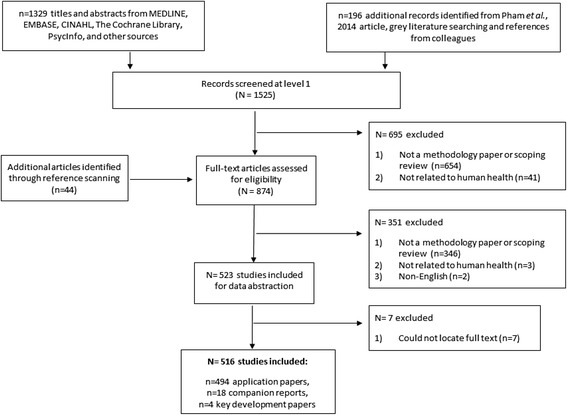
BACKGROUND: Scoping reviews are used to identify knowledge gaps, set research agendas, and identify implications for decision-making. The conduct and reporting of scoping reviews is inconsistent in the literature. We conducted a scoping review to identify: papers that utilized and/or described scoping review methods; guidelines for reporting scoping reviews; and studies that assessed the quality of reporting of scoping reviews. METHODS: We searched nine electronic databases for published and unpublished literature scoping review papers, scoping review methodology, and reporting guidance for scoping reviews. Two independent reviewers screened citations for inclusion. Data abstraction was performed by one reviewer and verified by a second reviewer. Quantitative (e.g. frequencies of methods) and qualitative (i.e. content analysis of the methods) syntheses were conducted. RESULTS: After searching 1525 citations and 874 full-text papers, 516 articles were included, of which 494 were scoping reviews. The 494 scoping reviews were disseminated between 1999 and 2014, with 45% published after 2012. Most of the scoping reviews were conducted in North America (53%) or Europe (38%), and reported a public source of funding (64%). The number of studies included in the scoping reviews ranged from 1 to 2600 (mean of 118). Using the Joanna Briggs Institute methodology guidance for scoping reviews, only 13% of the scoping reviews reported the use of a protocol, 36% used two reviewers for selecting citations for inclusion, 29% used two reviewers for full-text screening, 30% used two reviewers for data charting, and 43% used a pre-defined charting form. In most cases, the results of the scoping review were used to identify evidence gaps (85%), provide recommendations for future research (84%), or identify strengths and limitations (69%). We did not identify any guidelines for reporting scoping reviews or studies that assessed the quality of scoping review reporting. CONCLUSION: The number of scoping reviews conducted per year has steadily increased since 2012. Scoping reviews are used to inform research agendas and identify implications for policy or practice. As such, improvements in reporting and conduct are imperative. Further research on scoping review methodology is warranted, and in particular, there is need for a guideline to standardize reporting.
Overview
The claims and statistics of this paper haven’t been checked yet.
Free: it reads the open-access text and checks the first 5 claims that cite a source we can check. Create a free account to check every claim.
Integrity signals
Registry
Cites
Statistics
Figures
Verification
Claims the paper makes
The claims and statistics of this paper haven’t been checked yet.
Free: it reads the open-access text and checks the first 5 claims that cite a source we can check. Create a free account to check every claim.
Claims other papers make about this one
Each is checked against this paper’s own text: does it say what the citing paper says it does?
The cited source doesn’t support the claim as written.
In the citing paper
“The scoping review followed the guidelines outlined in the Preferred Reporting Items for Systematic Reviews and Meta-Analyses Extension (PRISMA-ScR) methodology (Munn et al., 2018; Tricco et al., 2016).”
From Sextortion: A Scoping Review (2025) · cites this paper as Tricco et al., 2016
Checked by a reasoning model — may be wrong.
Experimental — accuracy not yet measuredThe source backs part of the claim, not all of it — or backs it for a different population, condition or comparison.
In the citing paper
“A scoping review approach was considered appropriate for this purpose, given the authors’ understanding that the evidence base in this area is diverse in both research methodologies and disciplinary context (30).”
From Contributions of a time use perspective in community mental health practice: a scoping review (2024) · cites this paper as [30]
Experimental — accuracy not yet measuredThe source backs part of the claim, not all of it — or backs it for a different population, condition or comparison.
In the citing paper
“With the increasing popularity of scoping reviews, criticism of the rigour, transparency, and appropriateness of the methodology have been raised across multiple academic and clinical disciplines, including nursing and midwifery.”
From Undertaking a scoping review: A practical guide for nursing and midwifery students, clinicians, researchers, and academics (2021) · cites this paper as Tricco et al., 2016
Experimental — accuracy not yet measuredThe source backs part of the claim, not all of it — or backs it for a different population, condition or comparison.
In the citing paper
“Limitations of the scoping review methodology include the absence of methodological and risk of bias evaluations and the resultant inappropriateness of the review to be used as evidence for clinical guidelines, limitations, and recommendations (Arksey & O'Malley, 2005; Peters, Godfrey, et al., 2020; Tricco et al., 2016).”
From Undertaking a scoping review: A practical guide for nursing and midwifery students, clinicians, researchers, and academics (2021) · cites this paper as Tricco et al., 2016
Experimental — accuracy not yet measuredThe cited source says what the claim attributes to it.
In the citing paper
“while the number of scoping reviews in the literature is increasing steadily”
From PRISMA Extension for Scoping Reviews (PRISMA-ScR): Checklist and Explanation (2018) · cites this paper as [1]
13 more claims about this paper
Create a free account to see every claim other papers make about this one.
Self-check
Percentages, sums and reported differences re-computed from the paper’s own numbers.
The self-check needs the paper’s full text.
Citations
Cites
Preferred Reporting Items for Systematic Reviews and Meta-Analyses: the PRISMA statement
Moher, D., Liberati, A., Tetzlaff, J., Altman, D. G., & for the PRISMA Group (2009) · BMJ · doi:10.1136/bmj.b2535 · Cited by 83,823
Preferred reporting items for systematic reviews and meta-analyses: the PRISMA Statement.
(2009) · PubMed Central · Cited by 44,859
Scoping studies: towards a methodological framework
Arksey, H., & O'Malley, L. (2005) · International Journal of Social Research Methodology · doi:10.1080/1364557032000119616 · Cited by 36,742 · cited 15×
“Background Scoping reviews are used to map the concepts underpinning a research area and the main sources and types of evidence available [1].”
BackgroundMethodInfluentialPreferred Reporting Items for Systematic Reviews and Meta-Analyses: The PRISMA Statement
Moher, D., Liberati, A., Tetzlaff, J., & Altman, D. G. (2009) · Journal of Clinical Epidemiology · doi:10.1016/j.jclinepi.2009.06.005 · Cited by 19,575
Scoping studies: advancing the methodology
Levac, D., Colquhoun, H., & O'Brien, K. K. (2010) · Implementation Science · doi:10.1186/1748-5908-5-69 · Cited by 15,268 · cited 9×
“(2010) [2] modifications to the original framework of a scoping review [1] to guide this research.”
BackgroundMethodInfluentialSelf-citationGuidance for conducting systematic scoping reviews
Peters, M. D. J., Godfrey, C. M., Khalil, H., McInerney, P., Parker, D., & Soares, C. B. (2015) · International Journal of Evidence-Based Healthcare · doi:10.1097/xeb.0000000000000050 · Cited by 7,472 · cited 7×
“Our protocol was developed using the scoping review methodological framework proposed by Arksey and O’Malley (2005) [1] and further refined by the Joanna Briggs Institute [3].”
BackgroundMethodInfluentialSchulz (1995) · doi:10.1001/jama.1995.03520290060030 · Cited by 5,634 · cited 1×
“This is problematic because when different methods are applied to the same question, they may produce different results, undermining the utility and confidence in knowledge syntheses [5, 6].”
MethodA scoping review of scoping reviews: advancing the approach and enhancing the consistency
Pham, M. T., Rajić, A., Greig, J. D., Sargeant, J. M., Papadopoulos, A., & McEwen, S. A. (2014) · Research Synthesis Methods · doi:10.1002/jrsm.1123 · Cited by 3,078 · cited 2×
“We are aware of a previous scoping review of scoping reviews [16].”
BackgroundMethodScoping reviews: Time for clarity in definition, methods, and reporting
Colquhoun, H. L., Levac, D., O'Brien, K. K., Straus, S., Tricco, A. C., Perrier, L., Kastner, M., & Moher, D. (2014) · Journal of Clinical Epidemiology · doi:10.1016/j.jclinepi.2014.03.013 · Cited by 2,783 · cited 2×
“(2010) [2] and others [3], there is a lack of consistency in terminology and methods reported [4].”
BackgroundSelf-citationDaudt, H. M., van Mossel, C., & Scott, S. J. (2013) · BMC Medical Research Methodology · doi:10.1186/1471-2288-13-48 · Cited by 1,891 · cited 5×
“(2013) discussed the Arksey and O’Malley (2005) framework, and in particular, the team’s experiences using it, in order to develop the methodology further [10].”
BackgroundMethodInfluential
Research works printed but not linked: 2
- Colquhoun H, O’Brien K, Straus S, Moher D, Levac D. Gaps in scoping review methodologies J Clin Epidemiol. In press. 25034198
- Feinberg J Wordle 2014
Cited by
Items 801–900 of 1,005
Protocol for a scoping review to map patient engagement in scoping reviews
Oravec, N., Monnin, C., Gregora, A., Bjorklund, B., Dave, M. G., Schultz, A. S. H., & Chudyk, A. M. (2022) · Research Involvement and Engagement · doi:10.1186/s40900-022-00361-x · Cited by 14
“Its popularity has skyrocketed over recent years [4].”
BackgroundScoping review: Occurrence and definitions of postoperative complications in equine colic surgery
Gandini, M., Cerullo, A., & Giusto, G. (2022) · Equine Veterinary Journal · doi:10.1111/evj.13881 · Cited by 12
“clarify key concepts, investigate research conduct and reveal knowledge gaps in a body of literature.(14,15) Scoping reviews produce extensive charting to produce a map of the literature and can be used to”
BackgroundCarr, S., Hudson, G., Amson, N., Hisham, I. B. I., Coldham, T., Gould, D., Hodges, K. G., & Sweeney, A. (2022) · The British Journal of Social Work · doi:10.1093/bjsw/bcac209 · Cited by 13
Health Coaching-Based Interventions for Oral Health Promotion: A Scoping Review
Chunda, R., Mossey, P. A., Freeman, R., & Yuan, S. (2023) · Dentistry Journal · doi:10.3390/dj11030073 · Cited by 18
“However, others have pointed out that while it is not a requirement for a scoping review to methodologically assess the quality of included studies and determine the extent to which the study has addressed a possibility of bias in its design [21,25], a critical appraisal of the included studies is necessary.”
BackgroundExploring the Fusion of Knowledge Graphs into Cognitive Modular Production
Jaryani, S., Yitmen, İ., Sadri, H., & Alizadehsalehi, S. (2023) · Buildings · doi:10.3390/buildings13092306 · Cited by 10
Ozoegwu, C. G., & Eberhard, P. (2023) · Journal of Vibration Engineering & Technologies · doi:10.1007/s42417-023-01227-6 · Cited by 10
“In scoping reviews, literature surveys are conducted with the aim of identifying knowledge gaps to highlight future research opportunities, setting research agendas, and identifying information guides for decision-making and practice among other reasons [1].”
Can green concrete help address the sand and aggregate crisis? A scoping literature review
Rousseau, J., Lauzon, A., & Marschke, M. J. (2024) · Journal of Environmental Planning and Management · doi:10.1080/09640568.2024.2303630 · Cited by 11
“Scoping reviews are useful for identifying knowledge gaps in emerging research topics (Tricco et al. 2016) and are considered as a more exploratory approach than systematic literature reviews, which tend to be more exhaustive (Arksey and O'Malley 2005).”
Factors limiting glaucoma care among glaucoma patients in Nigeria: A scoping review
Obasuyi, O. C., Yeye-Agba, O. O., & Ofuadarho, O. J. (2024) · PLOS Global Public Health · doi:10.1371/journal.pgph.0002488 · Cited by 17
López‐Alcalde, J., Wieland, L. S., Barth, J., Grainger, R., Baxter, N. N., Heron, N., Triantafyllidis, A. K., Carrión, C., Trecca, E. M. C., Holl, F., et al. (2024) · International Journal of Medical Informatics · doi:10.1016/j.ijmedinf.2024.105345 · Cited by 10
“…review to inform the protocol of the mHealth SR.: Scoping reviews providing an overview of previous SRs and relevant studies can help define the review question, identify evidence gaps, provide recommendations for future research, or identify strengths and limitations of available research [16].”
BackgroundKokorelias, K. M., McMurray, J., Chu, C. H., Astell, A. J., Grigorovich, A., Kontos, P., Babineau, J., Bytautas, J., Ahuja, A., & Iaboni, A. (2024) · JMIR Neurotechnology · doi:10.2196/53038 · Cited by 15
“However, we combined rapid review methodology with scoping review methodology to allow us to map the key issues or topics in a research area where the literature has not been reviewed comprehensively, and many different study designs may be applicable [38,39].”
Papini, M. G., Avila, A. N., Fitzgerald, M., & Hellewell, S. C. (2024) · Journal of Neurotrauma · doi:10.1089/neu.2024.0039 · Cited by 10
Price, S. C., McKillop, N., Scanlan, J. D., Rayment‐McHugh, S., Christensen, L. S., & Prichard, J. (2024) · Journal of Child Sexual Abuse · doi:10.1080/10538712.2024.2415549 · Cited by 18
“Aligning with a scoping review methodology, this review sought to determine the range of literature and map the available evidence of a broad topic or concept, in this case – digital interventions to forestall online sexual offending (Munn et al., 2018; Tricco et al., 2016).”
Asaaga, F. A., Tomude, E. S., Rickards, N. J., Hassall, R. M. J., Sarkar, S., & Purse, B. V. (2024) · PLoS ONE · doi:10.1371/journal.pone.0309757 · Cited by 13
Lewis, E. G., Hurst, C., Errington, L., & Sayer, A. A. (2025) · European Geriatric Medicine · doi:10.1007/s41999-024-01132-5 · Cited by 16
“A scoping review was most appropriate as it allowed for an exploratory overview of the current knowledge base of sarcopenia perceptions and aligned with the objective of identifying gaps in the literature [17].”
Parpio, Y. N., Nuruddin, R., Ali, T. S., Mohammad, N., Khan, U. R., Shahzad, S., Khan, M. M., & Aslam, M. (2025) · Frontiers in Public Health · doi:10.3389/fpubh.2025.1506321 · Cited by 24
Adopting Sustainability Competencies in Management Education—A Scoping Review of Progress
Khare, A., & MacNeil, P. (2025) · Standards · doi:10.3390/standards5020013 · Cited by 17
“There has been a steady increase in scoping reviews since 2012 [66].”
Sustainable Elite Youth Sports: A Systematic Scoping Review of the Social Dimensions
Schubring, A., Bergentoft, H., Zachrisson, A. L., Jaczina, K., Lundvall, S., Jacobsson, J., Barker‐Ruchti, N., Gojanovic, B., Lindsey, I., Loland, S., et al. (2025) · Sustainable Development · doi:10.1002/sd.3526 · Cited by 19
Nielsen, K. S., Hansen, M., & Mikkelsen, E. G. (2025) · Frontiers in Psychology · doi:10.3389/fpsyg.2025.1570812 · Cited by 18
The Impact of Caregiving on Older Caregivers’ Health: A Scoping Review
Fernández‐Carro, C., Bertomeu, A. F., Rodríguez‐Blázquez, C., Forjaz, M. J., Bernal-Alonso, A., & Ayala, A. (2025) · Ageing International · doi:10.1007/s12126-025-09606-y · Cited by 13
Wiese, A., Galvin, E., Merrett, C. K., Korotchikova, I., Slattery, D. M., Prihodová, L., Hoey, H., O’Shaughnessy, A., Cotter, J., O’Farrell, J., et al. (2019) · Systematic Reviews · doi:10.1186/s13643-019-1132-3 · Cited by 10
PARENTS’ INVOLVEMENT IN SEXUAL AND REPRODUCTIVE HEALTH EDUCATION FOR CHILDREN: A SCOPING REVIEW
Purwanti, D. A., Daryanti, M. S., Sundari, S., & Attamimi, A. (2021) · Women Midwives and Midwifery · doi:10.36749/wmm.1.1.1-14.2021 · Cited by 10
“Scoping review is to identify research gaps on research and identify involvement of decision-making (Tricco et al., 2016).”
BackgroundYEŞİLÇINAR, İ., Seven, M., Paşalak, Ş. İ., & Güvenç, G. (2021) · Journal of Genetic Counseling · doi:10.1002/jgc4.1437 · Cited by 10
Out-of-Home Activities and Health in Older Adults: A Scoping Review
Rotenberg, S., Fritz, H., Chippendale, T. L., Lysack, C. L., & Cutchin, M. P. (2021) · OTJR Occupational Therapy Journal of Research · doi:10.1177/15394492211023192 · Cited by 10
“…reviews are the process of mapping the existing literature on a topic area (Levac et al., 2010), and are conducted to explore the breadth or depth of the literature, map and summarize research evidence, identify knowledge gaps in the literature, and inform future research (Tricco et al., 2016).”
BackgroundThomson, G., & Feeley, C. (2021) · Advances in Neonatal Care · doi:10.1097/anc.0000000000000913 · Cited by 13
Schorb, E., Isbell, L. K., Illerhaus, G., Ihorst, G., Meerpohl, J. J., Grummich, K., Nagavci, B., & Schmucker, C. M. (2021) · Cancers · doi:10.3390/cancers13174268 · Cited by 9
“We aimed to summarize the current study pool available evaluating different types and combinations of chemotherapy with a special focus on HCT-ASCT in elderly PCNSL patients by using the methods of a scoping review [40].”
MethodEstablishing a Deep End GP group: a scoping review
Butler, D., O’Donovan, D. T., Johnston, J. L., & Hart, N. D. (2022) · BJGP Open · doi:10.3399/bjgpo.2021.0230 · Cited by 20
“17,18 22”
BackgroundInfluenza vaccination of school teachers: A scoping review and an impact estimation
Huiberts, A. J., van Cleef, B., Tjon-A-Tsien, A. M. L., Dijkstra, F., Schreuder, I., Fanoy, E. B., van Gageldonk, A., van der Hoek, W., & van Asten, L. (2022) · PLoS ONE · doi:10.1371/journal.pone.0272332 · Cited by 10
“A scoping review was chosen, because our aim was to summarize the available evidence from both scientific and grey sources and to identify knowledge gaps in a specified research area where a comprehensive overview of literature is lacking [16, 17].”
BackgroundCurrent norms and practices in using a seizure diary for managing epilepsy: A scoping review
Egenasi, C. K., Moodley, A., Steinberg, W. J., & Adefuye, A. O. (2022) · South African Family Practice · doi:10.4102/safp.v64i1.5540 · Cited by 10
Edwards, R. T. (2022) · Frontiers in Public Health · doi:10.3389/fpubh.2022.1035260 · Cited by 15
“Scoping reviews are used to identify knowledge gaps, set research agendas, and identify implications for decision-making (23).”
BackgroundThe absence of genotoxicity of Aloe vera beverages: A review of the literature
Kim, S.-T., Pressman, P., Clemens, R., Moore, A., Hamilton, R., & Hayes, A. W. (2023) · Food and Chemical Toxicology · doi:10.1016/j.fct.2023.113628 · Cited by 10
Özkaytan, Y., Schulz‐Nieswandt, F., & Zank, S. (2023) · Journal of the American Medical Directors Association · doi:10.1016/j.jamda.2023.06.013 · Cited by 11
Determinants of loneliness in older immigrants: A scoping review
Guruge, S., & Sidani, S. (2023) · International Health Trends and Perspectives · doi:10.32920/ihtp.v3i2.1731 · Cited by 10
Vila-Barrios, L., Carballeira, E., Varela-Sanz, A., Iglesias‐Soler, E., & Dopico-Calvo, X. (2023) · Behavioral Sciences · doi:10.3390/bs13120959 · Cited by 15
Marjerison, R. K., & Gatto, A. (2024) · Sustainable Development · doi:10.1002/sd.2900 · Cited by 22
Abushamma, F., & Zyoud, S. H. (2024) · Urolithiasis · doi:10.1007/s00240-024-01568-1 · Cited by 14
“Unlike systematic reviews, which target specific research inquiries with a limited selection of publications [33–36], and scoping reviews, which aim to ascertain the breadth and depth of research evidence [37, 38], bibliometric analysis offers a distinct perspective [39].”
Computerized Childbirth Monitoring Tools for Health Care Providers Managing Labor: A Scoping Review
Balikuddembe, M. S., Tumwesigye, N. M., Wakholi, P., & Tylleskär, T. (2017) · JMIR Medical Informatics · doi:10.2196/medinform.6959 · Cited by 11
“We undertook a scoping review, as defined elsewhere [19,20], to assess the reactions to the WHO call for labor monitoring tools (computerized or otherwise) with the potential of being more acceptable to the stakeholders in maternity services.”
A transdisciplinary team approach to scoping reviews: the case of pediatric polypharmacy
Bakaki, P. M., Staley, J., Liu, R., Dawson, N. V., Golchin, N., Horace, A. E., Johnson, H. K., Waldron, J., Winterstein, A. G., Kleinman, L. C., et al. (2018) · BMC Medical Research Methodology · doi:10.1186/s12874-018-0560-4 · Cited by 10
“Similar to the transdisciplinary approach, an integrated knowledge translation approach [38] is a collaborative research process whereby researchers and knowledge users work together from developing the question through designing, completing the literature search, analyzing and interpreting the data and disseminating…”
BackgroundWalsh, K., Howard, S., Hand, K., Ey, L.-A., Fenton, A., & Whiteford, C. (2019) · International Journal of Educational Methodology · doi:10.12973/ijem.5.1.19 · Cited by 15
“Scoping reviews, also known as scoping studies, and systematic scoping reviews among other titles (Tricco et al., 2016), have become increasingly used in response to the growing demand for syntheses of the range, extent, and nature of primary research on particular topics.”
BackgroundUys, M. E., Buchanan, H., & van Niekerk, L. (2019) · BMJ Open · doi:10.1136/bmjopen-2018-027402 · Cited by 10
“Unlike systematic reviews, the inclusion criteria are not focused on the quality of the research produced.(24) Therefore, all studies that meet the inclusion criteria will be included regardless of the quality and rigour of the study.”
Enhancing research quality of studies on VEMPs in central neurological disorders: a scoping review
Deriu, F., Ginatempo, F., & Manca, A. (2019) · Journal of Neurophysiology · doi:10.1152/jn.00197.2019 · Cited by 11
The importance and value of reporting guidance for scoping reviews: A rehabilitation science example
Miller, E., & Colquhoun, H. L. (2020) · Australian journal of advanced nursing · doi:10.37464/2020.374.148 · Cited by 14
Self-citationBrown, K. K., Boateng, G. O., Williamson, P. O., & Haygood, L. N. (2021) · Systematic Reviews · doi:10.1186/s13643-021-01608-6 · Cited by 9
Non-antibiotic Approaches for Disease Prevention and Control in Nursery Pigs: A Scoping Review
Wisener, L. V., Sargeant, J. M., O’Sullivan, T. L., O'Connor, A. M. C., McEwen, S. A., Reist, M., & Churchill, K. J. (2021) · Frontiers in Veterinary Science · doi:10.3389/fvets.2021.620347 · Cited by 19
“While scoping reviews are descriptive and broad in nature, systematic reviews aim to address a specific research question by using explicit systematic methods to collate all the evidence that fits pre-specified eligibility criteria while minimizing bias (13, 15).”
BackgroundCombating Digital Academic Dishonesty: A Scoping Review of Approaches
Egbe, D. A., Mutanga, M. B., & Chani, T. (2020) · International Journal of Engineering and Advanced Technology · doi:10.35940/ijeat.f1268.089620 · Cited by 12
Bjørnerås, A. B., Witsø, A. E., Kvam, L., Eide, A. H., Jahren, L., & Horghagen, S. (2022) · International Journal of Disability Development and Education · doi:10.1080/1034912x.2022.2095558 · Cited by 12
“…appropriate as they are commonly used to provide overviews of an area of evidence, and involve synthesising and analysing a wide range of research – providing a greater conceptual clarity within a topic (Davis, Drey, & Gould, 2009), as well as informing future research (Tricco et al., 2016).”
BackgroundSortwell, A., Behringer, M., Granacher, U., Trimble, K., Forte, P. M., Neiva, H. P., Clemente‐Suárez, V. J., Ramírez‐Campillo, R., Konukman, F., Tüfekçioğlu, E., et al. (2022) · International Journal of Kinesiology and Sports Science · doi:10.7575/aiac.ijkss.v.10n.3p.18 · Cited by 12
“Even though scoping review methods do not require a methodological quality assessment of included articles to be conducted (Tricco et al., 2016), papers included for this review were required to be published in peer-reviewed journals and not be regarded as grey literature.”
BackgroundMethodPerceived status threat and health among White Americans: A scoping review
Efird, C. R., Bennett, F., Metzl, J. M., & Siddiqi, A. (2022) · SSM - Population Health · doi:10.1016/j.ssmph.2022.101326 · Cited by 14
“Scoping reviews are particularly useful when researchers want to systematically generate an overview of an emerging topic (Tricco et al., 2016).”
Physician engagement in hospitals: a scoping review protocol
Perreira, T., Perrier, L., Prokopy, M., & Jonker, A. (2018) · BMJ Open · doi:10.1136/bmjopen-2017-018837 · Cited by 13
“Scoping reviews are a knowledge synthesis approach used to map concepts in a particular area of research in addition to main sources and types of available evidence.(15) Synthesising knowledge emphasises how the results from a single research study mesh with the larger body of knowledge on the topic.”
Publication trends of study protocols in rehabilitation
Jesus, T. S., & Colquhoun, H. L. (2018) · European Journal of Physical and Rehabilitation Medicine · doi:10.23736/s1973-9087.17.04858-4 · Cited by 11
Self-citationOjeda, M. G., & Stecher, A. (2021) · Innovar · doi:10.15446/innovar.v31n79.91889 · Cited by 18
Courtney, D., Watson, P., Chan, B. W. C., BENNETT, K. J., Neprily, K., Zentner, T., Rodak, T., Narrandes, R., & Szatmári, P. (2020) · BMJ Open · doi:10.1136/bmjopen-2019-036171 · Cited by 9
A Scoping Review: Social Stories Supporting Behavior Change for Individuals with Autism
Como, D. H., Goodfellow, M., Hudak, D., & Cermak, S. A. (2023) · Journal of Occupational Therapy Schools & Early Intervention · doi:10.1080/19411243.2023.2168824 · Cited by 9
“This scoping review utilized the framework established by Arksey and O’Malley (2005) and updated by Levac et al. (2010), the Joanna Briggs Institute (Peters et al., 2015), and Tricco et al. (2016).”
MethodThe Experience of Black Patients With Serious Illness in the United States: A Scoping Review
Heitner, R., Rogers, M. M., Chambers, B. D., Pinotti, R., Silvers, A., Meier, D. E., Bowman, B. A., & Johnson, K. S. (2023) · Journal of Pain and Symptom Management · doi:10.1016/j.jpainsymman.2023.07.002 · Cited by 19
The subiculum role on learning and memory tasks using rats and mice: A scoping review
de Melo, M. B., Daldegan‐Bueno, D., Favaro, V. M., & Oliveira, M. G. M. (2023) · Neuroscience & Biobehavioral Reviews · doi:10.1016/j.neubiorev.2023.105460 · Cited by 11
Prabowo, B. N., & Salaj, A. T. (2023) · IFAC-PapersOnLine · doi:10.1016/j.ifacol.2023.10.259 · Cited by 9
Causes for Conscientious Objection in Medical Aid in Dying: A Scoping Review
Caballero, R. T., Jounou, I. P., Gómez, I. R., & de la Vieja, T. L. (2023) · Canadian Journal of Bioethics · doi:10.7202/1108007ar · Cited by 15
Patient-reported outcome measures for rehabilitation hospitals: a scoping review
Thwaites, C. K., Rowntree, N., Hodge, A., Fowler‐Davis, S., McKercher, J. P., Weerasekara, I., Rovtar, V., Knight, M., Jones, C. H., & Morris, M. E. (2023) · Physical Therapy Reviews · doi:10.1080/10833196.2023.2272400 · Cited by 10
Yang, L., Mu, J. X., Zhang, J., Zang, S., Zhang, L., Qi, J. H., Ni, C. P., & Liu, Y. (2023) · Journal of Clinical Nursing · doi:10.1111/jocn.16983 · Cited by 14
Barisaux, M., Gasselin, P., Laurens, L., & Ollivier, G. (2024) · Bulletin of Sociological Methodology/Bulletin de Méthodologie Sociologique · doi:10.1177/07591063241236069 · Cited by 13
“…of these guides, several authors have noted a great deal of variability in the conduct and reporting of SRs, and have therefore called for a standardisation of methodology to guarantee the scientific soundness of these reviews (Colquhoun et al., 2014; Pham et al., 2014; Tricco et al., 2016).”
Corôa, R. D. C., Charif, A. B., Robitaille, V., Mochcovitch, D. G. V., Samri, M. A., Akpo, T. G., Gogovor, A., Blanchette, V., Souza, L. G., Kastner, K., et al. (2024) · Health Expectations · doi:10.1111/hex.14086 · Cited by 10
“62,63 However, while scoping reviews are increasingly accepted as valid sources of scientific evidence, they rarely comply with available guidelines, lack critical appraisal, are often reported with a lack of transparency, and are unlikely to have accessible protocols.”
BackgroundU.S. postsecondary students' health and academic outcomes: A comprehensive scoping review
Lederer, A. M., Oswalt, S. B., Parise, I. M., Rosenthal, M. N., & Horlick, R. (2024) · Preventive Medicine · doi:10.1016/j.ypmed.2024.108059 · Cited by 11
Rodden, E. B. K., Suthers, J. M., Busschers, E., Burford, J. H., & Freeman, S. L. (2024) · Equine Veterinary Journal · doi:10.1111/evj.14122 · Cited by 9
Shared care for patients with a left ventricular assist device: a scoping review
Drost, V. C. E., Otterspoor, L., Zijderhand, C. F., Sjatskig, J., Kluin, J., de Boer, R. A., & Çalişkan, K. (2024) · European Journal of Cardio-Thoracic Surgery · doi:10.1093/ejcts/ezae285 · Cited by 9
“This scoping review was conducted following a predefined protocol and reported in accordance with the Preferred Reporting Items for Systematic reviews and Meta-Analyses extension for Scoping Reviews (PRISMA-ScR) statement [13].”
MethodLi, C., Kemer, G., Sunal, Z., & Chen, C. (2024) · The Clinical Supervisor · doi:10.1080/07325223.2024.2389043 · Cited by 12
Factors influencing inpatient bowel preparation: a scoping review
Marchildon, M., Jackson, J., & Rankin, J. M. (2024) · Journal of Gastroenterology and Hepatology · doi:10.1111/jgh.16721 · Cited by 10
Abhari, S., McMurray, J., Randhawa, T., Noon, G. B., Hanjahanja-Phiri, T., McNeil, H., Manning, F., Debergue, P., Teague, J., & Morita, P. P. (2024) · JMIR Aging · doi:10.2196/58196 · Cited by 11
Keels, J. N., Thomas, J., Calzone, K. A., Badzek, L., Dewell, S., Murthy, V., O’Shea, R., Tonkin, E. T., & Dwyer, A. A. (2024) · Frontiers in Genetics · doi:10.3389/fgene.2024.1481948 · Cited by 12
“We conducted a systematic search of the literature and scoping review guided by the Arksey and O ’ Malley framework (Arksey and O ’ Malley, 2005; Tricco et al., 2016).”
MacKay, L. J., Dewan, T., Lal, J., Hayden, A., & Chang, U. (2025) · Child Care Health and Development · doi:10.1111/cch.70031 · Cited by 11
Digital reflective practice among new graduate nurses – A scoping review
Bembridge, E., Crowfoot, G., Wilson, R. L., & Reis, J. (2025) · Nurse Education Today · doi:10.1016/j.nedt.2025.106688 · Cited by 13
Dwijayanti, I., Nuriannisa, F., Yamani, L. N., Wulandari, C., Utami, F. A., & Mahmudiono, T. (2025) · Nutrition · doi:10.1016/j.nut.2025.112814 · Cited by 9
Exploring the Impact of Hobbies on Mental Health and Well-Being: A Scoping Review
Cleary, M. L., Lagadec, D. L., Thapa, D. K., & Kornhaber, R. A. (2025) · Issues in Mental Health Nursing · doi:10.1080/01612840.2025.2512006 · Cited by 19
“Unlike in a systematic review, quality appraisal of the literature is not required in a scoping review (Tricco et al., 2016).”
The effectiveness of podcasts in promoting health among young people: a scoping review
Zou, Y., Sharpe, A., & Demant, D. (2025) · Health Promotion International · doi:10.1093/heapro/daaf102 · Cited by 9
Nongovernmental Organizations in Oral Health Promotion: A Scoping Review and Thematic Analysis
Peng, S., Chau, R. C. W., CHUI, C. H.-K., Lo, E. C. M., Chu, C. H., & Jiang, M. (2025) · International Dental Journal · doi:10.1016/j.identj.2025.103888 · Cited by 12
Donia, J., & Marelli, L. (2025) · Health Policy · doi:10.1016/j.healthpol.2025.105443 · Cited by 11
Graf, J., Renner, R., & Klebel, T. (2026) · Progress in Disaster Science · doi:10.1016/j.pdisas.2026.100515 · Cited by 17
Mental health and well‐being in esports: A scoping review
Poulus, D., Nicholson, M., Obine, E. A. C., Drew, M., FISHER, K., Vella, S. A., Seidler, Z. E., & Sharpe, B. T. (2026) · Applied Psychology · doi:10.1111/apps.70055 · Cited by 19
Sexual Modesty in Sexual Expression and Experience: A Scoping Review, 2000 - 2021
Fortenberry, J. D., & Hensel, D. J. (2022) · The Journal of Sex Research · doi:10.1080/00224499.2021.2016571 · Cited by 13
“A scoping review allows mapping of the major domains of sexual modesty and clarifying its relevance to sexuality and sexual experience (Tricco et al., 2016).”
Zerden, L. D. S., Lombardi, B. M., Richman, E. L., & Forte, A. (2022) · Journal of Health and Human Services Administration · doi:10.37808/jhhsa.44.4.3 · Cited by 17
“In addition, a scoping review allows for the collection of all types of literature including non - peer reviewed articles which makes replication difficult, but this method is used to inform future research and possible implications for policy and practice (Tricco et al., 2016).”
MethodUnderstanding social care need through primary care big data: a rapid scoping review
Simpson, G., Kaluvu, L. M., Stokes, J., Roderick, P. J., Chapman, A. P., Akyea, R. K., Zaccardi, F., Santer, M., Farmer, A. A., & Dambha‐Miller, H. (2022) · BJGP Open · doi:10.3399/bjgpo.2022.0016 · Cited by 13
“The scoping review method was used as it allowed for a rapid mapping of key existing evidence and sources available in an emerging field of research.(13) Analytically, the scoping review primarily focused on the variables that are used to capture social care need, how these are recorded in practice, and standardised i…”
BackgroundMethodScoping reviews in orthodontics: are they justified?
Mikelis, F., & Koletsi, D. (2022) · Progress in Orthodontics · doi:10.1186/s40510-022-00442-3 · Cited by 11
“An early empirical report regarding the utilization of ScRs to inform knowledge about evidence gaps has revealed mostly suboptimal and non-standardized methodologies followed by the authors of the ScRs in their conduct and reporting across biomedicine [10].”
BackgroundEmerging Technology for Healthy Lifestyle of the Middle-Age and Elderly: A Scoping Review
Hamid, S. B., Fatokun, F. B., Jaafar, Z., Ghani, N. B. A., & Yusop, F. D. (2023) · Iranian Journal of Public Health · doi:10.18502/ijph.v52i2.11877 · Cited by 15
“In addition, in this study, we did not employ the quality assessment process as it is not indicated for scoping review (12, 18).”
MethodToxicity with proton therapy for oral and/or oropharyngeal cancers: A scoping review
Sethi, S., O'Neil, M., Jensen, E. D., Smart, G., & Poirier, B. (2023) · Journal of Oral Pathology and Medicine · doi:10.1111/jop.13426 · Cited by 9
Godwin, S. J., Hyett, N., McMahon, M., McKinstry, C., Long, N., Whiteside, M., & Bruce, C. (2023) · SAGE Open · doi:10.1177/21582440231163834 · Cited by 9
“This is common for scoping reviews (in comparison to other review types) which determine the scope of the literature and typically can include over 100 studies (Tricco et al., 2016).”
BackgroundOkoroafor, S. C., & Christmals, C. D. (2023) · Journal of Continuing Education in the Health Professions · doi:10.1097/ceh.0000000000000517 · Cited by 10
“We applied the thematic analysis approach 23,24 to synthesize information and report the review based on the Preferred Reporting Items for Systematic Reviews and Meta ‐ Analyses guidelines Extension for Scoping Review reporting standards.”
Behnammoghadam, M., Alimohammadi, N., Riazi, A., Eghbali‐Babadi, M., & Rezvani, M. (2023) · Journal of Education and Health Promotion · doi:10.4103/jehp.jehp_41_23 · Cited by 11
“Scoping reviews are a relatively new approach to evidence synthesis and are now seen as a valid approach in those circumstances where systematic reviews are unable to meet the necessary objectives or requirements of knowledge users.[26,27] Munn et al.”
BackgroundThe neuroscience of human empathy for pleasure: protocol for a scoping review
Mello, M., Fusaro, M., & Aglioti, S. M. (2024) · Systematic Reviews · doi:10.1186/s13643-024-02481-9 · Cited by 11
“…[24] state that, differently from systematic reviews, scoping reviews “are used to present a broad overview of the evidence pertaining to a topic, irrespective of study quality, and are useful when examining areas that are emerging, to clarify key concepts and identify gaps” ([24], p. 2).”
BackgroundHosny, N., Tanous, O., Koga, P. M., Abbott, B. T., & Joseph, S. (2024) · SSM - Mental Health · doi:10.1016/j.ssmmh.2024.100321 · Cited by 25
Visualizing dementia and stigma: a scoping review of the literature
Putland, E., & Brookes, G. (2024) · Visual Communication · doi:10.1177/14703572241245587 · Cited by 11
“…to map out the research literature for a particular topic, irrespective of evaluating study quality, which makes them useful for examining emerging areas, clarifying concepts, identifying key characteristics relating to a concept and observing research gaps (Munn et al., 2018; Tricco et al., 2016).”
Scoping Review of Work Disability Policies and Programs
MacEachen, E., Du, B., Bartel, E., Ekberg, K., Tompa, E., Kosny, A. A., Petricone, I., & Stapleton, J. E. (2017) · International Journal of Disability Management · doi:10.1017/idm.2017.1 · Cited by 9
“As well, the ability of researchers to contribute to knowledge is enhanced by comprehensive scans of existing scientific literature, such as scoping reviews (Tricco et al., 2016).”
BackgroundProtection of Privacy of Information Rights among Young Adults with Developmental Disabilities
Khanlou, N., Mantini, A., Khan, A., Degendorfer, K., & Zangeneh, M. (2018) · International Journal of Mental Health and Addiction · doi:10.1007/s11469-018-9904-x · Cited by 9
Boggenpoel, B., Madasa, V., Jeftha, T., & Joseph, C. (2019) · BMJ Open · doi:10.1136/bmjopen-2018-025076 · Cited by 10
Teaching Qualitative Research Methods Online: A Scoping Review of the Literature
Snelson, C. (2019) · The Qualitative Report · doi:10.46743/2160-3715/2019.4021 · Cited by 17
“There are known variations in the application of scoping review methods and terminology (Pham et al., 2014; Tricco et al., 2016), but the well-cited framework developed by Arksey and O’Malley (2005) suggests five stages that include: (a) identify the research question, (b) identify relevant studies, (c) select the stu…”
MethodOnline resources supporting workers with chronic episodic disabilities: an environmental scan
Eerd, D. V., Bowring, J., Jetha, A., Breslin, F. C., & Gignac, M. A. M. (2020) · International Journal of Workplace Health Management · doi:10.1108/ijwhm-08-2020-0137 · Cited by 9
Tajik‐Parvinchi, D., Hidecker, M. J. C., Selvakumaran, S., Fan, L., Batth, S., Fang, H., Ross, B., Stone, A. C., Reed, B., Kunitz, C., et al. (2021) · Current Developmental Disorders Reports · doi:10.1007/s40474-021-00224-2 · Cited by 13
Keeling, N. J., Dunn, T. J., Bentley, J. P., Ramachandran, S., Hoffman, J. M., & Rosenthal, M. (2021) · Genetics in Medicine · doi:10.1038/s41436-021-01186-x · Cited by 12
“A scoping review was selected to assess the extent, range, and nature of evidence to summarize heterogeneous methods or disciplines, without pursuing a quality assessment of the literature.(20) The steps to conduct a scoping review are as follows: (1) clarify and link the review purpose and research question, (2) bala…”
MethodHealth interventions implemented in post-disaster South Asia: A scoping review
Masood, Z., Moise, I. K., Spika, V., & Ramaprasad, J. (2021) · International Journal of Disaster Risk Reduction · doi:10.1016/j.ijdrr.2021.102419 · Cited by 9
Jarret, J., Boré, A., Bedetti, C., Descoteaux, M., & Brambati, S. M. (2021) · Journal of Neuroscience Methods · doi:10.1016/j.jneumeth.2021.109435 · Cited by 11
COVID-19 Preventive Behavior Practices and Determinants: A Scoping Review
Lusmilasari, L., Putra, A. D. M., Sandhi, A., & Saifullah, A. D. (2022) · Open Access Macedonian Journal of Medical Sciences · doi:10.3889/oamjms.2022.8162 · Cited by 10
“Data analysis was performed by four authors who summarized the major findings from selected studies to draw themes and subthemes independently [17].”
MethodChionis, D., & Karanikas, N. (2022) · Systemic Practice and Action Research · doi:10.1007/s11213-022-09590-3 · Cited by 11
Scoping reviews. Another way of literature review
Ruíz-Pérez, I., & Petrova, D. (2019) · Medicina Clínica (English Edition) · doi:10.1016/j.medcle.2019.02.026 · Cited by 17
Metadata
- Authors
- Tricco, A. C., Lillie, E., Zarin, W., O’Brien, K., Colquhoun, H., Kastner, M., Levac, D., Ng, C., Sharpe, J. P., Wilson, K., Kenny, M., Warren, R., Wilson, C., Stelfox, H. T., & Straus, S. E.
- Affiliations
- St. Michael's Hospital (CA)
- University of Toronto (CA)
- University of Ottawa (CA)
- University of Calgary (CA)
- Corresponding author
- Tricco, Andrea C.
- ORCID
- Venue
- BMC Medical Research Methodology
- Published
- 2016-02-09
- Volume
- 16
- Issue
- 1
- Pages
- 15-15
- ISSN
- 1471-2288 (ISSN-L)
- PMC
- PMC4746911
- OpenAlex
- W2261406464
- Semantic Scholar
- 91435675555c6bce345c14c4f31104353f325a49
- Cited by
- 2,250
- References
- 27
- Citations by year
- 2026: 261 · 2025: 369 · 2024: 352 · 2023: 341 · 2022: 304 · 2021: 257 · 2020: 135 · 2019: 102 · 2018: 76 · 2017: 42 · 2016: 9
- FWCI
- 70.87
- Type
- journal article
- Language
- en
- Open access
- gold
- doi.org
- Licence
- cc-by
- Locations
- BMC Medical Research Methodology (publishedVersion, cc-by)
- PubMed Central (publishedVersion, cc-by)
- PubMed (publishedVersion)
- TSpace (University of Toronto) (submittedVersion, cc-by)
- TSpace (University of Toronto) (submittedVersion)
- DOAJ (DOAJ: Directory of Open Access Journals) (submittedVersion, cc-by-sa)
- Funders
- Canadian Institutes of Health Research (KRS-138219)
- Canadian Agency for Drugs and Technologies in Health
- Topics
- Social Sciences › Decision Sciences › Statistics, Probability and Uncertainty › Meta-analysis and systematic reviews
- Social Sciences › Sociology and Political Science › Delphi Technique in Research
- Health Sciences › Medicine › Public Health, Environmental and Occupational Health › Clinical practice guidelines implementation
- Keywords
- scoping review, scoping review reporting, reporting guidelines, Joanna Briggs Institute, inter-rater reliability, evidence gaps, research agenda setting, reporting quality assessment
- MeSH terms
- Scoping Reviews as Topic, Humans, Publications, Quality Control, Databases, Bibliographic, Guidelines as Topic, Research Report
About these checks
Registry, retraction, Cites and statistics results are computed, not judged, with one exception: a printed reference that no index lists is read once by a model before it counts as a citation error. Claims are extracted by a model and kept only when their quote appears verbatim in the text; each cited source is then checked, with a model’s help, for whether it says what the claim relies on. Those verdicts can be wrong — read the claim’s quote and the cited source before relying on one.
Statistics and arithmetic are recomputed, not judged.
Confidence bands are shown only for fields calibrated on our annotated test set. None is calibrated yet, so no band is shown.
What counts as a claim ›How we measure confidence ›How we check this ›
Are you an author, or do you see a problem with this page? Request a review
Data sources
Bibliographic data: Semantic Scholar, OpenAlex, Crossref.
Contains information from the Semantic Scholar Academic Graph Datasets, made available under the ODC Attribution License (ODC-BY 1.0).
Semantic Scholar’s data is described in: Kinney, R., et al. (2023). The Semantic Scholar Open Data Platform. arXiv:2301.10140.
