

A scoping review on the conduct and reporting of scoping reviews
Open accessThe DOI matches its Crossref record; 25 of the 27 references it cites were found in a registry or an index.
Abstract
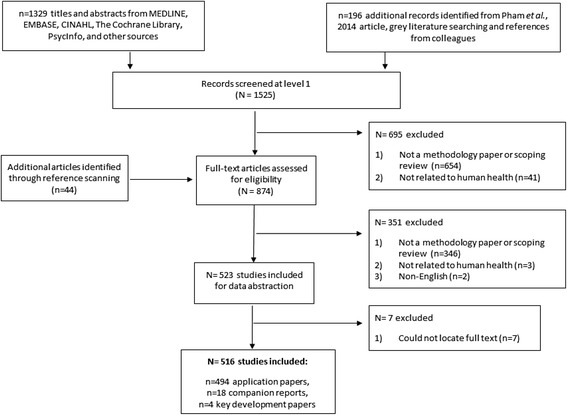
BACKGROUND: Scoping reviews are used to identify knowledge gaps, set research agendas, and identify implications for decision-making. The conduct and reporting of scoping reviews is inconsistent in the literature. We conducted a scoping review to identify: papers that utilized and/or described scoping review methods; guidelines for reporting scoping reviews; and studies that assessed the quality of reporting of scoping reviews. METHODS: We searched nine electronic databases for published and unpublished literature scoping review papers, scoping review methodology, and reporting guidance for scoping reviews. Two independent reviewers screened citations for inclusion. Data abstraction was performed by one reviewer and verified by a second reviewer. Quantitative (e.g. frequencies of methods) and qualitative (i.e. content analysis of the methods) syntheses were conducted. RESULTS: After searching 1525 citations and 874 full-text papers, 516 articles were included, of which 494 were scoping reviews. The 494 scoping reviews were disseminated between 1999 and 2014, with 45% published after 2012. Most of the scoping reviews were conducted in North America (53%) or Europe (38%), and reported a public source of funding (64%). The number of studies included in the scoping reviews ranged from 1 to 2600 (mean of 118). Using the Joanna Briggs Institute methodology guidance for scoping reviews, only 13% of the scoping reviews reported the use of a protocol, 36% used two reviewers for selecting citations for inclusion, 29% used two reviewers for full-text screening, 30% used two reviewers for data charting, and 43% used a pre-defined charting form. In most cases, the results of the scoping review were used to identify evidence gaps (85%), provide recommendations for future research (84%), or identify strengths and limitations (69%). We did not identify any guidelines for reporting scoping reviews or studies that assessed the quality of scoping review reporting. CONCLUSION: The number of scoping reviews conducted per year has steadily increased since 2012. Scoping reviews are used to inform research agendas and identify implications for policy or practice. As such, improvements in reporting and conduct are imperative. Further research on scoping review methodology is warranted, and in particular, there is need for a guideline to standardize reporting.
Overview
The claims and statistics of this paper haven’t been checked yet.
Free: it reads the open-access text and checks the first 5 claims that cite a source we can check. Create a free account to check every claim.
Integrity signals
Registry
Cites
Statistics
Figures
Verification
Claims the paper makes
The claims and statistics of this paper haven’t been checked yet.
Free: it reads the open-access text and checks the first 5 claims that cite a source we can check. Create a free account to check every claim.
Claims other papers make about this one
Each is checked against this paper’s own text: does it say what the citing paper says it does?
The cited source doesn’t support the claim as written.
In the citing paper
“The scoping review followed the guidelines outlined in the Preferred Reporting Items for Systematic Reviews and Meta-Analyses Extension (PRISMA-ScR) methodology (Munn et al., 2018; Tricco et al., 2016).”
From Sextortion: A Scoping Review (2025) · cites this paper as Tricco et al., 2016
Checked by a reasoning model — may be wrong.
Experimental — accuracy not yet measuredThe source backs part of the claim, not all of it — or backs it for a different population, condition or comparison.
In the citing paper
“A scoping review approach was considered appropriate for this purpose, given the authors’ understanding that the evidence base in this area is diverse in both research methodologies and disciplinary context (30).”
From Contributions of a time use perspective in community mental health practice: a scoping review (2024) · cites this paper as [30]
Experimental — accuracy not yet measuredThe source backs part of the claim, not all of it — or backs it for a different population, condition or comparison.
In the citing paper
“With the increasing popularity of scoping reviews, criticism of the rigour, transparency, and appropriateness of the methodology have been raised across multiple academic and clinical disciplines, including nursing and midwifery.”
From Undertaking a scoping review: A practical guide for nursing and midwifery students, clinicians, researchers, and academics (2021) · cites this paper as Tricco et al., 2016
Experimental — accuracy not yet measuredThe source backs part of the claim, not all of it — or backs it for a different population, condition or comparison.
In the citing paper
“Limitations of the scoping review methodology include the absence of methodological and risk of bias evaluations and the resultant inappropriateness of the review to be used as evidence for clinical guidelines, limitations, and recommendations (Arksey & O'Malley, 2005; Peters, Godfrey, et al., 2020; Tricco et al., 2016).”
From Undertaking a scoping review: A practical guide for nursing and midwifery students, clinicians, researchers, and academics (2021) · cites this paper as Tricco et al., 2016
Experimental — accuracy not yet measuredThe cited source says what the claim attributes to it.
In the citing paper
“while the number of scoping reviews in the literature is increasing steadily”
From PRISMA Extension for Scoping Reviews (PRISMA-ScR): Checklist and Explanation (2018) · cites this paper as [1]
13 more claims about this paper
Create a free account to see every claim other papers make about this one.
Self-check
Percentages, sums and reported differences re-computed from the paper’s own numbers.
The self-check needs the paper’s full text.
Citations
Cites
Preferred Reporting Items for Systematic Reviews and Meta-Analyses: the PRISMA statement
Moher, D., Liberati, A., Tetzlaff, J., Altman, D. G., & for the PRISMA Group (2009) · BMJ · doi:10.1136/bmj.b2535 · Cited by 83,823
Preferred reporting items for systematic reviews and meta-analyses: the PRISMA Statement.
(2009) · PubMed Central · Cited by 44,859
Scoping studies: towards a methodological framework
Arksey, H., & O'Malley, L. (2005) · International Journal of Social Research Methodology · doi:10.1080/1364557032000119616 · Cited by 36,742 · cited 15×
“Background Scoping reviews are used to map the concepts underpinning a research area and the main sources and types of evidence available [1].”
BackgroundMethodInfluentialPreferred Reporting Items for Systematic Reviews and Meta-Analyses: The PRISMA Statement
Moher, D., Liberati, A., Tetzlaff, J., & Altman, D. G. (2009) · Journal of Clinical Epidemiology · doi:10.1016/j.jclinepi.2009.06.005 · Cited by 19,575
Scoping studies: advancing the methodology
Levac, D., Colquhoun, H., & O'Brien, K. K. (2010) · Implementation Science · doi:10.1186/1748-5908-5-69 · Cited by 15,268 · cited 9×
“(2010) [2] modifications to the original framework of a scoping review [1] to guide this research.”
BackgroundMethodInfluentialSelf-citationGuidance for conducting systematic scoping reviews
Peters, M. D. J., Godfrey, C. M., Khalil, H., McInerney, P., Parker, D., & Soares, C. B. (2015) · International Journal of Evidence-Based Healthcare · doi:10.1097/xeb.0000000000000050 · Cited by 7,472 · cited 7×
“Our protocol was developed using the scoping review methodological framework proposed by Arksey and O’Malley (2005) [1] and further refined by the Joanna Briggs Institute [3].”
BackgroundMethodInfluentialSchulz (1995) · doi:10.1001/jama.1995.03520290060030 · Cited by 5,634 · cited 1×
“This is problematic because when different methods are applied to the same question, they may produce different results, undermining the utility and confidence in knowledge syntheses [5, 6].”
MethodA scoping review of scoping reviews: advancing the approach and enhancing the consistency
Pham, M. T., Rajić, A., Greig, J. D., Sargeant, J. M., Papadopoulos, A., & McEwen, S. A. (2014) · Research Synthesis Methods · doi:10.1002/jrsm.1123 · Cited by 3,078 · cited 2×
“We are aware of a previous scoping review of scoping reviews [16].”
BackgroundMethodScoping reviews: Time for clarity in definition, methods, and reporting
Colquhoun, H. L., Levac, D., O'Brien, K. K., Straus, S., Tricco, A. C., Perrier, L., Kastner, M., & Moher, D. (2014) · Journal of Clinical Epidemiology · doi:10.1016/j.jclinepi.2014.03.013 · Cited by 2,783 · cited 2×
“(2010) [2] and others [3], there is a lack of consistency in terminology and methods reported [4].”
BackgroundSelf-citationDaudt, H. M., van Mossel, C., & Scott, S. J. (2013) · BMC Medical Research Methodology · doi:10.1186/1471-2288-13-48 · Cited by 1,891 · cited 5×
“(2013) discussed the Arksey and O’Malley (2005) framework, and in particular, the team’s experiences using it, in order to develop the methodology further [10].”
BackgroundMethodInfluential
Research works printed but not linked: 2
- Colquhoun H, O’Brien K, Straus S, Moher D, Levac D. Gaps in scoping review methodologies J Clin Epidemiol. In press. 25034198
- Feinberg J Wordle 2014
Cited by
Items 201–300 of 1,005
Roddam, H., Rog, D. J., Janssen, J., Wilson, N., Cross, L., Olajide, O., & Dey, P. (2019) · Multiple Sclerosis and Related Disorders · doi:10.1016/j.msard.2018.12.043 · Cited by 55
Animal Models in Microbeam Radiation Therapy: A Scoping Review
Fernández-Palomo, C., Fazzari, J., Trappetti, V., Smyth, L. M. L., Janka, H., Laissue, J. A., & Djonov, V. (2020) · Cancers · doi:10.3390/cancers12030527 · Cited by 58
“[9] and Tricco et al. [10].”
Dean, M., O'Kane, C., Issartel, J., McCloat, A., Mooney, E., Gaul, D., Wolfson, J. A., & Lavelle, F. (2021) · Appetite · doi:10.1016/j.appet.2021.105125 · Cited by 75
“The international experts acted in a consultation capacity in line with a scoping review (Tricco et al., 2016) and in line with other studies that included consultation activities for their results published in Elsevier journals (Elshahat et al.”
ResultA scoping approach to systematically review published reviews: Adaptations and recommendations
Schultz, A. S. H., Goertzen, L. N., Rothney, J., Wener, P. F., Enns, J. E., Halas, G., & Katz, A. (2017) · Research Synthesis Methods · doi:10.1002/jrsm.1272 · Cited by 53
“Since then scoping review methods has been refined in response to criticisms and endorsements of the method.(16,17,19,20) While these discussions have moved our understanding of scoping reviews beyond Arksey and O′Malley's(15) initial article, to date, these discussions have not ventured into methods for reviewing pub…”
MethodPowassan virus, a scoping review of the global evidence
Corrin, T., Greig, J. D., Harding, S., Young, I., Mascarenhas, M., & Waddell, L. A. (2018) · Zoonoses and Public Health · doi:10.1111/zph.12485 · Cited by 55
“(2016) included determining the research question, identifying relevant studies, study selection, charting the data and reporting the results (Arksey & O’Malley, 2005; Levac et al., 2010; Peters et al., 2015; Tricco et al., 2016).”
BackgroundGlonti, K., Cauchi, D., Cobo, E., Boutron, I., Moher, D., & Hren, D. (2017) · BMJ Open · doi:10.1136/bmjopen-2017-017468 · Cited by 48
“This has also been shown to be a knowledge translation activity and an important step in scoping reviews.(35) Journal editors will be consulted to explore their views and perspectives on the roles and tasks of peer reviewers.”
BackgroundAnsu-Mensah, M., Danquah, F. I., Bawontuo, V., Ansu-Mensah, P., & Kuupiel, D. (2020) · BMC Health Services Research · doi:10.1186/s12913-020-05755-9 · Cited by 50
Evidence for Revising the Adverse Childhood Experiences Screening Tool: a Scoping Review
SmithBattle, L., Loman, D. G., Yoo, J., Cibulka, N. J., & Rariden, C. A. (2021) · Journal of Child & Adolescent Trauma · doi:10.1007/s40653-021-00358-w · Cited by 62
Mental health and elite female athletes: A scoping review
Perry, C., Champ, F. M., Macbeth, J. L., & Spandler, H. (2021) · Psychology of sport and exercise · doi:10.1016/j.psychsport.2021.101961 · Cited by 66
Strategy and Strategic Leadership in Education: A Scoping Review
Carvalho, M., Cabral, I., Verdasca, J., & Alves, J. M. (2021) · Frontiers in Education · doi:10.3389/feduc.2021.706608 · Cited by 126
“Scoping reviews are used to present a broad overview of the evidence about a topic, irrespective of study quality, and are useful when examining emergent areas, to clarify key concepts or to identify gaps in research (e.g., Arksey and O’Malley, 2005; Peters et al., 2015; Tricco et al., 2016).”
Scoping review of indoor air quality indexes: Characterization and applications
Pourkiaei, M., & Romain, A.-C. (2023) · Journal of Building Engineering · doi:10.1016/j.jobe.2023.106703 · Cited by 67
Tao, D., Scully, R., Ash, G. I., Pei, Z., Gu, Y., Gao, Y., Cole, A. M., & Baker, J. S. (2023) · Ageing Research Reviews · doi:10.1016/j.arr.2023.102120 · Cited by 66
A review protocol on research partnerships: a Coordinated Multicenter Team approach
Hoekstra, F., Mrklas, K., Sibley, K. M., Nguyen, T., Vis‐Dunbar, M., Neilson, C. J., Crockett, L. K., Gainforth, H. L., & Graham, I. D. (2018) · Systematic Reviews · doi:10.1186/s13643-018-0879-2 · Cited by 54
Victims of Technology-Assisted Child Sexual Abuse: A Scoping Review
Chauviré-Geib, K., & Fegert, J. M. (2024) · Trauma, Violence, & Abuse · doi:10.1177/15248380231178754 · Cited by 48
“A scoping review is a relatively new methodology whose application has rapidly increased over the past decade (Tricco et al., 2016).”
BackgroundKey findings about hearing loss in the working-life: a scoping review from a well-being perspective
Granberg, S., & Gustafsson, J. (2021) · International Journal of Audiology · doi:10.1080/14992027.2021.1881628 · Cited by 60
“The former outlined reason is also the most common motive to conduct a scoping review (Tricco et al. 2016).”
BackgroundHealth and Well-Being of Athletes During the Coronavirus Pandemic: A Scoping Review
Haan, R., Alblooshi, M. E. A., Syed, D. H., Dougman, K., Tunaiji, H. A., Campos, L. A., & Baltatu, O. C. (2021) · Frontiers in Public Health · doi:10.3389/fpubh.2021.641392 · Cited by 61
“Quality Appraisal In line with scoping review practice, included studies have not been assessed in terms of quality (13).”
MethodWilliams, J. T. W., Bell, K., Morton, R. L., & Dieng, M. (2024) · Value in Health · doi:10.1016/j.jval.2024.02.019 · Cited by 56
Santacroce, S. J., Tan, K., & Killela, M. K. (2018) · European Journal of Oncology Nursing · doi:10.1016/j.ejon.2018.04.004 · Cited by 54
“Additionally, formal assessment of the quality of the included studies is not a review component (Arksey and O’Malley, 2005; Levac et al., 2010; Peters et al., 2015; Tricco et al., 2016) 2.”
BackgroundENVIRONMENTAL IMPACT ASSESSMENT OF A HEALTH TECHNOLOGY: A SCOPING REVIEW
Polisena, J., Angelis, G. D., Kaunelis, D., Shaheen, M., & Gutiérrez‐Ibarluzea, I. (2018) · International Journal of Technology Assessment in Health Care · doi:10.1017/s0266462318000351 · Cited by 55
“Documents deemed to be eligible by both reviewers, with or without third-party adjudication, were included (9).”
BackgroundLusa, S., Punakallio, A., Mänttäri, S. K., Korkiakangas, E. E., Oksa, J., Oksanen, T., & Laitinen, J. H. (2019) · Applied Ergonomics · doi:10.1016/j.apergo.2019.102962 · Cited by 69
Nature and Potential Impact of Alcohol Health Warning Labels: A Scoping Review
Kokole, D., Anderson, P., & Jané‐Llopis, E. (2021) · Nutrients · doi:10.3390/nu13093065 · Cited by 62
“Scoping reviews are used to map the main concepts in the research area and present a broad overview of the existing evidence, including identification of the gaps, regardless of the study quality [48].”
BackgroundCampbell, J., Theodoros, D., Hartley, N., Russell, T. G., & Gillespie, N. A. (2019) · Journal of Telemedicine and Telecare · doi:10.1177/1357633x19856472 · Cited by 51
Factors associated with nursing students’ attitudes toward older people: A scoping review
Venables, H., Wells, Y., Fetherstonhaugh, D., & Wallace, H. J. (2021) · Gerontology & Geriatrics Education · doi:10.1080/02701960.2021.2012466 · Cited by 52
“Methods A scoping literature review uses a systematic approach to map evidence and identify main concepts, theories, sources, knowledge gaps, key characteristics, or factors related to a concept, and to summarize research findings (Munn et al., 2018; Tricco et al., 2016).”
BackgroundEmbracing digital and technological solutions in nursing: A scoping review and conceptual framework
Conte, G., Arrigoni, C., Magon, A., Stievano, A., & Caruso, R. (2023) · International Journal of Medical Informatics · doi:10.1016/j.ijmedinf.2023.105148 · Cited by 56
Negt, P., & Haunschild, A. (2024) · Management Review Quarterly · doi:10.1007/s11301-023-00397-7 · Cited by 95
“To facilitate the configuration of a body of evidence, scoping reviews enable the integration of more heterogeneous research approaches (e.g., Pham et al. 2014; Tricco et al. 2016).”
Pranjić, M., Janzen, T. B., Vukšić, N., & Thaut, M. H. (2024) · Brain Sciences · doi:10.3390/brainsci14111063 · Cited by 73
“The scoping review was conducted using the Preferred Reporting Items for Systematic Reviews and Meta-Analyses Extension for Scoping Reviews (PRISMA-ScR) criteria: Checklist and Explanation guidelines [39], in compliance with the Joanna Briggs Institute’s methodological framework [40].”
Employment for persons with intellectual disability in the Nordic countries: A scoping review
Garrels, V., & Sigstad, H. M. H. (2021) · Journal of Applied Research in Intellectual Disabilities · doi:10.1111/jar.12880 · Cited by 64
Barriers to equitable disaster recovery: A scoping literature review
Ferreira, R. J., Davidson, T., Buttell, F., Contillo, C. M., Leddie, C., Leahy, C., Nuñez-Dune, C., Lentz, B., Simkins, M., Jerolleman, A., et al. (2024) · International Journal of Disaster Risk Reduction · doi:10.1016/j.ijdrr.2024.104628 · Cited by 65
Study protocol for a scoping review on rehabilitation scoping reviews
Colquhoun, H. L., Jesus, T. S., O’Brien, K. K., Tricco, A. C., Chui, A., Zarin, W., Lillie, E., Hitzig, S. L., & Straus, S. E. (2017) · Clinical Rehabilitation · doi:10.1177/0269215516688514 · Cited by 53
Self-citationChua, W. J., Cheong, C. W. S., Lee, F. Q. H., Koh, E. Y. H., Toh, Y. P., Mason, S. R., & Krishna, L. K. R. (2020) · Journal of Continuing Education in the Health Professions · doi:10.1097/ceh.0000000000000308 · Cited by 50
“This highlights the importance of “balance” within MS.”
MethodInfluentialQuantitative Review of Construction 4.0 Technology Presence in Construction Project Research
Schönbeck, P., Löfsjögård, M., & Ansell, A. (2020) · Buildings · doi:10.3390/buildings10100173 · Cited by 61
“In scoping reviews, the purpose is to explore the presence of a specific topic without assessing the quality of the included papers [33].”
BackgroundConsumption of food away from home in low- and middle-income countries: a systematic scoping review
Landais, E., Miotto-Plessis, M., Béné, C., d’Hôtel, É. M., Truong, M. T., Some, J. W., & Verger, E. O. (2022) · Nutrition Reviews · doi:10.1093/nutrit/nuac085 · Cited by 58
Guidance to best tools and practices for systematic reviews
Kolaski, K., Logan, L. R., & Ioannidis, J. P. A. (2023) · JBI Evidence Synthesis · doi:10.11124/jbies-23-00139 · Cited by 63
Tackle and ruck technical proficiency in rugby union and rugby league: A systematic scoping review
den Hollander, S., Ponce, C., Lambert, M., Jones, B. L., & Hendricks, S. (2020) · International Journal of Sports Science & Coaching · doi:10.1177/1747954120976943 · Cited by 45
“A scoping review is a type of knowledge synthesis that follows a systematic approach to map the existing literature on a field of interest.(24) They are commonly undertaken to determine the extent and range of studies on a topic; summarise and disseminate research findings; identify gaps in the existing literature; an…”
BackgroundInstruments measuring behavioural aspects of the nurse–patient relationship: A scoping review
Feo, R., Conroy, T., Wiechula, R., Rasmussen, P., & Kitson, A. (2020) · Journal of Clinical Nursing · doi:10.1111/jocn.14947 · Cited by 44
Harb, S. I., Tao, L., Peláez, S., Boruff, J. T., Rice, D. B., & Shrier, I. (2021) · Journal of Clinical Epidemiology · doi:10.1016/j.jclinepi.2021.08.008 · Cited by 55
Negm, A. M., Beaupré, L. A., Goplen, C. M., Weeks, C. A., & Jones, C. A. (2022) · Arthroplasty Today · doi:10.1016/j.artd.2022.05.012 · Cited by 53
The Systematic Review Toolbox: keeping up to date with tools to support evidence synthesis
Johnson, E. E., O’Keefe, H., Sutton, A., & Marshall, C. (2022) · Systematic Reviews · doi:10.1186/s13643-022-02122-z · Cited by 57
“This is because it has been noted that scoping reviews are growing in number [7], while mapping reviews are becoming increasingly conducted as a way of visually representing the breadth of a body of evidence, despite being rare until as recently as 2010 [8].”
BackgroundBajaj, P. D., Shenoy, R., Davda, L., Kundabala, M., Bajaj, G., Rao, A., Aparna, K. S., Pai, M. B., Jodalli, P. S., & Avinash, B. R. (2023) · International Journal for Equity in Health · doi:10.1186/s12939-023-02056-5 · Cited by 58
“This scoping review was conducted between May 2022 and December 2022 with Arksey and O’Malley’s framework [26] as a guideline and reported in adherence with the PRISMA-ScR checklist which is provided as additional file 1 [27].”
MethodExploring Positionality in HCI: Perspectives, Trends, and Challenges
Singh, A., Dechant, M., Patel, D., Soubutts, E., Barbareschi, G., Ayobi, A., & Newhouse, N. (2025) · CHI Conference on Human Factors in Computing Systems · doi:10.1145/3706598.3713280 · Cited by 63
“Scoping reviews are "an approach to knowledge synthesis that identify trends within an existing knowledge base, to inform research, policy or practice" [58, 100].”
Zleik, N., Weaver, F. M., Harmon, R. L., Le, B. K., Radhakrishnan, R., Jirau-Rosaly, W., Craven, B. C., Raiford, M., Hill, J. N., Etingen, B., et al. (2018) · Journal of Spinal Cord Medicine · doi:10.1080/10790268.2018.1469808 · Cited by 50
Cost-related nonadherence to prescription medications in Canada: a scoping review
Gupta, S., McColl, M. A., Guilcher, S. J. T., & Smith, K. (2018) · Patient Preference and Adherence · doi:10.2147/ppa.s170417 · Cited by 53
“We conducted this study using a scoping review methodology developed by Arksey and O’Malley22 and supplemented by Colquhoun et al.21,23,24 The Arksey and O’Malley framework for the scoping review process defines five main stages that include identifying the research question, identifying relevant studies, selecting st…”
MethodScoping review of the person-centered literature in adult physical rehabilitation
Jesus, T. S., Bright, F. A. S., Pinho, C. S., Papadimitriou, C., Kayes, N. M., & Cott, C. A. (2019) · Disability and Rehabilitation · doi:10.1080/09638288.2019.1668483 · Cited by 47
Jenkins, D. A., Mohamed, S., Taylor, J., Peek, N. B., & van der Veer, S. N. (2019) · International Wound Journal · doi:10.1111/iwj.13100 · Cited by 48
Saldanha, I. J., Smith, B. T., Ntzani, E., Jap, J., Balk, E. M., & Lau, J. (2019) · Systematic Reviews · doi:10.1186/s13643-019-1250-y · Cited by 44
A scoping review of deliberate practice in the acquisition of therapeutic skills and practices
Mahon, D. (2022) · Counselling and Psychotherapy Research · doi:10.1002/capr.12601 · Cited by 53
Systematic review on mobile collaborative learning for engineering education
Peramunugamage, A., Ratnayake, U. W., & Karunanayaka, S. P. (2022) · Journal of Computers in Education · doi:10.1007/s40692-022-00223-1 · Cited by 61
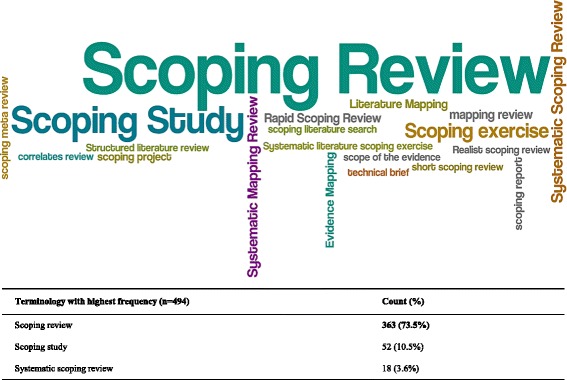
“The word cloud is a widely used technique for visualizing the key terms contained in the title, abstract, and keywords of selected papers in review studies(Asadi et al., 2017; Tricco et al., 2016).”
MethodClarkson, P., Stephenson, A., Grimmett, C., Cook, K., Clark, C., Muckelt, P. E., O’Gorman, P., Saynor, Z., Adams, J., Stokes, M., et al. (2022) · DIGITAL HEALTH · doi:10.1177/20552076221089778 · Cited by 43
“…maintenance of PA and the heterogeneity between studies in previous reviews, 21,24 we concluded that a novel scoping review would be appropriate to explore the range and depth of available literature in this area, 32,33 to direct future systematic reviews and/or primary research questions.”
Symptoms and Experience of Depression Among Chinese Communities in the West: A Scoping Review
Ahmad, F., Maule, C. O., Wang, J., & Fung, W. L. A. (2018) · Harvard Review of Psychiatry · doi:10.1097/hrp.0000000000000202 · Cited by 46
Vanclooster, S., Bissell, S., van Eeghen, A. M., Chambers, N. J., Waele, L. D., Byars, A. W., Capal, J. K., Cukier, S., Davis, P. E., Flinn, J., et al. (2022) · Journal of Neurodevelopmental Disorders · doi:10.1186/s11689-022-09423-3 · Cited by 46
“Only half of scoping reviews currently include grey literature [70], with the allocation of time and resources conserved for subsequent comprehensive systematic reviews [71].”
BackgroundThe Impact of the COVID-19 Pandemic on Black and Hispanic Americans’ Work Outcomes: a Scoping Review
Jason, K., Wilson, M., Catoe, J., Brown, C. L., & Gonzalez, M. (2023) · Journal of Racial and Ethnic Health Disparities · doi:10.1007/s40615-023-01594-6 · Cited by 53
“Unlike a systematic review, scoping reviews focus on identifying what kind of evidence is available on a topic, how research is being conducted, and identifying gaps in the literature and directions for future research [39, 40].”
Muñoz, S., Hosseini, M. R., & Crawford, R. H. (2023) · Sustainable Production and Consumption · doi:10.1016/j.spc.2023.09.022 · Cited by 59
Gessler, M., & Siemer, C. (2020) · International Journal for Research in Vocational Education and Training · doi:10.13152/ijrvet.7.1.5 · Cited by 72
Barriers and Enablers in Implementing Electronic Consultations in Primary Care: Scoping Review
Baines, R., Tredinnick‐Rowe, J., Jones, R. B., & Chatterjee, A. (2020) · Journal of Medical Internet Research · doi:10.2196/19375 · Cited by 53
“A scoping review was conducted due to their ability to map existing evidence in an emerging field (such as electronic consultations), identify gaps in existing understanding, and incorporate different study designs that can be grouped together to evaluate a particular topic of interest [17,18].”
Xiao, M. Z. X., Englesakis, M., & Perlas, A. (2021) · British Journal of Anaesthesia · doi:10.1016/j.bja.2021.04.008 · Cited by 42
Loverock, A., Marshall, T., Viste, D., Safi, F., Rioux, W., Sedaghat, N., Kennedy, M., & Ghosh, S. M. (2023) · Drug and Alcohol Dependence · doi:10.1016/j.drugalcdep.2023.110878 · Cited by 49
Bégin, C., Berthod, J., Martinez, L. Z., & Truchon, M. (2022) · Journal of Technology in Behavioral Science · doi:10.1007/s41347-022-00267-1 · Cited by 41
“Moreover, scoping reviews can be useful for examining emerging evidence (Tricco et al., 2016).”
BackgroundShahani, F., Pineda-Pinto, M., & Frantzeskaki, N. (2021) · AMBIO · doi:10.1007/s13280-021-01653-4 · Cited by 46
“Particularly, in the last decades, a large abundance of research has been done to explore and unpack cities’ social and ecological innovations (Cohen-Shacham et al. 2016; Keeler et al. 2019; Axon 2020; Eriksson et al. 2021; Tzoulas et al. 2021).”
BackgroundHussein, M. T. E., & Cuncannon, A. (2022) · Nurse Education Today · doi:10.1016/j.nedt.2022.105449 · Cited by 52
Hussain, S. A., Bresnahan, M., & Zhuang, J. (2025) · Ethnicity & Health · doi:10.1080/13557858.2024.2422848 · Cited by 44
“Following established guidance on conducting scoping reviews (Tricco et al. 2016), we did not assess the methodological quality of the included studies.”
Gore, J. M., Patfield, S., Fray, L., Holmes, K., Gruppetta, M., Lloyd, A., Smith, M. C., & Heath, T. C. (2017) · The Australian Educational Researcher · doi:10.1007/s13384-017-0236-9 · Cited by 59
“A scoping review therefore provides a ‘‘snapshot of a particular topic area’’ (Booth et al. 2012, p. 19), charting rather than evaluating studies conducted during the time period identified for the review (Arksey and O’Malley 2005; Tricco et al. 2016).”
BackgroundContact is a stronger predictor of attitudes toward police than race: a state-of-the-art review
Alberton, A. M., & Gorey, K. M. (2018) · Policing An International Journal · doi:10.1108/pijpsm-06-2017-0070 · Cited by 58
“The methodological framework outlined by Arksey and O’Malley (2005) and updated by Levac et al. (2010) and Tricco et al. (2016) was used to guide the process and presentation of this scoping review.”
MethodThe positive effects of caring for family carers of older adults: a scoping review
Pysklywec, A., Plante, M., Auger, C., Mortenson, W. B., Eales, J., Routhier, F., & Demers, L. (2020) · International Journal of Care and Caring · doi:10.1332/239788220x15925902138734 · Cited by 60
“Breadth rather than depth is the goal of scoping reviews (Tricco et al, 2016).”
BackgroundMethodAlbahbah, M., Kıvrak, S., & Arslan, G. (2021) · Journal of Construction Engineering Management & Innovation · doi:10.31462/jcemi.2021.03151172 · Cited by 66
“Tricco et al. [50] found that out of 494 included scoping reviews, Arksey and O’Malley's framework was the most frequently cited guide for conducting the scoping review.”
BackgroundKhosla, L., Bhat, S., Fullington, L. A., & Horlyck-Romanovsky, M. F. (2021) · Preventing Chronic Disease · doi:10.5888/pcd18.200365 · Cited by 40
ICF Personal Factors Strengthen Commitment to Person-Centered Rehabilitation – A Scoping Review
Karhula, M. E., Saukkonen, S., Xiong, E., Kinnunen, A., Heiskanen, T., & Anttila, H. (2021) · Frontiers in Rehabilitation Sciences · doi:10.3389/fresc.2021.709682 · Cited by 60
“Study Design and Data Search This study followed the scoping review methodological framework (17, 18).”
MethodIntimate Partner Violence Among Sexual Minority Women: A Scoping Review
Porsch, L., Xu, M., Veldhuis, C. B., Bochicchio, L. A., Zollweg, S. S., & Hughes, T. L. (2022) · Trauma Violence & Abuse · doi:10.1177/15248380221122815 · Cited by 53
“Finally, the present scoping review is not without limitation in its synthesis of 21 years of literature on IPV among SMW. Specifically, this review did not undertake a quality assessment of the included studies, as this is not typically included in a scoping review (Tricco et al., 2016).”
MethodKossieris, S., Tsiakos, V., Tsimiklis, G., & Amditis, A. (2024) · Remote Sensing · doi:10.3390/rs16071181 · Cited by 54
“…section, the methodological framework of the scoping review is described, based on the stages followed by Arksey and O’Malley [38] and Daudt et al.’s [37], to analyze the current state of different satellite missions, altimetry, or others, regarding the highly focussed research questions [40,41].”
MethodUnderstanding Women’s Resistance to Intimate Partner Violence: A Scoping Review
Rajah, V., & Osborn, M. (2020) · Trauma Violence & Abuse · doi:10.1177/1524838019897345 · Cited by 63
“While a relatively new technique, with the most commonly cited methodological guidelines published in 2005 (Arksey & O’Malley), the number of scoping reviews in health and social science literature has increased steadily since 2012 (Tricco et al., 2016).”
MethodHrynyschyn, R., Prediger, C., Stock, C., & Helmer, S. M. (2022) · International Journal of Environmental Research and Public Health · doi:10.3390/ijerph19095221 · Cited by 49
“A scoping review has been conducted to present a broad overview of evidence, to identify key concepts that are used in published research, and which knowledge gaps are existing [21].”
BackgroundPsychological and social consequences of non-invasive prenatal testing (NIPT): a scoping review
Labonté, V., Alsaid, D., Lang, B., & Meerpohl, J. J. (2019) · BMC Pregnancy and Childbirth · doi:10.1186/s12884-019-2518-x · Cited by 39
“This type of knowledge synthesis is suitable to identify existing evidence and research gaps in an emerging research area [12, 13].”
BackgroundChallenges in practical implementation of the concept of urban resilience in cities
Kolte, R., Goswami, S., Kumar, A., & Pipralia, S. (2023) · International Journal of Disaster Risk Reduction · doi:10.1016/j.ijdrr.2023.104142 · Cited by 44
Virtual Laboratories in STEM Higher Education: A Scoping Review
Sellberg, C., Nazari, Z., & Solberg, M. (2024) · Nordic Journal of Systematic Reviews in Education · doi:10.23865/njsre.v2.5766 · Cited by 39
“As these two research questions suggest, our scoping review seeks to identify and clarify “key concepts” and their “key characteristics” in the literature on virtual labs in STEM, following Munn et al.’s typology of key aims and indications for scoping reviews (2018; see also Tricco et al., 2016a).”
BackgroundMethodInfluentialA Review of Problem Solving and Reflection as Caregiver Coaching Strategies in Early Intervention
Lorio, C. M., Romano, M. K., Woods, J. J., & Brown, J. A. (2019) · Infants & Young Children · doi:10.1097/iyc.0000000000000156 · Cited by 51
Scoping Review on Rehabilitation Scoping Reviews
Colquhoun, H. L., Jesus, T. S., O’Brien, K. K., Tricco, A. C., Chui, A., Zarin, W., Lillie, E., Hitzig, S. L., Seaton, S. E., Engel, L., et al. (2020) · Archives of Physical Medicine and Rehabilitation · doi:10.1016/j.apmr.2020.03.015 · Cited by 53
Self-citationMiranda, V. P. N., Coimbra, D. R., Bastos, R. R., Júnior, M. V. M., & Amorim, P. R. D. S. (2021) · PLoS ONE · doi:10.1371/journal.pone.0256069 · Cited by 44
“Lastly, we also scanned references of a relevant review [23].”
MethodAdeniran, E. A., Quinn, M., Wallace, R. J., Walden, R., Labisi, T., Olaniyan, A. C., Brooks, B., & Pack, R. P. (2023) · Drug and Alcohol Dependence Reports · doi:10.1016/j.dadr.2023.100152 · Cited by 53
Comprehensive scoping review of research on intercultural love and romantic relationships
Yurtaeva, E., & Charura, D. (2024) · Journal of Social and Personal Relationships · doi:10.1177/02654075241228791 · Cited by 43
“Notably, this framework is consistent with the reporting standard proposed by the PRISMA-ScR framework (Tricco et al., 2016).”
MethodResultPeddie, N. (2024) · COJ Nursing & Healthcare · doi:10.31031/cojnh.2024.08.000700 · Cited by 39
Green, B. N., Johnson, C. D., Haldeman, S., Kane, E. J., Clay, M. B., Griffith, E. A., Castellote, J. M., Smuck, M. W., Rajasekaran, S., Hurwitz, E. L., et al. (2018) · European Spine Journal · doi:10.1007/s00586-018-5635-8 · Cited by 41
“The scoping review followed PRISMA guidelines and met the criteria for scoping reviews, including: (1) identifying the research question; (2) identifying relevant studies; (3) using an iterative team approach to study selection and data extraction; (4) charting the data using quantitative and qualitative analysis; and…”
MethodHo, S., Javadi, D., Causevic, S., Langlois, É. V., Friberg, P., & Tomson, G. B. (2019) · BMJ Open · doi:10.1136/bmjopen-2019-029407 · Cited by 45
Foss, H. S., Oldervoll, A., Fretheim, A., Glenton, C., & Lewin, S. A. (2019) · Systematic Reviews · doi:10.1186/s13643-019-1100-y · Cited by 38
Interventions to improve adverse drug reaction reporting: A scoping review
Khalili, M., Mesgarpour, B., Sharifi, H. P., Dehnavi, S. D., & Haghdoost, A. A. (2020) · Pharmacoepidemiology and Drug Safety · doi:10.1002/pds.4966 · Cited by 40
Organizational justice among registered nurses: A scoping review
Lönnqvist, K., Flinkman, M., Vehviläinen-Julkunen, K. M., & Elovainio, M. J. (2021) · International Journal of Nursing Practice · doi:10.1111/ijn.12983 · Cited by 56
Laskin, J., Waheed, Z., Thorogood, N. P., Nightingale, T. E., & Noonan, V. K. (2022) · Archives of Physical Medicine and Rehabilitation · doi:10.1016/j.apmr.2022.01.161 · Cited by 43
Granacher, U., & Behm, D. G. (2022) · Sports Medicine · doi:10.1007/s40279-022-01789-7 · Cited by 58
“A protocol was created using the Preferred Items for Systematic Reviews and MetaAnalyses extension for Scoping Reviews (PRISMA-ScR) according to Tricco and colleagues [30].”
MethodBriazu, R. A., Masood, F., Hunt, L., Pettinger, C., Wagstaff, C., & McCloy, R. (2024) · BMC Public Health · doi:10.1186/s12889-024-19259-2 · Cited by 52
“This approach is recommended when aiming to summarise a body of work that is diverse in its methodology or discipline [30, 31].”
BackgroundUse of touchscreen tablet technology by people with dementia in homes: A scoping review
Hitch, D., Swan, J., Pattison, R., & Stefaniak, R. (2017) · Journal of Rehabilitation and Assistive Technologies Engineering · doi:10.1177/2055668317733382 · Cited by 44
“Scoping reviews are a method for integrating knowledge, which identify gaps, set agendas and highlight the impact of decision making.(10) They enable the formulation of a broad overview of a topic and can be completed relatively quickly as a form of reconnaissance.”
MethodWillis, M. M., Reid, S., Calvo, E., Staudinger, U. M., & Factor-Litvak, P. R. (2018) · Ageing Research Reviews · doi:10.1016/j.arr.2018.07.006 · Cited by 44
Scoping Review of the Core Elements of Technical Assistance Models and Frameworks
Dunst, C. J., Annas, K., Wilkie, H., & Hamby, D. W. (2019) · World Journal of Education · doi:10.5430/wje.v9n2p109 · Cited by 42
“A scoping review is a broad-brushed mapping of the literature on a particular topic (e.g., TA) that aims to identify common themes or approaches to defining or describing the topic of interest (Pham et al., 2014; Tricco et al., 2016).”
BackgroundKuusisto, A. M., Santavirta, J., Saranto, K., Korhonen, P. E., & Haavisto, E. (2020) · Journal of Clinical Nursing · doi:10.1111/jocn.15216 · Cited by 48
Mahajan, R., Burza, S., Bouter, L. M., Sijtsma, K., Knottnerus, J. A., Kleijnen, J., Dael, P. V., & Zeegers, M. P. (2020) · JMIR Research Protocols · doi:10.2196/17864 · Cited by 51
“A scoping review of published study protocols of observational studies will be conducted, in which every item mentioned more than once will be listed [11,12].”
BackgroundMadlabana, C. Z., Mashamba-Thompson, T. P., & Petersen, I. (2020) · Systematic Reviews · doi:10.1186/s13643-020-01294-w · Cited by 58
Ščepanović, R., Labib, K., Buljan, I., Tijdink, J. K., & Marušić, A. (2021) · Science and Engineering Ethics · doi:10.1007/s11948-021-00281-1 · Cited by 44
Song, S. J., Tan, K. H., & Awang, M. M. (2021) · Sustainability · doi:10.3390/su131911115 · Cited by 65
“According to Tricco et al. [16], a scoping review presents a broad overview of the literature evidence about a topic, regardless of the study quality.”
BackgroundTokgöz, P., Hrynyschyn, R., Hafner, J., Schönfeld, S., & Dockweiler, C. (2021) · JMIR Mental Health · doi:10.2196/26268 · Cited by 36
“Therefore, scoping reviews generate hypotheses, while systematic reviews focus more on testing hypotheses [6].”
Comprehensive overview of computer-based health information tailoring: a scoping review protocol
Ghalibaf, A. K., Nazari, E., Gholian‐Aval, M., Tabesh, H., & Tara, M. (2017) · BMJ Open · doi:10.1136/bmjopen-2017-019215 · Cited by 37
Chen‐Charles, J., Davey, D. J., Toska, E., Seeley, J., & Bekker, L. (2025) · AIDS and Behavior · doi:10.1007/s10461-025-04656-4 · Cited by 36
“The PRISMA framework for conducting scoping reviews was used to guide this review (see Table 1 for the population, concept and context, and see Supplementary Appendix 1 for detailed steps taken) [22].”
Holopainen, A., Siltanen, H., Pohjanvuori, A., Mäkisalo-Ropponen, M., & Okkonen, E. (2017) · Dementia · doi:10.1177/1471301217716725 · Cited by 49
Couture, V., Delisle, S., Mercier, A., & Pennings, G. (2020) · Human Reproduction Update · doi:10.1093/humupd/dmaa046 · Cited by 40
Metadata
- Authors
- Tricco, A. C., Lillie, E., Zarin, W., O’Brien, K., Colquhoun, H., Kastner, M., Levac, D., Ng, C., Sharpe, J. P., Wilson, K., Kenny, M., Warren, R., Wilson, C., Stelfox, H. T., & Straus, S. E.
- Affiliations
- St. Michael's Hospital (CA)
- University of Toronto (CA)
- University of Ottawa (CA)
- University of Calgary (CA)
- Corresponding author
- Tricco, Andrea C.
- ORCID
- Venue
- BMC Medical Research Methodology
- Published
- 2016-02-09
- Volume
- 16
- Issue
- 1
- Pages
- 15-15
- ISSN
- 1471-2288 (ISSN-L)
- PMC
- PMC4746911
- OpenAlex
- W2261406464
- Semantic Scholar
- 91435675555c6bce345c14c4f31104353f325a49
- Cited by
- 2,250
- References
- 27
- Citations by year
- 2026: 261 · 2025: 369 · 2024: 352 · 2023: 341 · 2022: 304 · 2021: 257 · 2020: 135 · 2019: 102 · 2018: 76 · 2017: 42 · 2016: 9
- FWCI
- 70.87
- Type
- journal article
- Language
- en
- Open access
- gold
- doi.org
- Licence
- cc-by
- Locations
- BMC Medical Research Methodology (publishedVersion, cc-by)
- PubMed Central (publishedVersion, cc-by)
- PubMed (publishedVersion)
- TSpace (University of Toronto) (submittedVersion, cc-by)
- TSpace (University of Toronto) (submittedVersion)
- DOAJ (DOAJ: Directory of Open Access Journals) (submittedVersion, cc-by-sa)
- Funders
- Canadian Institutes of Health Research (KRS-138219)
- Canadian Agency for Drugs and Technologies in Health
- Topics
- Social Sciences › Decision Sciences › Statistics, Probability and Uncertainty › Meta-analysis and systematic reviews
- Social Sciences › Sociology and Political Science › Delphi Technique in Research
- Health Sciences › Medicine › Public Health, Environmental and Occupational Health › Clinical practice guidelines implementation
- Keywords
- scoping review, scoping review reporting, reporting guidelines, Joanna Briggs Institute, inter-rater reliability, evidence gaps, research agenda setting, reporting quality assessment
- MeSH terms
- Scoping Reviews as Topic, Humans, Publications, Quality Control, Databases, Bibliographic, Guidelines as Topic, Research Report
About these checks
Registry, retraction, Cites and statistics results are computed, not judged, with one exception: a printed reference that no index lists is read once by a model before it counts as a citation error. Claims are extracted by a model and kept only when their quote appears verbatim in the text; each cited source is then checked, with a model’s help, for whether it says what the claim relies on. Those verdicts can be wrong — read the claim’s quote and the cited source before relying on one.
Statistics and arithmetic are recomputed, not judged.
Confidence bands are shown only for fields calibrated on our annotated test set. None is calibrated yet, so no band is shown.
What counts as a claim ›How we measure confidence ›How we check this ›
Are you an author, or do you see a problem with this page? Request a review
Data sources
Bibliographic data: Semantic Scholar, OpenAlex, Crossref.
Contains information from the Semantic Scholar Academic Graph Datasets, made available under the ODC Attribution License (ODC-BY 1.0).
Semantic Scholar’s data is described in: Kinney, R., et al. (2023). The Semantic Scholar Open Data Platform. arXiv:2301.10140.
