

The DOI matches its Crossref record; 48 of the 49 references it cites were found in a registry or an index.
DeepSurv: personalized treatment recommender system using a Cox proportional hazards deep neural network
Open accessAbstract
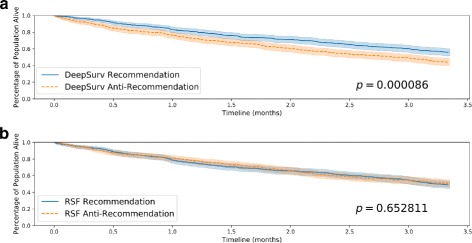
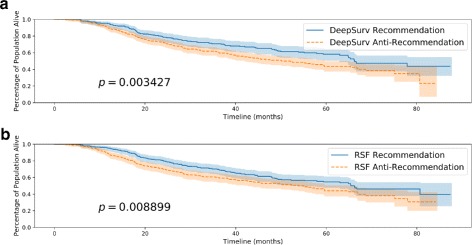
BACKGROUND: Medical practitioners use survival models to explore and understand the relationships between patients' covariates (e.g. clinical and genetic features) and the effectiveness of various treatment options. Standard survival models like the linear Cox proportional hazards model require extensive feature engineering or prior medical knowledge to model treatment interaction at an individual level. While nonlinear survival methods, such as neural networks and survival forests, can inherently model these high-level interaction terms, they have yet to be shown as effective treatment recommender systems. METHODS: We introduce DeepSurv, a Cox proportional hazards deep neural network and state-of-the-art survival method for modeling interactions between a patient's covariates and treatment effectiveness in order to provide personalized treatment recommendations. RESULTS: We perform a number of experiments training DeepSurv on simulated and real survival data. We demonstrate that DeepSurv performs as well as or better than other state-of-the-art survival models and validate that DeepSurv successfully models increasingly complex relationships between a patient's covariates and their risk of failure. We then show how DeepSurv models the relationship between a patient's features and effectiveness of different treatment options to show how DeepSurv can be used to provide individual treatment recommendations. Finally, we train DeepSurv on real clinical studies to demonstrate how it's personalized treatment recommendations would increase the survival time of a set of patients. CONCLUSIONS: The predictive and modeling capabilities of DeepSurv will enable medical researchers to use deep neural networks as a tool in their exploration, understanding, and prediction of the effects of a patient's characteristics on their risk of failure.
Overview
The claims and statistics of this paper haven’t been checked yet.
Run the check — free, no account needed. It reads the open-access text and checks the sources it cites.
Integrity signals
Registry
Cites
Statistics
Figures
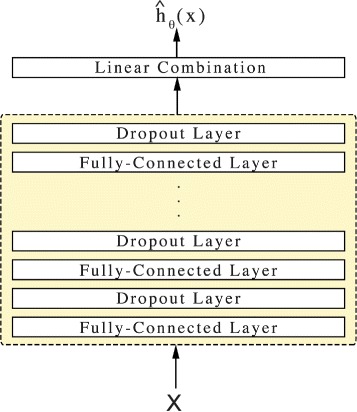
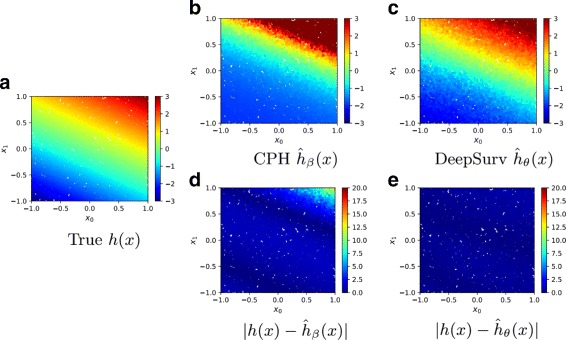
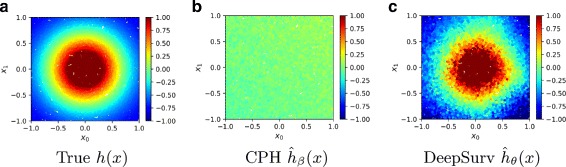
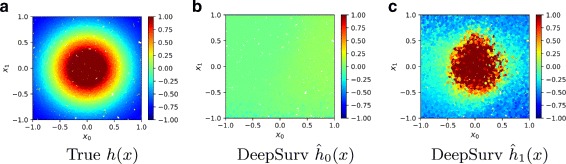
Verification
Claims the paper makes
The claims and statistics of this paper haven’t been checked yet.
Run the check — free, no account needed. It reads the open-access text and checks the sources it cites.
Self-check
Percentages, sums and reported differences re-computed from the paper’s own numbers.
The self-check needs the paper’s full text.
Citations
Cites
Adam: A Method for Stochastic Optimization
Kingma, D. P., & Ba, J. (2014) · arXiv · doi:10.48550/arxiv.1412.6980 · Cited by 98,946 · cited 1×
“more than one hidden layer) and apply modern techniques such as weight decay regularization, Rectified Linear Units (ReLU) [17] with batch normalization [18], Scaled Exponential Linear Units (SELU) [19], dropout [20], gradient descent optimization algorithms (Stochastic Gradient Descent and Adaptive Moment Estimation…”
MethodAn Introduction to the Bootstrap
Efron, B., & Tibshirani, R. J. (1994) · doi:10.1201/9780429246593 · Cited by 40,500
(2014) · Cited by 33,419
Batch Normalization: Accelerating Deep Network Training by Reducing Internal Covariate Shift
Ioffe, S., & Szegedy, C. (2015) · arXiv · doi:10.48550/arxiv.1502.03167 · Cited by 27,818
Regression Models and Life-Tables
Cox, D. R. (1992) · Springer Series in Statistics · doi:10.1007/978-1-4612-4380-9_37 · Cited by 26,297 · cited 1×
“iables in outcomes such as death or cancer recurrence and subsequently inform patients of their treatment options [1, 2, 3, 4]. One standard survival model is the Cox proportional hazards model (CPH) [5]. The CPH arXiv:1606.00931v3 [stat.ML] 9 Aug 2017 is a semiparametric model that calculates the effects of observed…”
MethodAn Introduction to the Bootstrap
Efron, B., & Tibshirani, R. J. (1993) · doi:10.1007/978-1-4899-4541-9 · Cited by 21,230
(2010) · International Conference on Machine Learning · Cited by 13,995
Modeling Survival Data: Extending the Cox Model
Therneau, T. M., & Grambsch, P. M. (2000) · Statistics for Biology and Health · doi:10.1007/978-1-4757-3294-8 · Cited by 8,674
(2012) · Cited by 8,009
The genomic and transcriptomic architecture of 2,000 breast tumours reveals novel subgroups
METABRIC Group, Curtis, C., Shah, S. P., Chin, S.-F., Turashvili, G., Rueda, O. M., Dunning, M. J., Speed, D., Lynch, A. G., Samarajiwa, S., et al. (2012) · Nature · doi:10.1038/nature10983 · Cited by 6,097 · cited 1×
“First, we simulate clinical treatment data by including an additional covariate to the simulated data from Section 4.1.2.”
MethodInfluential
Cited by
Sorted by citations
Items 901–1,000 of 1,000
Aggregation methods and comparative study in time-to-event analysis models
Fernández, C., Chen, C. S., Gaillard, P., & Silva, A. (2024) · International Journal of Data Science and Analytics · doi:10.1007/s41060-024-00642-6 · Cited by 7
“DeepSurv is a nonlinear version of the Cox proportional hazard method proposed by Katzman et al. [12].”
Deep Neural Network‐Based Accelerated Failure Time Models Using Rank Loss
Kim, G., Park, J.-H., & Kang, S. (2024) · Statistics in Medicine · doi:10.1002/sim.10235 · Cited by 4
Interpretable deep learning survival predictions in sporadic Creutzfeldt–Jakob disease
Tam, J., Centola, J., Kurucu, H., Watson, N., MacKenzie, J., Green, A. J. E., Summers, D. M., Barria, M. A., Seth, S., Smith, C., et al. (2024) · Journal of Neurology · doi:10.1007/s00415-024-12815-1 · Cited by 3
Zhang, Z., Zhao, Y., & Xu, Y. (2024) · Artificial Intelligence in Medicine · doi:10.1016/j.artmed.2024.103056 · Cited by 6
Mechanistic Learning for Predicting Survival Outcomes in Head and Neck Squamous Cell Carcinoma
Atsou, K., Auperin, A., Guigay, J., Salas, S., & Benzekry, S. (2024) · CPT Pharmacometrics & Systems Pharmacology · doi:10.1002/psp4.13294 · Cited by 4
Nakajo, M., Hirahara, D., Jinguji, M., Idichi, T., Hirahara, M., Tani, A., Takumi, K., Kamimura, K., Ohtsuka, T., & Yoshiura, T. (2024) · Japanese Journal of Radiology · doi:10.1007/s11604-024-01722-0 · Cited by 4
“A C-index of 0.5 reflects random chance, while a value of 1 represents perfect accuracy [35, 36].”
InfluentialA neighborhood-based method for mining and fusing positive and negative false samples
Pan, Q., Zheng, T., Li, S., Zhang, Z., & Jiang, J. (2025) · Pattern Recognition · doi:10.1016/j.patcog.2025.111345 · Cited by 4
Integrating deep learning in public health: a novel approach to PICC-RVT risk assessment
Li, Y., Nie, S., Wang, L., Li, D., Ma, S., Li, T., & Sun, H. W. (2025) · Frontiers in Public Health · doi:10.3389/fpubh.2024.1445425 · Cited by 4
Censoring Sensitivity Analysis for Benchmarking Survival Machine Learning Methods
Báskay, J., Mezei, T., Banczerowski, P., Horváth, A., Joó, T., & Pollner, P. (2025) · Sci · doi:10.3390/sci7010018 · Cited by 8
“Previous studies either use a restricted version [12] or rely on difficult-to-reproduce synthetic data [13] to benchmark their proposed models.”
Lin, M., Wang, S., Ding, Y., Zhao, L., Wang, F., & Peng, Y. (2024) · JAMIA Open · doi:10.1093/jamiaopen/ooae137 · Cited by 5
“The main difference between our model and the DeepSurv model 28 was that our deep network performs multimodal feature fusion.”
Li, B., Chen, H., & Duan, H. (2025) · Annals of Medicine · doi:10.1080/07853890.2025.2478473 · Cited by 4
Loh, D. R., Hill, E. D., Liu, N., Dawson, G., & Engelhard, M. (2025) · JMIR AI · doi:10.2196/62985 · Cited by 4
“Deep learning [12] models such as DeepSurv [13] or deep Cox proportional hazards (DCPHs), which follow the Cox proportional hazards framework but uses a neural network to predict the log-hazard ratio, have become popular for EHR prediction tasks.”
Guo, F., Huang, C., Lin, S., Dai, Y., Chen, Q., Shu, Z., & Xu, X. (2025) · IEEE Journal of Translational Engineering in Health and Medicine · doi:10.1109/jtehm.2025.3562724 · Cited by 4
“Some experimental details of other comparison methods are listed below : DeepSurv [10]: Consists of ResNet-18 and MLP architectures, with the same pre-trained weights and pre-processed input as ours.”
InfluentialPark, S., Wee, C. W., Choi, S. H., Kim, K. H., Chang, J. S., Yoon, H. I., Lee, I. J., Kim, Y. B., Cho, J., Keum, K. C., et al. (2025) · Radiotherapy and Oncology · doi:10.1016/j.radonc.2025.111052 · Cited by 5
Ogutu, S., Mohammed, M., & Mwambi, H. G. (2025) · Discover Artificial Intelligence · doi:10.1007/s44163-025-00429-z · Cited by 4
“It employs a multi-layer perceptron, utilizing a feed-forward neural network to estimate an individual’s risk of events such as death or infection [12].”
InfluentialSurvUnc: A Meta-Model Based Uncertainty Quantification Framework for Survival Analysis
Liu, Y., Tao, W., Xia, T., Knight, S. R., & Zhu, T. (2025) · ACM SIGKDD Conference on Knowledge Discovery and Data Mining (KDD) · doi:10.1145/3711896.3737140 · Cited by 4
Will large language models transform clinical prediction?
Yildiz, Y., Nenadić, G., Jani, M., & Jenkins, D. A. (2025) · Diagnostic and Prognostic Research · doi:10.1186/s41512-025-00211-w · Cited by 6
“To address these, researchers can integrate deep learning architectures with survival analysis techniques [22], and more work can be done with time-aware transformer models to model time-to-event outcomes while accounting for censoring [18].”
Prediction of sepsis onset in hospital admissions using survival analysis
DeShon, B., Dummitt, B., Allen, J., & Yount, B. W. (2022) · Journal of Clinical Monitoring and Computing · doi:10.1007/s10877-022-00804-6 · Cited by 4
Default risk prediction and feature extraction using a penalized deep neural network
Lin, C., Qiao, N., Zhang, W., Li, Y., & Ma, S. (2022) · Statistics and Computing · doi:10.1007/s11222-022-10140-z · Cited by 4
Avelar, P., Laddach, R., Karagiannis, S. N., Wu, M., & Tsoka, S. (2023) · Lecture notes in computer science · doi:10.1007/978-3-031-25891-6_5 · Cited by 4
Li, W., Zhang, M., Cai, S., Wu, L., Li, C., He, Y., Yang, G., Wang, J., & Pan, Y. (2023) · BioData Mining · doi:10.1186/s13040-023-00335-z · Cited by 4
Cheng, D., Liu, D., Li, X., Mi, Z., Zhang, Z., Tao, W., Dang, J., Zhu, D., Fu, J., & Fan, H. (2023) · Clinical & Translational Oncology · doi:10.1007/s12094-023-03291-6 · Cited by 5
Cai, S., Li, W., Deng, C., Tang, Q., & Zhou, Z. (2023) · Journal of Cancer Research and Clinical Oncology · doi:10.1007/s00432-023-05421-7 · Cited by 4
Mix-supervised multiset learning for cancer prognosis analysis with high-censoring survival data
Du, D., Feng, Q., Chen, W., Ning, Z., & Zhang, Y. (2023) · Expert Systems with Applications · doi:10.1016/j.eswa.2023.122430 · Cited by 4
Zhuge, Y., Ning, H., Cheng, J. Y., Taşçı, E., Mathen, P., Camphausen, K. A., Miller, R. W., & Krauze, A. V. (2022) · Journal of Advances in Information Technology · doi:10.12720/jait.14.6.1461-1469 · Cited by 4
Jin, L., Zhao, Q., Fu, S., Zhang, Y., Wu, S., Li, X., & Cao, F. (2024) · Frontiers in Endocrinology · doi:10.3389/fendo.2024.1326009 · Cited by 4
CVaDeS: A Conditional Variational Deep Survival Model for Survival Analysis
Luo, J., Xiao, Z., Shi, W., Xie, L., Yang, H. W., Yin, X., & Zhang, Y. (2023) · Proceedings · doi:10.1109/icdm58522.2023.00055 · Cited by 4
Li, B., Chen, H., & Duan, H. (2024) · Fundamental Research · doi:10.1016/j.fmre.2024.02.014 · Cited by 4
Zhu, E., Zhang, L., Liu, Y., Ji, T., Dai, J., Tang, R., Wang, J., Hu, C., Chen, K., Yu, Q., et al. (2024) · Clinical & Translational Oncology · doi:10.1007/s12094-024-03459-8 · Cited by 4
Liu, S., Chen, Y., Dai, B., & Chen, L. (2024) · Neuroendocrinology · doi:10.1159/000539187 · Cited by 4
Liu, L., Sun, J., Zhong, C., Zhang, A., Wang, G., Chen, S., Zhang, S., Wang, M., & Li, L. (2024) · Aging · doi:10.18632/aging.205823 · Cited by 4
“The DeepSurv model, a Cox proportional risk model based on deep learning, is able to process individualized survival data to recommend the best treatment plan for patients [24].”
The Deep Promotion Time Cure Model
Medina-Olivares, V., Lessmann, S., & Klein, N. (2024) · IEEE Transactions on Neural Networks and Learning Systems · doi:10.1109/tnnls.2024.3398559 · Cited by 4
Role of Deep Learning in Diagnosis, Treatment, and Prognosis of Oncological Conditions
Umar, M., Shiwlani, A., Saeed, F., Ahmad, A., Shah, M. H. A., & Tahir, A. (2023) · International Journal of Membrane Science and Technology · doi:10.15379/ijmst.v10i5.3695 · Cited by 4
Wang, Z., Cheng, L., Huang, J., & Shen, Y. (2024) · European Archives of Oto-Rhino-Laryngology · doi:10.1007/s00405-024-08765-z · Cited by 4
“N E = 1 is the number of patients with an observable event, and the risk set R(t) = {i: T i ≥ t} is the set of patients still at risk of failure at time t [17].”
Tan, J., Xie, J., Huang, J., Deng, W., Chai, H., & Yang, Y. (2024) · Computational and Structural Biotechnology Journal · doi:10.1016/j.csbj.2024.07.019 · Cited by 5
“The nonlinear proportional hazards loss function, a well-established choice in survival models, was utilized to update the model parameters [8].”
MethodA Kernel Attention-based Transformer Model for Survival Prediction of Heart Disease Patients
Kaushal, P., Singh, S. N., & Vijayvergiya, R. (2024) · Journal of Cardiovascular Translational Research · doi:10.1007/s12265-024-10537-3 · Cited by 4
“Neural networks are used by models such as DeepSurv [21] and DeepHit [25] to handle complicated, unstructured data and time-varying effects.”
An Evidential Time-to-Event Prediction Model Based on Gaussian Random Fuzzy Numbers
Huang, L., Xing, Y., Denœux, T., & Feng, M. (2024) · Lecture notes in computer science · doi:10.1007/978-3-031-67977-3_6 · Cited by 4
Deep Learning for Cancer Prognosis Prediction Using Portrait Photos by StyleGAN Embedding
Hagag, A., Gomaa, A., Kornek, D., Maier, A., Fietkau, R., Bert, C., Huang, Y., & Putz, F. (2024) · Lecture notes in computer science · doi:10.1007/978-3-031-72086-4_19 · Cited by 4
Tang, Z., Pan, Y., Li, W., Ma, R., & Wang, J. (2024) · World Journal of Clinical Oncology · doi:10.5306/wjco.v16.i1.94813 · Cited by 4
RetractedLiu, J., Ren, J., Bai, R., Zhang, Z., & Lu, Z. (2024) · Expert Systems with Applications · doi:10.1016/j.eswa.2024.125701 · Cited by 4
Huang, L., Li, J., Zhu, S., Wang, L., Li, G., Pan, J., Zhang, C., Lai, J., Tian, Y., & Chen, S. (2024) · BioScience Trends · doi:10.5582/bst.2024.01312 · Cited by 4
Predicting the prognosis of epithelial ovarian cancer patients based on deep learning models
Li, Z., Wang, J., Zhang, Y., Yang, Z., Zhou, F., Bai, X., Zhang, Q., Zhen, W., Xu, R., Wu, W., et al. (2025) · Frontiers in Oncology · doi:10.3389/fonc.2025.1592746 · Cited by 4
Ghosh, D., Pal, S., Lutz, M. W., Luo, S., & Initiative, A. D. N. (2025) · Journal of Alzheimer s Disease · doi:10.1177/13872877251365621 · Cited by 7
L’intelligence artificielle au service de l’imagerie et de la santé des femmes
Fernández-Maloigne, C., & Guillevin, R. (2019) · Imagerie de la Femme · doi:10.1016/j.femme.2019.09.001 · Cited by 4
Utkin, L. V., & Konstantinov, A. V. (2022) · Studies in systems, decision and control · doi:10.1007/978-3-030-95116-0_1 · Cited by 4
Nemoto, T., Takeda, A., Matsuo, Y., Kishi, N., Eriguchi, T., Kunieda, E., Kimura, R., Sanuki, N., Tsurugai, Y., Yagi, M., et al. (2022) · JCO Clinical Cancer Informatics · doi:10.1200/cci.21.00176 · Cited by 4
Random Survival Forests Incorporated by the Nadaraya-Watson Regression
Utkin, L. V., & Konstantinov, A. V. (2022) · Informatics and Automation · doi:10.15622/ia.21.5.1 · Cited by 4
Relapse Prediction from Long-Term Wearable Data Using Self-Supervised Learning and Survival Analysis
Fekas, E., Zlatintsi, A., Filntisis, P. P., Garoufis, C., Efthymiou, N., & Maragos, P. A. (2023) · IEEE International Conference on Acoustics Speech and Signal Processing · doi:10.1109/icassp49357.2023.10096277 · Cited by 4
Stabilizing machine learning models with Age-Period-Cohort inputs for scoring and stress testing
Breeden, J. L., & Leonova, Y. (2023) · Frontiers in Applied Mathematics and Statistics · doi:10.3389/fams.2023.1195810 · Cited by 4
Semi-supervised calibration of noisy event risk (SCANER) with electronic health records
Hong, C., Liang, L., Yuan, Q., Cho, K., Liao, K. P., Pencina, M. J., Christiani, D. C., & Cai, T. (2023) · Journal of Biomedical Informatics · doi:10.1016/j.jbi.2023.104425 · Cited by 4
Boosting Transformers and Language Models for Clinical Prediction in Immunotherapy
Chen, Z., Balan, M. M., & Brown, K. M. (2023) · Proceedings of the conference - Association for Computational Linguistics. Meeting · doi:10.18653/v1/2023.acl-industry.32 · Cited by 40
Towards Flexible Time-to-Event Modeling: Optimizing Neural Networks via Rank Regression
Lee, H., Lee, J., Choi, T., Kang, J., & Choi, S. (2023) · Frontiers in artificial intelligence and applications · doi:10.3233/faia230410 · Cited by 4
Wang, J., Zhang, S., Yi, H., & Ma, S. (2023) · The Yale Journal of Biology and Medicine · doi:10.59249/iaju7580 · Cited by 4
A Fully Automated CT-Guided Learning for Survival Prediction of Esophageal Cancer
Yue, H., Liu, J., Kuang, H., Cheng, J., Li, J., & Wang, J. (2023) · IEEE International Conference on Bioinformatics and Biomedicine (BIBM) · doi:10.1109/bibm58861.2023.10385490 · Cited by 4
Chen, Y., Shi, Y., Wang, R., Wang, X., Lin, Q., Huang, Y. J., Shao, E., Pan, Y. M., Huang, S., Lu, L., et al. (2024) · Journal of Cancer · doi:10.7150/jca.91501 · Cited by 4
Ahmad, I., & Riaz, S. (2024) · Applied Intelligence · doi:10.1007/s10489-024-05794-3 · Cited by 4
Deep learning in precision medicine
Shirazi, A. Z., Fornaciari, E., & Gomez, G. A. (2020) · Elsevier eBooks · doi:10.1016/b978-0-12-817133-2.00003-3 · Cited by 4
Who does the model learn from?
Charpignon, M.-L., Celi, L. A., & Samuel, M. C. (2021) · The Lancet Digital Health · doi:10.1016/s2589-7500(21)00057-1 · Cited by 4
Qin, X., Yin, D., Dong, X., Chen, D., & Zhang, S. (2022) · Mathematical Biosciences & Engineering · doi:10.3934/mbe.2022354 · Cited by 4
DeepHazard: neural network for time-varying risksPreprint
Rava, D., & Bradić, J. (2020) · arXiv (Cornell University) · doi:10.48550/arxiv.2007.13218 · Cited by 4
DeepOS: pan-cancer prognosis estimation from RNA-sequencing dataPreprint
Pavageau, M., Rebaud, L., Morel, D., Christodoulidis, S., Deutsch, É., Massard, C., Vanacker, H., & Verlingue, L. (2021) · medRxiv · doi:10.1101/2021.07.10.21260300 · Cited by 4
Interpretable Deep Learning Approach to Churn ManagementPreprint
Ahn, D., Lee, D., & Hosanagar, K. (2021) · SSRN Electronic Journal · doi:10.2139/ssrn.3981160 · Cited by 4
Larose, M., Archambault, L., Touma, N., Brodeur, R., Desroches, F., Raymond, N., Bédard‐Tremblay, D., Leblanc, D., Rasekh, F., Hovington, H., et al. (2024) · Scientific Reports · doi:10.1038/s41598-024-77498-0 · Cited by 4
“Indeed, the properties of the survival function, namely s ( t = 0 , x ) = 1, s ( t → ∞ , x ) = 0, and s ( t, x ) monotonically decreasing, make it difficult to model directly as a neural network, so the risk function g is modeled instead [78].”
BackgroundMenand, E. S., Vries-Brilland, M. D., Tessier, L., Dauvé, J., Campone, M., Verrièle, V., Jrad, N., Marion, J.-M., Chauvet, P. E., Passot, C., et al. (2024) · Biomedicines · doi:10.3390/biomedicines12122881 · Cited by 3
Li, J. W., Zhang, M. J., Zhou, Y., Adeoye, J., Pu, J. Y. J., Thomson, P. J., McGrath, C. P. J., Zhang, D., & Zheng, L. W. (2025) · iScience · doi:10.1016/j.isci.2025.112062 · Cited by 5
“23,24 However, the most existed models currently proposed for MT have defined the outcome as a binary classification, rather than incorporating "real-world data" collected from actual clinical practice or generating outcomes as a probability of transformation over time.”
Zou, H., Xiao, L., Zeng, D., & Luo, S. (2025) · The Annals of Applied Statistics · doi:10.1214/24-aoas1970 · Cited by 4
Comparative analysis and interpretability of survival models for melanoma prognosis
Hernández–Pérez, C., Podlipnik, S., Ficapal, J., Puig, S., Malvehy, J., & Vilaplana, V. (2025) · Computers in Biology and Medicine · doi:10.1016/j.compbiomed.2025.110027 · Cited by 3
Cross-domain recommender systems via multimodal domain adaptation
Shyam, A., Kamani, R., Kagita, V. R., & Kumar, V. (2025) · Computers & Electrical Engineering · doi:10.1016/j.compeleceng.2025.110300 · Cited by 3
VTrans: A VAE-Based Pre-Trained Transformer Method for Microbiome Data Analysis
Shi, X., Zhu, F., & Min, W. (2025) · Journal of Computational Biology · doi:10.1089/cmb.2024.0884 · Cited by 3
MyeVAE: a multi-modal variational autoencoder for risk profiling of newly diagnosed multiple myeloma
Chang, J. G., Chen, J., Chew, G.-L., & Chng, W. J. (2025) · BMC Artificial Intelligence · doi:10.1186/s44398-025-00009-2 · Cited by 3
“DeepSurv [31] is a well-established end-to-end Cox proportional hazards deep neural network.”
Foundations of Artificial Intelligence in Hepatology: What a Clinician Needs to Know?
Peng, N., Song, S. J., Hui, V. W., Lai, J. C., Wong, G. L., Wong, V. W., & Yip, T. C. (2025) · Journal of Clinical and Experimental Hepatology · doi:10.1016/j.jceh.2025.103183 · Cited by 4
“25 For time-series or sequential data with significant temporal dependencies, recurrent neural networks, gated recurrent units, and long short-term memory networks are commonly used deep learning architectures due to their ability to capture how recent and historical inputs influence the current…”
Norouzi, S., Khormaei, H., Jafarabadi, M. A., Hajizadeh, E., & Naderi, N. (2025) · Scientific Reports · doi:10.1038/s41598-025-14715-4 · Cited by 3
“This performance is consistent with existing DL models in similar clinical contexts, such as DeepSurv (C-index: 0.65) and NFM (C-index: 0.62–0.69) 10,25 .”
InfluentialBig multiple sclerosis data network: novel modelling approaches for real-world data analysis
Trojano, M., Iaffaldano, P., Copetti, M., Drahota, J., Forsberg, L., Mouresan, E. F., Pontieri, L., Spelman, T. D., Toschi, N., Butzkueven, H., et al. (2025) · Journal of Neurology · doi:10.1007/s00415-025-13439-9 · Cited by 7
Zhang, H., Liu, M., Zhao, X., Zhang, Y., & Sui, L. (2025) · Diagnostics · doi:10.3390/diagnostics15232981 · Cited by 3
“Additionally, the DeepSurv model [9], which utilizes a Cox proportional hazards deep neural network, has also contributed significantly to personalized survival predictions.”
Pereira, R. M., Luís, F., Abecasis, M., Nobre, Â. L., Moita, L. F., & Velho, T. R. (2025) · Journal of Thoracic and Cardiovascular Surgery · doi:10.1016/j.jtcvs.2025.11.020 · Cited by 3
scSurv: a deep generative model for single-cell survival analysis
Mizukoshi, C., Kojima, Y., Hayashi, S., Abe, K., Kasugai, D., & Shimamura, T. (2025) · Bioinformatics · doi:10.1093/bioinformatics/btaf671 · Cited by 5
“While notable deep learning-based Cox models such as DeepSurv (Katzman et al. 2018) and Cox-nnet (Ching et al. 2018) have enabled more accurate survival predictions, their non-linear nature presents challenges for inter-pretability.”
Liu, T., Krentz, A., Lu, L., Wang, Y., & Ćurčin, V. (2026) · Digital Health · doi:10.1177/20552076251408534 · Cited by 4
“…gradient boosting survival analysis (GBSA), extreme gradient boosting for survival analysis (XGBS), and two NN-based survival models (DeepSurv, 28 a deep NN implementation of the CoxPH; and DeepHit, 29 a DL model designed for survival analysis with competing risks) as potential ML/DL models…”
Zhang, R., Chen, D., Qin, Y., Han, H., & Yu, H. (2026) · BMC Medical Informatics and Decision Making · doi:10.1186/s12911-026-03387-3 · Cited by 3
“Recent advances in artificial intelligence have enabled the development of novel survival analysis frameworks using deep neural networks [44–47], effectively overcoming limitations of traditional statistical models, such as the need to predefine linear associations between variables and risk…”
Flannery, B. T., DeSilvio, T., Hariri, M., Sadri, A. R., Heller, N., Weight, C. J., & Viswanath, S. E. (2026) · Computers in Biology and Medicine · doi:10.1016/j.compbiomed.2026.111603 · Cited by 3
Shao, C.-F., Zhao, Y.-S., Chen, Y.-S., Duan, J.-X., Zhang, Z.-Y., Wang, R., Liang, D., Chen, D.-Y., & Li, Z. (2026) · Engineering applications of artificial intelligence · doi:10.1016/j.engappai.2026.114461 · Cited by 3
Explainable deep learning approaches and clinical insights for cancer biomarker identification
Srivastava, K., & Srivastava, R. (2026) · Frontiers in Oncology · doi:10.3389/fonc.2026.1810793 · Cited by 3
“DL models have successfully predicted mutations, microsatellite instability (MSI), tumor mutational burden (TMB), and protein expression levels across multiple cancer types (96 – 98).”
A dual gene-signature framework for glioma survival prediction with multi-cohort validation
D'Costa, R. M., Islam, M. S., & Islam, M. M. (2026) · Immunobiology · doi:10.1016/j.imbio.2026.153187 · Cited by 3
Colombo, M., Doležalová, N., Despotović, A., Reed, A. B., Morelli, D., Aral, M., & Plans, D. (2021) · Frontiers in Psychiatry · doi:10.3389/fpsyt.2021.689026 · Cited by 5
Wu, X., Peng, C., Nelson, P. T., & Cheng, Q. S. (2022) · Journal of Alzheimer s Disease · doi:10.3233/jad-220590 · Cited by 3
Wang, W., Wang, F., Yang, Y., Li, Y., Liu, J., Han, X., Lin, L., Tong, R., Hu, H., & Chen, Y. (2022) · IEEE Global Conference on Consumer Electronics (GCCE) · doi:10.1109/gcce56475.2022.10014204 · Cited by 3
Multi-task banded regression model: A novel individual survival analysis model for breast cancer
Chen, R., Cai, N., Luo, Z., Wang, H., Liu, X., & Li, J. (2023) · Computers in Biology and Medicine · doi:10.1016/j.compbiomed.2023.107080 · Cited by 3
Application of Machine Learning for Heart Failure Prediction
Wu, Z., Wu, Y., He, X., Wan, L., Tsai, L.-C., & Chen, A. (2023) · International Conference on Artificial Intelligence and Big Data (ICAIBD) · doi:10.1109/icaibd57115.2023.10206268 · Cited by 3
Survey on Recommender Systems for Biomedical Items in Life and Health Sciences
Pato, M. P. M., Barros, M., & Couto, F. M. (2024) · ACM Computing Surveys · doi:10.1145/3639047 · Cited by 3
Bid Landscape Forecasting and Cold Start Problem With Transformers
Yakovleva, D., Telnov, S., Makarov, I., & Filchenkov, A. A. (2024) · IEEE Access · doi:10.1109/access.2024.3360493 · Cited by 3
Oh, S., Kweon, Y.-S., Shin, G.-H., & Lee, S. (2024) · IEEE Transactions on Neural Systems and Rehabilitation Engineering · doi:10.1109/tnsre.2024.3396169 · Cited by 3
A penalized integrative deep neural network for variable selection among multiple omics datasets
Li, Y., Ren, X., Yu, H., Sun, T., & Ma, S. (2024) · Quantitative Biology · doi:10.1002/qub2.51 · Cited by 3
“Therefore, it is worthwhile extending the method to handle censored outcomes [34, 35] and other types such as categorical outcomes [36].”
Yang, X., Vladmirovich, R. I., Georgievna, P. M., Agakina, Y. S., He, M., Zeng, Z., Qiang, Y., Cao, Y., & Sergeevich, K. T. (2024) · Frontiers in Medicine · doi:10.3389/fmed.2024.1418800 · Cited by 3
“We trained five models in total: SNB, BITES, Cox Mixtures with Heterogeneous Effects (CMHE) (22), DeepSurv (21), and CPH.”
BackgroundMethodInfluentialWu, J., Ren, Y., Han, F., & Bao, X. (2024) · Lecture notes in computer science · doi:10.1007/978-981-97-5689-6_11 · Cited by 3
Ahmad, R. G. (2023) · West African journal of radiology · doi:10.4103/wajr.wajr_32_22 · Cited by 4
Interpretable-by-Design Deep Survival Analysis for Disease Progression Modeling
Gervelmeyer, J., Müller, S., Djoumessi, K., Merle, D. A., Clark, S. J., Koch, L. M., & Berens, P. (2024) · Lecture notes in computer science · doi:10.1007/978-3-031-72117-5_47 · Cited by 3
Adam, N. R., & Wieder, R. (2024) · Cancers · doi:10.3390/cancers16234033 · Cited by 4
Shen, P., Chuang, W.-K., Dai, Y.-H., Lo, C., Su, Y., Yang, J.-F., Huang, W., Lin, C., & Lu, C. (2024) · JCO Precision Oncology · doi:10.1200/po-24-00555 · Cited by 3
Adapting and evaluating deep-pseudo neural network for survival data with time-varying covariates
Whata, A., Nasejje, J. B., Rad, N. N., Mulaudzi, T. B., & Chen, D. (2024) · Journal of Applied Statistics · doi:10.1080/02664763.2024.2444649 · Cited by 3
“A model with a C-index > 0.7 and a Brier score 0.25 indicates good performance [3,14,16].”
InfluentialYang, G. (2024) · American Journal of Cancer Research · doi:10.62347/trno3190 · Cited by 3
Rollo, C., Pancotti, C., Sartori, F., Caranzano, I., D’Amico, S., Carota, L., Casadei, F., Birolo, G., Lanino, L., Sauta, E., et al. (2025) · Computer Methods and Programs in Biomedicine · doi:10.1016/j.cmpb.2025.108605 · Cited by 4
Metadata
- Authors
- Katzman, J. L., Shaham, U., Cloninger, A., Bates, J., Jiang, T., & Kluger, Y.
- Affiliations
- Yale University (US)
- Yale New Haven Hospital (US)
- Yale Cancer Center (US)
- Corresponding author
- Kluger, Yuval
- Venue
- BMC Medical Research Methodology
- Published
- 2018-02-26
- Volume
- 18
- Issue
- 1
- Pages
- 24-24
- ISSN
- 1471-2288 (ISSN-L)
- PMC
- PMC5828433
- OpenAlex
- W2753919178
- Cited by
- 1,995
- References
- 49
- Citations by year
- 2026: 376 · 2025: 386 · 2024: 321 · 2023: 301 · 2022: 238 · 2021: 206 · 2020: 94 · 2019: 54 · 2018: 18
- FWCI
- 52.41
- Type
- journal article
- Language
- en
- Open access
- gold
- doi.org
- Locations
- BMC Medical Research Methodology (publishedVersion, cc-by)
- PubMed Central (publishedVersion, cc-by)
- PubMed (publishedVersion)
- arXiv (Cornell University) (submittedVersion)
- DOAJ (DOAJ: Directory of Open Access Journals) (submittedVersion, cc-by-sa)
- arXiv (Cornell University)
- Funders
- National Human Genome Research Institute (1R01HG008383-01A1)
- Directorate for Mathematical and Physical Sciences (DMS-1402254)
- Topics
- Physical Sciences › Computer Science › Artificial Intelligence › Machine Learning in Healthcare
- Physical Sciences › Mathematics › Statistics and Probability › Statistical Methods and Inference
- Physical Sciences › Computer Science › Information Systems › Recommender Systems and Techniques
- Keywords
- DeepSurv, Cox proportional hazards model, deep neural network, survival analysis, personalized treatment recommendations, treatment effectiveness, clinical trials
- MeSH terms
- Algorithms, Humans, Proportional Hazards Models, Neural Networks, Computer, Outcome Assessment, Health Care, Kaplan-Meier Estimate, Precision Medicine
About these checks
Registry, retraction, Cites and statistics results are computed, not judged, with one exception: a printed reference that no index lists is read once by a model before it counts as a citation error. Claims are extracted by a model and kept only when their quote appears verbatim in the text; each cited source is then checked, with a model’s help, for whether it says what the claim relies on. Those verdicts can be wrong — read the claim’s quote and the cited source before relying on one.
Statistics and arithmetic are recomputed, not judged.
Confidence bands are shown only for fields calibrated on our annotated test set. None is calibrated yet, so no band is shown.
What counts as a claim ›How we measure confidence ›How we check this ›
Are you an author, or do you see a problem with this page? Request a review
