

The DOI matches its Crossref record; 48 of the 49 references it cites were found in a registry or an index.
DeepSurv: personalized treatment recommender system using a Cox proportional hazards deep neural network
Open accessAbstract
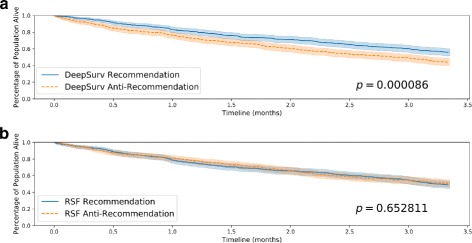
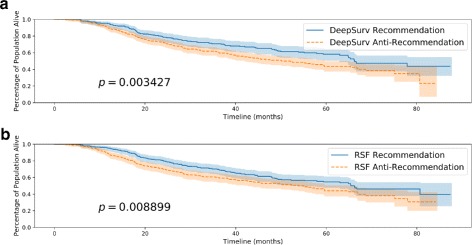
BACKGROUND: Medical practitioners use survival models to explore and understand the relationships between patients' covariates (e.g. clinical and genetic features) and the effectiveness of various treatment options. Standard survival models like the linear Cox proportional hazards model require extensive feature engineering or prior medical knowledge to model treatment interaction at an individual level. While nonlinear survival methods, such as neural networks and survival forests, can inherently model these high-level interaction terms, they have yet to be shown as effective treatment recommender systems. METHODS: We introduce DeepSurv, a Cox proportional hazards deep neural network and state-of-the-art survival method for modeling interactions between a patient's covariates and treatment effectiveness in order to provide personalized treatment recommendations. RESULTS: We perform a number of experiments training DeepSurv on simulated and real survival data. We demonstrate that DeepSurv performs as well as or better than other state-of-the-art survival models and validate that DeepSurv successfully models increasingly complex relationships between a patient's covariates and their risk of failure. We then show how DeepSurv models the relationship between a patient's features and effectiveness of different treatment options to show how DeepSurv can be used to provide individual treatment recommendations. Finally, we train DeepSurv on real clinical studies to demonstrate how it's personalized treatment recommendations would increase the survival time of a set of patients. CONCLUSIONS: The predictive and modeling capabilities of DeepSurv will enable medical researchers to use deep neural networks as a tool in their exploration, understanding, and prediction of the effects of a patient's characteristics on their risk of failure.
Overview
The claims and statistics of this paper haven’t been checked yet.
Run the check — free, no account needed. It reads the open-access text and checks the sources it cites.
Integrity signals
Registry
Cites
Statistics
Figures
Verification
Claims the paper makes
The claims and statistics of this paper haven’t been checked yet.
Run the check — free, no account needed. It reads the open-access text and checks the sources it cites.
Self-check
Percentages, sums and reported differences re-computed from the paper’s own numbers.
The self-check needs the paper’s full text.
Citations
Cites
Adam: A Method for Stochastic Optimization
Kingma, D. P., & Ba, J. (2014) · arXiv · doi:10.48550/arxiv.1412.6980 · Cited by 98,946 · cited 1×
“more than one hidden layer) and apply modern techniques such as weight decay regularization, Rectified Linear Units (ReLU) [17] with batch normalization [18], Scaled Exponential Linear Units (SELU) [19], dropout [20], gradient descent optimization algorithms (Stochastic Gradient Descent and Adaptive Moment Estimation…”
MethodAn Introduction to the Bootstrap
Efron, B., & Tibshirani, R. J. (1994) · doi:10.1201/9780429246593 · Cited by 40,500
(2014) · Cited by 33,419
Batch Normalization: Accelerating Deep Network Training by Reducing Internal Covariate Shift
Ioffe, S., & Szegedy, C. (2015) · arXiv · doi:10.48550/arxiv.1502.03167 · Cited by 27,818
Regression Models and Life-Tables
Cox, D. R. (1992) · Springer Series in Statistics · doi:10.1007/978-1-4612-4380-9_37 · Cited by 26,297 · cited 1×
“iables in outcomes such as death or cancer recurrence and subsequently inform patients of their treatment options [1, 2, 3, 4]. One standard survival model is the Cox proportional hazards model (CPH) [5]. The CPH arXiv:1606.00931v3 [stat.ML] 9 Aug 2017 is a semiparametric model that calculates the effects of observed…”
MethodAn Introduction to the Bootstrap
Efron, B., & Tibshirani, R. J. (1993) · doi:10.1007/978-1-4899-4541-9 · Cited by 21,230
(2010) · International Conference on Machine Learning · Cited by 13,995
Modeling Survival Data: Extending the Cox Model
Therneau, T. M., & Grambsch, P. M. (2000) · Statistics for Biology and Health · doi:10.1007/978-1-4757-3294-8 · Cited by 8,674
(2012) · Cited by 8,009
The genomic and transcriptomic architecture of 2,000 breast tumours reveals novel subgroups
METABRIC Group, Curtis, C., Shah, S. P., Chin, S.-F., Turashvili, G., Rueda, O. M., Dunning, M. J., Speed, D., Lynch, A. G., Samarajiwa, S., et al. (2012) · Nature · doi:10.1038/nature10983 · Cited by 6,097 · cited 1×
“First, we simulate clinical treatment data by including an additional covariate to the simulated data from Section 4.1.2.”
MethodInfluential
Cited by
Sorted by citations
Items 301–400 of 1,000
Abbasi, A. F., Asim, M. N., Ahmed, S., Vollmer, S. J., & Dengel, A. (2024) · Frontiers in Artificial Intelligence · doi:10.3389/frai.2024.1428501 · Cited by 25
Vision-language model for report generation and outcome prediction in CT pulmonary angiogram
Zhong, Z., Wang, Y., Wu, J., Hsu, W.-C., Somasundaram, V., Bi, L., Kulkarni, S., Ma, Z., Collins, S., Baird, G. L., et al. (2025) · npj Digital Medicine · doi:10.1038/s41746-025-01807-8 · Cited by 26
“Each SP module is optimized using the Cox proportional hazards (CoxPH) loss 32 , which is suitable for censored survival data: where r i is the predicted risk score for the i -th patient, y it is the observed survival duration, and y ie is the mortality event indicator.”
Bourigault, E., McGowan, D. R., Mehranian, A., & Papież, B. W. (2022) · Lecture notes in computer science · doi:10.1007/978-3-030-98253-9_18 · Cited by 23
A Survey on Deep Learning for Precision Oncology
Wang, C.-W., Khalil, M.-A., & Firdi, N. (2022) · Diagnostics · doi:10.3390/diagnostics12061489 · Cited by 23
Leung, Y. W., Park, B., Heo, R., Adikari, A., Chackochan, S., Wong, J., Alie, E., Gancarz, M., Kacala, M., Hirst, G., et al. (2022) · JMIR Cancer · doi:10.2196/35893 · Cited by 22
Huang, C., Dai, Y., Chen, Q., Chen, H., Lin, Y., Wu, J., Xu, X., & Chen, X. (2022) · Frontiers in Oncology · doi:10.3389/fonc.2022.971190 · Cited by 23
Gandin, I., Saccani, S., Coser, A., Scagnetto, A., Cappelletto, C., Candido, R., Barbati, G., & Lenarda, A. D. (2023) · PLoS ONE · doi:10.1371/journal.pone.0281878 · Cited by 23
Shahraki, S. Z., Looha, M. A., Kazaj, P. M., Aria, M., Akbari, A., Emami, H., Asadi, F., & Akbari, M. E. (2023) · Frontiers in Oncology · doi:10.3389/fonc.2023.1147604 · Cited by 24
Hou, Y., Jiang, K.-W., Wang, L., Zhi, R., Bao, M., Li, Q., Zhang, J., Qu, J., Zhu, F., & Zhang, Y. (2023) · British Journal of Cancer · doi:10.1038/s41416-023-02441-5 · Cited by 23
Verma, S., Magazzù, G., Eftekhari, N., Lou, T., Gilhespy, A., Occhipinti, A., & Angione, C. (2024) · Cell Reports Methods · doi:10.1016/j.crmeth.2024.100817 · Cited by 23
Inter-Intra Hypergraph Computation for Survival Prediction on Whole Slide Images
Han, X., Zhou, H., Tian, Z., Du, S., & Gao, Y. (2025) · IEEE Transactions on Pattern Analysis and Machine Intelligence · doi:10.1109/tpami.2025.3557391 · Cited by 24
“…apply. learning models have been successfully applied in various clinical tasks, including survival prediction. b) Deep Learning Mehtods: DeepSurv [15] and DeepCon-vSurv [16] are two typical models that utilize deep neural networks or convolutional neural networks (CNNs) to extract deep features…”
Yang, H., Wang, J., Wang, W., Shi, S., Liu, L., Yao, Y., Tian, G., Wang, P., & Yang, J. (2025) · Briefings in Bioinformatics · doi:10.1093/bib/bbaf209 · Cited by 25
“Only gene features with P -values under 0.01 were used to build a Deepsurv model [36], from which we selected the N genes that most improved prediction performance.”
InfluentialNagpal, C., Li, X. R., & Dubrawski, A. W. (2020) · PubMed · doi:10.48550/arxiv.2003.01176 · Cited by 22
Devaux, A., Genuer, R., Pérès, K., & Proust‐Lima, C. (2022) · BMC Medical Research Methodology · doi:10.1186/s12874-022-01660-3 · Cited by 22
Deep survival analysis of searching for on-street parking in urban areas
Mantouka, E. G., Fafoutellis, P., & Vlahogianni, E. I. (2021) · Transportation Research Part C Emerging Technologies · doi:10.1016/j.trc.2021.103173 · Cited by 21
Lv, Z., Lin, Y., Yan, R., Yang, Z., Wang, Y., & Zhang, F. (2021) · IEEE International Conference on Bioinformatics and Biomedicine (BIBM) · doi:10.1109/bibm52615.2021.9669445 · Cited by 23
Smith, H., Sweeting, M. J., Morris, T. P., & Crowther, M. J. (2022) · Diagnostic and Prognostic Research · doi:10.1186/s41512-022-00124-y · Cited by 26
Liao, C.-Y., Lee, C., Yang, H., Chen, C., Chung, W., Wu, H., Guo, W., Liu, R.-S., & Lu, C. (2023) · Physical and Engineering Sciences in Medicine · doi:10.1007/s13246-023-01234-7 · Cited by 21
FAM3L: Feature-Aware Multi-Modal Metric Learning for Integrative Survival Analysis of Human Cancers
Shao, W., Liu, J., Zuo, Y., Qi, S., Hong, H., Sheng, J., Zhu, Q., & Zhang, D. (2023) · IEEE Transactions on Medical Imaging · doi:10.1109/tmi.2023.3262024 · Cited by 23
Censored Fairness through Awareness
Zhang, W., Hernandez‐Boussard, T., & Weiss, J. (2023) · Proceedings of the AAAI Conference on Artificial Intelligence · doi:10.1609/aaai.v37i12.26708 · Cited by 25
Multi-modal heart failure risk estimation based on short ECG and sampled long-term HRV
González, S., Yi, A. K.-C., Hsieh, W., Chen, W.-C., Wang, C., Wu, V. C., & Chang, S. (2024) · Information Fusion · doi:10.1016/j.inffus.2024.102337 · Cited by 22
FGCNSurv: dually fused graph convolutional network for multi-omics survival prediction
Wen, G., & Li, L. (2023) · Bioinformatics · doi:10.1093/bioinformatics/btad472 · Cited by 25
Benkirane, H., Vakalopoulou, M., Planchard, D., Adam, J., Olaussen, K. A., Michiels, S., & Cournède, P.-H. (2025) · PLoS Computational Biology · doi:10.1371/journal.pcbi.1013012 · Cited by 22
Wolsztynski, E., O’Sullivan, F., Keyes, E., O'Sullivan, J., & Eary, J. F. (2018) · Journal of medical imaging · doi:10.1117/1.jmi.5.2.024502 · Cited by 21
Dynamic and Interpretable Hazard-Based Models of Traffic Incident Durations
Kalair, K., & Connaughton, C. (2021) · Frontiers in Future Transportation · doi:10.3389/ffutr.2021.669015 · Cited by 21
Yang, Z., Tian, Y., Zhou, T., Zhu, Y., Zhang, P., Chen, J., & Li, J. (2021) · Computer Methods and Programs in Biomedicine · doi:10.1016/j.cmpb.2021.106458 · Cited by 21
Peng, J., Lu, Y., Chen, L., Qiu, K., Chen, F., Liu, J., Xu, W., Zhang, W., Zhao, Y., Yu, Z., et al. (2022) · Methods · doi:10.1016/j.ymeth.2022.07.001 · Cited by 24
Li, Y., Salimi‐Khorshidi, G., Rao, S., Canoy, D., Hassaïne, A., Lukasiewicz, T., Rahimi, K., & Mamouei, M. (2022) · European Heart Journal - Digital Health · doi:10.1093/ehjdh/ztac061 · Cited by 30
Ethical and legal considerations for nutrition virtual coaches
Calvaresi, D., Carli, R., Piguet, J.-G., Contreras, V., Luzzani, G., Najjar, A., Calbimonte, J.-P., & Schumacher, M. (2022) · AI and Ethics · doi:10.1007/s43681-022-00237-6 · Cited by 14
Zeng, J.-J., Li, K., Cao, F.-Y., & Zheng, Y.-B. (2023) · Frontiers in Oncology · doi:10.3389/fonc.2023.1131859 · Cited by 19
Radiomics-Enhanced Deep Multi-task Learning for Outcome Prediction in Head and Neck Cancer
Meng, M., Bi, L., Feng, D. D., & Kim, J. (2023) · Lecture notes in computer science · doi:10.1007/978-3-031-27420-6_14 · Cited by 21
New perspectives on cancer clinical research in the era of big data and machine learning
Li, S., Yi, H., Leng, Q., Wu, Y., & Mao, Y. (2023) · Surgical Oncology · doi:10.1016/j.suronc.2023.102009 · Cited by 21
Arroyo, Á., Cartea, Á., Moreno-Pino, F., & Zohren, S. (2024) · Quantitative Finance · doi:10.1080/14697688.2023.2286351 · Cited by 21
Salaün, A., Knight, S. R., Wingfield, L. R., & Zhu, T. (2024) · Scientific Reports · doi:10.1038/s41598-024-66976-0 · Cited by 21
Enabling counterfactual survival analysis with balanced representations
Chapfuwa, P., Assaad, S., Zeng, S., Pencina, M. J., Carin, L., & Henao, R. (2021) · ACM Conference on Health, Inference, and Learning (CHIL) · doi:10.1145/3450439.3451875 · Cited by 23
Doležalová, N., Reed, A. B., Despotović, A., Obika, B. D., Morelli, D., Aral, M., & Plans, D. (2021) · European Heart Journal - Digital Health · doi:10.1093/ehjdh/ztab057 · Cited by 24
Survival and data-driven phenotypes in head and neck cancer
Heinolainen, A., Nguyen, B., Silén, S., Renkonen, R., & Koskinen, M. (2025) · Scientific Reports · doi:10.1038/s41598-025-89053-6 · Cited by 24
“In this context, most commonly used methods include Kaplan-Meier 15 , Cox proportional hazard (CPH) 16 and various machine learning and deep learning -based methods such as random survival forest (RSF) 17 , Deephit 18 and Deepsurv 19 .”
Alosaimi, H., Alshilash, A. M., Alsaif, L. K., Bosbait, J. M., Albeladi, R. S., Almutairi, D. R., Alhazzaa, A. A., Alluqmani, T. A., Qahtani, S. M. A., Almohammadi, S. A., et al. (2025) · Frontiers in Oncology · doi:10.3389/fonc.2025.1424647 · Cited by 24
Multimodal integration strategies for clinical application in oncology
Zhang, B., Wan, Z., Luo, Y., Zhao, X., Samayoa, J. A., Zhao, W., & Wu, S. (2025) · Frontiers in Pharmacology · doi:10.3389/fphar.2025.1609079 · Cited by 28
Deep survival modelling for shared mobility
Kostic, B., Loft, M. P., Rodrigues, F., & Borysov, S. S. (2021) · Transportation Research Part C Emerging Technologies · doi:10.1016/j.trc.2021.103213 · Cited by 20
A survival analysis based volatility and sparsity modeling network for student dropout prediction
Pan, F., Huang, B., Zhang, C., Zhu, X., Wu, Z., Zhang, M., Ji, Y., Ma, Z., & Li, Z. (2022) · PLoS ONE · doi:10.1371/journal.pone.0267138 · Cited by 24
Decoding kinase-adverse event associations for small molecule kinase inhibitors
Gong, X., Hu, M., Liu, J., Kim, G., Xu, J., McKee, A., Palmby, T. R., de Claro, R. A., & Zhao, L. Y. (2022) · Nature Communications · doi:10.1038/s41467-022-32033-5 · Cited by 20
Neural Network on Interval-Censored Data with Application to the Prediction of Alzheimer's Disease
Sun, T., & Ding, Y. (2022) · Biometrics · doi:10.1111/biom.13734 · Cited by 21
Kantidakis, G., Hazewinkel, A., & Fiocco, M. F. (2022) · Computational and Mathematical Methods in Medicine · doi:10.1155/2022/1176060 · Cited by 20
Deng, Y., Liu, L., Jiang, H., Peng, Y., Wei, Y., Zhou, Z., Zhong, Y., Zhao, Y., Yang, X., Yu, J., et al. (2023) · BMC Medical Research Methodology · doi:10.1186/s12874-022-01829-w · Cited by 20
Nguyen, H., Vasconcellos, H. D. D., Keck, K., Reis, J. P., Lewis, C. E., Sidney, S., Lloyd‐Jones, D. M., Schreiner, P. J., Güallar, E., Wu, C. O., et al. (2023) · BMC Medical Research Methodology · doi:10.1186/s12874-023-01845-4 · Cited by 26
Archetti, A., & Matteucci, M. (2023) · International Joint Conference on Neural Networks (IJCNN) · doi:10.1109/ijcnn54540.2023.10190999 · Cited by 20
Sato, M., Moriyama, M., Fukumoto, T., Yamada, T., Wake, T., Nakagomi, R., Nakatsuka, T., Minami, T., Uchino, K., Enooku, K., et al. (2023) · Hepatology International · doi:10.1007/s12072-023-10585-y · Cited by 20
Biase, A. D., Ma, B., Guo, J., van Dijk, L. V., Langendijk, J. A., Both, S., van Ooijen, P. M. A., & Sijtsema, N. M. (2023) · Computer Methods and Programs in Biomedicine · doi:10.1016/j.cmpb.2023.107939 · Cited by 20
Astley, J., Reilly, J. M., Robinson, S., Wild, J. M., Hatton, M. Q. F., & Tahir, B. (2024) · Radiotherapy and Oncology · doi:10.1016/j.radonc.2024.110084 · Cited by 21
Shao, W., Shi, H., Liu, J., Zuo, Y., Sun, L., Xia, T., Chen, W., Wan, P., Sheng, J., Zhu, Q., et al. (2024) · IEEE Transactions on Medical Imaging · doi:10.1109/tmi.2024.3362852 · Cited by 21
Chamorro, K., Álvarez, R. C., Ahtty, M. C., & Quinga, M. (2025) · Franklin Open · doi:10.1016/j.fraope.2025.100212 · Cited by 28
Maximizing Customer Lifetime Value using Stacked Neural Networks: An Insurance Industry Application
Desirena, G., Diaz, A., Desirena, J., Moreno, I. S., & Garcia, D. (2019) · International Conference on Machine Learning and Applications · doi:10.1109/icmla.2019.00101 · Cited by 23
Afolabi, A. O., & Toivanen, P. (2019) · IEEE Access · doi:10.1109/access.2019.2910641 · Cited by 20
Preethi, P., Yogapriya, J., Nivetha, L., & Madanachitran, R. (2023) · Journal of Machine and Computing · doi:10.53759/7669/jmc202303026 · Cited by 19
Deep Learning of radiology-genomics integration for computational oncology: A mini review
Wang, F., Li, Y., & Zeng, T. (2024) · Computational and Structural Biotechnology Journal · doi:10.1016/j.csbj.2024.06.019 · Cited by 24
“CNNs have revolutionized the field of medical imaging by enabling automatic and efficient analysis for both diagnostics [9,19,20] and prognosis prediction [21,22], highlighting their critical importance in improving health outcomes.”
BackgroundZhu, S., Lin, L., Liu, Q., Liu, J., Song, Y., & Xu, Q. (2024) · Quantitative Imaging in Medicine and Surgery · doi:10.21037/qims-24-560 · Cited by 19
Yan, R., Zhang, X., Jiang, Z., Wang, B., Bian, X., Ren, F., & Zhou, S. K. (2025) · IEEE Transactions on Pattern Analysis and Machine Intelligence · doi:10.1109/tpami.2025.3611531 · Cited by 20
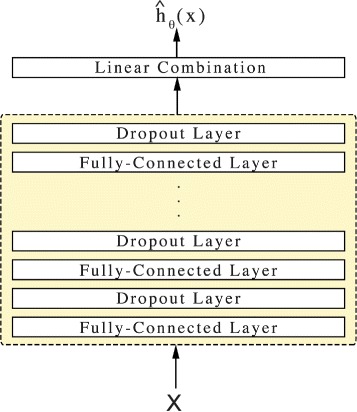
“(1) DeepSurv [57] uses two fully-connected layers; (2) The self-normalizing network (SNN) [60] uses two fully-connected layers with an SeLU activation and alpha dropout applied to every layer; (3) Cox-PASNet [19] uses a gene layer, a pathway layer, two hidden fully-connected layers, and a Cox layer.”
Targeted estimation of heterogeneous treatment effect in observational survival analysis
Zhu, J., & Gallego, B. (2020) · Journal of Biomedical Informatics · doi:10.1016/j.jbi.2020.103474 · Cited by 19
Mixture cure rate models with neural network estimated nonparametric components
Xie, Y., & Yu, Z. (2021) · Computational Statistics · doi:10.1007/s00180-021-01086-3 · Cited by 20
He, T., Huang, L., Li, J., Wang, P., & Zhang, Z. (2021) · Frontiers in Medicine · doi:10.3389/fmed.2021.587496 · Cited by 19
Agarwal, S., Abaker, M. E. O., & Daescu, O. (2021) · Lecture notes in computer science · doi:10.1007/978-3-030-87240-3_73 · Cited by 19
Park, Y. M., Lim, J. Y., Koh, Y. W., Kim, S., & Choi, E. C. (2021) · Oral Oncology · doi:10.1016/j.oraloncology.2021.105559 · Cited by 19
Time‐to‐event prediction using survival analysis methods for Alzheimer's disease progression
Sharma, R., Anand, H., Badr, Y., & Qiu, R. G. (2021) · Alzheimer's & Dementia: Translational Research & Clinical Interventions · doi:10.1002/trc2.12229 · Cited by 19
Time-to-event modeling for hospital length of stay prediction for COVID-19 patients
Wen, Y., Rahman, M. F., Zhuang, Y., Pokojovy, M., Xu, H., McCaffrey, P., Vo, A. H., Walser, E., Moen, S. T., & Tseng, T.-L. (2022) · Machine Learning with Applications · doi:10.1016/j.mlwa.2022.100365 · Cited by 19
Prediction and Risk Stratification of Cardiovascular Disease in Diabetic Kidney Disease Patients
Ren, J., Liu, D., Li, G., Duan, J., Dong, J., & Liu, Z. (2022) · Frontiers in Cardiovascular Medicine · doi:10.3389/fcvm.2022.923549 · Cited by 19
Guo, Y., Yang, Y., Cao, F., Li, W., Wang, M., Luo, Y., Guo, J., Zaman, A., Zeng, X., Miu, X., et al. (2022) · Diagnostics · doi:10.3390/diagnostics12071664 · Cited by 19
PET/CT based transformer model for multi-outcome prediction in oropharyngeal cancer
Ma, B., Guo, J., Biase, A. D., van Dijk, L. V., van Ooijen, P. M. A., Langendijk, J. A., Both, S., & Sijtsema, N. M. (2024) · Radiotherapy and Oncology · doi:10.1016/j.radonc.2024.110368 · Cited by 19
Survival analysis in breast cancer: evaluating ensemble learning techniques for prediction
Buyrukoğlu, G. (2024) · PeerJ Computer Science · doi:10.7717/peerj-cs.2147 · Cited by 19
AI fairness in practice: Paradigm, challenges, and prospects
Zhang, W. (2024) · AI Magazine · doi:10.1002/aaai.12189 · Cited by 25
Research on Understanding the Effect of Deep Learning on User Preferences
Gupta, G., & Katarya, R. (2020) · Arabian Journal for Science and Engineering · doi:10.1007/s13369-020-05112-2 · Cited by 19
Baek, E., Yang, H.-J., Kim, S.-H., Lee, G.-S., Oh, I., Kang, S., & Min, J. (2021) · BMC Bioinformatics · doi:10.1186/s12859-021-04103-w · Cited by 19
Lindén, T., de Jong, J., Lü, C., Kiri, V. A., Haeffs, K., & Fröhlich, H. (2021) · Frontiers in Artificial Intelligence · doi:10.3389/frai.2021.610197 · Cited by 21
Zhang, P., Wang, L., Liu, H., Lin, S., & Guo, D. (2025) · BMC Cancer · doi:10.1186/s12885-025-13650-x · Cited by 18
“DeepSurv [39] integrates the power of deep learning with the Cox proportional hazards model, employing advanced survival analysis to investigate the relationship between patients’ prognostic indicators and the effectiveness of treatments.”
Baidoo, T. G., & Rodrigo, H. (2025) · PLoS ONE · doi:10.1371/journal.pone.0318167 · Cited by 21
“Similarly, a study published by [14], which explored both simulated and real survival data, suggested that DeepSurv is an effective and powerful tool for predicting the probability of failure in patients and providing individualized treatment recommendations.”
UKB-MDRMF: a multi-disease risk and multimorbidity framework based on UK biobank data
Jiang, Y., Zhao, B., Tang, B., Tang, B., Peng, H., Luo, Z., Shen, Y., Jiang, Z., Jiang, Z., Wang, J., et al. (2025) · Nature Communications · doi:10.1038/s41467-025-58724-3 · Cited by 20
Park, J., Baek, J., Sym, S. J., Lee, K. Y., & Lee, Y. (2020) · BMC Medical Informatics and Decision Making · doi:10.1186/s12911-020-01265-0 · Cited by 18
Multi-omics Cancer Prognosis Analysis Based on Graph Convolution Network
Wang, Y., Zhang, Z., Chai, H., & Yang, Y. (2021) · IEEE International Conference on Bioinformatics and Biomedicine (BIBM) · doi:10.1109/bibm52615.2021.9669797 · Cited by 18
Deep Learning in Prediction of Late Major Bleeding After Transcatheter Aortic Valve Replacement
Jia, Y., Luosang, G., Li, Y., Wang, J., Li, P., Xiong, T., Li, Y., Liao, Y., Zhao, Z., Peng, Y., et al. (2022) · Clinical Epidemiology · doi:10.2147/clep.s333147 · Cited by 18
Nasejje, J. B., Mbuvha, R., & Mwambi, H. G. (2022) · BMJ Open · doi:10.1136/bmjopen-2021-049786 · Cited by 19
Roy, G. G., Geard, N. L., Verspoor, K. M., & He, S. (2022) · Bioinformatics · doi:10.1093/bioinformatics/btac636 · Cited by 19
Li, X., Marcus, D. M., Russell, J., Aboagye, E. O., Ellis, L. B., Sheeka, A., Park, W.-H. E., Bharwani, N., Ghaem‐Maghami, S., & Rockall, A. (2022) · Journal of Magnetic Resonance Imaging · doi:10.1002/jmri.28544 · Cited by 18
Gene–environment interaction analysis via deep learning
Wu, S., Xu, Y., Zhang, Q., & Ma, S. (2023) · Genetic Epidemiology · doi:10.1002/gepi.22518 · Cited by 23
Zhao, L., Hou, R., Teng, H., Fu, X., Han, Y., & Zhao, J. (2023) · Computer Methods and Programs in Biomedicine · doi:10.1016/j.cmpb.2023.107559 · Cited by 19
Shao, W., Zuo, Y., Shi, Y., Wu, Y., Tang, J., Zhao, J., Sun, L., Lu, Z., Sheng, J., Zhu, Q., et al. (2023) · IEEE Transactions on Medical Imaging · doi:10.1109/tmi.2023.3274652 · Cited by 19
Li, X., Bao, H., Shi, Y., Zhu, W., Peng, Z., Yan, L., Chen, J., & Shu, X. (2023) · Medicine · doi:10.1097/md.0000000000035892 · Cited by 19
BDNNSurv: Bayesian Deep Neural Networks for Survival Analysis Using Pseudo Values
Feng, D., & Zhao, L. (2021) · Journal of Data Science · doi:10.6339/21-jds1018 · Cited by 20
Deep Learning and Site‐Specific Drug Delivery
Meenakshi, D. U., Selvasudha, N., Francis, A. P., Sweety, J. P., Fuloria, S., Fuloria, N. K., Subramaniyan, V., & Khan, S. A. (2022) · Wiley eBooks · doi:10.1002/9781119857983.ch1 · Cited by 19
DySurv: dynamic deep learning model for survival analysis with conditional variational inference
Mesinovic, M., Watkinson, P., & Zhu, T. (2024) · Journal of the American Medical Informatics Association · doi:10.1093/jamia/ocae271 · Cited by 23
Federated transfer learning with differential privacy for multi-omics survival analysis
Wen, G., & Li, L. (2025) · Briefings in Bioinformatics · doi:10.1093/bib/bbaf166 · Cited by 17
“For example, Deepsurv [6] combines the deep neural network with Cox regression model to predict survival for breast cancer patients and outperforms traditional linear and nonlinear machine learning methods.”
InfluentialRao, S., Li, Y., Mamouei, M., Salimi‐Khorshidi, G., Wamil, M., Nazarzadeh, M., Yau, C., Collins, P. G. S., Jackson, R., Vickers, A. J., et al. (2025) · The Lancet Digital Health · doi:10.1016/j.landig.2025.03.005 · Cited by 20
Xu, J., Wang, T., Li, J., Wang, Y., Zhu, Z., Xiao, F., Wang, J., Zhang, Z., Cai, W., Song, R., et al. (2025) · npj Precision Oncology · doi:10.1038/s41698-025-00979-6 · Cited by 17
“This architecture included an encoder, bottleneck module, and decoder, which collectively captured spatial information at multiplescales,combinedwithaDeepSurv 53 moduleforprognosticanalysis, revealing the in fl uence of the tumor microenvironment on patient survival.”
Machine Learning Models and Big Data Tools for Evaluating Kidney Acceptance
Ashiku, L., Al-Amin, M., Madria, S., & Dağli, C. H. (2021) · Procedia Computer Science · doi:10.1016/j.procs.2021.05.019 · Cited by 17
Local augmented graph neural network for multi-omics cancer prognosis prediction and analysis
Zhang, Y., Xiong, S., Wang, Z., Liu, Y., Luo, H., Li, B., & Zou, Q. (2023) · Methods · doi:10.1016/j.ymeth.2023.02.011 · Cited by 18
Zhu, F., Zhong, R., Li, F., Li, C., Din, N., Sweidan, H., Potluri, L. B., Xiong, S., Li, J., Cheng, B., et al. (2023) · Translational Lung Cancer Research · doi:10.21037/tlcr-23-84 · Cited by 17
Jia, L., Ren, X., Wu, W. D., Zhao, J., Qiang, Y., & Yang, Q. (2023) · Complex & Intelligent Systems · doi:10.1007/s40747-023-01204-2 · Cited by 17
Morabito, F., Adornetto, C., Monti, P., Amaro, A. A., Reggiani, F., Colombo, M., Aldana, Y. R., Tripepi, G. L., D’Arrigo, G., Vener, C., et al. (2023) · Frontiers in Oncology · doi:10.3389/fonc.2023.1198992 · Cited by 17
Cerono, G., Melaiu, O., & Chicco, D. (2023) · Journal of Healthcare Informatics Research · doi:10.1007/s41666-023-00138-1 · Cited by 17
Zhang, C., Ma, L., Zhang, X., Lei, C., Yuan, S., Li, J., Geng, Z., Li, X., Quan, X., Zheng, C., et al. (2023) · Journal of Magnetic Resonance Imaging · doi:10.1002/jmri.29064 · Cited by 17
Corianò, M., Lanera, C., Michieli, L. D., Marra, M. P., Iliceto, S., Gregori, D., & Tona, F. (2024) · PLoS ONE · doi:10.1371/journal.pone.0297793 · Cited by 18
Metadata
- Authors
- Katzman, J. L., Shaham, U., Cloninger, A., Bates, J., Jiang, T., & Kluger, Y.
- Affiliations
- Yale University (US)
- Yale New Haven Hospital (US)
- Yale Cancer Center (US)
- Corresponding author
- Kluger, Yuval
- Venue
- BMC Medical Research Methodology
- Published
- 2018-02-26
- Volume
- 18
- Issue
- 1
- Pages
- 24-24
- ISSN
- 1471-2288 (ISSN-L)
- PMC
- PMC5828433
- OpenAlex
- W2753919178
- Cited by
- 1,995
- References
- 49
- Citations by year
- 2026: 376 · 2025: 386 · 2024: 321 · 2023: 301 · 2022: 238 · 2021: 206 · 2020: 94 · 2019: 54 · 2018: 18
- FWCI
- 52.41
- Type
- journal article
- Language
- en
- Open access
- gold
- doi.org
- Locations
- BMC Medical Research Methodology (publishedVersion, cc-by)
- PubMed Central (publishedVersion, cc-by)
- PubMed (publishedVersion)
- arXiv (Cornell University) (submittedVersion)
- DOAJ (DOAJ: Directory of Open Access Journals) (submittedVersion, cc-by-sa)
- arXiv (Cornell University)
- Funders
- National Human Genome Research Institute (1R01HG008383-01A1)
- Directorate for Mathematical and Physical Sciences (DMS-1402254)
- Topics
- Physical Sciences › Computer Science › Artificial Intelligence › Machine Learning in Healthcare
- Physical Sciences › Mathematics › Statistics and Probability › Statistical Methods and Inference
- Physical Sciences › Computer Science › Information Systems › Recommender Systems and Techniques
- Keywords
- DeepSurv, Cox proportional hazards model, deep neural network, survival analysis, personalized treatment recommendations, treatment effectiveness, clinical trials
- MeSH terms
- Algorithms, Humans, Proportional Hazards Models, Neural Networks, Computer, Outcome Assessment, Health Care, Kaplan-Meier Estimate, Precision Medicine
About these checks
Registry, retraction, Cites and statistics results are computed, not judged, with one exception: a printed reference that no index lists is read once by a model before it counts as a citation error. Claims are extracted by a model and kept only when their quote appears verbatim in the text; each cited source is then checked, with a model’s help, for whether it says what the claim relies on. Those verdicts can be wrong — read the claim’s quote and the cited source before relying on one.
Statistics and arithmetic are recomputed, not judged.
Confidence bands are shown only for fields calibrated on our annotated test set. None is calibrated yet, so no band is shown.
What counts as a claim ›How we measure confidence ›How we check this ›
Are you an author, or do you see a problem with this page? Request a review
