

The DOI matches its Crossref record; 48 of the 49 references it cites were found in a registry or an index.
DeepSurv: personalized treatment recommender system using a Cox proportional hazards deep neural network
Open accessAbstract
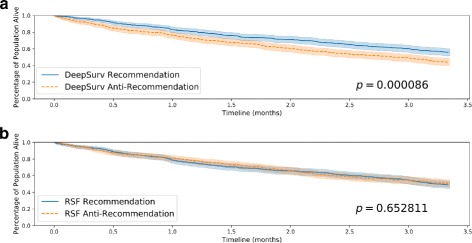
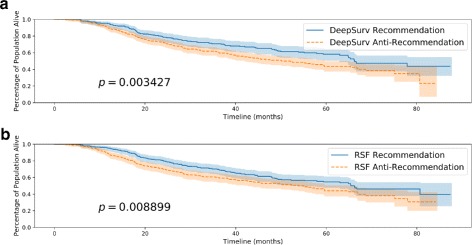
BACKGROUND: Medical practitioners use survival models to explore and understand the relationships between patients' covariates (e.g. clinical and genetic features) and the effectiveness of various treatment options. Standard survival models like the linear Cox proportional hazards model require extensive feature engineering or prior medical knowledge to model treatment interaction at an individual level. While nonlinear survival methods, such as neural networks and survival forests, can inherently model these high-level interaction terms, they have yet to be shown as effective treatment recommender systems. METHODS: We introduce DeepSurv, a Cox proportional hazards deep neural network and state-of-the-art survival method for modeling interactions between a patient's covariates and treatment effectiveness in order to provide personalized treatment recommendations. RESULTS: We perform a number of experiments training DeepSurv on simulated and real survival data. We demonstrate that DeepSurv performs as well as or better than other state-of-the-art survival models and validate that DeepSurv successfully models increasingly complex relationships between a patient's covariates and their risk of failure. We then show how DeepSurv models the relationship between a patient's features and effectiveness of different treatment options to show how DeepSurv can be used to provide individual treatment recommendations. Finally, we train DeepSurv on real clinical studies to demonstrate how it's personalized treatment recommendations would increase the survival time of a set of patients. CONCLUSIONS: The predictive and modeling capabilities of DeepSurv will enable medical researchers to use deep neural networks as a tool in their exploration, understanding, and prediction of the effects of a patient's characteristics on their risk of failure.
Overview
The claims and statistics of this paper haven’t been checked yet.
Run the check — free, no account needed. It reads the open-access text and checks the sources it cites.
Integrity signals
Registry
Cites
Statistics
Figures
Verification
Claims the paper makes
The claims and statistics of this paper haven’t been checked yet.
Run the check — free, no account needed. It reads the open-access text and checks the sources it cites.
Self-check
Percentages, sums and reported differences re-computed from the paper’s own numbers.
The self-check needs the paper’s full text.
Citations
Cites
Adam: A Method for Stochastic Optimization
Kingma, D. P., & Ba, J. (2014) · arXiv · doi:10.48550/arxiv.1412.6980 · Cited by 98,946 · cited 1×
“more than one hidden layer) and apply modern techniques such as weight decay regularization, Rectified Linear Units (ReLU) [17] with batch normalization [18], Scaled Exponential Linear Units (SELU) [19], dropout [20], gradient descent optimization algorithms (Stochastic Gradient Descent and Adaptive Moment Estimation…”
MethodAn Introduction to the Bootstrap
Efron, B., & Tibshirani, R. J. (1994) · doi:10.1201/9780429246593 · Cited by 40,500
(2014) · Cited by 33,419
Batch Normalization: Accelerating Deep Network Training by Reducing Internal Covariate Shift
Ioffe, S., & Szegedy, C. (2015) · arXiv · doi:10.48550/arxiv.1502.03167 · Cited by 27,818
Regression Models and Life-Tables
Cox, D. R. (1992) · Springer Series in Statistics · doi:10.1007/978-1-4612-4380-9_37 · Cited by 26,297 · cited 1×
“iables in outcomes such as death or cancer recurrence and subsequently inform patients of their treatment options [1, 2, 3, 4]. One standard survival model is the Cox proportional hazards model (CPH) [5]. The CPH arXiv:1606.00931v3 [stat.ML] 9 Aug 2017 is a semiparametric model that calculates the effects of observed…”
MethodAn Introduction to the Bootstrap
Efron, B., & Tibshirani, R. J. (1993) · doi:10.1007/978-1-4899-4541-9 · Cited by 21,230
(2010) · International Conference on Machine Learning · Cited by 13,995
Modeling Survival Data: Extending the Cox Model
Therneau, T. M., & Grambsch, P. M. (2000) · Statistics for Biology and Health · doi:10.1007/978-1-4757-3294-8 · Cited by 8,674
(2012) · Cited by 8,009
The genomic and transcriptomic architecture of 2,000 breast tumours reveals novel subgroups
METABRIC Group, Curtis, C., Shah, S. P., Chin, S.-F., Turashvili, G., Rueda, O. M., Dunning, M. J., Speed, D., Lynch, A. G., Samarajiwa, S., et al. (2012) · Nature · doi:10.1038/nature10983 · Cited by 6,097 · cited 1×
“First, we simulate clinical treatment data by including an additional covariate to the simulated data from Section 4.1.2.”
MethodInfluential
Cited by
Sorted by citations
Items 701–800 of 1,000
Probabilistic Machine Learning for Healthcare
Chen, I. Y., Joshi, S. D., Ghassemi, M., & Ranganath, R. (2021) · Annual Review of Biomedical Data Science · doi:10.1146/annurev-biodatasci-092820-033938 · Cited by 68
Xu, J., Zhang, Y., Yu, H., Lin, B., Peng, X., Lin, T., Lu, H., Zhang, G., Wang, D., Yuan, H., et al. (2022) · Annals of Translational Medicine · doi:10.21037/atm-22-4331 · Cited by 7
SurvSHAP: A Proxy-Based Algorithm for Explaining Survival Models with SHAP
Alabdallah, A., Pashami, S., Rognvaldsson, T. S., & Ohlsson, M. (2022) · IEEE International Conference on Data Science and Advanced Analytics (DSAA) · doi:10.1109/dsaa54385.2022.10032392 · Cited by 7
A Study on Survival Analysis Methods Using Neural Network to Prevent Cancers
Bae, C., Kim, B.-S., Jee, S. H., Lee, J., & Nguyen, N.-D. (2023) · Cancers · doi:10.3390/cancers15194757 · Cited by 8
The current use of artificial intelligence in testicular cancer: a systematic review
Chuluunbaatar, Y., Bansal, S., Brodie, A., Sharma, A., & Vasdev, N. (2023) · Artificial Intelligence Surgery · doi:10.20517/ais.2023.26 · Cited by 7
Deep learning-assisted survival prognosis in renal cancer: A CT scan-based personalized approach
Mahootiha, M., Qadir, H. A., Aghayan, D. L., Fretland, Å. A., Edwin, B., & Balasingham, I. (2024) · Heliyon · doi:10.1016/j.heliyon.2024.e24374 · Cited by 7
Li, X. R., Min, W., Chen, J., Wu, J., & Wang, S. (2023) · IEEE International Conference on Bioinformatics and Biomedicine (BIBM) · doi:10.1109/bibm58861.2023.10385668 · Cited by 7
A deep learning approach to censored regression
Dănăilă, V.-R., & Buiu, C. (2024) · Pattern Analysis and Applications · doi:10.1007/s10044-024-01216-9 · Cited by 7
In silico generation of gene expression profiles using diffusion models
Lacan, A., André, R., Sébag, M., & Hanczar, B. (2026) · BMC Bioinformatics · doi:10.1186/s12859-026-06470-8 · Cited by 8
Lin, C.-H., Liu, Z., Chen, J., Fann, Y. C., Wen, M., & Kuo, C. (2024) · Biomedical Journal · doi:10.1016/j.bj.2024.100732 · Cited by 7
Li, W., Liu, T., Feng, F., Yu, S., Wang, H., & Sun, Y. (2024) · IEEE Journal of Biomedical and Health Informatics · doi:10.1109/jbhi.2024.3407772 · Cited by 7
deepAFT: A nonlinear accelerated failure time model with artificial neural network
Norman, P. A., Li, W., Jiang, W., & Chen, B. E. (2024) · Statistics in Medicine · doi:10.1002/sim.10152 · Cited by 9
Sharafi, M., Mohsenpour, M. A., Afrashteh, S., Eftekhari, M. H., Dehghan, A., Farhadi, A., Jafarnezhad, A., Zakeri, A., & Looha, M. A. (2024) · BMC Medical Informatics and Decision Making · doi:10.1186/s12911-024-02648-3 · Cited by 8
“The CPH model was selected for its interpretability, providing insights into the significance of various prognostic factors [23, 56].”
MethodMuGI: Multi-Granularity Interactions of Heterogeneous Biomedical Data for Survival Prediction
Long, L., Cui, J., Zeng, P., Li, Y., Liu, Y., & Wang, Y. (2024) · Lecture notes in computer science · doi:10.1007/978-3-031-72086-4_46 · Cited by 7
Su, X., Sun, L., Sun, X., & Zhao, Q. (2024) · Scientific Reports · doi:10.1038/s41598-024-74585-0 · Cited by 7
Bennett, R., Hemmati, M., Ramesh, R., & Razzaghi, T. (2024) · Springer optimization and its applications · doi:10.1007/978-3-031-74006-0_2 · Cited by 8
Yuan, S., Liu, Q., Huang, X., Tan, S., Bai, Z., Yu, J., Lei, F., Le, H., Ye, Q., Peng, X., et al. (2024) · Alzheimer s Research & Therapy · doi:10.1186/s13195-024-01663-w · Cited by 7
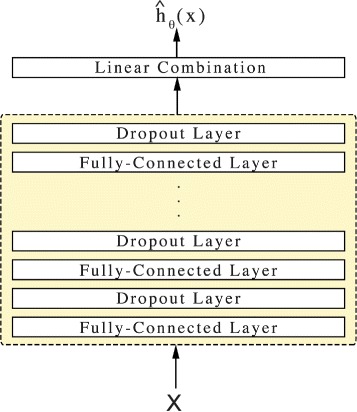
“Moreover, the DeepSurv model integrates deep learning concepts with the CoxPH model, expressing the sensitive factor risk function as a multi-layer perceptron and incorporating additional nonlinear activation functions and techniques such as dropout [12].”
InfluentialObite, C. P., Chukwudi, E., Uchechukwu, M., & Nwosu, U. I. (2025) · Comput. Biol. Medicine · doi:10.1016/j.compbiomed.2025.109963 · Cited by 7
Evidential time-to-event prediction with calibrated uncertainty quantification
Huang, L., Xing, Y., Mishra, S., Denœux, T., & Feng, M. (2025) · International Journal of Approximate Reasoning · doi:10.1016/j.ijar.2025.109403 · Cited by 7
Predicting clinical trial duration via statistical and machine learning models
Cho, J., Xu, Q., Wong, C. H., & Lo, A. W. (2025) · Contemporary Clinical Trials Communications · doi:10.1016/j.conctc.2025.101473 · Cited by 7
Ge, Q., Zhou, S., Lu, J., Ye, S., Anwaier, A., Tian, X., Chen, Y., Zhang, H., Ye, D., & Xu, W. (2024) · Immunotherapy Advances · doi:10.1093/immadv/ltaf013 · Cited by 7
“Our model was developed by integrating ten distinct machine learning algorithms, including RSF [46], Enet [47], Lasso regression [48], Ridge regression [49], Stepwise Cox regression [50], CoxBoost [51], PLSRcox [52], SuperPC [53], GBM [54], and Survival-SVM [55].”
An attention-based framework for integrating WSI and genomic data in cancer survival prediction
Chen, G., Sui, S., Zhang, J., Liu, X., & Cai, P. (2025) · Journal of Biomedical Informatics · doi:10.1016/j.jbi.2025.104836 · Cited by 7
Yuan, L.-Y., Wang, L., Gao, J., Chen, X., Wang, H., Tan, W. S., Sun, K., Gong, Y., & Deng, W. (2025) · Journal of Translational Medicine · doi:10.1186/s12967-025-06663-4 · Cited by 7
“It is particularly advantageous for modeling high-dimensional, nonlinear, and multimodal data [19].”
Niu, Y., Xie, H., Jia, H., Zhao, L., Liu, L., Liu, P., Li, X., Wang, R., & Li, Y. (2025) · Cancer Medicine · doi:10.1002/cam4.71077 · Cited by 7
“DenseNet-121 was selected as the optimal architecture after comparative analysis, generating a deep learning risk score (DLRS) via Cox-optimized loss functions for OS/DFS prediction (Appendix method 3) [18, 19].”
Zhang, M., Zhao, Y., Hao, D., Song, Y., Lin, X. S., Hou, F., Huang, Y., Yang, S., Niu, H., Lu, C. Y., et al. (2025) · npj Precision Oncology · doi:10.1038/s41698-025-01083-5 · Cited by 7
“Critically, it employs the Cox partial likelihood loss function 19 , which effectively handles censored data by incorporating information from patients with incomplete follow-up rather than excluding them, thereby maximizing…”
Cadavid, H., Mo, H., Arends, B. K. O., Dziopa, K., Bron, E. E., Bos, D., Georgievska, S., & van der Harst, P. (2025) · Computers in Biology and Medicine · doi:10.1016/j.compbiomed.2025.111180 · Cited by 11
“This idea of deep learning implementation of Cox models, described above, was proposed by Katzman et al. [26].”
Systems biology approaches for multi omics integration using artificial intelligence
Yadav, S., Mondal, J., & Saha, M. (2026) · Academia Biology · doi:10.20935/acadbiol8077 · Cited by 9
Clinical time-to-event prediction enhanced by incorporating compatible related outcomes
Gao, Y., & Cui, Y. (2022) · PLOS Digital Health · doi:10.1371/journal.pdig.0000038 · Cited by 7
Usage of Auxiliary Systems and Artificial Intelligence in Home-Based Rehabilitation
Ferreira, R., Santos, R. S., & Sousa, A. S. P. (2022) · Advances in medical technologies and clinical practice book series · doi:10.4018/978-1-6684-5260-8.ch008 · Cited by 7
Lim, H., Yoo, J. W., Lee, K. S., Lee, Y. H., Baek, S., Lee, S., Kang, H.-Y., Choi, Y. D., Ham, W. S., Lee, S. H., et al. (2023) · Clinical Genitourinary Cancer · doi:10.1016/j.clgc.2023.03.012 · Cited by 7
Cheng, D., Liu, D., Li, X., Zhang, Z., Mi, Z., Tao, W., Fu, J., & Fan, H. (2023) · World Neurosurgery · doi:10.1016/j.wneu.2023.08.032 · Cited by 8
PathExpSurv: pathway expansion for explainable survival analysis and disease gene discovery
Hou, Z., Leng, J., Yu, J., Xia, Z., & Wu, L. (2023) · BMC Bioinformatics · doi:10.1186/s12859-023-05535-2 · Cited by 7
Lou, N., Cui, X., Lin, X., Gao, R., Xu, C., Qiao, N., Jiang, J., Wang, L., Wang, L., Wang, S., et al. (2024) · Translational Lung Cancer Research · doi:10.21037/tlcr-23-737 · Cited by 7
Sun, M., Sun, J., & Li, M. (2024) · Scientific Reports · doi:10.1038/s41598-024-65367-9 · Cited by 9
“Katzman et al. 18 integrated deep learning with a multilayer neural network architecture, known as the DeepSurv model, resulting in a personalized treatment recommendation system that showed remarkable performance.”
MethodMasson-Grehaigne, C., Lafon, M., Palussière, J., Leroy, L., Bonhomme, B., Jambon, E., Italiano, A., Cousin, S., & Crombé, A. (2024) · Cancers · doi:10.3390/cancers16132491 · Cited by 8
“…and possibly non-linear relationships between the input variables, including least absolute shrinkage and selection operator (LASSO) penalization for Cox regression [17], random survival forests (RSF) [18], gradient boosting machines (GBM) [19,20], and deep learning, notably, Deepsurv [21,22].”
BackgroundResultInfluentialMOSBY enables multi-omic inference and spatial biomarker discovery from whole slide images
Şenbabaoğlu, Y., Prabhakar, V., Khormali, A., Eastham, J., Liu, E., Warner, E., Nabet, B. Y., Srivastava, M. K., Ballinger, M. D., & Liu, K. (2024) · Scientific Reports · doi:10.1038/s41598-024-69198-6 · Cited by 8
“In contrast, MOSBY spatial features are biologically interpretable by design, which is an advantage of this approach over end-to-end neural networks trained to predict survival 43,47 .”
Zhang, L., Zhu, E., Shi, J., Wu, X., Cao, S., Huang, S., Ai, Z., & Su, J. (2025) · Frontiers in Medicine · doi:10.3389/fmed.2024.1478842 · Cited by 7
SAMamba: Integrating State Space Model for Enhanced Multi-modal Survival Analysis
Zhang, W., Chen, T., Xu, W., & Li, X. (2024) · IEEE International Conference on Bioinformatics and Biomedicine (BIBM) · doi:10.1109/bibm62325.2024.10822595 · Cited by 8
Teshale, A. B., Htun, H. L., Vered, M., Owen, A. J., Ryan, J. L., Polkinghorne, K. R., Kilkenny, M. F., Tonkin, A., & Freak‐Poli, R. (2025) · Journal of the American Geriatrics Society · doi:10.1111/jgs.19440 · Cited by 8
Bichindaritz, I., Bartlett, C., & Liu, G. (2021) · Proceedings of the ... International Florida Artificial Intelligence Research Society Conference · doi:10.32473/flairs.v34i1.128570 · Cited by 7
Uncovering the roles of microRNAs/lncRNAs in characterising breast cancer subtypes and prognosis
Li, X., Truong, B. M. T., Xu, T., Liu, L., Li, J., & Le, T. D. (2021) · BMC Bioinformatics · doi:10.1186/s12859-021-04215-3 · Cited by 7
Lin, W., Chang, Y.-C., & Huang, J.-D. (2021) · IEEE International Conference on Artificial Intelligence Circuits and Systems (AICAS) · doi:10.1109/aicas51828.2021.9458511 · Cited by 7
A Novel Tumor Progression Prediction Method for Multimode Ablation Treatment
Wang, X., Li, W., Zhang, K., Sun, J., Yang, J., Zhang, A., & Xu, L. X. (2021) · IEEE Transactions on Biomedical Engineering · doi:10.1109/tbme.2021.3116607 · Cited by 7
Artificial Intelligence Using the Eye as a Biomarker of Systemic Risk
Tseng, R. M. W. W., Rim, T. H., Cheung, C. Y.-L., & Wong, T. Y. (2021) · Springer eBooks · doi:10.1007/978-3-030-78601-4_22 · Cited by 7
A fuzzy data augmentation technique to improve regularisation
Dabare, R., Wong, K. W., Shiratuddin, M. F., & Koutsakis, P. (2021) · International Journal of Intelligent Systems · doi:10.1002/int.22731 · Cited by 8
Combining Ranking and Point-wise Losses for Training Deep Survival Analysis Models
Wang, L., Li, Y., & Chignell, M. (2021) · Proceedings · doi:10.1109/icdm51629.2021.00080 · Cited by 7
Ma, B., Guo, J., Biase, A. D., Sourlos, N., Tang, W., van Ooijen, P. M. A., Both, S., & Sijtsema, N. M. (2022) · Lecture notes in computer science · doi:10.1007/978-3-030-98253-9_29 · Cited by 7
Zhao, Z., Yu, H., & Cheng, F. (2022) · IEEE Access · doi:10.1109/access.2022.3172348 · Cited by 7
Spherical Convolutional Neural Networks for Survival Rate Prediction in Cancer Patients
Sinzinger, F. L., Astaraki, M., Smedby, Ö., & Moreno, R. (2022) · Frontiers in Oncology · doi:10.3389/fonc.2022.870457 · Cited by 7
Massi, M. C., Dominoni, L., Ieva, F., & Fiorito, G. (2022) · PLoS Computational Biology · doi:10.1371/journal.pcbi.1009959 · Cited by 7
Kim, T., Lee, S., & Jang, T. W. (2022) · Thoracic Cancer · doi:10.1111/1759-7714.14694 · Cited by 7
Zeng, Z., Luo, M., Li, Y., Li, J., Huang, Z., Zeng, Y., Yuan, Y., Wang, M., Liu, Y., Gong, Y. Q., et al. (2022) · BMC Cancer · doi:10.1186/s12885-022-10339-3 · Cited by 7
Variable Selection for Nonlinear Cox Regression Model via Deep Learning
Li, K. (2022) · International Journal of Statistics and Probability · doi:10.5539/ijsp.v12n1p21 · Cited by 7
Alinia, S., Jafarabadi, M. A., Mahmoudi, L., Norouzi, S., Safari, M., & Roshanaei, G. (2023) · Scientific Reports · doi:10.1038/s41598-023-42926-0 · Cited by 7
Li, W., Zhang, M., Cai, S., Li, S., Yang, B., Zhou, S., Pan, Y., & Xu, S. (2023) · Translational Cancer Research · doi:10.21037/tcr-23-422 · Cited by 7
Sasagawa, Y., Inoue, Y., Futagami, K., Nakamura, T., Maeda, K., Aoki, T., Fukubayashi, N., Kimoto, M., Mizoue, T., & Hoshina, G. (2023) · Journal of Hypertension · doi:10.1097/hjh.0000000000003626 · Cited by 7
Deep State-Space Generative Model For Correlated Time-to-Event Predictions
Xue, Y., Zhou, D., Du, N., Dai, A. M., Xu, Z., Zhang, K., & Cui, C. M. (2020) · ACM SIGKDD Conference on Knowledge Discovery and Data Mining (KDD) · doi:10.1145/3394486.3403206 · Cited by 7
Yu, X., Yang, Q., Wang, D., Li, Z., Chen, N., & De, K. (2021) · PeerJ · doi:10.7717/peerj.10884 · Cited by 7
Lee, H. G., Sholle, E., Beecy, A., Al’Aref, S., & Peng, Y. (2021) · Proceedings of the 2021 Conference of the North American Chapter of the Association for Computational Linguistics: Human Language Technologies · doi:10.18653/v1/2021.naacl-main.358 · Cited by 7
Deep survival algorithm based on nuclear norm
Tong, J., & Zhao, X. (2022) · Journal of Statistical Computation and Simulation · doi:10.1080/00949655.2021.2015770 · Cited by 7
Mo, A., Velten, C., Jiang, J. M., Tang, J., Ohri, N., Kalnicki, S., Mirhaji, P., Nemoto, K., Aasman, B., Garg, M. K., et al. (2022) · JCO Clinical Cancer Informatics · doi:10.1200/cci.22.00024 · Cited by 7
Nonlinear Semi-Parametric Models for Survival AnalysisPreprint
Nagpal, C., Sangave, R., Chahar, A., Shah, P., Dubrawski, A. W., & Raj, B. (2019) · arXiv (Cornell University) · doi:10.48550/arxiv.1905.05865 · Cited by 7
The Brier Score under Administrative Censoring: Problems and SolutionsPreprint
Kvamme, H., & Borgan, Ø. (2019) · arXiv (Cornell University) · doi:10.48550/arxiv.1912.08581 · Cited by 7
Deep Kernel Survival Analysis and Subject-Specific Survival Time Prediction IntervalsPreprint
Chen, G. H. (2020) · arXiv (Cornell University) · doi:10.48550/arxiv.2007.12975 · Cited by 8
Multimodal data fusion of adult and pediatric brain tumors with deep learningPreprint
Steyaert, S., Qiu, Y. L., Zheng, Y., Mukherjee, P., Vogel, H. S., & Gevaert, O. (2022) · medRxiv · doi:10.1101/2022.09.21.22280223 · Cited by 7
SurvLIMEpy: A Python package implementing SurvLIME
Pachón-García, C., Hernández-Pérez, C., Delicado, P., & Vilaplana, V. (2023) · Expert Systems with Applications · doi:10.1016/j.eswa.2023.121620 · Cited by 7
A Cox-optimized survival model based on GrowNet
Shen, Y., & Zhang, S. (2023) · Journal of Statistical Computation and Simulation · doi:10.1080/00949655.2023.2266084 · Cited by 6
Huang, X., Huang, Y., Liu, K., Zhang, F., Zhu, Z., Xu, K., & Li, P. (2024) · npj Precision Oncology · doi:10.1038/s41698-024-00688-6 · Cited by 7
“In our study, we implemented a customized loss function based on the Cox partial likelihood 35,36 to address the varied range of survival risks among patients during the optimization process.”
AESurv: autoencoder survival analysis for accurate early prediction of coronary heart disease
Shen, Y., Domingo‐Relloso, A., Kupsco, A. J., Kioumourtzoglou, M.-A., Téllez-Plaza, M., Umans, J. G., Fretts, A. M., Zhang, Y., Schnatz, P. F., Casanova, R., et al. (2024) · Briefings in Bioinformatics · doi:10.1093/bib/bbae479 · Cited by 6
“Therefore, DeepSurv, a fully connected neural network based Cox survival analysis model, has been proposed to account for non-linear relationships [21].”
MethodInfluentialXu, Z., Scharp, D., Hobensack, M., Ye, J., Zou, J., Ding, S., Shang, J., & Topaz, M. (2024) · Journal of the American Medical Informatics Association · doi:10.1093/jamia/ocae278 · Cited by 6
Li, Z., Aihemaiti, Y., Yang, Q., Ahemai, Y., Li, Z., Du, Q., Wang, Y., Zhang, H., & Cai, Y. (2025) · BMC Cancer · doi:10.1186/s12885-025-13663-6 · Cited by 6
“…which is a semi-empirical and semi-theoretical modeling method that is as close to the target as possible, and can more accurately summarize the important relationships between covariates and the outcome of interest [37], However, its poor interpretability is also worthy of consideration [38, 39].”
Paolo, D., Greco, C., Cortellini, A., Ramella, S., Soda, P., Bria, A., & Sicilia, R. (2025) · BMC Medical Informatics and Decision Making · doi:10.1186/s12911-025-02998-6 · Cited by 6
Evaluating an information theoretic approach for selecting multimodal data fusion methods
Zhang, T., Ding, R., Luong, K.-D., & Hsu, W. W. Y. (2025) · Journal of Biomedical Informatics · doi:10.1016/j.jbi.2025.104833 · Cited by 6
Slide-Based Graph Collaborative Training for Histopathology Whole Slide Image Analysis
Shi, J., Shu, T., Jiang, Z., Wang, W., Wu, H., & Zheng, Y. (2025) · IEEE Transactions on Medical Imaging · doi:10.1109/tmi.2025.3571152 · Cited by 5
Predicting cardiovascular events from routine mammograms using machine learning
Barraclough, J., Gandomkar, Z., Fletcher, R. A., Barbieri, S., Kuo, N. I.-H., Rodgers, A., Douglas, K. A., Poppe, K., Woodward, M., Luxan, B. G., et al. (2025) · Heart · doi:10.1136/heartjnl-2025-325705 · Cited by 6
“13 The model was trained and tested using nested cross-validation.”
Blood proteomics for quantitative biomarkers of cellular therapies
Gafken, P. R., & Paczesny, S. (2025) · Biomarker Research · doi:10.1186/s40364-025-00837-4 · Cited by 6
Shabani, N., Yaseri, M., Alimi, R., Nazemian, F., & Zeraati, H. (2025) · BMC Medical Informatics and Decision Making · doi:10.1186/s12911-025-03205-2 · Cited by 6
Ren, Y., Zhang, X., Li, K., Xu, S., Qiao, L., Li, Q., Zhang, C., & Liu, Y. (2025) · Frontiers in Immunology · doi:10.3389/fimmu.2025.1680517 · Cited by 9
Cai, L., Bai, R., Cao, Q., Sun, W., Wang, F., Liu, X., Liang, B., Jiang, M., Wang, G., Shao, Q., et al. (2025) · EClinicalMedicine · doi:10.1016/j.eclinm.2025.103640 · Cited by 6
“15,26 Detailed model information is provided in the Supplementary Materials (pp. 3–4 and Supplementary Fig.”
Zang, X., Xia, Y., Xiao, H., Luo, H., Si, M., Hou, N., Haoni, A., Chen, T., Liu, Z., Pu, X., et al. (2025) · npj Digital Medicine · doi:10.1038/s41746-025-02034-x · Cited by 7
“Finally, we integrated the histo-pathological, radiological, and clinical information by means of the deepSurv network 39 to generate a multimodal prognostic risk score.”
Lee, S. M., & Park, J. Y. (2025) · Clinical Nutrition · doi:10.1016/j.clnu.2025.11.008 · Cited by 6
Breast cancer pathogenesis, diagnosis and treatment: a comprehensive review
Pasi, D., Aswathy, B., Das, M., & Agrawal, P. (2026) · Frontiers in Oncology · doi:10.3389/fonc.2026.1773232 · Cited by 11
“Furthermore, AI tools such as DeepSurv (301) and Cox-nnet v2.”
Luo, J., Diao, B., Wang, J., Yin, K., Guo, S., Hong, C., & Guo, Y. F. (2023) · Journal of Cancer Research and Clinical Oncology · doi:10.1007/s00432-023-04955-0 · Cited by 6
Analyzing Freeway Traffic Incident Clearance Time Using a Deep Survival Model
Zou, Y., Han, W., Zhang, Y., Tang, J., & Zhong, X. (2023) · Journal of Transportation Engineering Part A Systems · doi:10.1061/jtepbs.teeng-7653 · Cited by 6
Deep-learning-based survival prediction of patients with lower limb melanoma
Zhang, J., Yu, H., Zheng, X., Ming, W., Lak, Y. S., Tom, K. C., Lee, A. W., Huang, H., Chen, W., Lyu, J., et al. (2023) · Discover Oncology · doi:10.1007/s12672-023-00823-y · Cited by 6
Wang, Y., Kong, X., Bi, X., Cui, L., Yu, H. Z., & Wu, H. (2024) · Interdisciplinary Sciences Computational Life Sciences · doi:10.1007/s12539-024-00617-y · Cited by 6
Li, B., Chen, H., & Duan, H. (2024) · Frontiers in Bioengineering and Biotechnology · doi:10.3389/fbioe.2024.1327207 · Cited by 7
Review: Deep Learning-Based Survival Analysis of Omics and Clinicopathological Data
Sidorova, J., & Lozano, J. J. (2024) · Inventions · doi:10.3390/inventions9030059 · Cited by 6
Survival Prediction for Non-Small Cell Lung Cancer Based on Multimodal Fusion and Deep Learning
Ma, X., Ning, F., Xu, X., Shan, J., Li, H., Tian, X., & Li, S. (2024) · IEEE Access · doi:10.1109/access.2024.3453930 · Cited by 6
Gregg, J. R., Newcomb, L. F., Wu, R., Dennison, J. B., Davis, J. W., Pettaway, C. A., Pisters, L. L., Ward, J. F., Chapin, B. F., Chery, L. J., et al. (2024) · Biomarker Research · doi:10.1186/s40364-024-00678-7 · Cited by 6
Shamsutdinova, D. D., Stamate, D., & Stahl, D. R. (2024) · International Journal of Medical Informatics · doi:10.1016/j.ijmedinf.2024.105700 · Cited by 6
“While these models have been tested for their ability to predict clinical outcomes, there is often a focus on how newer, more complex models outperform Cox-PH [3,11,13].”
Deep Gated Neural Network With Self-Attention Mechanism for Survival Analysis
Yang, X., & Qiu, H. (2024) · IEEE Journal of Biomedical and Health Informatics · doi:10.1109/jbhi.2024.3507109 · Cited by 6
“To date, various survival analysis methods [8], [9], [10] based on machine learning or deep learning have been proposed to address the linear risk constraints of the CPH model.”
InfluentialWei, L., Aryal, M. P., Lee, C., Shah, J. L., Mierzwa, M. L., & Cao, Y. (2024) · Scientific Reports · doi:10.1038/s41598-024-80815-2 · Cited by 6
Lin, J., Deng, W., Wei, J., Zheng, J., Chen, K., Chai, H., Zeng, T., & Tang, H. (2024) · Journal of Cellular and Molecular Medicine · doi:10.1111/jcmm.70221 · Cited by 6
A Semi‐Supervised Transformer Survival Prediction Model for Lung Cancer
Teng, J., Yang, L., Wang, S., & Yu, J. (2025) · Advanced Functional Materials · doi:10.1002/adfm.202419005 · Cited by 6
Jin, Z., Li, Q., Zhang, D., Chen, C., Zhang, D., Yang, M., 王秋萍, Cai, Z., Li, Q., & Geng, Z. (2025) · BMC Cancer · doi:10.1186/s12885-025-13711-1 · Cited by 6
“Cox proportional hazards deep neural network (Deep-Surv)is a prognostic model for survival analysis that aims to investigate the associations between covariates and the effectiveness of various treatments [9].”
Beaulac, C., Rosenthal, J. S., Pei, Q., Friedman, D., Wolden, S. L., & Hodgson, D. (2020) · Applied Artificial Intelligence · doi:10.1080/08839514.2020.1815151 · Cited by 7
LifeStream: a high-performance stream processing engine for periodic streams
Jayarajan, A., Hau, K., Goodwin, A., & Pekhimenko, G. (2021) · International Conference on Architectural Support for Programming Languages and Operating Systems (ASPLOS) · doi:10.1145/3445814.3446725 · Cited by 6
Boost-R: Gradient boosted trees for recurrence data
Liu, X., & Pan, R. (2021) · Journal of Quality Technology · doi:10.1080/00224065.2021.1948373 · Cited by 6
Uncertainty Interpretation of the Machine Learning Survival Model Predictions
Utkin, L. V., Zaborovsky, V. S., Kovalev, M. S., Konstantinov, A. V., Politaeva, N. A., & Lukashin, A. (2021) · IEEE Access · doi:10.1109/access.2021.3108341 · Cited by 6
Metadata
- Authors
- Katzman, J. L., Shaham, U., Cloninger, A., Bates, J., Jiang, T., & Kluger, Y.
- Affiliations
- Yale University (US)
- Yale New Haven Hospital (US)
- Yale Cancer Center (US)
- Corresponding author
- Kluger, Yuval
- Venue
- BMC Medical Research Methodology
- Published
- 2018-02-26
- Volume
- 18
- Issue
- 1
- Pages
- 24-24
- ISSN
- 1471-2288 (ISSN-L)
- PMC
- PMC5828433
- OpenAlex
- W2753919178
- Cited by
- 1,995
- References
- 49
- Citations by year
- 2026: 376 · 2025: 386 · 2024: 321 · 2023: 301 · 2022: 238 · 2021: 206 · 2020: 94 · 2019: 54 · 2018: 18
- FWCI
- 52.41
- Type
- journal article
- Language
- en
- Open access
- gold
- doi.org
- Locations
- BMC Medical Research Methodology (publishedVersion, cc-by)
- PubMed Central (publishedVersion, cc-by)
- PubMed (publishedVersion)
- arXiv (Cornell University) (submittedVersion)
- DOAJ (DOAJ: Directory of Open Access Journals) (submittedVersion, cc-by-sa)
- arXiv (Cornell University)
- Funders
- National Human Genome Research Institute (1R01HG008383-01A1)
- Directorate for Mathematical and Physical Sciences (DMS-1402254)
- Topics
- Physical Sciences › Computer Science › Artificial Intelligence › Machine Learning in Healthcare
- Physical Sciences › Mathematics › Statistics and Probability › Statistical Methods and Inference
- Physical Sciences › Computer Science › Information Systems › Recommender Systems and Techniques
- Keywords
- DeepSurv, Cox proportional hazards model, deep neural network, survival analysis, personalized treatment recommendations, treatment effectiveness, clinical trials
- MeSH terms
- Algorithms, Humans, Proportional Hazards Models, Neural Networks, Computer, Outcome Assessment, Health Care, Kaplan-Meier Estimate, Precision Medicine
About these checks
Registry, retraction, Cites and statistics results are computed, not judged, with one exception: a printed reference that no index lists is read once by a model before it counts as a citation error. Claims are extracted by a model and kept only when their quote appears verbatim in the text; each cited source is then checked, with a model’s help, for whether it says what the claim relies on. Those verdicts can be wrong — read the claim’s quote and the cited source before relying on one.
Statistics and arithmetic are recomputed, not judged.
Confidence bands are shown only for fields calibrated on our annotated test set. None is calibrated yet, so no band is shown.
What counts as a claim ›How we measure confidence ›How we check this ›
Are you an author, or do you see a problem with this page? Request a review
