

The DOI matches its Crossref record; 48 of the 49 references it cites were found in a registry or an index.
DeepSurv: personalized treatment recommender system using a Cox proportional hazards deep neural network
Open accessAbstract
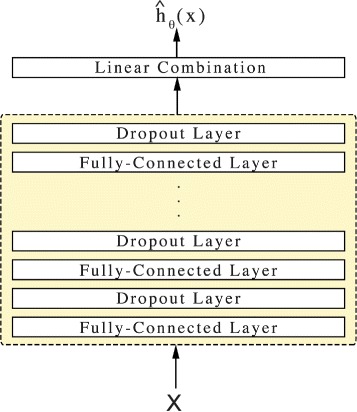
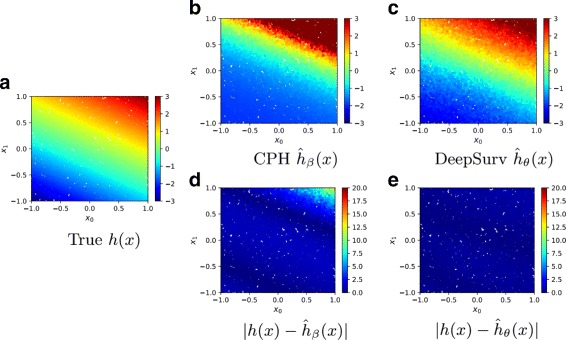
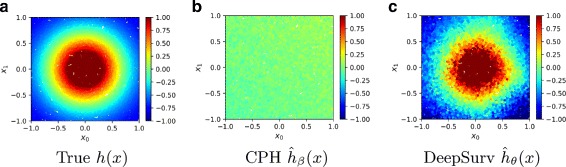
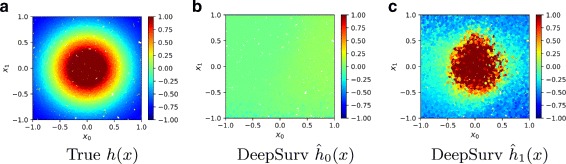
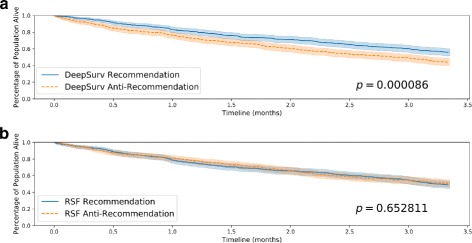
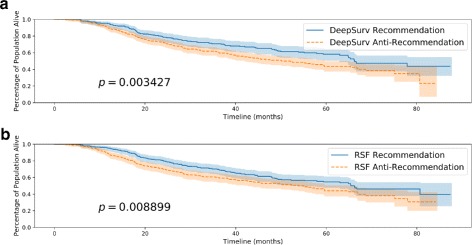
BACKGROUND: Medical practitioners use survival models to explore and understand the relationships between patients' covariates (e.g. clinical and genetic features) and the effectiveness of various treatment options. Standard survival models like the linear Cox proportional hazards model require extensive feature engineering or prior medical knowledge to model treatment interaction at an individual level. While nonlinear survival methods, such as neural networks and survival forests, can inherently model these high-level interaction terms, they have yet to be shown as effective treatment recommender systems. METHODS: We introduce DeepSurv, a Cox proportional hazards deep neural network and state-of-the-art survival method for modeling interactions between a patient's covariates and treatment effectiveness in order to provide personalized treatment recommendations. RESULTS: We perform a number of experiments training DeepSurv on simulated and real survival data. We demonstrate that DeepSurv performs as well as or better than other state-of-the-art survival models and validate that DeepSurv successfully models increasingly complex relationships between a patient's covariates and their risk of failure. We then show how DeepSurv models the relationship between a patient's features and effectiveness of different treatment options to show how DeepSurv can be used to provide individual treatment recommendations. Finally, we train DeepSurv on real clinical studies to demonstrate how it's personalized treatment recommendations would increase the survival time of a set of patients. CONCLUSIONS: The predictive and modeling capabilities of DeepSurv will enable medical researchers to use deep neural networks as a tool in their exploration, understanding, and prediction of the effects of a patient's characteristics on their risk of failure.
Overview
The claims and statistics of this paper haven’t been checked yet.
Run the check — free, no account needed. It reads the open-access text and checks the sources it cites.
Integrity signals
Registry
Cites
Statistics
Figures
Verification
Claims the paper makes
The claims and statistics of this paper haven’t been checked yet.
Run the check — free, no account needed. It reads the open-access text and checks the sources it cites.
Self-check
Percentages, sums and reported differences re-computed from the paper’s own numbers.
The self-check needs the paper’s full text.
Citations
Cites
Adam: A Method for Stochastic Optimization
Kingma, D. P., & Ba, J. (2014) · arXiv · doi:10.48550/arxiv.1412.6980 · Cited by 98,946 · cited 1×
“more than one hidden layer) and apply modern techniques such as weight decay regularization, Rectified Linear Units (ReLU) [17] with batch normalization [18], Scaled Exponential Linear Units (SELU) [19], dropout [20], gradient descent optimization algorithms (Stochastic Gradient Descent and Adaptive Moment Estimation…”
MethodAn Introduction to the Bootstrap
Efron, B., & Tibshirani, R. J. (1994) · doi:10.1201/9780429246593 · Cited by 40,500
(2014) · Cited by 33,419
Batch Normalization: Accelerating Deep Network Training by Reducing Internal Covariate Shift
Ioffe, S., & Szegedy, C. (2015) · arXiv · doi:10.48550/arxiv.1502.03167 · Cited by 27,818
Regression Models and Life-Tables
Cox, D. R. (1992) · Springer Series in Statistics · doi:10.1007/978-1-4612-4380-9_37 · Cited by 26,297 · cited 1×
“iables in outcomes such as death or cancer recurrence and subsequently inform patients of their treatment options [1, 2, 3, 4]. One standard survival model is the Cox proportional hazards model (CPH) [5]. The CPH arXiv:1606.00931v3 [stat.ML] 9 Aug 2017 is a semiparametric model that calculates the effects of observed…”
MethodAn Introduction to the Bootstrap
Efron, B., & Tibshirani, R. J. (1993) · doi:10.1007/978-1-4899-4541-9 · Cited by 21,230
(2010) · International Conference on Machine Learning · Cited by 13,995
Modeling Survival Data: Extending the Cox Model
Therneau, T. M., & Grambsch, P. M. (2000) · Statistics for Biology and Health · doi:10.1007/978-1-4757-3294-8 · Cited by 8,674
(2012) · Cited by 8,009
The genomic and transcriptomic architecture of 2,000 breast tumours reveals novel subgroups
METABRIC Group, Curtis, C., Shah, S. P., Chin, S.-F., Turashvili, G., Rueda, O. M., Dunning, M. J., Speed, D., Lynch, A. G., Samarajiwa, S., et al. (2012) · Nature · doi:10.1038/nature10983 · Cited by 6,097 · cited 1×
“First, we simulate clinical treatment data by including an additional covariate to the simulated data from Section 4.1.2.”
MethodInfluential
Cited by
Sorted by citations
Items 601–700 of 1,000
Hao, R., Zheng, H., & Yang, X. (2022) · Applied Soft Computing · doi:10.1016/j.asoc.2022.109381 · Cited by 10
Baroni, A., Glukhov, A., Pérez, E., Wenger, C., Calore, E., Schifano, S. F., Olivo, P., Ielmini, D., & Zambelli, C. (2022) · Frontiers in Neuroscience · doi:10.3389/fnins.2022.932270 · Cited by 10
Machine learning models for predicting survival in patients with ampullary adenocarcinoma
Huang, T., Huang, L., Yang, R., Li, S., He, N., Feng, A., Li, L., & Lyu, J. (2022) · Asia-Pacific Journal of Oncology Nursing · doi:10.1016/j.apjon.2022.100141 · Cited by 11
Tarkhan, A., & Simon, N. (2022) · Biostatistics · doi:10.1093/biostatistics/kxac039 · Cited by 10
Developing an Improved Survival Prediction Model for Disease Prognosis
Chen, Z., & Wei, Q. (2022) · Biomolecules · doi:10.3390/biom12121751 · Cited by 10
Agarwal, S. (2022) · IEEE Annual Ubiquitous Computing, Electronics & Mobile Communication Conference (UEMCON) · doi:10.1109/uemcon54665.2022.9965655 · Cited by 10
Chen, X., Li, Y., Cao, X., Qiang, M., Liang, C., Ke, L., Cai, Z., Huang, Y., Zhan, Z., Zhou, J., et al. (2023) · Lipids in Health and Disease · doi:10.1186/s12944-023-01830-2 · Cited by 10
AttOmics: attention-based architecture for diagnosis and prognosis from omics data
Beaude, A., Vahid, M. R., Augé, F., Zehraoui, F., & Hanczar, B. (2023) · Bioinformatics · doi:10.1093/bioinformatics/btad232 · Cited by 11
Pacella, G., Brunese, M. C., D’Imperio, E., Rotondo, M., Scacchi, A., Carbone, M., & Guerra, G. (2023) · Journal of Clinical Medicine · doi:10.3390/jcm12237380 · Cited by 10
Deep-Learning-Based Survival Prediction of Patients in Coronary Care Units
Yang, R., Huang, T., Wang, Z., Huang, W., Feng, A., Li, L., & Lyu, J. (2021) · Computational and Mathematical Methods in Medicine · doi:10.1155/2021/5745304 · Cited by 10
Artificial intelligence predictive system of individual survival rate for lung adenocarcinoma
He, T., Li, J., Wang, P., & Zhang, Z. (2022) · Computational and Structural Biotechnology Journal · doi:10.1016/j.csbj.2022.05.005 · Cited by 10
Chen, J., Yang, H.-S., Moi, S., Chuang, L., & Yang, C. (2021) · Therapeutic Advances in Chronic Disease · doi:10.1177/2040622321992624 · Cited by 11
A practical overview and decision tool for analyzing recurrent events in mental illness: A review
Kaster, T. S., Vigod, S. N., Gomes, T., Wijeysundera, D. N., Blumberger, D. M., & Sutradhar, R. (2021) · Journal of Psychiatric Research · doi:10.1016/j.jpsychires.2021.02.031 · Cited by 10
Arai, J., Aoki, T., Hayakawa, Y., Niikura, R., Suzuki, N., Yamada, A., Hirata, Y., & Koike, K. (2021) · Alimentary Pharmacology & Therapeutics · doi:10.1111/apt.16492 · Cited by 10
Predicting Progression of Kidney Injury Based on Elastography Ultrasound and Radiomics Signatures
Zhu, M., Tang, L., Yang, W., Xu, Y., Che, X., Zhou, Y., Shao, X., Zhou, W., Zhang, M., Li, G., et al. (2022) · Diagnostics · doi:10.3390/diagnostics12112678 · Cited by 10
Survival analysis using deep learning with medical imaging
Morrison, S., Gatsonis, C. A., Eloyan, A., & Steingrimsson, J. A. (2023) · The International Journal of Biostatistics · doi:10.1515/ijb-2022-0113 · Cited by 9
Deep Bayesian survival analysis of rail useful lifetime
Zeng, C., Huang, J., Wang, H., Xie, J., & Zhang, Y. (2023) · Engineering Structures · doi:10.1016/j.engstruct.2023.116822 · Cited by 9
Vaags, E., Lence, B. J., & Kshirsagar, S. (2023) · Journal of Infrastructure Systems · doi:10.1061/jitse4.iseng-2176 · Cited by 9
Kaynar, G., Cakmakci, D., Bund, C., Todeschi, J., Namer, I. J., & Çiçek, A. E. (2023) · Bioinformatics · doi:10.1093/bioinformatics/btad684 · Cited by 10
Billichová, M., Coan, L. J., Czanner, S., Kováčová, M., Sharifian, F., & Czanner, G. (2024) · PLoS ONE · doi:10.1371/journal.pone.0297190 · Cited by 9
Cross-site prognosis prediction for nasopharyngeal carcinoma from incomplete multi-modal data
Ren, C.-X., Xu, G.-X., Dai, D., Lin, L. C., Sun, Y. H., & Liu, Q. (2024) · Medical Image Analysis · doi:10.1016/j.media.2024.103103 · Cited by 9
Shahzadi, I., Seidlitz, A., Beuthien‐Baumann, B., Zwanenburg, A., Platzek, I., Kotzerke, J., Baumann, M. A., Krause, M., Troost, E. G. C., & Löck, S. (2024) · Scientific Reports · doi:10.1038/s41598-024-55092-8 · Cited by 11
Alinia, S., Jafarabadi, M. A., Mahmoudi, L., Roshanaei, G., & Safari, M. (2024) · Heliyon · doi:10.1016/j.heliyon.2024.e27854 · Cited by 9
Wang, W., Wang, W., Zhang, D., Zeng, P., Wang, Y., Lei, M., Hong, Y., & Cai, C. (2024) · Scientific Reports · doi:10.1038/s41598-024-56687-x · Cited by 12
Xv, Y., Wei, Z., Jiang, Q., Zhang, X., Chen, Y., Xiao, B., Yin, S., Xia, Z., Qiu, M., Li, Y., et al. (2024) · International Journal of Surgery · doi:10.1097/js9.0000000000001808 · Cited by 9
An Integrated Uncertainty Quantification Model for Longitudinal and Time-to-Event Data
Huh, Y. K., Kim, M., Liu, K., & Zhou, S. (2024) · IEEE Transactions on Automation Science and Engineering · doi:10.1109/tase.2024.3432400 · Cited by 9
Yu, C., Fang, Y., Jiang, F., Yin, S.-J., Jiang, M.-H., Li, Y.-J., Yang, H., Chen, L., Cai, W., & He, G. (2024) · Journal of Translational Medicine · doi:10.1186/s12967-024-05544-6 · Cited by 9
“The DeepSurv is a feed-forward neural network method based on the Cox proportional hazards model, which was proven to perform well without prior assumptions on the risk function [24].”
MethodDeepSurv landmarking: a deep learning approach for dynamic survival analysis with longitudinal data
Wang, Y., Xie, J., & Zhao, X. (2024) · Journal of Statistical Computation and Simulation · doi:10.1080/00949655.2024.2422922 · Cited by 9
“As a well-known machine-learning-based survival model, DeepSurv [23] provides a feedforward deep neural network designed on Cox proportional hazards (CPH) model, it employs a multi-layer neural network to learn complex relationships between features and predicts survival risks for each patient…”
Diamantopoulou, M. J., & Georgakis, A. (2024) · Forests · doi:10.3390/f15122251 · Cited by 9
Steinfeldt, J., Wild, B., Buergel, T., Pietzner, M., zu Belzen, J. U., Vauvelle, A., Hegselmann, S., Denaxas, S., Hemingway, H., Langenberg, C., et al. (2025) · Nature Communications · doi:10.1038/s41467-025-55879-x · Cited by 11
“The risk model is a multi-task neural network that uses the binary representations of an individual ’ s prior health records before recruitment to simultaneously predict log partial hazards 65 for a set of 1741 endpoints.”
Lee, J., Jung, K., Newman, E., Chow, E., & Chen, Y. (2025) · CHI Conference on Human Factors in Computing Systems · doi:10.1145/3706598.3713244 · Cited by 15
“…experiences, either as individuals directly interacting with AI-driven personal health technologies (e.g., tracking [43, 61, 172], chatbots [27, 126, 181]) or as patients benefiting from healthcare providers who use an AI system (e.g., screening [66, 77, 135], treat-ment selection [88, 98, 183]).”
Ding, R.-W., Luong, K.-D., Rodriguez, E., da Silva, A. C. A. L., & Hsu, W. (2024) · Scientific Reports · doi:10.1038/s41598-025-99042-4 · Cited by 13
“The negative logarithm of Cox partial likelihood loss from DeepSurv [29] was used as the training objective.”
Integrating images and genomics for multi-modal cancer survival analysis via mixture of experts
Zhang, W., Xu, W., Chen, T., Sakal, C., & Li, X. (2025) · Information Fusion · doi:10.1016/j.inffus.2025.103521 · Cited by 12
Transformer-based representation learning for robust gene expression modeling and cancer prognosis
Jiang, S., & Hassanpour, S. (2025) · Scientific Reports · doi:10.1038/s41598-025-14949-2 · Cited by 10
“For example, DeepSurv and Cox-nnet used a multi-layer artificial neural network (ANN) model to encode RNA-seq data for survival analysis [24,25].”
Eskandar, K. (2025) · International Urology and Nephrology · doi:10.1007/s11255-025-04912-5 · Cited by 11
Sun, J.-R., Sun, X.-N., Lu, B.-J., & Deng, B. (2025) · World Journal of Gastroenterology · doi:10.3748/wjg.v31.i46.111176 · Cited by 12
“Katzman et al [50] created an extreme gradient boosting model that outperformed traditional Cox regression in forecasting survival in HCC patients.”
Synthetic data generation methods for longitudinal and time series health data: a systematic review
Miletic, M., & Sariyar, M. (2025) · BMC Medical Informatics and Decision Making · doi:10.1186/s12911-025-03326-8 · Cited by 12
“For time-to-event outcomes, survival models such as the Cox proportional hazards model and DeepSurv [124] are also employed, though less frequently in this subset.”
Yang, Y., Wang, Z.-Y., Liu, Q., Sun, S., Wang, K., Chellappa, R., Zhou, Z., Yuille, A., Zhu, L., Zhang, Y.-D., et al. (2025) · IEEE/CVF International Conference on Computer Vision (ICCV) · doi:10.1109/iccv51701.2025.00779 · Cited by 9
Mei, H., Xu, Y., Wang, J., & Ma, S. (2020) · Entropy · doi:10.3390/e22121349 · Cited by 9
Fenchel duality of Cox partial likelihood with an application in survival kernel learning
Wilson, C. M., Li, K., Sun, Q., Kuan, P. F., & Wang, X. (2021) · Artificial Intelligence in Medicine · doi:10.1016/j.artmed.2021.102077 · Cited by 9
Lalitha, T. B., & Sreeja, P. S. (2021) · Lecture notes in networks and systems · doi:10.1007/978-981-16-0882-7_36 · Cited by 11
A Deep Neural Network (DNN) Approach for Recommendation Systems
Shekhar, S., Singh, A., & Gupta, A. K. (2022) · Lecture notes in networks and systems · doi:10.1007/978-981-16-9756-2_37 · Cited by 9
Wang, Y., Flowers, C. R., Li, Z., & Huang, X. (2022) · Journal of Biomedical Informatics · doi:10.1016/j.jbi.2022.104117 · Cited by 9
In with the old, in with the new: machine learning for time to event biomedical research
Danciu, I., Agasthya, G. A., Tate, J. P., Chandrashekar, M., Goethert, I., Ovchinnikova, O. S., McMahon, B. H., & Justice, A. C. (2022) · Journal of the American Medical Informatics Association · doi:10.1093/jamia/ocac106 · Cited by 9
Xu, Y. L., Jiang, L., Chen, W., Huang, S., Liu, Z., & Zhang, J. (2022) · Journal of Cancer Research and Clinical Oncology · doi:10.1007/s00432-022-04435-x · Cited by 9
Liu, J., Islam, M. T., Sang, S., Qiu, L., & Xing, L. (2023) · npj Precision Oncology · doi:10.1038/s41698-023-00468-8 · Cited by 9
Energy-Based Survival Models for Predictive Maintenance
Holmer, O., Frisk, E., & Krysander, M. (2023) · IFAC-PapersOnLine · doi:10.1016/j.ifacol.2023.10.762 · Cited by 9
Shi, Y., Wang, M., Liu, H., Zhao, F., Li, A., & Chen, X. (2024) · IEEE Journal of Biomedical and Health Informatics · doi:10.1109/jbhi.2024.3363161 · Cited by 10
Hu, W., & Zhou, J. (2024) · Computational Economics · doi:10.1007/s10614-024-10567-8 · Cited by 11
Li, H., Dong, D., Fang, M., He, B., Liu, S., Hu, C. Y., Liu, Z., Wang, H., Tang, L., & Tian, J. (2024) · IEEE Journal of Biomedical and Health Informatics · doi:10.1109/jbhi.2024.3484991 · Cited by 9
Using survival prediction techniques to learn consumer-specific reservation price distributions
Jin, P., Haider, H., Greiner, R., Wei, S., & Häubl, G. (2021) · PLoS ONE · doi:10.1371/journal.pone.0249182 · Cited by 9
Robust identification of molecular phenotypes using semi-supervised learning
Röder, H., Oliveira, C., Net, L., Linstid, B., Tsypin, M., & Roder, J. (2019) · BMC Bioinformatics · doi:10.1186/s12859-019-2885-3 · Cited by 9
Marschner, S. N., Lombardo, E., Minibek, L., Holzgreve, A., Kaiser, L., Albert, N. L., Kurz, C., Riboldi, M., Späth, R., Baumeister, P., et al. (2021) · Diagnostics · doi:10.3390/diagnostics11091581 · Cited by 9
Tightly integrated multiomics-based deep tensor survival model for time-to-event prediction
Zhang, J. Z., Xu, W., & Hu, P. (2022) · Bioinformatics · doi:10.1093/bioinformatics/btac286 · Cited by 9
Liao, F., Wang, W., & Wang, J. (2022) · European Archives of Oto-Rhino-Laryngology · doi:10.1007/s00405-022-07627-w · Cited by 9
A Federated Cox Model with Non-proportional Hazards
Zhang, D., Toni, F., & Williams, M. (2022) · Studies in computational intelligence · doi:10.1007/978-3-031-14771-5_12 · Cited by 10
Joint learning sample similarity and correlation representation for cancer survival prediction
Hao, Y., Jing, X., & Sun, Q. (2022) · BMC Bioinformatics · doi:10.1186/s12859-022-05110-1 · Cited by 9
Ma, B., Li, Y., Chu, H., Tang, W., Arévalo, L. R. D. L. O., Guo, J., van Ooijen, P. M. A., Both, S., Langendijk, J. A., van Dijk, L. V., et al. (2023) · Lecture notes in computer science · doi:10.1007/978-3-031-27420-6_24 · Cited by 9
Wang, F., Chen, L., Liu, L., Jia, Y., Li, W., Wang, L., Zhi, J., Liu, W., Li, W., & Li, Z. (2023) · Journal of Cancer Research and Clinical Oncology · doi:10.1007/s00432-023-05123-0 · Cited by 9
Guijo-Rubio, D., Villalón-Vaquero, P. J., Gutiérrez, P. A., Ayllón, M. D., Briceño, J., & Hervás‐Martínez, C. (2019) · Lecture notes in computer science · doi:10.1007/978-3-030-33617-2_11 · Cited by 9
SODEN: A Scalable Continuous-Time Survival Model through Ordinary Differential Equation NetworksPreprint
Tang, W., Ma, J., Mei, Q., & Zhu, J. (2020) · arXiv (Cornell University) · doi:10.48550/arxiv.2008.08637 · Cited by 9
BERTSurv: BERT-Based Survival Models for Predicting Outcomes of Trauma PatientsPreprint
Zhao, Y., Hong, Q., Zhang, X., Deng, Y., Wang, Y., & Petzold, L. R. (2021) · arXiv (Cornell University) · doi:10.48550/arxiv.2103.10928 · Cited by 29
Penalized deep partially linear cox models with application to CT scans of lung cancer patients
Sun, Y., Kang, J., Haridas, C., Mayne, N. R., Potter, A. L., Yang, C. J., Christiani, D. C., & Li, Y. (2024) · Biometrics · doi:10.1093/biomtc/ujad024 · Cited by 8
An uncertainty-based interpretable deep learning framework for predicting breast cancer outcome
Chai, H., Lin, S., Lin, J., He, M., Yang, Y., OuYang, Y., & Zhao, H. (2024) · BMC Bioinformatics · doi:10.1186/s12859-024-05716-7 · Cited by 10
Deep Copula-Based Survival Analysis for Dependent Censoring with Identifiability Guarantees
Zhang, W., Ling, C. K., & Zhang, X. (2024) · Proceedings of the AAAI Conference on Artificial Intelligence · doi:10.1609/aaai.v38i18.30047 · Cited by 8
Islam, N., Reuben, J. S., Dale, J. L., Coates, J. W., Sapiah, K., Markson, F. R., Jordan, C. T., & Smith, C. A. (2024) · JMIR Cancer · doi:10.2196/54740 · Cited by 8
Chen, L., Huang, Z. H., Sun, Y., Domaratzki, M., Liu, Q., & Hu, P. (2024) · PLoS Computational Biology · doi:10.1371/journal.pcbi.1012490 · Cited by 8
Exploiting common patterns in diverse cancer types via multi-task learning
Wu, B., Arriagada, S. O., Hsu, T.-C., Lin, T.-W., & Lin, C. (2024) · npj Precision Oncology · doi:10.1038/s41698-024-00700-z · Cited by 8
“Huang et al. ’ s study 33 compared Cox-based models like Cox-nnet 34 , DeepSurv, and AECOX 33 across twelve cancer types.”
Wang, X., Sarangi, V., Wickland, D. P., Li, S., Chen, D., Thompson, E. A., Jenkinson, G., & Asmann, Y. W. (2024) · Expert Systems with Applications · doi:10.1016/j.eswa.2024.125632 · Cited by 8
Deep learning for regression analysis of interval-censored data
Du, M., Wu, Q., Tong, X., & Zhao, X. (2024) · Electronic Journal of Statistics · doi:10.1214/24-ejs2298 · Cited by 8
TorchSurv: A Lightweight Package for Deep Survival Analysis
Monod, M., Krusche, P., Cao, Q., Sahiner, B., Petrick, N., Ohlssen, D. I., & Coroller, T. P. (2024) · The Journal of Open Source Software · doi:10.21105/joss.07341 · Cited by 8
Multimodal Fusion Framework Based on Low-Rank Interaction for Tumor Prognostic Prediction
An, Y., Lan, R., Lin, H., Wang, Y., Deng, H., Liu, Z., Wang, L., Liu, Z., Lu, C. Y., Yang, H., et al. (2025) · IEEE Transactions on Computational Biology and Bioinformatics · doi:10.1109/tcbbio.2025.3578334 · Cited by 8
“Katzman et al. [25] introduced high-throughput transcriptomics data from RNA-Seq and established a Cox-net model.”
Wang, C., Zhou, H., Lin, S., Weng, X., Shao, Y., & Yu, T. (2025) · Reliability Engineering & System Safety · doi:10.1016/j.ress.2025.111401 · Cited by 8
Lee, H., Kim, J., Kwak, S., Rehman, A., Park, S. M., & Chang, J. (2025) · npj Digital Medicine · doi:10.1038/s41746-025-01957-9 · Cited by 8
“However, employing DeepSurv, which leverages deep learning to enhance Cox PH modeling, could improve prediction performance.”
Immunotherapy efficacy predictive tool for lung adenocarcinoma based on neural network
Li, W., Fu, S., Gao, X., Lü, Z., Jin, R., Qin, N., Zhang, X., Wu, Y., Li, W., & Wang, J. (2023) · Frontiers in Immunology · doi:10.3389/fimmu.2023.1141408 · Cited by 8
Pant, S., Kang, S., Lee, M., Phuc, P.-S., Yang, H.-J., & Yang, D. (2023) · Healthcare · doi:10.3390/healthcare11081171 · Cited by 8
Looareesuwan, P., Boonmanunt, S. W., Siriyotha, S., Lukkunaprasit, T., Thammasudjarit, R., Pattanaprateep, O., Nimitphong, H., Reutrakul, S., Attia, J., McKay, G. J., et al. (2023) · Informatics in Medicine Unlocked · doi:10.1016/j.imu.2023.101285 · Cited by 7
Wan, G., Leung, B. W., DeSimone, M. S., Nguyen, N., Rajeh, A. A., Collier, M. R., Rashdan, H., Roster, K., Zhou, X., Moseley, C., et al. (2023) · Journal of the American Academy of Dermatology · doi:10.1016/j.jaad.2023.08.105 · Cited by 8
Starke, S., Zwanenburg, A., Leger, K., Lohaus, F., Linge, A., Kalinauskaitė, G., Tinhofer, I., Guberina, N., Guberina, M., Balermpas, P., et al. (2023) · Cancers · doi:10.3390/cancers15194897 · Cited by 8
Yang, P., Qiu, H., Yang, X., Wang, L., & Wang, X. (2024) · Computer Methods and Programs in Biomedicine · doi:10.1016/j.cmpb.2024.108159 · Cited by 8
Multi-Modality Regional Alignment Network for Covid X-Ray Survival Prediction and Report Generation
Zhong, Z., Li, J., Sollee, J., Collins, S., Bai, H. X., Zhang, P. J., Healey, T. T., Atalay, M. K., Gao, X., & Jiao, Z. (2024) · IEEE Journal of Biomedical and Health Informatics · doi:10.1109/jbhi.2024.3417849 · Cited by 10
“These models utilize image encoders and text encoders in MRANet for feature extraction; their respective survival predictors are RSF [21], CPH model [22], and Vanilla [23].”
tdCoxSNN: Time-dependent Cox survival neural network for continuous-time dynamic prediction
Zeng, L., Zhang, J., Chen, W., & Ding, Y. (2024) · Journal of the Royal Statistical Society Series C (Applied Statistics) · doi:10.1093/jrsssc/qlae051 · Cited by 8
Deep contrastive learning for predicting cancer prognosis using gene expression values
Sun, A., Franzmann, E. J., Chen, Z., & Cai, X. (2024) · Briefings in Bioinformatics · doi:10.1093/bib/bbae544 · Cited by 9
Shen, S., Qiu, X., Yang, C., Li, J., Peng, Y., Wen, Z., Luo, H., & Xiang, B. (2024) · BMC Cancer · doi:10.1186/s12885-024-13174-w · Cited by 8
“DeepSurv, a deep learning model specialized in analyzing survival time data, was utilized due to its enhanced adaptability to intricate data relationships, surpassing traditional CPH model [13].”
Liu, Y., Li, A., Liu, J., Meng, G., & Wang, M. (2021) · IEEE Transactions on Computational Biology and Bioinformatics · doi:10.1109/tcbb.2021.3080295 · Cited by 10
Deep survival analysis with longitudinal X-rays for COVID-19
Shu, M., Bowen, R. S., Herrmann, C., Qi, G., Santacatterina, M., & Ramin Zabih, A. (2021) · IEEE/CVF International Conference on Computer Vision (ICCV) · doi:10.1109/iccv48922.2021.00401 · Cited by 8
Kim, B., Jang, Y. J., Cho, H. R., Kim, S. Y., Jeong, J. E., Shim, M. K., & Kim, M. G. (2021) · Clinical and Translational Science · doi:10.1111/cts.13187 · Cited by 8
Lee, S., Lee, E., Park, S., Park, M. S., Jung, J., Min, G. J., Park, S., Lee, S., Cho, B., Eom, K., et al. (2022) · Bone Marrow Transplantation · doi:10.1038/s41409-022-01583-z · Cited by 8
Clift, A. K., Hippisley‐Cox, J., Dodwell, D. J., Lord, S., Brady, M., Petrou, S., & Collins, P. G. S. (2022) · BMJ Open · doi:10.1136/bmjopen-2021-050828 · Cited by 8
An Integrated Multilayered Framework for IoT Security Intrusion Decisions
Sallay, H. (2022) · Intelligent Automation & Soft Computing · doi:10.32604/iasc.2023.030791 · Cited by 8
Nakamura, K., Zhou, X. M., Sahara, N., Toyoda, Y., Enomoto, Y., Hara, H., Noro, M., Sugi, K., Huang, M. S., Moroi, M., et al. (2022) · Diagnostics · doi:10.3390/diagnostics12122947 · Cited by 8
Lin, C.-H., Kuo, Y., Huang, Y.-C., Lee, M., Huang, Y.-W., Kuo, C., & Lee, J.-D. (2023) · International Journal of Environmental Research and Public Health · doi:10.3390/ijerph20043043 · Cited by 8
Li, B., Yang, L., Jiang, C., Yao, Y., Li, H., Cheng, S., Zou, B., Fan, B., & Wang, L. (2023) · Frontiers in Oncology · doi:10.3389/fonc.2023.1052147 · Cited by 8
Deep-learning-based survival prediction of patients with cutaneous malignant melanoma
Yu, H., Yang, W., Wu, S., Xi, S., Xia, X., Zhao, Q., Ming, W., Wu, L., Hu, Y., Deng, L., et al. (2023) · Frontiers in Medicine · doi:10.3389/fmed.2023.1165865 · Cited by 8
Deep Clustering Survival Machines with Interpretable Expert Distributions
Hou, B., Li, H., Jiao, Z., Zhou, Z. X., Zheng, H. R., & Yong Fan, A. (2023) · IEEE International Symposium on Biomedical Imaging (ISBI) · doi:10.1109/isbi53787.2023.10230844 · Cited by 8
A self-supervised method for treatment recommendation in sepsis
Zhu, S., & Pu, J. (2021) · Frontiers of Information Technology & Electronic Engineering · doi:10.1631/fitee.2000127 · Cited by 8
Chen, G. H. (2019) · arXiv (Cornell University) · doi:10.48550/arxiv.1905.05285 · Cited by 7
A General Framework for Survival Analysis and Multi-State ModellingPreprint
Groha, S., Schmon, S. M., & Gusev, A. (2020) · arXiv (Cornell University) · doi:10.48550/arxiv.2006.04893 · Cited by 8
SurvBoard: Standardised Benchmarking for Multi-omics Cancer Survival ModelsPreprint
Wissel, D., Janakarajan, N., Grover, A., Toniato, E., Martínez, M. R., & Boeva, V. (2022) · bioRxiv (Cold Spring Harbor Laboratory) · doi:10.1101/2022.11.18.517043 · Cited by 8
Arroyo, Á., Cartea, Á., Moreno-Pino, F., & Zohren, S. (2023) · SSRN Electronic Journal · doi:10.2139/ssrn.4432087 · Cited by 11
Metadata
- Authors
- Katzman, J. L., Shaham, U., Cloninger, A., Bates, J., Jiang, T., & Kluger, Y.
- Affiliations
- Yale University (US)
- Yale New Haven Hospital (US)
- Yale Cancer Center (US)
- Corresponding author
- Kluger, Yuval
- Venue
- BMC Medical Research Methodology
- Published
- 2018-02-26
- Volume
- 18
- Issue
- 1
- Pages
- 24-24
- ISSN
- 1471-2288 (ISSN-L)
- PMC
- PMC5828433
- OpenAlex
- W2753919178
- Cited by
- 1,995
- References
- 49
- Citations by year
- 2026: 376 · 2025: 386 · 2024: 321 · 2023: 301 · 2022: 238 · 2021: 206 · 2020: 94 · 2019: 54 · 2018: 18
- FWCI
- 52.41
- Type
- journal article
- Language
- en
- Open access
- gold
- doi.org
- Locations
- BMC Medical Research Methodology (publishedVersion, cc-by)
- PubMed Central (publishedVersion, cc-by)
- PubMed (publishedVersion)
- arXiv (Cornell University) (submittedVersion)
- DOAJ (DOAJ: Directory of Open Access Journals) (submittedVersion, cc-by-sa)
- arXiv (Cornell University)
- Funders
- National Human Genome Research Institute (1R01HG008383-01A1)
- Directorate for Mathematical and Physical Sciences (DMS-1402254)
- Topics
- Physical Sciences › Computer Science › Artificial Intelligence › Machine Learning in Healthcare
- Physical Sciences › Mathematics › Statistics and Probability › Statistical Methods and Inference
- Physical Sciences › Computer Science › Information Systems › Recommender Systems and Techniques
- Keywords
- DeepSurv, Cox proportional hazards model, deep neural network, survival analysis, personalized treatment recommendations, treatment effectiveness, clinical trials
- MeSH terms
- Algorithms, Humans, Proportional Hazards Models, Neural Networks, Computer, Outcome Assessment, Health Care, Kaplan-Meier Estimate, Precision Medicine
About these checks
Registry, retraction, Cites and statistics results are computed, not judged, with one exception: a printed reference that no index lists is read once by a model before it counts as a citation error. Claims are extracted by a model and kept only when their quote appears verbatim in the text; each cited source is then checked, with a model’s help, for whether it says what the claim relies on. Those verdicts can be wrong — read the claim’s quote and the cited source before relying on one.
Statistics and arithmetic are recomputed, not judged.
Confidence bands are shown only for fields calibrated on our annotated test set. None is calibrated yet, so no band is shown.
What counts as a claim ›How we measure confidence ›How we check this ›
Are you an author, or do you see a problem with this page? Request a review
