

Workflow interruption and nurses’ mental workload in electronic health record tasks: An observational study
Open accessThe DOI matches its Crossref record; 48 of the 51 references it cites were found in a registry or an index, and 1 are not checked yet; 6 of the 45 sources its claims cite were checked for support.
Abstract
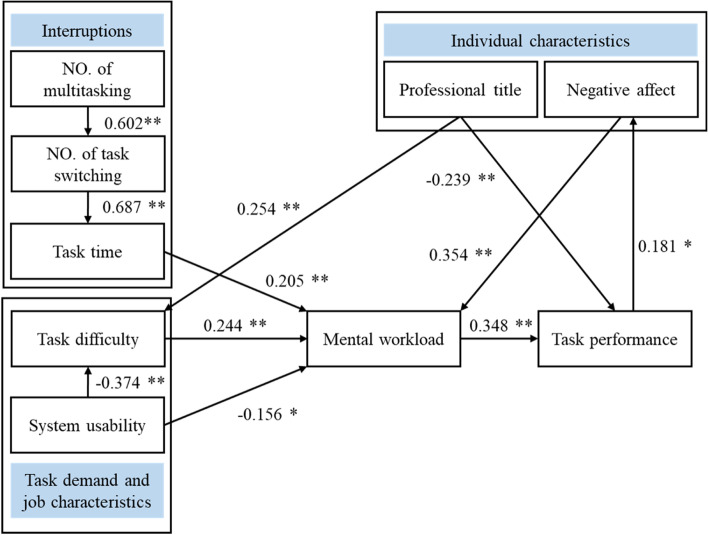
Background: Workflow interruptions are common in modern work systems. Electronic health record (EHR) tasks are typical tasks involving human–machine interactions in nursing care, but few studies have examined interruptions and nurses’ mental workload in the tasks. Therefore, this study aims to investigate how frequent interruptions and multilevel factors affect nurses’ mental workload and performance in EHR tasks. Methods: A prospective observational study was conducted in a tertiary hospital providing specialist and sub-specialist care from June 1 st to October 31 st, 2021. An observer documented nurses’ EHR task interruptions, reactions and performance (errors and near errors) during one-shift observation sessions. Questionnaires were administered at the end of the electronic health record task observation to measure nurses’ mental workload for the electronic health record tasks, task difficulty, system usability, professional experience, professional competency, and self-efficacy. Path analysis was used to test a hypothetical model. Results: In 145 shift observations, 2871 interruptions occurred, and the mean task duration was 84.69 (SD 56.68) minutes per shift. The incidence of error or near error was 158, while 68.35% of errors were self-corrected. The total mean mental workload level was 44.57 (SD 14.08). A path analysis model with adequate fit indices is presented. There was a relationship among concurrent multitasking, task switching and task time. Task time, task difficulty and system usability had direct effects on mental workload. Task performance was influenced by mental workload and professional title. Negative affect mediated the path from task performance to mental workload. Conclusions: Nursing interruptions occur frequently in EHR tasks, come from different sources and may lead to elevated mental workload and negative outcomes. By exploring the variables related to mental workload and performance, we offer a new perspective on quality improvement strategies. Reducing harmful interruptions to decrease task time can avoid negative outcomes. Training nurses to cope with interruptions and improve competency in EHR implementation and task operation has the potential to decrease nurses’ mental workload and improve task performance. Moreover, improving system usability is beneficial to nurses to mitigate mental workload.
Verified 2026-10-05 · 1 reference not checked yet
Overview
CoChat Summary
TL;DR
In 145 observed shifts in a tertiary hospital, nurses’ EHR tasks were interrupted 2,871 times (14.03/hour), and path analysis linked interruption-related task time, task difficulty, system usability, professional title, and negative affect to mental workload and task performance. The authors conclude that reducing harmful interruptions and improving EHR usability and training may lower nurses’ mental workload and improve task performance.
Key findings
- Across 145 shift observations, there were 2,871 interruptions; mean EHR task duration was 84.69 (SD 56.68) minutes per shift, or 14.03 interruptions per hour. Top interruption sources were nurse colleagues (1,026; 35.74%), patients (773; 26.92%), and nurses themselves (366; 12.75%); 71.37% led to task switching and 28.63% to concurrent multitasking.
- Error or near-error incidence was 158, with a mean of 1.09 (SD 1.31) per shift; 68.35% of errors were self-corrected. The total mean NASA-TLX mental workload score was 44.57 (SD 14.08).
- In the final path model, task time (β = 0.205, p < 0.05) and task difficulty (β = 0.244, p < 0.001) directly increased mental workload, while system usability directly decreased mental workload (β = −0.156, p < 0.05) and reduced task difficulty (β = −0.374, p < 0.001). Mental workload predicted task performance (β = 0.348, p < 0.001); professional title predicted task performance (β = −0.239, p < 0.001) and task difficulty (β = 0.254, p < 0.001); negative affect predicted mental workload (β = 0.354, p < 0.001) and was predicted by task performance (β = 0.181, p < 0.05).
- Self-efficacy did not significantly predict mental workload (β = −0.127, p = 0.125) and was not retained in the final model.
Methods
- Prospective observational study with non-participatory observation and questionnaires in a tertiary teaching hospital’s internal medicine and surgical departments from June 1 to October 31, 2021. Nurses were observed during all EHR tasks across shifts (8 h); 152 nurses were observed, and complete data were collected for 145 shifts (32.41% night shifts).
- A self-designed observational tool recorded EHR tasks, interruption sources, and reactions (task switching or concurrent multitasking). Performance was scored as errors (2 points) and near errors (1 point). Mental workload was measured with the Chinese NASA-TLX; task difficulty, system usability, professional competency, self-efficacy, and positive/negative affect were measured with questionnaires.
- Analysis used descriptive statistics, Pearson correlations, and path analysis with maximum likelihood in SPSS Amos v23. The final model fit was χ² = 30.168, df = 25, p = 0.218, RMSEA = 0.038, GFI = 0.924, AGFI = 0.987, CFI = 0.982, TLI = 0.974, NFI = 0.906, and IFI = 0.983.
Limitations
- Stated: mental workload was assessed statically, which may involve recall bias and limits inferences about dynamic changes over time; non-participatory observation may have modified participants’ behavior; observer fatigue over long observations may have led to missed clinical information; and real-time error recognition was limited.
- Evident from the text: the study was conducted in one tertiary teaching hospital and only in internal medicine and surgical departments, with a predominantly female sample (138/145; 95.17%), limiting generalizability; the observational design cannot establish causality.
- Evident from the text: some reported values are inconsistent—mental workload is reported as 44.57 (SD 14.08) in the abstract/Table 3 but 46.21 (SD 14.76) in the Discussion, and system usability is reported as 69.23 (SD 17.65) in the text but 56.94 (SD 13.71) in Table 3—which may affect interpretation.
Model-written summary. Check it against the paper before relying on it.
Integrity signals
Registry
Cites
Statistics
Figures
Verification
Claims the paper makes
5 Valid · 0 Not valid · 28 Not checked · 75 Own results and interpretations
The cited sources support only part of this claim — read each source’s verdict below.
In the paper
“Apart from very few studies focused on the interruption of medication administration, which is considered a priority in nursing care [2], there is a lack of investigations on specific nursing tasks.”
§ Workflow interruption and nurses’ mental workload in electronic health record tasks: An observational study > Background
What the sources say
- Partly supportedcites [2] Tsegaye D Alem G Tessema Z Alebachew W Medication administration errors and associated factors among nurses Int J Gen Med 2020 13 1621 1632 10.2147/IJGM.S289452 33376387 PMC7764714 sourceExperimental — accuracy not yet measured
Our copy supports the characterisation of interruption during medication administration as a studied and prioritised nursing-care issue: the Results (Work, Managerial, and Professional-Related Factors; Table 4, Other Factors Contributing to a MAE) report interruption as a factor (51.2% of nurses faced interruption; 63.3% endorsed it as contributing), the Discussion (Interruption during medication administration was the third factor significantly associated...) and Conclusion list it among the factors significantly associated with MAE, and the Background notes MAE can be prevented by 'minimizing interruptions during the medication administration process'. However, the paper makes no statement about a lack of investigations on specific nursing tasks, and it does not describe interruption research as scarce — it instead credits supporting evidence to prior work at Felege Hiwot Referral Hospital, a systematic review in African hospitals and two public hospitals in Southern Ethiopia (Discussion, refs 26, 34, 35). The gap/bibliometric part of the claim is therefore not supported by this source. (LLM, conf=0.68)
plain- Asserted: passes — The authors put it forward as true.
- Checkable: passes — It can be checked against evidence.
- Load-bearing: passes — The paper’s conclusions depend on it.
- Based: passes — The paper gives a reason why it holds.
- Partly supported
The cited sources support only part of this claim — read each source’s verdict below.
In the paper
“However, interruptions in EHR tasks are quite common, as EHR tasks are considered one of the lowest priorities in nursing care under the modern nursing emphasis on being”
§ Workflow interruption and nurses’ mental workload in electronic health record tasks: An observational study > Background
What the sources say
- Partly supportedcites [2] Tsegaye D Alem G Tessema Z Alebachew W Medication administration errors and associated factors among nurses Int J Gen Med 2020 13 1621 1632 10.2147/IJGM.S289452 33376387 PMC7764714 sourceExperimental — accuracy not yet measured
Our copy supports only the general point that interruptions during a nursing task are common: Results (Work, Managerial, and Professional-Related Factors, Table 3) report 51.2% of 414 nurses faced interruption during medication administration, Table 4 shows 63.3% identified it as a contributing factor, and the Discussion lists interruption as the third factor significantly associated with medication administration error. However, the paper never mentions electronic health records or EHR tasks anywhere (searched: 'electronic health record (EHR) tasks interruption', 'EHR documentation / computerized provider order entry / nursing informatics'); its data come from self-administered questionnaires and a paper observational checklist, with only retrospective review of patients' paper medical records. The specific attribution — that interruptions in EHR tasks are common, and that EHR tasks are low priority — is not supported by this source. (LLM, conf=0.70)
plain- Asserted: passes — The authors put it forward as true.
- Checkable: passes — It can be checked against evidence.
- Load-bearing: passes — The paper’s conclusions depend on it.
- Based: passes — The paper gives a reason why it holds.
- Partly supported
A result the paper reports from its own data — it cites no other source for it, so there is none to check. The quote shows it is in the paper.
In the paper
“Of these interruptions, 71.37% were priority events leading to task switching”
§ Workflow interruption and nurses’ mental workload in electronic health record tasks: An observational study > Results > Description of thestudy variables
plainstates a cause- Asserted: passes — The authors put it forward as true.
- Checkable: passes — It can be checked against evidence.
- Load-bearing: unclear — It is unclear whether the paper’s conclusions depend on it.
- Based: passes — The paper gives a reason why it holds.
- Rests on 2 assumptions not shown here.
A result the paper reports from its own data — it cites no other source for it, so there is none to check. The quote shows it is in the paper.
In the paper
“The total number of interruption events was 2871”
§ Workflow interruption and nurses’ mental workload in electronic health record tasks: An observational study > Results > Description of thestudy variables
plain- Asserted: passes — The authors put it forward as true.
- Checkable: passes — It can be checked against evidence.
- Load-bearing: unclear — It is unclear whether the paper’s conclusions depend on it.
- Based: passes — The paper gives a reason why it holds.
- Rests on 2 assumptions not shown here.
A result the paper reports from its own data — it cites no other source for it, so there is none to check. The quote shows it is in the paper.
In the paper
“while 28.63% led to concurrent multitasking.”
§ Workflow interruption and nurses’ mental workload in electronic health record tasks: An observational study > Results > Description of thestudy variables
plainstates a cause- Asserted: passes — The authors put it forward as true.
- Checkable: passes — It can be checked against evidence.
- Load-bearing: unclear — It is unclear whether the paper’s conclusions depend on it.
- Based: passes — The paper gives a reason why it holds.
- Rests on 2 assumptions not shown here.
53 more claims
Create a free account to see all 108 claims and to verify the 39 references still open.
- Probably not a substantial claim. 36
- It may state two separate claims as one. 26
Claims other papers make about this one
Each is checked against this paper’s own text: does it say what the citing paper says it does?
The check wasn’t confident either way, so it gives no verdict — never disputed.
In the citing paper
“consequently, they may lack a comprehensive grasp of the key aspects of clinical problems, and demonstrate insufficient proficiency in patient history taking and physical assessment [5].”
From Effects of a generative AI-assisted ADPIE Framework on critical thinking, learning self-efficacy, and clinical reasoning in nursing education: a quasi-experimental study (2026) · cites this paper as [5]
Experimental — accuracy not yet measured
Self-check
Percentages, sums and reported differences re-computed from the paper’s own numbers.
Each contradiction between two passages listed here was confirmed by an independent check.
Rated major: it would touch a result — a value a result rests on, reported and recomputed p-values on opposite sides of the significance level, two passages that conflict with no sign which is right, or a cited work retracted before this paper was published.
In the paper
§ Workflow interruption and nurses’ mental workload in electronic health record tasks: An observational study > Results > Measurement modelling
“the relationships between system usability and task difficulty (β = -0.397, p < 0.001) and mental workload (β = 0.170, p = 0.044) were confirmed”
§ Workflow interruption and nurses’ mental workload in electronic health record tasks: An observational study > Results > Measurement modelling
“| mental workload < – system usability | -0.156* | | | | -0.170* |”
Rated major: it would touch a result — a value a result rests on, reported and recomputed p-values on opposite sides of the significance level, two passages that conflict with no sign which is right, or a cited work retracted before this paper was published.
In the paper
§ Workflow interruption and nurses’ mental workload in electronic health record tasks: An observational study > Results > Nurses’ mental workload, task performance and potential influencing variables
“The system usability score was 69.23 (SD 17.65).”
§ Workflow interruption and nurses’ mental workload in electronic health record tasks: An observational study > Results > Nurses’ mental workload, task performance and potential influencing variables
“| System usability | 20.00 | 90.00 | 56.94 | 13.71 |”
Rated major: it would touch a result — a value a result rests on, reported and recomputed p-values on opposite sides of the significance level, two passages that conflict with no sign which is right, or a cited work retracted before this paper was published.
In the paper
§ Workflow interruption and nurses’ mental workload in electronic health record tasks: An observational study > Results > Measurement modelling
“The results suggested that the EHR task time (β = -0.46, p < 0.001) had a significant impact on nurses’ mental workload.”
§ Workflow interruption and nurses’ mental workload in electronic health record tasks: An observational study > Results > Measurement modelling
“| mental workload < – task time | 0.205* | 0.243** | | | |”
Rated minor: it would not touch a result — a value no result rests on, a p-value that stays on the same side of the significance level, or a conflict that is clerical, resolved elsewhere in the paper, or outside its own findings.
In the paper
“Table: Table 1 Sociodemographic and occupational characteristics of the nurses (n = 145) | Characteristic | | Number | Percentage (%) | | --- | --- | --- | --- | | Overall | | 145 | 100.00 |”
§ Workflow interruption and nurses’ mental workload in electronic health record tasks: An observational study > Results > Descriptive statistics of demographic characteristics
Reported 145 · recomputed 111
Rated minor: it would not touch a result — a value no result rests on, a p-value that stays on the same side of the significance level, or a conflict that is clerical, resolved elsewhere in the paper, or outside its own findings.
In the paper
§ Workflow interruption and nurses’ mental workload in electronic health record tasks: An observational study > Discussion > Multilevel predictors of mental workload and performance in EHR tasks
“The total mean mental workload score in EHR tasks was 46.21 (SD 14.76), indicating a medium level of mental workload.”
§ Workflow interruption and nurses’ mental workload in electronic health record tasks: An observational study > Results > Nurses’ mental workload, task performance and potential influencing variables
“| Mental workload | 6.67 | 80.83 | 44.57 | 14.08 |”
Citations
Cites
Faul, F., Erdfelder, E., Lang, A.-G., & Buchner, A. (2007) · Behavior Research Methods · doi:10.3758/bf03193146 · Cited by 65,971 · cited 1×
“According to Cohen’s sample size recommendation [30] and using G*Power [31] and the 10 times rule of thumb, a minimum of 98 participants were required for this study.”
MethodDevelopment and validation of brief measures of positive and negative affect: The PANAS scales.
Watson, D., Clark, L. A., & Tellegen, A. (1988) · Journal of Personality and Social Psychology · doi:10.1037/0022-3514.54.6.1063 · Cited by 32,433 · cited 1×
“Nurses’ emotions during the EHR task were measured with the Chinese version of the Positive and Negative Affect Scale [40], a self-reported instrument comprising positive and negative domains with 10 items each.”
MethodSPSS and SAS procedures for estimating indirect effects in simple mediation models
Preacher, K. J., & Hayes, A. F. (2004) · Behavior Research Methods, Instruments, & Computers · doi:10.3758/bf03206553 · Cited by 17,383 · cited 3×
“A path analysis approach was employed to test the hypotheses according to the recommendations by Preacher and Hayes [42].”
MethodInfluentialDevelopment of NASA-TLX (Task Load Index): Results of Empirical and Theoretical Research
(1988) · Advances in Psychology · doi:10.1016/s0166-4115(08)62386-9 · Cited by 15,003 · cited 4×
“Mental workload data were obtained using the Chinese version of the National Aeronautics and Space Administration Task Load Index (NASA-TLX) [33].”
MethodInfluentialCoding algorithms for defining comorbidities in ICD-9-CM and ICD-10 administrative data
Quan, H., Sundararajan, V., Halfon, P., Fong, A., Burnand, B., Luthi, J.-C., Saunders, L. D., Beck, C. A., Feasby, T. E., & Ghali, W. A. (2005) · Medical Care · doi:10.1097/01.mlr.0000182534.19832.83 · Cited by 10,669 · cited 1×
“Hence, it is reasonable to suggest that task difficulty is a predictor of mental workload, and this result is consistent with other studies [48, 49].”
ResultJob demands–resources theory: Taking stock and looking forward.
Bakker, A. B., & Demerouti, E. (2017) · Journal of Occupational Health Psychology · doi:10.1037/ocp0000056 · Cited by 6,979 · cited 1×
“In terms of the negative psychological reaction, the influence of personal affect on the level of perceived workload is well established [24], thus influencing consequently, a decline in task performance in physically and emotionally challenging context [25].”
BackgroundEgo depletion: Is the active self a limited resource?
Baumeister, R. F., Bratslavsky, E., Muraven, M., & Tice, D. M. (1998) · Journal of Personality and Social Psychology · doi:10.1037//0022-3514.74.5.1252 · Cited by 5,312 · cited 1×
“Moreover, a task with high level of difficulty could result in insufficient personal resources to meet task-related requirements under the limited strength model [27], nurses should motivate more cognitive resource in difficult tasks.”
BackgroundThe Technology Acceptance Model: Its past and its future in health care
Holden, R. J., & Karsh, B.-T. (2010) · Journal of Biomedical Informatics · doi:10.1016/j.jbi.2009.07.002 · Cited by 2,669 · cited 3×
“In the context of human factors and ergonomics perspective [13] and technology acceptance model [22], task difficulty and system usability act as task demand and job characteristics that influence nurses’ mental workload.”
BackgroundMethodState of science: mental workload in ergonomics
Young, M. S., Brookhuis, K. A., Wickens, C. D., & Hancock, P. A. (2015) · Ergonomics · doi:10.1080/00140139.2014.956151 · Cited by 948 · cited 1×
“…work behaviour, effort and performance in complex and dynamic situations [17]; it is defined as the amount of thinking, level of cognitive demand, or amount of thought processing effort required by the worker to meet the environmental, physical and temporal demands of a certain task [18].”
Backgroundwith the HITEC Investigators, Ancker, J. S., Edwards, A., Nosal, S., Hauser, D., Mauer, E., & Kaushal, R. (2017) · BMC Medical Informatics and Decision Making · doi:10.1186/s12911-017-0430-8 · Cited by 709 · cited 1×
“In this framework, environmental factors (interruptions), along with the factors of task demand (task time, task difficulty) [19], technology (system usability) [20] and individual characteristics (professional competency, self-efficacy and mood), are the key variables that influence…”
BackgroundInterruptions and distractions in healthcare: review and reappraisal
Rivera-Rodriguez, A. J., & Karsh, B.-T. (2010) · Quality and Safety in Health Care · doi:10.1136/qshc.2009.033282 · Cited by 357
Dissociation of Performance and Subjective Measures of Workload
Yeh, Y.-Y., & Wickens, C. D. (1988) · Human Factors: The Journal of the Human Factors and Ergonomics Society · doi:10.1177/001872088803000110 · Cited by 351 · cited 1×
“Regarding the effect of performance on mental workload [54], perceived performance, especially errors, influences mental workload by requiring more information processing resources and elevating emotional workload [55].”
BackgroundEffects of Work Hour Reduction on Residents’ Lives: A Systematic Review
Fletcher, K. E., Underwood, W., Davis, S. Q., Mangrulkar, R. S., McMahon, L. F., & Saint, S. (2005) · JAMA · doi:10.1001/jama.294.9.1088 · Cited by 328 · cited 1×
“Drawing upon the previous studies, working time accelerates with high frequency of interruptions, thus increases the level of perceived workload and compromise task performance [16].”
ResultInformation Chaos in Primary Care: Implications for Physician Performance and Patient Safety
Beasley, J. W., Wetterneck, T. B., Temte, J., Lapin, J. A., Smith, P., Rivera-Rodriguez, A. J., & Karsh, B.-T. (2011) · The Journal of the American Board of Family Medicine · doi:10.3122/jabfm.2011.06.100255 · Cited by 240 · cited 1×
“This result seems to be in line with findings in the study from Beasley and colleagues [50].”
ResultA Concept Analysis of the Phenomenon Interruption
Brixey, J. J., Robinson, D. J., Johnson, C. W., Johnson, T. R., Turley, J. P., & Zhang, J. (2007) · Advances in Nursing Science · doi:10.1097/00012272-200701000-00012 · Cited by 184 · cited 1×
“…have called for action to cope with workflow interruptions to reduce task error rather than blaming clinicians and urging them to try harder [10, 11]; thus, to improve clinical quality and nurses’ psychological health, it is worthwhile to investigate the source of interruptions and the…”
BackgroundChigwedere, O. C., Sadath, A., Kabir, Z., & Arensman, E. (2021) · International Journal of Environmental Research and Public Health · doi:10.3390/ijerph18136695 · Cited by 181 · cited 1×
“In terms of the negative psychological reaction, the influence of personal affect on the level of perceived workload is well established [24], thus influencing consequently, a decline in task performance in physically and emotionally challenging context [25].”
BackgroundAn investigation on physicians’ acceptance of hospital information systems: A case study
Chen, R.-F., & Hsiao, J.-L. (2012) · International Journal of Medical Informatics · doi:10.1016/j.ijmedinf.2012.05.003 · Cited by 150 · cited 1×
“…acceptance model (TAM) [22] and study on the influence of individual characteristics on the evaluation of hospital information system from Chen [23], high level of professional experience improves self-efficacy on the technology and task, and is negatively related to mental workload and could…”
BackgroundLiu, M., Kunaiktikul, W., Senaratana, W., Tonmukayakul, O., & Eriksen, L. (2007) · International Journal of Nursing Studies · doi:10.1016/j.ijnurstu.2006.01.010 · Cited by 141
Yao, Y., Zhao, S., Gao, X., An, Z., Wang, S., Li, H., Li, Y., Gao, L., Lu, L., & Dong, Z. (2018) · BMC Health Services Research · doi:10.1186/s12913-018-3478-y · Cited by 133 · cited 1×
“The Cronbach’s ɑ was 0.883 in the present study [39].”
MethodInfluentialMazur, L. M., Mosaly, P. R., Moore, C., & Marks, L. (2019) · JAMA Network Open · doi:10.1001/jamanetworkopen.2019.1709 · Cited by 127 · cited 3×
“The usability of EHR system is a major concern in modern nursing care, and suboptimal usability has been proven to be associated with clinician burnout and patient safety events [26].”
BackgroundResultInfluentialZhang, X., Jiang, X., Ni, P., Li, H., Li, C., Zhou, Q., Ou, Z., Guo, Y., & Cao, J. (2021) · International Journal of Mental Health Nursing · doi:10.1111/inm.12847 · Cited by 112 · cited 1×
“The Cronbach’s ɑ coefficients were 0.93 and 0.90 for the positive and negative domains, respectively [41].”
BackgroundInfluentialThe Impact of Eye Movements and Cognitive Workload on Lateral Position Variability in Driving
Cooper, J. M., Medeiros-Ward, N., & Strayer, D. L. (2013) · Human Factors The Journal of the Human Factors and Ergonomics Society · doi:10.1177/0018720813480177 · Cited by 105
Medication Administration Errors and Associated Factors Among Nurses
Tsegaye, D., Alem, G., Tessema, Z., & Alebachew, W. (2020) · International Journal of General Medicine · doi:10.2147/ijgm.s289452 · Cited by 93 · cited 4×
“However, interruptions in EHR tasks are quite common, as EHR tasks are considered one of the lowest priorities in nursing care under the modern nursing emphasis on being "human oriented"; hence, there is a dearth of studies examining EHR tasks [2].”
BackgroundInfluentialMol, M., van Schaik, A., Dozeman, E., Ruwaard, J., Vis, C., Ebert, D. D., Etzelmueller, A., Mathiasen, K., Moles, B., Mora, T., et al. (2020) · BMC Psychiatry · doi:10.1186/s12888-020-02627-8 · Cited by 92 · cited 1×
“Five statements are positively formulated (items with odd numbers), and 5 statements are negatively formulated (items with even numbers) [36].”
BackgroundA Dynamic Model of Stress and Sustained Attention
Hancock, P. A., & Warm, J. S. (2003) · Human performance in extreme environments · doi:10.7771/2327-2937.1024 · Cited by 76
Weigl, M., Catchpole, K., Wehler, M., & Schneider, A. (2020) · Applied Ergonomics · doi:10.1016/j.apergo.2020.103155 · Cited by 56 · cited 4×
“A study by Matthias Weigl et al. [6] showed that workflow interruptions had a negative impact on physicians and nurses in emergency departments; that is, high rates of interruptions were associated with a lower level of situational awareness.”
BackgroundInfluentialThe functional neuroanatomy of multitasking: Combining dual tasking with a short term memory task
Deprez, S., Vandenbulcke, M., Peeters, R., Emsell, L., Amant, F., & Sunaert, S. (2013) · Neuropsychologia · doi:10.1016/j.neuropsychologia.2013.07.024 · Cited by 52 · cited 1×
“These two responses rely on different neuronal pathways and induce different consequences [15].”
BackgroundDecision Making in Concurrent Multitasking: Do People Adapt to Task Interference?
Nijboer, M., Taatgen, N. A., Brands, A., Borst, J. P., & van Rijn, H. (2013) · PLoS ONE · doi:10.1371/journal.pone.0079583 · Cited by 49 · cited 1×
“…of the memory of the initial process; this leads to an increase in response time when returning to the initial task or even the nurse starting the initial task over and hence a likelihood of overwhelmed cognitive capacities [14] and decreased productivity and accuracy in the EHR task [45, 46].”
BackgroundMental workload as a key factor in clinical decision making
Byrne, A. (2013) · Advances in Health Sciences Education · doi:10.1007/s10459-012-9360-5 · Cited by 47 · cited 1×
“…workload [13], mental workload is a multidimensional concept reflecting work behaviour, effort and performance in complex and dynamic situations [17]; it is defined as the amount of thinking, level of cognitive demand, or amount of thought processing effort required by the worker to meet the…”
BackgroundShiells, K. R., Diaz-Baquero, A. A., Štěpánková, O., & Holmerová, I. (2020) · BMC Medical Informatics and Decision Making · doi:10.1186/s12911-020-01160-8 · Cited by 39 · cited 1×
“With the ever-growing adoption of health information technology, electronic health record systems (EHRs), as a digital form of patient health information designed to improve health service delivery and care quality [8], play an important role in the information management of nursing care.”
BackgroundTraditions of research into interruptions in healthcare: A conceptual review
McCurdie, T., Sanderson, P., & Aitken, L. M. (2017) · International Journal of Nursing Studies · doi:10.1016/j.ijnurstu.2016.11.005 · Cited by 37 · cited 1×
“In a study by McCurdie et al. [5, 12], some kinds of interruptions, especially those providing necessary informational content for the initial task, contributed to improving nurses’ cognitive processes, allowing them to achieve fast and efficient patient care [4].”
BackgroundAriza, F., Kalra, D., & Potts, H. W. (2015) · Journal of Innovation in Health Informatics · doi:10.14236/jhi.v22i4.85 · Cited by 34
Richardson, K. M., Fouquet, S. D., Kerns, E., & McCulloh, R. J. (2019) · Academic Pediatrics · doi:10.1016/j.acap.2019.03.001 · Cited by 32 · cited 1×
“…environmental factors (interruptions), along with the factors of task demand (task time, task difficulty) [19], technology (system usability) [20] and individual characteristics (professional competency, self-efficacy and mood), are the key variables that influence psychophysiological…”
BackgroundDifferentiating between detrimental and beneficial interruptions: a mixed-methods study
Myers, R. A., McCarthy, M. C., Whitlatch, A., & Parikh, P. J. (2016) · BMJ Quality & Safety · doi:10.1136/bmjqs-2015-004401 · Cited by 30 · cited 4×
“While most studies have focused on the negative aspects of interruptions, others have presented a broader view, acknowledging that some interruptions, especially those leading to nursing task switching, might be beneficial and necessary for the quality of the task [4, 5].”
BackgroundMethodInfluentialTwo sides to every story: The Dual Perspectives Method for examining interruptions in healthcare
McCurdie, T., Sanderson, P., Aitken, L. M., & Liu, D. (2017) · Applied Ergonomics · doi:10.1016/j.apergo.2016.05.012 · Cited by 30 · cited 2×
“While most studies have focused on the negative aspects of interruptions, others have presented a broader view, acknowledging that some interruptions, especially those leading to nursing task switching, might be beneficial and necessary for the quality of the task [4, 5].”
BackgroundMallat, C., Cegarra, J., Calmettes, C., & Capa, R. L. (2019) · Human Factors The Journal of the Human Factors and Ergonomics Society · doi:10.1177/0018720819855919 · Cited by 30 · cited 1×
“Conversely, overload is also known to decrease task performance [53].”
BackgroundThe psychiatric ward environment and nursing observations at night: A qualitative study
Veale, D., Ali, S., Papageorgiou, A., & Gournay, K. (2020) · Journal of Psychiatric and Mental Health Nursing · doi:10.1111/jpm.12583 · Cited by 29 · cited 1×
“A literature search showed that existing nursing inter-ruption studies have mainly focused on the whole work-flow of nursing care, lacking specific attention to certain tasks [6, 7].”
BackgroundCan Social Cognitive Theories Help Us Understand Nurses’ Use of Electronic Health Records?
Strudwick, G., Booth, R. G., & Mistry, K. (2016) · CIN Computers Informatics Nursing · doi:10.1097/cin.0000000000000226 · Cited by 28 · cited 1×
“According to the technology acceptance model [22], which is one of the most common social cognitive theories used in behavioural research on health care professionals, social, individual and contextual factors interact with each other to predict behaviours related to EHR tasks, among which individual factors generally…”
BackgroundSchneider, F., Martin, J., Schneider, G. H., & Schulz, C. M. (2018) · PLoS ONE · doi:10.1371/journal.pone.0202215 · Cited by 27 · cited 1×
“Hence, it is reasonable to suggest that task difficulty is a predictor of mental workload, and this result is consistent with other studies [48, 49].”
ResultCurrent status and influencing factors of nursing interruption events
(2021) · The American Journal of Managed Care · doi:10.37765/ajmc.2021.88667 · Cited by 26 · cited 2×
“Workflow interruptions are common in modern work systems that include complicated elements such as task demands, interpersonal exchange, information technologies and even conflicting information [1].”
BackgroundHuman-based dynamics of mental workload in complicated systems
Jafari, M., Zaeri, F., Jafari, A. H., Najafabadi, A. T. P., & Hassanzadeh‐Rangi, N. (2019) · EXCLI journal · doi:10.17179/excli2019-1372 · Cited by 24 · cited 3×
“One reason why professional title was related to task performance but not to mental workload might be that experienced nurses will ask for help from colleagues when necessary, thus reducing their error and mental workload, while novices may not realize their mistakes; thus, errors occurred without the elevation of men…”
BackgroundInfluentialDall'Oglio, I., Fiori, M., Di Ciommo, V., Tiozzo, E., Mascolo, R., Bianchi, N., Ciofi Degli Atti, M. L., Ferracci, A., Gawronski, O., Pomponi, M., et al. (2017) · BMJ Open · doi:10.1136/bmjopen-2016-013285 · Cited by 21 · cited 1×
“13 interruptions per hour in medication administration [43] and an average of 5.”
BackgroundNursing interruptions in emergency room in China: An observational study
Lin, T., Feng, X., Gao, Y., Li, X., Ye, L., Jiang, J., & Tong, J. (2021) · Journal of Nursing Management · doi:10.1111/jonm.13372 · Cited by 18 · cited 1×
“In our study, the average frequency of interruptions was 14.03 times per hour, while relevant studies have reported an average of 8.13 interruptions per hour in medication administration [43] and an average of 5.40 to 10.90 interruptions per hour in nursing care in emergency departments [6, 44].”
BackgroundInfluentialImpact of interruptions on the duration of nursing interventions: A study in a chemotherapy unit
Bertolazzi, L. G., & Perroca, M. G. (2020) · Revista da Escola de Enfermagem da USP · doi:10.1590/s1980-220x2018047503551 · Cited by 15 · cited 1×
“In this study, we defined nursing interruptions as external behaviours that might distract nurses’ attention from the initial task, requiring task switching or concurrent multitasking, which might eventually affect the work continuity and mental workload of nurses [3].”
BackgroundExperimental Evaluations of a Model of Mental Workload
Hancock, P. A., Chignell, M. H., Vercruyssen, M., & Denhoff, M. (1989) · Proceedings of the Human Factors Society Annual Meeting · doi:10.1177/154193128903301814 · Cited by 10 · cited 2×
“Another possible reason is that this level of mental workload might be appropriate for good working performance, which is well illustrated in the mental workload model of Hancock and Chignell [51, 52].”
BackgroundResultUsing the NASA Task Load Index to Assess Workload in Electronic Medical Records
Hudson, D., Kushniruk, A. W., & Borycki, E. M. (2015) · Studies in health technology and informatics · doi:10.3233/978-1-61499-488-6-190 · Cited by 9 · cited 1×
“Concerning the relationship between system usability and task difficulty in EHR tasks, low level of system usability hinders the task operation, and increases nurses’ perceived task difficulty [29].”
BackgroundNantschev, R., & Ammenwerth, E. (2020) · Studies in health technology and informatics · doi:10.3233/shti200537 · Cited by 9 · cited 1×
“EHR tasks are typical tasks involving human–machine interactions in nursing care, and EHRs play an integral role in modern care to facilitate documentation practices such as assessment, care planning and evaluation [9].”
BackgroundVacheron, C.-H., Peyrouset, O., Incagnoli, P., Charra, V., Parat, S., David, J.-S., Theissen, A., Piriou, V., & Friggeri, A. (2023) · Brazilian Journal of Anesthesiology (English Edition) · doi:10.1016/j.bjane.2021.05.013 · Cited by 8 · cited 2×
“…of the memory of the initial process; this leads to an increase in response time when returning to the initial task or even the nurse starting the initial task over and hence a likelihood of overwhelmed cognitive capacities [14] and decreased productivity and accuracy in the EHR task [45, 46].”
BackgroundMethodMindfulness, Multitasking, and You
Powell, S. K. (2016) · Professional Case Management · doi:10.1097/ncm.0000000000000141 · Cited by 7 · cited 1×
“This could be explained by the fact that when the nurses are interrupted in their task, their attention is shifted from the initial process to the new process with a decay of the memory of the initial process; this leads to an increase in response time when returning to the initial task or even the nurse starting the…”
BackgroundResearch on Urban Rail Driver’s Mental Workload Based on Extenics
Li, L., Liu, Z.-G., Zhu, H., & Zhu, L. (2016) · Advances in intelligent systems and computing · doi:10.1007/978-3-319-41688-5_16 · Cited by 1 · cited 1×
“Regarding the effect of performance on mental workload [54], perceived performance, especially errors, influences mental workload by requiring more information processing resources and elevating emotional workload [55].”
Background
Research works printed but not linked: 4
- Wagenaar WA. Risk taking and accident causation. Risk-taking behavior. Wiley series in human performance and cognition. Oxford: Wiley; 1992. p. 257–81.
- Liang L Zhao L Deng J Ye X Chinesization, reliability and validity test of National Aeronautics and Space Administration task load index Chin Nurs Res 2019 33 5 734 737
- Liu L-y. Evalutation and application for the difficulty of clinical nursing operation techiques [Master thesis]. Shanxi: Shanxi Medical University; 2013.
- Zhang JX Schwarzer R Measuring optimistic self-beliefs: a Chinese adaptation of the general self-efficacy scale Psychologia 1995 38 3 174 181
Cited by
The relationships of meaningful work and narcissistic leadership with nurses’ job satisfaction
Ghislieri, C., Cortese, C. G., Molino, M., & Gatti, P. (2019) · Journal of Nursing Management · doi:10.1111/jonm.12859 · Cited by 59
Assessing cognitive workloads of assembly workers during multi-task switching
Ren, B., Zhou, Q., & Chen, J. (2023) · Scientific Reports · doi:10.1038/s41598-023-43477-0 · Cited by 32
Park, S., Marquard, J. L., Austin, R. R., Pieczkiewicz, D. S., Jantraporn, R., & Delaney, C. W. (2024) · CIN Computers Informatics Nursing · doi:10.1097/cin.0000000000001084 · Cited by 30
Influencing factors associated with mental workload among nurses: A latent profile analysis
Jin, M., Qian, R., Wang, J., Long, J., Yuan, Z., Zeng, L., Liao, D., Liu, X., Tang, S., & Huang, S. (2024) · International Journal of Nursing Sciences · doi:10.1016/j.ijnss.2024.04.002 · Cited by 29
“The scale has exhibited good reliability and validity and has been widely adopted in studies of Chinese nurses [29].”
BackgroundResultLiu, Q., Lu, Y., Zhai, S., Dai, C., Kan, C., & Chen, C. (2025) · Journal of Advanced Nursing · doi:10.1111/jan.16855 · Cited by 18
Metadata
- Authors
- Shan, Y., Shang, J., Yan, Y., & Ye, X.
- Affiliations
- Second Military Medical University (CN)
- Corresponding author
- Ye, Xuchun
- Venue
- BMC Nursing
- Published
- 2023-03-09
- Volume
- 22
- Issue
- 1
- Pages
- 63-63
- ISSN
- 1472-6955 (ISSN-L)
- PMC
- PMC9996908
- OpenAlex
- W4323652556
- Cited by
- 79
- References
- 51
- Citations by year
- 2026: 38 · 2025: 26 · 2024: 12 · 2023: 3
- FWCI
- 20.32
- Type
- journal article
- Language
- en
- Open access
- gold
- doi.org
- Licence
- cc-by
- creativecommons.org/licenses/by/4.0 (tdm)
- creativecommons.org/licenses/by/4.0 (vor)
- Locations
- BMC Nursing (publishedVersion, cc-by)
- PubMed Central (publishedVersion, cc-by)
- PubMed (publishedVersion)
- DOAJ (DOAJ: Directory of Open Access Journals) (submittedVersion, cc-by-sa)
- Funders
- National Natural Science Foundation of China (71974196)
- Topics
- Social Sciences › Decision Sciences › Information Systems and Management › Personal Information Management and User Behavior
- Health Sciences › Health Professions › Health Information Management › Electronic Health Records Systems
- Health Sciences › Nursing › Research and Theory › Nursing Diagnosis and Documentation
- Keywords
- workflow interruptions, mental workload, electronic health records, nursing tasks, task performance, multitasking, task switching, system usability, task difficulty, self-efficacy, professional experience, negative affect, human-machine interaction
About these checks
Registry, retraction, Cites and statistics results are computed, not judged, with one exception: a printed reference that no index lists is read once by a model before it counts as a citation error. Claims are extracted by a model and kept only when their quote appears verbatim in the text; each cited source is then checked, with a model’s help, for whether it says what the claim relies on. Those verdicts can be wrong — read the claim’s quote and the cited source before relying on one.
The claim verdicts this report counts are experimental: their accuracy is not yet measured.
A language model drew the claims from the paper on 2026-10-05, under version 3 of the claim definition (model deepseek-v4.1-flash, prompt extract-v3).
A second model labelled each claim on 2026-10-05 (model jev-1.13-20260917, definition revision gold-guideline-v0.2).
Cited sources are checked with a language model’s help (qwen3.8-omni-flash).
Statistics and arithmetic are recomputed, not judged.
Confidence bands are shown only for fields calibrated on our annotated test set. None is calibrated yet, so no band is shown.
What counts as a claim ›How we measure confidence ›How we check this ›
Are you an author, or do you see a problem with this page? Request a review
Data sources
Bibliographic data: Semantic Scholar, OpenAlex, Crossref.
Contains information from the Semantic Scholar Academic Graph Datasets, made available under the ODC Attribution License (ODC-BY 1.0).
Semantic Scholar’s data is described in: Kinney, R., et al. (2023). The Semantic Scholar Open Data Platform. arXiv:2301.10140.
