

Unaddressed privacy risks in accredited health and wellness apps: a cross-sectional systematic assessment
Open accessThe DOI matches its Crossref record; 24 of the 24 references it cites were found in a registry or an index.
Abstract
BACKGROUND: Poor information privacy practices have been identified in health apps. Medical app accreditation programs offer a mechanism for assuring the quality of apps; however, little is known about their ability to control information privacy risks. We aimed to assess the extent to which already-certified apps complied with data protection principles mandated by the largest national accreditation program. METHODS: Cross-sectional, systematic, 6-month assessment of 79 apps certified as clinically safe and trustworthy by the UK NHS Health Apps Library. Protocol-based testing was used to characterize personal information collection, local-device storage and information transmission. Observed information handling practices were compared against privacy policy commitments. RESULTS: The study revealed that 89% (n = 70/79) of apps transmitted information to online services. No app encrypted personal information stored locally. Furthermore, 66% (23/35) of apps sending identifying information over the Internet did not use encryption and 20% (7/35) did not have a privacy policy. Overall, 67% (53/79) of apps had some form of privacy policy. No app collected or transmitted information that a policy explicitly stated it would not; however, 78% (38/49) of information-transmitting apps with a policy did not describe the nature of personal information included in transmissions. Four apps sent both identifying and health information without encryption. Although the study was not designed to examine data handling after transmission to online services, security problems appeared to place users at risk of data theft in two cases. CONCLUSIONS: Systematic gaps in compliance with data protection principles in accredited health apps question whether certification programs relying substantially on developer disclosures can provide a trusted resource for patients and clinicians. Accreditation programs should, as a minimum, provide consistent and reliable warnings about possible threats and, ideally, require publishers to rectify vulnerabilities before apps are released.
Overview
The claims and statistics of this paper haven’t been checked yet.
Free: it reads the open-access text and checks the first 5 claims that cite a source we can check. Create a free account to check every claim.
Integrity signals
Registry
Cites
Statistics
Figures
Verification
Claims the paper makes
The claims and statistics of this paper haven’t been checked yet.
Free: it reads the open-access text and checks the first 5 claims that cite a source we can check. Create a free account to check every claim.
Claims other papers make about this one
Each is checked against this paper’s own text: does it say what the citing paper says it does?
The source backs part of the claim, not all of it — or backs it for a different population, condition or comparison.
In the citing paper
“Clinical endorsement of digital health products and services including systems for regulation and accreditation of technology and data enabled services is required and has been suggested previously [42], and a recent systematic review of the international literature on barriers and facilitators to patient and public involvement with digital health has suggested this is a key issue [43].”
From Readiness for Delivering Digital Health at Scale: Lessons From a Longitudinal Qualitative Evaluation of a National Digital Health Innovation Program in the United Kingdom (2017) · cites this paper as [42]
Experimental — accuracy not yet measuredThe source backs part of the claim, not all of it — or backs it for a different population, condition or comparison.
In the citing paper
“The current situation is alarming, as recent studies report on privacy violations being a common occurrence with health and wellbeing (HWB) applications [26], [27].”
From Security and Privacy of mHealth Applications: A Scoping Review (2020) · cites this paper as [26]
Experimental — accuracy not yet measuredThe source backs part of the claim, not all of it — or backs it for a different population, condition or comparison.
In the citing paper
“Only one-third of the apps available had a confidentiality policy, which, in most cases, was incomplete (e.g., no specification on the use of data by a third party or incomplete explanations of the process for requesting changes to registered data as allowed by law).”
From Mobile intervention for individuals with psychosis, dual disorders, and their common comorbidities: A literature review (2019) · cites this paper as [122]
Experimental — accuracy not yet measuredThe cited source says what the claim attributes to it.
In the citing paper
“The study also reports that a large number of applications stored and transmitted unencrypted personal information.”
From Mobile intervention for individuals with psychosis, dual disorders, and their common comorbidities: A literature review (2019) · cites this paper as [122]
The cited source says what the claim attributes to it.
In the citing paper
“Applications were evaluated based on their compliance with data collection/transmission/storage guidelines, confidentiality, privacy policy content, and the adequacy of these policies for the application’s actual behavior.”
From Mobile intervention for individuals with psychosis, dual disorders, and their common comorbidities: A literature review (2019) · cites this paper as [122]
3 more claims about this paper
Create a free account to see every claim other papers make about this one.
Self-check
Percentages, sums and reported differences re-computed from the paper’s own numbers.
The self-check needs the paper’s full text.
Citations
Cites
Information Privacy Research: an Interdisciplinary Review1
Smith, H. J., Dinev, T., & Xu, H. (2011) · MIS Quarterly · doi:10.2307/41409970 · Cited by 2,013 · cited 1×
“Health apps may put patient privacy, defined here as the right of individuals to con-trol how their information is collected and used [7] (other definitions are possible [8]), at risk in a number of ways [9].”
BackgroundInternet of Things – New security and privacy challenges
Weber, R. H. (2010) · Computer Law & Security Review · doi:10.1016/j.clsr.2009.11.008 · Cited by 1,454 · cited 1×
“Privacy issues are likely to only become more complex with the advent of wearable medical technologies, devices connected via the Internet of Things [45] and large-scale ‘ big data ’ analyses that combine information about individuals from multiple sources.”
BackgroundSecurity and Privacy Challenges in Cloud Computing Environments
Takabi, H., Joshi, J. B. D., & Ahn, G.-J. (2010) · IEEE Security & Privacy Magazine · doi:10.1109/msp.2010.186 · Cited by 1,319 · cited 1×
“These may arise as a result of technical and organizational challenges in ensuring the appropriate storage, handling and transfer of information held in online storage [55].”
BackgroundHealthcare in the pocket: Mapping the space of mobile-phone health interventions
Klasnja, P., & Pratt, W. (2012) · Journal of Biomedical Informatics · doi:10.1016/j.jbi.2011.08.017 · Cited by 970 · cited 1×
“Mobile apps – software programs running on devices like smartphones – offer a wide range of potential medical and health-related uses [1].”
BackgroundCan Mobile Health Technologies Transform Health Care?
Steinhubl, S. R., Muse, E. D., & Topol, E. J. (2013) · JAMA · doi:10.1001/jama.2013.281078 · Cited by 496
Availability and quality of mobile health app privacy policies
Sunyaev, A., Dehling, T., Taylor, P. L., & Mandl, K. D. (2015) · Journal of the American Medical Informatics Association · doi:10.1136/amiajnl-2013-002605 · Cited by 360 · cited 2×
“Recent Recent privacy-focused reviews of health and wellness apps available through generic app stores have consistently identified gaps in the extent to which data uses are fully documented and appropriate security mechanisms implemented [10 – 13].”
BackgroundMan-in-the-Middle Attack to the HTTPS Protocol
Callegati, F., Cerroni, W., & Ramilli, M. (2009) · IEEE Security & Privacy Magazine · doi:10.1109/msp.2009.12 · Cited by 347 · cited 1×
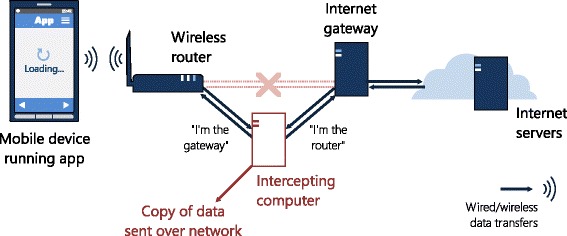
“By making a simple configuration change to the operating systems on each test device, we were able to intercept encrypted communications in addition to unsecured traffic (principles explained in Additional file 1: Figure AF2) [28].”
BackgroundPrivacy and Security in Mobile Health Apps: A Review and Recommendations
Martínez-Pérez, B., de la Torre-Díez, I., & López-Coronado, M. (2015) · Journal of Medical Systems · doi:10.1007/s10916-014-0181-3 · Cited by 342 · cited 3×
“and infrastructure designed to secure the online processing of clinical data [31, 44].”
BackgroundA Review on the State-of-the-Art Privacy-Preserving Approaches in the e-Health Clouds
Abbas, A., & Khan, S. U. (2014) · IEEE Journal of Biomedical and Health Informatics · doi:10.1109/jbhi.2014.2300846 · Cited by 331 · cited 1×
“Recent work has illustrated the scope for threats arising from online storage of health information and identified privacy-preserving strategies that could inform future studies that assess compliance more directly [56].”
BackgroundFor Telehealth To Succeed, Privacy And Security Risks Must Be Identified And Addressed
Hall, J. L., & McGraw, D. (2014) · Health Affairs · doi:10.1377/hlthaff.2013.0997 · Cited by 297 · cited 1×
“Because health and, in particular, wellness apps are often provided by organizations that are not traditional medical providers, they can sit outside the scope of existing legal and professional safeguards [50].”
Background
Research works printed but not linked: 4
- Cohn SP Privacy and confidentiality in the nationwide health information network 2006 Washington National Committee on Vital and Health Statistics
- England NHS Five year forward view 2014 London HM Government
- Information Commissioner’s Office Privacy notices code of practice 2010 Wilmslow Information Commissioner’s Office
- Federal Trade Commission Mobile privacy disclosures – building trust through transparency 2013 USA Federal Trade Commission
Cited by
Evaluating Digital Health Interventions
Murray, E., Hekler, E. B., Andersson, G., Collins, L. M., Doherty, A., Hollis, C., Rivera, D. E., West, R., & Wyatt, J. C. (2016) · American Journal of Preventive Medicine · doi:10.1016/j.amepre.2016.06.008 · Cited by 847
“A SMART is a special case of the factorial experiment involving randomization at several stages, where each stage corresponds to one of the decisions that must be made about adapting the intervention, and some or all of the randomization may be contingent on response to treatment.(35,47) System identification approach…”
Hollis, C., Falconer, C. J., Martin, J. L., Whittington, C., Stockton, S., Glazebrook, C., & Davies, E. B. (2017) · Journal of Child Psychology and Psychiatry · doi:10.1111/jcpp.12663 · Cited by 846
O’Connor, S., Hanlon, P., O’Donnell, C. A., Garcia, S., Glanville, J., & Mair, F. S. (2016) · BMC Medical Informatics and Decision Making · doi:10.1186/s12911-016-0359-3 · Cited by 636
The diverse domains of quantified selves: self-tracking modes and dataveillance
Lupton, D. (2016) · Economy and Society · doi:10.1080/03085147.2016.1143726 · Cited by 446
Consumer Mobile Health Apps: Current State, Barriers, and Future Directions
Kao, C., & Liebovitz, D. M. (2017) · PM&R · doi:10.1016/j.pmrj.2017.02.018 · Cited by 350
Fu, Z., Burger, H., Arjadi, R., & Bockting, C. L. H. (2020) · The Lancet Psychiatry · doi:10.1016/s2215-0366(20)30256-x · Cited by 336
“In addition to the potential concern of privacy imposed by technology, 21 the WHO highlights that, “rigorous evaluation of digital health is necessary to generate evidence and promote the appropriate integration and use of technologies”.”
Mental health: there’s an app for that
Anthes, E. (2016) · Nature · doi:10.1038/532020a · Cited by 333
Towards a consensus around standards for smartphone apps and digital mental health
Torous, J., Andersson, G., Bertagnoli, A., Christensen, H., Cuijpers, P., Firth, J., Haim, A., Hsin, H., Hollis, C., Lewis, S., et al. (2019) · World Psychiatry · doi:10.1002/wps.20592 · Cited by 325
Huckvale, K., Torous, J., & Larsen, M. E. (2019) · JAMA Network Open · doi:10.1001/jamanetworkopen.2019.2542 · Cited by 312
“Apps Without Privacy Policy, Transmission Occurred Transmission Occurred, Disclosed in Policy Transmission Occurred, Not Disclosed in Policy Transmission Occurred, Policy States Transmission Would Not Occur Any destination typea 16 (44) 5 (14) 3 (8) 9 (25) Advertising or marketing services 10 (28) 2 (6) 2 (6) 8 (22) A…”
BackgroundSelf-citationWachter, S. (2018) · Computer Law & Security Review · doi:10.1016/j.clsr.2018.02.002 · Cited by 307
Parenting and Digital Media: From the Early Web to Contemporary Digital Society
Lupton, D., Pedersen, S., & Thomas, G. M. (2016) · Sociology Compass · doi:10.1111/soc4.12398 · Cited by 250
“Medical and health data are frequently subject to data breaches (Huckvale, Prieto, Tilney et al. 2015) and incidents of hackers gaining access to private details about young children via digital baby monitors or digital toy manufacturer databases have been reported (Owens 2015; Peterson 2015).”
BackgroundPrescribable mHealth apps identified from an overview of systematic reviews
Byambasuren, O., Sanders, S., Beller, E., & Glasziou, P. (2018) · npj Digital Medicine · doi:10.1038/s41746-018-0021-9 · Cited by 291
“54 They now employ a US-based app called AppScript , which contains all the apps in the NHS App library, to make app prescribing even easier for doctors.”
MethodAn Australian survey of women's use of pregnancy and parenting apps
Lupton, D., & Pedersen, S. (2016) · Women and Birth · doi:10.1016/j.wombi.2016.01.008 · Cited by 256
Lennon, M. R., Bouamrane, M.-M., Devlin, A. M., O'Connor, S., O'Donnell, C., Chetty, U., Agbakoba, R., Bikker, A., Grieve, E., Finch, T., et al. (2017) · Journal of Medical Internet Research · doi:10.2196/jmir.6900 · Cited by 264
“Clinical endorsement of digital health products and services including systems for regulation and accreditation of technology and data enabled services is required and has been suggested previously [42], and a recent systematic review of the international literature on barriers and facilitators to patient and public i…”
Akbar, S., Coiera, & Magrabi, F. (2020) · Journal of the American Medical Informatics Association · doi:10.1093/jamia/ocz175 · Cited by 245
Zhou, L., Bao, J., Watzlaf, V., & Parmanto, B. (2019) · JMIR mHealth and uHealth · doi:10.2196/11223 · Cited by 246
“In addition, a recent study has indicated that in 2015 around 70% of the 600 most commonly used mHealth apps did not provide privacy policies; many current mHealth app developers do not provide privacy policies in their apps either [24,25].”
BackgroundYaqoob, T., Abbas, H., & Atiquzzaman, M. (2019) · IEEE Communications Surveys & Tutorials · doi:10.1109/comst.2019.2914094 · Cited by 236
“A study directed by BMC Medicine discovered that approximately 89 percent of mobile applications transfer information to online services while 66 percent of them transmit health information without encryption and 20 percent has no privacy policy [143].”
BackgroundSecurity and Privacy Analysis of Mobile Health Applications: The Alarming State of Practice
Papageorgiou, A., Strigkos, M., Politou, E., Alepis, E., Solanas, A., & Patsakis, C. (2018) · IEEE Access · doi:10.1109/access.2018.2799522 · Cited by 236
“Another study [23] assessed the extent to which certified m-health apps were compliant with the data protection principles mandated by the UK NHS Health Apps Library.”
BackgroundBarriers to older adults’ uptake of mobile-based mental health interventions
Pywell, J., Vijaykumar, S., Dodd, A., & Coventry, L. (2020) · DIGITAL HEALTH · doi:10.1177/2055207620905422 · Cited by 152
A Review of the Quality and Impact of Mobile Health Apps
Grundy, Q. (2022) · Annual Review of Public Health · doi:10.1146/annurev-publhealth-052020-103738 · Cited by 143
Smartphone Apps to Support Self-Management of Hypertension: Review and Content Analysis
Alessa, T., Hawley, M. S., Hock, E. S., & de Witte, L. (2019) · JMIR mHealth and uHealth · doi:10.2196/13645 · Cited by 170
“In addition, the majority of health apps lack privacy and security measures that adequately ensure protection of users’ data, posing risks to user confidentiality [19,20].”
InfluentialWearable devices in healthcare: Privacy and information security issues
Cilliers, L. (2020) · Health Information Management Journal · doi:10.1177/1833358319851684 · Cited by 169
“The best recourse that the user can hope for is that the mobile application marketplace and regulators will intervene to safeguard their best interests (Huckvale et al., 2015).”
BackgroundGrundy, Q., Chiu, K., Held, F., Continella, A., Bero, L., & Holz, R. (2019) · BMJ · doi:10.1136/bmj.l920 · Cited by 164
Problematic smartphone use: Digital approaches to an emerging public health problem
van Velthoven, M. H., Powell, J., & Powell, G. (2018) · DIGITAL HEALTH · doi:10.1177/2055207618759167 · Cited by 162
“Some, for example, openly disclose the agenda of the app developers, which could lead to sharing of data to third parties.(42) This can reduce user confidence in the products, and brings into question the ethics of the app.”
BackgroundMobile health and privacy: cross sectional study
Tangari, G., Ikram, M., Ijaz, K., Kaafar, M. A., & Berkovsky, S. (2021) · BMJ · doi:10.1136/bmj.n1248 · Cited by 158
Quality of Publicly Available Physical Activity Apps: Review and Content Analysis
Bondaronek, P., Alkhaldi, G., Slee, A., Hamilton, F. L., & Murray, E. (2018) · JMIR mHealth and uHealth · doi:10.2196/mhealth.9069 · Cited by 156
“There is evidence of inconsistency between the policy statement and the actual practices of app developers [8].”
BackgroundInfluentialEthics of the health-related internet of things: a narrative review
Mittelstadt, B. (2017) · Ethics and Information Technology · doi:10.1007/s10676-017-9426-4 · Cited by 154
“Many existing H-IoT ‘apps’ lack robust privacy practices and policies, and thus fail to comply with data protection accreditation programmes intended to foster trust and protect user privacy (Huckvale et al. 2015).”
BackgroundThe use of smartphones for health research
Dorsey, E. R., “Yvonne” Chan, Y.-F., McConnell, M. V., Shaw, S. Y., Trister, A. D., & Friend, S. H. (2017) · Academic Medicine · doi:10.1097/acm.0000000000001205 · Cited by 154
Challenges in Assessing Mobile Health App Quality
Grundy, Q. H., Wang, Z., & Bero, L. A. (2016) · American Journal of Preventive Medicine · doi:10.1016/j.amepre.2016.07.009 · Cited by 154
Mobile, wearable and ingestible health technologies: towards a critical research agenda
Rich, E., & Miah, A. (2016) · Health Sociology Review · doi:10.1080/14461242.2016.1211486 · Cited by 170
Smartphone apps for the treatment of mental health conditions: status and considerations
Huckvale, K., Nicholas, J., Torous, J., & Larsen, M. E. (2020) · Current Opinion in Psychology · doi:10.1016/j.copsyc.2020.04.008 · Cited by 135
Self-citationSERIES: eHealth in primary care. Part 1: Concepts, conditions and challenges
van der Kleij, R., Kasteleyn, M. J., Meijer, E., Bonten, T. N., Houwink, E. J. F., Teichert, M., van Luenen, S., Vedanthan, R., Evers, A. W. M., Car, J., et al. (2019) · European Journal of General Practice · doi:10.1080/13814788.2019.1658190 · Cited by 159
Self-citationHealth app policy: international comparison of nine countries’ approaches
Essén, A., Stern, A. D., Haase, C. B., Car, J., Greaves, F., Paparova, D., Vandeput, S., Wehrens, R., & Bates, D. W. (2022) · npj Digital Medicine · doi:10.1038/s41746-022-00573-1 · Cited by 130
Self-citationThreats and thrills: pregnancy apps, risk and consumption
Thomas, G. M., & Lupton, D. (2016) · Health, Risk & Society · doi:10.1080/13698575.2015.1127333 · Cited by 142
“exploitation by app developers and third parties to whom they sell these data (Huckvale et al., 2015; Ackerman, 2013), including pregnancy apps (Dembosky, 2013; Scott et al.”
Background‘Trust but verify’ – five approaches to ensure safe medical apps
Wicks, P., & Chiauzzi, E. (2015) · BMC Medicine · doi:10.1186/s12916-015-0451-z · Cited by 133
Ethical perspectives on recommending digital technology for patients with mental illness
Bauer, M., Glenn, T., Monteith, S., Bauer, R., Whybrow, P. C., & Geddes, J. (2017) · International Journal of Bipolar Disorders · doi:10.1186/s40345-017-0073-9 · Cited by 130
“…process must confirm that an app is not only effective and has clinical value, but must also consider real-world operation, the pathway for all data collection, sharing, storage and retention, ownership, analysis and reanalysis, and validate the specific algorithm and conclusions drawn.”
BackgroundSecurity and Privacy of mHealth Applications: A Scoping Review
Nurgalieva, L., O'Callaghan, D., & Doherty, G. (2020) · IEEE Access · doi:10.1109/access.2020.2999934 · Cited by 132
“as recent studies report on privacy violations being a common occurrence with health and wellbeing (HWB) applications [26], [27].”
BackgroundParker, L., Halter, V., Karliychuk, T., & Grundy, Q. (2019) · International Journal of Law and Psychiatry · doi:10.1016/j.ijlp.2019.04.002 · Cited by 129
Social Media and Mobile Technology for Cancer Prevention and Treatment
Prochaska, J. J., Coughlin, S. S., & Lyons, E. J. (2017) · American Society of Clinical Oncology Educational Book · doi:10.1200/edbk_173841 · Cited by 124
Standards for Mobile Health–Related Apps: Systematic Review and Development of a Guide
Llorens-Vernet, P., & Miró, J. (2020) · JMIR mHealth and uHealth · doi:10.2196/13057 · Cited by 115
“This situation has been identified as preventing the field from improving and advancing [9].”
Perski, O., Blandford, A., Ubhi, H. K., West, R., & Michie, S. (2017) · BMC Medical Informatics and Decision Making · doi:10.1186/s12911-017-0422-8 · Cited by 123
“gov/mobile/) [16, 17], the majority of these accredited apps fail to act in accordance with data protection principles, such as encrypting personal information transmitted to developer or thirdparty servers [18].”
BackgroundStudying health-related internet and mobile device use using web logs and smartphone records
Bach, R. L., & Wenz, A. (2020) · PLoS ONE · doi:10.1371/journal.pone.0234663 · Cited by 136
“Some web pages and apps even fall short collecting users’ informed consent at all when sharing personal sensitive information with third parties [65–67].”
BackgroundHow private is your period?: A systematic analysis of menstrual app privacy policies
Shipp, L., & Blasco, J. (2020) · Proceedings on Privacy Enhancing Technologies · doi:10.2478/popets-2020-0083 · Cited by 95
“If the user is ill-informed about what happens to their data, they may assume trust in the app and potentially what they share will increase [29].”
BackgroundUnderstanding the quality, effectiveness and attributes of top-rated smartphone health apps
Wisniewski, H., Liu, G., Henson, P., Vaidyam, A., Hajratalli, N. K., Onnela, J.-P., & Torous, J. (2019) · Evidence Based Mental Health · doi:10.1136/ebmental-2018-300069 · Cited by 112
Robillard, J. M., Feng, T. L., Sporn, A. B., Lai, J.-A., Lo, C., Ta, M., & Nadler, R. (2019) · Internet Interventions · doi:10.1016/j.invent.2019.100243 · Cited by 111
Bry, L. J., Chou, T., Miguel, E., & Comer, J. S. (2018) · Behavior Therapy · doi:10.1016/j.beth.2017.07.008 · Cited by 106
“Indeed, without any formal body assessing and recommending self-management apps to consumers (FDA, 2015; Huckvale et al., 2015), the present findings suggest the possibility for consumers to encounter spurious or ill-equipped treatment apps for youth anxiety is high.”
BackgroundDevelopments in Mobile Health Just-in-Time Adaptive Interventions for Addiction Science
Carpenter, S. M., Menictas, M., Nahum-Shani, I., Wetter, D. W., & Murphy, S. A. (2020) · Current Addiction Reports · doi:10.1007/s40429-020-00322-y · Cited by 97
Wykes, T., & Schueller, S. (2019) · Journal of Medical Internet Research · doi:10.2196/12390 · Cited by 95
“Many apps rely on selling the data they collect for their business plan, which jeopardizes personal privacy [42].”
If you build it, they will come: unintended future uses of organised health data collections
O’Doherty, K. C., Christofides, E., Yen, J., Bentzen, H. B., Burke, W., Hallowell, N., Koenig, B. A., & Willison, D. J. (2016) · BMC Medical Ethics · doi:10.1186/s12910-016-0137-x · Cited by 92
“, by the NHS in the UK) have been shown to fall short of data protection standards [66].”
BackgroundTorous, J., Firth, J., Huckvale, K., Larsen, M. E., Cosco, T. D., Carney, R., Chan, S., Pratap, A., Yellowlees, P., Wykes, T., et al. (2018) · Journal of Nervous & Mental Disease · doi:10.1097/nmd.0000000000000864 · Cited by 101
Self-citationData Security and Privacy in Apps for Dementia: An Analysis of Existing Privacy Policies
Rosenfeld, L., Torous, J., & Vahia, I. V. (2017) · The American Journal of Geriatric Psychiatry · doi:10.1016/j.jagp.2017.04.009 · Cited by 100
Nebeker, C., Bartlett Ellis, R. J., & Torous, J. (2020) · Translational Behavioral Medicine · doi:10.1093/tbm/ibz074 · Cited by 99
“The United Kingdom’s National Health Service (NHS) created a curated app library to offer consumers safe and useful health apps, but the service was suspended in Fall 2015 when vetted apps were noted to actually have data security flaws and little evidence for utility [12].”
BackgroundTorous, J., & Nebeker, C. (2017) · Journal of Medical Internet Research · doi:10.2196/jmir.6793 · Cited by 74
“Yet such broad data capture can also have numerous unintended consequences [2,3].”
BackgroundApweiler, R., Beissbarth, T., Berthold, M. R., Blüthgen, N., Burmeister, Y., Dammann, O., Deutsch, A., Feuerhake, F., Franke, A., Hasenauer, J., et al. (2018) · Experimental & Molecular Medicine · doi:10.1038/emm.2017.290 · Cited by 83
Digital Psychiatry: Risks and Opportunities for Public Health and Wellbeing
Burr, C., Morley, J., Taddeo, M., & Floridi, L. (2020) · IEEE Transactions on Technology and Society · doi:10.1109/tts.2020.2977059 · Cited by 78
“[99] found systematic gaps in accredited mental health app’s compliance with data protection prin-”
BackgroundAntosik-Wójcińska, A. Z., Dominiak, M., Chojnacka, M., Kaczmarek‐Majer, K., Opara, K. R., Radziszewska, W., Olwert, A., & Święcicki, Ł. (2020) · International Journal of Medical Informatics · doi:10.1016/j.ijmedinf.2020.104131 · Cited by 93
An overview on the emerging area of identification, characterization, and assessment of health apps
Paglialonga, A., Lugo, A., & Santoro, E. (2018) · Journal of Biomedical Informatics · doi:10.1016/j.jbi.2018.05.017 · Cited by 90
Assessing the quality of mobile applications in chronic disease management: a scoping review
Agarwal, P., Gordon, D., Griffith, J., Kithulegoda, N., Witteman, H. O., Bhatia, R. S., Kushniruk, A. W., Borycki, E. M., Lamothe, L., Springall, E., et al. (2021) · npj Digital Medicine · doi:10.1038/s41746-021-00410-x · Cited by 93
Digital mental health and intellectual disabilities: state of the evidence and future directions
Sheehan, R., & Hassiotis, A. (2017) · Evidence Based Mental Health · doi:10.1136/eb-2017-102759 · Cited by 64
“A review of health apps listed in the NHS Library found systematic gaps in compliance with data protection principles, including lack of encryption of data and absent or inadequate privacy policies.[52] There is potential for third parties to accrue significant”
BackgroundCucciniello, M., Petracca, F., Ciani, O., & Tarricone, R. (2021) · npj Digital Medicine · doi:10.1038/s41746-021-00517-1 · Cited by 86
Rodriguez-Villa, E., & Torous, J. (2019) · BMC Medicine · doi:10.1186/s12916-019-1447-x · Cited by 71
“In a study that examined privacy risks, reviewers found that 20% of the mobile health apps featured on the NHS Health Apps Library did not have a privacy policy posted, and 78% of information-transmitting applications with privacy policies did not specify what data was shared [14].”
BackgroundShemesh, T., & Barnoy, S. (2020) · Telemedicine Journal and e-Health · doi:10.1089/tmj.2019.0144 · Cited by 83
“31 Indeed, a major challenge in recommending mHealth apps stems from the quality of evidence pertaining to the apps effectiveness, 32 in addition to privacy and safety considerations.”
Developments in Privacy and Data Ownership in Mobile Health Technologies, 2016-2019
Galvin, H. K., & DeMuro, P. R. (2020) · Yearbook of Medical Informatics · doi:10.1055/s-0040-1701987 · Cited by 78
“For example, of 79 apps certified as being clinically safe and trustworthy by the United Kingdom National Health Service, 89% were found to transfer information online, 66% of which was not encrypted [82-85].”
MethodTorous, J., Levin, M. E., Ahern, D. K., & Oser, M. L. (2017) · Cognitive and Behavioral Practice · doi:10.1016/j.cbpra.2016.05.007 · Cited by 73
“For example, in October 2015 the British National Health Service closed its online library of curated apps amid strong evidence that approved apps were both not evidence based (Huckvale et al., 2015) and not secure with patient data (Wicks & Chiauzzi, 2015).”
Ecological momentary assessment and beyond: The rising interest in e-mental health research
Firth, J., Torous, J., & Yung, A. R. (2016) · Journal of Psychiatric Research · doi:10.1016/j.jpsychires.2016.05.002 · Cited by 67
Owen, J. E., Kuhn, E., Jaworski, B. K., McGee-Vincent, P., Juhasz, K., Hoffman, J. E., & Rosen, C. (2018) · mHealth · doi:10.21037/mhealth.2018.05.07 · Cited by 67
“Because mental health-related concerns are inherently private and often highly stigmatizing, there is a need for resources that do not collect personally-identifiable information or pose privacy risks to users (44).”
BackgroundConroy, D. E., Hojjatinia, S., Lagoa, C. M., Yang, C.-H., Lanza, S. T., & Smyth, J. M. (2019) · Psychology of Sport and Exercise · doi:10.1016/j.psychsport.2018.06.011 · Cited by 71
A health app developer’s guide to law and policy: a multi-sector policy analysis
Parker, L., Karliychuk, T., Gillies, D., Mintzes, B., Raven, M., & Grundy, Q. (2017) · BMC Medical Informatics and Decision Making · doi:10.1186/s12911-017-0535-0 · Cited by 71
“For example, an external study of apps recommended on the English National Health Service (NHS) Health Apps Library found serious security inadequacies in many apps, including lack of encryption for stored data in 93% of apps (73/79) and transmission of unencrypted identifying information in 29% (23/79) [43].”
BackgroundHeidel, A., & Hagist, C. (2020) · JMIR mHealth and uHealth · doi:10.2196/16444 · Cited by 63
“The authors criticized that most health and fitness apps “rely mainly on self-declared compliance” [60].”
BackgroundInfluentialPrivacy Assessment in Mobile Health Apps: Scoping Review
Benjumea, J., Ropero, J., Rivera-Romero, O., Dorronzoro-Zubiete, E., & Carrasco, A. (2020) · JMIR mHealth and uHealth · doi:10.2196/18868 · Cited by 69
“Aliasgari et al, 2018 [35] N/A No Mense et al, 2016 [36] No Average score, median, and range for every item Powell el al, 2018 [37] N/A No Huckvale et al, 2015 [38] N/A No Robillard et al, 2019 [39] a N/A: not applicable.”
BackgroundMethodInfluentialeHealth and the hearing aid adult patient journey: a state-of-the-art review
Paglialonga, A., Nielsen, A. C., Ingo, E., Barr, C., & Laplante-Lévesque, A. (2018) · BioMedical Engineering OnLine · doi:10.1186/s12938-018-0531-3 · Cited by 69
Digital Technologies for Schizophrenia Management: A Descriptive Review
Chivilgina, O., Elger, B. S., & Jotterand, F. (2021) · Science and Engineering Ethics · doi:10.1007/s11948-021-00302-z · Cited by 70
“…for data exchange, users are not always aware of the risks associated with these technologies and therefore contribute to the increase of cybersecurity risks, such as the transmission of personal information without encryption (Huckvale et al., 2015) or malware installations (Boulos et al., 2014).”
BackgroundTeipel, S., König, A., Hoey, J., Kaye, J., Krüger, F., Robillard, J. M., Kirste, T., & Babiloni, C. (2018) · Alzheimer's & Dementia · doi:10.1016/j.jalz.2018.05.003 · Cited by 67
“To date, important privacy issues have been raised for a range of existing ICTs aimed at measuring aspects of memory and cognition or tracking health variables, such as online memory tests [82], and mobile applications for health tracking [83,84].”
Revealing the unrevealed: Mining smartphone users privacy perception on app markets
Hatamian, M., Serna, J., & Rannenberg, K. (2019) · Computers & Security · doi:10.1016/j.cose.2019.02.010 · Cited by 79
Bennion, M. R., Hardy, G., Moore, R. K., & Millings, A. (2017) · BMJ Open · doi:10.1136/bmjopen-2016-014844 · Cited by 51
“Speci fi cally, the evaluation of apps ’ data security 24 and clinical effectiveness 25 were criticised.”
BackgroundXiong, A., Wang, T., Li, N., & Jha, S. (2020) · IEEE Symposium on Security and Privacy (S&P) · doi:10.1109/sp40000.2020.00088 · Cited by 95
An Assessment Framework for e-Mental Health Apps in Canada: Results of a Modified Delphi Process
Zelmer, J., van Hoof, K., Notarianni, M., van Mierlo, T., Schellenberg, M., & Tannenbaum, C. (2018) · JMIR mHealth and uHealth · doi:10.2196/10016 · Cited by 62
“The National Health Service in the United Kingdom established a curated Apps Library, with apps assessed against a defined set of criteria, which was later rolled back following research that showed privacy and security gaps in a large proportion of the included apps [18].”
BackgroundInfluentialOffner, K. L., Sitnikova, E., Joiner, K. F., & MacIntyre, C. R. (2020) · Intelligence & National Security · doi:10.1080/02684527.2020.1752459 · Cited by 69
Bidargaddi, N., Musiat, P., Winsall, M., Vogl, G., Blake, V., Quinn, S., Orlowski, S., Antezana, G., & Schrader, G. (2017) · Journal of Medical Internet Research · doi:10.2196/jmir.6775 · Cited by 61
“Many of the apps were found to transmit sensitive data without the knowledge of the user [18] or provide clinically questionable advice [19] that resulted in the app library to be closed.”
Consumer Health Care: Current Trends in Consumer Health Monitoring
Garge, G. K. S., Balakrishna, C., & Datta, S. K. (2017) · IEEE Consumer Electronics Magazine · doi:10.1109/mce.2017.2743238 · Cited by 67
“The pre-requisite is a trust relationship between the consumers and the service providers and application developers ensuring compliance with privacy regulation and security-best practices [26] and that the regulations and standards are in place to safeguard consumer interests.”
Wyatt, J. C. (2018) · BMC Medicine · doi:10.1186/s12916-018-1211-7 · Cited by 61
“This means that personal – often sensitive – data are being captured and transmitted in an identifiable, unencrypted form [16] across the globe.”
BackgroundMethodBlower, S. L., Swallow, V. M., Maturana, C., Stones, S. R., Phillips, R., Dimitri, P., Marshman, Z., Knapp, P., Dean, A., Higgins, S., et al. (2020) · Archives of Disease in Childhood · doi:10.1136/archdischild-2020-319103 · Cited by 63
Alamoodi, A. H., Garfan, S., Zaidan, B. B., Zaidan, A. A., Shuwandy, M. L., Alaa, M., Alsalem, M. A., Mohammed, A., Aleesa, A. M., Albahri, O. S., et al. (2020) · Health and Technology · doi:10.1007/s12553-020-00451-4 · Cited by 60
“Another study included available apps in theNHS health apps library that are compatible with Android and IOS systems only [82].”
BackgroundMethodInfluentialFarr, W. J., Green, D., Bremner, S. A., Male, I., Gage, H., Bailey, S. E. R., Speller, S., Colville, V., Jackson, M., Memon, A., et al. (2019) · Disability and Rehabilitation · doi:10.1080/09638288.2019.1618400 · Cited by 70
“In 86 particular; pragmatic questions remain regarding issues of acceptability, feasibility, and 87 patient data security for physical activity with smartphones, GPS, and use of large-scale 88 patient data sets [e.g. Huckvale et al 2015].”
MethodTechnologies for Opioid Use Disorder Management: Mobile App Search and Scoping Review
Nuamah, J. K., Mehta, R. K., & Sasangohar, F. (2020) · JMIR mhealth and uhealth · doi:10.2196/15752 · Cited by 58
“For users of these apps, there is a likelihood that their information is passed around to third parties, thereby exposing them to privacy risks [67].”
BackgroundCoughlin, S., Thind, H., Liu, B., Champagne, N., Jacobs, M., & Massey, R. I. (2016) · JMIR mHealth and uHealth · doi:10.2196/mhealth.5361 · Cited by 45
“A recent assessment of 79 apps certified as clinically safe and trustworthy by the Health Apps Library found systematic gaps in compliance with data protection principles [60].”
Privacy Issues in Smartphone Applications: An Analysis of Headache/Migraine Applications
Minen, M. T., Stieglitz, E. J., Sciortino, R., & Torous, J. (2018) · Headache: The Journal of Head and Face Pain · doi:10.1111/head.13341 · Cited by 46
“12 Following this, the NHS took the lessons learned and developed a beta version of its app library that launched in March 2017 to test app approval standards.”
BackgroundBarahona, J. D. (2020) · Retos · doi:10.47197/retos.v37i37.68851 · Cited by 81
Digital health in the era of personalized healthcare
Cancela, J., Charlafti, I., Colloud, S., & Wu, C. (2020) · Elsevier eBooks · doi:10.1016/b978-0-12-820077-3.00002-x · Cited by 68
Monteith, S., Glenn, T., Geddes, J., Whybrow, P. C., & Bauer, M. (2016) · International Journal of Bipolar Disorders · doi:10.1186/s40345-016-0051-7 · Cited by 50
“An analysis of 79 mobile health apps certified as trustworthy by the UK NHS found a multitude of privacy and security flaws (Huckvale et al. 2015).”
BackgroundTarricone, R., Petracca, F., Cucciniello, M., & Ciani, O. (2022) · Health Economics · doi:10.1002/hec.4505 · Cited by 54
“…protection regulation systems (e.g., General Data Protection Regulation [GDPR]), several studies have reported that commercially available apps shared personal data with third parties, often for economic gain, and could compromise the privacy of users (Grundy et al., 2019; Huckvale et al., 2015).”
BackgroundFrom principles to practice: benchmarking government guidance on health apps
Ferretti, A., Ronchi, E., & Vayena, E. (2019) · The Lancet Digital Health · doi:10.1016/s2589-7500(19)30027-5 · Cited by 50
Telemedicine Treatment and Care for Patients with Intellectual Disability
Krysta, K., Romańczyk, M., Diefenbacher, A., & Krzystanek, M. (2021) · International Journal of Environmental Research and Public Health · doi:10.3390/ijerph18041746 · Cited by 53
“Users with intellectual disabilities may have diffi‐ culties understanding the privacy policy of some applications, and may be prone to abuse [51].”
BackgroundTracing the Potential Flow of Consumer Data: A Network Analysis of Prominent Health and Fitness Apps
Grundy, Q., Held, F. P., & Bero, L. A. (2017) · Journal of Medical Internet Research · doi:10.2196/jmir.7347 · Cited by 47
“These findings validate privacy and security concerns in mobile health due to the sensitivity of health-related data as well as the collection of more kinds of personally identifiable data [8,9].”
Lively Data, Social Fitness and Biovalue: The Intersections of Health Self-Tracking and Social MediaPreprint
Lupton, D. A. (2015) · SSRN Electronic Journal · doi:10.2139/ssrn.2666324 · Cited by 49
Leigh, S., Ouyang, J., & Mimnagh, C. (2017) · Evidence Based Mental Health · doi:10.1136/eb-2017-102751 · Cited by 46
“[5] Does the data privacy policy, or statement, provide detail about what that data is used for by the app? • The Data Protection Act 1998: Principle 2 [13] • Data Protection Directive; Article 10 [14]”
BackgroundTorous, J. B., Staples, P. C., Fenstermacher, E., Dean, J., & Keshavan, M. S. (2016) · Frontiers in Human Neuroscience · doi:10.3389/fnhum.2016.00180 · Cited by 50
Wiesner, M., Zowalla, R., Suleder, J., Westers, M., & Pobiruchin, M. (2018) · JMIR mhealth and uhealth · doi:10.2196/mhealth.9623 · Cited by 48
“We assume that runners who use wearable technology have at least a basic understanding on data collected and potential risks, supported by Huckvale et al [20].”
Hoppe, C. D., Cade, J. E., & Carter, M. (2017) · Journal of Human Nutrition and Dietetics · doi:10.1111/jhn.12424 · Cited by 43
L’e-santé rend-elle la démocratie sanitaire pleinement performative ?
Dumez, H., & Minvielle, É. (2016) · Systèmes d information & management · doi:10.3917/sim.171.0009 · Cited by 52
Metadata
- Authors
- Huckvale, K., Prieto, J. T., Tilney, M., Benghozi, P.-J., & Car, J.
- Affiliations
- Imperial College London (GB)
- Centre National de la Recherche Scientifique (FR)
- Nanyang Technological University (SG)
- Corresponding author
- Huckvale, Kit
- Prieto, José Tomás
- Venue
- BMC Medicine
- Published
- 2015-09-25
- Volume
- 13
- Issue
- 1
- Pages
- 214-214
- ISSN
- 1741-7015 (ISSN-L)
- PMC
- PMC4582624
- OpenAlex
- W2120522957
- Semantic Scholar
- 02749722c8bdfec410ef318feebd27c14cdd5e23
- Cited by
- 376
- References
- 24
- Citations by year
- 2026: 15 · 2025: 23 · 2024: 21 · 2023: 21 · 2022: 21 · 2021: 41 · 2020: 61 · 2019: 46 · 2018: 38 · 2017: 45 · 2016: 39 · 2015: 4
- FWCI
- 139.34
- Type
- journal article
- Language
- en
- Open access
- gold
- doi.org
- Licence
- Locations
- BMC Medicine (publishedVersion, cc-by)
- Europe PMC (PubMed Central) (publishedVersion, cc-by)
- PubMed Central (publishedVersion, cc-by)
- PubMed (publishedVersion)
- OAR@UM (University of Malta) (submittedVersion, other-oa)
- DR-NTU (Nanyang Technological University) (submittedVersion, cc-by)
- Minerva Access (University of Melbourne) (submittedVersion, cc-by)
- Spiral (Imperial College London) (submittedVersion, cc-by)
- Topics
- Social Sciences › Sociology and Political Science › Privacy, Security, and Data Protection
- Health Sciences › Health Professions › General Health Professions › Mobile Health and mHealth Applications
- Health Sciences › Health Professions › Health Information Management › Thoreau and American Literature
- Keywords
- health apps, wellness apps, data privacy, data protection, encryption, privacy policies, data transmission, personal health data, data theft, mobile application security
- MeSH terms
- Confidentiality, Cross-Sectional Studies, United Kingdom, Humans, National Health Programs, Software, Computer Security, Risk Assessment, Internet
About these checks
Registry, retraction, Cites and statistics results are computed, not judged, with one exception: a printed reference that no index lists is read once by a model before it counts as a citation error. Claims are extracted by a model and kept only when their quote appears verbatim in the text; each cited source is then checked, with a model’s help, for whether it says what the claim relies on. Those verdicts can be wrong — read the claim’s quote and the cited source before relying on one.
Statistics and arithmetic are recomputed, not judged.
Confidence bands are shown only for fields calibrated on our annotated test set. None is calibrated yet, so no band is shown.
What counts as a claim ›How we measure confidence ›How we check this ›
Are you an author, or do you see a problem with this page? Request a review
Data sources
Bibliographic data: Semantic Scholar, OpenAlex, Crossref.
Contains information from the Semantic Scholar Academic Graph Datasets, made available under the ODC Attribution License (ODC-BY 1.0).
Semantic Scholar’s data is described in: Kinney, R., et al. (2023). The Semantic Scholar Open Data Platform. arXiv:2301.10140.
