

Unaddressed privacy risks in accredited health and wellness apps: a cross-sectional systematic assessment
Open accessThe DOI matches its Crossref record; 24 of the 24 references it cites were found in a registry or an index.
Abstract
BACKGROUND: Poor information privacy practices have been identified in health apps. Medical app accreditation programs offer a mechanism for assuring the quality of apps; however, little is known about their ability to control information privacy risks. We aimed to assess the extent to which already-certified apps complied with data protection principles mandated by the largest national accreditation program. METHODS: Cross-sectional, systematic, 6-month assessment of 79 apps certified as clinically safe and trustworthy by the UK NHS Health Apps Library. Protocol-based testing was used to characterize personal information collection, local-device storage and information transmission. Observed information handling practices were compared against privacy policy commitments. RESULTS: The study revealed that 89% (n = 70/79) of apps transmitted information to online services. No app encrypted personal information stored locally. Furthermore, 66% (23/35) of apps sending identifying information over the Internet did not use encryption and 20% (7/35) did not have a privacy policy. Overall, 67% (53/79) of apps had some form of privacy policy. No app collected or transmitted information that a policy explicitly stated it would not; however, 78% (38/49) of information-transmitting apps with a policy did not describe the nature of personal information included in transmissions. Four apps sent both identifying and health information without encryption. Although the study was not designed to examine data handling after transmission to online services, security problems appeared to place users at risk of data theft in two cases. CONCLUSIONS: Systematic gaps in compliance with data protection principles in accredited health apps question whether certification programs relying substantially on developer disclosures can provide a trusted resource for patients and clinicians. Accreditation programs should, as a minimum, provide consistent and reliable warnings about possible threats and, ideally, require publishers to rectify vulnerabilities before apps are released.
Overview
The claims and statistics of this paper haven’t been checked yet.
Free: it reads the open-access text and checks the first 5 claims that cite a source we can check. Create a free account to check every claim.
Integrity signals
Registry
Cites
Statistics
Figures
Verification
Claims the paper makes
The claims and statistics of this paper haven’t been checked yet.
Free: it reads the open-access text and checks the first 5 claims that cite a source we can check. Create a free account to check every claim.
Claims other papers make about this one
Each is checked against this paper’s own text: does it say what the citing paper says it does?
The source backs part of the claim, not all of it — or backs it for a different population, condition or comparison.
In the citing paper
“Clinical endorsement of digital health products and services including systems for regulation and accreditation of technology and data enabled services is required and has been suggested previously [42], and a recent systematic review of the international literature on barriers and facilitators to patient and public involvement with digital health has suggested this is a key issue [43].”
From Readiness for Delivering Digital Health at Scale: Lessons From a Longitudinal Qualitative Evaluation of a National Digital Health Innovation Program in the United Kingdom (2017) · cites this paper as [42]
Experimental — accuracy not yet measuredThe source backs part of the claim, not all of it — or backs it for a different population, condition or comparison.
In the citing paper
“The current situation is alarming, as recent studies report on privacy violations being a common occurrence with health and wellbeing (HWB) applications [26], [27].”
From Security and Privacy of mHealth Applications: A Scoping Review (2020) · cites this paper as [26]
Experimental — accuracy not yet measuredThe source backs part of the claim, not all of it — or backs it for a different population, condition or comparison.
In the citing paper
“Only one-third of the apps available had a confidentiality policy, which, in most cases, was incomplete (e.g., no specification on the use of data by a third party or incomplete explanations of the process for requesting changes to registered data as allowed by law).”
From Mobile intervention for individuals with psychosis, dual disorders, and their common comorbidities: A literature review (2019) · cites this paper as [122]
Experimental — accuracy not yet measuredThe cited source says what the claim attributes to it.
In the citing paper
“The study also reports that a large number of applications stored and transmitted unencrypted personal information.”
From Mobile intervention for individuals with psychosis, dual disorders, and their common comorbidities: A literature review (2019) · cites this paper as [122]
The cited source says what the claim attributes to it.
In the citing paper
“Applications were evaluated based on their compliance with data collection/transmission/storage guidelines, confidentiality, privacy policy content, and the adequacy of these policies for the application’s actual behavior.”
From Mobile intervention for individuals with psychosis, dual disorders, and their common comorbidities: A literature review (2019) · cites this paper as [122]
3 more claims about this paper
Create a free account to see every claim other papers make about this one.
Self-check
Percentages, sums and reported differences re-computed from the paper’s own numbers.
The self-check needs the paper’s full text.
Citations
Cites
Information Privacy Research: an Interdisciplinary Review1
Smith, H. J., Dinev, T., & Xu, H. (2011) · MIS Quarterly · doi:10.2307/41409970 · Cited by 2,013 · cited 1×
“Health apps may put patient privacy, defined here as the right of individuals to con-trol how their information is collected and used [7] (other definitions are possible [8]), at risk in a number of ways [9].”
BackgroundInternet of Things – New security and privacy challenges
Weber, R. H. (2010) · Computer Law & Security Review · doi:10.1016/j.clsr.2009.11.008 · Cited by 1,454 · cited 1×
“Privacy issues are likely to only become more complex with the advent of wearable medical technologies, devices connected via the Internet of Things [45] and large-scale ‘ big data ’ analyses that combine information about individuals from multiple sources.”
BackgroundSecurity and Privacy Challenges in Cloud Computing Environments
Takabi, H., Joshi, J. B. D., & Ahn, G.-J. (2010) · IEEE Security & Privacy Magazine · doi:10.1109/msp.2010.186 · Cited by 1,319 · cited 1×
“These may arise as a result of technical and organizational challenges in ensuring the appropriate storage, handling and transfer of information held in online storage [55].”
BackgroundHealthcare in the pocket: Mapping the space of mobile-phone health interventions
Klasnja, P., & Pratt, W. (2012) · Journal of Biomedical Informatics · doi:10.1016/j.jbi.2011.08.017 · Cited by 970 · cited 1×
“Mobile apps – software programs running on devices like smartphones – offer a wide range of potential medical and health-related uses [1].”
BackgroundCan Mobile Health Technologies Transform Health Care?
Steinhubl, S. R., Muse, E. D., & Topol, E. J. (2013) · JAMA · doi:10.1001/jama.2013.281078 · Cited by 496
Availability and quality of mobile health app privacy policies
Sunyaev, A., Dehling, T., Taylor, P. L., & Mandl, K. D. (2015) · Journal of the American Medical Informatics Association · doi:10.1136/amiajnl-2013-002605 · Cited by 360 · cited 2×
“Recent Recent privacy-focused reviews of health and wellness apps available through generic app stores have consistently identified gaps in the extent to which data uses are fully documented and appropriate security mechanisms implemented [10 – 13].”
BackgroundMan-in-the-Middle Attack to the HTTPS Protocol
Callegati, F., Cerroni, W., & Ramilli, M. (2009) · IEEE Security & Privacy Magazine · doi:10.1109/msp.2009.12 · Cited by 347 · cited 1×
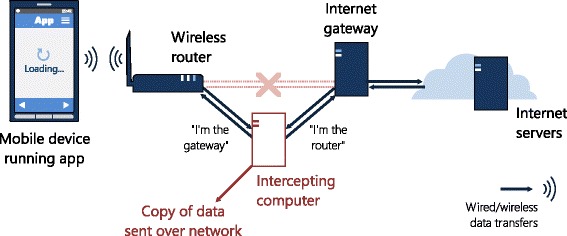
“By making a simple configuration change to the operating systems on each test device, we were able to intercept encrypted communications in addition to unsecured traffic (principles explained in Additional file 1: Figure AF2) [28].”
BackgroundPrivacy and Security in Mobile Health Apps: A Review and Recommendations
Martínez-Pérez, B., de la Torre-Díez, I., & López-Coronado, M. (2015) · Journal of Medical Systems · doi:10.1007/s10916-014-0181-3 · Cited by 342 · cited 3×
“and infrastructure designed to secure the online processing of clinical data [31, 44].”
BackgroundA Review on the State-of-the-Art Privacy-Preserving Approaches in the e-Health Clouds
Abbas, A., & Khan, S. U. (2014) · IEEE Journal of Biomedical and Health Informatics · doi:10.1109/jbhi.2014.2300846 · Cited by 331 · cited 1×
“Recent work has illustrated the scope for threats arising from online storage of health information and identified privacy-preserving strategies that could inform future studies that assess compliance more directly [56].”
BackgroundFor Telehealth To Succeed, Privacy And Security Risks Must Be Identified And Addressed
Hall, J. L., & McGraw, D. (2014) · Health Affairs · doi:10.1377/hlthaff.2013.0997 · Cited by 297 · cited 1×
“Because health and, in particular, wellness apps are often provided by organizations that are not traditional medical providers, they can sit outside the scope of existing legal and professional safeguards [50].”
Background
Research works printed but not linked: 4
- Cohn SP Privacy and confidentiality in the nationwide health information network 2006 Washington National Committee on Vital and Health Statistics
- England NHS Five year forward view 2014 London HM Government
- Information Commissioner’s Office Privacy notices code of practice 2010 Wilmslow Information Commissioner’s Office
- Federal Trade Commission Mobile privacy disclosures – building trust through transparency 2013 USA Federal Trade Commission
Cited by
Items 101–200 of 410
Evaluating the Dietary and Nutritional Apps in the Google Play Store
Schumer, H., Amadi, C., & Joshi, A. (2018) · Healthcare Informatics Research · doi:10.4258/hir.2018.24.1.38 · Cited by 46
“Our study findings also showed a higher proportion of advertisements in diet and nutrition apps (more than 70%) in comparison to prior studies assessing health and wellness apps in general (less than 20%) [15].”
BackgroundResultInfluentialBridging Innovation and Equity: Advancing Public Health Through Just-in-Time Adaptive Interventions
Zainal, N. H., Liu, X., Leong, U., Yan, X., & Chakraborty, B. (2024) · Annual Review of Public Health · doi:10.1146/annurev-publhealth-071723-103909 · Cited by 49
Social Network Chatbots for Smoking Cessation: Agent and Multi-Agent Frameworks
Calvaresi, D., Calbimonte, J.-P., Dubosson, F., Najjar, A., & Schumacher, M. (2019) · IEEE/WIC/ACM International Conference on Web Intelligence · doi:10.1145/3350546.3352532 · Cited by 43
“confidentiality and privacy restrictions enforced by ethical committees (especially for health-related programs [24]).”
BackgroundMobile Health (mHealth) apps focused on menopause: Are they any good?
Gkrozou, F., Tsonis, O., Godden, M., Siafaka, V., & Paschopoulos, M. E. (2019) · Post Reproductive Health · doi:10.1177/2053369119878978 · Cited by 43
“So, many organizations encourage patients to self-manage their symptoms and see apps and mHealth apps as a panacea to support this.(27) The available evidence regarding the quality of mHealth apps is inadequate.”
BackgroundGibbs, J., Gkatzidou, V., Tickle, L., Manning, S. R., Tilakkumar, T., Hone, K., Ashcroft, R. E., Sonnenberg, P., Sadiq, S. T., & Estcourt, C. S. (2017) · Sexually Transmitted Infections · doi:10.1136/sextrans-2016-052690 · Cited by 40
Beyond symptom monitoring: Consumer needs for bipolar disorder self-management using smartphones
Nicholas, J., Boydell, K., & Christensen, H. (2017) · European Psychiatry · doi:10.1016/j.eurpsy.2017.05.023 · Cited by 41
Lukka, L., & Palva, J. M. (2023) · JMIR Serious Games · doi:10.2196/42173 · Cited by 40
“We acknowledge that other aspects are also necessary, including privacy [59,60] and integration with existing infrastructure [61].”
BackgroundCalvaresi, D., Calbimonte, J.-P., Siboni, E., Eggenschwiler, S., Manzo, G., Hilfiker, R., & Schumacher, M. (2021) · Electronics · doi:10.3390/electronics10060666 · Cited by 44
“Moreover, despite the increasingly strict regulations in the matter of personal data usage [22], the services mentioned above often collide with required confidentiality and privacy restrictions (especially for health-related programs [23]).”
BackgroundBabiano-Espinosa, L., Wolters, L. H., Weidle, B., de Beek, V. O., Pedersen, S. A., Compton, S. N., & Skokauskas, N. (2019) · Systematic Reviews · doi:10.1186/s13643-019-1166-6 · Cited by 43
Benjumea, J., Ropero, J., Rivera-Romero, O., Zubiete, E. D., & Carrasco, A. (2020) · JMIR mhealth and uhealth · doi:10.2196/17134 · Cited by 46
“Huckvale et al [9] assessed 79 mHealth apps, certified as clinically safe and trustworthy by the United Kingdom National Health Service Health Apps Library.”
BackgroundMethodMoving psychological assessment out of the controlled laboratory setting: Practical challenges.
Holmlund, T. B., Foltz, P. W., Cohen, A. S., Johansen, H. D., Sigurdsen, R., Fugelli, P., Bergsager, D., Cheng, J., Bernstein, J., Rosenfeld, E. P., et al. (2019) · Psychological Assessment · doi:10.1037/pas0000647 · Cited by 40
Analyzing security issues of android mobile health and medical applications
Tangari, G., Ikram, M., Sentana, I. W. B., Ijaz, K., Kaafar, M. A., & Berkovsky, S. (2021) · Journal of the American Medical Informatics Association · doi:10.1093/jamia/ocab131 · Cited by 38
“While previous research targeted the security aspects of mHealth apps, the previously reported analyses 4,13–16 covered fewer than 100 apps and primarily capitalized on manual security tests.”
BackgroundMethodResultInfluentialPatient-oriented Health Technologies: Patients’ Perspectives and Use
Bauer, A. M., Rue, T. C., Munson, S. A., Ghomi, R. H., Keppel, G. A., Cole, A., Baldwin, L., & Katon, W. J. (2017) · Journal of Mobile Technology in Medicine · doi:10.7309/jmtm.6.2.1 · Cited by 43
LaMonica, H. M., Roberts, A., Lee, G. Y., Davenport, T. A., & Hickie, I. B. (2021) · Journal of Medical Internet Research · doi:10.2196/26317 · Cited by 37
“…of 79 health and wellness apps certified as clinically safe and trustworthy by the United Kingdom National Health Service Health Apps Library found that 66% of apps transmitting personal information on the internet did so without encryption, and 20% did not have any form of privacy policy [14].”
BackgroundMethodParker, L., Bero, L., Gillies, D., Raven, M., & Grundy, Q. (2018) · International Journal of Health Policy and Management · doi:10.15171/ijhpm.2018.117 · Cited by 37
Use of Health Apps and Wearable Devices: Survey Among Italian Associations for Patient Advocacy
Mosconi, P., Radrezza, S., Lettieri, E., & Santoro, E. (2019) · JMIR mhealth and uhealth · doi:10.2196/10242 · Cited by 41
“Two-thirds of the apps sent personal information over the internet without encryption and 20% did not have a specific privacy policy [28].”
BackgroundDesign for mobile mental health: an exploratory review
Aryana, B., Brewster, L., & Abdelnour-Nocera, J. (2018) · Health and Technology · doi:10.1007/s12553-018-0271-1 · Cited by 41
Wang, L., Fagan, C., & Yu, C.-L. (2020) · Journal of Psychotherapy Integration · doi:10.1037/int0000204 · Cited by 38
Quality assessment of mHealth apps: a scoping review
Giebel, G. D., Speckemeier, C., Schrader, N. F., Abels, C., Plescher, F., Hillerich, V., Wiedemann, D., Börchers, K., Wasem, J., Blase, N., et al. (2024) · Frontiers in Health Services · doi:10.3389/frhs.2024.1372871 · Cited by 37
Treskes, R. W., van der Velde, E. T., Barendse, R. J., & Bruining, N. (2016) · Expert Review of Medical Devices · doi:10.1080/17434440.2016.1218277 · Cited by 40
“A total of 20% did not have a privacy policy [57].”
BackgroundPrivacy Risks and Security Threats in mHealth apps
Sampat, B. H., & Prabhakar, B. (2017) · Journal of International Technology and Information Management · doi:10.58729/1941-6679.1353 · Cited by 35
“…out with mobile devices, such as mobile phones, patient monitoring devices, personal digital assistants (PDAs), and other wireless devices” (Kay et al., 2011). mHealth refers to the healthcare based mobile computing, medical sensors, and communications technologies (Istepanian et al., 2006).”
BackgroundThe Mobile App Development and Assessment Guide (MAG): Delphi-Based Validity Study
Llorens-Vernet, P., & Miró, J. (2020) · JMIR mhealth and uhealth · doi:10.2196/17760 · Cited by 40
“In addition, a large number of mobile health (mHealth) apps have been developed without any rigorous scientific basis [9,10] or having undergone any validation process, thus undermining the confidence of both patients and health care professionals [11].”
BackgroundPennou, A., Lecomte, T., Potvin, S., & Khazaal, Y. (2019) · Frontiers in Psychiatry · doi:10.3389/fpsyt.2019.00302 · Cited by 34
Issues for eHealth in Psychiatry: Results of an Expert Survey
Nicholas, J., Huckvale, K., Larsen, M. E., Basu, A., Batterham, P. J., Shaw, F., & Sendi, S. (2017) · Journal of Medical Internet Research · doi:10.2196/jmir.6957 · Cited by 34
“Furthermore, privacy policies do not necessarily reflect what happens “inside the black box,” as 78% of accredited apps in the now defunct NHS Health Apps Library uploaded data which had not been disclosed to users [66].”
Self-citationmHealth in psychiatry: time for methodological change
Nicholas, J., Boydell, K., & Christensen, H. (2016) · Evidence-Based Mental Health · doi:10.1136/eb-2015-102278 · Cited by 34
“12 Furthermore, Leigh and Flatt 1 reported that the majority could also not substantiate claims of effectiveness.”
BackgroundRobles, T., Bordel, B., Alcarria, R., & Sánchez-de-Rivera, D. (2020) · International Journal of Distributed Sensor Networks · doi:10.1177/1550147720912110 · Cited by 36
Kalhori, S. R. N., Hemmat, M., Noori, T., Heydarian, S., & Katigari, M. R. (2020) · Current Diabetes Reviews · doi:10.2174/1573399816666200703181438 · Cited by 37
Lupton, D. A. (2019) · Digital Health · doi:10.1177/2055207619847017 · Cited by 39
A critique of the regulation of data science in healthcare research in the European Union
Rumbold, J. M. M., & Pierscionek, B. K. (2017) · BMC Medical Ethics · doi:10.1186/s12910-017-0184-y · Cited by 33
“A recent study found major data security flaws in many accredited health apps available via the UK NHS Choices Health Apps library [48].”
BackgroundCan Apple and Google continue as health app gatekeepers as well as distributors and developers?
Sadare, O., Melvin, T., Harvey, H., Vollebregt, E., & Gilbert, S. (2023) · npj Digital Medicine · doi:10.1038/s41746-023-00754-6 · Cited by 33
Davoody, N., Koch, S., Krakau, I., & Hägglund, M. (2019) · BMC Medical Informatics and Decision Making · doi:10.1186/s12911-019-0816-x · Cited by 33
“A challenge in this area is the lack of regulations related to personal health applications which can create privacy issues [19].”
BackgroundBardus, M., Daccache, M. A., Maalouf, N., Sarih, R. A., & Elhajj, I. H. (2022) · JMIR mhealth and uhealth · doi:10.2196/35195 · Cited by 32
Pryss, R. C., Reichert, M., Schlee, W., Spiliopoulou, M., Langguth, B., & Probst, T. (2018) · Proceedings - IEEE Symposium on Computer-Based Medical Systems · doi:10.1109/cbms.2018.00078 · Cited by 32
“In [25], [26], for example, security issues for Android and iOS mHealth applications are discussed.”
BackgroundBarnett, S., Huckvale, K., Christensen, H. M., Venkatesh, S., Mouzakis, K., & Vasa, R. (2019) · Journal of Medical Internet Research · doi:10.2196/16399 · Cited by 34
“Poor quality and privacy controls, including a lack of industry-standard safeguards such as appropriate encryption and access control, have repeatedly been identified in health apps available to the public [32,38].”
BackgroundSelf-citationFernández-Luque, L., Herbish, A. S. A., Shammari, R. A., Argente, J., Bin-Abbas, B. S., Deeb, A., Dixon, D., Zary, N., Koledova, E. B., & Savage, M. O. (2021) · Frontiers in Pediatrics · doi:10.3389/fped.2021.715705 · Cited by 33
Privacy Rating: A User-Centered Approach for Visualizing Data Handling Practices of Online Services
Barth, S., Ionita, D., de Jong, M. D. T., Hartel, P., & Junger, M. (2021) · IEEE Transactions on Professional Communication · doi:10.1109/tpc.2021.3110617 · Cited by 35
Paganini, S., Meier, E. P., Terhorst, Y., Wurst, R., Hohberg, V., Schultchen, D., Strahler, J., Wursthorn, M., Baumeister, H., & Meßner, E.-M. (2023) · JMIR mhealth and uhealth · doi:10.2196/42415 · Cited by 31
“This confirms the results of other health, wellness, and medicine-related apps (eg, smoking cessation and diabetes) [38-40], showing major privacy and security risks, missing transparency, or data sharing with third parties, even when they were accredited [41].”
ResultHow standards and user involvement can improve app quality: A lifecycle approach
van Velthoven, M. H., Wyatt, J. C., Meinert, E., Brindley, D. A., & Wells, G. (2018) · International Journal of Medical Informatics · doi:10.1016/j.ijmedinf.2018.08.003 · Cited by 29
Evaluating authentication options for mobile health applications in younger and older adults
Grindrod, K., Khan, H., Hengartner, U., Ong, S. W., Logan, A. G., Vogel, D., Gebotys, R. J., & Yang, J. (2018) · PLoS ONE · doi:10.1371/journal.pone.0189048 · Cited by 31
Gamification in Healthcare: Perspectives of Mental Health Service Users and Health Professionals
Hopia, H., & Raitio, K. (2016) · Issues in Mental Health Nursing · doi:10.1080/01612840.2016.1233595 · Cited by 37
“A cautionary example is given by Huckvale, Prieto, Tilney, Benghozi, and Car (2015) in a recent paper, which examined the data security of mobile applications related to health and well-being.”
BackgroundPowell, L., Parker, J., & Harpin, V. (2017) · JMIR mHealth and uHealth · doi:10.2196/mhealth.7941 · Cited by 26
“Many apps that were identified in this review did not have an evidence base, and it was shown that privacy and data security arrangements were often unsuitable [46].”
BackgroundUser Experience and Engagement in Smart Digital Libraries
Meesad, P., & Mingkhwan, A. (2024) · Studies in big data · doi:10.1007/978-3-031-69216-1_8 · Cited by 34
Davies, E., Lonsdale, A. J., Hennelly, S. E., WINSTOCK, A. R., & Foxcroft, D. (2017) · Alcohol and Alcoholism · doi:10.1093/alcalc/agx051 · Cited by 27
Palmer, K. M., & Burrows, V. (2020) · Journal of Technology in Behavioral Science · doi:10.1007/s41347-020-00160-9 · Cited by 30
“Moreover, information can be unknowingly accessed remotely from one person’s smartphone to another smartphone without any human interaction (Huckvale et al. 2015; Sarma 2015; Schneier 2016) or via trackers in apps that forward personal information to third parties while a user is asleep.”
BackgroundUser innovation rings the bell for new horizons in e-health: a bibliometric analysis
Ghasemzadeh, K., Escobar, O., Yordanova, Z. B., & Villasalero, M. (2022) · European Journal of Innovation Management · doi:10.1108/ejim-04-2021-0181 · Cited by 34
Rezaee, R., Khashayar, M., Saeedinezhad, S., Nasiri, M., & Zare, S. (2023) · JMIR mhealth and uhealth · doi:10.2196/39055 · Cited by 31
“The fourth item is “obligation to provide personal data,” which can be considered as a subset of “user rights” [34] (existent among our criteria).”
Staccini, P., Fernández-Luque, L., & Informatics, S. E. F. T. I. Y. S. O. C. H. (2016) · Yearbook of Medical Informatics · doi:10.15265/iy-2016-045 · Cited by 29
Powell, L., Parker, J., Robertson, N., & Harpin, V. (2017) · JMIR mhealth and uhealth · doi:10.2196/mhealth.7371 · Cited by 36
“Many identified apps did not have an evidence base, and it was shown that privacy and data security was not suitable [46].”
BackgroundTowards a contextual theory of Mobile Health Data Protection (MHDP): A realist perspective
Pool, J., Akhlaghpour, S., & Fatehi, F. (2020) · International Journal of Medical Informatics · doi:10.1016/j.ijmedinf.2020.104229 · Cited by 31
The impact of private online video consulting in primary care
Peters, L., Greenfield, G., Majeed, A., & Hayhoe, B. W. J. (2018) · Journal of the Royal Society of Medicine · doi:10.1177/0141076818761383 · Cited by 27
Are HIV Smartphone Apps and Online Interventions Fit for Purpose?
Singh, A., Gibbs, J., Estcourt, C. S., Sonnenberg, P., & BLANDFORD, A. E. (2017) · International Conference on Digital Health · doi:10.1145/3079452.3079469 · Cited by 29
“Smartphone apps are not transparent in how they deal with users’ data, where it is stored and how it is used [38].”
What happens to data gathered by health and wellness apps?
Armstrong, S. (2016) · BMJ · doi:10.1136/bmj.i3406 · Cited by 23
Uwizeyemungu, S., Poba‐Nzaou, P., & Cantinotti, M. A. (2019) · JMIR Medical Informatics · doi:10.2196/11211 · Cited by 27
“…from IT trends such as hosting health records on distant servers operated by third-party cloud services providers [17,18], the usage of mobile devices, and the related trends of bring your own device in health care [19-21], as well as mobile health apps [22,23] and the IT-enabled HIE [24,25].”
BackgroundMorgan, H. M. (2016) · Digital Health · doi:10.1177/2055207616678498 · Cited by 27
Singh, S., & Sagar, R. (2022) · Indian Journal of Psychological Medicine · doi:10.1177/02537176221082902 · Cited by 23
Fernández-Luque, L., Labarta, J. I., Palmer, E., & Koledova, E. B. (2020) · JMIR mhealth and uhealth · doi:10.2196/16208 · Cited by 27
“The privacy and data security of mobile health apps is an area of growing concern [12].”
InfluentialAtrial fibrillation self-management: a mobile telephone app scoping review and content analysis
Pearsons, A., Hanson, C. L., Gallagher, R. D., O’Carroll, R. E., Khonsari, S., Hanley, J., Strachan, F. E., Mills, N. L., Quinn, T. J., McKinstry, B., et al. (2020) · European Journal of Cardiovascular Nursing · doi:10.1093/eurjcn/zvaa014 · Cited by 24
“Personal data privacy is a particular issue, with extreme variations in data protection principles identified in apps registered with the NHS Health Apps Library, a database designed to help the public find trusted health apps.(21,22) At present, poor regulation and easy accessibility to poorly evidenced apps pose sig…”
BackgroundMethodFlickinger, T., Waselewski, M. E., Tabackman, A., Huynh, J., Hodges, J., Otero, K., Schorling, K., Ingersoll, K. S., Tiouririne, N. A., & Dillingham, R. (2022) · Patient Education and Counseling · doi:10.1016/j.pec.2022.02.014 · Cited by 22
“Commercially available apps may be distrusted due to possibility of users’ information being shared with third parties [19].”
BackgroundMagalhães, B. M. B. D. S., Fernandes, C. S., Santos, C., & Martínez‐Galiano, J. M. (2020) · Cancer Nursing · doi:10.1097/ncc.0000000000000823 · Cited by 27
“54 Some countries, such as the United States and the United Kingdom, created the platform AppScript (https:// www.appscript.net/), consisting of a database assembling all apps capable of being referenced by health systems.”
BackgroundSimmonds‐Buckley, M., Bennion, M. R., Kellett, S., Millings, A., Hardy, G. E., & Moore, R. K. (2020) · Journal of Medical Internet Research · doi:10.2196/17049 · Cited by 26
“However, the libraries were removed in 2015 after questions were raised concerning e-therapy data security governance [8] and clinical effectiveness [9].”
Degeling, C., Chen, G., Gilbert, G. L., Brookes, V., Thai, T. T. H., Wilson, A. J., & Johnson, J. (2020) · BMJ Open · doi:10.1136/bmjopen-2020-041592 · Cited by 26
Batterham, P. J., Calear, A. L., O’Dea, B., Larsen, M. E., J Kavanagh, D., Titov, N., March, S., Hickie, I., Teesson, M., Dear, B. F., et al. (2019) · DIGITAL HEALTH · doi:10.1177/2055207619878069 · Cited by 21
“However, independently verifying these claims remains challenging.(21,22) There are other types of data that may indicate that a digital intervention is likely to be efficacious or effective, beyond RCTs.”
BackgroundLukka, L., Karhulahti, V., & Palva, J. M. (2023) · JMIR Human Factors · doi:10.2196/44681 · Cited by 22
“However, there have been considerable concerns regarding the quality and evidence base of the app content [49-53] as well as their privacy [54], which, together with the lack of guidance [55], diminish their credibility and slow their adoption in mental health care [56].”
The Interactive Mobile App Review Toolkit (IMART): a Clinical Practice-Oriented System
Maheu, M. M., Nicolucci, V., Pulier, M. L., Wall, K. M., Frye, T. J., & Hudlická, E. (2016) · Journal of Technology in Behavioral Science · doi:10.1007/s41347-016-0005-z · Cited by 21
“Many apps offer privacy policies that do not protect privacy, fail to disclose that they share clinical information with outside parties, and do not implement even rudimentary security safeguards (Dehling et al., 2015; Huckvale et al., 2015; Blenner et al., 2016; Armontrout et al., 2016).”
BackgroundUnderstanding trust in digital health among communities affected by BBVs and STIs in Australia
Newman, C. E., MacGibbon, J., Smith, A. K. J., Broady, T. R., Lupton, D. A., Davis, M., Bear, B., Bath, N., Comensoli, D., Cook, T., et al. (2024) · UNSWorks (University of New South Wales, Sydney, Australia) · doi:10.26190/5f6d72f17d2b5 · Cited by 24
Liu, Z., Cascioli, V., & McCarthy, P. W. (2023) · Sensors · doi:10.3390/s23042139 · Cited by 25
Exploring the Acceptance of mHealth Applications - Do Acceptance Patterns Vary Depending on Context?
Schomakers, E.-M., Lidynia, C., & Ziefle, M. (2018) · Advances in intelligent systems and computing · doi:10.1007/978-3-319-94619-1_6 · Cited by 25
Reith, R., Buck, C., Eymann, T., & Lis, B. (2020) · International Journal of Innovation and Technology Management · doi:10.1142/s0219877020500492 · Cited by 22
Alnooh, G., Alessa, T., Noorwali, E. A., Albar, S. A., Williams, E. A., de Witte, L., & Hawley, M. (2023) · Nutrients · doi:10.3390/nu15153476 · Cited by 22
Application of Human Augmentics: A Persuasive Asthma Inhaler
Grossman, B., Conner, S., Mosnaim, G., Albers, J., Leigh, J., Jones, S., & Kenyon, R. (2017) · Journal of Biomedical Informatics · doi:10.1016/j.jbi.2017.02.003 · Cited by 18
A systematic review of user-based usability testing practices in self-care mHealth apps
Sharma, S., & Kumar, B. A. (2025) · Digital Health · doi:10.1177/20552076251374184 · Cited by 21
“25,26 Cognitive overload is widespread, as many apps present excessive information that overwhelms users and hinders their ability to concentrate on critical tasks.”
Confidentiality and Privacy for Smartphone Applications in Child and Adolescent Psychiatry
Wu, E., Torous, J. B., Hardaway, R., & Gutheil, T. G. (2016) · Child and Adolescent Psychiatric Clinics of North America · doi:10.1016/j.chc.2016.07.006 · Cited by 21
Pryss, R., Schlee, W., Reichert, M., Kurthen, I., Giroud, N., Jagoda, L., Neuschwander, P., Meyer, M., Neff, P., Schobel, J., et al. (2019) · 2019 41st Annual International Conference of the IEEE Engineering in Medicine and Biology Society (EMBC) · doi:10.1109/embc.2019.8857854 · Cited by 17
“In [15], [16], for example, security issues for Android and iOS mHealth applications are discussed.”
BackgroundThe willingness to use mobile health technology among gynaecologists: A survey study
Tadayon, H., Abbasi, R., & Jabali, M. S. (2021) · Informatics in Medicine Unlocked · doi:10.1016/j.imu.2021.100653 · Cited by 21
The Effects of Adopting Mobile Health and Fitness Apps on Hospital Visits: Quasi-Experimental Study
Bo, Y., Liu, Q. B., & Tong, Y. (2023) · Journal of Medical Internet Research · doi:10.2196/45681 · Cited by 18
“Third, the lack of policies that protect user privacy lowers trust in these apps [19,20], thus hindering the realization of health benefits [21].”
Adams, J. (2024) · Digital Society · doi:10.1007/s44206-024-00110-5 · Cited by 18
“Studies suggest that even health and wellbeing apps “certified as clini - cally safe and trustworthy by the UK NHS Health Apps Library” (Huckvale et al., 2015, p. 1) commonly place personal information at risk of interception (Parker et al., 2019).”
Chen, J., Wang, F., Pang, S., Chen, M., Xi, M., Zhao, T., & Yin, J. (2025) · Tsinghua Science & Technology · doi:10.26599/tst.2024.9010089 · Cited by 20
“The study indicated that 20% of the apps lacked any form of privacy policy, raising questions about the protection of consumers’ data [9].”
Shatte, A. B. R., & Teague, S. J. (2020) · BMC Medical Research Methodology · doi:10.1186/s12874-020-00973-5 · Cited by 19
Technology Evaluation and Assessment Criteria for Health Apps (TEACH-Apps): Pilot Study
Camacho, E., Hoffman, L., Lagan, S., Rodriguez-Villa, E., Rauseo-Ricupero, N., Wisniewski, H., Henson, P., & Torous, J. B. (2020) · Journal of Medical Internet Research · doi:10.2196/18346 · Cited by 17
“These apps were no longer protecting data nor offering evidence-based care as they did when they were first evaluated [11].”
BackgroundTomasella, F., & Morgan, H. M. (2021) · Digital Health · doi:10.1177/20552076211018366 · Cited by 17
“These concerns are quite legitimate, as precedents of data security issues are frequent in many personal and professional sectors, and the potential for patients’ data leakage has also been evaluated and documented, even among the NHS Apps Library.”
BackgroundBene, B. A., Ibeneme, S., Fadahunsi, K. P., Harri, B. I., Ukor, N., Mastellos, N., Majeed, A., & Car, J. (2024) · Journal of Medical Internet Research · doi:10.2196/49163 · Cited by 16
“…were further organized based on 4 predefined regulatory categories or themes as documented in the literature, namely (1) technical and clinical safety [12-14], (2) data protection and security [15,16], (3) standards and interoperability [28,31], and (4) inclusion and equitable access [24-29].”
Self-citationRegulation and accreditation of addictive behaviour applications—navigating the landscape
Khadjesari, Z., Brown, T. J., & Naughton, F. (2021) · Addiction · doi:10.1111/add.15484 · Cited by 17
“transmitted both identifying and health information without encryption [35].”
BackgroundBrannon, G. E., Mitchell, S., & Liao, Y. (2022) · PEC Innovation · doi:10.1016/j.pecinn.2022.100022 · Cited by 17
“For example, an individual's health information gathered or retained or shared via a mobile application may be at risk if the product is not properly digitally secured, or if the company falls victim to a hack [16].”
BackgroundA privacy and security threat assessment framework for consumer health wearables
Mnjama, J., Foster, G. G., & Irwin, B. V. W. (2017) · Information Security for South Africa · doi:10.1109/issa.2017.8251776 · Cited by 18
“However, one of the barriers hindering the adoption and growth of fitness trackers within the medical community are their privacy and security concerns [4], [5].”
BackgroundInfluentialOptimizing Expectations via Mobile Apps: A New Approach for Examining and Enhancing Placebo Effects
Gruszka, P., Burger, C., & Jensen, M. P. (2019) · Frontiers in Psychiatry · doi:10.3389/fpsyt.2019.00365 · Cited by 15
Persian mHealth Apps: A Cross Sectional Study Based on Use Case Classification
Ghazi, S. M., Niakan, K. S. R., Nouri, R., & Yasini, M. (2016) · Studies in health technology and informatics · doi:10.3233/978-1-61499-678-1-230 · Cited by 16
Mitchell, S. S. D. (2018) · Online Information Review · doi:10.1108/oir-03-2018-0075 · Cited by 15
Taboada, A., Ly, E. S., Ramo, D. E., Dillon, F., Chang, Y.-J., Hooper, C. J., Yost, E., & Haritatos, J. P. (2021) · Global Qualitative Nursing Research · doi:10.1177/23333936211014497 · Cited by 17
“Furthermore, the study highlights the importance of designing technology with safety and privacy in mind (BinDhim & Trevena, 2015; Huckvale et al., 2015; Lustgarten et al., 2020).”
BackgroundHyun, M. K., Lee, J. W., Ko, S., & Hwang, J. (2021) · Journal of Diabetes Science and Technology · doi:10.1177/19322968211010153 · Cited by 16
Commercialization of User Data by Developers of Medicines-Related Apps: a Content Analysis
Grundy, Q., Chiu, K., & Bero, L. A. (2019) · Journal of General Internal Medicine · doi:10.1007/s11606-019-05214-0 · Cited by 15
van Velthoven, M. H., & powell, J. A. (2017) · Digital Health · doi:10.1177/2055207617701342 · Cited by 16
“This followed studies questioning whether the listed apps had any evidence of efficacy,(30) and demonstrating privacy issues with apps in the library.(20) Any endorsement system needs to provide a level of assessment which meets the needs of its users, and to offer clarity as to what has been assessed.”
BackgroundLiu, X. H., Jin, F., Hsu, J., Li, D. N., & Chen, W. (2021) · JMIR mhealth and uhealth · doi:10.2196/27406 · Cited by 14
“They assessed privacy policies in a more detailed way according to a schema of privacy policy quality criteria [36].”
MethodAnalysis of Diabetes Apps to Assess Privacy-Related Permissions: Systematic Search of Apps
Flors-Sidro, J. J., Househ, M. S., Abd-Alrazaq, A. A., Vidal‐Alaball, J., Fernández-Luque, L., & Sánchez-Bocanegra, C. L. (2021) · JMIR Diabetes · doi:10.2196/16146 · Cited by 16
“Further, the discrepancy between apps’privacy policies and their actual features has been reported in several studies [12,18].”
BackgroundInfluentialEdbrooke-Childs, J. H., Smith, J., Rees, J., Edridge, C., Calderón, A., Saunders, F., Wolpert, M., & Deighton, J. (2017) · JMIR Research Protocols · doi:10.2196/resprot.7019 · Cited by 14
“One study highlighted limitations in the security of apps in a health library [21].”
BackgroundPerera, A. G., Jiménez, M. D. A. J., & Sancha, P. (2020) · Journal of Open Innovation Technology Market and Complexity · doi:10.3390/joitmc6040130 · Cited by 15
Ameringen, M. V., Fineberg, N. A., Ravindran, A. V., Arnold, P. D., Beaulieu, S., Brakoulias, V., Brietzke, E. M., Dowlati, Y., Drummond, L. M., Ferretti, C. J., et al. (2026) · Journal of Psychiatric Research · doi:10.1016/j.jpsychires.2025.12.039 · Cited by 15
A Qualitative Analysis Framework for mHealth Privacy Practices
Cory, T., Rieder, W., & Huynh, T.-M. (2024) · IEEE European Symposium on Security and Privacy Workshops (EuroS&PW) · doi:10.1109/eurospw61312.2024.00010 · Cited by 17
“This analysis was expanded upon by Huckvale et al. [14], who put forward two key findings: firstly, tracking is rarely a one-off event, and secondly, inconsistencies between information provided in privacy policies and the actual behaviour of the observed mHealth apps are not uncommon.”
MethodThe Rise of Digital Health and Potential Implications for Pharmacy Practice
Clark, M., Clark, T. R., Bhatti, A., & Aungst, T. D. (2017) · Journal of Contemporary Pharmacy Practice · doi:10.37901/jcphp16-00012 · Cited by 14
Technological Trust Perceptions in Wearable Fitness Technology: A Person-Centred Approach
Methlagl, M., Michlmayr, F., & Perillo, V. (2023) · Journal of Technology in Behavioral Science · doi:10.1007/s41347-023-00320-7 · Cited by 15
“Using new technologies is also associated with different risks (loss of privacy, information quality etc.) (Huckvale et al., 2015; Lewis & Wyatt, 2014).”
BackgroundAplicaciones móviles en salud: potencial, normativa de seguridad y regulación
Alonso-Arévalo, J., & Canelo, J. A. M. (2017) · LA Referencia (Red Federada de Repositorios Institucionales de Publicaciones Científicas) · doi:10.36512/rcics.v28i3.1136 · Cited by 12
Metadata
- Authors
- Huckvale, K., Prieto, J. T., Tilney, M., Benghozi, P.-J., & Car, J.
- Affiliations
- Imperial College London (GB)
- Centre National de la Recherche Scientifique (FR)
- Nanyang Technological University (SG)
- Corresponding author
- Huckvale, Kit
- Prieto, José Tomás
- Venue
- BMC Medicine
- Published
- 2015-09-25
- Volume
- 13
- Issue
- 1
- Pages
- 214-214
- ISSN
- 1741-7015 (ISSN-L)
- PMC
- PMC4582624
- OpenAlex
- W2120522957
- Semantic Scholar
- 02749722c8bdfec410ef318feebd27c14cdd5e23
- Cited by
- 376
- References
- 24
- Citations by year
- 2026: 15 · 2025: 23 · 2024: 21 · 2023: 21 · 2022: 21 · 2021: 41 · 2020: 61 · 2019: 46 · 2018: 38 · 2017: 45 · 2016: 39 · 2015: 4
- FWCI
- 139.34
- Type
- journal article
- Language
- en
- Open access
- gold
- doi.org
- Licence
- Locations
- BMC Medicine (publishedVersion, cc-by)
- Europe PMC (PubMed Central) (publishedVersion, cc-by)
- PubMed Central (publishedVersion, cc-by)
- PubMed (publishedVersion)
- OAR@UM (University of Malta) (submittedVersion, other-oa)
- DR-NTU (Nanyang Technological University) (submittedVersion, cc-by)
- Minerva Access (University of Melbourne) (submittedVersion, cc-by)
- Spiral (Imperial College London) (submittedVersion, cc-by)
- Topics
- Social Sciences › Sociology and Political Science › Privacy, Security, and Data Protection
- Health Sciences › Health Professions › General Health Professions › Mobile Health and mHealth Applications
- Health Sciences › Health Professions › Health Information Management › Thoreau and American Literature
- Keywords
- health apps, wellness apps, data privacy, data protection, encryption, privacy policies, data transmission, personal health data, data theft, mobile application security
- MeSH terms
- Confidentiality, Cross-Sectional Studies, United Kingdom, Humans, National Health Programs, Software, Computer Security, Risk Assessment, Internet
About these checks
Registry, retraction, Cites and statistics results are computed, not judged, with one exception: a printed reference that no index lists is read once by a model before it counts as a citation error. Claims are extracted by a model and kept only when their quote appears verbatim in the text; each cited source is then checked, with a model’s help, for whether it says what the claim relies on. Those verdicts can be wrong — read the claim’s quote and the cited source before relying on one.
Statistics and arithmetic are recomputed, not judged.
Confidence bands are shown only for fields calibrated on our annotated test set. None is calibrated yet, so no band is shown.
What counts as a claim ›How we measure confidence ›How we check this ›
Are you an author, or do you see a problem with this page? Request a review
Data sources
Bibliographic data: Semantic Scholar, OpenAlex, Crossref.
Contains information from the Semantic Scholar Academic Graph Datasets, made available under the ODC Attribution License (ODC-BY 1.0).
Semantic Scholar’s data is described in: Kinney, R., et al. (2023). The Semantic Scholar Open Data Platform. arXiv:2301.10140.
