

Epigenetic profiling of human brain differential DNA methylation networks in schizophrenia
Open accessThe DOI matches its Crossref record; 126 of the 126 references it cites were found in a registry or an index.
Abstract
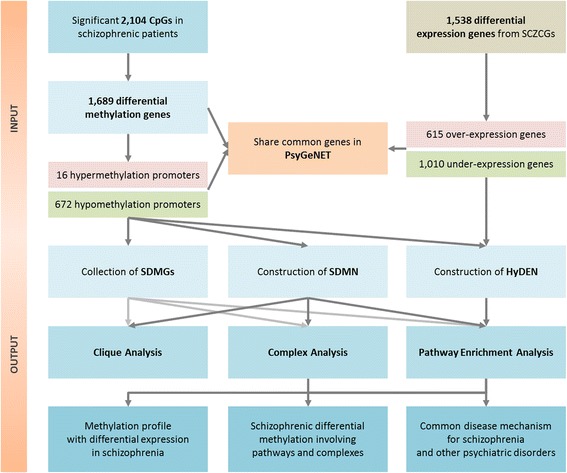
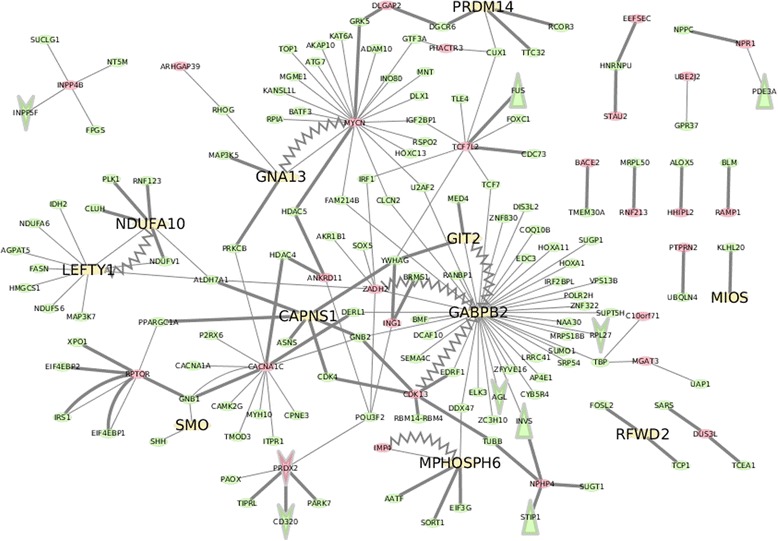
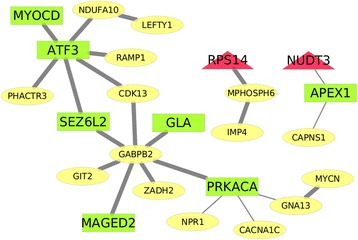
BACKGROUND: Epigenetics of schizophrenia provides important information on how the environmental factors affect the genetic architecture of the disease. DNA methylation plays a pivotal role in etiology for schizophrenia. Previous studies have focused mostly on the discovery of schizophrenia-associated SNPs or genetic variants. As postmortem brain samples became available, more and more recent studies surveyed transcriptomics of the diseases. In this study, we constructed protein-protein interaction (PPI) network using the disease associated SNP (or genetic variants), differentially expressed disease genes and differentially methylated disease genes (or promoters). By combining the different datasets and topological analyses of the PPI network, we established a more comprehensive understanding of the development and genetics of this devastating mental illness. RESULTS: We analyzed the previously published DNA methylation profiles of prefrontal cortex from 335 healthy controls and 191 schizophrenic patients. These datasets revealed 2014 CpGs identified as GWAS risk loci with the differential methylation profile in schizophrenia, and 1689 schizophrenic differential methylated genes (SDMGs) identified with predominant hypomethylation. These SDMGs, combined with the PPIs of these genes, were constructed into the schizophrenic differential methylation network (SDMN). On the SDMN, there are 10 hypermethylated SDMGs, including GNA13, CAPNS1, GABPB2, GIT2, LEFTY1, NDUFA10, MIOS, MPHOSPH6, PRDM14 and RFWD2. The hypermethylation to differential expression network (HyDEN) were constructed to determine how the hypermethylated promoters regulate gene expression. The enrichment analyses of biochemical pathways in HyDEN, including TNF alpha, PDGFR-beta signaling, TGF beta Receptor, VEGFR1 and VEGFR2 signaling, regulation of telomerase, hepatocyte growth factor receptor signaling, ErbB1 downstream signaling and mTOR signaling pathway, suggested that the malfunctioning of these pathways contribute to the symptoms of schizophrenia. CONCLUSIONS: The epigenetic profiles of DNA differential methylation from schizophrenic brain samples were investigated to understand the regulatory roles of SDMGs. The SDMGs interplays with SCZCGs in a coordinated fashion in the disease mechanism of schizophrenia. The protein complexes and pathways involved in SDMN may be responsible for the etiology and potential treatment targets. The SDMG promoters are predominantly hypomethylated. Increasing methylation on these promoters is proposed as a novel therapeutic approach for schizophrenia.
Overview
The claims and statistics of this paper haven’t been checked yet.
Free: it reads the open-access text and checks the first 5 claims that cite a source we can check. Create a free account to check every claim.
Integrity signals
Registry
Cites
Statistics
Figures
Verification
Claims the paper makes
The claims and statistics of this paper haven’t been checked yet.
Free: it reads the open-access text and checks the first 5 claims that cite a source we can check. Create a free account to check every claim.
Claims other papers make about this one
Each is checked against this paper’s own text: does it say what the citing paper says it does?
In the citing paper
“Broadly disrupted DNA methylation profiles are also reported in SZ PFC 199.”
From Mechanisms of synaptic transmission dysregulation in the prefrontal cortex: pathophysiological implications (2022) · cites this paper as [199]
Self-check
Percentages, sums and reported differences re-computed from the paper’s own numbers.
The self-check needs the paper’s full text.
Citations
Cites
Cytoscape: A software Environment for integrated models of biomolecular interaction networks
Shannon, P., Markiel, A., Ozier, O., Baliga, N. S., Wang, J. T., Ramage, D., Amin, N., Schwikowski, B., & Ideker, T. (2003) · Genome Research · doi:10.1101/gr.1239303 · Cited by 51,888 · cited 12×
“It reveals that those vital mental illnesses in PsyGeNET may share common marker genes with the SCZCGs.”
BackgroundMethodInfluentialBioGRID: a general repository for interaction datasets
Stark, C. (2006) · Nucleic Acids Research · doi:10.1093/nar/gkj109 · Cited by 3,960 · cited 3×
“collects BIND [26], BioGRID [27], CTD [28], DIP [29],”
BackgroundPhosphoSitePlus, 2014: mutations, PTMs and recalibrations
Hornbeck, P. V., Zhang, B., Murray, B., Kornhauser, J. M., Latham, V., & Skrzypek, E. (2015) · Nucleic Acids Research · doi:10.1093/nar/gku1267 · Cited by 3,411 · cited 3×
“Hornbeck PV, et al. PhosphoSitePlus, 2014: mutations, PTMs and recalibrations.”
BackgroundCaspi, R., Billington, R., Ferrer, L., Foerster, H., Fulcher, C. A., Keseler, I. M., Kothari, A., Krummenacker, M., Latendresse, M., Mueller, L. A., et al. (2016) · Nucleic Acids Research · doi:10.1093/nar/gkv1164 · Cited by 3,395
Data, information, knowledge and principle: back to metabolism in KEGG
Kanehisa, M., Goto, S., Sato, Y., Kawashima, M., Furumichi, M., & Tanabe, M. (2014) · Nucleic Acids Research · doi:10.1093/nar/gkt1076 · Cited by 3,092 · cited 3×
“Kanehisa M, et al. Data, information, knowledge and principle: back to metabolism in KEGG.”
BackgroundBird, A. (2007) · Nature · doi:10.1038/nature05913 · Cited by 3,011
A Human Protein-Protein Interaction Network: A Resource for Annotating the Proteome
Stelzl, U., Worm, U., Lalowski, M., Haenig, C., Brembeck, F. H., Goehler, H., Stroedicke, M., Zenkner, M., Schoenherr, A., Koeppen, S., et al. (2005) · Cell · doi:10.1016/j.cell.2005.08.029 · Cited by 2,387 · cited 1×
“interacts with TP53, which has imporatnt biological functions in schizophrenia pathology [65].”
BackgroundDrugBank 4.0: shedding new light on drug metabolism
Law, V., Knox, C., Djoumbou, Y., Jewison, T., Guo, A. C., Liu, Y., Maciejewski, A., Arndt, D., Wilson, M., Neveu, V., et al. (2014) · Nucleic Acids Research · doi:10.1093/nar/gkt1068 · Cited by 1,993 · cited 3×
“MiRTarBase [41], DrugBank [42], Recon 2 [43], and WikiPathways databases [44] contain 34,661 molecular”
BackgroundInfluentialStability and flexibility of epigenetic gene regulation in mammalian development
Reik, W. (2007) · Nature · doi:10.1038/nature05918 · Cited by 1,963 · cited 1×
“fers long-term epigenetic silencing which could be reprogrammed by demethylation of DNA repair [98].”
BackgroundThe MIntAct project—IntAct as a common curation platform for 11 molecular interaction databases
Orchard, S., Ammari, M., Aranda, B., Breuza, L., Briganti, L., Broackes-Carter, F., Campbell, N. H., Chavali, G., Chen, C., del-Toro, N., et al. (2014) · Nucleic Acids Research · doi:10.1093/nar/gkt1115 · Cited by 1,831 · cited 3×
“Orchard S, et al. The MIntAct project–IntAct as a common curation platform for 11 molecular interaction databases.”
BackgroundReactome: a database of reactions, pathways and biological processes
Croft, D., O'Kelly, G., Wu, G., Haw, R., Gillespie, M., Matthews, L., Caudy, M., Garapati, P., Gopinath, G., Jassal, B., et al. (2011) · Nucleic Acids Research · doi:10.1093/nar/gkq1018 · Cited by 1,751 · cited 3×
“Croft D, et al. Reactome: a database of reactions, pathways and biological processes.”
MethodPID: the Pathway Interaction Database
Schaefer, C. F., Anthony, K., Krupa, S., Buchoff, J., Day, M., Hannay, T., & Buetow, K. H. (2009) · Nucleic Acids Research · doi:10.1093/nar/gkn653 · Cited by 1,603
BIND--The Biomolecular Interaction Network Database
Bader, G. D. (2001) · Nucleic Acids Research · doi:10.1093/nar/29.1.242 · Cited by 1,560
miRTarBase: a database curates experimentally validated microRNA–target interactions
Hsu, S.-D., Lin, F.-M., Wu, W.-Y., Liang, C., Huang, W.-C., Chan, W.-L., Tsai, W.-T., Chen, G.-Z., Lee, C.-J., Chiu, C.-M., et al. (2011) · Nucleic Acids Research · doi:10.1093/nar/gkq1107 · Cited by 1,389 · cited 1×
“MiRTarBase [41], DrugBank [42], Recon 2 [43], and WikiPathways databases [44] contain 34,661 molecular”
BackgroundCORUM: the comprehensive resource of mammalian protein complexes—2009
Ruepp, A., Waegele, B., Lechner, M., Brauner, B., Dunger-Kaltenbach, I., Fobo, G., Frishman, G., Montrone, C., & Mewes, H.-W. (2010) · Nucleic Acids Research · doi:10.1093/nar/gkp914 · Cited by 1,310 · cited 1×
“human resource to predict the occurrence of protein complexes in different polygenetic groups [91].”
BackgroundDNA methylation and gene silencing in cancer
Baylin, S. B. (2005) · Nature Clinical Practice Oncology · doi:10.1038/ncponc0354 · Cited by 1,154 · cited 1×
“In cancer etiology, the promoter hypermethylation also plays a major role by aberrant transcription of critical regulator genes such as tumor suppressor genes with the implications for the hypomethylation factors in the novel treatment strategy of cancer [95].”
BackgroundPathway Commons, a web resource for biological pathway data
Cerami, E. G., Gross, B. E., Demir, E., Rodchenkov, I., Babur, O., Anwar, N., Schultz, N., Bader, G. D., & Sander, C. (2011) · Nucleic Acids Research · doi:10.1093/nar/gkq1039 · Cited by 1,101 · cited 6×
“The schizophrenic differential methylation network (SDMN) was generated by QQPPI and genetic interactions in Pathway Commons Database of SDMGs.”
BackgroundInfluentialAllen, N. C., Bagade, S., McQueen, M. B., Ioannidis, J. P. A., Kavvoura, F. K., Khoury, M. J., Tanzi, R. E., & Bertram, L. (2008) · Nature Genetics · doi:10.1038/ng.171 · Cited by 1,054 · cited 1×
“methods of systems biology, which provides a global view of genetics of the disease [1].”
MethodA community-driven global reconstruction of human metabolism
Thiele, I., Swainston, N., Fleming, R. M. T., Hoppe, A., Sahoo, S., Aurich, M. K., Haraldsdottir, H., Mo, M. L., Rolfsson, O., Stobbe, M. D., et al. (2013) · Nature Biotechnology · doi:10.1038/nbt.2488 · Cited by 1,019 · cited 1×
“MiRTarBase [41], DrugBank [42], Recon 2 [43], and WikiPathways databases [44] contain 34,661 molecular”
BackgroundPrabakaran, S., Swatton, J. E., Ryan, M. M., Huffaker, S. J., Huang, J.-J., Griffin, J. L., Wayland, M., Freeman, T., Dudbridge, F., Lilley, K. S., et al. (2004) · Molecular Psychiatry · doi:10.1038/sj.mp.4001511 · Cited by 971 · cited 1×
“It should be noticed that PDGFRB mRNA transcripts are significantly increased in postmortem brains of schizophrenic patients [69].”
Backgroundfdrtool: a versatile R package for estimating local and tail area-based false discovery rates
Strimmer, K. (2008) · Bioinformatics · doi:10.1093/bioinformatics/btn209 · Cited by 737
Thomas, P. D. (2003) · Nucleic Acids Research · doi:10.1093/nar/gkg115 · Cited by 665 · cited 3×
“Thomas PD, et al. PANTHER: a browsable database of gene products organized by biological function, using curated protein family and subfamily classification.”
BackgroundJones, P. A. (1999) · Trends in Genetics · doi:10.1016/s0168-9525(98)01636-9 · Cited by 665
Caspi, R., Altman, T., Dreher, K., Fulcher, C. A., Subhraveti, P., Keseler, I. M., Kothari, A., Krummenacker, M., Latendresse, M., Mueller, L. A., et al. (2012) · Nucleic Acids Research · doi:10.1093/nar/gkr1014 · Cited by 601
Protein interaction data curation: the International Molecular Exchange (IMEx) consortium
Orchard, S., Kerrien, S., Abbani, S., Aranda, B., Bhate, J., Bidwell, S., Bridge, A., Briganti, L., Brinkman, F. S. L., Cesareni, G., et al. (2012) · Nature Methods · doi:10.1038/nmeth.1931 · Cited by 537 · cited 2×
“collects BIND [26], BioGRID [27], CTD [28], DIP [29],”
BackgroundMapping DNA methylation across development, genotype and schizophrenia in the human frontal cortex
Jaffe, A. E., Gao, Y., Deep-Soboslay, A., Tao, R., Hyde, T. M., Weinberger, D. R., & Kleinman, J. E. (2016) · Nature Neuroscience · doi:10.1038/nn.4181 · Cited by 511 · cited 2×
“In this dataset, there included 2104 CpGs identified as GWAS risk loci with differential methylation profile in schizophrenia [16].”
MethodNetPath: a public resource of curated signal transduction pathways
Kandasamy, K., Mohan, S. S., Raju, R., Keerthikumar, S., Kumar, G. S. S., Venugopal, A. K., Telikicherla, D., Navarro, J. D., Mathivanan, S., Pecquet, C., et al. (2010) · Genome Biology · doi:10.1186/gb-2010-11-1-r3 · Cited by 505 · cited 3×
“Kandasamy K, et al. NetPath: a public resource of curated signal transduction pathways.”
BackgroundSMPDB 2.0: Big Improvements to the Small Molecule Pathway Database
Jewison, T., Su, Y., Disfany, F. M., Liang, Y., Knox, C., Maciejewski, A., Poelzer, J., Huynh, J., Zhou, Y., Arndt, D., et al. (2014) · Nucleic Acids Research · doi:10.1093/nar/gkt1067 · Cited by 474 · cited 3×
“Jewison T, et al. SMPDB 2.0: big improvements to the Small Molecule Pathway Database.”
MethodInfluentialWagner, J. R., Busche, S., Ge, B., Kwan, T., Pastinen, T., & Blanchette, M. (2014) · Genome biology · doi:10.1186/gb-2014-15-2-r37 · Cited by 446
Wingender, E. (2008) · Briefings in Bioinformatics · doi:10.1093/bib/bbn016 · Cited by 435 · cited 3×
“Pathway Commons Database [25] which collects BIND [26], BioGRID [27], CTD [28], DIP [29], HPRD [30], HumanCyc [31], IntAct [32], KEGG [33], NetPath [34], PANTHER [35], PhosphoSitePlus [36], PID [37], Reactome [38], SMPDB [39], TRANSFAC [40], MiRTarBase [41], DrugBank [42], Recon 2 [43], and WikiPathways databases [44]…”
MethodSchizophrenia is associated with an increase in cortical microRNA biogenesis
Beveridge, N. J., Gardiner, E., Carroll, A. P., Tooney, P. A., & Cairns, M. J. (2010) · Molecular Psychiatry · doi:10.1038/mp.2009.84 · Cited by 432
Ito, M., Yuan, C.-X., Malik, S., Gu, W., Fondell, J. D., Yamamura, S., Fu, Z.-Y., Zhang, X., Qin, J., & Roeder, R. G. (1999) · Molecular Cell · doi:10.1016/s1097-2765(00)80463-3 · Cited by 419 · cited 1×
“in TRAP230 could result in the attenuated functions by p53 activation to target RNA polymerase II [110]”
BackgroundWikiPathways: capturing the full diversity of pathway knowledge
Kutmon, M., Riutta, A., Nunes, N., Hanspers, K., Willighagen, E. L., Bohler, A., Mélius, J., Waagmeester, A., Sinha, S. R., Miller, R., et al. (2016) · Nucleic Acids Research · doi:10.1093/nar/gkv1024 · Cited by 417 · cited 1×
“MiRTarBase [41], DrugBank [42], Recon 2 [43], and WikiPathways databases [44] contain 34,661 molecular”
BackgroundCamargo, L. M., Collura, V, Rain, J.-C., Mizuguchi, K., Hermjakob, H., Kerrien, S., Bonnert, T. P., Whiting, P. J., & Brandon, N. J. (2007) · Molecular Psychiatry · doi:10.1038/sj.mp.4001880 · Cited by 405
Prabakaran, S., Swatton, J. E., Ryan, M. M., Huffaker, S. J., Huang, J. T.-J., Griffin, J. L., Wayland, M., Freeman, T., Dudbridge, F., Lilley, K. S., et al. (2004) · Molecular Psychiatry · doi:10.1038/sj.mp.4001532 · Cited by 375
DNA methylation directs a time-dependent repression of transcription initiation
Kass, S. U., Landsberger, N., & Wolffe, A. P. (1997) · Current Biology · doi:10.1016/s0960-9822(97)70086-1 · Cited by 370
Genomewide association for schizophrenia in the CATIE study: results of stage 1
Sullivan, P. F., Lin, D., Tzeng, J.-Y., van den Oord, E., Perkins, D., Stroup, T. S., Wagner, M., Lee, S., Wright, F. A., Zou, F., et al. (2008) · Molecular Psychiatry · doi:10.1038/mp.2008.25 · Cited by 355
Self-citationWeickert, C. S., Straub, R. E., McClintock, B. W., Matsumoto, M., Hashimoto, R., Hyde, T. M., Herman, M. M., Weinberger, D. R., & Kleinman, J. E. (2004) · Archives of General Psychiatry · doi:10.1001/archpsyc.61.6.544 · Cited by 352
CORUM: the comprehensive resource of mammalian protein complexes
Ruepp, A., Brauner, B., Dunger-Kaltenbach, I., Frishman, G., Montrone, C., Stransky, M., Waegele, B., Schmidt, T., Doudieu, O. N., Stumpflen, V., et al. (2007) · Nucleic Acids Research · doi:10.1093/nar/gkm936 · Cited by 350 · cited 1×
“The clique and complex analysis was performed with data of the CORUM database [46] which has a collection of experimentally verified mammalian protein complexes to reveal the corresponding cliques complexes from SDMN.”
MethodMethylation QTLs in the developing brain and their enrichment in schizophrenia risk loci
Hannon, E., Spiers, H., Viana, J., Pidsley, R., Burrage, J., Murphy, T. M., Troakes, C., Turecki, G., O'Donovan, M. C., Schalkwyk, L. C., et al. (2016) · Nature Neuroscience · doi:10.1038/nn.4182 · Cited by 342
Epigenetic basis of mental illness
Nestler, E. J., Peña, C. J., Kundakovic, M., Mitchell, A., & Akbarian, S. (2016) · The Neuroscientist · doi:10.1177/1073858415608147 · Cited by 342 · cited 1×
“Exposure to stress induces stable changes by transcriptional dysfunction, resulting in aberrant changes of genetic expression, neural circuit functions and ultimately, behavior changes and disease symptoms [93].”
BackgroundGlatt, S. J., Everall, I. P., Kremen, W. S., Corbeil, J., Šášik, R., Khanlou, N., Han, M., Liew, C.-C., & Tsuang, M. T. (2005) · Proceedings of the National Academy of Sciences · doi:10.1073/pnas.0507666102 · Cited by 322
The Dynamics of DNA Methylation in Schizophrenia and Related Psychiatric Disorders
Grayson, D. R., & Guidotti, A. (2013) · Neuropsychopharmacology · doi:10.1038/npp.2012.125 · Cited by 267 · cited 1×
“postmortem studies of schizophrenia [12].”
The TRAP/SMCC/Mediator complex and thyroid hormone receptor function
Ito, M., & Roeder, R. G. (2001) · Trends in Endocrinology & Metabolism · doi:10.1016/s1043-2760(00)00355-6 · Cited by 256
Lin, M., Pedrosa, E., Shah, A., Hrabovsky, A., Maqbool, S., Zheng, D., & Lachman, H. M. (2011) · PLoS ONE · doi:10.1371/journal.pone.0023356 · Cited by 242
An evaluation of human protein-protein interaction data in the public domain
Mathivanan, S., Periaswamy, B., Gandhi, T., Kandasamy, K., Suresh, S., Mohmood, R., Ramachandra, Y., & Pandey, A. (2006) · BMC Bioinformatics · doi:10.1186/1471-2105-7-s5-s19 · Cited by 232
Ajuh, P. (2000) · The EMBO Journal · doi:10.1093/emboj/19.23.6569 · Cited by 219 · cited 1×
“CDC5L complex is essential for the catalytic step of pre-mRNA splicing [113].”
BackgroundWebster, M. J., O’Grady, J., Kleinman, J. E., & Weickert, C. S. (2005) · Neuroscience · doi:10.1016/j.neuroscience.2005.02.037 · Cited by 208
Mitochondrial complex i subunits expression is altered in schizophrenia: a postmortem study
Karry, R., Klein, E., & Ben Shachar, D. (2004) · Biological Psychiatry · doi:10.1016/j.biopsych.2003.12.012 · Cited by 208 · cited 1×
“The alteration of mitochondria and dysregulation of energy metabolism in postmortem brain samples may contribute to implication of schizophrenia [116, 117].”
BackgroundMaycox, P. R., Kelly, F., Taylor, A., Bates, S., Reid, J., Logendra, R., Barnes, M. R., Larminie, C., Jones, N., Lennon, M., et al. (2009) · Molecular Psychiatry · doi:10.1038/mp.2009.18 · Cited by 199
Serum levels of S100B and NSE proteins in Alzheimer's disease patients
Chaves, M. L., Camozzato, A. L., Ferreira, E. D., Piazenski, I., Kochhann, R., Dall'Igna, O., Mazzini, G. S., Souza, D. O., & Portela, L. V. (2010) · Journal of Neuroinflammation · doi:10.1186/1742-2094-7-6 · Cited by 188
Association of DNA methylation differences with schizophrenia in an Epigenome-Wide association study
Montano, C., Taub, M. A., Jaffe, A., Briem, E., Feinberg, J. I., Trygvadottir, R., Idrizi, A., Runarsson, A., Berndsen, B., Gur, R. C., et al. (2016) · JAMA Psychiatry · doi:10.1001/jamapsychiatry.2016.0144 · Cited by 180 · cited 1×
“There are significant differences between the overall and specific methylation levels of the different tissue samples of schizophrenia [5].”
BackgroundHettema, J. M., An, S. S., Neale, M. C., Bukszar, J., van den Oord, E. J. C. G., Kendler, K. S., & Chen, X. (2006) · Molecular Psychiatry · doi:10.1038/sj.mp.4001845 · Cited by 172
Epigenetic mechanisms in schizophrenia
Roth, T. L., Lubin, F. D., Sodhi, M., & Kleinman, J. E. (2009) · Biochimica et Biophysica Acta (BBA) - General Subjects · doi:10.1016/j.bbagen.2009.06.009 · Cited by 169
The Comparative Toxicogenomics Database (CTD): a resource for comparative toxicological studies
Mattingly, C. J., Rosenstein, M. C., Colby, G. T., Forrest Jr, J. N., & Boyer, J. L. (2006) · Journal of Experimental Zoology Part A: Comparative Experimental Biology · doi:10.1002/jez.a.307 · Cited by 161 · cited 3×
“Mattingly CJ, et al. The Comparative Toxicogenomics Database (CTD): a resource for comparative toxicological studies.”
BackgroundDNA Methylation: a form of epigenetic control of gene expression
Lim, D. H. K., & Maher, E. R. (2010) · The Obstetrician & Gynaecologist · doi:10.1576/toag.12.1.037.27556 · Cited by 155
Iwakura, Y., & Nawa, H. (2013) · Frontiers in Cellular Neuroscience · doi:10.3389/fncel.2013.00004 · Cited by 144 · cited 1×
“Deficits in ErbB signaling pathway might contribute to the neurological development of psychiatric diseases [74, 75].”
BackgroundTyagi, T., Ahmad, S., Gupta, N., Sahu, A., Ahmad, Y., Nair, V., Chatterjee, T., Bajaj, N., Sengupta, S., Ganju, L., et al. (2013) · Blood · doi:10.1182/blood-2013-05-501924 · Cited by 143 · cited 1×
“It also significantly contributes to platelet activity and thrombosis [53], which may contribute to the increased risk of thrombogenesis in schizophrenic patients [2].”
BackgroundMartins-de-Souza, D., Gattaz, W. F., Schmitt, A., Novello, J. C., Marangoni, S., Turck, C. W., & Dias-Neto, E. (2009) · BMC Psychiatry · doi:10.1186/1471-244x-9-17 · Cited by 143 · cited 1×
“The alteration of mitochondria and dysregulation of energy metabolism in postmortem brain samples may contribute to implication of schizophrenia [116, 117].”
BackgroundIto, M., Okano, H. J., Darnell, R. B., & Roeder, R. G. (2002) · The EMBO Journal · doi:10.1093/emboj/cdf348 · Cited by 139 · cited 1×
“and transcriptional activators by TRAP/Mediator complex correlate with the development of schizophrenia [111, 112].”
BackgroundHettema, J. M., An, S., Neale, M. C., Bukszár, J., van den Oord, E. J. C. G., Kendler, K. S., & Chen, X.-X. (2006) · Molecular Psychiatry · doi:10.1038/sj.mp.4001858 · Cited by 137
Schizophrenia Gene Networks and Pathways and Their Applications for Novel Candidate Gene Selection
Sun, J., Jia, P., Fanous, A. H., van den Oord, E., Chen, X., Riley, B. P., Amdur, R. L., Kendler, K. S., & Zhao, Z. (2010) · PLoS ONE · doi:10.1371/journal.pone.0011351 · Cited by 124
Neurodevelopmental origins of bipolar disorder: iPSC models
O'Shea, K. S., & McInnis, M. G. (2015) · Molecular and Cellular Neuroscience · doi:10.1016/j.mcn.2015.11.006 · Cited by 117
TPH2 Gene Polymorphisms and Major Depression – A Meta-Analysis
Gao, J., Pan, Z., Jiao, Z., Li, F., Zhao, G., Wei, Q., Pan, F., & Evangelou, E. (2012) · PLoS ONE · doi:10.1371/journal.pone.0036721 · Cited by 112
Jia, P., Wang, L., Fanous, A. H., Pato, C. N., Edwards, T. L., The International Schizophrenia Consortium, & Zhao, Z. (2012) · PLoS Computational Biology · doi:10.1371/journal.pcbi.1002587 · Cited by 109 · cited 1×
“For example, GNA13, a candidate disease marker of schizophrenia according to GWAS studies [49], effects brain microstructure and maintenance of the white matter.”
BackgroundNDUFA10 mutations cause complex I deficiency in a patient with Leigh disease
Hoefs, S. J. G., van Spronsen, F. J., Lenssen, E. W. H., Nijtmans, L. G. J., Rodenburg, R. J., Smeitink, J. A. M., & van den Heuvel, L. P. (2010) · European Journal of Human Genetics · doi:10.1038/ejhg.2010.204 · Cited by 108 · cited 1×
“It is associated with the progressive neurodegenerative disease such as Leigh syndrome [118], which possibly shares the same etiopathogeny with schizophrenia [119].”
BackgroundShimabukuro, M., Sasaki, T., Imamura, A., Tsujita, T., Fuke, C., Umekage, T., Tochigi, M., Hiramatsu, K., Miyazaki, T., Oda, T., et al. (2007) · Journal of Psychiatric Research · doi:10.1016/j.jpsychires.2006.08.006 · Cited by 108 · cited 1×
“Global hypomethylation has also been noted in schizophrenia patients in experiments with larger sample sizes [9].”
BackgroundAltered HDAC5 and CREB mRNA expressions in the peripheral leukocytes of major depression
Iga, J.-I., Ueno, S.-I., Yamauchi, K., Numata, S., Kinouchi, S., Tayoshi-Shibuya, S., Song, H., & Ohmori, T. (2007) · Progress in Neuro-Psychopharmacology and Biological Psychiatry · doi:10.1016/j.pnpbp.2006.12.014 · Cited by 105
Wu, J. Q., Wang, X., Beveridge, N. J., Tooney, P. A., Scott, R. J., Carr, V. J., & Cairns, M. J. (2012) · PLoS ONE · doi:10.1371/journal.pone.0036351 · Cited by 101 · cited 1×
“[20]; LRRTM4 was under-expressed in Huang, et al.”
Allele-specific DNA methylation in mouse strains is mainly determined by cis-acting sequences
Schilling, E., El Chartouni, C., & Rehli, M. (2009) · Genome Research · doi:10.1101/gr.095562.109 · Cited by 98 · cited 1×
“in epigenetic patterns may contribute to phenotypic variations and disease susceptibilities [13].”
BackgroundPsyGeNET: a knowledge platform on psychiatric disorders and their genes
Gutiérrez-Sacristán, A., Grosdidier, S., Valverde, O., Torrens, M., Bravo, À., Piñero, J., Sanz, F., & Furlong, L. I. (2015) · Bioinformatics · doi:10.1093/bioinformatics/btv301 · Cited by 95 · cited 9×
“It reveals that those vital mental illnesses in PsyGeNET may share common marker genes with the SCZCGs.”
MethodInfluentialDNA methylation in schizophrenia: progress and challenges of epigenetic studies
Nishioka, M., Bundo, M., Kasai, K., & Iwamoto, K. (2012) · Genome Medicine · doi:10.1186/gm397 · Cited by 91 · cited 1×
“Recent analyses of the methylation arrays of postmortem brain samples indicated that the hypermethylation of RELN, hypermethylation and down-regulated transcription of SOX10, and hypomethylation of MB-COMT promoters may contribute to the development of schizophrenia [6].”
BackgroundThiamine Deficiency and Delirium
Osiezagha, K., Ali, S., Freeman, C., Barker, N. C., Jabeen, S., Maitra, S., Olagbemiro, Y., Richie, W. D., & Bailey, R. K. (2013) · Europe PMC (PubMed Central) · Cited by 90
Epigenetic mechanisms in schizophrenia
Akbarian, S. (2014) · Dialogues in Clinical Neuroscience · doi:10.31887/dcns.2014.16.3/sakbarian · Cited by 88
Role of the Mediator complex in nuclear hormone receptor signaling
Belakavadi, M., & Fondell, J. D. (2006) · Springer eBooks · doi:10.1007/s10254-005-0002-0 · Cited by 87
DNA methylation in peripheral tissue of schizophrenia and bipolar disorder: a systematic review
Teroganova, N., Girshkin, L., Suter, C. M., & Green, M. J. (2016) · BMC Genetics · doi:10.1186/s12863-016-0332-2 · Cited by 87 · cited 1×
“RELN, BDNF, COMT, 5-HTT and glutamate receptor genes) [8].”
β-Cell Insulin Secretion Requires the Ubiquitin Ligase COP1
Suriben, R., Kaihara, K. A., Paolino, M., Reichelt, M., Kummerfeld, S., Modrusan, Z. D., Dugger, D. L., Newton, K., Sagolla, M. S., Webster, J. D., et al. (2015) · Cell · doi:10.1016/j.cell.2015.10.076 · Cited by 85
Association of serum VEGF levels with prefrontal cortex volume in schizophrenia
Pillai, A., Howell, K. R., Ahmed, A. O., Weinberg, D., Allen, K. M., Bruggemann, J. M., Lenroot, R., Liu, D., Galletly, C. A., Weickert, C. S., et al. (2015) · Molecular Psychiatry · doi:10.1038/mp.2015.96 · Cited by 83 · cited 1×
“Its serum levels are related to prefrontal cortex abnormalities in schizophrenia [71].”
BackgroundBen-Shachar, D., & Karry, R. (2007) · PLoS ONE · doi:10.1371/journal.pone.0000817 · Cited by 83
A Case of Reversible Neuropsychiatry Symptoms in HIV due to Toxic Leukoencephalopathy.
Osiezagha, K., Ali, S., Freeman, C., Barker, N. C., Jabeen, S., Maitra, S., Olagbemiro, Y., Richie, W., & Bailey, R. K. (2013) · Europe PMC (PubMed Central) · Cited by 82
DNA Methylation Signatures of Peripheral Leukocytes in Schizophrenia
Kinoshita, M., Numata, S., Tajima, A., Shimodera, S., Ono, S., Imamura, A., Iga, J.-I., Watanabe, S.-Y., Kikuchi, K., Kubo, H., et al. (2012) · Neuromolecular medicine · doi:10.1007/s12017-012-8198-6 · Cited by 80 · cited 1×
“5% of the promotor regions in peripheral blood leukocytes [11].”
BackgroundDong, E., Tueting, P., Matrisciano, F., Grayson, D. R., & Guidotti, A. (2016) · Translational Psychiatry · doi:10.1038/tp.2015.191 · Cited by 79
Is the mTOR‐signalling cascade disrupted in Schizophrenia?
Gururajan, A., & van den Buuse, M. (2014) · Journal of Neurochemistry · doi:10.1111/jnc.12622 · Cited by 78 · cited 2×
“Disrupted mTOR signaling cause impaired function of protein synthesis in schizophrenia [55].”
BackgroundMisiak, B., Szmida, E., Karpiński, P., Loska, O., Sąsiadek, M. M., & Frydecka, D. (2015) · Epigenomics · doi:10.2217/epi.15.68 · Cited by 77 · cited 1×
“Lower LINE-1 methylation in peripheral blood leukocytes has been noted in first-episode schizophrenia patients with histories of childhood trauma [10].”
BackgroundLee, S., Tsao, T. T.-H., Yang, K.-C., Lin, H., Kuo, Y.-L., Hsu, C.-H., Lee, W., Huang, K.-C., & Kao, C. (2011) · BMC Bioinformatics · doi:10.1186/1471-2105-12-s13-s20 · Cited by 75 · cited 1×
“Topologically and functionally important genes on the PPI networks may be seen as potential drug targets [19].”
BackgroundSelf-citation(2003) · Nucleic Acids Research · doi:10.1093/nar/gkg290 · Cited by 74
Ji, B., La, Y., Gao, L., Zhu, H., Tian, N., Zhang, M., Yang, Y., Zhao, X., Tang, R., Ma, G., et al. (2009) · Journal of Proteome Research · doi:10.1021/pr800876z · Cited by 69 · cited 2×
“Also, the change of mitochondrial gene in respiratory electron transport chain responses to the exposure of antipsychotics [59].”
BackgroundEffect of mood stabilizers on DNA methylation in human neuroblastoma cells
Asai, T., Bundo, M., Sugawara, H., Sunaga, F., Ueda, J., Tanaka, G., Ishigooka, J., Kasai, K., Kato, T., & Iwamoto, K. (2013) · International Journal of Neuropsychopharmacology · doi:10.1017/s1461145713000710 · Cited by 68 · cited 1×
“Mood stabilizers could also reverse the hypermethylation process of CpG sites of SLC6A4 to be hypomethylated in bipolar disorder [106, 107].”
BackgroundHuman p53 tumor suppressor gene (TP53) and schizophrenia: Case–control and family studies
Ni, X., Trakalo, J., Valente, J., de Azevedo, M. H. P., Pato, M. T., Pato, C. N., & Kennedy, J. L. (2005) · Neuroscience Letters · doi:10.1016/j.neulet.2005.06.050 · Cited by 66
Peripheral immuno-inflammatory abnormalities in ultra-high risk of developing psychosis
Zeni‐Graiff, M., Rizzo, L. B., Mansur, R. B., Maurya, P. K., Sethi, S., da Cunha, G. R., Asevedo, E. D. M., Pan, P. M., Zugman, A., Yamagata, A. S., et al. (2016) · Schizophrenia Research · doi:10.1016/j.schres.2016.06.031 · Cited by 64
Molecular Links between Mitochondrial Dysfunctions and Schizophrenia
Park, C., & Park, S. K. (2012) · Molecules and Cells · doi:10.1007/s10059-012-2284-3 · Cited by 60 · cited 2×
“In this study, NDUFA10 in HyDEN has found to be associated with the abnormalities of mitochondrial function in schizophrenia [58].”
BackgroundPOINeT: protein interactome with sub-network analysis and hub prioritization
Lee, S., Chan, C., Chen, T.-C., Yang, C.-Y., Huang, K.-C., Tsai, C.-H., Lai, J.-M., Wang, F., Kao, C.-Y., & Huang, C. F. (2009) · BMC Bioinformatics · doi:10.1186/1471-2105-10-114 · Cited by 60 · cited 4×
“The schizophrenic differential methylation network (SDMN) was generated by QQPPI of schizophrenic differential methylated genes (SDMGs) with underlying pathway enrichment.”
BackgroundInfluentialSelf-citationYelmo-Cruz, S., Morera, A. M., & Abreu-González, P. (2013) · Psychiatry and Clinical Neurosciences · doi:10.1111/pcn.12024 · Cited by 57
Telomerase levels in schizophrenia: A preliminary study
PORTON, B., DELISI, L., BERTISCH, H., JI, F., GORDON, D., LI, P., BENEDICT, M., GREENBERG, W., & KAO, H. (2008) · Schizophrenia Research · doi:10.1016/j.schres.2008.08.028 · Cited by 56 · cited 1×
“A significant decrease is noted in telomerase activity among individuals with schizophrenia [73].”
BackgroundSome Effects of Relaxin in Obstetrics
Decker, W. H., THWAITE, W., BORDAT, S., Kayser, R. G., HARAMI, T., & Campbell, J. P. (1958) · Obstetrics and Gynecology · doi:10.1097/00006250-195807000-00002 · Cited by 55
Huang, K.-C., Yang, K.-C., Lin, H., Tsao, T. T.-H., & Lee, S.-A. (2014) · BMC Genomics · doi:10.1186/1471-2164-15-s9-s6 · Cited by 51 · cited 4×
“It also significantly contributes to platelet activity and thrombosis [53], which may contribute to the increased risk of thrombogenesis in schizophrenic patients [2].”
BackgroundInfluentialSelf-citationGenetic variants in transforming growth factor-β gene (TGFB1) affect susceptibility to schizophrenia
Frydecka, D., Misiak, B., Beszlej, J. A., Karabon, L., Pawlak-Adamska, E., Tomkiewicz, A., Partyka, A., Jonkisz, A., & Kiejna, A. (2013) · Molecular Biology Reports · doi:10.1007/s11033-013-2662-8 · Cited by 47
Neurodevelopment in Schizophrenia: The Role of the Wnt Pathways
Panaccione, I., Napoletano, F., Forte, A., Kotzalidis, G., Casale, A., Rapinesi, C., Brugnoli, C., Serata, D., Caccia, F., Cuomo, I., et al. (2013) · Current Neuropharmacology · doi:10.2174/1570159x113119990037 · Cited by 47 · cited 1×
“The most consistent abnormalities associated with antipsychotic response are Akt1, glycogen synthase kinase3beta and beta-catenin pathways [70].”
BackgroundHypothèse épigénétique de la schizophrénie : revue de la littérature
Rivollier, F., Lotersztajn, L., Chaumette, B., Krebs, M., & Kébir, O. (2014) · L Encéphale · doi:10.1016/j.encep.2014.06.005 · Cited by 46
Evaluating the dopamine hypothesis of schizophrenia in a large-scale genome-wide association study
Edwards, A. C., Bacanu, S.-A., Bigdeli, T. B., Moscati, A., & Kendler, K. S. (2016) · Schizophrenia Research · doi:10.1016/j.schres.2016.06.016 · Cited by 44
Li, Y., Camarillo, C., Xu, J., Arana, T. B., Xiao, Y., Zhao, Z., Chen, H., Ramirez, M., Zavala, J., Escamilla, M. A., et al. (2015) · BioMed Research International · doi:10.1155/2015/201587 · Cited by 42
Karabon, L., Frydecka, D., Pawlak, E., Tomkiewicz, A., Sedlaczek, P., Kiejna, A., Beszłej, J. A., & Misiak, B. (2015) · Neuropsychiatric Disease and Treatment · doi:10.2147/ndt.s74672 · Cited by 41
Shortened telomere in unremitted schizophrenia
Kota, L. N., Purushottam, M., Moily, N. S., & Jain, S. (2015) · Psychiatry and Clinical Neurosciences · doi:10.1111/pcn.12260 · Cited by 39 · cited 1×
“Shortened telomere length is found in unremitted schizophrenic patients [72].”
BackgroundRole of disrupted in schizophrenia 1 (DISC1) in stress-induced prefrontal cognitive dysfunction
Gamo, N. J., Duque, A., Paspalas, C. D., Kata, A., Fine, R., Boven, L., Bryan, C., Lo, T., Anighoro, K., Bermudez, L., et al. (2013) · Translational Psychiatry · doi:10.1038/tp.2013.104 · Cited by 37
Sprooten, E., Knowles, E. E. M., McKay, D., Göring, H. H. H., Curran, J. E., Kent, J. W., Carless, M. A., Dyer, T. D., Drigalenko, E. I., Olvera, R. L., et al. (2014) · NeuroImage · doi:10.1016/j.neuroimage.2014.04.021 · Cited by 36 · cited 1×
“It plays a crucial role for G-protein signaling and neurodevelopment [50].”
BackgroundPhilibert, R. A., Sandhu, H. K., Hutton, A. M., Wang, Z., Arndt, S. V., Andreasen, N. C., Crowe, R., & Wassink, T. H. (2001) · American Journal of Medical Genetics · doi:10.1002/1096-8628(20010108)105:1<130::aid-ajmg1076>3.0.co;2-p · Cited by 36 · cited 1×
“and transcriptional activators by TRAP/Mediator complex correlate with the development of schizophrenia [111, 112].”
BackgroundHuang, K.-C., Yang, K.-C., Lin, H., Tsao, T. T.-H., Lee, W., Lee, S., & Kao, C. (2013) · BMC Genomics · doi:10.1186/1471-2164-14-s5-s10 · Cited by 34 · cited 1×
“There might be the protective factors as per the etiology of cancer [18], in which most promotors are hypermethylated.”
BackgroundSelf-citationHypomethylation of the paternally inherited LRRTM1 promoter linked to schizophrenia
Brucato, N., DeLisi, L. E., Fisher, S. E., & Francks, C. (2014) · American Journal of Medical Genetics Part B Neuropsychiatric Genetics · doi:10.1002/ajmg.b.32258 · Cited by 33 · cited 1×
“LRRTM1 hypomethylation in the promoter was reported as a risk factor for the development of schizophrenia [105].”
BackgroundSong, X., Pang, L., Feng, Y., Fan, X., Li, X., Zhang, W., Gao, J., Zhang, J., Nemani, K., Zhang, H., et al. (2014) · Behavioral and Brain Functions · doi:10.1186/1744-9081-10-35 · Cited by 33
Turhan, L., Batmaz, S., Koçbıyık, S., & Soygur, A. H. (2016) · Nordic Journal of Psychiatry · doi:10.3109/08039488.2015.1122079 · Cited by 33
Effects of quetiapine on DNA methylation in neuroblastoma cells
Sugawara, H., Bundo, M., Asai, T., Sunaga, F., Ueda, J., Ishigooka, J., Kasai, K., Kato, T., & Iwamoto, K. (2015) · Progress in Neuro-Psychopharmacology and Biological Psychiatry · doi:10.1016/j.pnpbp.2014.08.010 · Cited by 32 · cited 1×
“Mood stabilizers could also reverse the hypermethylation process of CpG sites of SLC6A4 to be hypomethylated in bipolar disorder [106, 107].”
BackgroundMizuno, M., Sotoyama, H., Namba, H., Shibuya, M., Eda, T., Wang, R., Okubo, T., Nagata, K., Iwakura, Y., & Nawa, H. (2013) · Translational Psychiatry · doi:10.1038/tp.2013.29 · Cited by 30 · cited 1×
“ErbB inhibitors appear to have anti-dopaminergic actions to alleviate behavioral symptoms in animal models for schizophrenia [76].”
BackgroundHypomethylation of FAM63B in bipolar disorder patients
Starnawska, A., Demontis, D., McQuillin, A., O’Brien, N. L., Staunstrup, N. H., Mors, O. N., Nielsen, A. L., Børglum, A. D., & Nyegaard, M. (2016) · Clinical Epigenetics · doi:10.1186/s13148-016-0221-6 · Cited by 29 · cited 1×
“FAM63B was an epigenetic risk gene for schizophrenia and bipolar disorder [104].”
BackgroundKim, S., Zhang, S., Choi, K. H., Reister, R., Do, C., Baykız, A. F., & Gershenfeld, H. K. (2008) · Biological Psychiatry · doi:10.1016/j.biopsych.2008.09.015 · Cited by 27
Buddhala, C., Suarez, M., Modi, J. P., Prentice, H. M., Ma, Z., Tao, R., & Wu, J. Y. (2012) · PLoS ONE · doi:10.1371/journal.pone.0033002 · Cited by 27 · cited 1×
“From the interaction aspect of neurotransmission, calpain-mediated break down of fGAD65 results in decreased level of the GABA synthesis which leads to reduced GABA neurotransmission [54].”
BackgroundIPAVS: Integrated Pathway Resources, Analysis and Visualization System
Sreenivasaiah, P. K., Rani, S., Cayetano, J., Arul, N., & Kim, D. H. (2011) · Nucleic Acids Research · doi:10.1093/nar/gkr1208 · Cited by 24 · cited 1×
“The pathway enrichment analysis was performed by Integrated Pathway Resources, Analysis and Visualization System (iPAVS) [48].”
MethodLoss of COP1 expression determines poor prognosis in patients with gastric cancer
Sawada, G., Ueo, H., Matsumura, T., Uchi, R., Ishibashi, M., Mima, K., Kurashige, J., Takahashi, Y., Akiyoshi, S., Sudo, T., et al. (2013) · Oncology Reports · doi:10.3892/or.2013.2664 · Cited by 20
Mizuno, M., Iwakura, Y., Shibuya, M., Zheng, Y., Eda, T., Kato, T., Takasu, Y., & Nawa, H. (2010) · Journal of Pharmacological Sciences · doi:10.1254/jphs.10099fp · Cited by 18 · cited 1×
“Deficits in ErbB signaling pathway might contribute to the neurological development of psychiatric diseases [74, 75].”
BackgroundLohoff, F. W., Bloch, P. J., Weller, A. E., Nall, A. H., Doyle, G. A. R., Buono, R. J., Ferraro, T. N., Kampman, K. M., Pettinati, H. M., Dackis, C. A., et al. (2008) · Neuroscience Letters · doi:10.1016/j.neulet.2008.05.073 · Cited by 16
Linkage analysis of schizophrenia controlling for population substructure
Paunio, T., Arajärvi, R., Terwilliger, J. D., Hiekkalinna, T., Haimi, P., Partonen, T., Lönnqvist, J. K., Peltonen, L., & Varilo, T. (2008) · American Journal of Medical Genetics Part B Neuropsychiatric Genetics · doi:10.1002/ajmg.b.30905 · Cited by 16
Association study of a functional promoter polymorphism in theXBP1gene and schizophrenia
Jönsson, E. G., Cichon, S., Schumacher, J. H., Jamra, R. A., Schulze, T. G., Deschner, M., Forslund, K., Hall, H., Propping, P., Czerski, P. M., et al. (2005) · American Journal of Medical Genetics Part B Neuropsychiatric Genetics · doi:10.1002/ajmg.b.30262 · Cited by 14
Aflatoxin B1 induced upregulation of protein arginine methyltransferase 5 in human cell lines
Ghufran, M. S., Ghosh, K., & Kanade, S. R. (2016) · Toxicon · doi:10.1016/j.toxicon.2016.05.015 · Cited by 14 · cited 1×
“Some hypermethylating agent, such as vitamin B1, could induce up-regulation of methyltransferase and reversion of hypomethylation as an adjuvant treatment in schizophrenia [102].”
BackgroundZai, G. C., Zai, C. C. H., Tiwari, A. K., King, N. A., Braithwaite, J., van Tol, H., & Kennedy, J. L. (2010) · The World Journal of Biological Psychiatry · doi:10.3109/15622975.2010.520333 · Cited by 8 · cited 1×
“The genes for platelet-derived growth factor beta (PDGFB) and PDGFB receptor (PDGFBR) may be important in the pathology of schizophrenia through interacting with the DRD2/DRD4 and NMDA receptors [68].”
BackgroundSchizophrenia and Leigh syndrome, a simple comorbidity or the same etiopathogeny: about a case.
Mnif, L., Sellami, R., & Masmoudi, J. (2015) · PubMed Central · doi:10.11604/pamj.2015.22.333.8288 · Cited by 7 · cited 1×
“It is associated with the progressive neurodegenerative disease such as Leigh syndrome [118], which possibly shares the same etiopathogeny with schizophrenia [119].”
BackgroundFrydecka, D., Misiak, B., Pawlak-Adamska, E., et al. (2015) · DOAJ (DOAJ: Directory of Open Access Journals) · Cited by 7
Tang, L., Zhang, Q., Li, J., Gu, T., Ruan, Y., Tang, Y., Zhang, S., Hu, L., Zhao, L., Wang, G.-Y., et al. (2015) · Psychiatry Research · doi:10.1016/j.psychres.2015.05.027 · Cited by 3
Cited by
Yan, Z., & Rein, B. (2022) · Molecular Psychiatry · doi:10.1038/s41380-021-01092-3 · Cited by 300
Pisanu, C., Papadima, E. M., Melis, C., Congiu, D., Loizedda, A., Orrù, N., Calza, S., Orrù, S., Carcassi, C., Severino, G., et al. (2019) · International Journal of Molecular Sciences · doi:10.3390/ijms20236040 · Cited by 44
“Previous studies have shown that CAPNS1 was underexpressed [30] and hypermethylated [31] in the prefrontal cortex of patients with SCZ compared to healthy controls.”
BackgroundZebrafish models of epigenetic regulation of CNS functions
Lakstygal, A. M., de Abreu, M. S., & Kalueff, A. V. (2018) · Brain Research Bulletin · doi:10.1016/j.brainresbull.2018.08.022 · Cited by 39
Milesi, M. M., Varayoud, J., Ramos, J. G., & Luque, E. H. (2017) · Molecular and Cellular Endocrinology · doi:10.1016/j.mce.2017.05.028 · Cited by 39
“…both hyper- and hypomethylation, appears to 501 play a complementary role in the developing of several diseases, like mental disorders or cancer, 502 and that the balance between both stages determines the global or predominant DNA methylation 503 status (Chan et al., 2005; Lee and Huang, 2016).”
Guerrero‐Bosagna, C., Pértille, F., Gómez, Y., Rezaei, S., Gebhardt‐Henrich, S. G., Vögeli, S., Stratmann, A., Voelkl, B., & Toscano, M. J. (2020) · Comparative Biochemistry and Physiology Part D Genomics and Proteomics · doi:10.1016/j.cbd.2020.100700 · Cited by 42
“Interestingly, RFWD2, which is hypermethylated in the promoter regions of low entropy chickens (Suppl Table S5), is also hypermethylated in the prefrontal cortex (the mammalian equivalent to the bird nidopallium) of schizophrenia human patients [65].”
Background
Metadata
- Authors
- Lee, S.-A., & Huang, K.-C.
- Affiliations
- Kainan University (TW)
- Tri-Service General Hospital (TW)
- Corresponding author
- Huang, Kuo-Chuan
- ORCID
- Lee, Sheng-An
- Venue
- BMC Medical Genomics
- Published
- 2016-12
- Volume
- 9
- Issue
- S3
- Pages
- 68-68
- ISSN
- 1755-8794 (ISSN-L)
- PMC
- PMC5260790
- OpenAlex
- W2559857311
- Cited by
- 46
- References
- 126
- Citations by year
- 2026: 1 · 2025: 4 · 2024: 6 · 2023: 2 · 2022: 4 · 2021: 6 · 2020: 6 · 2019: 6 · 2018: 8 · 2017: 1 · 2016: 2
- FWCI
- 2.94
- Type
- journal article
- Language
- en
- Open access
- gold
- doi.org
- Licence
- cc-by
- Locations
- BMC Medical Genomics (publishedVersion, cc-by)
- Europe PMC (PubMed Central) (publishedVersion, cc-by)
- PubMed Central (publishedVersion, cc-by)
- PubMed (publishedVersion)
- Funders
- Ministry of Science and Technology, Taiwan (MOST105-2221-E424-004)
- Tri-Service General Hospital
- Topics
- Life Sciences › Biochemistry, Genetics and Molecular Biology › Molecular Biology › Epigenetics and DNA Methylation
- Health Sciences › Medicine › Psychiatry and Mental health › Schizophrenia research and treatment
- Life Sciences › Biochemistry, Genetics and Molecular Biology › Molecular Biology › Bioinformatics and Genomic Networks
- Keywords
- schizophrenia, DNA methylation, differentially methylated genes, prefrontal cortex, protein-protein interaction network, hypermethylation, hypomethylation, promoter methylation, gene expression regulation, GWAS risk loci, schizophrenia candidate genes, signaling pathways, therapeutic target
- MeSH terms
- Brain, Humans, Schizophrenia, DNA Methylation, Polymorphism, Single Nucleotide, Gene Expression Profiling, Epigenesis, Genetic, Protein Interaction Maps
About these checks
Registry, retraction, Cites and statistics results are computed, not judged, with one exception: a printed reference that no index lists is read once by a model before it counts as a citation error. Claims are extracted by a model and kept only when their quote appears verbatim in the text; each cited source is then checked, with a model’s help, for whether it says what the claim relies on. Those verdicts can be wrong — read the claim’s quote and the cited source before relying on one.
Statistics and arithmetic are recomputed, not judged.
Confidence bands are shown only for fields calibrated on our annotated test set. None is calibrated yet, so no band is shown.
What counts as a claim ›How we measure confidence ›How we check this ›
Are you an author, or do you see a problem with this page? Request a review
Data sources
Bibliographic data: Semantic Scholar, OpenAlex, Crossref.
Contains information from the Semantic Scholar Academic Graph Datasets, made available under the ODC Attribution License (ODC-BY 1.0).
Semantic Scholar’s data is described in: Kinney, R., et al. (2023). The Semantic Scholar Open Data Platform. arXiv:2301.10140.
