

ROS signaling under metabolic stress: cross-talk between AMPK and AKT pathway
Open accessThe DOI matches its Crossref record; 125 of the 125 references it cites were found in a registry or an index.
Abstract
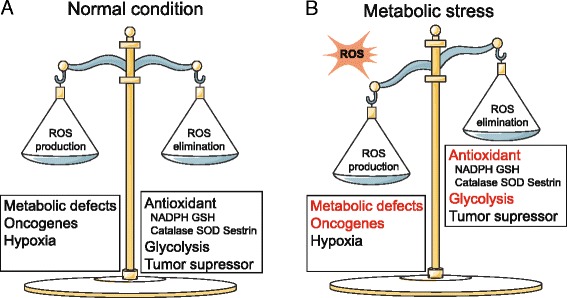
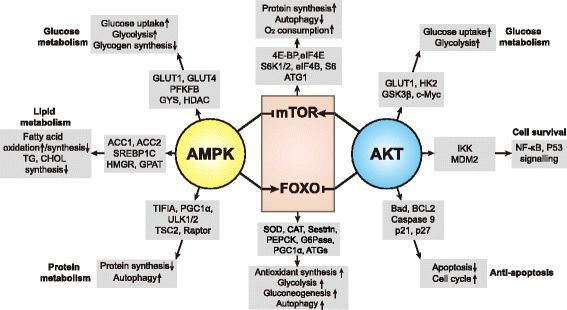
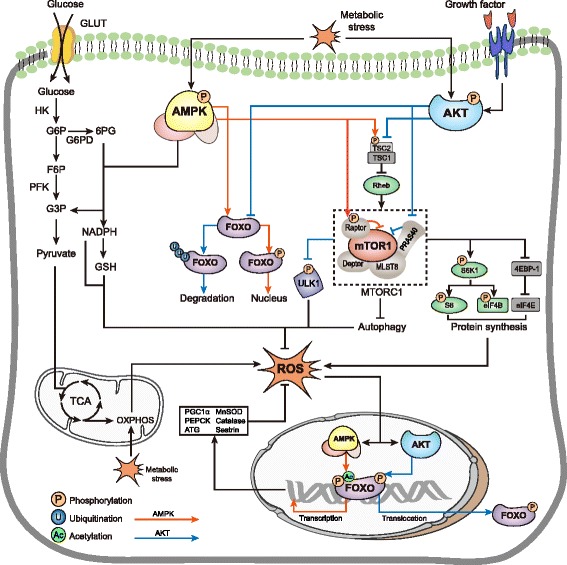
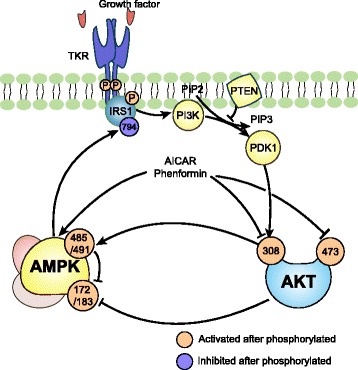
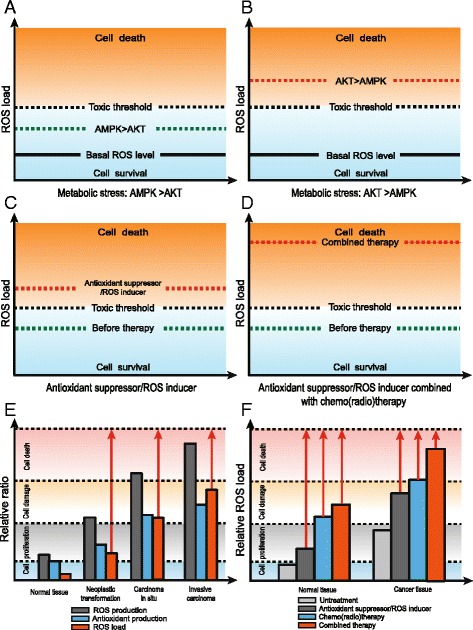
Cancer cells are frequently confronted with metabolic stress in tumor microenvironments due to their rapid growth and limited nutrient supply. Metabolic stress induces cell death through ROS-induced apoptosis. However, cancer cells can adapt to it by altering the metabolic pathways. AMPK and AKT are two primary effectors in response to metabolic stress: AMPK acts as an energy-sensing factor which rewires metabolism and maintains redox balance. AKT broadly promotes energy production in the nutrient abundance milieu, but the role of AKT under metabolic stress is in dispute. Recent studies show that AMPK and AKT display antagonistic roles under metabolic stress. Metabolic stress-induced ROS signaling lies in the hub between metabolic reprogramming and redox homeostasis. Here, we highlight the cross-talk between AMPK and AKT and their regulation on ROS production and elimination, which summarizes the mechanism of cancer cell adaptability under ROS stress and suggests potential options for cancer therapeutics.
Overview
The claims and statistics of this paper haven’t been checked yet.
Free: it reads the open-access text and checks the first 5 claims that cite a source we can check. Create a free account to check every claim.
Integrity signals
Registry
Cites
Statistics
Figures
Verification
Claims the paper makes
The claims and statistics of this paper haven’t been checked yet.
Free: it reads the open-access text and checks the first 5 claims that cite a source we can check. Create a free account to check every claim.
Claims other papers make about this one
Each is checked against this paper’s own text: does it say what the citing paper says it does?
The source backs part of the claim, not all of it — or backs it for a different population, condition or comparison.
In the citing paper
“Thus, by inhibiting PGAM5, AMPK suppresses necrosis, reduces ROS accumulation, and mitigates oxidative stress.385,387”
From Glucagon-like peptide-1 receptor: mechanisms and advances in therapy (2024) · cites this paper as [385]
Experimental — accuracy not yet measuredThe check wasn’t confident either way, so it gives no verdict — never disputed.
In the citing paper
“Importantly, the activation of AMPK reduces the expression of phosphoglycerate mutase 5 (PGAM5), which plays a promotive role in cell necrosis by contributing to mitochondrial dysfunction and the production of reactive oxygen species (ROS).385–387”
From Glucagon-like peptide-1 receptor: mechanisms and advances in therapy (2024) · cites this paper as [385]
Experimental — accuracy not yet measured
Self-check
Percentages, sums and reported differences re-computed from the paper’s own numbers.
The self-check needs the paper’s full text.
Citations
Cites
1 retracted
Zhang, S., Yang, C., Yang, Z., Zhang, D., Ma, X., Mills, G. B., & Liu, Z. (2015) · Europe PMC (PubMed Central) · Cited by 38
Self-citationRetractedAKT/PKB signaling: navigating downstream
Manning, B. D., & Cantley, L. C. (2007) · Cell · doi:10.1016/j.cell.2007.06.009 · Cited by 6,115 · cited 2×
“By activating mTORC1, AKT promotes oxygen consumption and increases ROS production under glucose deprivation [54, 62], rendering cancer cells closer to the death threshold of ROS.”
The emerging hallmarks of cancer metabolism
Pavlova, N. N., & Thompson, C. B. (2016) · Cell Metabolism · doi:10.1016/j.cmet.2015.12.006 · Cited by 5,926 · cited 9×
“Further, B Chaube et al. found that AMPK could enhance mitochondrial biogenesis and OXPHOS by activating p38/PGC1α pathway [53].”
InfluentialHydroperoxide metabolism in mammalian organs.
Chance, B., Sies, H., & Boveris, A. (1979) · Physiological Reviews · doi:10.1152/physrev.1979.59.3.527 · Cited by 5,827 · cited 1×
“It is estimated that ROS produced by mitochondria are about 1–2% of the total rate of oxygen consumption in normal cells [17].”
Targeting cancer cells by ROS-mediated mechanisms: a radical therapeutic approach?
Trachootham, D., Alexandre, J., & Huang, P. (2009) · Nature Reviews Drug Discovery · doi:10.1038/nrd2803 · Cited by 5,452 · cited 1×
“Even though cancer cells exhibit an enhanced antioxidant system, they still maintain higher ROS levels than normal cells [20, 109].”
Mitochondrial Reactive Oxygen Species (ROS) and ROS-Induced ROS Release
Zorov, D. B., Juhaszova, M., & Sollott, S. J. (2014) · Physiological Reviews · doi:10.1152/physrev.00026.2013 · Cited by 5,383 · cited 1×
“ROS are byproducts of biological reactions of energy generation, and are mainly produced in the mitochondria through the oxidative metabolism [15, 16].”
The Warburg Effect: How Does it Benefit Cancer Cells?
Liberti, M. V., & Locasale, J. W. (2016) · Trends in Biochemical Sciences · doi:10.1016/j.tibs.2015.12.001 · Cited by 5,150 · cited 1×
“Although this mode of energy production is less efficient than mitochondrial respiration per unit of glucose, the rate of glycolysis is 10–100 times faster [25].”
AMPK: a nutrient and energy sensor that maintains energy homeostasis
Hardie, D. G., Ross, F. A., & Hawley, S. A. (2012) · Nature Reviews Molecular Cell Biology · doi:10.1038/nrm3311 · Cited by 4,602 · cited 1×
“It is also regulated by its upstream LKB1, CaMMK or other factors like ADP or Ca [49].”
Reactive oxygen species (ROS) homeostasis and redox regulation in cellular signaling
Ray, P. D., Huang, B.-W., & Tsuji, Y. (2012) · Cellular Signalling · doi:10.1016/j.cellsig.2012.01.008 · Cited by 4,373 · cited 1×
“ROS are byproducts of biological reactions of energy generation, and are mainly produced in the mitochondria through the oxidative metabolism [15, 16].”
Modulation of oxidative stress as an anticancer strategy
Gorrini, C., Harris, I. S., & Mak, T. W. (2013) · Nature Reviews Drug Discovery · doi:10.1038/nrd4002 · Cited by 3,579 · cited 5×
“Glucose deficiency is one of the main factors leading to ROS stress in tumors, either in the stage of tumor initiation or progression [18].”
Influential
Cited by
Items 301–400 of 769
The Coordination of mTOR Signaling and Non-Coding RNA in Regulating Epileptic Neuroinflammation
Zeng, C., Hu, J. J., Chen, F., Huang, T., & Zhang, L. (2022) · Frontiers in Immunology · doi:10.3389/fimmu.2022.924642 · Cited by 23
Jiang, Y., Yue, R., Liu, G., Liu, J., Peng, B., Yang, M., Zhao, L., & Li, Z. (2022) · Critical Reviews in Food Science and Nutrition · doi:10.1080/10408398.2022.2153793 · Cited by 25
Nickel‐induced VEGF expression via regulation of Akt, ERK1/2, NFκB, and AMPK pathways in H460 cells
Wang, J., Chen, S., Wang, M., Ko, J., Wu, C., Chen, C., Lin, H., & Chang, Y. (2019) · Environmental Toxicology · doi:10.1002/tox.22731 · Cited by 23
“Recent studies have shown that AMPK and Akt have antagonistic roles in metabolic stress.(20) Akt protein is the downstream target of”
BackgroundLi, D., Hu, C., Yang, J., Liao, Y., Chen, Y., Fu, S., & Wu, J. (2020) · International Journal of Nanomedicine · doi:10.2147/ijn.s272730 · Cited by 20
du Plessis, M., Davis, T., Loos, B., Pretorius, E., de Villiers, W. J. S., & Engelbrecht, A. (2021) · Cytokine & Growth Factor Reviews · doi:10.1016/j.cytogfr.2021.01.007 · Cited by 20
Li, Q., Xu, Q., Tan, J., Hu, L., Ge, C., & Xu, M. (2021) · Aging · doi:10.18632/aging.202794 · Cited by 22
Han, Z., Liu, M., Xie, Y., Zeng, K., Zhan, Z., Chen, Y., Wang, L., Chen, X., Luo, Y., Zeng, Y., et al. (2022) · Cell Death Discovery · doi:10.1038/s41420-022-01241-9 · Cited by 21
Diabetic Encephalopathy: Role of Oxidative and Nitrosative Factors in Type 2 Diabetes
Mazumdar, D., & Singh, S. (2022) · Indian Journal of Clinical Biochemistry · doi:10.1007/s12291-022-01107-y · Cited by 23
“Various functions associated with AKT are promoting cell growth, cellular translation, glycogen synthesis and also apoptotic pathway by phosphorylating the pro-apoptotic BCL2 associated agonist of cell death (BAD) protein [24].”
HDAC inhibitor attenuates rat traumatic brain injury induced neurological impairments
Lu, Y., Chen, Y., Xu, S., Wei, L., Zhang, Y., Chen, W., Liu, M., & Zhong, C. (2023) · Heliyon · doi:10.1016/j.heliyon.2023.e18485 · Cited by 23
“The AMPK pathway is an important pathway that regulates intracellular redox and ROS homeostasis [35].”
BackgroundImmune checkpoints between epithelial-mesenchymal transition and autophagy: A conflicting triangle
Cordani, M., Strippoli, R., Trionfetti, F., Behrooz, A. B., Rumio, C., Velasco, G., Ghavami, S., & Marcucci, F. (2024) · Cancer Letters · doi:10.1016/j.canlet.2024.216661 · Cited by 22
Novel Ser74 of NF-κB/IκBα phosphorylated by MAPK/ERK regulates temperature adaptation in oysters
Wang, C., Jiang, Z., Du, M., Cong, R., Wang, W., Zhang, T., Chen, J., Zhang, G., & Li, L. (2024) · Cell Communication and Signaling · doi:10.1186/s12964-024-01923-0 · Cited by 21
Patra, S., Mahapatra, K. K., Praharaj, P. P., Panigrahi, D. P., Bhol, C. S., Mishra, S. R., Behera, B. P., Singh, A., Jena, M., & Bhutia, S. K. (2021) · Mitochondrion · doi:10.1016/j.mito.2021.01.002 · Cited by 20
Remodeling on adipocytic physiology of organophosphorus esters in mature adipocytes
Liu, Y., Le, Y., Xu, M., Wang, W., Chen, H., Zhang, Q., & Wang, C. (2022) · Environmental Pollution · doi:10.1016/j.envpol.2022.119287 · Cited by 20
Self-citationThe Roles and Mechanisms of lncRNAs in Liver Fibrosis
Wang, Z., Yang, X., Gui, S., Yang, F., Cao, Z., Cheng, R., Xia, X., & Li, C. (2021) · Frontiers in Pharmacology · doi:10.3389/fphar.2021.779606 · Cited by 24
Liu, S., Zhang, Y.-R., Chen, Y., Ji, D.-R., Zhao, J., Fu, S., Jia, M.-Z., Yu, Y.-R., Tang, C., Huang, W., et al. (2022) · Pharmaceuticals · doi:10.3390/ph15101224 · Cited by 20
“There is a complex interaction between the PI3K/Akt and AMPK signaling pathway when cells undergo energy metabolic stress and oxidative stress [41].”
BackgroundHong, X., Tai, X., Cheng, W., Wu, Y.-L. L. C., He, D., Wang, L., Liu, H., Zhang, S.-Y., Sun, Y., Liu, H., et al. (2025) · Scientific Reports · doi:10.1038/s41598-025-87537-z · Cited by 19
Self-citationXiao, T., Xu, Z., Zhou, Y., Zhang, H., Geng, J., Liang, Y., Qiao, H., & Suo, G. (2018) · IUBMB Life · doi:10.1002/iub.1949 · Cited by 22
“Its activation can block cell growth in response to hostile environment such as poor nutrient and hypoxia conditions (30, 31).”
BackgroundBhagat, S., & Singh, S. (2020) · ACS Applied Bio Materials · doi:10.1021/acsabm.9b01016 · Cited by 19
Fang, Y., Li, F., Qi, C., Mao, X., Wang, F., Zhao, Z., Chen, J., Zhang, Z., & Wu, H. (2020) · Cell Death Discovery · doi:10.1038/s41420-020-0285-0 · Cited by 19
Moore, M. N., Sforzini, S., Viarengo, A., Barranger, A., Aminot, Y., Readman, J. W., Khlobystov, A. N., Arlt, V. M., Bannı, M., & Jha, A. N. (2020) · The Science of The Total Environment · doi:10.1016/j.scitotenv.2020.142355 · Cited by 19
“However, mTORC1 is inhibited by ROS and oxidative 735 damage, which will probably limit endocytic uptake of particle associated BaP and C60 + bound 736 BaP (Zhao et al., 2017).”
BackgroundHu, W., Jiang, S., Liao, Y., Li, J., Dong, F., Guo, J. Z., Wang, X., Fei, L., Cui, Y., Ren, X., et al. (2020) · Acta Physiologica · doi:10.1111/apha.13595 · Cited by 20
Wu, L., Xu, Y.-C., Högstrand, C., Zhao, T., Wu, K., Xu, Y., Liu, W., & Luo, Z. (2021) · The Journal of Nutritional Biochemistry · doi:10.1016/j.jnutbio.2021.108882 · Cited by 19
The autophagy inducer SMER28 attenuates microtubule dynamics mediating neuroprotection
Kirchenwitz, M., Stahnke, S., Grunau, K., Melcher, L., van Ham, M., Rottner, K., Steffen, A., & Stradal, T. E. B. (2022) · Scientific Reports · doi:10.1038/s41598-022-20563-3 · Cited by 19
Zuo, X., Ren, S., Zhang, H., Tian, J., Tian, R., Han, B., Liu, H., Dong, Q., Wang, Z., Cui, Y., et al. (2022) · Journal of Translational Medicine · doi:10.1186/s12967-022-03716-w · Cited by 21
“In addition, HIF-1α is well-known to be regulated by the AKT pathway, and ROS as a signaling molecule can induce the activation of AKT [45, 59].”
BackgroundWang, C., Du, M., Jiang, Z., Cong, R., Wang, W., Zhang, T., Chen, J., Zhang, G., & Li, L. (2024) · Communications Biology · doi:10.1038/s42003-024-07184-4 · Cited by 18
“AKT, also known as PKB or Rac, is crucial in regulating cell survival and apoptosis 44,45 , and can be activated by high temperatures and oxidative stress 46,47 .”
Zhang, G., Duan, J., Yu, F., Qi, Y., Zhao, S., Zhao, Y., Han, X., Liu, H., Sang, Y., & Yu, D. (2025) · Advanced Functional Materials · doi:10.1002/adfm.202500491 · Cited by 23
Self-citationFan, C., Zhang, Y., Tian, Y., Zhao, X., & Teng, J. (2022) · Experimental and Molecular Pathology · doi:10.1016/j.yexmp.2022.104814 · Cited by 18
Chai, J., Liu, J., Tian, M., Liao, H., Wu, J., Xie, J., Lai, S., Mo, G., Chen, X., & Xu, X. (2022) · Oxidative Medicine and Cellular Longevity · doi:10.1155/2022/2615178 · Cited by 20
“Further, it has been acknowledged that activated AKT and ERK are closely related to apoptosis suppression [51, 52].”
Li, R., Kato, H., Taguchi, Y., Deng, X., Minagawa, E., Nakata, T., & Umeda, M. (2022) · Antioxidants · doi:10.3390/antiox11101907 · Cited by 18
“Akt activation upregulates intracellular ROS levels by inhibiting ROS clearance [32].”
BackgroundDual targeting of tumor cell energy metabolism and lysosomes as an anticancer strategy
Paunović, V., Kosić, M., Misirkic-Marjanovic, M., Trajković, V., & Harhaji-Trajkovic, L. M. (2020) · Biochimica et Biophysica Acta (BBA) - Molecular Cell Research · doi:10.1016/j.bbamcr.2020.118944 · Cited by 18
Tao, L., Fan, X., Sun, J., & Zhang, Z. (2021) · Life Sciences · doi:10.1016/j.lfs.2020.119015 · Cited by 21
Guo, L., Liang, Y., Wang, S., Li, L., Cai, L., Heng, Y., Yang, J., Jin, X., Zhang, J., Yuan, S., et al. (2021) · Frontiers in Pharmacology · doi:10.3389/fphar.2021.668887 · Cited by 18
“Meanwhile, there exists crosstalk between the AMPK pathway and other cell signaling pathways like AKT, mTOR, ROS, and Ras-Raf-MEK-ERK pathway (Hardie, 2014; Zhao et al., 2017).”
BackgroundLiang, Y., Niu, F., Xu, A., Jiang, L., Liu, C., Liang, H., Huang, Y., Shao, X., Mo, Z.-W., & Yuan, Y. (2022) · Cell Death and Disease · doi:10.1038/s41419-022-04551-z · Cited by 19
Marasinghe, C. K., Jung, W., & Je, J. (2023) · Immunopharmacology and Immunotoxicology · doi:10.1080/08923973.2023.2196602 · Cited by 19
“Although ROS generation plays a critical role in AMPK activation [62], Phl treatment alone was not shown ROS production.”
Wang, Y. Q., Li, Y., Jiang, J., Hong, Y., Gao, S., & Hua, C. (2025) · Autoimmunity Reviews · doi:10.1016/j.autrev.2025.103954 · Cited by 19
ACT001 reverses resistance of prolactinomas via AMPK-mediated EGR1 and mTOR pathways
Zhu, J., Tang, C., Cong, Z., Yuan, F., Cai, X., Yang, J., & Ma, C. (2021) · Endocrine Related Cancer · doi:10.1530/erc-21-0215 · Cited by 17
Jiang, G., You, X.-G., & Fan, T. (2022) · Journal of Photochemistry and Photobiology B Biology · doi:10.1016/j.jphotobiol.2022.112568 · Cited by 18
Ghosh, A., Ghosh, A. K., Zaman, A., & Das, P. K. (2023) · Molecular Pharmaceutics · doi:10.1021/acs.molpharmaceut.3c00772 · Cited by 17
Shen, Y., Wang, L., Ji, B., Lu, X., Zhao, D., Dai, Y., & Meng, X. (2024) · Chemical Engineering Journal · doi:10.1016/j.cej.2024.150130 · Cited by 17
Metabolic heterogeneity in tumor microenvironment – A novel landmark for immunotherapy
Chen, C., Han, P., & Qing, Y. (2024) · Autoimmunity Reviews · doi:10.1016/j.autrev.2024.103579 · Cited by 17
DNA-PKcs is activated under nutrient starvation and activates Akt, MST1, FoxO3a, and NDR1
Shiga, S., Murata, Y., Hashimoto, T., Urushihara, Y., Fujishima, Y., Kudo, K., Sonohara, Y., Kurusu, M., Takeda, K., Jingu, K., et al. (2019) · Biochemical and Biophysical Research Communications · doi:10.1016/j.bbrc.2019.10.133 · Cited by 17
Ren, T., Zhu, H., Tian, L., Yu, Q., & Li, M. (2019) · FEMS Yeast Research · doi:10.1093/femsyr/foz081 · Cited by 17
Tanshinone IIA inhibits osteosarcoma growth through modulation of AMPK-Nrf2 signaling pathway
Xie, Z., He, B., Jiang, Z., & Zhao, L. (2020) · Journal of Receptors and Signal Transduction · doi:10.1080/10799893.2020.1772296 · Cited by 17
Modulation of Pancreatic Neuroendocrine Neoplastic Cell Fate by Autophagy-Mediated Death
Matrood, S., de Prisco, N., Wissniowski, T. T., Wiese, D., Jabari, S., Griesmann, H., Wanzel, M., Stiewe, T., Neureiter, D., Klieser, E., et al. (2020) · Neuroendocrinology · doi:10.1159/000512567 · Cited by 18
“…a balance between the energy sensor AMP-activated protein kinase (AMPK), which stimulates autophagy in response to cellular metabolic distress, and its counterpart AKT, which suppresses autophagy activity via activation of mammalian target of rapamycin (mTOR) or direct interactions with AMPK [10].”
Das, B. K., Knott, R. M., & Gadad, P. C. (2021) · Future Journal of Pharmaceutical Sciences · doi:10.1186/s43094-021-00193-8 · Cited by 21
Wang, F., Chen, C., Chen, W., Li, Z.-L., & Cheng, H. (2021) · BioMed Research International · doi:10.1155/2021/6014202 · Cited by 19
Wang, L., Wu, R., Sargsyan, D., Su, S., Kuo, H. D., Li, S. N., Chou, P. J., Sarwar, M. S., Phadnis, A., Wang, Y., et al. (2022) · The AAPS Journal · doi:10.1208/s12248-022-00679-0 · Cited by 18
“For instance, AMP-activated protein kinase (AMPK), the energy sensor in the cells, is activated in response to oxidative stress and promotes metabolic reprograming (12).”
BackgroundBrexpiprazole Reduces 5-HT7 Receptor Function on Astroglial Transmission Systems
Fukuyama, K., Motomura, E., & Okada, M. (2022) · International Journal of Molecular Sciences · doi:10.3390/ijms23126571 · Cited by 17
“, 2018), and are permanently archived in the Concise Guide to PHARMACOLOGY 202/22 [10,34,65,72,74,75,77].”
BackgroundCui, Y., Hu, C., Niu, C., He, M., Qiu, X., Yao, Q., Tian, W., & Xu, Q. (2022) · Annals of Translational Medicine · doi:10.21037/atm-22-5273 · Cited by 18
“AMPK can activate ULK1, which plays a critical role in autophagy initiation, by directly phosphorylating ULK1 at Ser317 and Ser777 and by indirectly inactivating mTOR, which results in the dephosphorylation of ULK1 at Ser757 (44) .”
Engineering Macrophage via Biomaterial-Mediated Mitochondrial Regulation: Mechanisms and Strategies
Li, J., He, M., Wan, S., Wang, S., Liu, N., Xin, L., & Chen, T. (2025) · Research · doi:10.34133/research.0883 · Cited by 19
“This metabolic reprogramming triggers compensatory mitophagy and the accumulation of α -ketoglutarate ( α -KG) and fumarate, which contribute to ROS production by disrupting mitochondrial electron transport and modulating redox-sensitive pathways, thereby amplifying inflammatory signaling [ 76 ].”
Efferocytosis in Health and Disease
Li, C., Yang, Y., Zhou, F., Jiang, Q., Jiang, Y., Huang, X., Zhang, Y., Ye, Z., Xu, G. X., Kao, G., et al. (2025) · MedComm · doi:10.1002/mco2.70546 · Cited by 24
“In parallel, signaling pathways such as phosphatidylinositol 3 kinase–protein kinase B (PI3K–AKT) and mammalian target of rapamycin–AMP-activated protein kinase (mTOR–AMPK) regulate metabolic reprogramming, resolution of inflammation, and immune re-education [ 15–17 ].”
Sun, J., Zhou, L., Yang, T., Deng, B., Bao, Y.-L., Gu, L., Wang, H., & Wang, L. (2023) · Oxidative Medicine and Cellular Longevity · doi:10.1155/2023/1696190 · Cited by 17
“The con fl ict between generating energy and maintaining ROS homeostasis signi fi cantly a ff ected cell fate [24].”
A common molecular and cellular pathway in developing Alzheimer and cancer
Ali, M., Wani, S. U. D., Dey, T., Sridhar, S. B., & QADRIE, Z. L. (2023) · Biochemistry and Biophysics Reports · doi:10.1016/j.bbrep.2023.101625 · Cited by 19
“Continuous metabolic stress is a common incident for both cancer and AD [95], which could stimulate PI3K/Akt/mTOR instigation, autophagy inhibition, and re-entry of the cell cycle.”
BackgroundAMPK, a hub for the microenvironmental regulation of bone homeostasis and diseases
Liu, J., Liu, J.-X., Li, R., Zhang, Z., Zhang, X., Xing, S., Sui, B., Jin, F., Ma, B., & Zheng, C. (2024) · Journal of Cellular Physiology · doi:10.1002/jcp.31393 · Cited by 17
“However, if the oxidative stress microenvironment persists without alleviation, BMMSCs differentiation remains consistently suppressed, and the excessive accumulation of ROS ‐ induced damage can precipitate apoptosis (Zhang et al., 2021b; Zhao et al., 2017).”
Regulation of Cancer Metastasis by PAK2
Wu, M., Sarkar, C. K., & Guo, B. (2024) · International Journal of Molecular Sciences · doi:10.3390/ijms252413443 · Cited by 16
Shigetomi, H., Nishio, M., Umetani, M., Imanaka, S., Hashimoto, H., & Kobayashi, H. (2025) · International Journal of Molecular Sciences · doi:10.3390/ijms26189125 · Cited by 17
“Activated AMPK suppresses mTOR to induce autophagy and reinforces its self-activation by promoting liver kinase B1 (LKB1) phosphorylation through SIRT1 [115–117].”
The Roles And Signaling Pathways Of Phosphatidylethanolamine-Binding Protein 4 In Tumors
Luo, Z.-K., Chen, Q., Qu, X., & Zhou, X. (2019) · OncoTargets and Therapy · doi:10.2147/ott.s216161 · Cited by 16
“40 With the activation of the AKT pathway, hypermetabolism may induce an increase in oxygen consumption, further resulting in ROS-mediated AKT activation.”
Lu, H., Mei, C., Yang, L., Zheng, J., Tong, J., Duan, F., Liang, H., & Hong, L. (2021) · Frontiers in Pharmacology · doi:10.3389/fphar.2021.684915 · Cited by 15
Karthikkeyan, G., Behera, S. K., Upadhyay, S. S., Pervaje, R., Prasad, T. S. K., & Modi, P. K. (2022) · Phytotherapy Research · doi:10.1002/ptr.7449 · Cited by 18
“In addition to the energetic stress, rotenone-induced ROS is also known to activate AMPK1 and AKT1 (Hinchy et al., 2018; Zhao et al., 2017).”
BackgroundInfluentialAnti-Diabetic Effects of Cucurbitacins from Ibervillea lindheimeri on Induced Mouse Diabetes
Navia, S. E. H., Figueroa-Hernández, J. L., Rodríguez‐Zavala, J. S., Rodríguez‐Sosa, M., & Martínez‐Vázquez, M. (2022) · Journal of Chemistry · doi:10.1155/2022/3379557 · Cited by 19
“In addition, AMPK activation has been reported to inhibit AKTactivation in muscle tissue [51, 52].”
BackgroundAnti-Diabetic Therapy, Heart Failure and Oxidative Stress: An Update
Koniari, I. C., Velissaris, D., Kounis, N. G., Koufou, E., Artopoulou, E., GREGORIO, C. D., Mplani, V., Paraskevas, T., Tsigkas, G., Hung, M., et al. (2022) · Journal of Clinical Medicine · doi:10.3390/jcm11164660 · Cited by 16
“This antidiabetic drug category, which enhances pancreatic insulin production, is not so well-studied [38].”
BackgroundZhu, Y., Zhang, J., Wang, C., Zheng, T., Di, S., Wang, Y., Fei, W., Liang, W., & Wang, L. (2022) · International Journal of Molecular Sciences · doi:10.3390/ijms24010187 · Cited by 18
“The AMP-activated protein kinase (AMPK) plays an important role in lipid, energy, and carbohydrate metabolism in hepatocytes [54], and studies have shown that it can be interfered with by antioxidants and activated by ROS production [34].”
BackgroundSimultaneous Study of Mechanical Stretch-Induced Cell Proliferation and Apoptosis on C2C12 Myoblasts
Feng, Y., Tian, X., Sun, P., Cheng, Z., & Shi, R. (2018) · Cells Tissues Organs · doi:10.1159/000490239 · Cited by 17
“…thought to be merely damaging byproducts of cell metabolism, ROS have recently been found to function as a signaling molecule that can activate cascades of signal transducers to address oxidative stress [Radak et al., 2013; Bigarella et al., 2014; Navarroyepes et al., 2014; Zhao et al., 2017].”
BackgroundLi, Y., Chen, C., Yu, L., Huang, X., Qian, J., Zhang, H., Zhang, L., Li, Y., & Zhang, Y. (2025) · Advanced Science · doi:10.1002/advs.202512575 · Cited by 18
Vanderstraeten, J., Derradji, H., Sonveaux, P., Colin, I. M., Many, M., & Gérard, A.-C. (2018) · American Journal of Physiology-Cell Physiology · doi:10.1152/ajpcell.00095.2017 · Cited by 16
“Moreover, a role for the unfolded protein response (UPR) pathway could also be considered, as it is known to activate the mTOR pathway (29, 62).”
BackgroundLawal, A. O., Folorunso, I. M., & Iwaloye, O. (2022) · Journal of Diabetes & Metabolic Disorders · doi:10.1007/s40200-022-01057-5 · Cited by 17
Xu, Z., Xie, Y., Song, J., Huang, J., & Shi, W. (2022) · Evidence-based Complementary and Alternative Medicine · doi:10.1155/2022/7197533 · Cited by 17
“QU can also regulate the NRFB, 5′ adenosine monophosphate-activated protein kinase, and mitogenactivated protein kinase signaling pathways [40, 41].”
BackgroundRahman, S. O., Khan, T. M., Iqubal, A., Agarwal, S., Akhtar, M., Parvez, S., Shah, Z. A., & Najmi, A. K. (2023) · Life Sciences · doi:10.1016/j.lfs.2023.121899 · Cited by 16
TRPV4 in adipose tissue ameliorates diet-induced obesity by promoting white adipocyte browning
Zhang, Y., Xue, J., Zhu, W., Wang, H., Xi, P., & Tian, D. (2023) · Translational research · doi:10.1016/j.trsl.2023.11.001 · Cited by 15
Wang, D., Woodcock, E., Yang, X., Nishikawa, H., Sviderskaya, E. V., Oshima, M., Edwards, C. R. W., Zhang, Y., & Korchev, Y. E. (2024) · 中国科学通报:英文版 · doi:10.1016/j.scib.2024.04.004 · Cited by 16
Spaggiari, L., Ardizzoni, A., Ricchi, F., Pedretti, N., Ramos, C. A. S., Ramos, G. B. S., Kenno, S., Seta, F. D., & Pericolini, E. (2024) · PLoS ONE · doi:10.1371/journal.pone.0303449 · Cited by 16
“…the so-called “oxidative eustress”, responsible of cell differentiation, proliferation, migration and vasodilation [10–12]: under these conditions, cells regulate mtROS levels by maintaining a balance between their production and their elimination, avoiding thus their harmful effects [13, 14].”
BackgroundPHGDH inhibition and FOXO3 modulation drives PUMA-dependent apoptosis in osteosarcoma
Oyama, T., Brashears, C. B., Rathore, R., Benedict-Hamilton, H. M., Caldwell, K. E., Dirckx, N., Hawkins, W. G., & Tine, B. A. V. (2025) · Cell Death and Disease · doi:10.1038/s41419-025-07378-6 · Cited by 16
“Cells were infected with lentiviruses for 18 h and subsequently subjected to selection using puromycin or Geneticin for a minimum of 1 week after infection.”
Manipulating bovine granulosa cell energy metabolism limits inflammation
Horlock, A. D., Ormsby, T. J. R., Clift, M. J. D., Santos, J. E. P., Bromfield, J. J., & Sheldon, I. M. (2021) · Reproduction · doi:10.1530/rep-20-0554 · Cited by 15
Redox Metabolism‐Associated Molecular Classification of Clear Cell Renal Cell Carcinoma
Wei, X., Deng, W., Dong, Z., Luo, Y., Hu, X., Zhang, J., Xie, Z., Zheng, T., Tan, Y., Tang, Z., et al. (2022) · Oxidative Medicine and Cellular Longevity · doi:10.1155/2022/5831247 · Cited by 17
“Collectively, this study presented a novel redox-associated Redox metabolism sustains normal cellular function and ensures cell survival, characterized by the production of ROS which exerts oxidative stress and renders dysfunctional cells to death [6, 37].”
Self-citationYin, X., Zhang, J., Zhao, W., Liu, Z., & Wang, J. (2022) · Pharmacological Research · doi:10.1016/j.phrs.2022.106219 · Cited by 16
Wang, Q., Zhang, Q., Zhang, Z., Ji, M., Du, T., Jin, J., Jiang, J., Chen, X., & Hu, H. (2023) · Journal of Medicinal Chemistry · doi:10.1021/acs.jmedchem.2c01317 · Cited by 15
Zhu, Q., Zhu, G., Xu, W. G., Dan, J., Xia, R., & Liu, W. (2020) · Fundamental and Clinical Pharmacology · doi:10.1111/fcp.12554 · Cited by 15
Multiple Functions of Fubp1 in Cell Cycle Progression and Cell Survival
Kang, M., Kim, H. J., Kim, T., Byun, J., Lee, J., Lee, D. H., Kim, W., & Kim, D. (2020) · Cells · doi:10.3390/cells9061347 · Cited by 16
“Metabolic stress produces an excessive amount of ROS, leading to cell death [52].”
BackgroundLuo, G., Wosinski, P., Salazar-Noratto, G. E., Bensidhoum, M., Bizios, R., Marashi, S., Potier, E., Sheng, P., & Petite, H. (2023) · Tissue Engineering Part B Reviews · doi:10.1089/ten.teb.2022.0063 · Cited by 16
“85–88 AKT regulates glucose metabolism by increasing GLUT1 traf-ficking to the mammalian cell surface and activating HK and PFK, thus promoting glycolysis.”
Zhu, H., Ma, H., Dong, N., Wu, M., Li, D., Liu, L., Shi, Q., & Ju, X. (2023) · BMC Cancer · doi:10.1186/s12885-023-10589-9 · Cited by 15
“Glucose metabolism is closely associated with redox homeostasis, which is an important component of physiological cellular homeostasis [11, 12].”
Liu, S., Shao, F., Wang, Y., Zhang, Y., Yu, H., Zhang, N., He, L., Kong, Q., Jiang, H., & Dong, Z. (2024) · Cell Death and Disease · doi:10.1038/s41419-024-06443-w · Cited by 14
Boarding pyroptosis onto nanotechnology for cancer therapy
Ban, W., Chen, Z., Zhang, T., Du, T., Huo, D., Zhu, G., He, Z., Sun, J., & Sun, M. (2024) · Journal of Controlled Release · doi:10.1016/j.jconrel.2024.05.014 · Cited by 15
Gao, P., Jiang, H., Du, Y., Shu, Y., Wan, Y.-W., Yin, E., Wu, J., Liang, X.-X., Wang, S.-D., Ding, Z.-H., et al. (2025) · Acta Pharmacologica Sinica · doi:10.1038/s41401-025-01585-9 · Cited by 14
“Additionally, the FoxO and AMPK signaling pathways, which are associated with T-cell activation/memory [66, 67] and tumor cell autophagy/ apoptosis [68], respectively, were also signi fi cantly altered (Fig.”
Adaptive and Pathological Outcomes of Radiation Stress-Induced Redox Signaling
Pohjoismäki, J., & Goffart, S. (2022) · Antioxidants and Redox Signaling · doi:10.1089/ars.2021.0257 · Cited by 14
Song, S., & Shu, P. (2022) · Scientific Reports · doi:10.1038/s41598-022-12800-6 · Cited by 15
Jin, J., Xu, F., Zhang, Y., Guan, J. Z., & Fu, J.-H. (2023) · Molecular Immunology · doi:10.1016/j.molimm.2023.01.004 · Cited by 14
Guo, T., Wu, C., Zhou, L., Zhang, J., Wang, W., Shen, Y., Zhang, L., Niu, M., Zhang, X., Yu, R., et al. (2023) · Journal of Translational Medicine · doi:10.1186/s12967-023-04332-y · Cited by 14
“Promoting ROS production to interrupt redox homeostasis is a novel strategy for the treatment of malignant tumors [38].”
BackgroundExploiting the Warburg Effect: Co‐Delivery of Metformin and FOXK2 siRNA for Ovarian Cancer Therapy
Zhou, W., Ma, X., Xiao, J., He, X., Liu, C., Xu, X., Viitala, T., Feng, J. C., & Zhang, H. (2024) · Small Science · doi:10.1002/smsc.202300192 · Cited by 14
Uphill walking at iso-efficiency speeds
Milić, M., Erceg, M., Palermi, S., Iuliano, E., Borrelli, M., Cè, E., Esposito, F., & Padulo, J. (2020) · Biology of Sport · doi:10.5114/biolsport.2020.95635 · Cited by 14
Loss of Cdkn1a protects against MASLD alone or with alcohol intake by preserving lipid homeostasis
Lamas‐Paz, A., Gutierrez, A. H., Guo, F., Jorquera, G., Morán-Blanco, L., Benedé‐Ubieto, R., Mesquita, M., Estévez‐Vázquez, O., Zheng, K., Mazariegos, M. S., et al. (2024) · JHEP Reports · doi:10.1016/j.jhepr.2024.101230 · Cited by 15
“43 Interestingly, we found that whereas AMPK activation was signi fi cantly higher in DuAL-fed Cdkn1a -deleted mice, AKT was abrogated in the absence of CDKN1A.”
Chen, F.-Z., Zhang, Z., Li, Q., Tan, P., Chang, J., & Zhou, S. (2025) · Biomaterials Research · doi:10.34133/bmr.0180 · Cited by 13
“Excessive accumulation of ROS leads to suppression of the PI3K/Akt pathway, ultimately resulting in DNA damage, inflammatory responses, and cell cycle arrest [ 31 ].”
Oesophageal adenocarcinoma, obesity, and cancer: the role of nutrition in prevention and management
Reytor-González, C., Simancas‐Racines, D., Jiménez-Flores, E., Campuzano-Donoso, M., Am, C., Coppola, L., Marchetti, M., Zambrano-Villacres, R., & Sarno, G. (2025) · Food and Agricultural Immunology · doi:10.1080/09540105.2025.2510951 · Cited by 14
“Adenosine triphosphate production is directly affected by nutrient deficiency, which leads to ROS overproduction (Zhao et al., 2017).”
Hu, P., Liu, M., Wu, T., Zhang, Y., Liu, C., Wang, L., Zhang, W., Que, Y., You, J., Yu, W., et al. (2025) · Theranostics · doi:10.7150/thno.112041 · Cited by 13
“Moreover, the interplay between ROS and AMPK activity is complex and reciprocal, with the underlying mechanism being partially understood and a matter of debate [36-39].”
Tang, Y., Lv, D., Tao, Y., & Wang, J. (2025) · Frontiers in Cardiovascular Medicine · doi:10.3389/fcvm.2025.1599154 · Cited by 13
“…inhibits ROS production induced by mitochondrial dysfunction and endoplasmic reticulum stress, reduces the generation of pro-in fl ammatory factors caused by dyslipidemia and hyperglycemia, and prevents vascular endothelial dysfunction by increasing nitric oxide (NO) bioavailability (71, 72).”
Adeshakin, F. O., Adeshakin, A. O., Liu, Z., Cheng, J. G., Zhang, P., Yan, D., Zhang, G., & Wan, X. (2021) · Life · doi:10.3390/life12010042 · Cited by 13
“However, AMPK activation in tumor cells is reported to be stress-induced as it senses changes in energy level to facilitate metabolic rewiring and homeostasis [35].”
BackgroundZhao, J., Yang, P., Yang, H., Wang, Z.-B., El-Samahy, M. A., Wang, F., & Zhang, Y. (2022) · Theriogenology · doi:10.1016/j.theriogenology.2022.05.030 · Cited by 13
AMPK’s double-faced role in advanced stages of prostate cancer
Gharibpoor, F., Zonouzi, S. K., Razi, S., & Rezaei, N. (2022) · Clinical & Translational Oncology · doi:10.1007/s12094-022-02874-z · Cited by 13
“Another possible down-regulator of mTOR under hypoxia is phosphorylated AMPK [13].”
Backgroundzong, C., Yang, M., Guo, X., & Ji, W. (2022) · Oncology Letters · doi:10.3892/ol.2022.13420 · Cited by 16
Apigenin Suppresses MED28-Mediated Cell Growth in Human Liver Cancer Cells
Chou, J.-C., Liu, C.-C., & Lee, M. (2024) · Journal of Agricultural and Food Chemistry · doi:10.1021/acs.jafc.3c09276 · Cited by 14
Liu, J., Liu, Y., Liu, L., Ying, X., Wei, W., Han, C., Liu, Y., Han, C., Leng, A., & Ma, J. (2017) · Neural Regeneration Research · doi:10.4103/1673-5374.213556 · Cited by 13
“0.01. h: Hour(s). et al., 2017; Zhao et al., 2017).”
InfluentialSelf-citation
Metadata
- Authors
- Zhao, Y., Hu, X., Liu, Y., Dong, S., Wen, Z., He, W., Zhang, S., Huang, Q., & Shi, M.
- Affiliations
- Nanfang Hospital (CN)
- Corresponding author
- Shi, Min
- Venue
- Molecular Cancer
- Published
- 2017-04-13
- Volume
- 16
- Issue
- 1
- Pages
- 79-79
- ISSN
- 1476-4598 (ISSN-L)
- PMC
- PMC5390360
- OpenAlex
- W2607120474
- Cited by
- 735
- References
- 124
- Citations by year
- 2026: 71 · 2025: 99 · 2024: 102 · 2023: 98 · 2022: 124 · 2021: 80 · 2020: 70 · 2019: 43 · 2018: 41 · 2017: 7
- FWCI
- 4.12
- Type
- journal article
- Language
- en
- Open access
- gold
- doi.org
- Licence
- cc-by
- Locations
- Molecular Cancer (publishedVersion, cc-by)
- PubMed Central (publishedVersion, cc-by)
- PubMed (publishedVersion)
- DOAJ (DOAJ: Directory of Open Access Journals) (submittedVersion, cc-by-sa)
- Funders
- National Natural Science Foundation of China (81472317)
- The Special Foundation for National Clinical Specialties of China(to The Department of Oncology, Nanfang Hosptial)
- CSCO Merck Serono Oncology Research Fund (Y-MX2014-048)
- Topics
- Life Sciences › Biochemistry, Genetics and Molecular Biology › Molecular Biology › Metabolism, Diabetes, and Cancer
- Life Sciences › Biochemistry, Genetics and Molecular Biology › Cancer Research › Cancer, Hypoxia, and Metabolism
- Life Sciences › Biochemistry, Genetics and Molecular Biology › Molecular Biology › Redox biology and oxidative stress
- Keywords
- reactive oxygen species signaling, metabolic stress, AMPK, Akt, cancer metabolism, metabolic reprogramming, redox homeostasis, tumor microenvironment, cancer cell adaptation, cancer therapeutics
- MeSH terms
- Animals, Energy Metabolism, Homeostasis, Humans, Neoplasms, Oxidation-Reduction, Phosphorylation, Protein Binding, Stress, Physiological, Signal Transduction, Reactive Oxygen Species, Disease Progression, Proto-Oncogene Proteins c-akt, AMP-Activated Protein Kinases
About these checks
Registry, retraction, Cites and statistics results are computed, not judged, with one exception: a printed reference that no index lists is read once by a model before it counts as a citation error. Claims are extracted by a model and kept only when their quote appears verbatim in the text; each cited source is then checked, with a model’s help, for whether it says what the claim relies on. Those verdicts can be wrong — read the claim’s quote and the cited source before relying on one.
Statistics and arithmetic are recomputed, not judged.
Confidence bands are shown only for fields calibrated on our annotated test set. None is calibrated yet, so no band is shown.
What counts as a claim ›How we measure confidence ›How we check this ›
Are you an author, or do you see a problem with this page? Request a review
Data sources
Bibliographic data: Semantic Scholar, OpenAlex, Crossref.
Contains information from the Semantic Scholar Academic Graph Datasets, made available under the ODC Attribution License (ODC-BY 1.0).
Semantic Scholar’s data is described in: Kinney, R., et al. (2023). The Semantic Scholar Open Data Platform. arXiv:2301.10140.
