

ROS signaling under metabolic stress: cross-talk between AMPK and AKT pathway
Open accessThe DOI matches its Crossref record; 125 of the 125 references it cites were found in a registry or an index.
Abstract
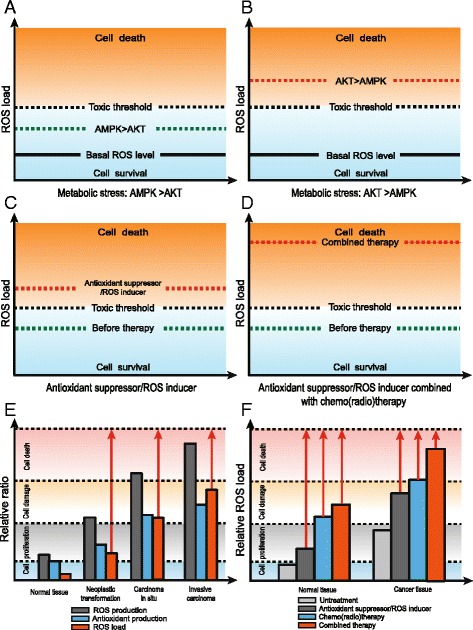
Cancer cells are frequently confronted with metabolic stress in tumor microenvironments due to their rapid growth and limited nutrient supply. Metabolic stress induces cell death through ROS-induced apoptosis. However, cancer cells can adapt to it by altering the metabolic pathways. AMPK and AKT are two primary effectors in response to metabolic stress: AMPK acts as an energy-sensing factor which rewires metabolism and maintains redox balance. AKT broadly promotes energy production in the nutrient abundance milieu, but the role of AKT under metabolic stress is in dispute. Recent studies show that AMPK and AKT display antagonistic roles under metabolic stress. Metabolic stress-induced ROS signaling lies in the hub between metabolic reprogramming and redox homeostasis. Here, we highlight the cross-talk between AMPK and AKT and their regulation on ROS production and elimination, which summarizes the mechanism of cancer cell adaptability under ROS stress and suggests potential options for cancer therapeutics.
Overview
The claims and statistics of this paper haven’t been checked yet.
Free: it reads the open-access text and checks the first 5 claims that cite a source we can check. Create a free account to check every claim.
Integrity signals
Registry
Cites
Statistics
Figures
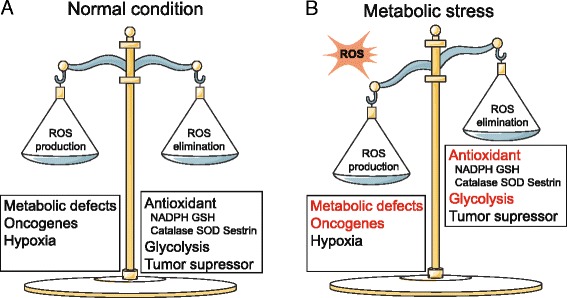
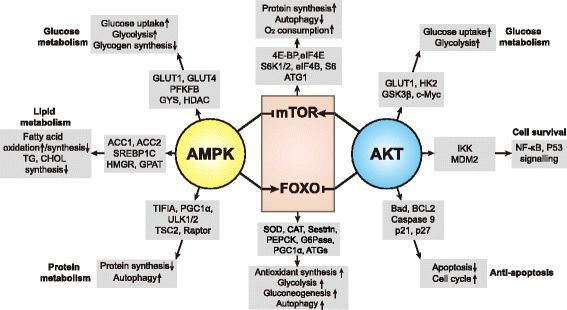
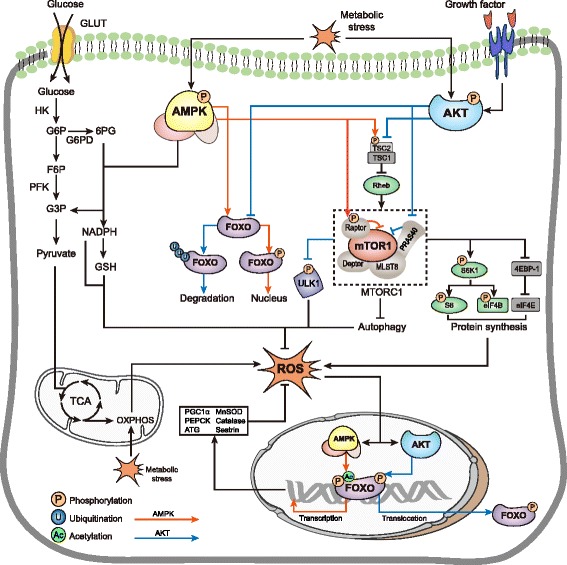
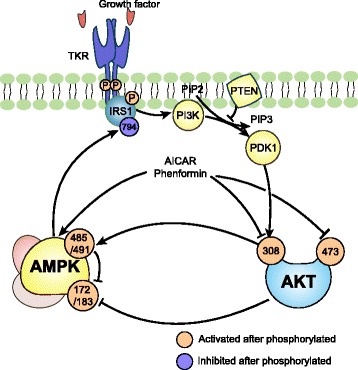
Verification
Claims the paper makes
The claims and statistics of this paper haven’t been checked yet.
Free: it reads the open-access text and checks the first 5 claims that cite a source we can check. Create a free account to check every claim.
Claims other papers make about this one
Each is checked against this paper’s own text: does it say what the citing paper says it does?
The source backs part of the claim, not all of it — or backs it for a different population, condition or comparison.
In the citing paper
“Thus, by inhibiting PGAM5, AMPK suppresses necrosis, reduces ROS accumulation, and mitigates oxidative stress.385,387”
From Glucagon-like peptide-1 receptor: mechanisms and advances in therapy (2024) · cites this paper as [385]
Experimental — accuracy not yet measuredThe check wasn’t confident either way, so it gives no verdict — never disputed.
In the citing paper
“Importantly, the activation of AMPK reduces the expression of phosphoglycerate mutase 5 (PGAM5), which plays a promotive role in cell necrosis by contributing to mitochondrial dysfunction and the production of reactive oxygen species (ROS).385–387”
From Glucagon-like peptide-1 receptor: mechanisms and advances in therapy (2024) · cites this paper as [385]
Experimental — accuracy not yet measured
Self-check
Percentages, sums and reported differences re-computed from the paper’s own numbers.
The self-check needs the paper’s full text.
Citations
Cites
1 retracted
Zhang, S., Yang, C., Yang, Z., Zhang, D., Ma, X., Mills, G. B., & Liu, Z. (2015) · Europe PMC (PubMed Central) · Cited by 38
Self-citationRetractedAKT/PKB signaling: navigating downstream
Manning, B. D., & Cantley, L. C. (2007) · Cell · doi:10.1016/j.cell.2007.06.009 · Cited by 6,115 · cited 2×
“By activating mTORC1, AKT promotes oxygen consumption and increases ROS production under glucose deprivation [54, 62], rendering cancer cells closer to the death threshold of ROS.”
The emerging hallmarks of cancer metabolism
Pavlova, N. N., & Thompson, C. B. (2016) · Cell Metabolism · doi:10.1016/j.cmet.2015.12.006 · Cited by 5,926 · cited 9×
“Further, B Chaube et al. found that AMPK could enhance mitochondrial biogenesis and OXPHOS by activating p38/PGC1α pathway [53].”
InfluentialHydroperoxide metabolism in mammalian organs.
Chance, B., Sies, H., & Boveris, A. (1979) · Physiological Reviews · doi:10.1152/physrev.1979.59.3.527 · Cited by 5,827 · cited 1×
“It is estimated that ROS produced by mitochondria are about 1–2% of the total rate of oxygen consumption in normal cells [17].”
Targeting cancer cells by ROS-mediated mechanisms: a radical therapeutic approach?
Trachootham, D., Alexandre, J., & Huang, P. (2009) · Nature Reviews Drug Discovery · doi:10.1038/nrd2803 · Cited by 5,452 · cited 1×
“Even though cancer cells exhibit an enhanced antioxidant system, they still maintain higher ROS levels than normal cells [20, 109].”
Mitochondrial Reactive Oxygen Species (ROS) and ROS-Induced ROS Release
Zorov, D. B., Juhaszova, M., & Sollott, S. J. (2014) · Physiological Reviews · doi:10.1152/physrev.00026.2013 · Cited by 5,383 · cited 1×
“ROS are byproducts of biological reactions of energy generation, and are mainly produced in the mitochondria through the oxidative metabolism [15, 16].”
The Warburg Effect: How Does it Benefit Cancer Cells?
Liberti, M. V., & Locasale, J. W. (2016) · Trends in Biochemical Sciences · doi:10.1016/j.tibs.2015.12.001 · Cited by 5,150 · cited 1×
“Although this mode of energy production is less efficient than mitochondrial respiration per unit of glucose, the rate of glycolysis is 10–100 times faster [25].”
AMPK: a nutrient and energy sensor that maintains energy homeostasis
Hardie, D. G., Ross, F. A., & Hawley, S. A. (2012) · Nature Reviews Molecular Cell Biology · doi:10.1038/nrm3311 · Cited by 4,602 · cited 1×
“It is also regulated by its upstream LKB1, CaMMK or other factors like ADP or Ca [49].”
Reactive oxygen species (ROS) homeostasis and redox regulation in cellular signaling
Ray, P. D., Huang, B.-W., & Tsuji, Y. (2012) · Cellular Signalling · doi:10.1016/j.cellsig.2012.01.008 · Cited by 4,373 · cited 1×
“ROS are byproducts of biological reactions of energy generation, and are mainly produced in the mitochondria through the oxidative metabolism [15, 16].”
Modulation of oxidative stress as an anticancer strategy
Gorrini, C., Harris, I. S., & Mak, T. W. (2013) · Nature Reviews Drug Discovery · doi:10.1038/nrd4002 · Cited by 3,579 · cited 5×
“Glucose deficiency is one of the main factors leading to ROS stress in tumors, either in the stage of tumor initiation or progression [18].”
Influential
Cited by
Items 701–769 of 769
Chen, C., Zhai, E., Liu, Y., Qian, Y., Zhao, R., Ma, Y., Liu, J., Huang, Z., Chen, J., & Cai, S. (2024) · Figshare · doi:10.6084/m9.figshare.26645224
Self-citationZhu, H., Ma, H., Dong, N., Wu, M., Li, D., Liu, L., Shi, Q., & 鞠秀丽 (2023) · Figshare · doi:10.6084/m9.figshare.22602013
Chen, C., Zhai, E., Liu, Y., Qian, Y., Zhao, R., Ma, Y., Liu, J., Huang, Z., Chen, J., & Cai, S. (2024) · Figshare · doi:10.6084/m9.figshare.26645218
Self-citationChen, C., Zhai, E., Liu, Y., Qian, Y., Zhao, R., Ma, Y., Liu, J., Huang, Z., Chen, J., & Cai, S. (2024) · Figshare · doi:10.6084/m9.figshare.26645215
Self-citationChen, C., Zhai, E., Liu, Y., Qian, Y., Zhao, R., Ma, Y., Liu, J., Huang, Z., Chen, J., & Cai, S. (2023) · Figshare · doi:10.6084/m9.figshare.24634521
Self-citationChen, C., Zhai, E., Liu, Y., Qian, Y., Zhao, R., Ma, Y., Liu, J., Huang, Z., Chen, J., & Cai, S. (2024) · Figshare · doi:10.6084/m9.figshare.24634587
Self-citationLei, J., Pan, Y., Gao, R., He, B., Wang, Z., Lei, X., Zhang, Z., Yang, N., & Yan, M. (2023) · Figshare · doi:10.6084/m9.figshare.23983353
Cheng, S., Wan, X., Yang, L., Qin, Y., Chen, S., Liu, Y., Sun, Y., Qiu, Y., Huang, L., Qin, Q., et al. (2023) · Figshare · doi:10.6084/m9.figshare.24844639
Self-citationChen, C., Zhai, E., Liu, Y., Qian, Y., Zhao, R., Ma, Y., Liu, J., Huang, Z., Chen, J., & Cai, S. (2024) · Figshare · doi:10.6084/m9.figshare.26645227
Self-citationWu, C., Schmid, R. M., & München, T. U. (2023) · mediaTUM (Technical University of Munich)
do Vale, D. L. (2022) · LA Referencia (Red Federada de Repositorios Institucionales de Publicaciones Científicas)
AKR1B10 ifadelenmesinin karaciğer kanseri üzerindeki metabolik plastisitesi
Korkmaz, N. (2024) · OpenMETU (Middle East Technical University)
Feng, Y., & Huang, T. (2025) · PLoS ONE · doi:10.1371/journal.pone.0339863
“AMPK and AKT often exhibit antagonistic effects under metabolic stress [65], suggesting that they together constitute a finely tuned regulatory network in GDM.”
Wei, T., Chen, X., Xu, J., Mao, W., Yang, Z., Wang, Y., 李于凡, Jin, W., Chen, C., Zhang, C., et al. (2026) · Clinical and Translational Medicine · doi:10.1002/ctm2.70569 · Cited by 3
“45 A recent study revealed that FGF10 could significantly reduce ROS levels in adipocytes, thus mitigating cellular injury.”
Silva, B. R. (2023) · LA Referencia (Red Federada de Repositorios Institucionales de Publicaciones Científicas)
Wu, S., Jiang, P., Zhang, X., & Zhuang, H. (2026) · Food Bioscience · doi:10.1016/j.fbio.2026.108295 · Cited by 1
Li, X., Aili, A., Tusuntuoheti, Y., Aierken, Y., Abudureyimu, K., & Liu, W. (2026) · Diabetes & Metabolism Journal · doi:10.4093/dmj.2025.0392
“In the pancreas, AMPK activation upregulated Akt, GLUT4, and PDX-1 [43,44], supporting improved β-cell function and insulin sensitivity.”
Intricacies of PKB/Akt Activity after Sciatic Nerve Damage: A Comprehensive Review
Dabur, R. (2026) · Current Protein and Peptide Science · doi:10.2174/0113892037393362251027073929
Abdi, M., Moghaddam, V., & Masrour, F. F. (2025) · Journal of Shahrekord University of Medical Sciences · doi:10.34172/jsums.1073
“Reduced mTOR activity negatively impacts cell growth and protein synthesis (18).”
ROS-Mediated Inflammation in Cancer Cell and Tumor Microenvironment
Chakraborty, A. J., Pramanik, S., Mullick, S., Mondal, M., Debnath, B., Dewan, D., Ashique, S., & Taghizadeh‐Hesary, F. (2026) · Springer eBooks · doi:10.1007/978-3-032-11752-6_13
Mechanisms in diabetes mellitus: Relationships to metabolism and/or neoplasia
D’Elia, J. A., Roshan, B., & Weinrauch, L. A. (2026) · Journal of Diabetes and its Complications · doi:10.1016/j.jdiacomp.2026.109289
Wang, Z., Liu, S., Gao, M., Shen, Y., Sun, M., & Hao, S. (2026) · International Immunopharmacology · doi:10.1016/j.intimp.2026.116375
Hypothermia attenuates radiation-induced testicular injury in mice
Jung, B., Jo, W. S., Bae, M. J., Lee, C. G., Baek, J.-H., Kang, Y., Jeong, S., Moon, C., Jeong, M. H., Choi, H. S., et al. (2026) · Journal of Radiation Research and Applied Sciences · doi:10.1016/j.jrras.2026.102264
Yu, J., Chen, S., Xue, P., Zhang, C., Yang, X., & Hei, F. (2026) · JTCVS Open · doi:10.1016/j.xjon.2026.101719
Temp, J., Estepa, M., Michael, N., Haritonow, N., Marx, L., Vakhrusheva, O., Wu, H., Ladilov, Y., & Barcena, M. L. (2026) · Scientific Reports · doi:10.1038/s41598-026-75978-z
Khawkhiaw, K., Lert-itthiporn, W., Seyedasli, N., Chiu, C., & Saengboonmee, C. (2026) · World Journal of Gastroenterology · doi:10.3748/wjg.v32.i13.115536
COL11A1 Inhibits Ferroptosis in Pancreatic Cancer by Regulating AKT/Beclin 1 Dependent Autophagy
Wang, H., Zhi, S., Yang, Z., Gu, N., Dai, L., Cai, J., Wang, J., & Li, D. (2026) · Frontiers in Bioscience-Landmark · doi:10.31083/fbl49200
Novel mechanisms in tolerogenic dendritic cells
Millán, E. A. M. (2018) · theses.fr (ABES) · doi:10.70675/d9d0f840z6f45z48aeza5b4z666ecad22729
Tolerogenic functions in human autologous tolerogenic dendritic cells (ATDC)
Suuring, M. (2024) · theses.fr (ABES) · doi:10.70675/de251248z3f75z4918za792zdd79eae99eb8
Le métabolisme de l'inflammation dans les maladies microcristallines
Pham, C. N. (2024) · theses.fr (ABES) · doi:10.70675/f0753276z83c0z49a8zaacfz19b5d72e5627
The role of an epigenetic regulator HP1γ(CBX3) in colon homeostasis and colorectal cancer
Xiang, Y. (2024) · theses.fr (ABES) · doi:10.70675/accc51f3zcd13z4786zab0ezec1760b1d643
Jin, X., Sheng, L., Jiang, D., Tian, D., Jia, H., & Wu, X. (2026) · Toxicology and Applied Pharmacology · doi:10.1016/j.taap.2026.117812
Duan, Y., Li, H., Lei, L., Li, J., Ban, W., Fu, S., Liao, R., Zhou, Y., Bai, S., Peng, M., et al. (2026) · Aquaculture Reports · doi:10.1016/j.aqrep.2026.103583 · Cited by 1
Self-citationRegulation of oxidative stress and hepatic function in acute kidney injury
Naserli, S. (2026) · Mspace (University of Manitoba)
Yulak, F., & Cinaz, İ. (2026) · Cumhuriyet Science Journal · doi:10.17776/csj.1742233
Huang, W., Guan, T., Yan, Z., Cui, Y., Bi, S., Wu, M., & Yuan, D. (2026) · Cardiorenal Medicine · doi:10.1159/000551330
NPC2 deficiency as a potential target drives malignancy and chemo-resistance in DLBCL
Yuan, Y., Wu, Q., Li, X., & Xu, P. (2026) · Biology Direct · doi:10.1186/s13062-026-00833-0
“…resistance mechanism, ROS overproduction is known to activate pro-survival signaling pathways and induce genomic instability in tumor cells [48, 49], thereby diminishing chemo-efficacy and promoting treatment tolerance, highlighting NPC2 as a conserved mediator of chemo-resistance across solid…”
Bai, L., Wang, K., Liu, L., & Liu, Y. (2026) · Pathology - Research and Practice · doi:10.1016/j.prp.2026.156544
Self-citationReactive Oxygen Species and Cell Signaling Pathways
Averill‐Bates, D. A. (2026) · Springer eBooks · doi:10.1007/978-3-032-21135-4_10 · Cited by 1
Wang, Y., Zhang, J., Pan, P., Hou, X., Chen, G., Yuan, K., Yang, Y., Li, C., Hanif, S., Muhammad, P., et al. (2026) · Advanced Functional Materials · doi:10.1002/adfm.76001 · Cited by 3
“Accumulation of ROS and depleted ATP leads to the activation of AMPK, and in turn, inhibition of mTOR signaling that triggers autophagic flux [14].”
Liao, Y., Li, X., Liu, M., Fernandes, V. C., Duckett, D., Haura, E. B., Monastyrskyi, A., & Rix, U. (2026) · Cancer Research Communications · doi:10.1158/2767-9764.crc-25-0698
“This observation aligns with the established impact to AMPK signaling due to oxidative stress and glycolytic inhibition (37, 38).”
Yuan, H., Hou, M., Zou, M., He, S., Bai, Y., Chen, W. Z., Chen, J., Wang, X., Ma, J., He, J., et al. (2026) · Biomaterials Research · doi:10.34133/bmr.0387
“Previous studies indicate that ROS accumulation can trigger programmed cell death, including apoptosis and necrosis [ 34 , 35 ].”
Wei, J.-X., Mao, H., Mo, H., Chen, Y., Deng, E., Zhong, A., Tang, X., Liu, S., Zheng, S., Liao, H., et al. (2026) · British Journal of Pharmacology · doi:10.1111/bph.70477
Yang, P., Hua, S., An, W., Wang, Z., He, T., Zhang, S., Yan, J., Qian, K., Ding, Q., Hou, Y., et al. (2026) · Chemical Engineering Journal · doi:10.1016/j.cej.2026.179265
Self-citationNon-Canonical Activation of HSF1 Stimulates mTORC1-Mediated Translation in HCMV-Infected MonocytesPreprint
Miller, M. J., Moradpour, S., Geiler, B. W., Mahmud, J., Decatur, W. A., & Chan, G. C. T. (2026) · bioRxiv (Cold Spring Harbor Laboratory) · doi:10.64898/2026.07.21.739842
Vilchinskaya, N. A., Mirzoev, T. M., & Shenkman, B. S. (2026) · Doklady Biochemistry and Biophysics · doi:10.1134/s1607672926600181
Li, Z., Yu, X., Wu, B., Zhang, J., Ju, X., Wang, Y., Song, J., Liu, Q., Huang, P., Ding, Q., et al. (2026) · Oncology Research Featuring Preclinical and Clinical Cancer Therapeutics · doi:10.32604/or.2026.084987
“Accumulating evidence has established that the AKT/mTOR signaling cascade serves a crucial regulator of energy metabolism [25] and is tightly coupled, to lipid homeostasis.”
Kutuva, A. R., Ribeiro, H. A., Lima, F. T., Schaller, M. A., Mehrad, B., & Laubenbacher, R. (2026) · Bulletin of Mathematical Biology · doi:10.1007/s11538-026-01701-8
“As mentioned, AKT both activates and is activated by IKK-α/β (Dan et al. 2016; Zhao et al. 2017).”
InfluentialRen, X., Huang, F., & Yao, B. (2026) · Cell Press Blue · doi:10.1016/j.cpblue.2026.100106
Liu, C., Li, X., Li, B., Yang, H., Wang, Y., Ji, Z., Zheng, J., Liao, Y., & Li, E. (2026) · Advanced Healthcare Materials · doi:10.1002/adhm.71671
Wang, Y., Zhu, M., Yin, X., Fang, T., Zhang, L., Jiao, Y., Wang, H., Dong, Z., Liu, T., & Xue, Y. (2026) · Cell Death and Differentiation · doi:10.1038/s41418-026-01867-7
Lin, S., Qin, B., Ye, Z., Qing, J., Zhen, H., Yang, S., Jiang, X., Fan, Y., Zhu, L., & Liu, J. (2026) · Biomolecules · doi:10.3390/biom16091375
“…to mitochondria and subsequent loss of mitochondrial membrane potential [77]; and PML overexpression increases the frequency of apoptotic cells, nuclear condensation, and the loss of mitochondrial membrane potential, accompanied by the regulation of Bcl-2 family proteins and ROS levels [31,42,50].”
Asiri, A., Otaibi, A. A., Tasleem, M., Mubarak, S. A. S., Said, M. A., Mihmadi, Y. A. A., Subei, B. A., Asiri, A., Qarni, A. A., & Bakillah, A. (2026) · Biomedicines · doi:10.3390/biomedicines14092133
“This observation is consistent with published literature on crosstalk between glucose sensing and PI3K/AKT signaling pathway, where reduced glucose availability can modulate AKT activation through altered insulin receptor signaling, AMPK activation, and metabolic stress response pathways [66].”
Magnetic nanorobots in oncology: From targeted drug delivery to smart theranostic systems
Xiaoyu, L. I. U., Li, C., Xu, Z., Yan, Y., Liu, W. T., Li, Y., & Gao, M. (2026) · Materials Today Bio · doi:10.1016/j.mtbio.2026.103709
“Tumor cells have a higher proliferation rate and metabolic activity, and their oxygen demand often exceeds their oxygen supply [140,141].”
Berberine induces pleiotropic beneficial effects via hormesis
Calabrese, E. J., & Kozumbo, W. J. (2026) · Pharmacological Research · doi:10.1016/j.phrs.2026.109638
Vascular calcification: pathogenic mechanisms, signaling crosstalk and translational therapeutics
Hua, R., Qiao, B., Liu, X., Jiang, B., Wu, J., Zhang, C., Liu, H., Wang, B., Wei, S., & Chen, Y. (2026) · Signal Transduction and Targeted Therapy · doi:10.1038/s41392-026-02884-1
“In aortic valve calci fi cation, metformin attenuates the calci fi cation of valvular interstitial cells (VICs) through AMPK-dependent activation of the PI3K/AKT pathway, 310,311 suggesting a cooperative role between AMPK and PI3K/AKT signaling in this process.”
ABDELRAHMAN, G. F. A. (2020) · Institutional Research Information System University of Turin (University of Turin) · Cited by 1
Insulin resistance: A key player in the onset of diverse disease pathologies
Aswal, P., Setya, S., Jangwan, N. S., Farswan, A. S., & Singh, M. F. (2026) · Vietnam Journal of Science and Technology/Science and Technology · doi:10.15625/2525-2518/19547
Bartoszewicz, M., & Niemczyk, M. (2026) · Aging · doi:10.18632/aging.206426
The AMPK/mTOR axis is linked to placental ferroptosis in human gestational diabetes mellitus
Li, Q., Yin, X., Guo, Z., Zhao, H., Li, N., Zhu, Y., & Wang, G. (2026) · Placenta · doi:10.1016/j.placenta.2026.10.003
JDW312 enhances gemcitabine efficacy in pancreatic cancer through ROS/MEK/ERK activation
Wang, W., Ding, X., Liu, H., Miao, Y., Geng, M., Huang, Q., Cui, Y., Gao, F., 郭悦, Jing, S., et al. (2026) · Bioorganic Chemistry · doi:10.1016/j.bioorg.2026.110656
Self-citationDewasi, G., & Jain, S. (2026) · Journal of the Egyptian National Cancer Institute · doi:10.1186/s43046-026-00419-x · Cited by 1
“Tumour cells adapt to therapeutic stress by limiting reactive oxygen species (ROS) accumulation and enhancing antioxidant capacity, thereby acquiring resistance to multiple anticancer agents [196].”
Colón‐Vázquez, J., Hernandez-Santiago, Y., Malpica-Nieves, C. J., Rosado-Rivera, N. M., Navedo-Jackson, J. J., Angueira-Laureano, A. A., Méndez-González, M. P., Kucheryavykh, Y., Eaton, M. J., Skatchkov, S. N., et al. (2026) · Cells · doi:10.3390/cells15201906
“Under hyperglycemic conditions, AMPK activity is often suppressed, thereby exacerbating metabolic stress [38].”
Taneja, N., Chauhan, A., & Singh, S. (2026) · Elsevier eBooks · doi:10.1016/b978-0-443-27544-9.00032-5
Ghosh, A. K., Senapati, P., Verma, C. K., Merlinsheeba, G. L., Kundu, R., Mahanty, G., Shome, A., Majumder, N., Banerjee, A., & Saha, S. (2026) · Journal of Biologically Active Products from Nature · doi:10.1080/22311866.2026.2755273
Systemic influences on blood-brain barrier integrity – narrative review of insights from MRI
Verstappen, D., de Jong, J. J. A., Staals, J., Jansen, J. F. A., & Backes, W. H. (2026) · NeuroImage Clinical · doi:10.1016/j.nicl.2026.104090
Metadata
- Authors
- Zhao, Y., Hu, X., Liu, Y., Dong, S., Wen, Z., He, W., Zhang, S., Huang, Q., & Shi, M.
- Affiliations
- Nanfang Hospital (CN)
- Corresponding author
- Shi, Min
- Venue
- Molecular Cancer
- Published
- 2017-04-13
- Volume
- 16
- Issue
- 1
- Pages
- 79-79
- ISSN
- 1476-4598 (ISSN-L)
- PMC
- PMC5390360
- OpenAlex
- W2607120474
- Cited by
- 735
- References
- 124
- Citations by year
- 2026: 71 · 2025: 99 · 2024: 102 · 2023: 98 · 2022: 124 · 2021: 80 · 2020: 70 · 2019: 43 · 2018: 41 · 2017: 7
- FWCI
- 4.12
- Type
- journal article
- Language
- en
- Open access
- gold
- doi.org
- Licence
- cc-by
- Locations
- Molecular Cancer (publishedVersion, cc-by)
- PubMed Central (publishedVersion, cc-by)
- PubMed (publishedVersion)
- DOAJ (DOAJ: Directory of Open Access Journals) (submittedVersion, cc-by-sa)
- Funders
- National Natural Science Foundation of China (81472317)
- The Special Foundation for National Clinical Specialties of China(to The Department of Oncology, Nanfang Hosptial)
- CSCO Merck Serono Oncology Research Fund (Y-MX2014-048)
- Topics
- Life Sciences › Biochemistry, Genetics and Molecular Biology › Molecular Biology › Metabolism, Diabetes, and Cancer
- Life Sciences › Biochemistry, Genetics and Molecular Biology › Cancer Research › Cancer, Hypoxia, and Metabolism
- Life Sciences › Biochemistry, Genetics and Molecular Biology › Molecular Biology › Redox biology and oxidative stress
- Keywords
- reactive oxygen species signaling, metabolic stress, AMPK, Akt, cancer metabolism, metabolic reprogramming, redox homeostasis, tumor microenvironment, cancer cell adaptation, cancer therapeutics
- MeSH terms
- Animals, Energy Metabolism, Homeostasis, Humans, Neoplasms, Oxidation-Reduction, Phosphorylation, Protein Binding, Stress, Physiological, Signal Transduction, Reactive Oxygen Species, Disease Progression, Proto-Oncogene Proteins c-akt, AMP-Activated Protein Kinases
About these checks
Registry, retraction, Cites and statistics results are computed, not judged, with one exception: a printed reference that no index lists is read once by a model before it counts as a citation error. Claims are extracted by a model and kept only when their quote appears verbatim in the text; each cited source is then checked, with a model’s help, for whether it says what the claim relies on. Those verdicts can be wrong — read the claim’s quote and the cited source before relying on one.
Statistics and arithmetic are recomputed, not judged.
Confidence bands are shown only for fields calibrated on our annotated test set. None is calibrated yet, so no band is shown.
What counts as a claim ›How we measure confidence ›How we check this ›
Are you an author, or do you see a problem with this page? Request a review
Data sources
Bibliographic data: Semantic Scholar, OpenAlex, Crossref.
Contains information from the Semantic Scholar Academic Graph Datasets, made available under the ODC Attribution License (ODC-BY 1.0).
Semantic Scholar’s data is described in: Kinney, R., et al. (2023). The Semantic Scholar Open Data Platform. arXiv:2301.10140.
