

ROS signaling under metabolic stress: cross-talk between AMPK and AKT pathway
Open accessThe DOI matches its Crossref record; 125 of the 125 references it cites were found in a registry or an index.
Abstract
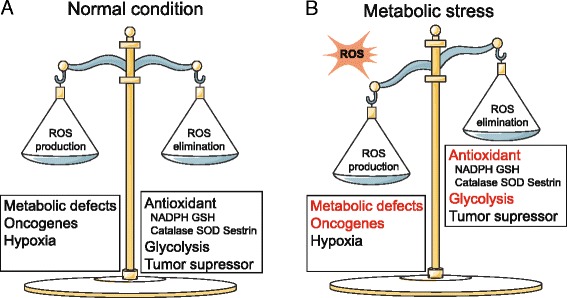
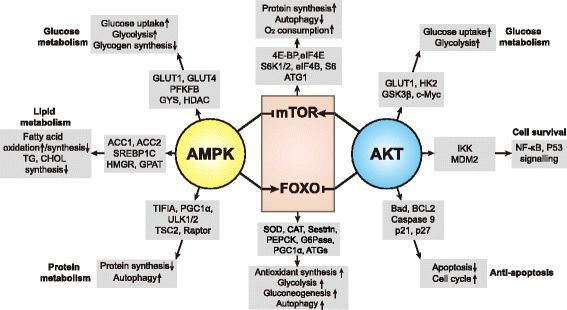
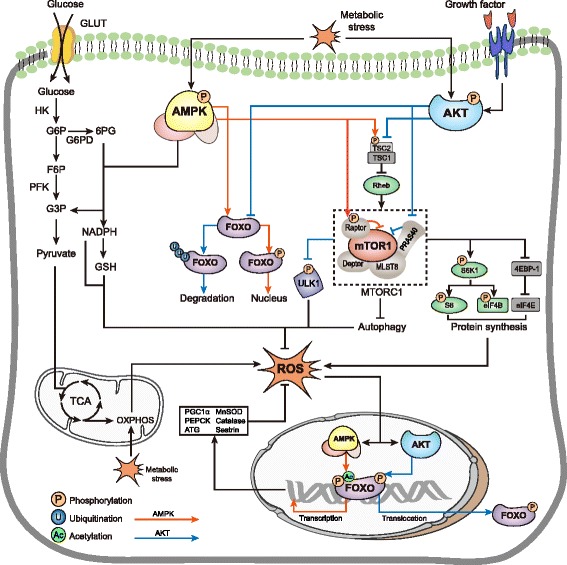
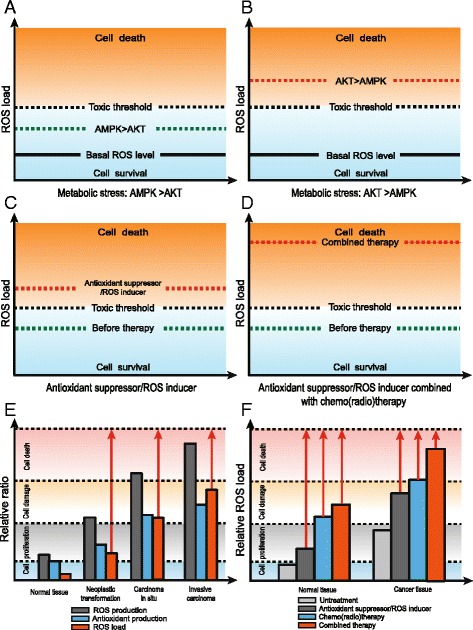
Cancer cells are frequently confronted with metabolic stress in tumor microenvironments due to their rapid growth and limited nutrient supply. Metabolic stress induces cell death through ROS-induced apoptosis. However, cancer cells can adapt to it by altering the metabolic pathways. AMPK and AKT are two primary effectors in response to metabolic stress: AMPK acts as an energy-sensing factor which rewires metabolism and maintains redox balance. AKT broadly promotes energy production in the nutrient abundance milieu, but the role of AKT under metabolic stress is in dispute. Recent studies show that AMPK and AKT display antagonistic roles under metabolic stress. Metabolic stress-induced ROS signaling lies in the hub between metabolic reprogramming and redox homeostasis. Here, we highlight the cross-talk between AMPK and AKT and their regulation on ROS production and elimination, which summarizes the mechanism of cancer cell adaptability under ROS stress and suggests potential options for cancer therapeutics.
Overview
The claims and statistics of this paper haven’t been checked yet.
Free: it reads the open-access text and checks the first 5 claims that cite a source we can check. Create a free account to check every claim.
Integrity signals
Registry
Cites
Statistics
Figures
Verification
Claims the paper makes
The claims and statistics of this paper haven’t been checked yet.
Free: it reads the open-access text and checks the first 5 claims that cite a source we can check. Create a free account to check every claim.
Claims other papers make about this one
Each is checked against this paper’s own text: does it say what the citing paper says it does?
The source backs part of the claim, not all of it — or backs it for a different population, condition or comparison.
In the citing paper
“Thus, by inhibiting PGAM5, AMPK suppresses necrosis, reduces ROS accumulation, and mitigates oxidative stress.385,387”
From Glucagon-like peptide-1 receptor: mechanisms and advances in therapy (2024) · cites this paper as [385]
Experimental — accuracy not yet measuredThe check wasn’t confident either way, so it gives no verdict — never disputed.
In the citing paper
“Importantly, the activation of AMPK reduces the expression of phosphoglycerate mutase 5 (PGAM5), which plays a promotive role in cell necrosis by contributing to mitochondrial dysfunction and the production of reactive oxygen species (ROS).385–387”
From Glucagon-like peptide-1 receptor: mechanisms and advances in therapy (2024) · cites this paper as [385]
Experimental — accuracy not yet measured
Self-check
Percentages, sums and reported differences re-computed from the paper’s own numbers.
The self-check needs the paper’s full text.
Citations
Cites
1 retracted
Zhang, S., Yang, C., Yang, Z., Zhang, D., Ma, X., Mills, G. B., & Liu, Z. (2015) · Europe PMC (PubMed Central) · Cited by 38
Self-citationRetractedAKT/PKB signaling: navigating downstream
Manning, B. D., & Cantley, L. C. (2007) · Cell · doi:10.1016/j.cell.2007.06.009 · Cited by 6,115 · cited 2×
“By activating mTORC1, AKT promotes oxygen consumption and increases ROS production under glucose deprivation [54, 62], rendering cancer cells closer to the death threshold of ROS.”
The emerging hallmarks of cancer metabolism
Pavlova, N. N., & Thompson, C. B. (2016) · Cell Metabolism · doi:10.1016/j.cmet.2015.12.006 · Cited by 5,926 · cited 9×
“Further, B Chaube et al. found that AMPK could enhance mitochondrial biogenesis and OXPHOS by activating p38/PGC1α pathway [53].”
InfluentialHydroperoxide metabolism in mammalian organs.
Chance, B., Sies, H., & Boveris, A. (1979) · Physiological Reviews · doi:10.1152/physrev.1979.59.3.527 · Cited by 5,827 · cited 1×
“It is estimated that ROS produced by mitochondria are about 1–2% of the total rate of oxygen consumption in normal cells [17].”
Targeting cancer cells by ROS-mediated mechanisms: a radical therapeutic approach?
Trachootham, D., Alexandre, J., & Huang, P. (2009) · Nature Reviews Drug Discovery · doi:10.1038/nrd2803 · Cited by 5,452 · cited 1×
“Even though cancer cells exhibit an enhanced antioxidant system, they still maintain higher ROS levels than normal cells [20, 109].”
Mitochondrial Reactive Oxygen Species (ROS) and ROS-Induced ROS Release
Zorov, D. B., Juhaszova, M., & Sollott, S. J. (2014) · Physiological Reviews · doi:10.1152/physrev.00026.2013 · Cited by 5,383 · cited 1×
“ROS are byproducts of biological reactions of energy generation, and are mainly produced in the mitochondria through the oxidative metabolism [15, 16].”
The Warburg Effect: How Does it Benefit Cancer Cells?
Liberti, M. V., & Locasale, J. W. (2016) · Trends in Biochemical Sciences · doi:10.1016/j.tibs.2015.12.001 · Cited by 5,150 · cited 1×
“Although this mode of energy production is less efficient than mitochondrial respiration per unit of glucose, the rate of glycolysis is 10–100 times faster [25].”
AMPK: a nutrient and energy sensor that maintains energy homeostasis
Hardie, D. G., Ross, F. A., & Hawley, S. A. (2012) · Nature Reviews Molecular Cell Biology · doi:10.1038/nrm3311 · Cited by 4,602 · cited 1×
“It is also regulated by its upstream LKB1, CaMMK or other factors like ADP or Ca [49].”
Reactive oxygen species (ROS) homeostasis and redox regulation in cellular signaling
Ray, P. D., Huang, B.-W., & Tsuji, Y. (2012) · Cellular Signalling · doi:10.1016/j.cellsig.2012.01.008 · Cited by 4,373 · cited 1×
“ROS are byproducts of biological reactions of energy generation, and are mainly produced in the mitochondria through the oxidative metabolism [15, 16].”
Modulation of oxidative stress as an anticancer strategy
Gorrini, C., Harris, I. S., & Mak, T. W. (2013) · Nature Reviews Drug Discovery · doi:10.1038/nrd4002 · Cited by 3,579 · cited 5×
“Glucose deficiency is one of the main factors leading to ROS stress in tumors, either in the stage of tumor initiation or progression [18].”
Influential
Cited by
Items 401–500 of 769
Iron intake in relation to ovarian reserve among women seeking infertility treatment
Jiménez-Cardozo, N., Mitsunami, M., Mínguez‐Alarcón, L., Ortiz‐Panozo, E., Wang, S., Souter, I. C., Hauser, R. B., & Chavarro, J. E. (2023) · Human Reproduction · doi:10.1093/humrep/dead118 · Cited by 14
Urushihara, Y., Hashimoto, T., Fujishima, Y., & Hosoi, Y. (2023) · International Journal of Molecular Sciences · doi:10.3390/ijms241612828 · Cited by 13
“FOXO3a, also known as FOXO3, belongs to the family of FOXOs, characterized by a distinct forkhead DNA-binding domain.”
BackgroundWang, Z., Tingting, X., Sun, Y., Zhang, X., & Wang, X. (2024) · Acta Biochimica et Biophysica Sinica · doi:10.3724/abbs.2024012 · Cited by 12
“In neurocytomas, due to rapid growth and limited nutrient supply, cancer cells are often in a state of metabolic stress in the microenvironment [10].”
Copper stress shapes the dynamic behavior of amoebae and their associated bacteria
Shi, Y., Ma, L., Zhou, M., He, Z., Zhao, Y., Hong, J., Zou, X., Zhang, L., & Shu, L. (2024) · The ISME Journal · doi:10.1093/ismejo/wrae100 · Cited by 14
“Starvation and rapamycin (targeted inhibitors of mTORC1) promote an increase in AMP/ATP ratios to activate AMPK, which further inactivates mTORC1 [64, 74].”
BackgroundSelf-citationDelaying Renal Aging: Metformin Holds Promise as a Potential Treatment
Qiao, Z., Zhao, J., Yuan, J., Qin, Y., Zhu, Z., Liu, J., & Sun, S. (2024) · Aging and Disease · doi:10.14336/ad.2024.0168 · Cited by 13
“Moreover, AMPK, an energy sensor, monitors the AMP/ATP ratio and promotes metabolic reprogramming in response to mitochondrial ROS [35].”
Autophagy mediated by ROS-AKT-FoxO pathway is required for intestinal regeneration in echinoderms
Zeng, C., Guo, M. Z., Xiao, K., & Li, C. (2025) · Cell Communication and Signaling · doi:10.1186/s12964-024-01993-0 · Cited by 12
Chen, C.-I., Kuo, D., & Chuang, H. (2025) · International Journal of Radiation Biology · doi:10.1080/09553002.2024.2446585 · Cited by 12
“The AKT/AMPK pathway promotes cell survival by maintaining energy homeostasis (Zhao Y et al. 2017).”
Mir, R., Javid, J., Ullah, M. F., Alrdahe, S. S., Albalawi, I. A., Mustafa, S. K., Jalal, M. M., Altayar, M. A., Albalawi, A. D., Abunab, M. K., et al. (2025) · Medical Oncology · doi:10.1007/s12032-025-02945-5 · Cited by 15
“However, the extent to which this stem cell paradigm applies across different malignancies and how it correlates with clinical behaviors remains an area of active research and debate [282].”
Falvino, A., Bonanni, R., Tarantino, U., Tancredi, V., & Cariati, I. (2025) · International Journal of Molecular Sciences · doi:10.3390/ijms26157573 · Cited by 12
“In this regard, AMP-activated protein kinase (AMPK) signaling pathway is known to modulate the response to oxidative stress, stimulating extracellular calcification [32].”
LASS2 regulates hepatocyte steatosis by interacting with NDUFS2/OXPHOS related proteins
Yang, Y., Yang, X., Lin, Y. P., Yang, G., & Li, L. (2020) · Biochemical and Biophysical Research Communications · doi:10.1016/j.bbrc.2020.02.166 · Cited by 12
Feng, X., Yang, G., Zhang, L., Tao, S., Shim, J. S., Chen, L., & Wu, Q. (2022) · Investigational New Drugs · doi:10.1007/s10637-022-01306-7 · Cited by 12
Peng, C. C., Chen, E. C. Y., Chen, C., Chyau, C.-C., Chen, K., & Peng, R. Y. (2024) · PLoS ONE · doi:10.1371/journal.pone.0306575 · Cited by 11
“AMPK acts as an energy-sensing factor which rewires metabolism and maintains a redox balance [15].”
BackgroundWang, D., Zhai, Y., Wang, Y., Fu, X., Ji, Y., & Li, R. (2025) · Journal of Materials Chemistry B · doi:10.1039/d5tb00099h · Cited by 11
Hidden pathway: the role of extracellular matrix in type 2 diabetes mellitus–related sarcopenia
Sun, Y., Zhang, Z., Wang, Y., Wu, X., Sun, Y., Lou, H., Xu, J., Yao, J., & Cong, D. (2025) · Frontiers in Endocrinology · doi:10.3389/fendo.2025.1560396 · Cited by 12
“As a result, excessive reactive oxygen species (ROS) are generated (43), enhancing forkhead box protein O (FOXO) transcriptional activity (44).”
Guerrero‐Navarro, L., Monfort‐Lanzas, P., Krichbaumer, V., de Araújo, M. E. G., Monfregola, J., Huber, L. A., Ballabio, A., Jansen‐Dürr, P., & Cavinato, M. S. (2025) · Aging Cell · doi:10.1111/acel.70083 · Cited by 12
“These observations suggest a regulatory interplay between AMPK and Akt pathways, where both pathways may autoregulate and crosstalk with each other (Zhao et al. 2017), contributing to the intricate balance between cellular stress responses and the senescence program.”
Wang, Y., Liu, Y., Yang, J., Geng, M., Jia, H., & Wang, J. (2025) · Biocontaminant · doi:10.48130/biocontam-0025-0005 · Cited by 13
Self-citationTao, T., Feng, X., Yang, Y., Liu, B., Liang, J., Chen, Z., Wang, S., Zhao, J., Yang, X., Huo, L., et al. (2026) · Nature Cell Biology · doi:10.1038/s41556-026-01905-z · Cited by 11
Self-citationNogales, C., Grønning, A. G. B., Sadegh, S., Baumbach, J., & Schmidt, H. H. H. W. (2020) · Handbook of experimental pharmacology · doi:10.1007/164_2020_386 · Cited by 11
Metabolic Regulation of Thymic Epithelial Cell Function
Semwal, M. K., Jones, N. E., & Griffith, A. V. (2021) · Frontiers in Immunology · doi:10.3389/fimmu.2021.636072 · Cited by 12
“Positive regulators of catalase expression include FOXO transcription factors, which are inhibited by AKT signaling downstream of many growth factors, including those that promote mTOR activation, such as IGF (28, 43, 44).”
BackgroundKim, K.-Y., Yun, U.-J., Yeom, S.-H., Kim, S. C., Lee, H.-J., Ahn, S., Park, K., & Kim, Y. W. (2021) · Biomolecules · doi:10.3390/biom11121806 · Cited by 11
Human Telomerase RNA Protein Encoded by Telomerase RNA is Involved in Metabolic Responses
Shliapina, V. L., Koriagina, M. S., Vasilkova, D., Govorun, V. M., Dontsova, O. А., & Rubtsova, M. P. (2021) · Frontiers in Cell and Developmental Biology · doi:10.3389/fcell.2021.754611 · Cited by 11
“Moreover, AMPK-induced activation of AKT leads to stimulation of compensatory pro-survival mechanisms and the inhibition of autophagy (Leclerc et al., 2010; Zhao et al., 2017).”
BackgroundBeena, T., Jesil, M. A., & Harikumar, K. B. (2023) · Archives of Biochemistry and Biophysics · doi:10.1016/j.abb.2022.109500 · Cited by 11
X or Y Cancer: An Extensive Analysis of Sex Differences in Lung Adenocarcinoma
Hammouz, R. Y., Orzechowska, M., Anusewicz, D., & Bednarek, A. K. (2023) · Current Oncology · doi:10.3390/curroncol30020107 · Cited by 12
“Nutrient sensing is a crucial part of mTOR and AMPK pathways, affecting their interaction with one another, but it also creates metabolic flexibility to maintain homeostasis [32].”
BackgroundEl‐Sheikh, M. M., Aziz, M. M., Abdelrahman, S. S. M., & Mohmad, M. A. E. H. (2023) · Environmental Toxicology · doi:10.1002/tox.23932 · Cited by 11
Therapeutic and preventive effects of astaxanthin in ischemic stroke
Wang, X., Li, H., Wang, G., He, Z., Cui, X., Song, F., Li, J., & Zhang, L. (2024) · Frontiers in Nutrition · doi:10.3389/fnut.2024.1441062 · Cited by 11
Wang, Y., Wang, R., Wu, S., An, J., Liang, Y., Hou, L., & Zhang, Z. (2020) · Nanoscale · doi:10.1039/d0nr00563k · Cited by 11
Remote Ischemic Post-Conditioning Therapy is Protective in Mouse Model of Traumatic Optic Neuropathy
Nadeem, M., Kindelin, A., Mahady, L. J., Bhatia, K., Hoda, M. N., Ducruet, A. F., & Ahmad, S. (2020) · NeuroMolecular Medicine · doi:10.1007/s12017-020-08631-1 · Cited by 11
“Our findings are supported by prior studies which have shown that AMPK signaling is protective and reduces oxidative stress by inhibiting ROS generation, attenuating inflammation and improving tight junction assembly in various disease models (Chen et al. 2018; Ju et al. 2014; Kubota et al. 2011; Mancini and Salt 2018…”
Chedere, A., Hari, K., Kumar, S., Rangarajan, A., & Jolly, M. K. (2021) · Journal of Clinical Medicine · doi:10.3390/jcm10030472 · Cited by 11
“AMPK and Akt can antagonistically regulate common downstream effectors such as mTOR signaling and FOXO signaling through differential phosphorylation [23].”
BackgroundNi, J., & Anping, N. (2021) · PLoS ONE · doi:10.1371/journal.pone.0248019 · Cited by 11
“The freeing up of eIF4E allows assembly of the translation initiation complex, resulting in the up-regulation of HIF-1α translation and hence its level in the cell [5, 54].”
BackgroundDioguardi, F. S., Flati, V., Corsetti, G., Pasini, E., & Romano, C. (2018) · International Journal of Molecular Sciences · doi:10.3390/ijms19113631 · Cited by 13
“Details of the underlying mechanisms of those behaviours are entangled and remain under study [43], although we believe that, by altering the EAA/NEAA ratios, a means of triggering a totally innovative network of relationships among key gatekeepers such as mTORC1 and 2 [73], AMPK and AKT [74], has been identified, unv…”
BackgroundZeng, Q., Zeng, B., Chai, J., Wu, J., Guo, R., Gao, Y., Han, X., Yang, J. W., Kotsyfakis, M., & Xu, X. (2020) · Life Sciences · doi:10.1016/j.lfs.2020.117753 · Cited by 11
Hsu, C., Yang, A. Y.-P., Chen, J.-Y., Tsai, H.-H., Lin, S.-H., Tai, P.-C., Huang, M.-H., Hsu, W.-H., Lin, A. M.-Y., & Yang, J. C. (2021) · Cancers · doi:10.3390/cancers13020272 · Cited by 11
Molecular mechanism of anti‐adipogenic effect of vitexin in differentiating hMSCs
Gire, D., Acharya, J. D., Malik, S., Inamdar, S., & Ghaskadbi, S. (2021) · Phytotherapy Research · doi:10.1002/ptr.7300 · Cited by 12
Xue, L., Xu, J., Xiao, P., Jiang, Y., Lin, Y., Feng, C., Jin, Y., Zhou, Z., Wang, G., & Lu, D. (2024) · Ecotoxicology and Environmental Safety · doi:10.1016/j.ecoenv.2024.117524 · Cited by 10
Xu, Q., Wu, W., Zhang, S., Huang, C., & Lin, D. (2025) · Journal of Proteome Research · doi:10.1021/acs.jproteome.4c01150 · Cited by 13
Self-citationCarboxypeptidase N2 as a Novel Diagnostic and Prognostic Biomarker for Lung Adenocarcinoma
Xu, T., Zhang, Z., Chen, H., Cai, R., Yang, Q., Liu, Q., Fan, Y., Liu, W., & Yao, C. (2022) · Frontiers in Oncology · doi:10.3389/fonc.2022.843325 · Cited by 10
Zhu, H., Qu, Y., Wang, S., Huang, J., Zhu, J., Wang, L., Cai, K., & Zhang, J. (2022) · ACS Biomaterials Science & Engineering · doi:10.1021/acsbiomaterials.2c00614 · Cited by 10
Pectinas modificadas con actividad contra el cáncer de colon: Una revisión sistemática de 2010-2021
Pérez-Loyola, M., Valdés, M., & Garrido, G. (2022) · Journal of Pharmacy & Pharmacognosy Research · doi:10.56499/jppres22.1387.10.4.616 · Cited by 13
Peng, Y., Zhang, L., Zhou, F., Wang, Y., Zhang, X., Fan, J., Li, S., Li, X., & Li, Y. (2022) · Journal of Alzheimer s Disease · doi:10.3233/jad-220610 · Cited by 10
“ROS can affect energy metabolism via PI3K/Akt pathway members, particularly Akt, which is a critical metabolic sensor [35].”
Zhao, J., Ma, L., Xie, Y., Zhu, L., Ni, W., Wang, R., Song, Y., Li, X., & Yang, H. (2022) · Environmental Toxicology · doi:10.1002/tox.23723 · Cited by 10
Postiglione, A. E., Adams, L. L., Ekhator, E. S., Odelade, A. E., Patwardhan, S., Chaudhari, M., Pardue, A., Kumari, A., LeFever, W. A., Tornow, O. P., et al. (2023) · iScience · doi:10.1016/j.isci.2023.107817 · Cited by 11
Encystation and Stress Responses under the Control of Ubiquitin-like Proteins in Pathogenic Amoebae
Samba‐Louaka, A., Labruyère, E., Matondo, M., Locard‐Paulet, M., Olivo‐Marín, J., & Guillén, N. (2023) · Microorganisms · doi:10.3390/microorganisms11112670 · Cited by 10
“Glucose deprivation increases ROS levels [22] through the activity of AMP-activated protein kinase (AMPK), which reprograms metabolic pathways in order to maintain energy balance in cells [23].”
BackgroundZhang, Y., Yang, Y., Kuang, S., Zhang, Y., Qin, H., & Xie, J. (2024) · International Journal of Clinical Practice · doi:10.1155/2024/6875417 · Cited by 11
“Te level of ROS in the body is infuenced by the expression activity of AMPK α via its signaling pathway [38].”
BackgroundMathiyazhagan, J., & Muthukaliannan, G. K. (2020) · Nutrition and Cancer · doi:10.1080/01635581.2020.1792518 · Cited by 10
“ation, cell differentiation, and apoptosis (33).”
Przybylski, P., Lewińska, A., Rzeszutek, I., Błoniarz, D., Moskal, A., Betlej, G., Deręgowska, A., Cybularczyk‐Cecotka, M., Szmatoła, T., Litwinienko, G., et al. (2023) · Cancers · doi:10.3390/cancers15235614 · Cited by 10
“In general, AMPK activation is an adaptive response to glucose deprivation based on metabolic reprograming to support catabolic pathways (glucose uptake, glycolysis, fatty acid oxidation, autophagy) and limit anabolic pathways (protein, fatty acid, and glycogen synthesis) [51,52].”
BackgroundCold Atmospheric Plasma Prevents Wrinkle Formation via an Antiaging Process
Hwang, S. G., Kim, J. H., Jo, S. Y., Kim, Y. J., & Won, C. H. (2020) · Plasma Medicine · doi:10.1615/plasmamed.2020034810 · Cited by 10
“com 91 Plasma Medicine, 10(2):91 – 102 (2020)”
Chen, F., Liu, Z., Xie, C., He, J., Chen, J., Peng, K., Chen, X., He, J., Liu, Z., Yang, H., et al. (2024) · Frontiers in Veterinary Science · doi:10.3389/fvets.2024.1468520 · Cited by 9
“Under metabolic stress, the redox balance becomes vulnerable and easily damaged (41).”
Role of Abscisic Acid in the Whole-Body Regulation of Glucose Uptake and Metabolism
Spinelli, S., Humma, Z., Magnone, M., Zocchi, E., & Sturla, L. (2024) · Nutrients · doi:10.3390/nu17010013 · Cited by 9
Physical Encapsulation and Chemotherapy: A Synergistic Hydrogel Strategy for Tumor Suppression
Gong, Y., Yuan, W., Liu, S., Jin, M., Li, S., Tao, L., Chu, Y., Li, H., Yu, Y., Chen, X., et al. (2025) · Advanced Healthcare Materials · doi:10.1002/adhm.202500511 · Cited by 10
Wu, L., Shi, Y. P., Kong, C., Chen, A., Kang, Y., Kan, J., Jiang, X., Chu, P., Wang, D., Lv, Y., et al. (2025) · Advanced Science · doi:10.1002/advs.202501981 · Cited by 14
Anthocyanins and Metabolic Disease: A New Frontier in Precision Nutrition
Patanè, G. T., Moreira, R., Almeida-Santos, M., Putaggio, S., Barreca, D., Oliveira, P. F., & Alves, M. G. (2026) · Antioxidants · doi:10.3390/antiox15010061 · Cited by 10
“AMPK also increases glucose uptake by phosphorylating protein kinase B (PKB or Akt) on Ser789, which, in turn, phosphorylates AS160, leading to GLUT4 translocation to the plasma membrane [131–134].”
Therapeutic Potential of Resveratrol in Cancer and Neurodegenerative Disorders: A Current Review
Wuputra, K., Ku, C., Lin, Y., Tsai, Y., Wu, D., 三井幸雄, Satou, M., Tanaka, Y., Saito, S., & Yokoyama, K. K. (2026) · BioFactors · doi:10.1002/biof.70080 · Cited by 11
“In this context, Zhao et al. [89] reported that RSV attenuated senescence in BMSCs derived from aged rats and promoted their differentiation into the osteoblastic lineage.”
Lei, J., Pan, Y., Gao, R., He, B., Wang, Z., Lei, X., Zhang, Z., Yang, N., & Yan, M. (2023) · Journal of Translational Medicine · doi:10.1186/s12967-023-04396-w · Cited by 9
“Previous studies have shown that metabolic stress could induce elevated ROS and limit cancer invasiveness through inducing the differentiation of cancer cells, especially in glioblastoma [10, 36–38].”
BackgroundDutta, D., Siddiqui, L., Shah, S. Z., & Talegaonkar, S. (2024) · Medical Hypotheses · doi:10.1016/j.mehy.2024.111404 · Cited by 9
Fan, D., Liu, P., Li, Z., He, X., Zhang, L., Jiang, W., Ang, W., & Yang, T. (2024) · Bioorganic Chemistry · doi:10.1016/j.bioorg.2024.107565 · Cited by 9
Regulatory Role of Flavonoid Baicalin from Scutellaria baicalensis on AMPK: A Review
Jiang, M., Li, Z., Qin, X., Chen, L., & Zhu, G. (2025) · The American Journal of Chinese Medicine · doi:10.1142/s0192415x25500296 · Cited by 10
Mechanism of AMPK-mediated apoptosis of rat gastric smooth muscle cells under high glucose condition
Zhang, X.-Z., Zhang, M., Fang, X.-S., Cui, X., & Jin, Z. (2019) · Bioscience Reports · doi:10.1042/bsr20192504 · Cited by 9
Zheng, D., Che, D., Lin, F., Wang, X., Lu, L., Chen, J., & Xu, X. (2020) · Cell Cycle · doi:10.1080/15384101.2020.1795595 · Cited by 9
“Under metabolic stress, AMPK can be activated, and then regulate metabolic reprogramming and redox homeostasis by enhancing glucose metabolism and antioxidant production [33].”
BackgroundRetractedHighlighting the Protective or Degenerative Role of AMPK Activators in Dementia Experimental Models
Nikbakhtzadeh, M., Shaerzadeh, F., & Ashabi, G. (2021) · CNS & Neurological Disorders - Drug Targets · doi:10.2174/1871527320666210526160214 · Cited by 9
Qiu, J., Yang, T., Long, Y., He, P., Shen, W., Zhang, B., Shi, X., Peng, L., Li, Z., & Zhang, X. (2022) · Journal of Molecular Medicine · doi:10.1007/s00109-022-02273-5 · Cited by 9
Kwon, Y. H., Jang, J. Y., Lee, J. H., Choi, Y. W., Choi, Y. H., & Kim, N. D. (2022) · Applied Sciences · doi:10.3390/app13010572 · Cited by 9
Park, H.-J., & Park, S. (2020) · Nutrition Research and Practice · doi:10.4162/nrp.2020.14.5.478 · Cited by 10
“Given that the accumulation of ROS can activate AMPK to exert discrepant impacts on the survival of cancer cells [35], it is possible that ROS is the mediator of morusin-induced autophagy in NSCLC cells.”
BackgroundFarahat, Y. A., El-Sayed, N. M., Hazem, R. M., Mehanna, E. T., & Radwan, A. (2025) · Biomedicines · doi:10.3390/biomedicines13051065 · Cited by 8
“AMPK is also a key cellular energy regulator, which preserves mitochondrial function and counteracts oxidative stress [38] and inflammation [39] under metabolic stress.”
Man, J., Zhang, Q., Zhao, T., Sun, D., Long, K., Xiong, W., Cai, J., & Zhang, Z. (2025) · International Journal of Biological Macromolecules · doi:10.1016/j.ijbiomac.2025.144936 · Cited by 8
Yang, G.-X., Peng, D.-L., Chen, L., Yu, Q., He, L., Chen, X., Hong, W., Wu, C.-M., & Chen, H. (2025) · Cell Death and Disease · doi:10.1038/s41419-025-07906-4 · Cited by 8
“Although the exact mechanism by which AKT facilitates the elevation of ROS remains to be determined in future research, it is plausible that AKT-mediated activation of mTOR or inhibition of FOXO3 may be involved [50].”
Next Generation Calcium Nanomaterials: Disrupting Tumor Ca2⁺ Homeostasis for Enhanced Cancer Therapy
Gangadhar, L., Sana, S. S., Venkatesan, R., Bhandare, R. R., Kim, S.-C., & Yasin, H. K. A. (2026) · International Journal of Nanomedicine · doi:10.2147/ijn.s557935 · Cited by 8
“15 Calcium nanocomposites combine nano-scale compounds of calcium (CaCO 3 or CaPO 4 ) with other substances for unique material development.”
Sirtuin 3 mitigates oxidative-stress-induced apoptosis in bovine mammary epithelial cells
Liu, L., Ouyang, L., Li, D., Tian, Y., Liu, Z., Wen, Y., Peng, T., Song, Y., Du, X., Wang, Z., et al. (2023) · Journal of Dairy Science · doi:10.3168/jds.2023-23366 · Cited by 8
Chao, S.-P., Cheng, W., Yi, W., Cai, H., Deng, K., Cao, J., Zeng, Z., Wang, H., & Wu, X. (2023) · American Journal of Hypertension · doi:10.1093/ajh/hpad100 · Cited by 8
Han, X., Zhang, Y., Li, Y., Lin, Z., Fu, Z., Wang, C., Zhang, S., Shao, D., & Li, C. (2024) · Cell Proliferation · doi:10.1111/cpr.13700 · Cited by 8
“AKT is a major effector of oxidative stress, 44 and PI3K/AKT activation has also been reported to be involved in the pro-survival of TAMR cells, 45 which is consistent with our results.”
Self-citationSharapova, G., Sabirova, S., Gomzikova, M. O., Brichkina, A. I., Barlev, N. A., Kalacheva, N. V., Rizvanov, A. A., Markov, N., & Simon, H. (2024) · International Journal of Molecular Sciences · doi:10.3390/ijms25137038 · Cited by 8
Wang, S.-Q., Liu, N., Zhang, Q., Li, B., Zhao, F.-Y., Li, C., Wang, H., & Liu, C. (2025) · Cell Death and Disease · doi:10.1038/s41419-025-07445-y · Cited by 8
Mahgoub, N. A., Elsherbiny, D. A., & El‐Demerdash, E. (2025) · BMC Pharmacology and Toxicology · doi:10.1186/s40360-025-00903-5 · Cited by 8
Wang, G., Wang, J., Xu, X.-N., Shi, F., & Fu, X.-L. (2022) · Journal of drug targeting · doi:10.1080/1061186x.2022.2071909 · Cited by 8
“mTORC1 integrates growth factor and nutrient signals to influence protein synthesis, growth, autophagy, and ribosomal biogenesis [142].”
BackgroundShamsudin, N. F., Leong, S. W., Koeberle, A., Suriya, U., Rungrotmongkol, T., Chia, S. L., Taher, M., Haris, M. S., Alshwyeh, H. A., Alosaimi, A. A., et al. (2024) · Future Medicinal Chemistry · doi:10.1080/17568919.2024.2363668 · Cited by 8
Lou, Q., Chen, F., Li, B., Zhang, M., Yin, F., Liu, X., Zhang, Z., Zhang, X., Fan, C., Gao, Y., et al. (2022) · International Journal of Environmental Health Research · doi:10.1080/09603123.2021.2023113 · Cited by 8
“It has been reported that elevated ROS levels, accompanied by down-regulation of cellular antioxidant enzyme systems, lead to cellular proliferation and malignant transformation via different molecular targets, including Akt, AMPK (Zhao et al. 2017; Hinchy et al. 2018), NF-κB (Jamieson et al. 2020) and Nrf2 (Morgan an…”
BackgroundOzfiliz-Kilbas, P., Can, N. D., Kizilboga, T., Ezbercı, F., Doğanay, H. L., Arısan, E. D., & Doğanay, G. D. (2022) · PLoS ONE · doi:10.1371/journal.pone.0261062 · Cited by 9
“Akt has been indicated to be hyperactivated as an energy producer for the survival of cancer cells under increased ROS-mediated metabolic stress conditions [24].”
Differences in glucose concentration shows new perspectives in gastric cancer metabolism
da Silva, E. L., Mesquita, F. P., Portilho, A. J. D. S., Bezerra, E. C. A., Daniel, J. P., Aranha, E. S. P., Farran, S. H., de Vasconcellos, M. C., de Moraes, M. E. A., Moreira-Nunes, C. A., et al. (2022) · Toxicology in Vitro · doi:10.1016/j.tiv.2022.105357 · Cited by 9
Witayateeraporn, W., Nguyen, H. M., Hồ, Đ. V., Nguyen, H. T., Chanvorachote, P., Vinayanuwattikun, C., & Pongrakhananon, V. (2022) · International Journal of Molecular Sciences · doi:10.3390/ijms23169258 · Cited by 8
“Cancer cells display a higher level of ROS generation that stimulates survival signaling to serve their rapid growth and proliferation; however, excessive ROS levels are able to induce cancer cell death through several pathways, including AMPK [34].”
BackgroundZhu, Y., Wang, S., Niu, P., Chen, H., Zhou, J., Jiang, L., Li, D., & Shi, D. (2023) · PeerJ · doi:10.7717/peerj.15498 · Cited by 8
“For example, the cross-talk between AMPK and AKT was proved to be related with ROS regulation and cancer progression (Zhao et al., 2017).”
BackgroundTime-dependent modulation of FoxO activity by HDAC inhibitor in oncogene-transformed E1A+Ras cells
Morshneva, A. V., Gnedina, O. O., Svetlikova, S. B., Pospelov, V. A., & Igotti, M. V. (2018) · Global Medical Genetics · doi:10.3934/genet.2018.1.41 · Cited by 8
“PKB/Akt has been shown to activate oxidative metabolism by increasing oxygen consumption in mitochondria [25].”
BackgroundThe AMPK-SIRT1 Axis: Redefining type 2 diabetes mellitus management
Kemelo, M. K., & Moseki, P. (2025) · Results in Chemistry · doi:10.1016/j.rechem.2025.102139 · Cited by 10
Li, M., Wang, J., Xu, Z., Lin, Y. N., & Dong, J. (2025) · Phytomedicine · doi:10.1016/j.phymed.2025.157261 · Cited by 7
Dong, B., Xie, L., & Li, Y. (2025) · Journal of Asthma and Allergy · doi:10.2147/jaa.s550615 · Cited by 7
“The fundamental structure of AMPK comprises three subunits: α, β, and γ. 158 In the context of AR, AMPK activation exerts multifaceted therapeutic effects, and it inhibits mTORC1 activation, dampens NF-ΚB and STAT3 signaling pathways, and reduces Th2 cell differentiation; at the same time, it…”
Curcio, C., Rosso, T., Brugiapaglia, S., Guadagnin, G., Giordano, D., Castellino, B., Satolli, M. A., Spadi, R., Campra, D., Moro, F., et al. (2023) · Clinical and Experimental Medicine · doi:10.1007/s10238-023-01236-5 · Cited by 7
Koyama, N., Ishikawa, Y., Ohta, H., Aoki, T., Kyoyama, H., Aoshiba, K., & Uematsu, K. (2024) · Cancer Medicine · doi:10.1002/cam4.70093 · Cited by 7
“42,43 29–31 Wan et al. showed that AMPK activation induces pEZH2 at Thr311, preventing PRC2-mediated oncogenic function.”
BackgroundWang, A. Y. L., Aviña, A. E., Liu, Y., Chang, Y., & Kao, H. (2025) · Antioxidants · doi:10.3390/antiox14020183 · Cited by 7
“Meanwhile, under metabolic stress, e.g., glucose deprivation, cells might switch to mitochondrial OXPHOS, which generates more ATP per molecule of glucose but also more ROS [180].”
Self-citationRedox Regulation of cAMP-Dependent Protein Kinase and Its Role in Health and Disease
Ekhator, E. S., Fazzari, M., & Newman, R. H. (2025) · Life · doi:10.3390/life15040655 · Cited by 9
Qin, Z., Li, Y., Shao, X., Li, K., Bai, Y., Wang, B., Ma, F., Shi, W., Song, L., Zhuang, A., et al. (2025) · Cancer Letters · doi:10.1016/j.canlet.2025.217732 · Cited by 7
Mitochondrial metabolism in laryngeal cancer: therapeutic mechanisms and prospects
Hou, Y., Yang, X.-X., & Meng, H. (2025) · Biochimica et Biophysica Acta (BBA) - Reviews on Cancer · doi:10.1016/j.bbcan.2025.189335 · Cited by 7
Hong, S., Han, E., Park, S., Hyun, K., Lee, Y., Baek, H. W., Kim, H.-J., Rah, Y. C., & Choi, J. (2025) · International Journal of Molecular Sciences · doi:10.3390/ijms26094201 · Cited by 7
“Consistently, previous studies indicated that the balance between oxidative stress and autophagy is mediated by the mTOR path‑ way, which regulates mitochondrial ROS and lysosomal function [42].”
Li, J., Li, W., Wang, S., Zheng, H., Bao, J., Wang, Y., & Jin, H. (2025) · Journal of Ethnopharmacology · doi:10.1016/j.jep.2025.119916 · Cited by 8
Ren, J., Hu, H., Wang, S., He, Y., Ji, Y., Chen, Y., Wang, K., Zhang, H., Zhao, Y., & Dai, F. (2022) · ACS Applied Materials & Interfaces · doi:10.1021/acsami.2c03684 · Cited by 7
Self-citationHe, L., Wang, X., Ding, Z., Liu, L., Cheng, H., Bily, D., Wu, C., Zhang, K., & Xie, L. (2022) · The Journal of Nutritional Biochemistry · doi:10.1016/j.jnutbio.2022.109157 · Cited by 7
Zhang, Z., Chen, K., Pan, D., Liu, T., Hang, C., Ying, Y., He, J., Lv, Y., Ma, X., Chen, Z., et al. (2023) · BMC Pulmonary Medicine · doi:10.1186/s12890-023-02670-7 · Cited by 8
“Given a cross-talk between AMPK (the protein encoded by PRKAA1) and AKT [45], LINC00691 may regulate progression of BPD through AMPK pathway.”
BackgroundLee, J., Hong, S., Kim, M.-J., Lim, Y.-M., Moon, S. J., Kwon, H., Park, S. E., Rhee, E., & Lee, W. (2024) · Endocrinology and Metabolism · doi:10.3803/enm.2023.1786 · Cited by 7
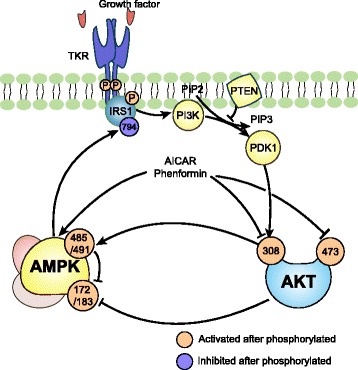
“Under glucose deprivation, AMPK plays an opposite role to that of AKT in protecting cells from metabolic stress, and the AMPK agonists 5-aminoimidazole-4-carboxamide ribonucleoside (AICAR) and phenformin dephosphorylate AKT [35].”
Miller, M. J., Akter, D., Mahmud, J., & Chan, G. C. T. (2024) · Journal of Virology · doi:10.1128/jvi.01888-23 · Cited by 7
“Nonetheless, both pharmacological and genetic approaches indicate HCMV selectively promotes the translation of SIRT1 in order to drive the long-term survival of infected monocytes. of infected monocytes (24–27, 40, 47), we examined the role of SIRT1 in regulating HCMV-induced Akt activity.”
BackgroundSarin, H. V., Pirinen, E., Pietiläinen, K. H., Isola, V., Häkkinen, K., Perola, M., & Hulmi, J. J. (2021) · The FASEB Journal · doi:10.1096/fj.202002029r · Cited by 7
Meng, Q., Zhou, J., You, F., Wu, Y., Yang, L., Wang, Y., Zhang, X., Gao, S., Yu, R., & Yin, X. (2021) · Biochemical Pharmacology · doi:10.1016/j.bcp.2021.114795 · Cited by 7
Phyto-nanotechnology: Enhancing Plant Based Chemical Constituent Mediated Anticancer Therapies
Zango, U. U., Abubakar, A., Saxena, R., & Arya, V. (2023) · BENTHAM SCIENCE PUBLISHERS eBooks · doi:10.2174/9789815079784123010011 · Cited by 7
Yi, C., Feng, W., Zhang, G., Luo, J., Chen, Y., Feng, Q., Zhu, Y., Guo, Y., Yan, X., & Ma, M. (2025) · Biochemical Pharmacology · doi:10.1016/j.bcp.2025.117604 · Cited by 8
Metadata
- Authors
- Zhao, Y., Hu, X., Liu, Y., Dong, S., Wen, Z., He, W., Zhang, S., Huang, Q., & Shi, M.
- Affiliations
- Nanfang Hospital (CN)
- Corresponding author
- Shi, Min
- Venue
- Molecular Cancer
- Published
- 2017-04-13
- Volume
- 16
- Issue
- 1
- Pages
- 79-79
- ISSN
- 1476-4598 (ISSN-L)
- PMC
- PMC5390360
- OpenAlex
- W2607120474
- Cited by
- 735
- References
- 124
- Citations by year
- 2026: 71 · 2025: 99 · 2024: 102 · 2023: 98 · 2022: 124 · 2021: 80 · 2020: 70 · 2019: 43 · 2018: 41 · 2017: 7
- FWCI
- 4.12
- Type
- journal article
- Language
- en
- Open access
- gold
- doi.org
- Licence
- cc-by
- Locations
- Molecular Cancer (publishedVersion, cc-by)
- PubMed Central (publishedVersion, cc-by)
- PubMed (publishedVersion)
- DOAJ (DOAJ: Directory of Open Access Journals) (submittedVersion, cc-by-sa)
- Funders
- National Natural Science Foundation of China (81472317)
- The Special Foundation for National Clinical Specialties of China(to The Department of Oncology, Nanfang Hosptial)
- CSCO Merck Serono Oncology Research Fund (Y-MX2014-048)
- Topics
- Life Sciences › Biochemistry, Genetics and Molecular Biology › Molecular Biology › Metabolism, Diabetes, and Cancer
- Life Sciences › Biochemistry, Genetics and Molecular Biology › Cancer Research › Cancer, Hypoxia, and Metabolism
- Life Sciences › Biochemistry, Genetics and Molecular Biology › Molecular Biology › Redox biology and oxidative stress
- Keywords
- reactive oxygen species signaling, metabolic stress, AMPK, Akt, cancer metabolism, metabolic reprogramming, redox homeostasis, tumor microenvironment, cancer cell adaptation, cancer therapeutics
- MeSH terms
- Animals, Energy Metabolism, Homeostasis, Humans, Neoplasms, Oxidation-Reduction, Phosphorylation, Protein Binding, Stress, Physiological, Signal Transduction, Reactive Oxygen Species, Disease Progression, Proto-Oncogene Proteins c-akt, AMP-Activated Protein Kinases
About these checks
Registry, retraction, Cites and statistics results are computed, not judged, with one exception: a printed reference that no index lists is read once by a model before it counts as a citation error. Claims are extracted by a model and kept only when their quote appears verbatim in the text; each cited source is then checked, with a model’s help, for whether it says what the claim relies on. Those verdicts can be wrong — read the claim’s quote and the cited source before relying on one.
Statistics and arithmetic are recomputed, not judged.
Confidence bands are shown only for fields calibrated on our annotated test set. None is calibrated yet, so no band is shown.
What counts as a claim ›How we measure confidence ›How we check this ›
Are you an author, or do you see a problem with this page? Request a review
Data sources
Bibliographic data: Semantic Scholar, OpenAlex, Crossref.
Contains information from the Semantic Scholar Academic Graph Datasets, made available under the ODC Attribution License (ODC-BY 1.0).
Semantic Scholar’s data is described in: Kinney, R., et al. (2023). The Semantic Scholar Open Data Platform. arXiv:2301.10140.
