

ROS signaling under metabolic stress: cross-talk between AMPK and AKT pathway
Open accessThe DOI matches its Crossref record; 125 of the 125 references it cites were found in a registry or an index.
Abstract
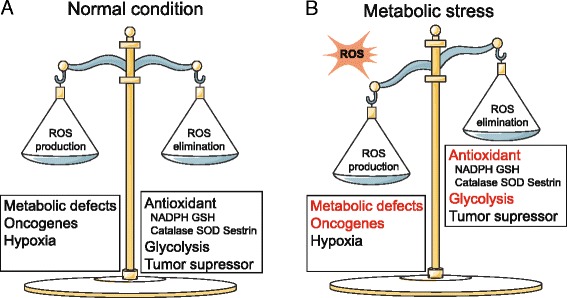
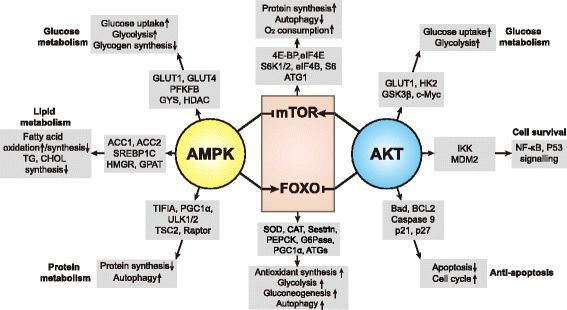
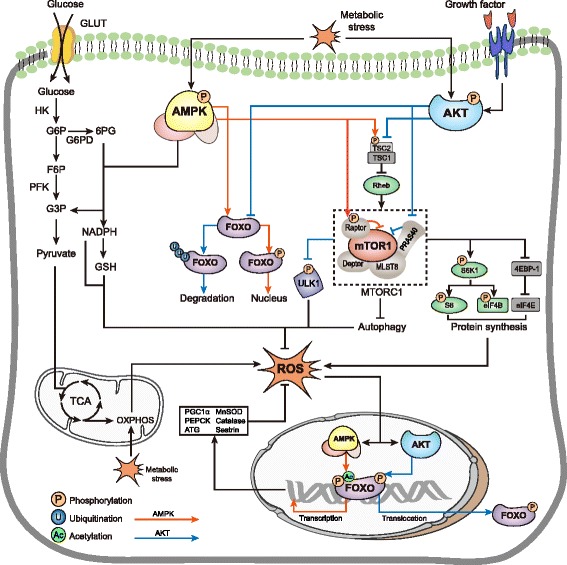
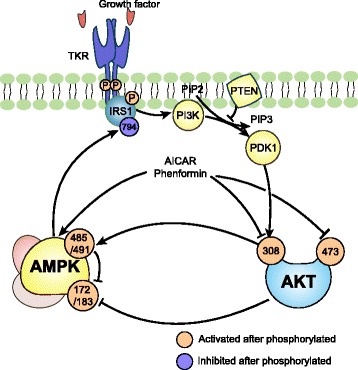
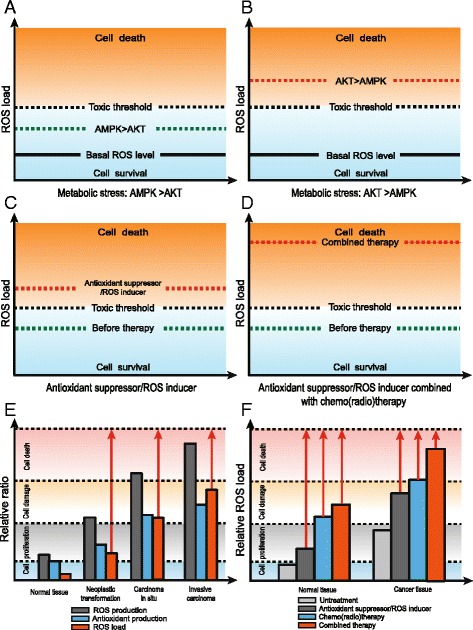
Cancer cells are frequently confronted with metabolic stress in tumor microenvironments due to their rapid growth and limited nutrient supply. Metabolic stress induces cell death through ROS-induced apoptosis. However, cancer cells can adapt to it by altering the metabolic pathways. AMPK and AKT are two primary effectors in response to metabolic stress: AMPK acts as an energy-sensing factor which rewires metabolism and maintains redox balance. AKT broadly promotes energy production in the nutrient abundance milieu, but the role of AKT under metabolic stress is in dispute. Recent studies show that AMPK and AKT display antagonistic roles under metabolic stress. Metabolic stress-induced ROS signaling lies in the hub between metabolic reprogramming and redox homeostasis. Here, we highlight the cross-talk between AMPK and AKT and their regulation on ROS production and elimination, which summarizes the mechanism of cancer cell adaptability under ROS stress and suggests potential options for cancer therapeutics.
Overview
The claims and statistics of this paper haven’t been checked yet.
Free: it reads the open-access text and checks the first 5 claims that cite a source we can check. Create a free account to check every claim.
Integrity signals
Registry
Cites
Statistics
Figures
Verification
Claims the paper makes
The claims and statistics of this paper haven’t been checked yet.
Free: it reads the open-access text and checks the first 5 claims that cite a source we can check. Create a free account to check every claim.
Claims other papers make about this one
Each is checked against this paper’s own text: does it say what the citing paper says it does?
The source backs part of the claim, not all of it — or backs it for a different population, condition or comparison.
In the citing paper
“Thus, by inhibiting PGAM5, AMPK suppresses necrosis, reduces ROS accumulation, and mitigates oxidative stress.385,387”
From Glucagon-like peptide-1 receptor: mechanisms and advances in therapy (2024) · cites this paper as [385]
Experimental — accuracy not yet measuredThe check wasn’t confident either way, so it gives no verdict — never disputed.
In the citing paper
“Importantly, the activation of AMPK reduces the expression of phosphoglycerate mutase 5 (PGAM5), which plays a promotive role in cell necrosis by contributing to mitochondrial dysfunction and the production of reactive oxygen species (ROS).385–387”
From Glucagon-like peptide-1 receptor: mechanisms and advances in therapy (2024) · cites this paper as [385]
Experimental — accuracy not yet measured
Self-check
Percentages, sums and reported differences re-computed from the paper’s own numbers.
The self-check needs the paper’s full text.
Citations
Cites
1 retracted
Zhang, S., Yang, C., Yang, Z., Zhang, D., Ma, X., Mills, G. B., & Liu, Z. (2015) · Europe PMC (PubMed Central) · Cited by 38
Self-citationRetractedAKT/PKB signaling: navigating downstream
Manning, B. D., & Cantley, L. C. (2007) · Cell · doi:10.1016/j.cell.2007.06.009 · Cited by 6,115 · cited 2×
“By activating mTORC1, AKT promotes oxygen consumption and increases ROS production under glucose deprivation [54, 62], rendering cancer cells closer to the death threshold of ROS.”
The emerging hallmarks of cancer metabolism
Pavlova, N. N., & Thompson, C. B. (2016) · Cell Metabolism · doi:10.1016/j.cmet.2015.12.006 · Cited by 5,926 · cited 9×
“Further, B Chaube et al. found that AMPK could enhance mitochondrial biogenesis and OXPHOS by activating p38/PGC1α pathway [53].”
InfluentialHydroperoxide metabolism in mammalian organs.
Chance, B., Sies, H., & Boveris, A. (1979) · Physiological Reviews · doi:10.1152/physrev.1979.59.3.527 · Cited by 5,827 · cited 1×
“It is estimated that ROS produced by mitochondria are about 1–2% of the total rate of oxygen consumption in normal cells [17].”
Targeting cancer cells by ROS-mediated mechanisms: a radical therapeutic approach?
Trachootham, D., Alexandre, J., & Huang, P. (2009) · Nature Reviews Drug Discovery · doi:10.1038/nrd2803 · Cited by 5,452 · cited 1×
“Even though cancer cells exhibit an enhanced antioxidant system, they still maintain higher ROS levels than normal cells [20, 109].”
Mitochondrial Reactive Oxygen Species (ROS) and ROS-Induced ROS Release
Zorov, D. B., Juhaszova, M., & Sollott, S. J. (2014) · Physiological Reviews · doi:10.1152/physrev.00026.2013 · Cited by 5,383 · cited 1×
“ROS are byproducts of biological reactions of energy generation, and are mainly produced in the mitochondria through the oxidative metabolism [15, 16].”
The Warburg Effect: How Does it Benefit Cancer Cells?
Liberti, M. V., & Locasale, J. W. (2016) · Trends in Biochemical Sciences · doi:10.1016/j.tibs.2015.12.001 · Cited by 5,150 · cited 1×
“Although this mode of energy production is less efficient than mitochondrial respiration per unit of glucose, the rate of glycolysis is 10–100 times faster [25].”
AMPK: a nutrient and energy sensor that maintains energy homeostasis
Hardie, D. G., Ross, F. A., & Hawley, S. A. (2012) · Nature Reviews Molecular Cell Biology · doi:10.1038/nrm3311 · Cited by 4,602 · cited 1×
“It is also regulated by its upstream LKB1, CaMMK or other factors like ADP or Ca [49].”
Reactive oxygen species (ROS) homeostasis and redox regulation in cellular signaling
Ray, P. D., Huang, B.-W., & Tsuji, Y. (2012) · Cellular Signalling · doi:10.1016/j.cellsig.2012.01.008 · Cited by 4,373 · cited 1×
“ROS are byproducts of biological reactions of energy generation, and are mainly produced in the mitochondria through the oxidative metabolism [15, 16].”
Modulation of oxidative stress as an anticancer strategy
Gorrini, C., Harris, I. S., & Mak, T. W. (2013) · Nature Reviews Drug Discovery · doi:10.1038/nrd4002 · Cited by 3,579 · cited 5×
“Glucose deficiency is one of the main factors leading to ROS stress in tumors, either in the stage of tumor initiation or progression [18].”
Influential
Cited by
Items 501–600 of 769
AMPK as a central regulator of metabolic memory: mechanisms and therapeutic opportunities
Khan, W. A., Garg, S. S., Banyal, K., & Gupta, J. (2026) · Journal of Diabetes & Metabolic Disorders · doi:10.1007/s40200-026-01859-x · Cited by 8
“Mitochondrial dysfunction further amplifies ROS generation [98].”
Sulaiman, S. H., Omer, R. A., Barzani, K. I. S., Barzani, H. A. H., Ashfaq, M., Smerat, A., & Feizi‐Dehnayebi, M. (2026) · Chemical Physics Impact · doi:10.1016/j.chphi.2026.101054 · Cited by 6
Feng, X., Huang, Z., Ahmad, S., Ma, C., Zhu, J., Li, K., Peng, G., Tettamanti, G., Hu, W., Xu, H., et al. (2025) · Journal of Insects as Food and Feed · doi:10.1163/23524588-00001439 · Cited by 6
Jing, L., Zhao, Y., Jiang, L., Song, F., An, L., Qi, E., Fu, X., Chen, J., & Ma, J. (2025) · Molecules · doi:10.3390/molecules30081668 · Cited by 6
Self-citationShen, Z., Zhang, F., Yang, J., Zhang, K., Liang, F., Mu, H., Li, S., Jiang, J., Yang, Y., Lin, Z., et al. (2025) · ACS Biomaterials Science & Engineering · doi:10.1021/acsbiomaterials.5c00343 · Cited by 6
Mechanisms underlying low mutation rates in mammalian oocytes and preimplantation embryos
Dudko, N., Dobrucki, J. W., & Fulka, J. (2025) · Nucleic Acids Research · doi:10.1093/nar/gkaf760 · Cited by 7
Investigation of the Superoxide Anion-Triggered Chemiluminescence of Coelenterazine Analogs
Erbiai, E. H., González-Berdullas, P., da Silva, J. C. G. E., & da Silva, L. P. (2023) · Applied Sciences · doi:10.3390/app13116617 · Cited by 6
Li, M., Song, N., Sun, D., Yu, Y., Zheng, W., Zhang, X., Ying, J., Sun, R., Xu, M., Guo, T., et al. (2023) · Frontiers in Bioscience-Landmark · doi:10.31083/j.fbl2812330 · Cited by 7
“Moreover, the AMPK signaling pathway could participate in the proliferation migration in OSCC [43] and is critical in tumor metabolism [44].”
BackgroundYue, L., Li, Y., Luo, Y., Alarfaj, A. A., & Shi, Y. (2024) · Biotechnology and Applied Biochemistry · doi:10.1002/bab.2621 · Cited by 7
“29 Mitochondria are both the primary sources of ROS generation and the main targets of ROS.”
Japanese encephalitis virus infection causes reactive oxygen species‐mediated skeletal muscle damage
Singh, G., Singh, K., Sinha, R. A., Singh, A., Khushi, K., & Kumar, A. (2024) · European Journal of Neuroscience · doi:10.1111/ejn.16469 · Cited by 6
“NRF2, a master antioxidant regulator, mitigates ROS-induced damage (Kitaoka, 2021; Zhao et al., 2017).”
Yu, J., Wang, X., Zhou, Y., Hu, J., Gu, L., Zhou, H., Yue, C., Zhou, P., Li, Y., Zhao, Q., et al. (2024) · Inflammation · doi:10.1007/s10753-024-02134-y · Cited by 6
“AKT suppresses AMPK activation, leading to the inhibition of AKT phosphorylation [35, 36].”
ROS and Oxidative Stress in Cancer: Recent Advances
Varol, M. (2020) · Springer eBooks · doi:10.1007/978-981-15-7586-0_6 · Cited by 8
Hou, B., Li, E., Liang, J., Liu, S., Yang, H., Liu, L., & Jiang, X. (2021) · Cell Biology International · doi:10.1002/cbin.11732 · Cited by 6
“Although Akt has been shown to negatively regulate both autophagy and AMPK signaling (Heras‐Sandoval et al., 2014; Y. Zhao et al., 2017), we found that SC66 significantly decreased basal phosphorylation of AMPKα in a dose‐dependent manner in 786‐”
BackgroundInfluentialSkibbe, K., Brethack, A.-K., Sünderhauf, A., Ragab, M., Raschdorf, A., Hicken, M., Schlichting, H., Preira, J., Brandt, J., Castven, D., et al. (2021) · Cancers · doi:10.3390/cancers13225817 · Cited by 6
“Due to the capacity of the activated AKT pathway to regulate AMPKα activation, especially under metabolic stress conditions [36], we further analyzed activation of the colonic AKT signaling pathway in AOM/DSS-treated mice by Western blot experiments.”
BackgroundThe endocrine and epigenetic impact of persistent cow milk consumption on prostate carcinogenesis
Melnik, B. C., John, S. M., Weiskirchen, R., & Schmitz, G. (2022) · Journal of Translational Genetics and Genomics · doi:10.20517/jtgg.2021.37 · Cited by 6
Rossi, L. T. R., Nunes, G. B., da Silva, C. R., Rossi, H. D., dos Santos, P. H., Nogueira, M. F. G., Aoki, P. H. B., & Mingoti, G. Z. (2022) · Scientific Reports · doi:10.1038/s41598-022-14688-8 · Cited by 6
Li, Y.-L., Zhang, T., Han, L., He, C., Pan, Y.-R., Fan, B., & Li, G. (2023) · Journal of Photochemistry and Photobiology B Biology · doi:10.1016/j.jphotobiol.2023.112735 · Cited by 6
Hashemi, M., Razzazan, M., Bagheri, M., Asadi, S., Jamali, B., Khalafi, M., Azimi, A., Rad, S., Behroozaghdam, M., Nabavi, N., et al. (2023) · Pathology - Research and Practice · doi:10.1016/j.prp.2023.154849 · Cited by 6
Dioxygen and Metabolism; Dangerous Liaisons in Cardiac Function and Disease
Angelini, A., Pi, X., & Xie, L. (2017) · Frontiers in Physiology · doi:10.3389/fphys.2017.01044 · Cited by 6
“Lastly, AMPK works in a reverse crosstalk with AKT signaling that usually favors anabolism and cell survival (Zhao et al., 2017).”
BackgroundJiang, G.-J., You, X.-G., & Fan, T. (2023) · Chemico-Biological Interactions · doi:10.1016/j.cbi.2023.110511 · Cited by 6
Multi‐cell‐line learning for the data‐driven construction of mechanistic metabolic models
Lu, Y., McCann, M. G., Hu, W., & Zhang, Q. (2024) · Biotechnology and Bioengineering · doi:10.1002/bit.28757 · Cited by 5
“The renewed small rise in glucose consumption might be attributed to the stress ‐ dependent signaling (e.g., AMPK pathway) that upregulates transcriptional factors and stimulates glycolysis (Zhao et al., 2017).”
Liu, D., Zeng, M., Zhang, J., Zhang, L., Shi, H., Zhang, X., Zhang, J., Chen, J., Ji, Z., Li, X., et al. (2025) · mBio · doi:10.1128/mbio.00976-25 · Cited by 6
“Reportedly, AKT inhibits AMPK via phosphorylation of Ser485 of the AMPKα subunit, which affects the phosphorylation status of the key site Thr172 (31–33 , 56).”
Liu, Y., Gu, Y., Zhu, W., Zheng, H., Li, C., Liu, D., Wang, T., Li, Y., & Ding, X. (2025) · Journal of Ethnopharmacology · doi:10.1016/j.jep.2025.120892 · Cited by 5
Self-citationRestriction of IgA secretion in gut plasma cells is driven by a tissue-specific glycolytic program
Zoccoli-Rodriguez, V., Iwaniec, J., & Wilmore, J. R. (2025) · The Journal of Immunology · doi:10.1093/jimmun/vkaf310 · Cited by 5
Dietary Activation of AMP-Activated Protein Kinase (AMPK) to Treat Insulin Resistance
Sears, B., & Saha, A. K. (2022) · IntechOpen eBooks · doi:10.5772/intechopen.103787 · Cited by 6
Azithromycin induces liver injury in mice by targeting the AMPK/Nrf2 pathway
Xu, Q., Zhang, C., Lu, J., Qian, H., Wang, X., Guo, W., & Cheng, H. (2024) · Immunopharmacology and Immunotoxicology · doi:10.1080/08923973.2024.2415115 · Cited by 6
Metformin Enhances the Chemosensitivity of Gastric Cancer to Cisplatin by Downregulating Nrf2 Level
Duan, G., Qi, M., Xun, L., An, Y., Zuo, Z., Luo, Y.-S., & Song, Z. (2025) · Analytical Cellular Pathology · doi:10.1155/ancp/5714423 · Cited by 6
“ROS is a common sub-product of oxidative energy metabolism and is considered to be a signi fi cant physiological modulator of multiple signaling pathways, including p53 and AMPK pathways [11, 57].”
He, D., Dai, W., Cui, Y., Gao, R., Yang, X., Li, W., Zhou, J., Yin, S., Kuang, T., Zhu, J., et al. (2025) · Life Sciences · doi:10.1016/j.lfs.2025.123775 · Cited by 5
Casagrande, B. P., Bueno, A. A., Pisani, L. P., & Estadella, D. (2022) · Metabolic Brain Disease · doi:10.1007/s11011-022-00944-3 · Cited by 5
“The reduced pAkt/ Akt ratio is an indicator of reduced protein synthesis (Zhao et al. 2017) and has been associated with lowered neuronal migration and differentiation (Fornasari et al.”
BackgroundGeng, Y., Huang, S., Ma, L., Li, M., Yang, E., Li, Y., Zhang, D., Fu, X., & Wu, H. (2023) · Applied Materials Today · doi:10.1016/j.apmt.2023.101886 · Cited by 5
Silva, J. R., Monsalves‐Álvarez, M., Sepúlveda, C., Donoso-Barraza, C., Troncoso, R., & Hirsch, S. (2024) · Molecular and Cellular Biochemistry · doi:10.1007/s11010-024-04987-1 · Cited by 5
“Many studies have shown how the redox state can control gene expression and how, at the same time, they can regulate cell metabolism, inducing the use of one or another substrate [95, 96].”
Bogdańska-Chomczyk, E., Wojtacha, P., Tsai, M.-L., Huang, A. C. W., & Kozłowska, A. (2024) · International Journal of Molecular Sciences · doi:10.3390/ijms252413652 · Cited by 4
Song, D., Liu, Q., Yan, Z., Wang, Q., Su, M., Zhang, H., Shi, L., Fan, Y., Zhang, Q., Yang, H., et al. (2025) · Materials Today Bio · doi:10.1016/j.mtbio.2025.101995 · Cited by 4
“The AMPK signaling pathway is highly sensitive to oxidative stress and can be activated by ROS [64].”
Targeting fructose metabolism for cancer therapy
Zhao, Q., Chen, W., Melino, G., & Jia, W. P. (2025) · Cancer Letters · doi:10.1016/j.canlet.2025.217914 · Cited by 4
Admas, T., Shu, J., Bimpong, D., Pan, R., & Zhang, W. (2026) · International Journal of Biological Macromolecules · doi:10.1016/j.ijbiomac.2026.151511 · Cited by 4
Dahleh, M. M. M., Araújo, S. M., Bortolotto, V. C., Torres, S. P., Machado, F. R., Meichtry, L. B., Musachio, E. A. S., Guerra, G. P., & Prigol, M. (2023) · Journal of Comparative Physiology B · doi:10.1007/s00360-023-01505-5 · Cited by 5
Aleksandrova, Y. R., & Неганова, М. Е. (2023) · International Journal of Molecular Sciences · doi:10.3390/ijms241914766 · Cited by 4
Lin, M., Tang, K., Zheng, W., Zheng, S., & Hu, K. (2025) · Biomedical Materials · doi:10.1088/1748-605x/adc05c · Cited by 4
Azimzadeh, O., Merl‐Pham, J., Subramanian, V., Oleksenko, K., Krumm, F., Mancuso, M., Pasquali, E., Tanaka, I. B., Tanaka, S., Atkinson, M. J., et al. (2023) · Cancers · doi:10.3390/cancers15133417 · Cited by 5
“AMPK and Akt are in a complicated mutual antagonism to each other [46].”
BackgroundGu, X., Lu, S., Xu, S., Li, Y., Fan, M., Lin, G., Liu, Y., Zhao, Y., Zhao, W., Liu, X., et al. (2024) · Genes & Diseases · doi:10.1016/j.gendis.2024.101292 · Cited by 6
Self-citationMahboubi, H., Yu, H. G., Malca, M., McCusty, D., & Stochaj, U. (2024) · Cells · doi:10.3390/cells13110885 · Cited by 4
Park, W., Lee, H., Lim, W., Song, G., & Park, S. (2024) · The Science of The Total Environment · doi:10.1016/j.scitotenv.2024.177920 · Cited by 4
Pifithrin-μ sensitizes mTOR-activated liver cancer to sorafenib treatment
Lv, J., Wang, Y., Lv, J., Zheng, C., Zhang, X., Wan, L., Zhang, J., Liu, F., & Zhang, H. (2025) · Cell Death and Disease · doi:10.1038/s41419-025-07332-6 · Cited by 5
“These fi ndings are corroborated by studies indicating a mechanistic connection between mTOR and redox balance [55].”
Kafeel, S., Palmiero, G., Salzillo, A., Ragone, A., Naviglio, S., & Sapio, L. (2025) · Cells · doi:10.3390/cells14080602 · Cited by 5
“The phosphatidylinositol 3-kinase/protein kinase B (PI3K/AKT) pathway also shares a feedback loop with both AMPK and ERK1/2 [68,69].”
Progress in the design of chitosan-based nanogels for folic acid delivery for ocular applications
Bruno, S. G., Alaimo, A., López, C. S., Rubinstein, A. J., Nemirovsky, S. I., Moretton, M. A., Chiappetta, D. A., & Pérez, O. E. (2025) · International Journal of Biological Macromolecules · doi:10.1016/j.ijbiomac.2025.145053 · Cited by 6
Simulation of Cellular Energy Restriction in Quiescence (ERiQ)—A Theoretical Model for Aging
Alfego, D., & Kriete, A. (2017) · Biology · doi:10.3390/biology6040044 · Cited by 4
“As a result, ROS has been proven to induce autophagy [64], elevate AMPK and promote FOXO while activating AKT downstream [65].”
BackgroundYu, M., Wang, Y., Li, P., Li, M., & Gao, X. (2020) · Amino Acids · doi:10.1007/s00726-020-02888-3 · Cited by 4
Pax8 and Nkx2-1 haploinsufficiencies differentially affect liver metabolic pathways
Giacco, A., Peluso, T., Cioffi, F., Iervolino, S., Mercurio, G., Roberto, L., Reale, C., Colella, M., Felice, M. D., Moreno, M., et al. (2022) · Journal of Endocrinology · doi:10.1530/joe-22-0053 · Cited by 4
Integrative analysis uncovers response mechanism of Pirata subpiraticus to chronic cadmium stress
Dai, O.-L., Lei, Z.-Y., Peng, Y., & Wang, Z. (2022) · Environmental Science and Pollution Research · doi:10.1007/s11356-022-22043-7 · Cited by 4
“FoxO signaling pathway is an essential pathway that causes metabolism, proliferation, cell survival, growth, and angiogenesis, displaying connected relationships with the PI3K-AKT pathway (Demontis and Perrimon 2010; Zhao et al. 2017).”
BackgroundBustamante-Barrientos, F. A., Méndez-Ruette, M., Molina, L., Köning, T., Ehrenfeld, P., González, C. B., Wyneken, Ú., Henzi, R., & Bátiz, L. F. (2023) · Frontiers in Cell and Developmental Biology · doi:10.3389/fcell.2023.1061777 · Cited by 4
“, 2011) and can also modulate AMPK activity (Kawashima et al., 2015; Zhao et al., 2017).”
BackgroundLi, M.-Y., Liu, L., Xin, Q., Zhou, J., Zhang, X., Zhang, R., Wu, Z., Yi, J., & Dong, M. (2023) · Biochimica et Biophysica Acta (BBA) - Molecular and Cell Biology of Lipids · doi:10.1016/j.bbalip.2023.159332 · Cited by 7
LI, M., ZHENG, Z., Ke, J., LUO, J., Jiang, F., QU, Y., Zhu, B., Li, Y., & Zuo, L. (2023) · Biocell · doi:10.32604/biocell.2023.027971 · Cited by 4
Lacto-resistance training: a method to facilitate muscle hypertrophy in professional bodybuilders
Hatami, M., Nikooie, R., & Enhesari, A. (2023) · Sport Sciences for Health · doi:10.1007/s11332-023-01106-3 · Cited by 4
“ROS-mediated hypertrophic effects of metabolic stress are either attributed to activation of mitogen-activated protein kinase (MAPK) [15] or IGF-1 induced hypertrophy [16].”
Uvarajan, D., Ravikumar, M., & Durairaj, B. (2025) · Pharmacological Research - Natural Products · doi:10.1016/j.prenap.2025.100295 · Cited by 4
Sensitivity to Vγ9Vδ2TCR T cells is imprinted after single mutations during early oncogenesisPreprint
Cleven, A., Meringa, A. D., Brázda, P., Fasci, D., Koorman, T., Aarts‐Riemens, T., Johanna, I., Beringer, D. X., Hernández-López, P., Heijhuurs, S., et al. (2024) · bioRxiv (Cold Spring Harbor Laboratory) · doi:10.1101/2024.11.19.624272 · Cited by 4
Zhou, L., Wu, Z., Chen, X.-Q., Yu, B., Pan, M.-X., Fang, L., Li, J., Cui, X., Yao, M., & Lu, X. (2023) · Frontiers in Neuroscience · doi:10.3389/fnins.2023.1255755 · Cited by 3
“…with the vehicle ones, SCI rats treated with AST exhibited a markedly increased phosphorylation level of AKT (Fakhri et al., 2019), which is critical for increasing SOD and lowering MDA through nuclear factor-erythroid 2-related factor 2 to defend against oxidative stress (Zhao et al., 2017).”
BackgroundWang, Z., Wang, Z., & Zou, C. (2024) · Pesticide Biochemistry and Physiology · doi:10.1016/j.pestbp.2024.106198 · Cited by 3
Chu, P., Li, Y., Han, X., Li, X., Liu, Y., Tang, Z., Yin, S., & Wang, T. (2025) · Water Biology and Security · doi:10.1016/j.watbs.2025.100377 · Cited by 3
Self-citationPhytoconstituents-mediated Targeting of Ferroptosis for the Treatment of Cardiovascular Disease
Gupta, P., Sharma, A., Sachin, S., Sharma, S., & Sharma, D. (2025) · Current Cardiology Reviews · doi:10.2174/011573403x370981250618074406 · Cited by 3
“Once synthesized, GSH acts as a co-substrate for glutathione peroxidases (GPXs), particularly GPX4, which neutralize reactive oxygen species (ROS) by reducing lipid per-oxides [15].”
da Costa, C. S., Marques, V. B., Mageski, J. G. A., Santos, P. C. J. L., Faria, R. A., Sarmento, I. V., de Oliveira, P. B., Krause, M., Carneiro, M. T. W. D., dos SANTOS, L., et al. (2025) · Reproductive Toxicology · doi:10.1016/j.reprotox.2025.109031 · Cited by 3
Wang, Z.-X., Huang, Q.-P., Wu, W., Li, W.-Y., Liu, J., Wang, K.-Y., Huang, C.-X., Zhang, M.-Y., & Song, J.-L. (2026) · Applied Biochemistry and Biotechnology · doi:10.1007/s12010-025-05553-1 · Cited by 3
Self-citationLi, Q.-H., Li, T.-Z., Wang, Y., Huang, X.-Y., Ma, W.-J., Li, F., Huang, F.-D., Hu, M., & Chen, J.-J. (2026) · Journal of Advanced Research · doi:10.1016/j.jare.2026.01.010 · Cited by 6
“It had been reported that SKP2 could regulate the non-proteolytic ubiquitination of AKT, resulting in the phosphorylation of AKT in membrane to regulate the level of ROS [56].”
Huang, X., Xu, L., Wang, J., Cheng, J., Yuan, J. T., Liu, X., Larionova, I., Kzhyshkowska, J. G., Chen, S., & Zhao, Y. (2026) · Cell Death Discovery · doi:10.1038/s41420-026-03071-5 · Cited by 4
“6 PS-NPs promote EC invasion and migration through the metabolic reprogramming of AA.”
Self-citationSatyam, S. M., El-Tanani, M., Alghoul, W. I. I., Abedi, M. M., Farook, S. F., Alabid, I. K., Dalbah, M., Nasser, N., Fazal, S., Al-Talqani, M. R., et al. (2026) · Biomolecules · doi:10.3390/biom16050732 · Cited by 3
“This pathway further modulates cellular metabolism and confers protection against apoptosis, thereby enhancing tissue resilience during metabolic stress [98].”
Wang, K.-M., Zhang, L., Liang, J.-J., Wang, Z., Wang, X.-L., Zhang, J., Chen, G., & Zhang, W. (2026) · Journal for ImmunoTherapy of Cancer · doi:10.1136/jitc-2026-015038 · Cited by 3
“53 Prior studies have shown that mitochondrial redox imbalance can activate PI3K-AKT signaling.”
Ang, B. J., Suardi, N., & Abduraman, M. A. (2024) · Lasers in Medical Science · doi:10.1007/s10103-024-04102-2 · Cited by 3
“…cancer cells, embryonic cells, stem cells, and undifferentiated cells, that shows increased dependency on glycolysis compared to resting cells [25], may exhibit similar photobio-logical effects from 532 nm laser irradiation and high sensitivity towards 532 nm laser PBM. Future works beyond…”
Wang, Z., Chen, G., Li, H., Liu, J., Yang, Y., Zhao, C., Li, Y., Shi, J., Chen, H., & Chen, G. (2024) · International Immunopharmacology · doi:10.1016/j.intimp.2024.113176 · Cited by 3
Antimetastatic effect of nanodiamond-conjugated quercetin against colon cancer: an in vivo study
Dewi, F. R. P., Marviella, S. T., Wahyuningsih, S. P. A., Rosyidah, A., Lim, V., In, L. L. A., Saik, A. Y. H., Ariyogo, B., & Looi, M. L. (2024) · TURKISH JOURNAL OF BIOLOGY · doi:10.55730/1300-0152.2704 · Cited by 3
“Q has shown antimetastatic effects by disrupting uPA/uPAR functions and modulating key signaling pathways like NF-κB, PKC-δ, ERK1/2, and AMPKα (Li and Chen, 2018).”
BackgroundGoetting, I., Larafa, S., Eul, K., Kunin, M., Jakob, B., Matschke, J., & Jendrossek, V. (2022) · Frontiers in Oncology · doi:10.3389/fonc.2022.920017 · Cited by 5
Chen, Y., Xia, C., Ye, C., Liu, F., Ou, Y., Yan, R., Wang, H., & Yang, D. (2022) · Open Life Sciences · doi:10.1515/biol-2022-0082 · Cited by 3
Peng, T., Liu, Z., Zhang, Y., Liu, X., Zhao, L., Ma, Y., Fan, J., Song, X., & Wang, L. (2024) · Annals of Human Genetics · doi:10.1111/ahg.12550 · Cited by 4
“The analysis revealed enrichment in cancer-associated signaling pathways, notably the AMPK and HIF-1 pathways (Ferrer et al., 2014; Zhao et al., 2017).”
BackgroundZhang, X.-L., An, Z.-Y., Lu, G.-J., Zhang, T., Liu, C., Liu, M.-Q., Qing-xin, W., Quan, L., & Kang, J. (2024) · Theriogenology · doi:10.1016/j.theriogenology.2024.05.037 · Cited by 4
Obeid, J. C. G., & Damaghi, M. (2024) · Elsevier eBooks · doi:10.1016/b978-0-443-13209-4.00012-x · Cited by 3
Zheng, X., Jiang, G.-J., & Fan, T. (2025) · Current Eye Research · doi:10.1080/02713683.2025.2497330 · Cited by 3
Oxidative stress in alcohol-related liver disease
Tan, H. K., Yates, E., Lilly, K., & Dhanda, A. (2020) · World Journal of Hepatology · doi:10.4254/wjh.v12.i7.333 · Cited by 3
Lee, Y., Kwon, I., Jang, Y., Song, W., Cosío-Lima, L., & Roltsch, M. H. (2017) · The Journal of Physiological Sciences · doi:10.1007/s12576-017-0579-z · Cited by 3
Shi, L., Liu, P., Ye, L., Weng, Y., & Dong, Z. (2025) · Naunyn-Schmiedeberg s Archives of Pharmacology · doi:10.1007/s00210-025-04354-x · Cited by 2
“This finding is consistent with previous studies that have demonstrated the importance of the Akt/FOXO3a axis in regulating cell survival in response to stress (Zhao et al. 2017; Safarian et al. 2015).”
Patil, P. H., Mahajan, A., Patil, R. B., Singh, A., Deotare, A., & Mali, A. V. (2025) · Biochemical and Biophysical Research Communications · doi:10.1016/j.bbrc.2025.152672 · Cited by 2
A Sandwich-like metabolic regulator activated γδ T cells for dual immunotherapy
Hou, H., Chu, X., Cheng, G.-D., Li, Z.-Y., Liu, Y., & Li, S. (2025) · Journal of Controlled Release · doi:10.1016/j.jconrel.2025.114473 · Cited by 2
Self-citationWang, Z., Liu, S.-Y., Gao, M., Shen, Y., Sun, M., & Hao, S. (2026) · International Immunopharmacology · doi:10.1016/j.intimp.2026.116251 · Cited by 2
Astaxanthin suppresses thrombosis by inhibiting both platelet activation and blood coagulation
Zhang, L., Luo, Y., Lei, N., Chen, S., Lv, K., Xiang, H., Tang, Z., Li, B., Zheng, X., Li, S., et al. (2026) · British Journal of Pharmacology · doi:10.1111/bph.70363 · Cited by 2
“Thus, the reduced spreading and clot retraction by ASX may be attributed, at least partially, to impaired cytoskeletal rearrangement caused by decreased PI3K/Akt/mTOR activity (Zhao et al., 2017).”
Pang, J., Wang, Z., yang, C., Huang, L., Qiu, Y., Wang, H., Huang, K., Li, X., Yang, Z., Pan, H., et al. (2026) · Cell chemical biology · doi:10.1016/j.chembiol.2026.02.001 · Cited by 2
Jiang, H., Wang, Y., Dong, X.-Y., Zhao, D., Wei, Y.-Y., Liu, Z., & Wang, J.-D. (2026) · Analytical Chemistry · doi:10.1021/acs.analchem.5c07646 · Cited by 2
Wang, Y., Kong, H., Zhang, Y., Su, J., Wei, J., Guo, Y., Yu, X., Nie, J., & Yang, J. (2026) · Free Radical Biology and Medicine · doi:10.1016/j.freeradbiomed.2026.04.008 · Cited by 2
Mitochondrial translocation of MDM2 and TFAM reprograms metabolism in treatment-refractory cancers
Eu, J. Q., Salleh, N. A. B. M., Hirpara, J. L., Ohi, N., Omori, E., Tan, T. Z., Seet, J. E., Hue, S. S., Chan, S. J., Lim, D. X. Y., et al. (2026) · npj Precision Oncology · doi:10.1038/s41698-025-01257-1 · Cited by 2
“AKT is known to directly phosphorylates MDM2 at Ser166, Ser186 to promote tumour growth 23,24 , and have been implicated in mitochondrial regulation 29,30 .”
Zheng, J., Zhao, J., Li, M., Cheng, Y., Fang, X., Zhao, L., & Zhao, Y. (2026) · Journal of Animal Science · doi:10.1093/jas/skag152 · Cited by 3
Self-citationDeng, X., Deng, Z., Zhu, B., Hu, R., Ma, J., Li, C., Zhang, P., Li, L., Yang, H., Liu, Y., et al. (2026) · Journal of Hematology & Oncology · doi:10.1186/s13045-026-01840-4 · Cited by 2
“At moderate levels, ROS activate pathways such as AMPK and PI3K/AKT, promoting proliferation, angiogenesis, and adaptation to hypoxia [5, 6].”
Self-citationA Nexus model of cellular transition in cancer
Yadav, M., Chatterjee, P., Tolani, S., Kulkarni, J. L., Mulye, M., Chauhan, N., Sakhi, A., & Gorey, S. (2018) · Biological Research · doi:10.1186/s40659-018-0173-8 · Cited by 2
Jovanović-Tucović, M., & Marković, I. (2019) · Medicinski podmladak · doi:10.5937/mp70-23730 · Cited by 2
“dant enzymes and uncoupling protein 2 (UCP2) (45,46).”
BackgroundEffects of Dimeric Bisbenzimidazoles and Ionizing Radiation on MCF-7 Breast Cancer Stem Cells
Churyukina, K. A., Zhuze, A. L., Ivanov, A. A., & Александровна, З. И. (2020) · BIOPHYSICS · doi:10.1134/s0006350920010030 · Cited by 2
Hannani, M., Zohari, M., Rahmati-Ahmadabad, S., Fatolahi, H., Mokhtari, H., Fazeli, S., Dalvand, H., & Yarahmadi, J. (2022) · Disease and Diagnosis · doi:10.34172/ddj.2022.15 · Cited by 2
“High levels of nutrient metabolism lead to the production of OS, leading to the progression of diseases such as cancer through the activation of oncogenes (26).”
BackgroundYu, Z., Zhang, Z., Zhang, X., Bao, J., Li, H., Yu, J., Shi, N., Nan, F., Cao, L., Li, C., et al. (2023) · Journal of Functional Foods · doi:10.1016/j.jff.2023.105450 · Cited by 2
Ge, Y., Bruno, M., Nash, M. S., Coates, N. H., Chorley, B. N., Cave, M. C., & Beier, J. I. (2023) · Toxicological Sciences · doi:10.1093/toxsci/kfad024 · Cited by 2
Chudakov, D. B., Konovalova, M. V., Streltsova, M. A., Шустова, О. А., Generalov, A. A., & Fattakhova, G. V. (2023) · Applied Biochemistry and Microbiology · doi:10.1134/s0003683823060029 · Cited by 2
Zhao, F.-Y., Chen, X., Wang, J., Yuan, Y., Li, C., Sun, J. T., & Wang, H. (2024) · Cellular Oncology · doi:10.1007/s13402-023-00915-5 · Cited by 2
Hua, Y., Zhao, X., Tang, N., Wan, H., Lian, H.-D., Yuan, T., & Si, C. (2025) · Current Eye Research · doi:10.1080/02713683.2025.2470410 · Cited by 2
The physiological modulation by intracellular kinases of hippocampal γ-oscillation in vitro
Wang, J., Gao, X., Wang, Y., Wang, M., Ge, C., Liu, Z., Xie, X., Chen, Z., Song, J., & Lu, C. (2020) · American Journal of Physiology-Cell Physiology · doi:10.1152/ajpcell.00199.2019 · Cited by 2
EID3 Promotes Glioma Cell Proliferation and Survival by Inactivating AMPKα1
Xiang, Y., Zhu, L., He, Z., Xu, L., Mao, Y., Jiang, J., & Xu, J.-G. (2022) · Journal of Korean Neurosurgical Society · doi:10.3340/jkns.2021.0298 · Cited by 2
Shaoyong, W., Xu, B., Liu, Y., Pan, B., Wang, Y., & Jin, M. (2022) · SSRN Electronic Journal · doi:10.2139/ssrn.4052477 · Cited by 2
Self-citationT-Cell Activation and Differentiation: Role of Signaling and Metabolic Cross-Talk
Bhowmick, R., Ganguli, P., & Sarkar, R. R. (2020) · Springer eBooks · doi:10.1007/978-981-15-3350-1_6 · Cited by 1
Metadata
- Authors
- Zhao, Y., Hu, X., Liu, Y., Dong, S., Wen, Z., He, W., Zhang, S., Huang, Q., & Shi, M.
- Affiliations
- Nanfang Hospital (CN)
- Corresponding author
- Shi, Min
- Venue
- Molecular Cancer
- Published
- 2017-04-13
- Volume
- 16
- Issue
- 1
- Pages
- 79-79
- ISSN
- 1476-4598 (ISSN-L)
- PMC
- PMC5390360
- OpenAlex
- W2607120474
- Cited by
- 735
- References
- 124
- Citations by year
- 2026: 71 · 2025: 99 · 2024: 102 · 2023: 98 · 2022: 124 · 2021: 80 · 2020: 70 · 2019: 43 · 2018: 41 · 2017: 7
- FWCI
- 4.12
- Type
- journal article
- Language
- en
- Open access
- gold
- doi.org
- Licence
- cc-by
- Locations
- Molecular Cancer (publishedVersion, cc-by)
- PubMed Central (publishedVersion, cc-by)
- PubMed (publishedVersion)
- DOAJ (DOAJ: Directory of Open Access Journals) (submittedVersion, cc-by-sa)
- Funders
- National Natural Science Foundation of China (81472317)
- The Special Foundation for National Clinical Specialties of China(to The Department of Oncology, Nanfang Hosptial)
- CSCO Merck Serono Oncology Research Fund (Y-MX2014-048)
- Topics
- Life Sciences › Biochemistry, Genetics and Molecular Biology › Molecular Biology › Metabolism, Diabetes, and Cancer
- Life Sciences › Biochemistry, Genetics and Molecular Biology › Cancer Research › Cancer, Hypoxia, and Metabolism
- Life Sciences › Biochemistry, Genetics and Molecular Biology › Molecular Biology › Redox biology and oxidative stress
- Keywords
- reactive oxygen species signaling, metabolic stress, AMPK, Akt, cancer metabolism, metabolic reprogramming, redox homeostasis, tumor microenvironment, cancer cell adaptation, cancer therapeutics
- MeSH terms
- Animals, Energy Metabolism, Homeostasis, Humans, Neoplasms, Oxidation-Reduction, Phosphorylation, Protein Binding, Stress, Physiological, Signal Transduction, Reactive Oxygen Species, Disease Progression, Proto-Oncogene Proteins c-akt, AMP-Activated Protein Kinases
About these checks
Registry, retraction, Cites and statistics results are computed, not judged, with one exception: a printed reference that no index lists is read once by a model before it counts as a citation error. Claims are extracted by a model and kept only when their quote appears verbatim in the text; each cited source is then checked, with a model’s help, for whether it says what the claim relies on. Those verdicts can be wrong — read the claim’s quote and the cited source before relying on one.
Statistics and arithmetic are recomputed, not judged.
Confidence bands are shown only for fields calibrated on our annotated test set. None is calibrated yet, so no band is shown.
What counts as a claim ›How we measure confidence ›How we check this ›
Are you an author, or do you see a problem with this page? Request a review
Data sources
Bibliographic data: Semantic Scholar, OpenAlex, Crossref.
Contains information from the Semantic Scholar Academic Graph Datasets, made available under the ODC Attribution License (ODC-BY 1.0).
Semantic Scholar’s data is described in: Kinney, R., et al. (2023). The Semantic Scholar Open Data Platform. arXiv:2301.10140.
