

A novel population of extracellular vesicles smaller than exosomes promotes cell proliferation
Open accessThe DOI matches its Crossref record; 51 of the 51 references it cites were found in a registry or an index.
Abstract
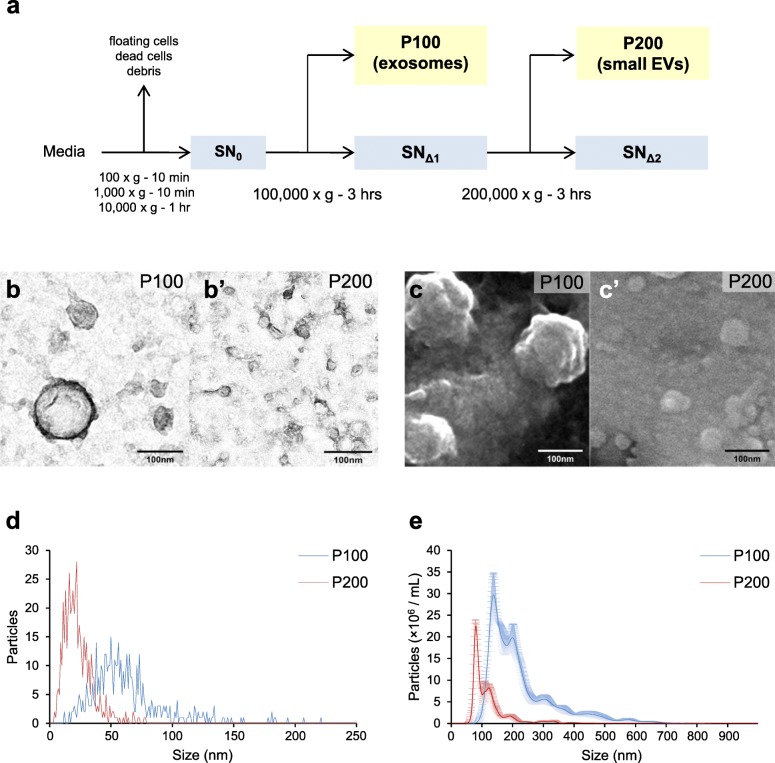
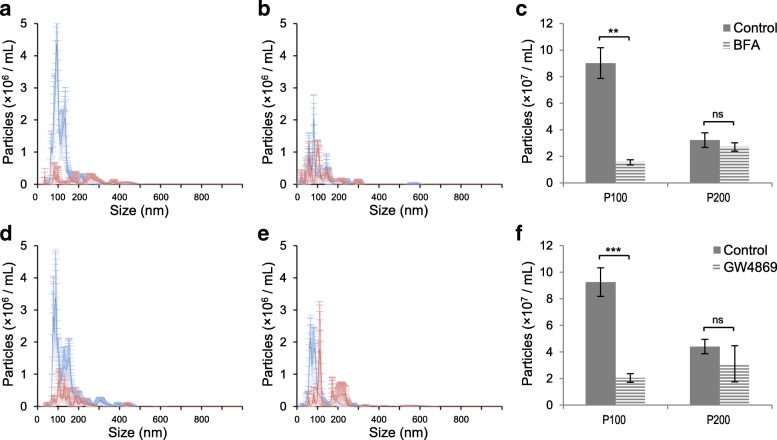
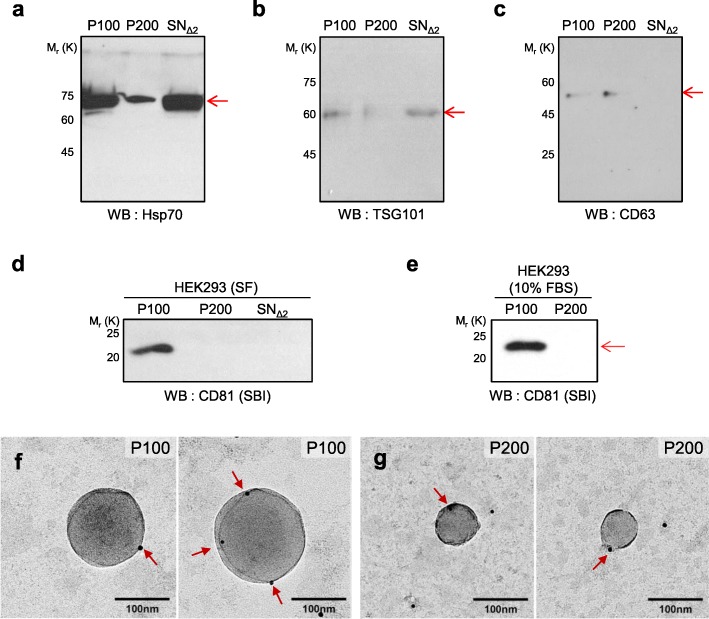
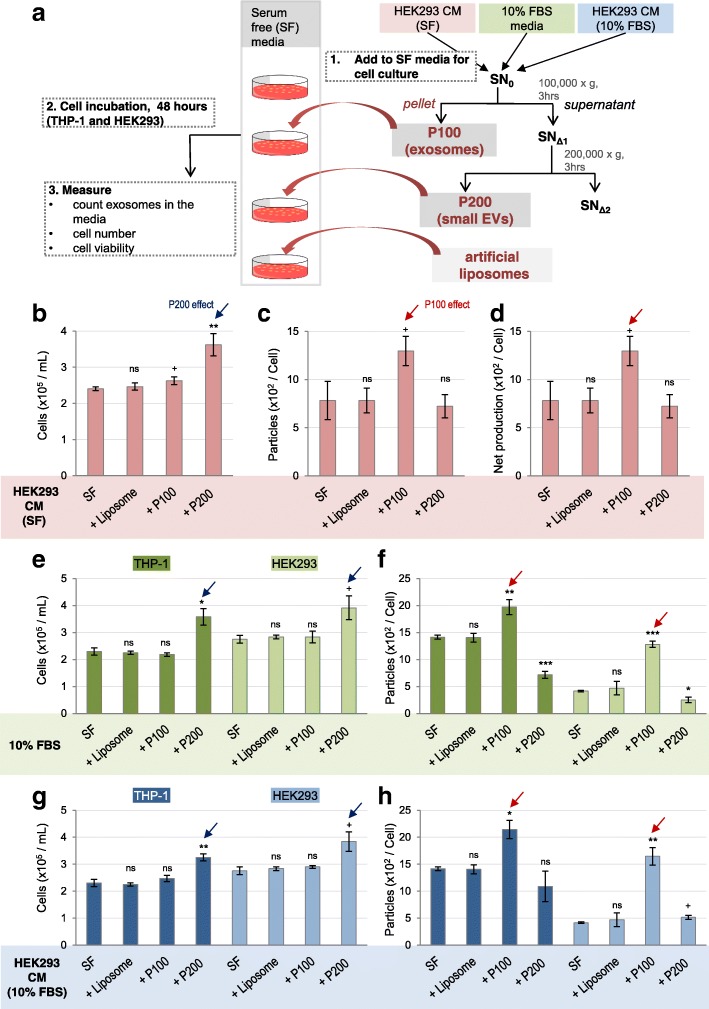
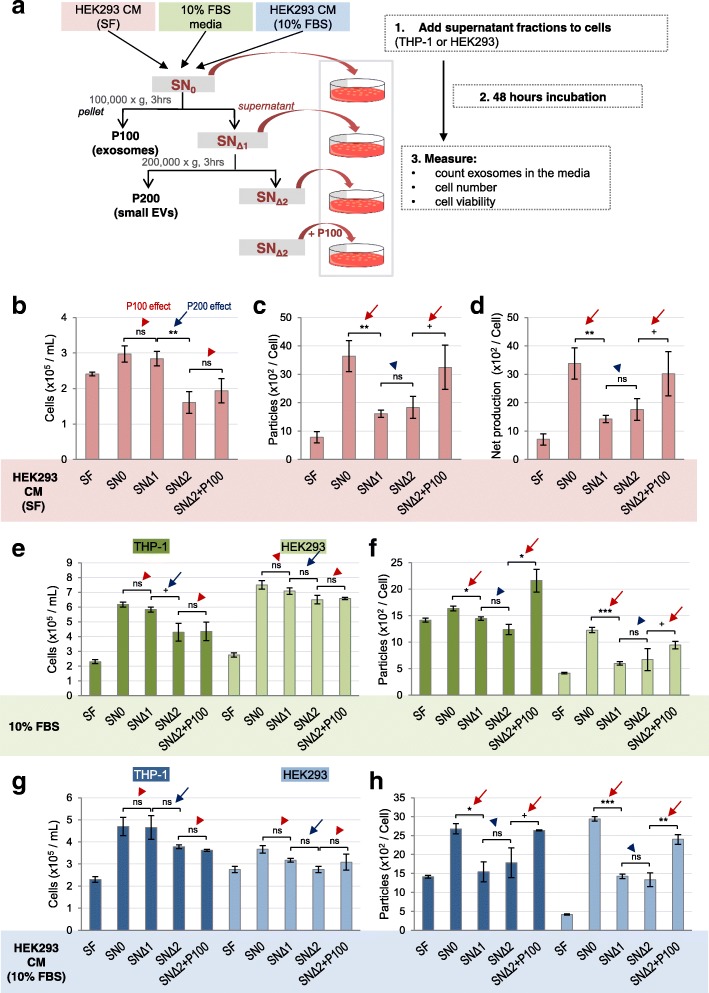
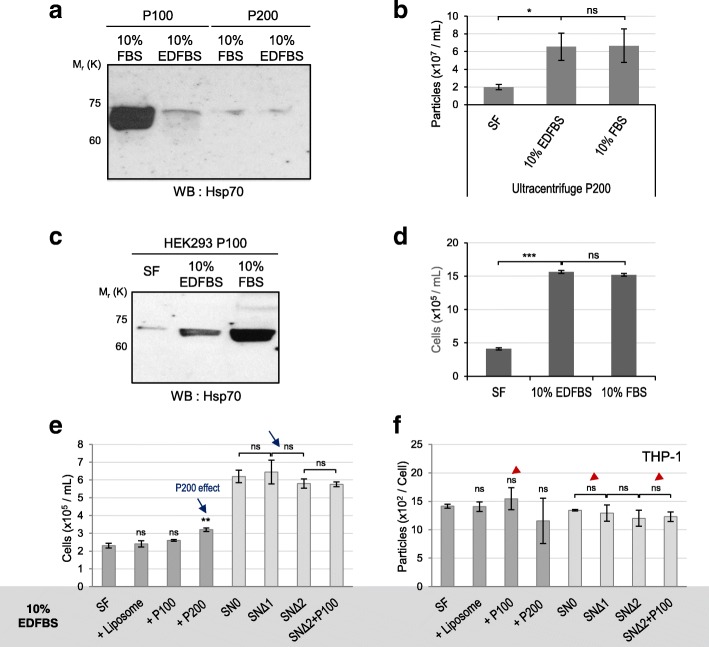
Extracellular vesicles (EVs) play important roles in intercellular communication by delivering RNA, lipid, and proteins to neighboring or distant cells. Identification and classification of EVs secreted from diverse cell types are essential for understanding their signaling properties. In this study, EVs from the culture media were isolated by ultracentrifugation and analyzed by electron microscopy (EM) and nanoparticle tracking analyses. Conditioned media (CM) from HEK293 cells culture grown either in serum-free (SF) or 10% fetal bovine serum (FBS) containing media were centrifuged at 100,000×g to separate the SN Δ supernatant and the P100 pellet in which exosomes are enriched. Then, the SN Δ fraction was centrifuged at 200,000×g to yield the P200 pellet fraction containing novel EVs smaller than exosomes. The exosomal markers in the EV subgroups were examined by western blotting and immune-EM, and the functional analyses of EVs were conducted on HEK293 and THP-1 cell culture. We identified a new group of EVs in the P200 fraction that was smaller than exosomes in size. Typical exosome markers such as Hsp70, TSG101, and CD63 were found in both P100 exosomes and the P200 vesicles, but CD81 was highly enriched in exosomes but not in the P200 vesicles. Furthermore, chemicals that inhibit the major exosome production pathway did not decrease the level of P200 vesicles. Therefore, these small EVs indeed belong to a distinguished group of EVs. Exosomes and the P200 vesicles were found in CM of human cell lines as well as FBS. Addition of the exosomes and the P200 vesicles to human cell cultures enhanced exosome production and cell proliferation, respectively. Our study identifies a novel population of EVs present in the P200 fraction. This EV population is distinguished from exosomes in size, protein contents, and biogenesis pathway. Furthermore, exosomes promote their own production whereas the P200 vesicles support cell proliferation. In sum, we report a new group of EVs that are distinct physically, biologically and functionally from exosomes.
Overview
The claims and statistics of this paper haven’t been checked yet.
Free: it reads the open-access text and checks the first 5 claims that cite a source we can check. Create a free account to check every claim.
Integrity signals
Registry
Cites
Statistics
Figures
Verification
Claims the paper makes
The claims and statistics of this paper haven’t been checked yet.
Free: it reads the open-access text and checks the first 5 claims that cite a source we can check. Create a free account to check every claim.
Claims other papers make about this one
Each is checked against this paper’s own text: does it say what the citing paper says it does?
The source backs part of the claim, not all of it — or backs it for a different population, condition or comparison.
In the citing paper
“The results imply that CD81-containing EVs, multivesicular bodies, and CD9-positive small EVs derived from the plasma membrane could accumulate in the DNs [39, 44].”
From Abnormal accumulation of extracellular vesicles in hippocampal dystrophic axons and regulation by the primary cilia in Alzheimer's disease (2023) · cites this paper as [44]
Experimental — accuracy not yet measured
Self-check
Percentages, sums and reported differences re-computed from the paper’s own numbers.
The self-check needs the paper’s full text.
Citations
Cites
Biogenesis, Secretion, and Intercellular Interactions of Exosomes and Other Extracellular Vesicles
Colombo, M., Raposo, G., & Théry, C. (2014) · Annual Review of Cell and Developmental Biology · doi:10.1146/annurev-cellbio-101512-122326 · Cited by 6,186
Exosomes: composition, biogenesis and function
Théry, C., Zitvogel, L., & Amigorena, S. (2002) · Nature Reviews Immunology · doi:10.1038/nri855 · Cited by 5,346
Skog, J., Würdinger, T., van Rijn, S., Meijer, D. H., Gainche, L., Curry, W. T., Carter, B. S., Krichevsky, A. M., & Breakefield, X. O. (2008) · Nature Cell Biology · doi:10.1038/ncb1800 · Cited by 5,001
Membrane vesicles as conveyors of immune responses
Théry, C., Ostrowski, M., & Segura, E. (2009) · Nature Reviews Immunology · doi:10.1038/nri2567 · Cited by 3,882
Ceramide Triggers Budding of Exosome Vesicles into Multivesicular Endosomes
Trajkovic, K., Hsu, C., Chiantia, S., Rajendran, L., Wenzel, D., Wieland, F., Schwille, P., Brügger, B., & Simons, M. (2008) · Science · doi:10.1126/science.1153124 · Cited by 3,627
Extracellular vesicles: biology and emerging therapeutic opportunities
EL Andaloussi, S., Mäger, I., Breakefield, X. O., & Wood, M. J. A. (2013) · Nature Reviews Drug Discovery · doi:10.1038/nrd3978 · Cited by 3,571
Current knowledge on exosome biogenesis and release
Hessvik, N. P., & Llorente, A. (2018) · Cellular and Molecular Life Sciences · doi:10.1007/s00018-017-2595-9 · Cited by 2,362
Intercellular transfer of the oncogenic receptor EGFRvIII by microvesicles derived from tumour cells
Al-Nedawi, K., Meehan, B., Micallef, J., Lhotak, V., May, L., Guha, A., & Rak, J. (2008) · Nature Cell Biology · doi:10.1038/ncb1725 · Cited by 2,034
Filipe, V., Hawe, A., & Jiskoot, W. (2010) · Pharmaceutical Research · doi:10.1007/s11095-010-0073-2 · Cited by 1,885
Biogenesis and secretion of exosomes
Kowal, J., Tkach, M., & Théry, C. (2014) · Current Opinion in Cell Biology · doi:10.1016/j.ceb.2014.05.004 · Cited by 1,781
Classification, Functions, and Clinical Relevance of Extracellular Vesicles
van der Pol, E., Böing, A. N., Harrison, P., Sturk, A., & Nieuwland, R. (2012) · Pharmacological Reviews · doi:10.1124/pr.112.005983 · Cited by 1,754
Shedding microvesicles: artefacts no more
Cocucci, E., Racchetti, G., & Meldolesi, J. (2009) · Trends in Cell Biology · doi:10.1016/j.tcb.2008.11.003 · Cited by 1,742
Ratajczak, J., Miekus, K., Kucia, M., Zhang, J., Reca, R., Dvorak, P., & Ratajczak, M. Z. (2006) · Leukemia · doi:10.1038/sj.leu.2404132 · Cited by 1,627
Sizing and phenotyping of cellular vesicles using Nanoparticle Tracking Analysis
Dragovic, R. A., Gardiner, C., Brooks, A. S., Tannetta, D. S., Ferguson, D. J. P., Hole, P., Carr, B., Redman, C. W. G., Harris, A. L., Dobson, P. J., et al. (2011) · Nanomedicine: Nanotechnology, Biology and Medicine · doi:10.1016/j.nano.2011.04.003 · Cited by 1,362
Exosomes Mediate Stromal Mobilization of Autocrine Wnt-PCP Signaling in Breast Cancer Cell Migration
Luga, V., Zhang, L., Viloria-Petit, A. M., Ogunjimi, A. A., Inanlou, M. R., Chiu, E., Buchanan, M., Hosein, A. N., Basik, M., & Wrana, J. L. (2012) · Cell · doi:10.1016/j.cell.2012.11.024 · Cited by 1,311
Exosome Secretion: Molecular Mechanisms and Roles in Immune Responses
Bobrie, A., Colombo, M., Raposo, G., & Théry, C. (2011) · Traffic · doi:10.1111/j.1600-0854.2011.01225.x · Cited by 1,103
ExoCarta 2012: database of exosomal proteins, RNA and lipids
Mathivanan, S., Fahner, C. J., Reid, G. E., & Simpson, R. J. (2012) · Nucleic Acids Research · doi:10.1093/nar/gkr828 · Cited by 1,094
Using exosomes, naturally-equipped nanocarriers, for drug delivery
Batrakova, E. V., & Kim, M. S. (2015) · Journal of Controlled Release · doi:10.1016/j.jconrel.2015.07.030 · Cited by 1,041
Active Wnt proteins are secreted on exosomes
Gross, J. C., Chaudhary, V., Bartscherer, K., & Boutros, M. (2012) · Nature Cell Biology · doi:10.1038/ncb2574 · Cited by 1,024
Cellular Internalization of Exosomes Occurs Through Phagocytosis
Feng, D., Zhao, W.-L., Ye, Y.-Y., Bai, X.-C., Liu, R.-Q., Chang, L.-F., Zhou, Q., & Sui, S.-F. (2010) · Traffic · doi:10.1111/j.1600-0854.2010.01041.x · Cited by 981
Cells release subpopulations of exosomes with distinct molecular and biological properties
Willms, E., Johansson, H. J., Mäger, I., Lee, Y., Blomberg, K. E. M., Sadik, M., Alaarg, A., Smith, C. I. E., Lehtiö, J., EL Andaloussi, S., et al. (2016) · Scientific Reports · doi:10.1038/srep22519 · Cited by 949
Exosomes and microvesicles: extracellular vesicles for genetic information transfer and gene therapy
Lee, Y., EL Andaloussi, S., & Wood, M. J. A. (2012) · Human Molecular Genetics · doi:10.1093/hmg/dds317 · Cited by 938
Human saliva, plasma and breast milk exosomes contain RNA: Uptake by macrophages
Lässer, C., Seyed Alikhani, V., Ekström, K., Eldh, M., Torregrosa Paredes, P., Bossios, A., Sjöstrand, M., Gabrielsson, S., Lötvall, J., & Valadi, H. (2011) · Journal of Translational Medicine · doi:10.1186/1479-5876-9-9 · Cited by 899
Exosomes are released by cultured cortical neurones
Fauré, J., Lachenal, G., Court, M., Hirrlinger, J., Chatellard-Causse, C., Blot, B., Grange, J., Schoehn, G., Goldberg, Y., Boyer, V., et al. (2006) · Molecular and Cellular Neuroscience · doi:10.1016/j.mcn.2005.12.003 · Cited by 896
Proteomic profiling of exosomes: Current perspectives
Simpson, R. J., Jensen, S. S., & Lim, J. W. E. (2008) · PROTEOMICS · doi:10.1002/pmic.200800109 · Cited by 857
Biogenesis and Function of Multivesicular Bodies
Piper, R. C., & Katzmann, D. J. (2007) · Annual Review of Cell and Developmental Biology · doi:10.1146/annurev.cellbio.23.090506.123319 · Cited by 771
Khan, M., Nickoloff, E., Abramova, T., Johnson, J., Verma, S. K., Krishnamurthy, P., Mackie, A. R., Vaughan, E., Garikipati, V. N. S., Benedict, C., et al. (2015) · Circulation Research · doi:10.1161/circresaha.117.305990 · Cited by 753
Livshits, M. A., Khomyakova, E., Evtushenko, E. G., Lazarev, V. N., Kulemin, N. A., Semina, S. E., Generozov, E. V., & Govorun, V. M. (2015) · Scientific Reports · doi:10.1038/srep17319 · Cited by 686
Baranyai, T., Herczeg, K., Onódi, Z., Voszka, I., Módos, K., Marton, N., Nagy, G., Mäger, I., Wood, M. J., El Andaloussi, S., et al. (2015) · PLOS ONE · doi:10.1371/journal.pone.0145686 · Cited by 670
Bobrie, A., Colombo, M., Krumeich, S., Raposo, G., & Théry, C. (2012) · Journal of Extracellular Vesicles · doi:10.3402/jev.v1i0.18397 · Cited by 579
Exosome release of β-catenin: a novel mechanism that antagonizes Wnt signaling
Chairoungdua, A., Smith, D. L., Pochard, P., Hull, M., & Caplan, M. J. (2010) · Journal of Cell Biology · doi:10.1083/jcb.201002049 · Cited by 562
Exosomes: immune properties and potential clinical implementations
Chaput, N., & Théry, C. (2011) · Seminars in Immunopathology · doi:10.1007/s00281-010-0233-9 · Cited by 560
Mesenchymal stem cell exosome: a novel stem cell-based therapy for cardiovascular disease
Lai, R. C., Chen, T. S., & Lim, S. K. (2011) · Regenerative Medicine · doi:10.2217/rme.11.35 · Cited by 553
Exosomes: Small vesicles participating in intercellular communication
Ludwig, A.-K., & Giebel, B. (2012) · The International Journal of Biochemistry & Cell Biology · doi:10.1016/j.biocel.2011.10.005 · Cited by 537
Visualizing of the cellular uptake and intracellular trafficking of exosomes by live‐cell microscopy
Tian, T., Wang, Y., Wang, H., Zhu, Z., & Xiao, Z. (2010) · Journal of Cellular Biochemistry · doi:10.1002/jcb.22733 · Cited by 455
Potolicchio, I., Carven, G. J., Xu, X., Stipp, C., Riese, R. J., Stern, L. J., & Santambrogio, L. (2005) · The Journal of Immunology · doi:10.4049/jimmunol.175.4.2237 · Cited by 365
Signaling Pathways in Exosomes Biogenesis, Secretion and Fate
Urbanelli, L., Magini, A., Buratta, S., Brozzi, A., Sagini, K., Polchi, A., Tancini, B., & Emiliani, C. (2013) · Genes · doi:10.3390/genes4020152 · Cited by 355
Neutral sphingomyelinases control extracellular vesicles budding from the plasma membrane
Menck, K., Sönmezer, C., Worst, T. S., Schulz, M., Dihazi, G. H., Streit, F., Erdmann, G., Kling, S., Boutros, M., Binder, C., et al. (2017) · Journal of Extracellular Vesicles · doi:10.1080/20013078.2017.1378056 · Cited by 349
Kesimer, M., Scull, M., Brighton, B., DeMaria, G., Burns, K., O'Neal, W., Pickles, R. J., & Sheehan, J. K. (2009) · The FASEB Journal · doi:10.1096/fj.08-119131 · Cited by 346
Nakamura, K., Sawada, K., Kinose, Y., Yoshimura, A., Toda, A., Nakatsuka, E., Hashimoto, K., Mabuchi, S., Morishige, K.-I., Kurachi, H., et al. (2017) · Molecular Cancer Research · doi:10.1158/1541-7786.mcr-16-0191 · Cited by 229
Exosomes as Hedgehog carriers in cytoneme-mediated transport and secretion
Gradilla, A.-C., González, E., Seijo, I., Andrés, G., Bischoff, M., González-Mendez, L., Sánchez, V., Callejo, A., Ibáñez, C., Guerra, M., et al. (2014) · Nature Communications · doi:10.1038/ncomms6649 · Cited by 225
Hawari, F. I., Rouhani, F. N., Cui, X., Yu, Z.-X., Buckley, C., Kaler, M., & Levine, S. J. (2004) · Proceedings of the National Academy of Sciences · doi:10.1073/pnas.0307981100 · Cited by 214
The ESCRT machinery regulates the secretion and long-range activity of Hedgehog
Matusek, T., Wendler, F., Polès, S., Pizette, S., D’Angelo, G., Fürthauer, M., & Thérond, P. P. (2014) · Nature · doi:10.1038/nature13847 · Cited by 184
Eitan, E., Zhang, S., Witwer, K. W., & Mattson, M. P. (2015) · Journal of Extracellular Vesicles · doi:10.3402/jev.v4.26373 · Cited by 158
Vyas, N., Walvekar, A., Tate, D., Lakshmanan, V., Bansal, D., Cicero, A. L., Raposo, G., Palakodeti, D., & Dhawan, J. (2014) · Scientific Reports · doi:10.1038/srep07357 · Cited by 146
Lam, S. K., Cai, Y., Tse, Y. C., Wang, J., Law, A. H. Y., Pimpl, P., Chan, H. Y. E., Xia, J., & Jiang, L. (2009) · The Plant Journal · doi:10.1111/j.1365-313x.2009.04007.x · Cited by 128
Wnt3a induces exosome secretion from primary cultured rat microglia
Hooper, C., Sainz-Fuertes, R., Lynham, S., Hye, A., Killick, R., Warley, A., Bolondi, C., Pocock, J., & Lovestone, S. (2012) · BMC Neuroscience · doi:10.1186/1471-2202-13-144 · Cited by 100
The emerging role of exosomes in Wnt secretion and transport
Zhang, L. N., & Wrana, J. L. (2014) · Current Opinion in Genetics & Development · doi:10.1016/j.gde.2014.03.006 · Cited by 89
Chen, Q., Takada, R., Noda, C., Kobayashi, S., & Takada, S. (2016) · Scientific Reports · doi:10.1038/srep35562 · Cited by 74
Shen, X., Xu, K.-F., Fan, Q., Pacheco-Rodriguez, G., Moss, J., & Vaughan, M. (2006) · Proceedings of the National Academy of Sciences · doi:10.1073/pnas.0510599103 · Cited by 59
Islam, A., Shen, X., Hiroi, T., Moss, J., Vaughan, M., & Levine, S. J. (2007) · Journal of Biological Chemistry · doi:10.1074/jbc.m607122200 · Cited by 55
Cited by
Harnessing extracellular vesicle heterogeneity for diagnostic and therapeutic applications
Carney, R. P., Mizenko, R. R., Bozkurt, B. T., Lowe, N., Henson, T., Arizzi, A., Wang, A., Tan, C., & George, S. C. (2025) · Nature Nanotechnology · doi:10.1038/s41565-024-01774-3 · Cited by 208
“https://doi.org/10.1038/s41565-024-01774-3 have explained functional differences in EV subpopulations according to either diameter or composition, suggesting that EVs have the potential to perform highly specific functions 38–41 .”
InfluentialFuentes, P., Sesé, M., Guijarro, P. J., Emperador, M., Sánchez-Redondo, S., Peinado, H., Hümmer, S., & Ramón y Cajal, S. (2020) · Nature Communications · doi:10.1038/s41467-020-18081-9 · Cited by 168
Extracellular Vesicles as an Efficient and Versatile System for Drug Delivery
Dang, X. T. T., Kavishka, J. M., Zhang, D. X., Pirisinu, M., & Le, M. T. N. (2020) · Cells · doi:10.3390/cells9102191 · Cited by 143
Extracellular Vesicle Heterogeneity and Its Impact for Regenerative Medicine Applications
van de Wakker, S. I., Meijers, F. M., Sluijter, J. P. G., & Vader, P. (2023) · Pharmacological Reviews · doi:10.1124/pharmrev.123.000841 · Cited by 157
“(Lee et al., 2019; Zhang et al., 2019, 2021).”
BackgroundResultInfluentialLarge extracellular vesicles: Size matters in tumor progression
Ciardiello, C., Migliorino, R., Leone, A., & Budillon, A. (2019) · Cytokine & Growth Factor Reviews · doi:10.1016/j.cytogfr.2019.12.007 · Cited by 112
Metadata
- Authors
- Lee, S.-S., Won, J.-H., Lim, G. J., Han, J., Lee, J. Y., Cho, K.-O., & Bae, Y.-K.
- Affiliations
- Korea Advanced Institute of Science and Technology (KR)
- Korea Research Institute of Standards and Science (KR)
- Corresponding author
- Cho, Kyung-Ok
- Bae, Young-Kyung
- Venue
- Cell Communication and Signaling
- Published
- 2019-08-15
- Volume
- 17
- Issue
- 1
- Pages
- 95-95
- ISSN
- 1478-811X (ISSN-L)
- PMC
- PMC6694590
- OpenAlex
- W2968721575
- Cited by
- 79
- References
- 51
- Citations by year
- 2026: 7 · 2025: 10 · 2024: 9 · 2023: 17 · 2022: 13 · 2021: 9 · 2020: 13 · 2019: 1
- FWCI
- 2.98
- Type
- journal article
- Language
- en
- Open access
- gold
- doi.org
- Licence
- cc-by
- creativecommons.org/licenses/by/4.0/ (tdm)
- creativecommons.org/licenses/by/4.0/ (vor)
- Locations
- Cell Communication and Signaling (publishedVersion, cc-by)
- Europe PMC (PubMed Central) (publishedVersion, cc-by)
- PubMed Central (publishedVersion, cc-by)
- PubMed (publishedVersion)
- DOAJ (DOAJ: Directory of Open Access Journals) (submittedVersion)
- Funders
- Korea Research Institute of Standards and Science (GP2018-0006-04)
- National Research Council of Science and Technology (DRC-14-2-KRISS)
- National Research Foundation of Korea (NRF-2017R1A2B4009254, NRF-2019R1H1A2039726)
- Topics
- Life Sciences › Biochemistry, Genetics and Molecular Biology › Molecular Biology › Extracellular vesicles in disease
- Life Sciences › Biochemistry, Genetics and Molecular Biology › Cell Biology › Cellular transport and secretion
- Physical Sciences › Materials Science › Biomaterials › Nanoparticle-Based Drug Delivery
- Keywords
- extracellular vesicles, exosomes, small vesicles, cell proliferation, exosome biogenesis, exosome production, CD81, exosomal biomarkers, HEK293 cells, THP-1 cells, serum-free medium, vesicle isolation
- MeSH terms
- Extracellular Vesicles, THP-1 Cells, Cells, Cultured, Humans, Signal Transduction, Cell Proliferation, HEK293 Cells
About these checks
Registry, retraction, Cites and statistics results are computed, not judged, with one exception: a printed reference that no index lists is read once by a model before it counts as a citation error. Claims are extracted by a model and kept only when their quote appears verbatim in the text; each cited source is then checked, with a model’s help, for whether it says what the claim relies on. Those verdicts can be wrong — read the claim’s quote and the cited source before relying on one.
Statistics and arithmetic are recomputed, not judged.
Confidence bands are shown only for fields calibrated on our annotated test set. None is calibrated yet, so no band is shown.
What counts as a claim ›How we measure confidence ›How we check this ›
Are you an author, or do you see a problem with this page? Request a review
Data sources
Bibliographic data: Semantic Scholar, OpenAlex, Crossref.
Contains information from the Semantic Scholar Academic Graph Datasets, made available under the ODC Attribution License (ODC-BY 1.0).
Semantic Scholar’s data is described in: Kinney, R., et al. (2023). The Semantic Scholar Open Data Platform. arXiv:2301.10140.
