

Key determinants of target DNA recognition by retroviral intasomes
Open accessThe DOI matches its Crossref record; 106 of the 106 references it cites were found in a registry or an index.
Abstract
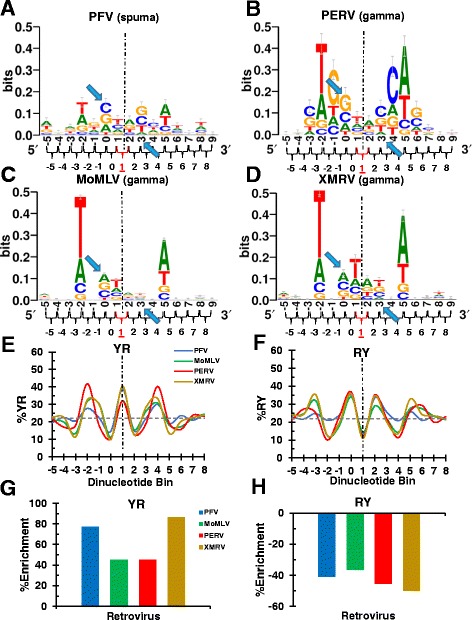
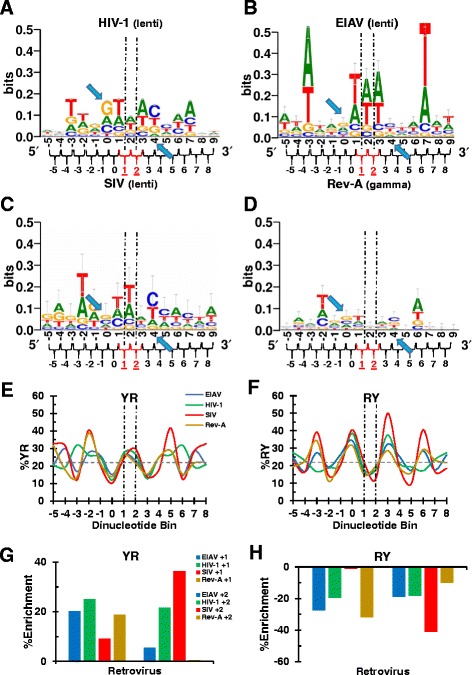
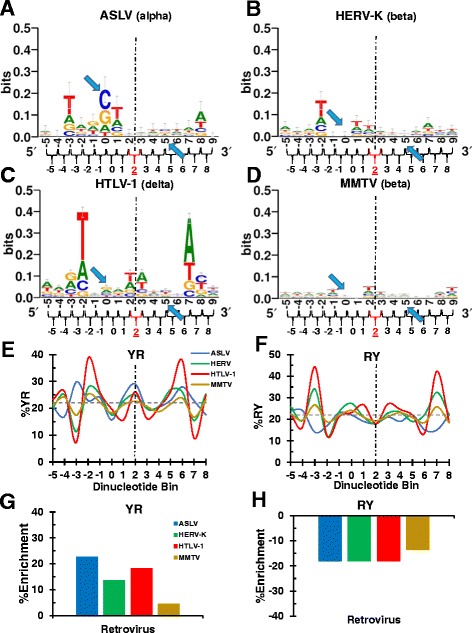
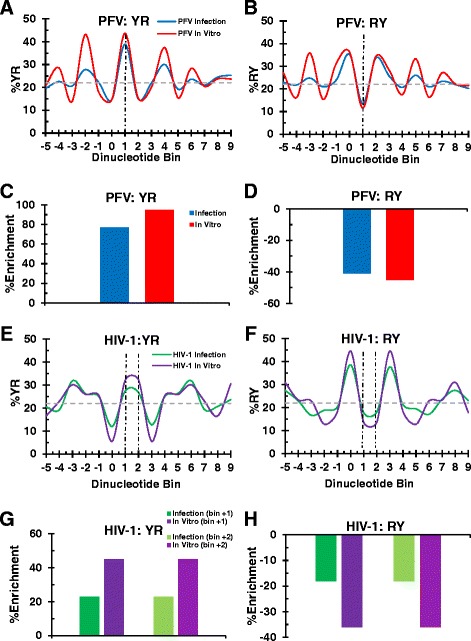
BACKGROUND: Retroviral integration favors weakly conserved palindrome sequences at the sites of viral DNA joining and generates a short (4-6 bp) duplication of host DNA flanking the provirus. We previously determined two key parameters that underlie the target DNA preference for prototype foamy virus (PFV) and human immunodeficiency virus type 1 (HIV-1) integration: flexible pyrimidine (Y)/purine (R) dinucleotide steps at the centers of the integration sites, and base contacts with specific integrase residues, such as Ala188 in PFV integrase and Ser119 in HIV-1 integrase. Here we examined the dinucleotide preference profiles of a range of retroviruses and correlated these findings with respect to length of target site duplication (TSD). RESULTS: Integration datasets covering six viral genera and the three lengths of TSD were accessed from the literature or generated in this work. All viruses exhibited significant enrichments of flexible YR and/or selection against rigid RY dinucleotide steps at the centers of integration sites, and the magnitude of this enrichment inversely correlated with TSD length. The DNA sequence environments of in vivo-generated HIV-1 and PFV sites were consistent with integration into nucleosomes, however, the local sequence preferences were largely independent of target DNA chromatinization. Integration sites derived from cells infected with the gammaretrovirus reticuloendotheliosis virus strain A (Rev-A), which yields a 5 bp TSD, revealed the targeting of global chromatin features most similar to those of Moloney murine leukemia virus, which yields a 4 bp duplication. In vitro assays revealed that Rev-A integrase interacts with and is catalytically stimulated by cellular bromodomain containing 4 protein. CONCLUSIONS: Retroviral integrases have likely evolved to bend target DNA to fit scissile phosphodiester bonds into two active sites for integration, and viruses that cut target DNA with a 6 bp stagger may not need to bend DNA as sharply as viruses that cleave with 4 bp or 5 bp staggers. For PFV and HIV-1, the selection of signature bases and central flexibility at sites of integration is largely independent of chromatin structure. Furthermore, global Rev-A integration is likely directed to chromatin features by bromodomain and extraterminal domain proteins.
Overview
The claims and statistics of this paper haven’t been checked yet.
Free: it reads the open-access text and checks the first 5 claims that cite a source we can check. Create a free account to check every claim.
Integrity signals
Registry
Cites
Statistics
Figures
Verification
Claims the paper makes
The claims and statistics of this paper haven’t been checked yet.
Free: it reads the open-access text and checks the first 5 claims that cite a source we can check. Create a free account to check every claim.
Claims other papers make about this one
Each is checked against this paper’s own text: does it say what the citing paper says it does?
The cited source says what the claim attributes to it.
In the citing paper
“which is consistent with predicted variations in target DNA conformations required to integrate across 4–6 bp spacings67.”
From Structure and function of retroviral integrase (2022) · cites this paper as [67]
The cited source says what the claim attributes to it.
In the citing paper
“BET proteins significantly stimulate γ-retroviral IN strand transfer activities in vitro67,115,116 and appear to act as bimodal tethers to direct PICs to preferred genomic locations74,75,114,117,118.”
From Structure and function of retroviral integrase (2022) · cites this paper as [67]
Self-check
Percentages, sums and reported differences re-computed from the paper’s own numbers.
The self-check needs the paper’s full text.
Citations
Cites
R: A Language and Environment for Statistical Computing
R Core Team (2025) · doi:10.32614/r.manuals · Cited by 352,181
WebLogo: A Sequence Logo Generator: Figure 1
Crooks, G. E., Hon, G., Chandonia, J.-M., & Brenner, S. E. (2004) · Genome Research · doi:10.1101/gr.849004 · Cited by 12,386
HIV-1 Integration in the Human Genome Favors Active Genes and Local Hotspots
Schröder, A. R. W., Shinn, P., Chen, H., Berry, C., Ecker, J. R., & Bushman, F. (2002) · Cell · doi:10.1016/s0092-8674(02)00864-4 · Cited by 1,832 · cited 1×
“Lentiviruses preferentially integrate along the bodies of actively transcribed genes [19], whereas the gammaretroviruses favor transcriptional start sites (TSSs) and active enhancer regions [20-22].”
BackgroundA genomic code for nucleosome positioning
Segal, E., Fondufe-Mittendorf, Y., Chen, L., Thåström, A., Field, Y., Moore, I. K., Wang, J.-P. Z., & Widom, J. (2006) · Nature · doi:10.1038/nature04979 · Cited by 1,499
Transcription Start Regions in the Human Genome Are Favored Targets for MLV Integration
Wu, X., Li, Y., Crise, B., & Burgess, S. M. (2003) · Science · doi:10.1126/science.1083413 · Cited by 1,305 · cited 1×
“Lentiviruses preferentially integrate along the bodies of actively transcribed genes [19], whereas the gammaretroviruses favor transcriptional start sites (TSSs) and active enhancer regions [20-22].”
BackgroundThe structure of DNA in the nucleosome core
Richmond, T. J., & Davey, C. A. (2003) · Nature · doi:10.1038/nature01595 · Cited by 1,286
DNA sequence-dependent deformability deduced from protein–DNA crystal complexes
Olson, W. K., Gorin, A. A., Lu, X.-J., Hock, L. M., & Zhurkin, V. B. (1998) · Proceedings of the National Academy of Sciences · doi:10.1073/pnas.95.19.11163 · Cited by 1,038
Retroviral DNA Integration: ASLV, HIV, and MLV Show Distinct Target Site Preferences
Mitchell, R. S., Beitzel, B. F., Schroder, A. R. W., Shinn, P., Chen, H., Berry, C. C., Ecker, J. R., & Bushman, F. D. (2004) · PLoS Biology · doi:10.1371/journal.pbio.0020234 · Cited by 976
Dyda, F., Hickman, A. B., Jenkins, T. M., Engelman, A., Craigie, R., & Davies, D. R. (1994) · Science · doi:10.1126/science.7801124 · Cited by 810 · cited 1×
“The location of secondary structural elements has been documented crystallographically for HIV-1 [89], ASLV [90], SIV [91], and PFV [2] INs.”
BackgroundSelf-citationRetroviral intasome assembly and inhibition of DNA strand transfer
Hare, S., Gupta, S. S., Valkov, E., Engelman, A., & Cherepanov, P. (2010) · Nature · doi:10.1038/nature08784 · Cited by 678 · cited 3×
“The location of secondary structural elements has been documented crystallographically for HIV-1 [89], ASLV [90], SIV [91], and PFV [2] INs.”
BackgroundSelf-citationA role for LEDGF/p75 in targeting HIV DNA integration
Ciuffi, A., Llano, M., Poeschla, E., Hoffmann, C., Leipzig, J., Shinn, P., Ecker, J. R., & Bushman, F. (2005) · Nature Medicine · doi:10.1038/nm1329 · Cited by 658 · cited 1×
“The lentiviral IN-binding protein lens epithelium-derived growth factor (LEDGF)/p75 directs integration to active genes [23-26], whereas bromodomain and extraterminal domain (BET) proteins BRD2, 3, and 4 interact with Moloney murine leukemia virus (MoMLV) IN to affect TSS-proximal integration [27-29].”
BackgroundHIV-1 DNA integration: Mechanism of viral DNA cleavage and DNA strand transfer
Engelman, A., Mizuuchi, K., & Craigie, R. (1991) · Cell · doi:10.1016/0092-8674(91)90297-c · Cited by 655 · cited 1×
“The inner subunits of the IN tetramer utilize the vDNA CAOH-3′ termini to cleave both strands of the target DNA (tDNA) in a staggered fashion, at the same time joining the vDNA ends to tDNA 5′-phosphates [13].”
BackgroundSelf-citationMiller, M. D., Farnet, C. M., & Bushman, F. D. (1997) · Journal of Virology · doi:10.1128/jvi.71.7.5382-5390.1997 · Cited by 620
Active nuclear import of human immunodeficiency virus type 1 preintegration complexes.
Bukrinsky, M. I., Sharova, N., Dempsey, M. P., Stanwick, T. L., Bukrinskaya, A. G., Haggerty, S., & Stevenson, M. (1992) · Proceedings of the National Academy of Sciences · doi:10.1073/pnas.89.14.6580 · Cited by 607 · cited 1×
“The intasome is transported from the cytoplasm to the nucleus as part of a large assembly of viral and host proteins known as the preintegration complex [9-11].”
BackgroundShun, M.-C., Raghavendra, N. K., Vandegraaff, N., Daigle, J. E., Hughes, S., Kellam, P., Cherepanov, P., & Engelman, A. (2007) · Genes & Development · doi:10.1101/gad.1565107 · Cited by 467 · cited 3×
“As example, the consensus palindromic sequence at sites of HIV-1 integration was unchanged in cells knocked out for expression of the dominant chromatin targeting factor LEDGF/p75 [24,25].”
BackgroundSelf-citationWang, G. P., Ciuffi, A., Leipzig, J., Berry, C. C., & Bushman, F. D. (2007) · Genome Research · doi:10.1101/gr.6286907 · Cited by 457 · cited 6×
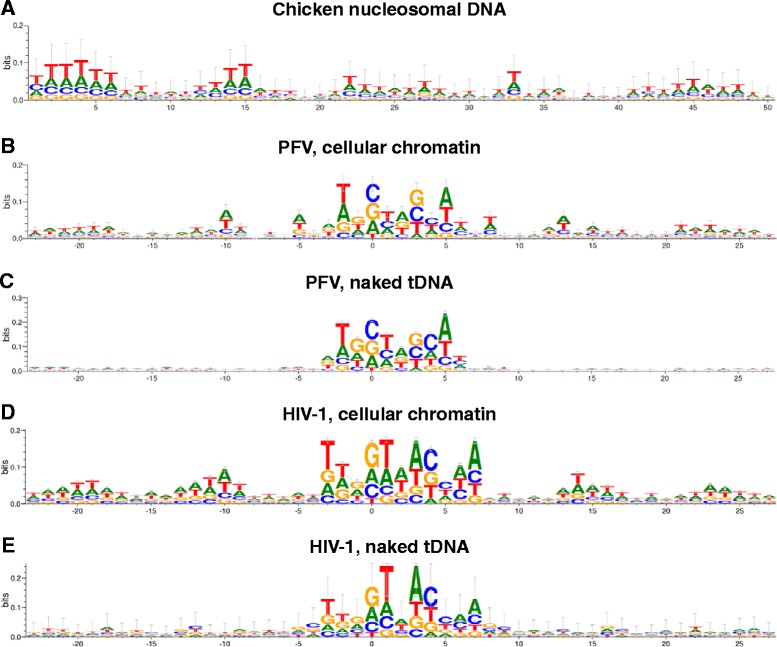
“These cyclical base preferences, which were absent from in vitro datasets (Figure 4C, E), and reminiscent of the A/ T-rich periodicity exhibited by nucleosome-bound DNA (Figure 4A), indicated that PFV and HIV-1 IN select for their preferred local tDNA sequences in the context of nucleosomal DNA during virus infection…”
BackgroundInfluentialBrown, P. O., Bowerman, B., Varmus, H. E., & Bishop, J. M. (1989) · Proceedings of the National Academy of Sciences · doi:10.1073/pnas.86.8.2525 · Cited by 399 · cited 1×
“dinucleotides to yield reactive CAOH-3′ hydroxyl groups [3-8].”
BackgroundRetroviral DNA integration: structure of an integration intermediate
Fujiwara, T., & Mizuuchi, K. (1988) · Cell · doi:10.1016/0092-8674(88)90071-2 · Cited by 385 · cited 1×
“dinucleotides to yield reactive CAOH-3′ hydroxyl groups [3-8].”
BackgroundA nucleoprotein complex mediates the integration of retroviral DNA.
Bowerman, B., Brown, P. O., Bishop, J. M., & Varmus, H. E. (1989) · Genes & Development · doi:10.1101/gad.3.4.469 · Cited by 377
The Complete Nucleotide Sequence of a Pathogenic Molecular Clone of Simian Immunodeficiency Virus
REGIER, D. A., & DESROSIERS, R. C. (1990) · AIDS Research and Human Retroviruses · doi:10.1089/aid.1990.6.1221 · Cited by 334
Gillet, N. A., Malani, N., Melamed, A., Gormley, N., Carter, R., Bentley, D., Berry, C., Bushman, F. D., Taylor, G. P., & Bangham, C. R. M. (2011) · Blood · doi:10.1182/blood-2010-10-312926 · Cited by 316
Dhar, R., McClements, W. L., Enquist, L. W., & Vande Woude, G. F. (1980) · Proceedings of the National Academy of Sciences · doi:10.1073/pnas.77.7.3937 · Cited by 306
Sequence-dependent bending propensity of DNA as revealed by DNase I: parameters for trinucleotides.
Brukner, I., Sánchez, R., Suck, D., & Pongor, S. (1995) · The EMBO Journal · doi:10.1002/j.1460-2075.1995.tb07169.x · Cited by 300
The mechanism of retroviral integration from X-ray structures of its key intermediates
Maertens, G. N., Hare, S., & Cherepanov, P. (2010) · Nature · doi:10.1038/nature09517 · Cited by 296 · cited 14×
“It seems plausible that retroviruses have convergently evolved to select not necessarily a specific sequence of nucleotides at integration sites, but rather combinations of bases that yield a flexibility pattern that is favorable for tDNA incorporation into the TCC. Retroviral base preferences and associated flexibili…”
BackgroundInfluentialSelf-citationPryciak, P. M., & Varmus, H. E. (1992) · Cell · doi:10.1016/0092-8674(92)90289-o · Cited by 273 · cited 3×
“Integration sites on nucleosomal tDNA map to positions of DNA major groove distortion in vitro [35,37-39] and during virus infection [41-44].”
BackgroundHematti, P., Hong, B.-K., Ferguson, C., Adler, R., Hanawa, H., Sellers, S., Holt, I. E., Eckfeldt, C. E., Sharma, Y., Schmidt, M., et al. (2004) · PLoS Biology · doi:10.1371/journal.pbio.0020423 · Cited by 265
Roth, M. J., Schwartzberg, P. L., & Goff, S. P. (1989) · Cell · doi:10.1016/0092-8674(89)90401-7 · Cited by 263 · cited 1×
“dinucleotides to yield reactive CAOH-3′ hydroxyl groups [3-8].”
BackgroundShoemaker, C., Goff, S., Gilboa, E., Paskind, M., Mitra, S. W., & Baltimore, D. (1980) · Proceedings of the National Academy of Sciences · doi:10.1073/pnas.77.7.3932 · Cited by 259
Stacked–Unstacked Equilibrium at the Nick Site of DNA
Protozanova, E., Yakovchuk, P., & Frank-Kamenetskii, M. D. (2004) · Journal of Molecular Biology · doi:10.1016/j.jmb.2004.07.075 · Cited by 259
Nucleotide sequences at host–proviral junctions for mouse mammary tumour virus
Majors, J. E., & Varmus, H. E. (1981) · Nature · doi:10.1038/289253a0 · Cited by 250
Role of PSIP1/LEDGF/p75 in Lentiviral Infectivity and Integration Targeting
Marshall, H. M., Ronen, K., Berry, C., Llano, M., Sutherland, H., Saenz, D., Bickmore, W., Poeschla, E., & Bushman, F. D. (2007) · PLoS ONE · doi:10.1371/journal.pone.0001340 · Cited by 241 · cited 2×
“As example, the consensus palindromic sequence at sites of HIV-1 integration was unchanged in cells knocked out for expression of the dominant chromatin targeting factor LEDGF/p75 [24,25].”
BackgroundSequence-dependent DNA structure: tetranucleotide conformational maps
Packer, M. J., Dauncey, M. P., & Hunter, C. A. (2000) · Journal of Molecular Biology · doi:10.1006/jmbi.1999.3237 · Cited by 239
Pruss, D., Bushman, F. D., & Wolffe, A. P. (1994) · Proceedings of the National Academy of Sciences · doi:10.1073/pnas.91.13.5913 · Cited by 236
Foamy virus vector integration sites in normal human cells
Trobridge, G. D., Miller, D. G., Jacobs, M. A., Allen, J. M., Kiem, H.-P., Kaul, R., & Russell, D. W. (2006) · Proceedings of the National Academy of Sciences · doi:10.1073/pnas.0510046103 · Cited by 236
Retroviral DNA integration: reaction pathway and critical intermediates
Li, M., Mizuuchi, M., Burke, T. R., & Craigie, R. (2006) · The EMBO Journal · doi:10.1038/sj.emboj.7601005 · Cited by 233
Propeller-Twisting of Base-pairs and the Conformational Mobility of Dinucleotide Steps in DNA
El Hassan, M. A., & Calladine, C. R. (1996) · Journal of Molecular Biology · doi:10.1006/jmbi.1996.0304 · Cited by 231
High-resolution Structure of the Catalytic Domain of Avian Sarcoma Virus Integrase
Bujacz, G., Jaskólski, M., Alexandratos, J., Wlodawer, A., Merkel, G., Katz, R. A., & Skalka, A. M. (1995) · Journal of Molecular Biology · doi:10.1006/jmbi.1995.0556 · Cited by 226
Construction of a helper cell line for avian reticuloendotheliosis virus cloning vectors.
Watanabe, S., & Temin, H. M. (1983) · Molecular and Cellular Biology · doi:10.1128/mcb.3.12.2241 · Cited by 214
Müller, H. P., & Varmus, H. E. (1994) · The EMBO Journal · doi:10.1002/j.1460-2075.1994.tb06794.x · Cited by 202 · cited 2×
“Inherent curvature or bendability of DNA substrates positively correlates with frequency of integration targeting [34-36], and tDNA deformed by the binding of nucleosomes [37-39] or other DNA bending proteins [34,40] can be utilized preferentially by IN over naked DNA in vitro.”
BackgroundSelection of Target Sites for Mobile DNA Integration in the Human Genome
Berry, C., Hannenhalli, S., Leipzig, J., & Bushman, F. D. (2006) · PLoS Computational Biology · doi:10.1371/journal.pcbi.0020157 · Cited by 201
BET proteins promote efficient murine leukemia virus integration at transcription start sites
Sharma, A., Larue, R. C., Plumb, M. R., Malani, N., Male, F., Slaughter, A., Kessl, J. J., Shkriabai, N., Coward, E., Aiyer, S. S., et al. (2013) · Proceedings of the National Academy of Sciences · doi:10.1073/pnas.1307157110 · Cited by 193 · cited 5×
“The interaction between MoMLV IN and BET proteins (BRD2-4) in large part determines the promoter-proximal integration profile of this virus [27-29].”
BackgroundInfluentialDe Rijck, J., de Kogel, C., Demeulemeester, J., Vets, S., El Ashkar, S., Malani, N., Bushman, F. D., Landuyt, B., Husson, S. J., Busschots, K., et al. (2013) · Cell Reports · doi:10.1016/j.celrep.2013.09.040 · Cited by 175
The influence of DNA and nucleosome structure on integration events directed by HIV integrase
Pruss, D., Reeves, R., Bushman, F. D., & Wolffe, A. P. (1994) · Journal of Biological Chemistry · doi:10.1016/s0021-9258(17)31494-1 · Cited by 173
Cherepanov, P. (2007) · Nucleic Acids Research · doi:10.1093/nar/gkl885 · Cited by 173 · cited 3×
“coli strain PC2 [84] by overnight induction with 1 mM isopropyl-β-Dthiogalactopyranoside at 18°C.”
MethodInfluentialSelf-citationDerse, D., Crise, B., Li, Y., Princler, G., Lum, N., Stewart, C., McGrath, C. F., Hughes, S. H., Munroe, D. J., & Wu, X. (2007) · Journal of Virology · doi:10.1128/jvi.02752-06 · Cited by 173
Holman, A. G., & Coffin, J. M. (2005) · Proceedings of the National Academy of Sciences · doi:10.1073/pnas.0501646102 · Cited by 164 · cited 4×
“Rev-A is of particular interest, as it is a gammaretrovirus with a 5 bp TSD; all other gammaretroviruses yield 4 bp TSDs [14,15,17].”
BackgroundInfluentialGenome-Wide Analyses of Avian Sarcoma Virus Integration Sites
Narezkina, A., Taganov, K. D., Litwin, S., Stoyanova, R., Hayashi, J., Seeger, C., Skalka, A. M., & Katz, R. A. (2004) · Journal of Virology · doi:10.1128/jvi.78.21.11656-11663.2004 · Cited by 161
Sequence-dependent DNA structure: dinucleotide conformational maps
Packer, M. J., Dauncey, M. P., & Hunter, C. A. (2000) · Journal of Molecular Biology · doi:10.1006/jmbi.1999.3236 · Cited by 158
Ono, M. (1986) · Journal of Virology · doi:10.1128/jvi.58.3.937-944.1986 · Cited by 157
High mutation rate of a spleen necrosis virus-based retrovirus vector.
Dougherty, J. P., & Temin, H. M. (1986) · Molecular and Cellular Biology · doi:10.1128/mcb.6.12.4387 · Cited by 156
Wu, X., Li, Y., Crise, B., Burgess, S. M., & Munroe, D. J. (2005) · Journal of Virology · doi:10.1128/jvi.79.8.5211-5214.2005 · Cited by 155
3′‐Processing and strand transfer catalysed by retroviral integrase in crystallo
Hare, S., Maertens, G. N., & Cherepanov, P. (2012) · The EMBO Journal · doi:10.1038/emboj.2012.118 · Cited by 153 · cited 11×
“It seems plausible that retroviruses have convergently evolved to select not necessarily a specific sequence of nucleotides at integration sites, but rather combinations of bases that yield a flexibility pattern that is favorable for tDNA incorporation into the TCC. Retroviral base preferences and associated flexibili…”
BackgroundInfluentialSelf-citationWang, G. P., Levine, B. L., Binder, G. K., Berry, C. C., Malani, N., McGarrity, G., Tebas, P., June, C. H., & Bushman, F. D. (2009) · Molecular Therapy · doi:10.1038/mt.2009.16 · Cited by 143
Gupta, S. S., Maetzig, T., Maertens, G. N., Sharif, A., Rothe, M., Weidner-Glunde, M., Galla, M., Schambach, A., Cherepanov, P., & Schulz, T. F. (2013) · Journal of Virology · doi:10.1128/jvi.01942-13 · Cited by 139 · cited 6×
“The interaction between MoMLV IN and BET proteins (BRD2-4) in large part determines the promoter-proximal integration profile of this virus [27-29].”
BackgroundMethodInfluentialSelf-citationStructural basis for retroviral integration into nucleosomes
Maskell, D. P., Renault, L., Serrao, E., Lesbats, P., Matadeen, R., Hare, S., Lindemann, D., Engelman, A. N., Costa, A., & Cherepanov, P. (2015) · Nature · doi:10.1038/nature14495 · Cited by 138 · cited 3×
“Integration sites on nucleosomal tDNA map to positions of DNA major groove distortion in vitro [35,37-39] and during virus infection [41-44].”
BackgroundMethodSelf-citationMolecular mechanisms of retroviral integration site selection
Kvaratskhelia, M., Sharma, A., Larue, R. C., Serrao, E., & Engelman, A. (2014) · Nucleic Acids Research · doi:10.1093/nar/gku769 · Cited by 135
Self-citationSchrijvers, R., De Rijck, J., Demeulemeester, J., Adachi, N., Vets, S., Ronen, K., Christ, F., Bushman, F. D., Debyser, Z., & Gijsbers, R. (2012) · PLoS Pathogens · doi:10.1371/journal.ppat.1002558 · Cited by 134
Functional and structural characterization of the integrase from the prototype foamy virus
Valkov, E., Gupta, S. S., Hare, S., Helander, A., Roversi, P., McClure, M., & Cherepanov, P. (2009) · Nucleic Acids Research · doi:10.1093/nar/gkn938 · Cited by 130 · cited 3×
“However, because PFV [46] and HIV-1 [33] integration in vivo and using naked plasmid tDNA substrates in vitro generated similar palindrome signatures, the forces that govern the selection of particular bases at the sites of integration appear for the most part independent of tDNA chromatinization.”
BackgroundMethodSelf-citationHishinuma, F., DeBona, P. J., Astrin, S. M., & Skalka, A. M. (1981) · Cell · doi:10.1016/0092-8674(81)90280-4 · Cited by 126
Nowicki, A., Szenajch, J., Ostrowska, G., Wojtowicz, A., Wojtowicz, K., Kruszewski, A. A., Maruszynski, M., Aukerman, S. L., & Wiktor-Jedrzejczak, W. (1996) · International Journal of Cancer · doi:10.1002/(sici)1097-0215(19960103)65:1<112::aid-ijc19>3.0.co;2-i · Cited by 126
Integration target site selection by a resurrected human endogenous retrovirus
Brady, T., Lee, Y. N., Ronen, K., Malani, N., Berry, C. C., Bieniasz, P. D., & Bushman, F. D. (2009) · Genes & Development · doi:10.1101/gad.1762309 · Cited by 120
MLV integration site selection is driven by strong enhancers and active promoters
LaFave, M. C., Varshney, G. K., Gildea, D. E., Wolfsberg, T. G., Baxevanis, A. D., & Burgess, S. M. (2014) · Nucleic Acids Research · doi:10.1093/nar/gkt1399 · Cited by 114 · cited 2×
“Perusal of the literature revealed that the number of reported integration site datasets from virus-infected cells ranged from a small handful for Rev-A [65] to several million for MoMLV [21,22].”
BackgroundMeekings, K. N., Leipzig, J., Bushman, F. D., Taylor, G. P., & Bangham, C. R. M. (2008) · PLoS Pathogens · doi:10.1371/journal.ppat.1000027 · Cited by 114
Chen, Z., Yan, Y., Munshi, S. K., Li, Y., Zugay-Murphy, J., Xu, B., Witmer, M. V., Felock, P. J., Wolfe, A. L., Sardana, V. V., et al. (2000) · Journal of Molecular Biology · doi:10.1006/jmbi.1999.3451 · Cited by 112
Stereochemical basis of DNA bending by transcription factors
Suzuki, M., & Yagi, N. (1995) · Nucleic Acids Research · doi:10.1093/nar/23.12.2083 · Cited by 110
Kim, S., Kim, N., Dong, B., Boren, D., Lee, S. A., Das Gupta, J., Gaughan, C., Klein, E. A., Lee, C., Silverman, R. H., et al. (2008) · Journal of Virology · doi:10.1128/jvi.01299-08 · Cited by 105
Enhancers Are Major Targets for Murine Leukemia Virus Vector Integration
De Ravin, S. S., Su, L., Theobald, N., Choi, U., Macpherson, J. L., Poidinger, M., Symonds, G., Pond, S. M., Ferris, A. L., Hughes, S. H., et al. (2014) · Journal of Virology · doi:10.1128/jvi.00011-14 · Cited by 103 · cited 2×
“Perusal of the literature revealed that the number of reported integration site datasets from virus-infected cells ranged from a small handful for Rev-A [65] to several million for MoMLV [21,22].”
BackgroundHost and viral determinants for MxB restriction of HIV-1 infection
Matreyek, K. A., Wang, W., Serrao, E., Singh, P. K., Levin, H. L., & Engelman, A. (2014) · Retrovirology · doi:10.1186/s12977-014-0090-z · Cited by 103
Self-citationGenome-wide mapping of foamy virus vector integrations into a human cell line
Nowrouzi, A., Dittrich, M., Klanke, C., Heinkelein, M., Rammling, M., Dandekar, T., von Kalle, C., & Rethwilm, A. (2006) · Journal of General Virology · doi:10.1099/vir.0.81554-0 · Cited by 102
Mouse Mammary Tumor Virus Integration Site Selection in Human and Mouse Genomes
Faschinger, A., Rouault, F., Sollner, J., Lukas, A., Salmons, B., Günzburg, W. H., & Indik, S. (2008) · Journal of Virology · doi:10.1128/jvi.02098-07 · Cited by 97
Sequence analysis of the human DNA flanking sites of human immunodeficiency virus type 1 integration
Stevens, S. W., & Griffith, J. D. (1996) · Journal of Virology · doi:10.1128/jvi.70.9.6459-6462.1996 · Cited by 96
Chromatin Landscapes of Retroviral and Transposon Integration Profiles
de Jong, J., Akhtar, W., Badhai, J., Rust, A. G., Rad, R., Hilkens, J., Berns, A., van Lohuizen, M., Wessels, L. F. A., & de Ridder, J. (2014) · PLoS Genetics · doi:10.1371/journal.pgen.1004250 · Cited by 89
Two bases are deleted from the termini of HIV-1 linear DNA during integrative recombination
Pauza, C. D. (1990) · Virology · doi:10.1016/0042-6822(90)90161-j · Cited by 86
Barr, S. D., Leipzig, J., Shinn, P., Ecker, J. R., & Bushman, F. D. (2005) · Journal of Virology · doi:10.1128/jvi.79.18.12035-12044.2005 · Cited by 86
Relationship of avian retrovirus DNA synthesis to integration in vitro.
Lee, Y. M., & Coffin, J. M. (1991) · Molecular and Cellular Biology · doi:10.1128/mcb.11.3.1419 · Cited by 77
Origin of the intrinsic rigidity of DNA
Mills, J. B., & Hagerman, P. J. (2004) · Nucleic Acids Research · doi:10.1093/nar/gkh740 · Cited by 74
Crise, B., Li, Y., Yuan, C., Morcock, D. R., Whitby, D., Munroe, D. J., Arthur, L. O., & Wu, X. (2005) · Journal of Virology · doi:10.1128/jvi.79.19.12199-12204.2005 · Cited by 73
Hughes, S. H., Mutschler, A., Bishop, J. M., & Varmus, H. E. (1981) · Proceedings of the National Academy of Sciences · doi:10.1073/pnas.78.7.4299 · Cited by 72
Aiyer, S., Swapna, G. V. T., Malani, N., Aramini, J. M., Schneider, W. M., Plumb, M. R., Ghanem, M., Larue, R. C., Sharma, A., Studamire, B., et al. (2014) · Nucleic Acids Research · doi:10.1093/nar/gku175 · Cited by 72 · cited 1×
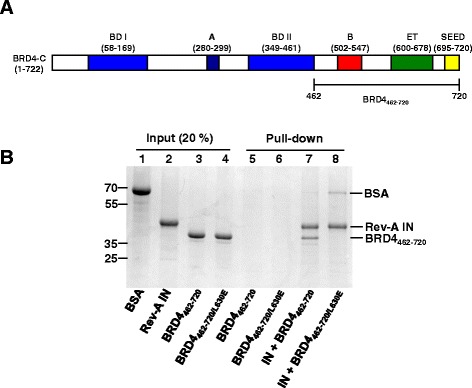
“The amino acid sequence of the IN C-terminal region, WxφxxpxxPLbφbφR (x, non-conserved position; φ, small hydrophobic; p, small polar; b, basic), which dictates binding to BET proteins [29,69,70], is a conserved feature of gammaretroviral IN proteins including Rev-A IN [18].”
BackgroundLesbats, P., Botbol, Y., Chevereau, G., Vaillant, C., Calmels, C., Arneodo, A., Andreola, M.-L., Lavigne, M., & Parissi, V. (2011) · PLoS Pathogens · doi:10.1371/journal.ppat.1001280 · Cited by 71
Protein–nucleic acid interactions
Yang, W., & Duyne, G. D. V. (2004) · Current Opinion in Structural Biology · doi:10.1016/j.sbi.2004.01.007 · Cited by 70
Molecular structure of nicked DNA: a substrate for DNA repair enzymes.
Aymami, J., Coll, M., van der Marel, G. A., van Boom, J. H., Wang, A. H., & Rich, A. (1990) · Proceedings of the National Academy of Sciences · doi:10.1073/pnas.87.7.2526 · Cited by 70
Simian virus 40 minichromosomes as targets for retroviral integration in vivo.
Pryciak, P. M., Müller, H. P., & Varmus, H. E. (1992) · Proceedings of the National Academy of Sciences · doi:10.1073/pnas.89.19.9237 · Cited by 70
Gammaretroviral Integration into Nucleosomal Target DNA In Vivo
Roth, S. L., Malani, N., & Bushman, F. D. (2011) · Journal of Virology · doi:10.1128/jvi.00635-11 · Cited by 69 · cited 3×
“Nucleosomes are favored sites for integration during MoMLV and HIV-1 infection [41-45].”
BackgroundNiebert, M., Rogel-Gaillard, C., Chardon, P., & Tönjes, R. R. (2002) · Journal of Virology · doi:10.1128/jvi.76.6.2714-2720.2002 · Cited by 68
High-throughput approach for detection of DNA bending and flexibility based on cyclization
Zhang, Y., & Crothers, D. M. (2003) · Proceedings of the National Academy of Sciences · doi:10.1073/pnas.0530189100 · Cited by 63
A Preferred Target DNA Structure for Retroviral Integrasein Vitro
Katz, R. A., Gravuer, K., & Skalka, A. M. (1998) · Journal of Biological Chemistry · doi:10.1074/jbc.273.37.24190 · Cited by 62
No apparent nucleotide sequence specificity in cellular DNA juxtaposed to retrovirus proviruses.
Shimotohno, K., & Temin, H. M. (1980) · Proceedings of the National Academy of Sciences · doi:10.1073/pnas.77.12.7357 · Cited by 59
Serrao, E., Krishnan, L., Shun, M.-C., Li, X., Cherepanov, P., Engelman, A., & Maertens, G. N. (2014) · Nucleic Acids Research · doi:10.1093/nar/gku136 · Cited by 59
Self-citationBor, Y. C., Bushman, F. D., & Orgel, L. E. (1995) · Proceedings of the National Academy of Sciences · doi:10.1073/pnas.92.22.10334 · Cited by 58
Taganov, K. D., Cuesta, I., Daniel, R., Cirillo, L. A., Katz, R. A., Zaret, K. S., & Skalka, A. M. (2004) · Journal of Virology · doi:10.1128/jvi.78.11.5848-5855.2004 · Cited by 57
Host sequences flanking the HIV provirus
Vincent, K. A., York-Higgins, D., Quiroga, M., & Brown, P. O. (1990) · Nucleic Acids Research · doi:10.1093/nar/18.20.6045 · Cited by 55
Analysis of the junctions between human immunodeficiency virus type 1 proviral DNA and human DNA
Vink, C., Groenink, M., Elgersma, Y., Fouchier, R. A., Tersmette, M., & Plasterk, R. H. (1990) · Journal of Virology · doi:10.1128/jvi.64.11.5626-5627.1990 · Cited by 52
The integration profile of EIAV-based vectors
Hacker, C. V., Vink, C. A., Wardell, T. W., Lee, S., Treasure, P., Kingsman, S. M., Mitrophanous, K. A., & Miskin, J. E. (2006) · Molecular Therapy · doi:10.1016/j.ymthe.2006.06.006 · Cited by 47
Intasome architecture and chromatin density modulate retroviral integration into nucleosome
Benleulmi, M. S., Matysiak, J., Henriquez, D. R., Vaillant, C., Lesbats, P., Calmels, C., Naughtin, M., Leon, O., Skalka, A. M., Ruff, M., et al. (2015) · Retrovirology · doi:10.1186/s12977-015-0145-9 · Cited by 47 · cited 2×
“We note that a report published after the submission of this paper indicated that MLV and PFV integration can occur in regions of compact chromatin that tend to disfavor HIV-1 and ASLV integration [45].”
BackgroundSchweizer, M., Fleps, U., Jäckle, A., Renne, R., Turek, R., & Neumann‐Haefelin, D. (1993) · Virology · doi:10.1006/viro.1993.1084 · Cited by 45
Bimodal high-affinity association of Brd4 with murine leukemia virus integrase and mononucleosomes
Larue, R. C., Plumb, M. R., Crowe, B. L., Shkriabai, N., Sharma, A., DiFiore, J., Malani, N., Aiyer, S. S., Roth, M. J., Bushman, F. D., et al. (2014) · Nucleic Acids Research · doi:10.1093/nar/gku135 · Cited by 44
Demeulemeester, J., Vets, S., Schrijvers, R., Madlala, P., De Maeyer, M., De Rijck, J., Ndung’u, T., Debyser, Z., & Gijsbers, R. (2014) · Cell Host & Microbe · doi:10.1016/j.chom.2014.09.016 · Cited by 43
S.Chou, K., Okayama, A., Tachibana, N., Lee, T., & Essex, M. (1995) · International Journal of Cancer · doi:10.1002/ijc.2910600522 · Cited by 38
Chou, K. S., Okayama, A., Su, I.-J., Lee, T.-H., & Essex, M. (1996) · International Journal of Cancer · doi:10.1002/(sici)1097-0215(19960103)65:1<20::aid-ijc4>3.0.co;2-3 · Cited by 28
Study of human foamy virus proviral integration in chronically infected murine cells
Neves, M., Peries, J., & Saïb, A. (1998) · Research in Virology · doi:10.1016/s0923-2516(99)80007-7 · Cited by 25
Moalic, Y., Félix, H., Takeuchi, Y., Jestin, A., & Blanchard, Y. (2008) · Journal of Virology · doi:10.1128/jvi.00856-08 · Cited by 24
Kim, S., Rusmevichientong, A., Dong, B., Remenyi, R., Silverman, R. H., & Chow, S. A. (2010) · PLoS ONE · doi:10.1371/journal.pone.0010255 · Cited by 21
Biochemical Characterization of Novel Retroviral Integrase Proteins
Ballandras-Colas, A., Naraharisetty, H., Li, X., Serrao, E., & Engelman, A. (2013) · PLoS ONE · doi:10.1371/journal.pone.0076638 · Cited by 18 · cited 7×
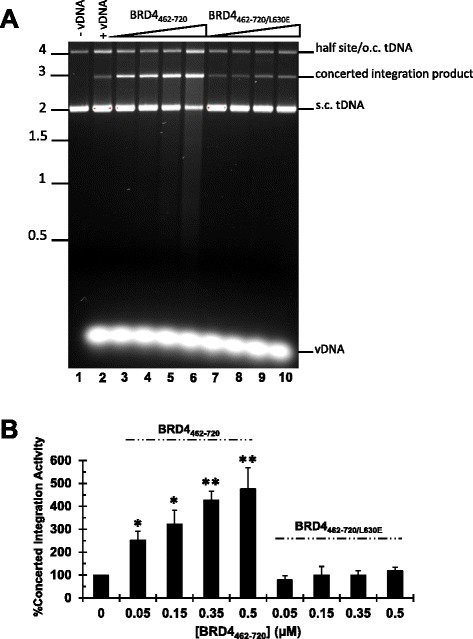
“As expected [66], Rev-A IN catalyzed a low level of single vDNA end and concerted integration activity in the absence of added BET protein (Figure 7A, compare lane 2 to lane 1).”
BackgroundMethodInfluentialSelf-citationChapter 8. Bending and Compaction of DNA by Proteins
Johnson, R. C., Stella, S., & Heiss, J. K. (2008) · RSC Biomolecular Sciences · doi:10.1039/9781847558268-00176 · Cited by 16
Characterization of two porcine endogenous retrovirus integration loci and variability in pigs
Gorbovitskaia, M., Liu, Z., Bourgeaux, N., Li, N., Lian, Z., Chardon, P., & Rogel-Gaillard, C. (2003) · Immunogenetics · doi:10.1007/s00251-003-0579-4 · Cited by 13
Cited by
Integration site selection by retroviruses and transposable elements in eukaryotes
Sultana, T., Zamborlini, A., Cristofari, G., & Lesage, P. (2017) · Nature Reviews Genetics · doi:10.1038/nrg.2017.7 · Cited by 275
Lesbats, P., Engelman, A. N., & Cherepanov, P. (2016) · Chemical Reviews · doi:10.1021/acs.chemrev.6b00125 · Cited by 233
Self-citationCryo-EM structures and atomic model of the HIV-1 strand transfer complex intasome
Passos, D. O., Li, M., Yang, R., Rebensburg, S. V., Ghirlando, R., Jeon, Y., Shkriabai, N., Kvaratskhelia, M., Craigie, R., & Lyumkis, D. (2017) · Science · doi:10.1126/science.aah5163 · Cited by 202
“3 bps using multiple experimental approaches (25, 50, 51), and STCs can be assembled from product DNA even without any bp matches within the tDNA region (16).”
MethodHindmarsh, P., & Leis, J. (1999) · Microbiology and Molecular Biology Reviews · doi:10.1128/mmbr.63.4.836-843.1999 · Cited by 202
Reconstitution and visualization of HIV-1 capsid-dependent replication and integration in vitro
Christensen, D. E., Ganser-Pornillos, B. K., Johnson, J. S., Pornillos, O., & Sundquist, W. I. (2020) · Science · doi:10.1126/science.abc8420 · Cited by 150
Metadata
- Authors
- Serrao, E., Ballandras-Colas, A., Cherepanov, P., Maertens, G. N., & Engelman, A. N.
- Affiliations
- Dana-Farber Cancer Institute (US)
- The Francis Crick Institute (GB)
- Imperial College London (GB)
- Corresponding author
- Engelman, Alan N
- Venue
- Retrovirology
- Published
- 2015-04-30
- Volume
- 12
- Issue
- 1
- Pages
- 39-39
- ISSN
- 1742-4690 (ISSN-L)
- PMC
- PMC4422553
- OpenAlex
- W2109570247
- Cited by
- 62
- References
- 106
- Citations by year
- 2026: 3 · 2023: 2 · 2022: 6 · 2021: 8 · 2020: 6 · 2019: 6 · 2018: 6 · 2017: 6 · 2016: 15 · 2015: 4
- FWCI
- 7.06
- Type
- journal article
- Language
- en
- Open access
- gold
- doi.org
- Locations
- Retrovirology (publishedVersion, cc-by)
- Europe PMC (PubMed Central) (publishedVersion, cc-by)
- PubMed Central (publishedVersion, cc-by)
- PubMed (publishedVersion)
- HAL (submittedVersion)
- Figshare (submittedVersion, cc-by)
- Funders
- Harvard University
- Harvard University Center for AIDS Research (AI060354)
- Francis Crick Institute (10061)
- National Institutes of Health (AI060354)
- Center for AIDS Research, University of Washington (AI060354)
- National Institute of Allergy and Infectious Diseases (AI060354, R01AI070042, AI070042, P30AI060354)
- Topics
- Life Sciences › Biochemistry, Genetics and Molecular Biology › Genetics › Virus-based gene therapy research
- Life Sciences › Immunology and Microbiology › Virology › HIV Research and Treatment
- Life Sciences › Biochemistry, Genetics and Molecular Biology › Molecular Biology › CRISPR and Genetic Engineering
- Keywords
- retroviral integration, integrase, target site duplication, HIV-1 integrase, Moloney murine leukemia virus, chromatin, bromodomain proteins, DNA bending
- MeSH terms
- Cell Line, DNA, Humans, HIV-1, Spumavirus, Virus Integration, Integrases
About these checks
Registry, retraction, Cites and statistics results are computed, not judged, with one exception: a printed reference that no index lists is read once by a model before it counts as a citation error. Claims are extracted by a model and kept only when their quote appears verbatim in the text; each cited source is then checked, with a model’s help, for whether it says what the claim relies on. Those verdicts can be wrong — read the claim’s quote and the cited source before relying on one.
Statistics and arithmetic are recomputed, not judged.
Confidence bands are shown only for fields calibrated on our annotated test set. None is calibrated yet, so no band is shown.
What counts as a claim ›How we measure confidence ›How we check this ›
Are you an author, or do you see a problem with this page? Request a review
Data sources
Bibliographic data: Semantic Scholar, OpenAlex, Crossref.
Contains information from the Semantic Scholar Academic Graph Datasets, made available under the ODC Attribution License (ODC-BY 1.0).
Semantic Scholar’s data is described in: Kinney, R., et al. (2023). The Semantic Scholar Open Data Platform. arXiv:2301.10140.
