

The DOI matches its Crossref record; 98 of the 100 references it cites were found in a registry or an index; none of the 106 sources its claims cite is checked for support yet.
Navigating the sustainability landscape: a systematic review of sustainability approaches in healthcare
Open accessAbstract
BACKGROUND: Improvement initiatives offer a valuable mechanism for delivering and testing innovations in healthcare settings. Many of these initiatives deliver meaningful and necessary changes to patient care and outcomes. However, many improvement initiatives fail to sustain to a point where their full benefits can be realised. This has led many researchers and healthcare practitioners to develop frameworks, models and tools to support and monitor sustainability. This work aimed to identify what approaches are available to assess and influence sustainability in healthcare and to describe the different perspectives, applications and constructs within these approaches to guide their future use. METHODS: A systematic review was carried out following PRISMA guidelines to identify publications that reported approaches to support or influence sustainability in healthcare. Eligibility criteria were defined through an iterative process in which two reviewers independently assessed 20% of articles to test the objectivity of the selection criteria. Data were extracted from the identified articles, and a template analysis was undertaken to identify and assess the sustainability constructs within each reported approach. RESULTS: The search strategy identified 1748 publications with 227 articles retrieved in full text for full documentary analysis. In total, 62 publications identifying a sustainability approach were included in this review (32 frameworks, 16 models, 8 tools, 4 strategies, 1 checklist and 1 process). Constructs across approaches were compared and 40 individual constructs for sustainability were found. Comparison across approaches demonstrated consistent constructs were seen regardless of proposed interventions, setting or level of application with 6 constructs included in 75% of the approaches. Although similarities were found, no approaches contained the same combination of the constructs nor did any single approach capture all identified constructs. From these results, a consolidated framework for sustainability constructs in healthcare was developed. CONCLUSIONS: Choosing a sustainability method can pose a challenge because of the diverse approaches reported in the literature. This review provides a valuable resource to researchers, healthcare professionals and improvement practitioners by providing a summary of available sustainability approaches and their characteristics. TRIAL REGISTRATION: This review was registered on the PROSPERO database: CRD42016040081 in June 2016.
Overview
AI snapshot
Written from the paper’s full text.
TL;DR
This systematic review identified 62 published approaches for assessing or influencing sustainability in healthcare, finding 40 sustainability constructs and no two approaches with identical construct combinations. It developed a consolidated framework of six constructs present in more than 75% of approaches to help users compare and select sustainability approaches.
Key findings
- The review included 62 publications identifying sustainability approaches: 32 frameworks, 16 models, 8 tools, 4 strategies, 1 checklist, and 1 process. It identified 40 individual sustainability constructs; approaches examined 8–31 constructs each, with an average of 17, and no two approaches contained the same combination of constructs or captured all 40.
- Six constructs appeared in over 75% of approaches: General resources (90%), Demonstrating effectiveness (89%), Monitoring progress over time (84%), Stakeholder participation (79%), Integration with existing programs and policies (79%), and Training and capacity building (76%).
- Sustainability was explicitly defined in 76% of approaches, with five definitions found: continued programme activities (86%), continued health benefits (44%), capacity built (19%), further development/adaptation (16%), and recovering costs (3%). 66% viewed sustainability prospectively throughout implementation, and 82% were designed for intervention or programme level.
- 37% of approaches had no explicit theoretical link; 15 theories were identified, with four common theories covering 45% of papers: diffusion of innovations, complexity theory, ecological theory, and open systems theory. Development techniques included literature/systematic review (61%), professional expertise (26%), and interviews (24%).
Methods
- PRISMA-guided systematic review registered on PROSPERO (CRD42016040081). Searches were run on Embase, HMIC, and Ovid MEDLINE in January 2017, with a follow-up search in September 2017, plus snowballing. Eligible papers were peer-reviewed publications introducing a tangible approach to influence and/or assess sustainability in healthcare; non-English papers, commentary, posters, protocols, conference proceedings, editorials, perspectives, and approaches embedded as a final stage of a larger process were excluded.
- Two reviewers independently screened the first 20% of full-text articles; one author screened the remainder. Data extraction covered strategy name, purpose, healthcare setting, level of use, description, sustainability constructs, scoring mechanism, target user, definition of sustainability, theoretical underpinning, sustainability perspective, and method development details. One author extracted data, and a second author independently checked all extractions against full texts.
- Template analysis was conducted in NVivo 10 using Shediac-Rizkallah and Bone’s conceptual sustainability framework as the baseline template. A second coder independently coded 25% of articles; inter-rater reliability was high with a kappa coefficient of 0.94. Results were summarised using ratios and narrative summaries.
Limitations
- The paper states that one author conducted most screening, data extraction, and coding, which may have introduced bias in inclusion/exclusion or missing/erroneous information; this was mitigated by second-author screening of 20% of studies, second coding of 25%, and full-text checking of all extractions. It also states a disproportionate number of frameworks came from community and public health settings, that no existing quality assessment tool was used so the value or accuracy of constructs cannot be attributed, and that publication bias may have affected results because grey literature was identified but not included.
- The paper states that frequency of constructs does not indicate they are the “right” constructs or that assessing them will achieve sustainability; the approaches must be applied and assessed in practice.
- Evident from the text: the abstract reports 1748 publications identified and 227 full texts retrieved, while the Results report 2889 database publications, 121 further papers from snowballing/citation tracking, and 229 full texts retrieved, an inconsistency in reported search yields.
Model-written summary. Check it against the paper before relying on it.
Integrity signals
Registry
Cites
Statistics
Figures
Verification
Claims the paper makes
67 Own result · 45 Not checked yet · 21 Own interpretation · 18 Own method · 6 No basis given
A result the paper reports from its own data — it cites no other source for it, so there is none to check. The quote shows it is in the paper.
In the paper
“A smaller number of approaches were designed for use in acute, 3% (2/62), and e-health settings, 3% (2/62).”
§ Navigating the sustainability landscape: a systematic review of sustainability approaches in healthcare > Results > Sustainability method characteristics
plain- Asserted: passes — The authors put it forward as true.
- Checkable: passes — It can be checked against evidence.
- Load-bearing: unclear — It is unclear whether the paper’s conclusions depend on it.
- Based: passes — The paper gives a reason why it holds.
A result the paper reports from its own data — it cites no other source for it, so there is none to check. The quote shows it is in the paper.
In the paper
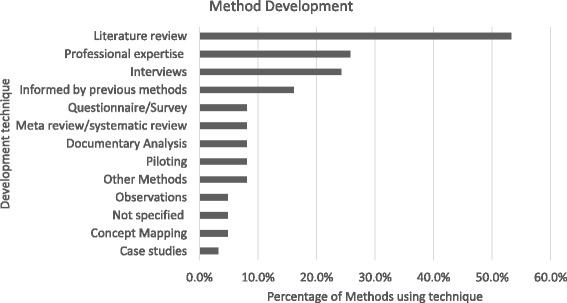
“This was followed by 26% (16/62) using ‘professional expertise’ such as an advisory panel and 24% (15/62) using interviews.”
§ Navigating the sustainability landscape: a systematic review of sustainability approaches in healthcare > Results > Theoretical perspectives, definitions and development details
plain- Asserted: passes — The authors put it forward as true.
- Checkable: passes — It can be checked against evidence.
- Load-bearing: unclear — It is unclear whether the paper’s conclusions depend on it.
- Based: passes — The paper gives a reason why it holds.
A result the paper reports from its own data — it cites no other source for it, so there is none to check. The quote shows it is in the paper.
In the paper
“Public health settings were specified in 31% (19/62) of the approaches, followed by community healthcare in 26% of the approaches (16/62).”
§ Navigating the sustainability landscape: a systematic review of sustainability approaches in healthcare > Results > Sustainability method characteristics
plain- Asserted: passes — The authors put it forward as true.
- Checkable: passes — It can be checked against evidence.
- Load-bearing: unclear — It is unclear whether the paper’s conclusions depend on it.
- Based: passes — The paper gives a reason why it holds.
A result the paper reports from its own data — it cites no other source for it, so there is none to check. The quote shows it is in the paper.
In the paper
“Six constructs were included in over 75% of the approaches: ‘General resources’ (90%), ‘Demonstrating effectiveness’ (89%), ‘Monitoring progress over time’ (84%), ‘Stakeholder participation’ (79%), ‘Integration with existing programs and policies’ (79%) and ‘Training and capacity building’ (76%).”
§ Navigating the sustainability landscape: a systematic review of sustainability approaches in healthcare > Results > Sustainability constructs
plain- Asserted: passes — The authors put it forward as true.
- Checkable: passes — It can be checked against evidence.
- Load-bearing: passes — The paper’s conclusions depend on it.
- Based: passes — The paper gives a reason why it holds.
A result the paper reports from its own data — it cites no other source for it, so there is none to check. The quote shows it is in the paper.
In the paper
“Although 37% (23/62) did not have an explicit link to theory, 15 different theories were identified within the other approaches.”
§ Navigating the sustainability landscape: a systematic review of sustainability approaches in healthcare > Results > Theoretical perspectives, definitions and development details
plain- Asserted: passes — The authors put it forward as true.
- Checkable: passes — It can be checked against evidence.
- Load-bearing: unclear — It is unclear whether the paper’s conclusions depend on it.
- Based: passes — The paper gives a reason why it holds.
A result the paper reports from its own data — it cites no other source for it, so there is none to check. The quote shows it is in the paper.
In the paper
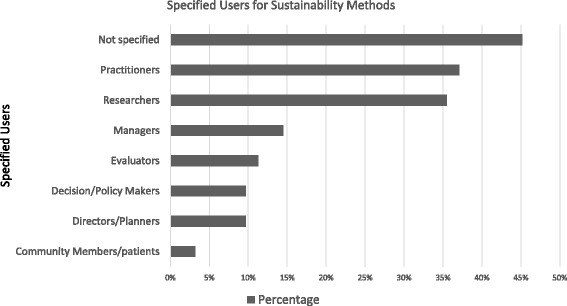
“The majority of these approaches have been designed for use by multiple groups of professionals or practitioners (e.g. researchers as well as nurses).”
§ Navigating the sustainability landscape: a systematic review of sustainability approaches in healthcare > Results > Sustainability method characteristics
plain- Asserted: passes — The authors put it forward as true.
- Checkable: passes — It can be checked against evidence.
- Load-bearing: unclear — It is unclear whether the paper’s conclusions depend on it.
- Based: passes — The paper gives a reason why it holds.
A result the paper reports from its own data — it cites no other source for it, so there is none to check. The quote shows it is in the paper.
In the paper
“5.Recovering costs (included in 3% (2/62))”
§ Navigating the sustainability landscape: a systematic review of sustainability approaches in healthcare > Results > Theoretical perspectives, definitions and development details
plain- Asserted: passes — The authors put it forward as true.
- Checkable: passes — It can be checked against evidence.
- Load-bearing: unclear — It is unclear whether the paper’s conclusions depend on it.
- Based: passes — The paper gives a reason why it holds.
A result the paper reports from its own data — it cites no other source for it, so there is none to check. The quote shows it is in the paper.
In the paper
“Public health settings were specified in 31% (19/62) of the approaches, followed by community healthcare in 26% of the approaches (16/62).”
§ Navigating the sustainability landscape: a systematic review of sustainability approaches in healthcare > Results > Sustainability method characteristics
plain- Asserted: passes — The authors put it forward as true.
- Checkable: passes — It can be checked against evidence.
- Load-bearing: unclear — It is unclear whether the paper’s conclusions depend on it.
- Based: passes — The paper gives a reason why it holds.
A result the paper reports from its own data — it cites no other source for it, so there is none to check. The quote shows it is in the paper.
In the paper
“Suggested users were specified in 55% (34/62) of the approaches (Fig. 4).”
§ Navigating the sustainability landscape: a systematic review of sustainability approaches in healthcare > Results > Sustainability method characteristics
plain- Asserted: passes — The authors put it forward as true.
- Checkable: passes — It can be checked against evidence.
- Load-bearing: unclear — It is unclear whether the paper’s conclusions depend on it.
- Based: passes — The paper gives a reason why it holds.
A result the paper reports from its own data — it cites no other source for it, so there is none to check. The quote shows it is in the paper.
In the paper
“Nine approaches viewed sustainability as a linear process with sustainability being studied retrospectively after implementation has been ‘completed’.”
§ Navigating the sustainability landscape: a systematic review of sustainability approaches in healthcare > Results > Sustainability method characteristics
plain- Asserted: passes — The authors put it forward as true.
- Checkable: passes — It can be checked against evidence.
- Load-bearing: unclear — It is unclear whether the paper’s conclusions depend on it.
- Based: passes — The paper gives a reason why it holds.
- It may state two separate claims as one. 42
- Probably not a substantial claim. 47
A result the paper reports from its own data — it cites no other source for it, so there is none to check. The quote shows it is in the paper.
In the paper
“Comparison across approaches demonstrated consistent constructs were seen regardless of proposed interventions, setting or level of application with 6 constructs included in 75% of the approaches.”
§ Navigating the sustainability landscape: a systematic review of sustainability approaches in healthcare > Abstract > Results
boosted- Asserted: passes — The authors put it forward as true.
- Checkable: passes — It can be checked against evidence.
- Load-bearing: passes — The paper’s conclusions depend on it.
- Based: passes — The paper gives a reason why it holds.
It may state two separate claims as one.
A result the paper reports from its own data — it cites no other source for it, so there is none to check. The quote shows it is in the paper.
In the paper
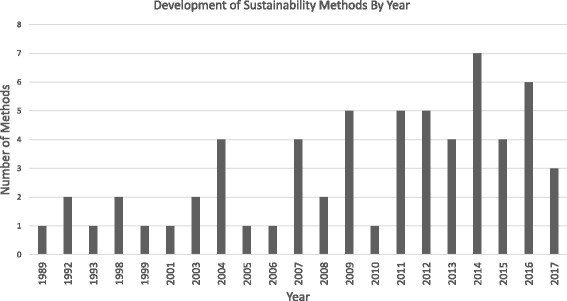
“Sustainability approaches have been consistently developed and adapted since the late 1980s with an average of two created every year Fig. 2.”
§ Navigating the sustainability landscape: a systematic review of sustainability approaches in healthcare > Results > Sustainability approaches
plain- Asserted: passes — The authors put it forward as true.
- Checkable: passes — It can be checked against evidence.
- Load-bearing: unclear — It is unclear whether the paper’s conclusions depend on it.
- Based: passes — The paper gives a reason why it holds.
It may state two separate claims as one.
A result the paper reports from its own data — it cites no other source for it, so there is none to check. The quote shows it is in the paper.
In the paper
“Multiple definitions were found across approaches, but 5 distinct definitions for sustainability were identified:”
§ Navigating the sustainability landscape: a systematic review of sustainability approaches in healthcare > Results > Theoretical perspectives, definitions and development details
plain- Asserted: passes — The authors put it forward as true.
- Checkable: passes — It can be checked against evidence.
- Load-bearing: fails — The paper’s conclusions may not depend on it.
- Based: passes — The paper gives a reason why it holds.
Probably not a substantial claim. The paper’s conclusions may not depend on it.
A result the paper reports from its own data — it cites no other source for it, so there is none to check. The quote shows it is in the paper.
In the paper
“The majority of the approaches explicitly stated the need to assess resources but not all indicated the type of resource.”
§ Navigating the sustainability landscape: a systematic review of sustainability approaches in healthcare > Results > Sustainability constructs
plain- Asserted: passes — The authors put it forward as true.
- Checkable: passes — It can be checked against evidence.
- Load-bearing: unclear — It is unclear whether the paper’s conclusions depend on it.
- Based: passes — The paper gives a reason why it holds.
It may state two separate claims as one.
A result the paper reports from its own data — it cites no other source for it, so there is none to check. The quote shows it is in the paper.
In the paper
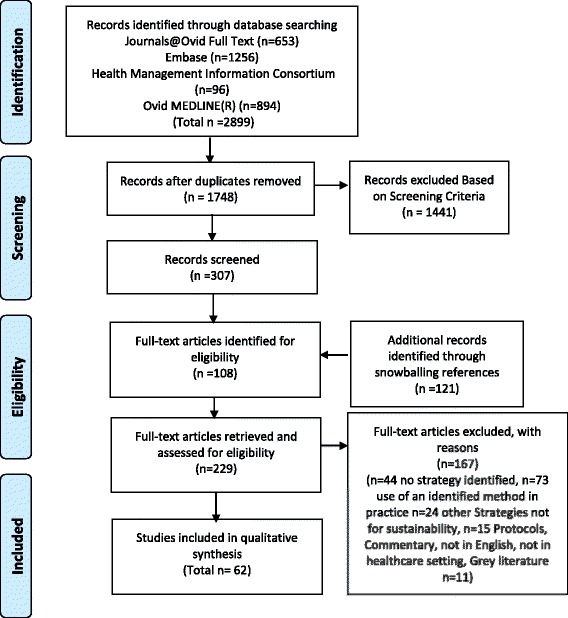
“The search strategy identified 1748 publications with 227 articles retrieved in full text for full documentary analysis.”
§ Navigating the sustainability landscape: a systematic review of sustainability approaches in healthcare > Abstract > Results
plain- Asserted: passes — The authors put it forward as true.
- Checkable: passes — It can be checked against evidence.
- Load-bearing: fails — The paper’s conclusions may not depend on it.
- Based: passes — The paper gives a reason why it holds.
Probably not a substantial claim. The paper’s conclusions may not depend on it.
A result the paper reports from its own data — it cites no other source for it, so there is none to check. The quote shows it is in the paper.
In the paper
“The remaining approaches aimed to provide guidance and strategies to influence sustainability or a combination of evaluation, planning and guidance.”
§ Navigating the sustainability landscape: a systematic review of sustainability approaches in healthcare > Results > Sustainability method characteristics
plain- Asserted: passes — The authors put it forward as true.
- Checkable: passes — It can be checked against evidence.
- Load-bearing: unclear — It is unclear whether the paper’s conclusions depend on it.
- Based: passes — The paper gives a reason why it holds.
It may state two separate claims as one.
A result the paper reports from its own data — it cites no other source for it, so there is none to check. The quote shows it is in the paper.
In the paper
“The search strategy resulted in 2889 publications from the databases.”
§ Navigating the sustainability landscape: a systematic review of sustainability approaches in healthcare > Results
plain- Asserted: passes — The authors put it forward as true.
- Checkable: passes — It can be checked against evidence.
- Load-bearing: fails — The paper’s conclusions may not depend on it.
- Based: passes — The paper gives a reason why it holds.
Probably not a substantial claim. The paper’s conclusions may not depend on it.
A result the paper reports from its own data — it cites no other source for it, so there is none to check. The quote shows it is in the paper.
In the paper
“Constructs across approaches were compared and 40 individual constructs for sustainability were found.”
§ Navigating the sustainability landscape: a systematic review of sustainability approaches in healthcare > Abstract > Results
plain- Asserted: passes — The authors put it forward as true.
- Checkable: passes — It can be checked against evidence.
- Load-bearing: passes — The paper’s conclusions depend on it.
- Based: passes — The paper gives a reason why it holds.
It may state two separate claims as one.
A result the paper reports from its own data — it cites no other source for it, so there is none to check. The quote shows it is in the paper.
In the paper
“Comparison across approaches demonstrated that no two approaches contained the same combination of the constructs nor did any single approach capture all 40 constructs.”
§ Navigating the sustainability landscape: a systematic review of sustainability approaches in healthcare > Results > Sustainability constructs
boosted- Asserted: passes — The authors put it forward as true.
- Checkable: passes — It can be checked against evidence.
- Load-bearing: passes — The paper’s conclusions depend on it.
- Based: passes — The paper gives a reason why it holds.
It may state two separate claims as one.
A result the paper reports from its own data — it cites no other source for it, so there is none to check. The quote shows it is in the paper.
In the paper
“This construct included a complex combination of potential resources to consider. Four key resource types were found: funding, infrastructure, staff and Time.”
§ Navigating the sustainability landscape: a systematic review of sustainability approaches in healthcare > Results > Sustainability constructs
plain- Asserted: passes — The authors put it forward as true.
- Checkable: passes — It can be checked against evidence.
- Load-bearing: unclear — It is unclear whether the paper’s conclusions depend on it.
- Based: passes — The paper gives a reason why it holds.
It may state two separate claims as one.
A result the paper reports from its own data — it cites no other source for it, so there is none to check. The quote shows it is in the paper.
In the paper
“Titles and abstracts were examined, and 229 articles were retrieved in full text for full documentary analysis.”
§ Navigating the sustainability landscape: a systematic review of sustainability approaches in healthcare > Results
plain- Asserted: passes — The authors put it forward as true.
- Checkable: passes — It can be checked against evidence.
- Load-bearing: fails — The paper’s conclusions may not depend on it.
- Based: passes — The paper gives a reason why it holds.
Probably not a substantial claim. The paper’s conclusions may not depend on it. It may state two separate claims as one.
A result the paper reports from its own data — it cites no other source for it, so there is none to check. The quote shows it is in the paper.
In the paper
“Constructs across approaches were compared and contrasted, and 40 individual items for sustainability were found.”
§ Navigating the sustainability landscape: a systematic review of sustainability approaches in healthcare > Results > Sustainability constructs
plain- Asserted: passes — The authors put it forward as true.
- Checkable: passes — It can be checked against evidence.
- Load-bearing: passes — The paper’s conclusions depend on it.
- Based: passes — The paper gives a reason why it holds.
It may state two separate claims as one.
A result the paper reports from its own data — it cites no other source for it, so there is none to check. The quote shows it is in the paper.
In the paper
“The sustainability approaches come in a variety of forms: frameworks/conceptual frameworks (32), models (16), tools (8), guidance strategies (4), checklists (1) and processes (1).”
§ Navigating the sustainability landscape: a systematic review of sustainability approaches in healthcare > Results > Sustainability method characteristics
plain- Asserted: passes — The authors put it forward as true.
- Checkable: passes — It can be checked against evidence.
- Load-bearing: unclear — It is unclear whether the paper’s conclusions depend on it.
- Based: passes — The paper gives a reason why it holds.
It may state two separate claims as one.
A result the paper reports from its own data — it cites no other source for it, so there is none to check. The quote shows it is in the paper.
In the paper
“Snowballing and electronic citation tracking identified 121 further papers for potential inclusion.”
§ Navigating the sustainability landscape: a systematic review of sustainability approaches in healthcare > Results
plaindirect- Asserted: passes — The authors put it forward as true.
- Checkable: passes — It can be checked against evidence.
- Load-bearing: fails — The paper’s conclusions may not depend on it.
- Based: passes — The paper gives a reason why it holds.
Probably not a substantial claim. The paper’s conclusions may not depend on it.
A result the paper reports from its own data — it cites no other source for it, so there is none to check. The quote shows it is in the paper.
In the paper
“Although similarities were found, no approaches contained the same combination of the constructs nor did any single approach capture all identified constructs.”
§ Navigating the sustainability landscape: a systematic review of sustainability approaches in healthcare > Abstract > Results
plain- Asserted: passes — The authors put it forward as true.
- Checkable: passes — It can be checked against evidence.
- Load-bearing: passes — The paper’s conclusions depend on it.
- Based: passes — The paper gives a reason why it holds.
It may state two separate claims as one.
A result the paper reports from its own data — it cites no other source for it, so there is none to check. The quote shows it is in the paper.
In the paper
“The number of constructs examined in each method ranged from 8 to 31 with an average of 17 constructs per method.”
§ Navigating the sustainability landscape: a systematic review of sustainability approaches in healthcare > Results > Sustainability constructs
plain- Asserted: passes — The authors put it forward as true.
- Checkable: passes — It can be checked against evidence.
- Load-bearing: unclear — It is unclear whether the paper’s conclusions depend on it.
- Based: passes — The paper gives a reason why it holds.
It may state two separate claims as one.
A result the paper reports from its own data — it cites no other source for it, so there is none to check. The quote shows it is in the paper.
In the paper
“A smaller number of approaches were designed for use in acute, 3% (2/62), and e-health settings, 3% (2/62).”
§ Navigating the sustainability landscape: a systematic review of sustainability approaches in healthcare > Results > Sustainability method characteristics
plain- Asserted: passes — The authors put it forward as true.
- Checkable: passes — It can be checked against evidence.
- Load-bearing: fails — The paper’s conclusions may not depend on it.
- Based: passes — The paper gives a reason why it holds.
Probably not a substantial claim. The paper’s conclusions may not depend on it.
A result the paper reports from its own data — it cites no other source for it, so there is none to check. The quote shows it is in the paper.
In the paper
“Four theoretical perspectives (diffusion of innovations theory, complexity theory, ecological theories and open systems theory) were most common and revealed two distinct positions guiding the use of sustainability approaches.”
§ Navigating the sustainability landscape: a systematic review of sustainability approaches in healthcare > Discussion
plaincorrelational- Asserted: passes — The authors put it forward as true.
- Checkable: passes — It can be checked against evidence.
- Load-bearing: passes — The paper’s conclusions depend on it.
- Based: passes — The paper gives a reason why it holds.
It may state two separate claims as one.
In the paper
“The first views sustainability as a linear process following implementation. In this approach, sustainability is an end goal, a state to be reached or level of achievement [70].”
§ Navigating the sustainability landscape: a systematic review of sustainability approaches in healthcare > Discussion
What the sources say
- Not checked yetcites [70] Rogers EM. Diffusion of innovations. Macmillian Publ. Co. 2003.
plain- Asserted: passes — The authors put it forward as true.
- Checkable: passes — It can be checked against evidence.
- Load-bearing: passes — The paper’s conclusions depend on it.
- Based: passes — The paper gives a reason why it holds.
Probably not a substantial claim.
A result the paper reports from its own data — it cites no other source for it, so there is none to check. The quote shows it is in the paper.
In the paper
“These approaches were more likely to specifically examine funding for the initiative and highlight the need to have a defined aim to show evidence for sustainability of an initiative once it has been ‘completed’.”
§ Navigating the sustainability landscape: a systematic review of sustainability approaches in healthcare > Results > Top ten comparisons across approaches
hedgedcorrelational- Asserted: passes — The authors put it forward as true.
- Checkable: passes — It can be checked against evidence.
- Load-bearing: unclear — It is unclear whether the paper’s conclusions depend on it.
- Based: passes — The paper gives a reason why it holds.
It may state two separate claims as one.
The paper states this without a source or data behind it here, so there is nothing to check it against. The quote shows it is in the paper.
In the paper
“Each provided a unique perspective on sustainability with no two being exactly alike.”
§ Navigating the sustainability landscape: a systematic review of sustainability approaches in healthcare > Discussion
plain- Asserted: passes — The authors put it forward as true.
- Checkable: passes — It can be checked against evidence.
- Load-bearing: fails — The paper’s conclusions may not depend on it.
- Based: passes — The paper gives a reason why it holds.
Probably not a substantial claim. The paper’s conclusions may not depend on it. It may state two separate claims as one.
None of the sources cited for this claim have been checked yet.
In the paper
“The second views sustainability concurrent process alongside implementation, where sustainability is a process to be influenced and adapted to impact initiative longevity [71-73].”
§ Navigating the sustainability landscape: a systematic review of sustainability approaches in healthcare > Discussion
What the sources say
- Not checked yetcites [71] Schneider M, Somers M. Organizations as complex adaptive systems: implications of complexity theory for leadership research. Leadersh Q. 2006;17:351–65. source
- Not checked yetcites [72] Bronfenbrenner U. The ecology of human development. Experiments by nature and design. London: Harvard Univerity Press; 1979. source
- Not checked yetcites [73] Katz D, Kahn RL. The social psychology of organizations. John Wiley & Sons Inc: Hoboken; 1978.
plaindirect- Asserted: passes — The authors put it forward as true.
- Checkable: passes — It can be checked against evidence.
- Load-bearing: passes — The paper’s conclusions depend on it.
- Based: passes — The paper gives a reason why it holds.
Probably not a substantial claim.
None of the sources cited for this claim have been checked yet.
In the paper
“Approaches to monitoring included diverse areas to assess including having appropriate data to document progress [64, 65], having a management or monitoring system in place [15, 53, 61, 66, 67], and having regular reporting and feedback mechanisms [46, 47, 52, 54, 68, 69].”
§ Navigating the sustainability landscape: a systematic review of sustainability approaches in healthcare > Results > Sustainability constructs
What the sources say
- Not checked yetcites [64] Saunders RP, Pate RR, Dowda M, Ward DS, Epping JN, Dishman RK. Assessing sustainability of Lifestyle Education for Activity Program ( LEAP ). Health Educ Res. 2012;27:319–30. source
- Not checked yetcites [65] Amaya AB, Caceres CF, Spicer N, Balabanova D, Amaya AB, Caceres CF, et al. After the Global Fund: who can sustain the HIV/AIDS response in Peru and how? Glob Public Health Taylor & Francis. 2014;9:176–97. source
- Not checked yetcites [15] Shigayeva A, Coker RJ. Communicable disease control programmes and health systems: an analytical approach to sustainability. Health Policy Plan. 2015;30:368–85. source
- Not checked yetcites [53] Atun R, de Jongh T, Secci F, Ohiri K, Adeyi O. Integration of targeted health interventions into health systems: a conceptual framework for analysis. Heal. Policy Plan. (C) Copyright Oxford University Press 2010.: (1)Professor of International Health Management, Imperial College, London, UK, (2)Researcher, Centre for Health Management, Imperial College London, UK, (3)Doctoral Researcher, Centre for Health Management, Imperial College London, UK, (4)Health Specialis; 2010. p. 104–11. source
- Not checked yetcites [61] Maher L, Gustafson D, Evans A. Sustainability model and guide. Coventry: NHS Institute for Innovation and Improvement; 2010.
- Not checked yetcites [66] Racine D. Reliable effectiveness: a theory on sustaining and replicating worthwhile innovations. Adm Policy Ment Heal. (C)2006 Kluwer Academic Publishers: (1)Independent Scholar, 1101 Parkside Avenue, Ewing, NJ 08618, USA; 2006. p. 356–87. source
- Not checked yetcites [67] Story WT, LeBan K, Altobelli LC, Gebrian B, Hossain J, Lewis J, et al. Institutionalizing community-focused maternal, newborn, and child health strategies to strengthen health systems: a new framework for the sustainable development goal era. Glob Health Globalization Health. 2017;13:37. source
- Not checked yetcites [46] Dorsey SG, Schiffman R, Redeker NS, Heitkemper M, McCloskey DJ, Weglicki LS, et al. National Institute of Nursing Research Centers of Excellence: a logic model for sustainability, leveraging resources, and collaboration to accelerate cross-disciplinary science. Nurs Outlook U S. 2014;62:384–93. source
- Not checked yetcites [47] Ford JH, Alagoz E, Dinauer S, Johnson KA, Pe-Romashko K, Gustafson DH. Successful organizational strategies to sustain use of A-CHESS: a mobile intervention for individuals with alcohol use disorders. J Med Internet Res. 2015;17:e201. source
- Not checked yetcites [52] Persaud D. Enhancing learning, innovation, adaptation, and sustainability in health care organizations: The ELIAS Performance Management Framework. Heal. Care Manag. (C) 2014 Wolters Kluwer Health | Lippincott Williams & Wilkins: Author Affiliation: School of Health Administration, Dalhousie University, Halifax, Canada.; 2014. p. 183–204. source
plain- Asserted: passes — The authors put it forward as true.
- Checkable: passes — It can be checked against evidence.
- Load-bearing: unclear — It is unclear whether the paper’s conclusions depend on it.
- Based: passes — The paper gives a reason why it holds.
It may state two separate claims as one.
In the paper
“Despite previous work finding that ‘most frameworks proposed tend to be deterministic in nature where sustainability is viewed as an end goal’, we found that 66% of approaches we reviewed saw sustainability as a process rather than an end state [15].”
§ Navigating the sustainability landscape: a systematic review of sustainability approaches in healthcare > Discussion
What the sources say
- Not checked yetcites [15] Shigayeva A, Coker RJ. Communicable disease control programmes and health systems: an analytical approach to sustainability. Health Policy Plan. 2015;30:368–85. source
plain- Asserted: passes — The authors put it forward as true.
- Checkable: passes — It can be checked against evidence.
- Load-bearing: passes — The paper’s conclusions depend on it.
- Based: passes — The paper gives a reason why it holds.
It may state two separate claims as one.
The paper states this without a source or data behind it here, so there is nothing to check it against. The quote shows it is in the paper.
In the paper
“In studying an organisation or system’s sustainability, there is a greater focus assessing the readiness and capacity for the initiatives and involving stakeholders and community members.”
§ Navigating the sustainability landscape: a systematic review of sustainability approaches in healthcare > Results > Top ten comparisons across approaches
plaincorrelational- Asserted: passes — The authors put it forward as true.
- Checkable: passes — It can be checked against evidence.
- Load-bearing: passes — The paper’s conclusions depend on it.
- Based: passes — The paper gives a reason why it holds.
It may state two separate claims as one.
A result the paper reports from its own data — it cites no other source for it, so there is none to check. The quote shows it is in the paper.
In the paper
“This review found that a substantial number of approaches exist with 62 approaches identified and included in this review.”
§ Navigating the sustainability landscape: a systematic review of sustainability approaches in healthcare > Discussion
plain- Asserted: passes — The authors put it forward as true.
- Checkable: passes — It can be checked against evidence.
- Load-bearing: passes — The paper’s conclusions depend on it.
- Based: passes — The paper gives a reason why it holds.
It may state two separate claims as one.
A result the paper reports from its own data — it cites no other source for it, so there is none to check. The quote shows it is in the paper.
In the paper
“Interestingly, no approaches contained the same combination of the constructs nor did any single method capture all identified constructs.”
§ Navigating the sustainability landscape: a systematic review of sustainability approaches in healthcare > Discussion
plain- Asserted: passes — The authors put it forward as true.
- Checkable: passes — It can be checked against evidence.
- Load-bearing: passes — The paper’s conclusions depend on it.
- Based: passes — The paper gives a reason why it holds.
It may state two separate claims as one.
The paper states this without a source or data behind it here, so there is nothing to check it against. The quote shows it is in the paper.
In the paper
“while there is diversity in the literature on how it is defined and how it can be influenced”
§ Navigating the sustainability landscape: a systematic review of sustainability approaches in healthcare > Discussion > Conclusion
plain- Asserted: passes — The authors put it forward as true.
- Checkable: passes — It can be checked against evidence.
- Load-bearing: passes — The paper’s conclusions depend on it.
- Based: passes — The paper gives a reason why it holds.
Probably not a substantial claim.
A result the paper reports from its own data — it cites no other source for it, so there is none to check. The quote shows it is in the paper.
In the paper
“although many approaches were developed within specific interventions and settings, similar constructs for sustainability were found”
§ Navigating the sustainability landscape: a systematic review of sustainability approaches in healthcare > Discussion > Strengths and limitations
boostedcorrelational- Asserted: passes — The authors put it forward as true.
- Checkable: passes — It can be checked against evidence.
- Load-bearing: passes — The paper’s conclusions depend on it.
- Based: passes — The paper gives a reason why it holds.
It may state two separate claims as one.
The paper states this without a source or data behind it here, so there is nothing to check it against. The quote shows it is in the paper.
In the paper
“This is the first review to consolidate available approaches for sustainability across diverse healthcare settings.”
§ Navigating the sustainability landscape: a systematic review of sustainability approaches in healthcare > Discussion > Strengths and limitations
plain- Asserted: passes — The authors put it forward as true.
- Checkable: passes — It can be checked against evidence.
- Load-bearing: passes — The paper’s conclusions depend on it.
- Based: fails — The paper may give no reason why it holds.
Probably not a substantial claim. The paper may give no reason why it holds.
None of the sources cited for this claim have been checked yet.
In the paper
“Many approaches presented in this review recommend that they be used and evaluated further within other healthcare initiatives and settings to explore applicability and further development needed [11, 36, 56, 79].”
§ Navigating the sustainability landscape: a systematic review of sustainability approaches in healthcare > Discussion > Future work
What the sources say
- Not checked yetcites [11] Chambers D a, Glasgow RE, Stange KC. The dynamic sustainability framework: addressing the paradox of sustainment amid ongoing change. Implementation Sci. 2013;8:117. source
- Not checked yetcites [36] Luke D a, Calhoun A, Robichaux CB, Elliott MB, Moreland-Russell S. The program sustainability assessment tool: a new instrument for public health programs. Prev Chronic Dis. 2014;11:130184. source
- Not checked yetcites [56] Lennox L, Doyle C, Reed J, Bell D. What makes a sustainability tool valuable, practical, and useful in real world healthcare practice? A qualitative study on the development of the long term success tool in Northwest London. BMJ Open. 2017;7:1–13. source
- Not checked yetcites [79] Fox A, Gardner G, Osborne S. A theoretical framework to support research of health service innovation. Aust Health Rev. 2014;39:70–5. source
plain- Asserted: passes — The authors put it forward as true.
- Checkable: passes — It can be checked against evidence.
- Load-bearing: fails — The paper’s conclusions may not depend on it.
- Based: passes — The paper gives a reason why it holds.
Probably not a substantial claim. The paper’s conclusions may not depend on it.
In the paper
“More recently, the ability to adapt and continuously improve has also been recognised as a potential definition of sustainability [14].”
§ Navigating the sustainability landscape: a systematic review of sustainability approaches in healthcare > Background
What the sources say
- Not checked yetcites [14] Moore JE, Mascarenhas A, Bain J, Straus SE. Developing a comprehensive definition of sustainability. Implement Sci. 2017;12:110. source
hedged- Asserted: passes — The authors put it forward as true.
- Checkable: passes — It can be checked against evidence.
- Load-bearing: fails — The paper’s conclusions may not depend on it.
- Based: passes — The paper gives a reason why it holds.
Probably not a substantial claim. The paper’s conclusions may not depend on it.
In the paper
“This concept of sustainability as a ‘process’ rather than an ‘outcome’, incorporates concepts of adaptation, learning and continuous development [15].”
§ Navigating the sustainability landscape: a systematic review of sustainability approaches in healthcare > Background
What the sources say
- Not checked yetcites [15] Shigayeva A, Coker RJ. Communicable disease control programmes and health systems: an analytical approach to sustainability. Health Policy Plan. 2015;30:368–85. source
plain- Asserted: passes — The authors put it forward as true.
- Checkable: passes — It can be checked against evidence.
- Load-bearing: passes — The paper’s conclusions depend on it.
- Based: passes — The paper gives a reason why it holds.
Probably not a substantial claim.
None of the sources cited for this claim have been checked yet.
In the paper
“This lens allows sustainability to be viewed as a change process that can be influenced by individuals throughout initiatives by continuing to develop and adapt in response to the needs of the system [15–17].”
§ Navigating the sustainability landscape: a systematic review of sustainability approaches in healthcare > Background
What the sources say
- Not checked yetcites [15] Shigayeva A, Coker RJ. Communicable disease control programmes and health systems: an analytical approach to sustainability. Health Policy Plan. 2015;30:368–85. source
- Not checked yetcites [16] Folke C, Carpenter S, Elmqvist T, Gunderson L, Holling C, Walker B. Resilience and sustainable development: building adaptive capacity in a world of transformations. Ambio. 2002;31:437–40. source
- Not checked yetcites [17] Fiksel J. Designing resilient, sustainable systems. Environ Sci Technol. 2003;37:5330–9. source
plaindirect- Asserted: passes — The authors put it forward as true.
- Checkable: fails — It may be too vague to check against evidence.
- Load-bearing: passes — The paper’s conclusions depend on it.
- Based: passes — The paper gives a reason why it holds.
Probably not a substantial claim. It may be too vague to check against evidence.
In the paper
“Sustainability is often viewed as an ‘outcome’ where health benefits, activities or workforce capacity are maintained [8].”
§ Navigating the sustainability landscape: a systematic review of sustainability approaches in healthcare > Background
What the sources say
- Not checked yetcites [8] Shediac-Rizkallah MC, Bone LR. Planning for the sustainability of community-based health programs: conceptual frameworks and future directions for research, practice and policy. Health Educ Res. 1998;13:87–108. source
plain- Asserted: passes — The authors put it forward as true.
- Checkable: passes — It can be checked against evidence.
- Load-bearing: fails — The paper’s conclusions may not depend on it.
- Based: passes — The paper gives a reason why it holds.
Probably not a substantial claim. The paper’s conclusions may not depend on it.
None of the sources cited for this claim have been checked yet.
In the paper
“Some work has been undertaken to review frameworks for sustainability in specific settings and programmes, but little has been done to comprehensively review available approaches for sustainability across healthcare settings [15, 18, 19].”
§ Navigating the sustainability landscape: a systematic review of sustainability approaches in healthcare > Background
What the sources say
- Not checked yetcites [15] Shigayeva A, Coker RJ. Communicable disease control programmes and health systems: an analytical approach to sustainability. Health Policy Plan. 2015;30:368–85. source
- Not checked yetcites [18] Scheirer MA, Dearing JW. An agenda for research on the sustainability of public health programs. Am J Public Health. 2011;101:2059–67. source
- Not checked yetcites [19] Johnson K, Hays C, Center H, Daley C. Building capacity and sustainable prevention innovations: a sustainability planning model. Eval Program Plann. 2004;27:135–49. source
plain- Asserted: passes — The authors put it forward as true.
- Checkable: passes — It can be checked against evidence.
- Load-bearing: passes — The paper’s conclusions depend on it.
- Based: passes — The paper gives a reason why it holds.
It may state two separate claims as one.
None of the sources cited for this claim have been checked yet.
In the paper
“Despite the significant investment of staff time and other resources, many promising initiatives fail to sustain and do not produce long term benefits [1–6].”
§ Navigating the sustainability landscape: a systematic review of sustainability approaches in healthcare > Background
What the sources say
- Not checked yetcites [1] Stirman SW, Kimberly J, Cook N, Calloway A, Castro F, Charns M. The sustainability of new programs and innovations: a review of the empirical literature and recommendations for future research. Implement Sci BioMed Central Ltd. 2012;7:17. source
- Not checked yetcites [2] Williams L, Daggett V, Slaven JE, Yu Z, Sager D, Myers J, et al. A cluster-randomised quality improvement study to improve two inpatient stroke quality indicators. BMJ Qual Saf. 2015; bmjqs-2015-004188 source
- Not checked yetcites [3] Bowman CC, Sobo EJ, Asch SM, Gifford AL. Measuring persistence of implementation: QUERI series. Implement Sci. 2008;3 source
- Not checked yetcites [4] Virani T, Lemieux-charles L, Davis DA, Berta W. Sustaining change: once evidence-based practices are transferred, what then? Healthc Q. 2009;12:89–96. source
- Not checked yetcites [5] Scheirer MA. Is sustainability possible? A review and commentary on empirical studies of program sustainability. Am J Eval. 2005;26:320–47. source
- Not checked yetcites [6] Ham C. Evaluation of the projects within the National Booking Program. Birmingham; 2004.
plain- Asserted: passes — The authors put it forward as true.
- Checkable: passes — It can be checked against evidence.
- Load-bearing: passes — The paper’s conclusions depend on it.
- Based: passes — The paper gives a reason why it holds.
It may state two separate claims as one.
In the paper
“A systematic review of 125 studies of improvements made in healthcare found that the projects do not maintain all aspects originally implemented with fewer than half continuing interventions at high levels of fidelity [1].”
§ Navigating the sustainability landscape: a systematic review of sustainability approaches in healthcare > Background
What the sources say
- Not checked yetcites [1] Stirman SW, Kimberly J, Cook N, Calloway A, Castro F, Charns M. The sustainability of new programs and innovations: a review of the empirical literature and recommendations for future research. Implement Sci BioMed Central Ltd. 2012;7:17. source
plain- Asserted: passes — The authors put it forward as true.
- Checkable: passes — It can be checked against evidence.
- Load-bearing: passes — The paper’s conclusions depend on it.
- Based: passes — The paper gives a reason why it holds.
It may state two separate claims as one.
In the paper
“A systematic review was undertaken guided by the Preferred Reporting Items for Systematic Reviews and Meta-Analysis (PRISMA) reporting standards [21].”
§ Navigating the sustainability landscape: a systematic review of sustainability approaches in healthcare > Methods > Search and information sources
What the sources say
- Not checked yetcites [21] PRISMA. PRISMA Statement [Internet]. Transparent Report. Syst. Rev. meta-analyses. 2015 [cited 2016 Jan 22]. Available from: http://www.prisma-statement.org/PRISMAStatement/Default.aspx .
plain- Asserted: passes — The authors put it forward as true.
- Checkable: passes — It can be checked against evidence.
- Load-bearing: fails — The paper’s conclusions may not depend on it.
- Based: passes — The paper gives a reason why it holds.
Probably not a substantial claim. The paper’s conclusions may not depend on it.
What the paper did — it cites no source for this, so there is none to check. The quote shows it is in the paper.
In the paper
“To assess coding clarity and reliability, a second coder independently coded 25% of the articles and an inter-rater reliability score (kappa coefficient) was calculated.”
§ Navigating the sustainability landscape: a systematic review of sustainability approaches in healthcare > Methods > Data synthesis and presentation
plain- Asserted: passes — The authors put it forward as true.
- Checkable: passes — It can be checked against evidence.
- Load-bearing: fails — The paper’s conclusions may not depend on it.
- Based: passes — The paper gives a reason why it holds.
Probably not a substantial claim. The paper’s conclusions may not depend on it. It may state two separate claims as one.
In the paper
“To assess coding clarity and reliability, an inter-rater reliability score (kappa coefficient) was calculated between two coders using the NVivoPro coding comparison function [33].”
§ Navigating the sustainability landscape: a systematic review of sustainability approaches in healthcare > Results > Sustainability constructs
What the sources say
- Not checked yetcites [33] Nvivo. Run a coding comparison query [Internet]. Explor. your coding using queries. 2017. p. 1. Available from: http://help-nv11.qsrinternational.com/desktop/procedures/run_a_coding_comparison_query.htm .
plain- Asserted: passes — The authors put it forward as true.
- Checkable: passes — It can be checked against evidence.
- Load-bearing: fails — The paper’s conclusions may not depend on it.
- Based: passes — The paper gives a reason why it holds.
Probably not a substantial claim. The paper’s conclusions may not depend on it.
What the paper did — it cites no source for this, so there is none to check. The quote shows it is in the paper.
In the paper
“To ensure the studies met the baseline quality expected, each article was assessed with the structured data extraction form.”
§ Navigating the sustainability landscape: a systematic review of sustainability approaches in healthcare > Methods > Quality assessment and data extraction strategy
plaindirect- Asserted: passes — The authors put it forward as true.
- Checkable: passes — It can be checked against evidence.
- Load-bearing: fails — The paper’s conclusions may not depend on it.
- Based: passes — The paper gives a reason why it holds.
Probably not a substantial claim. The paper’s conclusions may not depend on it.
What the paper did — it cites no source for this, so there is none to check. The quote shows it is in the paper.
In the paper
“Approaches available in the grey literature were identified but not included in this review.”
§ Navigating the sustainability landscape: a systematic review of sustainability approaches in healthcare > Methods > Risk of bias in individual studies and across studies
plain- Asserted: passes — The authors put it forward as true.
- Checkable: passes — It can be checked against evidence.
- Load-bearing: passes — The paper’s conclusions depend on it.
- Based: passes — The paper gives a reason why it holds.
Probably not a substantial claim. It may state two separate claims as one.
What the paper did — it cites no source for this, so there is none to check. The quote shows it is in the paper.
In the paper
“Any missing data or discrepancies were discussed between authors and were resolved by consensus.”
§ Navigating the sustainability landscape: a systematic review of sustainability approaches in healthcare > Methods > Quality assessment and data extraction strategy
plain- Asserted: passes — The authors put it forward as true.
- Checkable: passes — It can be checked against evidence.
- Load-bearing: fails — The paper’s conclusions may not depend on it.
- Based: passes — The paper gives a reason why it holds.
Probably not a substantial claim. The paper’s conclusions may not depend on it.
What the paper did — it cites no source for this, so there is none to check. The quote shows it is in the paper.
In the paper
“Agreement was reached for accuracy of all studies.”
§ Navigating the sustainability landscape: a systematic review of sustainability approaches in healthcare > Methods > Quality assessment and data extraction strategy
plain- Asserted: passes — The authors put it forward as true.
- Checkable: passes — It can be checked against evidence.
- Load-bearing: fails — The paper’s conclusions may not depend on it.
- Based: passes — The paper gives a reason why it holds.
Probably not a substantial claim. The paper’s conclusions may not depend on it.
In the paper
“This systematic review was registered on the PROSPERO database under the registration number: CRD 42016040081 in June 2016 [26].”
§ Navigating the sustainability landscape: a systematic review of sustainability approaches in healthcare > Methods > Registration
What the sources say
- Not checked yetcites [26] Lennox L, Maher L, Bell D, Reed J. The sustainability landscape: a systematic review of sustainability strategies and their impact in healthcare settings. PROSPERO Int Prospect Regist Syst Rev. 2016;CRD4201604:1–4.
plain- Asserted: passes — The authors put it forward as true.
- Checkable: passes — It can be checked against evidence.
- Load-bearing: fails — The paper’s conclusions may not depend on it.
- Based: passes — The paper gives a reason why it holds.
Probably not a substantial claim. The paper’s conclusions may not depend on it.
None of the sources cited for this claim have been checked yet.
In the paper
“Their use to determine the inclusion of qualitative studies is often not recommended as many existing tools do not capture the multiple meanings of “good quality” and “rightness”; therefore, studies should often not be excluded based on this quality assessment [22, 24].”
§ Navigating the sustainability landscape: a systematic review of sustainability approaches in healthcare > Methods > Quality assessment and data extraction strategy
What the sources say
plain- Asserted: passes — The authors put it forward as true.
- Checkable: passes — It can be checked against evidence.
- Load-bearing: passes — The paper’s conclusions depend on it.
- Based: passes — The paper gives a reason why it holds.
Probably not a substantial claim.
What the paper did — it cites no source for this, so there is none to check. The quote shows it is in the paper.
In the paper
“The selection of databases, search terms and search strategy was supported by a medical librarian to ensure an overall quality and coverage of the systematic review.”
§ Navigating the sustainability landscape: a systematic review of sustainability approaches in healthcare > Methods > Search and information sources
plaindirect- Asserted: passes — The authors put it forward as true.
- Checkable: passes — It can be checked against evidence.
- Load-bearing: fails — The paper’s conclusions may not depend on it.
- Based: passes — The paper gives a reason why it holds.
Probably not a substantial claim. The paper’s conclusions may not depend on it.
What the paper did — it cites no source for this, so there is none to check. The quote shows it is in the paper.
In the paper
“Two authors independently screened the first 20% of the full-text articles for inclusion.”
§ Navigating the sustainability landscape: a systematic review of sustainability approaches in healthcare > Methods > Data collection process and study selection
plain- Asserted: passes — The authors put it forward as true.
- Checkable: passes — It can be checked against evidence.
- Load-bearing: fails — The paper’s conclusions may not depend on it.
- Based: passes — The paper gives a reason why it holds.
Probably not a substantial claim. The paper’s conclusions may not depend on it.
None of the sources cited for this claim have been checked yet.
In the paper
“This has led to contradictory recommendations for influencing sustainability and debate on what qualifies as a sustained improvement [10, 13].”
§ Navigating the sustainability landscape: a systematic review of sustainability approaches in healthcare > Background
What the sources say
- Not checked yetcites [10] Martin GP, Weaver S, Currie G, Finn R, Mcdonald R. Innovation sustainability in challenging health-care contexts: embedding clinically led change in routine practice. Heal Serv Manage Res. 2012;25:190–9. source
- Not checked yetcites [13] Pluye P, Potvin L, Denis J-L. Making public health programs last: conceptualizing sustainability. Eval Program Plann. 2004;27:121–33. source
plaindirect- Asserted: passes — The authors put it forward as true.
- Checkable: passes — It can be checked against evidence.
- Load-bearing: passes — The paper’s conclusions depend on it.
- Based: passes — The paper gives a reason why it holds.
It may state two separate claims as one.
A conclusion the paper draws from its own results — it cites no other source for it, so there is none to check. The quote shows it is in the paper.
In the paper
“Theoretical perspectives guided how sustainability was defined within approaches and how it was viewed within healthcare systems.”
§ Navigating the sustainability landscape: a systematic review of sustainability approaches in healthcare > Results > Theoretical perspectives, definitions and development details
plaindirect- Asserted: passes — The authors put it forward as true.
- Checkable: passes — It can be checked against evidence.
- Load-bearing: unclear — It is unclear whether the paper’s conclusions depend on it.
- Based: passes — The paper gives a reason why it holds.
It may state two separate claims as one.
What the paper did — it cites no source for this, so there is none to check. The quote shows it is in the paper.
In the paper
“One author (LL) extracted the data from the articles. This information was then independently checked against the full-text articles by the second author (LM).”
§ Navigating the sustainability landscape: a systematic review of sustainability approaches in healthcare > Methods > Quality assessment and data extraction strategy
plain- Asserted: passes — The authors put it forward as true.
- Checkable: passes — It can be checked against evidence.
- Load-bearing: fails — The paper’s conclusions may not depend on it.
- Based: passes — The paper gives a reason why it holds.
Probably not a substantial claim. The paper’s conclusions may not depend on it. It may state two separate claims as one.
In the paper
“It is recognised that diverse healthcare settings ‘use similar processes to achieve adoption, implementation, and sustainability’ which indicates general learning and lessons can be gathered from across settings to inform sustainability research [18].”
§ Navigating the sustainability landscape: a systematic review of sustainability approaches in healthcare > Background
What the sources say
- Not checked yetcites [18] Scheirer MA, Dearing JW. An agenda for research on the sustainability of public health programs. Am J Public Health. 2011;101:2059–67. source
hedgedcorrelational- Asserted: passes — The authors put it forward as true.
- Checkable: passes — It can be checked against evidence.
- Load-bearing: passes — The paper’s conclusions depend on it.
- Based: passes — The paper gives a reason why it holds.
It may state two separate claims as one.
A conclusion the paper draws from its own results — it cites no other source for it, so there is none to check. The quote shows it is in the paper.
In the paper
“The framework can also help those considering creating a sustainability method in their own setting.”
§ Navigating the sustainability landscape: a systematic review of sustainability approaches in healthcare > Discussion
plaindirect- Asserted: passes — The authors put it forward as true.
- Checkable: fails — It may be too vague to check against evidence.
- Load-bearing: passes — The paper’s conclusions depend on it.
- Based: passes — The paper gives a reason why it holds.
Probably not a substantial claim. It may be too vague to check against evidence.
A conclusion the paper draws from its own results — it cites no other source for it, so there is none to check. The quote shows it is in the paper.
In the paper
“The choice to evaluate, monitor or plan for sustainability overtime rather than after implementation may indicate a shift in perspectives from sustainability as an outcome to sustainability as an ongoing process.”
§ Navigating the sustainability landscape: a systematic review of sustainability approaches in healthcare > Discussion
hedgedconditional- Asserted: passes — The authors put it forward as true.
- Checkable: passes — It can be checked against evidence.
- Load-bearing: fails — The paper’s conclusions may not depend on it.
- Based: passes — The paper gives a reason why it holds.
Probably not a substantial claim. The paper’s conclusions may not depend on it.
A conclusion the paper draws from its own results — it cites no other source for it, so there is none to check. The quote shows it is in the paper.
In the paper
“Given homogeneity of the individual constructs found, we believe there is value in having an overarching resource and summary, indicating the breadth of possible sustainability constructs to consider for sustainability in healthcare settings.”
§ Navigating the sustainability landscape: a systematic review of sustainability approaches in healthcare > Discussion
hedged- Asserted: passes — The authors put it forward as true.
- Checkable: fails — It may be too vague to check against evidence.
- Load-bearing: passes — The paper’s conclusions depend on it.
- Based: passes — The paper gives a reason why it holds.
Probably not a substantial claim. It may be too vague to check against evidence.
In the paper
“Those considering creating a sustainability approach should consider the information presented here and the available approaches for use before ‘recreating the wheel’ as continuous production may lead to further division and confusion in the literature and ultimately result in fewer robust studies on the use of available sustainability approaches being published [18].”
§ Navigating the sustainability landscape: a systematic review of sustainability approaches in healthcare > Discussion
What the sources say
- Not checked yetcites [18] Scheirer MA, Dearing JW. An agenda for research on the sustainability of public health programs. Am J Public Health. 2011;101:2059–67. source
hedgedconditional- Asserted: passes — The authors put it forward as true.
- Checkable: fails — It may be too vague to check against evidence.
- Load-bearing: fails — The paper’s conclusions may not depend on it.
- Based: passes — The paper gives a reason why it holds.
Probably not a substantial claim. It may be too vague to check against evidence. The paper’s conclusions may not depend on it. It may state two separate claims as one.
A conclusion the paper draws from its own results — it cites no other source for it, so there is none to check. The quote shows it is in the paper.
In the paper
“If the definition is broadened, adaptation could also signify sustained improvement, especially if the adaptations contributed further to health benefits or cost recovery.”
§ Navigating the sustainability landscape: a systematic review of sustainability approaches in healthcare > Discussion
hedgedconditional- Asserted: passes — The authors put it forward as true.
- Checkable: fails — It may be too vague to check against evidence.
- Load-bearing: passes — The paper’s conclusions depend on it.
- Based: passes — The paper gives a reason why it holds.
Probably not a substantial claim. It may be too vague to check against evidence.
In the paper
“As this perspective gains popularity, some have cautioned that while it may be valuable to assess sustainability throughout initiatives, data collection past the implementation stage is still required to assess the continuation of initiative activities or outcomes and determine whether sustainability is actually achieved [18].”
§ Navigating the sustainability landscape: a systematic review of sustainability approaches in healthcare > Discussion
What the sources say
- Not checked yetcites [18] Scheirer MA, Dearing JW. An agenda for research on the sustainability of public health programs. Am J Public Health. 2011;101:2059–67. source
hedged- Asserted: fails — The authors may not put it forward as true.
- Checkable: passes — It can be checked against evidence.
- Load-bearing: fails — The paper’s conclusions may not depend on it.
- Based: passes — The paper gives a reason why it holds.
Probably not a substantial claim. The authors may not put it forward as true. The paper’s conclusions may not depend on it. It may state two separate claims as one.
A conclusion the paper draws from its own results — it cites no other source for it, so there is none to check. The quote shows it is in the paper.
In the paper
“The consolidated framework for sustainability constructs in healthcare (Table 3) provides a knowledge base for those who may wish to review proposed sustainability constructs and draw on the substantial work and research already conducted in this area.”
§ Navigating the sustainability landscape: a systematic review of sustainability approaches in healthcare > Discussion
plain- Asserted: passes — The authors put it forward as true.
- Checkable: fails — It may be too vague to check against evidence.
- Load-bearing: passes — The paper’s conclusions depend on it.
- Based: passes — The paper gives a reason why it holds.
Probably not a substantial claim. It may be too vague to check against evidence.
None of the sources cited for this claim have been checked yet.
In the paper
“Value is seen in both views, but depending on what theoretical perspective is taken, planning, measurement and monitoring is significantly different [8, 13, 61, 74, 75].”
§ Navigating the sustainability landscape: a systematic review of sustainability approaches in healthcare > Discussion
What the sources say
- Not checked yetcites [8] Shediac-Rizkallah MC, Bone LR. Planning for the sustainability of community-based health programs: conceptual frameworks and future directions for research, practice and policy. Health Educ Res. 1998;13:87–108. source
- Not checked yetcites [13] Pluye P, Potvin L, Denis J-L. Making public health programs last: conceptualizing sustainability. Eval Program Plann. 2004;27:121–33. source
- Not checked yetcites [61] Maher L, Gustafson D, Evans A. Sustainability model and guide. Coventry: NHS Institute for Innovation and Improvement; 2010.
- Not checked yetcites [74] Rycroft-Malone J. The PARIHS framework—a framework for guiding the implementation of evidence-based practice. J Nurs Care Qual. 2004;19:297–304. source
- Not checked yetcites [75] Aarons GA, Hurlburt M, Horwitz SM. Advancing a conceptual model of evidence-based practice implementation in public service sectors. Adm Policy Ment Health Serv Res. 2011;38:4–23. source
plaindirect- Asserted: passes — The authors put it forward as true.
- Checkable: passes — It can be checked against evidence.
- Load-bearing: passes — The paper’s conclusions depend on it.
- Based: passes — The paper gives a reason why it holds.
It may state two separate claims as one.
A conclusion the paper draws from its own results — it cites no other source for it, so there is none to check. The quote shows it is in the paper.
In the paper
“These differences highlight how retrospective approaches tend to focus on delivery and evidence for continuation of initiatives while prospective approaches focus on building an initiative into an organisation, getting people on board and garnering networks that may help along the way.”
§ Navigating the sustainability landscape: a systematic review of sustainability approaches in healthcare > Results > Top ten comparisons across approaches
plaincorrelational- Asserted: passes — The authors put it forward as true.
- Checkable: passes — It can be checked against evidence.
- Load-bearing: unclear — It is unclear whether the paper’s conclusions depend on it.
- Based: passes — The paper gives a reason why it holds.
It may state two separate claims as one.
None of the sources cited for this claim have been checked yet.
In the paper
“While there are benefits of approaches created for specific settings, there is also a risk in continually creating ‘new’ approaches with similar constructs divided by semantics and personal interpretations of the literature [18, 20].”
§ Navigating the sustainability landscape: a systematic review of sustainability approaches in healthcare > Discussion
What the sources say
- Not checked yetcites [18] Scheirer MA, Dearing JW. An agenda for research on the sustainability of public health programs. Am J Public Health. 2011;101:2059–67. source
- Not checked yetcites [20] Brinkerhoff DW, Goldsmith AA. Promoting the sustainability of development institutions: a framework for strategy. World Dev. 1992;20:369–83. source
plainconditional- Asserted: passes — The authors put it forward as true.
- Checkable: fails — It may be too vague to check against evidence.
- Load-bearing: passes — The paper’s conclusions depend on it.
- Based: passes — The paper gives a reason why it holds.
Probably not a substantial claim. It may be too vague to check against evidence. It may state two separate claims as one.
In the paper
“All definitions identified in the review represent interrelated facets of what sustainability means in practice; therefore, those working in this field should explore the breadth of available sustainability domains in order to accurately represent the sustainability process and account for its full complexity and possible outcomes [7].”
§ Navigating the sustainability landscape: a systematic review of sustainability approaches in healthcare > Discussion
What the sources say
- Not checked yetcites [7] Gruen RL, Elliott JH, Nolan ML, Lawton PD, Parkhill A, McLaren CJ, et al. Sustainability science: an integrated approach for health-programme planning. Lancet. 2008;372:1579–89. Elsevier Ltd source
plaincorrelational- Asserted: passes — The authors put it forward as true.
- Checkable: passes — It can be checked against evidence.
- Load-bearing: passes — The paper’s conclusions depend on it.
- Based: passes — The paper gives a reason why it holds.
Probably not a substantial claim.
In the paper
“it is also recognised that this is often not possible in many cases due to time and resources constraints [78].”
§ Navigating the sustainability landscape: a systematic review of sustainability approaches in healthcare > Discussion > Strengths and limitations
What the sources say
- Not checked yetcites [78] Buscemi N, Hartling L, Vandermeer B, Tjosvold L, Klassen TP. Single data extraction generated more errors than double data extraction in systematic reviews. J Clin Epidemiol. 2006;59:697–703. source
plaindirect- Asserted: passes — The authors put it forward as true.
- Checkable: passes — It can be checked against evidence.
- Load-bearing: fails — The paper’s conclusions may not depend on it.
- Based: passes — The paper gives a reason why it holds.
Probably not a substantial claim. The paper’s conclusions may not depend on it.
A conclusion the paper draws from its own results — it cites no other source for it, so there is none to check. The quote shows it is in the paper.
In the paper
“If we do not address it appropriately, we continue to risk wasting valuable resources and losing significant progress and patient outcome improvements.”
§ Navigating the sustainability landscape: a systematic review of sustainability approaches in healthcare > Discussion > Conclusion
plainconditional- Asserted: passes — The authors put it forward as true.
- Checkable: fails — It may be too vague to check against evidence.
- Load-bearing: passes — The paper’s conclusions depend on it.
- Based: fails — The paper may give no reason why it holds.
Probably not a substantial claim. It may be too vague to check against evidence. The paper may give no reason why it holds. It may state two separate claims as one.
A conclusion the paper draws from its own results — it cites no other source for it, so there is none to check. The quote shows it is in the paper.
In the paper
“The number of sustainability approaches may grow with necessary alterations to design and further development, but there is a need for future authors to describe how new approaches fit within the findings presented here.”
§ Navigating the sustainability landscape: a systematic review of sustainability approaches in healthcare > Discussion
hedgedconditional- Asserted: passes — The authors put it forward as true.
- Checkable: fails — It may be too vague to check against evidence.
- Load-bearing: fails — The paper’s conclusions may not depend on it.
- Based: passes — The paper gives a reason why it holds.
Probably not a substantial claim. It may be too vague to check against evidence. The paper’s conclusions may not depend on it.
What the paper did — it cites no source for this, so there is none to check. The quote shows it is in the paper.
In the paper
“We reported which constructs were deemed to be important to assess, but this does not indicate that these are the ‘right’ constructs or that they will lead to sustainability.”
§ Navigating the sustainability landscape: a systematic review of sustainability approaches in healthcare > Discussion > Strengths and limitations
plain- Asserted: passes — The authors put it forward as true.
- Checkable: passes — It can be checked against evidence.
- Load-bearing: passes — The paper’s conclusions depend on it.
- Based: passes — The paper gives a reason why it holds.
Probably not a substantial claim. It may state two separate claims as one.
In the paper
“Although double data extraction is recommended in most systematic reviews”
§ Navigating the sustainability landscape: a systematic review of sustainability approaches in healthcare > Discussion > Strengths and limitations
What the sources say
- Not checked yetcites [78] Buscemi N, Hartling L, Vandermeer B, Tjosvold L, Klassen TP. Single data extraction generated more errors than double data extraction in systematic reviews. J Clin Epidemiol. 2006;59:697–703. source
plain- Asserted: passes — The authors put it forward as true.
- Checkable: passes — It can be checked against evidence.
- Load-bearing: fails — The paper’s conclusions may not depend on it.
- Based: passes — The paper gives a reason why it holds.
Probably not a substantial claim. The paper’s conclusions may not depend on it.
A conclusion the paper draws from its own results — it cites no other source for it, so there is none to check. The quote shows it is in the paper.
In the paper
“a technique that may be difficult to assess for quality but appears to be very significant in the creation of sustainability approaches.”
§ Navigating the sustainability landscape: a systematic review of sustainability approaches in healthcare > Discussion > Strengths and limitations
hedgedconditional- Asserted: passes — The authors put it forward as true.
- Checkable: passes — It can be checked against evidence.
- Load-bearing: fails — The paper’s conclusions may not depend on it.
- Based: passes — The paper gives a reason why it holds.
Probably not a substantial claim. The paper’s conclusions may not depend on it. It may state two separate claims as one.
A conclusion the paper draws from its own results — it cites no other source for it, so there is none to check. The quote shows it is in the paper.
In the paper
“Choosing a sustainability approach to support this process can pose a challenge to those looking to influence sustainability because of the diverse approaches reported in the literature.”
§ Navigating the sustainability landscape: a systematic review of sustainability approaches in healthcare > Discussion > Conclusion
plaindirect- Asserted: passes — The authors put it forward as true.
- Checkable: fails — It may be too vague to check against evidence.
- Load-bearing: passes — The paper’s conclusions depend on it.
- Based: passes — The paper gives a reason why it holds.
Probably not a substantial claim. It may be too vague to check against evidence.
What the paper did — it cites no source for this, so there is none to check. The quote shows it is in the paper.
In the paper
“While the quality criteria set out in our data extraction form allowed us to ensure each paper had a minimum level of data to adequately describe the approach, it did not assess quality of the approaches themselves.”
§ Navigating the sustainability landscape: a systematic review of sustainability approaches in healthcare > Discussion > Strengths and limitations
plain- Asserted: passes — The authors put it forward as true.
- Checkable: passes — It can be checked against evidence.
- Load-bearing: passes — The paper’s conclusions depend on it.
- Based: passes — The paper gives a reason why it holds.
It may state two separate claims as one.
What the paper did — it cites no source for this, so there is none to check. The quote shows it is in the paper.
In the paper
“we involved multiple authors where possible in selection of the studies (20% screened by a second author) and coding of constructs (25% of studies).”
§ Navigating the sustainability landscape: a systematic review of sustainability approaches in healthcare > Discussion > Strengths and limitations
plain- Asserted: passes — The authors put it forward as true.
- Checkable: passes — It can be checked against evidence.
- Load-bearing: fails — The paper’s conclusions may not depend on it.
- Based: passes — The paper gives a reason why it holds.
Probably not a substantial claim. The paper’s conclusions may not depend on it. It may state two separate claims as one.
What the paper did — it cites no source for this, so there is none to check. The quote shows it is in the paper.
In the paper
“Another key limitation of this work is that we did not use an existing quality assessment tool and cannot attribute value or accuracy of constructs from each approach.”
§ Navigating the sustainability landscape: a systematic review of sustainability approaches in healthcare > Discussion > Strengths and limitations
plain- Asserted: passes — The authors put it forward as true.
- Checkable: passes — It can be checked against evidence.
- Load-bearing: unclear — It is unclear whether the paper’s conclusions depend on it.
- Based: passes — The paper gives a reason why it holds.
It may state two separate claims as one.
What the paper did — it cites no source for this, so there is none to check. The quote shows it is in the paper.
In the paper
“Data extraction was also checked against full-text articles for all included papers.”
§ Navigating the sustainability landscape: a systematic review of sustainability approaches in healthcare > Discussion > Strengths and limitations
plain- Asserted: passes — The authors put it forward as true.
- Checkable: passes — It can be checked against evidence.
- Load-bearing: fails — The paper’s conclusions may not depend on it.
- Based: passes — The paper gives a reason why it holds.
Probably not a substantial claim. The paper’s conclusions may not depend on it.
What the paper did — it cites no source for this, so there is none to check. The quote shows it is in the paper.
In the paper
“this does not tell us that assessing these constructs will achieve sustainability in practice or that they are correct or comprehensive.”
§ Navigating the sustainability landscape: a systematic review of sustainability approaches in healthcare > Discussion > Strengths and limitations
plain- Asserted: passes — The authors put it forward as true.
- Checkable: passes — It can be checked against evidence.
- Load-bearing: passes — The paper’s conclusions depend on it.
- Based: passes — The paper gives a reason why it holds.
It may state two separate claims as one.
A conclusion the paper draws from its own results — it cites no other source for it, so there is none to check. The quote shows it is in the paper.
In the paper
“sustainability of initiatives requires thoughtful planning and attention.”
§ Navigating the sustainability landscape: a systematic review of sustainability approaches in healthcare > Discussion > Conclusion
plaindirect- Asserted: passes — The authors put it forward as true.
- Checkable: fails — It may be too vague to check against evidence.
- Load-bearing: passes — The paper’s conclusions depend on it.
- Based: passes — The paper gives a reason why it holds.
Probably not a substantial claim. It may be too vague to check against evidence.
- Rests on an assumption: Sustainability of improvements has been recognised as a challenge for some time.
The paper relies on this without support.
Sustainability of improvements has been recognised as a challenge for some time.
“Sustainability of improvements has been recognised as a challenge for some time”
Claims other papers make about this one
Each is checked against this paper’s own text: does it say what the citing paper says it does?
In the citing paper
“Reported influences on sustainability include characteristics of the innovation and the individuals involved, leadership, capacity, processes, and context [2, 9, 13, 14].”
From Factors influencing sustainability and scale-up of rural primary healthcare memory clinics: perspectives of clinic team members (2022) · cites this paper as [14]
In the citing paper
“Given that sustainability requires ongoing effort, it is essential to build local capacity to adapt to constant change [14, 54].”
From Factors influencing sustainability and scale-up of rural primary healthcare memory clinics: perspectives of clinic team members (2022) · cites this paper as [14]
Self-check
Percentages, sums and reported differences re-computed from the paper’s own numbers.
Each contradiction between two passages listed here was confirmed by an independent check.
Rated minor: it would not touch a result — a value no result rests on, a p-value that stays on the same side of the significance level, or a conflict that is clerical, resolved elsewhere in the paper, or outside its own findings.
In the paper
§ Navigating the sustainability landscape: a systematic review of sustainability approaches in healthcare > Abstract > Results
“227 articles retrieved in full text for full documentary analysis”
§ Navigating the sustainability landscape: a systematic review of sustainability approaches in healthcare > Results
“229 articles were retrieved in full text for full documentary analysis”
Rated minor: it would not touch a result — a value no result rests on, a p-value that stays on the same side of the significance level, or a conflict that is clerical, resolved elsewhere in the paper, or outside its own findings.
In the paper
§ Navigating the sustainability landscape: a systematic review of sustainability approaches in healthcare > Results > Sustainability approaches
“19. Fox, A. et al. [79] | 2015 | The sustainability of innovation theoretical framework”
§ Navigating the sustainability landscape: a systematic review of sustainability approaches in healthcare > References
“79. Fox A Gardner G Osborne S A theoretical framework to support research of health service innovation Aust Health Rev 2014”
Rated minor: it would not touch a result — a value no result rests on, a p-value that stays on the same side of the significance level, or a conflict that is clerical, resolved elsewhere in the paper, or outside its own findings.
In the paper
§ Navigating the sustainability landscape: a systematic review of sustainability approaches in healthcare > Abstract > Results
“The search strategy identified 1748 publications”
§ Navigating the sustainability landscape: a systematic review of sustainability approaches in healthcare > Results
“The search strategy resulted in 2889 publications from the databases.”
Rated minor: it would not touch a result — a value no result rests on, a p-value that stays on the same side of the significance level, or a conflict that is clerical, resolved elsewhere in the paper, or outside its own findings.
In the paper
§ Navigating the sustainability landscape: a systematic review of sustainability approaches in healthcare > Results > Theoretical perspectives, definitions and development details
“26% (16/62) using ‘professional expertise’ such as an advisory panel”
§ Navigating the sustainability landscape: a systematic review of sustainability approaches in healthcare > Discussion > Strengths and limitations
“many approaches (24%) were informed by professional expertise”
Citations
Cites
Rogers, E. M., Singhal, A., & Quinlan, M. M. (2019) · Routledge eBooks · doi:10.4324/9780203710753-35 · Cited by 37,668
The Ecology of Human Development: Experiments by Nature and Design
Bronfenbrenner, U. (1979) · Harvard University Press eBooks · doi:10.4159/9780674028845 · Cited by 26,084
The ecology of human development : experiments by nature and design
Bronfenbrenner, U. (1979) · Cited by 12,580
The Social Psychology of Organizations.
Hackman, J. R., Katz, D., & Kahn, R. L. (1979) · Administrative Science Quarterly · doi:10.2307/2989929 · Cited by 12,243
An ecological perspective on health promotion programs
McLeroy, K. R., Bibeau, D., Steckler, A., & Glanz, K. (1988) · Health Education Quarterly · doi:10.1177/109019818801500401 · Cited by 8,502
Diffusion of Innovations in Service Organizations: Systematic Review and Recommendations
GREENHALGH, T., ROBERT, G., MACFARLANE, F., BATE, P., & KYRIAKIDOU, O. (2004) · The Milbank Quarterly · doi:10.1111/j.0887-378x.2004.00325.x · Cited by 7,448
(2005) · PubMed · Cited by 7,011
Advancing a Conceptual Model of Evidence-Based Practice Implementation in Public Service Sectors
Aarons, G. A., Hurlburt, M., & Horwitz, S. M. (2011) · Administration and Policy in Mental Health and Mental Health Services Research · doi:10.1007/s10488-010-0327-7 · Cited by 3,240 · cited 1×
“Value is seen in both views, but depending on what theoretical perspective is taken, planning, measurement and monitoring is significantly different [8, 13, 61, 74, 75].”
BackgroundResilience and Sustainable Development: Building Adaptive Capacity in a World of Transformations
Folke, C., Carpenter, S., Elmqvist, T., Gunderson, L., Holling, C. S., & Walker, B. (2002) · AMBIO: A Journal of the Human Environment · doi:10.1579/0044-7447-31.5.437 · Cited by 3,136
Checklists for improving rigour in qualitative research: a case of the tail wagging the dog?
Barbour, R. S. (2001) · BMJ · doi:10.1136/bmj.322.7294.1115 · Cited by 2,613
Research works printed but not linked: 3
- Lennox L, Maher L, Bell D, Reed J. The sustainability landscape: a systematic review of sustainability strategies and their impact in healthcare settings. PROSPERO Int Prospect Regist Syst Rev. 2016;CRD4201604:1–4.
- Viera AJ, Garrett JM. Understanding interobserver agreement: Fam. Med. 2005;37:360–3.
- Maher L, Gustafson D, Evans A. Sustainability model and guide. Coventry: NHS Institute for Innovation and Improvement; 2010.
Cited by
Sorted by citations
Damschroder, L. J., Reardon, C. M., Opra Widerquist, M. A., & Lowery, J. (2022) · Implementation Science · doi:10.1186/s13012-021-01181-5 · Cited by 784
The sustainability of public health interventions in schools: a systematic review
Herlitz, L., Macintyre, H. L., Osborn, T. G., & Bonell, C. P. (2020) · Implementation Science · doi:10.1186/s13012-019-0961-8 · Cited by 454
Means, A. R., Kemp, C. G., Gwayi-Chore, M.-C., Gimbel, S., Soi, C., Sherr, K., Wagenaar, B. H., Wasserheit, J. N., & Weiner, B. J. (2020) · Implementation Science · doi:10.1186/s13012-020-0977-0 · Cited by 418
Evidence-based intervention sustainability strategies: a systematic review
Hailemariam, M., Bustos, T., Montgomery, B., Barajas, R., Evans, L. B., & Drahota, A. (2019) · Implementation Science · doi:10.1186/s13012-019-0910-6 · Cited by 398
Cowie, J., Nicoll, A., Dimova, E. D., Campbell, P., & Duncan, E. (2020) · BMC Health Services Research · doi:10.1186/s12913-020-05434-9 · Cited by 276
Metadata
- Authors
- Lennox, L., Maher, L., & Reed, J.
- Affiliations
- Imperial College London (GB)
- Middlemore Hospital (NZ)
- Corresponding author
- Lennox, L.
- Venue
- Implementation Science
- Published
- 2018-02-09
- Volume
- 13
- Issue
- 1
- Pages
- 27-27
- ISSN
- 1748-5908 (ISSN-L)
- PMC
- PMC5810192
- OpenAlex
- W2794446197
- Semantic Scholar
- ca7f175f679d8439f79b60e2b889eb0e65b07232
- Cited by
- 421
- References
- 100
- Citations by year
- 2026: 33 · 2025: 50 · 2024: 51 · 2023: 73 · 2022: 73 · 2021: 60 · 2020: 49 · 2019: 22 · 2018: 9
- FWCI
- 6.47
- Type
- journal article
- Language
- en
- Open access
- gold
- doi.org
- Licence
- cc-by
- Locations
- Implementation Science (publishedVersion, cc-by)
- Europe PMC (PubMed Central) (publishedVersion, cc-by)
- PubMed Central (publishedVersion, cc-by)
- PubMed (publishedVersion)
- DOAJ (DOAJ: Directory of Open Access Journals) (submittedVersion, cc-by-sa)
- Spiral (Imperial College London) (submittedVersion, other-oa)
- Funders
- National Institute for Health Research (N/A)
- Topics
- Health Sciences › Medicine › Public Health, Environmental and Occupational Health › Healthcare Quality and Management
- Health Sciences › Health Professions › General Health Professions › Health Policy Implementation Science
- Physical Sciences › Engineering › Architecture › Healthcare Facilities Design and Sustainability
- Keywords
- sustainability in healthcare, improvement initiatives, sustainability framework, sustainability model, sustainability assessment tools, sustainability strategy, quality improvement, innovation implementation
- MeSH terms
- Delivery of Health Care, Health Personnel, Humans, Quality Assurance, Health Care, Checklist, Quality Improvement
About these checks
Registry, retraction, Cites and statistics results are computed, not judged, with one exception: a printed reference that no index lists is read once by a model before it counts as a citation error. Claims are extracted by a model and kept only when their quote appears verbatim in the text; each cited source is then checked, with a model’s help, for whether it says what the claim relies on. Those verdicts can be wrong — read the claim’s quote and the cited source before relying on one.
A language model drew the claims from the paper on 2026-10-06, under version 3 of the claim definition (model deepseek-v4.1-flash, prompt extract-v3).
A second model labelled each claim on 2026-10-06 (model jev-1.13-20260917, definition revision gold-guideline-v0.2).
Statistics and arithmetic are recomputed, not judged.
Confidence bands are shown only for fields calibrated on our annotated test set. None is calibrated yet, so no band is shown.
What counts as a claim ›How we measure confidence ›How we check this ›
Are you an author, or do you see a problem with this page? Request a review
