

The DOI matches its Crossref record; 170 of the 172 references it cites were found in a registry or an index, and 2 are not checked yet.
Endo-lysosomal dysregulations and late-onset Alzheimer’s disease: impact of genetic risk factors
Open accessAbstract
Increasing evidence supports that cellular dysregulations in the degradative routes contribute to the initiation and progression of neurodegenerative diseases, including Alzheimer's disease. Autophagy and endolysosomal homeostasis need to be maintained throughout life as they are major cellular mechanisms involved in both the production of toxic amyloid peptides and the clearance of misfolded or aggregated proteins. As such, alterations in endolysosomal and autophagic flux, as a measure of degradation activity in these routes or compartments, may directly impact as well on disease-related mechanisms such as amyloid-β clearance through the blood-brain-barrier and the interneuronal spreading of amyloid-β and/or Tau seeds, affecting synaptic function, plasticity and metabolism. The emerging of several genetic risk factors for late-onset Alzheimer's disease that are functionally related to endocytic transport regulation, including cholesterol metabolism and clearance, supports the notion that in particular the autophagy/lysosomal flux might become more vulnerable during ageing thereby contributing to disease onset. In this review we discuss our current knowledge of the risk genes APOE4, BIN1, CD2AP, PICALM, PLD3 and TREM2 and their impact on endolysosomal (dys)regulations in the light of late-onset Alzheimer's disease pathology.
Overview
The claims and statistics of this paper haven’t been checked yet.
Run the check — free, no account needed. It reads the open-access text and checks the sources it cites.
Integrity signals
Registry
Cites
Statistics
Figures
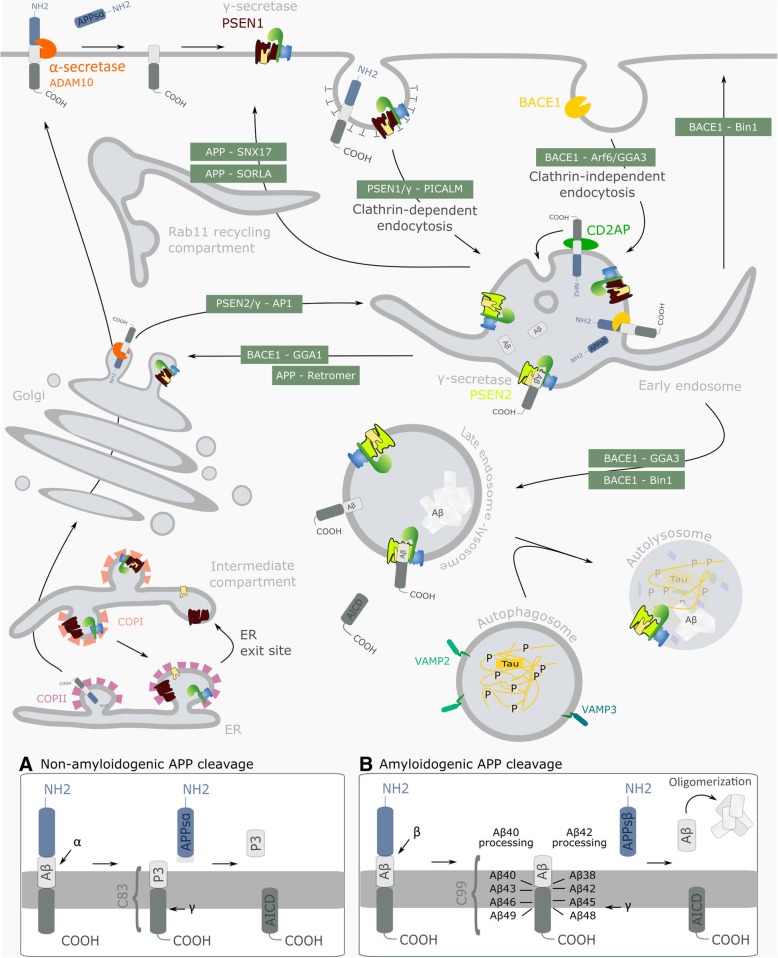
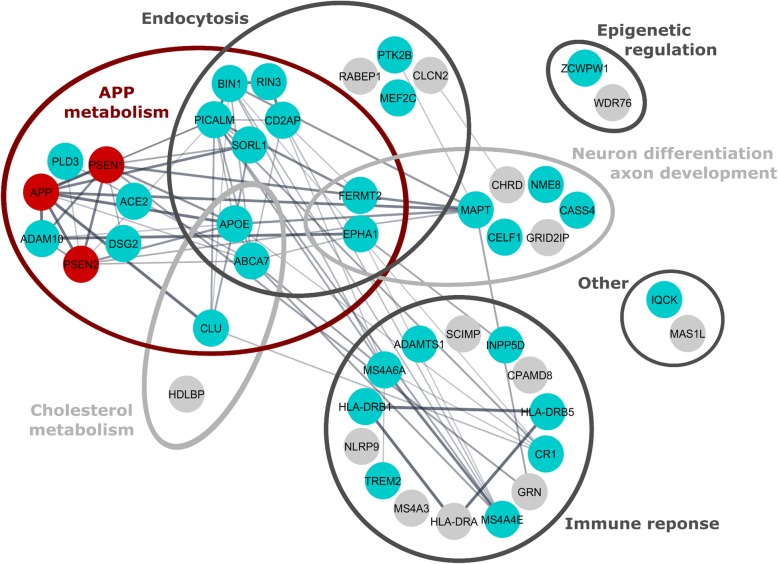
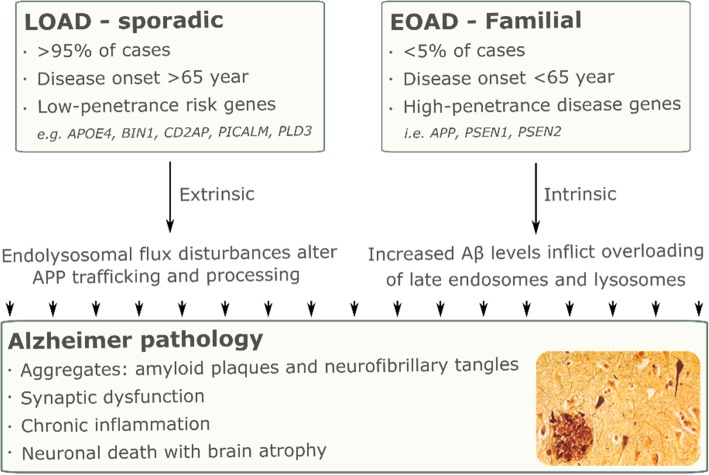
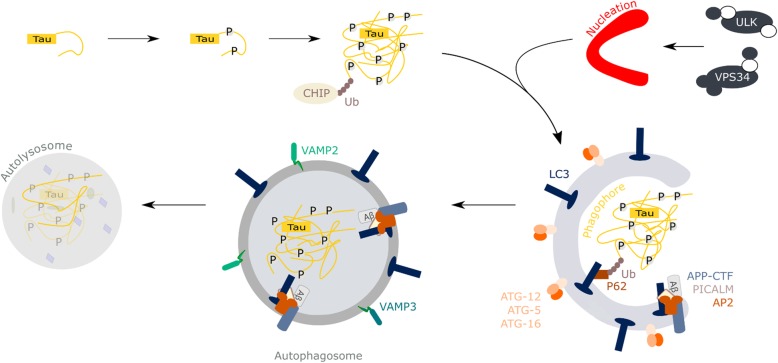
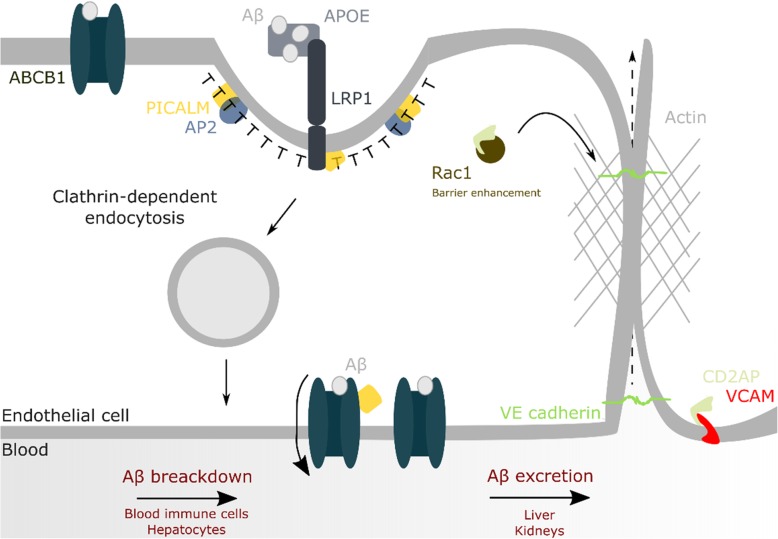
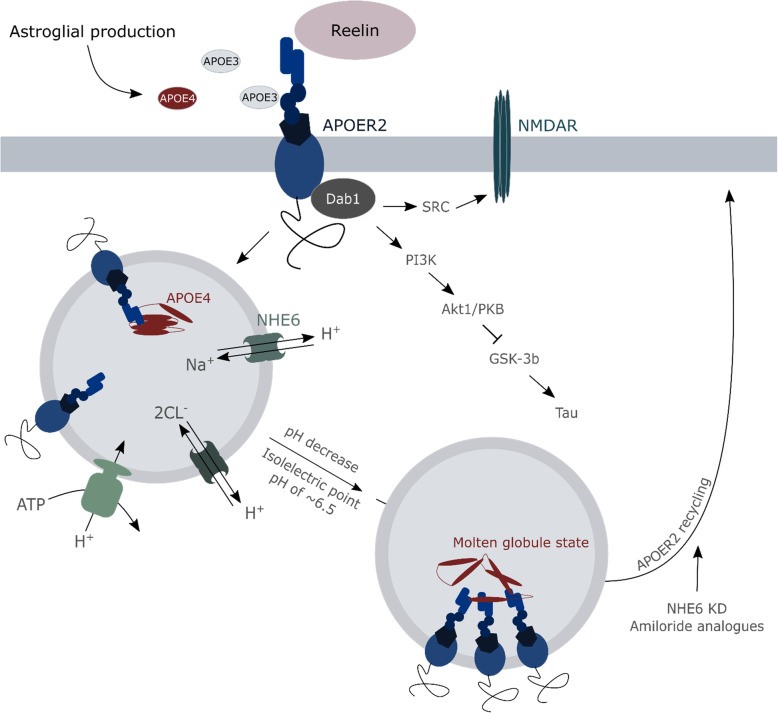
Verification
Claims the paper makes
The claims and statistics of this paper haven’t been checked yet.
Run the check — free, no account needed. It reads the open-access text and checks the sources it cites.
Claims other papers make about this one
Each is checked against this paper’s own text: does it say what the citing paper says it does?
The cited source says what the claim attributes to it.
In the citing paper
“multiple genetic risk alleles associated with AD are thought to be active in this pathway [34].”
From Microglia specific deletion of miR-155 in Alzheimer’s disease mouse models reduces amyloid-β pathology but causes hyperexcitability and seizures (2023) · cites this paper as [34]
The cited source says what the claim attributes to it.
In the citing paper
“Aβ results from the proteolysis of APP, a type I transmembrane protein targeted first at the plasma membrane, then rapidly endocytosed to endosomes to be metabolized to Aβ or subsequently sent to the lysosomal compartment for degradation (Wang X. et al., 2017; Van Acker et al., 2019).”
From Emerging Alternative Proteinases in APP Metabolism and Alzheimer’s Disease Pathogenesis: A Focus on MT1-MMP and MT5-MMP (2019) · cites this paper as Van Acker et al., 2019
Self-check
Percentages, sums and reported differences re-computed from the paper’s own numbers.
The self-check needs the paper’s full text.
Citations
Cites
Meta-Analysis of 74,046 Individuals Identifies 11 New Susceptibility Loci for Alzheimer’s Disease
(EADI), E. A. D. I., Lambert, J.-C., (GERAD), G. A. E. R. I. A. D., Alzheimer's Disease Genetic Consortium (ADGC), (CHARGE), C. F. H. A. A. R. I. G. E., Ibrahim-Verbaas, C. A., Harold, D., Naj, A. C., Sims, R., Bellenguez, C., et al. (2013) · Nature Genetics · doi:10.1038/ng.2802 · Cited by 4,336
Blood–brain barrier breakdown in Alzheimer disease and other neurodegenerative disorders
Sweeney, M. D., Sagare, A. P., & Zlokovic, B. V. (2018) · Nature Reviews Neurology · doi:10.1038/nrneurol.2017.188 · Cited by 3,076
TREM2 Variants in Alzheimer's Disease
Guerreiro, R., Wojtas, A., Bras, J., Carrasquillo, M., Rogaeva, E., Majounie, E., Cruchaga, C., Sassi, C., Kauwe, J. S. K., Younkin, S., et al. (2013) · New England Journal of Medicine · doi:10.1056/nejmoa1211851 · Cited by 3,020
Krasemann, S., Madore, C., Cialic, R., Baufeld, C., Calcagno, N., El Fatimy, R., Beckers, L., O’Loughlin, E., Xu, Y., Fanek, Z., et al. (2017) · Immunity · doi:10.1016/j.immuni.2017.08.008 · Cited by 2,979
Alzheimer Disease Genetics Consortium (ADGC), Kunkle, B. W., The European Alzheimer’s Disease Initiative (EADI), Cohorts for Heart and Aging Research in Genomic Epidemiology Consortium (CHARGE), Genetic and Environmental Risk in AD/Defining Genetic, P. A. E. R. F. A. D. C. (., Grenier-Boley, B., Sims, R., Bis, J. C., Damotte, V., Naj, A. C., et al. (2019) · Nature Genetics · doi:10.1038/s41588-019-0358-2 · Cited by 2,946
Variant of TREM2 Associated with the Risk of Alzheimer's Disease
Jonsson, T., Stefansson, H., Steinberg, S., Jonsdottir, I., Jonsson, P. V., Snaedal, J., Bjornsson, S., Huttenlocher, J., Levey, A. I., Lah, J. J., et al. (2013) · New England Journal of Medicine · doi:10.1056/nejmoa1211103 · Cited by 2,558
Jansen, I. E., Savage, J. E., Watanabe, K., Bryois, J., Williams, D. M., Steinberg, S., Sealock, J., Karlsson, I. K., Hägg, S., Athanasiu, L., et al. (2019) · Nature Genetics · doi:10.1038/s41588-018-0311-9 · Cited by 2,277
The cholinergic system in the pathophysiology and treatment of Alzheimer’s disease
Hampel, H., Mesulam, M.-M., Cuello, A. C., Farlow, M. R., Giacobini, E., Grossberg, G. T., Khachaturian, A. S., Vergallo, A., Cavedo, E., Snyder, P. J., et al. (2018) · Brain · doi:10.1093/brain/awy132 · Cited by 1,918
Depletion of microglia and inhibition of exosome synthesis halt tau propagation
Asai, H., Ikezu, S., Tsunoda, S., Medalla, M., Luebke, J., Haydar, T., Wolozin, B., Butovsky, O., Kügler, S., & Ikezu, T. (2015) · Nature Neuroscience · doi:10.1038/nn.4132 · Cited by 1,591
Brain Infarction and the Clinical Expression of Alzheimer Disease<subtitle>The Nun Study</subtitle>
Snowdon, D. A. (1997) · JAMA: The Journal of the American Medical Association · doi:10.1001/jama.1997.03540340047031 · Cited by 1,590
Cited by
Sorted by citations
Knopman, D. S., Amieva, H., Petersen, R. C., Chételat, G., Holtzman, D. M., Hyman, B. T., Nixon, R. A., & Jones, D. T. (2021) · Nature Reviews Disease Primers · doi:10.1038/s41572-021-00269-y · Cited by 2,606
ApoE in Alzheimer’s disease: pathophysiology and therapeutic strategies
Raulin, A.-C., Doss, S. V., Trottier, Z. A., Ikezu, T. C., Bu, G., & Liu, C.-C. (2022) · Molecular Neurodegeneration · doi:10.1186/s13024-022-00574-4 · Cited by 756
ApoE Cascade Hypothesis in the pathogenesis of Alzheimer’s disease and related dementias
Martens, Y. A., Zhao, N., Liu, C.-C., Kanekiyo, T., Yang, A. J., Goate, A. M., Holtzman, D. M., & Bu, G. (2022) · Neuron · doi:10.1016/j.neuron.2022.03.004 · Cited by 316
Fernández-Calle, R., Konings, S. C., Frontiñán-Rubio, J., García-Revilla, J., Camprubí-Ferrer, L., Svensson, M., Martinson, I., Boza-Serrano, A., Venero, J. L., Nielsen, H. M., et al. (2022) · Molecular Neurodegeneration · doi:10.1186/s13024-022-00566-4 · Cited by 278
Lysosomal dysfunction in neurodegeneration: emerging concepts and methods
Udayar, V., Chen, Y., Sidransky, E., & Jagasia, R. (2022) · Trends in Neurosciences · doi:10.1016/j.tins.2021.12.004 · Cited by 255
Apolipoprotein E and Alzheimer’s disease: Findings, hypotheses, and potential mechanisms
Koutsodendris, N., Nelson, M. R., Rao, A., & Huang, Y. (2022) · Annual Review of Pathology Mechanisms of Disease · doi:10.1146/annurev-pathmechdis-030421-112756 · Cited by 231
Microglial Phagocytosis: A Disease-Associated Process Emerging from Alzheimer’s Disease Genetics
Podleśny-Drabiniok, A., Marcora, E., & Goate, A. M. (2020) · Trends in Neurosciences · doi:10.1016/j.tins.2020.10.002 · Cited by 211
Autophagy enables microglia to engage amyloid plaques and prevents microglial senescence
Choi, I., Wang, M., Yoo, S., Xu, P., Seegobin, S. P., Li, X., Han, X., Wang, Q., Peng, J., Zhang, B., et al. (2023) · Nature Cell Biology · doi:10.1038/s41556-023-01158-0 · Cited by 202
Moulton, M. J., Barish, S., Ralhan, I., Chang, J., Goodman, L. D., Harland, J. G., Marcogliese, P. C., Johansson, J. O., Ioannou, M. S., & Bellen, H. J. (2021) · Proceedings of the National Academy of Sciences · doi:10.1073/pnas.2112095118 · Cited by 180
Knupp, A., Mishra, S., Martinez, R., Braggin, J. E., Szabo, M., Kinoshita, C., Hailey, D. W., Small, S. A., Jayadev, S., & Young, J. E. (2020) · Cell Reports · doi:10.1016/j.celrep.2020.107719 · Cited by 165
Human Microglia Show Unique Transcriptional Changes in Alzheimer's Disease
Prater, K. E., Green, K. J., Mamde, S., Sun, W., Cochoit, A., Smith, C. L., Chiou, K. L., Heath, L., Rose, S. E., Wiley, J., et al. (2023) · Nature Aging · doi:10.1038/s43587-023-00424-y · Cited by 164
Melatonin and Autophagy in Aging-Related Neurodegenerative Diseases
Luo, F., Sandhu, A. F., Rungratanawanich, W., Williams, G. E., Akbar, M. D., Zhou, S., Song, B., & Wang, X. (2020) · International Journal of Molecular Sciences · doi:10.3390/ijms21197174 · Cited by 162
The Important Interface Between Apolipoprotein E and Neuroinflammation in Alzheimer’s Disease
Kloske, C. M., & Wilcock, D. M. (2020) · Frontiers in Immunology · doi:10.3389/fimmu.2020.00754 · Cited by 152
Lagomarsino, V. N., Pearse, R. V., Liu, L., Hsieh, Y.-C., Fernandez, M. A., Vinton, E. A., Paull, D., Felsky, D., Tasaki, S., Gaiteri, C., et al. (2021) · Neuron · doi:10.1016/j.neuron.2021.08.003 · Cited by 151
Fibrillar Aβ triggers microglial proteome alterations and dysfunction in Alzheimer mouse models
Sebastian Monasor, L., Müller, S. A., Colombo, A. V., Tanrioever, G., König, J., Roth, S., Liesz, A., Berghofer, A., Piechotta, A., Prestel, M., et al. (2020) · eLife · doi:10.7554/elife.54083 · Cited by 147
Macroautophagy in CNS health and disease
Griffey, C. J., & Yamamoto, A. (2022) · Nature reviews. Neuroscience · doi:10.1038/s41583-022-00588-3 · Cited by 147
The emerging role of exosomes in Alzheimer’s disease
Zhang, T., Ma, S., Lv, J., Wang, X., Afewerky, H. K., Li, H. R., & Lu, Y. (2021) · Ageing Research Reviews · doi:10.1016/j.arr.2021.101321 · Cited by 141
Protective genes and pathways in Alzheimer’s disease: moving towards precision interventions
Seto, M., Weiner, R. L., Dumitrescu, L., & Hohman, T. J. (2021) · Molecular Neurodegeneration · doi:10.1186/s13024-021-00452-5 · Cited by 135
TREM2-independent microgliosis promotes tau-mediated neurodegeneration in the presence of ApoE4.
Gratuze, M., Schlachetzki, J. C. M., D’Oliveira Albanus, R., Jain, N., Novotny, B., Brase, L., Rodriguez, L., Mansel, C., Kipnis, M., O’Brien, S., et al. (2023) · Neuron · doi:10.1016/j.neuron.2022.10.022 · Cited by 115
Jiang, S., & Bhaskar, K. (2020) · Frontiers in Molecular Neuroscience · doi:10.3389/fnmol.2020.586731 · Cited by 119
Western, D., Timsina, J., Wang, L., Wang, C., Yang, C., Phillips, B., Wang, Y., Liu, M., Ali, M., Beric, A., et al. (2024) · Nature Genetics · doi:10.1038/s41588-024-01972-8 · Cited by 111
PICALM and Alzheimer’s Disease: An Update and Perspectives
Ando, K., Nagaraj, S., Küçükali, F., de Fisenne, M.-A., Kosa, A.-C., Doeraene, E., Lopez Gutierrez, L., Brion, J.-P., & Leroy, K. (2022) · Cells · doi:10.3390/cells11243994 · Cited by 104
Proteostasis and lysosomal repair deficits in transdifferentiated neurons of Alzheimer’s disease
Chou, C.-C., Vest, R., Prado, M. A., Wilson-Grady, J., Paulo, J. A., Shibuya, Y., Moran-Losada, P., Lee, T.-T., Luo, J., Gygi, S. P., et al. (2025) · Nature Cell Biology · doi:10.1038/s41556-025-01623-y · Cited by 94
Harnessing endophenotypes and network medicine for Alzheimer's drug repurposing
Fang, J., Pieper, A. A., Nussinov, R., Lee, G., Bekris, L. M., Leverenz, J. B., Cummings, J. L., & Cheng, F. (2020) · Medicinal Research Reviews · doi:10.1002/med.21709 · Cited by 96
Avrahami, D., Wang, Y. J., Schug, J., Feleke, E., Gao, L., Liu, C., Naji, A., Gläser, B., & Kaestner, K. H. (2020) · Molecular Metabolism · doi:10.1016/j.molmet.2020.101057 · Cited by 93
García-González, L., Pilat, D., Baranger, K., & Rivera, S. (2019) · Frontiers in Aging Neuroscience · doi:10.3389/fnagi.2019.00244 · Cited by 88
Friend, Foe or Both? Immune Activity in Alzheimer’s Disease
Frost, G. R., Jonas, L. A., & Li, Y. (2019) · Frontiers in Aging Neuroscience · doi:10.3389/fnagi.2019.00337 · Cited by 88
Genetically Encoded, pH-Sensitive mTFP1 Biosensor for Probing Lysosomal pH
Chin, M. Y., Patwardhan, A. R., Ang, K.-H., Wang, A. L., Alquézar, C., Welch, M., Nguyen, P. T., Grabe, M., Molofsky, A. V., Arkin, M. R., et al. (2021) · ACS Sensors · doi:10.1021/acssensors.0c02318 · Cited by 89
The role of Alzheimer's disease risk genes in endolysosomal pathways
Szabo, M. P., Mishra, S., Knupp, A., & Young, J. E. (2021) · Neurobiology of Disease · doi:10.1016/j.nbd.2021.105576 · Cited by 87
Sharoar, M. G., Palko, S., Ge, Y., Saido, T. C., & Yan, R. (2021) · Molecular Neurodegeneration · doi:10.1186/s13024-021-00464-1 · Cited by 78
The lysosomal membrane—export of metabolites and beyond
Rudnik, S., & Daμμe, M. (2020) · FEBS Journal · doi:10.1111/febs.15602 · Cited by 75
Ca2+ Dyshomeostasis Disrupts Neuronal and Synaptic Function in Alzheimer’s Disease
McDaid, J., Mustaly-Kalimi, S., & Stutzmann, G. E. (2020) · Cells · doi:10.3390/cells9122655 · Cited by 73
The necroptosis cell death pathway drives neurodegeneration in Alzheimer’s disease
Balusu, S., & Strooper, B. D. (2024) · Acta Neuropathologica · doi:10.1007/s00401-024-02747-5 · Cited by 76
Pirolli, N. H., Bentley, W. E., & Jay, S. M. (2021) · Advanced Biology · doi:10.1002/adbi.202000540 · Cited by 71
Phospholipase D3 degrades mitochondrial DNA to regulate nucleotide signaling and APP metabolism
Acker, Z. P. V., Perdok, A., Hellemans, R., North, K., Vorsters, I., Cappel, C. C., Dehairs, J., Swinnen, J. V., Sannerud, R., Bretou, M., et al. (2023) · Nature Communications · doi:10.1038/s41467-023-38501-w · Cited by 76
Self-citationLiu, T., Zhu, B., Liu, Y., Zhang, X., Yin, J., Li, X., Jiang, L., Hodges, A. P., Rosenthal, S. B., Zhou, L., et al. (2020) · Journal of Experimental Medicine · doi:10.1084/jem.20200474 · Cited by 64
Kim, S., Cho, Y.-S., Kim, Y., Park, J., Yoo, S., Gwak, J., Kim, Y., Gwon, Y., Kam, T., & Jung, Y. (2023) · Autophagy · doi:10.1080/15548627.2023.2181614 · Cited by 65
Intracellular Trafficking Mechanisms of Synaptic Dysfunction in Alzheimer’s Disease
Perdigão, C., Barata, M. A., Araújo, M. N. C. D. F., Mirfakhar, F. S., Castanheira, J., & Almeida, C. G. (2020) · Frontiers in Cellular Neuroscience · doi:10.3389/fncel.2020.00072 · Cited by 66
α– Linolenic acid modulates phagocytosis and endosomal pathways of extracellular Tau in microglia
Desale, S. E., & Chinnathambi, S. (2021) · Cell Adhesion & Migration · doi:10.1080/19336918.2021.1898727 · Cited by 63
Somogyi, A., Kirkham, E. D., Lloyd‐Evans, E., Winston, J., Allen, N. D., Mackrill, J. J., Anderson, K. E., Hawkins, P. T., Gardiner, S. E., Waller‐Evans, H., et al. (2023) · Journal of Cell Science · doi:10.1242/jcs.259875 · Cited by 65
STING signaling in the brain: Molecular threats, signaling activities, and therapeutic challenges
Yang, K., Tang, Z., Xing, C., & Yan, N. (2023) · Neuron · doi:10.1016/j.neuron.2023.10.014 · Cited by 63
Effects of APOE4 allelic dosage on lipidomic signatures in the entorhinal cortex of aged mice
Miranda, A. M., Ashok, A., Chan, R. B., Zhou, B., Xu, Y., McIntire, L. B., Area-Gomez, E., Di Paolo, G., Duff, K. E., Oliveira, T. G., et al. (2022) · Translational Psychiatry · doi:10.1038/s41398-022-01881-6 · Cited by 60
“This suggests that while some effects of APOE4 expression may be regionally restricted, others are common throughout the brain, including previously described effects of APOE4 expression on endosomal-lysosomal trafficking [33, 53].”
BackgroundCholesterol determines the cytosolic entry and seeded aggregation of tau
Tuck, B. J., Miller, L. V. C., Katsinelos, T., Smith, A. E., Wilson, E. L., Keeling, S., Cheng, S., Vaysburd, M. J., Knox, C., Tredgett, L., et al. (2022) · Cell Reports · doi:10.1016/j.celrep.2022.110776 · Cited by 57
Neprilysin inhibitors and risk of Alzheimer's disease: A future perspective
Ali, N. H., Al-Kuraishy, H. M., Al-Gareeb, A. I., Alnaaim, S. A., Alexiou, A. T., Papadakis, M., Khalifa, A. A., Saad, . M., & Batiha, G. E. (2023) · Journal of Cellular and Molecular Medicine · doi:10.1111/jcmm.17993 · Cited by 56
Evolution and Natural History of Membrane Trafficking in Eukaryotes
More, K. J., Klinger, C. M., Barlow, L. D., & Dacks, J. B. (2020) · Current Biology · doi:10.1016/j.cub.2020.03.068 · Cited by 56
Mustaly-Kalimi, S., Gallegos, W., Marr, R. A., Gilman-Sachs, A., Peterson, D. A., Sekler, I., & Stutzmann, G. E. (2022) · Proceedings of the National Academy of Sciences · doi:10.1073/pnas.2211999119 · Cited by 55
Vesicular Transport Machinery in Brain Endothelial Cells: What We Know and What We Do not
Tóth, A. E., Holst, M. R., & Nielsen, M. S. (2020) · Current Pharmaceutical Design · doi:10.2174/1381612826666200212113421 · Cited by 56
Early- and Late-Onset Alzheimer’s Disease: Two Sides of the Same Coin?
Valdez-Gaxiola, C. A., Rosales-Leycegui, F., Gaxiola-Rubio, A., Moreno-Ortíz, J. M., & Figuera, L. E. (2024) · Diseases · doi:10.3390/diseases12060110 · Cited by 55
Cary, G. A., Wiley, J. C., Gockley, J., Keegan, S., Amirtha Ganesh, S. S., Heath, L., Butler, R. R., Mangravite, L. M., Logsdon, B. A., Longo, F. M., et al. (2024) · Alzheimer's & Dementia: Translational Research & Clinical Interventions · doi:10.1002/trc2.12461 · Cited by 49
Stanciu, G. D., Rusu, R. N., Bild, V., Filipiuc, L. E., Tamba, B.-I., & Ababei, D. C. (2021) · Biomedicines · doi:10.3390/biomedicines9050576 · Cited by 47
NHE6 depletion corrects ApoE4-mediated synaptic impairments and reduces amyloid plaque load
Pohlkamp, T., Xian, X., Wong, C. H., Durakoglugil, M. S., Werthmann, G. C., Saido, T. C., Evers, B. M., White, C. L., Connor, J., Hammer, R. E., et al. (2021) · eLife · doi:10.7554/elife.72034 · Cited by 46
The microglial lysosomal system in Alzheimer’s disease: Guardian against proteinopathy
Van Acker, Z. P., Perdok, A., Bretou, M., & Annaert, W. (2021) · Ageing Research Reviews · doi:10.1016/j.arr.2021.101444 · Cited by 45
Self-citationHe, Y., Ruganzu, J. B., Zheng, Q., Wu, X., Jin, H., Peng, X., Ding, B., Lin, C., Ji, S., Ma, Y., et al. (2020) · Molecular Neurobiology · doi:10.1007/s12035-020-01982-7 · Cited by 47
Aloi, M. S., Prater, K. E., Sánchez, R. E. A., Beck, A., Pathan, J. L., Davidson, S., Wilson, A., Keene, C. D., de la Iglesia, H., Jayadev, S., et al. (2023) · Journal of Neuroinflammation · doi:10.1186/s12974-023-02745-6 · Cited by 43
Bretou, M., Sannerud, R., Escamilla‐Ayala, A., Leroy, T., Vrancx, C., Acker, Z. P. V., Perdok, A., Vermeire, W., Vorsters, I., Keymolen, S. V., et al. (2024) · Developmental Cell · doi:10.1016/j.devcel.2024.03.030 · Cited by 47
Self-citationThe multiple roles of chronic stress and glucocorticoids in Alzheimer's disease pathogenesis
Burke, M. R., Sotiropoulos, I., & Waites, C. L. (2024) · Trends in Neurosciences · doi:10.1016/j.tins.2024.08.015 · Cited by 43
Unveiling the Complex Role of Exosomes in Alzheimer’s Disease
Sun, M., & Chen, Z. (2024) · Journal of Inflammation Research · doi:10.2147/jir.s466821 · Cited by 39
Therapeutic Potential of Targeting Mitochondria for Alzheimer’s Disease Treatment
Atlante, A., Amadoro, G., Latina, V., & Valenti, D. (2022) · Journal of Clinical Medicine · doi:10.3390/jcm11226742 · Cited by 40
Alzheimer's Disease: Tau Pathology and Dysfunction of Endocytosis
Ando, K., Houben, S., Homa, M., de Fisenne, M.-A., Potier, M., Erneux, C., Brion, J., & Leroy, K. (2021) · Frontiers in Molecular Neuroscience · doi:10.3389/fnmol.2020.583755 · Cited by 42
Neuronal ApoE4 in Alzheimer’s disease and potential therapeutic targets
Zhang, L., Xia, Y., & Gui, Y. (2023) · Frontiers in Aging Neuroscience · doi:10.3389/fnagi.2023.1199434 · Cited by 41
Mechanisms of neuronal survival safeguarded by endocytosis and autophagy
Overhoff, M., Bruyckere, E. D., & Kononenko, N. L. (2020) · Journal of Neurochemistry · doi:10.1111/jnc.15194 · Cited by 40
PIKfyve activity is required for lysosomal trafficking of tau aggregates and tau seeding
Soares, A. C., Ferreira, A., Mariën, J., Delay, C., Lee, E. B., Trojanowski, J. Q., Moechars, D., Annaert, W. G., & Muynck, L. D. (2021) · Journal of Biological Chemistry · doi:10.1016/j.jbc.2021.100636 · Cited by 43
Self-citationEndosomal dysfunction impacts extracellular vesicle release: Central role in Aβ pathology
Arbo, B. D., Cechinel, L. R., Palazzo, R. P., & Siqueira, I. R. (2019) · Ageing Research Reviews · doi:10.1016/j.arr.2019.101006 · Cited by 40
Role of the endolysosomal pathway and exosome release in tau propagation
Yan, M., & Zheng, T. (2021) · Neurochemistry International · doi:10.1016/j.neuint.2021.104988 · Cited by 36
Kloske, C. M., Belloy, M. E., Blue, E. E., Bowman, G. R., Carrillo, M. C., Chen, X., Chiba‐Falek, O., Davis, A. A., Paolo, G. D., Garretti, F., et al. (2024) · Alzheimer's & Dementia · doi:10.1002/alz.13877 · Cited by 33
The autophagy adaptor TRIAD3A promotes tau fibrillation by nested phase separation
Zhou, J., Chuang, Y. ‘., Redding‐Ochoa, J., Zhang, R., Platero, A. J., Barrett, A., Troncoso, J. C., Worley, P. F., & Zhang, W. (2024) · Nature Cell Biology · doi:10.1038/s41556-024-01461-4 · Cited by 33
Influential role of 7-Ketocholesterol in the progression of Alzheimer’s disease
Mahalakshmi, K., Parimalanandhini, D., Sangeetha, R., Livya Catherene, M., Beulaja, M., Thiagarajan, R., Arumugam, M., Janarthanan, S., & Manikandan, R. (2021) · Prostaglandins & Other Lipid Mediators · doi:10.1016/j.prostaglandins.2021.106582 · Cited by 32
Rab10 regulates the sorting of internalised TrkB for retrograde axonal transport
Lazo, O. M., & Schiavo, G. (2023) · eLife · doi:10.7554/elife.81532 · Cited by 26
Herman, M., Randall, G. W., Spiegel, J. L., Maldonado, D. J., & Simoes, S. (2024) · Philosophical Transactions of the Royal Society B Biological Sciences · doi:10.1098/rstb.2022.0387 · Cited by 32
Stroobants, S., D’Hooge, R., & Daμμe, M. (2020) · Brain Pathology · doi:10.1111/bpa.12903 · Cited by 31
Hubbard, E. E., Heil, L. R., Merrihew, G. E., Chhatwal, J. P., Farlow, M. R., McLean, C., Ghetti, B. F., Newell, K. L., Frosch, M. P., Bateman, R. J., et al. (2021) · Journal of Proteome Research · doi:10.1021/acs.jproteome.1c00558 · Cited by 33
The MUC6/AP2A2 Locus and Its Relevance to Alzheimer’s Disease: A Review
Nelson, P. T., Fardo, D. W., & Katsumata, Y. (2020) · Journal of Neuropathology & Experimental Neurology · doi:10.1093/jnen/nlaa024 · Cited by 28
The Mechanistic Role of Bridging Integrator 1 (BIN1) in Alzheimer’s Disease
Gao, P.-R., Ye, L., Cheng, H.-R., & Li, H. (2020) · Cellular and Molecular Neurobiology · doi:10.1007/s10571-020-00926-y · Cited by 34
Iron Responsive Element-Mediated Responses to Iron Dyshomeostasis in Alzheimer’s Disease
Hin, N., Newman, M., Pederson, S., & Lardelli, M. T. (2021) · Journal of Alzheimer s Disease · doi:10.3233/jad-210200 · Cited by 28
Assaying Microglia Functions In Vitro
Maguire, E., Connor‐Robson, N., Shaw, B., O’Donoghue, R., Stöberl, N., & Hall‐Roberts, H. (2022) · Cells · doi:10.3390/cells11213414 · Cited by 31
Ali, N. H., Al-Kuraishy, H. M., Al-Gareeb, A. I., Alnaaim, S. A., Alexiou, A. T., Papadakis, M., Saad, . M., & Batiha, G. E. (2023) · Acta Neurologica Belgica · doi:10.1007/s13760-023-02403-x · Cited by 27
Delvenne, A., Vandendriessche, C., Gobom, J., Burgelman, M., Dujardin, P., Nolf, C. D., Tijms, B. M., Teunissen, C. E., Schindler, S. E., Verhey, F. R. J., et al. (2024) · Fluids and Barriers of the CNS · doi:10.1186/s12987-024-00555-3 · Cited by 27
Autophagy prevents microglial senescence
Amin, S., Liu, B., & Gan, L. (2023) · Nature Cell Biology · doi:10.1038/s41556-023-01168-y · Cited by 26
Tangavelou, K., & Bhaskar, K. (2024) · International Journal of Molecular Sciences · doi:10.3390/ijms252212335 · Cited by 25
Bécot, A., Volgers, C., & van Niel, G. (2020) · Biomedicines · doi:10.3390/biomedicines8080272 · Cited by 25
Protective ApoE variants support neuronal function by effluxing oxidized phospholipids
Ralhan, I., Do, A. D., Bae, J.-Y., Feringa, F. M., Cai, W., Chang, J., Chik, K., Lee, N. Y. J., Gerry, C. J., van der Kant, R., et al. (2026) · Neuron · doi:10.1016/j.neuron.2025.10.040 · Cited by 23
Association of CD2AP neuronal deposits with Braak neurofibrillary stage in Alzheimer’s disease
Camacho, J., Rábano, A., Marazuela, P., Bonaterra‐Pastra, A., Serna, G., Moliné, T., y Cajal, S. R., Martínez-Sáez, E. A., & Hernández‐Guillamón, M. (2021) · Brain Pathology · doi:10.1111/bpa.13016 · Cited by 25
Yeganeh, P. N., Kwak, S. S., Jorfi, M., Koler, K., Kalatturu, T., von Maydell, D. K., Liu, Z., Guo, K., Choi, Y., Park, J., et al. (2024) · Neuron · doi:10.1016/j.neuron.2024.10.029 · Cited by 24
Wang, X., Xie, Y., Fan, X., Wu, X., Wang, D., & Li, Z. (2024) · Alzheimer s Research & Therapy · doi:10.1186/s13195-024-01489-6 · Cited by 26
Cell type-specific functions of Alzheimer's disease endocytic risk genes
Maninger, J.-K., Nowak, K., Goberdhan, S., O'Donoghue, R., & Connor-Robson, N. (2024) · Philosophical Transactions of the Royal Society B: Biological Sciences · doi:10.1098/rstb.2022.0378 · Cited by 22
Nordengen, K., Kirsebom, B., Richter, G., Pålhaugen, L., Gísladóttir, B., Siafarikas, N., Nakling, A. E., Rongve, A., Bråthen, G., Grøntvedt, G. R., et al. (2023) · Journal of Neuroinflammation · doi:10.1186/s12974-023-02973-w · Cited by 21
Zhang, X., Liu, J., Zhong, S., Zhang, Z., Zhou, Q., Yang, J., Chang, X., & Wang, H. (2024) · Environment & Health · doi:10.1021/envhealth.4c00176 · Cited by 20
Possible protective role of 17β-estradiol against COVID-19
Khan, N. (2020) · doi:10.46439/allergy.1.010 · Cited by 20
Loss of endosomal exchanger NHE6 leads to pathological changes in tau in human neurons
Fernandez, M. A., Bah, F., Ma, L., Lee, Y., Schmidt, M., Welch, E., Morrow, E. M., & Young‐Pearse, T. L. (2022) · Stem Cell Reports · doi:10.1016/j.stemcr.2022.08.001 · Cited by 19
Ramsden, C. E., Keyes, G. S., Calzada, E., Horowitz, M. S., Zamora, D., Jahanipour, J., Sedlock, A., Indig, F. E., Moaddel, R., Kapogiannis, D., et al. (2022) · Journal of Alzheimer's Disease · doi:10.3233/jad-220071 · Cited by 19
Primary cilia-mediated regulation of microglial secretion in Alzheimer’s disease
Yeo, S., Jang, J., Jung, H. J., Lee, H., & Choe, Y. (2023) · Frontiers in Molecular Biosciences · doi:10.3389/fmolb.2023.1250335 · Cited by 18
Vrancx, C., & Annaert, W. G. (2025) · Trends in Neurosciences · doi:10.1016/j.tins.2025.05.007 · Cited by 18
Self-citationTangles and Plaques: A deep dive into the pathological hallmarks of Alzheimer’s disease
Vanya, Kumari, S., Bagri, K., & Deshmukh, R. R. (2025) · Neuroscience · doi:10.1016/j.neuroscience.2025.10.050 · Cited by 18
Lyso-IP: Uncovering Pathogenic Mechanisms of Lysosomal Dysfunction
Chen, C., Sidransky, E., & Chen, Y. (2022) · Biomolecules · doi:10.3390/biom12050616 · Cited by 18
Advances in Genetic and Molecular Understanding of Alzheimer’s Disease
Ibáñez, L., Cruchaga, C., & Fernández, M. V. (2021) · Genes · doi:10.3390/genes12081247 · Cited by 20
Impact of endolysosomal dysfunction upon exosomes in neurodegenerative diseases
Izco, M., Carlos, E., & Alvarez‐Erviti, L. (2022) · Neurobiology of Disease · doi:10.1016/j.nbd.2022.105651 · Cited by 18
Schreiner, T. G., Menéndez‐González, M., & Popescu, B. O. (2022) · Biomedicines · doi:10.3390/biomedicines10071509 · Cited by 18
Zhou, B., Li, J., Wu, A., Wang, X., Cheng, L., Yang, G., Gao, D., & Zhu, C. (2025) · Frontiers in Aging Neuroscience · doi:10.3389/fnagi.2025.1587986 · Cited by 18
Cuddy, L. K., Alia, A. O., Salvo, M. A., Chandra, S., Grammatopoulos, T. N., Justman, C. J., Lansbury, P. T., Mazzulli, J. R., & Vassar, R. J. (2022) · Molecular Neurodegeneration · doi:10.1186/s13024-022-00561-9 · Cited by 17
AP2S1 regulates APP degradation through late endosome–lysosome fusion in cells and APP / PS1 mice
Wen, Q., Luo, B., Xie, X., Zhou, G., Chen, J., Li, S., Liu, Y., Xie, S., Chen, L., Li, K., et al. (2022) · Traffic · doi:10.1111/tra.12874 · Cited by 19
Metadata
- Authors
- Van Acker, Z. P., Bretou, M., & Annaert, W.
- Affiliations
- VIB-KU Leuven Center for Brain & Disease Research (BE)
- Corresponding author
- Annaert, Wim
- Venue
- Molecular Neurodegeneration
- Published
- 2019-06-03
- Volume
- 14
- Issue
- 1
- Pages
- 20-20
- ISSN
- 1750-1326 (ISSN-L)
- PMC
- PMC6547588
- OpenAlex
- W2948656839
- Cited by
- 222
- References
- 171
- Citations by year
- 2026: 10 · 2025: 31 · 2024: 53 · 2023: 26 · 2022: 26 · 2021: 40 · 2020: 31 · 2019: 5
- FWCI
- 3.00
- Type
- journal article
- Language
- en
- Open access
- gold
- doi.org
- Locations
- Molecular Neurodegeneration (publishedVersion, cc-by)
- PubMed Central (publishedVersion, cc-by)
- PubMed (publishedVersion)
- Lirias (KU Leuven) (submittedVersion, other-oa)
- DOAJ (DOAJ: Directory of Open Access Journals) (submittedVersion, cc-by-sa)
- Funders
- Onderzoeksraad, KU Leuven (C16/15/073)
- FWO (S006617N, G078117N, G05601N)
- Hercules (AKUL/11/30, AKUL/13/39)
- SAO (2917/033, S#20180020)
- Alzheimer Association (AARF-18-564825)
- Topics
- Life Sciences › Neuroscience › Cellular and Molecular Neuroscience › Alzheimer's disease research and treatments
- Life Sciences › Biochemistry, Genetics and Molecular Biology › Cell Biology › Autophagy in Disease and Therapy
- Life Sciences › Biochemistry, Genetics and Molecular Biology › Cell Biology › Cellular transport and secretion
- Keywords
- late-onset Alzheimer's disease, endolysosomal dysfunction, autophagy, autophagic flux, lysosomal homeostasis, genetic risk factors, APOE ε4, BIN1, CD2AP, PICALM, PLD3, TREM2, amyloid-beta clearance, blood-brain barrier, cholesterol metabolism, endocytic transport, aging, neurodegeneration
- MeSH terms
- Alzheimer Disease, Animals, Autophagy, Humans, Lysosomes, Membrane Glycoproteins, Risk Factors, Amyloid beta-Protein Precursor
About these checks
Registry, retraction, Cites and statistics results are computed, not judged, with one exception: a printed reference that no index lists is read once by a model before it counts as a citation error. Claims are extracted by a model and kept only when their quote appears verbatim in the text; each cited source is then checked, with a model’s help, for whether it says what the claim relies on. Those verdicts can be wrong — read the claim’s quote and the cited source before relying on one.
Statistics and arithmetic are recomputed, not judged.
Confidence bands are shown only for fields calibrated on our annotated test set. None is calibrated yet, so no band is shown.
What counts as a claim ›How we measure confidence ›How we check this ›
Are you an author, or do you see a problem with this page? Request a review
