

Insulin resistance in polycystic ovary syndrome across various tissues: an updated review of pathogenesis, evaluation, and treatment
Open accessThe DOI matches its Crossref record; 222 of the 223 references it cites were found in a registry or an index.
Abstract
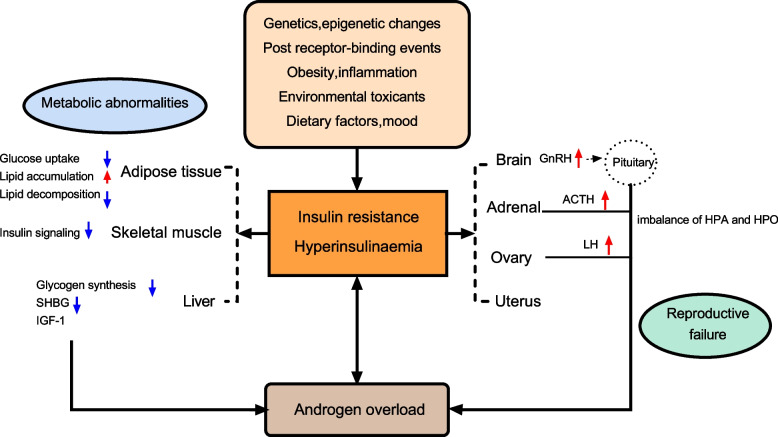
Polycystic ovary syndrome (PCOS) is a common endocrine disorder characterized by chronic ovulation dysfunction and overabundance of androgens; it affects 6–20% of women of reproductive age. PCOS involves various pathophysiological factors, and affected women usually have significant insulin resistance (IR), which is a major cause of PCOS. IR and compensatory hyperinsulinaemia have differing pathogeneses in various tissues, and IR varies among different PCOS phenotypes. Genetic and epigenetic changes, hyperandrogenaemia, and obesity aggravate IR. Insulin sensitization drugs are a new treatment modality for PCOS. We searched PubMed, Google Scholar, Elsevier, and UpToDate databases in this review, and focused on the pathogenesis of IR in women with PCOS and the pathophysiology of IR in various tissues. In addition, the review provides a comprehensive overview of the current progress in the efficacy of insulin sensitization therapy in the management of PCOS, providing the latest evidence for the clinical treatment of women with PCOS and IR.
Overview
The claims and statistics of this paper haven’t been checked yet.
Free: it reads the open-access text and checks the first 5 claims that cite a source we can check. Create a free account to check every claim.
Integrity signals
Registry
Cites
Statistics
Figures
Verification
Claims the paper makes
The claims and statistics of this paper haven’t been checked yet.
Free: it reads the open-access text and checks the first 5 claims that cite a source we can check. Create a free account to check every claim.
Claims other papers make about this one
Each is checked against this paper’s own text: does it say what the citing paper says it does?
The cited source says what the claim attributes to it.
In the citing paper
“The insulin resistance in PCOS might also occur independently of body weight, due to inherited post-receptor defects in insulin signalling that affects metabolism and mitotic pathways, not only in classic insulin target tissues, such as skeletal muscle, liver, and adipose tissue, but also in the non-classical target tissues, such as pituitary and ovary [12, 16].”
From Liraglutide and polycystic ovary syndrome: is it only a matter of body weight? (2023) · cites this paper as [16]
The cited source says what the claim attributes to it.
In the citing paper
“For such patients, insulin resistance reduction is essential in the management of various endocrine and metabolic disorders [4].”
From Efficacy of WeChat-Based Digital Intervention Versus Metformin in Women With Polycystic Ovary Syndrome: Randomized Controlled Trial (2024) · cites this paper as [4]
Self-check
Percentages, sums and reported differences re-computed from the paper’s own numbers.
The self-check needs the paper’s full text.
Citations
Cites
2 retracted
Ahmadi, S., Jamilian, M., Karamali, M., Tajabadi-Ebrahimi, M., Jafari, P., Taghizadeh, M., Memarzadeh, M. R., & Asemi, Z. (2017) · Human Fertility · doi:10.1080/14647273.2017.1283446 · Cited by 93
RetractedRahmani, E., Jamilian, M., Samimi, M., Mehrizi, M. Z., Aghadavod, E., Akbari, E., Tamtaji, O. R., & Asemi, Z. (2017) · Gynecological Endocrinology · doi:10.1080/09513590.2017.1381680 · Cited by 47
RetractedGlucose clamp technique: a method for quantifying insulin secretion and resistance.
DeFronzo, R. A., Tobin, J. D., & Andres, R. (1979) · American Journal of Physiology-Endocrinology and Metabolism · doi:10.1152/ajpendo.1979.237.3.e214 · Cited by 7,425
The Rotterdam ESHRE/ASRM-sponsored PCOS consensus workshop group (2004) · Human Reproduction · doi:10.1093/humrep/deh098 · Cited by 6,138
Adipose Tissue as an Endocrine Organ
Kershaw, E. E., & Flier, J. S. (2004) · The Journal of Clinical Endocrinology & Metabolism · doi:10.1210/jc.2004-0395 · Cited by 5,522
Insulin signalling and the regulation of glucose and lipid metabolism
Saltiel, A. R., & Kahn, C. R. (2001) · Nature · doi:10.1038/414799a · Cited by 5,326 · cited 1×
“The β-subunit is a glycoprotein spanning the cell membrane with tyrosine kinase activity [44].”
BackgroundThe Diagnosis of Polycystic Ovary Syndrome during Adolescence
Witchel, S. F., Oberfield, S., Rosenfield, R. L., Codner, E., Bonny, A., Ibáñez, L., Pena, A., Horikawa, R., Gomez-Lobo, V., Joel, D., et al. (2015) · Hormone Research in Paediatrics · doi:10.1159/000375530 · Cited by 3,113
The Triumvirate: β-Cell, Muscle, Liver: A Collusion Responsible for NIDDM
DeFronzo, R. A. (1988) · Diabetes · doi:10.2337/diab.37.6.667 · Cited by 2,456
Mechanisms for Insulin Resistance: Common Threads and Missing Links
Samuel, V. T., & Shulman, G. I. (2012) · Cell · doi:10.1016/j.cell.2012.02.017 · Cited by 2,294 · cited 2×
“In addition, hepatic lipid accumulation activates diacylglycerol/PKC and inhibits insulin receptors, affecting insulin signalling and subsequent gluconeogenesis, thereby exacerbating hepatic IR [53].”
BackgroundRole of Brain Insulin Receptor in Control of Body Weight and Reproduction
Brüning, J. C., Gautam, D., Burks, D. J., Gillette, J., Schubert, M., Orban, P. C., Klein, R., Krone, W., Müller-Wieland, D., & Kahn, C. R. (2000) · Science · doi:10.1126/science.289.5487.2122 · Cited by 2,235 · cited 1×
“Female mice with neuron-specific destruction of IR genes show increased food intake, disrupted LH release, and impaired ovarian follicle maturation [103, 104].”
BackgroundAzziz, R., Carmina, E., Dewailly, D., Diamanti-Kandarakis, E., Escobar-Morreale, H. F., Futterweit, W., Janssen, O. E., Legro, R. S., Norman, R. J., Taylor, A. E., et al. (2006) · The Journal of Clinical Endocrinology & Metabolism · doi:10.1210/jc.2006-0178 · Cited by 2,143
Polycystic Ovary Syndrome: Definition, Aetiology, Diagnosis and Treatment
Escobar-Morreale, H. F. (2018) · Nature Reviews Endocrinology · doi:10.1038/nrendo.2018.24 · Cited by 2,083
Cantley, L. C., & Neel, B. G. (1999) · Proceedings of the National Academy of Sciences · doi:10.1073/pnas.96.8.4240 · Cited by 2,006
Diamanti-Kandarakis, E., & Dunaif, A. (2012) · Endocrine Reviews · doi:10.1210/er.2011-1034 · Cited by 1,947 · cited 4×
“HI caused by tissue IR is central to PCOS pathology [51].”
BackgroundInfluentialGlucagon-like peptide 1 (GLP-1)
Müller, T. D., Finan, B., Bloom, S. R., D'Alessio, D., Drucker, D. J., Flatt, P. R., Fritsche, A., Gribble, F., Grill, H. J., Habener, J. F., et al. (2019) · Molecular Metabolism · doi:10.1016/j.molmet.2019.09.010 · Cited by 1,868 · cited 1×
“They also exhibit anti-inflammatory properties [216, 217].”
Teede, H. J., Misso, M. L., Costello, M. F., Dokras, A., Laven, J., Moran, L., Piltonen, T., Norman, R. J., & the International PCOS Network (2018) · Clinical Endocrinology · doi:10.1111/cen.13795 · Cited by 1,823
Rosenfield, R. L., & Ehrmann, D. A. (2016) · Endocrine Reviews · doi:10.1210/er.2015-1104 · Cited by 1,603
Bozdag, G., Mumusoglu, S., Zengin, D., Karabulut, E., & Yildiz, B. O. (2016) · Human Reproduction · doi:10.1093/humrep/dew218 · Cited by 1,526
The pathogenesis of insulin resistance: integrating signaling pathways and substrate flux
Samuel, V. T., & Shulman, G. I. (2016) · Journal of Clinical Investigation · doi:10.1172/jci77812 · Cited by 1,484 · cited 4×
“Direct effects activate de novo lipogenesis, convert excess carbohydrate substrates to triglycerides, and promote liver triglyceride delivery to adipose tissue [82].”
BackgroundInfluentialMichael, M. D., Kulkarni, R. N., Postic, C., Previs, S. F., Shulman, G. I., Magnuson, M. A., & Kahn, C. R. (2000) · Molecular Cell · doi:10.1016/s1097-2765(05)00015-8 · Cited by 1,296
Adipose-selective targeting of the GLUT4 gene impairs insulin action in muscle and liver
Abel, E. D., Peroni, O., Kim, J. K., Kim, Y.-B., Boss, O., Hadro, E., Minnemann, T., Shulman, G. I., & Kahn, B. B. (2001) · Nature · doi:10.1038/35055575 · Cited by 1,253
The Discovery and Development of Liraglutide and Semaglutide
Knudsen, L. B., & Lau, J. (2019) · Frontiers in Endocrinology · doi:10.3389/fendo.2019.00155 · Cited by 970 · cited 2×
“Semaglutide [168] ↓oxidative stress ↓inflammatory response ↓Er stress ↑heart rate、hypoglycemia、headache”
BackgroundPhysiological effects of melatonin: Role of melatonin receptors and signal transduction pathways
PANDIPERUMAL, S., TRAKHT, I., SRINIVASAN, V, SPENCE, D., MAESTRONI, G., ZISAPEL, N., & CARDINALI, D. (2008) · Progress in Neurobiology · doi:10.1016/j.pneurobio.2008.04.001 · Cited by 791
Adipocytokines in Obesity and Metabolic Disease
Cao, H. (2014) · Journal of Endocrinology · doi:10.1530/joe-13-0339 · Cited by 705
Genome-wide association study identifies eight new risk loci for polycystic ovary syndrome
Shi, Y., Zhao, H., Shi, Y., Cao, Y., Yang, D., Li, Z., Zhang, B., Liang, X., Li, T., Chen, J., et al. (2012) · Nature Genetics · doi:10.1038/ng.2384 · Cited by 678 · cited 1×
“Genome-wide association studies on European, Chinese, and Indian populations have established that some insulin receptor (INSR) gene variants (rs2059807 and rs1799817) are significantly associated with IR in women with PCOS [33, 34].”
BackgroundSelf-citationNawrocki, A. R., Rajala, M. W., Tomas, E., Pajvani, U. B., Saha, A. K., Trumbauer, M. E., Pang, Z., Chen, A. S., Ruderman, N. B., Chen, H., et al. (2006) · Journal of Biological Chemistry · doi:10.1074/jbc.m505311200 · Cited by 639
Nestler, J. E., Jakubowicz, D. J., Falcon de Vargas, A., Brik, C., Quintero, N., & Medina, F. (1998) · The Journal of Clinical Endocrinology & Metabolism · doi:10.1210/jcem.83.6.4886 · Cited by 617
Update on PCOS: consequences, challenges, and guiding treatment
Hoeger, K. M., Dokras, A., & Piltonen, T. (2021) · The Journal of Clinical Endocrinology & Metabolism · doi:10.1210/clinem/dgaa839 · Cited by 610
Sanchez-Garrido, M. A., & Tena-Sempere, M. (2020) · Molecular Metabolism · doi:10.1016/j.molmet.2020.01.001 · Cited by 557
Renal, metabolic and cardiovascular considerations of SGLT2 inhibition
DeFronzo, R. A., Norton, L., & Abdul-Ghani, M. (2017) · Nature Reviews Nephrology · doi:10.1038/nrneph.2016.170 · Cited by 553
Polycystic Ovarian Syndrome: Correlation Between Hyperandrogenism, Insulin Resistance and Obesity.
Zeng, X., Xie, Y.-J., Liu, Y.-T., Long, S.-L., & Mo, Z.-C. (2020) · Clinica Chimica Acta · doi:10.1016/j.cca.2019.11.003 · Cited by 525 · cited 2×
“In addition, increased leptin expression in the hypothalamus can aggravate obesity, and enhanced leptin secretion by adipocytes can further contribute to the induction of IR [48].”
BackgroundImmunohistochemical Localization of the Androgen Receptor in Rat and Human Tissues*
SAR, M., LUBAHN, D. B., FRENCH, F. S., & WILSON, E. M. (1990) · Endocrinology · doi:10.1210/endo-127-6-3180 · Cited by 489
IRS-2 pathways integrate female reproduction and energy homeostasis
Burks, D. J., de Mora, J. F., Schubert, M., Withers, D. J., Myers, M. G., Towery, H. H., Altamuro, S. L., Flint, C. L., & White, M. F. (2000) · Nature · doi:10.1038/35030105 · Cited by 453
The insulin receptor: structure, function, and signaling
Lee, J., & Pilch, P. F. (1994) · American Journal of Physiology-Cell Physiology · doi:10.1152/ajpcell.1994.266.2.c319 · Cited by 450
Polycystic Ovary Syndrome: A Comprehensive Review of Pathogenesis, Management, and Drug Repurposing
Sadeghi, H. M., Adeli, I., Calina, D., Docea, A. O., Mousavi, T., Daniali, M., Nikfar, S., Tsatsakis, A., & Abdollahi, M. (2022) · International Journal of Molecular Sciences · doi:10.3390/ijms23020583 · Cited by 445 · cited 1×
“These two effects together lead to hyperandrogenaemia and follicular development disorders in PCOS [13].”
BackgroundCharacteristics of obesity in polycystic ovary syndrome: Etiology, treatment, and genetics
Glueck, C. J., & Goldenberg, N. (2019) · Metabolism · doi:10.1016/j.metabol.2018.11.002 · Cited by 442 · cited 2×
“TZDs can be used as alternative drug therapy for PCOS-related metabolic and reproductive abnormalities in women who cannot tolerate or respond poorly to metformin [161, 162, 213].”
BackgroundLong-term cardiometabolic disease risk in women with PCOS: a systematic review and meta-analysis
Wekker, V, van Dammen, L., Koning, A., Heida, K. Y., Painter, R. C., Limpens, J., Laven, J. S. E., Roeters van Lennep, J. E., Roseboom, T. J., & Hoek, A. (2020) · Human Reproduction Update · doi:10.1093/humupd/dmaa029 · Cited by 425
Cassar, S., Misso, M. L., Hopkins, W. G., Shaw, C. S., Teede, H. J., & Stepto, N. K. (2016) · Human Reproduction · doi:10.1093/humrep/dew243 · Cited by 415 · cited 1×
“IR and compensatory hyperinsulinaemia (HI) are considered major drivers of PCOS pathophysiology and are involved in the development of hyperandrogenaemia and reproductive dysfunction by various mechanisms [14].”
BackgroundHill, J. W., Elias, C. F., Fukuda, M., Williams, K. W., Berglund, E. D., Holland, W. L., Cho, Y.-R., Chuang, J.-C., Xu, Y., Choi, M., et al. (2010) · Cell Metabolism · doi:10.1016/j.cmet.2010.03.002 · Cited by 391 · cited 1×
“Specific knockout of insulin receptors and leptin receptors in hypothalamic proopiomelanocortin neurons induces a PCOS phenotype [106].”
BackgroundEndometrial function in women with polycystic ovary syndrome: a comprehensive review
Palomba, S., Piltonen, T. T., & Giudice, L. C. (2021) · Human Reproduction Update · doi:10.1093/humupd/dmaa051 · Cited by 372
ADASHI, E. Y., HSUEH, A. J. W., & YEN, S. S. C. (1981) · Endocrinology · doi:10.1210/endo-108-4-1441 · Cited by 366 · cited 1×
“Insulin can directly stimulate LH secretion, leading to abnormal reproductive function in PCOS patients [107].”
BackgroundDefects in insulin receptor signaling in vivo in the polycystic ovary syndrome (PCOS)
Dunaif, A., Wu, X., Lee, A., & Diamanti-Kandarakis, E. (2001) · American Journal of Physiology-Endocrinology and Metabolism · doi:10.1152/ajpendo.2001.281.2.e392 · Cited by 337 · cited 1×
“Muscle insulin-mediated glucose processing, as measured by a normal glucose clamp, was significantly reduced in all women with PCOS compared to women without PCOS [71].”
BackgroundArmanini, D., Boscaro, M., Bordin, L., & Sabbadin, C. (2022) · International Journal of Molecular Sciences · doi:10.3390/ijms23084110 · Cited by 324 · cited 1×
“Studies suggest that a more complex evaluation of the decrease in insulin sensitivity as a continuous variable is required in clinical practice [10].”
BackgroundAdiponectin action from head to toe
Brochu-Gaudreau, K., Rehfeldt, C., Blouin, R., Bordignon, V., Murphy, B. D., & Palin, M.-F. (2010) · Endocrine · doi:10.1007/s12020-009-9278-8 · Cited by 322
Hyperandrogenemia and insulin resistance: The chief culprit of polycystic ovary syndrome
Wang, J., Wu, D., Guo, H., & Li, M. (2019) · Life Sciences · doi:10.1016/j.lfs.2019.116940 · Cited by 322
Lee, Y.-S., Park, M.-S., Choung, J.-S., Kim, S.-S., Oh, H.-H., Choi, C.-S., Ha, S.-Y., Kang, Y., Kim, Y., & Jun, H.-S. (2012) · Diabetologia · doi:10.1007/s00125-012-2592-3 · Cited by 319 · cited 2×
“The combination of GLP1RAs and metformin appears to be superior to any single agent in reducing body weight, hyperandrogenaemia, IR, and ovulation disorders in women with PCOS and may even improve metabolic outcomes in women who previously had an inadequate response to metformin [162, 217].”
BackgroundEarly programming of glucose–insulin metabolism
OZANNE, S., & HALES, C. (2002) · Trends in Endocrinology and Metabolism · doi:10.1016/s1043-2760(02)00666-5 · Cited by 319
Dapas, M., Lin, F. T. J., Nadkarni, G. N., Sisk, R., Legro, R. S., Urbanek, M., Hayes, M. G., & Dunaif, A. (2020) · PLOS Medicine · doi:10.1371/journal.pmed.1003132 · Cited by 297 · cited 1×
“A clustering analysis of 893 women with PCOS identified the metabolic subtype of PCOS, which was characterized by higher BMI and glucose and insulin levels with relatively low SHBG and LH levels [5].”
MethodHe, F.-F., & Li, Y.-M. (2020) · Journal of Ovarian Research · doi:10.1186/s13048-020-00670-3 · Cited by 289 · cited 1×
“Recent studies suggest that an imbalance of intestinal flora and abnormal levels of metabolites produced by bacteria in individuals with may lead to insulin receptor signalling deficiency, leading to IR by causing immune system dysfunction, the development of chronic low-grade inflammation, and the enhancement of proi…”
BackgroundBisphenol A: An endocrine and metabolic disruptor
Fenichel, P., Chevalier, N., & Brucker-Davis, F. (2013) · Annales d'Endocrinologie · doi:10.1016/j.ando.2013.04.002 · Cited by 286
Corbould, A., Kim, Y.-B., Youngren, J. F., Pender, C., Kahn, B. B., Lee, A., & Dunaif, A. (2005) · American Journal of Physiology-Endocrinology and Metabolism · doi:10.1152/ajpendo.00361.2004 · Cited by 283 · cited 1×
“Initial studies of muscle tissue and cultured myoducts and fibroblasts [73, 74] found elevated phosphorylation of serine residues on IRS1/2, resulting in the translocation of GLUT4 and reduced glucose uptake, suggesting defective signalling at the proximal insulin site.”
BackgroundXu, Y., & Qiao, J. (2022) · Journal of Healthcare Engineering · doi:10.1155/2022/9240569 · Cited by 283
Molecular Mechanism of Insulin Resistance in Obesity and Type 2 Diabetes
Choi, K., & Kim, Y.-B. (2010) · The Korean Journal of Internal Medicine · doi:10.3904/kjim.2010.25.2.119 · Cited by 269
INSULIN ACTION IN THE NORMAL AND POLYCYSTIC OVARY
Franks, S., Gilling-Smith, C., Watson, H., & Willis, D. (1999) · Endocrinology and Metabolism Clinics of North America · doi:10.1016/s0889-8529(05)70074-8 · Cited by 263
Divergences in insulin resistance between the different phenotypes of the polycystic ovary syndrome
Moghetti, P., Tosi, F., Bonin, C., Di Sarra, D., Fiers, T., Kaufman, J.-M., Giagulli, V. A., Signori, C., Zambotti, F., Dall'Alda, M., et al. (2013) · The Journal of Clinical Endocrinology & Metabolism · doi:10.1210/jc.2012-3908 · Cited by 262 · cited 1×
“IR is the most common classical phenotype (Types A and B) (80%), followed by ovulating PCOS (65%) and non-hyperandrogenaemic PCOS (38%) [20].”
BackgroundSir-Petermann, T., Codner, E., Pérez, V., Echiburú, B., Maliqueo, M., Ladrón de Guevara, A., Preisler, J., Crisosto, N., Sánchez, F., Cassorla, F., et al. (2009) · The Journal of Clinical Endocrinology & Metabolism · doi:10.1210/jc.2008-2836 · Cited by 260 · cited 1×
“The daughters of women with PCOS develop HI and lower adiponectin levels before puberty [29], which persist throughout adolescence [30].”
BackgroundNew markers of insulin resistance in polycystic ovary syndrome
Polak, K., Czyzyk, A., Simoncini, T., & Meczekalski, B. (2017) · Journal of Endocrinological Investigation · doi:10.1007/s40618-016-0523-8 · Cited by 256
The Role of GLP-1 in the Metabolic Success of Bariatric Surgery
Hutch, C. R., & Sandoval, D. (2017) · Endocrinology · doi:10.1210/en.2017-00564 · Cited by 236
Rice, S., Christoforidis, N., Gadd, C., Nikolaou, D., Seyani, L., Donaldson, A., Margara, R., Hardy, K., & Franks, S. (2005) · Human Reproduction · doi:10.1093/humrep/deh609 · Cited by 229
Functional genomics of PCOS: from GWAS to molecular mechanisms
McAllister, J. M., Legro, R. S., Modi, B. P., & Strauss, J. F. (2015) · Trends in Endocrinology & Metabolism · doi:10.1016/j.tem.2014.12.004 · Cited by 219
O’Reilly, M. W., Kempegowda, P., Walsh, M., Taylor, A. E., Manolopoulos, K. N., Allwood, J. W., Semple, R. K., Hebenstreit, D., Dunn, W. B., Tomlinson, J. W., et al. (2017) · The Journal of Clinical Endocrinology & Metabolism · doi:10.1210/jc.2017-00947 · Cited by 215 · cited 1×
“In addition, AKR1C3 expression is regulated by insulin [64], suggesting a significant correlation between testosterone and circulating insulin levels in adipose tissue.”
BackgroundSkov, V., Glintborg, D., Knudsen, S., Jensen, T., Kruse, T. A., Tan, Q., Brusgaard, K., Beck-Nielsen, H., & Højlund, K. (2007) · Diabetes · doi:10.2337/db07-0275 · Cited by 205
Salamun, V., Jensterle, M., Janez, A., & Vrtacnik Bokal, E. (2018) · European Journal of Endocrinology · doi:10.1530/eje-18-0175 · Cited by 204 · cited 3×
“GLP-1RAs Liraglutide [164, 165] ↑ glucose-dependent insulin secretion↑ lipolysis nausea, vomiting patients with a personal or family history of MTC”
BackgroundLi, Y., Chen, C., Ma, Y., Xiao, J., Luo, G., Li, Y., & Wu, D. (2019) · Life Sciences · doi:10.1016/j.lfs.2019.04.046 · Cited by 198
Rubin, K. H., Glintborg, D., Nybo, M., Abrahamsen, B., & Andersen, M. (2017) · The Journal of Clinical Endocrinology & Metabolism · doi:10.1210/jc.2017-01354 · Cited by 195
Jeanes, Y. M., & Reeves, S. (2017) · Nutrition Research Reviews · doi:10.1017/s0954422416000287 · Cited by 194 · cited 1×
“Insulin receptors are widely distributed in stromal and follicular ovarian cells, and there is considerable evidence for the direct ovarian effect of insulin on steroid production and the importance of insulin-signalling pathways in ovulation control [91, 92].”
BackgroundCorbould, A. (2007) · Journal of Endocrinology · doi:10.1677/joe.1.07070 · Cited by 184 · cited 2×
“Androgens induce adipocyte IR by affecting the phosphorylation of insulin-stimulated protein kinase C (PKC), leading to a decrease in insulin-induced GLUT-4 content in PCOS abdominal subcutaneous adipocytes and a decrease in insulin-stimulated serine phosphorylation of GSK3, indicating the presence of insulin receptor…”
BackgroundPareek, M., Schauer, P. R., Kaplan, L. M., Leiter, L. A., Rubino, F., & Bhatt, D. L. (2018) · Journal of the American College of Cardiology · doi:10.1016/j.jacc.2017.12.014 · Cited by 177
Otten, J., Ahrén, B., & Olsson, T. (2014) · Diabetologia · doi:10.1007/s00125-014-3285-x · Cited by 170
Enhanced Mitogenic Signaling in Skeletal Muscle of Women With Polycystic Ovary Syndrome
Corbould, A., Zhao, H., Mirzoeva, S., Aird, F., & Dunaif, A. (2006) · Diabetes · doi:10.2337/diabetes.55.03.06.db05-0453 · Cited by 166
Self-citationLong, W., Zhao, C., Ji, C., Ding, H., Cui, Y., Guo, X., Shen, R., & Liu, J. (2014) · Cellular Physiology and Biochemistry · doi:10.1159/000358698 · Cited by 163
Effect of testosterone on lipolysis in human pre-adipocytes from different fat depots
Dicker, A., Rydén, M., Näslund, E., Muehlen, I. E., Wirén, M., Lafontan, M., & Arner, P. (2004) · Diabetologia · doi:10.1007/s00125-003-1324-0 · Cited by 163
Tosi, F., Bonora, E., & Moghetti, P. (2017) · Human Reproduction · doi:10.1093/humrep/dex308 · Cited by 163
Exercise Interventions in Polycystic Ovary Syndrome: A Systematic Review and Meta-Analysis
Patten, R. K., Boyle, R. A., Moholdt, T., Kiel, I., Hopkins, W. G., Harrison, C. L., & Stepto, N. K. (2020) · Frontiers in Physiology · doi:10.3389/fphys.2020.00606 · Cited by 163
Deswal, R., Yadav, A., & Dang, A. S. (2018) · Systems Biology in Reproductive Medicine · doi:10.1080/19396368.2017.1410591 · Cited by 159
Brothers, K. J., Wu, S., DiVall, S. A., Messmer, M. R., Kahn, C. R., Miller, R. S., Radovick, S., Wondisford, F. E., & Wolfe, A. (2010) · Cell Metabolism · doi:10.1016/j.cmet.2010.06.010 · Cited by 157
Inositols: From Established Knowledge to Novel Approaches
Dinicola, S., Unfer, V., Facchinetti, F., Soulage, C. O., Greene, N. D., Bizzarri, M., Laganà, A. S., Chan, S.-Y., Bevilacqua, A., Pkhaladze, L., et al. (2021) · International Journal of Molecular Sciences · doi:10.3390/ijms221910575 · Cited by 154 · cited 1×
“proportion of DCI improves the health of organs and tissues, while long-term high-dose DCI monotherapy in women with PCOS has a negative impact [184].”
BackgroundBednarz, K., Kowalczyk, K., Cwynar, M., Czapla, D., Czarkowski, W., Kmita, D., Nowak, A., & Madej, P. (2022) · International Journal of Molecular Sciences · doi:10.3390/ijms23084334 · Cited by 148 · cited 2×
“Exenatide [166, 167] ↓ body weight↓ lipogenesis injection site reaction multiple endocrine neoplasia syndrome type 2”
BackgroundBaranova, A., Tran, T. P., Birerdinc, A., & Younossi, Z. M. (2011) · Alimentary Pharmacology & Therapeutics · doi:10.1111/j.1365-2036.2011.04579.x · Cited by 146
Højlund, K., Glintborg, D., Andersen, N. R., Birk, J. B., Treebak, J. T., Frøsig, C., Beck-Nielsen, H., & Wojtaszewski, J. F. P. (2008) · Diabetes · doi:10.2337/db07-0706 · Cited by 143
Dyslipidemia involvement in the development of polycystic ovary syndrome
Liu, Q., Xie, Y.-J., Qu, L.-H., Zhang, M.-X., & Mo, Z.-C. (2019) · Taiwanese Journal of Obstetrics and Gynecology · doi:10.1016/j.tjog.2019.05.003 · Cited by 143
Vassilatou, E., Lafoyianni, S., Vryonidou, A., Ioannidis, D., Kosma, L., Katsoulis, K., Papavassiliou, E., & Tzavara, I. (2010) · Human Reproduction · doi:10.1093/humrep/dep380 · Cited by 142
Shedding new light on female fertility: the role of vitamin D
Muscogiuri, G., Altieri, B., de Angelis, C., Palomba, S., Pivonello, R., Colao, A., & Orio, F. (2017) · Reviews in Endocrine and Metabolic Disorders · doi:10.1007/s11154-017-9407-2 · Cited by 142
Fernandez, R., Moore, V., Van Ryswyk, E., Varcoe, T., Rodgers, R., March, W., Moran, L., Avery, J., McEvoy, D., & Davies, M. (2018) · Nature and Science of Sleep · doi:10.2147/nss.s127475 · Cited by 137 · cited 1×
“Sleep deprivation is associated with an increased risk of IR, obesity, and T2DM in women with PCOS; therefore, sleep management should also be part of lifestyle change in women with PCOS [152].”
BackgroundMetformin for ovulation induction (excluding gonadotrophins) in women with polycystic ovary syndrome
Sharpe, A., Morley, L. C., Tang, T., Norman, R. J., & Balen, A. H. (2019) · Cochrane Database of Systematic Reviews · doi:10.1002/14651858.cd013505 · Cited by 132
Implications and Future Perspectives of AGEs in PCOS Pathophysiology
Merhi, Z. O., Kandaraki, E., & Diamanti‐Kandarakis, E. (2019) · Trends in Endocrinology and Metabolism · doi:10.1016/j.tem.2019.01.005 · Cited by 130
Markers of insulin resistance in Polycystic ovary syndrome women: An update
Amisi, C. A. (2022) · World Journal of Diabetes · doi:10.4239/wjd.v13.i3.129 · Cited by 130
Colilla, S., Cox, N. J., & Ehrmann, D. A. (2001) · The Journal of Clinical Endocrinology & Metabolism · doi:10.1210/jcem.86.5.7518 · Cited by 129
Lindén Hirschberg, A., Naessén, S., Stridsberg, M., Byström, B., & Holte, J. (2004) · Gynecological Endocrinology · doi:10.1080/09513590400002300 · Cited by 123 · cited 1×
“Studies on the relationship between caloric intake and expenditure in women with PCOS have been inconsistent, with preliminary data suggesting that the diets of women with PCOS tend to be high in carbohydrates and fat [144], with decreased satiety and increased sweet cravings [145].”
ResultInterleukin-6 Levels in Women with Polycystic Ovary Syndrome: A Systematic Review and Meta-Analysis
Peng, Z., Sun, Y., Lv, X., Zhang, H., Liu, C., & Dai, S. (2016) · PLoS ONE · doi:10.1371/journal.pone.0148531 · Cited by 118
Genetic determinants of polycystic ovary syndrome: Progress and future directions
Jones, M. R., & Goodarzi, M. O. (2016) · Fertility and Sterility · doi:10.1016/j.fertnstert.2016.04.040 · Cited by 117 · cited 1×
“PCOS is associated with specific gene mutations, and most gene variants identified in genome-wide association studies are involved in regulating sheath steroid production, follicular maturation, or insulin signalling through the modified proteins they encode, such as insulin receptors, LH/HCG receptor activators, cell…”
BackgroundOrchestration of Glucose Homeostasis
Bergman, R. N. (2007) · Diabetes · doi:10.2337/db07-9903 · Cited by 114
High prevalence of polycystic ovary syndrome in women born small for gestational age
Melo, A. S., Vieira, C. S., Barbieri, M. A., Rosa-e-Silva, A. C. J. S., Silva, A. A. M., Cardoso, V. C., Reis, R. M., Ferriani, R. A., Silva-de-Sa, M. F., & Bettiol, H. (2010) · Human Reproduction · doi:10.1093/humrep/deq162 · Cited by 114
Zhao, H., Xing, C., Zhang, J., & He, B. (2021) · Reproductive Health · doi:10.1186/s12978-021-01207-7 · Cited by 113
Self-citationGuo, C., Huang, T., Chen, A., Chen, X., Wang, L., Shen, F., & Gu, X. (2016) · Brazilian Journal of Medical and Biological Research · doi:10.1590/1414-431x20165826 · Cited by 112
Polycystic ovarian syndrome is linked to increased oxidative stress in Omani women
Sulaiman, M., Al-Farsi, Y. M., Al‐Khaduri, M., Saleh, J., & Waly, M. I. (2018) · International Journal of Women s Health · doi:10.2147/ijwh.s166461 · Cited by 110
Diet and Nutrition in Gynecological Disorders: A Focus on Clinical Studies
Afrin, S., AlAshqar, A., Sabeh, M. E., Miyashita‐Ishiwata, M., Reschke, L. D., Brennan, J. T., Fader, A. N., & Borahay, M. A. (2021) · Nutrients · doi:10.3390/nu13061747 · Cited by 110
Polycystic ovary syndrome and circulating inflammatory markers
Zangeneh, F. Z., Naghizadeh, M. M., & Masoumi, M. (2017) · International Journal of Reproductive BioMedicine (IJRM) · doi:10.29252/ijrm.15.6.375 · Cited by 109
Daigle, C. R., Brethauer, S. A., Tu, C., Petrick, A. T., Morton, J. M., Schauer, P. R., & Aminian, A. (2018) · Surgery for Obesity and Related Diseases · doi:10.1016/j.soard.2018.01.008 · Cited by 109
Zhu, S., Zhang, B., Jiang, X., Li, Z., Zhao, S., Cui, L., & Chen, Z.-J. (2019) · Fertility and Sterility · doi:10.1016/j.fertnstert.2018.09.013 · Cited by 109
Nutrition in Gynecological Diseases: Current Perspectives
Ciebiera, M., Esfandyari, S., Siblini, H., Prince, L., Elkafas, H., Wojtyła, C., Al-Hendy, A., & Ali, M. (2021) · Nutrients · doi:10.3390/nu13041178 · Cited by 108
Life Modifications and PCOS: Old Story But New Tales
Gu, Y., Zhou, G., Zhou, F., Wu, Q., Ma, C., Zhang, Y., Ding, J., & Hua, K. (2022) · Frontiers in Endocrinology · doi:10.3389/fendo.2022.808898 · Cited by 103
Tefagh, G., Payab, M., Qorbani, M., Sharifi, F., Sharifi, Y., Ebrahimnegad Shirvani, M. S., Pourghazi, F., Atlasi, R., Shadman, Z., Rezaei, N., et al. (2022) · Scientific Reports · doi:10.1038/s41598-022-09082-3 · Cited by 102
Samimi, M., Jamilian, M., Ebrahimi, F. A., Rahimi, M., Tajbakhsh, B., & Asemi, Z. (2016) · Clinical Endocrinology · doi:10.1111/cen.13003 · Cited by 99
Natural Molecules in the Management of Polycystic Ovary Syndrome (PCOS): An Analytical Review
Iervolino, M., Lepore, E., Forte, G., Laganà, A. S., Buzzaccarini, G., & Unfer, V. (2021) · Nutrients · doi:10.3390/nu13051677 · Cited by 98
Izadi, A., Ebrahimi, S., Shirzai, S., Taghizadeh, S., Parizad, M., Farzadi, L., & Pourghassem Gargari, B. (2018) · The Journal of Clinical Endocrinology & Metabolism · doi:10.1210/jc.2018-01221 · Cited by 95
Yaribeygi, H., Sathyapalan, T., Maleki, M., Jamialahmadi, T., & Sahebkar, A. (2020) · Life Sciences · doi:10.1016/j.lfs.2019.117090 · Cited by 94
Nilsson, E., Benrick, A., Kokosar, M., Krook, A., Lindgren, E., Källman, T., Martis, M. M., Højlund, K., Ling, C., & Stener-Victorin, E. (2018) · The Journal of Clinical Endocrinology & Metabolism · doi:10.1210/jc.2018-00935 · Cited by 93 · cited 4×
“Mitochondrial oxidative phosphorylation genes are downregulated in the skeletal muscle of women with PCOS, suggesting that mitochondrial dysfunction is involved in PCOS-specific IR formation [72, 81].”
BackgroundInfluentialHMGB1‐induced aberrant autophagy contributes to insulin resistance in granulosa cells in PCOS
Zhang, C., Hu, J., Wang, W., Sun, Y., & Sun, K. (2020) · The FASEB Journal · doi:10.1096/fj.202000605rr · Cited by 93
Wen, Q., Hu, M., Lai, M., Li, J., Hu, Z., Quan, K., Liu, J., Liu, H., Meng, Y., Wang, S., et al. (2022) · Human Reproduction · doi:10.1093/humrep/deab272 · Cited by 93
Mukherjee, S., Shaikh, N., Khavale, S., Shinde, G., Meherji, P., Shah, N., & Maitra, A. (2009) · European Journal of Endocrinology · doi:10.1530/eje-08-0932 · Cited by 91
González, F., Considine, R. V., Abdelhadi, O. A., & Acton, A. J. (2019) · The Journal of Clinical Endocrinology & Metabolism · doi:10.1210/jc.2018-01143 · Cited by 91
Polycystic Ovary Syndrome-Epigenetic Mechanisms and Aberrant MicroRNA
Ilie, I. R. P., & Georgescu, C. E. (2015) · Advances in clinical chemistry · doi:10.1016/bs.acc.2015.06.001 · Cited by 90
Diacerein ameliorates letrozole-induced polycystic ovarian syndrome in rats
Ibrahim, Y. F., Alorabi, M., Abdelzaher, W. Y., Toni, N. D. M., Thabet, K., Hegazy, A., Bahaa, H. A., Batiha, G. E., Welson, N. N., Morsy, M. A., et al. (2022) · Biomedicine & Pharmacotherapy · doi:10.1016/j.biopha.2022.112870 · Cited by 89
Ovarian Morphology Is a Marker of Heritable Biochemical Traits in Sisters with Polycystic Ovaries
Franks, S., Webber, L. J., Goh, M., Valentine, A., White, D. M., Conway, G. S., Wiltshire, S., & McCarthy, M. I. (2008) · The Journal of Clinical Endocrinology & Metabolism · doi:10.1210/jc.2008-0369 · Cited by 88
Insulin Resistance is Associated with Depression Risk in Polycystic Ovary Syndrome
Greenwood, E. A., Pasch, L. A., Cedars, M. I., Legro, R. S., Eisenberg, E., & Huddleston, H. G. (2018) · Fertility and Sterility · doi:10.1016/j.fertnstert.2018.03.009 · Cited by 88 · cited 1×
“Since IR is strongly and independently associated with depression in PCOS, lifestyle interventions should be supported by mental health professionals who can provide appropriate psychological care for women with PCOS [25].”
BackgroundHu, M., Zhang, Y., Guo, X., Jia, W., Liu, G., Zhang, J., Li, J., Cui, P., Sferruzzi-Perri, A. N., Han, Y., et al. (2019) · American Journal of Physiology-Endocrinology and Metabolism · doi:10.1152/ajpendo.00359.2018 · Cited by 87
Self-citationThe physiological basis of complementary and alternative medicines for polycystic ovary syndrome
Raja-Khan, N., Stener-Victorin, E., Wu, X., & Legro, R. S. (2011) · American Journal of Physiology-Endocrinology and Metabolism · doi:10.1152/ajpendo.00667.2010 · Cited by 86
Can Coenzyme Q10 supplementation protect the ovarian reserve against oxidative damage?
Özcan, P., Fıçıcıoğlu, C., Kızılkale, Ö., Yeşiladalı, M., Tok, O. E., Özkan, F., & Eşrefoğlu, M. (2016) · Journal of Assisted Reproduction and Genetics · doi:10.1007/s10815-016-0751-z · Cited by 85
Chen, Z., Wei, H., Zhao, X., Xin, X., Peng, L., Ning, Y., Wang, Y., Lan, Y., & Zhang, Q. (2019) · Journal of Cellular Physiology · doi:10.1002/jcp.28594 · Cited by 83
Fetal programming of glucose–insulin metabolism
JONES, R., & Ozanne, S. E. (2008) · Molecular and Cellular Endocrinology · doi:10.1016/j.mce.2008.06.020 · Cited by 83
Steegers-Theunissen, R. P. M., Wiegel, R. E., Jansen, P. W., Laven, J. S. E., & Sinclair, K. D. (2020) · International Journal of Molecular Sciences · doi:10.3390/ijms21218211 · Cited by 82 · cited 1×
“In addition, chronic stress can trigger the release of cortisol from the hypothalamic– pituitary–adrenal axis, which can stimulate visceral fat accumulation, gluconeogenesis, and lipolysis, leading to IR [126, 127].”
BackgroundUpdate on the effects of GLP-1 receptor agonists for the treatment of polycystic ovary syndrome
Siamashvili, M., & Davis, S. N. (2021) · Expert Review of Clinical Pharmacology · doi:10.1080/17512433.2021.1933433 · Cited by 82 · cited 1×
“Simultaneously, correct administration of medication is crucial to reduce the occurrence of adverse reactions [164, 165, 167, 168, 218].”
BackgroundKamenov, Z., Kolarov, G., Gateva, A., Carlomagno, G., & Genazzani, A. D. (2015) · Gynecological Endocrinology · doi:10.3109/09513590.2014.964640 · Cited by 80
Androgen Excess in Pancreatic β Cells and Neurons Predisposes Female Mice to Type 2 Diabetes
Navarro, G., Allard, C., Morford, J. J., Xu, W., Liu, S., Molinas, A. J. R., Butcher, S. M., Fine, N. H. F., Blandino-Rosano, M., Sure, V. N., et al. (2018) · JCI Insight · doi:10.1172/jci.insight.98607 · Cited by 80 · cited 1×
“Animal studies have found that male mice with neuronal AR deletions exhibit hypothalamic IR, suggesting that androgens may also promote IR by acting on the central nervous system [111].”
BackgroundSpremović-Radjenović, S., Pupovac, M., Andjić, M., Bila, J. S., Sreckovic, S. D., Gudović, A., Dragaš, B., & Radunović, N. V. (2022) · Biomedicines · doi:10.3390/biomedicines10010131 · Cited by 79
Insulin Regulation of GnRH Gene Expression through MAP Kinase Signaling Pathways
Kim, H. H., DiVall, S. A., Deneau, R. M., & Wolfe, A. (2005) · Molecular and Cellular Endocrinology · doi:10.1016/j.mce.2005.07.002 · Cited by 78
Xu, Y., Wu, Y., & Huang, Q. (2017) · Archives of Gynecology and Obstetrics · doi:10.1007/s00404-017-4480-z · Cited by 78
Assessing and treating insulin resistance in women with polycystic ovarian syndrome
Traub, M. L. (2011) · World Journal of Diabetes · doi:10.4239/wjd.v2.i3.33 · Cited by 77
Patten, R. K., McIlvenna, L. C., Levinger, I., GARNHAM, A. P., Shorakae, S., Parker, A. G., McAinch, A. J., Rodgers, R. J., Hiam, D., Moreno‐Asso, A., et al. (2022) · Human Reproduction · doi:10.1093/humrep/deac047 · Cited by 77
Hansen, S. L., Svendsen, P. F., Jeppesen, J. F., Hoeg, L. D., Andersen, N. R., Kristensen, J. M., Nilas, L., Lundsgaard, A.-M., Wojtaszewski, J. F. P., Madsbad, S., et al. (2019) · The Journal of Clinical Endocrinology & Metabolism · doi:10.1210/jc.2018-01771 · Cited by 76
Mei, S., Ding, J., Wang, K., Ni, Z., & Yu, J. (2022) · Frontiers in Nutrition · doi:10.3389/fnut.2022.876620 · Cited by 75 · cited 1×
“Studies have shown that the Mediterranean diet— which emphasizes a high intake of vegetables, fruits, seafood, legumes, and nuts; whole grains as staple foods; and the promotion of vegetable oils—combined with a low-carbohydrate regimen improves endocrine disorders and menstrual cycles in overweight patients with PCOS…”
BackgroundCarvajal, R., Rosas, C., Kohan, K., Gabler, F., Vantman, D., Romero, C., & Vega, M. (2013) · Human Reproduction · doi:10.1093/humrep/det116 · Cited by 74
Leptin Levels in Women With Polycystic Ovary Syndrome: A Systematic Review and a Meta-Analysis
Zheng, S., Du, D., & Li, X. (2017) · Reproductive Sciences · doi:10.1177/1933719116670265 · Cited by 74
Letrozole Rat Model Mimics Human Polycystic Ovarian Syndrome and Changes in Insulin Signal Pathways
Xu, J., Dun, J., Yang, J., Zhang, J., Lin, Q., Huang, M., Ji, F., Huang, L., You, X., & Lin, Y. (2020) · Medical Science Monitor · doi:10.12659/msm.923073 · Cited by 71
Self-citationRondanelli, M., Riva, A., Petrangolini, G., Allegrini, P., Giacosa, A., Fazia, T., Bernardinelli, L., Gasparri, C., Peroni, G., & Perna, S. (2021) · Nutrients · doi:10.3390/nu13103665 · Cited by 70
Diamanti‐Kandarakis, E., Katsikis, I., Piperi, C., Alexandraki, K., & Panidis, D. (2007) · Clinical Endocrinology · doi:10.1111/j.1365-2265.2006.02693.x · Cited by 69 · cited 2×
“Weight loss intervention Orlistat [174, 175] ↓ fat absorption ↓body weight ↓ gastric and pancreatic lipases flatulence, steatorrhea, diarrhea, increased stool frequency acute or chronic cholecystitis”
BackgroundLi, S., Zhai, J., Chu, W., Geng, X., Chen, Z.-J., & Du, Y. (2020) · Translational Research · doi:10.1016/j.trsl.2020.02.003 · Cited by 69
Insulin Sensitizers for Improving the Endocrine and Metabolic Profile in Overweight Women With PCOS
Xing, C., Li, C., & He, B. (2020) · The Journal of Clinical Endocrinology & Metabolism · doi:10.1210/clinem/dgaa337 · Cited by 69
Self-citationGenome-Wide Methylated DNA Immunoprecipitation Analysis of Patients with Polycystic Ovary Syndrome
Shen, H.-R., Qiu, L.-H., Zhang, Z.-Q., Qin, Y.-Y., Cao, C., & Di, W. (2013) · PLoS ONE · doi:10.1371/journal.pone.0064801 · Cited by 67
Ontogeny of polycystic ovary syndrome and insulin resistance in utero and early childhood
Abbott, D. H., & Bacha, F. (2013) · Fertility and Sterility · doi:10.1016/j.fertnstert.2013.05.023 · Cited by 67 · cited 1×
“Intrauterine growth restriction can affect foetal insulin secretion, and insulin resistance trends in PCOS may be involved in developmental origin and preprogramming as a nutritional compensation mechanism [40, 41].”
BackgroundNampoothiri, L., Desai, B., & Maharjan, R. (2012) · Pharmacognosy Research · doi:10.4103/0974-8490.94736 · Cited by 67
Cui, P., Hu, W., Ma, T., Hu, M., Tong, X., Zhang, F., Shi, J., Xu, X., Li, X., Shao, R., et al. (2021) · The Journal of Steroid Biochemistry and Molecular Biology · doi:10.1016/j.jsbmb.2021.105829 · Cited by 67
Hutchison, S. K., Teede, H. J., Rachoń, D., Harrison, C. L., Strauss, B. J., & Stepto, N. K. (2012) · Diabetologia · doi:10.1007/s00125-011-2442-8 · Cited by 66
DNA methylation in polycystic ovary syndrome: Emerging evidence and challenges
Liu, Y., Qin, Y. M., Wu, B., Peng, H., Li, M., Luo, H., & Liu, L. L. (2022) · Reproductive Toxicology · doi:10.1016/j.reprotox.2022.04.010 · Cited by 66
Allemand, M. C., Irving, B. A., Asmann, Y. W., Klaus, K. A., Tatpati, L., Coddington, C. C., & Nair, K. S. (2009) · PLoS ONE · doi:10.1371/journal.pone.0004274 · Cited by 65 · cited 1×
“Animal studies have shown that hyperandrogenaemia promotes IR by increasing serine phosphorylation of Akt/PKB, mTOR ribosomal S6 kinase, and IRS1 in myotubes and promoting visceral fat accumulation [78].”
BackgroundGraff, S. K., Mario, F. M., Ziegelmann, P., & Spritzer, P. M. (2016) · International Journal of Clinical Practice · doi:10.1111/ijcp.12787 · Cited by 63 · cited 2×
“Weight loss intervention Orlistat [174, 175] ↓ fat absorption ↓body weight ↓ gastric and pancreatic lipases flatulence, steatorrhea, diarrhea, increased stool frequency acute or chronic cholecystitis”
BackgroundLi, Y., Tan, Y., Xia, G., & Shuai, J. (2023) · Critical Reviews in Food Science and Nutrition · doi:10.1080/10408398.2021.1951155 · Cited by 63
Paulukinas, R. D., Mesaros, C. A., & Penning, T. M. (2022) · Endocrinology · doi:10.1210/endocr/bqac068 · Cited by 63
Relationship between Serum Lipoprotein Ratios and Insulin Resistance in Polycystic Ovary Syndrome
Xiang, S.-K., Hua, F., Tang, Y., Jiang, X.-H., Zhuang, Q., & Qian, F.-J. (2012) · International Journal of Endocrinology · doi:10.1155/2012/173281 · Cited by 61
Shang, Y., Zhou, H., He, R., & Lu, W. (2021) · Frontiers in Endocrinology · doi:10.3389/fendo.2021.735954 · Cited by 61 · cited 1×
“Calorie-restricted diets may be the best option for reducing IR and improving body composition [146].”
BackgroundDardi, I., Kouvatsos, T., & Jabbour, S. A. (2015) · Biochemical Pharmacology · doi:10.1016/j.bcp.2015.09.005 · Cited by 61
A novel single nucleotide polymorphism of INSR gene for polycystic ovary syndrome
Lee, E.-J., Oh, B., Lee, J., Kimm, K., Lee, S., & Baek, K. (2007) · Fertility and Sterility · doi:10.1016/j.fertnstert.2007.05.026 · Cited by 60
Samimi, M., Zarezade Mehrizi, M., Foroozanfard, F., Akbari, H., Jamilian, M., Ahmadi, S., & Asemi, Z. (2017) · Clinical Endocrinology · doi:10.1111/cen.13288 · Cited by 59
Myo-Inositol as a Key Supporter of Fertility and Physiological Gestation
Gambioli, R., Forte, G., Buzzaccarini, G., Unfer, V., & Laganà, A. S. (2021) · Pharmaceuticals · doi:10.3390/ph14060504 · Cited by 59
Ioannidis, A., Ikonomi, E., Dimou, N. L., Douma, L., & Bagos, P. G. (2009) · Molecular Genetics and Metabolism · doi:10.1016/j.ymgme.2009.10.013 · Cited by 58
Jia, L., Feng, J., Li, J., Liu, F.-Y., Xie, L., Luo, S.-J., & Han, F. (2021) · Evidence-based Complementary and Alternative Medicine · doi:10.1155/2021/5555315 · Cited by 57
Tan, S., Ignatenko, S., Wagner, F., Dokras, A., Seufert, J., Zwanziger, D., Dunschen, K., Zakaria, M., Huseinovic, N., Basson, C. T., et al. (2021) · Diabetes, Obesity and Metabolism · doi:10.1111/dom.14495 · Cited by 57
Shaaban, Z., Khoradmehr, A., Amiri‐Yekta, A., Nowzari, F., Shirazi, M. R. J., & Tamadon, A. (2021) · Genetics Research · doi:10.1155/2021/7781823 · Cited by 57
Does Alpha-lipoic acid improve effects on polycystic ovary syndrome?
Laganà, A. S., Monti, N., Fedeli, V., Gullo, G., & Bizzarri, M. (2022) · PubMed · doi:10.26355/eurrev_202202_28116 · Cited by 56
Pandolfi, C., Zugaro, A., Lattanzio, F., Necozione, S., Barbonetti, A., Colangeli, M. S., Francavilla, S., & Francavilla, F. (2008) · Metabolism · doi:10.1016/j.metabol.2008.02.018 · Cited by 55
Melatonin Receptor 1A Gene Polymorphism Associated with Polycystic Ovary Syndrome
Li, C., Shi, Y., You, L., Wang, L., & Chen, Z.-J. (2011) · Gynecologic and Obstetric Investigation · doi:10.1159/000323542 · Cited by 53
Rajkhowa, M., Brett, S., Cuthbertson, D. J., Lipina, C., Ruiz-Alcaraz, A. J., Thomas, G. E., Logie, L., Petrie, J. R., & Sutherland, C. (2009) · Biochemical Journal · doi:10.1042/bj20082176 · Cited by 53
Saleem, F., & Rizvi, S. W. (2017) · Cureus · doi:10.7759/cureus.1844 · Cited by 52
Rahmani, J., Manzari, N., Thompson, J., Clark, C. C. T., Villanueva, G., Kord‐Varkaneh, H., & Mirmiran, P. (2019) · Phytotherapy Research · doi:10.1002/ptr.6420 · Cited by 52
Kokosar, M., Benrick, A., Perfilyev, A., Nilsson, E., Källman, T., Ohlsson, C., Ling, C., & Stener-Victorin, E. (2018) · Scientific Reports · doi:10.1038/s41598-017-17919-5 · Cited by 51
Cai, M., Shao, X., Xing, F., Zhang, Y., Gao, X., Zeng, Q., Dilimulati, D., Qu, S., & Zhang, M. (2021) · Diabetes Obesity and Metabolism · doi:10.1111/dom.14583 · Cited by 51
Benrick, A., Kokosar, M., Hu, M., Larsson, M., Maliqueo, M. A., Marcondes, R. R., Soligo, M., Protto, V., Jerlhag, E., Sazonova, A., et al. (2017) · The FASEB Journal · doi:10.1096/fj.201601381r · Cited by 50
Yilmaz, B., Vellanki, P., Ata, B., & Yildiz, B. O. (2018) · Fertility and Sterility · doi:10.1016/j.fertnstert.2018.04.024 · Cited by 50
Li, Y., Tan, J., Wang, Q., Duan, C., Hu, Y., & Huang, W. (2020) · Fertility and Sterility · doi:10.1016/j.fertnstert.2019.09.011 · Cited by 50
Ge, J. J., Wang, D., Song, W., Shen, S., & Ge, W. (2021) · Journal of Endocrinological Investigation · doi:10.1007/s40618-021-01666-6 · Cited by 49
Ghaffarzad, A., Amani, R., Sadaghiani, M. M., Darabi, M., & Cheraghian, B. (2016) · PubMed Central · doi:10.22074/ijfs.2016.4765 · Cited by 48
Polak, A. M., Adamska, A., Krentowska, A., Łebkowska, A., Hryniewicka, J., Adamski, M., & Kowalska, I. (2020) · Journal of Clinical Medicine · doi:10.3390/jcm9030732 · Cited by 48
Andrisse, S., Feng, M., Wang, Z., Awe, O., Yu, L., Zhang, H., Bi, S., Wang, H., Li, L., Joseph, S., et al. (2021) · The FASEB Journal · doi:10.1096/fj.202100961r · Cited by 47
Genetic Basis of Metabolic Abnormalities in Polycystic Ovary Syndrome: Implications for Therapy
Rold??n, B., n, J. L. S. M., & Escobar-Morreale, H. F. (2004) · American Journal of PharmacoGenomics · doi:10.2165/00129785-200404020-00004 · Cited by 46
Switzer, N. J., Marcil, G., Prasad, S., Debru, E., Church, N., Mitchell, P., Billington, E. O., & Gill, R. S. (2017) · Obesity Reviews · doi:10.1111/obr.12525 · Cited by 46
Zhang, Y., Hu, M., Yang, F., Zhang, Y., Ma, S., Zhang, D., Wang, X., Sferruzzi-Perri, A. N., Wu, X., Brännström, M., et al. (2021) · Journal of Molecular Medicine · doi:10.1007/s00109-021-02104-z · Cited by 46
Chen, Y., Guo, J., Zhang, Q., & Zhang, C. (2022) · Frontiers in Endocrinology · doi:10.3389/fendo.2022.853473 · Cited by 45
Maternal polycystic ovarian syndrome and early offspring development
Bell, G. A., Sundaram, R., Mumford, S. L., Park, H., Mills, J. L., Bell, E. M., Broadney, M. M., & Yeung, E. H. (2018) · Human Reproduction · doi:10.1093/humrep/dey087 · Cited by 44
The mitochondrial profile in women with polycystic ovary syndrome: impact of exercise
Malamouli, M., Levinger, I., McAinch, A. J., Trewin, A. J., Rodgers, R. J., & Moreno‐Asso, A. (2022) · Journal of Molecular Endocrinology · doi:10.1530/jme-21-0177 · Cited by 44
Targher, G., Solagna, E., Tosi, F., Castello, R., Spiazzi, G., Zoppini, G., Muggeo, M., Day, C., & Moghetti, P. (2009) · Journal of Endocrinological Investigation · doi:10.1007/bf03345743 · Cited by 43
Leptin as well as Free Leptin Receptor Is Associated with Polycystic Ovary Syndrome in Young Women
Rizk, N. M., & Sharif, E. (2015) · International Journal of Endocrinology · doi:10.1155/2015/927805 · Cited by 42
Sitagliptin Decreases Visceral Fat and Blood Glucose in Women With Polycystic Ovarian Syndrome
Devin, J. K., Nian, H., Celedonio, J. E., Wright, P., & Brown, N. J. (2020) · The Journal of Clinical Endocrinology & Metabolism · doi:10.1210/clinem/dgz028 · Cited by 42
Wang, X., Xu, T., Liu, R., Wu, G., Gu, L., Zhang, Y., Zhang, F., Fu, H., Ling, Y., Wei, X., et al. (2022) · Frontiers in Endocrinology · doi:10.3389/fendo.2021.806331 · Cited by 42 · cited 2×
“Clinical trials have also shown that l-carnitine supplementation effectively improves PCOS-IR by improving fatty acid β-oxidation and carbohydrate metabolism [194, 195, 221].”
BackgroundZhu, S., Li, Z., Hu, C., Sun, F., Wang, C., Yuan, H., & Li, Y. (2021) · Frontiers in Endocrinology · doi:10.3389/fendo.2021.697223 · Cited by 41
Lifestyle Modifications in PCOS
Aly, J. M., & DeCherney, A. H. (2020) · Clinical Obstetrics & Gynecology · doi:10.1097/grf.0000000000000594 · Cited by 39
Rahimi, G., Shams, S., & Aslani, M. R. (2022) · Phytotherapy Research · doi:10.1002/ptr.7474 · Cited by 39
Association of IRS-1 and IRS-2 genes polymorphisms with polycystic ovary syndrome: a meta-analysis
Ruan, Y., Ma, J., & Xie, X. (2012) · Endocrine Journal · doi:10.1507/endocrj.ej11-0387 · Cited by 37
Xue, J., Zhang, H., Liu, W. Y., Liu, M., Shi, M., Wen, Z., & Li, C. (2013) · Reproduction · doi:10.1530/rep-13-0135 · Cited by 35
Wang, Y., Fu, X., Xu, J., Wang, Q., & Kuang, H. (2016) · Scientific Reports · doi:10.1038/srep28089 · Cited by 35
Puttabyatappa, M., Lü, C., Martin, J. D., Chazenbalk, G. D., Dumesic, D. A., & Padmanabhan, V. (2018) · Reproductive Sciences · doi:10.1177/1933719117746767 · Cited by 35
Marinkovic-Radosevic, J., Cigrovski Berkovic, M., Kruezi, E., Bilic-Curcic, I., & Mrzljak, A. (2021) · World Journal of Diabetes · doi:10.4239/wjd.v12.i7.932 · Cited by 35 · cited 1×
“Urinary symptoms are major adverse events associated with SGLT2 inhibitors, and more large-scale randomized controlled trials are expected to be published in the future to explore their therapeutic potential for PCOS [220].”
BackgroundThe obesogen tributyltin induces features of polycystic ovary syndrome (PCOS): a review
Merlo, E., Silva, I. V., Cardoso, R. C., & Graceli, J. B. (2018) · Journal of Toxicology and Environmental Health Part B · doi:10.1080/10937404.2018.1496214 · Cited by 34
Insulin-Mediated Substrate Use in Women With Different Phenotypes of PCOS: the Role of Androgens
Tosi, F., Villani, M., Migazzi, M., Faccin, G., Garofalo, S., Fiers, T., Kaufman, J., Bonora, E., & Moghetti, P. (2021) · The Journal of Clinical Endocrinology & Metabolism · doi:10.1210/clinem/dgab380 · Cited by 33
Sangouni, A. A., Pakravanfar, F., Ghadiri‐Anari, A., Nadjarzadeh, A., Fallahzadeh, H., & Hosseinzadeh, M. (2021) · European Journal of Nutrition · doi:10.1007/s00394-021-02659-0 · Cited by 33
He, H. R., Feng, J., Zhang, S., Wang, Y., Li, J., Gao, J., Cong, J., Gong, Y., & Wu, X. (2022) · Frontiers in Endocrinology · doi:10.3389/fendo.2021.773781 · Cited by 33
STEINER, C. A., Janež, A., Jensterle, M., Reisinger, K., Forst, T. M., & Pfützner, A. (2007) · Journal of Diabetes Science and Technology · doi:10.1177/193229680700100212 · Cited by 32
Genazzani, A. D., Santagni, S., Ricchieri, F., Campedelli, A., Rattighieri, E., Chierchia, E., Marini, G., Despini, G., Prati, A., & Simoncini, T. (2014) · Journal of Obstetrics and Gynaecology Research · doi:10.1111/jog.12319 · Cited by 31
Romualdi, D., Giuliani, M., Draisci, G., Costantini, B., Cristello, F., Lanzone, A., & Guido, M. (2007) · Fertility and Sterility · doi:10.1016/j.fertnstert.2006.11.076 · Cited by 30
Inositol and In Vitro Fertilization with Embryo Transfer
Simi, G., Genazzani, A. R., Obino, M. E. R., Papini, F., Pinelli, S., Cela, V., & Artini, P. G. (2017) · International Journal of Endocrinology · doi:10.1155/2017/5469409 · Cited by 30
Research works printed but not linked: 3
- Pasquali R, Gambineri A. The Endocrine Impact of Obesity and Body Habitus in the Polycystic Ovary Syndrome. Humana Press. 2006.
- Chen Y, Song D, Jin WU, Jing Z, Liu L, Jiang R, et al. Improvement effects of Dendrobium candidum on insulin resistance in MKR mice and MIN6 cells. Journal of Jilin University(Medicine Edition). 2018.
- Wei XJ, Chen XH, Weng XG, Wang T, Wang L. Effects of Astragalus Polysaccharides on the Insulin Resistance in Rats. Chinese Journal of Experimental Traditional Medical Formulae. 2011.
Cited by
Polycystic ovary syndrome as a metabolic disease
Helvaci, N., & Yildiz, B. O. (2025) · Nature Reviews Endocrinology · doi:10.1038/s41574-024-01057-w · Cited by 188
“This release of LH then enhances ovarian androgen synthesis and impairs ovarian function 12,13 .”
Unveiling Gestational Diabetes: An Overview of Pathophysiology and Management
Mittal, R., Prasad, K., Lemos, J. R. N., Arevalo, G., & Hirani, K. (2025) · International Journal of Molecular Sciences · doi:10.3390/ijms26052320 · Cited by 189
Yang, J., & Chen, C. (2024) · Journal of Endocrinology · doi:10.1530/joe-23-0342 · Cited by 169
Androgen excess: a hallmark of polycystic ovary syndrome
Wang, K., Lǐ, Y., & Chen, Y. (2023) · Frontiers in Endocrinology · doi:10.3389/fendo.2023.1273542 · Cited by 162
Yan, H., Wang, L., Zhang, G., Li, N., Zhao, Y., Liu, J., Jiang, M., Du, X., Zeng, Q., Xiong, D., et al. (2024) · Reproductive Biology and Endocrinology · doi:10.1186/s12958-024-01337-0 · Cited by 124
Metadata
- Authors
- Zhao, H., Zhang, J., Cheng, X., Nie, X., & He, B.
- Affiliations
- Sheng Jing Hospital (CN)
- Corresponding author
- He, Bing
- Venue
- Journal of Ovarian Research
- Published
- 2023-01-11
- Volume
- 16
- Issue
- 1
- Pages
- 9-9
- ISSN
- 1757-2215 (ISSN-L)
- PMC
- PMC9832677
- OpenAlex
- W4315567824
- Cited by
- 408
- References
- 223
- Citations by year
- 2026: 126 · 2025: 155 · 2024: 90 · 2023: 37
- FWCI
- 16.45
- Type
- journal article
- Language
- en
- Open access
- gold
- doi.org
- Licence
- cc-by
- creativecommons.org/licenses/by/4.0 (tdm)
- creativecommons.org/licenses/by/4.0 (vor)
- Locations
- Journal of Ovarian Research (publishedVersion, cc-by)
- PubMed Central (publishedVersion, cc-by)
- PubMed (publishedVersion)
- DOAJ (DOAJ: Directory of Open Access Journals) (submittedVersion, cc-by-sa)
- Funders
- National Natural Science Foundation of China (81570765)
- China Medical University
- Shengjing Hospital
- Topics
- Health Sciences › Medicine › Reproductive Medicine › Ovarian function and disorders
- Health Sciences › Medicine › Endocrinology, Diabetes and Metabolism › Diabetes, Cardiovascular Risks, and Lipoproteins
- Health Sciences › Medicine › Reproductive Medicine › Reproductive Biology and Fertility
- Keywords
- polycystic ovary syndrome, insulin resistance, hyperinsulinemia, insulin sensitizers, PCOS pathogenesis, hyperandrogenemia, obesity, epigenetics, PCOS phenotypes, ovulatory dysfunction
- MeSH terms
- Female, Humans, Hyperinsulinism, Insulin, Insulin Resistance, Polycystic Ovary Syndrome, Hyperandrogenism
About these checks
Registry, retraction, Cites and statistics results are computed, not judged, with one exception: a printed reference that no index lists is read once by a model before it counts as a citation error. Claims are extracted by a model and kept only when their quote appears verbatim in the text; each cited source is then checked, with a model’s help, for whether it says what the claim relies on. Those verdicts can be wrong — read the claim’s quote and the cited source before relying on one.
Statistics and arithmetic are recomputed, not judged.
Confidence bands are shown only for fields calibrated on our annotated test set. None is calibrated yet, so no band is shown.
What counts as a claim ›How we measure confidence ›How we check this ›
Are you an author, or do you see a problem with this page? Request a review
Data sources
Bibliographic data: Semantic Scholar, OpenAlex, Crossref.
Contains information from the Semantic Scholar Academic Graph Datasets, made available under the ODC Attribution License (ODC-BY 1.0).
Semantic Scholar’s data is described in: Kinney, R., et al. (2023). The Semantic Scholar Open Data Platform. arXiv:2301.10140.
