

The design and construction of reference pangenome graphs with minigraph
Open accessThe DOI matches its Crossref record; 69 of the 69 references it cites were found in a registry or an index.
Abstract
The recent advances in sequencing technologies enable the assembly of individual genomes to the quality of the reference genome. How to integrate multiple genomes from the same species and make the integrated representation accessible to biologists remains an open challenge. Here, we propose a graph-based data model and associated formats to represent multiple genomes while preserving the coordinate of the linear reference genome. We implement our ideas in the minigraph toolkit and demonstrate that we can efficiently construct a pangenome graph and compactly encode tens of thousands of structural variants missing from the current reference genome.
Overview
The claims and statistics of this paper haven’t been checked yet.
Free: it reads the open-access text and checks the first 5 claims that cite a source we can check. Create a free account to check every claim.
Integrity signals
Registry
Cites
Statistics
Figures
Verification
Claims the paper makes
The claims and statistics of this paper haven’t been checked yet.
Free: it reads the open-access text and checks the first 5 claims that cite a source we can check. Create a free account to check every claim.
Claims other papers make about this one
Each is checked against this paper’s own text: does it say what the citing paper says it does?
The source backs part of the claim, not all of it — or backs it for a different population, condition or comparison.
In the citing paper
“Although minigraph can perform base-level alignment since version 0.17, it only includes SVs (≥50 base pairs (bp) by default) during graph construction.”
From Pangenome graph construction from genome alignments with Minigraph-Cactus (2024) · cites this paper as [16]
Experimental — accuracy not yet measuredThe source backs part of the claim, not all of it — or backs it for a different population, condition or comparison.
In the citing paper
“Either the graphs needed to be constructed from variant calls against a reference 3,6,32 and, therefore, unable to properly represent nested variation while still suffering from some reference bias, or they were limited to only SVs 16 and unable to effectively be used for short-read mapping with current tools 6 .”
From Pangenome graph construction from genome alignments with Minigraph-Cactus (2024) · cites this paper as [16]
Experimental — accuracy not yet measured
Self-check
Percentages, sums and reported differences re-computed from the paper’s own numbers.
The self-check needs the paper’s full text.
Citations
Cites
The variant call format and VCFtools
Danecek, P., Auton, A., Abecasis, G., Albers, C. A., Banks, E., DePristo, M. A., Handsaker, R. E., Lunter, G., Marth, G. T., Sherry, S. T., et al. (2011) · Bioinformatics · doi:10.1093/bioinformatics/btr330 · Cited by 16,200
Robinson, J. T., Thorvaldsdóttir, H., Winckler, W., Guttman, M., Lander, E. S., Getz, G., & Mesirov, J. P. (2011) · Nature Biotechnology · doi:10.1038/nbt.1754 · Cited by 15,390 · cited 1×
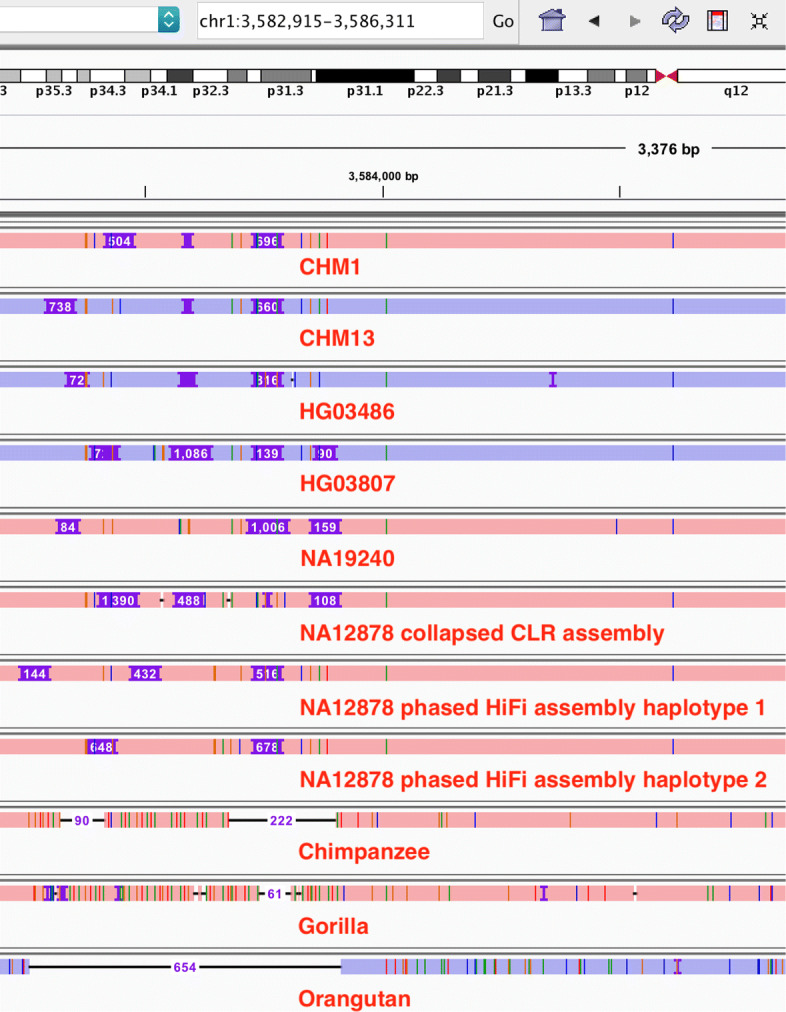
“We manually inspected tens of differences in IGV [42] and identified two causes.”
MethodMinimap2: Pairwise alignment for nucleotide sequences
Li, H. (2018) · Bioinformatics · doi:10.1093/bioinformatics/bty191 · Cited by 14,807 · cited 3×
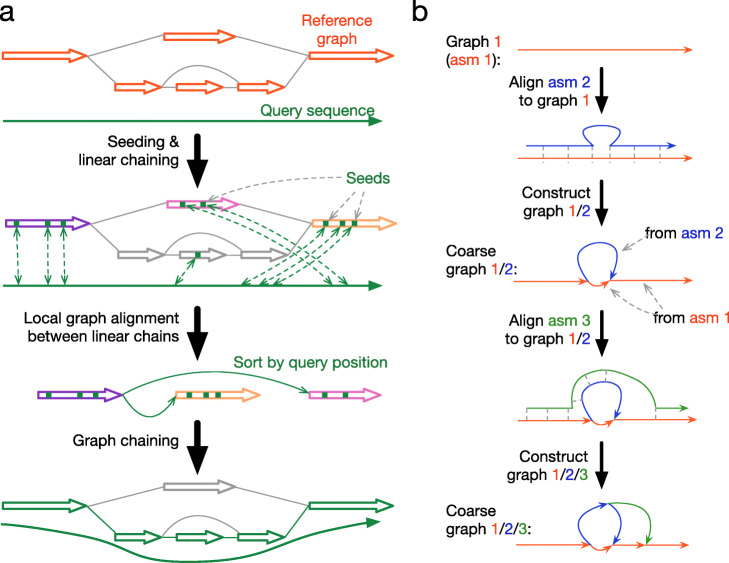
“As existing sequence-to-graph aligners [38, 39] do not work with chromosomelong query sequences, we adapted minimap2 [40] for our purpose and implemented minigraph (Fig.”
BackgroundMethodInfluentialSelf-citationA framework for variation discovery and genotyping using next-generation DNA sequencing data
DePristo, M. A., Banks, E., Poplin, R., Garimella, K. V., Maguire, J. R., Hartl, C., Philippakis, A. A., del Angel, G., Rivas, M. A., Hanna, M., et al. (2011) · Nature Genetics · doi:10.1038/ng.806 · Cited by 11,456 · cited 1×
“1.2 [46].”
InfluentialUsing RepeatMasker to Identify Repetitive Elements in Genomic Sequences
Tarailo‐Graovac, M., & Chen, N. (2009) · Current Protocols in Bioinformatics · doi:10.1002/0471250953.bi0410s25 · Cited by 3,398
Wenger, A. M., Peluso, P., Rowell, W. J., Chang, P.-C., Hall, R. J., Concepcion, G. T., Ebler, J., Fungtammasan, A., Kolesnikov, A., Olson, N. D., et al. (2019) · Nature Biotechnology · doi:10.1038/s41587-019-0217-9 · Cited by 1,841 · cited 1×
“iting factor in our understanding of genetic variations. Meanwhile, the advances in long-read sequencing technologies make it possible to assemble a human individual to a quality comparable to GRCh38 [1,5]. There are already a dozen of high-quality human assemblies available in GenBank [6]. Properly integrating these…”
BackgroundSelf-citationThe ENCODE Blacklist: Identification of Problematic Regions of the Genome
Amemiya, H. M., Kundaje, A., & Boyle, A. P. (2019) · Scientific Reports · doi:10.1038/s41598-019-45839-z · Cited by 1,831 · cited 1×
“We constructed a human pangenome graph excluding CHM1 and CHM13, the two samples used in the SynDip benchmark [4], and generated regions around variations (see Methods), which we call as blacklist regions, following the rationale in [45].”
MethodMissing heritability and strategies for finding the underlying causes of complex disease
Eichler, E. E., Flint, J., Gibson, G., Kong, A., Leal, S. M., Moore, J. H., & Nadeau, J. H. (2010) · Nature Reviews Genetics · doi:10.1038/nrg2809 · Cited by 1,687 · cited 1×
“Some of these variants are likely associated with phenotype [3] but are often missed or misinterpreted when we map sequence data to GRCh38, in particular with short reads [4].”
BackgroundHigh-quality draft assemblies of mammalian genomes from massively parallel sequence data
Gnerre, S., MacCallum, I., Przybylski, D., Ribeiro, F. J., Burton, J. N., Walker, B. J., Sharpe, T., Hall, G., Shea, T. P., Sykes, S., et al. (2011) · Proceedings of the National Academy of Sciences · doi:10.1073/pnas.1017351108 · Cited by 1,533 · cited 1×
“In a de Bruijn graph, we often attach sequences to edges instead of vertices [36, 37].”
BackgroundMinimap and miniasm: fast mapping and de novo assembly for noisy long sequences
Li, H. (2016) · Bioinformatics · doi:10.1093/bioinformatics/btw152 · Cited by 1,508 · cited 6×
“As there are no text formats for sequence-to-graph alignment, we propose a new Graphical mApping Format (GAF) by extending the Pairwise mApping Format (PAF) [35].”
BackgroundMethodInfluentialSelf-citation
Cited by
Items 401–461 of 461
Additional file 1 of Comparing methods for constructing and representing human pangenome graphs
Andreace, F., Lechat, P., Dufresne, Y., & Chikhi, R. (2024) · Figshare · doi:10.6084/m9.figshare.26647815
Driguez, P., Bougouffa, S., Carty, K., Putra, A., Jabbari, K., Reddy, M., Soppe, R. W. O., Cheung, M.-S., Fukasawa, Y., & Ermini, L. (2021) · Figshare · doi:10.6084/m9.figshare.16569890
Leonard, A. S., Crysnanto, D., Mapel, X. M., Bhati, M., & Pausch, H. (2024) · Figshare · doi:10.6084/m9.figshare.26590988
Leonard, A. S., Crysnanto, D., Mapel, X. M., Bhati, M., & Pausch, H. (2024) · Figshare · doi:10.6084/m9.figshare.26590979
GFAKaleidos: a tool for computing and comparing pangenome graph statistics
Xiang, Y., Liu, K., Wang, L., & Zhou, J. (2025) · Frontiers of Computer Science · doi:10.1007/s11704-025-50324-0
Mahoney, D. B. J., & Maguire, F. (2025) · bioRxiv (Cold Spring Harbor Laboratory) · doi:10.64898/2025.12.25.693921
“5.0) was used and modified to prevent the trimming of segments to zero (15, 42) .”
InfluentialLuo, G., Xiao, L., Fei, Z., & Wang, X. (2026) · bioRxiv (Cold Spring Harbor Laboratory) · doi:10.64898/2026.01.10.698766 · Cited by 1
Pangenomics and AI-Assisted Crop Breeding for Combating Plant Diseases
Sushmitha, K., Megha, G., Monisha, D., Rajesh, M., Robert, A. A., Manoj, M., Prabhu, J. P. A., & Anand, A. V. (2026) · CABI biotechnology series. · doi:10.1079/9781800628649.0010
Labbancz, J., & Dhingra, A. (2026) · bioRxiv · doi:10.64898/2026.01.20.700718
“Minigraph was used for pangenome graph construction, with default graph assembly parameters (Li et al., 2020).”
Peng, C., Yang, C., Guo, Y., Xia, Z., Tang, T., & Cui, Y. (2025) · IEEE International Conference on Bioinformatics and Biomedicine (BIBM) · doi:10.1109/bibm66473.2025.11356569
“In extreme scenarios, this can even lead to exponential explosions in time and space complexity [15].”
Wang, X., Luo, G., Xiao, L., & Fei, Z. (2026) · Research Square · doi:10.21203/rs.3.rs-8773548/v1
Liu, P., Hu, K., Mughini‐Gras, L., Zomer, A., Brouwer, M. S. M., Dallman, T. J., & Paganini, J. (2026) · Genomics · doi:10.1016/j.ygeno.2026.111309
Labbancz, J., Tarlyn, N. M., Evans, K. M., & Dhingra, A. (2026) · bioRxiv (Cold Spring Harbor Laboratory) · doi:10.64898/2026.03.02.709077
“Minigraph, the most highly cited pangenome graph generation tool for eukaryotic genomes, omits variants smaller than 50bp by default (Li et al., 2020).”
Bu, Y., Qiu, Z., Sun, W., Han, Y., Liu, Y., Yang, J., Song, M., Li, Z., Liu, S., Zhang, Y., et al. (2026) · Journal of Integrative Plant Biology · doi:10.1111/jipb.70231
“…can be con - structed using a variety of methods, such as PanVC (Valenzuela et al., 2018), vg (Garrison et al., 2018), HISAT2 (Kim et al., 2019), GraphTyper2 (Eggertsson et al., 2019), minigraph (Li et al., 2020), minigraph ‐ cactus (Hickey et al., 2024), and PGGB (Garrison et al., 2024).”
Insights in Human and Medical Genomics 2024
Freidin, M. B., & Roach, J. C. (2026) · Frontiers research topics · doi:10.3389/978-2-8325-7660-1
Panmap: Scalable phylogeny-guided alignment, genotyping, and placement on pangenomesPreprint
Kramer, A., Zhang, A., Ayala, N., Sanctis, B. D., Karim, L., Hinrichs, A. S., Walia, S., Turakhia, Y., & Corbett-Detig, R. B. (2026) · bioRxiv (Cold Spring Harbor Laboratory) · doi:10.64898/2026.03.29.711974
Exploring the genomic complexity of bacterial infection in 3D
Matthey-Doret, C. (2021) · theses.fr (ABES) · doi:10.70675/4303e26ezb6baz423dz92ffz3a3ca67a8ef4
Transcriptome and genome analysis based on alignment-free protocols
Wang, Y. (2021) · theses.fr (ABES) · doi:10.70675/c6735232zadb5z49f0z804dzddd24cdc8628 · Cited by 1
Methods for genome-wide structural variation inference in skimming data using graph pangenome
Dang, T. M. N. (2022) · theses.fr (ABES) · doi:10.70675/725d5452z1adcz4104zb78dz430950e41644
Tranchant‐Dubreuil, C. (2023) · theses.fr (ABES) · doi:10.70675/d45bd163ze4daz4ffaz87afz3d2385f59bbc
Analysis of human pangenome graphs : and other k-mer based applications
Andreace, F. (2025) · theses.fr (ABES) · doi:10.70675/4ea0d4daz806cz4c49z9bd9z66ce042dc6bd
Kuster, R. D., Sisler, P., Singh, K., Yin, L., Niece, S., Krueger, R. R., Dardick, C. D., Keremane, M. L., Ramadugu, C., & Staton, M. E. (2026) · bioRxiv (Cold Spring Harbor Laboratory) · doi:10.64898/2026.04.07.716967
Kidd, J. M., Souilmi, Y., Rosen, B. D., Khan, R., Weisz, D., Dudchenko, O., Aiden, E. L., Zammit, R. A., & Ballard, J. W. O. (2026) · NAR Genomics and Bioinformatics · doi:10.1093/nargab/lqag035 · Cited by 2
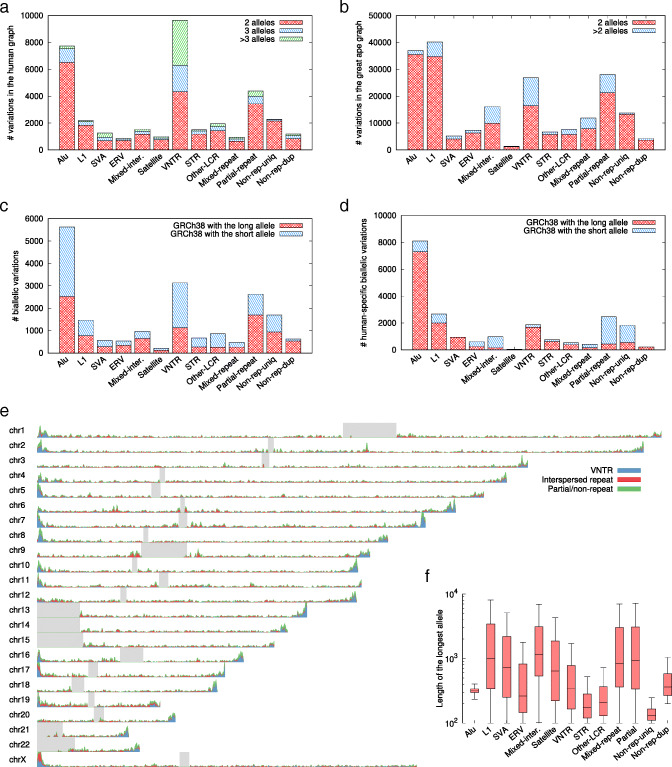
“Finally, in contrast to pangenome graphs generated from human and non-human primates [ 62 ], the canine pangenome contains an excess of STR loci as compared to VNTR loci.”
InfluentialLopez, K. A., de Carvalho, C. F., de Lima, H. S., Naka, L. N., do Amaral, F. R., Bravo, G. A., & Edwards, S. V. (2026) · Genetics · doi:10.1093/genetics/iyag109
Pramitha, L., Rana, S., Jeeva, G., Devasena, N., Aananthi, N., & Muthamilarasan, M. (2026) · Elsevier eBooks · doi:10.1016/b978-0-443-40401-6.00019-4
GNNome-Decision: Enhancing GNN Training for de Novo Genome Assembly by Targeting Decision Nodes
Schmitz, M., Vrček, L., Kawaguchi, K., & Šikić, M. (2026) · Lecture notes in computer science · doi:10.1007/978-3-032-26891-4_16
MacNish, T. R., McPhan, C., Bayer, P. E., Liu, S., Al-Mamun, H. A., Batley, J., & Edwards, D. (2026) · Agriculture Communications · doi:10.1016/j.agrcom.2026.100143 · Cited by 1
Kim, J., Kim, B.-J., Kim, Y. J., Choi, N.-H., Kim, S. M., Lim, J., Kim, S., Yoon, K., Hwang, M. Y., Lee, S. J., et al. (2026) · Research Square · doi:10.21203/rs.3.rs-9949730/v1 · Cited by 1
Kente: A Graph-based Pangenomic Approach for Horizontal Gene Transfer Detection in MicrobiomesPreprint
Kokroko, N., Jayanti, R., Sapoval, N., Nute, M., Nakhleh, L. K., & Treangen, T. J. (2026) · bioRxiv (Cold Spring Harbor Laboratory) · doi:10.64898/2026.06.22.733643
“Using minigraph (Li et al., 2020), the remaining n − 1 genomes were aligned sequentially to G 0 , where structural variations (SVs) exceeding a 100 bp threshold were integrated as novel nodes and edges.”
An Anas pangenome graph reveals the role of structural variations in duck domestication
Ni, Z., Zhang, Z., Ning, M., Xu, W., Lu, L., Ai, H., & Huang, Y. (2026) · Poultry Science · doi:10.1016/j.psj.2026.107388
“Previous work established an Anas pangenome graph using Minigraph (Li et al., 2020), which incorporated nine duck genomes and captured approximately 124 Mb of NRSs (Zhang et al., 2025).”
InfluentialGenome assemblies and annotations are not static and need support for tracking their evolution
Dimonaco, N. J., Clare, A. J., & Vickers, M. J. (2026) · Briefings in Bioinformatics · doi:10.1093/bib/bbag357
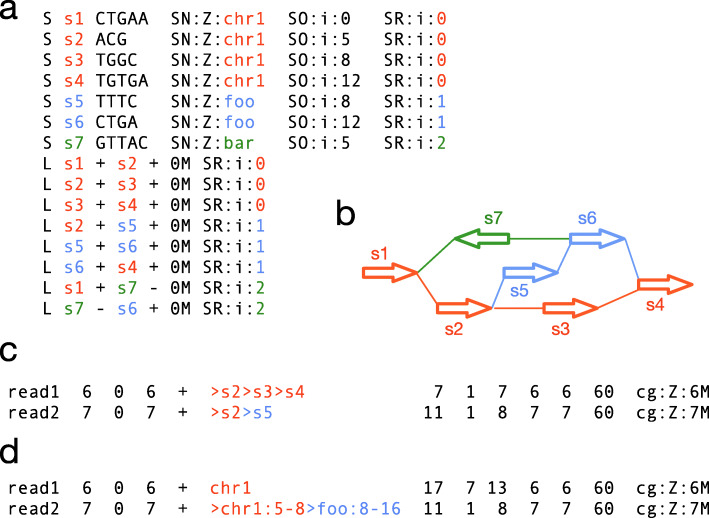
“Building on GFA’s foundation, the reference GFA (rGFA) [ 59] format extends the basic graph model by adding three additional tags to each segment that indicate its origin, creating a stable coordinate system that preserves the linear reference genome coordinates within the graph structure.”
GBZ-base and GAF-base: indexed pangenome file formats
Sirén, J., & Paten, B. (2026) · Bioinformatics · doi:10.1093/bioinformatics/btag796 · Cited by 2
Panomap: Unbiased Nanopore Signal Mapping with Pangenome Variation GraphsPreprint
Shih, P. J., Sanghani, Z., Guarracino, A., Gamaarachchi, H., & Batten, C. (2026) · bioRxiv (Cold Spring Harbor Laboratory) · doi:10.64898/2026.07.10.737796 · Cited by 1
“Path information is essential for Panomap’s per-path indexing and chaining, so graph representations without paths, such as Minigraph’s output [23] or Bifrost’s colored compacted de Bruijn graph [31], are not supported.”
Liu, Z., Liu, Z., Bi, G., Ali, Z., Hou, T., Li, J., Zhao, R., Wang, W., Fan, T., Dong, Y., et al. (2026) · Horticultural Plant Journal · doi:10.1016/j.hpj.2026.05.001
Fast and memory efficient partial order alignment with minipoa
Liu, H., Zhang, P., Wei, Y., Tian, Q., Zhai, Y., Zou, Q., & Niu, M. (2026) · Genome Research · doi:10.1101/gr.282046.126
Ecotype-associated structural variants across multiple locally adapted Poeciliid fishes
Ryan, K., De‐Kayne, R., Arias-Rodriguez, L., Tobler, M., & Kelley, J. L. (2026) · BMC Genomics · doi:10.1186/s12864-026-13205-9
“20-r599 [52], with the chromosome level P. mexicana NS assembly (GCA_051168715.”
Capturing the missing gene content of elite wheat by analysis of wheat landracesPreprint
Li, T., Albornoz, F., Bruton, J., Bestry, M., Dolatabadian, A., MacNish, T. R., Bergmann, T., Bayer, P. E., Batley, J., & Edwards, D. (2026) · bioRxiv (Cold Spring Harbor Laboratory) · doi:10.64898/2026.07.30.741942
Ghiasi, N. M., Mustafa, H., Güloglu, T., Nadig, R., Koliogeorgi, K., Ruiz, S. R., Rautmann, M., Eris, F., Sadrosadati, M., Park, J., et al. (2026) · Proceedings - International Symposium on Computer Architecture/Proceedings · doi:10.1109/isca66397.2026.00066 · Cited by 5
“Many works (e.g., [265,331,344–354]) propose software tools for genome graphs.”
A pangenome-graph approach for mapping and imputing barley sequencesPreprint
Sàrria, J., Amhal, H., Ramírez, C. J., Igartua, E., Casas, A. M., & Contreras‐Moreira, B. (2026) · bioRxiv (Cold Spring Harbor Laboratory) · doi:10.64898/2026.08.06.741139
“For instance, a graph produced by minigraph might vary with the order genomes are added (Li et al., 2020).”
From genomes to graphs: Why macroevolution still matters in the pangenome era
Liu, B. (2026) · Journal of Systematics and Evolution · doi:10.1111/jse.70102
“…- tion of structural variants, non ‐ reference sequences, complex haplotypes, and lineage ‐ speci fi c genomic paths, but they do not by themselves determine what kind of historical explanation those features require (Paten et al., 2017; Eizenga et al., 2020; Li et al., 2020; Du et al., 2025).”
Sena, S., & Kumar, V. (2026) · Molecular Biotechnology · doi:10.1007/s12033-026-01604-y
An Icelandic pangenome reference
Holley, G., Eggertsson, H. P., Kristmundsdóttir, S., Beyter, D., Skúladóttir, Á., Moore, K. H. S., Olason, P. I., Gylfason, A., Magnusson, O. T., Oddsson, Á., et al. (2026) · Nature · doi:10.1038/s41586-026-10924-7 · Cited by 3
“The HPRC-ICE pangenome reference is first composed of the HPRC year 1 pangenome graph 4 built with Minigraph 16 using GRCh38 as the reference assembly.”
InfluentialPangyPlot: multi-scale interactive visualization of pangenome variation graphs
Mastromatteo, S., Chirmade, S., Roshandel, D., Thiruvahindrapuram, B., Wang, Z., Patel, R. V., Sung, W. W. L., Hajianpour, A., Wang, C., Lin, F., et al. (2026) · Bioinformatics · doi:10.1093/bioinformatics/btag619 · Cited by 1
Bingöl, Z., Şahin, B., Zambaku, K., Román-Brenes, R., Koliogeorgi, K., Fırtına, C., Mutlu, O., & Alkan, C. (2026) · Briefings in Bioinformatics · doi:10.1093/bib/bbag440
TomatoPGFM: A graph-conditioned foundation model for tomato pangenomesPreprint
Han, J., Yushan, T., Wang, J., Yang, H., Zhao, J., Jiang, F., Jia, C., Yang, T., Wang, B., Zhang, C., et al. (2026) · bioRxiv (Cold Spring Harbor Laboratory) · doi:10.64898/2026.08.31.748176
Chromosome-level reference genome of the desert night lizard Xantusia vigilis
Lam, A. W., Henderson, J. B., Holmes, I. A., Seymour, R. B., Westphal, M., & Bell, R. C. (2026) · Journal of Heredity · doi:10.1093/jhered/esag063
Bocs, S., Carrette, C., Confais, J., Dubois, S., Duvaux, L., Klopp, C., Lapalu, N., Lasserre‐Zuber, P., Legeai, F., Lemaitre, C., et al. (2026) · Peer Community Journal · doi:10.24072/pcjournal.781 · Cited by 1
Jilo, D. D., Abebe, B. K., Ullah, W., Guo, J., Wang, J., Ma, H., Yiheng, L., Cheng, G., Cui, H., & Zan, L. (2026) · Functional & Integrative Genomics · doi:10.1007/s10142-026-02042-4
“Tools such as minigraph and Minigraph-Cactus support assembly-to-graph integration at structural and base-pair resolution (Li et al. 2020; Hickey et al. 2024).”
Contraction Hierarchies for Parallel Sequence-to-Graph Alignment
Banerjee, A., & Aluru, S. (2026) · Proceedings of the International Conference on Parallel Processing · doi:10.1145/3832810.3832911
SwinePan for pig graph-based pangenome and multiomics data mining
Lin, M., Liu, L., Cai, G., Huang, S., Qiu, Y., Yao, Z., Deng, S., Wang, S., Liu, Y., Ruan, D., et al. (2026) · Genome Research · doi:10.1101/gr.281750.125
A koala pangenome reveals hidden structural variation with implications for disease and fertilityPreprint
Hogg, C. J., Bagot, S., McLennan, E. A., Schraven, A. L., Li, A., Silver, L. W., & Belov, K. (2026) · Research Square · doi:10.21203/rs.3.rs-11081168/v1
From plant pangenome assemblies to operational graph references
D’Agostino, N. (2026) · Frontiers in Plant Science · doi:10.3389/fpls.2026.1997114
“…short-and long-read mapping, pantranscriptomics, genome-wide association studies (GWAS), population genetics, breeding, and trait discovery. minigraph, minigraph-cactus, PGGB, and ODGI (Garrison et al 2018; Li et al., 2020; Guarracino et al., 2022; Hickey et al., 2024; Garrison et al., 2024).”
PGpath: recommending population-adapted linear reference genomes from pangenome subpaths
Xue, Z., Wang, X., Yuan, J., Wang, T., Sheng, X., Zhang, T., Wang, J., & Cai, H. (2026) · Briefings in Bioinformatics · doi:10.1093/bib/bbag547
Khatri, S. A., Pikle, N. K., & Yadav, V. (2026) · International Journal of Parallel Emergent and Distributed Systems · doi:10.1080/17445760.2026.2745067
Yazbeck, G. (2026) · Research Square · doi:10.21203/rs.3.rs-11381812/v1
Small variant calling in the era of long-read sequencing
Zheng, Z., Sedlazeck, F. J., & Luo, R. (2026) · Nature Reviews Genetics · doi:10.1038/s41576-026-01020-7
Zhang, J., Qin, C., Li, Z., Zhao, L., Biswas, A., Liu, T., Luan, M., Li, L., Li, D., & Yan, J. (2026) · Plant Biotechnology Journal · doi:10.1111/pbi.70766
FAIRsharing record for: European Variation Archive
FAIRsharing Team, et al. (2015) · FAIRsharing.org · doi:10.25504/fairsharing.6824pv
Size dependent loss of structural variant allele counts in pangenome derived VCFsPreprint
Manjunath, M., S, R. V., & Shakunthala, V. (2026) · Research Square · doi:10.21203/rs.3.rs-11373989/v1
Advancing microbial pangenomics through human pangenomics
Bravo, J. E., Sapoval, N., Han, Y., Kokroko, N., Nakhleh, L., Noyes, N. R., Treangen, T. J., & Boucher, C. A. (2026) · Trends in Genetics · doi:10.1016/j.tig.2026.10.002
Pangenome Graph Construction from Genome Alignment with Minigraph-Cactus
Hickey, G., Monlong, J., Ebler, J., Novak, A., Eizenga, J. M., Gao, Y., Human Pangenome Reference Consortium, Marschall, T., Li, H., & Paten, B. (2022) · doi:10.1101/2022.10.06.511217 · Cited by 345
Self-citation
Metadata
- Authors
- Li, H., Feng, X., & Chu, C.
- Affiliations
- Harvard University (US)
- Corresponding author
- Li, Heng
- Venue
- Genome Biology
- Published
- 2020-10-16
- Volume
- 21
- Issue
- 1
- Pages
- 265-265
- ISSN
- 1465-6906 (ISSN-L)
- 1474-760X
- PMC
- PMC7568353
- OpenAlex
- W3092652421
- Semantic Scholar
- 4aa51fbe41e6588e59c8f9f7aaaaac3c83a56019
- Cited by
- 455
- References
- 68
- Citations by year
- 2026: 70 · 2025: 101 · 2024: 93 · 2023: 68 · 2022: 67 · 2021: 50 · 2020: 5
- FWCI
- 15.48
- Type
- journal article
- Language
- en
- Open access
- gold
- doi.org
- Licence
- cc-by
- creativecommons.org/licenses/by/4.0 (tdm)
- creativecommons.org/licenses/by/4.0 (vor)
- Locations
- Genome biology (publishedVersion, cc-by)
- PubMed Central (publishedVersion, cc-by)
- PubMed (publishedVersion)
- DOAJ (DOAJ: Directory of Open Access Journals) (submittedVersion, cc-by-sa)
- Funders
- National Institutes of Health
- National Human Genome Research Institute (U01HG010961, R01HG010040)
- Topics
- Life Sciences › Biochemistry, Genetics and Molecular Biology › Molecular Biology › Genomics and Phylogenetic Studies
- Life Sciences › Biochemistry, Genetics and Molecular Biology › Genetics › Genome Rearrangement Algorithms
- Physical Sciences › Mathematics › Theoretical Computer Science › Algorithms and Data Compression
- Keywords
- pangenome graphs, Minigraph, reference genome, structural variants, graph-based data model, genome assembly, coordinate alignment, chromosomal integration
- MeSH terms
- Animals, Humans, Reference Standards, Genome, Human, Genomics, Genomic Structural Variation
About these checks
Registry, retraction, Cites and statistics results are computed, not judged, with one exception: a printed reference that no index lists is read once by a model before it counts as a citation error. Claims are extracted by a model and kept only when their quote appears verbatim in the text; each cited source is then checked, with a model’s help, for whether it says what the claim relies on. Those verdicts can be wrong — read the claim’s quote and the cited source before relying on one.
Statistics and arithmetic are recomputed, not judged.
Confidence bands are shown only for fields calibrated on our annotated test set. None is calibrated yet, so no band is shown.
What counts as a claim ›How we measure confidence ›How we check this ›
Are you an author, or do you see a problem with this page? Request a review
Data sources
Bibliographic data: Semantic Scholar, OpenAlex, Crossref.
Contains information from the Semantic Scholar Academic Graph Datasets, made available under the ODC Attribution License (ODC-BY 1.0).
Semantic Scholar’s data is described in: Kinney, R., et al. (2023). The Semantic Scholar Open Data Platform. arXiv:2301.10140.
