

The design and construction of reference pangenome graphs with minigraph
Open accessThe DOI matches its Crossref record; 69 of the 69 references it cites were found in a registry or an index.
Abstract
The recent advances in sequencing technologies enable the assembly of individual genomes to the quality of the reference genome. How to integrate multiple genomes from the same species and make the integrated representation accessible to biologists remains an open challenge. Here, we propose a graph-based data model and associated formats to represent multiple genomes while preserving the coordinate of the linear reference genome. We implement our ideas in the minigraph toolkit and demonstrate that we can efficiently construct a pangenome graph and compactly encode tens of thousands of structural variants missing from the current reference genome.
Overview
The claims and statistics of this paper haven’t been checked yet.
Free: it reads the open-access text and checks the first 5 claims that cite a source we can check. Create a free account to check every claim.
Integrity signals
Registry
Cites
Statistics
Figures
Verification
Claims the paper makes
The claims and statistics of this paper haven’t been checked yet.
Free: it reads the open-access text and checks the first 5 claims that cite a source we can check. Create a free account to check every claim.
Claims other papers make about this one
Each is checked against this paper’s own text: does it say what the citing paper says it does?
The source backs part of the claim, not all of it — or backs it for a different population, condition or comparison.
In the citing paper
“Although minigraph can perform base-level alignment since version 0.17, it only includes SVs (≥50 base pairs (bp) by default) during graph construction.”
From Pangenome graph construction from genome alignments with Minigraph-Cactus (2024) · cites this paper as [16]
Experimental — accuracy not yet measuredThe source backs part of the claim, not all of it — or backs it for a different population, condition or comparison.
In the citing paper
“Either the graphs needed to be constructed from variant calls against a reference 3,6,32 and, therefore, unable to properly represent nested variation while still suffering from some reference bias, or they were limited to only SVs 16 and unable to effectively be used for short-read mapping with current tools 6 .”
From Pangenome graph construction from genome alignments with Minigraph-Cactus (2024) · cites this paper as [16]
Experimental — accuracy not yet measured
Self-check
Percentages, sums and reported differences re-computed from the paper’s own numbers.
The self-check needs the paper’s full text.
Citations
Cites
The variant call format and VCFtools
Danecek, P., Auton, A., Abecasis, G., Albers, C. A., Banks, E., DePristo, M. A., Handsaker, R. E., Lunter, G., Marth, G. T., Sherry, S. T., et al. (2011) · Bioinformatics · doi:10.1093/bioinformatics/btr330 · Cited by 16,200
Robinson, J. T., Thorvaldsdóttir, H., Winckler, W., Guttman, M., Lander, E. S., Getz, G., & Mesirov, J. P. (2011) · Nature Biotechnology · doi:10.1038/nbt.1754 · Cited by 15,390 · cited 1×
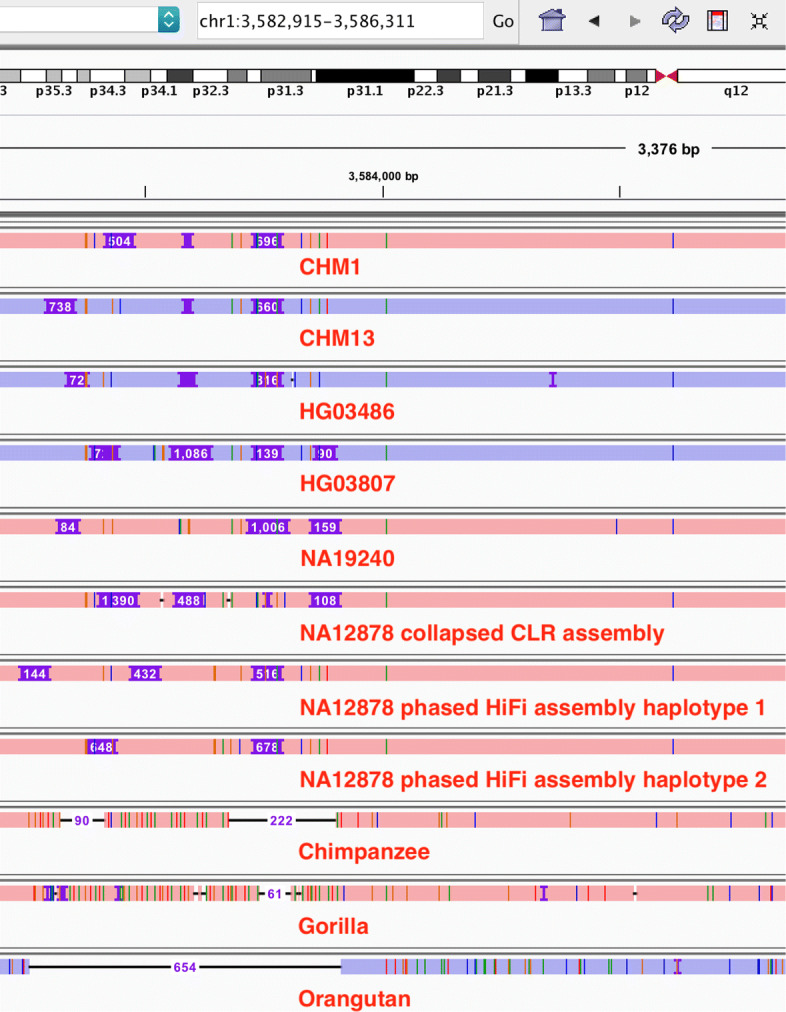
“We manually inspected tens of differences in IGV [42] and identified two causes.”
MethodMinimap2: Pairwise alignment for nucleotide sequences
Li, H. (2018) · Bioinformatics · doi:10.1093/bioinformatics/bty191 · Cited by 14,807 · cited 3×
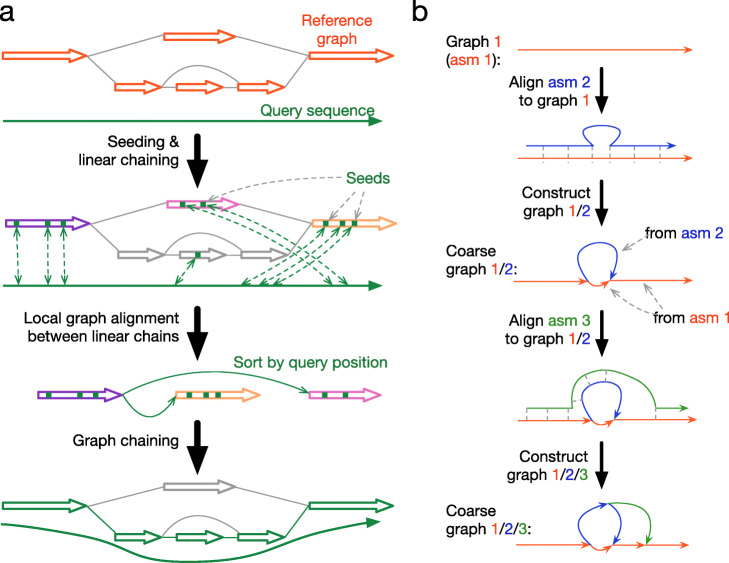
“As existing sequence-to-graph aligners [38, 39] do not work with chromosomelong query sequences, we adapted minimap2 [40] for our purpose and implemented minigraph (Fig.”
BackgroundMethodInfluentialSelf-citationA framework for variation discovery and genotyping using next-generation DNA sequencing data
DePristo, M. A., Banks, E., Poplin, R., Garimella, K. V., Maguire, J. R., Hartl, C., Philippakis, A. A., del Angel, G., Rivas, M. A., Hanna, M., et al. (2011) · Nature Genetics · doi:10.1038/ng.806 · Cited by 11,456 · cited 1×
“1.2 [46].”
InfluentialUsing RepeatMasker to Identify Repetitive Elements in Genomic Sequences
Tarailo‐Graovac, M., & Chen, N. (2009) · Current Protocols in Bioinformatics · doi:10.1002/0471250953.bi0410s25 · Cited by 3,398
Wenger, A. M., Peluso, P., Rowell, W. J., Chang, P.-C., Hall, R. J., Concepcion, G. T., Ebler, J., Fungtammasan, A., Kolesnikov, A., Olson, N. D., et al. (2019) · Nature Biotechnology · doi:10.1038/s41587-019-0217-9 · Cited by 1,841 · cited 1×
“iting factor in our understanding of genetic variations. Meanwhile, the advances in long-read sequencing technologies make it possible to assemble a human individual to a quality comparable to GRCh38 [1,5]. There are already a dozen of high-quality human assemblies available in GenBank [6]. Properly integrating these…”
BackgroundSelf-citationThe ENCODE Blacklist: Identification of Problematic Regions of the Genome
Amemiya, H. M., Kundaje, A., & Boyle, A. P. (2019) · Scientific Reports · doi:10.1038/s41598-019-45839-z · Cited by 1,831 · cited 1×
“We constructed a human pangenome graph excluding CHM1 and CHM13, the two samples used in the SynDip benchmark [4], and generated regions around variations (see Methods), which we call as blacklist regions, following the rationale in [45].”
MethodMissing heritability and strategies for finding the underlying causes of complex disease
Eichler, E. E., Flint, J., Gibson, G., Kong, A., Leal, S. M., Moore, J. H., & Nadeau, J. H. (2010) · Nature Reviews Genetics · doi:10.1038/nrg2809 · Cited by 1,687 · cited 1×
“Some of these variants are likely associated with phenotype [3] but are often missed or misinterpreted when we map sequence data to GRCh38, in particular with short reads [4].”
BackgroundHigh-quality draft assemblies of mammalian genomes from massively parallel sequence data
Gnerre, S., MacCallum, I., Przybylski, D., Ribeiro, F. J., Burton, J. N., Walker, B. J., Sharpe, T., Hall, G., Shea, T. P., Sykes, S., et al. (2011) · Proceedings of the National Academy of Sciences · doi:10.1073/pnas.1017351108 · Cited by 1,533 · cited 1×
“In a de Bruijn graph, we often attach sequences to edges instead of vertices [36, 37].”
BackgroundMinimap and miniasm: fast mapping and de novo assembly for noisy long sequences
Li, H. (2016) · Bioinformatics · doi:10.1093/bioinformatics/btw152 · Cited by 1,508 · cited 6×
“As there are no text formats for sequence-to-graph alignment, we propose a new Graphical mApping Format (GAF) by extending the Pairwise mApping Format (PAF) [35].”
BackgroundMethodInfluentialSelf-citationAn Eulerian path approach to DNA fragment assembly
Pevzner, P. A., Tang, H., & Waterman, M. S. (2001) · Proceedings of the National Academy of Sciences · doi:10.1073/pnas.171285098 · Cited by 1,352 · cited 1×
“In a de Bruijn graph, we often attach sequences to edges instead of vertices [36, 37].”
BackgroundSchneider, V. A., Graves-Lindsay, T., Howe, K., Bouk, N., Chen, H.-C., Kitts, P. A., Murphy, T. D., Pruitt, K. D., Thibaud-Nissen, F., Albracht, D., et al. (2017) · Genome Research · doi:10.1101/gr.213611.116 · Cited by 1,193 · cited 2×
“Meanwhile, the advances in long-read sequencing technologies make it possible to assemble a human individual to a quality comparable to GRCh38 [1, 5].”
BackgroundSelf-citationVariation graph toolkit improves read mapping by representing genetic variation in the reference
Garrison, E., Sirén, J., Novak, A. M., Hickey, G., Eizenga, J. M., Dawson, E. T., Jones, W., Garg, S., Markello, C., Lin, M. F., et al. (2018) · Nature Biotechnology · doi:10.1038/nbt.4227 · Cited by 821 · cited 3×
“he stable coordinate. Li et al. Page 4 of12 Sequence-to-graph mapping Our incremental graph construction algorithm relies on genome-to-graph alignment (Fig.2b). As existing sequence-to-graph aligners [31,38] do not work with chromosome-long query sequences, we adapted minimap2 [39] for our purpose and implemented mini…”
BackgroundMethodMultiple sequence alignment using partial order graphs
Lee, C., Grasso, C., & Sharlow, M. F. (2002) · Bioinformatics · doi:10.1093/bioinformatics/18.3.452 · Cited by 764 · cited 2×
“To some extent, minigraph is performing multiple sequence alignment with partial order alignment [41].”
Backgroundhybrid SPA des: an algorithm for hybrid assembly of short and long reads
Antipov, D., Korobeynikov, A., McLean, J. S., & Pevzner, P. A. (2016) · Bioinformatics · doi:10.1093/bioinformatics/btv688 · Cited by 659 · cited 1×
“[50] proved that alignment against cyclic graphs can be done in polynomial time.”
BackgroundDe novo assembly and genotyping of variants using colored de Bruijn graphs
Iqbal, Z., Caccamo, M., Turner, I., Flicek, P., & McVean, G. (2012) · Nature Genetics · doi:10.1038/ng.1028 · Cited by 634 · cited 2×
“de [12]. A common way to construct a basic pangenome graph is to generate a compacted de Bruijn graph (cDBG) [13,14,15,16,17,18,19] from a set of genomes. Basic cDBG does not keep sample information. [20] proposed colored cDBG with each color represents a sample or a population. Colored cDBG can be constructed ecientl…”
BackgroundMethodTen years of pan-genome analyses
Vernikos, G., Medini, D., Riley, D. R., & Tettelin, H. (2015) · Current Opinion in Microbiology · doi:10.1016/j.mib.2014.11.016 · Cited by 623 · cited 1×
“ts in a pangenome graph. A pangenome graph is a powerful tool to identify core genome, the part of a genome or gene set that is shared across the majority of the strains or related species in a clade [12]. A common way to construct a basic pangenome graph is to generate a compacted de Bruijn graph (cDBG) [13,14,15,16,…”
A Fast and Symmetric DUST Implementation to Mask Low-Complexity DNA Sequences
Morgulis, A., Gertz, E. M., Schäffer, A. A., & Agarwala, R. (2006) · Journal of Computational Biology · doi:10.1089/cmb.2006.13.1028 · Cited by 496 · cited 1×
“nnotate VNTRs with long motifs. It also often interprets VNTRs as impure STRs. Therefore, we did not use the RepeatMasker VNTR or STR annotations directly. Instead, we combined RepeatMasker and SDUST [56] results to collect low-complexity regions (LCRs). We identied pure tandem repeats composed of a motif occurring tw…”
MethodCharacterizing the Major Structural Variant Alleles of the Human Genome
Audano, P. A., Sulovari, A., Graves-Lindsay, T. A., Cantsilieris, S., Sorensen, M., Welch, A. E., Dougherty, M. L., Nelson, B. J., Shah, A., Dutcher, S. K., et al. (2019) · Cell · doi:10.1016/j.cell.2018.12.019 · Cited by 492 · cited 3×
“There are already a dozen of high-quality human assemblies available in GenBank [6].”
BackgroundInfluentialDiscovery and genotyping of structural variation from long-read haploid genome sequence data
Huddleston, J., Chaisson, M. J. P., Steinberg, K. M., Warren, W., Hoekzema, K., Gordon, D., Graves-Lindsay, T. A., Munson, K. M., Kronenberg, Z. N., Vives, L., et al. (2017) · Genome Research · doi:10.1101/gr.214007.116 · Cited by 376 · cited 1×
“They cannot represent the genetic diversity in human populations and as a result, each individual may carry thousands of large germline variants absent from the reference genome [2].”
BackgroundHigh-resolution comparative analysis of great ape genomes
Kronenberg, Z. N., Fiddes, I. T., Gordon, D., Murali, S., Cantsilieris, S., Meyerson, O. S., Underwood, J. G., Nelson, B. J., Chaisson, M. J. P., Dougherty, M. L., et al. (2018) · Science · doi:10.1126/science.aar6343 · Cited by 350 · cited 2×
“3 for chimpanzee Clint [63], GCA_900006655.”
Long-read sequence assembly of the gorilla genome
Gordon, D., Huddleston, J., Chaisson, M. J. P., Hill, C. M., Kronenberg, Z. N., Munson, K. M., Malig, M., Raja, A., Fiddes, I., Hillier, L. W., et al. (2016) · Science · doi:10.1126/science.aae0344 · Cited by 333 · cited 1×
“3 for gorilla Susie [64], GCA_008122165.”
PBSIM: PacBio reads simulator—toward accurate genome assembly
Ono, Y., Asai, K., & Hamada, M. (2013) · Bioinformatics · doi:10.1093/bioinformatics/bts649 · Cited by 329 · cited 3×
“Ono, Y., Asai, K., Hamada, M.: PBSIM: PacBio reads simulator–toward accurate genome assembly.”
MethodInfluentialGenotyping structural variants in pangenome graphs using the vg toolkit
Hickey, G., Heller, D., Monlong, J., Sibbesen, J. A., Sirén, J., Eizenga, J., Dawson, E. T., Garrison, E., Novak, A. M., & Paten, B. (2020) · Genome Biology · doi:10.1186/s13059-020-1941-7 · Cited by 319 · cited 1×
“itions are sensitive to alignment and SV callers. The more consistent SV representation implied by a pangenome graph will help to alleviate the issue and subsequently facilitate the genotyping of SVs [49,34,50]. While we believe a reference pangenome graph will make complex variations more accessible by geneticists an…”
BackgroundDe novo assembly and phasing of a Korean human genome
Seo, J.-S., Rhie, A., Kim, J., Lee, S., Sohn, M.-H., Kim, C.-U., Hastie, A., Cao, H., Yun, J.-Y., Kim, J., et al. (2016) · Nature · doi:10.1038/nature20098 · Cited by 314
Computational pan-genomics: status, promises and challenges
(2016) · Briefings in Bioinformatics · doi:10.1093/bib/bbw089 · Cited by 287
Graphtyper enables population-scale genotyping using pangenome graphs
Eggertsson, H. P., Jonsson, H., Kristmundsdottir, S., Hjartarson, E., Kehr, B., Masson, G., Zink, F., Hjorleifsson, K. E., Jonasdottir, A., Jonasdottir, A., et al. (2017) · Nature Genetics · doi:10.1038/ng.3964 · Cited by 276 · cited 1×
“The third and possibly the most popular approach to reference graph generation is to call variants from other sources and then incorporate these variants, often in the VCF format [28], into the reference genome as alternative paths [29, 30, 31, 32, 33, 34].”
BackgroundA synthetic-diploid benchmark for accurate variant-calling evaluation
Li, H., Bloom, J. M., Farjoun, Y., Fleharty, M., Gauthier, L., Neale, B., & MacArthur, D. (2018) · Nature Methods · doi:10.1038/s41592-018-0054-7 · Cited by 253 · cited 5×
“We mapped short reads used in [4] with minimap2 and called variants with GATK v4.”
BackgroundMethodInfluentialSelf-citationGraphAligner: rapid and versatile sequence-to-graph alignment
Rautiainen, M., & Marschall, T. (2020) · Genome Biology · doi:10.1186/s13059-020-02157-2 · Cited by 242
Compacting de Bruijn graphs from sequencing data quickly and in low memory
Chikhi, R., Limasset, A., & Medvedev, P. (2016) · Bioinformatics · doi:10.1093/bioinformatics/btw279 · Cited by 228 · cited 1×
“e or gene set that is shared across the majority of the strains or related species in a clade [12]. A common way to construct a basic pangenome graph is to generate a compacted de Bruijn graph (cDBG) [13,14,15,16,17,18,19] from a set of genomes. Basic cDBG does not keep sample information. [20] proposed colored cDBG w…”
BackgroundFast and accurate genomic analyses using genome graphs
Rakocevic, G., Semenyuk, V., Lee, W.-P., Spencer, J., Browning, J., Johnson, I. J., Arsenijevic, V., Nadj, J., Ghose, K., Suciu, M. C., et al. (2019) · Nature Genetics · doi:10.1038/s41588-018-0316-4 · Cited by 221 · cited 1×
“popular approach to reference graph generation is to call variants from other sources and then incorporate these variants, often in the VCF format [28], into the reference genome as alternative paths [29,30,31,32,33,34]. However, because VCF does not dene coordinates on insertions, this approach cannot properly encode…”
BackgroundBifrost: highly parallel construction and indexing of colored and compacted de Bruijn graphs
Holley, G., & Melsted, P. (2020) · Genome Biology · doi:10.1186/s13059-020-02135-8 · Cited by 210 · cited 2×
“Colors can be stored in an rGFA tag or in a separate segment/link-by-sample binary matrix [22].”
BackgroundGraphTyper2 enables population-scale genotyping of structural variation using pangenome graphs
Eggertsson, H. P., Kristmundsdottir, S., Beyter, D., Jonsson, H., Skuladottir, A., Hardarson, M. T., Gudbjartsson, D. F., Stefansson, K., Halldorsson, B. V., & Melsted, P. (2019) · Nature Communications · doi:10.1038/s41467-019-13341-9 · Cited by 209
Storage and Retrieval of Highly Repetitive Sequence Collections
Mäkinen, V., Navarro, G., Sirén, J., & Välimäki, N. (2010) · Journal of Computational Biology · doi:10.1089/cmb.2009.0169 · Cited by 206 · cited 1×
“Full list of author information is available at the end of the article compresses redundancies in sequences identical between individuals [8, 9, 10].”
BackgroundImproved genome inference in the MHC using a population reference graph
Dilthey, A., Cox, C., Iqbal, Z., Nelson, M. R., & McVean, G. (2015) · Nature Genetics · doi:10.1038/ng.3257 · Cited by 198 · cited 1×
“In addition to cDBG, we can derive a reference pangenome graph from a single linear multi-sequence alignment (MSA) [26, 27].”
MethodParagraph: a graph-based structural variant genotyper for short-read sequence data
Chen, S., Krusche, P., Dolzhenko, E., Sherman, R. M., Petrovski, R., Schlesinger, F., Kirsche, M., Bentley, D. R., Schatz, M. C., Sedlazeck, F. J., et al. (2019) · Genome Biology · doi:10.1186/s13059-019-1909-7 · Cited by 196 · cited 1×
“itions are sensitive to alignment and SV callers. The more consistent SV representation implied by a pangenome graph will help to alleviate the issue and subsequently facilitate the genotyping of SVs [49,34,50]. While we believe a reference pangenome graph will make complex variations more accessible by geneticists an…”
BackgroundHLA*LA—HLA typing from linearly projected graph alignments
Dilthey, A. T., Mentzer, A. J., Carapito, R., Cutland, C., Cereb, N., Madhi, S. A., Rhie, A., Koren, S., Bahram, S., McVean, G., et al. (2019) · Bioinformatics · doi:10.1093/bioinformatics/btz235 · Cited by 155
A linear time algorithm for finding all maximal scoring subsequences.
Ruzzo, W. L., & Tompa, M. (1999) · PubMed · Cited by 137
SplitMEM: a graphical algorithm for pan-genome analysis with suffix skips
Marcus, S., Lee, H., & Schatz, M. C. (2014) · Bioinformatics · doi:10.1093/bioinformatics/btu756 · Cited by 122 · cited 1×
“A common way to construct a basic pangenome graph is to generate a compacted de Bruijn graph (cDBG) [13, 14, 15, 16, 17, 18, 19] from a set of genomes.”
MethodIntroducing difference recurrence relations for faster semi-global alignment of long sequences
Suzuki, H., & Kasahara, M. (2018) · BMC Bioinformatics · doi:10.1186/s12859-018-2014-8 · Cited by 121 · cited 1×
“In each identified divergent region, minigraph performs base alignment [54, 39] between the query and the graph sequences and retains a region if it involves an INDEL ≥100bp in length or a ≥100bp region with base-level identity below 80%.”
BackgroundAccurate genotyping across variant classes and lengths using variant graphs
Sibbesen, J. A., Maretty, L., & Krogh, A. (2018) · Nature Genetics · doi:10.1038/s41588-018-0145-5 · Cited by 107 · cited 1×
“The third and possibly the most popular approach to reference graph generation is to call variants from other sources and then incorporate these variants, often in the VCF format [28], into the reference genome as alternative paths [29, 30, 31, 32, 33, 34].”
BackgroundA space and time-efficient index for the compacted colored de Bruijn graph
Almodaresi, F., Sarkar, H., Srivastava, A., & Patro, R. (2018) · Bioinformatics · doi:10.1093/bioinformatics/bty292 · Cited by 97 · cited 1×
“Pufferfish [24] further reduces its space requirement.”
Sirén, J., Garrison, E., Novak, A. M., Paten, B., & Durbin, R. (2020) · Bioinformatics · doi:10.1093/bioinformatics/btz575 · Cited by 92 · cited 1×
“an genomes, there will be many more vertices in the graph and most vertices are associated with hundreds of labels. Whether deBGA and puersh can scale to such datasets remains an open question. GBWT [25] provides another practical solution to storage and indexing, but no existing tools can practically construct a cDBG…”
BackgroundTwoPaCo: an efficient algorithm to build the compacted de Bruijn graph from many complete genomes
Minkin, I., Pham, S., & Medvedev, P. (2017) · Bioinformatics · doi:10.1093/bioinformatics/btw609 · Cited by 91 · cited 1×
“A common way to construct a basic pangenome graph is to generate a compacted de Bruijn graph (cDBG) [13, 14, 15, 16, 17, 18, 19] from a set of genomes.”
MethoddeBGA: read alignment with de Bruijn graph-based seed and extension
Liu, B., Guo, H., Brudno, M., & Wang, Y. (2016) · Bioinformatics · doi:10.1093/bioinformatics/btw371 · Cited by 83 · cited 1×
“deBGA [23] addresses the issue by labeling each unitig with its possibly multiple ar X iv :2 00 3.”
BackgroundFORGe: prioritizing variants for graph genomes
Pritt, J., Chen, N.-C., & Langmead, B. (2018) · Genome Biology · doi:10.1186/s13059-018-1595-x · Cited by 83 · cited 1×
“eless, small variants are easier to analyze with the standard methods. Incorporating these variants unnecessarily enlarges the graph, complicates implementations, increases the rate of false mappings [48] and reduces the performance of common tasks. There is also no known algorithm that can construct such a complex gr…”
MethodBit-parallel sequence-to-graph alignment
Rautiainen, M., Mäkinen, V., & Marschall, T. (2019) · Bioinformatics · doi:10.1093/bioinformatics/btz162 · Cited by 72
Graphical pan-genome analysis with compressed suffix trees and the Burrows–Wheeler transform
Baier, U., Beller, T., & Ohlebusch, E. (2016) · Bioinformatics · doi:10.1093/bioinformatics/btv603 · Cited by 71 · cited 1×
“A common way to construct a basic pangenome graph is to generate a compacted de Bruijn graph (cDBG) [13, 14, 15, 16, 17, 18, 19] from a set of genomes.”
MethodPrefix-free parsing for building big BWTs
Boucher, C. A., Gagie, T., Kuhnle, A., Langmead, B., Manzini, G., & Mun, T. (2019) · Algorithms for Molecular Biology · doi:10.1186/s13015-019-0148-5 · Cited by 70 · cited 1×
“Full list of author information is available at the end of the article compresses redundancies in sequences identical between individuals [8, 9, 10].”
BackgroundOn the Representation of De Bruijn Graphs
Chikhi, R., Limasset, A., Jackman, S. D., Simpson, J. T., & Medvedev, P. (2015) · Journal of Computational Biology · doi:10.1089/cmb.2014.0160 · Cited by 68
Building large updatable colored de Bruijn graphs via merging
Muggli, M. D., Alipanahi, B., & Boucher, C. A. (2019) · Bioinformatics · doi:10.1093/bioinformatics/btz350 · Cited by 58 · cited 1×
“Colored cDBG can be constructed efficiently [21, 22].”
On the Complexity of Sequence-to-Graph Alignment
Jain, C., Zhang, H., Gao, Y. F., & Aluru, S. (2020) · Journal of Computational Biology · doi:10.1089/cmb.2019.0066 · Cited by 56 · cited 1×
“[52] recently proposed a quadratic algorithm for alignment with affine gap penalty but the authors focused on the theoretical analysis only.”
BackgroundRainbowfish: A Succinct Colored de Bruijn Graph Representation
Almodaresi, F., Pandey, P., & Patro, R. (2017) · bioRxiv (Cold Spring Harbor Laboratory) · doi:10.1101/138016 · Cited by 53
Accelerating Sequence Alignment to Graphs
Jain, C., Misra, S., Zhang, H., Dilthey, A., & Aluru, S. (2019) · 2019 IEEE International Parallel and Distributed Processing Symposium (IPDPS) · doi:10.1109/ipdps.2019.00055 · Cited by 49 · cited 1×
“Partial-order graph alignment [42] and PaSGAL [49] only work with directed acyclic graphs (DAGs).”
Large Differences between LINE-1 Amplification Rates in the Human and Chimpanzee Lineages
Mathews, L. M., Chi, S. Y., Greenberg, N., Ovchinnikov, I. V., & Swergold, G. D. (2003) · The American Journal of Human Genetics · doi:10.1086/368275 · Cited by 39 · cited 1×
“This is perhaps correlated with the elevated L1 activity in great apes [44].”
BackgroundA representation of a compressed de Bruijn graph for pan-genome analysis that enables search
Beller, T., & Ohlebusch, E. (2016) · Algorithms for Molecular Biology · doi:10.1186/s13015-016-0083-7 · Cited by 28 · cited 1×
“e or gene set that is shared across the majority of the strains or related species in a clade [12]. A common way to construct a basic pangenome graph is to generate a compacted de Bruijn graph (cDBG) [13,14,15,16,17,18,19] from a set of genomes. Basic cDBG does not keep sample information. [20] proposed colored cDBG w…”
BackgroundA Local Chaining Algorithm and Its Applications in Comparative Genomics
Abouelhoda, M. I., & Ohlebusch, E. (2003) · Lecture notes in computer science · doi:10.1007/978-3-540-39763-2_1 · Cited by 27 · cited 1×
“We can find the optimal f ′(i) in O(n log n) time with RMQ [51, 52].”
MethodOn the Complexity of Sequence to Graph Alignment
Jain, C., Zhang, H., Gao, Y. F., & Aluru, S. (2019) · Lecture notes in computer science · doi:10.1007/978-3-030-17083-7_6 · Cited by 26
FM-index of alignment: A compressed index for similar strings
Na, J. C., Kim, H., Park, H., Thierry Lecroq, B., Léonard, M., Mouchard, L., & Park, K. (2015) · Theoretical Computer Science · doi:10.1016/j.tcs.2015.08.008 · Cited by 25 · cited 1×
“In principle, it is also possible to apply canonical read alignment algorithms to map sequences to the collection, but in practice, the redundant hits to multiple genomes will confuse downstream mappingbased analyses [11].”
BackgroundFast local fragment chaining using sum-of-pair gap costs
Otto, C., Hoffmann, S., Gorodkin, J., & Stadler, P. F. (2011) · Algorithms for Molecular Biology · doi:10.1186/1748-7188-6-4 · Cited by 24 · cited 1×
“We can find the optimal f ′(i) in O(n log n) time with RMQ [51, 52].”
MethodAccurate chromosome-scale haplotype-resolved assembly of human genomes
Garg, S., Fungtammasan, A., Carroll, A., Chou, M., Schmitt, A., Zhou, X., Mac, S., Peluso, P., Hatas, E., Ghurye, J., et al. (2019) · bioRxiv (Cold Spring Harbor Laboratory) · doi:10.1101/810341 · Cited by 24
Self-citationAccelerating Sequence Alignment to GraphsPreprint
Jain, C., Dilthey, A., Misra, S., et al. (2019) · bioRxiv (Cold Spring Harbor Laboratory) · doi:10.1101/651638 · Cited by 19
NovoGraph: Genome graph construction from multiple long-read de novo assemblies
Biederstedt, E., Oliver, J. C., Hansen, N. F., Jajoo, A., Dunn, N., Olson, A. J., Busby, B., & Dilthey, A. (2018) · F1000Research · doi:10.12688/f1000research.15895.2 · Cited by 18
A strategy for building and using a human reference pangenome
Llamas, B., Narzisi, G., Schneider, V., Audano, P. A., Biederstedt, E., Blauvelt, L., Bradbury, P. J., Chang, X. H., Chin, C.-S., Fungtammasan, A., et al. (2019) · F1000Research · doi:10.12688/f1000research.19630.2 · Cited by 18
Liu, B., Zhu, D., & Wang, Y. (2016) · Bioinformatics · doi:10.1093/bioinformatics/btw266 · Cited by 14
A strategy for building and using a human reference pangenome
Llamas, B., Narzisi, G., Schneider, V., Audano, P. A., Biederstedt, E., Blauvelt, L., Bradbury, P., Chang, X., Chin, C.-S., Fungtammasan, A., et al. (2019) · F1000Research · doi:10.12688/f1000research.19630.1 · Cited by 13 · cited 1×
“Vg [39] encodes a stable sequence with a path through the sequence graph [48].”
NovoGraph: Genome graph construction from multiple long-read de novo assemblies
Biederstedt, E., Oliver, J. C., Hansen, N. F., Jajoo, A., Dunn, N., Olson, A. J., Busby, B., & Dilthey, A. (2018) · F1000Research · doi:10.12688/f1000research.15895.1 · Cited by 8
lh3/minigraph: Version used in the first version of the preprint
Li, H. (2020) · Zenodo (CERN European Organization for Nuclear Research) · doi:10.5281/zenodo.4016798 · Cited by 1
Self-citationlh3/minigraph: Minigraph-0.11 (r371)
Li, H., & kojix2 (2020) · Zenodo (CERN European Organization for Nuclear Research) · doi:10.5281/zenodo.4016797 · Cited by 1
Self-citation
Cited by
Haplotype-resolved de novo assembly using phased assembly graphs with hifiasm
Cheng, H., Concepcion, G. T., Feng, X., Zhang, H., & Li, H. (2021) · Nature Methods · doi:10.1038/s41592-020-01056-5 · Cited by 5,859
Self-citationThe complete sequence of a human genome
Nurk, S., Koren, S., Rhie, A., Rautiainen, M., Bzikadze, A. V., Mikheenko, A., Vollger, M. R., Altemose, N., Uralsky, L., Gershman, A., et al. (2022) · Science · doi:10.1126/science.abj6987 · Cited by 3,136
Self-citationNew strategies to improve minimap2 alignment accuracy
Li, H. (2021) · Bioinformatics · doi:10.1093/bioinformatics/btab705 · Cited by 1,236
“This has inspired new chaining algorithms (Li et al., 2020; Ren and Chaisson, 2021) which are not integrated into minimap2.”
MethodSelf-citationA draft human pangenome reference.
Liao, W.-W., Asri, M., Ebler, J., Doerr, D., Haukness, M., Hickey, G., Lu, S., Lucas, J. K., Monlong, J., Abel, H. J., et al. (2023) · Nature · doi:10.1038/s41586-023-05896-x · Cited by 1,129
“The SV sites were then annotated as described in the Methods section of minigraph paper (Li et al., 2020).”
BackgroundMethodInfluentialSelf-citationPlant pan-genomes are the new reference
Bayer, P. E., Golicz, A. A., Scheben, A., Batley, J., & Edwards, D. (2020) · Nature Plants · doi:10.1038/s41477-020-0733-0 · Cited by 550
Metadata
- Authors
- Li, H., Feng, X., & Chu, C.
- Affiliations
- Harvard University (US)
- Corresponding author
- Li, Heng
- Venue
- Genome Biology
- Published
- 2020-10-16
- Volume
- 21
- Issue
- 1
- Pages
- 265-265
- ISSN
- 1465-6906 (ISSN-L)
- 1474-760X
- PMC
- PMC7568353
- OpenAlex
- W3092652421
- Semantic Scholar
- 4aa51fbe41e6588e59c8f9f7aaaaac3c83a56019
- Cited by
- 455
- References
- 68
- Citations by year
- 2026: 70 · 2025: 101 · 2024: 93 · 2023: 68 · 2022: 67 · 2021: 50 · 2020: 5
- FWCI
- 15.48
- Type
- journal article
- Language
- en
- Open access
- gold
- doi.org
- Licence
- cc-by
- creativecommons.org/licenses/by/4.0 (tdm)
- creativecommons.org/licenses/by/4.0 (vor)
- Locations
- Genome biology (publishedVersion, cc-by)
- PubMed Central (publishedVersion, cc-by)
- PubMed (publishedVersion)
- DOAJ (DOAJ: Directory of Open Access Journals) (submittedVersion, cc-by-sa)
- Funders
- National Institutes of Health
- National Human Genome Research Institute (U01HG010961, R01HG010040)
- Topics
- Life Sciences › Biochemistry, Genetics and Molecular Biology › Molecular Biology › Genomics and Phylogenetic Studies
- Life Sciences › Biochemistry, Genetics and Molecular Biology › Genetics › Genome Rearrangement Algorithms
- Physical Sciences › Mathematics › Theoretical Computer Science › Algorithms and Data Compression
- Keywords
- pangenome graphs, Minigraph, reference genome, structural variants, graph-based data model, genome assembly, coordinate alignment, chromosomal integration
- MeSH terms
- Animals, Humans, Reference Standards, Genome, Human, Genomics, Genomic Structural Variation
About these checks
Registry, retraction, Cites and statistics results are computed, not judged, with one exception: a printed reference that no index lists is read once by a model before it counts as a citation error. Claims are extracted by a model and kept only when their quote appears verbatim in the text; each cited source is then checked, with a model’s help, for whether it says what the claim relies on. Those verdicts can be wrong — read the claim’s quote and the cited source before relying on one.
Statistics and arithmetic are recomputed, not judged.
Confidence bands are shown only for fields calibrated on our annotated test set. None is calibrated yet, so no band is shown.
What counts as a claim ›How we measure confidence ›How we check this ›
Are you an author, or do you see a problem with this page? Request a review
Data sources
Bibliographic data: Semantic Scholar, OpenAlex, Crossref.
Contains information from the Semantic Scholar Academic Graph Datasets, made available under the ODC Attribution License (ODC-BY 1.0).
Semantic Scholar’s data is described in: Kinney, R., et al. (2023). The Semantic Scholar Open Data Platform. arXiv:2301.10140.
