

EZH2 promotes DNA replication by stabilizing interaction of POLδ and PCNA via methylation-mediated PCNA trimerization
Open accessThe DOI matches its Crossref record; 66 of the 66 references it cites were found in a registry or an index.
Abstract
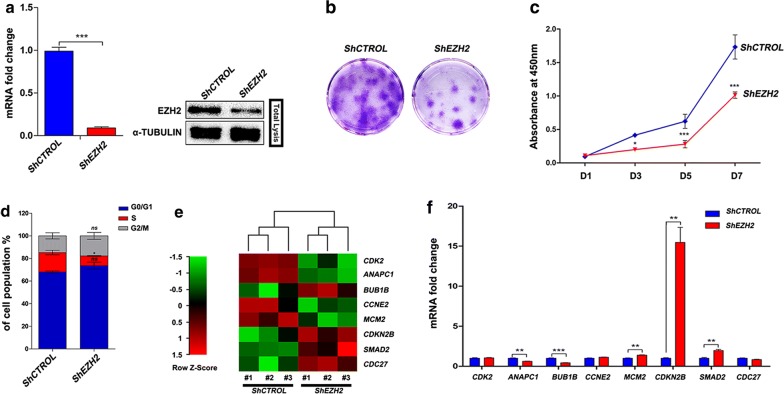
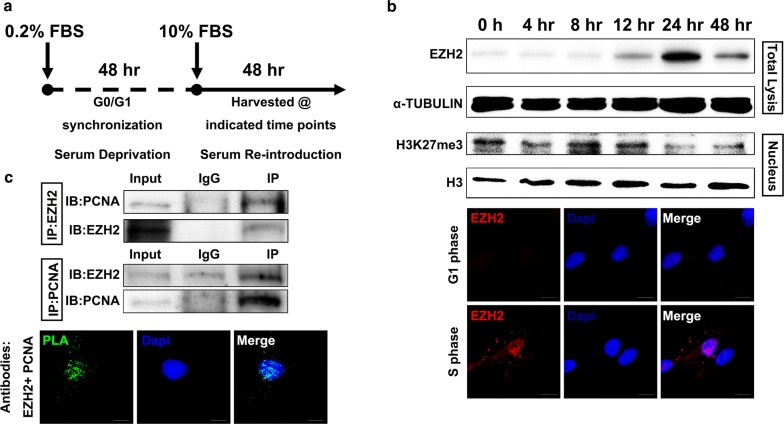
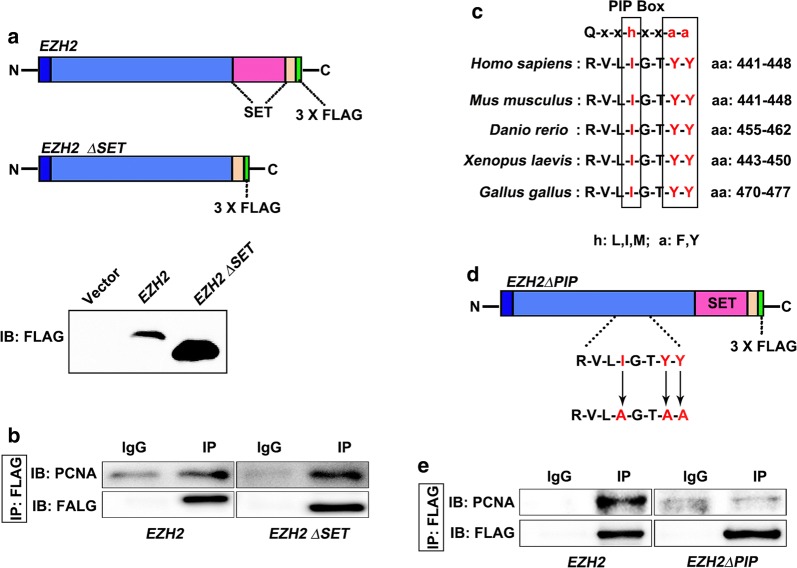
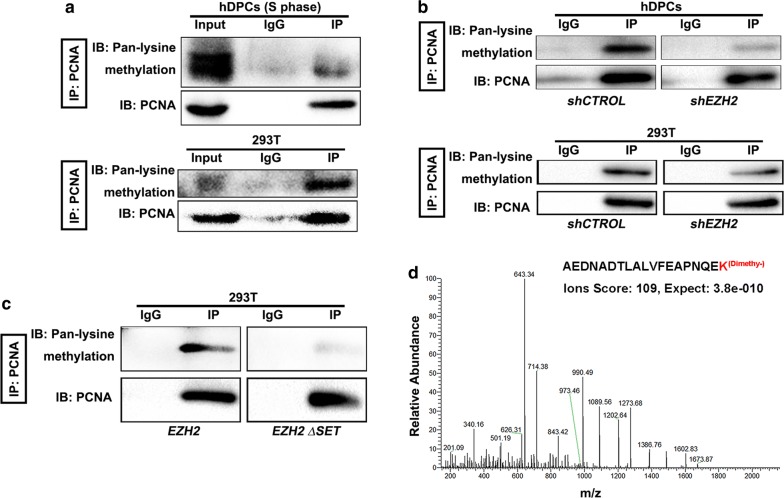
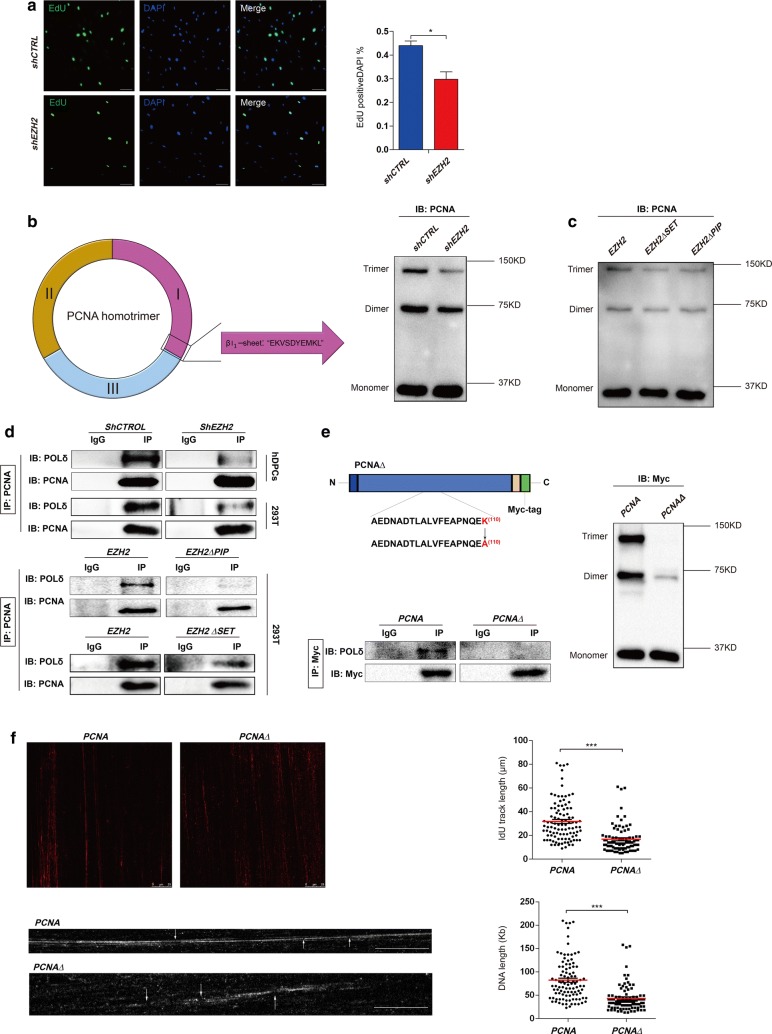
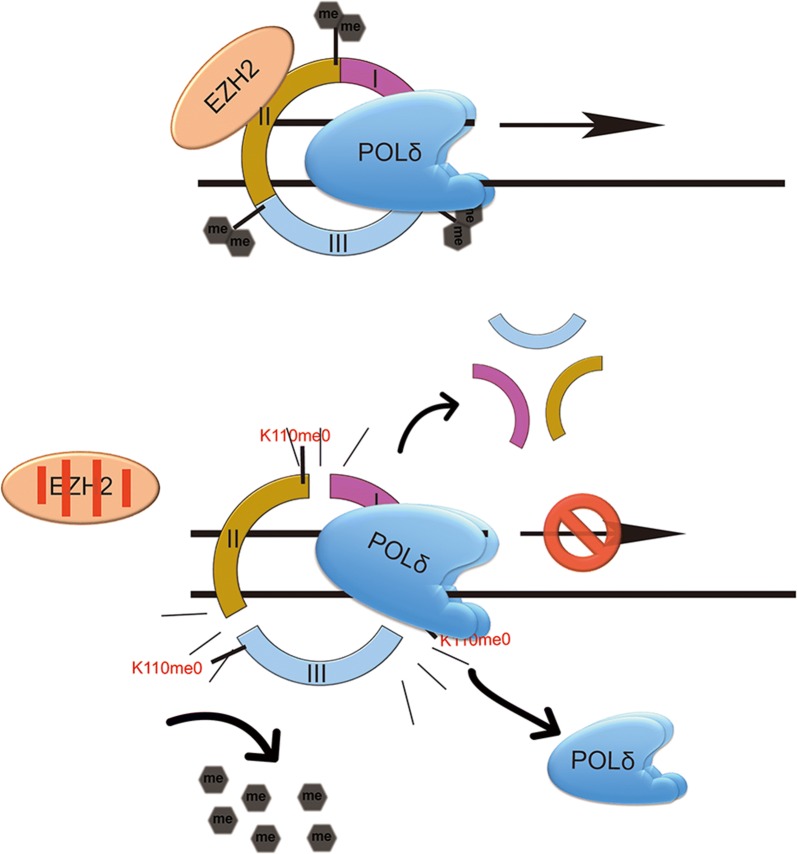
BACKGROUND: Proliferating cell nuclear antigen (PCNA), a ring-shaped homotrimer complex, promotes DNA replication via binding to DNA polymerase. Trimerized PCNA is critical for DNA replication. Enhancer of zeste homologue 2 (EZH2), which primarily acts as a histone methyltransferase, is essential for proliferation. However, how EZH2 promotes proliferation by controlling DNA replication through PCNA remains elusive. RESULTS: Here, we showed that low EZH2 levels repressed the proliferation of human dental pulp cells (hDPCs). The EZH2 protein level was dramatically upregulated in hDPCs at S phase in the absence of H3K27 trimethylation. Molecularly, EZH2 interacted with PCNA via the PIP box and dimethylated PCNA at lysine 110. Dimethylation of PCNA is essential for stabilization of the PCNA trimer and the binding of DNA polymerase δ to PCNA. CONCLUSIONS: Our data reveal the direct interaction between PCNA and EZH2 and a novel mechanism by which EZH2 orchestrates genome duplication.
Overview
The claims and statistics of this paper haven’t been checked yet.
Free: it reads the open-access text and checks the first 5 claims that cite a source we can check. Create a free account to check every claim.
Integrity signals
Registry
Cites
Statistics
Figures
Verification
Claims the paper makes
The claims and statistics of this paper haven’t been checked yet.
Free: it reads the open-access text and checks the first 5 claims that cite a source we can check. Create a free account to check every claim.
Claims other papers make about this one
Each is checked against this paper’s own text: does it say what the citing paper says it does?
In the citing paper
“Chromatin maturation factors, including DNMT1-UHRF1, EZH2 and HP1, use the proliferating cell nuclear antigen (PCNA; a DNA clamp that is essential for replication) or origin recognition complex (ORC) proteins as tethering components [31][32][33][34] (Fig. 2a).”
From Advances in epigenetics link genetics to the environment and disease (2019) · cites this paper as [33]
Self-check
Percentages, sums and reported differences re-computed from the paper’s own numbers.
The self-check needs the paper’s full text.
Citations
Cites
Hanahan, D., & Weinberg, R. A. (2000) · Cell · doi:10.1016/s0092-8674(00)81683-9 · Cited by 29,219
The language of covalent histone modifications
Strahl, B. D., & Allis, C. D. (2000) · Nature · doi:10.1038/47412 · Cited by 8,679
The Cancer Cell Line Encyclopedia enables predictive modelling of anticancer drug sensitivity
Barretina, J., Caponigro, G., Stransky, N., Venkatesan, K., Margolin, A. A., Kim, S., Wilson, C. J., Lehár, J., Kryukov, G. V., Sonkin, D., et al. (2012) · Nature · doi:10.1038/nature11003 · Cited by 7,950
Postnatal human dental pulp stem cells (DPSCs) in vitro and in vivo
Gronthos, S., Mankani, M., Brahim, J., Robey, P. G., & Shi, S. (2000) · Proceedings of the National Academy of Sciences · doi:10.1073/pnas.240309797 · Cited by 4,570
Histone demethylation mediated by the nuclear amine oxidase homolog LSD1
Shi, Y., Lan, F., Matson, C., Mulligan, P., Whetstine, J. R., Cole, P. A., Casero, R. A., & Shi, Y. (2004) · Cell · doi:10.1016/j.cell.2004.12.012 · Cited by 4,051 · cited 1×
“PCNA interacts with DNA replication cofactors during DNA replication via the evolutionarily conserved PIP box or APIM motif [4, 43, 54].”
BackgroundRole of Histone H3 Lysine 27 Methylation in Polycomb-Group Silencing
Cao, R., Wang, L., Wang, H., Xia, L., Erdjument-Bromage, H., Tempst, P., Jones, R. S., & Zhang, Y. (2002) · Science · doi:10.1126/science.1076997 · Cited by 3,775
The polycomb group protein EZH2 is involved in progression of prostate cancer
Varambally, S., Dhanasekaran, S. M., Zhou, M., Barrette, T. R., Kumar-Sinha, C., Sanda, M. G., Ghosh, D., Pienta, K. J., Sewalt, R. G. A. B., Otte, A. P., et al. (2002) · Nature · doi:10.1038/nature01075 · Cited by 2,717
Histone methylation: a dynamic mark in health, disease and inheritance
Greer, E. L., & Shi, Y. (2012) · Nature Reviews Genetics · doi:10.1038/nrg3173 · Cited by 2,241
RAD6-dependent DNA repair is linked to modification of PCNA by ubiquitin and SUMO
Hoege, C., Pfander, B., Moldovan, G.-L., Pyrowolakis, G., & Jentsch, S. (2002) · Nature · doi:10.1038/nature00991 · Cited by 2,198
PCNA, the Maestro of the Replication Fork
Moldovan, G.-L., Pfander, B., & Jentsch, S. (2007) · Cell · doi:10.1016/j.cell.2007.05.003 · Cited by 1,796
Cyclin/PCNA is the auxiliary protein of DNA polymerase-δ
Bravo, R., Frank, R., Blundell, P. A., & Macdonald-Bravo, H. (1987) · Nature · doi:10.1038/326515a0 · Cited by 1,740
Kuzmichev, A., Nishioka, K., Erdjument-Bromage, H., Tempst, P., & Reinberg, D. (2002) · Genes & Development · doi:10.1101/gad.1035902 · Cited by 1,596
Czermin, B., Melfi, R., McCabe, D., Seitz, V., Imhof, A., & Pirrotta, V. (2002) · Cell · doi:10.1016/s0092-8674(02)00975-3 · Cited by 1,533
Genome Regulation by Polycomb and Trithorax Proteins
Schuettengruber, B., Chourrout, D., Vervoort, M., Leblanc, B., & Cavalli, G. (2007) · Cell · doi:10.1016/j.cell.2007.02.009 · Cited by 1,430
Histone Lysine Methylation Dynamics: Establishment, Regulation, and Biological Impact
Black, J. C., Van Rechem, C., & Whetstine, J. R. (2012) · Molecular Cell · doi:10.1016/j.molcel.2012.11.006 · Cited by 1,308
EZH2 is downstream of the pRB-E2F pathway, essential for proliferation and amplified in cancer.
Bracken, A. P., Pasini, D., Capra, M., Prosperini, E., Colli, E., & Helin, K. (2003) · The EMBO Journal · doi:10.1093/emboj/cdg542 · Cited by 1,196
Genome Regulation by Polycomb and Trithorax: 70 Years and Counting
Schuettengruber, B., Bourbon, H.-M., Di Croce, L., & Cavalli, G. (2017) · Cell · doi:10.1016/j.cell.2017.08.002 · Cited by 1,094
The SET-domain protein superfamily: protein lysine methyltransferases.
Dillon, S. C., Zhang, X. Y., Trievel, R. C., & Cheng, X. (2005) · Genome biology · doi:10.1186/gb-2005-6-8-227 · Cited by 997
The functions of E(Z)/EZH2-mediated methylation of lysine 27 in histone H3
Cao, R., & Zhang, Y. (2004) · Current Opinion in Genetics & Development · doi:10.1016/j.gde.2004.02.001 · Cited by 914
Human DNA-(Cytosine-5) Methyltransferase-PCNA Complex as a Target for p21 WAF1
Chuang, L. S.-H., Ian, H.-I., Koh, T.-W., Ng, H.-H., Xu, G., & Li, B. F. L. (1997) · Science · doi:10.1126/science.277.5334.1996 · Cited by 902
Crystal structure of the eukaryotic DNA polymerase processivity factor PCNA
Krishna, T. S. R., Kong, X.-P., Gary, S., Burgers, P. M., & Kuriyan, J. (1994) · Cell · doi:10.1016/0092-8674(94)90014-0 · Cited by 902
Bracken, A. P., Kleine-Kohlbrecher, D., Dietrich, N., Pasini, D., Gargiulo, G., Beekman, C., Theilgaard-Mönch, K., Minucci, S., Porse, B. T., Marine, J.-C., et al. (2007) · Genes & Development · doi:10.1101/gad.415507 · Cited by 850
Kim, E., Kim, M., Woo, D.-H., Shin, Y., Shin, J., Chang, N., Oh, Y. T., Kim, H., Rheey, J., Nakano, I., et al. (2013) · Cancer Cell · doi:10.1016/j.ccr.2013.04.008 · Cited by 806
Kong, X.-P., Onrust, R., O'Donnell, M., & Kuriyan, J. (1992) · Cell · doi:10.1016/0092-8674(92)90445-i · Cited by 753
A model for transmission of the H3K27me3 epigenetic mark
Hansen, K. H., Bracken, A. P., Pasini, D., Dietrich, N., Gehani, S. S., Monrad, A., Rappsilber, J., Lerdrup, M., & Helin, K. (2008) · Nature Cell Biology · doi:10.1038/ncb1787 · Cited by 717
Watanabe, K., Tateishi, S., Kawasuji, M., Tsurimoto, T., Inoue, H., & Yamaizumi, M. (2004) · The EMBO Journal · doi:10.1038/sj.emboj.7600383 · Cited by 538
Chou, D. M., Adamson, B., Dephoure, N. E., Tan, X., Nottke, A. C., Hurov, K. E., Gygi, S. P., Colaiácovo, M. P., & Elledge, S. J. (2010) · Proceedings of the National Academy of Sciences · doi:10.1073/pnas.1012946107 · Cited by 529
Non-histone protein methylation as a regulator of cellular signalling and function
Biggar, K. K., & Li, S. S.-C. (2015) · Nature Reviews Molecular Cell Biology · doi:10.1038/nrm3915 · Cited by 479
PCNA binding through a conserved motif
Warbrick, E. (1998) · BioEssays · doi:10.1002/(sici)1521-1878(199803)20:3<195::aid-bies2>3.0.co;2-r · Cited by 394
Chemical mechanisms of histone lysine and arginine modifications
Smith, B. C., & Denu, J. M. (2009) · Biochimica et Biophysica Acta (BBA) - Gene Regulatory Mechanisms · doi:10.1016/j.bbagrm.2008.06.005 · Cited by 390 · cited 1×
“Moreover, in normal DNA replication, PCNA interacts with POLδ and stimulates its processing activity [4, 47, 62, 63].”
BackgroundRegulation of PCNA–protein interactions for genome stability
Mailand, N., Gibbs-Seymour, I., & Bekker-Jensen, S. (2013) · Nature Reviews Molecular Cell Biology · doi:10.1038/nrm3562 · Cited by 377
Critical roles of non-histone protein lysine methylation in human tumorigenesis
Hamamoto, R., Saloura, V., & Nakamura, Y. (2015) · Nature Reviews Cancer · doi:10.1038/nrc3884 · Cited by 376
Rondinelli, B., Gogola, E., Yücel, H., Duarte, A. A., van de Ven, M., van der Sluijs, R., Konstantinopoulos, P. A., Jonkers, J., Ceccaldi, R., Rottenberg, S., et al. (2017) · Nature Cell Biology · doi:10.1038/ncb3626 · Cited by 332
ATXR5 and ATXR6 are H3K27 monomethyltransferases required for chromatin structure and gene silencing
Jacob, Y., Feng, S., LeBlanc, C. A., Bernatavichute, Y. V., Stroud, H., Cokus, S., Johnson, L. M., Pellegrini, M., Jacobsen, S. E., & Michaels, S. D. (2009) · Nature Structural & Molecular Biology · doi:10.1038/nsmb.1611 · Cited by 324
Kotake, Y., Cao, R., Viatour, P., Sage, J., Zhang, Y., & Xiong, Y. (2007) · Genes & Development · doi:10.1101/gad.1499407 · Cited by 311
PRC2 directly methylates GATA4 and represses its transcriptional activity
He, A., Shen, X., Ma, Q., Cao, J., von Gise, A., Zhou, P., Wang, G., Marquez, V. E., Orkin, S. H., & Pu, W. T. (2012) · Genes & Development · doi:10.1101/gad.173930.111 · Cited by 291
DNA Polymerases that Propagate the Eukaryotic DNA Replication Fork
Garg, P., & Burgers, P. M. J. (2005) · Critical Reviews in Biochemistry and Molecular Biology · doi:10.1080/10409230590935433 · Cited by 283
Structure and Catalytic Mechanism of a SET Domain Protein Methyltransferase
Trievel, R. C., Beach, B. M., Dirk, L. M. A., Houtz, R. L., & Hurley, J. H. (2002) · Cell · doi:10.1016/s0092-8674(02)01000-0 · Cited by 266
Structure of the Neurospora SET Domain Protein DIM-5, a Histone H3 Lysine Methyltransferase
Zhang, X., Tamaru, H., Khan, S. I., Horton, J. R., Keefe, L. J., Selker, E. U., & Cheng, X. (2002) · Cell · doi:10.1016/s0092-8674(02)00999-6 · Cited by 249
EZH2 Generates a Methyl Degron that Is Recognized by the DCAF1/DDB1/CUL4 E3 Ubiquitin Ligase Complex
Lee, J. M., Lee, J. S., Kim, H., Kim, K., Park, H., Kim, J.-Y., Lee, S. H., Kim, I. S., Kim, J., Lee, M., et al. (2012) · Molecular Cell · doi:10.1016/j.molcel.2012.09.004 · Cited by 247
TrxG and PcG Proteins but Not Methylated Histones Remain Associated with DNA through Replication
Petruk, S., Sedkov, Y., Johnston, D. M., Hodgson, J. W., Black, K. L., Kovermann, S. K., Beck, S., Canaani, E., Brock, H. W., & Mazo, A. (2012) · Cell · doi:10.1016/j.cell.2012.06.046 · Cited by 246
The histone methyltransferase SET8 is required for S-phase progression
Jørgensen, S., Elvers, I., Trelle, M. B., Menzel, T., Eskildsen, M., Jensen, O. N., Helleday, T., Helin, K., & Sørensen, C. S. (2007) · The Journal of Cell Biology · doi:10.1083/jcb.200706150 · Cited by 227
Characterization of the Two Small Subunits of Saccharomyces cerevisiae DNA Polymerase δ
Gerik, K. J., Li, X., Pautz, A., & Burgers, P. M. J. (1998) · Journal of Biological Chemistry · doi:10.1074/jbc.273.31.19747 · Cited by 216
Cyclins and Cell Cycle Control in Cancer and Disease
Casimiro, M. C., Crosariol, M., Loro, E., Li, Z., & Pestell, R. G. (2012) · Genes & Cancer · doi:10.1177/1947601913479022 · Cited by 216
Histone Lysine Methyltransferase SETD8 Promotes Carcinogenesis by Deregulating PCNA Expression
Takawa, M., Cho, H.-S., Hayami, S., Toyokawa, G., Kogure, M., Yamane, Y., Iwai, Y., Maejima, K., Ueda, K., Masuda, A., et al. (2012) · Cancer Research · doi:10.1158/0008-5472.can-11-3701 · Cited by 211
Bruning, J. B., & Shamoo, Y. (2004) · Structure · doi:10.1016/j.str.2004.09.018 · Cited by 206
Gonzalez, M. E., Li, X., Toy, K., DuPrie, M., Ventura, A. C., Banerjee, M., Ljungman, M., Merajver, S. D., & Kleer, C. G. (2009) · Oncogene · doi:10.1038/onc.2008.433 · Cited by 195
Structural and functional similarities of prokaryotic and eukaryotic DNA polymerase sliding clamps
Kelman, Z., & O'Donnell, M. (1995) · Nucleic Acids Research · doi:10.1093/nar/23.18.3613 · Cited by 177
Transcription coactivator p300 binds PCNA and may have a role in DNA repair synthesis
Hasan, S., Hassa, P. O., Imhof, R., & Hottiger, M. O. (2001) · Nature · doi:10.1038/35066610 · Cited by 176
Identification of a novel, widespread, and functionally important PCNA-binding motif
Gilljam, K. M., Feyzi, E., Aas, P. A., Sousa, M. M. L., Müller, R., Vågbø, C. B., Catterall, T. C., Liabakk, N. B., Slupphaug, G., Drabløs, F., et al. (2009) · Journal of Cell Biology · doi:10.1083/jcb.200903138 · Cited by 168
Reeler: new tales on an old mutant mouse
D'Arcangelo, G., & Curran, T. (1998) · BioEssays · doi:10.1002/(sici)1521-1878(199803)20:3<235::aid-bies7>3.0.co;2-q · Cited by 153
Polycomb repressive complex 2 contributes to DNA double-strand break repair
Campbell, S., Ismail, I. H., Young, L. C., Poirier, G. G., & Hendzel, M. J. (2013) · Cell Cycle · doi:10.4161/cc.25795 · Cited by 144
Raynaud, C., Sozzani, R., Glab, N., Domenichini, S., Perennes, C., Cella, R., Kondorosi, É., & Bergounioux, C. (2006) · The Plant Journal · doi:10.1111/j.1365-313x.2006.02799.x · Cited by 115
Ducoux, M., Urbach, S., Baldacci, G., Hübscher, U., Koundrioukoff, S., Christensen, J., & Hughes, P. (2001) · Journal of Biological Chemistry · doi:10.1074/jbc.m106990200 · Cited by 111
Milutinovic, S., Zhuang, Q., & Szyf, M. (2002) · Journal of Biological Chemistry · doi:10.1074/jbc.m202504200 · Cited by 104
Licensing of DNA replication, cancer, pluripotency and differentiation: An interlinked world?
Tsaniras, S. C., Kanellakis, N. I., Symeonidou, I.-E., Nikolopoulou, P., Lygerou, Z., & Taraviras, S. L. (2014) · Seminars in Cell and Developmental Biology · doi:10.1016/j.semcdb.2014.03.013 · Cited by 97
Polycomb protein EZH2 regulates cancer cell fate decision in response to DNA damage
Wu, Z., Lee, S. T., Qiao, Y., Li, Z., Lee, P. L., Lee, Y. J., Jiang, X., Tan, J. Y., Aau, M., Lim, C. Z. H., et al. (2011) · Cell Death and Differentiation · doi:10.1038/cdd.2011.48 · Cited by 95
Piunti, A., Rossi, A., Cerutti, A., Albert, M., Jammula, S., Scelfo, A., Cedrone, L., Fragola, G., Olsson, L., Koseki, H., et al. (2014) · Nature Communications · doi:10.1038/ncomms4649 · Cited by 93
Petruk, S., Cai, J., Sussman, R. T., Sun, G., Kovermann, S. K., Mariani, S. A., Calabretta, B., McMahon, S. B., Brock, H. W., Iacovitti, L., et al. (2017) · Molecular Cell · doi:10.1016/j.molcel.2017.03.006 · Cited by 83
Functional Roles of p12, the Fourth Subunit of Human DNA Polymerase δ
Li, H., Xie, B., Zhou, Y., Rahmeh, A. A., Trusa, S., Zhang, S., Gao, Y., Lee, E. Y. C., & Lee, M. (2006) · Journal of Biological Chemistry · doi:10.1074/jbc.m600322200 · Cited by 79
Visualization of DNA Replication in the Vertebrate Model System DT40 using the DNA Fiber Technique
Schwab, R. A. V., & Niedźwiedź, W. (2011) · Journal of Visualized Experiments · doi:10.3791/3255 · Cited by 68
A rapid and efficient method to purify proteins at replication forks under native conditions
Leung, K. H. T., El Hassan, M. A., & Bremner, R. (2013) · BioTechniques · doi:10.2144/000114089 · Cited by 65
Crystallization of Proliferating Cell Nuclear Antigen (PCNA) from Saccharomyces cerevisiae
Krishna, T. S. R., Fenyö, D., Kong, X., Gary, S. L., Chait, B. T., Burgers, P., & Kuriyan, J. (1994) · Journal of Molecular Biology · doi:10.1006/jmbi.1994.1495 · Cited by 45
Kogure, M., Takawa, M., Saloura, V., Sone, K., Piao, L., Ueda, K., Ibrahim, R., Tsunoda, T., Sugiyama, M., Atomi, Y., et al. (2013) · Neoplasia · doi:10.1593/neo.131436 · Cited by 38
Riva, F., Savio, M., Cazzalini, O., Stivala, L. A., Scovassi, A. I., Cox, L. S., Ducommun, B., & Prosperi, E. (2003) · Experimental Cell Research · doi:10.1016/j.yexcr.2003.10.025 · Cited by 27
Polycomb complex recruitment in pluripotent stem cells
Barrero, M. J., & Belmonte, J. C. I. (2013) · Nature Cell Biology · doi:10.1038/ncb2723 · Cited by 22
Cited by
Advances in epigenetics link genetics to the environment and disease
Cavalli, G., & Heard, E. (2019) · Nature · doi:10.1038/s41586-019-1411-0 · Cited by 1,509
Human PCNA Structure, Function and Interactions
González-Magaña, A., & Blanco, F. J. (2020) · Biomolecules · doi:10.3390/biom10040570 · Cited by 286
Mechanisms of DNA Damage Tolerance: Post-Translational Regulation of PCNA
Leung, W., Baxley, R. M., Moldovan, G., & Bielinsky, A. (2018) · Genes · doi:10.3390/genes10010010 · Cited by 104
Wang, J., & Wang, G. G. (2020) · International Journal of Molecular Sciences · doi:10.3390/ijms21249501 · Cited by 83
Lysine methylation signaling of non-histone proteins in the nucleus
Levy, D. (2019) · Cellular and Molecular Life Sciences · doi:10.1007/s00018-019-03142-0 · Cited by 63
Metadata
- Authors
- A, P., Xu, X., Wang, C., Yang, J., Wang, S., Dai, J., & Ye, L.
- Affiliations
- Sichuan University (CN)
- Shanghai Jiao Tong University (CN)
- Corresponding author
- Ye, Ling
- Venue
- Epigenetics & Chromatin
- Published
- 2018-08-02
- Volume
- 11
- Issue
- 1
- Pages
- 44-44
- ISSN
- 1756-8935 (ISSN-L)
- PMC
- PMC6071395
- OpenAlex
- W2886681029
- Cited by
- 30
- References
- 66
- Citations by year
- 2026: 2 · 2025: 6 · 2024: 3 · 2023: 1 · 2022: 4 · 2021: 4 · 2020: 5 · 2019: 4 · 2018: 1
- FWCI
- 1.24
- Type
- journal article
- Language
- en
- Open access
- gold
- doi.org
- Licence
- cc-by
- creativecommons.org/licenses/by/4.0/ (tdm)
- Locations
- Epigenetics & Chromatin (publishedVersion, cc-by)
- Europe PMC (PubMed Central) (publishedVersion, cc-by)
- PubMed Central (publishedVersion, cc-by)
- PubMed (publishedVersion)
- DOAJ (DOAJ: Directory of Open Access Journals) (submittedVersion, cc-by-sa)
- Funders
- National High-tech R&D Program (863 Program) (2015AA020306)
- Sichuan Province Science and Technology Support Program (2016JY0022)
- National Natural Science Foundation of China (81271127, 81322013)
- Program of International Science and Technology Cooperation (2014DFA31990)
- Topics
- Life Sciences › Biochemistry, Genetics and Molecular Biology › Molecular Biology › Epigenetics and DNA Methylation
- Life Sciences › Biochemistry, Genetics and Molecular Biology › Molecular Biology › DNA Repair Mechanisms
- Life Sciences › Biochemistry, Genetics and Molecular Biology › Molecular Biology › Genomics and Chromatin Dynamics
- Keywords
- EZH2, PCNA, DNA polymerase delta, PIP box, DNA replication, histone methyltransferase, dental pulp cells, cell proliferation, H3K27me3, whole-genome duplication
- MeSH terms
- Enhancer of Zeste Homolog 2 Protein, Cells, Cultured, Dental Pulp, DNA Polymerase III, DNA Replication, Humans, Methylation, Protein Binding, Protein Processing, Post-Translational, Proliferating Cell Nuclear Antigen, Protein Multimerization, Young Adult
About these checks
Registry, retraction, Cites and statistics results are computed, not judged, with one exception: a printed reference that no index lists is read once by a model before it counts as a citation error. Claims are extracted by a model and kept only when their quote appears verbatim in the text; each cited source is then checked, with a model’s help, for whether it says what the claim relies on. Those verdicts can be wrong — read the claim’s quote and the cited source before relying on one.
Statistics and arithmetic are recomputed, not judged.
Confidence bands are shown only for fields calibrated on our annotated test set. None is calibrated yet, so no band is shown.
What counts as a claim ›How we measure confidence ›How we check this ›
Are you an author, or do you see a problem with this page? Request a review
Data sources
Bibliographic data: Semantic Scholar, OpenAlex, Crossref.
Contains information from the Semantic Scholar Academic Graph Datasets, made available under the ODC Attribution License (ODC-BY 1.0).
Semantic Scholar’s data is described in: Kinney, R., et al. (2023). The Semantic Scholar Open Data Platform. arXiv:2301.10140.
