

Analysis of 100,000 human cancer genomes reveals the landscape of tumor mutational burden
Open accessThe DOI matches its Crossref record; 78 of the 78 references it cites were found in a registry or an index.
Abstract
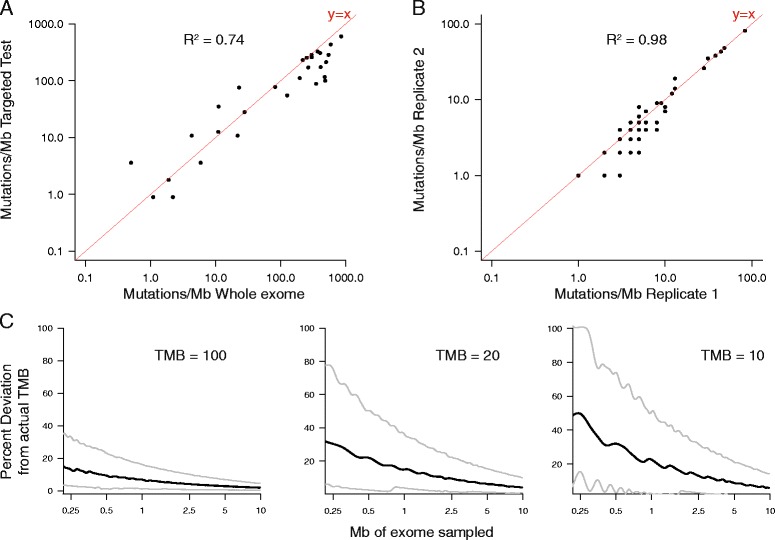
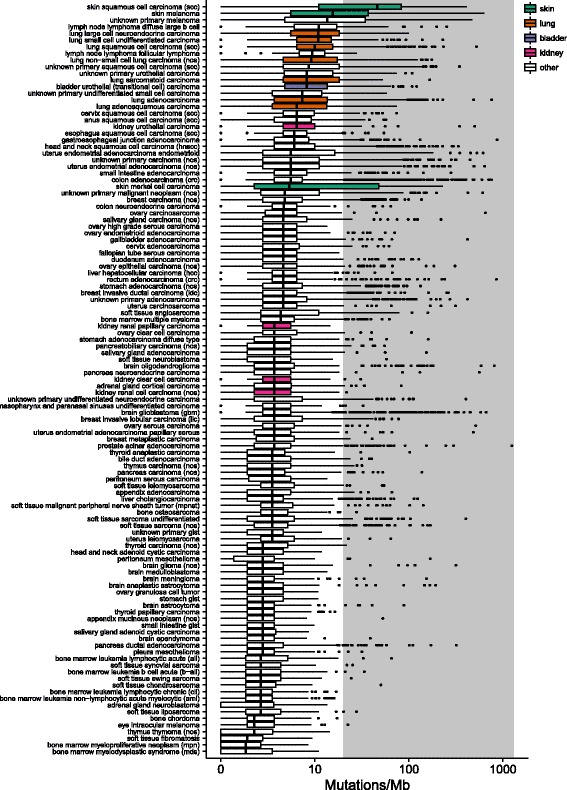
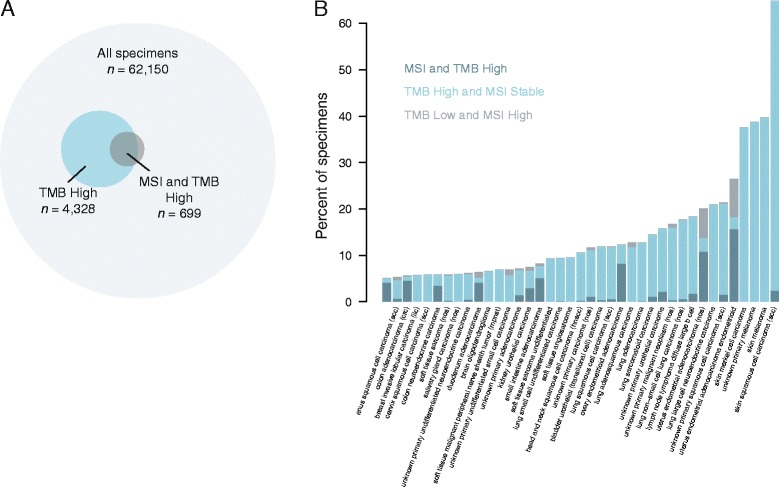
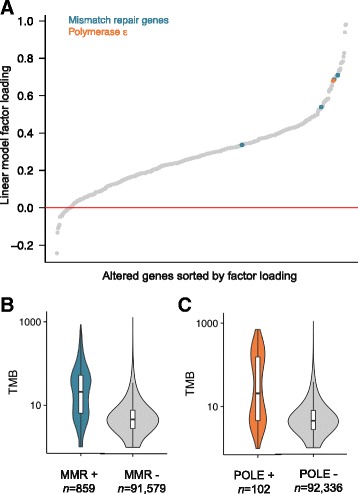
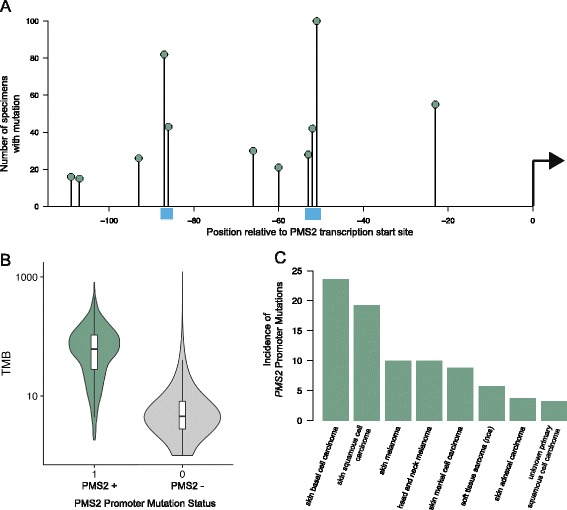
BACKGROUND: High tumor mutational burden (TMB) is an emerging biomarker of sensitivity to immune checkpoint inhibitors and has been shown to be more significantly associated with response to PD-1 and PD-L1 blockade immunotherapy than PD-1 or PD-L1 expression, as measured by immunohistochemistry (IHC). The distribution of TMB and the subset of patients with high TMB has not been well characterized in the majority of cancer types. METHODS: In this study, we compare TMB measured by a targeted comprehensive genomic profiling (CGP) assay to TMB measured by exome sequencing and simulate the expected variance in TMB when sequencing less than the whole exome. We then describe the distribution of TMB across a diverse cohort of 100,000 cancer cases and test for association between somatic alterations and TMB in over 100 tumor types. RESULTS: We demonstrate that measurements of TMB from comprehensive genomic profiling are strongly reflective of measurements from whole exome sequencing and model that below 0.5 Mb the variance in measurement increases significantly. We find that a subset of patients exhibits high TMB across almost all types of cancer, including many rare tumor types, and characterize the relationship between high TMB and microsatellite instability status. We find that TMB increases significantly with age, showing a 2.4-fold difference between age 10 and age 90 years. Finally, we investigate the molecular basis of TMB and identify genes and mutations associated with TMB level. We identify a cluster of somatic mutations in the promoter of the gene PMS2, which occur in 10% of skin cancers and are highly associated with increased TMB. CONCLUSIONS: These results show that a CGP assay targeting ~1.1 Mb of coding genome can accurately assess TMB compared with sequencing the whole exome. Using this method, we find that many disease types have a substantial portion of patients with high TMB who might benefit from immunotherapy. Finally, we identify novel, recurrent promoter mutations in PMS2, which may be another example of regulatory mutations contributing to tumorigenesis.
Overview
The claims and statistics of this paper haven’t been checked yet.
Free: it reads the open-access text and checks the first 5 claims that cite a source we can check. Create a free account to check every claim.
Integrity signals
Registry
Cites
Statistics
Figures
Verification
Claims the paper makes
The claims and statistics of this paper haven’t been checked yet.
Free: it reads the open-access text and checks the first 5 claims that cite a source we can check. Create a free account to check every claim.
Claims other papers make about this one
Each is checked against this paper’s own text: does it say what the citing paper says it does?
The source backs part of the claim, not all of it — or backs it for a different population, condition or comparison.
In the citing paper
“This is at least in part due to activation of the nuclear factor κB (NF-κB) pathway driven by p53 loss, as well as increased tolerance of a higher mutational burden that may ostensibly result in enhanced immunogenicity due to increased neoantigen load143, 144, 145, 146.”
From Co-occurring genomic alterations in non-small-cell lung cancer biology and therapy (2019) · cites this paper as [145]
Experimental — accuracy not yet measuredThe source backs part of the claim, not all of it — or backs it for a different population, condition or comparison.
In the citing paper
“Childhood tumors are considered immunologically ‘cold tumors’ with few infiltrating immune cells and low neoantigen burden precluding robust response to immune checkpoint therapies 39,40.”
From A Phase I/II Trial of Nivolumab plus Ipilimumab in Children and Young Adults with Relapsed/Refractory Solid Tumors: A Children's Oncology Group Study ADVL1412 (2022) · cites this paper as [40]
Experimental — accuracy not yet measuredThe source backs part of the claim, not all of it — or backs it for a different population, condition or comparison.
In the citing paper
“Second, distinct subsets of CRC are characterized by chromosomal instability (CIN) or microsatellite instability (MSI) and are among cancers that exhibit a moderately high tumor mutation burden (TMB) suggesting an extensive degree of genetic heterogeneity [28].”
From Anti-tumor efficacy of a potent and selective non-covalent KRASG12D inhibitor (2022) · cites this paper as [28]
Experimental — accuracy not yet measuredIn the citing paper
“TP53 co-mutations are associated with an inflamed tumor immune microenvironment and increased tumor cell PD-L1 expression in KRAS-mutant NSCLC and GEMMs.”
From Co-occurring genomic alterations in non-small-cell lung cancer biology and therapy (2019) · cites this paper as [145]
In the citing paper
“TMB measured by comprehensive genomic profiling is comparable to measurements by whole exome sequencing and is typically higher in smoking associated lung cancer due to tobacco carcinogenesis”
From Diverse EGFR Exon 20 Insertions and Co-Occurring Molecular Alterations Identified by Comprehensive Genomic Profiling of NSCLC (2018) · cites this paper as [14]
Self-check
Percentages, sums and reported differences re-computed from the paper’s own numbers.
The self-check needs the paper’s full text.
Citations
Cites
Fast and accurate short read alignment with Burrows-Wheeler transform
Li, H., & Durbin, R. (2009) · Bioinformatics · doi:10.1093/bioinformatics/btp324 · Cited by 58,607
PD-1 and PD-L1 Immune Checkpoint Blockade to Treat Breast Cancer
Hartkopf, A. D., Taran, F.-A., Wallwiener, M., Walter, C. B., Krämer, B., Grischke, E.-M., & Brucker, S. Y. (2016) · Breast Care · doi:10.1159/000453569 · Cited by 30,845
The Genome Analysis Toolkit: A MapReduce framework for analyzing next-generation DNA sequencing data
McKenna, A., Hanna, M., Banks, E., Sivachenko, A., Cibulskis, K., Kernytsky, A., Garimella, K., Altshuler, D., Gabriel, S., Daly, M., et al. (2010) · Genome Research · doi:10.1101/gr.107524.110 · Cited by 27,895
The blockade of immune checkpoints in cancer immunotherapy
Pardoll, D. M. (2012) · Nature Reviews Cancer · doi:10.1038/nrc3239 · Cited by 13,838 · cited 1×
“These agents modulate the pathways that control when and where immune responses are mounted, increasing antitumor activity through immune checkpoint blockade [7].”
BackgroundSafety, activity, and immune correlates of anti–PD-1 antibody in cancer
Topalian, S. L., Hodi, F. S., Brahmer, J. R., Gettinger, S. N., Smith, D. C., McDermott, D. F., Powderly, J. D., Carvajal, R. D., Sosman, J. A., Atkins, M. B., et al. (2012) · New England Journal of Medicine · doi:10.1056/nejmoa1200690 · Cited by 12,628 · cited 1×
“Inhibitors of cytotoxic T lymphocyte-associated antigen 4 (CTLA-4) [8, 9] and of programmed cell death protein 1 (PD-1) receptor [10] were the first drugs of this type, which promote T-cell activation [2].”
BackgroundStatistical significance for genomewide studies
Storey, J. D., & Tibshirani, R. (2003) · Proceedings of the National Academy of Sciences · doi:10.1073/pnas.1530509100 · Cited by 9,692 · cited 2×
“For both tests, we corrected for multiple testing using the false discovery rate (FDR) method [66].”
MethodSignatures of mutational processes in human cancer
Initiative, A. P. C. G., Alexandrov, L. B., ICGC Breast Cancer Consortium, ICGC MMML-Seq Consortium, PedBrain, I., Nik-Zainal, S., Wedge, D. C., Aparicio, S. A. J. R., Behjati, S., Biankin, A. V., et al. (2013) · Nature · doi:10.1038/nature12477 · Cited by 9,660 · cited 5×
“Mutations in a number of other genes have also been linked to increased TMB [28, 51], but their function is less well understood.”
BackgroundResultInfluentialAnalysis of protein-coding genetic variation in 60,706 humans
Exome Aggregation Consortium, Lek, M., Karczewski, K. J., Minikel, E. V., Samocha, K. E., Banks, E., Fennell, T., O’Donnell-Luria, A. H., Ware, J. S., Hill, A. J., et al. (2016) · Nature · doi:10.1038/nature19057 · Cited by 9,587 · cited 1×
“Germline alterations occurring with two or more counts in the ExAC database were not counted [65].”
BackgroundPD-1 Blockade in Tumors with Mismatch-Repair Deficiency
Le, D. T., Uram, J. N., Wang, H., Bartlett, B. R., Kemberling, H., Eyring, A. D., Skora, A. D., Luber, B. S., Azad, N. S., Laheru, D., et al. (2015) · New England Journal of Medicine · doi:10.1056/nejmoa1500596 · Cited by 9,377
The cancer genome atlas pan-cancer analysis project
The Cancer Genome Atlas Research Network, Weinstein, J. N., Collisson, E. A., Mills, G. B., Shaw, K. R. M., Ozenberger, B. A., Ellrott, K., Shmulevich, I., Sander, C., & Stuart, J. M. (2013) · Nature Genetics · doi:10.1038/ng.2764 · Cited by 9,092 · cited 3×
“across cancer types and found a wide distribution of TMB across ~20–30 cancer types [28, 51, 54].”
BackgroundMethodMutational landscape determines sensitivity to PD-1 blockade in non–small cell lung cancer
Rizvi, N. A., Hellmann, M. D., Snyder, A., Kvistborg, P., Makarov, V., Havel, J. J., Lee, W., Yuan, J., Wong, P., Ho, T. S., et al. (2015) · Science · doi:10.1126/science.aaa1348 · Cited by 7,802
The DNA-damage response in human biology and disease
Jackson, S. P., & Bartek, J. (2009) · Nature · doi:10.1038/nature08467 · Cited by 6,092 · cited 1×
“Defects in DNA damage repair lead to the accumulation of mutations caused by replicative errors and environmental damage [29, 30].”
BackgroundNivolumab versus Everolimus in Advanced Renal-Cell Carcinoma
Motzer, R. J., Escudier, B., McDermott, D. F., George, S., Hammers, H. J., Srinivas, S., Tykodi, S. S., Sosman, J. A., Procopio, G., Plimack, E. R., et al. (2015) · New England Journal of Medicine · doi:10.1056/nejmoa1510665 · Cited by 5,807
Mutational heterogeneity in cancer and the search for new cancer-associated genes
Lawrence, M. S., Stojanov, P., Polak, P., Kryukov, G. V., Cibulskis, K., Sivachenko, A., Carter, S. L., Stewart, C., Mermel, C. H., Roberts, S. A., et al. (2013) · Nature · doi:10.1038/nature12213 · Cited by 5,461
Self-citationSensitive detection of somatic point mutations in impure and heterogeneous cancer samples
Cibulskis, K., Lawrence, M. S., Carter, S. L., Sivachenko, A., Jaffe, D., Sougnez, C., Gabriel, S., Meyerson, M., Lander, E. S., & Getz, G. (2013) · Nature Biotechnology · doi:10.1038/nbt.2514 · Cited by 4,981
Genetic Basis for Clinical Response to CTLA-4 Blockade in Melanoma
Snyder, A., Makarov, V., Merghoub, T., Yuan, J., Zaretsky, J. M., Desrichard, A., Walsh, L. A., Postow, M. A., Wong, P., Ho, T. S., et al. (2014) · New England Journal of Medicine · doi:10.1056/nejmoa1406498 · Cited by 4,286 · cited 2×
“Studies focusing on single disease types have shown that high TMB measured from whole exome data is associated with better response rates to immunotherapies in melanoma [21] and non-small cell lung cancer cohorts [20].”
BackgroundResultEnhancement of Antitumor Immunity by CTLA-4 Blockade
Leach, D. R., Krummel, M. F., & Allison, J. P. (1996) · Science · doi:10.1126/science.271.5256.1734 · Cited by 3,955 · cited 7×
“Inhibitors of cytotoxic T lymphocyte-associated antigen 4 (CTLA-4) [8, 9] and of programmed cell death protein 1 (PD-1) receptor [10] were the first drugs of this type, which promote T-cell activation [2].”
BackgroundInfluentialCancer immunotherapy comes of age
Mellman, I., Coukos, G., & Dranoff, G. (2011) · Nature · doi:10.1038/nature10673 · Cited by 3,893
Rosenberg, J. E., Hoffman-Censits, J., Powles, T., van der Heijden, M. S., Balar, A. V., Necchi, A., Dawson, N., O'Donnell, P. H., Balmanoukian, A., Loriot, Y., et al. (2016) · The Lancet · doi:10.1016/s0140-6736(16)00561-4 · Cited by 3,669 · cited 1×
“In fact, in one clinical trial, TMB was more significantly associated with response rate than expression of PD-L1 by immunohistochemistry [6].”
BackgroundSelf-citationGenomic correlates of response to CTLA-4 blockade in metastatic melanoma
Van Allen, E. M., Miao, D., Schilling, B., Shukla, S. A., Blank, C., Zimmer, L., Sucker, A., Hillen, U., Geukes Foppen, M. H., Goldinger, S. M., et al. (2015) · Science · doi:10.1126/science.aad0095 · Cited by 2,839 · cited 1×
“However, no recurrent neoantigens have been found that predict response to date [23].”
BackgroundSelf-citationMechanism-driven biomarkers to guide immune checkpoint blockade in cancer therapy
Topalian, S. L., Taube, J. M., Anders, R. A., & Pardoll, D. M. (2016) · Nature Reviews Cancer · doi:10.1038/nrc.2016.36 · Cited by 2,733 · cited 1×
“Assays that measure PD-1/ PD-L1 protein expression by immunohistochemistry (IHC) are approved as complementary or companion diagnostics for some of these drugs; however, measurement of PD-1/PD-L1 expression is technically challenging, can be difficult to interpret, and is not always an accurate predictor of response t…”
BackgroundPredicting effects of noncoding variants with deep learning–based sequence model
Zhou, J., & Troyanskaya, O. G. (2015) · Nature Methods · doi:10.1038/nmeth.3547 · Cited by 2,338
Frampton, G. M., Fichtenholtz, A., Otto, G. A., Wang, K., Downing, S. R., He, J., Schnall-Levin, M., White, J., Sanford, E. M., An, P., et al. (2013) · Nature Biotechnology · doi:10.1038/nbt.2696 · Cited by 2,157 · cited 2×
“CGP was performed using the FoundationOne assay (Cambridge, MA, USA), as previously described in detail [55, 56].”
BackgroundMethodSelf-citationA role for sunlight in skin-cancer – UV-induced p53 mutations in squamous-cell carcinoma
Brash, D. E., Rudolph, J. A., Simon, J. A., Lin, A., McKenna, G. J., Baden, H. P., Halperin, A. J., & Pontén, J. (1991) · Proceedings of the National Academy of Sciences · doi:10.1073/pnas.88.22.10124 · Cited by 1,959
Landon, M., Saam, J., Brown, K. L., Moyes, K., Evans, B., & Wenstrup, R. (2015) · Oncology · doi:10.1159/000430097 · Cited by 1,939
Highly Recurrent TERT Promoter Mutations in Human Melanoma
Huang, F. W., Hodis, E., Xu, M. J., Kryukov, G. V., Chin, L., & Garraway, L. A. (2013) · Science · doi:10.1126/science.1229259 · Cited by 1,816
Self-citationPreferential Formation of Benzo[ a ]pyrene Adducts at Lung Cancer Mutational Hotspots in P53
Denissenko, M. F., Pao, A., Tang, M.-S., & Pfeifer, G. P. (1996) · Science · doi:10.1126/science.274.5286.430 · Cited by 1,650
Petitjean, A., Mathe, E., Kato, S., Ishioka, C., Tavtigian, S. V., Hainaut, P., & Olivier, M. (2007) · Human Mutation · doi:10.1002/humu.20495 · Cited by 1,598 · cited 1×
“Loss of function mutations in TP53 are very common in cancer and are a somatic marker of elevated mutation rate [50].”
BackgroundThe COSMIC (Catalogue of Somatic Mutations in Cancer) database and website
Bamford, S., Dawson, E., Forbes, S., Clements, J., Pettett, R., Dogan, A., Flanagan, A., Teague, J., Futreal, P. A., Stratton, M. R., et al. (2004) · British Journal of Cancer · doi:10.1038/sj.bjc.6601894 · Cited by 1,267 · cited 1×
“Alterations listed as known somatic alterations in COSMIC and truncations in tumor suppressor genes were not counted, since our assay genes are biased toward genes with functional mutations in cancer [63].”
BackgroundMutational signatures associated with tobacco smoking in human cancer
Alexandrov, L. B., Ju, Y. S., Haase, K., Van Loo, P., Martincorena, I., Nik-Zainal, S., Totoki, Y., Fujimoto, A., Nakagawa, H., Shibata, T., et al. (2016) · Science · doi:10.1126/science.aag0299 · Cited by 1,100
Chen, L., Ashe, S., Brady, W. A., Hellström, I., Hellström, K. E., Ledbetter, J. A., McGowan, P., & Linsley, P. S. (1992) · Cell · doi:10.1016/s0092-8674(05)80059-5 · Cited by 1,050 · cited 7×
“Inhibitors of cytotoxic T lymphocyte-associated antigen 4 (CTLA-4) [8, 9] and of programmed cell death protein 1 (PD-1) receptor [10] were the first drugs of this type, which promote T-cell activation [2].”
BackgroundInfluentialBlockade of B7-H1 and PD-1 by monoclonal antibodies potentiates cancer therapeutic immunity
Hirano, F., Kaneko, K., Tamura, H., Dong, H., Wang, S., Ichikawa, M., Rietz, C., Flies, D. B., Lau, J. S., Zhu, G., et al. (2005) · Cancer Research · doi:10.1158/0008-5472.1089.65.3 · Cited by 1,018 · cited 1×
“Inhibitors of cytotoxic T lymphocyte-associated antigen 4 (CTLA-4) [8, 9] and of programmed cell death protein 1 (PD-1) receptor [10] were the first drugs of this type, which promote T-cell activation [2].”
BackgroundThe CORGI Consortium, Palles, C., The WGS500 Consortium, Cazier, J.-B., Howarth, K. M., Domingo, E., Jones, A. M., Broderick, P., Kemp, Z., Spain, S. L., et al. (2013) · Nature Genetics · doi:10.1038/ng.2503 · Cited by 997 · cited 1×
“The exonuclease domain in both genes is responsible for proofreading activity, and mutations in this domain are associated with hypermutation and tumorigenesis [45, 46].”
Backgroundp53 and Human Cancer: The First Ten Thousand Mutations
(1999) · Advances in Cancer Research · doi:10.1016/s0065-230x(08)60785-x · Cited by 986
van Rooij, N., van Buuren, M. M., Philips, D., Velds, A., Toebes, M., Heemskerk, B., van Dijk, L. J. A., Behjati, S., Hilkmann, H., el Atmioui, D., et al. (2013) · Journal of Clinical Oncology · doi:10.1200/jco.2012.47.7521 · Cited by 798
Melanoma genome sequencing reveals frequent PREX2 mutations
Berger, M. F., Hodis, E., Heffernan, T. P., Deribe, Y. L., Lawrence, M. S., Protopopov, A., Ivanova, E., Watson, I. R., Nickerson, E., Ghosh, P., et al. (2012) · Nature · doi:10.1038/nature11071 · Cited by 756 · cited 1×
“We first looked in TCGA whole exome data from 50 melanoma patients and confirmed the somatic status of three of the mutations found in our cohort (chr7:6048723, chr7:6048760, and chr7:6048824) [62].”
BackgroundSelf-citationRole of DNA Mismatch Repair Defects in the Pathogenesis of Human Cancer
Peltomäki, P. (2003) · Journal of Clinical Oncology · doi:10.1200/jco.2003.04.060 · Cited by 706
Shihab, H. A., Rogers, M. F., Gough, J., Mort, M., Cooper, D. N., Day, I. N. M., Gaunt, T. R., & Campbell, C. (2015) · Bioinformatics · doi:10.1093/bioinformatics/btv009 · Cited by 697
Aberrant PD-L1 expression through 3′-UTR disruption in multiple cancers
Kataoka, K., Shiraishi, Y., Takeda, Y., Sakata, S., Matsumoto, M., Nagano, S., Maeda, T., Nagata, Y., Kitanaka, A., Mizuno, S., et al. (2016) · Nature · doi:10.1038/nature18294 · Cited by 651
Lange, S. S., Takata, K.-I., & Wood, R. D. (2011) · Nature Reviews Cancer · doi:10.1038/nrc2998 · Cited by 615 · cited 1×
“Somatic loss of function mutations in POLE and POLD1 lead to hypermutation [47, 48].”
BackgroundYeast DNA Polymerase ε Participates in Leading-Strand DNA Replication
Pursell, Z. F., Isoz, I., Lundström, E.-B., Johansson, E., & Kunkel, T. A. (2007) · Science · doi:10.1126/science.1144067 · Cited by 563
Sunshine, J., & Taube, J. M. (2015) · Current Opinion in Pharmacology · doi:10.1016/j.coph.2015.05.011 · Cited by 560
Duval, A., & Hamelin, R. (2002) · PubMed · Cited by 481
Targeted Next Generation Sequencing Identifies Markers of Response to PD-1 Blockade
Johnson, D. B., Frampton, G. M., Rioth, M. J., Yusko, E., Xu, Y., Guo, X., Ennis, R. C., Fabrizio, D., Chalmers, Z. R., Greenbowe, J., et al. (2016) · Cancer Immunology Research · doi:10.1158/2326-6066.cir-16-0143 · Cited by 481 · cited 2×
“Whole exome sequencing (WES) has been previously used to measure TMB, and TMB levels measured by WES and, in some cases, smaller gene panels have been shown to be associated with response to immunotherapy [52, 53].”
BackgroundMethodSelf-citationCTLA-4 Blockade with Ipilimumab: Long-term Follow-up of 177 Patients with Metastatic Melanoma
Prieto, P. A., Yang, J. C., Sherry, R. M., Hughes, M. S., Kammula, U. S., White, D. E., Levy, C. L., Rosenberg, S. A., & Phan, G. Q. (2012) · Clinical Cancer Research · doi:10.1158/1078-0432.ccr-11-1823 · Cited by 477 · cited 1×
“While treating cancer with immunotherapy can be highly effective, only some patients respond to these treatments [18].”
BackgroundThibodeau, S. N., French, A. J., Roche, P. C., Cunningham, J. M., Tester, D. J., Lindor, N. M., Möslein, G., Baker, S. M., Liskay, R. M., Burgart, L. J., et al. (1996) · PubMed · Cited by 466
Mismatch Repair, Genetic Stability, and Cancer
Modrich, P. (1994) · Science · doi:10.1126/science.7801122 · Cited by 421
Highly penetrant hereditary cancer syndromes
Nagy, R., Sweet, K., & Eng, C. (2004) · Oncogene · doi:10.1038/sj.onc.1207714 · Cited by 380 · cited 1×
“In Lynch syndrome, mutations in MSH2 and MLH1 are most often observed, with MSH6 and PMS2 mutations present in a minority of patients [42].”
Backgroundfor the Biallelic Mismatch Repair Deficiency Consortium, Shlien, A., Campbell, B. B., de Borja, R., Alexandrov, L. B., Merico, D., Wedge, D., Van Loo, P., Tarpey, P. S., Coupland, P., et al. (2015) · Nature Genetics · doi:10.1038/ng.3202 · Cited by 374 · cited 1×
“WES was performed on 29 samples as previously described [57] for which CGP had also been performed.”
MethodSelf-citationDNA polymerase ɛ and δ exonuclease domain mutations in endometrial cancer
Church, D. N., Briggs, S. E. W., Palles, C., Domingo, E., Kearsey, S. J., Grimes, J. M., Gorman, M., Martin, L., Howarth, K. M., Hodgson, S. V., et al. (2013) · Human Molecular Genetics · doi:10.1093/hmg/ddt131 · Cited by 352 · cited 1×
“The exonuclease domain in both genes is responsible for proofreading activity, and mutations in this domain are associated with hypermutation and tumorigenesis [45, 46].”
BackgroundHuang, Y.-F., Gulko, B., & Siepel, A. (2017) · Nature Genetics · doi:10.1038/ng.3810 · Cited by 344
Mensenkamp, A. R., Vogelaar, I. P., van Zelst–Stams, W. A. G., Goossens, M., Ouchene, H., Hendriks–Cornelissen, S. J. B., Kwint, M. P., Hoogerbrugge, N., Nagtegaal, I. D., & Ligtenberg, M. J. L. (2014) · Gastroenterology · doi:10.1053/j.gastro.2013.12.002 · Cited by 328 · cited 1×
“Somatic mutations in DNA mismatch repair genes produce a similar cellular phenotype to tumors with germline defects [43].”
BackgroundMolecular Pathways: Targeting IDO1 and Other Tryptophan Dioxygenases for Cancer Immunotherapy
Zhai, L., Spranger, S., Binder, D. C., Gritsina, G., Lauing, K. L., Giles, F. J., & Wainwright, D. A. (2015) · Clinical Cancer Research · doi:10.1158/1078-0432.ccr-15-0420 · Cited by 322
Integrated genomic DNA/RNA profiling of hematologic malignancies in the clinical setting
He, J., Abdel-Wahab, O., Nahas, M. K., Wang, K., Rampal, R. K., Intlekofer, A. M., Patel, J., Krivstov, A., Frampton, G. M., Young, L. E., et al. (2016) · Blood · doi:10.1182/blood-2015-08-664649 · Cited by 311 · cited 1×
“CGP was performed using the FoundationOne assay (Cambridge, MA, USA), as previously described in detail [55, 56].”
MethodSelf-citationMLH1, PMS1, and MSH2 Interactions During the Initiation of DNA Mismatch Repair in Yeast
Prolla, T. A., Pang, Q., Alani, E., Kolodner, R. D., & Liskay, R. M. (1994) · Science · doi:10.1126/science.8066446 · Cited by 290
Briggs, S., & Tomlinson, I. (2013) · The Journal of Pathology · doi:10.1002/path.4185 · Cited by 279 · cited 1×
“Somatic loss of function mutations in POLE and POLD1 lead to hypermutation [47, 48].”
BackgroundBrignone, C., Gutierrez, M., Mefti, F., Brain, E., Jarcau, R., Cvitkovic, F., Bousetta, N., Medioni, J., Gligorov, J., Grygar, C., et al. (2010) · Journal of Translational Medicine · doi:10.1186/1479-5876-8-71 · Cited by 255
The structural basis of modified nucleosome recognition by 53BP1
Wilson, M. D., Benlekbir, S., Fradet-Turcotte, A., Sherker, A., Julien, J.-P., McEwan, A., Noordermeer, S. M., Sicheri, F., Rubinstein, J. L., & Durocher, D. (2016) · Nature · doi:10.1038/nature18951 · Cited by 237 · cited 1×
“TP53BP1, another of the genes showing large effect size, is involved in double-stranded break repair and also implicated in resistance mechanisms [71, 72].”
BackgroundRecurrent somatic mutations in regulatory regions of human cancer genomes
Melton, C., Reuter, J. A., Spacek, D. V., & Snyder, M. (2015) · Nature Genetics · doi:10.1038/ng.3332 · Cited by 236
Campesato, L. F., Barroso-Sousa, R., Jimenez, L., Correa, B. R., Sabbaga, J., Hoff, P. M., Reis, L. F. L., Galante, P. A. F., & Camargo, A. A. (2015) · Oncotarget · doi:10.18632/oncotarget.5950 · Cited by 226
53BP1 fosters fidelity of homology-directed DNA repair
Ochs, F., Somyajit, K., Altmeyer, M., Rask, M.-B., Lukas, J., & Lukas, C. (2016) · Nature Structural & Molecular Biology · doi:10.1038/nsmb.3251 · Cited by 215 · cited 1×
“TP53BP1, another of the genes showing large effect size, is involved in double-stranded break repair and also implicated in resistance mechanisms [71, 72].”
BackgroundCancer, cadmium and genome integrity
McMurray, C. T., & Tainer, J. A. (2003) · Nature Genetics · doi:10.1038/ng0703-239 · Cited by 195 · cited 1×
“Defects in DNA damage repair lead to the accumulation of mutations caused by replicative errors and environmental damage [29, 30].”
BackgroundSoliman, H. H., Jackson, E., Neuger, T., Dees, E. C., Harvey, R. D., Han, H., Ismail-Khan, R., Minton, S., Vahanian, N. N., Link, C., et al. (2014) · Oncotarget · doi:10.18632/oncotarget.2357 · Cited by 174
Therapeutic Targeting of the DNA Mismatch Repair Pathway
Martin, S. A., Lord, C. J., & Ashworth, A. (2010) · Clinical Cancer Research · doi:10.1158/1078-0432.ccr-10-0821 · Cited by 137
Kane, D. P., & Shcherbakova, P. V. (2014) · Cancer Research · doi:10.1158/0008-5472.can-13-2892 · Cited by 117 · cited 1×
“As expected, many statistically significant mutations occurred in mismatch repair genes, and POLE P286R, a genomic alteration that is known to cause hyper-mutant cancers [67], was the second most significant (p = 1.”
BackgroundLynch syndrome: genetics, natural history, genetic counseling, and prevention.
Lynch, H., & Lynch, J. (2000) · PubMed · Cited by 99
PD-L1 Blockade for Cancer Treatment: MEDI4736
Ibrahim, R. A., Stewart, R. A., & Shalabi, A. M. (2015) · Seminars in Oncology · doi:10.1053/j.seminoncol.2015.02.007 · Cited by 95
Drastic genetic instability of tumors and normal tissues in Turcot syndrome
Miyaki, M., Nishio, J., Konishi, M., Kikuchi‐Yanoshita, R., Tanaka, K., Muraoka, M., Nagato, M., Chong, J., Koike, M., Terada, T., et al. (1997) · Oncogene · doi:10.1038/sj.onc.1201668 · Cited by 90 · cited 1×
“Several hereditary cancer syndromes are the result of germline loss of function mutations in mismatch repair pathway genes [40, 41].”
BackgroundHomer, N., & Nelson, S. F. (2010) · Genome biology · doi:10.1186/gb-2010-11-10-r99 · Cited by 83
Zysman, M., Saka, A., Millar, A., Knight, J., Chapman, W. B., & Bapat, B. V. (2002) · PubMed · Cited by 62
Retroviral recombination: what drives the switch?
Negroni, M., & BUC, H. C. (2001) · Nature Reviews Molecular Cell Biology · doi:10.1038/35052098 · Cited by 58 · cited 1×
“Loss of TP53 DNA damage checkpoint activity, by somatic mutation, copy number loss, or epigenetic silencing, increases DNA damage tolerance and can also be associated with increased mutation frequency [49].”
BackgroundImmunologic Checkpoints Blockade in Renal Cell, Prostate, and Urothelial Malignancies
Bracarda, S., Altavilla, A., Hamzaj, A., Sisani, M., Marrocolo, F., Buono, S. D., & Danielli, R. (2015) · Seminars in Oncology · doi:10.1053/j.seminoncol.2015.02.004 · Cited by 57
Gibson, S. L., Narayanan, L., Hegan, D. C., Buermeyer, A. B., Liskay, R. M., & Glazer, P. M. (2006) · Cancer Letters · doi:10.1016/j.canlet.2005.12.009 · Cited by 50
Qin, X., Liu, L., & Gerson, S. L. (1999) · Oncogene · doi:10.1038/sj.onc.1202798 · Cited by 43
Castro, M. P., & Goldstein, N. S. (2015) · Journal for ImmunoTherapy of Cancer · doi:10.1186/s40425-015-0104-y · Cited by 36
CTLA4 blockade in mesothelioma: finally a competing strategy over cytotoxic/target therapy?
Calabrò, L., Ceresoli, G. L., di Pietro, A., Cutaia, O., Morra, A., Ibrahim, R. A., & Maio, M. (2014) · Cancer Immunology Immunotherapy · doi:10.1007/s00262-014-1609-9 · Cited by 21
Sun, J., Frampton, G. M., Wang, K., Ross, J. S., Miller, V. A., Stephens, P. J., Lipson, D., & Yelensky, R. (2014) · Cancer Research · doi:10.1158/1538-7445.am2014-1893 · Cited by 17 · cited 1×
“Alterations predicted to be germline by the somatic-germlinezygosity algorithm were not counted [64].”
BackgroundSelf-citationHuang, Y.-F., Gulko, B., & Siepel, A. C. (2016) · bioRxiv (Cold Spring Harbor Laboratory) · doi:10.1101/069682 · Cited by 10
Cited by
TGFβ attenuates tumour response to PD-L1 blockade by contributing to exclusion of T cells
Mariathasan, S., Turley, S. J., Nickles, D., Castiglioni, A., Yuen, K., Wang, Y., Kadel III, E. E., Koeppen, H., Astarita, J. L., Cubas, R., et al. (2018) · Nature · doi:10.1038/nature25501 · Cited by 5,400
Tumor mutational load predicts survival after immunotherapy across multiple cancer types
Samstein, R. M., Lee, C.-H., Shoushtari, A. N., Hellmann, M. D., Shen, R., Janjigian, Y. Y., Barron, D. A., Zehir, A., Jordan, E. J., Omuro, A., et al. (2019) · Nature Genetics · doi:10.1038/s41588-018-0312-8 · Cited by 4,071
Tumor mutational burden and response rate to PD-1 inhibition
Yarchoan, M., Hopkins, A., & Jaffee, E. M. (2017) · New England Journal of Medicine · doi:10.1056/nejmc1713444 · Cited by 3,230
Nivolumab plus ipilimumab in lung cancer with a high tumor mutational burden
Hellmann, M. D., Ciuleanu, T.-E., Pluzanski, A., Lee, J. S., Otterson, G. A., Audigier-Valette, C., Minenza, E., Linardou, H., Burgers, S., Salman, P., et al. (2018) · New England Journal of Medicine · doi:10.1056/nejmoa1801946 · Cited by 3,063
Nivolumab plus ipilimumab in advanced non-small-cell lung cancer
Hellmann, M. D., Paz-Ares, L., Bernabe Caro, R., Zurawski, B., Kim, S.-W., Carcereny Costa, E., Park, K., Alexandru, A., Lupinacci, L., de la Mora Jimenez, E., et al. (2019) · New England Journal of Medicine · doi:10.1056/nejmoa1910231 · Cited by 2,823
Metadata
- Authors
- Chalmers, Z. R., Connelly, C. F., Fabrizio, D., Gay, L., Ali, S. M., Ennis, R., Schrock, A., Campbell, B., Shlien, A., Chmielecki, J., Huang, F., He, Y., Sun, J., Tabori, U., Kennedy, M., Lieber, D. S., Roels, S., White, J., Otto, G. A., Ross, J. S., Garraway, L., Miller, V. A., Stephens, P. J., & Frampton, G. M.
- Affiliations
- Foundation Medicine (United States) (US)
- Hospital for Sick Children (CA)
- Harvard University (US)
- Broad Institute (US)
- Corresponding author
- Frampton, Garrett M.
- ORCID
- Venue
- Genome Medicine
- Published
- 2017-04-19
- Volume
- 9
- Issue
- 1
- Pages
- 34-34
- ISSN
- 1756-994X (ISSN-L)
- PMC
- PMC5395719
- OpenAlex
- W2606495925
- Cited by
- 3,519
- References
- 78
- Citations by year
- 2026: 200 · 2025: 268 · 2024: 365 · 2023: 499 · 2022: 553 · 2021: 565 · 2020: 498 · 2019: 330 · 2018: 195 · 2017: 43
- FWCI
- 131.26
- Type
- journal article
- Language
- en
- Open access
- gold
- doi.org
- Licence
- cc-by
- creativecommons.org/licenses/by/4.0/ (tdm)
- creativecommons.org/licenses/by/4.0/ (vor)
- Locations
- Genome Medicine (publishedVersion, cc-by)
- PubMed Central (publishedVersion, cc-by)
- PubMed (publishedVersion)
- Digital Access to Scholarship at Harvard (DASH) (Harvard University) (submittedVersion, cc-by)
- DOAJ (DOAJ: Directory of Open Access Journals) (submittedVersion, cc-by-sa)
- Funders
- Prostate Cancer Foundation (Young Investigator Award)
- U.S. Department of Defense (Prostate Cancer Research Program)
- Topics
- Health Sciences › Medicine › Oncology › Cancer Immunotherapy and Biomarkers
- Life Sciences › Biochemistry, Genetics and Molecular Biology › Cancer Research › Cancer Genomics and Diagnostics
- Health Sciences › Medicine › Pathology and Forensic Medicine › Genetic factors in colorectal cancer
- Keywords
- tumor mutational burden, comprehensive genomic profiling, targeted sequencing, microsatellite instability, regulatory mutations, somatic mutations, immunotherapy biomarkers, immune checkpoint inhibitors, PD-1/PD-L1 blockade, tumor age, rare tumor, cancer genomics
- MeSH terms
- Mismatch Repair Endonuclease PMS2, Adolescent, Adult, Age Factors, Aged, Aged, 80 and over, Cell Transformation, Neoplastic, Child, DNA Mutational Analysis, DNA, Neoplasm, Humans, Middle Aged, Mutation, Neoplasms, Genome, Human, Young Adult, Exome
About these checks
Registry, retraction, Cites and statistics results are computed, not judged, with one exception: a printed reference that no index lists is read once by a model before it counts as a citation error. Claims are extracted by a model and kept only when their quote appears verbatim in the text; each cited source is then checked, with a model’s help, for whether it says what the claim relies on. Those verdicts can be wrong — read the claim’s quote and the cited source before relying on one.
Statistics and arithmetic are recomputed, not judged.
Confidence bands are shown only for fields calibrated on our annotated test set. None is calibrated yet, so no band is shown.
What counts as a claim ›How we measure confidence ›How we check this ›
Are you an author, or do you see a problem with this page? Request a review
Data sources
Bibliographic data: Semantic Scholar, OpenAlex, Crossref.
Contains information from the Semantic Scholar Academic Graph Datasets, made available under the ODC Attribution License (ODC-BY 1.0).
Semantic Scholar’s data is described in: Kinney, R., et al. (2023). The Semantic Scholar Open Data Platform. arXiv:2301.10140.
