

Analysis of 100,000 human cancer genomes reveals the landscape of tumor mutational burden
Open accessThe DOI matches its Crossref record; 78 of the 78 references it cites were found in a registry or an index.
Abstract
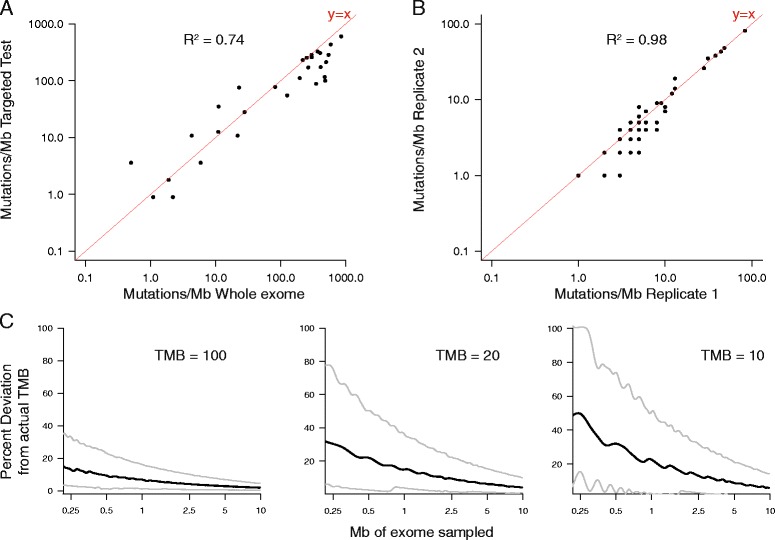
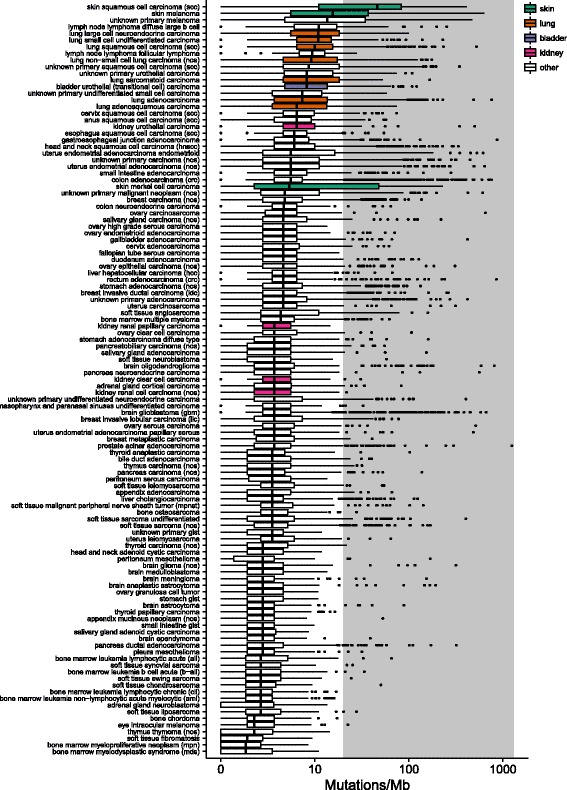
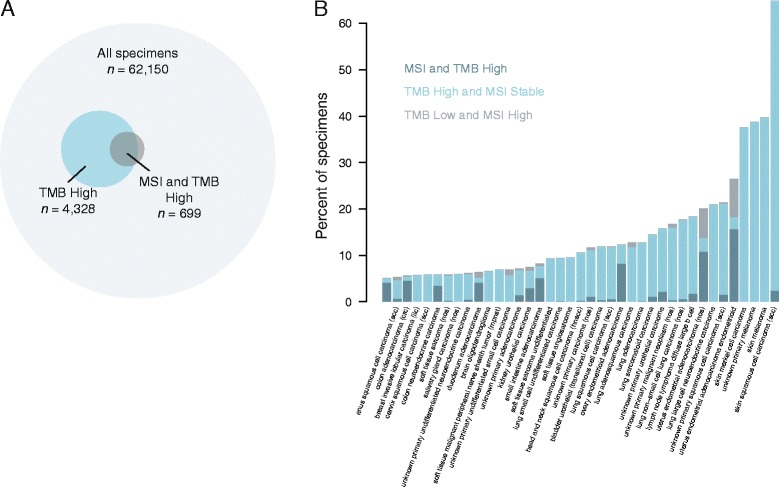
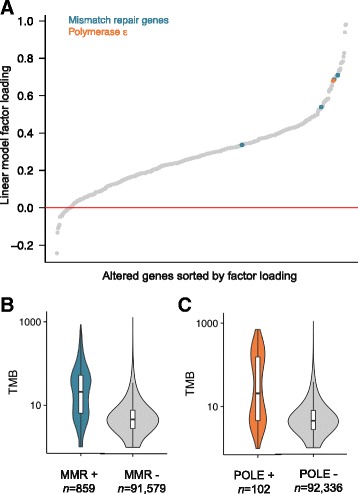
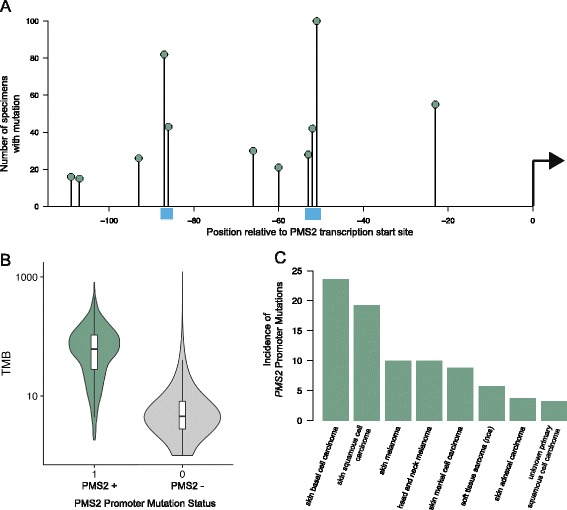
BACKGROUND: High tumor mutational burden (TMB) is an emerging biomarker of sensitivity to immune checkpoint inhibitors and has been shown to be more significantly associated with response to PD-1 and PD-L1 blockade immunotherapy than PD-1 or PD-L1 expression, as measured by immunohistochemistry (IHC). The distribution of TMB and the subset of patients with high TMB has not been well characterized in the majority of cancer types. METHODS: In this study, we compare TMB measured by a targeted comprehensive genomic profiling (CGP) assay to TMB measured by exome sequencing and simulate the expected variance in TMB when sequencing less than the whole exome. We then describe the distribution of TMB across a diverse cohort of 100,000 cancer cases and test for association between somatic alterations and TMB in over 100 tumor types. RESULTS: We demonstrate that measurements of TMB from comprehensive genomic profiling are strongly reflective of measurements from whole exome sequencing and model that below 0.5 Mb the variance in measurement increases significantly. We find that a subset of patients exhibits high TMB across almost all types of cancer, including many rare tumor types, and characterize the relationship between high TMB and microsatellite instability status. We find that TMB increases significantly with age, showing a 2.4-fold difference between age 10 and age 90 years. Finally, we investigate the molecular basis of TMB and identify genes and mutations associated with TMB level. We identify a cluster of somatic mutations in the promoter of the gene PMS2, which occur in 10% of skin cancers and are highly associated with increased TMB. CONCLUSIONS: These results show that a CGP assay targeting ~1.1 Mb of coding genome can accurately assess TMB compared with sequencing the whole exome. Using this method, we find that many disease types have a substantial portion of patients with high TMB who might benefit from immunotherapy. Finally, we identify novel, recurrent promoter mutations in PMS2, which may be another example of regulatory mutations contributing to tumorigenesis.
Overview
The claims and statistics of this paper haven’t been checked yet.
Free: it reads the open-access text and checks the first 5 claims that cite a source we can check. Create a free account to check every claim.
Integrity signals
Registry
Cites
Statistics
Figures
Verification
Claims the paper makes
The claims and statistics of this paper haven’t been checked yet.
Free: it reads the open-access text and checks the first 5 claims that cite a source we can check. Create a free account to check every claim.
Claims other papers make about this one
Each is checked against this paper’s own text: does it say what the citing paper says it does?
The source backs part of the claim, not all of it — or backs it for a different population, condition or comparison.
In the citing paper
“This is at least in part due to activation of the nuclear factor κB (NF-κB) pathway driven by p53 loss, as well as increased tolerance of a higher mutational burden that may ostensibly result in enhanced immunogenicity due to increased neoantigen load143, 144, 145, 146.”
From Co-occurring genomic alterations in non-small-cell lung cancer biology and therapy (2019) · cites this paper as [145]
Experimental — accuracy not yet measuredThe source backs part of the claim, not all of it — or backs it for a different population, condition or comparison.
In the citing paper
“Childhood tumors are considered immunologically ‘cold tumors’ with few infiltrating immune cells and low neoantigen burden precluding robust response to immune checkpoint therapies 39,40.”
From A Phase I/II Trial of Nivolumab plus Ipilimumab in Children and Young Adults with Relapsed/Refractory Solid Tumors: A Children's Oncology Group Study ADVL1412 (2022) · cites this paper as [40]
Experimental — accuracy not yet measuredThe source backs part of the claim, not all of it — or backs it for a different population, condition or comparison.
In the citing paper
“Second, distinct subsets of CRC are characterized by chromosomal instability (CIN) or microsatellite instability (MSI) and are among cancers that exhibit a moderately high tumor mutation burden (TMB) suggesting an extensive degree of genetic heterogeneity [28].”
From Anti-tumor efficacy of a potent and selective non-covalent KRASG12D inhibitor (2022) · cites this paper as [28]
Experimental — accuracy not yet measuredIn the citing paper
“TP53 co-mutations are associated with an inflamed tumor immune microenvironment and increased tumor cell PD-L1 expression in KRAS-mutant NSCLC and GEMMs.”
From Co-occurring genomic alterations in non-small-cell lung cancer biology and therapy (2019) · cites this paper as [145]
In the citing paper
“TMB measured by comprehensive genomic profiling is comparable to measurements by whole exome sequencing and is typically higher in smoking associated lung cancer due to tobacco carcinogenesis”
From Diverse EGFR Exon 20 Insertions and Co-Occurring Molecular Alterations Identified by Comprehensive Genomic Profiling of NSCLC (2018) · cites this paper as [14]
Self-check
Percentages, sums and reported differences re-computed from the paper’s own numbers.
The self-check needs the paper’s full text.
Citations
Cites
Fast and accurate short read alignment with Burrows-Wheeler transform
Li, H., & Durbin, R. (2009) · Bioinformatics · doi:10.1093/bioinformatics/btp324 · Cited by 58,607
PD-1 and PD-L1 Immune Checkpoint Blockade to Treat Breast Cancer
Hartkopf, A. D., Taran, F.-A., Wallwiener, M., Walter, C. B., Krämer, B., Grischke, E.-M., & Brucker, S. Y. (2016) · Breast Care · doi:10.1159/000453569 · Cited by 30,845
The Genome Analysis Toolkit: A MapReduce framework for analyzing next-generation DNA sequencing data
McKenna, A., Hanna, M., Banks, E., Sivachenko, A., Cibulskis, K., Kernytsky, A., Garimella, K., Altshuler, D., Gabriel, S., Daly, M., et al. (2010) · Genome Research · doi:10.1101/gr.107524.110 · Cited by 27,895
The blockade of immune checkpoints in cancer immunotherapy
Pardoll, D. M. (2012) · Nature Reviews Cancer · doi:10.1038/nrc3239 · Cited by 13,838 · cited 1×
“These agents modulate the pathways that control when and where immune responses are mounted, increasing antitumor activity through immune checkpoint blockade [7].”
BackgroundSafety, activity, and immune correlates of anti–PD-1 antibody in cancer
Topalian, S. L., Hodi, F. S., Brahmer, J. R., Gettinger, S. N., Smith, D. C., McDermott, D. F., Powderly, J. D., Carvajal, R. D., Sosman, J. A., Atkins, M. B., et al. (2012) · New England Journal of Medicine · doi:10.1056/nejmoa1200690 · Cited by 12,628 · cited 1×
“Inhibitors of cytotoxic T lymphocyte-associated antigen 4 (CTLA-4) [8, 9] and of programmed cell death protein 1 (PD-1) receptor [10] were the first drugs of this type, which promote T-cell activation [2].”
BackgroundStatistical significance for genomewide studies
Storey, J. D., & Tibshirani, R. (2003) · Proceedings of the National Academy of Sciences · doi:10.1073/pnas.1530509100 · Cited by 9,692 · cited 2×
“For both tests, we corrected for multiple testing using the false discovery rate (FDR) method [66].”
MethodSignatures of mutational processes in human cancer
Initiative, A. P. C. G., Alexandrov, L. B., ICGC Breast Cancer Consortium, ICGC MMML-Seq Consortium, PedBrain, I., Nik-Zainal, S., Wedge, D. C., Aparicio, S. A. J. R., Behjati, S., Biankin, A. V., et al. (2013) · Nature · doi:10.1038/nature12477 · Cited by 9,660 · cited 5×
“Mutations in a number of other genes have also been linked to increased TMB [28, 51], but their function is less well understood.”
BackgroundResultInfluentialAnalysis of protein-coding genetic variation in 60,706 humans
Exome Aggregation Consortium, Lek, M., Karczewski, K. J., Minikel, E. V., Samocha, K. E., Banks, E., Fennell, T., O’Donnell-Luria, A. H., Ware, J. S., Hill, A. J., et al. (2016) · Nature · doi:10.1038/nature19057 · Cited by 9,587 · cited 1×
“Germline alterations occurring with two or more counts in the ExAC database were not counted [65].”
BackgroundPD-1 Blockade in Tumors with Mismatch-Repair Deficiency
Le, D. T., Uram, J. N., Wang, H., Bartlett, B. R., Kemberling, H., Eyring, A. D., Skora, A. D., Luber, B. S., Azad, N. S., Laheru, D., et al. (2015) · New England Journal of Medicine · doi:10.1056/nejmoa1500596 · Cited by 9,377
The cancer genome atlas pan-cancer analysis project
The Cancer Genome Atlas Research Network, Weinstein, J. N., Collisson, E. A., Mills, G. B., Shaw, K. R. M., Ozenberger, B. A., Ellrott, K., Shmulevich, I., Sander, C., & Stuart, J. M. (2013) · Nature Genetics · doi:10.1038/ng.2764 · Cited by 9,092 · cited 3×
“across cancer types and found a wide distribution of TMB across ~20–30 cancer types [28, 51, 54].”
BackgroundMethod
Cited by
TGFβ attenuates tumour response to PD-L1 blockade by contributing to exclusion of T cells
Mariathasan, S., Turley, S. J., Nickles, D., Castiglioni, A., Yuen, K., Wang, Y., Kadel III, E. E., Koeppen, H., Astarita, J. L., Cubas, R., et al. (2018) · Nature · doi:10.1038/nature25501 · Cited by 5,400
Tumor mutational load predicts survival after immunotherapy across multiple cancer types
Samstein, R. M., Lee, C.-H., Shoushtari, A. N., Hellmann, M. D., Shen, R., Janjigian, Y. Y., Barron, D. A., Zehir, A., Jordan, E. J., Omuro, A., et al. (2019) · Nature Genetics · doi:10.1038/s41588-018-0312-8 · Cited by 4,071
Tumor mutational burden and response rate to PD-1 inhibition
Yarchoan, M., Hopkins, A., & Jaffee, E. M. (2017) · New England Journal of Medicine · doi:10.1056/nejmc1713444 · Cited by 3,230
Nivolumab plus ipilimumab in lung cancer with a high tumor mutational burden
Hellmann, M. D., Ciuleanu, T.-E., Pluzanski, A., Lee, J. S., Otterson, G. A., Audigier-Valette, C., Minenza, E., Linardou, H., Burgers, S., Salman, P., et al. (2018) · New England Journal of Medicine · doi:10.1056/nejmoa1801946 · Cited by 3,063
Nivolumab plus ipilimumab in advanced non-small-cell lung cancer
Hellmann, M. D., Paz-Ares, L., Bernabe Caro, R., Zurawski, B., Kim, S.-W., Carcereny Costa, E., Park, K., Alexandru, A., Lupinacci, L., de la Mora Jimenez, E., et al. (2019) · New England Journal of Medicine · doi:10.1056/nejmoa1910231 · Cited by 2,823
Development of tumor mutation burden as an immunotherapy biomarker: utility for the oncology clinic
Chan, T. A., Yarchoan, M., Jaffee, E., Swanton, C., Quezada, S. A., Stenzinger, A., & Peters, S. (2019) · Annals of Oncology · doi:10.1093/annonc/mdy495 · Cited by 2,683
“Recent efforts have begun to validate targeted NGS panels against WES data as these panels are already being used routinely in clinic for oncogenic mutation detection [37, 68].”
BackgroundInfluentialThe evolving landscape of biomarkers for checkpoint inhibitor immunotherapy
Havel, J. J., Chowell, D., & Chan, T. A. (2019) · Nature Reviews Cancer · doi:10.1038/s41568-019-0116-x · Cited by 2,286
Tumor Mutational Burden as an Independent Predictor of Response to Immunotherapy in Diverse Cancers
Goodman, A. M., Kato, S., Bazhenova, L., Patel, S. P., Frampton, G. M., Miller, V., Stephens, P. J., Daniels, G. A., & Kurzrock, R. (2017) · Molecular Cancer Therapeutics · doi:10.1158/1535-7163.mct-17-0386 · Cited by 2,264
“TMB levels were divided into three groups based off the Foundation Medicine official reports: low (1–5 mutations/mb), intermediate (6–19 mutations/mb), and high ( 20 mutations/mb), which in a large cohort divided approximately 50% of patients to low TMB, 40% intermediate TMB, and 10% high TMB (34).”
BackgroundSelf-citationCancer immunoediting and resistance to T cell-based immunotherapy
O’Donnell, J. S., Teng, M. W. L., & Smyth, M. J. (2019) · Nature Reviews Clinical Oncology · doi:10.1038/s41571-018-0142-8 · Cited by 1,759
STK11/LKB1 Mutations and PD-1 Inhibitor Resistance in KRAS -Mutant Lung Adenocarcinoma
Skoulidis, F., Goldberg, M. E., Greenawalt, D. M., Hellmann, M. D., Awad, M. M., Gainor, J. F., Schrock, A. B., Hartmaier, R. J., Trabucco, S. E., Gay, L., et al. (2018) · Cancer Discovery · doi:10.1158/2159-8290.cd-18-0099 · Cited by 1,641
“TMB was measured by Foundation Medicine as described previously (53).”
MethodSelf-citationPD-1 Blockade with Cemiplimab in Advanced Cutaneous Squamous-Cell Carcinoma
Migden, M. R., Rischin, D., Schmults, C. D., Guminski, A., Hauschild, A., Lewis, K. D., Chung, C. H., Hernandez-Aya, L., Lim, A. M., Chang, A. L. S., et al. (2018) · New England Journal of Medicine · doi:10.1056/nejmoa1805131 · Cited by 1,411
Powles, T., Durán, I., van der Heijden, M. S., Loriot, Y., Vogelzang, N. J., De Giorgi, U., Oudard, S., Retz, M. M., Castellano, D., Bamias, A., et al. (2018) · The Lancet · doi:10.1016/s0140-6736(17)33297-x · Cited by 1,408
Rizvi, H., Sanchez-Vega, F., La, K., Chatila, W., Jonsson, P., Halpenny, D., Plodkowski, A., Long, N., Sauter, J. L., Rekhtman, N., et al. (2018) · Journal of Clinical Oncology · doi:10.1200/jco.2017.75.3384 · Cited by 1,367
“5 Mb, the accuracy of TMB determined by targeted NGS diminishes.(35)”
BackgroundResultThe tumour microenvironment in pancreatic cancer — clinical challenges and opportunities
Ho, W. J., Jaffee, E. M., & Zheng, L. (2020) · Nature Reviews Clinical Oncology · doi:10.1038/s41571-020-0363-5 · Cited by 1,287
Pancreatic cancer: Advances and challenges
Halbrook, C. J., Lyssiotis, C. A., Pasca di Magliano, M., & Maitra, A. (2023) · Cell · doi:10.1016/j.cell.2023.02.014 · Cited by 1,321
The Challenges of Tumor Mutational Burden as an Immunotherapy Biomarker
Jardim, D. L., Goodman, A., de Melo Gagliato, D., & Kurzrock, R. (2021) · Cancer Cell · doi:10.1016/j.ccell.2020.10.001 · Cited by 1,192
Gandara, D. R., Paul, S. M., Kowanetz, M., Schleifman, E., Zou, W., Li, Y., Rittmeyer, A., Fehrenbacher, L., Otto, G., Malboeuf, C., et al. (2018) · Nature Medicine · doi:10.1038/s41591-018-0134-3 · Cited by 1,157
Self-citationPatient HLA class I genotype influences cancer response to checkpoint blockade immunotherapy
Chowell, D., Morris, L. G. T., Grigg, C. M., Weber, J. K., Samstein, R. M., Makarov, V., Kuo, F., Kendall, S. M., Requena, D., Riaz, N., et al. (2018) · Science · doi:10.1126/science.aao4572 · Cited by 1,142
Integrated Proteogenomic Characterization of HBV-Related Hepatocellular Carcinoma
Gao, Q., Zhu, H., Dong, L., Shi, W., Chen, R., Song, Z., Huang, C., Li, J., Dong, X., Zhou, Y., et al. (2019) · Cell · doi:10.1016/j.cell.2019.08.052 · Cited by 1,096
Hellmann, M. D., Nathanson, T., Rizvi, H., Creelan, B. C., Sanchez-Vega, F., Ahuja, A., Ni, A., Novik, J. B., Mangarin, L. M. B., Abu-Akeel, M., et al. (2018) · Cancer Cell · doi:10.1016/j.ccell.2018.03.018 · Cited by 1,095
“Additionally, to explore the applicability of targeted next-generation sequencing as an estimate of exonic mutation burden (Chalmers et al., 2017; Zehir et al., 2017), we found that limiting variants to the 468 genes represented in our institutional MSKIMPACT panel (Zehir et al.”
BackgroundInfluentialLuchini, C., Bibeau, F., Ligtenberg, M. J. L., Singh, N., Nottegar, A., Bosse, T., Miller, R., Riaz, N., Douillard, J.-Y., Andre, F., et al. (2019) · Annals of Oncology · doi:10.1093/annonc/mdz116 · Cited by 1,041
“Notably, an estimation of TMB can also be made with targeted panels, avoiding the costs of whole-exome or of whole-genome sequencing [99, 100].”
BackgroundCo-occurring genomic alterations in non-small-cell lung cancer biology and therapy
Skoulidis, F., & Heymach, J. V. (2019) · Nature Reviews Cancer · doi:10.1038/s41568-019-0179-8 · Cited by 1,019
Tumor Mutational Burden as a Predictive Biomarker in Solid Tumors
Sha, D., Jin, Z., Budczies, J., Kluck, K., Stenzinger, A., & Sinicrope, F. A. (2020) · Cancer Discovery · doi:10.1158/2159-8290.cd-20-0522 · Cited by 859
Comprehensive Analysis of Hypermutation in Human Cancer
Campbell, B. B., Light, N., Fabrizio, D., Zatzman, M., Fuligni, F., de Borja, R., Davidson, S., Edwards, M., Elvin, J. A., Hodel, K. P., et al. (2017) · Cell · doi:10.1016/j.cell.2017.09.048 · Cited by 765
Self-citationNecchi, A., Anichini, A., Raggi, D., Briganti, A., Massa, S., Lucianò, R., Colecchia, M., Giannatempo, P., Mortarini, R., Bianchi, M., et al. (2018) · Journal of Clinical Oncology · doi:10.1200/jco.18.01148 · Cited by 741
“5 (15-24) Ileal conduit 13 (9-17) Median intraoperative blood loss, mL (IQR) 300 (150-500) 30-day readmission 11 (22) 30-day surgical reintervention 5 (10) Postoperative complications (Clavien Dindo) within 90 days 0 25 (50) II 10 (20) IIIa 9 (18) IIIb 5 (10) IV 1 (2) Type of postoperative complications Fever of unkno…”
BackgroundSelf-citationMolecular profiling of cancer patients enables personalized combination therapy: the I-PREDICT study
Sicklick, J. K., Kato, S., Okamura, R., Schwaederle, M., Hahn, M. E., Williams, C. B., De, P., Krie, A., Piccioni, D. E., Miller, V. A., et al. (2019) · Nature Medicine · doi:10.1038/s41591-019-0407-5 · Cited by 707
Self-citationHendriks, L. E. L., Remon, J., Faivre-Finn, C., Garassino, M. C., Heymach, J. V., Kerr, K. M., Tan, D. S. W., Veronesi, G., & Reck, M. (2024) · Nature Reviews Disease Primers · doi:10.1038/s41572-024-00551-9 · Cited by 568
“Tobacco smoking remains the most important risk factor for lung cancer, with a relative risk of lung cancer 10–30 times higher (depending on daily smoked amount and pack-years) compared with never-smokers 17 .”
Rolfo, C., Mack, P., Scagliotti, G. V., Aggarwal, C., Arcila, M. E., Barlesi, F., Bivona, T., Diehn, M., Dive, C., Dziadziuszko, R., et al. (2021) · Journal of Thoracic Oncology · doi:10.1016/j.jtho.2021.06.017 · Cited by 683
Zhao, P., Li, L., Jiang, X., & Li, Q. (2019) · Journal of Hematology & Oncology · doi:10.1186/s13045-019-0738-1 · Cited by 682
“Otherwise, it is said to have microsatellite stability (MSS).”
BackgroundInfluentialMechanisms and therapeutic implications of hypermutation in gliomas
Touat, M., Li, Y. Y., Boynton, A. N., Spurr, L. F., Iorgulescu, J. B., Bohrson, C. L., Cortes-Ciriano, I., Birzu, C., Geduldig, J. E., Pelton, K., et al. (2020) · Nature · doi:10.1038/s41586-020-2209-9 · Cited by 677
Self-citationSchrock, A. B., Ouyang, C., Sandhu, J., Sokol, E., Jin, D., Ross, J. S., Miller, V. A., Lim, D., Amanam, I., Chao, J., et al. (2019) · Annals of Oncology · doi:10.1093/annonc/mdz134 · Cited by 617
Self-citationSchumacher, T. N., Scheper, W., & Kvistborg, P. (2019) · Annual Review of Immunology · doi:10.1146/annurev-immunol-042617-053402 · Cited by 574
Ready, N., Hellmann, M. D., Awad, M. M., Otterson, G. A., Gutierrez, M., Gainor, J. F., Borghaei, H., Jolivet, J., Horn, L., Mates, M., et al. (2019) · Journal of Clinical Oncology · doi:10.1200/jco.18.01042 · Cited by 581
“TMB was calculated according to previously defined methods.(27) Independent reports have demonstrated concordance between TMB estimated from whole-exome sequencing and TMB estimated from targeted NGS in NSCLC and across multiple solid tumors.”
MethodBaretti, M., & Le, D. T. (2018) · Pharmacology & Therapeutics · doi:10.1016/j.pharmthera.2018.04.004 · Cited by 556
Schalper, K. A., Carleton, M., Zhou, M., Chen, T., Feng, Y., Huang, S.-P., Walsh, A. M., Baxi, V., Pandya, D., Baradet, T., et al. (2020) · Nature Medicine · doi:10.1038/s41591-020-0856-x · Cited by 548
PD-L1 expression and tumor mutational burden are independent biomarkers in most cancers
Yarchoan, M., Albacker, L. A., Hopkins, A. C., Montesion, M., Murugesan, K., Vithayathil, T. T., Zaidi, N., Azad, N. S., Laheru, D. A., Frampton, G. M., et al. (2019) · JCI Insight · doi:10.1172/jci.insight.126908 · Cited by 545
“TMB was assessed using a targeted comprehensive genomic profiling assay (FoundationOne) as previously described (28, 29).”
Self-citationPishvaian, M. J., Blais, E. M., Brody, J. R., Lyons, E., DeArbeloa, P., Hendifar, A., Mikhail, S., Chung, V., Sahai, V., Sohal, D. P. S., et al. (2020) · The Lancet Oncology · doi:10.1016/s1470-2045(20)30074-7 · Cited by 548
CD4 and CD8 T lymphocyte interplay in controlling tumor growth
Ostroumov, D., Fekete-Drimusz, N., Saborowski, M., Kühnel, F., & Woller, N. (2018) · Cellular and Molecular Life Sciences · doi:10.1007/s00018-017-2686-7 · Cited by 549
“A high mutational load appears to facilitate immune recognition that can be amplified by checkpoint blockade [17, 18].”
BackgroundSingal, G., Miller, P. G., Agarwala, V., Li, G., Kaushik, G., Backenroth, D., Gossai, A., Frampton, G. M., Torres, A. Z., Lehnert, E. M., et al. (2019) · JAMA · doi:10.1001/jama.2019.3241 · Cited by 549
“Tumormutational burden (TMB), ameasureof thenumberof somaticmutationsidentifiedpermegabaseofDNAsequenced,was calculated foreverypatient in thecohort.(10)Patientswerestratified intoTMB-high (TMB-H,≥20mutations/Mb)andTMB-low/ intermediate (TMB-L/I, <20mutations/Mb) based on prior efforts to define TMB cutoffs for respon…”
BackgroundSelf-citationKulangara, K., Zhang, N., Corigliano, E., Guerrero, L., Waldroup, S., Jaiswal, D., MS, M. J., Shah, S., Hanks, D., Wang, J., et al. (2019) · Archives of Pathology & Laboratory Medicine · doi:10.5858/arpa.2018-0043-oa · Cited by 536
Application of PD-1 Blockade in Cancer Immunotherapy
Wu, X., Gu, Z., Chen, Y., Chen, B., Chen, W., Weng, L., & Liu, X. (2019) · Computational and Structural Biotechnology Journal · doi:10.1016/j.csbj.2019.03.006 · Cited by 531
“However, measuring TMB requires whole-exome sequencing that is costly and time consuming to be applied as a standard clinical test [106].”
Anti-tumor efficacy of a potent and selective non-covalent KRASG12D inhibitor
Hallin, J., Bowcut, V., Calinisan, A., Briere, D. M., Hargis, L., Engstrom, L. D., Laguer, J., Medwid, J., Vanderpool, D., Lifset, E., et al. (2022) · Nature Medicine · doi:10.1038/s41591-022-02007-7 · Cited by 553
Picard, E., Verschoor, C. P., Ma, G. W., & Pawelec, G. (2020) · Frontiers in Immunology · doi:10.3389/fimmu.2020.00369 · Cited by 522
“a mutational rate 20 times higher than MSS tumors and more than 80% of MSI-High tumors display a high tumor mutation burden (TMB) of >20 mutations/Mb (77).”
BackgroundMerino, D. M., McShane, L. M., Fabrizio, D., Funari, V., Chen, S.-J., White, J. R., Wenz, P., Baden, J., Barrett, J. C., Chaudhary, R., et al. (2020) · Journal for ImmunoTherapy of Cancer · doi:10.1136/jitc-2019-000147 · Cited by 507
“13–16 20 22 25–30 There are several targeted NGS panels at different stages of development that estimate TMB.”
BackgroundSelf-citationMigden, M. R., Khushalani, N. I., Chang, A. L. S., Lewis, K. D., Schmults, C. D., Hernandez-Aya, L., Meier, F., Schadendorf, D., Guminski, A., Hauschild, A., et al. (2020) · The Lancet Oncology · doi:10.1016/s1470-2045(19)30728-4 · Cited by 496
Kim, J., Eygeris, Y., Gupta, M., & Sahay, G. (2021) · Advanced Drug Delivery Reviews · doi:10.1016/j.addr.2020.12.014 · Cited by 514
Microsatellite instability: a review of what the oncologist should know
Li, K., Luo, H., Huang, L., Luo, H., & Zhu, X. (2020) · Cancer Cell International · doi:10.1186/s12935-019-1091-8 · Cited by 509
Domchek, S. M., Postel-Vinay, S., Im, S.-A., Park, Y. H., Delord, J.-P., Italiano, A., Alexandre, J., You, B., Bastian, S., Krebs, M. G., et al. (2020) · The Lancet Oncology · doi:10.1016/s1470-2045(20)30324-7 · Cited by 484
Wang, Z., Duan, J., Cai, S., Han, M., Dong, H., Zhao, J., Zhu, B., Wang, S., Zhuo, M., Sun, J., et al. (2019) · JAMA Oncology · doi:10.1001/jamaoncol.2018.7098 · Cited by 471
Self-citationVanderwalde, A., Spetzler, D., Xiao, N., Gatalica, Z., & Marshall, J. (2018) · Cancer Medicine · doi:10.1002/cam4.1372 · Cited by 458
Danaher, P., Warren, S., Lu, R., Samayoa, J., Sullivan, A., Pekker, I., Wallden, B., Marincola, F. M., & Cesano, A. (2018) · Journal for ImmunoTherapy of Cancer · doi:10.1186/s40425-018-0367-1 · Cited by 421
“Today, a number of platforms to detect TMB are being developed for routine clinical application, most prominently the FoundationOne assay, which reports on mutation status of 324 genes [11].”
Klempner, S. J., Fabrizio, D., Bane, S., Reinhart, M., Peoples, T., Ali, S. M., Sokol, E. S., Frampton, G., Schrock, A. B., Anhorn, R., et al. (2020) · The Oncologist · doi:10.1634/theoncologist.2019-0244 · Cited by 391
Self-citationTumor neoantigens: from basic research to clinical applications
Jiang, T., Shi, T., Zhang, H., Hu, J., Song, Y., Wei, J., Ren, S., & Zhou, C. (2019) · Journal of Hematology & Oncology · doi:10.1186/s13045-019-0787-5 · Cited by 386
Milbury, C. A., Creeden, J., Yip, W.-K., Smith, D. L., Pattani, V., Maxwell, K., Sawchyn, B., Gjoerup, O., Meng, W., Skoletsky, J., et al. (2022) · PLOS ONE · doi:10.1371/journal.pone.0264138 · Cited by 376
Self-citationWang, Y., Deng, W., Li, N., Neri, S., Sharma, A., Jiang, W., & Lin, S. H. (2018) · Frontiers in Pharmacology · doi:10.3389/fphar.2018.00185 · Cited by 374
“A recent genomic analysis of 100,000 human cancers showed the diverse mutation burden across different cancers and the cancer types that had high mutation burdens generally had better responses to immunotherapies, such as melanoma, NSCLC, bladder cancer, and renal cell carcinoma (Chalmers et al., 2017).”
BackgroundSunami, K., Ichikawa, H., Kubo, T., Kato, M., Fujiwara, Y., Shimomura, A., Koyama, T., Kakishima, H., Kitami, M., Matsushita, H., et al. (2019) · Cancer Science · doi:10.1111/cas.13969 · Cited by 378
Hasan, N., Nadaf, A., Imran, M., Jiba, U., Sheikh, A., Almalki, W. H., Almujri, S. S., Mohammed, Y. H., Kesharwani, P., & Ahmad, F. J. (2023) · Molecular Cancer · doi:10.1186/s12943-023-01854-3 · Cited by 322
Nakamura, Y., Taniguchi, H., Ikeda, M., Bando, H., Kato, K., Morizane, C., Esaki, T., Komatsu, Y., Kawamoto, Y., Takahashi, N., et al. (2020) · Nature Medicine · doi:10.1038/s41591-020-1063-5 · Cited by 373
Bais, A. F., Lucas, R. M., Bornman, J. F., Williamson, C. E., Sulzberger, B., Austin, A. T., Wilson, S. R., Andrady, A. L., Bernhard, G., McKenzie, R. L., et al. (2018) · Photochemical & Photobiological Sciences · doi:10.1039/c7pp90043k · Cited by 350
Crosstalk Between the MSI Status and Tumor Microenvironment in Colorectal Cancer
Lin, A., Zhang, J., & Luo, P. (2020) · Frontiers in Immunology · doi:10.3389/fimmu.2020.02039 · Cited by 358
“Non-synonymous mutations in the TCGA-COAD, TCGA-READ, and GDSC-CRC cohorts were used as the raw mutation count and divided by 38 Mb to quantify TMB (20).”
MethodNeoadjuvant Cemiplimab for Stage II to IV Cutaneous Squamous-Cell Carcinoma
Gross, N. D., Miller, D. M., Khushalani, N. I., Divi, V., Ruiz, E. S., Lipson, E. J., Meier, F., Su, Y. B., Swiecicki, P. L., Atlas, J., et al. (2022) · New England Journal of Medicine · doi:10.1056/nejmoa2209813 · Cited by 333
Peris, K., Fargnoli, M. C., Kaufmann, R., Arenberger, P., Bastholt, L., Seguin, N. B., Bataille, V., Brochez, L., del Marmol, V., Dummer, R., et al. (2023) · European Journal of Cancer · doi:10.1016/j.ejca.2023.113254 · Cited by 308
CAR-T cell therapy for cancer: current challenges and future directions
Zugasti, I., Espinosa-Aroca, L., Fidyt, K., Mulens-Arias, V., Diaz-Beya, M., Juan, M., Urbano-Ispizua, Á., Esteve, J., Velasco-Hernandez, T., & Menéndez, P. (2025) · Signal Transduction and Targeted Therapy · doi:10.1038/s41392-025-02269-w · Cited by 281
Microsatellite Instability: A Predictive Biomarker for Cancer Immunotherapy
Chang, L., Chang, M., Chang, H. M., & Chang, F. (2018) · Applied Immunohistochemistry & Molecular Morphology · doi:10.1097/pai.0000000000000575 · Cited by 345
Singhi, A. D., George, B., Greenbowe, J. R., Chung, J., Suh, J., Maitra, A., Klempner, S. J., Hendifar, A., Milind, J. M., Golan, T., et al. (2019) · Gastroenterology · doi:10.1053/j.gastro.2019.02.037 · Cited by 348
Self-citationImplementing TMB measurement in clinical practice: considerations on assay requirements
Büttner, R., Longshore, J. W., López-Ríos, F., Merkelbach-Bruse, S., Normanno, N., Rouleau, E., & Penault-Llorca, F. (2019) · ESMO Open · doi:10.1136/esmoopen-2018-000442 · Cited by 345
“FoundationOne CDx and MSK-IMPACT assays cover ~0.8 Mb over 324 genes and ~1.5 Mb over 468 genes, respectively.14 62 Some evidence suggests that smaller gene panels may be sufficient for TMB assessment,63 but other evidence indicates that they may only be sufficient to detect hypermutated and ultramutated tumours and t…”
BackgroundMethodInfluentialDavis, K. L., Fox, E., Merchant, M. S., Reid, J. M., Kudgus, R. A., Liu, X., Minard, C. G., Voss, S., Berg, S. L., Weigel, B. J., et al. (2020) · The Lancet Oncology · doi:10.1016/s1470-2045(20)30023-1 · Cited by 337
Necchi, A., Raggi, D., Gallina, A., Madison, R., Colecchia, M., Lucianò, R., Montironi, R., Giannatempo, P., Farè, E., Pederzoli, F., et al. (2020) · European Urology · doi:10.1016/j.eururo.2019.10.026 · Cited by 325
Self-citationStratigos, A. J., Garbe, C., Dessinioti, C., Lebbe, C., Bataille, V., Bastholt, L., Dreno, B., Concetta Fargnoli, M., Forsea, A. M., Frenard, C., et al. (2020) · European Journal of Cancer · doi:10.1016/j.ejca.2020.01.008 · Cited by 319
“Similar to other ultraviolet radiationedriven skin cancers, cSCC is among the cancers with the highest rate of somatic mutations [79] and mutated proteins can serve as neoantigens that can be recognised by the immune system [80].”
BackgroundThe impact of nonsense-mediated mRNA decay on genetic disease, gene editing and cancer immunotherapy
Lindeboom, R. G. H., Vermeulen, M., Lehner, B., & Supek, F. (2019) · Nature Genetics · doi:10.1038/s41588-019-0517-5 · Cited by 327
Liu, L., Bai, X., Wang, J., Tang, X.-R., Wu, D.-H., Du, S.-S., Du, X.-J., Zhang, Y.-W., Zhu, H.-B., Fang, Y., et al. (2019) · Clinical Cancer Research · doi:10.1158/1078-0432.ccr-19-0558 · Cited by 322
Tumor mutational burden quantification from targeted gene panels: major advancements and challenges
Fancello, L., Gandini, S., Pelicci, P. G., & Mazzarella, L. (2019) · Journal for ImmunoTherapy of Cancer · doi:10.1186/s40425-019-0647-4 · Cited by 310
“and DNA replication or in tumors characterized by microsatellite instability, as in colorectal cancer [21, 22].”
BackgroundResultDefining clinically useful biomarkers of immune checkpoint inhibitors in solid tumours
Holder, A. M., Dedeilia, A., Sierra-Davidson, K., Cohen, S., Liu, D., Parikh, A., & Boland, G. M. (2024) · Nature Reviews Cancer · doi:10.1038/s41568-024-00705-7 · Cited by 298
“However, it is costly and time-consuming, so focused panels are often used in clinical contexts to estimate TMB 6,53 .”
Integrated Proteogenomic Characterization across Major Histological Types of Pediatric Brain Cancer
Petralia, F., Tignor, N., Reva, B., Koptyra, M., Chowdhury, S., Rykunov, D., Krek, A., Ma, W., Zhu, Y., Ji, J., et al. (2020) · Cell · doi:10.1016/j.cell.2020.10.044 · Cited by 317
Microsatellite-Stable Tumors with High Mutational Burden Benefit from Immunotherapy
Goodman, A. M., Sokol, E. S., Frampton, G. M., Lippman, S. M., & Kurzrock, R. (2019) · Cancer Immunology Research · doi:10.1158/2326-6066.cir-19-0149 · Cited by 306
“Although the salutary effects of checkpoint blockade for MSI-high tumors were clear (8), and most MSI-high tumors were TMB-high, approximately 18% of malignancies that were MSIhigh were not TMB-high.”
BackgroundMethodSelf-citationAntigen presentation and tumor immunogenicity in cancer immunotherapy response prediction
Wang, S., He, Z., Wang, X., Li, H., & Liu, X.-S. (2019) · eLife · doi:10.7554/elife.49020 · Cited by 312
“When using the first approach, in order to calculate TIGS, the median TMB for each tumor type was obtained from a validated comprehensive genomic profiling assay that was performed and provided by Foundation Medicine (Chalmers et al., 2017).”
MethodInfluentialImmunotherapeutic approaches for small-cell lung cancer
Iams, W. T., Porter, J., & Horn, L. (2020) · Nature Reviews Clinical Oncology · doi:10.1038/s41571-019-0316-z · Cited by 311
Negrao, M. V., Skoulidis, F., Montesion, M., Schulze, K., Bara, I., Shen, V., Xu, H., Hu, S., Sui, D., Elamin, Y. Y., et al. (2021) · Journal for ImmunoTherapy of Cancer · doi:10.1136/jitc-2021-002891 · Cited by 294
Self-citationStratigos, A. J., Sekulic, A., Peris, K., Bechter, O., Prey, S., Kaatz, M., Lewis, K. D., Basset-Seguin, N., Chang, A. L. S., Dalle, S., et al. (2021) · The Lancet Oncology · doi:10.1016/s1470-2045(21)00126-1 · Cited by 286
PD-1/PD-L1 Blockade: Have We Found the Key to Unleash the Antitumor Immune Response?
Xu-Monette, Z. Y., Zhang, M., Li, J., & Young, K. H. (2017) · Frontiers in Immunology · doi:10.3389/fimmu.2017.01597 · Cited by 288
“Anti-PD-1 mAbs as single agents or combined with chemotherapy or ipilimumab (anti-CTLA-4 mAb) have been approved for the treatment of the following cancers as first-line, second-line, third-line, or later-line therapies: melanoma (6, 184, 187–195), non-small cell lung cancer (NSCLC) (5, 196–200, 219), classical Hodgki…”
BackgroundInfluentialChakravarty, D., Johnson, A., Sklar, J., Lindeman, N. I., Moore, K., Ganesan, S., Lovly, C. M., Perlmutter, J., Gray, S. W., Hwang, J., et al. (2022) · Journal of Clinical Oncology · doi:10.1200/jco.21.02767 · Cited by 266
Sholl, L. M., Hirsch, F. R., Hwang, D., Botling, J., Lopez-Rios, F., Bubendorf, L., Mino-Kenudson, M., Roden, A. C., Beasley, M. B., Borczuk, A., et al. (2020) · Journal of Thoracic Oncology · doi:10.1016/j.jtho.2020.05.019 · Cited by 283
“To reduce cancer gene bias, some platforms subtract recurrent cancer mutations (present in the Catalogue of Somatic Mutations in Cancer database) from the TMB count.(60)”
Antitumour immunity regulated by aberrant ERBB family signalling
Kumagai, S., Koyama, S., & Nishikawa, H. (2021) · Nature Reviews Cancer · doi:10.1038/s41568-020-00322-0 · Cited by 278
Frameshift events predict anti–PD-1/L1 response in head and neck cancer
Hanna, G. J., Lizotte, P., Cavanaugh, M., Kuo, F. C., Shivdasani, P., Frieden, A., Chau, N. G., Schoenfeld, J. D., Lorch, J. H., Uppaluri, R., et al. (2018) · JCI Insight · doi:10.1172/jci.insight.98811 · Cited by 275
“Chalmers and colleagues recently described a median of 5 mutations/Mb among SCCHN tumors and 10% of these tumors had TMB values greater than 20 (18); our results were similar, with a median of 7.”
Shen, K.-Y., Zhu, Y., Xie, S.-Z., & Qin, L.-X. (2024) · Journal of Hematology & Oncology · doi:10.1186/s13045-024-01549-2 · Cited by 247
“HCC is a tumor with a moderate TMB, with approximately 2 mutations per megabase [186, 187].”
BackgroundWhole-genome doubling confers unique genetic vulnerabilities on tumour cells
Quinton, R. J., DiDomizio, A., Vittoria, M. A., Kotýnková, K., Ticas, C. J., Patel, S., Koga, Y., Vakhshoorzadeh, J., Hermance, N., Kuroda, T. S., et al. (2021) · Nature · doi:10.1038/s41586-020-03133-3 · Cited by 274
Fabrizio, D. A., George Jr, T. J., Dunne, R. F., Frampton, G., Sun, J., Gowen, K., Kennedy, M., Greenbowe, J., Schrock, A. B., Hezel, A. F., et al. (2018) · Journal of Gastrointestinal Oncology · doi:10.21037/jgo.2018.05.06 · Cited by 260
“This method has been previously validated for accuracy against whole exome sequencing (20).”
MethodSelf-citationOliva, M., Spreafico, A., Taberna, M., Alemany, L., Coburn, B., Mesia, R., & Siu, L. L. (2019) · Annals of Oncology · doi:10.1093/annonc/mdy507 · Cited by 260
“Tumors characterized by mutations affecting DNA damage response, such as those with microsatellite instability high (MSI-H) or mismatch repair deficiency (dMMR), have the highest mutational load [77, 111].”
BackgroundPowles, T., Yuen, K. C., Gillessen, S., Kadel, E. E., Rathkopf, D., Matsubara, N., Drake, C. G., Fizazi, K., Piulats, J. M., Wysocki, P. J., et al. (2022) · Nature Medicine · doi:10.1038/s41591-021-01600-6 · Cited by 256
SALMON: survival analysis learning with multi-omics neural networks on breast cancer
Huang, Z., Zhan, X., Xiang, S., Johnson, T. S., Helm, B., Yu, C. Y., Zhang, J., Salama, P., Rizkalla, M., Han, Z., et al. (2019) · Frontiers in Genetics · doi:10.3389/fgene.2019.00166 · Cited by 262
“Specifically, copy number burden (CNB) and tumor mutation burden (TMB) are important for predicting tumor progression (Marshall et al., 2017; Thomas et al., 2018) and immunotherapy (Birkbak et al., 2013; Chalmers et al., 2017; Goodman et al., 2017).”
BackgroundConforti, F., Pala, L., Bagnardi, V., Viale, G., De Pas, T., Pagan, E., Pennacchioli, E., Cocorocchio, E., Ferrucci, P. F., De Marinis, F., et al. (2019) · JNCI: Journal of the National Cancer Institute · doi:10.1093/jnci/djz094 · Cited by 262
Rizzo, A., Ricci, A. D., & Brandi, G. (2021) · Cancers · doi:10.3390/cancers13030558 · Cited by 259
“As in the case of PD-L1, TMB assessment is widely influenced by the kits and methods used that have been suggested to report different values in the same sample, and consequently, great attention and caution should be paid when comparing TMB values between studies using different methods [47,48].”
MethodLucas, R. M., Yazar, S., Young, A. R., Norval, M., de Gruijl, F. R., Takizawa, Y., Rhodes, L. E., Sinclair, C. A., & Neale, R. E. (2019) · Photochemical & Photobiological Sciences · doi:10.1039/c8pp90060d · Cited by 233
Palmer, C. D., Rappaport, A. R., Davis, M. J., Hart, M. G., Scallan, C. D., Hong, S.-J., Gitlin, L., Kraemer, L. D., Kounlavouth, S., Yang, A., et al. (2022) · Nature Medicine · doi:10.1038/s41591-022-01937-6 · Cited by 236
Goodman, A. M., Piccioni, D., Kato, S., Boichard, A., Wang, H.-Y., Frampton, G., Lippman, S. M., Connelly, C., Fabrizio, D., Miller, V., et al. (2018) · JAMA Oncology · doi:10.1001/jamaoncol.2018.1701 · Cited by 247
“algorithm.(26)Alterations likely or known tobeoncogenic drivers and germline polymorphisms were excluded.”
Self-citationSex-associated molecular differences for cancer immunotherapy
Ye, Y., Jing, Y., Li, L., Mills, G. B., Diao, L., Liu, H., & Han, L. (2020) · Nature Communications · doi:10.1038/s41467-020-15679-x · Cited by 243
Morganti, S., Tarantino, P., Ferraro, E., D’Amico, P., Duso, B. A., & Curigliano, G. (2019) · Advances in Experimental Medicine and Biology · doi:10.1007/978-3-030-24100-1_2 · Cited by 246
Pishvaian, M. J., Bender, R. J., Halverson, D., Rahib, L., Hendifar, A. E., Mikhail, S., Chung, V., Picozzi, V. J., Sohal, D., Blais, E. M., et al. (2018) · Clinical Cancer Research · doi:10.1158/1078-0432.ccr-18-0531 · Cited by 245
“However, due to recent data demonstrating clinical benefit with immune checkpoint inhibitors in tumors withmicrosatellite instability (14), we also tested 241 samples through either PCR fragment analysis (Caris Life Sciences) or a Foundation Medicine algorithm applied to NGS data for evidence of microsatellite instabi…”
MethodKim, C. G., Jang, M., Kim, Y., Leem, G., Kim, K. H., Lee, H., Kim, T.-S., Choi, S. J., Kim, H.-D., Han, J. W., et al. (2019) · Science Immunology · doi:10.1126/sciimmunol.aay0555 · Cited by 245
Combined PARP Inhibition and Immune Checkpoint Therapy in Solid Tumors
Peyraud, F., & Italiano, A. (2020) · Cancers · doi:10.3390/cancers12061502 · Cited by 242
Metadata
- Authors
- Chalmers, Z. R., Connelly, C. F., Fabrizio, D., Gay, L., Ali, S. M., Ennis, R., Schrock, A., Campbell, B., Shlien, A., Chmielecki, J., Huang, F., He, Y., Sun, J., Tabori, U., Kennedy, M., Lieber, D. S., Roels, S., White, J., Otto, G. A., Ross, J. S., Garraway, L., Miller, V. A., Stephens, P. J., & Frampton, G. M.
- Affiliations
- Foundation Medicine (United States) (US)
- Hospital for Sick Children (CA)
- Harvard University (US)
- Broad Institute (US)
- Corresponding author
- Frampton, Garrett M.
- ORCID
- Venue
- Genome Medicine
- Published
- 2017-04-19
- Volume
- 9
- Issue
- 1
- Pages
- 34-34
- ISSN
- 1756-994X (ISSN-L)
- PMC
- PMC5395719
- OpenAlex
- W2606495925
- Cited by
- 3,519
- References
- 78
- Citations by year
- 2026: 200 · 2025: 268 · 2024: 365 · 2023: 499 · 2022: 553 · 2021: 565 · 2020: 498 · 2019: 330 · 2018: 195 · 2017: 43
- FWCI
- 131.26
- Type
- journal article
- Language
- en
- Open access
- gold
- doi.org
- Licence
- cc-by
- creativecommons.org/licenses/by/4.0/ (tdm)
- creativecommons.org/licenses/by/4.0/ (vor)
- Locations
- Genome Medicine (publishedVersion, cc-by)
- PubMed Central (publishedVersion, cc-by)
- PubMed (publishedVersion)
- Digital Access to Scholarship at Harvard (DASH) (Harvard University) (submittedVersion, cc-by)
- DOAJ (DOAJ: Directory of Open Access Journals) (submittedVersion, cc-by-sa)
- Funders
- Prostate Cancer Foundation (Young Investigator Award)
- U.S. Department of Defense (Prostate Cancer Research Program)
- Topics
- Health Sciences › Medicine › Oncology › Cancer Immunotherapy and Biomarkers
- Life Sciences › Biochemistry, Genetics and Molecular Biology › Cancer Research › Cancer Genomics and Diagnostics
- Health Sciences › Medicine › Pathology and Forensic Medicine › Genetic factors in colorectal cancer
- Keywords
- tumor mutational burden, comprehensive genomic profiling, targeted sequencing, microsatellite instability, regulatory mutations, somatic mutations, immunotherapy biomarkers, immune checkpoint inhibitors, PD-1/PD-L1 blockade, tumor age, rare tumor, cancer genomics
- MeSH terms
- Mismatch Repair Endonuclease PMS2, Adolescent, Adult, Age Factors, Aged, Aged, 80 and over, Cell Transformation, Neoplastic, Child, DNA Mutational Analysis, DNA, Neoplasm, Humans, Middle Aged, Mutation, Neoplasms, Genome, Human, Young Adult, Exome
About these checks
Registry, retraction, Cites and statistics results are computed, not judged, with one exception: a printed reference that no index lists is read once by a model before it counts as a citation error. Claims are extracted by a model and kept only when their quote appears verbatim in the text; each cited source is then checked, with a model’s help, for whether it says what the claim relies on. Those verdicts can be wrong — read the claim’s quote and the cited source before relying on one.
Statistics and arithmetic are recomputed, not judged.
Confidence bands are shown only for fields calibrated on our annotated test set. None is calibrated yet, so no band is shown.
What counts as a claim ›How we measure confidence ›How we check this ›
Are you an author, or do you see a problem with this page? Request a review
Data sources
Bibliographic data: Semantic Scholar, OpenAlex, Crossref.
Contains information from the Semantic Scholar Academic Graph Datasets, made available under the ODC Attribution License (ODC-BY 1.0).
Semantic Scholar’s data is described in: Kinney, R., et al. (2023). The Semantic Scholar Open Data Platform. arXiv:2301.10140.
