

A practical guide to single-cell RNA-sequencing for biomedical research and clinical applications
Open accessThe DOI matches its Crossref record; 110 of the 110 references it cites were found in a registry or an index.
Abstract
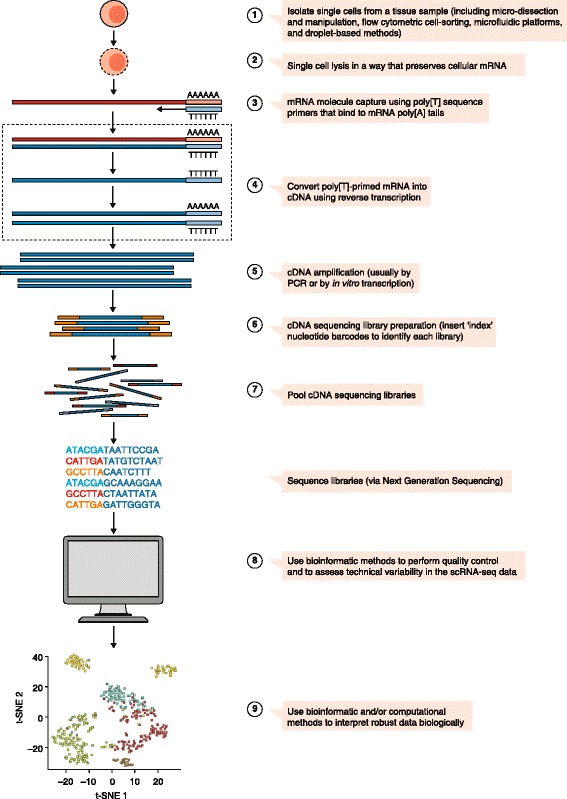
RNA sequencing (RNA-seq) is a genomic approach for the detection and quantitative analysis of messenger RNA molecules in a biological sample and is useful for studying cellular responses. RNA-seq has fueled much discovery and innovation in medicine over recent years. For practical reasons, the technique is usually conducted on samples comprising thousands to millions of cells. However, this has hindered direct assessment of the fundamental unit of biology-the cell. Since the first single-cell RNA-sequencing (scRNA-seq) study was published in 2009, many more have been conducted, mostly by specialist laboratories with unique skills in wet-lab single-cell genomics, bioinformatics, and computation. However, with the increasing commercial availability of scRNA-seq platforms, and the rapid ongoing maturation of bioinformatics approaches, a point has been reached where any biomedical researcher or clinician can use scRNA-seq to make exciting discoveries. In this review, we present a practical guide to help researchers design their first scRNA-seq studies, including introductory information on experimental hardware, protocol choice, quality control, data analysis and biological interpretation.
Overview
The claims and statistics of this paper haven’t been checked yet.
Free: it reads the open-access text and checks the first 5 claims that cite a source we can check. Create a free account to check every claim.
Integrity signals
Registry
Cites
Statistics
Figures
Verification
Claims the paper makes
The claims and statistics of this paper haven’t been checked yet.
Free: it reads the open-access text and checks the first 5 claims that cite a source we can check. Create a free account to check every claim.
Claims other papers make about this one
Each is checked against this paper’s own text: does it say what the citing paper says it does?
The source backs part of the claim, not all of it — or backs it for a different population, condition or comparison.
In the citing paper
“Increasing sequencing depth increases the UMI counts measured even for low-expression genes, reducing the uncertainty associated with zero counts34,47.”
From scPerturb: harmonized single-cell perturbation data (2024) · cites this paper as [47]
Experimental — accuracy not yet measuredThe cited source says what the claim attributes to it.
In the citing paper
“The average sequencing depth, that is, the mean number of reads per cell, in each study affects the number of low-expression genes observed.”
From scPerturb: harmonized single-cell perturbation data (2024) · cites this paper as [47]
Self-check
Percentages, sums and reported differences re-computed from the paper’s own numbers.
The self-check needs the paper’s full text.
Citations
Cites
Massively parallel digital transcriptional profiling of single cells
Zheng, G. X. Y., Terry, J. M., Belgrader, P., Ryvkin, P., Bent, Z. W., Wilson, R., Ziraldo, S. B., Wheeler, T. D., McDermott, G. P., Zhu, J., et al. (2017) · Nature Communications · doi:10.1038/ncomms14049 · Cited by 7,353 · cited 2×
“To this end, recent studies have explored the effect of cryopreservation on scRNA-seq profiles and indeed suggest that high-fidelity scRNA-seq data can be recovered from stored cells [47, 53].”
Trapnell, C., Cacchiarelli, D., Grimsby, J., Pokharel, P., Li, S., Morse, M., Lennon, N. J., Livak, K. J., Mikkelsen, T. S., & Rinn, J. L. (2014) · Nature Biotechnology · doi:10.1038/nbt.2859 · Cited by 7,314
Highly parallel genome-wide expression profiling of individual cells using nanoliter droplets.
Macosko, E. Z., Basu, A., Satija, R., Nemesh, J., Shekhar, K., Goldman, M., Tirosh, I., Bialas, A. R., Kamitaki, N., Martersteck, E. M., et al. (2015) · Cell · doi:10.1016/j.cell.2015.05.002 · Cited by 7,110 · cited 3×
“Second, spike-in mixes are Table 1 Brief overview of scRNA-seq approaches Protocol example C1 (SMARTer) Smartseq2 MATQseq MARS-seq CEL-seq Drop-seq InDrop Chromium SEQ-well SPLIT-seq Transcript data Full length Full length Full length 3’-end counting 3’-end counting 3’-end counting 3’-end counting 3’-end counting 3’-e…”
Single-cell RNA-seq highlights intratumoral heterogeneity in primary glioblastoma
Patel, A. P., Tirosh, I., Trombetta, J. J., Shalek, A. K., Gillespie, S. M., Wakimoto, H., Cahill, D. P., Nahed, B. V., Curry, W. T., Martuza, R. L., et al. (2014) · Science · doi:10.1126/science.1254257 · Cited by 5,063 · cited 1×
“What types of material can be assessed by scRNA-seq? Many of the initial scRNA-seq studies successfully examined human or mouse primary cells, such as those from embryos [17], tumours [14], the nervous system [15, 48] and haematopoietically derived cells, including stem cells and fully differentiated lymphocytes [8, 1…”
BackgroundDissecting the multicellular ecosystem of metastatic melanoma by single-cell RNA-seq
Tirosh, I., Izar, B., Prakadan, S. M., Wadsworth, M. H., Treacy, D., Trombetta, J. J., Rotem, A., Rodman, C., Lian, C., Murphy, G., et al. (2016) · Science · doi:10.1126/science.aad0501 · Cited by 4,944
mRNA-Seq whole-transcriptome analysis of a single cell
Tang, F., Barbacioru, C., Wang, Y., Nordman, E., Lee, C., Xu, N., Wang, X., Bodeau, J., Tuch, B. B., Siddiqui, A., et al. (2009) · Nature Methods · doi:10.1038/nmeth.1315 · Cited by 3,969 · cited 1×
“Since the first scRNA-seq study was published in 2009 [5], there has been increasing interest in conducting such studies.”
BackgroundDroplet barcoding for single-cell transcriptomics applied to embryonic stem cells
Klein, A. M., Mazutis, L., Akartuna, I., Tallapragada, N., Veres, A., Li, V., Peshkin, L., Weitz, D. A., & Kirschner, M. W. (2015) · Cell · doi:10.1016/j.cell.2015.04.044 · Cited by 3,356 · cited 1×
“Reference [63] [57] [39] [10] [64] [45] [46] [47] [101] [38] Haque et al.”
Cell types in the mouse cortex and hippocampus revealed by single-cell RNA-seq
Zeisel, A., Muñoz-Manchado, A. B., Codeluppi, S., Lönnerberg, P., La Manno, G., Juréus, A., Marques, S., Munguba, H., He, L., Betsholtz, C., et al. (2015) · Science · doi:10.1126/science.aaa1934 · Cited by 3,124
Smart-seq2 for sensitive full-length transcriptome profiling in single cells
Picelli, S., Björklund, Å. K., Faridani, O. R., Sagasser, S., Winberg, G., & Sandberg, R. (2013) · Nature Methods · doi:10.1038/nmeth.2639 · Cited by 2,358 · cited 2×
“Reference [63] [57] [39] [10] [64] [45] [46] [47] [101] [38] Haque et al.”
BackgroundMeasurement of mRNA abundance using RNA-seq data: RPKM measure is inconsistent among samples
Wagner, G. P., Kin, K., & Lynch, V. J. (2012) · Theory in Biosciences · doi:10.1007/s12064-012-0162-3 · Cited by 2,136 · cited 1×
“Because of this imperfect coverage, the commonly used unit of normalized transcript levels used for bulk RNAseq, expressed as ‘reads per kilobase per million’ (RPKM), is biased on a single-cell level, and instead the related unit ‘transcripts per million’ (TPM) should be used for scRNA-seq [66].”
Method
Cited by
Items 901–1,000 of 1,002
A Gene Selection Strategy for Enhancing Single-Cell RNA-Seq Data Integration
Lazaros, K., Dimitrakopoulos, G. Ν., Vlamos, P., & Vrahatis, A. G. (2023) · doi:10.3390/engproc2023050012 · Cited by 1
Roles of Skeletal Muscle in Development: A Bioinformatics and Systems Biology Overview
Milanese, J., Marcotte, R., Costain, W. J., Kablar, B., & Drouin, S. (2023) · Advances in anatomy, embryology and cell biology · doi:10.1007/978-3-031-38215-4_2
Classification of Inflammation of Unknown Origin patients based on RNA-seq and SomaScan data
Papagiannopoulos, O. D., Kourou, K. D., Papaloukas, C. L., Karanasiou, G. S., van de Werken, H. J. G., Mueller, Y. M., Katsikis, P. D., Herrero-Saboya, D., & Fotiadis, D. I. (2023) · Annual International Conference of the IEEE Engineering in Medicine and Biology Society (EMBC) · doi:10.1109/embc40787.2023.10340537
“RNA-seq is a genomics approach, in which, RNA molecules are sequenced to provide quantitative results for the purpose of studying cellular responses [5].”
BackgroundPrediction of preeclampsia with the definition of four molecular subclasses of omics
Stepanova, Y. V., Tsakhilova, S. G., Sakvarelidze, N. A., Nizyaeva, N. V., & Nosova, K. V. (2023) · Russian Journal of Human Reproduction · doi:10.17116/repro20232906141
Machine learning applications in cancer genomics
El-Charif, O., Schwartz, R. S., Yuan, Y., & Tao, Y. (2024) · Elsevier eBooks · doi:10.1016/b978-0-12-822000-9.00006-9
Laurent, T. (2023) · theses.fr (ABES) · doi:10.70675/a1a01896z5409z4b66zbc59z4282087ea9e4 · Cited by 1
Ng, G. Y. L., Ong, C. S., & Tan, S. C. (2023) · International Conference on Computational Biology and Bioinformatics (ICCBB) · doi:10.1145/3638569.3638571
“…years, single-cell RNA-seq (scRNA-seq) sets a new trend in gene expression studies with the urge to study gene expression at the single-cell level [11]. scRNA-seq unveils transcriptome heterogeneity by providing the expression profile for each cell rather than profiling the averaged expression of…”
BackgroundFrom local to global gene co-expression estimation using single-cell RNA-seq data
Tian, J., Lei, J., & Roeder, K. (2024) · Biometrics · doi:10.1093/biomtc/ujae001 · Cited by 1
“Advances in technology that enable the measurement of RNA levels for individual cells via Single-cell RNA sequencing (scRNA-seq) significantly increase the potential to advance our understanding of the biology of disease by capturing the heterogeneity of expression at the cellular level [1].”
BackgroundMetabolic underliers of cancer cell functional states within human glioblastoma
Saurty-Seerunghen, M. S. (2021) · theses.fr (ABES) · doi:10.70675/83c7c36cz7c87z4d4cza42bz4db84ee4ec34
Cluster-free annotation of single cells using Earth mover’s distance-based classificationPreprint
Forlin, R., Tajvar, P., Wang, N., Dimarogonas, D. V., & Brodin, P. (2024) · bioRxiv (Cold Spring Harbor Laboratory) · doi:10.1101/2024.03.18.585613 · Cited by 1
Xu, H., Hu, Y., Zhang, X., Aouizerat, B. E., Yan, C., & Xu, K. (2022) · Figshare · doi:10.6084/m9.figshare.18070793
Xu, H., Hu, Y., Zhang, X., Aouizerat, B. E., Yan, C., & Xu, K. (2022) · Figshare · doi:10.6084/m9.figshare.18070787
Inoue, Y., Kulman, E., & Kuang, R. (2024) · bioRxiv (Cold Spring Harbor Laboratory) · doi:10.1101/2024.04.05.588342 · Cited by 1
“In many cases, cells can be clustered using only on marker genes [Ianevski et al., 2022], although genes can exhibit significant variation in expression levels among cells [Haque et al., 2017].”
BackgroundSingh, P., Kaushik, M., Gupta, S. K., & Chaudhary, A. (2024) · Journal of Applied Biology & Biotechnology · doi:10.7324/jabb.2024.176869
“The presence of technical noise and biological variations, such as stochastic transcription, poses significant hurdles for the computational analysis of scRNA-seq data [89].”
BackgroundThe liver sinusoid at single-cell level
Parhar, R., & Ramachandran, P. (2024) · Elsevier eBooks · doi:10.1016/b978-0-323-95262-0.00006-1
Dillard, L. J., Calabrese, G. M., Mesner, L. D., & Farber, C. R. (2026) · eLife · doi:10.7554/elife.100832.3 · Cited by 1
Technology for Studying Multi-omics
Pham, T.-T., Thi, Y.-V. N., & Chu, D. (2024) · Springer eBooks · doi:10.1007/978-981-97-1844-3_2
Sekmen, A. H., Ali, H. M., & Ali, S. (2024) · Springer eBooks · doi:10.1007/978-981-97-0814-7_4
CAraCAl: CAMML with the integration of chromatin accessibility
Schiebout, C. T., & Frost, H. R. (2024) · BMC Bioinformatics · doi:10.1186/s12859-024-05833-3
“…methods continues to rise, annotating the cells present when sorting is not available is increasingly necessary; however, this is especially a challenge given the nature of single-cell data, which is often sparse or noisy, preventing single markers from being useful for categorization [6, 7].”
BackgroundMachine Learning-based Approaches to Integrate Heterogeneous Data for Biological Knowledge Transfer
Park, Y. (2024) · eDiss (Georg-August-Universität Göttingen) · doi:10.53846/goediss-10534 · Cited by 3
Research on the Data Quality Factors Affecting Single-Cell Type Analysis
Qian, W., & Ge, Q. (2024) · International Conference on Bioinformatics and Intelligent Computing (BIC) · doi:10.1145/3665689.3665763
Optimal sequencing budget allocation for trajectory reconstruction of single cells
Moriel, N., Memet, E., & Nitzan, M. (2024) · Bioinformatics · doi:10.1093/bioinformatics/btae258 · Cited by 1
“…experimental protocols and design choices (Gr € un and van Oudenaarden 2015, Kolodziejczyk et al. 2015, Stegle et al. 2015, Bacher and Kendziorski 2016, Ecker et al. 2017, Haque et al. 2017, Tung et al. 2017, Birnbaum 2018, Bass et al. 2019, Dal Molin and Di Camillo 2019, Seirup et al. 2020).”
Zhao, T., Jing, Y., Li, Y., Huang, Y.-Q., Lu, Y., & Chen, Y. (2024) · Heliyon · doi:10.1016/j.heliyon.2024.e35856
Application of Single-Cell Sequencing on Stem Cell Research
Paul, S., Umar, T. P., Paul, M. K., Tiwari, H., Shukla, M. K., Kandasami, L., Joliholi, A., Dey, D., Choudhary, D. K., Govarthanan, K., et al. (2024) · Springer eBooks · doi:10.1007/978-981-99-7119-0_43
Shin, G.-J., Choi, B.-H., Eum, H. H., Jo, A., Kim, N., Kang, H., Hong, D., Jang, J. J., Lee, H., Lee, Y. S., et al. (2024) · PLoS ONE · doi:10.1371/journal.pone.0301562
Interpretable scRNA-seq Analysis with Intelligent Gene SelectionPreprint
Ni, T., Zhang, X., Jin, K., Pei, G., Xue, N., Yan, G., Li, T., & Li, B. (2024) · bioRxiv (Cold Spring Harbor Laboratory) · doi:10.1101/2024.09.01.610665
Molecular Characterization of Injury and Rejection in Solid Organ Transplant
Barner, M., & Kashi, Z. (2024) · Wiley eBooks · doi:10.1002/9781683674023.ch117
Mining single-cell data for cell type–disease associations
Chen, K., Farley, K. O., & Lassmann, T. (2024) · NAR Genomics and Bioinformatics · doi:10.1093/nargab/lqae180
Goričan, L., Gole, B., Jezernik, G., Krajnc, G., Potočnik, U., & Gorenjak, M. (2024) · Slovenian Veterinary Research · doi:10.26873/svr-1920-2024 · Cited by 1
Spatial Genomic Approaches to Investigate HOX Genes in Mouse Brain Tissues
Shelar, A., & Dighe, A. (2025) · Methods in molecular biology · doi:10.1007/978-1-0716-4322-8_16
Using Ribonucleic Acid Sequencing to Gain Single-cell Understanding
Vats, A., Yadav, R., Bhatia, A., & Kumar, Y. (2024) · Journal of Postgraduate Medicine Education and Research · doi:10.5005/jp-journals-10028-1674
Single-cell technology for crop breeding
Sinha, D., Banerjee, S., Paul, I., & Das, S. (2025) · Elsevier eBooks · doi:10.1016/b978-0-443-23736-2.00010-1
Bonté, P. (2023) · theses.fr (ABES) · doi:10.70675/09ec678az281bz459ezadeez4acd7a68cdbb
Amrute, J., & Kopecky, B. J. (2025) · Elsevier eBooks · doi:10.1016/b978-0-323-91790-2.00073-3
Yan, Y., Wang, Y., Da, Y., & Piao, Y. (2024) · IEEE International Conference on Data Science in Cyberspace · doi:10.1109/dsc63484.2024.00115
“Among them, fibroblasts are an important component of the tumor microenvironment, which can secrete extracellular matrix molecules such as collagen and fibronectin, and play a key role in regulating the proliferation, metastasis and therapeutic response of tumor cells [14,15,16,17].”
Cormier, O., Dávola, M. E., Collins, S. E., & Mossman, K. L. (2025) · Methods in cell biology · doi:10.1016/bs.mcb.2025.01.004
Insights in Aging Interventions: 2022
Scheibye-Knudsen, M. (2025) · Frontiers research topics · doi:10.3389/978-2-8325-6125-6
Identification of Pathogenic Regulatory Variants in Mendelian Diseases
Jan, Z., Balyan, M. K., Nisamudheen, N. A., Velayutham, D., Balyan, P., & Jithesh, P. V. (2025) · Elsevier eBooks · doi:10.1016/b978-0-323-95502-7.00289-x
Epigenetics and Chromatin Remodeling
Kinyamu, H. K., Theofilatos, D., Mackey, L. C., & Archer, T. (2025) · Elsevier eBooks · doi:10.1016/b978-0-323-95488-4.00260-6
How to view the female reproductive tract through single-cell looking glasses
Llera-Oyola, J., Pérez-Moraga, R., Parras, M., & Rosón, B. (2025) · American Journal of Obstetrics and Gynecology · doi:10.1016/j.ajog.2024.08.040
Multi-Omics Profiling of Cerebrospinal Fluid: A Strategy for Unveiling Multiple Sclerosis
Borges, K. D. B., da Silva, V. R., da Silva, J. M., Visani, V., Alves, M. H. M. E., & Martins, D. B. G. (2025) · IntechOpen eBooks · doi:10.5772/intechopen.1010300
RETRACTED ARTICLE: Transcriptional characterization of sepsis in a LPS porcine model
Neill, R. G.-R. (2025) · Molecular Genetics and Genomics · doi:10.1007/s00438-025-02261-7 · Cited by 1
“…allowing for cell-type identification and heterogeneity responses and it has revolutionized our understanding of cell-specific changes (Haque et al. 2017; Saunders et al. 2018) Single-nucleus RNA-seq Single-nucleus RNA-seq has the advantage over single-cell in that it can be used on…”
RetractedKashyap, D., Sharma, R., Buttar, H. S., Garg, V. K., Wilson, D. W., & Okpala, C. O. R. (2025) · Elsevier eBooks · doi:10.1016/b978-0-443-22300-6.00021-8
Single-cell RNA sequencing as a precision medicine approach for complex metabolic disorders
Sharma, S., Nair, R. R., & Ramachandran, S. (2025) · Elsevier eBooks · doi:10.1016/b978-0-443-22300-6.00016-4
Single-Cell Transcriptome Analyses of Four Pain Related Genes in Osteosarcoma
Feleke, M., Lin, H., Liu, Y., Mo, L., Rothzerg, E., Song, D., Zhao, J., Feng, W., & Xu, J. (2025) · Cancer Informatics · doi:10.1177/11769351251331508
Probability of stealth multiplets in sample-multiplexing for droplet-based single-cell analysis
Nakaki, F., & Sharpe, J. A. (2025) · BMC Genomics · doi:10.1186/s12864-025-11835-z
“They are commercially available and widely accessible without expertise in single-cell biology [8].”
The Scientific Method and Advancing Omic Technologies: Breakthroughs in Psoriatic Disease
Johnsson, H. J., Pennington, S. R., & Ward, N. L. (2025) · The Journal of Rheumatology · doi:10.3899/jrheum.2025-0267
Genomic Insights into Tumorigenesis in Newly Diagnosed Multiple Myeloma
Kyriakou, M., & Papaloukas, C. L. (2025) · Diagnostics · doi:10.3390/diagnostics15172130
“This method stands out due to its ability to detect rare cell subpopulations, such as tumor cancer cells [14], which may be masked by standard RNA-seq methods [15].”
Markey, K. A. (2022) · The Conversation · doi:10.64628/aai.aqmanhprn
Gene Cloning and Expression Analysis
Bisai, K., Roy, A., Pati, M. K., & Behera, B. K. (2025) · Springer eBooks · doi:10.1007/978-981-95-0285-1_15
Guo, H., Cui, Q., Zhang, X., Chen, C., Zheng, W., Cai, C., Wang, X., & Wang, S. (2026) · Genome biology · doi:10.1186/s13059-026-04193-w
SpaGene: A Deep Adversarial Framework for Spatial Gene Imputation
Budhkar, A., Ha, J., Song, Q., Su, J., & Zhang, X. (2026) · Computational and Structural Biotechnology Journal · doi:10.34133/csbj.0102 · Cited by 1
“Prior to the development of the ST technology, single-cell RNA sequencing (scRNA-seq [SC]) emerged as a powerful tool for dissecting cellular heterogeneity and tracing cell lineages [ 2 , 3 ].”
Spatial Technologies: A Game Changer for Studying the Tumor Microenvironment
Lee, R. Y., Lau, M. C., Goh, D. L. M., Wee, F. Y. T., Lim, J. C. T., & YEONG, J. P. S. (2025) · Springer eBooks · doi:10.1007/978-3-032-00761-2_96
Ma, R., & Wu, C. (2025) · Research Square · doi:10.21203/rs.3.rs-7376155/v1
Single-Cell RNA Sequencing Data Analysis
Kazi, J. U. (2025) · Springer eBooks · doi:10.1007/978-3-031-85600-6_13
Management strategies and resistance of almond rootstocks against Agrobacterium tumefaciens
L’Kbir, K., Taoussi, M., Lahmamsi, H., Ezzouggari, R., Radi, M., Baala, M., Ouaznati, S. M., Tahiri, A., Zair, T., Oudija, F., et al. (2025) · CABI Reviews · doi:10.1079/cabireviews.2025.0063
Yang, Z., Liu, S., & Chen, C. (2025) · Blood Science · doi:10.1097/bs9.0000000000000258
“21 In a similar manner to single-cell transcriptomics, scATAC-seq technologies can be classified into 3 main types: transposase-based (eg, scATAC-seq 22 ), nuclease-based (eg, scDNase-seq 23 and scMNase-seq 24 ), and methyltransferase-based (eg, scNOMe-seq 25 ).”
Castaño, P., & Leonelli, S. (2025) · Studies in History and Philosophy of Science Part A · doi:10.1016/j.shpsa.2025.102073
ScRNA-Seq Protocols Detection of Gene Expression May Decline After a While from Onset
Alaqeeli, O., & Alturki, R. (2025) · Lecture notes in computer science · doi:10.1007/978-3-032-08455-2_16 · Cited by 1
Mohamed, N. M. H. N., Zulkifle, N., & Razak, S. R. A. (2025) · Discover Oncology · doi:10.1007/s12672-025-04232-1 · Cited by 1
“Single cell RNA sequencing (scRNA-seq) enables the analysis of gene expression at the resolution of individual cells, making it particularly valuable for assessing intra-tumoral heterogeneity [25].”
Li, Z., Sun, C., Cui, Y., Huang, Y., Liu, M., Xie, H., & Wang, S. (2025) · Translational Oncology · doi:10.1016/j.tranon.2025.102647
“Through rigorous statistical modeling, including Cox proportional hazards regression and L1-penalized feature selection, we developed a robust predictive signature based on four molecular determinants (L1CAM, TACR1, GFRA1, NTRK3) that capture neuro-oncological crosstalk [41].”
Zuo, J., Yang, X. H., Zhou, F., Qu, Z.-J., Tian, Y.-X., Yang, J.-R., & Fan, Y.-C. (2025) · Virology Journal · doi:10.1186/s12985-025-03055-4
“Single-cell RNA sequencing (scRNA-seq) enables transcriptomic profiling at single-cell resolution, allowing identification of cellular heterogeneity [17].”
Cui, T., & Wang, T. (2021) · Figshare · doi:10.6084/m9.figshare.13559965
Cui, T., & Wang, T. (2021) · Figshare · doi:10.6084/m9.figshare.13559959
Nelson, M. E., Riva, S. G., & Cvejic, A. (2022) · Figshare · doi:10.6084/m9.figshare.20454610
Sun, T., Song, D., Li, W. V., & Li, J. J. (2021) · Figshare · doi:10.6084/m9.figshare.14677034
Changmeng, Z., Wang, H., Cheung, M. C. H., Chan, Y.-S., & Shea, G. K.-H. (2023) · Figshare · doi:10.6084/m9.figshare.24089299
Jiménez-Gracia, L., Marchese, D., Nieto, J. C., Caratù, G., Melón-Ardanaz, E., Gudiño, V., Roth, S., Wise, K., Ryan, N. K., Jensen, K. B., et al. (2024) · Figshare · doi:10.6084/m9.figshare.26699438
Jiménez-Gracia, L., Marchese, D., Nieto, J. C., Caratù, G., Melón-Ardanaz, E., Gudiño, V., Roth, S., Wise, K., Ryan, N. K., Jensen, K. B., et al. (2024) · Figshare · doi:10.6084/m9.figshare.26699426
Jiménez-Gracia, L., Marchese, D., Nieto, J. C., Caratù, G., Melón-Ardanaz, E., Gudiño, V., Roth, S., Wise, K., Ryan, N. K., Jensen, K. B., et al. (2024) · Figshare · doi:10.6084/m9.figshare.25511855
A computational framework for large-scale cell lineage reconstruction
Kiyota, B. (2024) · cIRcle (University of British Columbia) · doi:10.14288/1.0441463
Development of computational tools for variant calling in single-cell RNAseq
Zielińska, K. A. (2022) · Oxford University Research Archive (ORA) (University of Oxford) · doi:10.5287/ora-obzrzymgp
Unraveling T-cell and endothelial cell interactions through computational analyses
Umesh, K. (2023) · Library, Museums and Press - UDSpace (University of Delaware) · doi:10.58088/c1zm-re23
Tan, F., Xuan, Y., Long, L., Yu, Y., Zhang, C., Liang, P., Wang, Y., Chen, M., Wen, J., & Chen, G. (2023) · Figshare · doi:10.6084/m9.figshare.24077045
Zhu, B., Wang, Y., Ku, L.-T., van Dijk, D., Zhang, L., Hafler, D. A., & Zhao, H. (2023) · Figshare · doi:10.6084/m9.figshare.24864208
Przytycki, P. F., & Pollard, K. S. (2021) · Figshare · doi:10.6084/m9.figshare.14033650
Cui, T., & Wang, T. (2021) · Figshare · doi:10.6084/m9.figshare.13559956
Cui, T., & Wang, T. (2021) · Figshare · doi:10.6084/m9.figshare.13559971
Jiménez-Gracia, L., Marchese, D., Nieto, J. C., Caratù, G., Melón-Ardanaz, E., Gudiño, V., Roth, S., Wise, K., Ryan, N. K., Jensen, K. B., et al. (2024) · Figshare · doi:10.6084/m9.figshare.26699444
Wang, X., Li, J., Li, Y., Lv, M., Dong, X., Fan, Z., & Guo, T. (2024) · Figshare · doi:10.6084/m9.figshare.25017784
Zhu, B., Wang, Y., Ku, L.-T., van Dijk, D., Zhang, L., Hafler, D. A., & Zhao, H. (2024) · Figshare · doi:10.6084/m9.figshare.24864296
Computational methods in cell-free RNA-sequencing for liver cancer profiling and diagnosis
Safrastyan, A. (2025) · Common Library Network (Der Gemeinsame Bibliotheksverbund) · doi:10.22032/dbt.65968
Cui, T., & Wang, T. (2021) · Figshare · doi:10.6084/m9.figshare.13559968
Cui, T., & Wang, T. (2021) · Figshare · doi:10.6084/m9.figshare.13559974
Cui, T., & Wang, T. (2021) · Figshare · doi:10.6084/m9.figshare.13559962
Lopez‐Delisle, L., & Delisle, J.-B. (2022) · Figshare · doi:10.6084/m9.figshare.18318368
Jiménez-Gracia, L., Marchese, D., Nieto, J. C., Caratù, G., Melón-Ardanaz, E., Gudiño, V., Roth, S., Wise, K., Ryan, N. K., Jensen, K. B., et al. (2024) · Figshare · doi:10.6084/m9.figshare.26699432
Semina, S. E., Alejo, L. H., Chopra, S., Kansara, N. S., Kastrati, I., Sartorius, C. A., & Frasor, J. M. (2024) · Figshare · doi:10.6084/m9.figshare.26552068
Zhu, B., Wang, Y., Ku, L.-T., van Dijk, D., Zhang, L., Hafler, D. A., & Zhao, H. (2024) · Figshare · doi:10.6084/m9.figshare.26655604
Zhu, B., Wang, Y., Ku, L.-T., van Dijk, D., Zhang, L., Hafler, D. A., & Zhao, H. (2024) · Figshare · doi:10.6084/m9.figshare.26655607
Cui, T., & Wang, T. (2021) · Figshare · doi:10.6084/m9.figshare.13559953
Additional file 1 of Benchmarking full-length transcript single cell mRNA sequencing protocols
Probst, V., Simonyan, A., Pacheco, F., Guo, Y., Nielsen, F. C., & Bagger, F. O. (2024) · Figshare · doi:10.6084/m9.figshare.26558228
Metadata
- Authors
- Haque, A., Engel, J., Teichmann, S. A., & Lönnberg, T.
- Affiliations
- QIMR Berghofer Medical Research Institute (AU)
- Wellcome Sanger Institute (GB)
- Åbo Akademi University (FI)
- Corresponding author
- Haque, Ashraful
- Lönnberg, Tapio
- Venue
- Genome Medicine
- Published
- 2017-08-18
- Volume
- 9
- Issue
- 1
- Pages
- 75-75
- ISSN
- 1756-994X (ISSN-L)
- PMC
- PMC5561556
- OpenAlex
- W2746479894
- Cited by
- 1,071
- References
- 106
- Citations by year
- 2026: 83 · 2025: 164 · 2024: 163 · 2023: 183 · 2022: 152 · 2021: 123 · 2020: 92 · 2019: 58 · 2018: 51 · 2017: 1
- FWCI
- 5.16
- Type
- journal article
- Language
- en
- Open access
- gold
- doi.org
- Licence
- cc-by
- Locations
- Genome Medicine (publishedVersion, cc-by)
- PubMed Central (publishedVersion, cc-by)
- PubMed (publishedVersion)
- UTUPub (University of Turku) (submittedVersion, cc-by)
- DOAJ (DOAJ: Directory of Open Access Journals) (submittedVersion, cc-by-sa)
- Minerva Access (University of Melbourne) (submittedVersion, cc-by)
- Apollo (University of Cambridge) (submittedVersion, cc-by)
- Apollo (cc-by)
- Funders
- European Research Council (260507)
- Australian National Health and Medical Research Council (1028641, 1028643)
- Topics
- Life Sciences › Biochemistry, Genetics and Molecular Biology › Molecular Biology › Single-cell and spatial transcriptomics
- Life Sciences › Biochemistry, Genetics and Molecular Biology › Molecular Biology › Genomics and Phylogenetic Studies
- Life Sciences › Biochemistry, Genetics and Molecular Biology › Molecular Biology › Gene expression and cancer classification
- Keywords
- single-cell RNA sequencing, quality control, data analysis, biological interpretation, clinical application, experimental protocol
- MeSH terms
- Animals, Humans, Sequence Analysis, RNA, Computational Biology, Biomedical Research, Single-Cell Analysis
About these checks
Registry, retraction, Cites and statistics results are computed, not judged, with one exception: a printed reference that no index lists is read once by a model before it counts as a citation error. Claims are extracted by a model and kept only when their quote appears verbatim in the text; each cited source is then checked, with a model’s help, for whether it says what the claim relies on. Those verdicts can be wrong — read the claim’s quote and the cited source before relying on one.
Statistics and arithmetic are recomputed, not judged.
Confidence bands are shown only for fields calibrated on our annotated test set. None is calibrated yet, so no band is shown.
What counts as a claim ›How we measure confidence ›How we check this ›
Are you an author, or do you see a problem with this page? Request a review
Data sources
Bibliographic data: Semantic Scholar, OpenAlex, Crossref.
Contains information from the Semantic Scholar Academic Graph Datasets, made available under the ODC Attribution License (ODC-BY 1.0).
Semantic Scholar’s data is described in: Kinney, R., et al. (2023). The Semantic Scholar Open Data Platform. arXiv:2301.10140.
