

A practical guide to single-cell RNA-sequencing for biomedical research and clinical applications
Open accessThe DOI matches its Crossref record; 110 of the 110 references it cites were found in a registry or an index.
Abstract
RNA sequencing (RNA-seq) is a genomic approach for the detection and quantitative analysis of messenger RNA molecules in a biological sample and is useful for studying cellular responses. RNA-seq has fueled much discovery and innovation in medicine over recent years. For practical reasons, the technique is usually conducted on samples comprising thousands to millions of cells. However, this has hindered direct assessment of the fundamental unit of biology-the cell. Since the first single-cell RNA-sequencing (scRNA-seq) study was published in 2009, many more have been conducted, mostly by specialist laboratories with unique skills in wet-lab single-cell genomics, bioinformatics, and computation. However, with the increasing commercial availability of scRNA-seq platforms, and the rapid ongoing maturation of bioinformatics approaches, a point has been reached where any biomedical researcher or clinician can use scRNA-seq to make exciting discoveries. In this review, we present a practical guide to help researchers design their first scRNA-seq studies, including introductory information on experimental hardware, protocol choice, quality control, data analysis and biological interpretation.
Overview
The claims and statistics of this paper haven’t been checked yet.
Free: it reads the open-access text and checks the first 5 claims that cite a source we can check. Create a free account to check every claim.
Integrity signals
Registry
Cites
Statistics
Figures
Verification
Claims the paper makes
The claims and statistics of this paper haven’t been checked yet.
Free: it reads the open-access text and checks the first 5 claims that cite a source we can check. Create a free account to check every claim.
Claims other papers make about this one
Each is checked against this paper’s own text: does it say what the citing paper says it does?
The source backs part of the claim, not all of it — or backs it for a different population, condition or comparison.
In the citing paper
“Increasing sequencing depth increases the UMI counts measured even for low-expression genes, reducing the uncertainty associated with zero counts34,47.”
From scPerturb: harmonized single-cell perturbation data (2024) · cites this paper as [47]
Experimental — accuracy not yet measuredThe cited source says what the claim attributes to it.
In the citing paper
“The average sequencing depth, that is, the mean number of reads per cell, in each study affects the number of low-expression genes observed.”
From scPerturb: harmonized single-cell perturbation data (2024) · cites this paper as [47]
Self-check
Percentages, sums and reported differences re-computed from the paper’s own numbers.
The self-check needs the paper’s full text.
Citations
Cites
Massively parallel digital transcriptional profiling of single cells
Zheng, G. X. Y., Terry, J. M., Belgrader, P., Ryvkin, P., Bent, Z. W., Wilson, R., Ziraldo, S. B., Wheeler, T. D., McDermott, G. P., Zhu, J., et al. (2017) · Nature Communications · doi:10.1038/ncomms14049 · Cited by 7,353 · cited 2×
“To this end, recent studies have explored the effect of cryopreservation on scRNA-seq profiles and indeed suggest that high-fidelity scRNA-seq data can be recovered from stored cells [47, 53].”
Trapnell, C., Cacchiarelli, D., Grimsby, J., Pokharel, P., Li, S., Morse, M., Lennon, N. J., Livak, K. J., Mikkelsen, T. S., & Rinn, J. L. (2014) · Nature Biotechnology · doi:10.1038/nbt.2859 · Cited by 7,314
Highly parallel genome-wide expression profiling of individual cells using nanoliter droplets.
Macosko, E. Z., Basu, A., Satija, R., Nemesh, J., Shekhar, K., Goldman, M., Tirosh, I., Bialas, A. R., Kamitaki, N., Martersteck, E. M., et al. (2015) · Cell · doi:10.1016/j.cell.2015.05.002 · Cited by 7,110 · cited 3×
“Second, spike-in mixes are Table 1 Brief overview of scRNA-seq approaches Protocol example C1 (SMARTer) Smartseq2 MATQseq MARS-seq CEL-seq Drop-seq InDrop Chromium SEQ-well SPLIT-seq Transcript data Full length Full length Full length 3’-end counting 3’-end counting 3’-end counting 3’-end counting 3’-end counting 3’-e…”
Single-cell RNA-seq highlights intratumoral heterogeneity in primary glioblastoma
Patel, A. P., Tirosh, I., Trombetta, J. J., Shalek, A. K., Gillespie, S. M., Wakimoto, H., Cahill, D. P., Nahed, B. V., Curry, W. T., Martuza, R. L., et al. (2014) · Science · doi:10.1126/science.1254257 · Cited by 5,063 · cited 1×
“What types of material can be assessed by scRNA-seq? Many of the initial scRNA-seq studies successfully examined human or mouse primary cells, such as those from embryos [17], tumours [14], the nervous system [15, 48] and haematopoietically derived cells, including stem cells and fully differentiated lymphocytes [8, 1…”
BackgroundDissecting the multicellular ecosystem of metastatic melanoma by single-cell RNA-seq
Tirosh, I., Izar, B., Prakadan, S. M., Wadsworth, M. H., Treacy, D., Trombetta, J. J., Rotem, A., Rodman, C., Lian, C., Murphy, G., et al. (2016) · Science · doi:10.1126/science.aad0501 · Cited by 4,944
mRNA-Seq whole-transcriptome analysis of a single cell
Tang, F., Barbacioru, C., Wang, Y., Nordman, E., Lee, C., Xu, N., Wang, X., Bodeau, J., Tuch, B. B., Siddiqui, A., et al. (2009) · Nature Methods · doi:10.1038/nmeth.1315 · Cited by 3,969 · cited 1×
“Since the first scRNA-seq study was published in 2009 [5], there has been increasing interest in conducting such studies.”
BackgroundDroplet barcoding for single-cell transcriptomics applied to embryonic stem cells
Klein, A. M., Mazutis, L., Akartuna, I., Tallapragada, N., Veres, A., Li, V., Peshkin, L., Weitz, D. A., & Kirschner, M. W. (2015) · Cell · doi:10.1016/j.cell.2015.04.044 · Cited by 3,356 · cited 1×
“Reference [63] [57] [39] [10] [64] [45] [46] [47] [101] [38] Haque et al.”
Cell types in the mouse cortex and hippocampus revealed by single-cell RNA-seq
Zeisel, A., Muñoz-Manchado, A. B., Codeluppi, S., Lönnerberg, P., La Manno, G., Juréus, A., Marques, S., Munguba, H., He, L., Betsholtz, C., et al. (2015) · Science · doi:10.1126/science.aaa1934 · Cited by 3,124
Smart-seq2 for sensitive full-length transcriptome profiling in single cells
Picelli, S., Björklund, Å. K., Faridani, O. R., Sagasser, S., Winberg, G., & Sandberg, R. (2013) · Nature Methods · doi:10.1038/nmeth.2639 · Cited by 2,358 · cited 2×
“Reference [63] [57] [39] [10] [64] [45] [46] [47] [101] [38] Haque et al.”
BackgroundMeasurement of mRNA abundance using RNA-seq data: RPKM measure is inconsistent among samples
Wagner, G. P., Kin, K., & Lynch, V. J. (2012) · Theory in Biosciences · doi:10.1007/s12064-012-0162-3 · Cited by 2,136 · cited 1×
“Because of this imperfect coverage, the commonly used unit of normalized transcript levels used for bulk RNAseq, expressed as ‘reads per kilobase per million’ (RPKM), is biased on a single-cell level, and instead the related unit ‘transcripts per million’ (TPM) should be used for scRNA-seq [66].”
Method
Cited by
Items 201–300 of 1,002
Wild, A. R., Hogg, P. W., Flibotte, S., Nasseri, G. G., Hollman, R., Abazari, D., Haas, K. Z., & Bamji, S. X. (2022) · eLife · doi:10.7554/elife.75804 · Cited by 42
“As scRNAseq has several caveats including low sensitivity and high frequency of dropout events leading to incomplete detection of expressed genes ( Haque et al., 2017 ), we complemented these datasets, where possible, with curation of several bulk and pooled-cell RNAseq studies that used…”
Barreiro, K. A., Lay, A. C., Leparc, G., Tran, V. D. T., Rosler, M., Dayalan, L., Burdet, F., Ibberson, M. R., Coward, R. J., Huber, T. B., et al. (2023) · Journal of Extracellular Vesicles · doi:10.1002/jev2.12304 · Cited by 40
“Moreover, the missing cell-type-enriched mRNAs in the single cell sequencing data could be partly due to technical limitations, for example, high level of drop-outs (lack of detection of transcripts due to low efficiency in mRNA capture or amplification) (Haque et al., 2017).”
BackgroundJeon, H., Xie, J., Jeon, Y., Jung, K. J., Gupta, A., Chang, W., & Chung, D. (2023) · Biomolecules · doi:10.3390/biom13020221 · Cited by 45
“In contrast to bulk RNA-seq, single-cell RNA se uencing (scRNA-seq) enables the comparison of the transcriptomes of individual cells and the analysis of heterogeneity within a cell population [3].”
BackgroundInfluentialUnderstanding glioblastoma at the single-cell level: Recent advances and future challenges
Yabo, Y. A., & Heiland, D. H. (2024) · PLoS Biology · doi:10.1371/journal.pbio.3002640 · Cited by 38
Machine learning integrative approaches to advance computational immunology
Curion, F., & Theis, F. J. (2024) · Genome Medicine · doi:10.1186/s13073-024-01350-3 · Cited by 39
“The single-cell genomics revolution has impacted every field of biology and medicine [19]; in particular, the wide-spread adoption of barcoded droplet-based approaches [20] allowed a massive increase in the number of studies leveraging single-cell genomics.”
BackgroundImmune Cell Dynamics Unfolded by Single-Cell Technologies
Kunz, D. J., Gomes, T., & James, K. R. (2018) · Frontiers in Immunology · doi:10.3389/fimmu.2018.01435 · Cited by 39
“These technologies have been extensively reviewed elsewhere, so their technical details will not be covered here (39–41).”
BackgroundSingle‐Cell RNA Sequencing in Hematological Diseases
Zhu, Y., Huang, Y., Tan, Y., Zhao, W., & Tian, Q. (2020) · PROTEOMICS · doi:10.1002/pmic.201900228 · Cited by 39
Dynamics of the transcriptional landscape during human fetal testis and ovary development
Lecluze, E., Rolland, A. D., Filis, P., Evrard, B., Leverrier, S., Maamar, M. B., Coiffec, I., Lavoué, V., Fowler, P., Mazaud‐Guittot, S., et al. (2020) · Human Reproduction · doi:10.1093/humrep/deaa041 · Cited by 44
Rosati, D., & Giordano, A. (2021) · Biochemical Pharmacology · doi:10.1016/j.bcp.2021.114811 · Cited by 39
Single cell genomics as a transformative approach for aquaculture research and innovation
Daniels, R. R., Taylor, R. S., Robledo, D., & Macqueen, D. J. (2023) · Reviews in Aquaculture · doi:10.1111/raq.12806 · Cited by 39
“18 Such data are especially informative in species where knowledge of cellular biology is limited, that is, most aquaculture species.”
BackgroundLittman, R., Cheng, M., Wang, N., Peng, C., & Yang, X. (2023) · iScience · doi:10.1016/j.isci.2023.107124 · Cited by 35
Single-Cell Computational Strategies for Lineage Reconstruction in Tissue Systems
Herring, C. A., Chen, B., McKinley, E. T., & Lau, K. S. (2018) · Cellular and Molecular Gastroenterology and Hepatology · doi:10.1016/j.jcmgh.2018.01.023 · Cited by 35
“6,7 Beyond de fi ning cell populations, such as stem and differentiated cell types, single-cell experimental tools also can be used to characterize transitional intermediate cell states in various tissues and organoid systems.”
BackgroundFiorini, M. R., Dilliott, A. A., Thomas, R. A., & Farhan, S. M. K. (2024) · Molecular Neurobiology · doi:10.1007/s12035-024-04124-5 · Cited by 42
“The drop-out rate for modern scnRNA-seq assays remains unclear, but estimates range between 60 and 90% [85].”
BackgroundKinetic Foundation of the Zero-Inflated Negative Binomial Model for Single-Cell RNA Sequencing Data
Jia, C. (2020) · SIAM Journal on Applied Mathematics · doi:10.1137/19m1253198 · Cited by 38
Deconstructing Adipose Tissue Heterogeneity One Cell at a Time
Duerre, D. J., & Galmozzi, A. (2022) · Frontiers in Endocrinology · doi:10.3389/fendo.2022.847291 · Cited by 36
Single-Cell Multi-Omics: Insights into Therapeutic Innovations to Advance Treatment in Cancer
Guan, A., & Quek, C. Y. J. (2025) · International Journal of Molecular Sciences · doi:10.3390/ijms26062447 · Cited by 42
“As technology continues to evolve, single-cell multi-omics is poised to play a crucial role in precision oncology, guiding more effective and personalised treatment strategies.”
Sun, B., & Yeh, J. (2022) · Frontiers in Reproductive Health · doi:10.3389/frph.2022.863173 · Cited by 42
“Certain transcripts may not be detected using even the most sensitive protocol (127).”
BackgroundPrivate information leakage from single-cell count matrices
Walker, C. R., Li, X., Chakravarthy, M., Lounsbery-Scaife, W., Choi, Y. A., Singh, R., & Gürsoy, G. (2024) · Cell · doi:10.1016/j.cell.2024.09.012 · Cited by 35
Levenson, D., Romero, R. J., Miller, D., Galaz, J., Garcia‐Flores, V., Neshek, B., Piqué-Regi, R., & Gomez‐Lopez, N. (2025) · American Journal of Obstetrics and Gynecology · doi:10.1016/j.ajog.2024.12.032 · Cited by 38
Amplified Fluorescence in Situ Hybridization by Small and Bright Dye-Loaded Polymeric Nanoparticles
Egloff, S., Melnychuk, N., Silva, E. C. D., Reisch, A., Martin, S., & Klymchenko, A. S. (2021) · ACS Nano · doi:10.1021/acsnano.1c09409 · Cited by 34
Heming, M., Börsch, A., Wiendl, H., & zu Hörste, G. M. (2022) · Genome Medicine · doi:10.1186/s13073-022-01097-9 · Cited by 36
Single-cell transcriptomics as a framework and roadmap for understanding the brain
Cembrowski, M. S. (2019) · Journal of Neuroscience Methods · doi:10.1016/j.jneumeth.2019.108353 · Cited by 37
Qiu, X., Nair, M. G., Jaroszewski, L., & Godzik, A. (2024) · International Journal of Molecular Sciences · doi:10.3390/ijms25115941 · Cited by 33
“To reduce the events when two or more cells are incorrectly classified as a single entity, we excluded cells exhibiting more than 6,000 unique genes expressed [72].”
BackgroundMistry, A. M., Greenplate, A. R., Ihrie, R. A., & Irish, J. M. (2019) · FEBS Journal · doi:10.1111/febs.14730 · Cited by 33
Zerti, D., Collin, J., Queen, R. A., Cockell, S., & Lako, M. (2020) · Current Eye Research · doi:10.1080/02713683.2019.1697453 · Cited by 34
“a bead with a unique barcode and molecular identifier allowing generation of many scRNA-Seq libraries.(39) The number of cells and the methods employed for reverse transcription”
MethodZilocchi, M., Broderick, K., Phanse, S., Aly, K. A., & Babu, M. (2020) · Computational and Structural Biotechnology Journal · doi:10.1016/j.csbj.2020.09.008 · Cited by 34
“2542 RNA-sequencing on a single-cell level (scRNA-seq) is gaining considerable momentum, permitting analysis of previously confounding brain tissue heterogeneity [109], which is harder to investigate via proteomic analyses alone.”
BackgroundFisher, E. S., Amarante, M. A., Lowry, N., Lotz, S., Farjood, F., Temple, S., Hill, C. E., & Kiehl, T. R. (2022) · Journal of Neuroinflammation · doi:10.1186/s12974-022-02627-3 · Cited by 36
A dynamic and multimodal framework to define microglial states
Sankowski, R., & Prinz, M. (2025) · Nature Neuroscience · doi:10.1038/s41593-025-01978-3 · Cited by 33
“Bias introduces consistent and predictable errors, often resulting from factors such as the choice of cell isolation protocols or analysis algorithms 96,97 .”
Carpen, L., Falvo, P., Orecchioni, S., Mitola, G., Hillje, R., Mazzara, S., Mancuso, P., Pileri, S. A., Raveane, A., & Bertolini, F. (2022) · Cell Death Discovery · doi:10.1038/s41420-022-00893-x · Cited by 37
Feleke, M., Feng, W., Song, D., Li, H., Rothzerg, E., Wei, Q., Kõks, S., Wood, D., Liu, Y., & Xu, J. (2022) · Experimental Biology and Medicine · doi:10.1177/15353702221088238 · Cited by 31
scCAN: single-cell clustering using autoencoder and network fusion
Tran, B., Tran, D., Nguyen, H., Ro, S., & Nguyen, T. (2022) · Scientific Reports · doi:10.1038/s41598-022-14218-6 · Cited by 43
Therapeutic strategies targeting pro-fibrotic macrophages in interstitial lung disease
Isshiki, T., Vierhout, M., Naiel, S., Ali, P., Yazdanshenas, P., Kumaran, V. R., Yang, Z., Dvorkin‐Gheva, A., Rullo, A. F., Kolb, M. R. J., et al. (2023) · Biochemical Pharmacology · doi:10.1016/j.bcp.2023.115501 · Cited by 33
Clinical and omics biomarkers in osteoarthritis diagnosis and treatment
Deng, M., Tang, C., Yin, L., Jiang, Y., Huang, Y., Feng, Y., & Chen, C. (2025) · Journal of Orthopaedic Translation · doi:10.1016/j.jot.2024.12.007 · Cited by 41
Single-cell sequencing technology in tumor research
Bai, X., Li, Y., Zeng, X., Zhao, Q., & Zhang, Z. (2021) · Clinica Chimica Acta · doi:10.1016/j.cca.2021.03.013 · Cited by 33
The Applications of Single-Cell RNA Sequencing in Atherosclerotic Disease
Slenders, L., Tessels, D. E., van der Laan, S. W., Pasterkamp, G., & Mokrý, M. (2022) · Frontiers in Cardiovascular Medicine · doi:10.3389/fcvm.2022.826103 · Cited by 32
“A major limitation of scRNA-seq is the biases in transcript coverage and low capture efficiency, which additionally vary between protocols (33, 68, 69).”
BackgroundMicrofluidics-based single cell analysis: from transcriptomics to spatiotemporal multi-omics
Cao, J., Chen, X., Huang, S., Shi, W., Fan, Q., Gong, Y., Peng, Y., Wu, L., & Yang, C. J. (2022) · TrAC Trends in Analytical Chemistry · doi:10.1016/j.trac.2022.116868 · Cited by 33
Kasimatis, K. R., Ramirez, S. S., & Stevenson, Z. C. (2020) · Genome Biology and Evolution · doi:10.1093/gbe/evaa243 · Cited by 30
“…coupled with cell sorting devices offer a major advantage over bulk-cell RNAseq by providing transcript-level expression for thousands or even millions of cells (supplementary table 1, Supplementary Material online; Tang et al. 2009; Islam et al. 2011; Hashimshony et al. 2016; Haque et al. 2017).”
STEM enables mapping of single-cell and spatial transcriptomics data with transfer learning
Hao, M., Luo, E., Chen, Y., Wu, Y., Li, C., Chen, S., Gao, H., Bian, H., Gu, J., Wei, L., et al. (2024) · Communications Biology · doi:10.1038/s42003-023-05640-1 · Cited by 35
“14).”
From G1 to M: a comparative study of methods for identifying cell cycle phases
Guo, X., & Chen, L. (2024) · Briefings in Bioinformatics · doi:10.1093/bib/bbad517 · Cited by 35
“Furthermore, scRNA-seq can be employed to investigate cell cycle dynamics in specific cell types [12], shedding light on cell type–specific regulation and identifying potentialtherapeutictargets.”
Kashima, Y., Togashi, Y., Fukuoka, S., Kamada, T., Irie, T., Suzuki, A., Nakamura, Y., Shitara, K., Minamide, T., Yoshida, T., et al. (2021) · Scientific Reports · doi:10.1038/s41598-020-79385-w · Cited by 30
Redefining intestinal immunity with single-cell transcriptomics
James, K. R., Elmentaite, R., Teichmann, S. A., & Hold, G. L. (2021) · Mucosal Immunology · doi:10.1038/s41385-021-00470-y · Cited by 33
Self-citationBowes, A. L., Tarabichi, M., Pillay, N., & Loo, P. V. (2022) · The Journal of Pathology · doi:10.1002/path.5914 · Cited by 32
Spatially resolved transcriptomics and the kidney: many opportunities
Dixon, E. E., Wu, H., Sulvarán-Guel, E., Guo, J., & Humphreys, B. D. (2022) · Kidney International · doi:10.1016/j.kint.2022.06.011 · Cited by 29
B cell receptor repertoire abnormalities in autoimmune disease
Yuuki, H., Itamiya, T., Nagafuchi, Y., Ota, M., & Fujio, K. (2024) · Frontiers in Immunology · doi:10.3389/fimmu.2024.1326823 · Cited by 32
“Recently, single-cell repertoire analysis, which can examine BCR information on a single cell basis, has been attracting attention (76).”
BackgroundIntegrative Cluster Analysis of Whole Hearts Reveals Proliferative Cardiomyocytes in Adult Mice
Galow, A.-M., Wolfien, M., Müller, P., Bartsch, M., Brunner, R. M., Hoeflich, A., Wolkenhauer, O., David, R., & Goldammer, T. (2020) · Cells · doi:10.3390/cells9051144 · Cited by 34
“Typical data processing of scRNA-seq involves quality control, normalization, confounding factor identification, dimensionality reduction, and cell-gene level analysis [32].”
Understanding generation and regeneration of pancreatic β cells from a single-cell perspective
Yu, X., & Xu, C. (2020) · Development · doi:10.1242/dev.179051 · Cited by 34
Network Modeling in Biology: Statistical Methods for Gene and Brain Networks
Wang, Y. X. R., Li, L., Li, J. J., & Huang, H. (2020) · Statistical Science · doi:10.1214/20-sts792 · Cited by 38
“The recent advances of single-cell RNA-sequencing (scRNA-seq) technologies have revolutionized biomedical sciences by revealing genome-wide gene expression levels at an unprecedentedly individual cell level [188, 179, 88, 51, 77].”
BackgroundHuang, Y., & Zhang, P. (2021) · Briefings in Bioinformatics · doi:10.1093/bib/bbab035 · Cited by 33
Single-cell transcriptomics of peripheral blood in the aging mouse
Teo, Y. V., Hinthorn, S. J., Webb, A. E., & Neretti, N. (2023) · Aging · doi:10.18632/aging.204471 · Cited by 28
Quantifying transcriptome diversity: a review
Jones, E. F., Haldar, A., Oza, V. H., & Lasseigne, B. N. (2023) · Briefings in Functional Genomics · doi:10.1093/bfgp/elad019 · Cited by 35
Orrapin, S., Thongkumkoon, P., Udomruk, S., Moonmuang, S., Sutthitthasakul, S., Yongpitakwattana, P., Pruksakorn, D., & Chaiyawat, P. (2023) · International Journal of Molecular Sciences · doi:10.3390/ijms241512337 · Cited by 28
“ScRNA-seq has a higher level of technical noise than bulk-cell data due to the tiny amount of input mRNA from single cells, amplification biases, dropout phenomena, and stochastic bursting events [81].”
BackgroundGao, Y., Mo, S., Cao, H., Zhi, Y., Ma, X.-H., Huang, Z., Li, B., Wu, J., Zhang, K., & Jin, L. (2023) · Phytomedicine · doi:10.1016/j.phymed.2023.155013 · Cited by 31
Chandrashekar, K. S., Niranjan, V., Vishal, A., & Setlur, A. S. (2024) · Current Bioinformatics · doi:10.2174/0115748936284044240108074937 · Cited by 32
Spatial Transcriptomics in Lung Cancer and Pulmonary Diseases: A Comprehensive Review
Kang, D. H., Kim, Y., Lee, J. H., Kang, H. S., & Chung, C. (2025) · Cancers · doi:10.3390/cancers17121912 · Cited by 29
“Nonetheless, the dissociation process often disrupts native tissue architecture crucial for understanding how cells interact within complex tissues, and thus, scRNA-seq typically lacks spatial context [10,11].”
Wang, Q., Wang, Z., Zhang, Z., Zhang, W., Zhang, M., Shen, Z., Ye, Y., Jiang, K., & Wang, S. (2021) · Chinese Journal of Cancer Research · doi:10.21147/j.issn.1000-9604.2021.02.13 · Cited by 29
“As mRNA encodes cellular function and phenotype, single-cell transcriptomics could precisely refine the cellular identity based on comprehensive and quantitative readout of mRNA (52).”
BackgroundYoon, S. J., Lee, C. B., Chae, S. U., Jo, S. J., & Bae, S. K. (2021) · International Journal of Molecular Sciences · doi:10.3390/ijms22136932 · Cited by 28
Single-Cell Sequencing: Current Applications in Precision Onco-Genomics and Cancer Therapeutics
Mustachio, L. M., & Roszik, J. (2022) · Cancers · doi:10.3390/cancers14030657 · Cited by 26
“Transcriptomic Analysis: Unlike RNA sequencing (RNA-seq) that measures transcripts in a group of different cell types, single-cell RNA sequencing (scRNA-seq) evaluates the transcriptomic status of specific populations of single cells [3,4].”
Approaches in Gene Coexpression Analysis in Eukaryotes
Zogopoulos, V. L., Saxami, G., Malatras, A., Papadopoulos, K. A., Tsotra, I., Iconomidou, V. A., & Michalopoulos, I. (2022) · Biology · doi:10.3390/biology11071019 · Cited by 30
“This might reduce the ability to detect the “finetuning” of corregulation of genes, a limitation which may be overcome using the singular high-resolution heterogeneous expression data derived from scRNA-Seq [201].”
BackgroundSingle-cell transcriptomics from human pancreatic islets: sample preparation matters
Bonnycastle, L. L., Gildea, D. E., Yan, T., Narisu, N., Swift, A. J., Wolfsberg, T. G., Erdos, M. R., & Collins, F. S. (2019) · Biology Methods and Protocols · doi:10.1093/biomethods/bpz019 · Cited by 27
Feeling the force from within – new tools and insights into nuclear mechanotransduction
Morival, J. L. P., Hazelwood, A., & Lammerding, J. (2025) · Journal of Cell Science · doi:10.1242/jcs.263615 · Cited by 32
Taming human brain organoids one cell at a time
Atamian, A., Cordón-Barris, L., & Quadrato, G. (2020) · Seminars in Cell and Developmental Biology · doi:10.1016/j.semcdb.2020.05.022 · Cited by 28
The multicellular signalling network of ovarian cancer metastases
Sommerfeld, L., Finkernagel, F., Jansen, J. M., Wagner, U. A. G., Nist, A., Stiewe, T., Müller‐Brüsselbach, S., Sokòl, A. M., Graumann, J., Reinartz, S., et al. (2021) · Clinical and Translational Medicine · doi:10.1002/ctm2.633 · Cited by 29
Revealing the heterogeneity of CD4+ T cells through single-cell transcriptomics
Morgan, D. M., Shreffler, W. G., & Love, J. C. (2022) · Journal of Allergy and Clinical Immunology · doi:10.1016/j.jaci.2022.08.010 · Cited by 28
Overcoming barriers to single-cell RNA sequencing adoption in low- and middle-income countries
Serebour, T. B., Cribbs, A. P., Baldwin, M. J., Masimirembwa, C. M., Chikwambi, Z., Kerasidou, A., & Snelling, S. J. B. (2024) · European Journal of Human Genetics · doi:10.1038/s41431-024-01564-4 · Cited by 30
“ScRNAseq can therefore be used to investigate the impacts of factors including genetic variants, drug treatments and environmental factors on the cellular basis of tissue development, health, and disease [11].”
BackgroundLiu, J., Xu, T., Jin, Y., Huang, B., & Zhang, Y. (2021) · Frontiers in Oncology · doi:10.3389/fonc.2020.593085 · Cited by 28
“org 2 are used to sequence it after qualifying (8).”
MethodConde, C. D., Xu, C., Jarvis, L. B., Gomes, T., Howlett, S., Rainbow, D. B., Suchánek, O., King, H., Mamanova, L., Polański, K., et al. (2021) · bioRxiv (Cold Spring Harbor Laboratory) · doi:10.1101/2021.04.28.441762 · Cited by 28
Self-citationFixNCut: single-cell genomics through reversible tissue fixation and dissociation
Jiménez-Gracia, L., Marchese, D., Nieto, J. C., Caratù, G., Melón-Ardanaz, E., Gudiño, V., Roth, S., Wise, K., Ryan, N. K., Jensen, K. B., et al. (2024) · Genome biology · doi:10.1186/s13059-024-03219-5 · Cited by 29
“…transcriptome before scRNA-seq is crucial, particularly when processing multiple samples from biological replicates simultaneously, as it can reduce the need for immediate time-consuming single-cell isolation protocols, such as dissociation, antibody staining, or FACS-based isolation [24].”
BackgroundSingle-cell Sequencing in the Field of Stem Cells
Chen, T., Li, J., Jia, Y., Wang, J., Sang, R., Zhang, Y., & Rong, R. (2020) · Current Genomics · doi:10.2174/1389202921999200624154445 · Cited by 27
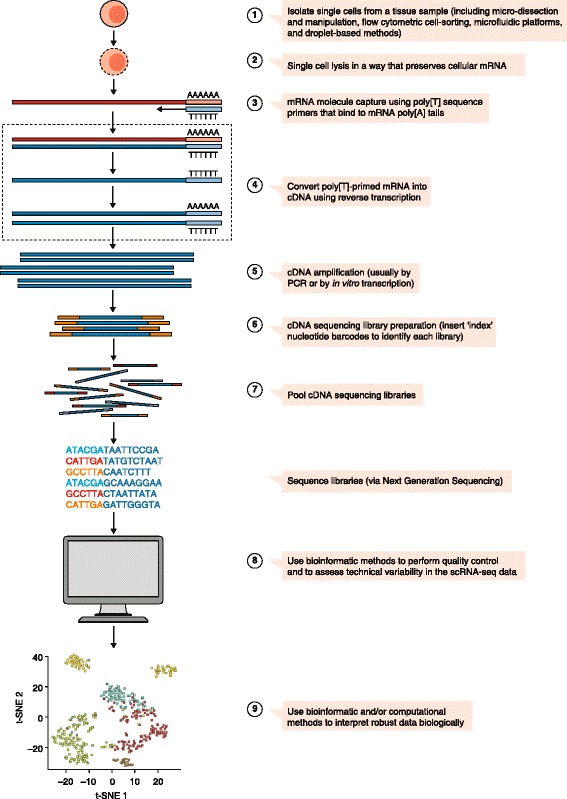
“A general workflow for single-cell sequencing includes isolation of single cells, mRNA capture and reverse transcription into complementary DNA (cDNA), cDNA amplification and preparation of sequencing library, pooling of cDNA sequencing libraries, and using bioinformatics and computational methods to interpret robust…”
MethodSPCS: a spatial and pattern combined smoothing method for spatial transcriptomic expression
Liu, Y., Wang, T., Duggan, B. S., Sharpnack, M. F., Huang, K., Zhang, J., Ye, X., & Johnson, T. S. (2022) · Briefings in Bioinformatics · doi:10.1093/bib/bbac116 · Cited by 29
“However, improvements in ST library preparation [17], sequencing techniques and bioinformatic analysis pipelines [18] are still necessary and ongoing in contrast to more established scRNA-seq standard practice protocols [19, 20].”
MethodLandon‐Brace, N., Li, N. T., & McGuigan, A. P. (2023) · Advanced Healthcare Materials · doi:10.1002/adhm.202300903 · Cited by 28
Li, C. M. Y., Li, R., Drew, P. A., Price, T. J., Smith, E., Maddern, G. J., Tomita, Y., & Fenix, K. A. (2023) · Cancer Treatment Reviews · doi:10.1016/j.ctrv.2023.102665 · Cited by 28
Applications of single-cell multi-omics in liver cancer
Peeters, F., Cappuyns, S., Piqué‐Gili, M., Phillips, G., Verslype, C., Lambrechts, D., & Dekervel, J. (2024) · JHEP Reports · doi:10.1016/j.jhepr.2024.101094 · Cited by 31
“15 – 17 After the isolation of individual cells using one of the afore-mentioned techniques, analysis of the different ‘ omics ’ levels can be performed using different sequencing methods (Fig.”
Yu, X., Zhang, L., Chaudhry, A., Rapaport, A. S., & Ouyang, W. (2020) · Journal of Leukocyte Biology · doi:10.1002/jlb.6mr0320-234r · Cited by 29
Przytycki, P. F., & Pollard, K. S. (2021) · Genome biology · doi:10.1186/s13059-021-02279-1 · Cited by 26
Kuret, T., SodinŠemrl, S., Leskošek, B., & Ferk, P. (2022) · Frontiers in Medicine · doi:10.3389/fmed.2021.822804 · Cited by 30
“Once reads are obtained from a sequencing platform, several quality control steps are necessary before further analyses (14).”
BackgroundApplications of single-cell technologies in drug discovery for tumor treatment
Liu, B., Hu, S., & Wang, X. (2024) · iScience · doi:10.1016/j.isci.2024.110486 · Cited by 25
Navigating Transition Metal‐Dependent Cell Death: Mechanisms, Crosstalk, and Future Directions
Song, Q., Yang, Y., & Yang, L. (2025) · Advanced Science · doi:10.1002/advs.202501974 · Cited by 32
Pheno-seq – linking visual features and gene expression in 3D cell culture systems
Tirier, S. M., Park, J., Preußer, F., Amrhein, L., Gu, Z., Steiger, S., Mallm, J., Krieger, T. G., Waschow, M., Eismann, B., et al. (2019) · Scientific Reports · doi:10.1038/s41598-019-48771-4 · Cited by 25
Methods for isolation and transcriptional profiling of individual cells from the human heart
Pimpalwar, N., Czuba, T., Smith, M. L., Nilsson, J., Gidlöf, O., & Smith, J. G. (2020) · Heliyon · doi:10.1016/j.heliyon.2020.e05810 · Cited by 26
Preparation of single-cell suspensions from the human placenta
Garcia‐Flores, V., Xu, Y., Pusod, E., Romero, R. J., Piqué-Regi, R., & Gomez‐Lopez, N. (2022) · Nature Protocols · doi:10.1038/s41596-022-00772-w · Cited by 24
PRIME: a probabilistic imputation method to reduce dropout effects in single-cell RNA sequencing
Jeong, H., & Liu, Z. (2020) · Bioinformatics · doi:10.1093/bioinformatics/btaa278 · Cited by 25
Maximizing the Utility of Transcriptomics Data in Inflammatory Skin Diseases
Wu, J., Fang, Z., Liu, T., Hu, W., Wu, Y., & Li, S. (2021) · Frontiers in Immunology · doi:10.3389/fimmu.2021.761890 · Cited by 28
Single-cell RNA Sequencing Reveals Heterogeneity of Cultured Bovine Satellite Cells
Lyu, P., Qi, Y., Tu, Z. J., & Jiang, H. (2021) · Frontiers in Genetics · doi:10.3389/fgene.2021.742077 · Cited by 24
Reticker-Flynn, N. E., & Engleman, E. G. (2020) · eLife · doi:10.7554/elife.53839 · Cited by 26
Fastrès, A., Pirottin, D., Fiévez, L., Marichal, T., Desmet, C. J., Bureau, F., & Clercx, C. (2020) · Frontiers in Immunology · doi:10.3389/fimmu.2020.01707 · Cited by 26
“It has become a powerful tool to identify cell subpopulations sharing similar transcriptome within a population, as well as to provide information related to cell fate, development, lineage, physiology, homeostasis and underlying molecular mechanisms (2, 5, 6).”
Margolis, E. B., Moulton, M. G., Lambeth, P. S., & O’Meara, M. J. (2022) · Neuropharmacology · doi:10.1016/j.neuropharm.2022.109376 · Cited by 24
Cala-García, J., Medina-Rincón, G. J., Sierra-Salas, P. A., Rojano, J., & Romero, F. (2023) · Biology · doi:10.3390/biology12091237 · Cited by 28
“Cellular senescence is a key phenomenon in IPF [62], but in this complex disease they have proven to have different cellular components exhibiting this feature [61].”
Gene Expression Studies in Down Syndrome: What Do They Tell Us about Disease Phenotypes?
Chapman, L., Ramnarine, I. V. P., Zemke, D., Majid, A., & Bell, S. (2024) · International Journal of Molecular Sciences · doi:10.3390/ijms25052968 · Cited by 26
“Microarray analysis has become a more common method for assessing relevant microRNAs in DS. Single-cell RNA sequencing allows for the investigation of cellular transcriptomics and gene expression profiling [15].”
MethodAdult Hippocampal Neurogenesis in the Human Brain: Updates, Challenges, and Perspectives
Simard, S., Matosin, N., & Mechawar, N. (2024) · The Neuroscientist · doi:10.1177/10738584241252581 · Cited by 31
An agentic AI framework for ingestion and standardization of single-cell RNA-seq data analysis
Nouri, N., Artzi, R., & Savova, V. (2026) · npj Artificial Intelligence · doi:10.1038/s44387-025-00064-0 · Cited by 29
Baker, C. V. H. (2019) · Springer handbook of auditory research · doi:10.1007/978-3-030-29105-1_2 · Cited by 22
singlecellVR: Interactive Visualization of Single-Cell Data in Virtual Reality
Stein, D. F., Chen, H., Vinyard, M. E., Qin, Q., Combs, R. D., Zhang, Q., & Pinello, L. (2021) · Frontiers in Genetics · doi:10.3389/fgene.2021.764170 · Cited by 24
Park, Y., Hauschild, A.-C., & Heider, D. (2021) · NAR Genomics and Bioinformatics · doi:10.1093/nargab/lqab104 · Cited by 26
“In addition, the technical limitations of single-cell sequencing worsen the quality of data compared to bulk-cell sequencing (16,27).”
Ruberto, A. A., Bourke, C., Vantaux, A., Maher, S. P., Jex, A. R., Witkowski, B., Snounou, G., & Müeller, I. (2022) · PLoS neglected tropical diseases · doi:10.1371/journal.pntd.0010633 · Cited by 27
“As is expected with droplet-based single-cell capture technologies, a comparison of our scRNA-seq data with that of bulk methods reveals a reduced overall number of genes detected using the single-cell approach (Haque et al., 2017; Muller et al., 2019; Westenberger et al., 2010).”
MethodResultKaur, H., Jha, P., Ochatt, S., & Kumar, V. (2023) · Critical Reviews in Biotechnology · doi:10.1080/07388551.2023.2165900 · Cited by 26
“…within individual cells can be conducted by single-cell transcriptome and accessibility regions (ASTAR-seq) [128] or simultaneous high-throughput ATAC and RNA expression and sequencing (SHARE-seq) [129], which can provide a better understanding of regulatory interactions at the cellular level.”
BackgroundSingle-Cell Analysis in the Omics Era: Technologies and Applications in Cancer
Massimino, M., Martorana, F., Stella, S., Vitale, S. R., Tomarchio, C., Manzella, L., & Vigneri, P. G. (2023) · Genes · doi:10.3390/genes14071330 · Cited by 24
Awuah, W. A., Ahluwalia, A., Ghosh, S., Roy, S., Tan, J. K., Adebusoye, F. T., Ferreira, T., Bharadwaj, H. R., Shet, V., Kundu, M., et al. (2023) · European journal of medical research · doi:10.1186/s40001-023-01504-w · Cited by 24
“Each cell’s amplified and tagged cDNA is pooled and subjected to high-throughput sequencing using library preparation techniques and next-generation sequencing (NGS) platforms akin to bulk samples [3].”
BackgroundMethodMienaltowski, M. J., Cánovas, Á., Fates, V. A., Hampton, A. R., Pechanec, M. Y., Islas‐Trejo, A., & Medrano, J. F. F. (2018) · Journal of Orthopaedic Research® · doi:10.1002/jor.24076 · Cited by 25
“By combining FACS from a subset of markers with current single cell RNA-sequencing technology, instead of considering pooled regional progenitor differences, much more precise comparisons could be made, perhaps even down to the combined cell type and cell state level for any one progenitor.(55) Additionally, analyses…”
BackgroundSingle-Cell Sequencing Technologies in Precision Oncology
Melnekoff, D. T., & Laganà, A. (2022) · Advances in experimental medicine and biology · doi:10.1007/978-3-030-91836-1_15 · Cited by 23
SingleCAnalyzer: Interactive Analysis of Single Cell RNA-Seq Data on the Cloud
Prieto, C. A. V., Barrios, D., & Villaverde, A. (2022) · Frontiers in Bioinformatics · doi:10.3389/fbinf.2022.793309 · Cited by 23
“In the last few years, scRNA-seq has been applied, for example, to differentiate tumor cells from healthy ones, deconvolute immune cells, describe states of cell differentiation and development, and to identify rare populations of cells that cause disease (Haque et al., 2017).”
Method
Metadata
- Authors
- Haque, A., Engel, J., Teichmann, S. A., & Lönnberg, T.
- Affiliations
- QIMR Berghofer Medical Research Institute (AU)
- Wellcome Sanger Institute (GB)
- Åbo Akademi University (FI)
- Corresponding author
- Haque, Ashraful
- Lönnberg, Tapio
- Venue
- Genome Medicine
- Published
- 2017-08-18
- Volume
- 9
- Issue
- 1
- Pages
- 75-75
- ISSN
- 1756-994X (ISSN-L)
- PMC
- PMC5561556
- OpenAlex
- W2746479894
- Cited by
- 1,071
- References
- 106
- Citations by year
- 2026: 83 · 2025: 164 · 2024: 163 · 2023: 183 · 2022: 152 · 2021: 123 · 2020: 92 · 2019: 58 · 2018: 51 · 2017: 1
- FWCI
- 5.16
- Type
- journal article
- Language
- en
- Open access
- gold
- doi.org
- Licence
- cc-by
- Locations
- Genome Medicine (publishedVersion, cc-by)
- PubMed Central (publishedVersion, cc-by)
- PubMed (publishedVersion)
- UTUPub (University of Turku) (submittedVersion, cc-by)
- DOAJ (DOAJ: Directory of Open Access Journals) (submittedVersion, cc-by-sa)
- Minerva Access (University of Melbourne) (submittedVersion, cc-by)
- Apollo (University of Cambridge) (submittedVersion, cc-by)
- Apollo (cc-by)
- Funders
- European Research Council (260507)
- Australian National Health and Medical Research Council (1028641, 1028643)
- Topics
- Life Sciences › Biochemistry, Genetics and Molecular Biology › Molecular Biology › Single-cell and spatial transcriptomics
- Life Sciences › Biochemistry, Genetics and Molecular Biology › Molecular Biology › Genomics and Phylogenetic Studies
- Life Sciences › Biochemistry, Genetics and Molecular Biology › Molecular Biology › Gene expression and cancer classification
- Keywords
- single-cell RNA sequencing, quality control, data analysis, biological interpretation, clinical application, experimental protocol
- MeSH terms
- Animals, Humans, Sequence Analysis, RNA, Computational Biology, Biomedical Research, Single-Cell Analysis
About these checks
Registry, retraction, Cites and statistics results are computed, not judged, with one exception: a printed reference that no index lists is read once by a model before it counts as a citation error. Claims are extracted by a model and kept only when their quote appears verbatim in the text; each cited source is then checked, with a model’s help, for whether it says what the claim relies on. Those verdicts can be wrong — read the claim’s quote and the cited source before relying on one.
Statistics and arithmetic are recomputed, not judged.
Confidence bands are shown only for fields calibrated on our annotated test set. None is calibrated yet, so no band is shown.
What counts as a claim ›How we measure confidence ›How we check this ›
Are you an author, or do you see a problem with this page? Request a review
Data sources
Bibliographic data: Semantic Scholar, OpenAlex, Crossref.
Contains information from the Semantic Scholar Academic Graph Datasets, made available under the ODC Attribution License (ODC-BY 1.0).
Semantic Scholar’s data is described in: Kinney, R., et al. (2023). The Semantic Scholar Open Data Platform. arXiv:2301.10140.
