

A practical guide to single-cell RNA-sequencing for biomedical research and clinical applications
Open accessThe DOI matches its Crossref record; 110 of the 110 references it cites were found in a registry or an index.
Abstract
RNA sequencing (RNA-seq) is a genomic approach for the detection and quantitative analysis of messenger RNA molecules in a biological sample and is useful for studying cellular responses. RNA-seq has fueled much discovery and innovation in medicine over recent years. For practical reasons, the technique is usually conducted on samples comprising thousands to millions of cells. However, this has hindered direct assessment of the fundamental unit of biology-the cell. Since the first single-cell RNA-sequencing (scRNA-seq) study was published in 2009, many more have been conducted, mostly by specialist laboratories with unique skills in wet-lab single-cell genomics, bioinformatics, and computation. However, with the increasing commercial availability of scRNA-seq platforms, and the rapid ongoing maturation of bioinformatics approaches, a point has been reached where any biomedical researcher or clinician can use scRNA-seq to make exciting discoveries. In this review, we present a practical guide to help researchers design their first scRNA-seq studies, including introductory information on experimental hardware, protocol choice, quality control, data analysis and biological interpretation.
Overview
The claims and statistics of this paper haven’t been checked yet.
Free: it reads the open-access text and checks the first 5 claims that cite a source we can check. Create a free account to check every claim.
Integrity signals
Registry
Cites
Statistics
Figures
Verification
Claims the paper makes
The claims and statistics of this paper haven’t been checked yet.
Free: it reads the open-access text and checks the first 5 claims that cite a source we can check. Create a free account to check every claim.
Claims other papers make about this one
Each is checked against this paper’s own text: does it say what the citing paper says it does?
The source backs part of the claim, not all of it — or backs it for a different population, condition or comparison.
In the citing paper
“Increasing sequencing depth increases the UMI counts measured even for low-expression genes, reducing the uncertainty associated with zero counts34,47.”
From scPerturb: harmonized single-cell perturbation data (2024) · cites this paper as [47]
Experimental — accuracy not yet measuredThe cited source says what the claim attributes to it.
In the citing paper
“The average sequencing depth, that is, the mean number of reads per cell, in each study affects the number of low-expression genes observed.”
From scPerturb: harmonized single-cell perturbation data (2024) · cites this paper as [47]
Self-check
Percentages, sums and reported differences re-computed from the paper’s own numbers.
The self-check needs the paper’s full text.
Citations
Cites
Massively parallel digital transcriptional profiling of single cells
Zheng, G. X. Y., Terry, J. M., Belgrader, P., Ryvkin, P., Bent, Z. W., Wilson, R., Ziraldo, S. B., Wheeler, T. D., McDermott, G. P., Zhu, J., et al. (2017) · Nature Communications · doi:10.1038/ncomms14049 · Cited by 7,353 · cited 2×
“To this end, recent studies have explored the effect of cryopreservation on scRNA-seq profiles and indeed suggest that high-fidelity scRNA-seq data can be recovered from stored cells [47, 53].”
Trapnell, C., Cacchiarelli, D., Grimsby, J., Pokharel, P., Li, S., Morse, M., Lennon, N. J., Livak, K. J., Mikkelsen, T. S., & Rinn, J. L. (2014) · Nature Biotechnology · doi:10.1038/nbt.2859 · Cited by 7,314
Highly parallel genome-wide expression profiling of individual cells using nanoliter droplets.
Macosko, E. Z., Basu, A., Satija, R., Nemesh, J., Shekhar, K., Goldman, M., Tirosh, I., Bialas, A. R., Kamitaki, N., Martersteck, E. M., et al. (2015) · Cell · doi:10.1016/j.cell.2015.05.002 · Cited by 7,110 · cited 3×
“Second, spike-in mixes are Table 1 Brief overview of scRNA-seq approaches Protocol example C1 (SMARTer) Smartseq2 MATQseq MARS-seq CEL-seq Drop-seq InDrop Chromium SEQ-well SPLIT-seq Transcript data Full length Full length Full length 3’-end counting 3’-end counting 3’-end counting 3’-end counting 3’-end counting 3’-e…”
Single-cell RNA-seq highlights intratumoral heterogeneity in primary glioblastoma
Patel, A. P., Tirosh, I., Trombetta, J. J., Shalek, A. K., Gillespie, S. M., Wakimoto, H., Cahill, D. P., Nahed, B. V., Curry, W. T., Martuza, R. L., et al. (2014) · Science · doi:10.1126/science.1254257 · Cited by 5,063 · cited 1×
“What types of material can be assessed by scRNA-seq? Many of the initial scRNA-seq studies successfully examined human or mouse primary cells, such as those from embryos [17], tumours [14], the nervous system [15, 48] and haematopoietically derived cells, including stem cells and fully differentiated lymphocytes [8, 1…”
BackgroundDissecting the multicellular ecosystem of metastatic melanoma by single-cell RNA-seq
Tirosh, I., Izar, B., Prakadan, S. M., Wadsworth, M. H., Treacy, D., Trombetta, J. J., Rotem, A., Rodman, C., Lian, C., Murphy, G., et al. (2016) · Science · doi:10.1126/science.aad0501 · Cited by 4,944
mRNA-Seq whole-transcriptome analysis of a single cell
Tang, F., Barbacioru, C., Wang, Y., Nordman, E., Lee, C., Xu, N., Wang, X., Bodeau, J., Tuch, B. B., Siddiqui, A., et al. (2009) · Nature Methods · doi:10.1038/nmeth.1315 · Cited by 3,969 · cited 1×
“Since the first scRNA-seq study was published in 2009 [5], there has been increasing interest in conducting such studies.”
BackgroundDroplet barcoding for single-cell transcriptomics applied to embryonic stem cells
Klein, A. M., Mazutis, L., Akartuna, I., Tallapragada, N., Veres, A., Li, V., Peshkin, L., Weitz, D. A., & Kirschner, M. W. (2015) · Cell · doi:10.1016/j.cell.2015.04.044 · Cited by 3,356 · cited 1×
“Reference [63] [57] [39] [10] [64] [45] [46] [47] [101] [38] Haque et al.”
Cell types in the mouse cortex and hippocampus revealed by single-cell RNA-seq
Zeisel, A., Muñoz-Manchado, A. B., Codeluppi, S., Lönnerberg, P., La Manno, G., Juréus, A., Marques, S., Munguba, H., He, L., Betsholtz, C., et al. (2015) · Science · doi:10.1126/science.aaa1934 · Cited by 3,124
Smart-seq2 for sensitive full-length transcriptome profiling in single cells
Picelli, S., Björklund, Å. K., Faridani, O. R., Sagasser, S., Winberg, G., & Sandberg, R. (2013) · Nature Methods · doi:10.1038/nmeth.2639 · Cited by 2,358 · cited 2×
“Reference [63] [57] [39] [10] [64] [45] [46] [47] [101] [38] Haque et al.”
BackgroundMeasurement of mRNA abundance using RNA-seq data: RPKM measure is inconsistent among samples
Wagner, G. P., Kin, K., & Lynch, V. J. (2012) · Theory in Biosciences · doi:10.1007/s12064-012-0162-3 · Cited by 2,136 · cited 1×
“Because of this imperfect coverage, the commonly used unit of normalized transcript levels used for bulk RNAseq, expressed as ‘reads per kilobase per million’ (RPKM), is biased on a single-cell level, and instead the related unit ‘transcripts per million’ (TPM) should be used for scRNA-seq [66].”
Method
Cited by
Items 501–600 of 1,002
Identification of Bona Fide RNA Editing Sites: History, Challenges, and Opportunities
Tan, M. H. (2023) · Accounts of Chemical Research · doi:10.1021/acs.accounts.3c00462 · Cited by 11
Dang, H. X., Saha, D., Jayasinghe, R. G., Zhao, S., Coonrod, E. M., Mudd, J. L., Goedegebuure, S. P., Fields, R. C., Ding, L., & Maher, C. A. (2023) · NAR Cancer · doi:10.1093/narcan/zcad055 · Cited by 8
“However, these data are often sparse with many undetectable genes (i.e. dropout), due to limited per-cell RNA quantity and sequencing depth ( 26 ).”
BackgroundDGP-LVM: Derivative Gaussian process latent variable models
Mukherjee, S., Claassen, M., & Bürkner, P. (2025) · Statistics and Computing · doi:10.1007/s11222-025-10644-4 · Cited by 9
“Currently, this problem is frequently tackled with single-cell RNA sequencing (scRNA-seq) technologies by analysing messenger-RNA (mRNA) molecule counts as a measure of gene expression (Haque et al., 2017).”
Detection of Cancer Stem Cells from Patient Samples
Hakala, S., Hämäläinen, A., Sandelin, S., Giannareas, N., & Närvä, E. (2025) · Cells · doi:10.3390/cells14020148 · Cited by 8
scSMD: a deep learning method for accurate clustering of single cells based on auto-encoder
Cui, X., Wu, R., Liu, Y., Chen, P., Chang, Q., Liang, P., & He, C. (2025) · BMC Bioinformatics · doi:10.1186/s12859-025-06047-x · Cited by 10
“Specifically, the high dimensionality, inherent noise [5], and sparsity of single-cell data introduce substantial obstacles for individual cell sample identification and clustering, particularly in distinguishing cell types.”
Zhou, D., Luo, Y., Li, F., Liu, T., Mei, Y., Li, F., Hou, X., Fu, Z., & Liu, Z. (2025) · Biology Direct · doi:10.1186/s13062-025-00629-8 · Cited by 12
“Single-cell RNA sequencing (scRNA-seq) technology can reveal gene expression heterogeneity at the single-cell level, providing us with new insights into the disease microenvironment and cellular functions [17].”
Dissecting CLL through high-dimensional single-cell technologies
Gohil, S. H., & Wu, C. J. (2019) · Blood · doi:10.1182/blood-2018-09-835389 · Cited by 9
Single‐cell RNA sequencing: A new opportunity for retinal research
You, M., Rong, R., Zeng, Z., Li, H., Xia, X., & Ji, D. (2021) · Wiley Interdisciplinary Reviews - RNA · doi:10.1002/wrna.1652 · Cited by 9
“The single-cell acquisition is the first and crucial step in scRNA-seq (Haque et al., 2017).”
BackgroundAnalysis of Single-Cell RNA-Sequencing Data: A Step-by-Step Guide
Malhotra, A., Das, S., & Rai, S. N. (2021) · BioMedInformatics · doi:10.3390/biomedinformatics2010003 · Cited by 10
“, RNA in the cell was not detected due to limitations of current experimental protocols [20,21].”
Salnikov, M. Y., Wang, E., Christensen, E., Prusinkiewicz, M. A., Shooshtari, P., & Mymryk, J. S. (2023) · Viruses · doi:10.3390/v15040853 · Cited by 8
“In particular, scRNA-seq enables the single-cell resolution of thousands of cells, allowing for the identification of various cell populations, increased resolution of intra-tumoral heterogeneity, and co-expression patterns of genes [53].”
BackgroundFood nutrition and toxicology targeting on specific organs in the era ofsingle-cell sequencing
Wang, X., Cheng, X., Liu, H., Mu, X., & Zheng, H. (2023) · Food Science and Human Wellness · doi:10.26599/fshw.2022.9250006 · Cited by 11
Hu, Q., Sun, W., Lin, F., & Xiong, C. (2023) · TrAC Trends in Analytical Chemistry · doi:10.1016/j.trac.2023.117383 · Cited by 8
Beyond single cells: microfluidics empowering multiomics analysis
Tian, T., Lin, S., & Yang, C. J. (2023) · Analytical and Bioanalytical Chemistry · doi:10.1007/s00216-023-05028-4 · Cited by 11
“Usually, the suggested number increases with the heterogeneity of samples [14].”
Applications of single‐cell omics for chimeric antigen receptor T cell therapy
Ghaffari, S., Saleh, M., Akbari, B., Ramezani, F. M., & Mirzaei, H. R. (2023) · Immunology · doi:10.1111/imm.13720 · Cited by 10
“Even the most sensitive scRNA-seq protocols frequently encounter a common issue known as ‘ dropout events ’ , where certain specific transcripts cannot be reliably detected [134].”
BackgroundDissociation of murine oral mucosal tissues for single cell applications
Ikeuchi, T., Akhi, R., Rodriguez, B. C., FRASER, D. D., Williams, D. W., Kim, T. S., Greenwell‐Wild, T., Overmiller, A. M., Morasso, M. I., & Moutsopoulos, N. M. (2023) · Journal of Immunological Methods · doi:10.1016/j.jim.2023.113605 · Cited by 8
Rezk, A., Li, R., & Bar‐Or, A. (2020) · Scientific Reports · doi:10.1038/s41598-020-71750-z · Cited by 9
Towards a Systems Immunology Approach to Understanding Correlates of Protective Immunity against HCV
Shoukry, N. H. (2021) · Viruses · doi:10.3390/v13091871 · Cited by 9
“In addition, scRNAseq uses a low cellular and RNA input and this is associated with low RNA capture efficiency and a phenomenon known as “dropout”, occurring when a gene is observed at a moderate or even high expression level in one cell but is not detected in another cell [38].”
BackgroundVidal, M., Fraga, M., Llerena, F., Vera, A., Hernández, M., Koch, E. S., Reyes‐López, F. E., Vallejos‐Vidal, E., Cabrera-Vives, G., & Nova‐Lamperti, E. (2022) · International Journal of Molecular Sciences · doi:10.3390/ijms231911065 · Cited by 8
“It is a nonlinear dimensionality reduction technique that finds a lower dimensional space in which similar objects are close and dissimilar objects are distant with high probability [49].”
BackgroundSemina, S. E., Alejo, L. H., Chopra, S., Kansara, N. S., Kastrati, I., Sartorius, C. A., & Frasor, J. M. (2022) · Breast Cancer Research · doi:10.1186/s13058-022-01585-1 · Cited by 9
Epi-Impute: Single-Cell RNA-seq Imputation via Integration with Single-Cell ATAC-seq
Raevskiy, M., Yanvarev, V., Jung, S., del Sol, A., & Medvedeva, Y. A. (2023) · International Journal of Molecular Sciences · doi:10.3390/ijms24076229 · Cited by 10
“Technical limitations can be attributed to a platform and sequencing depth [5,6], while biological limitations arise from low amounts of mRNA molecules in a single cell and stochastic gene expression [7].”
Single-Cell RNA Sequencing Approaches for Tracing T Cell Development
Oh, S., Gray, D. H. D., & Chong, M. M. W. (2021) · The Journal of Immunology · doi:10.4049/jimmunol.2100408 · Cited by 9
Single-Cell Sequencing for Everybody
Proserpio, V., Duval, C., Falvo, V., Donati, G., & Oliviero, S. (2021) · Methods in molecular biology · doi:10.1007/978-1-0716-1944-5_15 · Cited by 8
Single-cell RNA sequencing in autoimmune diseases: New insights and challenges
Huang, J., Hu, Y., Wang, S., Liu, Y., Sun, X., Wang, X., & Yu, H. (2025) · Pharmacology & Therapeutics · doi:10.1016/j.pharmthera.2025.108807 · Cited by 8
Rodov, A., Baniadam, H., Zeiser, R., Amit, I., Yosef, N., Wertheimer, T., & Ingelfinger, F. (2025) · European Journal of Immunology · doi:10.1002/eji.202451234 · Cited by 10
In vitro models of valproic acid to assess neurodevelopmental toxicity: A scoping review
Sandvik, D., Vianca, E., Anderson, A., Javaid, M. S., O'Brien, T. J., & Antonic‐Baker, A. (2025) · Epilepsia · doi:10.1111/epi.18392 · Cited by 7
Saddala, M. S., Chittineni, M. S., Hariharan, N., Rias, A. L., & Nagaraju, G. P. (2025) · Cancer Letters · doi:10.1016/j.canlet.2025.217693 · Cited by 8
Single-cell RNA Sequencing: Current Progresses and Future Perspectives
Desta, G. M., & Birhanu, A. G. (2024) · The Open Biotechnology Journal · doi:10.2174/0118740707311249240604053619 · Cited by 11
-Omics approaches to study and model cell-cell interactions in engineered tissues
Stark, C., Jenison, S. E., & Ngo, M. T. (2025) · Frontiers in Chemical Engineering · doi:10.3389/fceng.2025.1629455 · Cited by 7
Overcoming challenges in cartilage regeneration: The role of chondrogenic inducers
Nguyen, M. T., Gronthos, S., Zhao, Y., Chandrakanthan, V., Truong, V. K., & Vasilev, K. A. (2025) · Bioengineering & Translational Medicine · doi:10.1002/btm2.70079 · Cited by 11
Kang, M., Zhan, X., Huang, X., Zhao, Y., Wang, X., Li, Q., Zhu, J., Liu, F., Li, M., Bai, L., et al. (2025) · Cell Death and Disease · doi:10.1038/s41419-025-08144-4 · Cited by 7
“*p < 0.05, **p < 0.01 **** p < 0.0001 vs “ CON + BSA ” group; ## p < 0.01, #### p < 0.0001 vs “ ADR + BSA ” group; ns not signi fi cant. subtypes or states of cells, revealing underlying cell characteristics in diseases [42].”
InfluentialDing, Y., Peng, Y.-Y., Li, S., Tang, C. L., Gao, J., Wang, H., Long, Z.-Y., Lu, X., & Wang, Y. (2023) · Cell Biochemistry and Biophysics · doi:10.1007/s12013-023-01207-3 · Cited by 9
“With the emergence of single cell RNA sequencing, large fl ux heterogeneity sequencing can be performed for single cells [159].”
Investigating Subpopulation Dynamics in Clonal CHO-K1 Cells with Single-Cell RNA Sequencing
Morina, L. B., Cao, H. C., Chen, S., Kumar, S., McFarland, K. S., Majewska, N. I., Betenbaugh, M. J., & Timp, W. (2024) · Journal of Biotechnology · doi:10.1016/j.jbiotec.2025.01.010 · Cited by 7
Diop, M., Davidson, B. R., Fragiadakis, G. K., Sirota, M., Gaudilliere, B. L., & Combes, A. J. (2025) · American Journal of Obstetrics and Gynecology · doi:10.1016/j.ajog.2024.08.041 · Cited by 7
“22 Additionally, medium and small labs often struggle with limited computational resources when tackling scRNA-seq data, which can pose challenges in terms of storage, processing power, and the capacity to handle large datasets effectively because they cannot access to a high-performance computing…”
InfluentialArima, J., Chida, K., Wu, R., Taniguchi, K., McKenery, A., Morreale, B. G., Monell, A. M., Abrams, S. I., Ebos, J. M. L., Hakamada, K., et al. (2025) · Annals of Surgical Oncology · doi:10.1245/s10434-025-18260-2 · Cited by 7
“14,15 Transcriptomic analyses, as standardized and quantitative approaches, 16 have become widely accessible for biomedical and clinical research and can mitigate technical variability in biomarker evaluation.”
Phitest for analyzing the homogeneity of single-cell populations
Li, W. V. (2022) · Bioinformatics · doi:10.1093/bioinformatics/btac130 · Cited by 7
Differential gene expression profile of multinodular goiter
de Figueiredo, W. L. D., Lopes, E. F., Jezini, D. L., Marçal, L. N., de Assunção, E. N., Rodrigues, P. R. R., da Mota, A. J., de Carvalho, D. M., Filho, S. A., & Botelho, J. B. L. (2022) · PLoS ONE · doi:10.1371/journal.pone.0268354 · Cited by 7
“Transcriptome analysis, which is gaining prevalence in studies on tumor diseases, allows a better understanding of gene expression profiles in tissues under different conditions, including the knowledge of non-coding RNAs (ncRNAs), monoallelic expression of imprinted genes, and several transcriptional phenomena, such…”
BackgroundEffects of scoparone on non-alcoholic fatty liver disease revealed by RNA sequencing
Huang, X., Gao, Y., Cao, H., Li, J., Mo, S., Li, T., Wu, J., Guo, K., Wei, R., & Zhang, K. (2022) · Frontiers in Endocrinology · doi:10.3389/fendo.2022.1004284 · Cited by 9
Distribution modeling quantifies collective T H cell decision circuits in chronic inflammation
Burt, P., & Thurley, K. (2023) · Science Advances · doi:10.1126/sciadv.adg7668 · Cited by 7
Wusiman, D., Li, W., Guo, L., Huang, Z., Zhang, Y., Zhang, X., Zhao, X., Li, L., An, Z., Li, Z., et al. (2023) · Heliyon · doi:10.1016/j.heliyon.2023.e22656 · Cited by 7
“Single-cell RNA-sequencing (scRNA-seq) is a powerful deep molecular profiling method for detecting different cell types, states, and functions in cancer [10].”
MethodGeiß, C., Alanis‐Lobato, G., Andrade-Navarro, M. A., & Régnier‐Vigouroux, A. (2019) · Scientific Reports · doi:10.1038/s41598-019-54500-8 · Cited by 7
Methodologies for Following EMT In Vivo at Single Cell Resolution
Massri, A. J., Schiebinger, G. R., Berrío, A., Wang, L., Wray, G. A., & McClay, D. R. (2020) · Methods in molecular biology · doi:10.1007/978-1-0716-0779-4_23 · Cited by 7
Oliva‐Olivera, W., Castellano‐Castillo, D., von Meyenn, F., Cardona, F., Lönnberg, T., & Tinahones, F. J. (2020) · Metabolism · doi:10.1016/j.metabol.2020.154466 · Cited by 7
Self-citationPark, J. M., Han, Y. M., Lee, H. J., Hwang, S. J., Kim, S., & Hahm, K. B. (2021) · Journal of Clinical Biochemistry and Nutrition · doi:10.3164/jcbn.20-128 · Cited by 7
Probing Plasmodium falciparum sexual commitment at the single-cell level
Brancucci, N. M. B., Niz, M. D., Straub, T. J., Ravel, D., Sollelis, L., Birren, B. W., Voss, T. S., Neafsey, D. E., & Marti, M. (2018) · Wellcome Open Research · doi:10.12688/wellcomeopenres.14645.1 · Cited by 20
Garg, T., Weiss, C. R., & Sheth, R. A. (2022) · Cancers · doi:10.3390/cancers14153628 · Cited by 8
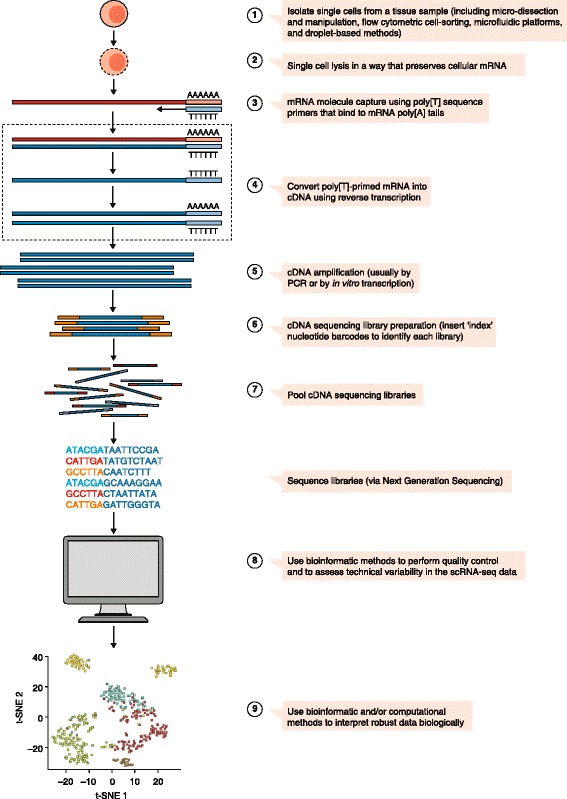
“scRNA-seq techniques follow a basic methodology in which the first step is isolation and lysis of cells, followed by generation of cDNA through reverse transcription, PCR amplification and then detection of this cDNA on next-generation sequencing platforms [190,191].”
MethodKim, H., Ahn, H., Hwang, N., Huh, Y., Bu, S., Seo, K. J., Kwon, S. H., Lee, H.-K., Kim, J. W., Yoon, B. K., et al. (2023) · Scientific Reports · doi:10.1038/s41598-023-36070-y · Cited by 7
Reprogramming protein abundance fluctuations in single cells by degradationPreprint
Matalon, O., Steinberg, A., Sass, E., Hausser, J., & Levy, E. D. (2018) · bioRxiv (Cold Spring Harbor Laboratory) · doi:10.1101/260695 · Cited by 8
Riemannian Metric Learning via Optimal TransportPreprint
Scarvelis, C., & Solomon, J. (2022) · arXiv (Cornell University) · doi:10.48550/arxiv.2205.09244 · Cited by 10
“scRNA sequencing (scRNA-seq) allows biologists to study the set of mRNA molecules (the “tran-scriptome”) of individual cells at high resolution (Haque et al., 2017).”
BackgroundA lack of distinct cell identities in single-cell measurements: revisiting Waddington’s landscapePreprint
Sparta, B., Hamilton, T., Najar, J. V., Hughes, S., Natesan, G., & Deeds, E. J. (2022) · bioRxiv (Cold Spring Harbor Laboratory) · doi:10.1101/2022.06.03.494765 · Cited by 7
A tissue centric atlas of cell type transcriptome enrichment signaturesPreprint
Dusart, P., Öling, S., Struck, E. C., Norreen-Thorsen, M., Zwahlen, M., von Feilitzen, K., Oksvold, P., Bosić, M., Iglesias, M., Renné, T., et al. (2023) · bioRxiv (Cold Spring Harbor Laboratory) · doi:10.1101/2023.01.10.520698 · Cited by 8
“(Haque et al., 2017; Hicks et al., 2018; Kolodziejczyk et al., 2015; Zheng et al., 2021), requiring 71 computational imputation for interpretation (Chen et al.”
BackgroundThe mTOR pathway: a common link between Alzheimer's disease and Down Syndrome
Wohlfert, A. J., Phares, J., & Granholm, A.-C. (2024) · Journal of Clinical Medicine · doi:10.3390/jcm13206183 · Cited by 6
“One form of transcriptomics is single-cell RNA sequencing (scRNA-seq). scRNA-seq can be used to detect and analyze messenger RNA (mRNA) in biological samples at single-cell resolution to study cellular responses [88].”
BackgroundSample Collection Methods in Upper Gastrointestinal Research
Yang, H., Seo, S. I., Lee, J., Huh, C. W., Kim, J. S., Park, J. C., Kim, H., Shin, H., Shin, C. M., Park, C. H., et al. (2023) · Journal of Korean Medical Science · doi:10.3346/jkms.2023.38.e255 · Cited by 6
Single-cell transcriptomics in thyroid eye disease
Ahsanuddin, S., & Wu, A. Y. (2023) · Taiwan Journal of Ophthalmology · doi:10.4103/tjo.tjo-d-23-00096 · Cited by 8
“[24,25] Because it lacks individual cell‑type resolution, bulk RNA‑seq cannot be used to provide more granular assessments of gene expression dynamics in each individual cell comprising a tissue.”
Single-cell RNA sequencing in tuberculosis: Application and future perspectives
Zhan, Y., Zhang, Q., Wang, W., Liang, W., & Wang, C. (2024) · Chinese Medical Journal · doi:10.1097/cm9.0000000000003095 · Cited by 6
“[16] Synthesis of the second strand characterized by the use of poly(A) tailing or template-switching is the main distinction between the protocols.”
InfluentialTemprano‐Sagrera, G., Peypoch, O., Soto, B., Dilmé, J. F., Juscafresa, L. C., Davtian, D., Estadella, M. D. L. R., Nieto, L., Brown, A. A., Escudero, J. R., et al. (2024) · Journal of the American Heart Association · doi:10.1161/jaha.124.036082 · Cited by 6
Romereim, S. M., Smykowski, M. R., Ball, E. K., Carey, E. G., Cuadra, M., Williams, A., Hickson, K., Haim, K., Sumith, M., Yu, Z., et al. (2025) · The American Journal of Sports Medicine · doi:10.1177/03635465241305411 · Cited by 7
“8 In our particular situation, this allows for the identification of rare cell populations that would otherwise go undetected using flow cytometry.”
Single-cell epigenetics and multiomics analysis in kidney research
Aihara, S., & Muto, Y. (2025) · Clinical and Experimental Nephrology · doi:10.1007/s10157-025-02679-8 · Cited by 8
“For example, typical bulk RNA sequencing (RNA-seq) of kidney samples measures mRNA levels from homogenized tissue including epithelia from multiple compartments as well as interstitium, thereby masking signals from rare cell types [3].”
Zhong, W., Wang, L., Zhang, C., Guo, T., Zhao, L., Wu, D., Xie, F., Wang, X., Li, X., Wang, F., et al. (2025) · Small Methods · doi:10.1002/smtd.202500241 · Cited by 7
Iliodromitis, K. E., Seyfarth, M., Balogh, Z., Bogossian, H., Iliodromitis, E. K., & Triposkiadis, F. K. (2025) · Basic Research in Cardiology · doi:10.1007/s00395-025-01121-0 · Cited by 8
“…RNA sequencing (scRNA-seq; a genomic approach for the detection and quantitative analysis of messenger RNA molecules in a biological sample) [80], (b) the assay for transposase-accessible chromatin with sequencing (ATAC-seq, a method for determining chromatin accessibility across the…”
Momin, M. S. A., Bhadra, J., Bhunia, D., Sannigrahi, A., & De, N. (2025) · Cells · doi:10.3390/cells14120903 · Cited by 6
“This technique, termed scMemorySeq [36], integrates single-cell RNA sequencing (scRNA-seq) with cellular lineage barcoding to analyze the persistence of gene expression states at a single-cell resolution [37].”
Current trends in single‐cell RNA sequencing applications in diabetes mellitus
Zadian, S. S., Jahanbin, K., Nikooei, S., Rostaminejad, M., Rahimi, A., Abdizadeh, P., & Alipoor, B. (2025) · FEBS Open Bio · doi:10.1002/2211-5463.70061 · Cited by 7
“…reinforced in 2019, when it was chosen as the technology of the year [11]. scRNA-seq technologies typically include sample acquisition, single-cell isolation and capture, cell lysis, reverse transcription, cDNA amplification, library preparation, high-throughput sequencing, and data analysis [41].”
A 2025 perspective on the role of machine learning for biomarker discovery in clinical proteomics
Adams, C., & Bittremieux, W. (2025) · Expert Review of Proteomics · doi:10.1080/14789450.2025.2545828 · Cited by 14
“This technique can acquire transcriptomic information on the individual cell level and has provided insights into cellular heterogeneity, disease mechanisms, and potential therapeutic targets across various conditions [84].”
Cardiac Nonmyocyte Subpopulations: A Secular Congregation
Sussman, M. A. (2019) · Regenerative Medicine · doi:10.2217/rme-2019-0053 · Cited by 6
Applications of single‐cell multi‐omics sequencing in deep understanding of brain diseases
Zhang, X., Lü, P., & Shen, X. (2022) · Clinical and Translational Discovery · doi:10.1002/ctd2.95 · Cited by 6
Ye, W., Liang, X., Chen, G., Chen, Q., Zhang, H., Zhang, N., Huang, Y., Cheng, Q., & Chen, X. (2024) · CNS Neuroscience & Therapeutics · doi:10.1111/cns.14850 · Cited by 7
“4,41 44 HEC1 is one of the major neighboring genes of the Cell Division Cycle Associated (CDCA) family genes.”
Reprogramming of cells during embryonic transfating: overcoming a reprogramming block
Berrío, A., Miranda, E., Massri, A. J., Afanassiev, A., Schiebinger, G. R., Wray, G. A., & McClay, D. R. (2024) · Development · doi:10.1242/dev.203152 · Cited by 6
A data- and model-driven approach for cancer treatment
Schade, S., Ogilvie, L. A., Kessler, T., Schütte, M., Wierling, C., Lange, B. M. H., Lehrach, H., & Yaspo, M. (2019) · Der Onkologe · doi:10.1007/s00761-019-0624-z · Cited by 9
Single-cell RNA sequencing: An overview for the ophthalmologist
Rossin, E. J., Sobrin, L., & Kim, L. A. (2021) · Seminars in Ophthalmology · doi:10.1080/08820538.2021.1889615 · Cited by 7
Alcamí, P., Totagera, S., Sohnius‐Wilhelmi, N., Leitner, S., Grothe, B., Frankl‐Vilches, C., & Gahr, M. L. (2021) · Biology · doi:10.3390/biology10111099 · Cited by 6
“This difference of one order of magnitude in the fraction of cells positive for GJD2 is likely intrinsically due to the limiting level of detection of some scRNA-seq methods and sequencing depth, which can miss the detection of low-level expression genes [34].”
BackgroundZhu, B., Li, H., Zhang, L., Chandra, S. S., & Zhao, H. (2022) · Briefings in Bioinformatics · doi:10.1093/bib/bbac166 · Cited by 8
Liu, H.-P., Wang, D., & Lai, H.-M. (2022) · Computational and Structural Biotechnology Journal · doi:10.1016/j.csbj.2022.05.035 · Cited by 6
“Unfortunately, scRNA-seq has its disadvantages of low capture efficiency and high dropouts [12,13].”
BackgroundProximal tubule responses to injury: interrogation by single-cell transcriptomics
Cippà, P. E., & McMahon, A. P. (2023) · Current Opinion in Nephrology & Hypertension · doi:10.1097/mnh.0000000000000893 · Cited by 6
“The basics, the wet-lab techniques, the hardware, the protocols, the analytical methods and the practical challenges related to the application of singlecell technologies have been comprehensively reviewed by others [3,4].”
BackgroundReproducibility across single-cell RNA-seq protocols for spatial ordering analysis
Seirup, M., Chu, L., Sengupta, S., Leng, N., Browder, H., Kapadia, K., Shafer, C. M., Duffin, B. M., Elwell, A. L., Bolin, J. M., et al. (2020) · PLoS ONE · doi:10.1371/journal.pone.0239711 · Cited by 6
“The average sequencing depth for the Smart-seq cells was 3.5 million counts per cell, well beyond the suggested sequencing saturation for single-cell data that has been estimated to occur close to one million total reads [38].”
BackgroundInfluentialSIEVE: identifying robust single cell variable genes for single-cell RNA sequencing data
Zhang, Y., Xie, X., Wu, P., & Zhu, P. (2021) · Blood Science · doi:10.1097/bs9.0000000000000072 · Cited by 7
Monitoring islet specific immune responses in type 1 diabetes clinical immunotherapy trials
Arif, S., Domingo‐Vila, C., Pollock, E., Christakou, E., Williams, E., & Tree, T. I. M. (2023) · Frontiers in Immunology · doi:10.3389/fimmu.2023.1183909 · Cited by 8
“The 10x Genomics platform has the advantage over both the plate- and cartridge- based platforms in that it can capture and process high numbers of cells in a single experiment (high-throughput sequencing) (97) however, it does incur cell loss (up to 50%) (98, 99) In contrast, cell loss is lowest when using plate-based…”
BackgroundZheng, J., Lu, W., Wang, C., Chen, S., Zhang, Q., & Su, C. (2024) · Aging · doi:10.18632/aging.205974 · Cited by 5
Ellman, D. G., Bjerre, F. A., Bak, S. T., Mathiesen, S. B., Harvald, E. B., Jensen, C. H., & Andersen, D. C. (2024) · STAR Protocols · doi:10.1016/j.xpro.2024.103194 · Cited by 6
Application of Macrophage Subtype Analysis in Acute Lung Injury/Acute Respiratory Distress Syndrome
Tang, J., Shi, J., Han, Z., & Chen, X. (2024) · Frontiers in Bioscience-Landmark · doi:10.31083/j.fbl2912412 · Cited by 8
“High technology costs [70,71] CITE-seq This multi-omics analysis can assess the heterogeneity of immune cells.”
Benchmarking single-cell cross-omics imputation methods for surface protein expression
Li, C., Hong, Y.-J., Li, B., & Zhang, X.-F. (2025) · Genome biology · doi:10.1186/s13059-025-03514-9 · Cited by 6
“These integrated approaches have the potential to reveal cellular diversity that single-cell RNA sequencing (scRNA-seq) alone might overlook [7, 8].”
Current status of transcriptome sequencing technology in ruminants
JiaYu, C., Lili, S., Dawei, W., ZhiLin, L., Zhang, X., Zelin, J., Yuhang, Z., Huisheng, X., & Xueli, W. (2025) · Frontiers in Veterinary Science · doi:10.3389/fvets.2025.1558799 · Cited by 6
AutoGRN: An Automated Graph Neural Network Framework for Gene Regulatory Network Inference
Gao, J., Wu, S., Xiao, S., & Wu, Z. (2025) · IEEE Journal of Biomedical and Health Informatics · doi:10.1109/jbhi.2025.3609408 · Cited by 6
“Cellular heterogeneity refers to the biological differences and diversity among cells within a sample, even when they originate from the same tissue of the same organism [6].”
UNICORN: Towards universal cellular expression prediction with a multi-task learning framework
Liu, T., Huang, T., Wang, L., Lin, Y., Ying, R., & Zhao, H. (2025) · Nature Communications · doi:10.1038/s41467-025-64506-8 · Cited by 11
Omics-based large language models: A new engine for drug discovery innovation
Sheng, X., Zhang, X., Xing, Y., Shi, Y., Zeng, C., Tong, X., Zheng, M., & Li, X. (2025) · Acta Pharmaceutica Sinica B · doi:10.1016/j.apsb.2025.10.034 · Cited by 7
“In recent years, rapid advances in omics technologies, particularly in single-cell omics, have led to the accumulation of vast, high-dimensional biological datasets 4,26,27 .”
Moro, G., Mallona, I., Barz, M., Maillard, J., Brügger, M. D., Fazilaty, H., Szabo, Q., Valenta, T., Handler, K., Kerlin, F., et al. (2025) · Nature Communications · doi:10.1038/s41467-025-66248-z · Cited by 6
Mapping the path to clinical implementation of multi-omics
Ismail, S. I., Saad, C., Elrayess, M. A., Khleifat, A. A., Hendi, N. N., Al-Sarraj, Y. A., Badji, R. M., & Al‐Muftah, W. (2026) · Nature Genetics · doi:10.1038/s41588-026-02663-2 · Cited by 8
“Ultimately, widespread implementation of multi-omics medicine will depend not only on biological insight, but also on demonstrating laboratory-grade reproducibility, traceability and reliability at scale 58 .”
Yeh, H. (2022) · Organogenesis · doi:10.1080/15476278.2022.2131357 · Cited by 5
“Briefly, single cells are isolated from a tissue sample by various methods including serial dilution, micromanipulation, microdissection, flow cytometry and cell sorting (FACS), magneticactivated cell sorting (MACS), microfluidic platform, and droplet-associated methods.(62) Next, isolated cells are lysed individually…”
MethodJavaid, A., & Frost, H. R. (2023) · PLoS Computational Biology · doi:10.1371/journal.pcbi.1011413 · Cited by 5
Immune cell landscapes are associated with high-grade serous ovarian cancer survival
Zhang, G., Zhang, Y., Zhang, J., Yang, X., Sun, W., Liu, Y., & Liu, Y. (2024) · Scientific Reports · doi:10.1038/s41598-024-67213-4 · Cited by 8
Single-Cell RNA Sequencing and Its Applications in Pituitary Research
Yang, S., Deng, C., Pu, C., Bai, X., Tian, C., Chang, M., & Feng, M. (2024) · Neuroendocrinology · doi:10.1159/000540352 · Cited by 5
Miao, P., Yu, J., Chen, Z., Qian, S., & Chen, C. (2024) · Scientific Reports · doi:10.1038/s41598-024-65345-1 · Cited by 5
“Single-cell sequencing, a technique that entails a high-throughput sequencing of genomes, transcriptomes, and epigenomes at the single-cell level 8,9 , can reveal the gene structure and gene expression status of a single cell, reflecting intercellular heterogeneity.”
MethodSystems immunology approaches to study T cells in health and disease
Yang, A., & Poholek, A. C. (2024) · npj Systems Biology and Applications · doi:10.1038/s41540-024-00446-1 · Cited by 8
Age, sex, and cell type-resolved hypothalamic gene expression across the pubertal transition in mice
Sokolowski, D., Hou, H., Yuki, K. E., Roy, A. R., Chan, C., Choi, W. W. Y., Faykoo-Martinez, M., Hudson, M., Corre, C., Uusküla-Reimand, L., et al. (2024) · Biology of Sex Differences · doi:10.1186/s13293-024-00661-9 · Cited by 7
“Multiple-test correction using the FDR was applied using the p.adjust() function in R [27].”
MethodSingle‑cell RNA sequencing data dimensionality reduction (Review)
Zogopoulos, V. L., Tsotra, I., Spandidos, D. A., Iconomidou, V. A., & Michalopoulos, I. (2025) · World Academy of Sciences Journal · doi:10.3892/wasj.2025.315 · Cited by 5
Chu, X., Ge, Y., Geng, C., Cao, P., Wei, P., Fu, B., Deng, Z., Li, Y., & Zhao, G. (2025) · Journal of Inflammation Research · doi:10.2147/jir.s498738 · Cited by 5
“39 The enrichment results revealed that the chemokine signaling pathway played an important role in the effects of lactate treatment.”
Tan, B., Xu, K., Lyu, Y., Liang, Y., Liang, R., Lei, K., Liang, J., Huang, J., Wang, K., Wu, D., et al. (2025) · Communications Biology · doi:10.1038/s42003-025-07819-0 · Cited by 7
COEXIST: Coordinated single-cell integration of serial multiplexed tissue images
Heussner, R. T., Watson, C., Eddy, C., Wang, K., Cramer, E. M., Creason, A., Mills, G. B., & Chang, Y. H. (2025) · PLoS Computational Biology · doi:10.1371/journal.pcbi.1013325 · Cited by 6
“By contrast, non-spatial technologies like CITE-seq and scRNA-seq can measure over 200 epitopes [13] and 1000 unique molecular identifiers [14] per cell, respectively.”
A single cell transcriptional profile of benign prostatic hyperplasia
Unno, R., Akutagawa, J., Song, H., Hui, K. S. F., Chen, Y.-A., Pham, J. H., Lee, J. H., Yang, H., Huang, F. W., & Chi, T. (2026) · Scientific Reports · doi:10.1038/s41598-025-02417-w · Cited by 6
“Single-cell RNA-sequencing (scRNA-seq) enables the characterization of individual cell populations and prediction of their interactions at the transcriptional level 17 .”
Wang, J., Chen, Z., He, F., Lee, T., Cai, W., Chen, W., Zhang, L., Miao, N., Zeng, Z., Hussain, G., et al. (2022) · Frontiers in Cell and Developmental Biology · doi:10.3389/fcell.2022.825345 · Cited by 5
“…individual cell resolution, overcome limited tissue supply, identify novel cell types, and uncover diverse contributions of individual cells to organ formation and disease conditions (Tang et al., 2009; Tang et al., 2010; Haque et al., 2017; Hochgerner et al., 2018; Li et al., 2018; Potter, 2018).”
BackgroundSingle-cell transcriptional pharmacodynamics of trifluridine in a tumor-immune model
Selvin, T., Fasterius, E., Jarvius, M., Fryknäs, M., Larsson, R., & Andersson, C. R. (2022) · Scientific Reports · doi:10.1038/s41598-022-16077-7 · Cited by 5
Reyes, M., Leff, S. M., Gentili, M., Hacohen, N., & Blainey, P. C. (2023) · Science Advances · doi:10.1126/sciadv.ade5090 · Cited by 5
Metadata
- Authors
- Haque, A., Engel, J., Teichmann, S. A., & Lönnberg, T.
- Affiliations
- QIMR Berghofer Medical Research Institute (AU)
- Wellcome Sanger Institute (GB)
- Åbo Akademi University (FI)
- Corresponding author
- Haque, Ashraful
- Lönnberg, Tapio
- Venue
- Genome Medicine
- Published
- 2017-08-18
- Volume
- 9
- Issue
- 1
- Pages
- 75-75
- ISSN
- 1756-994X (ISSN-L)
- PMC
- PMC5561556
- OpenAlex
- W2746479894
- Cited by
- 1,071
- References
- 106
- Citations by year
- 2026: 83 · 2025: 164 · 2024: 163 · 2023: 183 · 2022: 152 · 2021: 123 · 2020: 92 · 2019: 58 · 2018: 51 · 2017: 1
- FWCI
- 5.16
- Type
- journal article
- Language
- en
- Open access
- gold
- doi.org
- Licence
- cc-by
- Locations
- Genome Medicine (publishedVersion, cc-by)
- PubMed Central (publishedVersion, cc-by)
- PubMed (publishedVersion)
- UTUPub (University of Turku) (submittedVersion, cc-by)
- DOAJ (DOAJ: Directory of Open Access Journals) (submittedVersion, cc-by-sa)
- Minerva Access (University of Melbourne) (submittedVersion, cc-by)
- Apollo (University of Cambridge) (submittedVersion, cc-by)
- Apollo (cc-by)
- Funders
- European Research Council (260507)
- Australian National Health and Medical Research Council (1028641, 1028643)
- Topics
- Life Sciences › Biochemistry, Genetics and Molecular Biology › Molecular Biology › Single-cell and spatial transcriptomics
- Life Sciences › Biochemistry, Genetics and Molecular Biology › Molecular Biology › Genomics and Phylogenetic Studies
- Life Sciences › Biochemistry, Genetics and Molecular Biology › Molecular Biology › Gene expression and cancer classification
- Keywords
- single-cell RNA sequencing, quality control, data analysis, biological interpretation, clinical application, experimental protocol
- MeSH terms
- Animals, Humans, Sequence Analysis, RNA, Computational Biology, Biomedical Research, Single-Cell Analysis
About these checks
Registry, retraction, Cites and statistics results are computed, not judged, with one exception: a printed reference that no index lists is read once by a model before it counts as a citation error. Claims are extracted by a model and kept only when their quote appears verbatim in the text; each cited source is then checked, with a model’s help, for whether it says what the claim relies on. Those verdicts can be wrong — read the claim’s quote and the cited source before relying on one.
Statistics and arithmetic are recomputed, not judged.
Confidence bands are shown only for fields calibrated on our annotated test set. None is calibrated yet, so no band is shown.
What counts as a claim ›How we measure confidence ›How we check this ›
Are you an author, or do you see a problem with this page? Request a review
Data sources
Bibliographic data: Semantic Scholar, OpenAlex, Crossref.
Contains information from the Semantic Scholar Academic Graph Datasets, made available under the ODC Attribution License (ODC-BY 1.0).
Semantic Scholar’s data is described in: Kinney, R., et al. (2023). The Semantic Scholar Open Data Platform. arXiv:2301.10140.
