

A practical guide to single-cell RNA-sequencing for biomedical research and clinical applications
Open accessThe DOI matches its Crossref record; 110 of the 110 references it cites were found in a registry or an index.
Abstract
RNA sequencing (RNA-seq) is a genomic approach for the detection and quantitative analysis of messenger RNA molecules in a biological sample and is useful for studying cellular responses. RNA-seq has fueled much discovery and innovation in medicine over recent years. For practical reasons, the technique is usually conducted on samples comprising thousands to millions of cells. However, this has hindered direct assessment of the fundamental unit of biology-the cell. Since the first single-cell RNA-sequencing (scRNA-seq) study was published in 2009, many more have been conducted, mostly by specialist laboratories with unique skills in wet-lab single-cell genomics, bioinformatics, and computation. However, with the increasing commercial availability of scRNA-seq platforms, and the rapid ongoing maturation of bioinformatics approaches, a point has been reached where any biomedical researcher or clinician can use scRNA-seq to make exciting discoveries. In this review, we present a practical guide to help researchers design their first scRNA-seq studies, including introductory information on experimental hardware, protocol choice, quality control, data analysis and biological interpretation.
Overview
The claims and statistics of this paper haven’t been checked yet.
Free: it reads the open-access text and checks the first 5 claims that cite a source we can check. Create a free account to check every claim.
Integrity signals
Registry
Cites
Statistics
Figures
Verification
Claims the paper makes
The claims and statistics of this paper haven’t been checked yet.
Free: it reads the open-access text and checks the first 5 claims that cite a source we can check. Create a free account to check every claim.
Claims other papers make about this one
Each is checked against this paper’s own text: does it say what the citing paper says it does?
The source backs part of the claim, not all of it — or backs it for a different population, condition or comparison.
In the citing paper
“Increasing sequencing depth increases the UMI counts measured even for low-expression genes, reducing the uncertainty associated with zero counts34,47.”
From scPerturb: harmonized single-cell perturbation data (2024) · cites this paper as [47]
Experimental — accuracy not yet measuredThe cited source says what the claim attributes to it.
In the citing paper
“The average sequencing depth, that is, the mean number of reads per cell, in each study affects the number of low-expression genes observed.”
From scPerturb: harmonized single-cell perturbation data (2024) · cites this paper as [47]
Self-check
Percentages, sums and reported differences re-computed from the paper’s own numbers.
The self-check needs the paper’s full text.
Citations
Cites
Massively parallel digital transcriptional profiling of single cells
Zheng, G. X. Y., Terry, J. M., Belgrader, P., Ryvkin, P., Bent, Z. W., Wilson, R., Ziraldo, S. B., Wheeler, T. D., McDermott, G. P., Zhu, J., et al. (2017) · Nature Communications · doi:10.1038/ncomms14049 · Cited by 7,353 · cited 2×
“To this end, recent studies have explored the effect of cryopreservation on scRNA-seq profiles and indeed suggest that high-fidelity scRNA-seq data can be recovered from stored cells [47, 53].”
Trapnell, C., Cacchiarelli, D., Grimsby, J., Pokharel, P., Li, S., Morse, M., Lennon, N. J., Livak, K. J., Mikkelsen, T. S., & Rinn, J. L. (2014) · Nature Biotechnology · doi:10.1038/nbt.2859 · Cited by 7,314
Highly parallel genome-wide expression profiling of individual cells using nanoliter droplets.
Macosko, E. Z., Basu, A., Satija, R., Nemesh, J., Shekhar, K., Goldman, M., Tirosh, I., Bialas, A. R., Kamitaki, N., Martersteck, E. M., et al. (2015) · Cell · doi:10.1016/j.cell.2015.05.002 · Cited by 7,110 · cited 3×
“Second, spike-in mixes are Table 1 Brief overview of scRNA-seq approaches Protocol example C1 (SMARTer) Smartseq2 MATQseq MARS-seq CEL-seq Drop-seq InDrop Chromium SEQ-well SPLIT-seq Transcript data Full length Full length Full length 3’-end counting 3’-end counting 3’-end counting 3’-end counting 3’-end counting 3’-e…”
Single-cell RNA-seq highlights intratumoral heterogeneity in primary glioblastoma
Patel, A. P., Tirosh, I., Trombetta, J. J., Shalek, A. K., Gillespie, S. M., Wakimoto, H., Cahill, D. P., Nahed, B. V., Curry, W. T., Martuza, R. L., et al. (2014) · Science · doi:10.1126/science.1254257 · Cited by 5,063 · cited 1×
“What types of material can be assessed by scRNA-seq? Many of the initial scRNA-seq studies successfully examined human or mouse primary cells, such as those from embryos [17], tumours [14], the nervous system [15, 48] and haematopoietically derived cells, including stem cells and fully differentiated lymphocytes [8, 1…”
BackgroundDissecting the multicellular ecosystem of metastatic melanoma by single-cell RNA-seq
Tirosh, I., Izar, B., Prakadan, S. M., Wadsworth, M. H., Treacy, D., Trombetta, J. J., Rotem, A., Rodman, C., Lian, C., Murphy, G., et al. (2016) · Science · doi:10.1126/science.aad0501 · Cited by 4,944
mRNA-Seq whole-transcriptome analysis of a single cell
Tang, F., Barbacioru, C., Wang, Y., Nordman, E., Lee, C., Xu, N., Wang, X., Bodeau, J., Tuch, B. B., Siddiqui, A., et al. (2009) · Nature Methods · doi:10.1038/nmeth.1315 · Cited by 3,969 · cited 1×
“Since the first scRNA-seq study was published in 2009 [5], there has been increasing interest in conducting such studies.”
BackgroundDroplet barcoding for single-cell transcriptomics applied to embryonic stem cells
Klein, A. M., Mazutis, L., Akartuna, I., Tallapragada, N., Veres, A., Li, V., Peshkin, L., Weitz, D. A., & Kirschner, M. W. (2015) · Cell · doi:10.1016/j.cell.2015.04.044 · Cited by 3,356 · cited 1×
“Reference [63] [57] [39] [10] [64] [45] [46] [47] [101] [38] Haque et al.”
Cell types in the mouse cortex and hippocampus revealed by single-cell RNA-seq
Zeisel, A., Muñoz-Manchado, A. B., Codeluppi, S., Lönnerberg, P., La Manno, G., Juréus, A., Marques, S., Munguba, H., He, L., Betsholtz, C., et al. (2015) · Science · doi:10.1126/science.aaa1934 · Cited by 3,124
Smart-seq2 for sensitive full-length transcriptome profiling in single cells
Picelli, S., Björklund, Å. K., Faridani, O. R., Sagasser, S., Winberg, G., & Sandberg, R. (2013) · Nature Methods · doi:10.1038/nmeth.2639 · Cited by 2,358 · cited 2×
“Reference [63] [57] [39] [10] [64] [45] [46] [47] [101] [38] Haque et al.”
BackgroundMeasurement of mRNA abundance using RNA-seq data: RPKM measure is inconsistent among samples
Wagner, G. P., Kin, K., & Lynch, V. J. (2012) · Theory in Biosciences · doi:10.1007/s12064-012-0162-3 · Cited by 2,136 · cited 1×
“Because of this imperfect coverage, the commonly used unit of normalized transcript levels used for bulk RNAseq, expressed as ‘reads per kilobase per million’ (RPKM), is biased on a single-cell level, and instead the related unit ‘transcripts per million’ (TPM) should be used for scRNA-seq [66].”
MethodUnbiased classification of sensory neuron types by large-scale single-cell RNA sequencing
Usoskin, D., Furlan, A., Islam, S., Abdo, H., Lönnerberg, P., Lou, D., Hjerling-Leffler, J., Haeggström, J., Kharchenko, O., Kharchenko, P. V., et al. (2015) · Nature Neuroscience · doi:10.1038/nn.3881 · Cited by 2,136 · cited 1×
“What types of material can be assessed by scRNA-seq? Many of the initial scRNA-seq studies successfully examined human or mouse primary cells, such as those from embryos [17], tumours [14], the nervous system [15, 48] and haematopoietically derived cells, including stem cells and fully differentiated lymphocytes [8, 1…”
BackgroundNormalization of RNA-seq data using factor analysis of control genes or samples
Risso, D., Ngai, J., Speed, T. P., & Dudoit, S. (2014) · Nature Biotechnology · doi:10.1038/nbt.2931 · Cited by 2,052 · cited 2×
“Several computational approaches have been devised that account for such variability [59, 70, 71].”
BackgroundHighly multiplexed imaging of tumor tissues with subcellular resolution by mass cytometry
Giesen, C., Wang, H. A. O., Schapiro, D., Zivanovic, N., Jacobs, A., Hattendorf, B., Schüffler, P. J., Grolimund, D., Buhmann, J. M., Brandt, S., et al. (2014) · Nature Methods · doi:10.1038/nmeth.2869 · Cited by 1,951 · cited 1×
“More recently, mass cytometry (Box 1), which involves cell staining with antibodies labelled with heavy metal ions and quantitative measurements using time-of-flight detectors, has increased the number of proteins that can be assessed by five- to tenfold [1, 2] and has started to reveal previously unappreciated levels…”
BackgroundDixit, A., Parnas, O., Li, B., Chen, J., Fulco, C. P., Jerby-Arnon, L., Marjanovic, N. D., Dionne, D., Burks, T., Raychowdhury, R., et al. (2016) · Cell · doi:10.1016/j.cell.2016.11.038 · Cited by 1,863 · cited 1×
“For instance, the use of CRISPR–Cas9 genome-editing techniques alongside barcoded guide RNA species has allowed high-throughput assessment of gene function in single cells [98, 99].”
BackgroundMcCarthy, D. J., Campbell, K. R., Lun, A. T. L., & Wills, Q. F. (2017) · Bioinformatics · doi:10.1093/bioinformatics/btw777 · Cited by 1,852
Massively parallel single-cell RNA-seq for marker-free decomposition of tissues into cell types
Jaitin, D. A., Kenigsberg, E., Keren-Shaul, H., Elefant, N., Paul, F., Zaretsky, I., Mildner, A., Cohen, N., Jung, S., Tanay, A., et al. (2014) · Science · doi:10.1126/science.1247651 · Cited by 1,795
Single-cell RNA-Seq profiling of human preimplantation embryos and embryonic stem cells
Yan, L., Yang, M., Guo, H., Yang, L., Wu, J., Li, R., Liu, P., Lian, Y., Zheng, X., Yan, J., et al. (2013) · Nature Structural & Molecular Biology · doi:10.1038/nsmb.2660 · Cited by 1,740 · cited 2×
“Therefore, a major use of scRNA-seq has been to assess transcriptional similarities and differences within a population of cells, with early reports revealing previously unappreciated levels of heterogeneity, for example in embryonic and immune cells [9, 10, 17].”
BackgroundTen years of next-generation sequencing technology
van Dijk, E. L., Auger, H., Jaszczyszyn, Y., & Thermes, C. (2014) · Trends in Genetics · doi:10.1016/j.tig.2014.07.001 · Cited by 1,622
A step-by-step workflow for low-level analysis of single-cell RNA-seq data with Bioconductor
Lun, A. T. L., McCarthy, D. J., & Marioni, J. C. (2016) · F1000Research · doi:10.12688/f1000research.9501.2 · Cited by 1,574
SC3: consensus clustering of single-cell RNA-seq data
Kiselev, V. Y., Kirschner, K., Schaub, M. T., Andrews, T., Yiu, A., Chandra, T., Natarajan, K. N., Reik, W., Barahona, M., Green, A. R., et al. (2017) · Nature Methods · doi:10.1038/nmeth.4236 · Cited by 1,500
Comparative Analysis of Single-Cell RNA Sequencing Methods
Ziegenhain, C., Vieth, B., Parekh, S., Reinius, B., Guillaumet-Adkins, A., Smets, M., Leonhardt, H., Heyn, H., Hellmann, I., & Enard, W. (2017) · Molecular Cell · doi:10.1016/j.molcel.2017.01.023 · Cited by 1,494
The Technology and Biology of Single-Cell RNA Sequencing
Kolodziejczyk, A. A., Kim, J. K., Svensson, V., Marioni, J. C., & Teichmann, S. A. (2015) · Molecular Cell · doi:10.1016/j.molcel.2015.04.005 · Cited by 1,487 · cited 1×
“Approximately 20 different scRNA-seq protocols have been published to date, the fine details of which have been thoroughly discussed elsewhere [56].”
BackgroundSelf-citationSingle-cell profiling of the developing mouse brain and spinal cord with split-pool barcoding
Rosenberg, A. B., Roco, C. M., Muscat, R. A., Kuchina, A., Sample, P., Yao, Z., Graybuck, L. T., Peeler, D. J., Mukherjee, S., Chen, W., et al. (2018) · Science · doi:10.1126/science.aam8999 · Cited by 1,422
Cao, J., Packer, J. S., Ramani, V., Cusanovich, D. A., Huynh, C., Daza, R., Qiu, X., Lee, C., Furlan, S. N., Steemers, F. J., et al. (2017) · doi:10.1101/104844 · Cited by 1,402
Diffusion pseudotime robustly reconstructs lineage branching
Haghverdi, L., Büttner, M., Wolf, F. A., Buettner, F., & Theis, F. J. (2016) · Nature Methods · doi:10.1038/nmeth.3971 · Cited by 1,385
Single-Cell RNA-Seq Reveals Dynamic, Random Monoallelic Gene Expression in Mammalian Cells
Deng, Q., Ramsköld, D., Reinius, B., & Sandberg, R. (2014) · Science · doi:10.1126/science.1245316 · Cited by 1,345 · cited 2×
“Therefore, a major use of scRNA-seq has been to assess transcriptional similarities and differences within a population of cells, with early reports revealing previously unappreciated levels of heterogeneity, for example in embryonic and immune cells [9, 10, 17].”
BackgroundReconstructing lineage hierarchies of the distal lung epithelium using single-cell RNA-seq
Treutlein, B., Brownfield, D. G., Wu, A. R., Neff, N. F., Mantalas, G. L., Espinoza, F. H., Desai, T. J., Krasnow, M. A., & Quake, S. R. (2014) · Nature · doi:10.1038/nature13173 · Cited by 1,342
CEL-seq: single-cell RNA-seq by multiplexed linear amplification
Hashimshony, T., Wagner, F., Sher, N., & Yanai, I. (2012) · Cell Reports · doi:10.1016/j.celrep.2012.08.003 · Cited by 1,231 · cited 2×
“The efficiency with which poly-adenylated mRNA species are captured, converted into cDNA and amplified is currently unclear, and, depending on the study, can range between 10 and 40% [13, 44, 64, 65].”
BackgroundAdamson, B., Norman, T. M., Jost, M., Cho, M. Y., Nuñez, J. K., Chen, Y., Villalta, J. E., Gilbert, L. A., Horlbeck, M. A., Hein, M. Y., et al. (2016) · Cell · doi:10.1016/j.cell.2016.11.048 · Cited by 1,193 · cited 1×
“For instance, the use of CRISPR–Cas9 genome-editing techniques alongside barcoded guide RNA species has allowed high-throughput assessment of gene function in single cells [98, 99].”
BackgroundSingle-cell transcriptomics reveals bimodality in expression and splicing in immune cells
Shalek, A. K., Satija, R., Adiconis, X., Gertner, R. S., Gaublomme, J. T., Raychowdhury, R., Schwartz, S., Yosef, N., Malboeuf, C., Lu, D., et al. (2013) · Nature · doi:10.1038/nature12172 · Cited by 1,190 · cited 1×
“This includes the study of monoallelic gene expression [9, 26, 27], splicing patterns [12], as well as noise during transcriptional responses [7, 12, 13, 28, 29].”
BackgroundComputational and analytical challenges in single-cell transcriptomics
Stegle, O., Teichmann, S. A., & Marioni, J. C. (2015) · Nature Reviews Genetics · doi:10.1038/nrg3833 · Cited by 1,170 · cited 13×
“Buettner F, Natarajan KN, Casale FP, Proserpio V, Scialdone A, Theis FJ, et al. Computational analysis of cell-to-cell heterogeneity in single-cell RNAsequencing data reveals hidden subpopulations of cells.”
BackgroundInfluentialSelf-citationBuettner, F., Natarajan, K. N., Casale, F. P., Proserpio, V., Scialdone, A., Theis, F. J., Teichmann, S. A., Marioni, J. C., & Stegle, O. (2015) · Nature Biotechnology · doi:10.1038/nbt.3102 · Cited by 1,136
Self-citationCEL-seq2: sensitive highly-multiplexed single-cell RNA-Seq
Hashimshony, T., Senderovich, N., Avital, G., Klochendler, A., de Leeuw, Y., Anavy, L., Gennert, D., Li, S., Livak, K. J., Rozenblatt-Rosen, O., et al. (2016) · Genome Biology · doi:10.1186/s13059-016-0938-8 · Cited by 1,125 · cited 2×
“Second, spike-in mixes are Table 1 Brief overview of scRNA-seq approaches Protocol example C1 (SMARTer) Smartseq2 MATQseq MARS-seq CEL-seq Drop-seq InDrop Chromium SEQ-well SPLIT-seq Transcript data Full length Full length Full length 3’-end counting 3’-end counting 3’-end counting 3’-end counting 3’-end counting 3’-e…”
Multiplexed droplet single-cell RNA-sequencing using natural genetic variation
Kang, H. M., Subramaniam, M., Targ, S., Nguyen, M., Maliskova, L., McCarthy, E., Wan, E., Wong, S., Byrnes, L., Lanata, C. M., et al. (2018) · Nature Biotechnology · doi:10.1038/nbt.4042 · Cited by 1,101
Single-Cell RNA-Seq Reveals Lineage and X Chromosome Dynamics in Human Preimplantation Embryos
Petropoulos, S., Edsgärd, D., Reinius, B., Deng, Q., Panula, S. P., Codeluppi, S., Plaza Reyes, A., Linnarsson, S., Sandberg, R., & Lanner, F. (2016) · Cell · doi:10.1016/j.cell.2016.03.023 · Cited by 1,063
Counting absolute numbers of molecules using unique molecular identifiers
Kivioja, T., Vähärautio, A., Karlsson, K., Bonke, M., Enge, M., Linnarsson, S., & Taipale, J. (2012) · Nature Methods · doi:10.1038/nmeth.1778 · Cited by 1,010
Decoupling genetics, lineages, and microenvironment in IDH-mutant gliomas by single-cell RNA-seq
Venteicher, A. S., Tirosh, I., Hebert, C., Yizhak, K., Neftel, C., Filbin, M. G., Hovestadt, V., Escalante, L. E., Shaw, M. L., Rodman, C., et al. (2017) · Science · doi:10.1126/science.aai8478 · Cited by 1,004
Single-cell RNA-seq reveals dynamic paracrine control of cellular variation
Shalek, A. K., Satija, R., Shuga, J., Trombetta, J. J., Gennert, D., Lu, D., Chen, P., Gertner, R. S., Gaublomme, J. T., Yosef, N., et al. (2014) · Nature · doi:10.1038/nature13437 · Cited by 1,000 · cited 3×
“Similarly, assessments of transcriptional differences between individual cells have been used to identify rare cell populations that would otherwise go undetected in analyses of pooled cells [18], for example malignant tumour cells within a tumour mass [19], or hyperresponsive immune cells within a seemingly homogeneo…”
BackgroundAccounting for technical noise in single-cell RNA-seq experiments
Brennecke, P., Anders, S., Kim, J. K., Kołodziejczyk, A. A., Zhang, X., Proserpio, V., Baying, B., Benes, V., Teichmann, S. A., Marioni, J. C., et al. (2013) · Nature Methods · doi:10.1038/nmeth.2645 · Cited by 979
Self-citationCharacterization of the single-cell transcriptional landscape by highly multiplex RNA-seq
Islam, S., Kjällquist, U., Moliner, A., Zajac, P., Fan, J.-B., Lönnerberg, P., & Linnarsson, S. (2011) · Genome Research · doi:10.1101/gr.110882.110 · Cited by 949 · cited 1×
“The efficiency with which poly-adenylated mRNA species are captured, converted into cDNA and amplified is currently unclear, and, depending on the study, can range between 10 and 40% [13, 44, 64, 65].”
BackgroundMammalian genes are transcribed with widely different bursting kinetics
Suter, D. M., Molina, N., Gatfield, D., Schneider, K., Schibler, U., & Naef, F. (2011) · Science · doi:10.1126/science.1198817 · Cited by 927 · cited 1×
“For example, at the gene level, transcriptional bursting causes variation in transcript quantities [67], whereas at the global level, the physical size of”
BackgroundPollen, A. A., Nowakowski, T. J., Shuga, J., Wang, X., Leyrat, A. A., Lui, J. H., Li, N., Szpankowski, L., Fowler, B., Chen, P., et al. (2014) · Nature Biotechnology · doi:10.1038/nbt.2967 · Cited by 920
A 17-gene stemness score for rapid determination of risk in acute leukaemia
Ng, S. W. K., Mitchell, A., Kennedy, J. A., Chen, W. C., McLeod, J., Ibrahimova, N., Arruda, A., Popescu, A., Gupta, V., Schimmer, A. D., et al. (2016) · Nature · doi:10.1038/nature20598 · Cited by 912 · cited 1×
“Taking just one clinically relevant example—RNA-seq was recently performed on haematopoietic stem cells to stratify acute myeloid leukaemia patients into cohorts requiring differing treatment regimens [4].”
MethodSeq-Well: portable, low-cost RNA sequencing of single cells at high throughput
Gierahn, T. M., Wadsworth, M. H., Hughes, T. K., Bryson, B. D., Butler, A., Satija, R., Fortune, S., Love, J. C., & Shalek, A. K. (2017) · Nature Methods · doi:10.1038/nmeth.4179 · Cited by 865 · cited 1×
“Reference [63] [57] [39] [10] [64] [45] [46] [47] [101] [38] Haque et al.”
Validation of noise models for single-cell transcriptomics
Grün, D., Kester, L., & van Oudenaarden, A. (2014) · Nature Methods · doi:10.1038/nmeth.2930 · Cited by 721
RNA-Seq of single prostate CTCs implicates noncanonical Wnt signaling in antiandrogen resistance
Miyamoto, D. T., Zheng, Y., Wittner, B. S., Lee, R. J., Zhu, H., Broderick, K. T., Desai, R., Fox, D. B., Brannigan, B. W., Trautwein, J., et al. (2015) · Science · doi:10.1126/science.aab0917 · Cited by 705
Quantitative assessment of single-cell RNA-sequencing methods
Wu, A. R., Neff, N. F., Kalisky, T., Dalerba, P., Treutlein, B., Rothenberg, M. E., Mburu, F. M., Mantalas, G. L., Sim, S., Clarke, M. F., et al. (2014) · Nature Methods · doi:10.1038/nmeth.2694 · Cited by 696 · cited 3×
“Moreover, downscaling the reactions to nanoliter volumes has been shown to improve detection sensitivity [33] and quantitative accuracy [44].”
BackgroundClassification of low quality cells from single-cell RNA-seq data
Ilicic, T., Kim, J. K., Kolodziejczyk, A. A., Bagger, F. O., McCarthy, D. J., Marioni, J. C., & Teichmann, S. A. (2016) · Genome Biology · doi:10.1186/s13059-016-0888-1 · Cited by 693
Self-citationDiffusion maps for high-dimensional single-cell analysis of differentiation data
Haghverdi, L., Buettner, F., & Theis, F. J. (2015) · Bioinformatics · doi:10.1093/bioinformatics/btv325 · Cited by 649
Revealing the vectors of cellular identity with single-cell genomics
Wagner, A., Regev, A., & Yosef, N. (2016) · Nature Biotechnology · doi:10.1038/nbt.3711 · Cited by 632 · cited 1×
“inference of gene-regulatory networks that underlie functional heterogeneity and cell-type specification [30, 31].”
BackgroundDiv-Seq: Single-nucleus RNA-Seq reveals dynamics of rare adult newborn neurons
Habib, N., Li, Y., Heidenreich, M., Swiech, L., Avraham-Davidi, I., Trombetta, J. J., Hession, C., Zhang, F., & Regev, A. (2016) · Science · doi:10.1126/science.aad7038 · Cited by 601 · cited 2×
“Furthermore, over the past few years, protocols compatible with certain cell-fixation methods have started to emerge [34, 35, 38, 54, 55].”
BackgroundSingle-cell genomics unveils critical regulators of Th17 cell pathogenicity
Gaublomme, J. T., Yosef, N., Lee, Y., Gertner, R. S., Yang, L. V., Wu, C., Pandolfi, P. P., Mak, T., Satija, R., Shalek, A. K., et al. (2015) · Cell · doi:10.1016/j.cell.2015.11.009 · Cited by 575 · cited 1×
“What types of material can be assessed by scRNA-seq? Many of the initial scRNA-seq studies successfully examined human or mouse primary cells, such as those from embryos [17], tumours [14], the nervous system [15, 48] and haematopoietically derived cells, including stem cells and fully differentiated lymphocytes [8, 1…”
BackgroundMapping the human DC lineage through the integration of high-dimensional techniques
See, P., Dutertre, C.-A., Chen, J., Günther, P., McGovern, N., Irac, S. E., Gunawan, M., Beyer, M., Händler, K., Duan, K., et al. (2017) · Science · doi:10.1126/science.aag3009 · Cited by 574 · cited 1×
“More recently, mass cytometry (Box 1), which involves cell staining with antibodies labelled with heavy metal ions and quantitative measurements using time-of-flight detectors, has increased the number of proteins that can be assessed by five- to tenfold [1, 2] and has started to reveal previously unappreciated levels…”
BackgroundSingle Cell RNA-Sequencing of Pluripotent States Unlocks Modular Transcriptional Variation
Kolodziejczyk, A. A., Kim, J. K., Tsang, J. C. H., Ilicic, T., Henriksson, J., Natarajan, K. N., Tuck, A. C., Gao, X., Bühler, M., Liu, P., et al. (2015) · Cell Stem Cell · doi:10.1016/j.stem.2015.09.011 · Cited by 570 · cited 1×
“What types of material can be assessed by scRNA-seq? Many of the initial scRNA-seq studies successfully examined human or mouse primary cells, such as those from embryos [17], tumours [14], the nervous system [15, 48] and haematopoietically derived cells, including stem cells and fully differentiated lymphocytes [8, 1…”
BackgroundSelf-citationPower analysis of single-cell RNA-sequencing experiments
Svensson, V., Natarajan, K. N., Ly, L.-H., Miragaia, R. J., Labalette, C., Macaulay, I. C., Cvejic, A., & Teichmann, S. A. (2017) · Nature Methods · doi:10.1038/nmeth.4220 · Cited by 568
Self-citationIdentification of cell types from single-cell transcriptomes using a novel clustering method
Xu, C., & Su, Z. (2015) · Bioinformatics · doi:10.1093/bioinformatics/btv088 · Cited by 559
Wishbone identifies bifurcating developmental trajectories from single-cell data
Setty, M., Tadmor, M. D., Reich-Zeliger, S., Angel, O., Salame, T. M., Kathail, P., Choi, K., Bendall, S., Friedman, N., & Pe'er, D. (2016) · Nature Biotechnology · doi:10.1038/nbt.3569 · Cited by 558
Newell, E. W., Sigal, N., Bendall, S. C., Nolan, G. P., & Davis, M. M. (2012) · Immunity · doi:10.1016/j.immuni.2012.01.002 · Cited by 555
Defining the three cell lineages of the human blastocyst by single-cell RNA-seq
Blakeley, P., Fogarty, N. M. E., del Valle, I., Wamaitha, S. E., Hu, T. X., Elder, K., Snell, P., Christie, L., Robson, P., & Niakan, K. K. (2015) · Development · doi:10.1242/dev.123547 · Cited by 466
Sasagawa, Y., Nikaido, I., Hayashi, T., Danno, H., Uno, K. D., Imai, T., & Ueda, H. R. (2013) · Genome Biology · doi:10.1186/gb-2013-14-4-r31 · Cited by 455
Padovan-Merhar, O., Nair, G. P., Biaesch, A. G., Mayer, A., Scarfone, S., Foley, S. W., Wu, A. R., Churchman, L. S., Singh, A., & Raj, A. (2015) · Molecular Cell · doi:10.1016/j.molcel.2015.03.005 · Cited by 451
Single-cell multiomics: multiple measurements from single cells
Macaulay, I. C., Ponting, C. P., & Voet, T. (2017) · Trends in Genetics · doi:10.1016/j.tig.2016.12.003 · Cited by 451 · cited 1×
“We expect that many new combination approaches will emerge using proteomics, epigenomics and analysis of non-coding RNA species alongside scRNA-seq (reviewed in [100]).”
BackgroundDesign and computational analysis of single-cell RNA-sequencing experiments
Bacher, R., & Kendziorski, C. (2016) · Genome Biology · doi:10.1186/s13059-016-0927-y · Cited by 440 · cited 3×
“This has been augmented by a number of methods involving different machine-learning algorithms, including for example t-distributed stochastic neighbour embedding (t-SNE) and Gaussian process latent variable modelling (GPLVM), which have been reviewed in detail elsewhere [74, 82, 83].”
BackgroundMethodT cell fate and clonality inference from single-cell transcriptomes
(2016) · doi:10.1038/nmeth.3800 · Cited by 434 · cited 1×
“scRNA-seq is also ideal for examination of single cells where each one is essentially unique, such as individual T lymphocytes expressing highly diverse T-cell receptors [20], neurons within the brain [15] or cells within an early-stage embryo [21].”
BackgroundSelf-citationFan, X., Zhang, X., Wu, X., Guo, H., Hu, Y., Tang, F., & Huang, Y. (2015) · Genome Biology · doi:10.1186/s13059-015-0706-1 · Cited by 413 · cited 1×
“Analysis of non-polyadenylated mRNAs is typically more challenging and requires specialized protocols [39, 40].”
BackgroundNuclear RNA-seq of single neurons reveals molecular signatures of activation
Lacar, B., Linker, S. B., Jaeger, B. N., Krishnaswami, S. R., Barron, J. J., Kelder, M. J. E., Parylak, S. L., Paquola, A. C. M., Venepally, P., Novotny, M., et al. (2016) · Nature Communications · doi:10.1038/ncomms11022 · Cited by 405 · cited 2×
“Furthermore, over the past few years, protocols compatible with certain cell-fixation methods have started to emerge [34, 35, 38, 54, 55].”
BackgroundCD5L/AIM Regulates Lipid Biosynthesis and Restrains Th17 Cell Pathogenicity
Wang, C., Yosef, N., Gaublomme, J., Wu, C., Lee, Y., Clish, C. B., Kaminski, J., Xiao, S., Zu Horste, G. M., Pawlak, M., et al. (2015) · Cell · doi:10.1016/j.cell.2015.10.068 · Cited by 392 · cited 1×
“What types of material can be assessed by scRNA-seq? Many of the initial scRNA-seq studies successfully examined human or mouse primary cells, such as those from embryos [17], tumours [14], the nervous system [15, 48] and haematopoietically derived cells, including stem cells and fully differentiated lymphocytes [8, 1…”
BackgroundSINCERA: A Pipeline for Single-Cell RNA-Seq Profiling Analysis
Guo, M., Wang, H., Potter, S. S., Whitsett, J. A., & Xu, Y. (2015) · PLOS Computational Biology · doi:10.1371/journal.pcbi.1004575 · Cited by 354
Defining the three cell lineages of the human blastocyst by single-cell RNA-seq
Blakeley, P., Fogarty, N. M. E., del Valle, I., Wamaitha, S. E., Hu, T. X., Elder, K., Snell, P., Christie, L., Robson, P., & Niakan, K. K. (2015) · Development · doi:10.1242/dev.131235 · Cited by 316
pcaReduce: hierarchical clustering of single cell transcriptional profiles
žurauskienė, J., & Yau, C. (2016) · BMC Bioinformatics · doi:10.1186/s12859-016-0984-y · Cited by 303
Bifurcation analysis of single-cell gene expression data reveals epigenetic landscape
Marco, E., Karp, R. L., Guo, G., Robson, P., Hart, A. H., Trippa, L., & Yuan, G.-C. (2014) · Proceedings of the National Academy of Sciences · doi:10.1073/pnas.1408993111 · Cited by 268
Lönnberg, T., Svensson, V., James, K. R., Fernandez-Ruiz, D., Sebina, I., Montandon, R., Soon, M. S. F., Fogg, L. G., Nair, A. S., Liligeto, U. N., et al. (2017) · Science Immunology · doi:10.1126/sciimmunol.aal2192 · Cited by 268 · cited 1×
“For example, in recent studies of murine T-cell responses in vivo, this issue was circumvented by employing transgenic T-cell receptor cells that expressed the same antigen receptor [24, 61].”
BackgroundSelf-citationEffective detection of variation in single-cell transcriptomes using MATQ-seq
Sheng, K., Cao, W., Niu, Y., Deng, Q., & Zong, C. (2017) · Nature Methods · doi:10.1038/nmeth.4145 · Cited by 254 · cited 2×
“Reference [63] [57] [39] [10] [64] [45] [46] [47] [101] [38] Haque et al.”
BackgroundKim, J. K., Kolodziejczyk, A. A., Ilicic, T., Teichmann, S. A., & Marioni, J. C. (2015) · Nature Communications · doi:10.1038/ncomms9687 · Cited by 251
Self-citationKakaradov, B., Arsenio, J., Widjaja, C. E., He, Z., Aigner, S., Metz, P. J., Yu, B., Wehrens, E. J., Lopez, J., Kim, S. H., et al. (2017) · Nature Immunology · doi:10.1038/ni.3688 · Cited by 245
Fixed single-cell transcriptomic characterization of human radial glial diversity
Thomsen, E. R., Mich, J. K., Yao, Z., Hodge, R. D., Doyle, A. M., Jang, S., Shehata, S. I., Nelson, A. M., Shapovalova, N. V., Levi, B. P., et al. (2016) · Nature Methods · doi:10.1038/nmeth.3629 · Cited by 230 · cited 1×
“Furthermore, over the past few years, protocols compatible with certain cell-fixation methods have started to emerge [34, 35, 38, 54, 55].”
BackgroundSingle-cell transcriptome sequencing: recent advances and remaining challenges
Liu, S., & Trapnell, C. (2016) · F1000Research · doi:10.12688/f1000research.7223.1 · Cited by 230 · cited 1×
“inference of gene-regulatory networks that underlie functional heterogeneity and cell-type specification [30, 31].”
BackgroundSingle-Cell RNA-Seq Reveals Lineage and X Chromosome Dynamics in Human Preimplantation Embryos
Petropoulos, S., Edsgärd, D., Reinius, B., Deng, Q., Panula, S. P., Codeluppi, S., Reyes, A. P., Linnarsson, S., Sandberg, R., & Lanner, F. (2016) · Cell · doi:10.1016/j.cell.2016.08.009 · Cited by 227
Cell fixation and preservation for droplet-based single-cell transcriptomics
Alles, J., Karaiskos, N., Praktiknjo, S. D., Grosswendt, S., Wahle, P., Ruffault, P.-L., Ayoub, S., Schreyer, L., Boltengagen, A., Birchmeier, C., et al. (2017) · BMC Biology · doi:10.1186/s12915-017-0383-5 · Cited by 218 · cited 1×
“Furthermore, over the past few years, protocols compatible with certain cell-fixation methods have started to emerge [34, 35, 38, 54, 55].”
BackgroundMahata, B., Zhang, X., Kolodziejczyk, A. A., Proserpio, V., Haim-Vilmovsky, L., Taylor, A. E., Hebenstreit, D., Dingler, F. A., Moignard, V., Göttgens, B., et al. (2014) · Cell Reports · doi:10.1016/j.celrep.2014.04.011 · Cited by 212 · cited 1×
“What types of material can be assessed by scRNA-seq? Many of the initial scRNA-seq studies successfully examined human or mouse primary cells, such as those from embryos [17], tumours [14], the nervous system [15, 48] and haematopoietically derived cells, including stem cells and fully differentiated lymphocytes [8, 1…”
BackgroundSelf-citationProposed methods for testing and selecting the ERCC external RNA controls
External RNA Controls Consortium (2005) · BMC Genomics · doi:10.1186/1471-2164-6-150 · Cited by 187
Exponential scaling of single-cell RNA-seq in the last decade
Svensson, V., Tormo, R. V., & Teichmann, S. A. (2017) · arXiv (Cornell University) · doi:10.48550/arxiv.1704.01379 · Cited by 164
Self-citationSLICER: inferring branched, nonlinear cellular trajectories from single cell RNA-seq data
Welch, J. D., Hartemink, A. J., & Prins, J. F. (2016) · Genome Biology · doi:10.1186/s13059-016-0975-3 · Cited by 160
Single-cell transcriptome conservation in cryopreserved cells and tissues
Guillaumet-Adkins, A., Rodríguez-Esteban, G., Mereu, E., Mendez-Lago, M., Jaitin, D. A., Villanueva, A., Vidal, A., Martinez-Marti, A., Felip, E., Vivancos, A., et al. (2017) · Genome Biology · doi:10.1186/s13059-017-1171-9 · Cited by 160 · cited 1×
“To this end, recent studies have explored the effect of cryopreservation on scRNA-seq profiles and indeed suggest that high-fidelity scRNA-seq data can be recovered from stored cells [47, 53].”
BackgroundAvoiding common pitfalls when clustering biological data
Ronan, T., Qi, Z., & Naegle, K. M. (2016) · Science Signaling · doi:10.1126/scisignal.aad1932 · Cited by 155 · cited 1×
“Owing to the high dimensionality of scRNA-seq data, clustering often requires special consideration [84], and”
BackgroundpowsimR: power analysis for bulk and single cell RNA-seq experiments
Vieth, B., Ziegenhain, C., Parekh, S., Enard, W., & Hellmann, I. (2017) · Bioinformatics · doi:10.1093/bioinformatics/btx435 · Cited by 155 · cited 1×
“However, it might be possible, for example, to perform power calculations and group size estimates if other single-cell data, such as flow- or mass-cytometric data, are available [62].”
BackgroundDeterministic and Stochastic Allele Specific Gene Expression in Single Mouse Blastomeres
Tang, F., Barbacioru, C., Nordman, E., Bao, S., Lee, C., Wang, X., Tuch, B. B., Heard, E., Lao, K., & Surani, M. A. (2011) · PLoS ONE · doi:10.1371/journal.pone.0021208 · Cited by 152 · cited 1×
“This includes the study of monoallelic gene expression [9, 26, 27], splicing patterns [12], as well as noise during transcriptional responses [7, 12, 13, 28, 29].”
BackgroundAnalysis of allelic expression patterns in clonal somatic cells by single-cell RNA–seq
Reinius, B., Mold, J. E., Ramsköld, D., Deng, Q., Johnsson, P., Michaëlsson, J., Frisén, J., & Sandberg, R. (2016) · Nature Genetics · doi:10.1038/ng.3678 · Cited by 149 · cited 1×
“This includes the study of monoallelic gene expression [9, 26, 27], splicing patterns [12], as well as noise during transcriptional responses [7, 12, 13, 28, 29].”
BackgroundKempe, H., Schwabe, A., Crémazy, F., Verschure, P. J., & Bruggeman, F. J. (2015) · Molecular Biology of the Cell · doi:10.1091/mbc.e14-08-1296 · Cited by 129
Single-Cell Transcriptomics Bioinformatics and Computational Challenges
Poirion, O. B., Zhu, X., Ching, T., & Garmire, L. (2016) · Frontiers in Genetics · doi:10.3389/fgene.2016.00163 · Cited by 127 · cited 2×
“This has been augmented by a number of methods involving different machine-learning algorithms, including for example t-distributed stochastic neighbour embedding (t-SNE) and Gaussian process latent variable modelling (GPLVM), which have been reviewed in detail elsewhere [74, 82, 83].”
MethodComputational approaches for interpreting sc RNA‐seq data
Rostom, R., Svensson, V., Teichmann, S. A., & Kar, G. (2017) · FEBS Letters · doi:10.1002/1873-3468.12684 · Cited by 107 · cited 1×
“This has been augmented by a number of methods involving different machine-learning algorithms, including for example t-distributed stochastic neighbour embedding (t-SNE) and Gaussian process latent variable modelling (GPLVM), which have been reviewed in detail elsewhere [74, 82, 83].”
MethodSelf-citationIdentifying and removing the cell-cycle effect from single-cell RNA-Sequencing data
Barron, M., & Li, J. (2016) · Scientific Reports · doi:10.1038/srep33892 · Cited by 102 · cited 1×
“Several computational approaches have been devised that account for such variability [59, 70, 71].”
BackgroundSingle-nucleus RNA-seq of differentiating human myoblasts reveals the extent of fate heterogeneity
Zeng, W., Jiang, S., Kong, X., El-Ali, N., Ball, A. R., Ma, C. I.-H., Hashimoto, N., Yokomori, K., & Mortazavi, A. (2016) · Nucleic Acids Research · doi:10.1093/nar/gkw739 · Cited by 91
Comparison of methods to detect differentially expressed genes between single-cell populations
Jaakkola, M. K., Seyednasrollah, F., Mehmood, A., & Elo, L. L. (2016) · Briefings in Bioinformatics · doi:10.1093/bib/bbw057 · Cited by 86 · cited 1×
“Likewise, a variety of methods exist for identifying differentially expressed genes across cell populations [89].”
BackgroundGranatum: a graphical single-cell RNA-Seq analysis pipeline for genomics scientists
Zhu, X., Wolfgruber, T. K., Tasato, A., Arisdakessian, C., Garmire, D. G., & Garmire, L. X. (2017) · Genome Medicine · doi:10.1186/s13073-017-0492-3 · Cited by 79 · cited 1×
“Recent reports indicate that more-user-friendly, web-browser-based interfaces will become available soon [75].”
BackgroundKar, G., Kim, J. K., Kolodziejczyk, A. A., Natarajan, K. N., Torlai Triglia, E., Mifsud, B., Elderkin, S., Marioni, J. C., Pombo, A., & Teichmann, S. A. (2017) · Nature Communications · doi:10.1038/s41467-017-00052-2 · Cited by 75 · cited 1×
“This includes the study of monoallelic gene expression [9, 26, 27], splicing patterns [12], as well as noise during transcriptional responses [7, 12, 13, 28, 29].”
BackgroundSelf-citationChen, J., Schlitzer, A., Chakarov, S., Ginhoux, F., & Poidinger, M. (2016) · Nature Communications · doi:10.1038/ncomms11988 · Cited by 74
Regev, A., Teichmann, S. A., Lander, E. S., Amit, I., Benoist, C., Birney, E., Bodenmiller, B., Campbell, P., Carninci, P., Clatworthy, M., et al. (2017) · bioRxiv (Cold Spring Harbor Laboratory) · doi:10.1101/121202 · Cited by 74
Self-citationCounting absolute number of molecules using unique molecular identifiers
Kivioja, T., Vähärautio, A., Karlsson, K., Bonke, M., Linnarsson, S., & Taipale, J. (2011) · Nature Precedings · doi:10.1038/npre.2011.5903.1 · Cited by 58
Quality control of single-cell RNA-seq by SinQC
Jiang, P., Thomson, J. A., & Stewart, R. (2016) · Bioinformatics · doi:10.1093/bioinformatics/btw176 · Cited by 50
JingleBells: A Repository of Immune-Related Single-Cell RNA–Sequencing Datasets
Ner‐Gaon, H., Melchior, A., Golan, N., Ben-Haim, Y., & Shay, T. (2017) · The Journal of Immunology · doi:10.4049/jimmunol.1700272 · Cited by 46 · cited 1×
“Many researchers would without doubt benefit from centralized repositories where data could be easily accessed at the cellular level instead of just sequence level [97].”
BackgroundSCell: integrated analysis of single-cell RNA-seq data
Diaz, A., Liu, S. J., Sandoval, C., Pollen, A., Nowakowski, T. J., Lim, D. A., & Kriegstein, A. (2016) · Bioinformatics · doi:10.1093/bioinformatics/btw201 · Cited by 45
Scaling single cell transcriptomics through split pool barcodingPreprint
Rosenberg, A. B., Roco, C. M., Muscat, R. A., Kuchina, A., Mukherjee, S., Chen, W., Peeler, D. J., Yao, Z., Tasic, B., Sellers, D., et al. (2017) · bioRxiv · doi:10.1101/105163 · Cited by 43 · cited 4×
“Furthermore, over the past few years, protocols compatible with certain cell-fixation methods have started to emerge [34, 35, 38, 54, 55].”
BackgroundInfluentialSasagawa, Y., Nikaido, I., Hayashi, T., Danno, H., Uno, K. D., Imai, T., & Ueda, H. R. (2017) · Genome Biology · doi:10.1186/s13059-017-1154-x · Cited by 36
Janes, K. A. (2016) · Current Opinion in Biotechnology · doi:10.1016/j.copbio.2016.03.015 · Cited by 24 · cited 1×
“Although the distinction between these states can in some cases be blurred, in general these are associated with subtle transcriptional changes that warrant greater sequencing depth for their resolution [72].”
BackgroundThe niche in single‐cell technologies
Donati, G. (2015) · Immunology and Cell Biology · doi:10.1038/icb.2015.107 · Cited by 17 · cited 1×
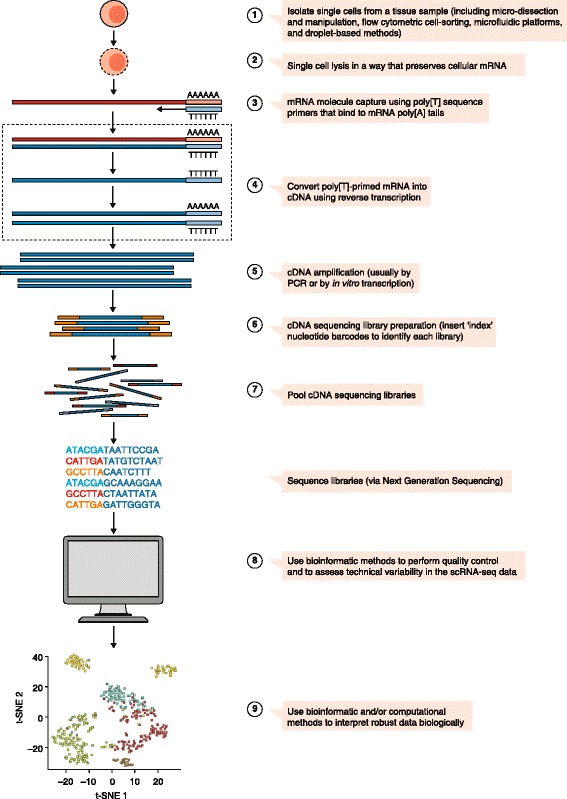
“The minute amounts of cDNA are then amplified either by PCR or, in some instances, by in vitro transcription followed by another round of reverse transcription—some protocols opt for nucleotide barcode-tagging (Box 1) at this stage to preserve information on cellular origin [42].”
MethodpowsimR: Power analysis for bulk and single cell RNA-seq experimentsPreprint
Vieth, B., Ziegenhain, C., Parekh, S., et al. (2017) · bioRxiv (Cold Spring Harbor Laboratory) · doi:10.1101/117150 · Cited by 15
Multiplexing droplet-based single cell RNA-sequencing using natural genetic barcodesPreprint
Kang, H., Subramaniam, M., Targ, S., et al. (2017) · bioRxiv · doi:10.1101/118778 · Cited by 8 · cited 1×
“For samples derived from different individuals, SNP information might allow processing as pools, followed by haplotype-based deconvolution of cells [52].”
BackgroundGranatum: a graphical single-cell RNA-Seq analysis pipeline for genomics scientistsPreprint
Zhu, X., Wolfgruber, T., Tasato, A., et al. (2017) · bioRxiv (Cold Spring Harbor Laboratory) · doi:10.1101/110759 · Cited by 6
Moore's Law in Single Cell TranscriptomicsPreprint
Svensson, V., Vento‐Tormo, R., & Teichmann, S. A. (2017) · arXiv (Cornell University) · Cited by 4
Self-citation
Cited by
scGPT: Towards Building a Foundation Model for Single-Cell Multi-omics Using Generative AI
Cui, H., Wang, C., Maan, H., Pang, K., Luo, F., & Wang, B. (2023) · doi:10.1101/2023.04.30.538439 · Cited by 1,694
Cross-tissue immune cell analysis reveals tissue-specific features in humans
Domínguez Conde, C., Xu, C., Jarvis, L. B., Rainbow, D. B., Wells, S. B., Gomes, T., Howlett, S. K., Suchanek, O., Polanski, K., King, H. W., et al. (2022) · Science · doi:10.1126/science.abl5197 · Cited by 1,159
Self-citationChallenges in unsupervised clustering of single-cell RNA-seq data
Kiselev, V. Y., Andrews, T. S., & Hemberg, M. (2019) · Nature Reviews Genetics · doi:10.1038/s41576-018-0088-9 · Cited by 1,160
Integrating single-cell and spatial transcriptomics to elucidate intercellular tissue dynamics
Longo, S. K., Guo, M. G., Ji, A. L., & Khavari, P. A. (2021) · Nature Reviews Genetics · doi:10.1038/s41576-021-00370-8 · Cited by 1,059
The protein expression profile of ACE2 in human tissues
Hikmet, F., Méar, L., Edvinsson, Å., Micke, P., Uhlén, M., & Lindskog, C. (2020) · Molecular Systems Biology · doi:10.15252/msb.20209610 · Cited by 1,016
“It may also lead to the “drop out” phenomenon, where a gene showing high expression levels in a certain cell lacks expression in other cells corresponding to the same cell type (Haque et al , 2017).”
Metadata
- Authors
- Haque, A., Engel, J., Teichmann, S. A., & Lönnberg, T.
- Affiliations
- QIMR Berghofer Medical Research Institute (AU)
- Wellcome Sanger Institute (GB)
- Åbo Akademi University (FI)
- Corresponding author
- Haque, Ashraful
- Lönnberg, Tapio
- Venue
- Genome Medicine
- Published
- 2017-08-18
- Volume
- 9
- Issue
- 1
- Pages
- 75-75
- ISSN
- 1756-994X (ISSN-L)
- PMC
- PMC5561556
- OpenAlex
- W2746479894
- Cited by
- 1,071
- References
- 106
- Citations by year
- 2026: 83 · 2025: 164 · 2024: 163 · 2023: 183 · 2022: 152 · 2021: 123 · 2020: 92 · 2019: 58 · 2018: 51 · 2017: 1
- FWCI
- 5.16
- Type
- journal article
- Language
- en
- Open access
- gold
- doi.org
- Licence
- cc-by
- Locations
- Genome Medicine (publishedVersion, cc-by)
- PubMed Central (publishedVersion, cc-by)
- PubMed (publishedVersion)
- UTUPub (University of Turku) (submittedVersion, cc-by)
- DOAJ (DOAJ: Directory of Open Access Journals) (submittedVersion, cc-by-sa)
- Minerva Access (University of Melbourne) (submittedVersion, cc-by)
- Apollo (University of Cambridge) (submittedVersion, cc-by)
- Apollo (cc-by)
- Funders
- European Research Council (260507)
- Australian National Health and Medical Research Council (1028641, 1028643)
- Topics
- Life Sciences › Biochemistry, Genetics and Molecular Biology › Molecular Biology › Single-cell and spatial transcriptomics
- Life Sciences › Biochemistry, Genetics and Molecular Biology › Molecular Biology › Genomics and Phylogenetic Studies
- Life Sciences › Biochemistry, Genetics and Molecular Biology › Molecular Biology › Gene expression and cancer classification
- Keywords
- single-cell RNA sequencing, quality control, data analysis, biological interpretation, clinical application, experimental protocol
- MeSH terms
- Animals, Humans, Sequence Analysis, RNA, Computational Biology, Biomedical Research, Single-Cell Analysis
About these checks
Registry, retraction, Cites and statistics results are computed, not judged, with one exception: a printed reference that no index lists is read once by a model before it counts as a citation error. Claims are extracted by a model and kept only when their quote appears verbatim in the text; each cited source is then checked, with a model’s help, for whether it says what the claim relies on. Those verdicts can be wrong — read the claim’s quote and the cited source before relying on one.
Statistics and arithmetic are recomputed, not judged.
Confidence bands are shown only for fields calibrated on our annotated test set. None is calibrated yet, so no band is shown.
What counts as a claim ›How we measure confidence ›How we check this ›
Are you an author, or do you see a problem with this page? Request a review
Data sources
Bibliographic data: Semantic Scholar, OpenAlex, Crossref.
Contains information from the Semantic Scholar Academic Graph Datasets, made available under the ODC Attribution License (ODC-BY 1.0).
Semantic Scholar’s data is described in: Kinney, R., et al. (2023). The Semantic Scholar Open Data Platform. arXiv:2301.10140.
