

A practical guide to single-cell RNA-sequencing for biomedical research and clinical applications
Open accessThe DOI matches its Crossref record; 110 of the 110 references it cites were found in a registry or an index.
Abstract
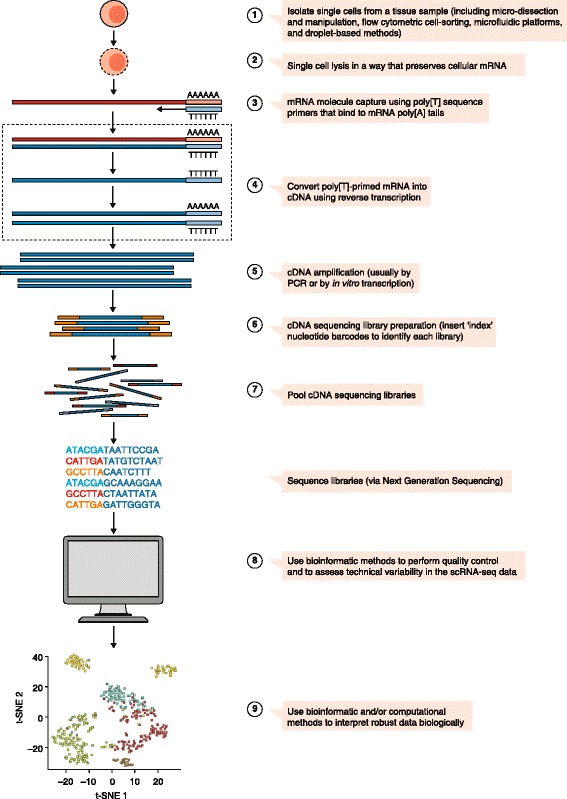
RNA sequencing (RNA-seq) is a genomic approach for the detection and quantitative analysis of messenger RNA molecules in a biological sample and is useful for studying cellular responses. RNA-seq has fueled much discovery and innovation in medicine over recent years. For practical reasons, the technique is usually conducted on samples comprising thousands to millions of cells. However, this has hindered direct assessment of the fundamental unit of biology-the cell. Since the first single-cell RNA-sequencing (scRNA-seq) study was published in 2009, many more have been conducted, mostly by specialist laboratories with unique skills in wet-lab single-cell genomics, bioinformatics, and computation. However, with the increasing commercial availability of scRNA-seq platforms, and the rapid ongoing maturation of bioinformatics approaches, a point has been reached where any biomedical researcher or clinician can use scRNA-seq to make exciting discoveries. In this review, we present a practical guide to help researchers design their first scRNA-seq studies, including introductory information on experimental hardware, protocol choice, quality control, data analysis and biological interpretation.
Overview
The claims and statistics of this paper haven’t been checked yet.
Free: it reads the open-access text and checks the first 5 claims that cite a source we can check. Create a free account to check every claim.
Integrity signals
Registry
Cites
Statistics
Figures
Verification
Claims the paper makes
The claims and statistics of this paper haven’t been checked yet.
Free: it reads the open-access text and checks the first 5 claims that cite a source we can check. Create a free account to check every claim.
Claims other papers make about this one
Each is checked against this paper’s own text: does it say what the citing paper says it does?
The source backs part of the claim, not all of it — or backs it for a different population, condition or comparison.
In the citing paper
“Increasing sequencing depth increases the UMI counts measured even for low-expression genes, reducing the uncertainty associated with zero counts34,47.”
From scPerturb: harmonized single-cell perturbation data (2024) · cites this paper as [47]
Experimental — accuracy not yet measuredThe cited source says what the claim attributes to it.
In the citing paper
“The average sequencing depth, that is, the mean number of reads per cell, in each study affects the number of low-expression genes observed.”
From scPerturb: harmonized single-cell perturbation data (2024) · cites this paper as [47]
Self-check
Percentages, sums and reported differences re-computed from the paper’s own numbers.
The self-check needs the paper’s full text.
Citations
Cites
Massively parallel digital transcriptional profiling of single cells
Zheng, G. X. Y., Terry, J. M., Belgrader, P., Ryvkin, P., Bent, Z. W., Wilson, R., Ziraldo, S. B., Wheeler, T. D., McDermott, G. P., Zhu, J., et al. (2017) · Nature Communications · doi:10.1038/ncomms14049 · Cited by 7,353 · cited 2×
“To this end, recent studies have explored the effect of cryopreservation on scRNA-seq profiles and indeed suggest that high-fidelity scRNA-seq data can be recovered from stored cells [47, 53].”
Trapnell, C., Cacchiarelli, D., Grimsby, J., Pokharel, P., Li, S., Morse, M., Lennon, N. J., Livak, K. J., Mikkelsen, T. S., & Rinn, J. L. (2014) · Nature Biotechnology · doi:10.1038/nbt.2859 · Cited by 7,314
Highly parallel genome-wide expression profiling of individual cells using nanoliter droplets.
Macosko, E. Z., Basu, A., Satija, R., Nemesh, J., Shekhar, K., Goldman, M., Tirosh, I., Bialas, A. R., Kamitaki, N., Martersteck, E. M., et al. (2015) · Cell · doi:10.1016/j.cell.2015.05.002 · Cited by 7,110 · cited 3×
“Second, spike-in mixes are Table 1 Brief overview of scRNA-seq approaches Protocol example C1 (SMARTer) Smartseq2 MATQseq MARS-seq CEL-seq Drop-seq InDrop Chromium SEQ-well SPLIT-seq Transcript data Full length Full length Full length 3’-end counting 3’-end counting 3’-end counting 3’-end counting 3’-end counting 3’-e…”
Single-cell RNA-seq highlights intratumoral heterogeneity in primary glioblastoma
Patel, A. P., Tirosh, I., Trombetta, J. J., Shalek, A. K., Gillespie, S. M., Wakimoto, H., Cahill, D. P., Nahed, B. V., Curry, W. T., Martuza, R. L., et al. (2014) · Science · doi:10.1126/science.1254257 · Cited by 5,063 · cited 1×
“What types of material can be assessed by scRNA-seq? Many of the initial scRNA-seq studies successfully examined human or mouse primary cells, such as those from embryos [17], tumours [14], the nervous system [15, 48] and haematopoietically derived cells, including stem cells and fully differentiated lymphocytes [8, 1…”
BackgroundDissecting the multicellular ecosystem of metastatic melanoma by single-cell RNA-seq
Tirosh, I., Izar, B., Prakadan, S. M., Wadsworth, M. H., Treacy, D., Trombetta, J. J., Rotem, A., Rodman, C., Lian, C., Murphy, G., et al. (2016) · Science · doi:10.1126/science.aad0501 · Cited by 4,944
mRNA-Seq whole-transcriptome analysis of a single cell
Tang, F., Barbacioru, C., Wang, Y., Nordman, E., Lee, C., Xu, N., Wang, X., Bodeau, J., Tuch, B. B., Siddiqui, A., et al. (2009) · Nature Methods · doi:10.1038/nmeth.1315 · Cited by 3,969 · cited 1×
“Since the first scRNA-seq study was published in 2009 [5], there has been increasing interest in conducting such studies.”
BackgroundDroplet barcoding for single-cell transcriptomics applied to embryonic stem cells
Klein, A. M., Mazutis, L., Akartuna, I., Tallapragada, N., Veres, A., Li, V., Peshkin, L., Weitz, D. A., & Kirschner, M. W. (2015) · Cell · doi:10.1016/j.cell.2015.04.044 · Cited by 3,356 · cited 1×
“Reference [63] [57] [39] [10] [64] [45] [46] [47] [101] [38] Haque et al.”
Cell types in the mouse cortex and hippocampus revealed by single-cell RNA-seq
Zeisel, A., Muñoz-Manchado, A. B., Codeluppi, S., Lönnerberg, P., La Manno, G., Juréus, A., Marques, S., Munguba, H., He, L., Betsholtz, C., et al. (2015) · Science · doi:10.1126/science.aaa1934 · Cited by 3,124
Smart-seq2 for sensitive full-length transcriptome profiling in single cells
Picelli, S., Björklund, Å. K., Faridani, O. R., Sagasser, S., Winberg, G., & Sandberg, R. (2013) · Nature Methods · doi:10.1038/nmeth.2639 · Cited by 2,358 · cited 2×
“Reference [63] [57] [39] [10] [64] [45] [46] [47] [101] [38] Haque et al.”
BackgroundMeasurement of mRNA abundance using RNA-seq data: RPKM measure is inconsistent among samples
Wagner, G. P., Kin, K., & Lynch, V. J. (2012) · Theory in Biosciences · doi:10.1007/s12064-012-0162-3 · Cited by 2,136 · cited 1×
“Because of this imperfect coverage, the commonly used unit of normalized transcript levels used for bulk RNAseq, expressed as ‘reads per kilobase per million’ (RPKM), is biased on a single-cell level, and instead the related unit ‘transcripts per million’ (TPM) should be used for scRNA-seq [66].”
Method
Cited by
Items 701–800 of 1,002
Wang, X., Li, J., Li, Y., Lv, M., Dong, X., Fan, Z., & Guo, T. (2024) · BMC Cancer · doi:10.1186/s12885-024-11839-0 · Cited by 3
“Since 2009, scRNA-seq has been widely introduced to decompose the heterogeneity of massive tissues [8].”
MethodVerstappe, B., & Scott, C. L. (2024) · Clinical & Experimental Immunology · doi:10.1093/cei/uxae077 · Cited by 3
“The leading method for this task is single-cell RNA sequencing (scRNA-seq) [7, 8], and there are many versions of this technique available enabling both full length (e.g. Smart-seq) [9] or poly A-based methods (e.g. 10X Genomics Chromium) that facilitate sequencing of the last 200 bp only [10, 11].”
MethodDOGMA-seq and multimodal, single-cell analysis in acute myeloid leukemia
Kim, J., Schanzer, N., Singh, R. S., Zaman, M. I., Medina, J. S. G., Proszynski, J., Ganesan, S., Landau, D. A., Park, C. Y., Melnick, A. M., et al. (2024) · International review of cytology · doi:10.1016/bs.ircmb.2024.08.001 · Cited by 4
Chrysostomou, A. C., Furlan, C., & Saccenti, E. (2024) · Biochimica et Biophysica Acta (BBA) - Gene Regulatory Mechanisms · doi:10.1016/j.bbagrm.2024.195062 · Cited by 4
Sim, S. Y., Baek, I., Cho, W. K., Jung, M. H., Kim, T., & Suh, B. (2025) · Cells · doi:10.3390/cells14020093 · Cited by 3
“While the small sample size may limit broader generalizability and interpretive value, the scRNA-seq technology provides high-resolution gene expression profiling even with limited samples, lending robustness to our findings [71,72].”
George, S., & Johdi, N. A. (2025) · Current Molecular Medicine · doi:10.2174/0115665240355043250130110501 · Cited by 5
Advancing Single-Cell Detection of Senescent Cells: Laboratory Methods and Clinical Applications
Lung, S. H., & Lung, T. (2025) · OBM Geriatrics · doi:10.21926/obm.geriatr.2502307 · Cited by 4
Kindler, U., Mavrommatis, L., Käppler, F., Hiluf, D. G., Heilmann‐Heimbach, S., Marcus, K., Pomorski, T. G., Vorgerd, M., Brand‐Saberi, B., & Zaehres, H. (2025) · Cells · doi:10.3390/cells14131033 · Cited by 4
“Cells with >5–10% mitochondrial transcripts were excluded, as elevated mitochondrial RNA serves as a marker of cellular stress or apoptosis [55].”
From Microarray Data to Identifying Differential Genes
Guebel, D. V., & Torres, N. V. (2019) · Elsevier eBooks · doi:10.1016/b978-0-12-801238-3.11355-8 · Cited by 3
Single-cell Transcriptomic Analyses of Mouse Pancreatic Endocrine Cells
Li, L., Yu, X., Zhang, Y.-W., Ye, F., Qiu, W., & Xu, C. (2018) · Journal of Visualized Experiments · doi:10.3791/58000 · Cited by 4
Cell Dissociation from Butterfly Pupal Wing Tissues for Single-Cell RNA Sequencing
Prakash, A., & Monteiro, A. (2020) · Methods and Protocols · doi:10.3390/mps3040072 · Cited by 3
Single-Cell Transcriptomic Analysis of Hematopoietic Cells
Strzelecka, P. M., Ranzoni, A. M., & Cvejic, A. (2020) · Methods in molecular biology · doi:10.1007/978-1-0716-0810-4_9 · Cited by 4
Novel Technologies in Studying Brain Immune Response
Li, L., Lenahan, C., Zhihui, L., Ke, J.-D., Li, X., Xue, F., & Zhang, J. H. (2021) · Oxidative Medicine and Cellular Longevity · doi:10.1155/2021/6694566 · Cited by 4
“, who give researchers a further practical guide for their first scRNA-seq practice [31] (Table 1).”
BackgroundStatistical learning in preclinical drug proarrhythmic assessment
Xi, N. M., Hsu, Y., Dang, Q., & Huang, D. P. (2022) · Journal of Biopharmaceutical Statistics · doi:10.1080/10543406.2022.2065505 · Cited by 5
Probing Plasmodium falciparum sexual commitment at the single-cell level
Brancucci, N. M. B., Niz, M. D., Straub, T. J., Ravel, D., Sollelis, L., Birren, B. W., Voss, T. S., Neafsey, D. E., & Marti, M. (2018) · Wellcome Open Research · doi:10.12688/wellcomeopenres.14645.2 · Cited by 4
Matthews, E., Lanham, S., White, K., Kyriazi, M. E., Alexaki, K., El-Sagheer, A. H., Brown, T., Kanaras, A. G., West, J. J., MacArthur, B. D., et al. (2020) · bioRxiv (Cold Spring Harbor Laboratory) · doi:10.1101/2020.06.17.156836 · Cited by 3
Manifold Learning via Manifold DeflationPreprint
Ting, D., & Jordan, M. I. (2020) · arXiv (Cornell University) · doi:10.48550/arxiv.2007.03315 · Cited by 3
“For example, it can engender trust in models diagnosing cancer [12] or aid scientific discovery by helping biologists identify novel cell types not only via clustering of RNA sequence data, but also by biologically meaningful properties [24, 18].”
BackgroundChang, L., Zheng, Z., Zou, Q., Zhong, B., Chen, C., Cheng, X. W., Ni, Q., Che, T., Zhao, Z., Cao, C., et al. (2022) · bioRxiv (Cold Spring Harbor Laboratory) · doi:10.1101/2022.03.22.485251 · Cited by 4
Tejima, K., Kozawa, S., & Sato, T. N. (2024) · PLoS Genetics · doi:10.1371/journal.pgen.1011436 · Cited by 2
“However, in scRNA-seq analyses, the transcripts are sequenced in individual cells and their transcript-counts are normalized, allowing the comparison of the relative abundance of each transcript-species across individual cells/cell-types [5– 9].”
Spatiotemporal Omics: Integrating Multi-Omics Data for Translational Research and Drug Development
Tjandrawinata, R. R., Rebeca, C., & Nurcahyanti, A. D. (2025) · Asian Journal of Engineering Social and Health · doi:10.46799/ajesh.v4i3.561 · Cited by 2
Zambrzycki, S. C., Kertész, V., & Cahill, J. F. (2025) · Analytical and Bioanalytical Chemistry · doi:10.1007/s00216-025-05885-1 · Cited by 2
“DNA sequencing [1], RNA sequencing [2], and proteomics [3] at the single-cell level have significantly expanded our understanding of cell heterogeneity in biological systems.”
Stanisavljevic, A., Ibrahim, K. W., Stavrides, P. H., Bare, C., Alldred, M. J., Heguy, A., Nixon, R. A., & Ginsberg, S. D. (2025) · Journal of Neuroscience Methods · doi:10.1016/j.jneumeth.2025.110512 · Cited by 2
“Starting material for scRNA-seq is fresh tissue (Piwecka et al., 2023, Li and Wang, 2021) that must be processed and sorted for cells by varying dissociation methods (Haque et al., 2017, Mattei et al., 2020, Liu et al., 2021).”
Asloudj, Y., Mougin, F., & Thébault, P. (2025) · NAR Genomics and Bioinformatics · doi:10.1093/nargab/lqaf073 · Cited by 2
“In the past decade, scRNA-seq analyses have been established as a pivotal tool for modern biology [ 4–6 ].”
Single-cell transcriptomics analysis of the healing process of ligament rupture
Zhao, H., Gong, J., Yu, T., & Zhang, Y. (2025) · Bone and Joint Research · doi:10.1302/2046-3758.146.bjr-2024-0307.r3 · Cited by 2
“14”
A new hope for pulmonary hypoplasia: amniotic fluid stem cell extracellular vesicles?
Atukorala, I., & Hui, L. (2025) · Extracellular Vesicles and Circulating Nucleic Acids · doi:10.20517/evcna.2025.25 · Cited by 2
Joo, S. Y., Lee, S. J., Lee, S. J., Seo, S. A., Kim, C.-W., Hong, S., Kim, I., & Kim, M. (2025) · Scientific Reports · doi:10.1038/s41598-025-11100-z · Cited by 2
“Transcriptome analysis techniques, particularly scRNA-seq, have emerged as powerful tools for elucidating the mechanisms underlying diseases 25 .”
Nozari, Z., Hüttl, P., Simeth, J., Schön, M., Hutchinson, J. A., & Spang, R. (2025) · Bioinformatics · doi:10.1093/bioinformatics/btaf455 · Cited by 2
“Single-cell data is typically zero-inflated due to high drop-outs (Haque et al. 2017, Zheng et al. 2017), influenced by transcriptional burst (Chubb et al. 2006), and until recently, did not commonly include ribosomal RNA depletion (Shek et al. 2021), unlike bulk RNA sequencing.”
Nguyen, L., Vallejos, C. A., Mill, P., & Megaw, R. D. (2025) · Genes · doi:10.3390/genes16091088 · Cited by 3
“Future studies should consider combining single-cell and bulk RNA-seq to leverage the complementary strengths of both techniques, as bulk RNA-seq generally provides a higher sequencing depth per sample, while single-cell approaches reveal cellular heterogeneity [176,177].”
gwSPADE: gene frequency-weighted reference-free deconvolution in spatial transcriptomics
Xie, A., Steele, N. G., & Cui, Y. (2025) · Nucleic Acids Research · doi:10.1093/nar/gkaf966 · Cited by 4
“However, their effectiveness is restricted by the quality and availability of reference datasets, which may not fully capture the diversity of cell types in unknown or highly heterogeneous tissues [ 12 , 13 ].”
Stabilized marker gene identification and functional annotation from single-cell transcriptomic data
Acharya, S., Kossinna, P., Zhang, Q., & Guo, J. (2025) · PLoS Computational Biology · doi:10.1371/journal.pcbi.1013574 · Cited by 2
Single-cell sequencing in molecular diagnostics: Transformative yet untapped potential
Elshiekh, D., Farchoukh, N., Hassan, R. E., Al-Marzooqi, S. K., Aldosari, W. R., Abou-Saleh, H., Al-Haidose, A., Zayed, H., & Abdallah, A. M. (2025) · Frontiers in Genetics · doi:10.3389/fgene.2025.1621081 · Cited by 2
“…and generative factors of the target, resulting in structure-based similarity. scCCESS integrates an autoencoder arti fi cial network that fi rst uses random sampling N times, and then each sub-dataset generates N numbers followed by individual mapping at low-dimensional testing (Wang et al., 2022).”
Understanding nerve–tumor interactions: From basic biology to therapeutic innovation
Sun, L., Li, X., Wang, Y., Wang, J., Xie, R., Zhang, N., & Zhang, Z. (2025) · Genes & Diseases · doi:10.1016/j.gendis.2025.101955 · Cited by 5
“257 This approach excludes critical neural components, such as the nerve fibers actively interacting with tumor cells in the TME.”
Latent Gene Diffusion for Spatial Transcriptomics Completion
Cárdenas, P., Manrique, L., Vega, D., Ruiz, D., & Arbeláez, P. (2025) · IEEE International Conference on Computer Vision Workshops · doi:10.1109/iccvw69036.2025.00099 · Cited by 2
“This phenomenon refers to the stochastic failure to detect gene transcripts in a spot, even when they are expressed [6].”
Zhang, J., & Shen, J. (2026) · Annals of Medicine · doi:10.1080/07853890.2026.2634462 · Cited by 2
Zayed, M., Massoud, A., Al-Haddad, R. H., Al-Kubaisi, A. A., Said, W., Atiaa, A. G., & Jeong, B.-H. (2026) · Stem Cell Reviews and Reports · doi:10.1007/s12015-026-11116-6 · Cited by 2
“The resulting sequencing data are then processed, analyzed, and interpreted to reconstruct cellular transcriptomic profiles and reveal the molecular diversity within the sample [ 43].”
Multiscale learning of gene network-driven phenotypic dynamics of single cells
Zhang, D., Li, J., Nie, Q. H., & (493308), X. S. (2026) · Molecular Systems Biology · doi:10.1038/s44320-026-00220-x · Cited by 3
“The advent of single-cell sequencing technologies (Haque et al, 2017) has revolutionized our ability to examine cellular heterogeneity and dynamic transitions.”
Tranquillyzer: A Neural Network Framework for Long-read Annotation and Demultiplexing
Semwal, A., Morrison, J., Beddows, I., Palmer, T., Rhodes, M., Jang, H. J., Johnson, B. K., & Shen, H. (2026) · Genomics Proteomics & Bioinformatics · doi:10.1093/gpbjnl/qzag055 · Cited by 2
Ang, M. Y., Lipovich, L., Choo, S. W., Chen, L., & Song, L. (2026) · Biology · doi:10.3390/biology15171537 · Cited by 2
“Established frameworks address integration, doublet detection, annotation, and differential analysis in multi-sample single-cell studies [9,32–35].”
The new technologies of high-throughput single-cell RNA sequencing
Vodiasova, E. A., Chelebieva, E. S., & Кулешова, О. Н. (2019) · Vavilov Journal of Genetics and Breeding · doi:10.18699/vj19.520 · Cited by 2
Characterization of In Vitro Differentiation of Human Primary Keratinocytes by RNA-Seq Analysis
Smits, J. G. A., Qu, J., Niehues, H., & Zhou, H. (2020) · Journal of Visualized Experiments · doi:10.3791/60905 · Cited by 3
scPI: A Scalable Framework for Probabilistic Inference in Single-Cell RNA-Sequencing Data Analysis
Ming, J., Zhao, J., & Yang, C. (2022) · Statistics in Biosciences · doi:10.1007/s12561-022-09335-9 · Cited by 2
“The scRNA-seq data are inherently noisy because of low capture efficiency and high dropouts [7], where the gene expression levels may be too low to be accurately detected.”
BackgroundMOCA for Integrated Analysis of Gene Expression and Genetic Variation in Single Cells
Huzar, J., Kim, H., Kumar, S., & Miura, S. (2022) · Frontiers in Genetics · doi:10.3389/fgene.2022.831040 · Cited by 2
“Single-cell RNA sequencing (scRNA-seq) is now widely used to interrogate the expression of genes in large numbers of cells (Shalek et al., 2013; Trapnell et al., 2014; Baron et al., 2016; Haque et al., 2017).”
MethodCutaneous leishmaniasis: multiomics approaches to unravel the role of immune cells checkpoints
Taslimi, Y., Masoudzadeh, N., Bahrami, F., & Rafati, S. (2022) · Expert Review of Proteomics · doi:10.1080/14789450.2022.2131545 · Cited by 2
“by NGS tools and finally, downstream data analyses [134,135].”
MethodMishra, M., Barck, L., Moreno, P. A., Heger, G., Song, Y., Thornton, J. M., & Papatheodorou, I. (2023) · NAR Genomics and Bioinformatics · doi:10.1093/nargab/lqad014 · Cited by 2
“Highly variable genes (HVGs) contribute to cell-to-cell variation within a homogeneous cell population and represent true biological heterogeneity (23,24).”
BackgroundGoodale, B. C. (2024) · Current Opinion in Toxicology · doi:10.1016/j.cotox.2024.100461 · Cited by 2
Liu, T., Xu, C., Guo, J., He, Z., Zhang, Y., & Feng, Y. (2024) · Journal of Molecular Neuroscience · doi:10.1007/s12031-024-02195-6 · Cited by 3
Technologies to measure vaccine immune response against infectious diseases
Rahman, M. (2024) · Elsevier eBooks · doi:10.1016/b978-0-443-15526-0.00007-x · Cited by 2
Preprocessing and Quality Control
Raza, K. (2024) · SpringerBriefs in applied sciences and technology · doi:10.1007/978-981-97-6703-8_2 · Cited by 2
Sample multiplexing for retinal single-cell RNA sequencing
Ma, J., Chu, T. K., Polo-Prieto, M., Park, Y. H., Li, Y., Chen, R., Mardon, G., Frankfort, B. J., & Tran, N. M. (2024) · iScience · doi:10.1016/j.isci.2024.111250 · Cited by 2
Mangelinck, A., Molitor, E., Marchiq, I., Alaoui, L., Bouaziz, M., Andrade-Pereira, R., Darville, H., Becht, É., & Lefèbvre, C. (2024) · PLoS ONE · doi:10.1371/journal.pone.0315980 · Cited by 3
“One that feeds the majority of computational challenges is the low mRNA capture efficiency, leading to so-called dropout events [4].”
Improving doublet cell removal efficiency through multiple algorithm runs
She, Y., Wang, C., & Zhao, Q. (2025) · Computational and Structural Biotechnology Journal · doi:10.1016/j.csbj.2025.01.009 · Cited by 3
Wang, X., Chan, Y. S., Sadava, D., & Chen, S. (2025) · Clinical and Translational Discovery · doi:10.1002/ctd2.70032 · Cited by 2
Recursive Clustering of Cellular Diversity in scRNA-Seq Data
Squires, M., & Qiu, P. (2025) · Journal of Computational Biology · doi:10.1089/cmb.2024.0625 · Cited by 2
“This is especially important in the biomedical fi eld, where it can reveal biomarkers of disease states, treatment resistance, and therapeutic targets (Haque et al., 2017; Li et al., 2021; Stein et al., 2021; Van de Sande et al., 2023).”
scE(match): Privacy-Preserving Cluster Matching of Single-Cell Data
Lohmöller, J., Scheiber, J., Kramann, R., Wehrle, K., Hayat, S., & Pennekamp, J. (2024) · IEEE International Conference on Trust, Security and Privacy in Computing and Communications (TrustCom) · doi:10.1109/trustcom63139.2024.00294 · Cited by 2
“Recent advances in this area [4], most notably, fast and scalable single-cell RNA sequencing (scRNA-seq) technology, contribute to a better understanding of the human body and its disease mechanisms.”
The Use of Single-Cell and Spatial Omics to Study Copy Number Variants
Malwade, S., Ingason, A., & Khodosevich, K. (2025) · Biological Psychiatry · doi:10.1016/j.biopsych.2025.06.010 · Cited by 2
DeSana, A. J., Alfawares, Y., Khatri, R., Hopkins, T., Best, F. V., McGuire, J. L., & Ngwenya, L. B. (2025) · International Journal of Molecular Sciences · doi:10.3390/ijms26189140 · Cited by 2
“This discrepancy may be due to the differences between the two sequencing technologies [68,69] or typical localization of mRNA transcripts, but it is also possible that the observed changes in complement could be attributed to an unexpected cell type.”
Bayesian Segmented Gaussian Copula Factor Model for Single-Cell Sequencing Data
Choi, J., Chung, H. C., Gaynanova, I., & Ni, Y. (2025) · Bayesian Analysis · doi:10.1214/25-ba1559 · Cited by 2
“Single-cell data analysis is revolutionizing the landscape of whole-organism science, enabling unbiased identification of previously undiscovered molecular heterogeneity at the cellular level (Haque et al., 2017; Hwang et al., 2018).”
Advancements in Next-Generation Sequencing for Detecting Minimal Residual Disease
Crowgey, E. L., & Mahajan, N. (2018) · Springer eBooks · doi:10.1007/978-3-319-94827-0_6 · Cited by 4
Single-Cell Transcriptomics: Technology and Applications
Fuchs, O. (2019) · Elsevier eBooks · doi:10.1016/b978-0-12-814919-5.00012-9 · Cited by 3
Statistical Methods for Single‐Cell RNA‐Sequencing
Andrews, T. S., Kiselev, V. Y., & Hemberg, M. (2019) · Wiley eBooks · doi:10.1002/9781119487845.ch26 · Cited by 2
Long Non-coding RNAs in a Single-Cell Type: Function and Subcellular Localization
Bonadio, R. S., Alessio, E., & Cagnin, S. (2020) · RNA technologies · doi:10.1007/978-3-030-44743-4_4 · Cited by 2
Gene Expression Analysis of T-Cells by Single-Cell RNA-Seq
Tartaro, D. L., Biasi, S. D., Forcato, M., Gibellini, L., & Cossarizza, A. (2021) · Methods in molecular biology · doi:10.1007/978-1-0716-1311-5_22 · Cited by 2
Assessment of Outcomes by Using Machine Learning
Venugopalan, S. R., Elnagar, M. H., Karhade, D. S., & Allareddy, V. (2021) · Springer eBooks · doi:10.1007/978-3-030-71881-7_11 · Cited by 3
Assessing Host-Pathogen Interaction Networks via RNA-Seq Profiling: A Systems Biology Approach
Sareshma, S. D., & Bhassu, S. (2021) · IntechOpen eBooks · doi:10.5772/intechopen.96706 · Cited by 2
Transcriptional configurations of myeloproliferative neoplasms
Schischlik, F. (2022) · International review of cytology · doi:10.1016/bs.ircmb.2021.07.003 · Cited by 3
Papanikolaou, S., Κοσμαρά, Δ., Stathopoulou, C., Sidiropoulos, P. I., Konstantopoulos, D., & Bertsias, G. K. (2022) · Mediterranean Journal of Rheumatology · doi:10.31138/mjr.33.1.94 · Cited by 2
Yang, B. C., Sedano, M. J., & Gadad, S. S. (2022) · Clinical and Translational Discovery · doi:10.1002/ctd2.120 · Cited by 2
Anttila, M. M., Petersen, B. V., Gallion, L. A., Vaithiyanathan, M., & Allbritton, N. L. (2022) · Neuromethods · doi:10.1007/978-1-0716-2525-5_8 · Cited by 2
Qiu-Yue, X., Tian-Yuan, Y., Wang, X., Qi, D., & Xiao-Rui, C. (2022) · Current Alzheimer Research · doi:10.2174/1567205020666221201143323 · Cited by 2
High-resolution sample size enrichment of single-cell multi-modal low-throughput Patch-seq datasets
Martini, L., Bardini, R., Savino, A., & Carlo, S. D. (2022) · IEEE International Conference on Bioinformatics and Biomedicine (BIBM) · doi:10.1109/bibm55620.2022.9995529 · Cited by 2
“The fact that the number of cells in a patch-seq dataset is bounded by the throughput of the patch clamp technique poses a caveat to the use of these datasets for transcriptomic data analysis, which usually requires a high amount of cells [11].”
BackgroundEVALUATING THE COMPLEXITY OF GENE COEXPRESSION ESTIMATION FOR SINGLE-CELL DATA
Zhang, J., & Singh, R. (2023) · Journal of Machine Learning for Modeling and Computing · doi:10.1615/jmachlearnmodelcomput.2023047230 · Cited by 2
Cochran, J. D., Leathers, T. A., Maldosevic, E., Siejda, K., Vitello, J., Lee, H., Bradley, L. A., Young, A., Jomaa, A., & Wolf, M. J. (2024) · Scientific Reports · doi:10.1038/s41598-024-52085-5 · Cited by 3
Trawling the Genome: Drug Target Identification in the Postgenomic Era
Francis, D., Yadagini, T. K., & Ravindran, R. K. (2024) · Springer eBooks · doi:10.1007/978-981-99-9183-9_3 · Cited by 2
Introducing synthetic thermostable RNase inhibitors to single-cell RNA-seq
Noble, J. C., Lentini, A., Hagemann-Jensen, M., Sandberg, R., & Reinius, B. (2024) · Nature Communications · doi:10.1038/s41467-024-52717-4 · Cited by 5
“The capture of intact RNA is required for RNAseq methods to accurately record the transcriptome of the analyzed sample material. scRNAseq is particularly sensitive to RNA degradation and losses due to the minuscule copy numbers of individual transcripts present in the cell 1,2 .”
Designing Single Cell RNA-Sequencing Experiments for Learning Latent RepresentationsPreprint
Treppner, M., Haug, S., Köttgen, A., & Binder, H. (2022) · bioRxiv (Cold Spring Harbor Laboratory) · doi:10.1101/2022.07.08.499284 · Cited by 2
Williams, C. G., Moreira, M. L., Asatsuma, T., Skinner, O. P., Lee, H. J., Li, S., Barrera, I., Murray, E. M., Soon, M. S. F., Engel, J. A., et al. (2023) · bioRxiv (Cold Spring Harbor Laboratory) · doi:10.1101/2023.02.23.529309 · Cited by 2
Self-citationDillard, L. J., Calabrese, G. M., Mesner, L. D., & Farber, C. R. (2026) · eLife · doi:10.7554/elife.100832 · Cited by 5
“Additionally, a pitfall of scRNA-seq is the sparsity of the resulting data, which yields an increased frequency of zero values for the expression of some genes in a proportion of cells, also known as ‘drop-outs’ ( Haque et al., 2017 ).”
scTCA: a hybrid Transformer-CNN architecture for imputation and denoising of scDNA-seq data
Yu, Z., Liu, F., & Li, Y. (2024) · Briefings in Bioinformatics · doi:10.1093/bib/bbae577 · Cited by 1
“As technical issues, such as low capture efficiency and sequencing coverage, make it difficult to capture transcripts of all expressed genes during the sequencing process, dropout events are more striking in scRNA-seq data [12].”
BackgroundSouthern, A., & El-Bahrawy, M. A. (2021) · International Journal of Gynecological Cancer · doi:10.1136/ijgc-2021-002509 · Cited by 1
The Workflow for Computational Analysis of Single-cell RNA-sequencing Data
Woo, S.-H., & Jung, B. C. (2024) · Korean Journal of Clinical Laboratory Science · doi:10.15324/kjcls.2024.56.1.10 · Cited by 1
Zhu, Y., Wu, X., Zhang, Y., Gu, J., Zhou, R., & Guo, Z. (2024) · Heliyon · doi:10.1016/j.heliyon.2024.e33928 · Cited by 4
“Previous studies have reported that scRNA-seq datasets can serve as a compelling approach to forecast patient prognosis and their responsiveness to immunotherapy [44 – 46].”
BackgroundFelice, A. G., Lemes, M. R., Claudino, A., Jaiswal, A. K., Sousa, E. G., de Paula, J. A., Wu, M. M. S., Marques, P. H., Tiveron, R. D. R., Ceballos, V. A. S., et al. (2024) · Elsevier eBooks · doi:10.1016/b978-0-443-13395-4.00004-6 · Cited by 1
Wang, Y., Qu, Y., Wang, H., Xue, Y. W., Liang, P., Ge, Y., Peng, H., Wang, Y., Song, Z., Bao, X., et al. (2024) · Talanta · doi:10.1016/j.talanta.2024.127149 · Cited by 2
Dissection of Gene Expression at the Single-Cell Level: scRNA-seq
Chehimi, S. N. (2024) · Methods in molecular biology · doi:10.1007/978-1-0716-4192-7_9 · Cited by 1
Deván, J., Šandalová, M., Bitterli, P., Herger, N., Mengis, T., Brender, K., Heggli, I., Distler, O., & Dudli, S. (2024) · Methods · doi:10.1016/j.ymeth.2024.11.014 · Cited by 2
Application of bioinformatic tools in cell type classification for single-cell RNA-seq data
Sujana, S. T. A., Shahjaman, M., & Singha, A. C. (2025) · Computational Biology and Chemistry · doi:10.1016/j.compbiolchem.2024.108332 · Cited by 2
Technology Spotlight Surface Target Discovery for Blood Cancer Immunotherapies
Patiño-Escobar, B., Lugo, L. M. P., & Wiita, A. P. (2025) · The Hematologist · doi:10.1182/hem.v22.1.2025214 · Cited by 1
Costa, M. M., Paredes, E., Peleteiro, M., Sánchez‐Ruiloba, L., Gambón-Deza, F., Dios, S., & Gestal, C. (2025) · Frontiers in Immunology · doi:10.3389/fimmu.2025.1543587 · Cited by 1
“Each letter corresponds to a speci fi c statistical comparison among all groups. analysis it is essential to begin with high-quality RNA that is intact and free from degradation or contamination (63).”
Advances in Cellular and Molecular Biology Assays: A Review of Gold Standard Methods
Kittelson, K. S., Martins, A. C. F., Celante, G., Gasparotto, A., & Gomes, R. D. S. (2025) · doi:10.38124/ijisrt/25mar736 · Cited by 1
Wang, S., Liu, Y., Zhang, H., & Liu, Z. (2025) · Biology Direct · doi:10.1186/s13062-025-00616-z · Cited by 4
“However, compared to bulk RNA-Seq data, scRNA-Seq data are more variable and characterized by their higher level of technical noises (such as dropout events) [5].”
Scalable inference of transcriptional variability with BASiCS
O’Callaghan, A., & Vallejos, C. A. (2025) · Journal of Theoretical Biology · doi:10.1016/j.jtbi.2025.112157 · Cited by 2
Application of Single-Cell RNA Sequencing in Investigating Virus–Host Interactions
Liang, W., Wang, P., Wang, X., Xu, D., & Zheng, C. (2025) · Methods in molecular biology · doi:10.1007/978-1-0716-4615-1_9 · Cited by 2
Antinutritional Factors of Seed, Seed Hull, and Pod, of African Locust Bean (Parkia Biglobosa)
Jacob, M., Amuda, A. J., & Umaru, I. J. (2024) · African Multidisciplinary Journal of Sciences and Artificial Intelligence · doi:10.58578/amjsai.v1i2.4165 · Cited by 1
Suhl, S., Kaminsky, A. J., Chen, C., Lapolla, B. A., Zhou, M. H., Kent, J., Marx, A., Nebo, I. D., Ramush, G., Luyten, S. T., et al. (2025) · Cancers · doi:10.3390/cancers17172921 · Cited by 1
“Obstacles such as high cost, computational requirements, limited sensitivity for rare transcripts, and lack of standardized pipelines still remain [60,61].”
Tumour Single‐Cell Bioinformatics: From Immune Profiling to Molecular Dynamics
Li, J. S., Ji, Z. Z., Zhang, A. Q., Ng, C. S. H., Qiao, G., Zhang, D., Li, C., Zhang, Q., To, K., & Tang, P. M. (2025) · Journal of Cellular and Molecular Medicine · doi:10.1111/jcmm.70783 · Cited by 1
“It is a powerful genomic technique that allows researchers to analyse gene expression profiles of individual cells [17], facilitating the generation of detailed cell atlases of the TME.”
CANTAO: guiding clustering and annotation in single-cell RNA sequencing using average overlap
Thai, C., Singh, A., Herranz, D., & Khiabanian, H. (2025) · Molecular Systems Biology · doi:10.1038/s44320-025-00176-4 · Cited by 1
“There are several steps involved in the computational analysis of scRNA-seq data (Haque et al, 2017; Hwang et al, 2018; Luecken and Theis, 2019), including initial quality control, normalization, clustering, and identifying differentially expressed genes, which are considered as marker genes…”
Kollie, L., Gaye, S. L., Chen, S., Liang, Z., Yu, M., & Gao, F. (2025) · Journal of Diabetes & Metabolic Disorders · doi:10.1007/s40200-025-01796-1 · Cited by 1
“3) further revolutionized the field by enabling the analysis of gene expression at the sin - gle-cell level, thereby enhancing the resolution and applicability of the technique [28 ].”
Zhou, L., Alaswad, A., Kumthekar, A., Machtens, D. A., Xi, Y., Costa, B., Xu, C., Wirth, T. C., & Li, Y. (2026) · Frontiers in Immunology · doi:10.3389/fimmu.2025.1717978 · Cited by 1
Li, D., Liu, P., Rahman, I., Zand, M. S., Pryhuber, G., Dye, T., Goniewicz, M. L., Gurkar, A. U., Königshoff, M., Eickelberg, O., et al. (2026) · Cell Reports Methods · doi:10.1016/j.crmeth.2025.101264 · Cited by 2
“6 In addition to revealing gene expression patterns at the single-cell level, scRNA-seq helps uncover cellular heterogeneity, identify cell populations and subpopulations, detect rare cell types, and characterize senescent cells during aging.”
Min, S., Lac, L., & Hu, P. (2026) · Computational and Structural Biotechnology Journal · doi:10.1016/j.csbj.2026.01.010 · Cited by 1
Metadata
- Authors
- Haque, A., Engel, J., Teichmann, S. A., & Lönnberg, T.
- Affiliations
- QIMR Berghofer Medical Research Institute (AU)
- Wellcome Sanger Institute (GB)
- Åbo Akademi University (FI)
- Corresponding author
- Haque, Ashraful
- Lönnberg, Tapio
- Venue
- Genome Medicine
- Published
- 2017-08-18
- Volume
- 9
- Issue
- 1
- Pages
- 75-75
- ISSN
- 1756-994X (ISSN-L)
- PMC
- PMC5561556
- OpenAlex
- W2746479894
- Cited by
- 1,071
- References
- 106
- Citations by year
- 2026: 83 · 2025: 164 · 2024: 163 · 2023: 183 · 2022: 152 · 2021: 123 · 2020: 92 · 2019: 58 · 2018: 51 · 2017: 1
- FWCI
- 5.16
- Type
- journal article
- Language
- en
- Open access
- gold
- doi.org
- Licence
- cc-by
- Locations
- Genome Medicine (publishedVersion, cc-by)
- PubMed Central (publishedVersion, cc-by)
- PubMed (publishedVersion)
- UTUPub (University of Turku) (submittedVersion, cc-by)
- DOAJ (DOAJ: Directory of Open Access Journals) (submittedVersion, cc-by-sa)
- Minerva Access (University of Melbourne) (submittedVersion, cc-by)
- Apollo (University of Cambridge) (submittedVersion, cc-by)
- Apollo (cc-by)
- Funders
- European Research Council (260507)
- Australian National Health and Medical Research Council (1028641, 1028643)
- Topics
- Life Sciences › Biochemistry, Genetics and Molecular Biology › Molecular Biology › Single-cell and spatial transcriptomics
- Life Sciences › Biochemistry, Genetics and Molecular Biology › Molecular Biology › Genomics and Phylogenetic Studies
- Life Sciences › Biochemistry, Genetics and Molecular Biology › Molecular Biology › Gene expression and cancer classification
- Keywords
- single-cell RNA sequencing, quality control, data analysis, biological interpretation, clinical application, experimental protocol
- MeSH terms
- Animals, Humans, Sequence Analysis, RNA, Computational Biology, Biomedical Research, Single-Cell Analysis
About these checks
Registry, retraction, Cites and statistics results are computed, not judged, with one exception: a printed reference that no index lists is read once by a model before it counts as a citation error. Claims are extracted by a model and kept only when their quote appears verbatim in the text; each cited source is then checked, with a model’s help, for whether it says what the claim relies on. Those verdicts can be wrong — read the claim’s quote and the cited source before relying on one.
Statistics and arithmetic are recomputed, not judged.
Confidence bands are shown only for fields calibrated on our annotated test set. None is calibrated yet, so no band is shown.
What counts as a claim ›How we measure confidence ›How we check this ›
Are you an author, or do you see a problem with this page? Request a review
Data sources
Bibliographic data: Semantic Scholar, OpenAlex, Crossref.
Contains information from the Semantic Scholar Academic Graph Datasets, made available under the ODC Attribution License (ODC-BY 1.0).
Semantic Scholar’s data is described in: Kinney, R., et al. (2023). The Semantic Scholar Open Data Platform. arXiv:2301.10140.
