

A practical guide to single-cell RNA-sequencing for biomedical research and clinical applications
Open accessThe DOI matches its Crossref record; 110 of the 110 references it cites were found in a registry or an index.
Abstract
RNA sequencing (RNA-seq) is a genomic approach for the detection and quantitative analysis of messenger RNA molecules in a biological sample and is useful for studying cellular responses. RNA-seq has fueled much discovery and innovation in medicine over recent years. For practical reasons, the technique is usually conducted on samples comprising thousands to millions of cells. However, this has hindered direct assessment of the fundamental unit of biology-the cell. Since the first single-cell RNA-sequencing (scRNA-seq) study was published in 2009, many more have been conducted, mostly by specialist laboratories with unique skills in wet-lab single-cell genomics, bioinformatics, and computation. However, with the increasing commercial availability of scRNA-seq platforms, and the rapid ongoing maturation of bioinformatics approaches, a point has been reached where any biomedical researcher or clinician can use scRNA-seq to make exciting discoveries. In this review, we present a practical guide to help researchers design their first scRNA-seq studies, including introductory information on experimental hardware, protocol choice, quality control, data analysis and biological interpretation.
Overview
The claims and statistics of this paper haven’t been checked yet.
Free: it reads the open-access text and checks the first 5 claims that cite a source we can check. Create a free account to check every claim.
Integrity signals
Registry
Cites
Statistics
Figures
Verification
Claims the paper makes
The claims and statistics of this paper haven’t been checked yet.
Free: it reads the open-access text and checks the first 5 claims that cite a source we can check. Create a free account to check every claim.
Claims other papers make about this one
Each is checked against this paper’s own text: does it say what the citing paper says it does?
The source backs part of the claim, not all of it — or backs it for a different population, condition or comparison.
In the citing paper
“Increasing sequencing depth increases the UMI counts measured even for low-expression genes, reducing the uncertainty associated with zero counts34,47.”
From scPerturb: harmonized single-cell perturbation data (2024) · cites this paper as [47]
Experimental — accuracy not yet measuredThe cited source says what the claim attributes to it.
In the citing paper
“The average sequencing depth, that is, the mean number of reads per cell, in each study affects the number of low-expression genes observed.”
From scPerturb: harmonized single-cell perturbation data (2024) · cites this paper as [47]
Self-check
Percentages, sums and reported differences re-computed from the paper’s own numbers.
The self-check needs the paper’s full text.
Citations
Cites
Massively parallel digital transcriptional profiling of single cells
Zheng, G. X. Y., Terry, J. M., Belgrader, P., Ryvkin, P., Bent, Z. W., Wilson, R., Ziraldo, S. B., Wheeler, T. D., McDermott, G. P., Zhu, J., et al. (2017) · Nature Communications · doi:10.1038/ncomms14049 · Cited by 7,353 · cited 2×
“To this end, recent studies have explored the effect of cryopreservation on scRNA-seq profiles and indeed suggest that high-fidelity scRNA-seq data can be recovered from stored cells [47, 53].”
Trapnell, C., Cacchiarelli, D., Grimsby, J., Pokharel, P., Li, S., Morse, M., Lennon, N. J., Livak, K. J., Mikkelsen, T. S., & Rinn, J. L. (2014) · Nature Biotechnology · doi:10.1038/nbt.2859 · Cited by 7,314
Highly parallel genome-wide expression profiling of individual cells using nanoliter droplets.
Macosko, E. Z., Basu, A., Satija, R., Nemesh, J., Shekhar, K., Goldman, M., Tirosh, I., Bialas, A. R., Kamitaki, N., Martersteck, E. M., et al. (2015) · Cell · doi:10.1016/j.cell.2015.05.002 · Cited by 7,110 · cited 3×
“Second, spike-in mixes are Table 1 Brief overview of scRNA-seq approaches Protocol example C1 (SMARTer) Smartseq2 MATQseq MARS-seq CEL-seq Drop-seq InDrop Chromium SEQ-well SPLIT-seq Transcript data Full length Full length Full length 3’-end counting 3’-end counting 3’-end counting 3’-end counting 3’-end counting 3’-e…”
Single-cell RNA-seq highlights intratumoral heterogeneity in primary glioblastoma
Patel, A. P., Tirosh, I., Trombetta, J. J., Shalek, A. K., Gillespie, S. M., Wakimoto, H., Cahill, D. P., Nahed, B. V., Curry, W. T., Martuza, R. L., et al. (2014) · Science · doi:10.1126/science.1254257 · Cited by 5,063 · cited 1×
“What types of material can be assessed by scRNA-seq? Many of the initial scRNA-seq studies successfully examined human or mouse primary cells, such as those from embryos [17], tumours [14], the nervous system [15, 48] and haematopoietically derived cells, including stem cells and fully differentiated lymphocytes [8, 1…”
BackgroundDissecting the multicellular ecosystem of metastatic melanoma by single-cell RNA-seq
Tirosh, I., Izar, B., Prakadan, S. M., Wadsworth, M. H., Treacy, D., Trombetta, J. J., Rotem, A., Rodman, C., Lian, C., Murphy, G., et al. (2016) · Science · doi:10.1126/science.aad0501 · Cited by 4,944
mRNA-Seq whole-transcriptome analysis of a single cell
Tang, F., Barbacioru, C., Wang, Y., Nordman, E., Lee, C., Xu, N., Wang, X., Bodeau, J., Tuch, B. B., Siddiqui, A., et al. (2009) · Nature Methods · doi:10.1038/nmeth.1315 · Cited by 3,969 · cited 1×
“Since the first scRNA-seq study was published in 2009 [5], there has been increasing interest in conducting such studies.”
BackgroundDroplet barcoding for single-cell transcriptomics applied to embryonic stem cells
Klein, A. M., Mazutis, L., Akartuna, I., Tallapragada, N., Veres, A., Li, V., Peshkin, L., Weitz, D. A., & Kirschner, M. W. (2015) · Cell · doi:10.1016/j.cell.2015.04.044 · Cited by 3,356 · cited 1×
“Reference [63] [57] [39] [10] [64] [45] [46] [47] [101] [38] Haque et al.”
Cell types in the mouse cortex and hippocampus revealed by single-cell RNA-seq
Zeisel, A., Muñoz-Manchado, A. B., Codeluppi, S., Lönnerberg, P., La Manno, G., Juréus, A., Marques, S., Munguba, H., He, L., Betsholtz, C., et al. (2015) · Science · doi:10.1126/science.aaa1934 · Cited by 3,124
Smart-seq2 for sensitive full-length transcriptome profiling in single cells
Picelli, S., Björklund, Å. K., Faridani, O. R., Sagasser, S., Winberg, G., & Sandberg, R. (2013) · Nature Methods · doi:10.1038/nmeth.2639 · Cited by 2,358 · cited 2×
“Reference [63] [57] [39] [10] [64] [45] [46] [47] [101] [38] Haque et al.”
BackgroundMeasurement of mRNA abundance using RNA-seq data: RPKM measure is inconsistent among samples
Wagner, G. P., Kin, K., & Lynch, V. J. (2012) · Theory in Biosciences · doi:10.1007/s12064-012-0162-3 · Cited by 2,136 · cited 1×
“Because of this imperfect coverage, the commonly used unit of normalized transcript levels used for bulk RNAseq, expressed as ‘reads per kilobase per million’ (RPKM), is biased on a single-cell level, and instead the related unit ‘transcripts per million’ (TPM) should be used for scRNA-seq [66].”
Method
Cited by
Items 401–500 of 1,002
Zhang, J., Deng, Y., Zhang, H., Zhang, Z., Jin, X., Xuan, Y., Zhang, Z., & Ma, X. (2023) · International Journal of Molecular Sciences · doi:10.3390/ijms24109092 · Cited by 13
“Single-cell sequencing could identify cell populations whose gene expression patterns may have been masked or diluted by bulk sequencing [16,17].”
BackgroundSystems immunology spanning tumors, lymph nodes, and periphery
Sidiropoulos, D. N., Ho, W. J., Jaffee, E. M., Kagohara, L. T., & Fertig, E. J. (2023) · Cell Reports Methods · doi:10.1016/j.crmeth.2023.100670 · Cited by 13
Wang, Y., Gao, J., Tang, B., Mo, W., Gao, H., Guo, J., Kong, X., Zhang, W., Yin, Y., Jiao, Y., et al. (2024) · Scientific Reports · doi:10.1038/s41598-024-62501-5 · Cited by 12
Microbiota-dependent early-life programming of gastrointestinal motility
Frith, M. E., Kashyap, P., Linden, D. R., Theriault, B. R., & Chang, E. B. (2024) · iScience · doi:10.1016/j.isci.2024.110895 · Cited by 14
“37 Thus, although we initially hoped to do single-nucleus sequencing of colonic enteric neurons, it was simply not feasible for this multi-condition study.”
Sayed, A. M. M., Eswara, K., Teles, K. A., Boudellioua, A., & Fischle, W. (2024) · Biology of the Cell · doi:10.1111/boc.202400103 · Cited by 13
Zhang, J., Ding, Q., Wang, A. X., Lin, M., Yu, N., MOSS, K. L., Williamson, M., Miao, D., Marchesan, J. T., Zeng, E., et al. (2025) · Life Sciences · doi:10.1016/j.lfs.2025.123559 · Cited by 13
“We did not detect the Ifnb expression in the scRNA-seq dataset, possibly due to the relatively low expression of Ifnb or the limitations of the scRNA-sequencing approach [50,51].”
He, C., Zhuo, H., Yang, C., Wang, J., Jiang, X. L., Li, F., Lin, C., Yang, H., Yong, T., Yang, X., et al. (2025) · Lab on a Chip · doi:10.1039/d4lc00787e · Cited by 12
Mapping the tumor immune landscape: single-cell RNA sequencing in cancer immunotherapy
Huang, Y., Zhang, M., & Gao, Q. (2025) · Cancer Letters · doi:10.1016/j.canlet.2025.218012 · Cited by 15
Yasko, J. R., Moss, I. L., & Mains, R. E. (2019) · Frontiers in Molecular Neuroscience · doi:10.3389/fnmol.2019.00284 · Cited by 12
“analysis at the level of the single cell (Haque et al. 2017).”
BackgroundThe Application of Single-Cell RNA Sequencing in Mammalian Meiosis Studies
Peng, Y., & Qiao, H. (2021) · Frontiers in Cell and Developmental Biology · doi:10.3389/fcell.2021.673642 · Cited by 13
Zhao, Z., Wang, X., Schatten, H., & Sun, Q. (2021) · Reproductive Toxicology · doi:10.1016/j.reprotox.2021.12.003 · Cited by 14
Li, T., Morselli, M., Su, T., Million, M., Larauche, M. H., Pellegrini, M. A., Taché, Y., & Yuan, P. (2023) · Communications Biology · doi:10.1038/s42003-023-04478-x · Cited by 13
Presence of immunogenic alternatively spliced insulin gene product in human pancreatic delta cells
van Tienhoven, R., Kracht, M. J. L., van der Slik, A. R., Thomaidou, S., Wolters, A. H. G., Giepmans, B. N. G., Riojas, J. P. R., Nelson, M. S., Carlotti, F., de Koning, E. J. P., et al. (2023) · Diabetologia · doi:10.1007/s00125-023-05882-y · Cited by 13
“Both single-cell RNA-seq and single-cell western blot have limited sensitivity in detecting rare targets [37, 38].”
BackgroundSingle-Cell Profiling in Multiple Myeloma: Insights, Problems, and Promises
Samur, M., Szalat, R. E., & Munshi, N. C. (2023) · Blood · doi:10.1182/blood.2022017145 · Cited by 21
Lin, E., Liu, B., Lac, L., Fung, D. L. X., Leung, C. K.-S., & Hu, P. (2023) · Machine Learning Science and Technology · doi:10.1088/2632-2153/acd7c3 · Cited by 16
“However, due to the gene expression nature of these data, issues such as high noise and a large proportion of missing values (zeroes) due to the fraction of non-sequenced transcripts data pose a challenge to clustering performance accuracy (Haque et al 2017).”
BackgroundDeconvolution reveals cell-type-specific transcriptomic changes in the aging mouse brain
Ren, Y., Wang, X., Zhang, S., Hu, H., Quicksall, Z., Lee, S., Morganti, J. M., Johnson, L. A., Asmann, Y. W., & Zhao, N. (2023) · Scientific Reports · doi:10.1038/s41598-023-44183-7 · Cited by 13
Zhao, L., Zheng, J., Qin, J., Xu, X., Liu, X., Yang, S., Li, S., Chen, B., Du, J. C., & Dong, R. (2023) · Ecotoxicology and Environmental Safety · doi:10.1016/j.ecoenv.2023.115675 · Cited by 12
Insect Insights at the Single-Cell Level: Technologies and Applications
Sun, C., Shao, Y., & Iqbal, J. (2023) · Cells · doi:10.3390/cells13010091 · Cited by 12
Branching topology of the human embryo transcriptome revealed by Entropy Sort Feature Weighting
Radley, A., Boeing, S., & Smith, A. G. (2024) · Development · doi:10.1242/dev.202832 · Cited by 12
Sharma, S. M., Gioia, L., Abe, B. T., Holt, M., Costanzo, A. E., Kain, L., Su, A. I., & Teyton, L. (2018) · Molecular Immunology · doi:10.1016/j.molimm.2018.09.020 · Cited by 12
“same tissue, it may influence their functions in response to a pathogen (Haque et al., 2017).”
InfluentialApplication of single-cell transcriptomics to kinetoplastid research
Briggs, E. M., Warren, F., Matthews, K. R., McCulloch, R., & Otto, T. D. (2021) · Parasitology · doi:10.1017/s003118202100041x · Cited by 13
“SMART” cytology: The next generation cytology for precision diagnosis
Kim, T. H., & Rao, J. (2023) · Seminars in Diagnostic Pathology · doi:10.1053/j.semdp.2023.01.001 · Cited by 12
SOX17/ETV2 improves the direct reprogramming of adult fibroblasts to endothelial cells
Grath, A., & Dai, G. (2024) · Cell Reports Methods · doi:10.1016/j.crmeth.2024.100732 · Cited by 12
Zhao, Q., Shao, H., & Zhang, T. (2024) · American Journal of Translational Research · doi:10.62347/smsg9047 · Cited by 14
“The key steps in the current scRNA-Seq protocol typically include sample collection, cell dissociation, single-cell isolation, reverse transcription, cDNA amplification, library construction, and sequencing analysis [36].”
scSorterDL: a deep neural network-enhanced ensemble LDAs for single cell classifications
Bai, K., Moa, B., Shao, X., & Zhang, X. (2025) · Briefings in Bioinformatics · doi:10.1093/bib/bbaf446 · Cited by 12
“Single-cell technology has opened new research opportunities but also introduced the new challenge of “cell type annotation,” a crucial initial step in whic h cells are labeled according to their gene expression profiles [2].”
Identify differential genes and cell subclusters from time-series scRNA-seq data using scTITANS
Shao, L., Xue, R., Lu, X., Liao, J., Shao, X., & Fan, X. (2021) · Computational and Structural Biotechnology Journal · doi:10.1016/j.csbj.2021.07.016 · Cited by 12
“…of technologies for cell separation and sequencing, single-cell RNA sequencing (scRNA-seq) makes it possible to characterize RNA molecules at a resolution of individual cells or nuclei on a genomic scale [1], and has opened new avenues for studies on human physiology and disease pathology [2,3].”
Potts, H. G., Lemieux, M. E., Rice, E. S., Warren, W. C., Choudhury, R. P., & Mommersteeg, M. T. M. (2022) · Cells · doi:10.3390/cells11040608 · Cited by 12
“scRNAseq provides transcriptome information about individual cells, enabling researchers to answer a wide variety of biological questions about topics such as cell–cell heterogeneity, tissue composition and cell-specific gene expression responses to disease and/or injury [2].”
BackgroundComplexities of mammalian transcriptome revealed by targeted RNA enrichment techniques
Xu, D., Tang, L., & Kapranov, P. (2023) · Trends in Genetics · doi:10.1016/j.tig.2022.12.004 · Cited by 12
Krokidis, M. G., Vrahatis, A. G., Lazaros, K., Skolariki, K., Exarchos, T. P., & Vlamos, P. (2023) · Current Issues in Molecular Biology · doi:10.3390/cimb45110544 · Cited by 11
“As scRNA-seq platforms become more readily available on the commercial market and bioinformatics methods continue to advance, the field has now reached a stage where any biomedical researcher or clinician can leverage scRNA-seq to make groundbreaking discoveries [3].”
BackgroundChuang, H.-C., Li, R., Huang, H., Liu, S.-W., Wan, C., Chaudhuri, S., Yue, L., Wong, T. C., Dominical, V. M., Yen, R., et al. (2024) · BMC Genomics · doi:10.1186/s12864-024-11036-0 · Cited by 12
Hersh, C. P., Adcock, I. M., Celedon, J. C., Cho, M. H., Christiani, D. C., Himes, B. E., Kaminski, N., Mathias, R. A., Meyers, D. A., Quackenbush, J. F., et al. (2019) · Annals of the American Thoracic Society · doi:10.1513/annalsats.201810-716ws · Cited by 11
The Value of Single-cell Technologies in Solid Organ Transplantation Studies
Peereboom, E. T. M., Matern, B. M., Spierings, E., & Geneugelijk, K. (2022) · Transplantation · doi:10.1097/tp.0000000000004237 · Cited by 12
Seal, D. B., Das, V., & De, R. K. (2022) · Applied Intelligence · doi:10.1007/s10489-022-03440-4 · Cited by 11
“…transcriptomic profiles of each cell and the underlying genetic contribution, sequencing must be done at individual-level cellular resolution. scRNA-seq [17, 19, 25] has evolved as the key-enabling technology for performing this non-trivial task of quantifying transcriptomes of individual cells.”
BackgroundThe impact of single-cell genomics on the field of mycobacterial infection
Geraldes, I., Fernandes, M., Fraga, A. G., & Osório, N. S. (2022) · Frontiers in Microbiology · doi:10.3389/fmicb.2022.989464 · Cited by 12
“This step prevent the capture of ribosomal RNA (Haque et al., 2017).”
BackgroundSelf-supervised deep learning of gene–gene interactions for improved gene expression recovery
Wei, Q., Islam, M. T., Zhou, Y., & Xing, L. (2024) · Briefings in Bioinformatics · doi:10.1093/bib/bbae031 · Cited by 13
Precision Radiotherapy and Radiation Risk Assessment: How Do We Overcome Radiogenomic Diversity?
Fukunaga, H., Yokoya, A., Taki, Y., Butterworth, K. T., & Prise, K. M. (2019) · The Tohoku Journal of Experimental Medicine · doi:10.1620/tjem.247.223 · Cited by 12
Evolving Clinical Applications of Tissue Transcriptomics in Kidney Disease
Oliverio, A., Bellomo, T., & Mariani, L. (2019) · Frontiers in Pediatrics · doi:10.3389/fped.2019.00306 · Cited by 8
“However, this technology comes at a cost (34): 10X genomics is 3 times more expensive than DropSeq analysis (45).”
BackgroundA comparison of data integration methods for single-cell RNA sequencing of cancer samplesPreprint
Richards, L. M., Riverin, M., Mohanraj, S., Ayyadhury, S., Croucher, D. C., Díaz-Mejía, J. J., Coutinho, F. J., Dirks, P. B., & Pugh, T. J. (2021) · bioRxiv (Cold Spring Harbor Laboratory) · doi:10.1101/2021.08.04.453579 · Cited by 12
Zhang, P., Li, H., Peng, B., Zhang, Y., Liu, K., Cheng, K., & Ming, Y. (2023) · Frontiers in Endocrinology · doi:10.3389/fendo.2023.1132085 · Cited by 10
“Single-cell RNA sequencing (scRNA-seq) technology assesses the transcriptome at the single-cell level and evaluates transcriptional differences and similarities between cell populations (13).”
BackgroundHeubeck, A. T., Phalen, C. G., Kaul, N., Wittig, P. J., Garber, J., Weiss, M. D. A., Genge, P. C., Thomson, Z., Gustafson, C. E., Reading, J., et al. (2025) · Journal of Translational Medicine · doi:10.1186/s12967-024-06010-z · Cited by 12
“Many single-cell assays also necessitate the use of live cells, thereby limiting access to in vitro time course studies that are optimally conducted using fixatives to capture cell states at precise time points [16, 17].”
Automated Laser-Assisted Single-Cell Sorting for Cell Functional and RNA Sequencing
Wang, Y., Xue, Y., Wang, H., Qu, Y., Zhang, K., Shang, L., Peng, L., Chen, F., Tang, X., Luo, W., et al. (2025) · ACS Sensors · doi:10.1021/acssensors.4c02417 · Cited by 10
Single-Cell RNA-Sequencing Analysis Provides Insights into IgA Nephropathy
Xia, M., Li, Y., Liu, Y., Dong, Z., & Liu, H. (2025) · Biomolecules · doi:10.3390/biom15020191 · Cited by 10
“While different scRNA-seq platforms can lead to variability in the results attributed to factors such as sequencing depth, the efficiency of capturing transcriptomic diversity, and the method of cell isolation [45].”
Decoding the role of intratumoral microbiota in gastric cancer
Gui, F., Zhang, L., Xiao, J., & Zeng, C. (2025) · Biochimica et Biophysica Acta (BBA) - Reviews on Cancer · doi:10.1016/j.bbcan.2025.189355 · Cited by 11
Wu, J., Dai, T., Li, Z., Pan, M., Zhang, W., Chen, H., Zheng, G., Li, Q., Lian, Q., Liu, Y., et al. (2025) · Cellular Oncology · doi:10.1007/s13402-025-01100-6 · Cited by 13
“Single-cell RNA sequenc - ing (scRNA-seq) [ 16, 17] and spatial transcriptomics (ST-seq) [18, 19 ] have emerged as powerful tools that provide unprecedented resolution in dissecting the cellular composi - tion and spatial organization of tumors.”
Arora, J. K., James, L. K., & Charoensawan, V. (2025) · PLoS ONE · doi:10.1371/journal.pone.0332440 · Cited by 13
“Single-cell RNA-sequencing (scRNA-seq) has become a powerful technique for investigating transcriptomic profiles and complex cellular heterogeneity at the single-cell resolution [1–3].”
Sabit, H., Yadav, A. K., Salimy, S., Sakr, A., Abdel-Ghany, S. E., Wadan, A. S., Alqosaibi, A. I., Rashwan, R., Algosaibi, S., Alnamshan, M. M., et al. (2026) · Cancer Letters · doi:10.1016/j.canlet.2026.218468 · Cited by 13
Single-cell transcriptomes in the heart: when every epigenome counts
Gromova, T., Gehred, N., & Vondriska, T. M. (2022) · Cardiovascular Research · doi:10.1093/cvr/cvac040 · Cited by 12
Zhou, Y., Guo, Y., & Wang, Y. (2022) · IET Systems Biology · doi:10.1049/syb2.12041 · Cited by 13
“It is an essential tool for studying tumour progression and understanding tumour heterogeneity [20, 21].”
MethodAcute kidney injury biomarkers in the single-cell transcriptomic era
Hinze, C., & Schmidt-Ott, K. M. (2022) · American Journal of Physiology-Cell Physiology · doi:10.1152/ajpcell.00079.2022 · Cited by 10
Avşar, G., & Pir, P. (2022) · Molecular Omics · doi:10.1039/d2mo00266c · Cited by 13
Wang, J., Chavda, V. P., Prajapati, R., Bedse, A. P., Patel, J., Popat, S., Jogi, G., Nalla, L. V., Jetha, K. L., Shen, B., et al. (2023) · Current Research in Biotechnology · doi:10.1016/j.crbiot.2023.100159 · Cited by 10
Satpathy, S., Thomas, B. E., Pilcher, W., Bakhtiari, M., Ponder, L. A., Pacholczyk, R., Prahalad, S., Bhasin, S. S., Munn, D. H., & Bhasin, M. (2023) · Frontiers in Immunology · doi:10.3389/fimmu.2023.1271800 · Cited by 11
“However, the inherent need for viable cells (19) for performing single-cell assays limits the adoption of single-cell assays in clinics (bench to bedside) as well as the collection of clinical samples for single-cell research (bedside to bench).”
BackgroundLiang, X., Cao, L., Chen, H., Wang, L., Wang, Y., Fu, L., Tan, X., Chen, E., Ding, Y., & Tang, J. (2023) · Briefings in Bioinformatics · doi:10.1093/bib/bbad497 · Cited by 12
Cytokine Signatures in Inflamed Mucosa of IBD Patients: State-of-the-Art
Peruhova, M., Miteva, D., Kokudeva, M., Banova-Chakarova, S., & Velikova, T. V. (2024) · Gastroenterology Insights · doi:10.3390/gastroent15020034 · Cited by 10
“Some challenges must be overcome to exploit its great potential in diagnosis and treatment [38,39].”
BackgroundMorgan, D. M., Zhang, Y. J., Kim, J. H., Murillo, M., Singh, S., Loschko, J., Surendran, N., Sekulović, O., Feng, E., Shi, S., et al. (2024) · Communications Biology · doi:10.1038/s42003-024-06823-0 · Cited by 12
Integrated multiomic analyses: An approach to improve understanding of diabetic kidney disease
Hill, C., McKnight, A. J., & Smyth, L. J. (2024) · Diabetic Medicine · doi:10.1111/dme.15447 · Cited by 11
Durst, F. C., Grujovic, A., Ganser, I., Hoffmann, M., Ugocsai, P., Klein, C. A., & Czyż, Z. T. (2019) · PLoS ONE · doi:10.1371/journal.pone.0216442 · Cited by 10
Statistical Methods for RNA Sequencing Data Analysis
Li, D. (2019) · Codon Publications eBooks · doi:10.15586/computationalbiology.2019.ch6 · Cited by 15
“Single-cell RNA sequencing is becoming popular in recent years to better understand the stochastic process and gene regulations in a granular resolution (13, 15, 16, 39).”
BackgroundComputational tools for analyzing single-cell data in pluripotent cell differentiation studies
Ding, J., Alavi, A., Ebrahimkhani, M. R., & Bar‐Joseph, Z. (2021) · Cell Reports Methods · doi:10.1016/j.crmeth.2021.100087 · Cited by 10
“A list of recommended sequencing depth for various single-cell sequencing platforms (e.g., 10x Chromium, smart-seq) is also available for reference (Haque et al., 2017).”
BackgroundMutisheva, I., Robatel, S., Bäriswyl, L., & Schenk, M. (2022) · International Journal of Molecular Sciences · doi:10.3390/ijms231810233 · Cited by 10
“Successful scRNA-seq requires removal of dead cells [3] and debris, so isolation of as many live cells as possible from the initial sample is beneficial [3,4].”
BackgroundBiologic insights from single-cell studies of psoriasis and psoriatic arthritis
Jin, J. Q., Wu, D., Spencer, R. K., Elhage, K. G., Liu, J., Davis, M. S., Hakimi, M., Kumar, S., Huang, Z., Bhutani, T., et al. (2022) · Expert Opinion on Biological Therapy · doi:10.1080/14712598.2022.2142465 · Cited by 14
“Moving forward [68], single-cell techniques may allow for (1) molecular analysis of skin biopsies to differentiate between clinically similar morphology (e.”
BackgroundImproved downstream functional analysis of single-cell RNA-sequence data using DGAN
Pandey, D., & Perumal, O. (2023) · Scientific Reports · doi:10.1038/s41598-023-28952-y · Cited by 10
Pan, T., Cao, G., Tang, E., Zhao, Y., Penaloza‐MacMaster, P., Fang, Y. H., & Huang, J. (2023) · Frontiers in Genetics · doi:10.3389/fgene.2023.1105673 · Cited by 10
Interactive Analysis of Single-Cell Data Using Flexible Workflows With SCTK2.0
Wang, Y., Sarfraz, I., Pervaiz, N., Hong, R., Koga, Y., Akavoor, V. P., Cao, X., Abdullatif, S. A., Zaib, S. A., Wang, Z., et al. (2022) · Patterns · doi:10.1016/j.patter.2023.100814 · Cited by 10
“(1) Different steps that were run in the workflow can be selected with the content menu on the left of the report.”
BackgroundMethodInfluentialHuuki-Myers, L. A., Montgomery, K. D., Kwon, S., Page, S. C., Hicks, S. C., Maynard, K. R., & Collado‐Torres, L. (2023) · Genome biology · doi:10.1186/s13059-023-03066-w · Cited by 11
“This expansion of knowledge is reflected in approaches such as single cell or nucleus RNA sequencing (sc/snRNA-seq) where known cell-type marker genes are used to annotate cells, and the annotations are used to find new cell-type marker genes [1–3].”
Methodschex avoids overplotting for large single-cell RNA-sequencing datasets
Freytag, S., & Lister, R. (2019) · Bioinformatics · doi:10.1093/bioinformatics/btz907 · Cited by 10
Haematopoietic ageing through the lens of single-cell technologies
Strzelecka, P. M., & Damm, F. (2021) · Disease Models & Mechanisms · doi:10.1242/dmm.047340 · Cited by 10
baredSC: Bayesian approach to retrieve expression distribution of single-cell data
Lopez‐Delisle, L., & Delisle, J.-B. (2022) · BMC Bioinformatics · doi:10.1186/s12859-021-04507-8 · Cited by 10
Immune cell type ‘fingerprints’ at the basis of outcome diversity of human infection
Hen‐Avivi, S., & Avraham, R. (2017) · Current Opinion in Microbiology · doi:10.1016/j.mib.2017.09.012 · Cited by 11
Identifying gene expression from single cells to single genes
Oulhen, N., Foster, S., Wray, G. A., & Wessel, G. M. (2019) · Methods in cell biology · doi:10.1016/bs.mcb.2018.11.018 · Cited by 10
Li, J. J., Song, D., Li, K., & Ge, X. (2023) · Research Square · doi:10.21203/rs.3.rs-3211191/v1 · Cited by 24
“Hence, the standard workflow of analyzing scRNA-seq data includes two steps: (1) clustering cells to find potential cell types, (2) finding differentially expressed (DE) genes between cell clusters as potential cell-type marker genes [1, 2].”
Multi-omic analyses in immune cell development with lessons learned from T cell development
Cordes, M., Pike-Overzet, K., Van Den Akker, E. B., Staal, F. J. T., & Canté-Barrett, K. (2023) · Frontiers in Cell and Developmental Biology · doi:10.3389/fcell.2023.1163529 · Cited by 9
“000 reads per cell can be sufficient (Pollen et al., 2014; Haque et al., 2017).”
BackgroundZhang, L., Yang, Y., & Tan, J. (2025) · Drug Discovery Today · doi:10.1016/j.drudis.2025.104290 · Cited by 9
Novel Technologies in Periprosthetic Joint Infection: Emerging Diagnostics
Magruder, M. L., Heckmann, N. D., Lieberman, J. R., Scuderi, G. R., Lustıg, S., Parvizi, J., & Mont, M. A. (2025) · The Journal of Arthroplasty · doi:10.1016/j.arth.2025.08.002 · Cited by 9
Cao, J., Zhou, X., Liu, J., Liu, D., & Liu, G. (2025) · Journal of Agricultural and Food Chemistry · doi:10.1021/acs.jafc.5c13040 · Cited by 10
Liu, S., Zhao, Y., Zhang, J., & Liu, Z. (2023) · Functional & Integrative Genomics · doi:10.1007/s10142-023-01086-0 · Cited by 9
Microbial Pathogenesis in the Era of Spatial Omics
Lempke, S. L., May, D., & Ewald, S. E. (2023) · Infection and Immunity · doi:10.1128/iai.00442-22 · Cited by 10
“Confident evaluation of transcripts belonging to a specific cell type generally requires a median read depth of 1 million reads, depending on the frequency of a cell type in a population (110).”
BackgroundTechnological and computational approaches to detect somatic mosaicism in epilepsy
Boßelmann, C. M., Leu, C., & Lal, D. (2023) · Neurobiology of Disease · doi:10.1016/j.nbd.2023.106208 · Cited by 11
“Some limitations apply, including low capture efficiency and high dropout rates (Chen et al., 2019; Haque et al., 2017), and limited use if the variants lead to truncated or aberrant transcripts (nonsense-mediated decay).”
Deciphering the cellular heterogeneity of the insect brain with single‐cell RNA sequencing
Wang, X., Zhai, Y., & Zheng, H. (2023) · Insect Science · doi:10.1111/1744-7917.13270 · Cited by 10
“Microfluidics-based methods for capturing single cells are commonly used, including Flu-idigm C1, inDrop, Drop-seq, and 10 × Genomics Chromium system (Haque et al. , 2017).”
MethodZhang, J., Sun, T., Zhang, W., & Chen, L. (2024) · Applied Microbiology and Biotechnology · doi:10.1007/s00253-023-12984-5 · Cited by 10
“RNA sequencing (RNA-seq) is currently used to reveal transcriptome differences, including mRNA, rRNA, and tRNA, in different treatments or stages of the same cells (Haque et al. 2017).”
A broken network of susceptibility genes in the monocytes of Crohn’s disease patients
Liu, H., Guan, L., Su, X., Zhao, L., Shu, Q., & Zhang, J. (2024) · Life Science Alliance · doi:10.26508/lsa.202302394 · Cited by 9
“Bene fi ted by single-cell RNA (scRNA)-sequencing technology (16), we can investigate the gene expression characteristics, disease-related cell types, and gene networks at the single-cell level.”
BackgroundZaragoza, M. V., Bui, T.-A., Widyastuti, H. P., Mehrabi, M., Cang, Z., Sha, Y., Grosberg, A., & Nie, Q. H. (2024) · Cells · doi:10.3390/cells13171479 · Cited by 9
Mapping T cell dynamics to molecular profiles through behavior-guided transcriptomics
Wezenaar, A. K. L., Pandey, U., Keramati, F., Hernandez-Roca, M., Brázda, P., Román, M. B., Cleven, A., Karaiskaki, F., Aarts‐Riemens, T., de Blank, S., et al. (2025) · Nature Protocols · doi:10.1038/s41596-024-01126-4 · Cited by 9
Detection of mRNA Transcript Variants
Vo, K., Shila, S., Sharma, Y., Pei, G. J., Rosales, C. Y., Dahiya, V., Fields, P. E., & Rumi, M. A. K. (2025) · Genes · doi:10.3390/genes16030343 · Cited by 11
“Single-cell mRNA sequencing, such as Takara Bio’s SMART-Seq and 10x Genomics, captures cellular heterogeneity and rare populations and is valuable for studying cell types in complex tissues, such as the brain or immune system, where understanding cellular differences is crucial [67].”
RIA: a novel Regression-based Imputation Approach for single-cell RNA sequencing
Tran, B., Tran, D., Nguyen, H., Vo, N. S., & Nguyen, T. (2019) · International Conference on Knowledge and Systems Engineering/Proceedings · doi:10.1109/kse.2019.8919334 · Cited by 10
“These dropout events usually occur due to the limitation of sequencing technologies when only a low amount of starting mRNA in individual cells can be captured, leading to low sequencing depth and failed amplification [9– 11].”
BackgroundFeature Selection For High Dimensional Data Using Supervised Machine Learning Techniques
Lazaros, K., Tasoulis, S. K., Vrahatis, A. G., & Plagianakos, V. P. (2022) · IEEE International Conference on Big Data (BigData) · doi:10.1109/bigdata55660.2022.10020654 · Cited by 12
Rangamuwa, K., Aloe, C. A., Christie, M., Asselin-Labat, M.-L., Batey, D., Irving, L., John, T., Bozinovski, S., Leong, T. L., & Steinfort, D. (2023) · Frontiers in Oncology · doi:10.3389/fonc.2023.1129195 · Cited by 15
Sun, Y., Shim, W. J., Shen, S., Sinniah, E., Pham, D., Su, Z., Mizikovsky, D., White, M. D., Ho, J. W. K., Nguyen, Q. H., et al. (2023) · Nucleic Acids Research · doi:10.1093/nar/gkad307 · Cited by 10
“technical variation in scRNA-seq data are major variables influencing data variability and accuracy [15-17].”
BackgroundExploring the Molecular Aetiology of Preeclampsia by Massive Parallel Sequencing of DNA
Laissue, P., & Vaiman, D. (2020) · Current Hypertension Reports · doi:10.1007/s11906-020-01039-z · Cited by 9
Applications of single‐cell sequencing for the field of otolaryngology: A contemporary review
Pyle, M. P., & Hoa, M. (2020) · Laryngoscope Investigative Otolaryngology · doi:10.1002/lio2.388 · Cited by 10
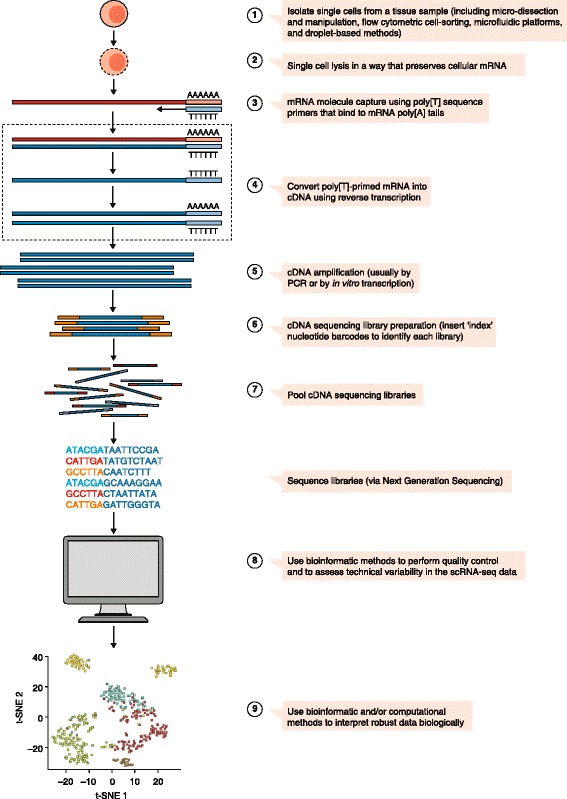
“Most scRNA-Seq protocols follow a similar sequence of reactions (Figure 1) including tissue dissociation to generate a single-cell suspension, cell isolation (Figure 1A), mRNA capture and barcoding (Figure 1B), library preparation (Figure 1C), followed by next-generation sequencing (NGS) (Figure 1D).(47) Singlenucleus…”
MethodInduced cell-autonomous neutropenia systemically perturbs hematopoiesis in Cebpa enhancer-null mice
Avellino, R., Mulet‐Lazaro, R., Havermans, M., Hoogenboezem, R. M., Smeenk, L., Salomonis, N., Schneider, R. K., Rombouts, E. J. C., Bindels, E. M., Grimes, H. L., et al. (2022) · Blood Advances · doi:10.1182/bloodadvances.2021005851 · Cited by 9
Leveraging spatial omics for the development of precision sarcoma treatments
Tu, C., Kulasinghe, A., Barbour, A. P., & Souza-Fonseca-Guimarães, F. (2024) · Trends in Pharmacological Sciences · doi:10.1016/j.tips.2023.12.006 · Cited by 9
Differences in microenvironment of lung cancer and pleural effusions by single-cell RNA sequencing
Mahmood, K., Wang, H., Ji, Z., Giovacchini, C. X., Wahidi, M. M., Dorry, M., Shofer, S. L., Clarke, J. M., Antonia, S. J., Shaz, B. H., et al. (2024) · Lung Cancer · doi:10.1016/j.lungcan.2024.107847 · Cited by 9
(Multi-) omics studies of ILC2s in inflammation and metabolic diseases
Kral, M., van der Vorst, E. P. C., Weber, C., & Döring, Y. (2024) · Frontiers in Cell and Developmental Biology · doi:10.3389/fcell.2024.1473616 · Cited by 9
Kochayoo, P., Moriyama, S., Kotaki, R., Thawornpan, P., Malee, C., Leepiyasakulchai, C., Ntumngia, F. B., Adams, J. H., Takahashi, Y., & Chootong, P. (2025) · PLoS Pathogens · doi:10.1371/journal.ppat.1012866 · Cited by 8
Wu, Q., Cao, H., Jin, J., Ma, D., Niu, Y., Yu, Y., Wang, X., & Xia, Y. (2025) · Frontiers in Molecular Biosciences · doi:10.3389/fmolb.2025.1580622 · Cited by 11
“Unlike traditional bulk sequencing, it reveals cellular heterogeneity, identifies rare cell subpopulations, and analyzes dynamic changes in cell development trajectories and functional states (Haque et al., 2017).”
He, S., Zhang, J., Zhou, Z., Qi, Z., Wang, X., Wang, Y., Liu, Y., Zhou, Y., Lei, C., Ye, X., et al. (2025) · Journal of the American Heart Association · doi:10.1161/jaha.124.041168 · Cited by 9
“9,10 Li et al 11 performed sc-RNAseq analysis of ascending aortic tissues from 11 study participants, and 11 major cell types were identified.”
Machine Learning Models for Cancer Research: A Narrative Review of Bulk RNA-Seq Applications
Pudova, E. A., Pavlov, V., Guvatova, Z. G., Fedorova, M., Шегай, П. В., Kudryavtseva, A. V., & Snezhkina, A. V. (2025) · International Journal of Molecular Sciences · doi:10.3390/ijms262412081 · Cited by 12
Practical Considerations for Complex Tissue Dissociation for Single-Cell Transcriptomics
Pohl, S. T., Prada, M. L., Espinet, E., & Jurkowska, R. Z. (2022) · Methods in molecular biology · doi:10.1007/978-1-0716-2756-3_19 · Cited by 8
“Importantly, preparation of a high-quality single cell suspension is a key prerequisite for obtaining high-quality single-cell transcriptomics data[19].”
Novel mRNA Signature for Anti-TNF-α Therapy Primary Response in Patients With Ulcerative Colitis
Yang, X., Shi, J., Wang, G., Chen, H., Ye, Y., Zhong, J., & Wang, Z. (2023) · Inflammatory Bowel Diseases · doi:10.1093/ibd/izad060 · Cited by 8
Metadata
- Authors
- Haque, A., Engel, J., Teichmann, S. A., & Lönnberg, T.
- Affiliations
- QIMR Berghofer Medical Research Institute (AU)
- Wellcome Sanger Institute (GB)
- Åbo Akademi University (FI)
- Corresponding author
- Haque, Ashraful
- Lönnberg, Tapio
- Venue
- Genome Medicine
- Published
- 2017-08-18
- Volume
- 9
- Issue
- 1
- Pages
- 75-75
- ISSN
- 1756-994X (ISSN-L)
- PMC
- PMC5561556
- OpenAlex
- W2746479894
- Cited by
- 1,071
- References
- 106
- Citations by year
- 2026: 83 · 2025: 164 · 2024: 163 · 2023: 183 · 2022: 152 · 2021: 123 · 2020: 92 · 2019: 58 · 2018: 51 · 2017: 1
- FWCI
- 5.16
- Type
- journal article
- Language
- en
- Open access
- gold
- doi.org
- Licence
- cc-by
- Locations
- Genome Medicine (publishedVersion, cc-by)
- PubMed Central (publishedVersion, cc-by)
- PubMed (publishedVersion)
- UTUPub (University of Turku) (submittedVersion, cc-by)
- DOAJ (DOAJ: Directory of Open Access Journals) (submittedVersion, cc-by-sa)
- Minerva Access (University of Melbourne) (submittedVersion, cc-by)
- Apollo (University of Cambridge) (submittedVersion, cc-by)
- Apollo (cc-by)
- Funders
- European Research Council (260507)
- Australian National Health and Medical Research Council (1028641, 1028643)
- Topics
- Life Sciences › Biochemistry, Genetics and Molecular Biology › Molecular Biology › Single-cell and spatial transcriptomics
- Life Sciences › Biochemistry, Genetics and Molecular Biology › Molecular Biology › Genomics and Phylogenetic Studies
- Life Sciences › Biochemistry, Genetics and Molecular Biology › Molecular Biology › Gene expression and cancer classification
- Keywords
- single-cell RNA sequencing, quality control, data analysis, biological interpretation, clinical application, experimental protocol
- MeSH terms
- Animals, Humans, Sequence Analysis, RNA, Computational Biology, Biomedical Research, Single-Cell Analysis
About these checks
Registry, retraction, Cites and statistics results are computed, not judged, with one exception: a printed reference that no index lists is read once by a model before it counts as a citation error. Claims are extracted by a model and kept only when their quote appears verbatim in the text; each cited source is then checked, with a model’s help, for whether it says what the claim relies on. Those verdicts can be wrong — read the claim’s quote and the cited source before relying on one.
Statistics and arithmetic are recomputed, not judged.
Confidence bands are shown only for fields calibrated on our annotated test set. None is calibrated yet, so no band is shown.
What counts as a claim ›How we measure confidence ›How we check this ›
Are you an author, or do you see a problem with this page? Request a review
Data sources
Bibliographic data: Semantic Scholar, OpenAlex, Crossref.
Contains information from the Semantic Scholar Academic Graph Datasets, made available under the ODC Attribution License (ODC-BY 1.0).
Semantic Scholar’s data is described in: Kinney, R., et al. (2023). The Semantic Scholar Open Data Platform. arXiv:2301.10140.
