

Effects of maximal-versus submaximal-intent resistance training on functional capacity and strength in community-dwelling older adults: a systematic review and meta-analysis.
Open accessThe DOI matches its Crossref record; 84 of the 84 references it cites were found in a registry or an index.
Abstract
The objective of this systematic review is to investigate the effects of different methods of resistance training (RT) on functional capacity in older adults. A systematic literature search was conducted using PubMed, SPORTDiscus, Web of Science, CINAHL, Cochrane CENTRAL, ClinicalTrials.gov databases, from inception to December 2021. Eligibility criteria consisted of randomised control trials (RCT’s) involving maximal-intent resistance training (MIRT), where participants (aged 60+) had specific instruction to move ‘as fast as possible’ during the concentric phase of the exercise. Twelve studies were included within the meta-analysis. Divided into functional capacity and strength-related outcomes; Improvements were evident for timed-up-and-go (p = 0.001, SMD: − 1.74 [95% CI − 2.79, − 0.69]) and knee extension one-repetition maximum (1RM) (p = 0.01, SMD: − 1.21, [95% CI − 2.17, − 0.25]), both in favour of MIRT, as well as in 30 s sit-to-stand in favour of T-STR (p = 0.04, SMD: 3.10 [95% CI 0.07, 6.14]). No statistical significance was found for combined functional capacity outcomes (p = 0.17, SMD: − 0.84, [95% CI − 2.04, 0.37]), with near-significance observed in strength-related outcomes (p = 0.06. SMD: − 0.57, [95% CI − 1.16, 0.02]) favouring MIRT. Heterogeneity for FC-outcomes was observed as Tau 2 = 4.83; Chi = 276.19, df = 14, I 2 = 95%, and for strength-outcomes Tau 2 = 1.290; Chi = 109.65, df = 115, I 2 = 86%. Additionally, MIRT elicited substantial clinically meaningful improvements (CMI) in Short Physical Performance Battery (SPPB) scores but fell short of CMI in 400 m walk test by 0.6 s. In conclusion, this systematic review highlights the lack of sufficient and quality evidence for maximal- versus submaximal-intent resistance training on functional capacity and strength in community-dwelling older adults. Study limitations revolved around lack of research, low quality (“low” PEDro score), and largely due to the fact many comparison studies did not match their loads lifted (1500 kg vs. 500 kg), making comparisons not possible.
Overview
The claims and statistics of this paper haven’t been checked yet.
Free: it reads the open-access text and checks the first 5 claims that cite a source we can check. Create a free account to check every claim.
Integrity signals
Registry
Cites
Statistics
Figures
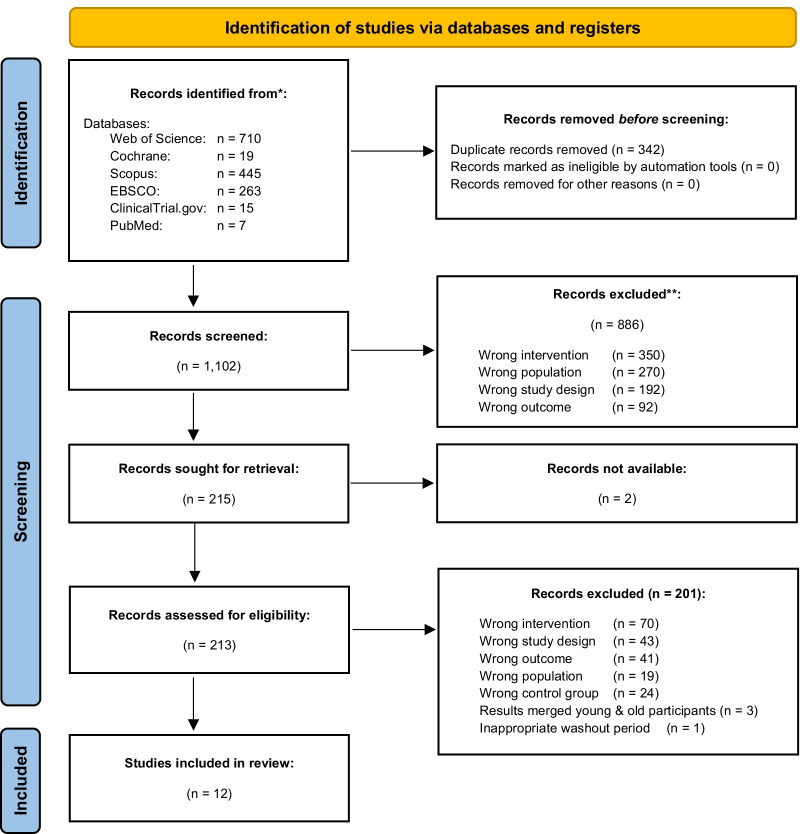
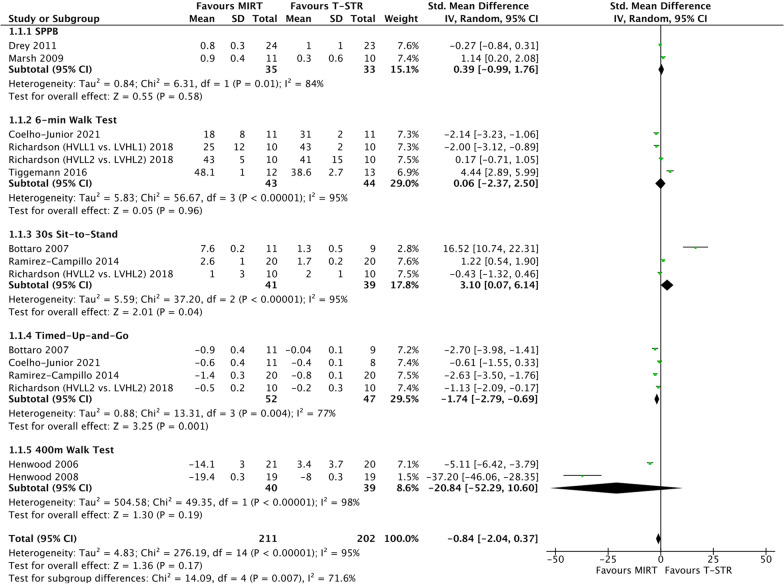
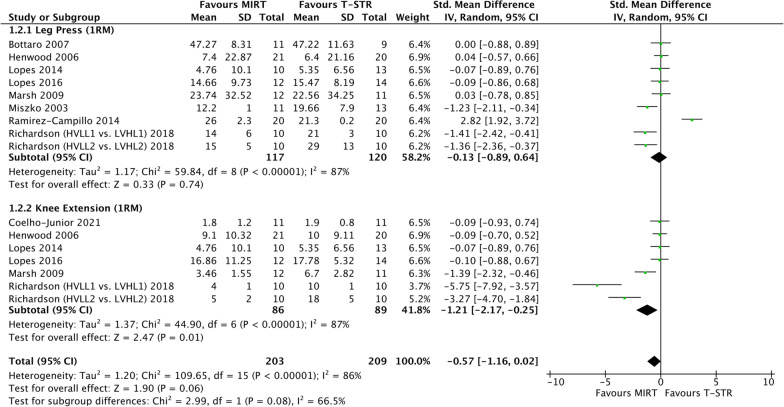
Verification
Claims the paper makes
The claims and statistics of this paper haven’t been checked yet.
Free: it reads the open-access text and checks the first 5 claims that cite a source we can check. Create a free account to check every claim.
Claims other papers make about this one
Each is checked against this paper’s own text: does it say what the citing paper says it does?
In the citing paper
“In comparing different RTx, SPPB was positively affected by power training (106,157).”
In the citing paper
“In comparisons between distinct RTx, walking performance was positively affected by power training (106,157).”
In the citing paper
“In comparisons between distinct RTx, there were insufficient data to determine if chair stand performance was affected by load (82) or power training versus standard RT (82,106,157).”
In the citing paper
“In comparisons between distinct RTx, there were insufficient data to determine if TUG was affected by load (82) or power training versus standard RT (82,106,157).”
Self-check
Percentages, sums and reported differences re-computed from the paper’s own numbers.
The self-check needs the paper’s full text.
Citations
Cites
Measuring inconsistency in meta-analyses
Higgins, J. P. T., Thompson, S. G., Deeks, J. J., & Altman, D. G. (2003) · BMJ · doi:10.1136/bmj.327.7414.557 · Cited by 63,139
Rayyan-a web and mobile app for systematic reviews.
Ouzzani, M., Hammady, H., Fedorowicz, Z., & Elmagarmid, A. (2016) · Systematic Reviews · doi:10.1186/s13643-016-0384-4 · Cited by 26,092
Dermyshi, E., Wang, Y., Yan, C., Hong, W., Qiu, G., Gong, X., & Zhang, T. (2017) · Neonatology · doi:10.1159/000454668 · Cited by 24,451
Cochrane Handbook for Systematic Reviews of Interventions
(2019) · doi:10.1002/9781119536604 · Cited by 14,828
World Health Organization 2020 guidelines on physical activity and sedentary behaviour
Bull, F. C., Al-Ansari, S. S., Biddle, S., Borodulin, K., Buman, M. P., Cardon, G., Carty, C., Chaput, J.-P., Chastin, S., Chou, R., et al. (2020) · British Journal of Sports Medicine · doi:10.1136/bjsports-2020-102955 · Cited by 11,657 · cited 1×
“It is therefore suggested the stronger an older adult, the better they will likely cope with basic physical activity guidelines [20, 38, 39] and are therefore more likely to adhere to, or even exceed said guidelines, leading to an improved FC.”
BackgroundLiberati, A., Altman, D. G., Tetzlaff, J., Mulrow, C., Gøtzsche, P. C., Ioannidis, J. P. A., Clarke, M., Devereaux, P. J., Kleijnen, J., & Moher, D. (2009) · Journal of Clinical Epidemiology · doi:10.1016/j.jclinepi.2009.06.006 · Cited by 10,578
The Physical Activity Guidelines for Americans
Piercy, K. L., Troiano, R. P., Ballard, R. M., Carlson, S. A., Fulton, J. E., Galuska, D. A., George, S. M., & Olson, R. D. (2018) · JAMA · doi:10.1001/jama.2018.14854 · Cited by 9,755 · cited 1×
“It is therefore suggested the stronger an older adult, the better they will likely cope with basic physical activity guidelines [20, 38, 39] and are therefore more likely to adhere to, or even exceed said guidelines, leading to an improved FC.”
BackgroundReliability of the PEDro Scale for Rating Quality of Randomized Controlled Trials
Maher, C. G., Sherrington, C., Herbert, R. D., Moseley, A. M., & Elkins, M. (2003) · Physical Therapy · doi:10.1093/ptj/83.8.713 · Cited by 4,808
Meaningful change and responsiveness in common physical performance measures in older adults.
Perera, S., Mody, S. H., Woodman, R. C., & Studenski, S. A. (2006) · Journal of the American Geriatrics Society · doi:10.1111/j.1532-5415.2006.00701.x · Cited by 2,513
Fragala, M. S., Cadore, E. L., Dorgo, S., Izquierdo, M., Kraemer, W. J., Peterson, M. D., & Ryan, E. D. (2019) · Journal of Strength and Conditioning Research · doi:10.1519/jsc.0000000000003230 · Cited by 1,290
Dent, E., Morley, J. E., Cruz-Jentoft, A. J., Arai, H., Kritchevsky, S. B., Guralnik, J., Bauer, J. M., Pahor, M., Clark, B. C., Cesari, M., et al. (2018) · The Journal of nutrition, health and aging · doi:10.1007/s12603-018-1139-9 · Cited by 1,130
Clinimetrics: Physiotherapy Evidence Database (PEDro) Scale
Cashin, A. G., & McAuley, J. H. (2020) · Journal of Physiotherapy · doi:10.1016/j.jphys.2019.08.005 · Cited by 975
Muscle function after exercise-induced muscle damage and rapid adaptation
CLARKSON, P. M., NOSAKA, K., & BRAUN, B. (1992) · Medicine & Science in Sports & Exercise · doi:10.1249/00005768-199205000-00004 · Cited by 970
An overview of sarcopenia: facts and numbers on prevalence and clinical impact
von Haehling, S., Morley, J. E., & Anker, S. D. (2010) · Journal of Cachexia, Sarcopenia and Muscle · doi:10.1007/s13539-010-0014-2 · Cited by 888
Cormie, P., McGuigan, M. R., & Newton, R. U. (2011) · Sports Medicine · doi:10.2165/11538500-000000000-00000 · Cited by 808
Resistance exercise for muscular strength in older adults: a meta-analysis
Peterson, M. D., Rhea, M. R., Sen, A., & Gordon, P. M. (2010) · Ageing Research Reviews · doi:10.1016/j.arr.2010.03.004 · Cited by 808
Borde, R., Hortobágyi, T., & Granacher, U. (2015) · Sports Medicine · doi:10.1007/s40279-015-0385-9 · Cited by 737
Influence of Resistance Exercise on Lean Body Mass in Aging Adults: A Meta-Analysis
PETERSON, M. D., SEN, A., & GORDON, P. M. (2011) · Medicine & Science in Sports & Exercise · doi:10.1249/mss.0b013e3181eb6265 · Cited by 558
Kwon, S., Perera, S., Pahor, M., Katula, J. A., King, A. C., Groessl, E. J., & Studenski, S. A. (2009) · The Journal of nutrition, health and aging · doi:10.1007/s12603-009-0104-z · Cited by 494 · cited 2×
“5 points of change for SPPB scores, and 20–30 s reduction in time for the 400 m walk test [84].”
BackgroundSteffl, M., Bohannon, R. W., Sontakova, L., Tufano, J. J., Shiells, K., & Holmerova, I. (2017) · Clinical Interventions in Aging · doi:10.2147/cia.s132940 · Cited by 480
Velocity Specificity of Resistance Training
Behm, D. G., & Sale, D. G. (1993) · Sports Medicine · doi:10.2165/00007256-199315060-00003 · Cited by 460 · cited 1×
“As previously noted, it is suggested that greater velocities produce greater neural adaptations [61], therefore MIRT could illicit similar adaptations due to participants being asked to move as fast as possible, resulting in surpassing of thresholds for type II fibres that may elicit neural adaptations [88].”
BackgroundSelf-citationVolpato, S., Cavalieri, M., Sioulis, F., Guerra, G., Maraldi, C., Zuliani, G., Fellin, R., & Guralnik, J. M. (2011) · The Journals of Gerontology Series A: Biological Sciences and Medical Sciences · doi:10.1093/gerona/glq167 · Cited by 459
New fundamental resistance exercise determinants of molecular and cellular muscle adaptations
Toigo, M., & Boutellier, U. (2006) · European Journal of Applied Physiology · doi:10.1007/s00421-006-0238-1 · Cited by 437
Trombetti, A., Reid, K. F., Hars, M., Herrmann, F. R., Pasha, E., Phillips, E. M., & Fielding, R. A. (2016) · Osteoporosis International · doi:10.1007/s00198-015-3236-5 · Cited by 436
Haff, G. G., & Nimphius, S. (2012) · Strength & Conditioning Journal · doi:10.1519/ssc.0b013e31826db467 · Cited by 427 · cited 1×
“Resistance training can be defined as; the use of load, machinery, or Q2own body weight while exercising the muscles [31] or, a modality of exercise used to increase the body’s ability to overcome load [32].”
BackgroundEffect of strength and power training on physical function in community-dwelling older adults.
Miszko, T. A., Cress, M. E., Slade, J. M., Covey, C. J., Agrawal, S. K., & Doerr, C. E. (2003) · The Journals of Gerontology Series A: Biological Sciences and Medical Sciences · doi:10.1093/gerona/58.2.m171 · Cited by 391
Intended rather than actual movement velocity determines velocity-specific training response
Behm, D. G., & Sale, D. G. (1993) · Journal of Applied Physiology · doi:10.1152/jappl.1993.74.1.359 · Cited by 389 · cited 1×
“Neuromuscular responses to RT do not have to be conducted at high velocities, there are links to the intent of movement being an equal factor to neural improvements in muscle activation and movement time [60], with evidence replicated over 10 years later [61].”
BackgroundSelf-citationVasunilashorn, S., Coppin, A. K., Patel, K. V., Lauretani, F., Ferrucci, L., Bandinelli, S., & Guralnik, J. M. (2009) · The Journals of Gerontology Series A: Biological Sciences and Medical Sciences · doi:10.1093/gerona/gln022 · Cited by 381
Benefits of resistance training in physically frail elderly: a systematic review
Lopez, P., Pinto, R. S., Radaelli, R., Rech, A., Grazioli, R., Izquierdo, M., & Cadore, E. L. (2018) · Aging Clinical and Experimental Research · doi:10.1007/s40520-017-0863-z · Cited by 338
Physical activity, injurious falls, and physical function in aging: an umbrella review.
DIPIETRO, L., CAMPBELL, W. W., BUCHNER, D. M., ERICKSON, K. I., POWELL, K. E., BLOODGOOD, B., HUGHES, T., DAY, K. R., PIERCY, K. L., VAUX-BJERKE, A., et al. (2019) · Medicine & Science in Sports & Exercise · doi:10.1249/mss.0000000000001942 · Cited by 331
Freire, A. N., Guerra, R. O., Alvarado, B., Guralnik, J. M., & Zunzunegui, M. V. (2012) · Journal of Aging and Health · doi:10.1177/0898264312438551 · Cited by 325
The quality of life in Parkinson's disease
Kuopio, A., Marttila, R. J., Helenius, H., Toivonen, M., & Rinne, U. K. (2000) · Movement Disorders · doi:10.1002/1531-8257(200003)15:2<216::aid-mds1003>3.0.co;2-# · Cited by 323
Bottaro, M., Machado, S. N., Nogueira, W., Scales, R., & Veloso, J. (2007) · European Journal of Applied Physiology · doi:10.1007/s00421-006-0343-1 · Cited by 305 · cited 5×
“There was also a relatively novel finding within Borde, Hortobagyi [86]’s research, in that, although they advocated for one less weekly training sessions per week than Bottaro, Machado [82], they found that a rest of 4 s per repetition was found to be most successful for improvements in RT-related outcomes in older a…”
BackgroundMethodResultInfluentialAging, the Central Nervous System, and Mobility
Rosso, A. L., Studenski, S. A., Chen, W. G., Aizenstein, H. J., Alexander, N. B., Bennett, D. A., Black, S. E., Camicioli, R., Carlson, M. C., Ferrucci, L., et al. (2013) · The Journals of Gerontology: Series A · doi:10.1093/gerona/glt089 · Cited by 289
Strength versus muscle power-specific resistance training in community-dwelling older adults.
Henwood, T. R., Riek, S., & Taaffe, D. R. (2008) · The Journals of Gerontology: Series A · doi:10.1093/gerona/63.1.83 · Cited by 265
Caserotti, P., Aagaard, P., Buttrup Larsen, J., & Puggaard, L. (2008) · Scandinavian Journal of Medicine & Science in Sports · doi:10.1111/j.1600-0838.2007.00732.x · Cited by 254
Quality of life and physical components linked to sarcopenia: The SarcoPhAge study
Beaudart, C., Reginster, J. Y., Petermans, J., Gillain, S., Quabron, A., Locquet, M., Slomian, J., Buckinx, F., & Bruyère, O. (2015) · Experimental Gerontology · doi:10.1016/j.exger.2015.05.003 · Cited by 248
Puthoff, M. L., & Nielsen, D. H. (2007) · Physical Therapy · doi:10.2522/ptj.20060176 · Cited by 228
Gómez Montes, J. F., Curcio, C.-L., Alvarado, B., Zunzunegui, M. V., & Guralnik, J. (2013) · Colombia Medica · doi:10.25100/cm.v44i3.1181 · Cited by 226
Atypical antipsychotics in the treatment of drug-induced psychosis in Parkinson's disease
Friedman, J. H., & Factor, S. A. (2000) · Movement Disorders · doi:10.1002/1531-8257(200003)15:2<309::aid-mds1016>3.0.co;2-p · Cited by 216
Ramírez-Campillo, R., Castillo, A., de la Fuente, C. I., Campos-Jara, C., Andrade, D. C., Álvarez, C., Martínez, C., Castro-Sepúlveda, M., Pereira, A., Marques, M. C., et al. (2014) · Experimental Gerontology · doi:10.1016/j.exger.2014.07.001 · Cited by 212
Mangine, G. T., Hoffman, J. R., Gonzalez, A. M., Townsend, J. R., Wells, A. J., Jajtner, A. R., Beyer, K. S., Boone, C. H., Miramonti, A. A., Wang, R., et al. (2015) · Physiological Reports · doi:10.14814/phy2.12472 · Cited by 204
Landi, F., Calvani, R., Tosato, M., Martone, A. M., Fusco, D., Sisto, A., Ortolani, E., Savera, G., Salini, S., & Marzetti, E. (2016) · Journal of the American Medical Directors Association · doi:10.1016/j.jamda.2016.10.007 · Cited by 180
Inflammation and age-associated skeletal muscle deterioration (sarcopaenia)
Wang, J., Leung, K.-S., Chow, S. K.-H., & Cheung, W.-H. (2017) · Journal of Orthopaedic Translation · doi:10.1016/j.jot.2017.05.006 · Cited by 173
McKinnon, N. B., Connelly, D. M., Rice, C. L., Hunter, S. W., & Doherty, T. J. (2016) · Ageing Research Reviews · doi:10.1016/j.arr.2016.09.003 · Cited by 169
Health-Related Quality of Life in Older Adults at Risk for Disability
Groessl, E. J., Kaplan, R. M., Rejeski, W. J., Katula, J. A., King, A. C., Frierson, G., Glynn, N. W., Hsu, F.-C., Walkup, M., & Pahor, M. (2007) · American Journal of Preventive Medicine · doi:10.1016/j.amepre.2007.04.031 · Cited by 166
Henwood, T. R., & Taaffe, D. R. (2006) · Clinical Physiology and Functional Imaging · doi:10.1111/j.1475-097x.2006.00695.x · Cited by 158
Lower extremity muscle function after strength or power training in older adults.
Marsh, A. P., Miller, M. E., Rejeski, W. J., Hutton, S. L., & Kritchevsky, S. B. (2009) · Journal of Aging and Physical Activity · doi:10.1123/japa.17.4.416 · Cited by 155 · cited 1×
“Four studies (40%) [27, 73, 75, 76] recorded their method of randomisation, all using a computerised random number generator.”
MethodMorning based strength training improves afternoon physical performance in rugby union players
Cook, C. J., Kilduff, L. P., Crewther, B. T., Beaven, C. M., & West, D. J. (2013) · Journal of science and medicine in sport · doi:10.1016/j.jsams.2013.04.016 · Cited by 155
Reid, K. F., Martin, K. I., Doros, G., Clark, D. J., Hau, C., Patten, C., Phillips, E. M., Frontera, W. R., & Fielding, R. A. (2015) · The Journals of Gerontology Series A: Biological Sciences and Medical Sciences · doi:10.1093/gerona/glu156 · Cited by 146 · cited 1×
“A specific ‘power’ RT intervention conducted by Rodriguez-Lopez, Alcazar [48], Reid, Martin [52], McKinnon, Connelly [5] also observed significantly improved neuromuscular activation in older adults, with similar findings of neuromuscular and cognitive performance observed by Marques, Neiva [53].”
MethodBean, J. F., Kiely, D. K., LaRose, S., Goldstein, R., Frontera, W. R., & Leveille, S. G. (2010) · Journal of the American Geriatrics Society · doi:10.1111/j.1532-5415.2010.03155.x · Cited by 126 · cited 2×
“However, improvements were found in favour of MIRT for knee extension 1RM and TUG, as well as 30 s sit-to-stand in favour of T-STR; These findings align with research by Bean, Kiely [90], who’s investigation highlighted significant associations between improvements in leg power (regardless of one’s strength) and clini…”
ResultNeuromuscular Fatigue and Recovery after Heavy Resistance, Jump, and Sprint Training
Thomas, K., Brownstein, C. G., Dent, J., PARKER, P., Goodall, S., & Howatson, G. (2018) · Medicine & Science in Sports & Exercise · doi:10.1249/mss.0000000000001733 · Cited by 123
Self-citationPayne, M. E., Starr, K. N. P., Orenduff, M. C., Mulder, H. S., McDonald, S. R., Spira, A. P., Pieper, C. F., & Bales, C. W. (2018) · The journal of nutrition health & aging · doi:10.1007/s12603-018-1127-0 · Cited by 119
Effects of ageing on human neuromuscular function: implications for exercise.
Vandervoort, A. A. (1992) · PubMed · Cited by 109
Neuromuscular Changes with Aging and Sarcopenia
Clark, B. C. (2019) · The Journal of Frailty & Aging · doi:10.14283/jfa.2018.35 · Cited by 109
Sex differences in fatigability following exercise normalised to the power–duration relationship
Ansdell, P., Škarabot, J., Atkinson, E., Corden, S., Tygart, A., Hicks, K. M., Thomas, K., Hunter, S. K., Howatson, G., & Goodall, S. (2020) · The Journal of Physiology · doi:10.1113/jp280031 · Cited by 97
Self-citationThe effect of ageing on autonomic nervous system function
Ingall, T. J., McLeod, J. G., & O'Brien, P. C. (1990) · Australian and New Zealand Journal of Medicine · doi:10.1111/j.1445-5994.1990.tb01315.x · Cited by 91
Loturco, I., Nakamura, F. Y., Kobal, R., Gil, S. D. S., Pivetti, B., Pereira, L. A., & Roschel, H. (2016) · International Journal of Sports Medicine · doi:10.1055/s-0042-107249 · Cited by 91
Power training for older adults
Porter, M. M. (2006) · Applied Physiology, Nutrition, and Metabolism · doi:10.1139/h05-034 · Cited by 83
Oh, B., Cho, B., Choi, H.-C., Son, K. Y., Park, S. M., Chun, S., & Cho, S. (2013) · Archives of Gerontology and Geriatrics · doi:10.1016/j.archger.2013.10.008 · Cited by 81
Jiménez-Jiménez, R., Cuevas, M. J., Almar, M., Lima‐Cabello, E., López, D. G., Fernández, J. A. D. P., & González‐Gallego, J. (2008) · Mechanisms of Ageing and Development · doi:10.1016/j.mad.2008.02.007 · Cited by 80
Fukumoto, Y., Tateuchi, H., Ikezoe, T., Tsukagoshi, R., Akiyama, H., So, K., Kuroda, Y., & Ichihashi, N. (2014) · Clinical Rehabilitation · doi:10.1177/0269215513492161 · Cited by 75
Tiggemann, C. L., Dias, C. P., Radaelli, R., Massa, J. C., Bortoluzzi, R., Schoenell, M. C. W., Noll, M. A., Alberton, C. L., & Kruel, L. F. M. (2016) · AGE · doi:10.1007/s11357-016-9904-3 · Cited by 75
Drey, M., Zech, A., Freiberger, E., Bertsch, T., Uter, W., Sieber, C. C., Pfeifer, K., & Bauer, J. M. (2012) · Gerontology · doi:10.1159/000332207 · Cited by 70
Clémençon, M., Hautier, C. A., Rahmani, A., Cornu, C., & Bonnefoy, M. (2008) · Archives of Physical Medicine and Rehabilitation · doi:10.1016/j.apmr.2007.11.061 · Cited by 67
Tallent, J., Woodhead, A., Frazer, A. K., Hill, J., Kidgell, D. J., & Howatson, G. (2021) · European Journal of Applied Physiology · doi:10.1007/s00421-020-04584-2 · Cited by 66
Latella, C., Teo, W., Harris, D. M., Major, B. P., VanderWesthuizen, D., & Hendy, A. M. (2017) · European Journal of Applied Physiology · doi:10.1007/s00421-017-3709-7 · Cited by 60
Neuromuscular adaptations to healthy aging
McNeil, C. J., & Rice, C. L. (2018) · Applied Physiology, Nutrition, and Metabolism · doi:10.1139/apnm-2018-0327 · Cited by 55
Lopes, P. B., Pereira, G., Lodovico, A., Bento, P. C. B., & Rodacki, A. L. F. (2016) · Rejuvenation Research · doi:10.1089/rej.2015.1764 · Cited by 53
Coelho-Júnior, H. J., & Uchida, M. C. (2021) · Frontiers in Medicine · doi:10.3389/fmed.2021.702436 · Cited by 47 · cited 1×
“Four studies (40%) [27, 73, 75, 76] recorded their method of randomisation, all using a computerised random number generator.”
MethodGlenn, J. M., Gray, M., & Binns, A. (2015) · Age and Ageing · doi:10.1093/ageing/afv081 · Cited by 45
Bernat, P., Candow, D. G., Gryzb, K., Butchart, S., Schoenfeld, B. J., & Bruno, P. (2019) · Applied Physiology, Nutrition, and Metabolism · doi:10.1139/apnm-2019-0066 · Cited by 44
Thomas, K., Toward, A., West, D. J., Howatson, G., & Goodall, S. (2015) · Scandinavian Journal of Medicine and Science in Sports · doi:10.1111/sms.12626 · Cited by 41
Self-citationRichardson, D. L., Duncan, M. J., Jimenez, A., Juris, P. M., & Clarke, N. D. (2019) · European Journal of Sport Science · doi:10.1080/17461391.2018.1497709 · Cited by 39
Rodriguez‐Lopez, C., Alcazar, J., Sanchez‐Martin, C., Baltasar‐Fernandez, I., Ara, I., Csapo, R., & Alegre, L. M. (2022) · Scandinavian Journal of Medicine & Science in Sports · doi:10.1111/sms.14073 · Cited by 38
Englund, D. A., Sharp, R. L., Selsby, J. T., Ganesan, S. S., & Franke, W. D. (2017) · Experimental Gerontology · doi:10.1016/j.exger.2017.02.072 · Cited by 30 · cited 2×
“It is therefore suggested the stronger an older adult, the better they will likely cope with basic physical activity guidelines [20, 38, 39] and are therefore more likely to adhere to, or even exceed said guidelines, leading to an improved FC. Evidence to support the use of high-velocity resistance training (HVRT) in…”
ResultA Comparison of Ballistic-Movement and Ballistic-Intent Training on Muscle Strength and Activation
Dinn, N. A., & Behm, D. G. (2007) · International Journal of Sports Physiology and Performance · doi:10.1123/ijspp.2.4.386 · Cited by 23
Self-citationGray, M., Powers, M., Boyd, L., & Garver, K. (2018) · Aging Clinical and Experimental Research · doi:10.1007/s40520-018-0929-6 · Cited by 20 · cited 4×
“%) included information regarding safety of RT or injuries/illnesses sustained during the intervention; Gray, Powers [27] reported no injuries and suggested MIRT as safe and effective, and Miszko, Cress [72] reported a 22% (11/50 participants) dropout through injuries and/or personal medical reasons.”
BackgroundMethodInfluentialAdaptation to peripheral muscle training.
Gaffney, F. A., Grimby, G., Danneskiold‐Samsøe, B., & Halskov, O. (1981) · PubMed · Cited by 19
Preconditioning Strategy in Rugby-7s Players: Beneficial or Detrimental?
Marrier, B., Durguerian, A., Robineau, J., Chennaoui, M., Sauvet, F., Servonnet, A., Piscione, J., Mathieu, B., Peeters, A., Lacome, M., et al. (2018) · International Journal of Sports Physiology and Performance · doi:10.1123/ijspp.2018-0505 · Cited by 19
Comparison Between Strength and Power Training on Elderly Force-Generating Ability
Lopes, P. B., Pereira, G., Martins de Souza, D., & Felix Rodacki, A. L. (2014) · Topics in Geriatric Rehabilitation · doi:10.1097/tgr.0000000000000033 · Cited by 17
Kisvetrová, H., Školoudík, D., Herzig, R., Vališ, M., Jurašková, B., Krulová, P., Langová, K., Bermellová, J., & Yamada, Y. (2018) · Dementia and Geriatric Cognitive Disorders · doi:10.1159/000492490 · Cited by 15
Bindawas, S. M., Snih, S. A., Ottenbacher, A. J., Graham, J. E., Protas, E., Markides, K. S., & Ottenbacher, K. J. (2015) · Journal of Aging and Health · doi:10.1177/0898264315572115 · Cited by 14
(2007) · Geriatric Nursing · doi:10.1016/j.gerinurse.2007.06.007 · Cited by 1
Research works printed but not linked: 4
- Gray M Longitudinal comparison of low- and high-velocity resistance training in relation to body composition and functional fitness of older adults Aging Clin Exp Res 2018 30 12 1465 1473 10.1007/s40520-018-0929-6 29569116 · DOI · Paper page
- Stojiljković N History of resistance training Act Phys Educ Sport 2013 3 1 135 138
- Marques DL The effects of high-velocity resistance training and detraining on functional and cognitive performance of institutionalised older adults Motricidade 2019 15 5
- Behm DG Neuromuscular implications and applications of resistance training J Strength Cond Res 1995 9 264 274
Cited by
CURRIER, B. S., D’SOUZA, A. C., SINGH, M. A. F., LOWISZ, C. V., RAWSON, E. S., SCHOENFELD, B. J., SMITH-RYAN, A. E., STEEN, J. P., THOMAS, G. A., TRIPLETT, N. T., et al. (2026) · Medicine & Science in Sports & Exercise · doi:10.1249/mss.0000000000003897 · Cited by 105
“In comparisons between distinct RTx, there were insufficient data to determine if TUG was affected by load (82) or power training versus standard RT (82,106,157).”
InfluentialBehm, D. G., Konrad, A., Nakamura, M., Alizadeh, S., Culleton, R., Anvar, S. H., Pearson, L. T., Ramírez‐Campillo, R., & SALE, D. G. (2024) · Applied Physiology, Nutrition, and Metabolism · doi:10.1139/apnm-2024-0136 · Cited by 49
Self-citationPearson, L. T., Fox, K. T., Keenan, A., Behm, D. G., Stuart, S., Goodall, S., & Barry, G. (2024) · BMC Sports Science Medicine and Rehabilitation · doi:10.1186/s13102-024-00847-z · Cited by 10
Self-citationSaranya, S., & Poonguzhali, S. (2024) · Computers in Biology and Medicine · doi:10.1016/j.compbiomed.2024.109142 · Cited by 8
Godhe, M., Rönquist, G., Nilsson, J. E., Ekblom, Ö. B., Nyberg, L. A., Edman, G., & Andersson, E. A. (2024) · Gerontology · doi:10.1159/000538446 · Cited by 6
Metadata
- Authors
- Pearson, L. T., Behm, D. G., Goodall, S., Mason, R., Stuart, S., & Barry, G.
- Affiliations
- Northumbria University (GB)
- Memorial University of Newfoundland (CA)
- Northumbria Healthcare NHS Foundation Trust (GB)
- Corresponding author
- Pearson, Liam T.
- Venue
- BMC Sports Science, Medicine and Rehabilitation
- Published
- 2022-07-16
- Volume
- 14
- Issue
- 1
- Pages
- 129-129
- ISSN
- 2052-1847 (ISSN-L)
- PMC
- PMC9287903
- OpenAlex
- W4285588452
- Cited by
- 12
- References
- 84
- Citations by year
- 2026: 3 · 2025: 2 · 2024: 7
- FWCI
- 0.49
- Type
- journal article
- Language
- en
- Open access
- gold
- doi.org
- Licence
- cc-by
- creativecommons.org/licenses/by/4.0 (tdm)
- creativecommons.org/licenses/by/4.0 (vor)
- Locations
- BMC Sports Science Medicine and Rehabilitation (publishedVersion, cc-by)
- PubMed Central (publishedVersion, cc-by)
- PubMed (publishedVersion)
- Northumbria Research Link (Northumbria University) (acceptedVersion)
- DOAJ (DOAJ: Directory of Open Access Journals) (submittedVersion, cc-by-sa)
- Funders
- Northumbria University
- Parkinson's Foundation (PF-CRA-2073, PF-FBS-1898)
- Topics
- Health Sciences › Medicine › Orthopedics and Sports Medicine › Sports Performance and Training
- Health Sciences › Health Professions › Physical Therapy, Sports Therapy and Rehabilitation › Balance, Gait, and Falls Prevention
- Health Sciences › Medicine › Public Health, Environmental and Occupational Health › Physical Activity and Health
- Keywords
- resistance training, older adults, functional capacity, muscle strength, Timed Up and Go test, one-repetition maximum, sit-to-stand, Short Physical Performance Battery, community-dwelling older adults, exercise prescription, walking speed, walking endurance, fall risk, sarcopenia, frailty
About these checks
Registry, retraction, Cites and statistics results are computed, not judged, with one exception: a printed reference that no index lists is read once by a model before it counts as a citation error. Claims are extracted by a model and kept only when their quote appears verbatim in the text; each cited source is then checked, with a model’s help, for whether it says what the claim relies on. Those verdicts can be wrong — read the claim’s quote and the cited source before relying on one.
Statistics and arithmetic are recomputed, not judged.
Confidence bands are shown only for fields calibrated on our annotated test set. None is calibrated yet, so no band is shown.
What counts as a claim ›How we measure confidence ›How we check this ›
Are you an author, or do you see a problem with this page? Request a review
Data sources
Bibliographic data: Semantic Scholar, OpenAlex, Crossref.
Contains information from the Semantic Scholar Academic Graph Datasets, made available under the ODC Attribution License (ODC-BY 1.0).
Semantic Scholar’s data is described in: Kinney, R., et al. (2023). The Semantic Scholar Open Data Platform. arXiv:2301.10140.
