

Meconium androgens are correlated with ASD-related phenotypic traits in early childhood in a familial enriched risk cohort
Open accessPublished version of a preprint
The DOI matches its Crossref record; 53 of the 53 references it cites were found in a registry or an index.
Abstract
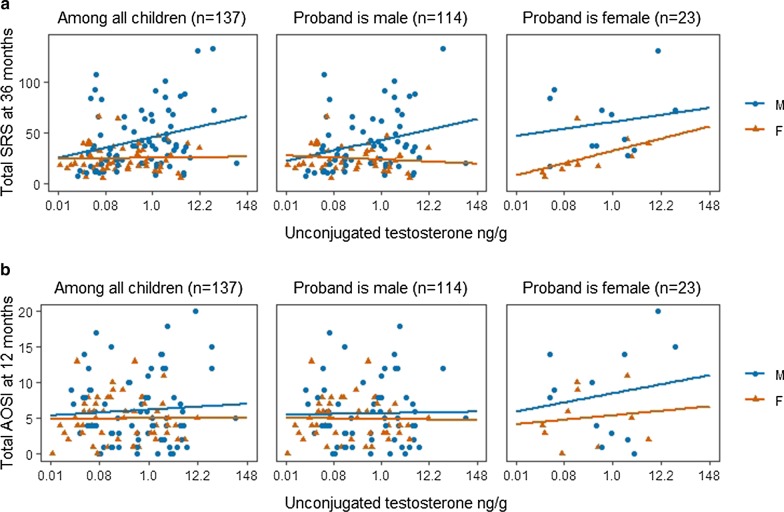
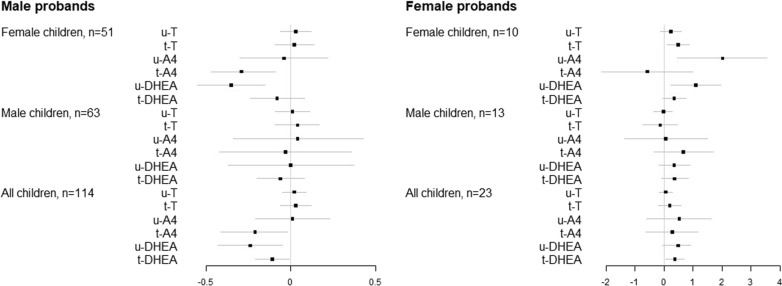
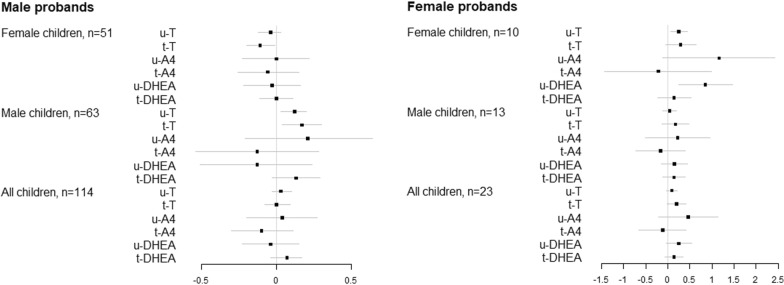
Background: Prenatal exposure to increased androgens has been suggested as a risk factor for autism spectrum disorder (ASD). This hypothesis has been examined by measurement of steroids in amniotic fluid, cord blood, saliva, and blood with mixed results. Methods: To provide an orthogonal measure of fetal exposure, this study used meconium, the first stool of a newborn, to measure prenatal androgen exposure from infants in the Early Autism Risk Longitudinal Investigation (EARLI). EARLI is a familial-enriched risk cohort that enrolled pregnant mothers who already had a child with an ASD diagnosis. In the younger child, we investigated the association between meconium unconjugated (u) and total (t) concentrations of major androgens testosterone (T), dehydroepiandrosterone (DHEA), and androstenedione (A4), and ASD-related traits at 12 and 36 months of age. Traits were measured at 12 months with Autism Observation Scale for Infants (AOSI) and at 36 months with total score on the Social Responsiveness Scale (SRS). One hundred and seventy children had meconium and AOSI, 140 had meconium and SRS, and 137 had meconium and both AOSI and SRS. Results: Separate robust linear regressions between each of the log-transformed androgens and log-transformed SRS scores revealed three-way interaction between sex of the child, sex of the proband, and testosterone concentration. In the adjusted analyses, t-T, u-A4, and u-DHEA ( P ≤ 0.01) were positively associated with AOSI scores, while u-T ( P = 0.004) and u-DHEA ( P = 0.007) were positively associated with SRS total score among females with female probands ( n = 10). Additionally, higher concentrations of u-T ( P = 0.01) and t-T ( P = 0.01) predicted higher SRS total score in males with male probands ( n = 63). Limitations Since we explored three-way interactions, this resulted in a limited sample size for some analyses. This study was from an enriched-risk cohort which may limit generalizability, and this study used ASD-assessment scales as outcomes instead of diagnostic categories. Additionally, the novel use of meconium in this study limits the ability to compare the results in this cohort to others due to the paucity of research on meconium. Conclusions: This study supports the utility of meconium for studies of endogenous fetal metabolism and suggests the sex of older siblings with autism should be considered as a biological variable in relevant studies.
Overview
The claims and statistics of this paper haven’t been checked yet.
Free: it reads the open-access text and checks the first 5 claims that cite a source we can check. Create a free account to check every claim.
Integrity signals
Registry
Cites
Statistics
Figures
Verification
Claims the paper makes
The claims and statistics of this paper haven’t been checked yet.
Free: it reads the open-access text and checks the first 5 claims that cite a source we can check. Create a free account to check every claim.
Claims other papers make about this one
Each is checked against this paper’s own text: does it say what the citing paper says it does?
The source backs part of the claim, not all of it — or backs it for a different population, condition or comparison.
In the citing paper
“Steroid hormones, particularly androgens, might be biological mediators (and potential moderators for genetic aetiological factors256) of demonstrated sex differences in autism prevalence.”
From Sex and gender in neurodevelopmental conditions (2023) · cites this paper as [256]
Experimental — accuracy not yet measured
Self-check
Percentages, sums and reported differences re-computed from the paper’s own numbers.
The self-check needs the paper’s full text.
Citations
Cites
Baio, J., Wiggins, L., Christensen, D. L., Maenner, M. J., Daniels, J., Warren, Z., Kurzius-Spencer, M., Zahorodny, W., Robinson, C., Rosenberg, et al. (2018) · MMWR. Surveillance Summaries · doi:10.15585/mmwr.ss6706a1 · Cited by 6,078
Rice, D., & Barone, S. (2000) · Environmental Health Perspectives · doi:10.1289/ehp.00108s3511 · Cited by 2,944 · cited 1×
“Indeed, multiple studies implicate the fetal development stage in the origin of this disorder and link genetic influences, neuroanatomical changes, and environmental influences such as steroid exposures to ASD outcome.(14-21) Steroid hormones are crucial for sex-differentiation of the human fetus and development of th…”
BackgroundGlobal Prevalence of Autism and Other Pervasive Developmental Disorders
Elsabbagh, M., Divan, G., Koh, Y., Kim, Y. S., Kauchali, S., Marcín, C., Montiel‐Nava, C., Patel, V., Paula, C. S., Wang, C., et al. (2012) · Autism Research · doi:10.1002/aur.239 · Cited by 2,636 · cited 1×
“Within this population level estimate, there is a strong sex-dependent bias with a 4:1 male/female ratio, with some groups observing a closer to 2:1 male-tofemale ratio [4, 5].”
BackgroundTrends in the prevalence of developmental disabilities in US children, 1997-2008
Boyle, C. A., Boulet, S., Schieve, L. A., Cohen, R. A., Blumberg, S. J., Yeargin-Allsopp, M., Visser, S., & Kogan, M. D. (2011) · Pediatrics · doi:10.1542/peds.2010-2989 · Cited by 1,732
High Breakdown-Point and High Efficiency Robust Estimates for Regression
Yohai, V. J. (1987) · The Annals of Statistics · doi:10.1214/aos/1176350366 · Cited by 1,644
Constantino, J. N., Davis, S. A., Todd, R. D., Schindler, M. K., Gross, M. M., Brophy, S. L., Metzger, L. M., Shoushtari, C. S., Splinter, R., & Reich, W. (2003) · Journal of Autism and Developmental Disorders · doi:10.1023/a:1025014929212 · Cited by 1,611 · cited 3×
“T: Total testosterone; t‑DHEA: Total dehydroepiandrosterone; t‑A4: Total androstenedione; AOSI: Autism Observation Scale for Infants; SRS: Social Responsiveness Scale; LC–MS/ HRMS: Liquid chromatography–high resolution mass spectrometry; LOQ: Limit of quantification; RCB: Reciprocal social behavior; ADI‑”
BackgroundMethodAutistic Traits in the General Population: A Twin Study
Constantino, J. N., & Todd, R. D. (2003) · Archives of General Psychiatry · doi:10.1001/archpsyc.60.5.524 · Cited by 1,317
Sex differences in autism spectrum disorders
Werling, D. M., & Geschwind, D. H. (2013) · Current Opinion in Neurology · doi:10.1097/wco.0b013e32835ee548 · Cited by 1,245
The Changing Epidemiology of Autism Spectrum Disorders
Lyall, K., Croen, L., Daniels, J., Fallin, M. D., Ladd-Acosta, C., Lee, B. K., Park, B. Y., Snyder, N. W., Schendel, D., Volk, H., et al. (2017) · Annual Review of Public Health · doi:10.1146/annurev-publhealth-031816-044318 · Cited by 1,011
Self-citationNeuroanatomic observations of the brain in autism: a review and future directions
Bauman, M. L., & Kemper, T. L. (2005) · International Journal of Developmental Neuroscience · doi:10.1016/j.ijdevneu.2004.09.006 · Cited by 919
An islet of ability in autistic children: a research note
Shah, A., & Frith, U. (1983) · Journal of Child Psychology and Psychiatry · doi:10.1111/j.1469-7610.1983.tb00137.x · Cited by 888
Rare de novo and transmitted copy-number variation in autistic spectrum disorders
Levy, D., Ronemus, M., Yamrom, B., Lee, Y.-H., Leotta, A., Kendall, J., Marks, S., Lakshmi, B., Pai, D., Ye, K., et al. (2011) · Neuron · doi:10.1016/j.neuron.2011.05.015 · Cited by 712 · cited 1×
“Firstly, it has been shown that ASD-affected females carry a greater load of de novo copy-number mutations compared to ASD-affected males.(10) Secondly, siblings of affected females demonstrate higher autistic behavior scores compared to siblings of affected males.”
BackgroundJohnson, M. B., Kawasawa, Y. I., Mason, C. E., Krsnik, Ž., Coppola, G., Bogdanović, D., Geschwind, D. H., Mane, S. M., State, M. W., & Šestan, N. (2009) · Neuron · doi:10.1016/j.neuron.2009.03.027 · Cited by 603 · cited 1×
“Indeed, multiple studies implicate the fetal development stage in the origin of this disorder and link genetic influences, neuroanatomical changes, and environmental influences such as steroid exposures to ASD outcome.(14-21) Steroid hormones are crucial for sex-differentiation of the human fetus and development of th…”
BackgroundExamining and interpreting the female protective effect against autistic behavior
Robinson, E. B., Lichtenstein, P., Anckarsäter, H., Happé, F., & Ronald, A. (2013) · Proceedings of the National Academy of Sciences · doi:10.1073/pnas.1211070110 · Cited by 531
Elevated fetal steroidogenic activity in autism
Baron-Cohen, S., Auyeung, B., Nørgaard-Pedersen, B., Hougaard, D. M., Abdallah, M. W., Melgaard, L., Cohen, A. S., Chakrabarti, B., Ruta, L., & Lombardo, M. V. (2015) · Molecular Psychiatry · doi:10.1038/mp.2014.48 · Cited by 471 · cited 1×
“Indeed, multiple studies implicate the fetal development stage in the origin of this disorder and link genetic influences, neuroanatomical changes, and environmental influences such as steroid exposures to ASD outcome.(14-21) Steroid hormones are crucial for sex-differentiation of the human fetus and development of th…”
BackgroundFetal testosterone and autistic traits
Auyeung, B., Baron‐Cohen, S., Ashwin, E., Knickmeyer, R., Taylor, K., & Hackett, G. (2009) · British Journal of Psychology · doi:10.1348/000712608x311731 · Cited by 462
Schiffer, L., Barnard, L., Baranowski, E. S., Gilligan, L. C., Taylor, A. E., Arlt, W., Shackleton, C. H. L., & Storbeck, K.-H. (2019) · The Journal of Steroid Biochemistry and Molecular Biology · doi:10.1016/j.jsbmb.2019.105439 · Cited by 450 · cited 1×
“Although adult fecal excretion of steroids is minor and predominated by conjugated steroids, possibly attributable to enterohepatic recycling, this pattern of clearance is neither true in pregnancy or in newborns [41].”
BackgroundAssessing autistic traits: cross‐cultural validation of the social responsiveness scale (SRS)
Bölte, S., Poustka, F., & Constantino, J. N. (2008) · Autism Research · doi:10.1002/aur.49 · Cited by 446
Hines, M., Brook, C., & Conway, G. S. (2004) · Journal of Sex Research · doi:10.1080/00224490409552215 · Cited by 439
The Autism Observation Scale for Infants: scale development and reliability data
Bryson, S. E., Zwaigenbaum, L., McDermott, C., Rombough, V., & Brian, J. (2008) · Journal of Autism and Developmental Disorders · doi:10.1007/s10803-007-0440-y · Cited by 410 · cited 2×
“Outcomes included autistic traits measured at 12 months with the Autism Observation Scale for Infants (AOSI) (34) and at 36 months with the caregiver reported Social Responsiveness Scale (SRS), pre-school version.”
BackgroundMethodGender development and the human brain
Hines, M. (2011) · Annual Review of Neuroscience · doi:10.1146/annurev-neuro-061010-113654 · Cited by 378
Robinson, E. B. (2011) · Archives of General Psychiatry · doi:10.1001/archgenpsychiatry.2011.119 · Cited by 322
Autistic social impairment in the siblings of children with pervasive developmental disorders
Constantino, J. N., Lajonchere, C., Lutz, M., Gray, T., Abbacchi, A., McKenna, K., Singh, D., & Todd, R. D. (2006) · American Journal of Psychiatry · doi:10.1176/appi.ajp.163.2.294 · Cited by 294 · cited 2×
“T: Total testosterone; t‑DHEA: Total dehydroepiandrosterone; t‑A4: Total androstenedione; AOSI: Autism Observation Scale for Infants; SRS: Social Responsiveness Scale; LC–MS/ HRMS: Liquid chromatography–high resolution mass spectrometry; LOQ: Limit of quantification; RCB: Reciprocal social behavior; ADI‑”
BackgroundLundström, S. (2012) · Archives of General Psychiatry · doi:10.1001/archgenpsychiatry.2011.144 · Cited by 283 · cited 1×
“However, some studies showed that relationships between certain genetic and environmental exposures and ASD have similar magnitudes irrespective of using ASD diagnoses or continuous scale, suggesting that both higher scores on ASD-assessment scales and ASD diagnosis reflect a similar outcome [45, 46].”
ResultMalaria Surveillance — United States, 2015
Mace, K. E., Arguin, P. M., & Tan, K. R. (2018) · MMWR. Surveillance Summaries · doi:10.15585/mmwr.ss6707a1 · Cited by 277
Early androgen exposure and human gender development
Hines, M., Constantinescu, M., & Spencer, D. (2015) · Biology of Sex Differences · doi:10.1186/s13293-015-0022-1 · Cited by 263 · cited 1×
“Effect modification of the association between androgens and ASD-phenotype by sex of the participants was shown in multiple studies,(21, 27, 43-47) including the ones that demonstrated that girls are more susceptible to the effect of abnormal fetal testosterone levels than boys.”
MethodThe prevalence puzzle: Autism counts
Weintraub, K. (2011) · Nature · doi:10.1038/479022a · Cited by 233
Topical Review: Fetal Testosterone and Sex Differences in Typical Social Development and in Autism
Knickmeyer, R. C., & Baron-Cohen, S. (2006) · Journal of Child Neurology · doi:10.1177/08830738060210101601 · Cited by 230
Concentrations of xenobiotic chemicals in the maternal-fetal unit
Barr, D. B., Bishop, A., & Needham, L. L. (2007) · Reproductive Toxicology · doi:10.1016/j.reprotox.2007.03.003 · Cited by 214 · cited 1×
“Since meconium is a unique fecal specimen and constitutes a compartment within the fetus that may have limited recycling back to fetal circulation [40], sequestration of androgens in the meconium may indicate less fetal exposure.”
BackgroundFoetal testosterone and autistic traits in 18 to 24-month-old children
Auyeung, B., Taylor, K., Hackett, G., & Baron-Cohen, S. (2010) · Molecular Autism · doi:10.1186/2040-2392-1-11 · Cited by 208 · cited 1×
“This broadly agrees with studies on unconjugated T, amniotic fluid, and ASD-related traits during this time window [14, 34].”
ResultBaron-Cohen, S., Tsompanidis, A., Auyeung, B., Nørgaard-Pedersen, B., Hougaard, D. M., Abdallah, M., Cohen, A., & Pohl, A. (2020) · Molecular Psychiatry · doi:10.1038/s41380-019-0454-9 · Cited by 200
Androgens and autistic traits: A study of individuals with congenital adrenal hyperplasia
Knickmeyer, R., Baron-Cohen, S., Fane, B. A., Wheelwright, S., Mathews, G. A., Conway, G. S., Brook, C. G. D., & Hines, M. (2006) · Hormones and Behavior · doi:10.1016/j.yhbeh.2006.02.006 · Cited by 187
Ostrea, E. M., Bielawski, D., Posecion, N. C., Corrion, M., Villanueva-Uy, M. E. T., Bernardo, R. C., Jin, Y., Janisse, J. J., & Ager, J. W. (2008) · Environmental Research · doi:10.1016/j.envres.2008.09.004 · Cited by 183
Infant siblings and the investigation of autism risk factors
Newschaffer, C. J., Croen, L. A., Fallin, M. D., Hertz-Picciotto, I., Nguyen, D. V., Lee, N. L., Berry, C. A., Farzadegan, H., Hess, H. N., Landa, R. J., et al. (2012) · Journal of Neurodevelopmental Disorders · doi:10.1186/1866-1955-4-7 · Cited by 143
Self-citationUnderstanding sex bias in autism spectrum disorder
Werling, D. M., & Geschwind, D. H. (2013) · Proceedings of the National Academy of Sciences · doi:10.1073/pnas.1301602110 · Cited by 135 · cited 1×
“The multiple threshold liability model suggests that females are protected from exhibiting autistic traits severe enough to qualify for an ASD diagnosis, even with an accumulated etiological load sufficient for males to reach a diagnostic threshold.(8, 9) Female-specific protective factor(s) have not yet been establis…”
BackgroundAuyeung, B., Ahluwalia, J., Thomson, L., Taylor, K., Hackett, G., O’Donnell, K. J., & Baron-Cohen, S. (2012) · Molecular Autism · doi:10.1186/2040-2392-3-17 · Cited by 106 · cited 2×
“In two separate studies, the same group found a positive correlation between amniotic fluid testosterone levels and autism assessment scales [14, 15].”
BackgroundResultKung, K. T. F., Spencer, D., Pasterski, V., Neufeld, S., Glover, V., O'Connor, T. G., Hindmarsh, P. C., Hughes, I. A., Acerini, C. L., & Hines, M. (2016) · Journal of Child Psychology and Psychiatry · doi:10.1111/jcpp.12602 · Cited by 97
Pasterski, V., Geffner, M. E., Brain, C., Hindmarsh, P., Brook, C., & Hines, M. (2011) · Hormones and Behavior · doi:10.1016/j.yhbeh.2011.02.007 · Cited by 79
Whitehouse, A. J., Mattes, E., Maybery, M. T., Dissanayake, C., Sawyer, M., Jones, R. M., Pennell, C. E., Keelan, J. A., & Hickey, M. (2012) · Journal of Neurodevelopmental Disorders · doi:10.1186/1866-1955-4-25 · Cited by 78
The neurobiology of autism: New pieces of the puzzle
Acosta, M. T., & Pearl, P. L. (2003) · Current Neurology and Neuroscience Reports · doi:10.1007/s11910-003-0067-0 · Cited by 64
Park, B. Y., Lee, B. K., Burstyn, I., Tabb, L. P., Keelan, J. A., Whitehouse, A. J. O., Croen, L. A., Fallin, M. D., Hertz-Picciotto, I., Montgomery, O., et al. (2017) · Molecular Autism · doi:10.1186/s13229-017-0118-z · Cited by 61
Self-citationGray, T. R., LaGasse, L. L., Smith, L. M., Derauf, C., Grant, P., Shah, R., Arria, A. M., Grotta, S. A. D., Strauss, A., Haning, W. F., et al. (2009) · Therapeutic Drug Monitoring · doi:10.1097/ftd.0b013e3181bb438e · Cited by 48
Autism and Phthalate Metabolite Glucuronidation
Stein, T. P., Schluter, M. D., Steer, R. A., & Ming, X. (2013) · Journal of Autism and Developmental Disorders · doi:10.1007/s10803-013-1822-y · Cited by 46
Sagiv, S. K., Kalkbrenner, A. E., & Bellinger, D. C. (2015) · Environmental Health · doi:10.1186/1476-069x-14-8 · Cited by 39
Filippi, M., Basaia, S., Canu, E., Imperiale, F., Magnani, G., Falautano, M., Comi, G., Falini, A., & Agosta, F. (2019) · Molecular Psychiatry · doi:10.1038/s41380-019-0612-0 · Cited by 37
Jamnadass, E. S. L., Keelan, J. A., Hollier, L. P., Hickey, M., Maybery, M. T., & Whitehouse, A. J. O. (2015) · Journal of Neurodevelopmental Disorders · doi:10.1186/s11689-015-9114-9 · Cited by 35
Sex Steroids and the Organization of the Human Brain
Peper, J. S., & Koolschijn, P. C. M. P. (2012) · Journal of Neuroscience · doi:10.1523/jneurosci.1012-12.2012 · Cited by 35
Frey, A. J., Wang, Q., Busch, C. M., Feldman, D. R., Bottalico, L. N., Mesaros, C., Blair, I. A., Vachani, A., & Snyder, N. W. (2016) · Steroids · doi:10.1016/j.steroids.2016.10.003 · Cited by 34
Self-citationBilder, D. A., Esplin, M. S., Coon, H., Burghardt, P., Clark, E. A. S., Fraser, A., Smith, K. R., Worsham, W., Chappelle, K., Rayner, T., et al. (2019) · Journal of Autism and Developmental Disorders · doi:10.1007/s10803-019-04162-2 · Cited by 31
Steroids and Sterols in Meconium1
Kinsella, R. A., Francis, F. E., Aexe, R. T., & Mohr, P. (1971) · The Journal of Clinical Endocrinology & Metabolism · doi:10.1210/jcem-32-6-801 · Cited by 20
Use of meconium in perinatal epidemiology: potential benefits and pitfalls
Park, B. Y., & Lee, B. K. (2014) · Annals of Epidemiology · doi:10.1016/j.annepidem.2014.09.009 · Cited by 14
Self-citationDifferences in testosterone and its precursors by sex of the offspring in meconium
Frey, A. J., Park, B. Y., Schriver, E., Feldman, D. R., Parry, S. I., Croen, L., Fallin, M. D., Hertz‐Picciotto, I., Newschaffer, C. J., & Snyder, N. W. (2016) · The Journal of Steroid Biochemistry and Molecular Biology · doi:10.1016/j.jsbmb.2016.11.010 · Cited by 13
Self-citationRodier (1996) · doi:10.1002/(sici)1096-9861(19960624)370:2<247::aid-cne8>3.0.co;2-2
Research works printed but not linked: 1
- Constantino J Gruber C Social responsive scale (SRS) manual 2005 Los Angeles, CA Western Psychological Services
Cited by
Sex and gender in neurodevelopmental conditions
Bölte, S., Neufeld, J., Marschik, P. B., Williams, Z. J., Gallagher, L., & Lai, M.-C. (2023) · Nature Reviews Neurology · doi:10.1038/s41582-023-00774-6 · Cited by 249
The Link Between Autism and Sex-Related Neuroanatomy, and Associated Cognition and Gene Expression
Floris, D. L., Peng, H., Warrier, V., Lombardo, M. V., Pretzsch, C. M., Moreau, C. A., Tsompanidis, A., Gong, W., Mennes, M., Llera, A., et al. (2022) · American Journal of Psychiatry · doi:10.1176/appi.ajp.20220194 · Cited by 38
The Prenatal Hormone Milieu in Autism Spectrum Disorder
Worsham, W., Dalton, S., & Bilder, D. A. (2021) · Frontiers in Psychiatry · doi:10.3389/fpsyt.2021.655438 · Cited by 29
“Results from umbilical cord blood and meconium analyses were mixed (222, 226).”
BackgroundMethodSteroid hormone pathways, vitamin D and autism: a systematic review
Amestoy, A., Baudrillard, C., Briot, K., Pizano, A., Bouvard, M. P., & Lai, M. (2023) · Journal of Neural Transmission · doi:10.1007/s00702-022-02582-6 · Cited by 16
Kosidou, K., Karlsson, H., Arver, S., Bhasin, S., Dalman, C., & Gardner, R. M. (2024) · Biological Psychiatry · doi:10.1016/j.biopsych.2024.02.1014 · Cited by 15
Metadata
- Authors
- Terloyeva, D., Frey, A. J., Park, B. Y., Kauffman, E. M., Mathew, L., Bostwick, A., Varner, E. L., Lee, B. K., Croen, L. A., Fallin, M. D., Hertz-Picciotto, I., Newschaffer, C. J., Lyall, K., & Snyder, N. W.
- Affiliations
- Drexel University (US)
- California State University, Fullerton (US)
- Kaiser Permanente (US)
- Johns Hopkins University (US)
- Pennsylvania State University (US)
- Corresponding author
- Snyder, Nathaniel W.
- ORCID
- Venue
- Molecular Autism
- Published
- 2020-11-23
- Volume
- 11
- Issue
- 1
- Pages
- 93-93
- ISSN
- 2040-2392 (ISSN-L)
- PMC
- PMC7686740
- OpenAlex
- W3106774654
- Cited by
- 14
- References
- 52
- Citations by year
- 2026: 1 · 2025: 2 · 2024: 4 · 2023: 2 · 2022: 3 · 2021: 2
- FWCI
- 0.94
- Type
- journal article
- Language
- en
- Open access
- gold
- doi.org
- Licence
- cc-by
- creativecommons.org/licenses/by/4.0/ (tdm)
- creativecommons.org/licenses/by/4.0/ (vor)
- Locations
- Molecular Autism (publishedVersion, cc-by)
- medRxiv (acceptedVersion, cc-by-nc)
- PubMed Central (publishedVersion, cc-by)
- PubMed (publishedVersion)
- eScholarship (California Digital Library) (submittedVersion, other-oa)
- Funders
- National Institutes of Health (R01ES016443, R21ES02559, R21HD087866, R03CA211820, R01ES029336)
- Autism Speaks (AS5938, AS 8556)
- Topics
- Life Sciences › Neuroscience › Cognitive Neuroscience › Autism Spectrum Disorder Research
- Health Sciences › Medicine › Endocrinology, Diabetes and Metabolism › Sexual Differentiation and Disorders
- Life Sciences › Neuroscience › Endocrine and Autonomic Systems › Neuroendocrine regulation and behavior
- Keywords
- autism spectrum disorder, prenatal androgen exposure, meconium, testosterone, dehydroepiandrosterone, androstenedione, social responsiveness, sex differences, familial risk, early childhood development
- MeSH terms
- Autism Spectrum Disorder, Androgens, Child, Child, Preschool, Family, Female, Humans, Infant, Newborn, Male, Meconium, Phenotype, Risk Factors, Cohort Studies, Confidence Intervals, Linear Models, Statistics, Nonparametric
About these checks
Registry, retraction, Cites and statistics results are computed, not judged, with one exception: a printed reference that no index lists is read once by a model before it counts as a citation error. Claims are extracted by a model and kept only when their quote appears verbatim in the text; each cited source is then checked, with a model’s help, for whether it says what the claim relies on. Those verdicts can be wrong — read the claim’s quote and the cited source before relying on one.
Statistics and arithmetic are recomputed, not judged.
Confidence bands are shown only for fields calibrated on our annotated test set. None is calibrated yet, so no band is shown.
What counts as a claim ›How we measure confidence ›How we check this ›
Are you an author, or do you see a problem with this page? Request a review
Data sources
Bibliographic data: Semantic Scholar, OpenAlex, Crossref.
Contains information from the Semantic Scholar Academic Graph Datasets, made available under the ODC Attribution License (ODC-BY 1.0).
Semantic Scholar’s data is described in: Kinney, R., et al. (2023). The Semantic Scholar Open Data Platform. arXiv:2301.10140.
