

CAR T cells in solid tumors: challenges and opportunities
Open accessThe DOI matches its Crossref record; 144 of the 150 references it cites were found in a registry or an index.
Abstract
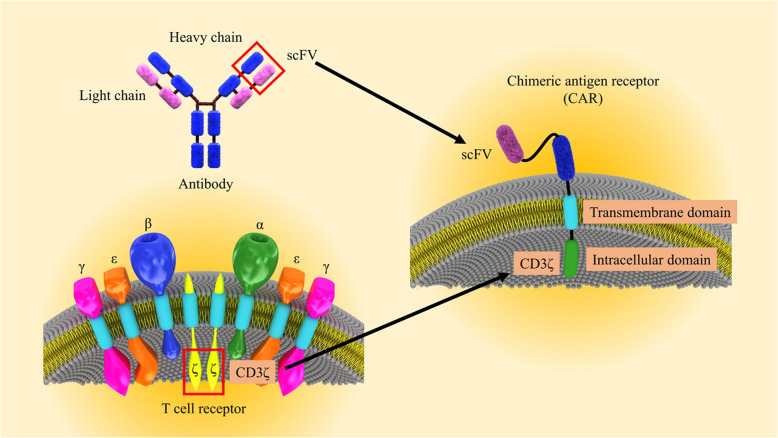
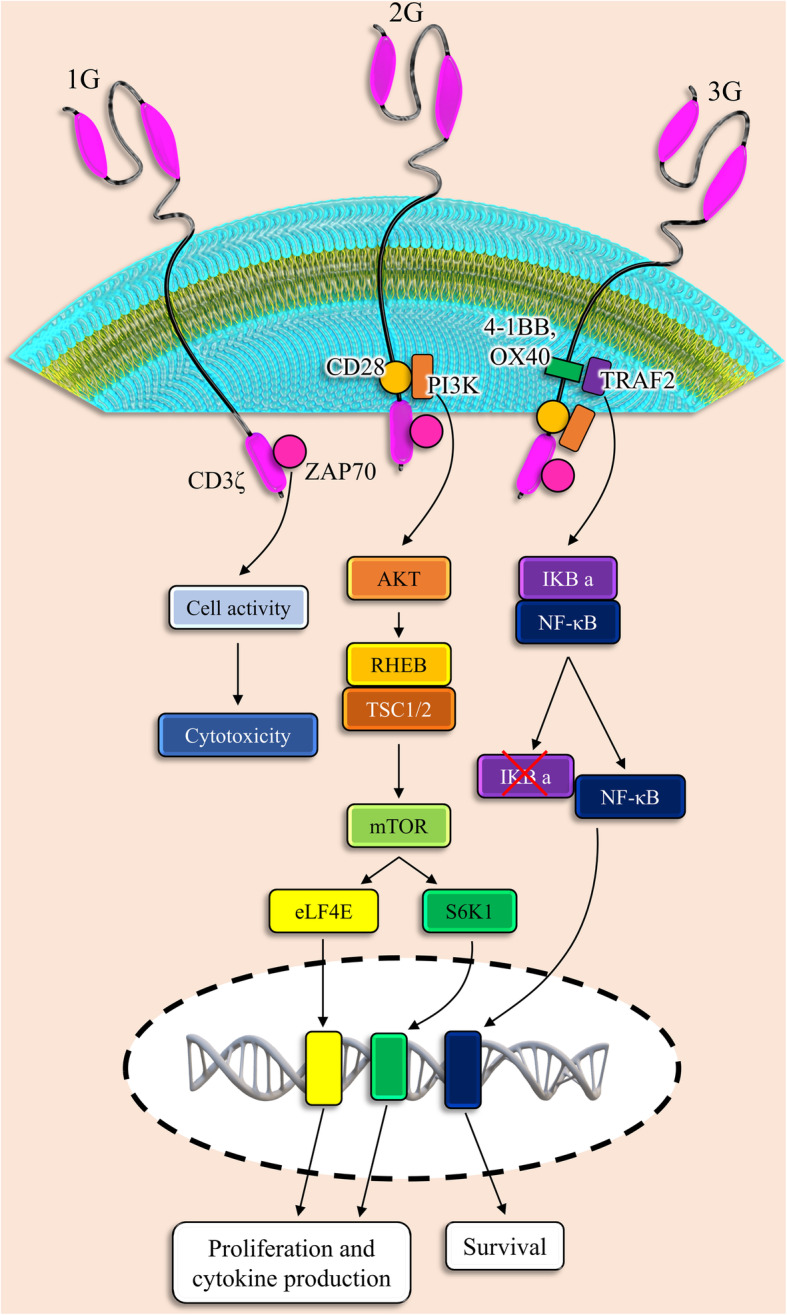
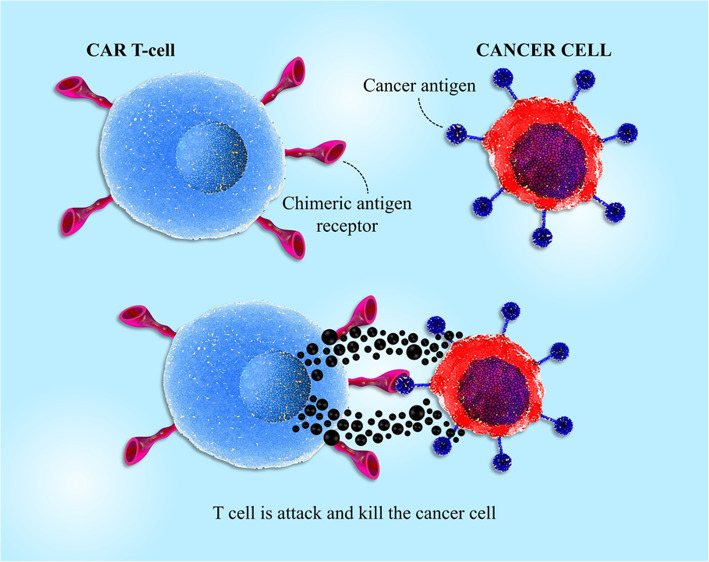
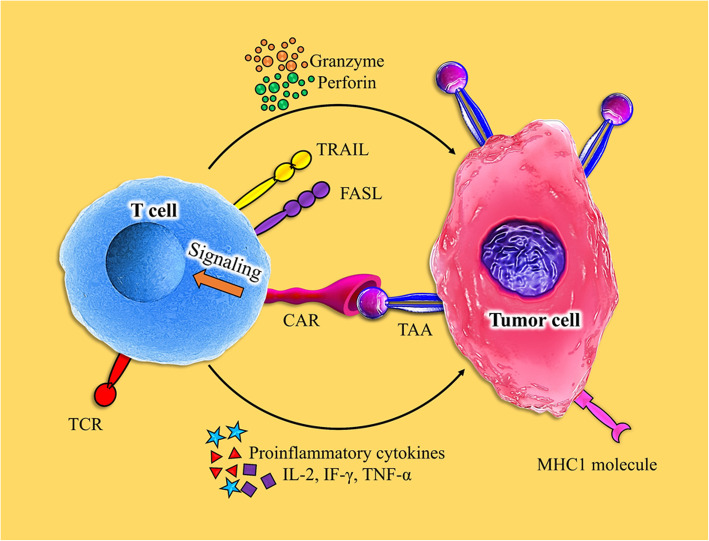
BACKGROUND: CARs are simulated receptors containing an extracellular single-chain variable fragment (scFv), a transmembrane domain, as well as an intracellular region of immunoreceptor tyrosine-based activation motifs (ITAMs) in association with a co-stimulatory signal. MAIN BODY: Chimeric antigen receptor (CAR) T cells are genetically engineered T cells to express a receptor for the recognition of the particular surface marker that has given rise to advances in the treatment of blood disorders. The CAR T cells obtain supra-physiological properties and conduct as "living drugs" presenting both immediate and steady effects after expression in T cells surface. But, their efficacy in solid tumor treatment has not yet been supported. The pivotal challenges in the field of solid tumor CAR T cell therapy can be summarized in three major parts: recognition, trafficking, and surviving in the tumor. On the other hand, the immunosuppressive tumor microenvironment (TME) interferes with T cell activity in terms of differentiation and exhaustion, and as a result of the combined use of CARs and checkpoint blockade, as well as the suppression of other inhibitor factors in the microenvironment, very promising results were obtained from the reduction of T cell exhaustion. CONCLUSION: Nowadays, identifying and defeating the mechanisms associated with CAR T cell dysfunction is crucial to establish CAR T cells that can proliferate and lyse tumor cells severely. In this review, we discuss the CAR signaling and efficacy T in solid tumors and evaluate the most significant barriers in this process and describe the most novel therapeutic methods aiming to the acquirement of the promising therapeutic outcome in non-hematologic malignancies.
Overview
The claims and statistics of this paper haven’t been checked yet.
Free: it reads the open-access text and checks the first 5 claims that cite a source we can check. Create a free account to check every claim.
Integrity signals
Registry
Cites
Statistics
Figures
Verification
Claims the paper makes
The claims and statistics of this paper haven’t been checked yet.
Free: it reads the open-access text and checks the first 5 claims that cite a source we can check. Create a free account to check every claim.
Claims other papers make about this one
Each is checked against this paper’s own text: does it say what the citing paper says it does?
The cited source says what the claim attributes to it.
In the citing paper
“CD133‐CAR‐T therapy in colorectal, pancreatic and hepatocellular carcinoma has shown anti‐metastatic potential in a phase I clinical trial [91].”
From Tumor microenvironment signaling and therapeutics in cancer progression (2023) · cites this paper as [91]
Self-check
Percentages, sums and reported differences re-computed from the paper’s own numbers.
The self-check needs the paper’s full text.
Citations
Cites
Microenvironmental regulation of tumor progression and metastasis
Quail, D. F., & Joyce, J. A. (2013) · Nature Medicine · doi:10.1038/nm.3394 · Cited by 7,994 · cited 1×
“Regulatory T cells (Tregs), myeloid-derived suppressor cells (MDSCs), and M2 tumor-associated macrophages (TAMs) are the most prominent types of immune suppressor cells in the tumor environment [122, 123].”
BackgroundUnderstanding the tumor immune microenvironment (TIME) for effective therapy
Binnewies, M., Roberts, E. W., Kersten, K., Chan, V., Fearon, D. F., Merad, M., Coussens, L. M., Gabrilovich, D. I., Ostrand-Rosenberg, S., Hedrick, C. C., et al. (2018) · Nature Medicine · doi:10.1038/s41591-018-0014-x · Cited by 6,145 · cited 1×
“immune checkpoint molecules such as CTLA-4 and PD-1 also reduce antitumor immunity [120, 124].”
BackgroundAccessories to the Crime: Functions of Cells Recruited to the Tumor Microenvironment
Hanahan, D., & Coussens, L. M. (2012) · Cancer Cell · doi:10.1016/j.ccr.2012.02.022 · Cited by 4,632 · cited 1×
“solid tumors can be strongly infiltrated by different cell types that support tumor growth, angiogenesis, and metastasis [121].”
BackgroundMelanoma-intrinsic β-catenin signalling prevents anti-tumour immunity
Spranger, S., Bao, R., & Gajewski, T. F. (2015) · Nature · doi:10.1038/nature14404 · Cited by 2,830 · cited 1×
“Identifying solid tumors requires cells to transition from the blood into the cancer site, and various abnormalities develop such that T cell infiltration is roughly blocked [113, 114].”
BackgroundMorgan, R. A., Yang, J. C., Kitano, M., Dudley, M. E., Laurencot, C. M., & Rosenberg, S. A. (2010) · Molecular Therapy · doi:10.1038/mt.2010.24 · Cited by 2,533 · cited 1×
“This catastrophic toxicity occurred for a patient with metastatic CRC who received Her2-CAR T cells [36] and a neuroblastoma patient who was treated with GD2-CAR T cells [37].”
BackgroundA human memory T cell subset with stem cell–like properties
Gattinoni, L., Lugli, E., Ji, Y., Pos, Z., Paulos, C. M., Quigley, M. F., Almeida, J. R., Gostick, E., Yu, Z., Carpenito, C., et al. (2011) · Nature Medicine · doi:10.1038/nm.2446 · Cited by 1,974 · cited 1×
“, CD4+, CD8+ αβ T cells, and γδ T cells) are superior to other cells with the aim of optimal tumor suppression [17, 18].”
BackgroundRegression of Glioblastoma after Chimeric Antigen Receptor T-Cell Therapy
Brown, C. E., Alizadeh, D., Starr, R., Weng, L., Wagner, J. R., Naranjo, A., Ostberg, J. R., Blanchard, M. S., Kilpatrick, J., Simpson, J., et al. (2016) · New England Journal of Medicine · doi:10.1056/nejmoa1610497 · Cited by 1,836 · cited 1×
“Intracranial transport has been exposed to be safe and to have an acceptable anti-cancer effect in glioblastoma [115], and intra-pleural transport of CAR T cells was more effective than their systemic administration in human pleural malignancy preclinical researches [116].”
BackgroundO’Rourke, D. M., Nasrallah, M. P., Desai, A., Melenhorst, J. J., Mansfield, K., Morrissette, J. J. D., Martinez-Lage, M., Brem, S., Maloney, E., Shen, A., et al. (2017) · Science Translational Medicine · doi:10.1126/scitranslmed.aaa0984 · Cited by 1,803
Eshhar, Z., Waks, T., Gross, G., & Schindler, D. G. (1993) · Proceedings of the National Academy of Sciences · doi:10.1073/pnas.90.2.720 · Cited by 1,658 · cited 1×
“Although CD3-ζ chain accretion is adequate to support cytolytic function in cytotoxic T cells (CTL) lines, it has been found that the strength of the essential signal to the presentation of the cytotoxic activity is lower compared with the other types of their functions [21].”
BackgroundThe Basic Principles of Chimeric Antigen Receptor Design
Sadelain, M., Brentjens, R., & Rivière, I. (2013) · Cancer Discovery · doi:10.1158/2159-8290.cd-12-0548 · Cited by 1,535 · cited 2×
“Alternative tactics independent of transgene integration, which used either RNA electroporation or cell surface conjugation, in turn, lead to the transient CAR expression and limitation of CAR T cell persistence beyond 7–14 days [3].”
BackgroundInfluential
Cited by
Items 201–300 of 617
CAR-T-Cell Therapy for Solid Tumors Positive for Fibronectin Extra Domain B
Zhang, Z., Liu, C., Yang, Z., & Yin, H. (2022) · Cells · doi:10.3390/cells11182863 · Cited by 22
“, antigens overexpressed on the surface of tumor cells, were initially considered to be an excellent target for CAR-T therapy, but their application resulted in the damage of normal healthy tissue throughout the body where these antigens are also present [5].”
BackgroundSalem, A. M., Mugundu, G. M., & Singh, A. P. (2023) · CPT Pharmacometrics & Systems Pharmacology · doi:10.1002/psp4.13009 · Cited by 23
“27 In numerous CAR T-cell clinical trials, adequate expansion and persistence of CAR T-cells has been shown to be a crucial element of improved clinical outcomes.”
BackgroundHeim, C., Moser, L. M., Kreyenberg, H., Bonig, H. B., Tonn, T., Wels, W. S., Gradhand, E., Ullrich, E., Meister, M. T., Koerkamp, M. J. A. G., et al. (2023) · Frontiers in Immunology · doi:10.3389/fimmu.2023.1228894 · Cited by 21
Caicedo, A., Morales, E., Moyano, A., Peñaherrera, S., Peña-Cisneros, J., Benavides-Almeida, A., Pérez-Meza, Á. A., Haro-Vinueza, A., Ruiz, C., Robayo, P., et al. (2023) · Pharmacological Research · doi:10.1016/j.phrs.2023.107018 · Cited by 23
Nanotechnology in Advancing Chimeric Antigen Receptor T Cell Therapy for Cancer Treatment
Kang, X., Mita, N., Zhou, L., Wu, S., Yue, Z., Babu, R. J., & Chen, P. (2024) · Pharmaceutics · doi:10.3390/pharmaceutics16091228 · Cited by 22
“Furthermore, antigen heterogeneity in solid tumors complicates the efficacy of CAR-T cells, as tumor-associated antigens (TAAs) are also expressed in normal cells in other regions, causing tumor off-target effects [91].”
BackgroundFeriz, A. M., Khosrojerdi, A., Lotfollahi, M., Shamsaki, N., GhasemiGol, M., HosseiniGol, E., Fereidouni, M., Rohban, M. H., Sebzari, A., Saghafi, S., et al. (2023) · Heliyon · doi:10.1016/j.heliyon.2023.e15694 · Cited by 21
“Hurdles race for CAR T ‐cell therapy in digestive tract cancer”
Kronig, M.-N., Wehrli, M., Salas‐Benito, D., & Maus, M. V. (2023) · Immunological Reviews · doi:10.1111/imr.13273 · Cited by 21
“90 93 The authors also reported on anti-CLDN18 anti-CLDN18.”
BackgroundChen, X., Liu, X., & Du, S. (2023) · Cancers · doi:10.3390/cancers15205046 · Cited by 23
Champagne, J., Nielsen, M. M., Feng, X., Navarro, J. M., Pataskar, A., Voogd, R., Giebel, L., Nagel, R., Berenst, N., Fumagalli, A., et al. (2025) · Immunity · doi:10.1016/j.immuni.2024.12.004 · Cited by 21
A Mathematical Model for On-Target Off-Tumor Effect of CAR-T Cells on Gliomas
Santurio, D. S., & Barros, L. R. C. (2022) · Frontiers in Systems Biology · doi:10.3389/fsysb.2022.923085 · Cited by 19
Yu, T., Jhita, N., Shankles, P. G., Fedanov, A., Kramer, N. B., Raikar, S. S., & Sulchek, T. (2023) · Lab on a Chip · doi:10.1039/d3lc00311f · Cited by 19
Nagy, L., Mezősi-Csaplár, M., Rebenku, I., Vereb, G., & Szöőr, Á. (2024) · Frontiers in Immunology · doi:10.3389/fimmu.2024.1365172 · Cited by 19
“An important point of concern is the single speci fi city of CAR T cells that can make therapy ineffective due to antigen loss or tumor heterogeneity (3).”
BackgroundGemcitabine: immunomodulatory or immunosuppressive role in the tumor microenvironment
Nemati, M., Hsu, C., Nathiya, D., Kumar, M., Oghenemaro, E. F., Kariem, M., Kaur, P., Bhanot, D., Hjazi, A. M., & Saedi, T. A. (2025) · Frontiers in Immunology · doi:10.3389/fimmu.2025.1536428 · Cited by 20
“There are some reasons to combine CAR T-cells with chemotherapy: 1) chemotherapy can act as bridging therapy to cover treatment intervals for preventing disease progression, 2) chemotherapy creates an optimal condition for CAR T-cell therapy, such as acting as lymphodepleting regimen, 3) chemotherapy can act as adjuva…”
InfluentialChimeric Antigen Receptor Design and Efficacy in Ovarian Cancer Treatment
Terlikowska, K. M., Dobrzycka, B., & Terlikowski, S. J. (2021) · International Journal of Molecular Sciences · doi:10.3390/ijms22073495 · Cited by 20
Immunotherapy of Neuroendocrine Neoplasms: Any Role for the Chimeric Antigen Receptor T Cells?
Fanciulli, G., Modica, R., Salvia, A. L., Campolo, F., Florio, T., Mikovic, N., Plebani, A., Vito, V. D., Colao, A., & Faggiano, A. (2022) · Cancers · doi:10.3390/cancers14163991 · Cited by 19
“Given the limitations of safety [73,74] and costs (possibly reaching and/or exceeding $400,000) [75], the assessment of the health outcomes versus alternative therapies will represent a crucial point.”
BackgroundMultiplexed engineering and precision gene editing in cellular immunotherapy
Biederstädt, A., Manzar, G. S., & Daher, M. (2022) · Frontiers in Immunology · doi:10.3389/fimmu.2022.1063303 · Cited by 20
Revolutionizing immunotherapy: The next frontier in CAR T-cell engineering
Suchiita, A., & Sonkar, S. C. (2025) · Critical Reviews in Oncology/Hematology · doi:10.1016/j.critrevonc.2025.104751 · Cited by 19
Tuyết, N. T., & Youn, Y. S. (2025) · Advanced Functional Materials · doi:10.1002/adfm.202426047 · Cited by 22
Kristmann, B., Werchau, N., Suresh, L., Pezzuto, E. L., Scheuermann, S., Krost, S., Schilbach, K., Moustafa-Oglou, M., Mast, A., Droste, M., et al. (2025) · Journal of Hematology & Oncology · doi:10.1186/s13045-025-01729-8 · Cited by 20
“However, this therapeutic efficacy remains to be mimicked against solid tumor entities [15].”
Current and potential roles of immuno-PET/-SPECT in CAR T-cell therapy
Mulgaonkar, A., Udayakumar, D., Yang, Y., Harris, S. F., Öz, O. K., Geethakumari, P. R., & Sun, X. (2023) · Frontiers in Medicine · doi:10.3389/fmed.2023.1199146 · Cited by 18
Armed with IL-2 based fusion protein improves CAR-T cell fitness and efficacy against solid tumors
Li, S., Xia, Y.-F., Hou, R., Wang, X., Zhao, X., Guan, Z., Ma, W., Xu, Y., Zhang, W., Liu, D., et al. (2024) · Biochimica et Biophysica Acta (BBA) - Molecular Basis of Disease · doi:10.1016/j.bbadis.2024.167159 · Cited by 18
Regulatory role of PPAR in colorectal cancer
Wang, C., Lv, T., Jin, B., Li, Y., & Fan, Z. (2025) · Cell Death Discovery · doi:10.1038/s41420-025-02313-2 · Cited by 23
Advancing Allogeneic NK Cell Immunotherapy through Microfluidic Gene Delivery
Kim, H., Lee, M. K., Han, B., Kim, J.-H., Cho, D., Doh, J., & Chung, A. J. (2025) · Advanced Science · doi:10.1002/advs.202412544 · Cited by 26
Chimeric Antigen Receptor T-Cell Therapy: What We Expect Soon
Martino, M., Naso, V., Loteta, B., Canale, F. A., Pugliese, M., Alati, C., Musuraca, G., Nappi, D., Gaimari, A., Nicolini, F., et al. (2022) · International Journal of Molecular Sciences · doi:10.3390/ijms232113332 · Cited by 17
“First, intra-tumor heterogeneity is one where cells of a solid tumor do not all present the same mix or sufficient expression for the antigens at their surfaces; thus, CAR-T cells could spare some cancer cells that will, later on, induce a relapse [62].”
BackgroundCell-Based Therapies for Solid Tumors: Challenges and Advances
Smolarska, A., Kokoszka, Z., Naliwajko, M., Strupczewska, J., Tondera, J., Wiater, M., & Orzechowska, R. (2025) · International Journal of Molecular Sciences · doi:10.3390/ijms26125524 · Cited by 18
“In response to challenges in applying CAR T cells in solid tumors [109–111], macrophages have emerged as a promising alternative effector cell type for CAR engineering owing to their intrinsic tumor-homing capacity and versatile immunomodulatory functions [112,113].”
The Promise of CAR T-Cell Therapy for the Treatment of Cancer Stem Cells: A Short Review
Poondla, N., Sheykhhasan, M., Akbari, M., Samadi, P., Kalhor, N., & Manoochehri, H. (2022) · Current Stem Cell Research & Therapy · doi:10.2174/1574888x17666220217101817 · Cited by 17
HER2 Inhibition in Gastric Cancer—Novel Therapeutic Approaches for an Established Target
Fong, C., & Chau, I. (2022) · Cancers · doi:10.3390/cancers14153824 · Cited by 17
“Another immunotherapy-based strategy is CAR-T cell therapy, but developing CAR-T in solid tumours has been challenging on the whole due to factors such as tumour antigen heterogeneity and difficulties in CAR-T penetration into the tumour tissue through vascular endothelium [104].”
BackgroundCancer cell targeting by CAR-T cells: A matter of stemness
D’Accardo, C., Porcelli, G., Mangiapane, L. R., Modica, C., Pantina, V. D., Roozafzay, N., Franco, S. D., Gaggianesi, M., Veschi, V., Iacono, M. L., et al. (2022) · Frontiers in Molecular Medicine · doi:10.3389/fmmed.2022.1055028 · Cited by 20
“CAR-T cell therapy efficacy is hindered by several factors such as the immunosuppressive microenvironment, tumor heterogeneity and CSCs plasticity and immune escape capacity (Gilham et al., 2012; Marofi et al., 2021).”
BackgroundModeling interaction of Glioma cells and CAR T-cells considering multiple CAR T-cells bindings
Li, R., Sahoo, P., Wang, D., Wang, Q., Brown, C. E., Rockne, R. C., & Cho, H. (2023) · ImmunoInformatics · doi:10.1016/j.immuno.2023.100022 · Cited by 20
“At last, different cells can infiltrate solid tumors and help to support its growth, which restricts CAR T-cell therapy in the end [18].”
BackgroundMicrophysiological Systems for Cancer Immunotherapy Research and Development
Peng, Y., & Lee, E. (2023) · Advanced Biology · doi:10.1002/adbi.202300077 · Cited by 17
Zhang, Z., Liu, C., Wang, M., Sun, R., Yang, Z., Hua, Z., Wu, Y., Wu, M., Wang, H., Qiu, W., et al. (2023) · Journal for ImmunoTherapy of Cancer · doi:10.1136/jitc-2023-007199 · Cited by 17
Sodji, Q. H., Forsberg, M. H., Cappabianca, D., Kerr, C. P., Sarko, L. E., Shea, A., Adam, D. P., Eickhoff, J. C., Ong, I. M., Hernandez, R. T., et al. (2023) · Cancers · doi:10.3390/cancers16010191 · Cited by 19
“non-hematological solid tumors for numerous reasons including lack of persistence lack of infiltration into the immunosuppressive tumor microenvironment antigen expression by tumor cells [11].”
BackgroundPirsadeghi, A., Namakkoobi, N., Behzadi, M. S., Pourzinolabedin, H., Askari, F., Shahabinejad, E., Ghorbani, S., Asadi, F., Hosseini‐Chegeni, A., Yousefi‐Ahmadipour, A., et al. (2024) · Cells and Development · doi:10.1016/j.cdev.2024.203904 · Cited by 19
Orthogonalized human protease control of secreted signals
Aldrete, C. A., Call, C. C., Sant’Anna, L. E., Vlahos, A. E., Pei, J., Cong, Q., & Gao, X. J. (2025) · Nature Chemical Biology · doi:10.1038/s41589-024-01831-x · Cited by 17
“Despite their promise, many cellular therapeutics are susceptible to changes in the local microenvironment 7–9 .”
Coating bacteria for anti-tumor therapy
Wang, J., Guo, N., Hou, W., & Qin, H. (2022) · Frontiers in Bioengineering and Biotechnology · doi:10.3389/fbioe.2022.1020020 · Cited by 17
“Potential side effects restrict the clinical application of CAR-T cell therapy, such as B cell abnormalities (Marofi et al., 2021).”
BackgroundArnaudo, L. (2022) · Journal of Law and the Biosciences · doi:10.1093/jlb/lsac027 · Cited by 17
An Fc Binding Peptide-Based Facile and Versatile Build Platform for Multispecific Antibodies
Xue, F., Yao, H., Cui, L., Huang, Y., Shao, C., Shen, N., Hu, J., Tang, Z., & Chen, X. (2023) · Nano Letters · doi:10.1021/acs.nanolett.3c00071 · Cited by 17
He, M., Zhang, D., Cao, Y., Chi, C., Zeng, Z., Yang, X., Yang, G., Sharma, K., Hu, K., & Enikeev, M. E. (2023) · Heliyon · doi:10.1016/j.heliyon.2023.e19147 · Cited by 17
“Current research on CAR-T immunotherapy in solid tumors is still primarily based on second-generation CARs and has not achieved the expected outcomes [21].”
BackgroundNguyen, D., Liu, R., Ogando‐Rivas, E., Pepe, A., Pedro, D. I., Qdaisat, S., Nguyen, N. T. Y., Lavrador, J. M., Golde, G. R., Smolchek, R. A., et al. (2023) · Acta Biomaterialia · doi:10.1016/j.actbio.2023.09.042 · Cited by 18
Nejo, T., Wang, L., Leung, K., Wang, A., Lakshmanachetty, S., Gallus, M., Kwok, D. W., Hong, C., Chen, L. H., Carrera, D. A., et al. (2024) · Scientific Reports · doi:10.1038/s41598-024-56684-0 · Cited by 17
Acidic pH can attenuate immune killing through inactivation of perforin
Hodel, A. W., Rudd-Schmidt, J. A., Noori, T., Lupton, C. J., Cheuk, V. C. T., Trapani, J. A., Hoogenboom, B. W., & Voskoboinik, I. (2025) · EMBO Reports · doi:10.1038/s44319-024-00365-6 · Cited by 17
Engineering NK and T cells with metabolite-sensing receptors to target solid tumors
Kim, Y., Tsai, M. K., Sun, C., Laveroni, O., Akana, R. V., Frombach, K. R., & Jerby‐Arnon, L. (2026) · Nature Immunology · doi:10.1038/s41590-026-02473-y · Cited by 16
Facing CAR T Cell Challenges on the Deadliest Paediatric Brain Tumours
Ferreras, C., Fernández, L., Villa, L. C., Ibáñez-Navarro, M., Martín-Cortázar, C., Esteban‐Rodríguez, I., Saceda-Gutierrez, J. M., & Pérez‐Martínez, A. (2021) · Cells · doi:10.3390/cells10112940 · Cited by 18
Applying Spatiotemporal Modeling of Cell Dynamics to Accelerate Drug Development
Chen, X., Xu, S., Chu, B., Guo, J., Zhang, H.-K., Sun, S.-Y., Song, L., & Feng, X. (2024) · ACS Nano · doi:10.1021/acsnano.4c12599 · Cited by 18
Challenges and perspectives of CAR-T cell therapy in solid tumours: insights from gastric cancer
Zhou, J. (2025) · British Journal of Cancer · doi:10.1038/s41416-025-03100-7 · Cited by 17
“…to haematologic malignancies, where regulatory pathways and treatment guidelines are relatively well-de fi ned, CAR-T trials in solid tumours exhibit pronounced variability in patient selection criteria, cell manufacturing processes, safety monitoring practices, and ef fi cacy endpoints [132].”
CARs and Drugs: Pharmacological Ways of Boosting CAR-T-Cell Therapy
Harrer, D. C., Dörrie, J., & Schaft, N. (2023) · International Journal of Molecular Sciences · doi:10.3390/ijms24032342 · Cited by 16
“has been extensively reviewed elsewhere [14,69,92].”
BackgroundInfluentialFang, X., Yan, S., He, L., & Deng, C. (2025) · Frontiers in Immunology · doi:10.3389/fimmu.2025.1735763 · Cited by 17
“Conventional CAR-T products, primarily based on ab T cells, limit their cytotoxicity against tumor cells with downregulated or absent MHC molecules (3, 4).”
CAR-T cells in solid tumors: engineering, biomarkers, translational pathways and the road ahead
Shaer, N. S. H. A., Masoud, I., Tleyjeh, A., Al-Attas, A. A., Al-Attas, M. A., Khan, M. I., & Yaqinuddin, A. (2026) · Frontiers in Immunology · doi:10.3389/fimmu.2026.1796675 · Cited by 17
Roquin-dependent gene regulation in immune-mediated diseases and future therapies
Raj, T., Negraschus, A., & Heissmeyer, V. (2022) · International Immunology · doi:10.1093/intimm/dxac059 · Cited by 15
Current Immunotherapeutic Approaches for Malignant Gliomas
Han, M., & Kim, C. H. (2022) · Brain Tumor Research and Treatment · doi:10.14791/btrt.2022.10.e25 · Cited by 15
“In addition, there are other obstacles to CAR-T cell therapy, including limitations of trafficking and infiltration into tumor tissue owing to the BBB, immunosuppressive tumor microenvironment, systemic inflammatory response such as cytokine release syndrome, and limitation of CAR T cell persistence [59,60].”
BackgroundHeterogeneity of the tumor immune microenvironment and clinical interventions
Jin, Z., Zhou, Q., Cheng, J., Jia, Q., & Zhu, B. (2023) · Frontiers of Medicine · doi:10.1007/s11684-023-1015-9 · Cited by 15
Knopik-Skrocka, A., Sempowicz, A., & Piwócka, O. (2024) · EXCLI journal · doi:10.17179/excli2024-6972 · Cited by 15
Li, M., Chen, T., Huang, R., Cen, Y., Zhao, F., Fan, R., & He, G. (2025) · Arab Journal of Gastroenterology · doi:10.1016/j.ajg.2024.12.002 · Cited by 14
Potential roles of hyaluronic acid in in vivo CAR T cell reprogramming for cancer immunotherapy
Laomeephol, C., Areecheewakul, S., Tawinwung, S., Suppipat, K., Chunhacha, P., Neves, N. M., & Luckanagul, J. A. (2022) · Nanoscale · doi:10.1039/d2nr05949e · Cited by 14
Rha, S. Y., & Chung, H. C. (2023) · Journal of the Korean Gastric Cancer Association · doi:10.5230/jgc.2023.23.e6 · Cited by 16
Engineering enhanced chimeric antigen receptor-T cell therapy for solid tumors
Neeser, A., Ramasubramanian, R., Wang, C., & Ma, L. (2023) · Immuno-Oncology Technology · doi:10.1016/j.iotech.2023.100385 · Cited by 16
“Despite success in hematologic malignancies, CAR-T cell therapy has been largely disappointing in treating solid tumors.(2,6) Strides have been taken to elucidate the underlying mechanisms of CAR-T failure in solid tumors, and many obstacles have been identified using preclinical”
BackgroundEngineered TCR T-cell therapy targeting mass spectrometry-identified natural epitope in PDAC
Wang, J., Zhang, T., Li, P., Gai, J., Chen, S. Y., Espinoza, G., Kung, H., Zhang, R., Fujiwara, K., Fu, J. L., et al. (2023) · Cancer Letters · doi:10.1016/j.canlet.2023.216366 · Cited by 14
Kashyap, D., & Salman, H. (2024) · International Journal of Molecular Sciences · doi:10.3390/ijms25073780 · Cited by 13
CAR-T cell therapy in advanced thyroid cancer: from basic to clinical
Sun, Z., Wang, C., Zhao, Y., & Ling, Q. (2024) · Frontiers in Immunology · doi:10.3389/fimmu.2024.1411300 · Cited by 21
Mei, A. H.-C., Letscher, K. P., & Reddy, S. T. (2024) · Current Opinion in Biotechnology · doi:10.1016/j.copbio.2024.103223 · Cited by 15
Intraocular injectable hydrogels for the delivery of cells and nanoparticles
Moreno, E. I., Alonso, M. J., & Abbadessa, A. (2025) · Materials Today Bio · doi:10.1016/j.mtbio.2025.101767 · Cited by 18
“Clinical trials have already begun in lung cancer, ovarian cancer and breast cancer, among others [130].”
Advances and challenges in cancer immunotherapy: Strategies for personalized treatment
Azmal, M., Miah, M. M., Prima, F. S., Paul, J. K., Haque, A. S. N. B., & Ghosh, A. (2025) · Seminars in Oncology · doi:10.1016/j.seminoncol.2025.152345 · Cited by 13
Anitha, K., Chenchula, S., Vardhan, K. V., Padmavathi, R., Varshini, T. S., Amerneni, L. S., Amerneni, K. C., & Chavan, M. R. (2025) · Medical Oncology · doi:10.1007/s12032-025-02923-x · Cited by 15
“Such evasion strategies can compromise the effectiveness of CAR-T-cell therapy [286].”
Wang, H., & Pan, W. (2022) · Molecular and Cellular Biochemistry · doi:10.1007/s11010-022-04568-0 · Cited by 13
“TAG72 can be highly expressed by ovarian tumor cells, and TAG72-specific CAR-T cells could have anti-proliferative effects and cytokine production and cytotoxicity for tumor cells, resulting in a higher rate of mice survival [51].”
BackgroundInfluentialCAR-T Cells and the Kidney: Insights from the WHO Safety Database
Gérard, A. O., Merino, D., Charbinat, A., Fournier, J., Destère, A., Loschi, M. L., Cluzeau, T., Sicard, A., & Drici, M. (2023) · BioDrugs · doi:10.1007/s40259-023-00599-1 · Cited by 13
“CAR-T cells are now being investigated in some solid tumor malignancies[10] as well as autoimmune diseases [11].”
BackgroundAzar, H. K., Imanpour, A., Rezaee, H., Ezzatifar, F., Zarei‐Behjani, Z., Rostami, M., Azami, M., Beheshtizadeh, N., & Rezaei, N. (2023) · European Journal Of Haematology · doi:10.1111/ejh.14014 · Cited by 13
“11,137 Efficient trafficking and survival of CAR-T cells within the tumor microenvironment is a promising immunotherapy approach that requires essential elements for the ACT, such as checkpoint inhibitors, chemokine receptors, and adhesion molecules expressed on T cells.”
BackgroundMolecular mechanism of co-stimulatory domains in promoting CAR-T cell anti-tumor efficacy
Zhao, W., Yao, Y., Li, Q., Xue, Y., Gao, X., Liu, X., Zhang, Q. H., Zheng, J., & Sun, S. (2024) · Biochemical Pharmacology · doi:10.1016/j.bcp.2024.116439 · Cited by 13
Biomaterials enhancing localized cancer therapy activated anti-tumor immunity: a review
Yao, J., Cui, Z., Zhang, F., Li, H., & Tian, L. (2025) · Journal of Materials Chemistry B · doi:10.1039/d4tb01995d · Cited by 14
Chimeric Antigen Receptor Cell Therapy: Empowering Treatment Strategies for Solid Tumors
Jaing, T., Hsiao, Y.-W., & Wang, Y.-L. (2025) · Current Issues in Molecular Biology · doi:10.3390/cimb47020090 · Cited by 12
“Localized injection of CAR-T cells is more efficacious in confined tumor locations, with intracranial transport being safe and effective in glioblastoma [21,22].”
Antibody targeted delivery of lipid nanoparticles for RNA therapeutics to immune cells
Kiaie, S. H., Salehi‐Shadkami, H., Sajadi, S. M. S., Gharehchelou, B., & Zangi, A. R. (2025) · International Journal of Biological Macromolecules · doi:10.1016/j.ijbiomac.2025.145854 · Cited by 14
Giudice, A. M., Matlaga, S., Roth, S. L., Pascual‐Pasto, G., Schürch, P. M., Rouin, G. T., McIntyre, B. C., Grothusen, G. P., Cresswell-Clay, E., Shraim, R., et al. (2025) · Science Translational Medicine · doi:10.1126/scitranslmed.ads4214 · Cited by 13
Heterogeneity in Pancreatic Cancer Fibroblasts—TGFβ as a Master Regulator?
Watt, D. M., & Morton, J. P. (2021) · Cancers · doi:10.3390/cancers13194984 · Cited by 14
Cell Squeeze: driving more effective CD8 T-cell activation through cytosolic antigen delivery
Park, J. C., Bernstein, H., Loughhead, S. M., Zwirtes, R. F., Jennings, J. K., Nicolini, V., Klein, C., Deak, L. C., Umaña, P., Trumpfheller, C., et al. (2022) · Immuno-Oncology Technology · doi:10.1016/j.iotech.2022.100091 · Cited by 14
From barriers to novel strategies: smarter CAR T therapy hits hard to tumors
Khawar, M. B., Ge, F., Afzal, A., & Sun, H. (2023) · Frontiers in Immunology · doi:10.3389/fimmu.2023.1203230 · Cited by 13
“The immune-suppressive effect of MDSCs also has an unfavorable effect on CAR T cell therapy (35).”
BackgroundMultimodal probing of T-cell recognition with hexapod heterostructures
Huang, X., Meng, L., Cao, G., Promiński, A., Hu, Y., Yang, C., Chen, M., Shi, J., Gallagher, C., Cao, T., et al. (2024) · Nature Methods · doi:10.1038/s41592-023-02165-7 · Cited by 12
“We envision that the hexapod platform may facilitate large-scale screening for the rational design of next-generation high-sensitivity CARs against solid tumors with antigen downregulation and loss 30 .”
CAR-modified immune cells as a rapidly evolving approach in the context of cancer immunotherapies
Faeq, M. H., Al-Haideri, M. T., Mohammad, T. A. M., Gharebakhshi, F., Marofi, F., Tahmasebi, S., & Modaresahmadi, S. (2023) · Medical Oncology · doi:10.1007/s12032-023-02019-4 · Cited by 12
Self-citationTargeting STEAP1 as an anticancer strategy
Nakamura, H., Arihara, Y., & Takada, K. (2023) · Frontiers in Oncology · doi:10.3389/fonc.2023.1285661 · Cited by 11
Teer, L., Yaddanapudi, K., & Chen, J. (2024) · Bioengineering · doi:10.3390/bioengineering11010093 · Cited by 12
“This bypasses the need for TCR binding by directly focusing on antigen receptor binding [151], which could limit the mechanosensing capacity of the CAR T cells if the antigen receptor is less mechanosensitive.”
BackgroundMuc16CD is a novel CAR T cell target antigen for the treatment of pancreatic cancer
Lin, H. K., Blake, D. A., Liu, T., Freeman, R., Lesinski, G. B., Yang, L. P. H., & Rafiq, S. (2024) · Molecular Therapy Oncology · doi:10.1016/j.omton.2024.200868 · Cited by 11
Looi, C.-K., Loo, E.-M., Lim, H.-C., Chew, Y.-L., Chin, K., Cheah, S., Goh, B. H., & Mai, C. (2024) · Frontiers in Immunology · doi:10.3389/fimmu.2024.1484535 · Cited by 11
“Additionally, the ef fi cacy of immunotherapy may be restricted by an immunologically cold or immunosuppressive TME and its clinical success has primarily been limited to haematological malignancies (202, 203).”
BackgroundYoon, J., Fagan, E., Jeong, M., & Park, J. (2024) · ACS Nano · doi:10.1021/acsnano.4c03518 · Cited by 12
IL-7 armed binary CAR T cell strategy to augment potency against solid tumors
Chavez, A. G. T., McKenna, M. K., Gupta, A., Daga, N., Vera, J. F., Leen, A. M., & Bajgain, P. (2025) · Frontiers in Immunology · doi:10.3389/fimmu.2025.1618404 · Cited by 12
Zhao, X., Zhao, B., Sun, Y., & Liu, A. (2025) · Frontiers in Immunology · doi:10.3389/fimmu.2025.1655095 · Cited by 15
“To address these limitations, researchers have developed CAR-NK cells (6, 7)and CAR-macrophage (CAR-M) cell therapies (8, 9).”
Ji, F., Yan, K., Ding, B., Zhu, Y., Rao, M., Gao, K., Lin, H., Shan, Y., Liu, S., Xiao, Z., et al. (2025) · Oncogene · doi:10.1038/s41388-025-03663-y · Cited by 12
Zhu, W., Wang, Y., Lv, L., Wang, H., Shi, W., Liu, Z., Zhou, M., Zhu, J., & Lu, H. (2023) · Acta Pharmaceutica Sinica B · doi:10.1016/j.apsb.2023.02.004 · Cited by 11
Engineered T Cell Receptor for Cancer Immunotherapy
Lee, S. W., & Lee, H. (2024) · Biomolecules & Therapeutics · doi:10.4062/biomolther.2023.197 · Cited by 12
“To expand the application of CAR-T cell therapy, surface targets from different solid tumors are being explored in both in vitro studies and clinical trials (Marofi et al ., 2021).”
BackgroundNikoo, M., Rudiansyah, M., Bokov, D. O., Jainakbaev, N. T., Suksatan, W., Ansari, M. J., Thangavelu, L. P., Chupradit, S., Zamani, A., Adili, A., et al. (2022) · Journal of Cellular and Molecular Medicine · doi:10.1111/jcmm.17465 · Cited by 11
Self-citationNota, S. P. F. T., Osei-Hwedieh, D. O., Drum, D. L., Wang, X., Sabbatino, F., Ferrone, S., & Schwab, J. H. (2022) · Frontiers in Oncology · doi:10.3389/fonc.2022.939166 · Cited by 11
Advanced Strategies of CAR-T Cell Therapy in Solid Tumors and Hematological Malignancies
Liu, Y., Cao, P., Ahad, F., Zaidi, S. A. A., Muluh, T. A., & Fu, Q. (2024) · Recent Patents on Anti-Cancer Drug Discovery · doi:10.2174/0115748928277331231218115402 · Cited by 10
ATLAS-seq: a microfluidic single-cell TCR screen for antigen-reactive TCRs
Luo, S., Notaro, A., & Lin, L. (2025) · Nature Communications · doi:10.1038/s41467-024-54675-3 · Cited by 11
“Because there are farmoretumor-speci fi c proteinsequences within a cell that can be presented by the MHC than there are tumor-speci fi c proteins on the cell surface 4 , TCR therapies have a potentially broader applicability, especially in the treatment of solid tumors 4,5 .”
Zhang, X., Feng, Z., Haran, A. P., & Hua, X. (2025) · OncoImmunology · doi:10.1080/2162402x.2025.2458843 · Cited by 10
“20,21 On the other hand, TIM-3 binding scFv was linked to the 41BB domain, a co-stimulatory receptor that syner-gizes with CD3zeta domain to elevate target specific cytotoxic effects.”
Review of Adoptive Cellular Therapies for the Treatment of Sarcoma
Fradin, J. J., & Charlson, J. A. (2025) · Cancers · doi:10.3390/cancers17081302 · Cited by 10
Zhang, X., Shi, H., Qiu, L., Gao, Z., Xu, J., Zhou, X., Xia, Z., Radhakrishna, G., Jiao, X., & Qin, S. (2025) · Journal of Gastrointestinal Oncology · doi:10.21037/jgo-2025-564 · Cited by 10
“Solid tumors are characterized by an immunosuppressive microenvironment containing Tregs, MDSCs, and M2 macrophages, which collectively hinder the efficacy of immune-based therapies (27,28).”
PLGA-integrated micro/nanoparticles for cargo delivery and nanomedicine of lung cancer
Kakavandi, S., Zare, I., Esmaeilnejad, N., Sarhadi, M., Hheidari, A., Shojaei, S., Fatahi, Y., Mirshafiei, M., Zhang, M., Sharifianjazi, F., et al. (2025) · International Journal of Pharmaceutics · doi:10.1016/j.ijpharm.2025.126339 · Cited by 10
Photocontrolled trimethoprim PROTACs targeting the eDHFR protein tag
Sharma, N., Sarkar, S., Ko, T., Edwards, K. J., Pham, J. M., Nguyen, T., Gong, A. Z., Flores, J. I., Trauner, D. H., & Sellmyer, M. A. (2025) · Nature Communications · doi:10.1038/s41467-025-67527-5 · Cited by 10
“Addressing these challenges is crucial to improve the safety and effectiveness of CAR T cell therapy, especially for the treatment of solid tumors 14 .”
Georgiou‐Siafis, S. K., Miliotou, Α. N., Ntenti, C., Pappas, I. S., & Papadopoulou, L. C. (2022) · Biomedicines · doi:10.3390/biomedicines10112885 · Cited by 10
“In addition, high-edge CAR immunotherapy is being developed for solid tumors as well, with clinical studies being performed with excellent remission results in ovarian [8], breast [9], prostate [10], brain [11], renal [12], gastric [13], pancreatic [14], lung [15], liver [16] and colorectal cancer [17].”
BackgroundEmpowering gene delivery with protein engineering platforms
Kizerwetter, M., Pietz, K., Tomasovic, L. M., & Spangler, J. B. (2022) · Gene Therapy · doi:10.1038/s41434-022-00379-6 · Cited by 11
Silva, G. P. D. L., Rodrigues, A. F., Ferreira, S., Matos, C., Eleutério, R. P., Marques, G., Kucheryava, K., Lemos, A. R., Sousa, P. M. F., Castro, R., et al. (2023) · Biomolecules · doi:10.3390/biom13030459 · Cited by 10
Release Assays and Potency Assays for CAR T-Cell Interventions
Dias, J., Cadiñanos-Garai, A., & Roddie, C. (2023) · Advances in experimental medicine and biology · doi:10.1007/978-3-031-30040-0_8 · Cited by 12
Pscheid, R., Drent, E., Wienke, J., Strijker, J. G. M., Throsby, M., & Molenaar, J. J. (2023) · The Journal of Immunology · doi:10.4049/jimmunol.2200573 · Cited by 10
Metadata
- Authors
- Marofi, F., Motavalli, R., Safonov, V. A., Thangavelu, L., Yumashev, A. V., Alexander, M., Shomali, N., Chartrand, M. S., Pathak, Y., Jarahian, M., Izadi, S., Hassanzadeh, A., Shirafkan, N., Tahmasebi, S., & Khiavi, F. M.
- Affiliations
- Tabriz University of Medical Sciences (IR)
- Russian Academy of Sciences (RU)
- Saveetha University (IN)
- Sechenov University (RU)
- Industrial University of Tyumen (RU)
- German Cancer Research Center (DE)
- University of South Florida (US)
- Pasteur Institute of Iran (IR)
- Corresponding author
- Motavalli, Roza
- Khiavi, Farhad Motavalli
- ORCID
- Venue
- Stem Cell Research & Therapy
- Published
- 2021-01-25
- Volume
- 12
- Issue
- 1
- Pages
- 81-81
- ISSN
- 1757-6512 (ISSN-L)
- PMC
- PMC7831265
- OpenAlex
- W3122724341
- Semantic Scholar
- b0c68f34468a84453d091f534295485c1a741b8c
- Cited by
- 582
- References
- 149
- Citations by year
- 2026: 63 · 2025: 105 · 2024: 120 · 2023: 133 · 2022: 121 · 2021: 39
- FWCI
- 12.51
- Type
- journal article
- Language
- en
- Open access
- gold
- doi.org
- Licence
- cc-by
- creativecommons.org/licenses/by/4.0 (tdm)
- creativecommons.org/licenses/by/4.0 (vor)
- Locations
- Stem Cell Research & Therapy (publishedVersion, cc-by)
- PubMed Central (publishedVersion, cc-by)
- PubMed (publishedVersion)
- DOAJ (DOAJ: Directory of Open Access Journals) (submittedVersion, cc-by-sa)
- Topics
- Health Sciences › Medicine › Oncology › CAR-T cell therapy research
- Health Sciences › Medicine › Oncology › Cancer Immunotherapy and Biomarkers
- Life Sciences › Immunology and Microbiology › Immunology › Immunotherapy and Immune Responses
- Keywords
- chimeric antigen receptor T cells, solid tumors, chimeric antigen receptor, tumor microenvironment, T cell exhaustion, immune checkpoint blockade, CAR signaling, T cell migration, tumor recognition, non-hematologic malignancies, T cell survival
- MeSH terms
- Receptors, Chimeric Antigen, Humans, Neoplasms, T-Lymphocytes, Immunotherapy, Adoptive, Tumor Microenvironment
About these checks
Registry, retraction, Cites and statistics results are computed, not judged, with one exception: a printed reference that no index lists is read once by a model before it counts as a citation error. Claims are extracted by a model and kept only when their quote appears verbatim in the text; each cited source is then checked, with a model’s help, for whether it says what the claim relies on. Those verdicts can be wrong — read the claim’s quote and the cited source before relying on one.
Statistics and arithmetic are recomputed, not judged.
Confidence bands are shown only for fields calibrated on our annotated test set. None is calibrated yet, so no band is shown.
What counts as a claim ›How we measure confidence ›How we check this ›
Are you an author, or do you see a problem with this page? Request a review
Data sources
Bibliographic data: Semantic Scholar, OpenAlex, Crossref.
Contains information from the Semantic Scholar Academic Graph Datasets, made available under the ODC Attribution License (ODC-BY 1.0).
Semantic Scholar’s data is described in: Kinney, R., et al. (2023). The Semantic Scholar Open Data Platform. arXiv:2301.10140.
