

CAR T cells in solid tumors: challenges and opportunities
Open accessThe DOI matches its Crossref record; 150 of the 150 references it cites were found in a registry or an index.
Abstract
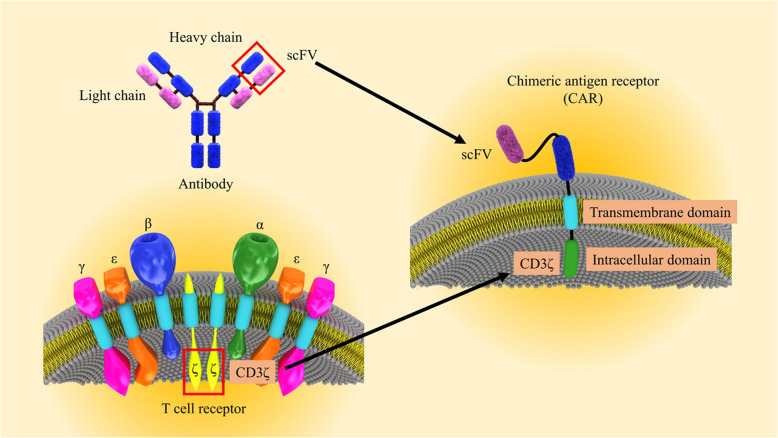
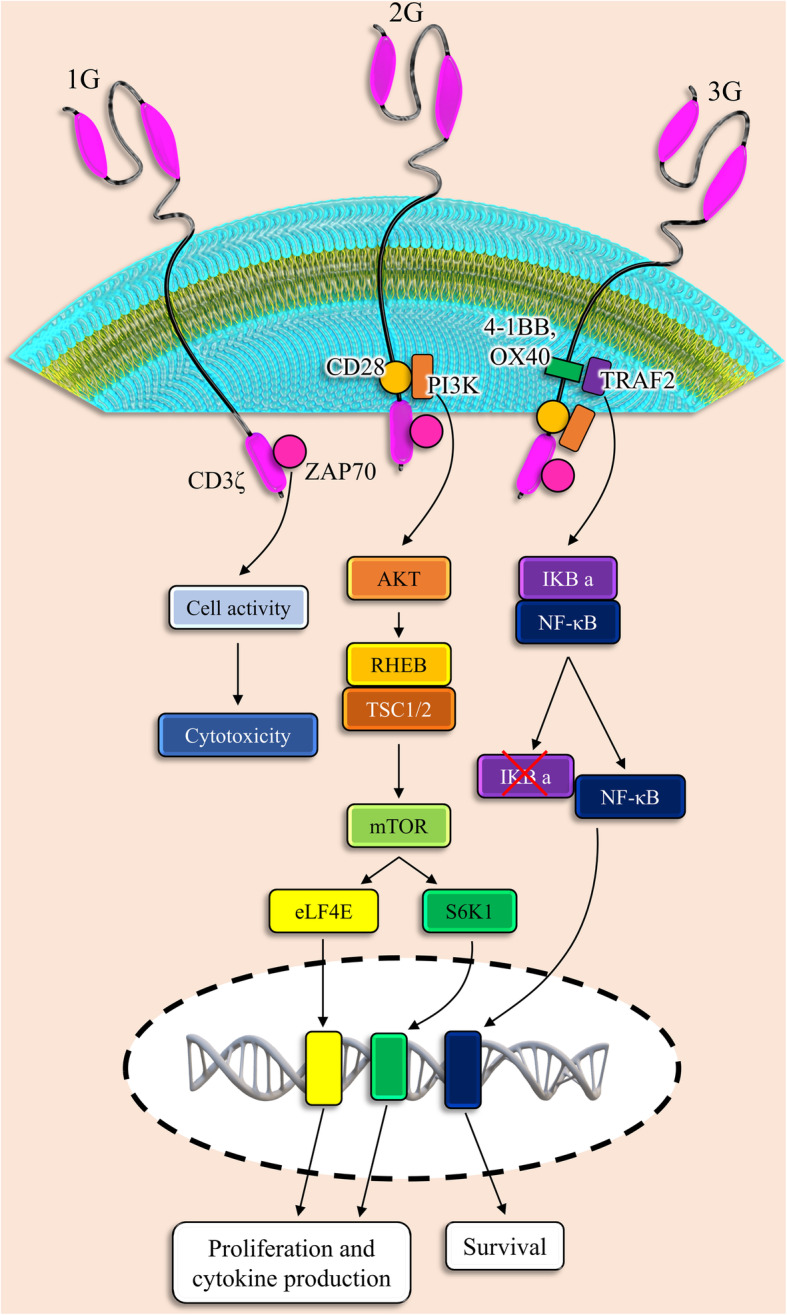
BACKGROUND: CARs are simulated receptors containing an extracellular single-chain variable fragment (scFv), a transmembrane domain, as well as an intracellular region of immunoreceptor tyrosine-based activation motifs (ITAMs) in association with a co-stimulatory signal. MAIN BODY: Chimeric antigen receptor (CAR) T cells are genetically engineered T cells to express a receptor for the recognition of the particular surface marker that has given rise to advances in the treatment of blood disorders. The CAR T cells obtain supra-physiological properties and conduct as "living drugs" presenting both immediate and steady effects after expression in T cells surface. But, their efficacy in solid tumor treatment has not yet been supported. The pivotal challenges in the field of solid tumor CAR T cell therapy can be summarized in three major parts: recognition, trafficking, and surviving in the tumor. On the other hand, the immunosuppressive tumor microenvironment (TME) interferes with T cell activity in terms of differentiation and exhaustion, and as a result of the combined use of CARs and checkpoint blockade, as well as the suppression of other inhibitor factors in the microenvironment, very promising results were obtained from the reduction of T cell exhaustion. CONCLUSION: Nowadays, identifying and defeating the mechanisms associated with CAR T cell dysfunction is crucial to establish CAR T cells that can proliferate and lyse tumor cells severely. In this review, we discuss the CAR signaling and efficacy T in solid tumors and evaluate the most significant barriers in this process and describe the most novel therapeutic methods aiming to the acquirement of the promising therapeutic outcome in non-hematologic malignancies.
Overview
The claims and statistics of this paper haven’t been checked yet.
Free: it reads the open-access text and checks the first 5 claims that cite a source we can check. Create a free account to check every claim.
Integrity signals
Registry
Cites
Statistics
Figures
Verification
Claims the paper makes
The claims and statistics of this paper haven’t been checked yet.
Free: it reads the open-access text and checks the first 5 claims that cite a source we can check. Create a free account to check every claim.
Claims other papers make about this one
Each is checked against this paper’s own text: does it say what the citing paper says it does?
The cited source says what the claim attributes to it.
In the citing paper
“CD133‐CAR‐T therapy in colorectal, pancreatic and hepatocellular carcinoma has shown anti‐metastatic potential in a phase I clinical trial [91].”
From Tumor microenvironment signaling and therapeutics in cancer progression (2023) · cites this paper as [91]
Self-check
Percentages, sums and reported differences re-computed from the paper’s own numbers.
The self-check needs the paper’s full text.
Citations
Cites
Microenvironmental regulation of tumor progression and metastasis
Quail, D. F., & Joyce, J. A. (2013) · Nature Medicine · doi:10.1038/nm.3394 · Cited by 7,994 · cited 1×
“Regulatory T cells (Tregs), myeloid-derived suppressor cells (MDSCs), and M2 tumor-associated macrophages (TAMs) are the most prominent types of immune suppressor cells in the tumor environment [122, 123].”
BackgroundUnderstanding the tumor immune microenvironment (TIME) for effective therapy
Binnewies, M., Roberts, E. W., Kersten, K., Chan, V., Fearon, D. F., Merad, M., Coussens, L. M., Gabrilovich, D. I., Ostrand-Rosenberg, S., Hedrick, C. C., et al. (2018) · Nature Medicine · doi:10.1038/s41591-018-0014-x · Cited by 6,145 · cited 1×
“immune checkpoint molecules such as CTLA-4 and PD-1 also reduce antitumor immunity [120, 124].”
BackgroundAccessories to the Crime: Functions of Cells Recruited to the Tumor Microenvironment
Hanahan, D., & Coussens, L. M. (2012) · Cancer Cell · doi:10.1016/j.ccr.2012.02.022 · Cited by 4,632 · cited 1×
“solid tumors can be strongly infiltrated by different cell types that support tumor growth, angiogenesis, and metastasis [121].”
BackgroundMelanoma-intrinsic β-catenin signalling prevents anti-tumour immunity
Spranger, S., Bao, R., & Gajewski, T. F. (2015) · Nature · doi:10.1038/nature14404 · Cited by 2,830 · cited 1×
“Identifying solid tumors requires cells to transition from the blood into the cancer site, and various abnormalities develop such that T cell infiltration is roughly blocked [113, 114].”
BackgroundMorgan, R. A., Yang, J. C., Kitano, M., Dudley, M. E., Laurencot, C. M., & Rosenberg, S. A. (2010) · Molecular Therapy · doi:10.1038/mt.2010.24 · Cited by 2,533 · cited 1×
“This catastrophic toxicity occurred for a patient with metastatic CRC who received Her2-CAR T cells [36] and a neuroblastoma patient who was treated with GD2-CAR T cells [37].”
BackgroundA human memory T cell subset with stem cell–like properties
Gattinoni, L., Lugli, E., Ji, Y., Pos, Z., Paulos, C. M., Quigley, M. F., Almeida, J. R., Gostick, E., Yu, Z., Carpenito, C., et al. (2011) · Nature Medicine · doi:10.1038/nm.2446 · Cited by 1,974 · cited 1×
“, CD4+, CD8+ αβ T cells, and γδ T cells) are superior to other cells with the aim of optimal tumor suppression [17, 18].”
BackgroundRegression of Glioblastoma after Chimeric Antigen Receptor T-Cell Therapy
Brown, C. E., Alizadeh, D., Starr, R., Weng, L., Wagner, J. R., Naranjo, A., Ostberg, J. R., Blanchard, M. S., Kilpatrick, J., Simpson, J., et al. (2016) · New England Journal of Medicine · doi:10.1056/nejmoa1610497 · Cited by 1,836 · cited 1×
“Intracranial transport has been exposed to be safe and to have an acceptable anti-cancer effect in glioblastoma [115], and intra-pleural transport of CAR T cells was more effective than their systemic administration in human pleural malignancy preclinical researches [116].”
BackgroundO’Rourke, D. M., Nasrallah, M. P., Desai, A., Melenhorst, J. J., Mansfield, K., Morrissette, J. J. D., Martinez-Lage, M., Brem, S., Maloney, E., Shen, A., et al. (2017) · Science Translational Medicine · doi:10.1126/scitranslmed.aaa0984 · Cited by 1,803
Eshhar, Z., Waks, T., Gross, G., & Schindler, D. G. (1993) · Proceedings of the National Academy of Sciences · doi:10.1073/pnas.90.2.720 · Cited by 1,658 · cited 1×
“Although CD3-ζ chain accretion is adequate to support cytolytic function in cytotoxic T cells (CTL) lines, it has been found that the strength of the essential signal to the presentation of the cytotoxic activity is lower compared with the other types of their functions [21].”
BackgroundThe Basic Principles of Chimeric Antigen Receptor Design
Sadelain, M., Brentjens, R., & Rivière, I. (2013) · Cancer Discovery · doi:10.1158/2159-8290.cd-12-0548 · Cited by 1,535 · cited 2×
“Alternative tactics independent of transgene integration, which used either RNA electroporation or cell surface conjugation, in turn, lead to the transient CAR expression and limitation of CAR T cell persistence beyond 7–14 days [3].”
BackgroundInfluential
Cited by
Lu, P., Ruan, D., Huang, M., Tian, M., Zhu, K., Gan, Z., & Xiao, Z. (2024) · Signal Transduction and Targeted Therapy · doi:10.1038/s41392-024-01852-x · Cited by 667
CAR race to cancer immunotherapy: from CAR T, CAR NK to CAR macrophage therapy
Pan, K., Farrukh, H., Chittepu, V. C. S. R., Xu, H., Pan, C.-X., & Zhu, Z. (2022) · Journal of Experimental & Clinical Cancer Research · doi:10.1186/s13046-022-02327-z · Cited by 657
Claudin18.2-specific CAR T cells in gastrointestinal cancers: phase 1 trial interim results
Qi, C., Gong, J., Li, J., Liu, D., Qin, Y., Ge, S., Zhang, M., Peng, Z., Zhou, J., Cao, Y., et al. (2022) · Nature Medicine · doi:10.1038/s41591-022-01800-8 · Cited by 604
Engineering the next generation of cell-based therapeutics
Bashor, C. J., Hilton, I. B., Bandukwala, H., Smith, D. M., & Veiseh, O. (2022) · Nature Reviews Drug Discovery · doi:10.1038/s41573-022-00476-6 · Cited by 439
Improving CAR-T immunotherapy: Overcoming the challenges of T cell exhaustion
Gumber, D., & Wang, L. D. (2022) · eBioMedicine · doi:10.1016/j.ebiom.2022.103941 · Cited by 396
CAR-T and CAR-NK as cellular cancer immunotherapy for solid tumors
Peng, L., Sferruzza, G., Yang, L., Zhou, L., & Chen, S. (2024) · Cellular & Molecular Immunology · doi:10.1038/s41423-024-01207-0 · Cited by 373
“Interfering with checkpoint signal pathways is a common approach to alleviate CAR-T cell dysfunction and restore their anti-tumor ef fi cacy [85, 86] (Fig.”
Tumor microenvironment signaling and therapeutics in cancer progression
Goenka, A., Khan, F., Verma, B., Sinha, P., Dmello, C. C., Jogalekar, M. P., Gangadaran, P., & Ahn, B. (2023) · Cancer Communications · doi:10.1002/cac2.12416 · Cited by 323
“CD133-CAR-T therapy in colorectal, pancreatic and hepatocellular carcinoma has shown anti-metastatic potential in a phase I clinical trial [91].”
BackgroundYasuda, T., & Wang, Y. A. (2024) · Trends in Cancer · doi:10.1016/j.trecan.2024.03.008 · Cited by 261
Cancer stem cells: landscape, challenges and emerging therapeutic innovations
Lee, H., Kim, B., Park, J., Park, S., Yoo, G., Yum, S., Kang, W., Lee, J.-M., Youn, H., & Youn, B. (2025) · Signal Transduction and Targeted Therapy · doi:10.1038/s41392-025-02360-2 · Cited by 188
Harnessing Nanomaterials for Cancer Sonodynamic Immunotherapy
Liang, S., Yao, J., Liu, D., Rao, L., Chen, X., & Wang, Z. (2023) · Advanced Materials · doi:10.1002/adma.202211130 · Cited by 243
Current updates on generations, approvals, and clinical trials of CAR T-cell therapy
Asmamaw Dejenie, T., Tiruneh G/Medhin, M., Dessie Terefe, G., Tadele Admasu, F., Wale Tesega, W., & Chekol Abebe, E. (2022) · Human Vaccines & Immunotherapeutics · doi:10.1080/21645515.2022.2114254 · Cited by 187
“nancies, showing that combination therapy is more efficacious than CAR T-cell therapy alone.(118,183,186,187) Despite these early promising results, many more clinical trials on various CAR T-cell-based combination therapies are still in progress to”
BackgroundCAR-T Therapies in Solid Tumors: Opportunities and Challenges
Guzman, G., Reed, M. R., Bielamowicz, K., Koss, B., & Rodriguez, A. (2023) · Current Oncology Reports · doi:10.1007/s11912-023-01380-x · Cited by 197
Sas, Z., Cendrowicz, E., Weinhäuser, I., & Rygiel, T. P. (2022) · International Journal of Molecular Sciences · doi:10.3390/ijms23073778 · Cited by 177
“The main limitations of using CAR-T cells in solid tumors are tumor antigen heterogeneity, trafficking, infiltration into the tumor tissue and immunosuppressive TME [150].”
BackgroundCAR-T cell combination therapy: the next revolution in cancer treatment
Al-Haideri, M., Tondok, S. B., Safa, S. H., maleki, A. H., Rostami, S., Jalil, A. T., Al-Gazally, M. E., Alsaikhan, F., Rizaev, J. A., Mohammad, T. A. M., et al. (2022) · Cancer Cell International · doi:10.1186/s12935-022-02778-6 · Cited by 163
“Proliferation, function, and persistence of CAR-T cells are reduced in the TME with the abovementioned inhibitory structure, which also causes the CAR-T cell anergy and exhaustion [6, 7].”
BackgroundSelf-citationPan-cancer analysis identifies tumor-specific antigens derived from transposable elements
Shah, N. M., Jang, H. J., Liang, Y., Maeng, J. H., Tzeng, S.-C., Wu, A., Basri, N. L., Qu, X., Fan, C., Li, A., et al. (2023) · Nature Genetics · doi:10.1038/s41588-023-01349-3 · Cited by 175
In vivo CAR engineering for immunotherapy
Li, Y.-R., Zhu, Y., Halladay, T., & Yang, L. (2025) · Nature reviews. Immunology · doi:10.1038/s41577-025-01174-1 · Cited by 172
Polysaccharide-based nanomedicines for cancer immunotherapy: A review
Zeng, Y., Xiang, Y., Sheng, R., Tomás, H., Rodrigues, J., Gu, Z., Zhang, H., Gong, Q., & Luo, K. (2021) · Bioactive Materials · doi:10.1016/j.bioactmat.2021.03.008 · Cited by 173
Co-Stimulatory Receptor Signaling in CAR-T Cells
Honikel, M. M., & Olejniczak, S. H. (2022) · Biomolecules · doi:10.3390/biom12091303 · Cited by 163
A deep insight into CRISPR/Cas9 application in CAR-T cell-based tumor immunotherapies
Razeghian, E., Nasution, M. K. M., Rahman, H. S., Gardanova, Z. R., Abdelbasset, W. K., Surendar, A., Bokov, D. O., Suksatan, W., Nakhaei, P., Shariatzadeh, S., et al. (2021) · Stem Cell Research & Therapy · doi:10.1186/s13287-021-02510-7 · Cited by 160
“Nevertheless, in solid tumors, these redirected effector cells may not be able to penetrate tumor tissue by the vascular endothelium [87].”
BackgroundSelf-citationHallmarks of cancer resistance
Tufail, M., Hu, J.-J., Liang, J., He, C., Wan, W., Huang, Y., Jiang, C., Wu, H., & Li, N. (2024) · iScience · doi:10.1016/j.isci.2024.109979 · Cited by 149
Novel CAR T therapy is a ray of hope in the treatment of seriously ill AML patients
Marofi, F., Rahman, H. S., Al-Obaidi, Z. M. J., Jalil, A. T., Abdelbasset, W. K., Suksatan, W., Dorofeev, A. E., Shomali, N., Chartrand, M. S., Pathak, Y. V., et al. (2021) · Stem Cell Research & Therapy · doi:10.1186/s13287-021-02420-8 · Cited by 144
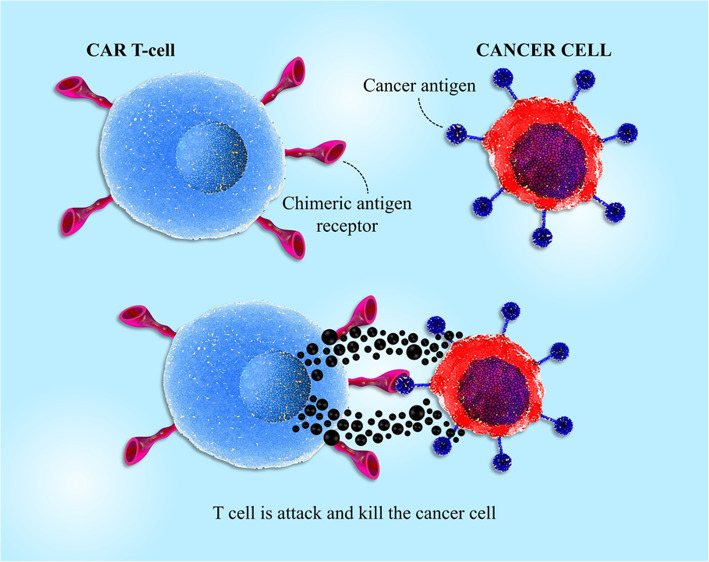
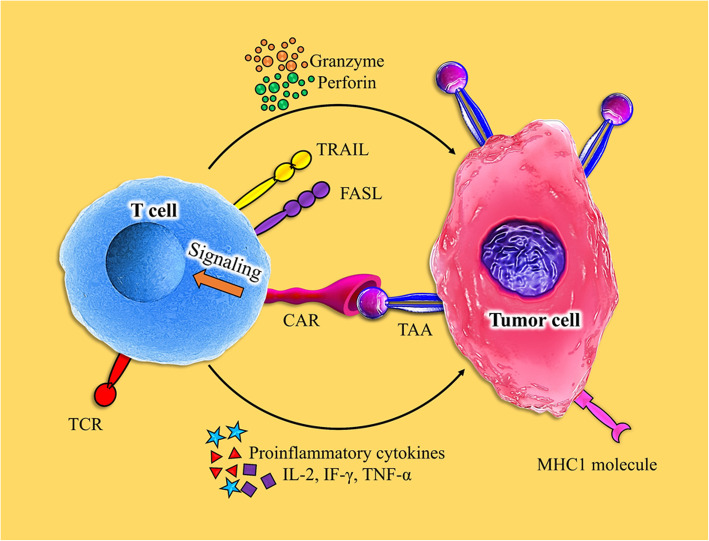
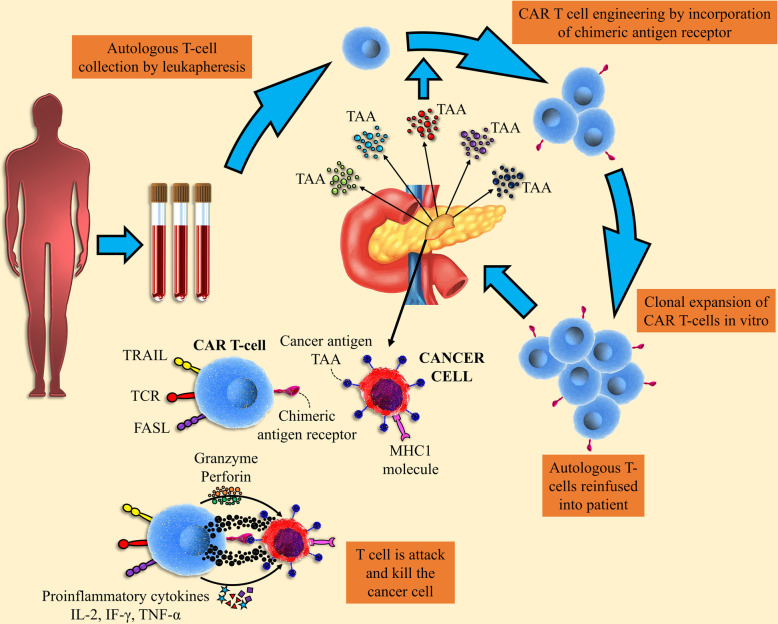
“After activation, the CAR T cell specifically exerts its functionality through the secretion of antitumor cytokines, perforin, and granzymes into the tumor microenvironment (TME) [69, 70].”
BackgroundSelf-citationReigniting hope in cancer treatment: the promise and pitfalls of IL-2 and IL-2R targeting strategies
Muhammad, S., Fan, T. T., Hai, Y., Gao, Y., & He, J. (2023) · Molecular Cancer · doi:10.1186/s12943-023-01826-7 · Cited by 140
Gong, Z., Li, Q., Shi, J., Liu, E. T., Shultz, L. D., & Ren, G. (2022) · Cell Metabolism · doi:10.1016/j.cmet.2022.11.003 · Cited by 142
Optimizing CAR-T cell therapy for solid tumors: current challenges and potential strategies
Ai, K., Liu, B., Chen, X., Huang, C., Yang, L., Zhang, W., Weng, J., Du, X., Wu, K., & Lai, P. (2024) · Journal of Hematology & Oncology · doi:10.1186/s13045-024-01625-7 · Cited by 133
“Researchers have explored extracellular vesicles (EVs), including exosomes ( 150 nm) and larger vesicles (150– 1000 nm), derived from the cell membrane that carry antigens from parent cells to aid in CAR-T cell development [137, 138].”
BackgroundAdoptive cell therapy for cancer treatment
Du, S., Yan, J., Xue, Y., Zhong, Y., & Dong, Y. (2023) · Exploration · doi:10.1002/exp.20210058 · Cited by 135
Improving CAR T-Cell Persistence
Pietrobon, V., Todd, L. A., Goswami, A., Stefanson, O., Yang, Z., & Marincola, F. M. (2021) · International Journal of Molecular Sciences · doi:10.3390/ijms221910828 · Cited by 133
Activation of human endogenous retroviruses and its physiological consequences
Dopkins, N., & Nixon, D. F. (2024) · Nature Reviews Molecular Cell Biology · doi:10.1038/s41580-023-00674-z · Cited by 122
“The microenvironment of solid tumours hinders antigen accessibility and immunogenicity 140 .”
CAR T Cell Therapy: A Versatile Living Drug
Marco, R. C. D., Monzó, H. J., & Ojala, P. M. (2023) · International Journal of Molecular Sciences · doi:10.3390/ijms24076300 · Cited by 133
“Even when dealing with TAAs of very low expression in healthy cells, solid tumors are usually very heterogeneous, so wide antigen expression variability and antigen-loss events are quite common [80].”
BackgroundAdoptive T cell therapy for solid tumors: current landscape and future challenges
Albarrán, V., Román, M. S., Pozas, J., Chamorro, J., Rosero, D. I., Guerrero, P., Calvo, J. C., González-Merino, C., de Quevedo, C. G., de Aguado, P. P., et al. (2024) · Frontiers in Immunology · doi:10.3389/fimmu.2024.1352805 · Cited by 128
“The epithelial growth factor receptor (EGFR), HER2, carcinoembryonic antigen (CEA), mesothelin and soluble antigen GD2 have been frequent targets of CAR-T therapies, although many other antigens have been the object of preclinical studies (27).”
BackgroundEvolution of cell therapy for renal cell carcinoma
Wang, Y., Suarez, E. R., Kastrunes, G. M., de Campos, N. S. P., Abbas, R., Pivetta, R. S., Murugan, N., Chalbatani, G. M., D’Andrea, V. D., & Marasco, W. A. (2024) · Molecular Cancer · doi:10.1186/s12943-023-01911-x · Cited by 126
“Some recent approaches with exciting results for treating other solid tumors but underexplored in the context of RCC cellular therapies, such as CAR macrophages (CAR-M) and CAR-Treg [138].”
BackgroundTherapeutic potential of CAR T cell in malignancies: A scoping review
Mehrabadi, A. Z., Ranjbar, R., Farzanehpour, M., Shahriary, A., Dorostkar, R., Hamidinejad, M. A., & Ghaleh, H. E. G. (2021) · Biomedicine & Pharmacotherapy · doi:10.1016/j.biopha.2021.112512 · Cited by 124
Tumour-infiltrating lymphocyte therapy for patients with advanced-stage melanoma
Klobuch, S., Seijkens, T. T. P., Schumacher, T. N., & Haanen, J. B. A. G. (2024) · Nature Reviews Clinical Oncology · doi:10.1038/s41571-023-00848-w · Cited by 119
“…the T cell reactivity is directed against entirely tumour-specific cancer neoantigens, thereby reducing the likelihood of the on-target, off-tumour toxicities that are frequently observed with CAR T cells in patients with solid tumours, which generally target shared tumour-associated antigens 3 .”
CAR-T Cell Therapy: Mechanism, Management, and Mitigation of Inflammatory Toxicities
Fischer, J. W., & Bhattarai, N. (2021) · Frontiers in Immunology · doi:10.3389/fimmu.2021.693016 · Cited by 129
Mechanisms of CAR T cell exhaustion and current counteraction strategies
Zhu, X., Li, Q., & Zhu, X. (2022) · Frontiers in Cell and Developmental Biology · doi:10.3389/fcell.2022.1034257 · Cited by 118
“Despite the tremendous efficacy of chimeric antigen receptor T (CAR T) cells in hematological malignancies such as B-cell acute lymphoblastic leukemia (B-ALL), B-cell lymphoma, and multiple myeloma, as well as in solid tumors, CAR T cell exhaustion remained a main obstacle to achieve remission (Fraietta et al., 2018;…”
BackgroundCombining chemotherapy with CAR-T cell therapy in treating solid tumors
Wang, A. X., Ong, X., D’Souza, C., Neeson, P. J., & Zhu, J. J. (2023) · Frontiers in Immunology · doi:10.3389/fimmu.2023.1140541 · Cited by 113
CAR-NKT cell therapy: a new promising paradigm of cancer immunotherapy
Hadiloo, K., Tahmasebi, S., & Esmaeilzadeh, A. (2023) · Cancer Cell International · doi:10.1186/s12935-023-02923-9 · Cited by 105
Self-citationGeneration of anti-GD2 CAR macrophages from human pluripotent stem cells for cancer immunotherapies
Zhang, J., Webster, S. F., Duffin, B. M., Bernstein, M. N., Steill, J., Swanson, S. A., Forsberg, M. H., Bolin, J. M., Brown, M. E., Majumder, A., et al. (2023) · Stem Cell Reports · doi:10.1016/j.stemcr.2022.12.012 · Cited by 101
Advancing cell-based cancer immunotherapy through stem cell engineering
Li, Y.-R., Dunn, Z. S., Yu, Y., Li, M., Wang, P., & Yang, L. (2023) · Cell stem cell · doi:10.1016/j.stem.2023.02.009 · Cited by 100
Cytokine-armed dendritic cell progenitors for antigen-agnostic cancer immunotherapy
Ghasemi, A., Martínez-Usatorre, A., Li, L., Hicham, M., Guichard, A., Marcone, R., Fournier, N., Torchia, B., Bedoya, D. M., Davanture, S., et al. (2023) · Nature Cancer · doi:10.1038/s43018-023-00668-y · Cited by 102
Digestive cancers: mechanisms, therapeutics and management
Zhan, T., Betge, J., Schulte, N., Dreikhausen, L., Hirth, M., Li, M., Weidner, P., Leipertz, A., Teufel, A., & Ebert, M. P. A. (2025) · Signal Transduction and Targeted Therapy · doi:10.1038/s41392-024-02097-4 · Cited by 100
Immunotherapy and immunoevasion of colorectal cancer
Zein, M. A., Boukhdoud, M., Shammaa, H., Mouslem, H., Ayoubi, L. M. E., Iratni, R., Issa, K., Khachab, M. Y., Assi, H. I., Sahebkar, A., et al. (2023) · Drug Discovery Today · doi:10.1016/j.drudis.2023.103669 · Cited by 94
Khan, S. H., Choi, Y., Veena, M. S., Lee, J. K., & Shin, D. S. (2025) · Frontiers in Immunology · doi:10.3389/fimmu.2024.1489827 · Cited by 98
CAR-engineered NK cells; a promising therapeutic option for treatment of hematological malignancies
Marofi, F., Saleh, M. M., Rahman, H. S., Suksatan, W., Al-Gazally, M. E., Abdelbasset, W. K., Thangavelu, L. P., Yumashev, A. V., Hassanzadeh, A., Yazdanifar, M., et al. (2021) · Stem Cell Research & Therapy · doi:10.1186/s13287-021-02462-y · Cited by 90
“apy in the treatment of hematological tumors [125, 126], FDA approval is a major step in the evolution of genetically engineered cell-based tumor therapies.”
BackgroundSelf-citationMechanisms of Drug Resistance in Ovarian Cancer and Associated Gene Targets
Alatise, K. L., Gardner, S., & Alexander-Bryant, A. A. (2022) · Cancers · doi:10.3390/cancers14246246 · Cited by 97
T‐Cell‐Derived Nanovesicles for Cancer Immunotherapy
Hong, J., Kang, M., Jung, M., Lee, Y. Y., Cho, Y., Kim, C., Song, S. Y., Park, C. G., Doh, J., & Kim, B. (2021) · Advanced Materials · doi:10.1002/adma.202101110 · Cited by 81
Zuo, S., Wei, M., Xu, T., Kong, L., He, B., Wang, S., Wang, S., Wu, J., Dong, J., & Wei, J. (2021) · Journal for ImmunoTherapy of Cancer · doi:10.1136/jitc-2021-002843 · Cited by 82
Dey, M., Kim, M., Dogan, M., Nagamine, M., Kozhaya, L., Celik, N., Unutmaz, D., & Ozbolat, I. T. (2022) · Advanced Functional Materials · doi:10.1002/adfm.202203966 · Cited by 83
mRNA: A promising platform for cancer immunotherapy
Kong, B., Kim, Y., Kim, E. H., Suk, J. S., & Yang, Y. (2023) · Advanced Drug Delivery Reviews · doi:10.1016/j.addr.2023.114993 · Cited by 88
Cotechini, T., Atallah, A., & Grossman, A. (2021) · Cells · doi:10.3390/cells10040960 · Cited by 82
Efficacy, Safety, and Challenges of CAR T-Cells in the Treatment of Solid Tumors
Chen, Q., Lu, L., & Ma, W. (2022) · Cancers · doi:10.3390/cancers14235983 · Cited by 78
“Thus, CAR is a combination of antibody-derived extracellular proteins, typically derived from the intracellular signaling module of an antibody and T-cell signaling proteins [6].”
BackgroundDirecting CAR T cells towards the tumor vasculature for the treatment of solid tumors
Akbari, P., Katsarou, A., Daghighian, R., van Mil, L. W. H. G., Huijbers, E. J. M., Griffioen, A. W., & van Beijnum, J. R. (2022) · Biochimica et Biophysica Acta (BBA) - Reviews on Cancer · doi:10.1016/j.bbcan.2022.188701 · Cited by 74
Programmable synthetic receptors: the next-generation of cell and gene therapies
Teng, F., Cui, T., Zhou, L., Gao, Q., Zhou, Q., & Li, W. (2024) · Signal Transduction and Targeted Therapy · doi:10.1038/s41392-023-01680-5 · Cited by 88
Budi, H. S., Ahmad, F. N., Achmad, H., Ansari, M. J., Mikhailova, M. V., Suksatan, W., Chupradit, S., Shomali, N., & Marofi, F. (2022) · Stem Cell Research & Therapy · doi:10.1186/s13287-022-02719-0 · Cited by 76
“Such process includes T cell stimulation and transduction to manufacture expanded, genetically modified T cell products [36].”
BackgroundSelf-citationTandem CAR-T cells targeting FOLR1 and MSLN enhance the antitumor effects in ovarian cancer
Liang, Z. C., Dong, J., Yang, N., Li, S.-D., Yang, Z., Huang, R., Li, F., Wang, W., Ren, J.-K., Lei, J., et al. (2021) · International Journal of Biological Sciences · doi:10.7150/ijbs.63181 · Cited by 72
“Marofi et al described these mechanisms in detail, including the recurrence of antigen-negative cells, inadequate trafficking and infiltration of T cells, T cell inhibition, and/or insufficient T cell activation in tumor tissue [11].”
BackgroundUribe‐Herranz, M., Beghi, S., Ruella, M., Parvathaneni, K., Salaris, S., Κωστόπουλος, Ν., George, S. S., Pierini, S., Krimitza, E., Costabile, F., et al. (2023) · Molecular Therapy · doi:10.1016/j.ymthe.2023.01.012 · Cited by 72
Biomaterials to enhance adoptive cell therapy
Eckman, N., Nejatfard, A., Cavet, R., Grosskopf, A. K., & Appel, E. A. (2024) · Nature Reviews Bioengineering · doi:10.1038/s44222-023-00148-z · Cited by 69
“the bloodstream into tissues, poor immune-cell infiltration and the immunosuppressive tumour milieu 25,26 .”
Delivery of CD47 blocker SIRPα-Fc by CAR-T cells enhances antitumor efficacy
Chen, H., Yang, Y., Deng, Y., Wei, F., Zhao, Q., Liu, Y., Liu, Z., Yu, B., & Huang, Z. (2022) · Journal for ImmunoTherapy of Cancer · doi:10.1136/jitc-2021-003737 · Cited by 69
“8 TME often contains many immunosuppressive cells, such as regulatory T cell (Treg), myeloid-derived stem cell (MDSC), and tumor-associated macrophages (TAMs), as well as the immune inhibitory molecules in tumor tissues.”
Oncolytic virus and CAR-T cell therapy in solid tumors
Ponterio, E., Haas, T. L., & Maria, R. D. (2024) · Frontiers in Immunology · doi:10.3389/fimmu.2024.1455163 · Cited by 68
Effect of CRISPR/Cas9-Edited PD-1/PD-L1 on Tumor Immunity and Immunotherapy
Xu, Y., Chen, C., Guo, Y., Hu, S., & Sun, Z. (2022) · Frontiers in Immunology · doi:10.3389/fimmu.2022.848327 · Cited by 78
An optimal portfolio of photothermal combined immunotherapy
Zeng, W., Li, Z., Chen, H., Zeng, X., & Mei, L. (2022) · Cell Reports Physical Science · doi:10.1016/j.xcrp.2022.100898 · Cited by 72
Glutarate regulates T cell metabolism and anti-tumour immunity
Minogue, E., Cunha, P. P., Wadsworth, B. J., Grice, G. L., Sah‐Teli, S. K., Hughes, R., Bargiela, D., Quaranta, A., Zurita, J., Antrobus, R., et al. (2023) · Nature Metabolism · doi:10.1038/s42255-023-00855-2 · Cited by 67
CAR-T cell therapy: Where are we now, and where are we heading?
Wang, J., & Wang, L. (2023) · Blood Science · doi:10.1097/bs9.0000000000000173 · Cited by 71
“103,104 A previous study showed that anti-GPC3-CAR-T cells effectively inhibited and eliminated tumors in a primary human hepatocyte xenograft model.”
BackgroundWagner, D. L., Koehl, U., Chmielewski, M., Scheid, C., & Stripecke, R. (2022) · Frontiers in Immunology · doi:10.3389/fimmu.2022.865424 · Cited by 65
CAR T-Cell therapy for the management of mantle cell lymphoma
Huang, Z., Chavda, V. P., Bezbaruah, R., Dhamne, H., Yang, D., & Zhao, H.-B. (2023) · Molecular Cancer · doi:10.1186/s12943-023-01755-5 · Cited by 70
Next-Generation Boron Drugs and Rational Translational Studies Driving the Revival of BNCT
Seneviratne, D. S., Saifi, O., Mackeyev, Y., Malouff, T. D., & Krishnan, S. (2023) · Cells · doi:10.3390/cells12101398 · Cited by 65
“Moreover, the immunosuppressive tumor microenvironment and its associated immunoregulatory cells, cytokines, and chemokines decrease the penetration of CAR-T cells into the tumor [80].”
Backgroundde-Souza-Ferreira, M., Ferreira, É. E., & de‐Freitas‐Junior, J. C. M. (2023) · Cellular Oncology · doi:10.1007/s13402-023-00770-4 · Cited by 70
Current Landscape of Cancer Immunotherapy: Harnessing the Immune Arsenal to Overcome Immune Evasion
Mitra, A., Kumar, A., Amdare, N. P., & Pathak, R. (2024) · Biology · doi:10.3390/biology13050307 · Cited by 81
The quest for nanoparticle-powered vaccines in cancer immunotherapy
Sun, Z., Zhao, H., Ma, L., Shi, Y., Ji, M., Sun, X., Ma, D., Zhou, W., Huang, T., & Zhang, D. (2024) · Journal of Nanobiotechnology · doi:10.1186/s12951-024-02311-z · Cited by 72
“While CAR-T therapy has demonstrated success in addressing hematologic tumors [120], its application to solid tumors faces challenges such as limited efficacy, off-target effects, and elevated costs [121].”
BackgroundTumor-infiltrating bacteria disrupt cancer epithelial cell interactions and induce cell-cycle arrest
Niño, J. L. G., Ponath, F., Ajisafe, V. A., Becker, C. R., Kempchinsky, A. G., Zepeda‐Rivera, M. A., Gomez, J. A., Wu, H., Terrazas, J. G., Bouzek, H. K., et al. (2025) · Cancer Cell · doi:10.1016/j.ccell.2025.09.010 · Cited by 66
An engineered influenza virus to deliver antigens for lung cancer vaccination
Ji, D., Zhang, Y., Sun, J., Zhang, B., Ma, W., Cheng, B., Wang, X., Li, Y., Yu, M., Xu, H., et al. (2023) · Nature Biotechnology · doi:10.1038/s41587-023-01796-7 · Cited by 60
“T cells 29 work well for leukemia and lymphoma, with notable clinical successes; however, patients with solid tumors usually respond poorly to CAR-Ts, primarily due to the immunologically cold microenvironment that is devoid of cytotoxic T lymphocyte infiltration 30 .”
Elaborating the potential of Artificial Intelligence in automated CAR-T cell manufacturing
Bäckel, N., Hort, S., Kis, T., Nettleton, D., Egan, J. R., Jacobs, J. J. L., Grunert, D., & Schmitt, R. H. (2023) · Frontiers in Molecular Medicine · doi:10.3389/fmmed.2023.1250508 · Cited by 59
“In addition, current clinical trials focus on solid tumors and alternatives for T cells such as NK cells and macrophages (Maro fi et al., 2021; Pan et al., 2022).”
BackgroundHER2-Positive Gastric Cancer and Antibody Treatment: State of the Art and Future Developments
Scheck, M. K., Hofheinz, R., & Lorenzen, S. (2024) · Cancers · doi:10.3390/cancers16071336 · Cited by 59
“However, targeting solid tumors with CAR T cells is a challenge due to antigen heterogeneity, infiltration difficulties and the immunosuppressive tumor microenvironment in solid cancer [109].”
BackgroundNanovaccines for Cancer Prevention and Immunotherapy: An Update Review
Fang, X., Lan, H., Jin, K., Gong, D., & Qian, J. (2022) · Cancers · doi:10.3390/cancers14163842 · Cited by 60
The Evolution of Cancer Immunotherapy
Khan, M., Maker, A. V., & Jain, S. (2021) · Vaccines · doi:10.3390/vaccines9060614 · Cited by 62
“Ligand-11 and 12 chemokines are important for this CAR-T cell movement and are under-expressed in many solid tumors [43].”
BackgroundGD2-targeting therapy: a comparative analysis of approaches and promising directions
Philippova, J., Shevchenko, J. A., & Sennikov, S. V. (2024) · Frontiers in Immunology · doi:10.3389/fimmu.2024.1371345 · Cited by 59
CD5 deletion enhances the antitumor activity of adoptive T cell therapies
Patel, R. P., Ghilardi, G., Zhang, Y., Chiang, Y., Xie, W., Guruprasad, P., Kim, K. H., Chun, I., Angelos, M. G., Pajarillo, R., et al. (2024) · Science Immunology · doi:10.1126/sciimmunol.adn6509 · Cited by 59
“We initially tested the role of CD5 KO in CAR T cells against T cell neoplasms because there are no US Food and Drug Administration (FDA)–approved CAR T therapies for this orphan disease (15).”
Aharon, A., Horn, G., Bar-Lev, T. H., Yohay, E. Z., Waks, T., Levin, M., Deshet‐Unger, N., Avivi, I. M., & Levin, A. G. (2021) · Human Gene Therapy · doi:10.1089/hum.2021.192 · Cited by 61
Ruppel, K. E., Fricke, S., Koehl, U., & Schmiedel, D. (2022) · Frontiers in Immunology · doi:10.3389/fimmu.2022.822298 · Cited by 56
Farooq, M. A., Ajmal, I., Hui, X., Chen, Y., Yang, R., & Jiang, W. (2023) · International Journal of Molecular Sciences · doi:10.3390/ijms241612837 · Cited by 59
“As a result, the number of successful clinical trials for CAR-T therapy targeting hematological malignancies which direct numerous antigens has upsurged significantly, yet the parallel success of CAR-T therapy in solid tumors is still being awaited [17,18].”
BackgroundLee, D., Dunn, Z. S., Guo, W., Rosenthal, C. J., Penn, N. E., Yu, Y., Zhou, K., Li, Z., Ma, F., Li, M., et al. (2023) · Nature Communications · doi:10.1038/s41467-023-42619-2 · Cited by 57
Cao, L.-Y., Zhao, Y., Chen, Y., Ma, P., Xie, J.-C., Pan, X.-M., Zhang, X., Chen, Y.-C., Wang, Q., & Xie, L.-L. (2025) · Frontiers in Immunology · doi:10.3389/fimmu.2025.1583116 · Cited by 53
“In general, CAR-T applications in solid tumors are predominantly in early-phase clinical trials, and their therapeutic potential requires further validation through expanded clinical datasets (58).”
CAR-T-Derived Extracellular Vesicles: A Promising Development of CAR-T Anti-Tumor Therapy
Pagotto, S., Simeone, P., Brocco, D., Catitti, G., Bellis, D. D., Vespa, S., Pietro, N. D., Marinelli, L., Stefano, A. D., Veschi, S., et al. (2023) · Cancers · doi:10.3390/cancers15041052 · Cited by 53
“The TME also represents a physical barrier that is difficult to penetrate by lymphocytes and CAR-T cells, reducing their anti-tumor activities [39,40].”
BackgroundCAR T cell therapies for diffuse midline glioma
Thomas, B. C., Staudt, D. E., Douglas, A. M., Monje, M., Vitanza, N. A., & Dun, M. D. (2023) · Trends in cancer · doi:10.1016/j.trecan.2023.07.007 · Cited by 53
Immunotherapy resistance in solid tumors: mechanisms and potential solutions
Lefler, D. S., Manobianco, S. A., & Bashir, B. (2024) · Cancer Biology & Therapy · doi:10.1080/15384047.2024.2315655 · Cited by 55
“2,31”
Induced CAR-Macrophages as a Novel Therapeutic Cell Type for Cancer Immune Cell Therapies
Su, S., Lei, A., Wang, X., Lu, H., Wang, S., Yang, Y., Li, N., Zhang, Y., & Zhang, J. (2022) · Cells · doi:10.3390/cells11101652 · Cited by 52
“Despite the substantial progress CAR-T cell therapy has achieved in clinical treatment [73], many challenges remain, such as cytokine release syndrome (CRS), CAR neurotoxicity, and drug resistance [74,75].”
BackgroundEarly methionine availability attenuates T cell exhaustion
Sharma, P., Guo, A., Poudel, S., Boada-Romero, E., Verbist, K., Palacios, G., Immadisetty, K., Chen, J., Haydar, D., Mishra, A., et al. (2025) · Nature Immunology · doi:10.1038/s41590-025-02223-6 · Cited by 53
“T cell treatment has been clinically successful in the treatment of hematological malignancies, but less so in solid tumors 46 .”
Human γδ T Cell Subsets and Their Clinical Applications for Cancer Immunotherapy
Lee, D., Rosenthal, C. J., Penn, N. E., Dunn, Z. S., Zhou, Y., & Yang, L. (2022) · Cancers · doi:10.3390/cancers14123005 · Cited by 55
“Despite significant improvements in clinical outcomes, CAR-T therapy has faced some hurdles, particularly in treating solid tumors [1].”
BackgroundUnveiling the Immune Microenvironment’s Role in Breast Cancer: A Glimpse into Promising Frontiers
Kotsifaki, A., Alevizopoulos, N., Dimopoulou, V., & Armakolas, A. (2023) · International Journal of Molecular Sciences · doi:10.3390/ijms242015332 · Cited by 52
“Effective CAR-T cell targets for the therapy of BC patients have been discovered, including HER2, MUC1, and mesothelin [209].”
BackgroundLiberini, V., Laudicella, R., Capozza, M., Huellner, M. W., Burger, I. A., Baldari, S., Terreno, E., & Deandreis, D. (2021) · Molecules · doi:10.3390/molecules26082201 · Cited by 49
“Their use for solid cancer is still challenging due to the higher heterogeneity of tumoral antigens, the resulting increased difficulty in configuration recognition, higher difficulty to penetrate tumor tissue through the vascular endothelium and a low survival in the TME [21].”
BackgroundSenotherapeutics and Their Molecular Mechanism for Improving Aging
Park, J., & Shin, D. W. (2022) · Biomolecules & Therapeutics · doi:10.4062/biomolther.2022.114 · Cited by 49
“This strategy has been currently applied in anticancer therapy (Amor et al., 2020; Marofi et al., 2021).”
Entezam, M., Sanaei, M., Mirzaei, Y., Mer, A. H., Abdollahpour‐Alitappeh, M., Azadegan‐Dehkordi, F., & Bagheri, N. (2023) · Life Sciences · doi:10.1016/j.lfs.2023.121459 · Cited by 47
Shahzadi, M., Rafique, H., Waheed, A., Naz, H., Waheed, A., Zokirova, F. R., & Khan, H. (2024) · Therapeutic Advances in Vaccines and Immunotherapy · doi:10.1177/25151355241305856 · Cited by 54
Complexities in comparing the impact of costimulatory domains on approved CD19 CAR functionality
Smith, R. M., & Shen, R. R. (2023) · Journal of Translational Medicine · doi:10.1186/s12967-023-04372-4 · Cited by 45
Rationally designed approaches to augment CAR-T therapy for solid tumor treatment
Zhu, C., Wu, Q., Sheng, T., Shi, J., Shen, X., Yu, J., Du, Y., Sun, J., Liang, T., He, K., et al. (2023) · Bioactive Materials · doi:10.1016/j.bioactmat.2023.11.002 · Cited by 48
“Compared with hematological cancers, solid tumors are featured by dysregulated blood vessels and tumor-dense extracellular matrix impeding circulating CAR-T cells ’ tumor infiltration, and robust immunosuppressive signals that lead CAR-T cells into an exhausted and dysfunctional state [8].”
BackgroundLi, X., Zhao, L., Li, W., Gao, P., & Zhang, N. (2024) · Genes and Immunity · doi:10.1038/s41435-024-00275-6 · Cited by 46
“One barrier to the effectiveness of cell therapy against solid tumors is antigen heterogeneity, which impairs the detection of cancer cells by T cells and reduces the impact of CAR-T therapy [10].”
BackgroundEngineered CD147-CAR macrophages for enhanced phagocytosis of cancers
Chupradit, K., Muneekaew, S., & Wattanapanitch, M. (2024) · Cancer Immunology Immunotherapy · doi:10.1007/s00262-024-03759-6 · Cited by 44
“Moreover, CAR-T cell therapy is less effective in treating solid tumors than hematologic malignancies [7–9].”
BackgroundBarrett, A. M., Britton, Z. T., Carrasco, R. A., Breen, S., Broggi, M. A. S., Hatke, A. L., Clark, B., Yang, C., Phipps, S., Ortiz, L., et al. (2024) · Clinical Cancer Research · doi:10.1158/1078-0432.ccr-24-1853 · Cited by 43
“The latter include IL4, IL10, and TGF β , which can hinder antitumor T-cell function (19, 20).”
MacPherson, S., Keyes, S., Kilgour, M. K., Smazynski, J., Chan, V., Sudderth, J., Turcotte, T., Devlieger, A., Yu, J. Z., Huggler, K. S., et al. (2022) · Molecular Therapy — Methods & Clinical Development · doi:10.1016/j.omtm.2022.02.004 · Cited by 43
Circulating inflammatory cells in patients with metastatic breast cancer: Implications for treatment
Gianni, C., Palleschi, M., Schepisi, G., Casadei, C., Bleve, S., Merloni, F., Sirico, M., Sarti, S., Cecconetto, L., Menna, G. D., et al. (2022) · Frontiers in Oncology · doi:10.3389/fonc.2022.882896 · Cited by 45
Lipid anchor-mediated NK cell surface engineering for enhanced cancer immunotherapy
Kim, S., Li, S., Gajendiran, M., Jangid, A. K., Lee, D., Jung, H.-S., & Kim, K. (2023) · Chemical Engineering Journal · doi:10.1016/j.cej.2023.145211 · Cited by 43
Metadata
- Authors
- Marofi, F., Motavalli, R., Safonov, V. A., Thangavelu, L., Yumashev, A. V., Alexander, M., Shomali, N., Chartrand, M. S., Pathak, Y., Jarahian, M., Izadi, S., Hassanzadeh, A., Shirafkan, N., Tahmasebi, S., & Khiavi, F. M.
- Affiliations
- Tabriz University of Medical Sciences (IR)
- Russian Academy of Sciences (RU)
- Saveetha University (IN)
- Sechenov University (RU)
- Industrial University of Tyumen (RU)
- German Cancer Research Center (DE)
- University of South Florida (US)
- Pasteur Institute of Iran (IR)
- Corresponding author
- Motavalli, Roza
- Khiavi, Farhad Motavalli
- ORCID
- Venue
- Stem Cell Research & Therapy
- Published
- 2021-01-25
- Volume
- 12
- Issue
- 1
- Pages
- 81-81
- ISSN
- 1757-6512 (ISSN-L)
- PMC
- PMC7831265
- OpenAlex
- W3122724341
- Cited by
- 582
- References
- 149
- Citations by year
- 2026: 63 · 2025: 105 · 2024: 120 · 2023: 133 · 2022: 121 · 2021: 39
- FWCI
- 12.51
- Type
- journal article
- Language
- en
- Open access
- gold
- doi.org
- Licence
- cc-by
- creativecommons.org/licenses/by/4.0 (tdm)
- creativecommons.org/licenses/by/4.0 (vor)
- Locations
- Stem Cell Research & Therapy (publishedVersion, cc-by)
- PubMed Central (publishedVersion, cc-by)
- PubMed (publishedVersion)
- DOAJ (DOAJ: Directory of Open Access Journals) (submittedVersion, cc-by-sa)
- Topics
- Health Sciences › Medicine › Oncology › CAR-T cell therapy research
- Health Sciences › Medicine › Oncology › Cancer Immunotherapy and Biomarkers
- Life Sciences › Immunology and Microbiology › Immunology › Immunotherapy and Immune Responses
- Keywords
- chimeric antigen receptor T cells, solid tumors, chimeric antigen receptor, tumor microenvironment, T cell exhaustion, immune checkpoint blockade, CAR signaling, T cell migration, tumor recognition, non-hematologic malignancies, T cell survival
- MeSH terms
- Receptors, Chimeric Antigen, Humans, Neoplasms, T-Lymphocytes, Immunotherapy, Adoptive, Tumor Microenvironment
About these checks
Registry, retraction, Cites and statistics results are computed, not judged, with one exception: a printed reference that no index lists is read once by a model before it counts as a citation error. Claims are extracted by a model and kept only when their quote appears verbatim in the text; each cited source is then checked, with a model’s help, for whether it says what the claim relies on. Those verdicts can be wrong — read the claim’s quote and the cited source before relying on one.
Statistics and arithmetic are recomputed, not judged.
Confidence bands are shown only for fields calibrated on our annotated test set. None is calibrated yet, so no band is shown.
What counts as a claim ›How we measure confidence ›How we check this ›
Are you an author, or do you see a problem with this page? Request a review
Data sources
Bibliographic data: Semantic Scholar, OpenAlex, Crossref.
Contains information from the Semantic Scholar Academic Graph Datasets, made available under the ODC Attribution License (ODC-BY 1.0).
Semantic Scholar’s data is described in: Kinney, R., et al. (2023). The Semantic Scholar Open Data Platform. arXiv:2301.10140.
