

CAR T cells in solid tumors: challenges and opportunities
Open accessThe DOI matches its Crossref record; 144 of the 150 references it cites were found in a registry or an index.
Abstract
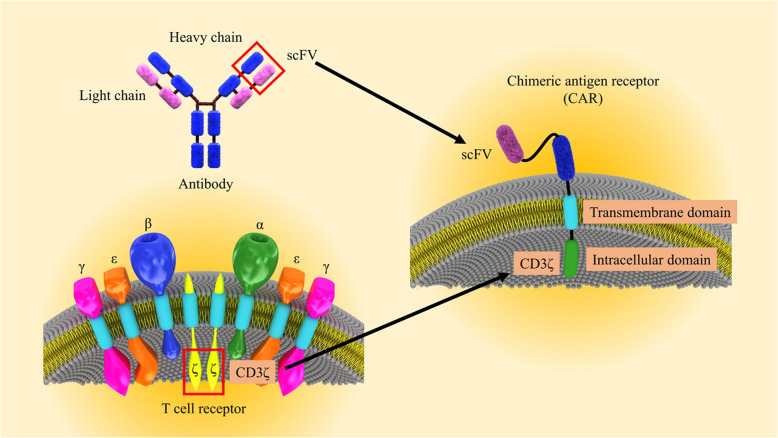
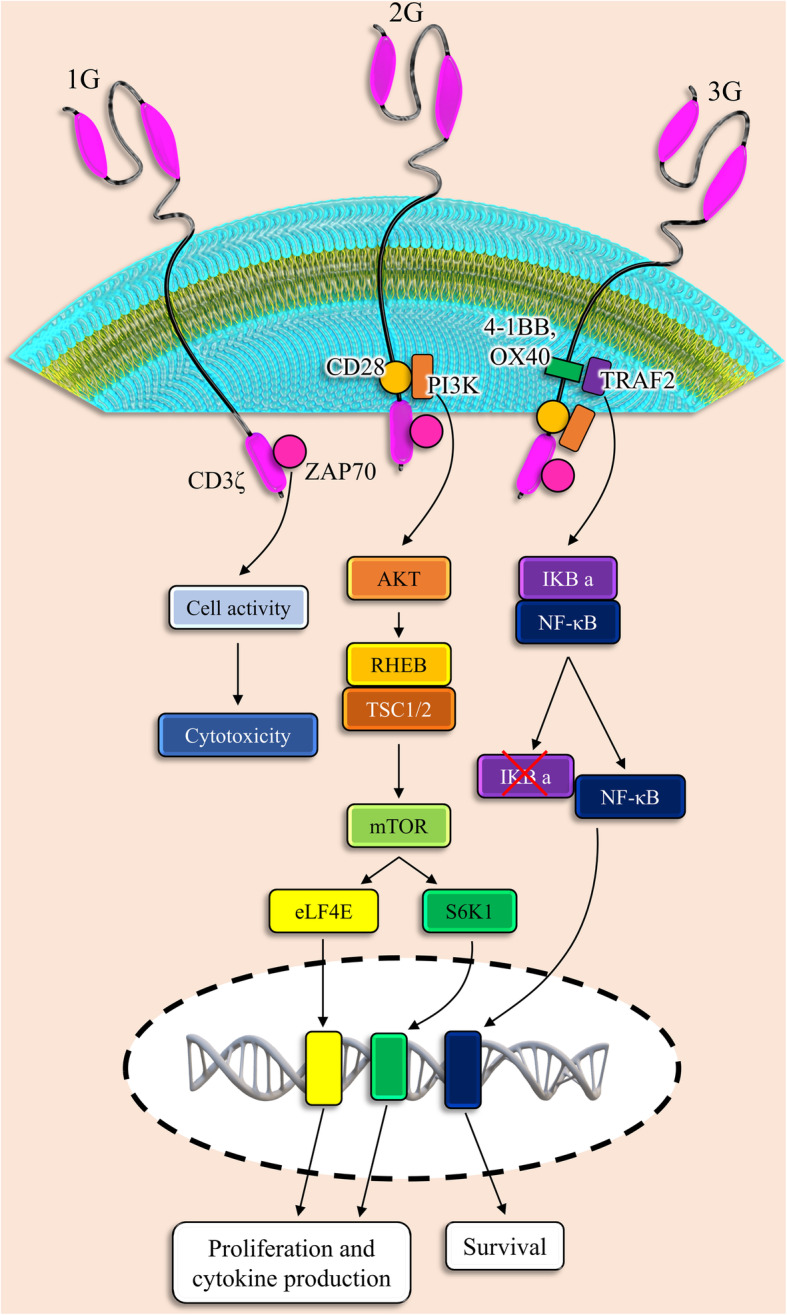
BACKGROUND: CARs are simulated receptors containing an extracellular single-chain variable fragment (scFv), a transmembrane domain, as well as an intracellular region of immunoreceptor tyrosine-based activation motifs (ITAMs) in association with a co-stimulatory signal. MAIN BODY: Chimeric antigen receptor (CAR) T cells are genetically engineered T cells to express a receptor for the recognition of the particular surface marker that has given rise to advances in the treatment of blood disorders. The CAR T cells obtain supra-physiological properties and conduct as "living drugs" presenting both immediate and steady effects after expression in T cells surface. But, their efficacy in solid tumor treatment has not yet been supported. The pivotal challenges in the field of solid tumor CAR T cell therapy can be summarized in three major parts: recognition, trafficking, and surviving in the tumor. On the other hand, the immunosuppressive tumor microenvironment (TME) interferes with T cell activity in terms of differentiation and exhaustion, and as a result of the combined use of CARs and checkpoint blockade, as well as the suppression of other inhibitor factors in the microenvironment, very promising results were obtained from the reduction of T cell exhaustion. CONCLUSION: Nowadays, identifying and defeating the mechanisms associated with CAR T cell dysfunction is crucial to establish CAR T cells that can proliferate and lyse tumor cells severely. In this review, we discuss the CAR signaling and efficacy T in solid tumors and evaluate the most significant barriers in this process and describe the most novel therapeutic methods aiming to the acquirement of the promising therapeutic outcome in non-hematologic malignancies.
Overview
The claims and statistics of this paper haven’t been checked yet.
Free: it reads the open-access text and checks the first 5 claims that cite a source we can check. Create a free account to check every claim.
Integrity signals
Registry
Cites
Statistics
Figures
Verification
Claims the paper makes
The claims and statistics of this paper haven’t been checked yet.
Free: it reads the open-access text and checks the first 5 claims that cite a source we can check. Create a free account to check every claim.
Claims other papers make about this one
Each is checked against this paper’s own text: does it say what the citing paper says it does?
The cited source says what the claim attributes to it.
In the citing paper
“CD133‐CAR‐T therapy in colorectal, pancreatic and hepatocellular carcinoma has shown anti‐metastatic potential in a phase I clinical trial [91].”
From Tumor microenvironment signaling and therapeutics in cancer progression (2023) · cites this paper as [91]
Self-check
Percentages, sums and reported differences re-computed from the paper’s own numbers.
The self-check needs the paper’s full text.
Citations
Cites
Microenvironmental regulation of tumor progression and metastasis
Quail, D. F., & Joyce, J. A. (2013) · Nature Medicine · doi:10.1038/nm.3394 · Cited by 7,994 · cited 1×
“Regulatory T cells (Tregs), myeloid-derived suppressor cells (MDSCs), and M2 tumor-associated macrophages (TAMs) are the most prominent types of immune suppressor cells in the tumor environment [122, 123].”
BackgroundUnderstanding the tumor immune microenvironment (TIME) for effective therapy
Binnewies, M., Roberts, E. W., Kersten, K., Chan, V., Fearon, D. F., Merad, M., Coussens, L. M., Gabrilovich, D. I., Ostrand-Rosenberg, S., Hedrick, C. C., et al. (2018) · Nature Medicine · doi:10.1038/s41591-018-0014-x · Cited by 6,145 · cited 1×
“immune checkpoint molecules such as CTLA-4 and PD-1 also reduce antitumor immunity [120, 124].”
BackgroundAccessories to the Crime: Functions of Cells Recruited to the Tumor Microenvironment
Hanahan, D., & Coussens, L. M. (2012) · Cancer Cell · doi:10.1016/j.ccr.2012.02.022 · Cited by 4,632 · cited 1×
“solid tumors can be strongly infiltrated by different cell types that support tumor growth, angiogenesis, and metastasis [121].”
BackgroundMelanoma-intrinsic β-catenin signalling prevents anti-tumour immunity
Spranger, S., Bao, R., & Gajewski, T. F. (2015) · Nature · doi:10.1038/nature14404 · Cited by 2,830 · cited 1×
“Identifying solid tumors requires cells to transition from the blood into the cancer site, and various abnormalities develop such that T cell infiltration is roughly blocked [113, 114].”
BackgroundMorgan, R. A., Yang, J. C., Kitano, M., Dudley, M. E., Laurencot, C. M., & Rosenberg, S. A. (2010) · Molecular Therapy · doi:10.1038/mt.2010.24 · Cited by 2,533 · cited 1×
“This catastrophic toxicity occurred for a patient with metastatic CRC who received Her2-CAR T cells [36] and a neuroblastoma patient who was treated with GD2-CAR T cells [37].”
BackgroundA human memory T cell subset with stem cell–like properties
Gattinoni, L., Lugli, E., Ji, Y., Pos, Z., Paulos, C. M., Quigley, M. F., Almeida, J. R., Gostick, E., Yu, Z., Carpenito, C., et al. (2011) · Nature Medicine · doi:10.1038/nm.2446 · Cited by 1,974 · cited 1×
“, CD4+, CD8+ αβ T cells, and γδ T cells) are superior to other cells with the aim of optimal tumor suppression [17, 18].”
BackgroundRegression of Glioblastoma after Chimeric Antigen Receptor T-Cell Therapy
Brown, C. E., Alizadeh, D., Starr, R., Weng, L., Wagner, J. R., Naranjo, A., Ostberg, J. R., Blanchard, M. S., Kilpatrick, J., Simpson, J., et al. (2016) · New England Journal of Medicine · doi:10.1056/nejmoa1610497 · Cited by 1,836 · cited 1×
“Intracranial transport has been exposed to be safe and to have an acceptable anti-cancer effect in glioblastoma [115], and intra-pleural transport of CAR T cells was more effective than their systemic administration in human pleural malignancy preclinical researches [116].”
BackgroundO’Rourke, D. M., Nasrallah, M. P., Desai, A., Melenhorst, J. J., Mansfield, K., Morrissette, J. J. D., Martinez-Lage, M., Brem, S., Maloney, E., Shen, A., et al. (2017) · Science Translational Medicine · doi:10.1126/scitranslmed.aaa0984 · Cited by 1,803
Eshhar, Z., Waks, T., Gross, G., & Schindler, D. G. (1993) · Proceedings of the National Academy of Sciences · doi:10.1073/pnas.90.2.720 · Cited by 1,658 · cited 1×
“Although CD3-ζ chain accretion is adequate to support cytolytic function in cytotoxic T cells (CTL) lines, it has been found that the strength of the essential signal to the presentation of the cytotoxic activity is lower compared with the other types of their functions [21].”
BackgroundThe Basic Principles of Chimeric Antigen Receptor Design
Sadelain, M., Brentjens, R., & Rivière, I. (2013) · Cancer Discovery · doi:10.1158/2159-8290.cd-12-0548 · Cited by 1,535 · cited 2×
“Alternative tactics independent of transgene integration, which used either RNA electroporation or cell surface conjugation, in turn, lead to the transient CAR expression and limitation of CAR T cell persistence beyond 7–14 days [3].”
BackgroundInfluential
Cited by
Items 501–600 of 617
Comparative Analysis of Accuracy of Face Recognition System Using CNN and SVM
Reddy, P. R. K., & Uganya, G. (2022) · International Conference on Technological Advancements in Computational Sciences (ICTACS) · doi:10.1109/ictacs56270.2022.9988683
“Our group has a wealth of experience and research skills, which has resulted in articles of the finest quality [14][15][10][2][18][19][13].”
BackgroundVarma, D. R. D., & Priyanka, R. (2022) · International Conference on Technological Advancements in Computational Sciences (ICTACS) · doi:10.1109/ictacs56270.2022.9988712
“[21] proposed the techniques for utilization of the electronic imaging and the quick development inside the reach to get the required picture quality in a few applications with 85% of accuracy.”
MethodVandhana, K., & Sriramya, P. (2022) · International Conference on Technological Advancements in Computational Sciences (ICTACS) · doi:10.1109/ictacs56270.2022.9988055
“Our team has widespread and tremendous knowledge and research experience that has rendered into worth publications [18-25].”
BackgroundMalepati, H. R., & Premkumar, S. (2022) · International Conference on Technological Advancements in Computational Sciences (ICTACS) · doi:10.1109/ictacs56270.2022.9988734
“Our team's in-depth expertise and years of research experience have resulted in publications of the highest calibre [12]; [6]; [1]; [17] [18] [8]; [20].”
BackgroundKumar, S., & Dass, P. (2022) · International Conference on Technological Advancements in Computational Sciences (ICTACS) · doi:10.1109/ictacs56270.2022.9988379
“Our team's in-depth expertise and years of research experience have resulted in publications of the best quality [15,15,16] The leakage power dissipation is high in a mixed array multiplier[24].”
BackgroundImmunoPET Imaging of Immune Checkpoints to Assess Their Cancer Therapeutic Potential
Wynter, C., Murugesan, N., & Natarajan, A. (2023) · Springer eBooks · doi:10.1007/978-3-030-80962-1_170-1 · Cited by 1
Nanotheranostics: The Afterglow for Cancer Immunotherapy
Domingues, C., Dourado, M., Veiga, F., & Figueiras, A. (2023) · Springer eBooks · doi:10.1007/978-3-030-80962-1_299-1 · Cited by 1
Friedman, M. T., West, K. A., Bizargity, P., Annen, K., Gur, H. D., & Hilbert, T. (2023) · Springer eBooks · doi:10.1007/978-3-031-14638-1_95
Assessment Of the Obturation Quality of Three Different Endodontic Rotary Files Using Cbct
(2023) · Journal of Population Therapeutics and Clinical Pharmacology · doi:10.47750/jptcp.2023.30.06.010
Updating CAR-T Cell Immunotherapy for Liquid and Solid Tumor
Singh, A., & Pravin, D. P. (2023) · Diseases & Research · doi:10.54457/dr.202302005
Application of gene therapy for reversing T-cell dysfunction in cancer
Lee, S. H., & Lee, W. R. (2022) · Journal of Emerging Investigators · doi:10.59720/22-024
“Although immunotherapy using T cells has shown great possibilities, the research also includes challenges (5).”
BackgroundKiran, A. U., & Chanthirasekaran, K. (2023) · AIP conference proceedings · doi:10.1063/5.0173307
Raviteja, C., & Gayathri, N. (2023) · AIP conference proceedings · doi:10.1063/5.0176995
Mohan, G. S., Kats, D. J., Martin, S. D., & Miozzo, P. (2023) · Springer eBooks · doi:10.1007/978-3-031-38058-7_5
The future of transposon-based CAR-T cell production in immunotherapy
Lee, S. (2023) · Theoretical and Natural Science · doi:10.54254/2753-8818/20/20230751
Novel strategies to overcome obstacles in the solid tumour microenvironment for CAR-T cell therapy
Gui, Y. (2024) · International Conference on Biological Engineering and Medical Science (ICBioMed) · doi:10.1117/12.3012919
“In haematological malignancies, cancer cells express special and individual markers [3].”
BackgroundLipid-based nanomedicines for cancer immunotherapy
Wahab, S. (2024) · Elsevier eBooks · doi:10.1016/b978-0-443-18770-4.00009-3
de Ruijter, L. K. (2024) · University of Groningen research database (University of Groningen / Centre for Information Technology) · doi:10.33612/diss.952617592
Luna-Alvear, A. E., Suárez-Gómez, D., Sanchez-Castro, A. A., Rentas-Echeverria, A. C., Cabrera‐Ríos, M., & Isaza, C. E. (2024) · bioRxiv (Cold Spring Harbor Laboratory) · doi:10.1101/2024.04.15.589636
“Nevertheless, in solid tumors CAR T Cells may not be able to penetrate tumor tissue through the vascular endothelium (2).”
BackgroundEngineering allogeneic CAR-T cells to overcome challenges associated with solid tumors
Chong, B. (2024) · Digital Repository Service (Northeastern University) · doi:10.17760/d20653657
Recent Advances in Cancer Immunotherapy: Clinical Implications and Future Directions
Nallasamy, A., Rajput, M., Wani, Z. A., Dar, M. K., Aakanksha, A., Fayaz, S. H., Subiksha, S., & Simon, N. H. (2024) · Journal of Cancer and Tumor International · doi:10.9734/jcti/2024/v14i2251
Srinivasulu, K., & Premkumar, S. (2024) · AIP conference proceedings · doi:10.1063/5.0198358
Malepati, H. R., & Premkumar, S. (2024) · AIP conference proceedings · doi:10.1063/5.0198357
Anurogo, D., Qiu, D. W., Chang, Y., & Qiu, J.-T. T. (2024) · Preprints.org · doi:10.20944/preprints202407.0638.v1
CHIMERIC ANTIGEN RECEPTOR T CELLS: PAST, PRESENT, AND FUTURE
BM, N., & DP, S. (2024) · Asian Journal of Pharmaceutical and Clinical Research · doi:10.22159/ajpcr.2024v17i7.50815
Genomic Discoveries: Precision Medicine and Personalized Approaches in Prostate Cancer Care
Bida, M., Mosoane, B., Nonxuba, M., Disenyane, D., Mongan, N. P., & Dlamini, Z. (2024) · Springer eBooks · doi:10.1007/978-3-031-64388-0_4
CAR-T Cell Therapy: Revolutionizing Cancer Treatment
Eskandar, K., & Sayh, M. (2024) · Indonesian Journal of Cancer Chemoprevention · doi:10.14499/indonesianjcanchemoprev15iss1pp76-86
Review: CRISPR-Augmented Oncolytic Virotherapy as an Effective Treatment of Metastatic Cancer
Krishnan, A. (2022) · International Journal of Science and Research (IJSR) · doi:10.21275/sr221010094440
Liu, Y., Chen, X., Ma, M., He, M., Li, J., Shen, L., Qi, C., & Tang, L. (2024) · Research Square · doi:10.21203/rs.3.rs-5342296/v1
Recent Advancement in Car-T-Cell Therapy
Pazhamalai, V., Manideepa, G., & Mathumida, R. (2024) · Advances in medical diagnosis, treatment, and care (AMDTC) book series · doi:10.4018/979-8-3693-7728-4.ch009
CAR T-Cell Therapy: A Review of its Applications, Limitations and Future Directions
Chiu, C. (2024) · International journal of high school research · doi:10.36838/v6i12.5
Menon, A., Kumar, A. R., Bharathi, M., Kamath, A. J., Donadkar, A. D., Sudheesh, M. S., & Nath, L. R. (2024) · Springer eBooks · doi:10.1007/978-981-97-7022-9_9
Clinical Applications of Nanovaccine
Thorat, N. D. (2025) · Springer eBooks · doi:10.1007/978-3-031-86185-7_7
CAR-T cells: prospective genetic engineering approach to orchestrate solid tumor in lung cancer
Tanujaya, A. F., Anggraini, D., & Nurhan, A. D. (2024) · Research Results in Pharmacology · doi:10.18413/rrpharmacology.10.522
Ferguson, D. (2025) · medRxiv · doi:10.1101/2025.06.16.25329631
Combination of Pre-existing and New Strategies to Improve CAR-T Cells’ Efficiency
Tanwar, L. (2025) · International journal of high school research · doi:10.36838/v7i6.31
CAR T cells and metabolic programming: A review
Hatami, S., Kazemi, F., Doroudgar, P., Shushtari, S. S., & Atashzar, M. R. (2025) · Medical Immunology (Russia) · doi:10.15789/1563-0625-ctc-3155
Abishek, & Anithaashri, T. P. (2025) · AIP conference proceedings · doi:10.1063/5.0278218
Saideep, T., & Priyadarsini, P. S. U. (2025) · AIP conference proceedings · doi:10.1063/5.0277291
Karthik, M. S. S. S. S., & Premkumar, S. (2025) · AIP conference proceedings · doi:10.1063/5.0278971
Karthik, M. S. S. S. S., & Premkumar, S. (2025) · AIP conference proceedings · doi:10.1063/5.0278970
Harnessing the chimeric antigen receptor engineered cells in gastrointestinal cancer immunotherapy
Dadvand, A., Nooroulahi, M., Matin, S., & Faghfuri, E. (2025) · International Immunopharmacology · doi:10.1016/j.intimp.2025.115321
Role of CAR-T cell therapy in pancreatic cancer: an updated narrative review of current evidence
Bejjani, G. E., Takla, J., Ballout, F. A., Mohtar, F., Bechaalany, M., & Attieh, R. (2026) · Journal of Pancreatology · doi:10.1097/jp9.0000000000000241
Luo, Y. H., Forte, E., & Tanaka, Y. (2025) · bioRxiv (Cold Spring Harbor Laboratory) · doi:10.1101/2025.09.17.676755
Nanotheranostics: The Afterglow for Cancer Immunotherapy
Domingues, C., Dourado, M., Veiga, F., & Figueiras, A. (2025) · Springer eBooks · doi:10.1007/978-3-032-00773-5_299
ImmunoPET Imaging of Immune Checkpoints to Assess Their Cancer Therapeutic Potential
Wynter, C., Murugesan, N., & Natarajan, A. (2025) · Springer eBooks · doi:10.1007/978-3-032-00765-0_170
Zhang, L., Xu, Y., Guo, J., Lv, X., Liao, L., Zhang, Y., Li, J., Gu, X., Li, H., Pan, Q., et al. (2025) · Research Square · doi:10.21203/rs.3.rs-7555077/v1
Xiong, Q., Wang, H., Shen, Q., Wang, Y., Yuan, X., Lin, G., & Jiang, P. (2024) · Figshare · doi:10.6084/m9.figshare.25649431
Hunger, J. (2023) · heiDOK (Heidelberg University) · doi:10.11588/heidok.00033485
May, C. G. (2024) · cIRcle (University of British Columbia) · doi:10.14288/1.0438573
Receptor engineering for developing cancer immunotherapies
Christie, K. M. (2022) · Library, Museums and Press - UDSpace (University of Delaware) · doi:10.58088/c9e0-9579
Xiong, Q., Wang, H., Shen, Q., Wang, Y., Yuan, X., Lin, G., & Jiang, P. (2024) · Figshare · doi:10.6084/m9.figshare.25649358
Development of a chimeric antigen receptor dendritic cell platform
Gordon, B. (2023) · Papyrus : Institutional Repository (Université de Montréal) · doi:10.71781/28504
Quantitative methods for multiplexed cellular engineering and directed evolution
Padia, U. (2022) · DSpace@MIT (Massachusetts Institute of Technology)
Engineering agnostic modules for the tuning of CAR T cell \nfunction
Grothier, T. (2023) · UCL Discovery (University College London)
Hüls, H., Thiel, U., & München, T. U. (2024)
Pooled genetic screen of natural killer cell receptors to enhance cancer immunotherapy
Lokhande, S. (2025) · University Library of Skövde (University of Skövde)
Maldonado‐Pérez, N. (2023) · Institutional Repository of the University of Granada (University of Granada)
Establishing new technologies for the development of targeted virotherapies
Cunliffe, T. G. (2023) · ORCA Online Research @Cardiff (Cardiff University)
Fidalgo, T. A. S. (2022) · Portuguese National Funding Agency for Science, Research and Technology (RCAAP Project by FCT)
Accès au marché et financement des cellules CAR-T en France : quels sont les enjeux en 2023 ?
Defrance, N. (2023) · HAL
Engineering immunotherapies for thyroid cancer
Silva, F. B. D. M. D. (2023) · Portuguese National Funding Agency for Science, Research and Technology (RCAAP Project by FCT)
Development of Hemibodies Targeting Epithelial to Mesenchymal Transition in Carcinomas
Bohn, M.-D. F. (2023) · Online Publication Service of Würzburg University (Würzburg University) · doi:10.25972/opus-31324
Vázquez Portero, M. (2024) · Dipòsit Digital de la Universitat de Barcelona (Universitat de Barcelona)
EGZERSİZ GENETİĞİ: PERFORMANS VE SAĞLIKTA MOLEKÜLER KODLAR
Kabartan, E. (2025) · Bidge Yayınları eBooks · doi:10.70269/10.70269/7295667717
Advancements in CAR-T Cell Therapy for Ovarian Cancer: Current Strategies and Future Directions
Liu, Y., & Ai, H. (1970) · Current Gene Therapy · doi:10.2174/0115665232414033251124073755
Liu, S., Fang, L., Suo, H., Chen, S., Yin, L., & Li, X. (2026) · APOPTOSIS · doi:10.1007/s10495-026-02280-8
Cancer immunotherapy with oncolytic myxoma virus
Carmona, J., Nguyen, D., & Rahman, M. (2026) · Advances in cancer research · doi:10.1016/bs.acr.2026.02.002
Karaszewski, K., & Wiktor-Jędrzejczak, W. (2026) · Transplant Immunology · doi:10.1016/j.trim.2026.102382
Asavasupreechar, T., Li, Y., Cai, M., Chen, J., Li, S., Ma, X., Qin, J., Zhong, G., Guo, Z., Yu, C., et al. (2026) · Research Square · doi:10.21203/rs.3.rs-9121312/v1
AAV vectors for cancer gene therapy
Lee, M., Park, J., Park, J. H., & Curiel, D. T. (2026) · Advances in cancer research · doi:10.1016/bs.acr.2026.02.005
Current perspectives of nanovaccines in cancer treatment
Hussain, N., Qadir, M. L., Arshad, S., Saeed, A., Maryam, R., Munawar, A., Farrukh, M., & Rafeeq, A. (2026) · Elsevier eBooks · doi:10.1016/b978-0-443-44579-8.00024-2
Targeting intracellular inhibiting proteins DOK1 and DOK2 to improve CD8+ T cell immunotherapy
Laletin, V. (2022) · theses.fr (ABES) · doi:10.70675/1a7b3c80z5230z4873zae5bz041d08701587
Karataş, R. B., Ayaz, F., & Aydemir, E. (2026) · International Reviews of Immunology · doi:10.1080/08830185.2026.2650138
“Conventional CAR-T cells are engineered to target a single tumor-associated antigen (TAA); consequently, their efficacy is compromised when tumors downregulate or mutate this specific target [105].”
HVEM : une nouvelle cible prometteuse d'immunothérapie anti-cancéreuse
Demerle, C. (2023) · theses.fr (ABES) · doi:10.70675/9e290f7fz176bz4249zba2aze5e67eeff324
Humanisierung steigert die Wirksamkeit von CAR-T-Zelltherapien
Deller, T. D., & Cathomen, T. (2026) · BIOspektrum · doi:10.1007/s12268-026-2706-y
Li, J., Wang, J., Sun, Y., Liu, J., Rong, L., Xiao, R., & Ai, X. (2026) · bioRxiv (Cold Spring Harbor Laboratory) · doi:10.64898/2026.04.16.718819
3D bioluminescence imaging assays for measuring in vitro CAR T cell cytotoxicity
Cambiaso, E., Motais, B., Tieland, R. G., Pleijte, C., Cuenca, M., & Peperzak, V. (2026) · Methods in cell biology · doi:10.1016/bs.mcb.2026.04.006
Role of cytokines in cancer immunology
Madan, E., Bissa, B., Goel, A., Khan, M. S., Chandra, N., Jain, K., Tiwari, A., Soni, N., & Mandlik, D. (2026) · Elsevier eBooks · doi:10.1016/b978-0-443-41551-7.00021-7
Role of Ca2+-activated KCa3.1 potassium channel in CAR T cell effector function
Jusztus, V., Hajdú, M., Horváth, P., Panyi, G., & Hajdu, P. (2026) · The Journal of Immunology · doi:10.1093/jimmun/vkag078
Hu, L., Guo, L., Zhang, M., Wei, J., Huang, Q., Chen, H., Liu, Y., Xu, X. X., Xu, L., Zhou, Y., et al. (2026) · Journal of Medicinal Chemistry · doi:10.1021/acs.jmedchem.5c03643
Razzaghi, M., Karimi, M. H., Hadjati, J., Collins, C. C., & Akbari, M. (2026) · Biofabrication · doi:10.1088/1758-5090/ae7b0b
“In solid tumors, these microenvironmental barriers contribute to key challenges for T cell–based immunotherapies, including trafficking/infiltration and persistence within an immunosuppressive TME that can drive dysfunction and exhaustion [62].”
Wang, H., Shi, L., Jiang, K., Wu, S., Jiang, Z., Tao, Y., Li, J., Liu, J., Liu, J., Ni, J., et al. (2026) · Science Advances · doi:10.1126/sciadv.aee0517
Genetically Unmodified Cells for Drug Delivery and Therapy
Zhang, B., Chen, Y., Zhu, C., Qiu, Q., Gu, Z., & Li, H. (2026) · ACS Nano Medicine · doi:10.1021/acsnanomed.6c00071
Basu, M., Mahapatra, E., Rai, D., & Thakur, A. (2026) · Molecular Biology Reports · doi:10.1007/s11033-026-12171-5
“This exhaustion is also further enhanced by hypoxic environment or metabolic stress [29, 30, 35] [Fig.”
Rewiring Lung Cancer Immunotherapy: The PD-L1–EphA2 Axis in CAR-T Evolution
Biswas, B. (2026) · International Journal of Contemporary Pathology · doi:10.37506/3ph2sf03
CAR-T cell therapy and oncolytic viruses: A synergic approach for advanced GI cancers
Aghayan, S. K., Azizan, A., Ghaleh, H. E. G., Salimi-Sabour, E., Mirnejad, R., Vazifedust, S., Abyazi, M. A., & Nazarpour, V. (2026) · Biomedicine & Pharmacotherapy · doi:10.1016/j.biopha.2026.119697
Gregor, L. (2026) · Electronic Theses of LMU Munich (Ludwig-Maximilians-Universität München) · doi:10.5282/edoc.36950
Hartmann, M. J. M. (2026) · Kölner Universitäts PublikationsServer (Universität zu Köln)
From barrier to trigger: leveraging tumor hypoxia for precise control of CAR-T cell activity
Rad, P. P., Reyhani, A., & Dashti, M. (2026) · Molecular Biology Reports · doi:10.1007/s11033-026-12321-9
“CAR-T cells are genetically engineered to express a synthetic receptor comprising an scFv linked to transmembrane and intracellular signaling domains, enabling MHC-independent recognition of tumor-associated antigens [4].”
VCAM1 expressed by CD8+ CAR T cells promotes T cell activation and tumor cell binding
Bezler, V. (2026) · University of Regensburg Publication Server (University of Regensburg) · doi:10.5283/epub.58681
Hajdara, A., Szöőr, Á., Murányi, J., Brunyánszki, A., Rácz, G. Z., Cioca, D., Gordos, A., Bata, N., Nagy, N., Fedorcsák, I., et al. (2026) · Frontiers in Bioengineering and Biotechnology · doi:10.3389/fbioe.2026.1866928
“The variable responses observed in patient-derived GBM cells likely reflect differences in MMP-2 expression, underscoring a central challenge in solid-tumor CAR T-therapy (Marofi et al., 2021).”
Lima, N. C. R., de Campos, N. S. P., Barboza, R., Ferrari, M. D. F. R., & Suarez, E. R. (2026) · Journal of Neuroimmunology · doi:10.1016/j.jneuroim.2026.579060
Zhou, M., Zhao, L., Chen, Z., Chen, W., Xu, L., Liu, J., Hu, J., Hong, J., Pan, F., Hu, Z., et al. (2026) · Journal of Translational Medicine · doi:10.1186/s12967-026-08749-z
Harnessing the Power of CAR-T Cells in Hematologic and Solid Tumors
Habibi, S., Jalise, S. Z., Afkhami, H., Motaghi, R., & Sheykhhasan, M. (2026) · Springer eBooks · doi:10.1007/978-981-92-0477-9_7
Lipid nanoparticle-based multi-scale systemic immune programming for cancer therapy
Lin, X., Li, Y., Shen, X., Li, B., & Xu, Y. (2026) · Molecular Therapy · doi:10.1016/j.ymthe.2026.08.007
Anwer, M. (2026) · International Immunopharmacology · doi:10.1016/j.intimp.2026.117271
Ultrasound controllable and antigen-independent killing via cis-activating CAR T cells
Zhu, L., Cui, J., Man, C., Mouchawar, A. C., Yu, X., Huang, Y., Wu, Y., Guo, T., Xu, H., Liu, L., et al. (2026) · Molecular Therapy Oncology · doi:10.1016/j.omton.2026.201323
“8,9 Currently, several engineering strategies exist to address the problems of antigen loss and heterogeneity.”
Metadata
- Authors
- Marofi, F., Motavalli, R., Safonov, V. A., Thangavelu, L., Yumashev, A. V., Alexander, M., Shomali, N., Chartrand, M. S., Pathak, Y., Jarahian, M., Izadi, S., Hassanzadeh, A., Shirafkan, N., Tahmasebi, S., & Khiavi, F. M.
- Affiliations
- Tabriz University of Medical Sciences (IR)
- Russian Academy of Sciences (RU)
- Saveetha University (IN)
- Sechenov University (RU)
- Industrial University of Tyumen (RU)
- German Cancer Research Center (DE)
- University of South Florida (US)
- Pasteur Institute of Iran (IR)
- Corresponding author
- Motavalli, Roza
- Khiavi, Farhad Motavalli
- ORCID
- Venue
- Stem Cell Research & Therapy
- Published
- 2021-01-25
- Volume
- 12
- Issue
- 1
- Pages
- 81-81
- ISSN
- 1757-6512 (ISSN-L)
- PMC
- PMC7831265
- OpenAlex
- W3122724341
- Semantic Scholar
- b0c68f34468a84453d091f534295485c1a741b8c
- Cited by
- 582
- References
- 149
- Citations by year
- 2026: 63 · 2025: 105 · 2024: 120 · 2023: 133 · 2022: 121 · 2021: 39
- FWCI
- 12.51
- Type
- journal article
- Language
- en
- Open access
- gold
- doi.org
- Licence
- cc-by
- creativecommons.org/licenses/by/4.0 (tdm)
- creativecommons.org/licenses/by/4.0 (vor)
- Locations
- Stem Cell Research & Therapy (publishedVersion, cc-by)
- PubMed Central (publishedVersion, cc-by)
- PubMed (publishedVersion)
- DOAJ (DOAJ: Directory of Open Access Journals) (submittedVersion, cc-by-sa)
- Topics
- Health Sciences › Medicine › Oncology › CAR-T cell therapy research
- Health Sciences › Medicine › Oncology › Cancer Immunotherapy and Biomarkers
- Life Sciences › Immunology and Microbiology › Immunology › Immunotherapy and Immune Responses
- Keywords
- chimeric antigen receptor T cells, solid tumors, chimeric antigen receptor, tumor microenvironment, T cell exhaustion, immune checkpoint blockade, CAR signaling, T cell migration, tumor recognition, non-hematologic malignancies, T cell survival
- MeSH terms
- Receptors, Chimeric Antigen, Humans, Neoplasms, T-Lymphocytes, Immunotherapy, Adoptive, Tumor Microenvironment
About these checks
Registry, retraction, Cites and statistics results are computed, not judged, with one exception: a printed reference that no index lists is read once by a model before it counts as a citation error. Claims are extracted by a model and kept only when their quote appears verbatim in the text; each cited source is then checked, with a model’s help, for whether it says what the claim relies on. Those verdicts can be wrong — read the claim’s quote and the cited source before relying on one.
Statistics and arithmetic are recomputed, not judged.
Confidence bands are shown only for fields calibrated on our annotated test set. None is calibrated yet, so no band is shown.
What counts as a claim ›How we measure confidence ›How we check this ›
Are you an author, or do you see a problem with this page? Request a review
Data sources
Bibliographic data: Semantic Scholar, OpenAlex, Crossref.
Contains information from the Semantic Scholar Academic Graph Datasets, made available under the ODC Attribution License (ODC-BY 1.0).
Semantic Scholar’s data is described in: Kinney, R., et al. (2023). The Semantic Scholar Open Data Platform. arXiv:2301.10140.
