

CAR T cells in solid tumors: challenges and opportunities
Open accessThe DOI matches its Crossref record; 144 of the 150 references it cites were found in a registry or an index.
Abstract
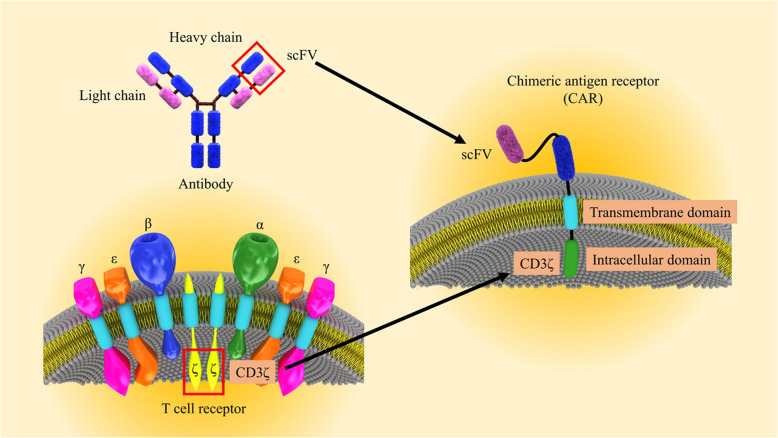
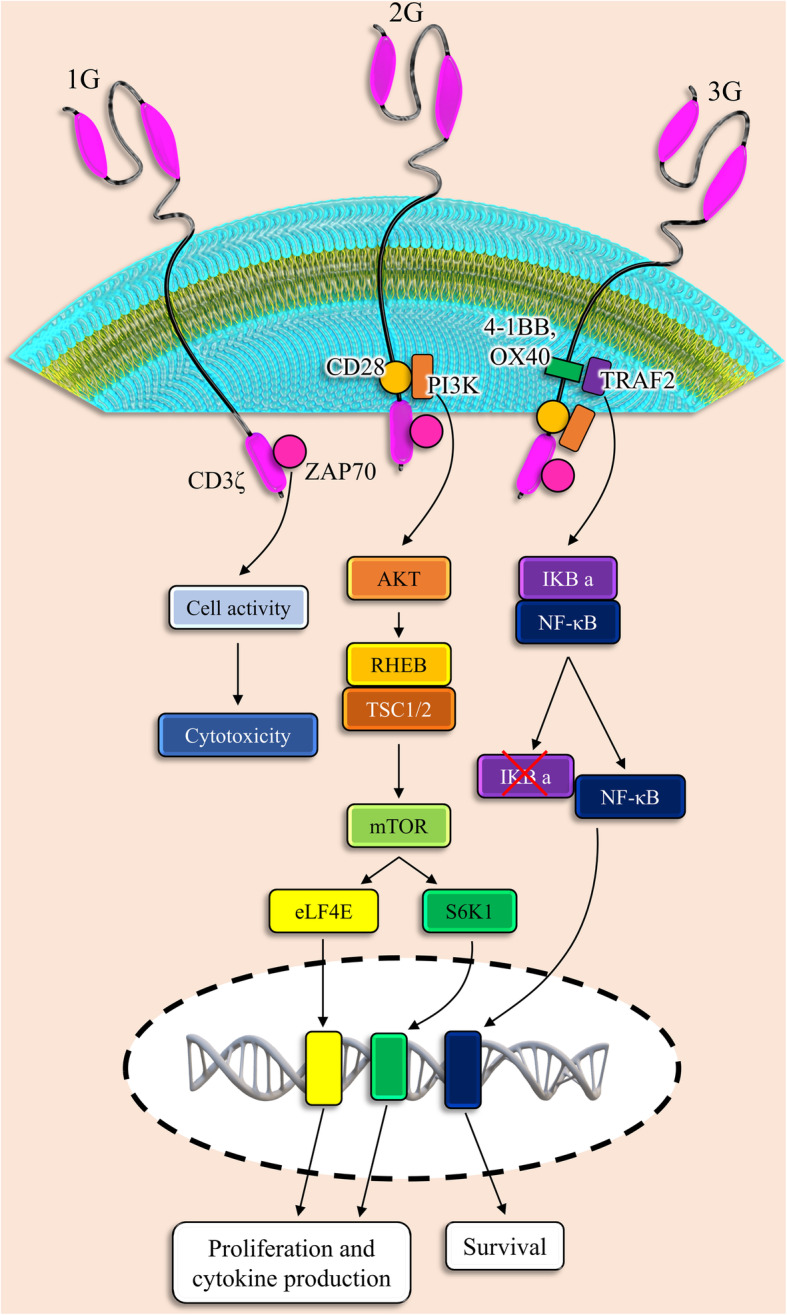
BACKGROUND: CARs are simulated receptors containing an extracellular single-chain variable fragment (scFv), a transmembrane domain, as well as an intracellular region of immunoreceptor tyrosine-based activation motifs (ITAMs) in association with a co-stimulatory signal. MAIN BODY: Chimeric antigen receptor (CAR) T cells are genetically engineered T cells to express a receptor for the recognition of the particular surface marker that has given rise to advances in the treatment of blood disorders. The CAR T cells obtain supra-physiological properties and conduct as "living drugs" presenting both immediate and steady effects after expression in T cells surface. But, their efficacy in solid tumor treatment has not yet been supported. The pivotal challenges in the field of solid tumor CAR T cell therapy can be summarized in three major parts: recognition, trafficking, and surviving in the tumor. On the other hand, the immunosuppressive tumor microenvironment (TME) interferes with T cell activity in terms of differentiation and exhaustion, and as a result of the combined use of CARs and checkpoint blockade, as well as the suppression of other inhibitor factors in the microenvironment, very promising results were obtained from the reduction of T cell exhaustion. CONCLUSION: Nowadays, identifying and defeating the mechanisms associated with CAR T cell dysfunction is crucial to establish CAR T cells that can proliferate and lyse tumor cells severely. In this review, we discuss the CAR signaling and efficacy T in solid tumors and evaluate the most significant barriers in this process and describe the most novel therapeutic methods aiming to the acquirement of the promising therapeutic outcome in non-hematologic malignancies.
Overview
The claims and statistics of this paper haven’t been checked yet.
Free: it reads the open-access text and checks the first 5 claims that cite a source we can check. Create a free account to check every claim.
Integrity signals
Registry
Cites
Statistics
Figures
Verification
Claims the paper makes
The claims and statistics of this paper haven’t been checked yet.
Free: it reads the open-access text and checks the first 5 claims that cite a source we can check. Create a free account to check every claim.
Claims other papers make about this one
Each is checked against this paper’s own text: does it say what the citing paper says it does?
The cited source says what the claim attributes to it.
In the citing paper
“CD133‐CAR‐T therapy in colorectal, pancreatic and hepatocellular carcinoma has shown anti‐metastatic potential in a phase I clinical trial [91].”
From Tumor microenvironment signaling and therapeutics in cancer progression (2023) · cites this paper as [91]
Self-check
Percentages, sums and reported differences re-computed from the paper’s own numbers.
The self-check needs the paper’s full text.
Citations
Cites
Microenvironmental regulation of tumor progression and metastasis
Quail, D. F., & Joyce, J. A. (2013) · Nature Medicine · doi:10.1038/nm.3394 · Cited by 7,994 · cited 1×
“Regulatory T cells (Tregs), myeloid-derived suppressor cells (MDSCs), and M2 tumor-associated macrophages (TAMs) are the most prominent types of immune suppressor cells in the tumor environment [122, 123].”
BackgroundUnderstanding the tumor immune microenvironment (TIME) for effective therapy
Binnewies, M., Roberts, E. W., Kersten, K., Chan, V., Fearon, D. F., Merad, M., Coussens, L. M., Gabrilovich, D. I., Ostrand-Rosenberg, S., Hedrick, C. C., et al. (2018) · Nature Medicine · doi:10.1038/s41591-018-0014-x · Cited by 6,145 · cited 1×
“immune checkpoint molecules such as CTLA-4 and PD-1 also reduce antitumor immunity [120, 124].”
BackgroundAccessories to the Crime: Functions of Cells Recruited to the Tumor Microenvironment
Hanahan, D., & Coussens, L. M. (2012) · Cancer Cell · doi:10.1016/j.ccr.2012.02.022 · Cited by 4,632 · cited 1×
“solid tumors can be strongly infiltrated by different cell types that support tumor growth, angiogenesis, and metastasis [121].”
BackgroundMelanoma-intrinsic β-catenin signalling prevents anti-tumour immunity
Spranger, S., Bao, R., & Gajewski, T. F. (2015) · Nature · doi:10.1038/nature14404 · Cited by 2,830 · cited 1×
“Identifying solid tumors requires cells to transition from the blood into the cancer site, and various abnormalities develop such that T cell infiltration is roughly blocked [113, 114].”
BackgroundMorgan, R. A., Yang, J. C., Kitano, M., Dudley, M. E., Laurencot, C. M., & Rosenberg, S. A. (2010) · Molecular Therapy · doi:10.1038/mt.2010.24 · Cited by 2,533 · cited 1×
“This catastrophic toxicity occurred for a patient with metastatic CRC who received Her2-CAR T cells [36] and a neuroblastoma patient who was treated with GD2-CAR T cells [37].”
BackgroundA human memory T cell subset with stem cell–like properties
Gattinoni, L., Lugli, E., Ji, Y., Pos, Z., Paulos, C. M., Quigley, M. F., Almeida, J. R., Gostick, E., Yu, Z., Carpenito, C., et al. (2011) · Nature Medicine · doi:10.1038/nm.2446 · Cited by 1,974 · cited 1×
“, CD4+, CD8+ αβ T cells, and γδ T cells) are superior to other cells with the aim of optimal tumor suppression [17, 18].”
BackgroundRegression of Glioblastoma after Chimeric Antigen Receptor T-Cell Therapy
Brown, C. E., Alizadeh, D., Starr, R., Weng, L., Wagner, J. R., Naranjo, A., Ostberg, J. R., Blanchard, M. S., Kilpatrick, J., Simpson, J., et al. (2016) · New England Journal of Medicine · doi:10.1056/nejmoa1610497 · Cited by 1,836 · cited 1×
“Intracranial transport has been exposed to be safe and to have an acceptable anti-cancer effect in glioblastoma [115], and intra-pleural transport of CAR T cells was more effective than their systemic administration in human pleural malignancy preclinical researches [116].”
BackgroundO’Rourke, D. M., Nasrallah, M. P., Desai, A., Melenhorst, J. J., Mansfield, K., Morrissette, J. J. D., Martinez-Lage, M., Brem, S., Maloney, E., Shen, A., et al. (2017) · Science Translational Medicine · doi:10.1126/scitranslmed.aaa0984 · Cited by 1,803
Eshhar, Z., Waks, T., Gross, G., & Schindler, D. G. (1993) · Proceedings of the National Academy of Sciences · doi:10.1073/pnas.90.2.720 · Cited by 1,658 · cited 1×
“Although CD3-ζ chain accretion is adequate to support cytolytic function in cytotoxic T cells (CTL) lines, it has been found that the strength of the essential signal to the presentation of the cytotoxic activity is lower compared with the other types of their functions [21].”
BackgroundThe Basic Principles of Chimeric Antigen Receptor Design
Sadelain, M., Brentjens, R., & Rivière, I. (2013) · Cancer Discovery · doi:10.1158/2159-8290.cd-12-0548 · Cited by 1,535 · cited 2×
“Alternative tactics independent of transgene integration, which used either RNA electroporation or cell surface conjugation, in turn, lead to the transient CAR expression and limitation of CAR T cell persistence beyond 7–14 days [3].”
BackgroundInfluential
Cited by
Items 601–617 of 617
Nanotechnology to Engineer the Surface of Immune Cells
Zhang, Z., & King, M. R. (2026) · ACS Nanoscience Au · doi:10.1021/acsnanoscienceau.6c00056
“126 Therefore, overcoming ECM-mediated barriers to immune-cell infiltration and intratumoral mobility is critical for improving the efficacy of ICB in poorly infiltrated solid tumors and extending the success of CAR-T-cell therapy from hematological malignancies to solid tumors.”
Imaging the fate of CAR-T cells in vivo
Wang, H., Yan, Y., Li, Y., Chen, S., Ling, R., Zhu, J., & Cheng, X. (2026) · Frontiers in Immunology · doi:10.3389/fimmu.2026.1922326
Advances in the Diagnosis and Treatment of Colorectal Neuroendocrine Neoplasms
信, 雪. (2026) · Advances in Clinical Medicine · doi:10.12677/acm.2026.1682999
Vanangamudi, M., Pamu, S., Amarnath, D. P., Surendran, V., Gunda, R. K., & Guptha, P. M. (2026) · Elsevier eBooks · doi:10.1016/b978-0-443-43824-0.00005-5
Jiang, C., Tang, M., Guo, M., Shang, Q., Chen, Q., An, X., Xie, J., Zheng, K., Feng, B., & Wang, F. (2026) · Science Advances · doi:10.1126/sciadv.aee2120
“Successful transport of CAR-T cells from circulation to tumor sites constitutes a fundamental prerequisite for treating solid malignancies ( 5 , 11 ).”
Genetically inducible coordinators of cytokine signaling pathways for interrogating T cell motilityPreprint
Schreiber, Y. R., Keller, M. R., Bower, X., Fuller, E., Woo, J., Memmos, N., Odde, D. J., & Leonard, J. N. (2026) · bioRxiv (Cold Spring Harbor Laboratory) · doi:10.64898/2026.09.21.753259
Martínez, P. M., Martinez, D. S., & Aznar, J. M. G. (2026) · Zaguan (Universidad de Zaragoza)
Niu, Q., Li, M., Zhang, C., Li, Q., Wang, M., & Liu, A. (2026) · Frontiers in Immunology · doi:10.3389/fimmu.2026.1968080
Abdelfattah, A. M., Hamada, R. R., & Sabry, M. (2026) · International Journal of Clinical Medical Research · doi:10.61466/ijcmr4040004
“24, 25 Gene and RNA-Targeted Therapies These strategies aim to correct disease at its genetic or transcriptional origin.”
Engineering Fsh-CER T cells to Enhance Response to Epithelial Ovarian Cancer
Beatty, N. J. (2026) · Digital Commons - University of South Florida (University of South Florida)
Su, L., Ma, X., Chen, D., Wang, W., Yang, W., Huang, S., Pang, Y., 陈树珍, Cheng, L., Bian, C., et al. (2026) · Journal for ImmunoTherapy of Cancer · doi:10.1136/jitc-2026-015799
“20 21 22–24 Thus, we propose constructing a bispecific CAR based on CD70 and HLA-G to address the limited efficacy of single-target therapy in ccRCC.”
Shioya, K., Matsumura, T., Urakami, A., Shigeura, T., Lin, Y., 藤牧, 未., Mishima, Y., Aoki, T., Okoshi, M., Motoyoshi, K., et al. (2026) · Journal for ImmunoTherapy of Cancer · doi:10.1136/jitc-2026-016268
Immunotargeting of Cervical Cancer Cells with the Adaptor CAR T-Cell Platform RevCAR
Jones-Cifuentes, N. A., Arndt, C., Loureiro, L. R., Berndt, N., von Jutrzenka-Trzebiatowski, A., Feldmann, A., Bachmann, J., Seliger, B., Rincón‐Orozco, B., & Bachmann, M. P. (2026) · International Journal of Molecular Sciences · doi:10.3390/ijms27219704
Li, S., Barden, M., Pan, H., Harrer, D. C., Kaljanac, M., Bezler, V., Ertelt, M., Schoeder, C., Chen, T.-Y., & Abken, H. (2026) · Frontiers in Immunology · doi:10.3389/fimmu.2026.1906848
Targeted cancer ablation via programmable sensing of amplified oncogenic RNAPreprint
Zhang, M., Hu, Y., Yamada‐Hunter, S. A., Sotillo, E., Dai, H., Call, C. C., Tousley, A. M., Kim, S. J., Liu, W., Winslow, M. M., et al. (2026) · bioRxiv (Cold Spring Harbor Laboratory) · doi:10.64898/2026.11.02.763782
Liu, X., Gao, Y., Qu, Z., Zhou, Y., Jia, R., Liu, H., Wang, C., & Xiong, H. (2026) · PubMed Central · doi:10.1097/md.0000000000051342
Wang, Q., Yang, T., Liang, N. N., Gao, P., Zhou, S., Fang, X., Qiao, Q., He, X., Wang, N., & Wang, G. (2026) · Drug Resistance Updates · doi:10.1016/j.drup.2026.101503
Metadata
- Authors
- Marofi, F., Motavalli, R., Safonov, V. A., Thangavelu, L., Yumashev, A. V., Alexander, M., Shomali, N., Chartrand, M. S., Pathak, Y., Jarahian, M., Izadi, S., Hassanzadeh, A., Shirafkan, N., Tahmasebi, S., & Khiavi, F. M.
- Affiliations
- Tabriz University of Medical Sciences (IR)
- Russian Academy of Sciences (RU)
- Saveetha University (IN)
- Sechenov University (RU)
- Industrial University of Tyumen (RU)
- German Cancer Research Center (DE)
- University of South Florida (US)
- Pasteur Institute of Iran (IR)
- Corresponding author
- Motavalli, Roza
- Khiavi, Farhad Motavalli
- ORCID
- Venue
- Stem Cell Research & Therapy
- Published
- 2021-01-25
- Volume
- 12
- Issue
- 1
- Pages
- 81-81
- ISSN
- 1757-6512 (ISSN-L)
- PMC
- PMC7831265
- OpenAlex
- W3122724341
- Semantic Scholar
- b0c68f34468a84453d091f534295485c1a741b8c
- Cited by
- 582
- References
- 149
- Citations by year
- 2026: 63 · 2025: 105 · 2024: 120 · 2023: 133 · 2022: 121 · 2021: 39
- FWCI
- 12.51
- Type
- journal article
- Language
- en
- Open access
- gold
- doi.org
- Licence
- cc-by
- creativecommons.org/licenses/by/4.0 (tdm)
- creativecommons.org/licenses/by/4.0 (vor)
- Locations
- Stem Cell Research & Therapy (publishedVersion, cc-by)
- PubMed Central (publishedVersion, cc-by)
- PubMed (publishedVersion)
- DOAJ (DOAJ: Directory of Open Access Journals) (submittedVersion, cc-by-sa)
- Topics
- Health Sciences › Medicine › Oncology › CAR-T cell therapy research
- Health Sciences › Medicine › Oncology › Cancer Immunotherapy and Biomarkers
- Life Sciences › Immunology and Microbiology › Immunology › Immunotherapy and Immune Responses
- Keywords
- chimeric antigen receptor T cells, solid tumors, chimeric antigen receptor, tumor microenvironment, T cell exhaustion, immune checkpoint blockade, CAR signaling, T cell migration, tumor recognition, non-hematologic malignancies, T cell survival
- MeSH terms
- Receptors, Chimeric Antigen, Humans, Neoplasms, T-Lymphocytes, Immunotherapy, Adoptive, Tumor Microenvironment
About these checks
Registry, retraction, Cites and statistics results are computed, not judged, with one exception: a printed reference that no index lists is read once by a model before it counts as a citation error. Claims are extracted by a model and kept only when their quote appears verbatim in the text; each cited source is then checked, with a model’s help, for whether it says what the claim relies on. Those verdicts can be wrong — read the claim’s quote and the cited source before relying on one.
Statistics and arithmetic are recomputed, not judged.
Confidence bands are shown only for fields calibrated on our annotated test set. None is calibrated yet, so no band is shown.
What counts as a claim ›How we measure confidence ›How we check this ›
Are you an author, or do you see a problem with this page? Request a review
Data sources
Bibliographic data: Semantic Scholar, OpenAlex, Crossref.
Contains information from the Semantic Scholar Academic Graph Datasets, made available under the ODC Attribution License (ODC-BY 1.0).
Semantic Scholar’s data is described in: Kinney, R., et al. (2023). The Semantic Scholar Open Data Platform. arXiv:2301.10140.
