

First hospital outbreak of the globally emerging Candida auris in a European hospital
Open accessThe DOI matches its Crossref record; 18 of the 18 references it cites were found in a registry or an index.
Abstract
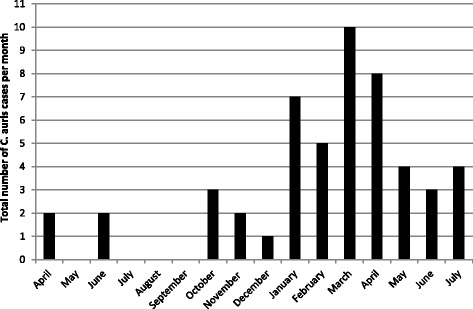
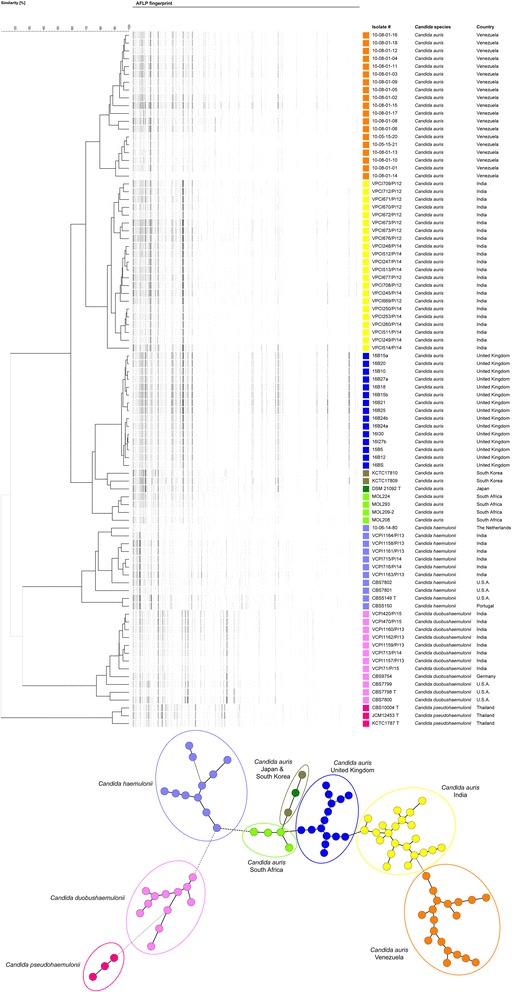
Candida auris is a globally emerging multidrug resistant fungal pathogen causing nosocomial transmission. We report an ongoing outbreak of C. auris in a London cardio-thoracic center between April 2015 and July 2016. This is the first report of C. auris in Europe and the largest outbreak so far. We describe the identification, investigation and implementation of control measures. Data on C. auris case demographics, environmental screening, implementation of infection prevention/control measures, and antifungal susceptibility of patient isolates were prospectively recorded then analysed retrospectively. Speciation of C. auris was performed by MALDI-TOF and typing of outbreak isolates performed by amplified fragment length polymorphism (AFLP). This report describes an ongoing outbreak of 50 C. auris cases over the first 16 month (April 2015 to July 2016) within a single Hospital Trust in London. A total of 44 % (n = 22/50) patients developed possible or proven C. auris infection with a candidaemia rate of 18 % (n = 9/50). Environmental sampling showed persistent presence of the yeast around bed space areas. Implementation of strict infection and prevention control measures included: isolation of cases and their contacts, wearing of personal protective clothing by health care workers, screening of patients on affected wards, skin decontamination with chlorhexidine, environmental cleaning with chorine based reagents and hydrogen peroxide vapour. Genotyping with AFLP demonstrated that C. auris isolates from the same geographic region clustered. This ongoing outbreak with genotypically closely related C. auris highlights the importance of appropriate species identification and rapid detection of cases in order to contain hospital acquired transmission.
Overview
The claims and statistics of this paper haven’t been checked yet.
Free: it reads the open-access text and checks the first 5 claims that cite a source we can check. Create a free account to check every claim.
Integrity signals
Registry
Cites
Statistics
Figures
Verification
Claims the paper makes
The claims and statistics of this paper haven’t been checked yet.
Free: it reads the open-access text and checks the first 5 claims that cite a source we can check. Create a free account to check every claim.
Claims other papers make about this one
Each is checked against this paper’s own text: does it say what the citing paper says it does?
The source backs part of the claim, not all of it — or backs it for a different population, condition or comparison.
In the citing paper
“However, there has been a worrying increase in the number of non-albicans Candida species such as C. glabrata, C. parapsilosis, C. tropicalis, C. krusei and lastly C. auris.”
From Global and Multi-National Prevalence of Fungal Diseases-Estimate Precision (2017) · cites this paper as [42]
Experimental — accuracy not yet measuredThe source backs part of the claim, not all of it — or backs it for a different population, condition or comparison.
In the citing paper
“These species are more likely to be antifungal resistant and have the potential to cause outbreaks [42].”
From Global and Multi-National Prevalence of Fungal Diseases-Estimate Precision (2017) · cites this paper as [42]
Experimental — accuracy not yet measuredThe source backs part of the claim, not all of it — or backs it for a different population, condition or comparison.
In the citing paper
“In addition to autoinfection, infections with certain species of Candida, particularly Candida auris and Candida parapsilosis, can result from transmission between patients in health care settings (14).”
From Population-Based Active Surveillance for Culture-Confirmed Candidemia — Four Sites, United States, 2012–2016 (2019) · cites this paper as [14]
Experimental — accuracy not yet measuredThe source backs part of the claim, not all of it — or backs it for a different population, condition or comparison.
In the citing paper
“There are currently no effective methods to eradicate C. auris from the skin9.”
From The emerging fungal pathogen Candida auris induces IFNγ to colonize mammalian hair follicles (2025) · cites this paper as [9]
Experimental — accuracy not yet measuredThe source backs part of the claim, not all of it — or backs it for a different population, condition or comparison.
In the citing paper
“A key factor contributing to the high transmissibility of C. auris is its ability to readily establish high level colonization on the skin and persistently present for months5,10,16,17.”
From Adhesin Als4112 promotes Candida auris skin colonization through interactions with keratinocytes and extracellular matrix proteins (2025) · cites this paper as [17]
Experimental — accuracy not yet measured
3 more claims about this paper
Create a free account to see every claim other papers make about this one.
Self-check
Percentages, sums and reported differences re-computed from the paper’s own numbers.
The self-check needs the paper’s full text.
Citations
Cites
Lockhart, S. R., Etienne, K. A., Vallabhaneni, S., Farooqi, J., Chowdhary, A., Govender, N. P., Colombo, A. L., Calvo, B., Cuomo, C. A., Desjardins, C. A., et al. (2017) · Clinical Infectious Diseases · doi:10.1093/cid/ciw691 · Cited by 1,662 · cited 2×
“auris isolates in the same geographic areas [14, 15].”
BackgroundSelf-citationSatoh, K., Makimura, K., Hasumi, Y., Nishiyama, Y., Uchida, K., & Yamaguchi, H. (2009) · Microbiology and Immunology · doi:10.1111/j.1348-0421.2008.00083.x · Cited by 1,381 · cited 2×
“auris is a globally emerging multidrug resistant fungal pathogen with the first clinical case being described in 2009 causing an ear infection in a Japanese patient [1].”
BackgroundKathuria, S., Singh, P. K., Sharma, C., Prakash, A., Masih, A., Kumar, A., Meis, J. F., & Chowdhary, A. (2015) · Journal of Clinical Microbiology · doi:10.1128/jcm.00367-15 · Cited by 532 · cited 2×
“haemulonii and accurate species identification is necessary for the administration of appropriate antifungal therapy and the control of outbreaks in hospital settings [6].”
BackgroundSelf-citationFirst Three Reported Cases of Nosocomial Fungemia Caused by Candida auris
Lee, W. G., Shin, J. H., Uh, Y., Kang, M. G., Kim, S. H., Park, K. H., & Jang, H.-C. (2011) · Journal of Clinical Microbiology · doi:10.1128/jcm.00319-11 · Cited by 523 · cited 5×
“Since its first description, reports of nosocomial outbreaks of C. auris have been reported from India [2], South Korea [3], South Africa [4] and Venezuela [5].”
BackgroundInfluentialIncidence, characteristics and outcome of ICU-acquired candidemia in India
Chakrabarti, A., Sood, P., Rudramurthy, S. M., Chen, S., Kaur, H., Capoor, M., Chhina, D., Rao, R., Eshwara, V. K., Xess, I., et al. (2015) · Intensive Care Medicine · doi:10.1007/s00134-014-3603-2 · Cited by 454 · cited 1×
“recent case series from developing countries [5, 11, 13, 16].”
Calvo, B., Melo, A. S. A., Perozo-Mena, A., Hernandez, M., Francisco, E. C., Hagen, F., Meis, J. F., & Colombo, A. L. (2016) · Journal of Infection · doi:10.1016/j.jinf.2016.07.008 · Cited by 448 · cited 6×
“Since its first description, reports of nosocomial outbreaks of C. auris have been reported from India [2], South Korea [3], South Africa [4] and Venezuela [5].”
BackgroundInfluentialSelf-citationModern technologies for improving cleaning and disinfection of environmental surfaces in hospitals
Boyce, J. M. (2016) · Antimicrobial Resistance & Infection Control · doi:10.1186/s13756-016-0111-x · Cited by 442
New Clonal Strain of Candida auris, Delhi, India
Chowdhary, A., Sharma, C., Duggal, S., Agarwal, K., Prakash, A., Singh, P. K., Jain, S., Kathuria, S., Randhawa, H. S., Hagen, F., et al. (2013) · Emerging Infectious Diseases · doi:10.3201/eid1910.130393 · Cited by 418 · cited 12×
“Since its first description, reports of nosocomial outbreaks of C. auris have been reported from India [2], South Korea [3], South Africa [4] and Venezuela [5].”
BackgroundMethodInfluentialSelf-citationMultidrug-resistant endemic clonal strain of Candida auris in India
Chowdhary, A., Anil Kumar, V., Sharma, C., Prakash, A., Agarwal, K., Babu, R., Dinesh, K. R., Karim, S., Singh, S. K., Hagen, F., et al. (2014) · European Journal of Clinical Microbiology & Infectious Diseases · doi:10.1007/s10096-013-2027-1 · Cited by 373 · cited 10×
“Since its first description, reports of nosocomial outbreaks of C. auris have been reported from India [2], South Korea [3], South Africa [4] and Venezuela [5].”
BackgroundInfluentialSelf-citationKim, M., Shin, J. H., Sung, H., Lee, K., Kim, E., Ryoo, N., Lee, J., Jung, S., Park, K. H., Kee, S. J., et al. (2009) · Clinical Infectious Diseases · doi:10.1086/597108 · Cited by 309 · cited 4×
“Since its first description, reports of nosocomial outbreaks of C. auris have been reported from India [2], South Korea [3], South Africa [4] and Venezuela [5].”
BackgroundInfluential
Cited by
Items 501–600 of 788
Candida auris: Outbreak, surveillance and epidemiological monitoring in Northern Greece
Poulopoulou, A., Sidiropoulou, A., Sarmourli, T., Zachrou, E., Michailidou, C., Zarras, C., Vagdatli, E., Massa, E., Mouloudi, E. K., Pyrpasopoulou, A., et al. (2024) · Medical Mycology · doi:10.1093/mmy/myae062 · Cited by 8
“1 , 42 A comparative analysis of ITS sequencing, AFLP genotyping and microsatellite typing showed that although microsatellite and ITS typing had technical reproducibility and agreement, the ITS sequencing cannot be reliably used to split the C. auris into geographic clades.”
MethodFayed, B. E., Shakartalla, S. B., Sabbah, H., Dalle, H., Tannira, M., Senok, A. C., & Soliman, S. S. M. (2024) · Mycopathologia · doi:10.1007/s11046-024-00868-9 · Cited by 9
“Recent reports showed that C. auris can form high burden multilayer biofilm in the skin milieu 10-times more than C. albicans [11, 12].”
Management of Sepsis in the First 24 Hours: Bundles of Care and Individualized Approach
Coloretti, I., Tosi, M., Biagioni, E., Busani, S., & Girardis, M. (2024) · Seminars in Respiratory and Critical Care Medicine · doi:10.1055/s-0044-1789185 · Cited by 9
“23 In recent years, new technologies have been developed for the early identi fi cation of infectious agents and their possible resistance mechanisms, particularly in respiratory tract infections.”
Candida auris: Emergência Recente de um Fungo Patogénico Multirresistente
Antunes, F., Veríssimo, C., Pereira, Á. A., & Sabino, R. (2020) · Acta Médica Portuguesa · doi:10.20344/amp.12419 · Cited by 13
Candida auris-an impending threat: A case report from home
Anwar, S., Glaser, A., Acharya, S., & Yousaf, F. (2020) · American Journal of Infection Control · doi:10.1016/j.ajic.2020.01.020 · Cited by 10
Georgacopoulos, O., Nunnally, N. S., Le, N., Lysén, C., Welsh, R. M., Kordalewska, M., Perlin, D. S., Berkow, E. L., & Sexton, D. J. (2020) · Journal of Clinical Microbiology · doi:10.1128/jcm.00690-20 · Cited by 8
Nhan, N., Liu, T., Almushajrah, A. A., Mozumder, A., Narlieva, M., Szymczak, W. A., Thwe, P. M., Orner, E. P., & Goldstein, D. Y. (2025) · Microbiology Spectrum · doi:10.1128/spectrum.02114-24 · Cited by 7
“Five percent to 25% of patients with C. auris colonization can develop life-threatening bloodstream infections (8–10).”
Value of qPCR in the screening strategy for Candida auris
Jolivet, S., Fournier, S., Bigot, J., Galal, L., Roux, E. L., Bonnet, M., Souyri, V., Michel, P. A., Goulet, H., Pialoux, G., et al. (2025) · Medical Mycology · doi:10.1093/mmy/myaf041 · Cited by 7
Candida vulturna , the Next Fungal Menace? A Narrative Review
Harchand, R., Spruijtenburg, B., Meijer, E. F. J., de Groot, T., Rudramurthy, S. M., & Meis, J. F. G. M. (2025) · Mycoses · doi:10.1111/myc.70070 · Cited by 8
“In general, it is challenging to identify the source of yeast outbreaks [21].”
Self-citationCandida auris in intensive care unit: A growing clinical concern
Bassetti, M., Magnasco, L., Lamarina, A., Paola, L. D., Vena, A., Giacobbe, D. R., & Bartalucci, C. (2025) · Journal of Translational Critical Care Medicine · doi:10.1097/jtccm-d-25-00003 · Cited by 10
Candida auris vacuolar calcium pump mediates fluconazole efflux and resistance evolution
Song, Y., Chen, J., Wan, J., Zhang, J., Liu, Q., Sun, F., Zhang, H., Guo, Y., Chow, E. W. L., Chen, Y., et al. (2026) · Nature Microbiology · doi:10.1038/s41564-026-02270-1 · Cited by 8
First prospectively identified case of Candida auris in the United States
Yang, A., Carlton, D. A., Hamula, C. L. A., Patel, G., & Iloreta, A. M. (2017) · Otolaryngology Case Reports · doi:10.1016/j.xocr.2017.08.004 · Cited by 7
Clinical Syndromes: Candida and Candidosis
Ruhnke, M. (2018) · Springer eBooks · doi:10.1007/978-3-319-92300-0_4 · Cited by 8
Does Candida auris colonize the oral cavity? A retrospective institutional experience
Alfaifi, A. A., Brooks, J. K., Jabra‐Rizk, M. A., Meiller, T. F., & Sultan, A. S. (2023) · Oral Diseases · doi:10.1111/odi.14720 · Cited by 8
Pathobiology of Candida auris infection analyzed by multiplexed imaging and single cell analysis
Chadwick, C. M., Jesus, M. D., Ginty, F., & Martinez, J. S. (2024) · PLoS ONE · doi:10.1371/journal.pone.0293011 · Cited by 7
Hansanant, N., Cao, K., Tenorio, A., Joseph, T., Ju, M., McNally, N., Kummari, E., Williams, M. D., Cothrell, A., Buhrow, A. R., et al. (2024) · Journal of Natural Products · doi:10.1021/acs.jnatprod.3c00777 · Cited by 9
Candida auris: A New Emerging Fungal Monster
Raiesi, O., Shabandoust, H., Getso, M. I., Raissi, V., & Rezaei, A. A. (2019) · Archives of Clinical Infectious Diseases · doi:10.5812/archcid.70741 · Cited by 10
“Between 2015 and 2016, a cardiothoracic center experienced the episodes of outbreak (9, 10).”
BackgroundTorres, S. R., Kim, H. C., Leach, L., Chaturvedi, S., Bennett, C. J., Hill, D. J., & Jesus, M. D. (2019) · Journal of Occupational and Environmental Hygiene · doi:10.1080/15459624.2019.1594840 · Cited by 7
Umamaheshwari, S., Neelambike, S. M., Shankarnarayan, S. A., Kumarswamy, K. S., Gopal, S., Prakash, H., & Rudramurthy, S. M. (2021) · Journal de Mycologie Médicale · doi:10.1016/j.mycmed.2021.101176 · Cited by 7
Mouse Gastrointestinal Colonization Model for Candida auris
Simantirakis, S., & MacCallum, D. M. (2022) · Methods in molecular biology · doi:10.1007/978-1-0716-2417-3_26 · Cited by 7
Brazil is so far free from Candida auris. Are we missing something?
Pasqualotto, A. C., Sukiennik, T., & Meis, J. F. G. M. (2019) · The Brazilian Journal of Infectious Diseases · doi:10.1016/j.bjid.2019.05.004 · Cited by 8
Self-citationExposure to Fungi in Health Care Facilities
Sabino, R. (2020) · Elsevier eBooks · doi:10.1016/b978-0-12-809633-8.21034-0 · Cited by 9
Wang, Y., Lin, L., Li, J., Wang, X., Zhang, J., Xi, L., Cai, W., & Lu, S. (2025) · Infection and Drug Resistance · doi:10.2147/idr.s512301 · Cited by 7
“4,15 The overall mortality rate associated with C. auris infections is notably elevated (40–60%), which is attributed primarily to the severe underlying conditions of patients and the increasing resistance to azoles, amphotericin B, and echinocandins.”
A benchmark dataset for validating FKS1 mutations in Candida auris
Misas, E., Parnell, L. A., Rajeev, M., López, L. F., dos Santos, A. R., Mudge, Z. B., Gade, L., Forsberg, K., Lyman, M., Sexton, D. J., et al. (2025) · Microbiology Spectrum · doi:10.1128/spectrum.03147-24 · Cited by 12
Spruijtenburg, B., Meis, J. F. G. M., van Rhijn, N., Čurdová, M., Kašperová, E., Vašek, P., Bartoníčková, L., Kubele, J., Olišarová, P., Svobodová, K., et al. (2025) · Eurosurveillance · doi:10.2807/1560-7917.es.2025.30.45.2500285 · Cited by 6
Self-citationPathogenicity and virulence of Candida auris
Phan-Canh, T., Seiser, S., Chauhan, M., Kuchler, K., Chauhan, N., & Elbe‐Bürger, A. (2026) · Virulence · doi:10.1080/21505594.2026.2707827 · Cited by 7
“For C. auris , the efficacy of chlorine-based agents was first demonstrated during the 2015 hospital outbreak in the United Kingdom, where a chlorine-based product was used at a 1000ppm concentration [5].”
An Update on the Recent Emergence of Candida auris
Jain, M., Jain, A., Khare, B., Jain, D. K., Khan, R., & Jain, D. (2022) · Asian Journal of Dental and Health Sciences · doi:10.22270/ajdhs.v2i1.11 · Cited by 6
Wong, S., Chau, P. H., Chen, H., So, S. Y.-C., Chiu, K. H., Chen, J. H.-K., Li, X., Chui, C. S. L., Yuen, K., & Cheng, V. C. (2024) · Infection and Drug Resistance · doi:10.2147/idr.s451742 · Cited by 6
“28,29 Since its emergence in June 2019, C. auris has been responsible for persistent nosocomial outbreaks in two out of seven healthcare networks in Hong Kong, contributing to 13% of reported hospital outbreaks involving epidemiologically important multidrug-resistant organisms and viruses.”
BackgroundHealth threat caused by fungi of medical interest: where are we in 2021?
Désoubeaux, G., & Chesnay, A. (2021) · Frontiers in Bioscience-Landmark · doi:10.52586/4955 · Cited by 8
“Recent outbreaks of Candida auris infection/colonization inside healthcare facilities are obvious examples of the emergence risk of new species that are highly resistant to conventional antifungals [30–32], with up to 90% strains not susceptible to fluconazole, and around 10% to amphotericin B [33].”
BackgroundMucocutaneous Candida Infections in Immunocompromised Patients
Chahine, A., Farooqi, S., Marzvanyan, A., Michael, M., Chavez-Frazier, A., & Guzman, N. (2022) · Current Dermatology Reports · doi:10.1007/s13671-022-00356-7 · Cited by 9
Infection caused by Candida auris: state of the art
Marena, G. D., Carvalho, G. C., Monazzi, L., Maschio-Lima, T., Almeida, M. D., Silva, J. D., Fortunato, G., Araújo, V., Venancio, D. C. V., Chang, M., et al. (2022) · Mycosphere · doi:10.5943/mycosphere/13/1/10 · Cited by 6
Carbia, M., Medina, V., Bustillo, C., Martínez, C., González, M. P., & Ballesté, R. N. (2023) · Mycopathologia · doi:10.1007/s11046-023-00744-y · Cited by 6
Fungal Infections of the External Auditory Canal and Emerging Pathogens
Walsh, E. M., & Hanson, M. B. (2023) · Otolaryngologic Clinics of North America · doi:10.1016/j.otc.2023.06.010 · Cited by 9
Global characteristics and trends in research on Candida auris
Wang, Q., Cheng, S., Wang, Y., Li, F., Chen, J., Du, W., Kang, H., & Wang, Z. (2023) · Frontiers in Microbiology · doi:10.3389/fmicb.2023.1287003 · Cited by 7
Ibe, C., Otu, A. A., & Pohl, C. H. (2025) · Expert Review of Anti-infective Therapy · doi:10.1080/14787210.2024.2448844 · Cited by 7
“Due to the widespread resistance to fluconazole [5,6], the echinocandin family of antifungal drugs is the first-line therapy for invasive candidiasis in most countries of the world, including South Africa [7] despite reports of sporadic outbreaks of infection by echino-candin-resistant Candida…”
Candida auris: Antifungal Multi-Resistant Emerging Yeast
Dolande, M., García, N., Capote, A. M., Panizo, M. M., Ferrara, G., & Alarcón, V. (2017) · Current Fungal Infection Reports · doi:10.1007/s12281-017-0299-0 · Cited by 6
Candida auris and Heart Transplantation. Preoperative Attitude.
López‐Vilella, R., Gaitán, A. C. R., Gimeno, R., Marqués‐Sulé, E., Guillén, R. V., Pemán, J., Sánchez-Lázaro, I. J., & Bonet, L. A. (2019) · OBM Transplantation · doi:10.21926/obm.transplant.1901053 · Cited by 7
Candida auris: Problems in Diagnostics and Management
Ivanov, A. A., & Kulichenko, T. V. (2020) · Вопросы современной педиатрии · doi:10.15690/vsp.v19i1.2081 · Cited by 6
Gaitán, A. C. R., & del Pozo, J. L. (2021) · Revista Iberoamericana de Micología · doi:10.1016/j.riam.2021.03.004 · Cited by 9
Candida Infections in Solid Organ Transplantation
Barros, N., & Mansour, M. K. (2021) · Springer eBooks · doi:10.1007/978-3-030-25869-6_43 · Cited by 7
Candida auris: A bibliometric analysis of an emerging global health threat
Ragusa, P., Prinzivalli, A., Pizzini, S., Libero, G., Moro, G. L., Brescia, V., Scaioli, G., Minniti, D., Siliquini, R., & Bert, F. (2023) · Journal of Infection and Public Health · doi:10.1016/j.jiph.2023.08.012 · Cited by 8
Candidemia y colonización por Candida auris , un reto diagnóstico
Viñuela-Sandoval, L., Falces‐Romero, I., García‐Rodríguez, J., & Eirós-Bouza, J. M. (2017) · Enfermedades Infecciosas y Microbiología Clínica · doi:10.1016/j.eimc.2017.07.003 · Cited by 6
Li, M.-C., Chang, T. C., Chen, H.-M., Wu, C.-J., Su, S.-L., Lee, S. S. J., Chen, P., Lee, N., Lee, C., Li, C., et al. (2018) · Frontiers in Microbiology · doi:10.3389/fmicb.2018.00051 · Cited by 7
“healthcare-associated infections (Schelenz et al., 2016), was misidentified as C.”
The current place of echinocandins in the treatment and prophylaxis of invasive fungal infections
Veselov, A. V. (2020) · Clinical Microbiology and Antimicrobial Chemotherapy · doi:10.36488/cmac.2020.3.197-209 · Cited by 8
Jafarian, H., Khodadadi, H., & Badiee, P. (2020) · Current Medical Mycology · doi:10.18502/cmm.6.3.4665 · Cited by 8
“isolated in Japan [1], South Korea [2], India [3], Pakistan [4], Kuwait [5], Oman [6], South Africa [7], Colombia [8], Venezuela [4], the UK [9], Canada [10],”
BackgroundRisk assessment of arterial allograft contamination from tissue donors colonized by Candida auris
Mirabet, V., Salvador, C., Valentín, A., Escobedo‐Lucea, C., Navarro, L. J., Gimeno, C., & Pemán, J. (2021) · Journal of Hospital Infection · doi:10.1016/j.jhin.2021.03.003 · Cited by 8
Future Directions for Clinical Respiratory Fungal Research
Armstrong-James, D. P. H. (2021) · Mycopathologia · doi:10.1007/s11046-021-00579-5 · Cited by 7
Self-citationInvestigation of Candida auris in Tanta University Hospitals, Egypt
Maxwell, S. Y., & Abd-Elmonsef, M. M. E. (2022) · The Egyptian Journal of Medical Microbiology · doi:10.21608/ejmm.2022.211980 · Cited by 6
Candida auris outbreak on a vascular ward – the unexpected arrival of an anticipated pathogen
O'Connor, C., Bicanic, T. A., Dave, J., Evans, T. J., Moxey, P. W., Adamu, U., Shakespeare, D. T., & Cotter, M. (2019) · Journal of Hospital Infection · doi:10.1016/j.jhin.2019.06.002 · Cited by 6
Candida auris: estrategias y retos para prevenir un brote
Zuluaga, A. (2020) · Biomédica · doi:10.7705/biomedica.5454 · Cited by 7
“auris en el ambiente, por lo tanto, la correcta limpieza es clave para el control de los brotes (17-19).”
BackgroundInfluentialSharma, D., Paul, R. A., Chakrabarti, A., Bhattacharya, S., Soman, R. N., Shankarnarayan, S. A., Chavan, D., Singh, S., Das, P., Kaur, H., et al. (2020) · bioRxiv (Cold Spring Harbor Laboratory) · doi:10.1101/2020.07.09.196600 · Cited by 6
“7 Among the cell wall stress response genes, expression of the gene encoding HSP90-like 136 protein was higher in resistant [2(1-3), P<0.”
BackgroundRapid genome sequencing for outbreak analysis of the emerging human fungal pathogen Candida aurisPreprint
Rhodes, J. L., Abdolrasouli, A., Farrer, R. A., Cuomo, C. A., Aanensen, D. M., Armstrong-James, D. P. H., Fisher, M. C., & Schelenz, S. (2017) · bioRxiv (Cold Spring Harbor Laboratory) · doi:10.1101/201343 · Cited by 8
Self-citationThe fungal pathogen Candida auris exposes chitin to trigger IFNγ and persist in hair follicles
Merrill, E. D., Prudent, V., Basso, P., Rapp, E., Moghadam, P., Rodriguez, A., Hung, E., Hurabielle, C., Cheng, J., Cho, R. J., et al. (2026) · Science · doi:10.1126/science.adu6688 · Cited by 6
Alowais, S. A., Wali, H. A., bin Saleh, K., Aldugiem, R., Alsaeed, Y., Almutairi, M., Almangour, T. A., Alsowaida, Y. S., & Bosaeed, M. (2025) · Antibiotics · doi:10.3390/antibiotics14121206 · Cited by 5
“Approximately 5–10% of colonized patients develop invasive infection, with risk exceeding 25% among critically ill patients within 60 days of detection [18–20].”
Anirima, K., Kokkayil, P., Sarfraz, A., Chowdhry, B. K., Thakuria, B., & Pati, B. K. (2024) · Clinical Epidemiology and Global Health · doi:10.1016/j.cegh.2024.101671 · Cited by 11
Ombajo, L. A., Kanyua, A., Ngugi, R., Malcolm, C., Berkow, E. L., Gade, L., Bancroft, E., Osoro-Mbui, J., Njoroge, R., Juma, P., et al. (2024) · IJID Regions · doi:10.1016/j.ijregi.2024.100460 · Cited by 8
“Although initially associated with otitis media [ 2 , 3 ], it has subsequently been shown to cause invasive blood stream infections [ 3 ] and difficult-to-control hospital outbreaks [ 4 , 5 ].”
BackgroundCandida auris cluster in a large third level Italian hospital: a case series
Lorenzo, A. D., Triggiano, F., Lopuzzo, M., Piccolomo, L., Triggiani, M., Grasso, S., Stefanizzi, P., Tafuri, S., Dalfino, L., & Caggiano, G. (2024) · IJID Regions · doi:10.1016/j.ijregi.2024.100468 · Cited by 7
“The role of HCWs in hospital transmission of C. auris has been hypothesized by other authors due to the identification of the fungus from nasal swabs of hospital staff during an outbreak in the United Kingdom [ 18 , 31 ].”
BackgroundValente, M. R., Alcântara, L. M., Cintra, D. S., Mendoza, S. R., Medeiros, E. G., Gomes, K. X., Honorato, L., Almeida, M. D. A., Vieira, C. B., Nosanchuk, J. D., et al. (2024) · Microbiology Spectrum · doi:10.1128/spectrum.01746-24 · Cited by 6
HIV protease inhibitors restore amphotericin B activity against Candida
Elgammal, Y., Salama, E. A., & Seleem, M. N. (2025) · PLoS ONE · doi:10.1371/journal.pone.0324080 · Cited by 7
“Over the past decade, C. auris has been the source of numerous hospital outbreaks, making it a serious public health concern [6].”
Yang, G., Yang, R., Zhu, X., Xu, Q., Niu, X., Miao, C., Wei, W., Wang, C., Wang, T., & Wu, D. (2025) · Microbiology Spectrum · doi:10.1128/spectrum.00222-25 · Cited by 5
Dratch, A., Le, M., & Zahn, M. (2025) · Emerging infectious diseases · doi:10.3201/eid3109.241342 · Cited by 5
“Skin colonization has been documented to occur in as little as 4 hours after exposure ( 24 ); it is possible that some patients were exposed after admission but before their admission swab specimen was collected and were mistakenly counted as positive at admission and excluded from the model.”
Davidson, H., Griffin, A.-E., Symes, L., Laing, K. G., Witney, A. A., Gould, K. A., Allebone-Salt, P. E., Abadioru, O., Goldenberg, S. D., Otter, J. A., et al. (2025) · Journal of Hospital Infection · doi:10.1016/j.jhin.2025.10.024 · Cited by 6
Logan, C., Allebone-Salt, P. E., Mazzella, A., Hemsley, C. J., Goodman, A. L., Ward, C., Fife, A., Schelenz, S., Abdolrasouli, A., & Bicanic, T. A. (2026) · Journal of Infection · doi:10.1016/j.jinf.2026.106692 · Cited by 7
Self-citationThe emerging pathogen Candida auris: host interactions and disease drivers
Sanya, D. R. A., Arevalo, A. V., Onésime, D., & Nobile, C. J. (2026) · Journal of Biomedical Science · doi:10.1186/s12929-026-01230-5 · Cited by 6
“Impor-tantly, reliable differentiation of C. auris from closely related species remains essential for outbreak containment, allowing timely isolation of colonized patients and safe discharge of non-carriers in healthcare settings [144].”
Ismail, S. A., Hassan, ِ., & Fayed, B. E. (2026) · Discover Applied Sciences · doi:10.1007/s42452-026-08529-w · Cited by 5
Sato, M. C., Pietro, E. C. I. N., Alves, L. M. D. C., Krämer, A., & Santos, P. S. D. S. (2023) · GMS. Hygiene and infection control · doi:10.3205/dgkh000444 · Cited by 6
Host defense mechanisms against Candida auris
Pechacek, J., & Lionakis, M. S. (2023) · Expert Review of Anti-infective Therapy · doi:10.1080/14787210.2023.2264500 · Cited by 6
“…for long periods of time has contributed to C. auris’s ability to spread in healthcare settings [22,23] and presents a risk to the colonized individual to subsequently develop invasive candidiasis with C. auris with reports of up to 4–20% of colonized patients developing invasive infection [24,25].”
BackgroundThe impact of a novel color additive for disinfectant wipes on room cleanliness and turnover time
Oremade, O., Odac, B., George, J., & Browne, F. (2024) · American Journal of Infection Control · doi:10.1016/j.ajic.2024.07.009 · Cited by 5
Candidemia and colonization by Candida auris , a diagnostic challenge
Viñuela-Sandoval, L., Falces‐Romero, I., García‐Rodríguez, J., & Eirós-Bouza, J. M. (2018) · Enfermedades infecciosas y microbiologia clinica (English ed ) · doi:10.1016/j.eimce.2018.02.013 · Cited by 5
Nucleic acids enrichment of fungal pathogens to study host-pathogen interactions
Rodríguez, A., Guillemyn, B., Coucke, P. J., & Vaneechoutte, M. (2019) · Scientific Reports · doi:10.1038/s41598-019-54608-x · Cited by 7
Reimer-McAtee, M., Corsi, G., Reed, E., Boston, K. M., Yalamanchili, H., Burnazian, G., Bassett, S., Butler, J. M., McInnis-Cole, T. A., Chávez, V., et al. (2020) · American Journal of Infection Control · doi:10.1016/j.ajic.2020.08.027 · Cited by 6
The Global Emergence of the Fungal Pathogen Candida auris
Sultan, A. S., Vila, T. V. M., Montelongo‐Jauregui, D., & Jabra‐Rizk, M. A. (2020) · Clinical Infectious Diseases · doi:10.1093/cid/ciaa572 · Cited by 6
Candida auris: Emergence and Epidemiology of a Highly Pathogenic Yeast
Santos, P. S., Dalla Lana, D. F., & Mezzari, A. (2017) · Clinical & Biomedical Research · doi:10.4322/2357-9730.73982 · Cited by 4
The emerging fungal pathogen Candida auris induces IFNγ to colonize mammalian hair follicles
Merrill, E. D., Prudent, V., Moghadam, P., Rodriguez, A., Hurabielle, C., Wells, E. K. C., Basso, P., Scharschmidt, T. C., Rosenblum, M. D., Molofsky, A. B., et al. (2025) · doi:10.1101/2025.01.15.632653 · Cited by 4
Grassie, S. S., Karabıçak, N., & Ünalan-Altıntop, T. (2025) · Acta Microbiologica et Immunologica Hungarica · doi:10.1556/030.2025.02615 · Cited by 5
Candida auris infection at a pediatric burn center: Treatment and infection control measures
Özen, S., Gülhan, B., Demir, S., Uzuntaş, S. T., Yahşi, A., Yüksek, S. K., Erat, T., Güney, A. Y., Güder, L., Bayhan, G. İ., et al. (2025) · Northern Clinics of Istanbul · doi:10.14744/nci.2024.26429 · Cited by 7
“Contrary to other reports on outbreaks, we did not detect environmental contamination with C. auris [16–18].”
de Sousa, D. S. M., Monari, G. P. D. M., da Rosa, C. F., Meis, J. F. G. M., Pereira, A. F. M., Zapata, T. B., dos Santos, C. B. T., Aal, M. C. E., Delella, F. K., Bosco, S. M. G., et al. (2025) · Journal of Applied Microbiology · doi:10.1093/jambio/lxaf197 · Cited by 4
Self-citationGenomic analysis of Candida auris transmission within an urban region
Barbian, H. J., Walblay, K., Kittner, A., Zelinski, C., Newcomer, E. P., Adil, H., Green, S. J., Valley, A. M., Kim, D. Y., Black, S. R., et al. (2025) · Microbial Genomics · doi:10.1099/mgen.0.001478 · Cited by 5
Case report and literature review of refractory fungemia caused by Candida vulturna
Setoguchi, D., Iwanaga, N., Ito, Y., Hirayama, T., Yoshida, M., Takeda, K., Ide, S., Nagayoshi, Y., Kondo, A., Tashiro, M., et al. (2024) · Heliyon · doi:10.1016/j.heliyon.2024.e31464 · Cited by 6
“DISCUSSION: Candida auris exhibits multidrug resistance and has been reported in nosocomial outbreaks; consequently, it has received increasing attention clinically and in research [8].”
BackgroundTebbji, F., Menon, A. C. T., Khemiri, I., St‐Cyr, D. J., Villeneuve, L. R., Vincent, A. T., & Sellam, A. (2024) · Frontiers in Cellular and Infection Microbiology · doi:10.3389/fcimb.2024.1434939 · Cited by 4
Reedy, J. M., Fernando, T., Awuor, S. O., Omwenga, E. O., Koutchma, T., & Mariita, R. M. (2024) · Hygiene · doi:10.3390/hygiene4030030 · Cited by 4
“…of C. auris must include strategies that consider demonstrated transmission pathways, including the isolation of patients and contacts, wearing personal protective equipment, the routine screening of patients, skin decontamination, environmental cleaning, and terminal decontamination [100,102,131].”
Rodrigues, M. I. D. S., da Cruz, G. H. R., Lucini, F., de Almeida, A. M., Pereira, F. F., Ramalho, R. T., Simionatto, S., & Rossato, L. L. (2024) · Microbial Pathogenesis · doi:10.1016/j.micpath.2024.107115 · Cited by 5
Program, C. N. I. S. (2025) · Canada Communicable Disease Report · doi:10.14745/ccdr.v51i67a04 · Cited by 6
Wimmer, A., Jernej, L., Liu, J., Fefer, M., & Plaetzer, K. (2025) · Photochemical & Photobiological Sciences · doi:10.1007/s43630-025-00768-x · Cited by 4
“Patient’s rooms were cleaned with up to 10,000 ppm chlorine-based detergents and equipment with hydrogen peroxide vapor, which eventually stopped the transmission of C. auris [41].”
Chaari, A., Asheer, S. A., Malik, M., Khan, M. S., & AlQahtani, M. (2025) · Journal de Mycologie Médicale · doi:10.1016/j.mycmed.2025.101588 · Cited by 5
Update on the diagnosis of parasitic and fungal infections
Fréalle, É., Valot, S., Piarroux, R., Ménotti, J., Lachaud, L., Persat, F., Izri, A., Villard, O., Yera, H., Dannaoui, É., et al. (2020) · Annales de biologie clinique · doi:10.1684/abc.2020.1554 · Cited by 4
Candida auris in Dutch hospitals: are we ready for it?
Dix, L., Notermans, D. W., Schneeberger, C., & van Dijk, K. (2024) · Journal of Hospital Infection · doi:10.1016/j.jhin.2024.12.004 · Cited by 4
Virulence profile of pathogenic yeasts from snakes: Alternative ways for antifungal strategies
Ugochukwu, I. C. I., Mendoza‐Roldan, J. A., Miglianti, M., Palazzo, N., Odigie, A. E., Otranto, D., & Cafarchia, C. (2025) · PLoS ONE · doi:10.1371/journal.pone.0318703 · Cited by 5
Diagnostics and laboratory role in outbreaks
Lee, F. (2017) · Current Opinion in Infectious Diseases · doi:10.1097/qco.0000000000000388 · Cited by 6
Epidemiology of Emerging Fungal Infections in ICU
Chakrabarti, A., & Sharma, M. (2019) · Current Fungal Infection Reports · doi:10.1007/s12281-019-0334-4 · Cited by 5
Ventriculoperitoneal Shunt-Associated Meningitis Caused by Candida auris: A Case Report
Chawla, R., Sud, A., Ahmad, N., & Baveja, C. P. (2018) · MAMC Journal of Medical Sciences · doi:10.4103/mamcjms.mamcjms_35_18 · Cited by 5
Emerging Diagnostics for Transplant Infectious Diseases
Azar, M. M., Gaston, D. C., & Malinis, M. F. (2020) · Springer eBooks · doi:10.1007/978-3-030-01751-4_69-1 · Cited by 4
Fundamentals of Mycology for Infection Control and Prevention
Lee, R., Cho, S., & Lee, D. (2020) · Korean Journal of Healthcare-Associated Infection Control and Prevention · doi:10.14192/kjicp.2020.25.2.86 · Cited by 4
“‘Pubmed’, ‘Koreamed’, ‘Synapse’를 통 해 2010년부터 2020년 10월까지 영문 및 한글로 작성 되어 원문이 확인 가능한 칸디다에 의한 의료관련 원내유 행(outbreak)으로 확인된 사례를 Table 2에 정리하였다 (Table 2) [20,21,28-46].”
A Bibliometric Review on Candida auris of the First Fifteen Years of Research (2009‐2023)
Villanueva‐Lozano, H., Trejo-Castro, A. I., Carrión-Álvarez, D., Lozano-Díaz, S. T., & Martínez‐Torteya, A. (2023) · BioMed Research International · doi:10.1155/2023/2385018 · Cited by 4
de Souza, Â. C., Pereira, D. C., Barth, P. O., Roesch, E. W., Lutz, L., Aquino, V. R., & Goldani, L. Z. (2024) · Diagnostic Microbiology and Infectious Disease · doi:10.1016/j.diagmicrobio.2024.116271 · Cited by 3
Tone, K., Nagano, Y., Sakamoto, K., Komori, A., Tamura, T., Alshahni, M. M., Kobayashi, T., Masaki, T., Araya, J., & Makimura, K. (2025) · Medical Mycology Journal · doi:10.3314/mmj.24-00019 · Cited by 4
Bioactive structures for inhibitors of Candida auris polymerase enzyme by artificial intelligence
Pinto, F. D. C. L., Cabongo, S. Q., Joao, P. F. B., Lima, M. P., Paiva, M. M. P. C., Madureira, J. M. C., Caluaco, B. J., Colares, R. P., Neto, M. M., dos Santos, H. S., et al. (2025) · Future Medicinal Chemistry · doi:10.1080/17568919.2025.2491301 · Cited by 3
Akinosoglou, K., Skintzi, K., Chandroulis, I., Polyzou, E., Siapika, A., Fligkou, F., Paliogianni, F., Gogos, C. A., & Dimοpoulos, G. (2025) · Journal of Fungi · doi:10.3390/jof11060407 · Cited by 4
“Studies have reported outbreaks in Oman [33], the UK [34], and the USA [35], highlighting its global spread.”
Karageçili, H., & Yıldırım, Z. K. (2020) · Turkish Bulletin of Hygiene and Experimental Biology · doi:10.5505/turkhijyen.2020.95914 · Cited by 3
CANDIDA AURIS: IMMINENCE OF A NEW PANDEMIC?
Chaves, Á. G., da Costa, V. M., & Brito, M. D. V. (2021) · RECIMA21 - Revista Científica Multidisciplinar · doi:10.47820/recima21.v2i4.287 · Cited by 3
Metadata
- Authors
- Schelenz, S., Hagen, F., Rhodes, J. L., Abdolrasouli, A., Chowdhary, A., Hall, A., Ryan, L., Shackleton, J., Trimlett, R., Meis, J. F., Armstrong-James, D., & Fisher, M. C.
- Affiliations
- Royal Brompton Hospital (GB)
- Canisius-Wilhelmina Ziekenhuis (NL)
- Imperial College London (GB)
- University of Delhi (IN)
- Radboud University Medical Center (NL)
- Corresponding author
- Schelenz, Silke
- ORCID
- Venue
- Antimicrobial Resistance & Infection Control
- Published
- 2016-10-19
- Volume
- 5
- Issue
- 1
- Pages
- 35-35
- ISSN
- 2047-2994 (ISSN-L)
- PMC
- PMC5069812
- OpenAlex
- W2538799985
- Cited by
- 768
- References
- 18
- Citations by year
- 2026: 58 · 2025: 65 · 2024: 78 · 2023: 79 · 2022: 62 · 2021: 81 · 2020: 103 · 2019: 99 · 2018: 74 · 2017: 65 · 2016: 4
- FWCI
- 74.50
- Type
- journal article
- Language
- en
- Open access
- gold
- doi.org
- Licence
- cc-by
- Locations
- Antimicrobial Resistance and Infection Control (publishedVersion, cc-by)
- PubMed Central (publishedVersion, cc-by)
- PubMed (publishedVersion)
- Data Archiving and Networked Services (DANS) (submittedVersion)
- DOAJ (DOAJ: Directory of Open Access Journals) (submittedVersion)
- University of Birmingham Research Portal (University of Birmingham) (submittedVersion)
- Radboud Repository (Radboud University) (submittedVersion)
- Spiral (Imperial College London) (submittedVersion, cc-by)
- Radboud Repository (Radboud University) (submittedVersion, other-oa)
- Greater South Information System
- Funders
- Wellcome Trust (RSRO_54990)
- Medical Research Council (K000373/1)
- Topics
- Health Sciences › Medicine › Infectious Diseases › Antifungal resistance and susceptibility
- Health Sciences › Medicine › Infectious Diseases › Infection Control in Healthcare
- Health Sciences › Medicine › Infectious Diseases › Fungal Infections and Studies
- Keywords
- Candida auris, hospital outbreak, nosocomial transmission, candidemia, infection control, antifungal susceptibility, environmental contamination, MALDI-TOF species identification, AFLP genotyping, hydrogen peroxide vapor, emerging fungal pathogens
About these checks
Registry, retraction, Cites and statistics results are computed, not judged, with one exception: a printed reference that no index lists is read once by a model before it counts as a citation error. Claims are extracted by a model and kept only when their quote appears verbatim in the text; each cited source is then checked, with a model’s help, for whether it says what the claim relies on. Those verdicts can be wrong — read the claim’s quote and the cited source before relying on one.
Statistics and arithmetic are recomputed, not judged.
Confidence bands are shown only for fields calibrated on our annotated test set. None is calibrated yet, so no band is shown.
What counts as a claim ›How we measure confidence ›How we check this ›
Are you an author, or do you see a problem with this page? Request a review
Data sources
Bibliographic data: Semantic Scholar, OpenAlex, Crossref.
Contains information from the Semantic Scholar Academic Graph Datasets, made available under the ODC Attribution License (ODC-BY 1.0).
Semantic Scholar’s data is described in: Kinney, R., et al. (2023). The Semantic Scholar Open Data Platform. arXiv:2301.10140.
