

First hospital outbreak of the globally emerging Candida auris in a European hospital
Open accessThe DOI matches its Crossref record; 18 of the 18 references it cites were found in a registry or an index.
Abstract
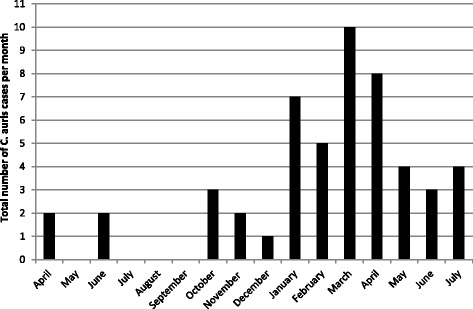
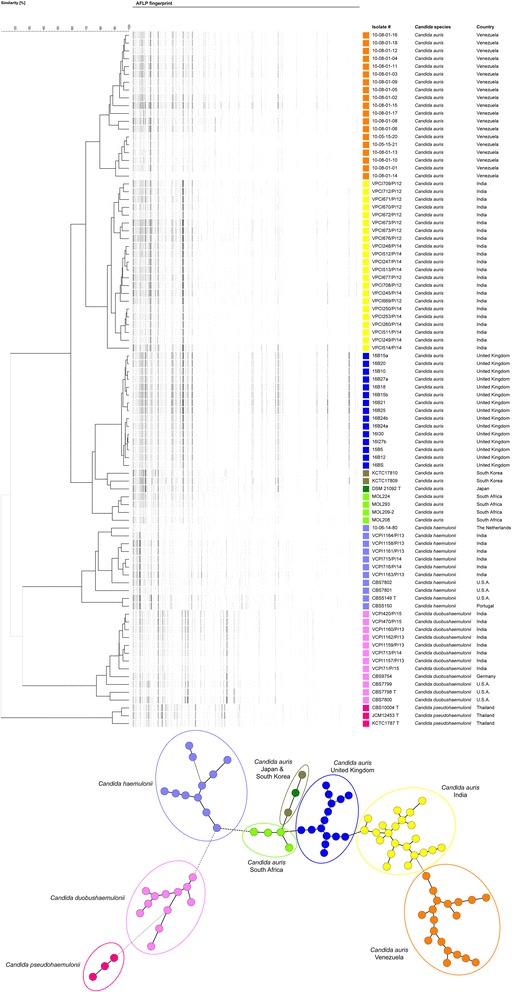
Candida auris is a globally emerging multidrug resistant fungal pathogen causing nosocomial transmission. We report an ongoing outbreak of C. auris in a London cardio-thoracic center between April 2015 and July 2016. This is the first report of C. auris in Europe and the largest outbreak so far. We describe the identification, investigation and implementation of control measures. Data on C. auris case demographics, environmental screening, implementation of infection prevention/control measures, and antifungal susceptibility of patient isolates were prospectively recorded then analysed retrospectively. Speciation of C. auris was performed by MALDI-TOF and typing of outbreak isolates performed by amplified fragment length polymorphism (AFLP). This report describes an ongoing outbreak of 50 C. auris cases over the first 16 month (April 2015 to July 2016) within a single Hospital Trust in London. A total of 44 % (n = 22/50) patients developed possible or proven C. auris infection with a candidaemia rate of 18 % (n = 9/50). Environmental sampling showed persistent presence of the yeast around bed space areas. Implementation of strict infection and prevention control measures included: isolation of cases and their contacts, wearing of personal protective clothing by health care workers, screening of patients on affected wards, skin decontamination with chlorhexidine, environmental cleaning with chorine based reagents and hydrogen peroxide vapour. Genotyping with AFLP demonstrated that C. auris isolates from the same geographic region clustered. This ongoing outbreak with genotypically closely related C. auris highlights the importance of appropriate species identification and rapid detection of cases in order to contain hospital acquired transmission.
Overview
The claims and statistics of this paper haven’t been checked yet.
Free: it reads the open-access text and checks the first 5 claims that cite a source we can check. Create a free account to check every claim.
Integrity signals
Registry
Cites
Statistics
Figures
Verification
Claims the paper makes
The claims and statistics of this paper haven’t been checked yet.
Free: it reads the open-access text and checks the first 5 claims that cite a source we can check. Create a free account to check every claim.
Claims other papers make about this one
Each is checked against this paper’s own text: does it say what the citing paper says it does?
The source backs part of the claim, not all of it — or backs it for a different population, condition or comparison.
In the citing paper
“However, there has been a worrying increase in the number of non-albicans Candida species such as C. glabrata, C. parapsilosis, C. tropicalis, C. krusei and lastly C. auris.”
From Global and Multi-National Prevalence of Fungal Diseases-Estimate Precision (2017) · cites this paper as [42]
Experimental — accuracy not yet measuredThe source backs part of the claim, not all of it — or backs it for a different population, condition or comparison.
In the citing paper
“These species are more likely to be antifungal resistant and have the potential to cause outbreaks [42].”
From Global and Multi-National Prevalence of Fungal Diseases-Estimate Precision (2017) · cites this paper as [42]
Experimental — accuracy not yet measuredThe source backs part of the claim, not all of it — or backs it for a different population, condition or comparison.
In the citing paper
“In addition to autoinfection, infections with certain species of Candida, particularly Candida auris and Candida parapsilosis, can result from transmission between patients in health care settings (14).”
From Population-Based Active Surveillance for Culture-Confirmed Candidemia — Four Sites, United States, 2012–2016 (2019) · cites this paper as [14]
Experimental — accuracy not yet measuredThe source backs part of the claim, not all of it — or backs it for a different population, condition or comparison.
In the citing paper
“There are currently no effective methods to eradicate C. auris from the skin9.”
From The emerging fungal pathogen Candida auris induces IFNγ to colonize mammalian hair follicles (2025) · cites this paper as [9]
Experimental — accuracy not yet measuredThe source backs part of the claim, not all of it — or backs it for a different population, condition or comparison.
In the citing paper
“A key factor contributing to the high transmissibility of C. auris is its ability to readily establish high level colonization on the skin and persistently present for months5,10,16,17.”
From Adhesin Als4112 promotes Candida auris skin colonization through interactions with keratinocytes and extracellular matrix proteins (2025) · cites this paper as [17]
Experimental — accuracy not yet measured
3 more claims about this paper
Create a free account to see every claim other papers make about this one.
Self-check
Percentages, sums and reported differences re-computed from the paper’s own numbers.
The self-check needs the paper’s full text.
Citations
Cites
Lockhart, S. R., Etienne, K. A., Vallabhaneni, S., Farooqi, J., Chowdhary, A., Govender, N. P., Colombo, A. L., Calvo, B., Cuomo, C. A., Desjardins, C. A., et al. (2017) · Clinical Infectious Diseases · doi:10.1093/cid/ciw691 · Cited by 1,662 · cited 2×
“auris isolates in the same geographic areas [14, 15].”
BackgroundSelf-citationSatoh, K., Makimura, K., Hasumi, Y., Nishiyama, Y., Uchida, K., & Yamaguchi, H. (2009) · Microbiology and Immunology · doi:10.1111/j.1348-0421.2008.00083.x · Cited by 1,381 · cited 2×
“auris is a globally emerging multidrug resistant fungal pathogen with the first clinical case being described in 2009 causing an ear infection in a Japanese patient [1].”
BackgroundKathuria, S., Singh, P. K., Sharma, C., Prakash, A., Masih, A., Kumar, A., Meis, J. F., & Chowdhary, A. (2015) · Journal of Clinical Microbiology · doi:10.1128/jcm.00367-15 · Cited by 532 · cited 2×
“haemulonii and accurate species identification is necessary for the administration of appropriate antifungal therapy and the control of outbreaks in hospital settings [6].”
BackgroundSelf-citationFirst Three Reported Cases of Nosocomial Fungemia Caused by Candida auris
Lee, W. G., Shin, J. H., Uh, Y., Kang, M. G., Kim, S. H., Park, K. H., & Jang, H.-C. (2011) · Journal of Clinical Microbiology · doi:10.1128/jcm.00319-11 · Cited by 523 · cited 5×
“Since its first description, reports of nosocomial outbreaks of C. auris have been reported from India [2], South Korea [3], South Africa [4] and Venezuela [5].”
BackgroundInfluentialIncidence, characteristics and outcome of ICU-acquired candidemia in India
Chakrabarti, A., Sood, P., Rudramurthy, S. M., Chen, S., Kaur, H., Capoor, M., Chhina, D., Rao, R., Eshwara, V. K., Xess, I., et al. (2015) · Intensive Care Medicine · doi:10.1007/s00134-014-3603-2 · Cited by 454 · cited 1×
“recent case series from developing countries [5, 11, 13, 16].”
Calvo, B., Melo, A. S. A., Perozo-Mena, A., Hernandez, M., Francisco, E. C., Hagen, F., Meis, J. F., & Colombo, A. L. (2016) · Journal of Infection · doi:10.1016/j.jinf.2016.07.008 · Cited by 448 · cited 6×
“Since its first description, reports of nosocomial outbreaks of C. auris have been reported from India [2], South Korea [3], South Africa [4] and Venezuela [5].”
BackgroundInfluentialSelf-citationModern technologies for improving cleaning and disinfection of environmental surfaces in hospitals
Boyce, J. M. (2016) · Antimicrobial Resistance & Infection Control · doi:10.1186/s13756-016-0111-x · Cited by 442
New Clonal Strain of Candida auris, Delhi, India
Chowdhary, A., Sharma, C., Duggal, S., Agarwal, K., Prakash, A., Singh, P. K., Jain, S., Kathuria, S., Randhawa, H. S., Hagen, F., et al. (2013) · Emerging Infectious Diseases · doi:10.3201/eid1910.130393 · Cited by 418 · cited 12×
“Since its first description, reports of nosocomial outbreaks of C. auris have been reported from India [2], South Korea [3], South Africa [4] and Venezuela [5].”
BackgroundMethodInfluentialSelf-citationMultidrug-resistant endemic clonal strain of Candida auris in India
Chowdhary, A., Anil Kumar, V., Sharma, C., Prakash, A., Agarwal, K., Babu, R., Dinesh, K. R., Karim, S., Singh, S. K., Hagen, F., et al. (2014) · European Journal of Clinical Microbiology & Infectious Diseases · doi:10.1007/s10096-013-2027-1 · Cited by 373 · cited 10×
“Since its first description, reports of nosocomial outbreaks of C. auris have been reported from India [2], South Korea [3], South Africa [4] and Venezuela [5].”
BackgroundInfluentialSelf-citationKim, M., Shin, J. H., Sung, H., Lee, K., Kim, E., Ryoo, N., Lee, J., Jung, S., Park, K. H., Kee, S. J., et al. (2009) · Clinical Infectious Diseases · doi:10.1086/597108 · Cited by 309 · cited 4×
“Since its first description, reports of nosocomial outbreaks of C. auris have been reported from India [2], South Korea [3], South Africa [4] and Venezuela [5].”
BackgroundInfluential
Cited by
Items 401–500 of 788
Lanna, M., Lovatto, J. E., de Almeida, J. N., Medeiros, E. A., Colombo, A. L., & García‐Effrón, G. (2025) · Journal de Mycologie Médicale · doi:10.1016/j.mycmed.2025.101546 · Cited by 16
Candida auris : host interactions, antifungal drug resistance, and diagnostics
Chowdhary, A., Lionakis, M. S., & Chauhan, N. (2025) · Microbiology and Molecular Biology Reviews · doi:10.1128/mmbr.00187-22 · Cited by 22
“In addition, C. auris outbreaks have been reported from several hospitals in the US, as well as from several other countries (44, 45).”
Self-citationPoliti, L., Vrioni, G., Hatzianastasiou, S., Lada, M., Martsoukou, M., Sipsas, N. V., Chini, M., Baka, V., Kafkoula, E., Masgala, A., et al. (2024) · Journal de Mycologie Médicale · doi:10.1016/j.mycmed.2024.101477 · Cited by 17
Zhang, H., Niu, Y., Tan, J., Liu, W., Sun, M.-A., Yang, E., Wang, Q., Li, R., Wang, Y., & Liu, W. Y. (2019) · mSystems · doi:10.1128/msystems.00459-19 · Cited by 15
Virgolino, A., Antunes, F., Santos, O., da Costa, A. C. J. S., de Matos, M. G., Bárbara, C., Bicho, M., Caneiras, C. S. G., Sabino, R., Núncio, M. S., et al. (2020) · Sustainability · doi:10.3390/su12218963 · Cited by 18
Inactivation of Candida auris and Candida albicans by ultraviolet-C
Rutala, W. A., Kanamori, H., Gergen, M. F., Sickbert-Bennett, E. E., & Weber, D. J. (2021) · Infection Control and Hospital Epidemiology · doi:10.1017/ice.2021.214 · Cited by 16
Investigating Dual-Species Candida auris and Staphylococcal Biofilm Antiseptic Challenge
Gülmez, D., Brown, J. L., Butcher, M. C., Delaney, C., Kean, R., Ramage, G., & Short, B. (2022) · Antibiotics · doi:10.3390/antibiotics11070931 · Cited by 15
Distribution of Pathogens and Outbreak Fungi in the Fungal Kingdom
de Hoog, S., Ahmed, S. A., Danesi, P., Guillot, J., & Gräser, Y. (2018) · Springer eBooks · doi:10.1007/978-3-319-72093-7_1 · Cited by 18
First Report of Candida auris Spondylodiscitis in Oman: A Rare Presentation
Supreeth, S., Ghafri, K. A. A., Jayachandra, R. K., & Balushi, Z. Y. A. (2019) · World Neurosurgery · doi:10.1016/j.wneu.2019.09.021 · Cited by 16
Buil, J. B., van der Lee, H. A. L., Curfs-Breuker, I., Verweij, P. E., & Meis, J. F. G. M. (2019) · Journal of Fungi · doi:10.3390/jof5040094 · Cited by 17
Self-citationAntifungal efficacy of natural antiseptic products against Candida auris
Wu, W.-G., Luk, K. S., Hung, M.-F., Tsang, W.-Y., Lee, K.-P., Lam, B. H.-S., Cheng, K.-L., Cheung, W.-S., Tang, H.-L., & To, W. (2024) · Medical Mycology · doi:10.1093/mmy/myae060 · Cited by 15
Mitchell, B. I., Kling, K., Bolon, M. K., Rathod, S. N., Malczynski, M., Ruiz, J., Polanco, W., Fritz, K., Maali, S., Stosor, V., et al. (2024) · Journal of Clinical Microbiology · doi:10.1128/jcm.00680-24 · Cited by 15
Fayed, B. E., El-Sayed, H. S., Luo, S., & Reda, A. E. (2025) · BioMetals · doi:10.1007/s10534-025-00678-6 · Cited by 15
“Candidozyma auris (formerly Candida auris ) ( C. auris ) is multi-drug resistant yeast that become a major global health concern, especially in health-care environments, because of its rapid spread and high level of resistance to multiple drugs (Schelenz et al. 2016).”
Ahangarkani, F., Khodavaisy, S., Mahmoudi, S., Shokohi, T., Rezai, M. S., Fakhim, H., Dannaoui, É., Faraji, S., Chowdhary, A., Meis, J. F. G. M., et al. (2019) · Current Medical Mycology · doi:10.18502/cmm.5.3.1743 · Cited by 17
Self-citationLyons, N., Softley, I., Balfour, A., Williamson, C. E., O’Brien, H., Shetty, A. C., Bruno, V. M., & Diezmann, S. (2020) · Virulence · doi:10.1080/21505594.2020.1806665 · Cited by 16
“arrived in Europe causing an outbreak involving 72 patients in a cardio-thoracic hospital in London [9].”
BackgroundAssessment of the In Vitro and In Vivo Antifungal Activity of NSC319726 against Candida auris
Li, J., Coste, A. T., Bachmann, D., Sanglard, D., & Lamoth, F. (2021) · Microbiology Spectrum · doi:10.1128/spectrum.01395-21 · Cited by 14
Defosse, T. A., Govic, Y. L., Courdavault, V., Clastre, M., Vandeputte, P., Chabasse, D., Bouchara, J.-P., Giglioli‐Guivarc’h, N., & Papon, N. (2018) · Journal de Mycologie Médicale · doi:10.1016/j.mycmed.2018.02.009 · Cited by 15
“Elle est régulièrement à l’origine d’épidémies au sein d’unités de soins intensifs (22 cas de candidoses invasives dans un hôpital londonien entre 2015 et 2016) [111].”
BackgroundPrimer aislamiento de Candida auris en Chile
Moreno, M. V., Simian, M. E., Villarroel, J., Fuenzalida, L. M., Yarad, M. F., Soto, A., Silva, V., & Pimentel, X. (2019) · Revista chilena de infectología · doi:10.4067/s0716-10182019000600767 · Cited by 19
A Novel Transdermal Application for Clearing Skin Colonization by Candida auris
Ghannoum, M. A., Herrada, J., McCormick, T. S., & Long, L. (2021) · Antimicrobial Agents and Chemotherapy · doi:10.1128/aac.02303-20 · Cited by 15
“auris colonization, a significant percentage 44% (22/50) required the use of systemic antifungal treatment due to clinical manifestations of infection, including candidemia in eight patients (2).”
BackgroundMultiuse patient monitoring equipment as a risk factor for acquisition of Candida aurisPreprint
Madder, H., Moir, I., Moroney, R., Butcher, L., Newnham, R. S., Sunderland, M., Clarke, T., Foster, D., Hoffman, P. N., Moore, G., et al. (2017) · bioRxiv (Cold Spring Harbor Laboratory) · doi:10.1101/149054 · Cited by 14
Katsiari, M., Nikolaou, C., Palla, E., Theodoridou, K., Tsakris, A., & Vrioni, G. (2025) · Pathogens · doi:10.3390/pathogens14040328 · Cited by 13
“Indeed, new patients become colonized with C. auris after a 4 h contact time with a carrier, while invasive infections have been described in patients within 48 h of ICU admission [41,42].”
Brouwer, C. P. J. M., van der Linden, Y., Carrasco, M. R., Alwasel, S. H., Abalkhail, T., Al-Otibi, F. O., Boekhout, T., & Welling, M. M. (2025) · Antibiotics · doi:10.3390/antibiotics14070671 · Cited by 13
“For example, a hospital ward in London (UK) needed to be entirely broken down because the complete eradication of Cz. auris appeared to be impossible [73].”
Amann, V., Kissmann, A., Mildenberger, V., Krebs, I., Perez‐Erviti, J. A., Martell-Huguet, E. M., Otero‐González, A. J., Morales-Vicente, F., Rodríguez-Castaño, G. P., Firacative, C., et al. (2023) · International Journal of Molecular Sciences · doi:10.3390/ijms24129788 · Cited by 13
Broad susceptibility of Candida auris strains to 8-hydroxyquinolines and mechanisms of resistance
Lohse, M. B., Laurie, M. T., Levan, S., Ziv, N., Ennis, C. L., Nobile, C. J., DeRisi, J. L., & Johnson, A. D. (2023) · mBio · doi:10.1128/mbio.01376-23 · Cited by 16
“auris is compounded by persistent colonization in previously exposed patients and pervasive spread through hospital wards despite multiple rounds of decontamination (3, 4).”
Ismail, S. A., Fayed, B. E., Abdelhameed, R. M., & Hassan, A. A. (2024) · BMC Microbiology · doi:10.1186/s12866-024-03414-1 · Cited by 15
Honorato, L., Bonilla, J. J. A., da Silva, L. R., Kornetz, J., Zamith‐Miranda, D., Valdez, A. F., Nosanchuk, J. D., Fox, E. G. P., & Nimrichter, L. (2024) · Virulence · doi:10.1080/21505594.2024.2413329 · Cited by 13
Key Factors to Consider for Candida auris Screening in Healthcare Settings: A Systematic Review
Danielsen, A. S., Ødeskaug, L. E., Raastad, R., Kjerulf, A., Andersen, A., Tornes, R. A., Himmels, J. P. W., Dahle, U. R., Sare, M., Kristensen, B., et al. (2025) · Mycoses · doi:10.1111/myc.70043 · Cited by 14
Something wicked this way comes: What health care providers need to know about Candida auris
Schwartz, I. S., Sw, S., & Dingle, T. (2018) · Canada Communicable Disease Report · doi:10.14745/ccdr.v44i11a01 · Cited by 14
“Nosocomial outbreaks are anticipated because patients can remain colonized and/or their environments can remain contaminated for weeks to months after infection (14,24,25,30).”
BackgroundInfluentialSpecies identification and antifungal susceptibility of uncommon blood yeast isolates
Li, M.-C., Tang, H.-J., Wu, C.-J., Wang, S.-W., Su, S.-L., Liu, W., Ko, W., & Chen, Y. (2021) · Journal of Microbiology Immunology and Infection · doi:10.1016/j.jmii.2021.01.009 · Cited by 14
Discovery of Lead 2-Thiazolylhydrazones with Broad-Spectrum and Potent Antifungal Activity
Oliveira, N. J. C., dos Santos, V. S., Pierotte, I. C., Leocádio, V. A. T., Santana, L. F. D. A., Marques, G., Protti, Í. F., Braga, S. F. P., Kohlhoff, M., Freitas, T. R., et al. (2023) · Journal of Medicinal Chemistry · doi:10.1021/acs.jmedchem.3c01105 · Cited by 12
Insights into Candida auris dispersal cells and their impact on antifungal resistance
Fayed, B. E. (2025) · BMC Microbiology · doi:10.1186/s12866-025-04055-8 · Cited by 14
“The pathogen C. auris has emerged in recent years, causing outbreaks in long-term health care facilities and acute care settings, with mortality rates exceeding 60% for immunocompromised patients [2–4].”
León, M. G. F.-D., Betancourt-Cisneros, P., Martínez-Herrera, E. O., Zárate-Segura, P. B., Castro-Fuentes, C. A., & García-Salazar, E. (2025) · Tropical Medicine and Infectious Disease · doi:10.3390/tropicalmed10060155 · Cited by 15
“Sodium hypochlorite-based disinfectants, which are also frequently used in healthcare settings, have a biocidal effect on C. auris when used at high concentrations, causing oxidative damage to the cell membrane and essential intracellular components [73].”
Steinmann, J., Schrauzer, T., Kirchhoff, L., Meis, J. F. G. M., & Rath, P. (2021) · Journal of Fungi · doi:10.3390/jof7050380 · Cited by 13
Self-citationStephanoascus ciferrii Complex: The Current State of Infections and Drug Resistance in Humans
Cosio, T., Pica, F., Fontana, C., Pistoia, E. S., Favaro, M., Valsecchi, I., Zarabian, N., Campione, E., Botterel, F., & Gaziano, R. (2024) · Journal of Fungi · doi:10.3390/jof10040294 · Cited by 19
Todd, B. (2017) · AJN American Journal of Nursing · doi:10.1097/01.naj.0000515233.51795.b3 · Cited by 15
“auris infection, no deaths were attributed to the infections.(11) This variation in mortality data is typical of emerging infections, in which the earliest cases identified are usually the most severe.”
BackgroundAre reduced concentrations of chlorine-based disinfectants effective against Candida auris?
Kumar, J., Cadnum, J. L., Jencson, A. L., & Donskey, C. J. (2019) · American Journal of Infection Control · doi:10.1016/j.ajic.2019.08.027 · Cited by 12
First Detection of Emergent Fungal Pathogen Candida auris in Khartoum State, Sudan
Badri, A. M. (2019) · American Journal of Biomedical Science & Research · doi:10.34297/ajbsr.2019.06.000982 · Cited by 14
“Outbreaks of C. auris infections have also been reported in patients from United States [3,4], United Kingdom [5,6], South Korea [7,8], South Africa [9,10], India [11,12], Pakistan [9], Israel [13], Venezuela [9,14], Spain [15], Colombia [16], and Kuwait [17].”
BackgroundTwo Cases of the Emerging Candida auris in a university hospital from Saudi Arabia
AlJindan, R. Y., & AlEraky, D. M. (2020) · Saudi Journal of Medicine and Medical Sciences · doi:10.4103/sjmms.sjmms_449_19 · Cited by 12
“auris infection cases have reported resistance to echinocandins.[16,17]”
BackgroundAhmed, R., & Mulder, R. (2021) · International Journal of Environmental Research and Public Health · doi:10.3390/ijerph18094748 · Cited by 12
Heindel, J., Zweigner, J., Fuchs, F., & Hamprecht, A. G. (2022) · Mycoses · doi:10.1111/myc.13533 · Cited by 13
Dockrell, D. H., O’Shea, D., Cartledge, J. D., & Freedman, A. (2019) · HIV Medicine · doi:10.1111/hiv.12806 · Cited by 13
Successful treatment of a Candida auris intra-articular infection
Roberts, S. C., Zembower, T., Bolon, M. K., Kadakia, A. R., Gilley, J. H., Ko, J. H., Clark, J., Ward-Fore, S., & Taiwo, B. (2019) · Emerging Microbes & Infections · doi:10.1080/22221751.2019.1625287 · Cited by 12
Fast and Accurate Identification of Candida auris by High Resolution Mass Spectrometry
Jamalian, A., Freeke, J., Chowdhary, A., de Hoog, S., Stielow, J. B., & Meis, J. F. G. M. (2023) · Journal of Fungi · doi:10.3390/jof9020267 · Cited by 12
Self-citationBayona, J. V. M., Cancino‐Muñoz, I., García, C. S., Tormo, N., Serrano, M. D. R. G., Ferrer‐Gómez, C., García, M. M. M., Gónzález‐Candelas, F., & Gimeno-Cardona, C. (2024) · Mycoses · doi:10.1111/myc.13776 · Cited by 11
“20 Some C . auris outbreaks have been attributed to recent spread to other continents, as the first European outbreak occurred in the United Kingdom in 2015, 23 whose isolates analysed by WGS were found to belong to clade I (with an Asian origin).”
Octenidine effectively reduces Candida auris colonisation on human skin
Cerbu, D., Seiser, S., Phan-Canh, T., Moser, D., Freystätter, C., Matiasek, J., Kuchler, K., & Elbe‐Bürger, A. (2025) · Scientific Reports · doi:10.1038/s41598-025-11914-x · Cited by 11
“In that regard, bathing of patients with a 2% CHG solution or treatment with 2% CHG wipes represents a common approach for decolonizing patient’ skin in many clinical settings worldwide, however, with reported limited effectiveness against C. auris 18,108 .”
Bloch, A., Bogiel, T., Prażyńska, M. B., & Gospodarek-Komkowska, E. (2025) · Methods and Protocols · doi:10.3390/mps8050098 · Cited by 11
Candida auris Invasive Infection after Kidney Transplantation
Reque, J., Arlandis, R., Panizo, N., Pascual, M. J., & Alba, A. P. (2022) · Case Reports in Nephrology · doi:10.1155/2022/6007607 · Cited by 12
“auris has not only been associated with a variety of invasive fungal infections, including candidemia, sometimes related to central venous catheters, but also presents as pericarditis and respiratory tract and urinary tract infections [4,5].”
BackgroundMachine Learning for Antimicrobial Resistance Research and Drug Development
Shankarnarayan, S. A., Guthrie, J. D., & Charlebois, D. A. (2022) · IntechOpen eBooks · doi:10.5772/intechopen.104841 · Cited by 13
Izadi, A., Paknia, F., Roostaee, M., Mousavi, S. A. A., & Barani, M. (2024) · Nanotechnology · doi:10.1088/1361-6528/ad4bed · Cited by 13
“Furthermore, C. auris has been identified as the causative agent for urinary tract and respiratory infections [14–21].”
BackgroundA multicentric outbreak of Candida auris in Mexico: 2020 to 2023
la Garza, P. R.-D., Cruz, C., Bejarano, J. I. C., López-Romo, A. E., Delgado, J. V., Ramos, B. A., Neira, M. N. M., Rodríguez, D. S., Rodríguez, H. M. S., & Selvera, O. A. R. (2024) · American Journal of Infection Control · doi:10.1016/j.ajic.2024.07.012 · Cited by 11
Janes, V. A., Notermans, D. W., Spijkerman, I. J. B., Visser, C. E., Jakobs, M. E., van Houdt, R., Willems, R. J. L., de Jong, M. D., Schultsz, C., & Matamoros, S. (2019) · Antimicrobial Resistance and Infection Control · doi:10.1186/s13756-019-0604-5 · Cited by 11
“typing resolution of AFLP has been shown to be equal to WGS-based methods for typing outbreaks with genetically more stable bacteria than VRE [4, 24, 25].”
MethodJainlabdin, M. H., Batra, A., Sánchez-Paredes, E., Hernández, F. H., Fu, G., & Tovar-Torres, J. (2019) · Scientific Reports · doi:10.1038/s41598-019-51198-6 · Cited by 13
Solomon, D. A., Nyerere, A. K., Kanyua, A., & Ngugi, C. W. (2021) · Open Journal of Medical Microbiology · doi:10.4236/ojmm.2021.111003 · Cited by 14
“Similar patterns of resistance, however, may suggest that the same strain circulates across the patients attributed to hospitalized patients’ transmission as is confirmed by numerous studies [43] [44] [45].”
ResultOwoicho, O., Olwal, C. O., Tettevi, E. J., Atu, B. O., & Durugbo, E. U. (2022) · Expert Review of Molecular Diagnostics · doi:10.1080/14737159.2022.2109963 · Cited by 12
“● LAMP is an isothermal technique that does not require expensive instruments such as the thermal cycler used in PCR, hence, it is more affordable for continuous surveillance of NACS in developing countries.”
BackgroundInfluentialAl‐Dorzi, H. M., & Arabi, Y. M. (2017) · Current Opinion in Infectious Diseases · doi:10.1097/qco.0000000000000387 · Cited by 13
A Case for Antifungal Stewardship
Miller, R. A. (2018) · Current Fungal Infection Reports · doi:10.1007/s12281-018-0307-z · Cited by 12
Infection Control Measures against Candidaauris in Healthcare Facilities
Alfouzan, W. A., Dhar, R., Alabbad, J., & Rabaan, A. A. (2022) · Processes · doi:10.3390/pr10081625 · Cited by 10
Does repeated exposure to hydrogen peroxide induce Candida auris resistance?
Cobrado, L., Ricardo, E., Ramalho, P. A., Fernandes, Â. R., & Rodrigues, A. G. (2023) · Antimicrobial Resistance and Infection Control · doi:10.1186/s13756-023-01281-5 · Cited by 11
Melinte, V., Tudor, A. D., Bujoi, A. G., Radu, M. T., Văcăroiu, C. M., Cismaru, I. M., Holban, T. S., Mîrzan, L., Popescu, R., Ciupan, R. C., et al. (2024) · Antibiotics · doi:10.3390/antibiotics13040325 · Cited by 11
“In the ICU, mortality might be more a consequence of the underlying disease and its complications than C. auris infection per se [31–33].”
BackgroundSuárez-Urquiza, P., Pemán, J., Gordón, M., Favier, P., Muñoz-Brell, P., López-Hontangas, J. L., & Gaitán, A. C. R. (2024) · Journal of Fungi · doi:10.3390/jof10100674 · Cited by 11
“While previous research [32,33] has underscored the high rates of fungemia associated with C. auris colonisation, comparable to our observed rate (12.32%), these studies did not perform a comparative risk analysis across different yeast species, overlooking the relative colonisation risk presented…”
ResultInfluentialPanophthalmitis From Candida auris
Shenoy, V., Ballenberger, M., Prince, A. J., & Maslak, S. (2019) · Annals of Internal Medicine · doi:10.7326/l19-0323 · Cited by 10
“Discussion: The sudden onset of visual loss without a history of trauma, surgery, or corneal ulceration in our patient suggests that he had endogenous panophthalmitis, and immunosuppression is a known risk factor for this condition (3).”
BackgroundCandida auris ve Antifungal İlaçlara Direnç Mekanizmaları
Alp, Ş., & Arıkan-Akdağlı, S. (2021) · Mikrobiyoloji Bulteni · doi:10.5578/mb.20217 · Cited by 14
A multisite evaluation of antifungal use in critical care: implications for antifungal stewardship
Logan, C., Hemsley, C. J., Fife, A., Edgeworth, J. D., Mazzella, A., Wade, P., Goodman, A. L., Hopkins, P. A., Wyncoll, D. L. A., Ball, J., et al. (2022) · JAC-Antimicrobial Resistance · doi:10.1093/jacamr/dlac055 · Cited by 12
Self-citationPedraza‐Sánchez, S., Cruz-González, A., Palmeros-Rojas, O., Gálvez-Romero, J. L., Bellanti, J. A., & Torres, M. (2023) · Frontiers in Immunology · doi:10.3389/fimmu.2022.987231 · Cited by 11
Candida auris: An emerging fungus that presents a serious global health threat.
Shariq, A., Rasheed, Z., Alghsham, R. S., & Abdulmonem, W. A. (2023) · PubMed Central · Cited by 13
Enablers of Candida auris persistence on medical devices and their mode of eradication.
Nwachukwu, K. C., Nwarunma, E., Uchenna, C. D., & Ugbogu, O. C. (2023) · PubMed Central · doi:10.18502/cmm.2023.150673 · Cited by 15
“Moreover, through contact with the hospital facilities, health workers and infected patients deposit the pathogens from their bodies into the environment [2,57].”
BackgroundBrooks, R., Walters, M. S., Forsberg, K., Vaeth, E., Woodworth, K. R., & Vallabhaneni, S. (2019) · MMWR Morbidity and Mortality Weekly Report · doi:10.15585/mmwr.mm6830a3 · Cited by 12
“auris to be transmitted in health care settings (5), 21 patients located on the same hospital unit as the index patient were evaluated for C.”
BackgroundNational Public Health Response to Candida auris in England
Brown, C. S., & Guy, R. L. (2019) · Journal of Fungi · doi:10.3390/jof5040093 · Cited by 11
Rapidly Spreading Multi-Drug Resistant Yeast: Candida auris
AYHANCI, T., & Altındiş, M. (2020) · Turkish Bulletin of Hygiene and Experimental Biology · doi:10.5505/turkhijyen.2019.26879 · Cited by 16
Lee, P., Totten, M., Chen, L., Chen, F., Trick, A. Y., Shah, K., Ngo, H. T., Jin, M., Hsieh, K., Zhang, S. X., et al. (2022) · Frontiers in Bioengineering and Biotechnology · doi:10.3389/fbioe.2022.826694 · Cited by 11
“The long viability in the hospital environment and persistent colonization in patients facilitate transmission and spread of the organism in healthcare settings, as evidenced by several nosocomial outbreaks in the United States and reported infections in thirty-three countries across five continents (Schelenz et al.,…”
BackgroundBorman, A. M. (2022) · Methods in molecular biology · doi:10.1007/978-1-0716-2417-3_23 · Cited by 10
Treatment alternatives for multidrug-resistant fungal pathogens
Roe, K. (2023) · Drug Discovery Today · doi:10.1016/j.drudis.2023.103596 · Cited by 11
Clorgyline Analogs Synergize with Azoles against Drug Efflux in Candida auris
Toepfer, S., Lackner, M., Keniya, M. V., Zenz, L.-M., Friemert, M., Bracher, F., & Monk, B. C. (2023) · Journal of Fungi · doi:10.3390/jof9060663 · Cited by 11
Alastruey‐Izquierdo, A., Asensio, Á., Besolí, A., Calabuig, E., Fernández‐Ruiz, M., García‐Vidal, C., Gasch, O., Guinea, J., Martín-Gómez, M. T., Paño, J. R., et al. (2019) · Revista Iberoamericana de Micología · doi:10.1016/j.riam.2019.06.001 · Cited by 10
Hızlısoy, H., Dışhan, A., Bekdik, İ. K., Barel, M., Koskeroglu, K., Özkaya, Y., Aslan, Ö., & YILMAZ, Ö. T. (2024) · International Microbiology · doi:10.1007/s10123-024-00552-4 · Cited by 9
“Also, C. auris has recently garnered significant attention as a path-ogen, raising serious concerns in hospitals and healthcare institutions worldwide (Schelenz et al. 2016).”
Chen, X., Liu, X., Ren, W., Li, H., & Yang, S. (2025) · Frontiers in Microbiology · doi:10.3389/fmicb.2025.1587132 · Cited by 13
Areitio, M., Rodriguez-Erenaga, O., Aparicio-Fernandez, L., Abio-Dorronsoro, L., Martin–Souto, L., Perez‐Cuesta, U., Buldain, I., Zaldibar, B., Gaitán, A. C. R., Pemán, J., et al. (2025) · Microbiological Research · doi:10.1016/j.micres.2025.128353 · Cited by 10
Fan, T., Li, Z., Zhao, Z., Liu, B., Fan, C., Wang, T., Yang, M., Li, Y., Lin, M., & Lin, G. (2025) · Scientific Reports · doi:10.1038/s41598-025-29061-8 · Cited by 9
“In the comparison of clinical characteristics between C. auris and other Candida species (Table 1), patients with C. auris infection had a longer hospital stay [17 14–25 days] than those with other Candida infections [12 7–19 days] ( p 0.001).”
InfluentialVuichard‐Gysin, D., Nueesch, R., Fuerer, R. L., Dangel, M., & Widmer, A. F. (2022) · BMJ Open · doi:10.1136/bmjopen-2020-044639 · Cited by 10
Gupta, N., Haughton, S., Kemper, S., Koehler, M., Antoon, R., Edwards, C. G., & Bardin-Spencer, A. J. (2024) · American Journal of Infection Control · doi:10.1016/j.ajic.2024.06.015 · Cited by 10
Clonal outbreak of Candida vulturna in a paediatric oncology ward in Maranhão, Brazil
de Macedo, A. T., Santos, D. W. D. C. L., Spruijtenburg, B., de Souza, D. A. C., Barbosa, L. M., Marques, S. G., dos Santos, J. R. A., Meijer, E. F. J., de Groot, T., de Azevedo, C. D. M. P. E. S., et al. (2024) · Journal of Infection · doi:10.1016/j.jinf.2024.106349 · Cited by 9
Self-citationScreening a 681-membered yeast collection for the secretion of proteins with antifungal activity
Valero, A. M., Tabatabaeifar, F., & Billerbeck, S. (2025) · New Biotechnology · doi:10.1016/j.nbt.2025.01.008 · Cited by 9
Containment strategies to address the expanding threat of multidrug-resistant Candida auris
McCarthy, M. W., & Walsh, T. J. (2017) · Expert Review of Anti-infective Therapy · doi:10.1080/14787210.2017.1402678 · Cited by 9
“auris appears to be commonly transmitted within hospitals and is capable of causing healthcare-associated outbreaks [5].”
BackgroundChesnay, A., Bailly, É., & Désoubeaux, G. (2021) · Journal de Mycologie Médicale · doi:10.1016/j.mycmed.2021.101173 · Cited by 11
Accounting for the Biological Complexity of Pathogenic Fungi in Phylogenetic Dating
Edwards, H. M., & Rhodes, J. L. (2021) · Journal of Fungi · doi:10.3390/jof7080661 · Cited by 11
Self-citationGupta, S. K., Osmanoğlu, Ö., Minocha, R., Bandi, S. R., Bencúrová, E., Srivastava, M., & Dandekar, T. (2022) · Frontiers in Medicine · doi:10.3389/fmed.2022.1008527 · Cited by 9
“We have previously developed and used different strategies to increase the ability of computer-aided vaccine designing approaches to identify vaccine candidates such as (1) epitope selection from conserved regions (74), (2) profile similarity method to analyze biased-ness of predicted epitopes toward profiles of exper…”
BackgroundMethodJabeen, K., Mal, P. B., Tharwani, A., Hashmi, M., & Farooqi, J. Q. (2019) · Medical Mycology · doi:10.1093/mmy/myz033 · Cited by 10
New species of Bannoa described from the tropics and the first report of the genus in South America
Parra, P. P., & Aime, M. C. (2019) · Mycologia · doi:10.1080/00275514.2019.1647397 · Cited by 9
Sterkel, A., Bateman, A., Valley, A. M., & Warshauer, D. (2018) · Journal of Clinical Microbiology · doi:10.1128/jcm.00886-18 · Cited by 9
“auris is capable of causing outbreaks (2, 3), resists disinfection with cleaning agents widely used in hospitals and long-term care facilities (4, 5), is frequently drug resistant, and can persist in the environment for months (6).”
BackgroundImpact of Micafungin on Candida auris β-glucan Masking and Neutrophil Interactions
Horton, M. V., Eix, E. F., Johnson, C. J., Dean, M. E. B., Andes, B. D., Wartman, K. M., & Nett, J. E. (2024) · The Journal of Infectious Diseases · doi:10.1093/infdis/jiae043 · Cited by 8
Rathod, S. N., Barajas, G., Mitchell, B. I., Malczynski, M., Moore, W. J., Weslander, E., Bulger, C., Stone, A., Al‐Qamari, A., Bertram, C. M., et al. (2025) · Infection Control and Hospital Epidemiology · doi:10.1017/ice.2025.10217 · Cited by 8
Bohner, F., Papp, C., Takács, T., Varga, M., Szekeres, A., Nosanchuk, J. D., Vágvölgyi, C., Tóth, R., & Gácser, A. (2023) · Journal of Fungi · doi:10.3390/jof9121148 · Cited by 10
“The fungus’ ability to develop antifungal resistance with high frequency, to survive on abiotic surfaces and colonize patients in the long term, and to be easily transmissible via direct human contact has enabled its rapid spread in healthcare settings [2,4,5,7–11].”
BackgroundVertebrate and invertebrate animal infection models of Candida auris pathogenicity
Martinez, M., Garsin, D. A., & Lorenz, M. C. (2024) · Current Opinion in Microbiology · doi:10.1016/j.mib.2024.102506 · Cited by 8
Magrì, C., Carolis, E. D., Ivagnes, V., Pilato, V. D., Spruijtenburg, B., Marchese, A. E., Meijer, E. F. J., Chowdhary, A., & Sanguinetti, M. (2024) · Microorganisms · doi:10.3390/microorganisms12112153 · Cited by 9
Self-citationShould all hospitalised patients colonised with Candida auris be considered for isolation?
Meijer, E. F. J., & Voß, A. (2024) · Eurosurveillance · doi:10.2807/1560-7917.es.2024.29.45.2400729 · Cited by 9
“A survey from 2022 on reported cases of Candida auris infection or carriage, including hospital outbreaks, has demonstrated invasive infections in over 10 % of colonised patients in the European setting [27], and colonisation has occurred within as little as 4 hours of contact [28].”
BackgroundCase Report: Emergence of Candida auris in the Indian Ocean Region
Levy, Y., Miltgen, G., Rousseau, A., Lugagne, N., Teysseyre, L., Traversier, N., Desnos‐Ollivier, M., Allou, N., & Allyn, J. (2020) · American Journal of Tropical Medicine and Hygiene · doi:10.4269/ajtmh.20-0758 · Cited by 11
Caballero, U., Eraso, E., Pemán, J., Quindós, G., Vozmediano, V., Schmidt, S., & Jauregizar, N. (2021) · Pharmaceutics · doi:10.3390/pharmaceutics13111767 · Cited by 9
Modeling Candida auris Colonization on Porcine Skin Ex Vivo
Johnson, C. J., Cheong, J., Shanmuganayagam, D., Kalan, L., & Nett, J. E. (2022) · Methods in molecular biology · doi:10.1007/978-1-0716-2417-3_20 · Cited by 10
Streamlined instrument-free lysis for the detection of Candida auris
Jin, M., Trick, A. Y., Totten, M., Lee, P., Zhang, S. X., & Wang, T. (2023) · Scientific Reports · doi:10.1038/s41598-023-47220-7 · Cited by 8
Cox, C. A., Vazquez, J. A., Wakade, S., Bogacz, M., Myntti, M., & Manavathu, E. K. (2023) · Mycoses · doi:10.1111/myc.13684 · Cited by 8
Metadata
- Authors
- Schelenz, S., Hagen, F., Rhodes, J. L., Abdolrasouli, A., Chowdhary, A., Hall, A., Ryan, L., Shackleton, J., Trimlett, R., Meis, J. F., Armstrong-James, D., & Fisher, M. C.
- Affiliations
- Royal Brompton Hospital (GB)
- Canisius-Wilhelmina Ziekenhuis (NL)
- Imperial College London (GB)
- University of Delhi (IN)
- Radboud University Medical Center (NL)
- Corresponding author
- Schelenz, Silke
- ORCID
- Venue
- Antimicrobial Resistance & Infection Control
- Published
- 2016-10-19
- Volume
- 5
- Issue
- 1
- Pages
- 35-35
- ISSN
- 2047-2994 (ISSN-L)
- PMC
- PMC5069812
- OpenAlex
- W2538799985
- Cited by
- 768
- References
- 18
- Citations by year
- 2026: 58 · 2025: 65 · 2024: 78 · 2023: 79 · 2022: 62 · 2021: 81 · 2020: 103 · 2019: 99 · 2018: 74 · 2017: 65 · 2016: 4
- FWCI
- 74.50
- Type
- journal article
- Language
- en
- Open access
- gold
- doi.org
- Licence
- cc-by
- Locations
- Antimicrobial Resistance and Infection Control (publishedVersion, cc-by)
- PubMed Central (publishedVersion, cc-by)
- PubMed (publishedVersion)
- Data Archiving and Networked Services (DANS) (submittedVersion)
- DOAJ (DOAJ: Directory of Open Access Journals) (submittedVersion)
- University of Birmingham Research Portal (University of Birmingham) (submittedVersion)
- Radboud Repository (Radboud University) (submittedVersion)
- Spiral (Imperial College London) (submittedVersion, cc-by)
- Radboud Repository (Radboud University) (submittedVersion, other-oa)
- Greater South Information System
- Funders
- Wellcome Trust (RSRO_54990)
- Medical Research Council (K000373/1)
- Topics
- Health Sciences › Medicine › Infectious Diseases › Antifungal resistance and susceptibility
- Health Sciences › Medicine › Infectious Diseases › Infection Control in Healthcare
- Health Sciences › Medicine › Infectious Diseases › Fungal Infections and Studies
- Keywords
- Candida auris, hospital outbreak, nosocomial transmission, candidemia, infection control, antifungal susceptibility, environmental contamination, MALDI-TOF species identification, AFLP genotyping, hydrogen peroxide vapor, emerging fungal pathogens
About these checks
Registry, retraction, Cites and statistics results are computed, not judged, with one exception: a printed reference that no index lists is read once by a model before it counts as a citation error. Claims are extracted by a model and kept only when their quote appears verbatim in the text; each cited source is then checked, with a model’s help, for whether it says what the claim relies on. Those verdicts can be wrong — read the claim’s quote and the cited source before relying on one.
Statistics and arithmetic are recomputed, not judged.
Confidence bands are shown only for fields calibrated on our annotated test set. None is calibrated yet, so no band is shown.
What counts as a claim ›How we measure confidence ›How we check this ›
Are you an author, or do you see a problem with this page? Request a review
Data sources
Bibliographic data: Semantic Scholar, OpenAlex, Crossref.
Contains information from the Semantic Scholar Academic Graph Datasets, made available under the ODC Attribution License (ODC-BY 1.0).
Semantic Scholar’s data is described in: Kinney, R., et al. (2023). The Semantic Scholar Open Data Platform. arXiv:2301.10140.
