

First hospital outbreak of the globally emerging Candida auris in a European hospital
Open accessThe DOI matches its Crossref record; 18 of the 18 references it cites were found in a registry or an index.
Abstract
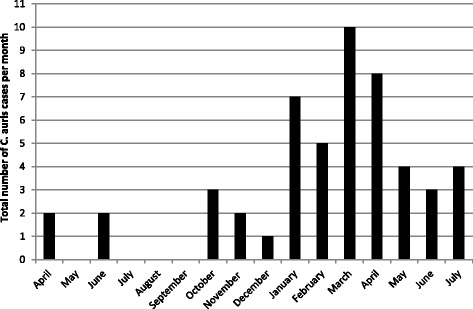
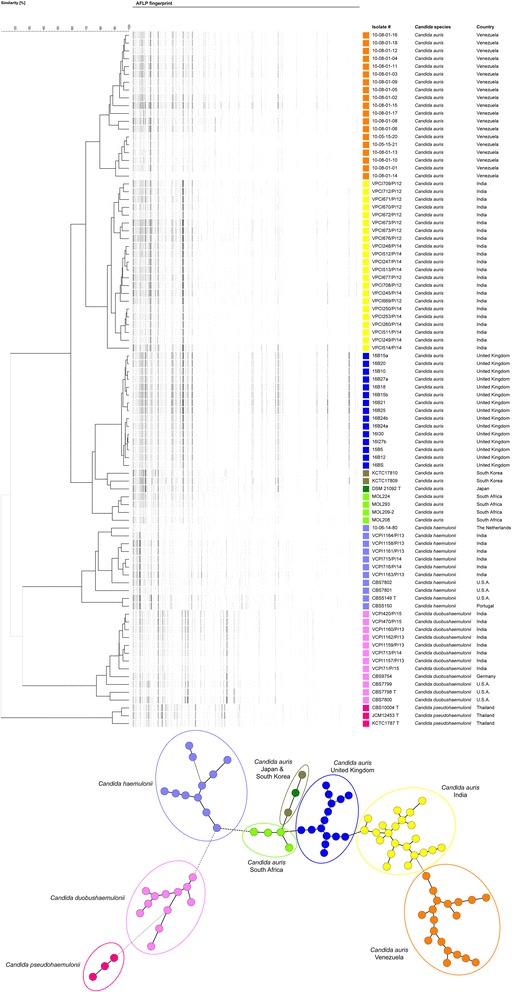
Candida auris is a globally emerging multidrug resistant fungal pathogen causing nosocomial transmission. We report an ongoing outbreak of C. auris in a London cardio-thoracic center between April 2015 and July 2016. This is the first report of C. auris in Europe and the largest outbreak so far. We describe the identification, investigation and implementation of control measures. Data on C. auris case demographics, environmental screening, implementation of infection prevention/control measures, and antifungal susceptibility of patient isolates were prospectively recorded then analysed retrospectively. Speciation of C. auris was performed by MALDI-TOF and typing of outbreak isolates performed by amplified fragment length polymorphism (AFLP). This report describes an ongoing outbreak of 50 C. auris cases over the first 16 month (April 2015 to July 2016) within a single Hospital Trust in London. A total of 44 % (n = 22/50) patients developed possible or proven C. auris infection with a candidaemia rate of 18 % (n = 9/50). Environmental sampling showed persistent presence of the yeast around bed space areas. Implementation of strict infection and prevention control measures included: isolation of cases and their contacts, wearing of personal protective clothing by health care workers, screening of patients on affected wards, skin decontamination with chlorhexidine, environmental cleaning with chorine based reagents and hydrogen peroxide vapour. Genotyping with AFLP demonstrated that C. auris isolates from the same geographic region clustered. This ongoing outbreak with genotypically closely related C. auris highlights the importance of appropriate species identification and rapid detection of cases in order to contain hospital acquired transmission.
Overview
The claims and statistics of this paper haven’t been checked yet.
Free: it reads the open-access text and checks the first 5 claims that cite a source we can check. Create a free account to check every claim.
Integrity signals
Registry
Cites
Statistics
Figures
Verification
Claims the paper makes
The claims and statistics of this paper haven’t been checked yet.
Free: it reads the open-access text and checks the first 5 claims that cite a source we can check. Create a free account to check every claim.
Claims other papers make about this one
Each is checked against this paper’s own text: does it say what the citing paper says it does?
The source backs part of the claim, not all of it — or backs it for a different population, condition or comparison.
In the citing paper
“However, there has been a worrying increase in the number of non-albicans Candida species such as C. glabrata, C. parapsilosis, C. tropicalis, C. krusei and lastly C. auris.”
From Global and Multi-National Prevalence of Fungal Diseases-Estimate Precision (2017) · cites this paper as [42]
Experimental — accuracy not yet measuredThe source backs part of the claim, not all of it — or backs it for a different population, condition or comparison.
In the citing paper
“These species are more likely to be antifungal resistant and have the potential to cause outbreaks [42].”
From Global and Multi-National Prevalence of Fungal Diseases-Estimate Precision (2017) · cites this paper as [42]
Experimental — accuracy not yet measuredThe source backs part of the claim, not all of it — or backs it for a different population, condition or comparison.
In the citing paper
“In addition to autoinfection, infections with certain species of Candida, particularly Candida auris and Candida parapsilosis, can result from transmission between patients in health care settings (14).”
From Population-Based Active Surveillance for Culture-Confirmed Candidemia — Four Sites, United States, 2012–2016 (2019) · cites this paper as [14]
Experimental — accuracy not yet measuredThe source backs part of the claim, not all of it — or backs it for a different population, condition or comparison.
In the citing paper
“There are currently no effective methods to eradicate C. auris from the skin9.”
From The emerging fungal pathogen Candida auris induces IFNγ to colonize mammalian hair follicles (2025) · cites this paper as [9]
Experimental — accuracy not yet measuredThe source backs part of the claim, not all of it — or backs it for a different population, condition or comparison.
In the citing paper
“A key factor contributing to the high transmissibility of C. auris is its ability to readily establish high level colonization on the skin and persistently present for months5,10,16,17.”
From Adhesin Als4112 promotes Candida auris skin colonization through interactions with keratinocytes and extracellular matrix proteins (2025) · cites this paper as [17]
Experimental — accuracy not yet measured
3 more claims about this paper
Create a free account to see every claim other papers make about this one.
Self-check
Percentages, sums and reported differences re-computed from the paper’s own numbers.
The self-check needs the paper’s full text.
Citations
Cites
Lockhart, S. R., Etienne, K. A., Vallabhaneni, S., Farooqi, J., Chowdhary, A., Govender, N. P., Colombo, A. L., Calvo, B., Cuomo, C. A., Desjardins, C. A., et al. (2017) · Clinical Infectious Diseases · doi:10.1093/cid/ciw691 · Cited by 1,662 · cited 2×
“auris isolates in the same geographic areas [14, 15].”
BackgroundSelf-citationSatoh, K., Makimura, K., Hasumi, Y., Nishiyama, Y., Uchida, K., & Yamaguchi, H. (2009) · Microbiology and Immunology · doi:10.1111/j.1348-0421.2008.00083.x · Cited by 1,381 · cited 2×
“auris is a globally emerging multidrug resistant fungal pathogen with the first clinical case being described in 2009 causing an ear infection in a Japanese patient [1].”
BackgroundKathuria, S., Singh, P. K., Sharma, C., Prakash, A., Masih, A., Kumar, A., Meis, J. F., & Chowdhary, A. (2015) · Journal of Clinical Microbiology · doi:10.1128/jcm.00367-15 · Cited by 532 · cited 2×
“haemulonii and accurate species identification is necessary for the administration of appropriate antifungal therapy and the control of outbreaks in hospital settings [6].”
BackgroundSelf-citationFirst Three Reported Cases of Nosocomial Fungemia Caused by Candida auris
Lee, W. G., Shin, J. H., Uh, Y., Kang, M. G., Kim, S. H., Park, K. H., & Jang, H.-C. (2011) · Journal of Clinical Microbiology · doi:10.1128/jcm.00319-11 · Cited by 523 · cited 5×
“Since its first description, reports of nosocomial outbreaks of C. auris have been reported from India [2], South Korea [3], South Africa [4] and Venezuela [5].”
BackgroundInfluentialIncidence, characteristics and outcome of ICU-acquired candidemia in India
Chakrabarti, A., Sood, P., Rudramurthy, S. M., Chen, S., Kaur, H., Capoor, M., Chhina, D., Rao, R., Eshwara, V. K., Xess, I., et al. (2015) · Intensive Care Medicine · doi:10.1007/s00134-014-3603-2 · Cited by 454 · cited 1×
“recent case series from developing countries [5, 11, 13, 16].”
Calvo, B., Melo, A. S. A., Perozo-Mena, A., Hernandez, M., Francisco, E. C., Hagen, F., Meis, J. F., & Colombo, A. L. (2016) · Journal of Infection · doi:10.1016/j.jinf.2016.07.008 · Cited by 448 · cited 6×
“Since its first description, reports of nosocomial outbreaks of C. auris have been reported from India [2], South Korea [3], South Africa [4] and Venezuela [5].”
BackgroundInfluentialSelf-citationModern technologies for improving cleaning and disinfection of environmental surfaces in hospitals
Boyce, J. M. (2016) · Antimicrobial Resistance & Infection Control · doi:10.1186/s13756-016-0111-x · Cited by 442
New Clonal Strain of Candida auris, Delhi, India
Chowdhary, A., Sharma, C., Duggal, S., Agarwal, K., Prakash, A., Singh, P. K., Jain, S., Kathuria, S., Randhawa, H. S., Hagen, F., et al. (2013) · Emerging Infectious Diseases · doi:10.3201/eid1910.130393 · Cited by 418 · cited 12×
“Since its first description, reports of nosocomial outbreaks of C. auris have been reported from India [2], South Korea [3], South Africa [4] and Venezuela [5].”
BackgroundMethodInfluentialSelf-citationMultidrug-resistant endemic clonal strain of Candida auris in India
Chowdhary, A., Anil Kumar, V., Sharma, C., Prakash, A., Agarwal, K., Babu, R., Dinesh, K. R., Karim, S., Singh, S. K., Hagen, F., et al. (2014) · European Journal of Clinical Microbiology & Infectious Diseases · doi:10.1007/s10096-013-2027-1 · Cited by 373 · cited 10×
“Since its first description, reports of nosocomial outbreaks of C. auris have been reported from India [2], South Korea [3], South Africa [4] and Venezuela [5].”
BackgroundInfluentialSelf-citationKim, M., Shin, J. H., Sung, H., Lee, K., Kim, E., Ryoo, N., Lee, J., Jung, S., Park, K. H., Kee, S. J., et al. (2009) · Clinical Infectious Diseases · doi:10.1086/597108 · Cited by 309 · cited 4×
“Since its first description, reports of nosocomial outbreaks of C. auris have been reported from India [2], South Korea [3], South Africa [4] and Venezuela [5].”
BackgroundInfluential
Cited by
Items 101–200 of 788
Kim, H. Y., Nguyen, T. A., Kidd, S. E., Chambers, J., Alastruey‐Izquierdo, A., Shin, J.-H., Dao, A., Forastiero, A., Wahyuningsih, R., Chakrabarti, A., et al. (2024) · Medical Mycology · doi:10.1093/mmy/myae042 · Cited by 123
“…cause of hospital outbreaks associated with patient carriage or environmental surface contamination, 17, 19, 21, 22, 23, 24, 25, 26, 29, 38, 42, 43, 44, 48, 50, 52 which highlights that adequate laboratory capacity and infection control preparedness are required to prevent spread within hospitals.”
BackgroundPacilli, M., Kerins, J. L., Clegg, W. J., Walblay, K. A., Adil, H., Kemble, S. K., Xydis, S., McPherson, T. D., Lin, M. Y., Hayden, M. K., et al. (2020) · Clinical Infectious Diseases · doi:10.1093/cid/ciaa435 · Cited by 103
Kenters, N., Kiernan, M., Chowdhary, A., Denning, D. W., Pemán, J., Saris, K., Schelenz, S., Tartari, E., Widmer, A., Meis, J. F., et al. (2019) · International Journal of Antimicrobial Agents · doi:10.1016/j.ijantimicag.2019.08.013 · Cited by 102
Self-citationWhat has changed in the treatment of invasive candidiasis? A look at the past 10 years and ahead
Bassetti, M., Righi, E., Montravers, P., & Cornely, O. A. (2018) · Journal of Antimicrobial Chemotherapy · doi:10.1093/jac/dkx445 · Cited by 98
Nobrega de Almeida, J., Brandão, I. B., Francisco, E. C., de Almeida, S. L. R., de Oliveira Dias, P., Pereira, F. M., Santos Ferreira, F., de Andrade, T. S., de Miranda Costa, M. M., de Souza Jordão, R. T., et al. (2021) · Mycoses · doi:10.1111/myc.13320 · Cited by 100
Self-citationThe Candida auris Alert: Facts and Perspectives
Lamoth, F., & Kontoyiannis, D. P. (2018) · The Journal of Infectious Diseases · doi:10.1093/infdis/jix597 · Cited by 95
Nine Things Genomics Can Tell Us About Candida auris
Chybowska, A. D., Childers, D. S., & Farrer, R. A. (2020) · Frontiers in Genetics · doi:10.3389/fgene.2020.00351 · Cited by 96
Multi-omics Signature of Candida auris , an Emerging and Multidrug-Resistant Pathogen
Zamith-Miranda, D., Heyman, H. M., Cleare, L. G., Couvillion, S. P., Clair, G. C., Bredeweg, E. L., Gacser, A., Nimrichter, L., Nakayasu, E. S., & Nosanchuk, J. D. (2019) · mSystems · doi:10.1128/msystems.00257-19 · Cited by 99
Candida auris : multi-omics signature of an emerging and multidrug-resistant pathogen
Zamith-Miranda, D., Heyman, H. M., Cleare, L. G., Couvillion, S., Clair, G., Bredeweg, E., Gacser, A., Nimrichter, L., Nakayasu, E. S., & Nosanchuk, J. D. (2019) · doi:10.1101/528232 · Cited by 99
de Jong, A. W., & Hagen, F. (2019) · Mycopathologia · doi:10.1007/s11046-019-00351-w · Cited by 95
Self-citationAmbaraghassi, G., Dufresne, P. J., Dufresne, S. F., Vallières, É., Muñoz, J. F., Cuomo, C. A., Berkow, E. L., Lockhart, S. R., & Luong, M.-L. (2019) · Journal of Clinical Microbiology · doi:10.1128/jcm.00884-19 · Cited by 90
“These outbreaks have occurred worldwide and have been associated with simultaneous emergence of four distinct genetic clades across different countries (9, 10).”
BackgroundHager, C. L., Larkin, E. L., Long, L. A., & Ghannoum, M. A. (2018) · Journal of Antimicrobial Chemotherapy · doi:10.1093/jac/dky153 · Cited by 96
Pharmacodynamic Optimization for Treatment of Invasive Candida auris Infection
Lepak, A. J., Zhao, M., Berkow, E. L., Lockhart, S. R., & Andes, D. R. (2017) · Antimicrobial Agents and Chemotherapy · doi:10.1128/aac.00791-17 · Cited by 89
Candida auris: An emerging drug resistant yeast – A mini-review
Bidaud, A. L., Chowdhary, A., & Dannaoui, E. (2018) · Journal de Mycologie Médicale · doi:10.1016/j.mycmed.2018.06.007 · Cited by 94
“In Europe, two large outbreaks have been reported, one in a London cardio-thoracic center between April 2015 and July 2016 [18] and one in a University hospital in Valencia, Spain, between April 2016 and March 2017 [19,20].”
BackgroundSelf-citationAntifungal Resistance in Candida auris: Molecular Determinants
Frías-De-León, M. G., Hernández-Castro, R., Vite-Garín, T., Arenas, R., Bonifaz, A., Castañón-Olivares, L., Acosta-Altamirano, G., & Martínez-Herrera, E. (2020) · Antibiotics · doi:10.3390/antibiotics9090568 · Cited by 93
Ruiz-Gaitán, A., Martínez, H., Moret, A. M., Calabuig, E., Tasias, M., Alastruey-Izquierdo, A., Zaragoza, Ó., Mollar, J., Frasquet, J., Salavert-Lletí, M., et al. (2019) · Expert Review of Anti-infective Therapy · doi:10.1080/14787210.2019.1592675 · Cited by 92
“auris outbreaks [2,5,7,23,24], but it is interesting to note that none of the 73 colonized patients included in the case–control study developed candidemia after colonization.”
BackgroundVazquez, J. A., Pappas, P. G., Boffard, K., Paruk, F., Bien, P. A., Tawadrous, M., Ople, E., Wedel, P., Oborska, I., & Hodges, M. R. (2023) · Antimicrobial Agents and Chemotherapy · doi:10.1128/aac.01419-22 · Cited by 92
“resistant to fluconazole, an important first-line antifungal agent (3, 6, 10, 11).”
BackgroundDonor-Derived Transmission of Candida auris During Lung Transplantation
Azar, M. M., Turbett, S. E., Fishman, J. A., & Pierce, V. M. (2017) · Clinical Infectious Diseases · doi:10.1093/cid/cix460 · Cited by 89
Candida auris for the Clinical Microbiology Laboratory: Not Your Grandfather's Candida Species
Lockhart, S. R., Berkow, E. L., Chow, N., & Welsh, R. M. (2017) · Clinical Microbiology Newsletter · doi:10.1016/j.clinmicnews.2017.06.003 · Cited by 93
“also indicates that isolates identified within an institution are more closely related to each other than isolates from other institutions [2, 3, 7, 12]”
InfluentialGoemaere, B., Becker, P., Van Wijngaerden, E., Maertens, J., Spriet, I., Hendrickx, M., & Lagrou, K. (2018) · Mycoses · doi:10.1111/myc.12714 · Cited by 91
Schroeder, M., Weber, T., Denker, T., Winterland, S., Wichmann, D., Rohde, H., Ozga, A.-K., Fischer, M., & Kluge, S. (2020) · Annals of Intensive Care · doi:10.1186/s13613-020-00755-8 · Cited by 89
Eldesouky, H. E., Li, X., Abutaleb, N. S., Mohammad, H., & Seleem, M. N. (2018) · International Journal of Antimicrobial Agents · doi:10.1016/j.ijantimicag.2018.08.016 · Cited by 90
Wall, G., Chaturvedi, A. K., Wormley, F. L., Wiederhold, N. P., Patterson, H. P., Patterson, T. F., & Lopez-Ribot, J. L. (2018) · Antimicrobial Agents and Chemotherapy · doi:10.1128/aac.01084-18 · Cited by 88
“auris infections in London from April 2015 to July 2016 had 50 cases, with 44% of patients developing candidemia, and strict infection and prevention control measures had to be implemented to slow hospital transmission (12, 13).”
BackgroundWasi, M., Khandelwal, N. K., Moorhouse, A. J., Nair, R., Vishwakarma, P., Bravo Ruiz, G., Ross, Z. K., Lorenz, A., Rudramurthy, S. M., Chakrabarti, A., et al. (2019) · Frontiers in Microbiology · doi:10.3389/fmicb.2019.01445 · Cited by 89
“Based on the geographically restricted area of isolation, the authors have classified the clades as follows: clade I comprises isolates from India and Pakistan, clade II from Japan and South Korea, clade III from South Africa, and clade IV from Venezuela (Schelenz et al., 2016; Lockhart et al., 2017; Muñoz et al., 201…”
BackgroundCandida auris: Epidemiology and Antifungal Strategy
Eix, E. F., & Nett, J. E. (2025) · Annual Review of Medicine · doi:10.1146/annurev-med-061523-021233 · Cited by 74
de Groot, T., Puts, Y., Berrio, I., Chowdhary, A., & Meis, J. F. (2020) · mBio · doi:10.1128/mbio.02971-19 · Cited by 88
“For the short tandem repeat (STR) analysis, 444 C. auris isolates from Austria (28), Belgium (29), Colombia (hospitals in Barranquilla, Bogota, Cartagena, Medellin, Popayan, and Santa Maria), India (30), Iran (31), Japan (30), South Korea (30), Kuwait (24), Oman (32), Pakistan (17), Russia (33), South Africa (30), Spa…”
InfluentialSelf-citationCandida auris: A Decade of Understanding of an Enigmatic Pathogenic Yeast
Kean, R., Brown, J., Gulmez, D., Ware, A., & Ramage, G. (2020) · Journal of Fungi · doi:10.3390/jof6010030 · Cited by 86
“Additionally, outbreaks continuing for months have been described, sometimes resulting in the closing of intensive care units [10,14,15].”
BackgroundJabłońska-Trypuć, A., Makuła, M., Włodarczyk-Makuła, M., Wołejko, E., Wydro, U., Serra-Majem, L., & Wiater, J. (2022) · International Journal of Environmental Research and Public Health · doi:10.3390/ijerph19138121 · Cited by 71
Strategies to Prevent Transmission of Candida auris in Healthcare Settings
Ahmad, S., & Asadzadeh, M. (2023) · Current Fungal Infection Reports · doi:10.1007/s12281-023-00451-7 · Cited by 77
Keighley, C., Garnham, K., Harch, S. A. J., Robertson, M., Chaw, K., Teng, J. C., & Chen, S. C.-A. (2021) · Current Fungal Infection Reports · doi:10.1007/s12281-021-00420-y · Cited by 87
The first cases of Candida auris candidaemia in Oman
Mohsin, J., Hagen, F., Al‐Balushi, Z. A. M., de Hoog, G. S., Chowdhary, A., Meis, J. F., & Al‐Hatmi, A. M. S. (2017) · Mycoses · doi:10.1111/myc.12647 · Cited by 83
Self-citationMathur, P., Hasan, F., Singh, P. K., Malhotra, R., Walia, K., & Chowdhary, A. (2018) · Mycoses · doi:10.1111/myc.12790 · Cited by 86
Self-citationBing, J., Hu, T., Zheng, Q., Muñoz, J. F., Cuomo, C. A., & Huang, G. (2020) · Antimicrobial Agents and Chemotherapy · doi:10.1128/aac.01466-20 · Cited by 86
The comparative efficacy of antiseptics against Candida auris biofilms
Kean, R., McKloud, E., Townsend, E. M., Sherry, L., Delaney, C., Jones, B. L., Williams, C., & Ramage, G. (2018) · International Journal of Antimicrobial Agents · doi:10.1016/j.ijantimicag.2018.05.007 · Cited by 86
“auris to form biofilms [11], and its isolation from catheter tips [1, 18], skin decolonisation prior to invasive therapy could be considerered.”
BackgroundDrug Resistance and Novel Therapeutic Approaches in Invasive Candidiasis
Murphy, S. E., & Bicanic, T. (2021) · Frontiers in Cellular and Infection Microbiology · doi:10.3389/fcimb.2021.759408 · Cited by 83
Rosam, K., Monk, B. C., & Lackner, M. (2020) · Journal of Fungi · doi:10.3390/jof7010001 · Cited by 96
“Other recent outbreaks have occurred in Valencia [128] and London [88].”
BackgroundCandida auris outbreak: Mortality, interventions and cost of sustaining control
Taori, S. K., Khonyongwa, K., Hayden, I., Athukorala, G. D. A., Letters, A., Fife, A., Desai, N., & Borman, A. M. (2019) · Journal of Infection · doi:10.1016/j.jinf.2019.09.007 · Cited by 86
What Do We Know about Candida auris? State of the Art, Knowledge Gaps, and Future Directions
García-Bustos, V., Cabañero-Navalón, M. D., Ruiz‐Saurí, A., Gaitán, A. C. R., Salavert, M., Tormo‐Más, M. Á., & Pemán, J. (2021) · Microorganisms · doi:10.3390/microorganisms9102177 · Cited by 91
“The colonisation of patients in healthcare environments occurs rapidly, within hours after exposure, and can last for weeks, months, or even years [40,142], despite the use of agents such as chlorhexidine, nystatin, and echinocandins [20,143].”
BackgroundNovel ERG11 and TAC1b Mutations Associated with Azole Resistance in Candida auris
Li, J., Coste, A. T., Liechti, M., Bachmann, D., Sanglard, D., & Lamoth, F. (2021) · Antimicrobial Agents and Chemotherapy · doi:10.1128/aac.02663-20 · Cited by 82
“Gene expression was calculated with the threshold cycle (2) method (28).”
MethodAhmad, S., Khan, Z., Al‐Sweih, N., Alfouzan, W., & Joseph, L. (2020) · Mycoses · doi:10.1111/myc.13022 · Cited by 79
Sansom, S. E., Gussin, G. M., Schoeny, M., Singh, R. D., Adil, H., Bell, P., Benson, E. C., Bittencourt, C. E., Black, S., Del Mar Villanueva Guzman, M., et al. (2024) · Clinical Infectious Diseases · doi:10.1093/cid/ciad752 · Cited by 78
“Five percent to 10% of persons colonized with C. auris are esti - mated to develop invasive infections, which can be resistant to antifungal agents and are associated with high mortality [8, 9].”
BackgroundSexton, D. J., Bentz, M. L., Welsh, R. M., Derado, G., Furin, W., Rose, L. J., Noble-Wang, J., Pacilli, M., McPherson, T. D., Black, S., et al. (2021) · Clinical Infectious Diseases · doi:10.1093/cid/ciab327 · Cited by 81
Horton, M. V., Johnson, C. J., Zarnowski, R., Andes, B. D., Schoen, T. J., Kernien, J. F., Lowman, D., Kruppa, M. D., Ma, Z., Williams, D. L., et al. (2021) · mSphere · doi:10.1128/msphere.00406-21 · Cited by 79
“Acid-stable sidechains containing (1-3)-linked mannosyl repeat units (-2Mana1-”
BackgroundFarmakiotis, D., & Kontoyiannis, D. P. (2017) · International Journal of Antimicrobial Agents · doi:10.1016/j.ijantimicag.2017.05.019 · Cited by 83
Molecular Epidemiology of Candida Auris Outbreak in a Major Secondary-Care Hospital in Kuwait
Alfouzan, W., Ahmad, S., Dhar, R., Asadzadeh, M., Almerdasi, N., Abdo, N. M., Joseph, L., de Groot, T., Alali, W. Q., Khan, Z., et al. (2020) · Journal of Fungi · doi:10.3390/jof6040307 · Cited by 74
Self-citationCandida auris: a worrisome, globally emerging pathogen
Navalkele, B. D., Revankar, S., & Chandrasekar, P. (2017) · Expert Review of Anti-infective Therapy · doi:10.1080/14787210.2017.1364992 · Cited by 74
“auris has been recognized as a colonizer of multiple body sites (skin and mucosal sites), unnecessary use of broadspectrum antifungal agents in colonized patients increases risk of further antimicrobial resistance [10].”
BackgroundInfluentialSayeed, M. A., Farooqi, J., Jabeen, K., Awan, S., & Mahmood, S. F. (2019) · BMC Infectious Diseases · doi:10.1186/s12879-019-3999-y · Cited by 76
Candida auris Phenotypic Heterogeneity Determines Pathogenicity In Vitro
Brown, J. L., Delaney, C., Short, B., Butcher, M. C., McKloud, E., Williams, C., Kean, R., & Ramage, G. (2020) · mSphere · doi:10.1128/msphere.00371-20 · Cited by 76
Candida auris: An Overview of How to Screen, Detect, Test and Control This Emerging Pathogen
Fasciana, T., Cortegiani, A., Ippolito, M., Giarratano, A., Diquattro, O., Lipari, D., Graceffa, D., & Giammanco, A. (2020) · Antibiotics · doi:10.3390/antibiotics9110778 · Cited by 85
Saris, K., Meis, J. F., & Voss, A. (2018) · Current Opinion in Infectious Diseases · doi:10.1097/qco.0000000000000469 · Cited by 76
Self-citationGowri, M., Jayashree, B., Jeyakanthan, J., & Girija, E. K. (2019) · Journal of Applied Microbiology · doi:10.1111/jam.14490 · Cited by 93
“auris causes superficial to systemic infection, particularly in immune-suppressed population including organ transplant patients, people suffering from hematological malignant diseases and AIDS patients (Chowdhary et al. 2013; Magobo et al., 2014; Centers for Disease Control and Prevention, 2016; Schelenz et al., 2016…”
BackgroundFirst report of sporadic cases of Candida auris in Colombia
Parra-Giraldo, C. M., Valderrama, S. L., Cortes-Fraile, G., Garzón, J. R., Ariza, B. E., Morio, F., Linares-Linares, M. Y., Ceballos-Garzón, A., de la Hoz, A., Hernandez, C., et al. (2018) · International Journal of Infectious Diseases · doi:10.1016/j.ijid.2018.01.034 · Cited by 74
Füszl, A., Beata, Z., Miriam, V. D. N., Ebner, J., Presterl, E., & Diab‐Elschahawi, M. (2021) · Antimicrobial Resistance and Infection Control · doi:10.1186/s13756-021-00945-4 · Cited by 76
“auris poses a particular challenge for IPC in hospitals because it can stay viable on surfaces for prolonged periods and is resistant to several commonly used disinfectants [25].”
BackgroundBäumler, W., Eckl, D. B., Holzmann, T., & Schneider‐Brachert, W. (2021) · Critical Reviews in Microbiology · doi:10.1080/1040841x.2021.1991271 · Cited by 78
Rapid Detection of Candida auris Based on Loop-Mediated Isothermal Amplification (LAMP)
Yamamoto, M., Alshahni, M. M., Tamura, T., Satoh, K., Iguchi, S., Kikuchi, K., Mimaki, M., & Makimura, K. (2018) · Journal of Clinical Microbiology · doi:10.1128/jcm.00591-18 · Cited by 72
Gómez-Gaviria, M., Ramírez-Sotelo, U., & Mora-Montes, H. M. (2022) · Journal of Fungi · doi:10.3390/jof9010011 · Cited by 89
Wiederhold, N. P., Najvar, L. K., Shaw, K. J., Jaramillo, R., Patterson, H., Olivo, M., Catano, G., & Patterson, T. F. (2019) · Antimicrobial Agents and Chemotherapy · doi:10.1128/aac.01120-19 · Cited by 71
“This emerging pathogen also poses challenges to infection control, as this species can be transmitted between persons in health care facilities (4, 5) and may persist on environmental surfaces for 1 to 2 weeks (6, 7), and quaternary ammonium compounds”
BackgroundFirst reported case of multidrug-resistant Candida auris in Canada
Schwartz, I., & Hammond, G. (2017) · Canada Communicable Disease Report · doi:10.14745/ccdr.v43i78a02 · Cited by 67
“Using the CLSI microbroth dilution method, and based on the tentative MIC break-points suggested by the United States (US) Centers for Diseases Control and Prevention (CDC) (1), testing found the C. auris sample was resistant to fluconazole and amphotericin B, likely resistant to voriconazaole and susceptible to micaf…”
BackgroundInfluentialIyer, K. R., Camara, K., Daniel-Ivad, M., Trilles, R., Pimentel-Elardo, S. M., Fossen, J. L., Marchillo, K., Liu, Z., Singh, S., Muñoz, J. F., et al. (2020) · Nature Communications · doi:10.1038/s41467-020-20183-3 · Cited by 72
Iguchi, S., Itakura, Y., Yoshida, A., Kamada, K., Mizushima, R., Arai, Y., Uzawa, Y., & Kikuchi, K. (2019) · Journal of Infection and Chemotherapy · doi:10.1016/j.jiac.2019.05.034 · Cited by 69
Killing of Candida auris by UV‐C: Importance of exposure time and distance
de Groot, T., Chowdhary, A., Meis, J. F., & Voss, A. (2019) · Mycoses · doi:10.1111/myc.12903 · Cited by 68
Self-citationVatanshenassan, M., Boekhout, T., Meis, J. F., Berman, J., Chowdhary, A., Ben-Ami, R., Sparbier, K., & Kostrzewa, M. (2019) · Frontiers in Cellular and Infection Microbiology · doi:10.3389/fcimb.2019.00020 · Cited by 66
Self-citationCandida auris: An emerging pathogen “incognito”?
Nett, J. E. (2019) · PLOS Pathogens · doi:10.1371/journal.ppat.1007638 · Cited by 69
Candida auris as an Emergent Public Health Problem: A Current Update on European Outbreaks and Cases
Geremia, N., Brugnaro, P., Solinas, M. L., Scarparo, C., & Panese, S. (2023) · Healthcare · doi:10.3390/healthcare11030425 · Cited by 79
Garcia-Bustos, V., Cabañero-Navalon, M. D., Ruiz-Gaitán, A., Salavert, M., Tormo-Mas, M. Á., & Pemán, J. (2023) · Clinical Microbiology and Infection · doi:10.1016/j.cmi.2023.03.016 · Cited by 68
One population, multiple lifestyles: Commensalism and pathogenesis in the human mycobiome
Proctor, D. M., Drummond, R. A., Lionakis, M. S., & Segre, J. A. (2023) · Cell Host & Microbe · doi:10.1016/j.chom.2023.02.010 · Cited by 68
de Oliveira, H. C., Monteiro, M. C., Rossi, S. A., Pemán, J., Ruiz-Gaitán, A., Mendes-Giannini, M. J. S., Mellado, E., & Zaragoza, O. (2019) · Frontiers in Cellular and Infection Microbiology · doi:10.3389/fcimb.2019.00083 · Cited by 70
“But in the last 5 years, this fungus has caused multiple hospital outbreaks worldwide (Calvo et al., 2016; Schelenz et al., 2016; Sharma et al., 2016; Chow et al., 2018; de Cassia Orlandi Sardi et al., 2018; Kohlenberg et al., 2018; Ruiz-Gaitan et al., 2018).”
BackgroundMultidrug-resistant Candida auris : an epidemiological review
Chakrabarti, A., & Singh, S. (2020) · Expert Review of Anti-infective Therapy · doi:10.1080/14787210.2020.1750368 · Cited by 66
“For antifungal susceptibility testing CLSI broth microdilution (CLSI-BMD) is only recommended, as essential agreement between CLSI-BMD and Vitek 2 was 10% for amphotericin B, and between CLSI-BMD and E test was 48% for echinocandin [25].”
MethodMechanisms of pathogenicity for the emerging fungus Candida auris
Horton, M. V., Holt, A. M., & Nett, J. E. (2023) · PLOS Pathogens · doi:10.1371/journal.ppat.1011843 · Cited by 67
Allert, S., Schulz, D., Kämmer, P., Großmann, P., Wolf, T., Schäuble, S., Panagiotou, G., Brunke, S., & Hube, B. (2022) · Virulence · doi:10.1080/21505594.2022.2026037 · Cited by 66
“increases the risk of transmission in healthcare settings [24,108,132] and explains why hospital outbreaks are described for C.”
BackgroundKeighley, C., Cooley, L., Morris, A. J., Ritchie, D., Clark, J. E., Boan, P., & Worth, L. J. (2021) · Internal Medicine Journal · doi:10.1111/imj.15589 · Cited by 76
Garcia-Bustos, V., Ruiz-Saurí, A., Ruiz-Gaitán, A., Sigona-Giangreco, I. A., Cabañero-Navalon, M. D., Sabalza-Baztán, O., Salavert-Lletí, M., Tormo, M. Á., & Pemán, J. (2021) · Microbiology Spectrum · doi:10.1128/spectrum.00013-21 · Cited by 66
“This fact is distinctive, especially considering that filamentation has been linked to invasive ability into host tissues (40), and the lethality of invasive infections is up to 60% (2, 36, 41).”
BackgroundSayeed, M. A., Farooqi, J., Jabeen, K., & Mahmood, S. F. (2020) · Medical Mycology · doi:10.1093/mmy/myz112 · Cited by 59
Heaney, H., Laing, J., Paterson, L., Walker, A. W., Gow, N. A. R., Johnson, E. M., MacCallum, D. M., & Brown, A. J. P. (2020) · Medical Mycology · doi:10.1093/mmy/myz127 · Cited by 61
Garcia-Bustos, V., Salavert, M., Ruiz-Gaitán, A. C., Cabañero-Navalon, M. D., Sigona-Giangreco, I. A., & Pemán, J. (2020) · Clinical Microbiology and Infection · doi:10.1016/j.cmi.2020.02.001 · Cited by 61
Different efficacies of common disinfection methods against candida auris and other candida species
Fu, L., Le, T., Liu, Z., Wang, L., Guo, H., Yang, J., Chen, Q., & Hu, J. (2020) · Journal of Infection and Public Health · doi:10.1016/j.jiph.2020.01.008 · Cited by 63
Vaseghi, N., Sharifisooraki, J., Khodadadi, H., Nami, S., Safari, F., Ahangarkani, F., Meis, J. F., Badali, H., & Morovati, H. (2022) · Mycoses · doi:10.1111/myc.13471 · Cited by 63
Self-citationGómez-Gaviria, M., Martínez-Álvarez, J. A., Chávez-Santiago, J. O., & Mora-Montes, H. M. (2023) · Infection and Drug Resistance · doi:10.2147/idr.s402754 · Cited by 69
Khan, Z., Ahmad, S., Benwan, K., Purohit, P., Al-Obaid, I., Bafna, R., Emara, M., Mokaddas, E., Abdullah, A. A., Al-Obaid, K., et al. (2018) · Infection · doi:10.1007/s15010-018-1164-y · Cited by 63
Candida auris: A Continuing Threat
Bhargava, A., Klamer, K., Sharma, M., Ortiz, D. A., & Saravolatz, L. I. I. (2025) · Microorganisms · doi:10.3390/microorganisms13030652 · Cited by 72
“…medical devices, such as central venous or urinary catheters; specific comorbidities, including diabetes mellitus, neoplastic disease, and chronic kidney disease; the administration of total parenteral nutrition; reliance on mechanical ventilation; and the need for hemodialysis [2,20,22,27,39,41].”
InfluentialThe many faces of Candida auris: Phenotypic and strain variation in an emerging pathogen
Santana, D. J., Zhao, G., & O’Meara, T. R. (2024) · PLOS Pathogens · doi:10.1371/journal.ppat.1012011 · Cited by 62
Characteristics and Management of Candidaemia Episodes in an Established Candida auris Outbreak
Mulet Bayona, J. V., Tormo Palop, N., Salvador García, C., Herrero Rodríguez, P., Abril López de Medrano, V., Ferrer Gómez, C., & Gimeno Cardona, C. (2020) · Antibiotics · doi:10.3390/antibiotics9090558 · Cited by 62
Lockhart, S. R., Jackson, B. R., Vallabhaneni, S., Ostrosky-Zeichner, L., Pappas, P. G., & Chiller, T. (2017) · Journal of Clinical Microbiology · doi:10.1128/jcm.01355-17 · Cited by 61
“auris in health care settings have been documented (11, 12).”
BackgroundFisher, M. C., Burnett, F. J., Chandler, C., Gow, N. A. R., Gurr, S. J., Hart, A. J., Holmes, A. H., May, R. C., Quinn, J., Soliman, T., et al. (2024) · npj Antimicrobials and Resistance · doi:10.1038/s44259-024-00055-2 · Cited by 67
“The nosoco-mialspreadofthesedrug-resistant C.auris variantsisenhancedbyrampant dissemination in healthcare settings where mechanical ventilation is used, and where there is contamination from surfaces and bio fi lms of the organism 31,32 .”
BackgroundSelf-citationInvestigating Antifungal Susceptibility in Candida Species With MALDI-TOF MS-Based Assays
Delavy, M., Santos, A. R. D., Heiman, C. M., & Coste, A. T. (2019) · Frontiers in Cellular and Infection Microbiology · doi:10.3389/fcimb.2019.00019 · Cited by 68
Ong, C. W., Chen, S. C. ‐., Clark, J. E., Halliday, C. L., Kidd, S. E., Marriott, D. J., Marshall, C. L., Morris, A. J., Morrissey, C. O., Roy, R., et al. (2019) · Internal Medicine Journal · doi:10.1111/imj.14612 · Cited by 58
Clade II Candida auris possess genomic structural variations related to an ancestral strain
Sekizuka, T., Iguchi, S., Umeyama, T., Inamine, Y., Makimura, K., Kuroda, M., Miyazaki, Y., & Kikuchi, K. (2019) · PLOS ONE · doi:10.1371/journal.pone.0223433 · Cited by 59
“auris can survive environmental cleaning with chorine-based reagents and hydrogen peroxide vapor [12].”
BackgroundSharma, D., Paul, R. A., Rudramurthy, S. M., Kashyap, N., Bhattacharya, S., Soman, R., Shankarnarayan, S. A., Chavan, D., Singh, S., Das, P., et al. (2022) · Antimicrobial Agents and Chemotherapy · doi:10.1128/aac.01652-21 · Cited by 60
Rapid and extensive karyotype diversification in haploid clinical Candida auris isolates
Bravo Ruiz, G., Ross, Z. K., Holmes, E., Schelenz, S., Gow, N. A. R., & Lorenz, A. (2019) · Current Genetics · doi:10.1007/s00294-019-00976-w · Cited by 60
Self-citationDeciphering the Mrr1/Mdr1 Pathway in Azole Resistance of Candida auris
Li, J., Coste, A. T., Bachmann, D., Sanglard, D., & Lamoth, F. (2022) · Antimicrobial Agents and Chemotherapy · doi:10.1128/aac.00067-22 · Cited by 59
Expert recommendations for prevention and management of Candida auris transmission
Aldejohann, A. M., Wiese‐Posselt, M., Gastmeier, P., & Kurzai, O. (2022) · Mycoses · doi:10.1111/myc.13445 · Cited by 65
Martins‐Santana, L., Rezende, C. P., Rossi, A., Martinez-Rossi, N. M., & Almeida, F. B. D. R. (2023) · Pathogens · doi:10.3390/pathogens12020293 · Cited by 67
Bougnoux, M.-E., Brun, S., & Zahar, J.-R. (2018) · Antimicrobial Resistance & Infection Control · doi:10.1186/s13756-018-0338-9 · Cited by 54
“However systematic sampling of the hands, nose, axilla, groin, and throat of 258 HCW conducted as part of the UK investigation identified only a single HCW with a positive nares swab, who later tested negative from the same site, suggesting transient carriage [15].”
BackgroundMethodTian, S., Rong, C., Nian, H., Li, F., Chu, Y., Cheng, S., & Shang, H. (2018) · Emerging Microbes & Infections · doi:10.1038/s41426-018-0131-0 · Cited by 58
“Antineoplastic chemotherapy 1 (7) 0 (0) 0.”
InfluentialVila, T., Montelongo-Jauregui, D., Ahmed, H., Puthran, T., Sultan, A. S., & Jabra-Rizk, M. A. (2020) · mSphere · doi:10.1128/msphere.00760-20 · Cited by 58
“the efficient person-to-person transmission (8).”
Wall, G., Herrera, N., & Lopez-Ribot, J. L. (2019) · Journal of Fungi · doi:10.3390/jof5040092 · Cited by 58
Ongoing Challenges with Healthcare-Associated Candida auris Outbreaks in Oman
Al Maani, A., Paul, H., Al-Rashdi, A., Al Wahaibi, A., Al-Jardani, A., Al Abri, A. M. A., AlBalushi, M. A. H., Al Abri, S., Al Reesi, M., Al Maqbali, A., et al. (2019) · Journal of Fungi · doi:10.3390/jof5040101 · Cited by 57
“auris healthcare-associated outbreaks has been a challenge to the affected facilities, which resulted in a building up of cases from different regions of the world including those with well-established diagnostic, management, and preventive strategies [1,15,17,21].”
BackgroundResultInfluentialSelf-citationAugmenting Azoles with Drug Synergy to Expand the Antifungal Toolbox
Kane, A., & Carter, D. A. (2022) · Pharmaceuticals · doi:10.3390/ph15040482 · Cited by 59
Gaining Insights from Candida Biofilm Heterogeneity: One Size Does Not Fit All
Kean, R., Delaney, C., Rajendran, R., Sherry, L., Metcalfe, R., Thomas, R., McLean, W., Williams, C., & Ramage, G. (2018) · Journal of Fungi · doi:10.3390/jof4010012 · Cited by 55
The Emerging Threat of Antifungal Resistance in Transplant Infectious Diseases
Schwartz, I. S., & Patterson, T. F. (2018) · Current Infectious Disease Reports · doi:10.1007/s11908-018-0608-y · Cited by 57
Metadata
- Authors
- Schelenz, S., Hagen, F., Rhodes, J. L., Abdolrasouli, A., Chowdhary, A., Hall, A., Ryan, L., Shackleton, J., Trimlett, R., Meis, J. F., Armstrong-James, D., & Fisher, M. C.
- Affiliations
- Royal Brompton Hospital (GB)
- Canisius-Wilhelmina Ziekenhuis (NL)
- Imperial College London (GB)
- University of Delhi (IN)
- Radboud University Medical Center (NL)
- Corresponding author
- Schelenz, Silke
- ORCID
- Venue
- Antimicrobial Resistance & Infection Control
- Published
- 2016-10-19
- Volume
- 5
- Issue
- 1
- Pages
- 35-35
- ISSN
- 2047-2994 (ISSN-L)
- PMC
- PMC5069812
- OpenAlex
- W2538799985
- Cited by
- 768
- References
- 18
- Citations by year
- 2026: 58 · 2025: 65 · 2024: 78 · 2023: 79 · 2022: 62 · 2021: 81 · 2020: 103 · 2019: 99 · 2018: 74 · 2017: 65 · 2016: 4
- FWCI
- 74.50
- Type
- journal article
- Language
- en
- Open access
- gold
- doi.org
- Licence
- cc-by
- Locations
- Antimicrobial Resistance and Infection Control (publishedVersion, cc-by)
- PubMed Central (publishedVersion, cc-by)
- PubMed (publishedVersion)
- Data Archiving and Networked Services (DANS) (submittedVersion)
- DOAJ (DOAJ: Directory of Open Access Journals) (submittedVersion)
- University of Birmingham Research Portal (University of Birmingham) (submittedVersion)
- Radboud Repository (Radboud University) (submittedVersion)
- Spiral (Imperial College London) (submittedVersion, cc-by)
- Radboud Repository (Radboud University) (submittedVersion, other-oa)
- Greater South Information System
- Funders
- Wellcome Trust (RSRO_54990)
- Medical Research Council (K000373/1)
- Topics
- Health Sciences › Medicine › Infectious Diseases › Antifungal resistance and susceptibility
- Health Sciences › Medicine › Infectious Diseases › Infection Control in Healthcare
- Health Sciences › Medicine › Infectious Diseases › Fungal Infections and Studies
- Keywords
- Candida auris, hospital outbreak, nosocomial transmission, candidemia, infection control, antifungal susceptibility, environmental contamination, MALDI-TOF species identification, AFLP genotyping, hydrogen peroxide vapor, emerging fungal pathogens
About these checks
Registry, retraction, Cites and statistics results are computed, not judged, with one exception: a printed reference that no index lists is read once by a model before it counts as a citation error. Claims are extracted by a model and kept only when their quote appears verbatim in the text; each cited source is then checked, with a model’s help, for whether it says what the claim relies on. Those verdicts can be wrong — read the claim’s quote and the cited source before relying on one.
Statistics and arithmetic are recomputed, not judged.
Confidence bands are shown only for fields calibrated on our annotated test set. None is calibrated yet, so no band is shown.
What counts as a claim ›How we measure confidence ›How we check this ›
Are you an author, or do you see a problem with this page? Request a review
Data sources
Bibliographic data: Semantic Scholar, OpenAlex, Crossref.
Contains information from the Semantic Scholar Academic Graph Datasets, made available under the ODC Attribution License (ODC-BY 1.0).
Semantic Scholar’s data is described in: Kinney, R., et al. (2023). The Semantic Scholar Open Data Platform. arXiv:2301.10140.
