

First hospital outbreak of the globally emerging Candida auris in a European hospital
Open accessThe DOI matches its Crossref record; 18 of the 18 references it cites were found in a registry or an index.
Abstract
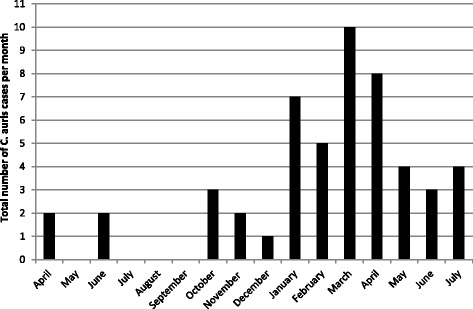
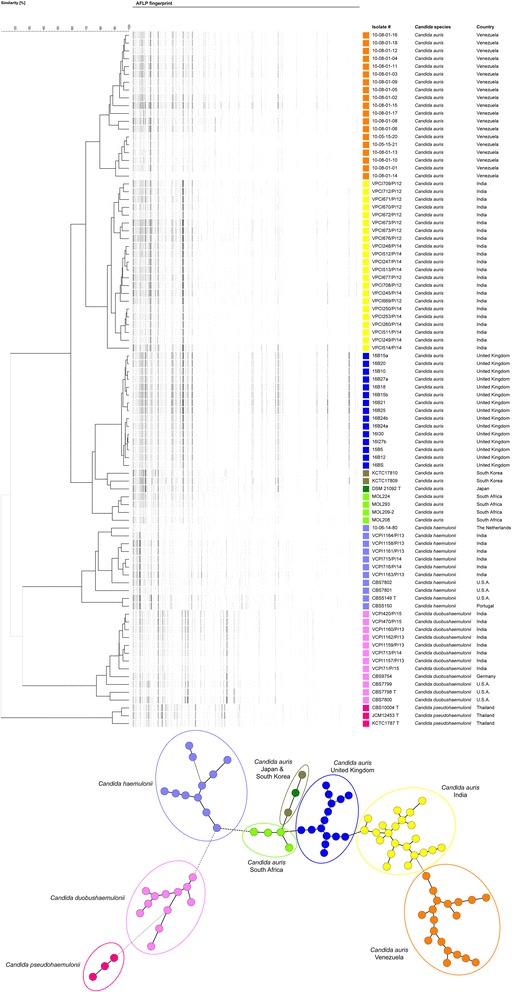
Candida auris is a globally emerging multidrug resistant fungal pathogen causing nosocomial transmission. We report an ongoing outbreak of C. auris in a London cardio-thoracic center between April 2015 and July 2016. This is the first report of C. auris in Europe and the largest outbreak so far. We describe the identification, investigation and implementation of control measures. Data on C. auris case demographics, environmental screening, implementation of infection prevention/control measures, and antifungal susceptibility of patient isolates were prospectively recorded then analysed retrospectively. Speciation of C. auris was performed by MALDI-TOF and typing of outbreak isolates performed by amplified fragment length polymorphism (AFLP). This report describes an ongoing outbreak of 50 C. auris cases over the first 16 month (April 2015 to July 2016) within a single Hospital Trust in London. A total of 44 % (n = 22/50) patients developed possible or proven C. auris infection with a candidaemia rate of 18 % (n = 9/50). Environmental sampling showed persistent presence of the yeast around bed space areas. Implementation of strict infection and prevention control measures included: isolation of cases and their contacts, wearing of personal protective clothing by health care workers, screening of patients on affected wards, skin decontamination with chlorhexidine, environmental cleaning with chorine based reagents and hydrogen peroxide vapour. Genotyping with AFLP demonstrated that C. auris isolates from the same geographic region clustered. This ongoing outbreak with genotypically closely related C. auris highlights the importance of appropriate species identification and rapid detection of cases in order to contain hospital acquired transmission.
Overview
The claims and statistics of this paper haven’t been checked yet.
Free: it reads the open-access text and checks the first 5 claims that cite a source we can check. Create a free account to check every claim.
Integrity signals
Registry
Cites
Statistics
Figures
Verification
Claims the paper makes
The claims and statistics of this paper haven’t been checked yet.
Free: it reads the open-access text and checks the first 5 claims that cite a source we can check. Create a free account to check every claim.
Claims other papers make about this one
Each is checked against this paper’s own text: does it say what the citing paper says it does?
The source backs part of the claim, not all of it — or backs it for a different population, condition or comparison.
In the citing paper
“However, there has been a worrying increase in the number of non-albicans Candida species such as C. glabrata, C. parapsilosis, C. tropicalis, C. krusei and lastly C. auris.”
From Global and Multi-National Prevalence of Fungal Diseases-Estimate Precision (2017) · cites this paper as [42]
Experimental — accuracy not yet measuredThe source backs part of the claim, not all of it — or backs it for a different population, condition or comparison.
In the citing paper
“These species are more likely to be antifungal resistant and have the potential to cause outbreaks [42].”
From Global and Multi-National Prevalence of Fungal Diseases-Estimate Precision (2017) · cites this paper as [42]
Experimental — accuracy not yet measuredThe source backs part of the claim, not all of it — or backs it for a different population, condition or comparison.
In the citing paper
“In addition to autoinfection, infections with certain species of Candida, particularly Candida auris and Candida parapsilosis, can result from transmission between patients in health care settings (14).”
From Population-Based Active Surveillance for Culture-Confirmed Candidemia — Four Sites, United States, 2012–2016 (2019) · cites this paper as [14]
Experimental — accuracy not yet measuredThe source backs part of the claim, not all of it — or backs it for a different population, condition or comparison.
In the citing paper
“There are currently no effective methods to eradicate C. auris from the skin9.”
From The emerging fungal pathogen Candida auris induces IFNγ to colonize mammalian hair follicles (2025) · cites this paper as [9]
Experimental — accuracy not yet measuredThe source backs part of the claim, not all of it — or backs it for a different population, condition or comparison.
In the citing paper
“A key factor contributing to the high transmissibility of C. auris is its ability to readily establish high level colonization on the skin and persistently present for months5,10,16,17.”
From Adhesin Als4112 promotes Candida auris skin colonization through interactions with keratinocytes and extracellular matrix proteins (2025) · cites this paper as [17]
Experimental — accuracy not yet measured
3 more claims about this paper
Create a free account to see every claim other papers make about this one.
Self-check
Percentages, sums and reported differences re-computed from the paper’s own numbers.
The self-check needs the paper’s full text.
Citations
Cites
Lockhart, S. R., Etienne, K. A., Vallabhaneni, S., Farooqi, J., Chowdhary, A., Govender, N. P., Colombo, A. L., Calvo, B., Cuomo, C. A., Desjardins, C. A., et al. (2017) · Clinical Infectious Diseases · doi:10.1093/cid/ciw691 · Cited by 1,662 · cited 2×
“auris isolates in the same geographic areas [14, 15].”
BackgroundSelf-citationSatoh, K., Makimura, K., Hasumi, Y., Nishiyama, Y., Uchida, K., & Yamaguchi, H. (2009) · Microbiology and Immunology · doi:10.1111/j.1348-0421.2008.00083.x · Cited by 1,381 · cited 2×
“auris is a globally emerging multidrug resistant fungal pathogen with the first clinical case being described in 2009 causing an ear infection in a Japanese patient [1].”
BackgroundKathuria, S., Singh, P. K., Sharma, C., Prakash, A., Masih, A., Kumar, A., Meis, J. F., & Chowdhary, A. (2015) · Journal of Clinical Microbiology · doi:10.1128/jcm.00367-15 · Cited by 532 · cited 2×
“haemulonii and accurate species identification is necessary for the administration of appropriate antifungal therapy and the control of outbreaks in hospital settings [6].”
BackgroundSelf-citationFirst Three Reported Cases of Nosocomial Fungemia Caused by Candida auris
Lee, W. G., Shin, J. H., Uh, Y., Kang, M. G., Kim, S. H., Park, K. H., & Jang, H.-C. (2011) · Journal of Clinical Microbiology · doi:10.1128/jcm.00319-11 · Cited by 523 · cited 5×
“Since its first description, reports of nosocomial outbreaks of C. auris have been reported from India [2], South Korea [3], South Africa [4] and Venezuela [5].”
BackgroundInfluentialIncidence, characteristics and outcome of ICU-acquired candidemia in India
Chakrabarti, A., Sood, P., Rudramurthy, S. M., Chen, S., Kaur, H., Capoor, M., Chhina, D., Rao, R., Eshwara, V. K., Xess, I., et al. (2015) · Intensive Care Medicine · doi:10.1007/s00134-014-3603-2 · Cited by 454 · cited 1×
“recent case series from developing countries [5, 11, 13, 16].”
Calvo, B., Melo, A. S. A., Perozo-Mena, A., Hernandez, M., Francisco, E. C., Hagen, F., Meis, J. F., & Colombo, A. L. (2016) · Journal of Infection · doi:10.1016/j.jinf.2016.07.008 · Cited by 448 · cited 6×
“Since its first description, reports of nosocomial outbreaks of C. auris have been reported from India [2], South Korea [3], South Africa [4] and Venezuela [5].”
BackgroundInfluentialSelf-citationModern technologies for improving cleaning and disinfection of environmental surfaces in hospitals
Boyce, J. M. (2016) · Antimicrobial Resistance & Infection Control · doi:10.1186/s13756-016-0111-x · Cited by 442
New Clonal Strain of Candida auris, Delhi, India
Chowdhary, A., Sharma, C., Duggal, S., Agarwal, K., Prakash, A., Singh, P. K., Jain, S., Kathuria, S., Randhawa, H. S., Hagen, F., et al. (2013) · Emerging Infectious Diseases · doi:10.3201/eid1910.130393 · Cited by 418 · cited 12×
“Since its first description, reports of nosocomial outbreaks of C. auris have been reported from India [2], South Korea [3], South Africa [4] and Venezuela [5].”
BackgroundMethodInfluentialSelf-citationMultidrug-resistant endemic clonal strain of Candida auris in India
Chowdhary, A., Anil Kumar, V., Sharma, C., Prakash, A., Agarwal, K., Babu, R., Dinesh, K. R., Karim, S., Singh, S. K., Hagen, F., et al. (2014) · European Journal of Clinical Microbiology & Infectious Diseases · doi:10.1007/s10096-013-2027-1 · Cited by 373 · cited 10×
“Since its first description, reports of nosocomial outbreaks of C. auris have been reported from India [2], South Korea [3], South Africa [4] and Venezuela [5].”
BackgroundInfluentialSelf-citationKim, M., Shin, J. H., Sung, H., Lee, K., Kim, E., Ryoo, N., Lee, J., Jung, S., Park, K. H., Kee, S. J., et al. (2009) · Clinical Infectious Diseases · doi:10.1086/597108 · Cited by 309 · cited 4×
“Since its first description, reports of nosocomial outbreaks of C. auris have been reported from India [2], South Korea [3], South Africa [4] and Venezuela [5].”
BackgroundInfluential
Cited by
Items 601–700 of 788
Detection and Control of Candida auris in Healthcare Settings
Kwon, Y. J., & Shin, J. H. (2022) · Korean Journal of Healthcare-Associated Infection Control and Prevention · doi:10.14192/kjicp.2022.27.1.4 · Cited by 3
Candida auris Infection in a Meningococcal Septicemia Survivor, Poland
Prażyńska, M. B., Zalas‐Więcek, P., Bogiel, T., Włodarczyk, Z., Deptuła, A., Woźniak, M., & Gospodarek-Komkowska, E. (2022) · Mycopathologia · doi:10.1007/s11046-022-00697-8 · Cited by 4
“This species tends to persist on a human host and on inanimate surfaces for months [5].”
BackgroundInfluentialCandida auris: an emerging life-threatening fungal pathogen of global public health concern
Pal, M. S., Tariku, F., Upadhyay, D., Paula, C. R., & Patil, B. (2024) · Journal of Bacteriology & Mycology Open Access · doi:10.15406/jbmoa.2024.12.00371 · Cited by 7
Khanum, N., Alfaraj, S. H., Alboqmy, K. N., Alshakrah, F., Dar, N. G., Abdallah, H., Kumar, D., Alsalam, M., Abu-Salah, A. H. M., Alsunaid, A. A., et al. (2024) · Journal of Chemotherapy · doi:10.1080/1120009x.2024.2370207 · Cited by 3
“In hospital settings, C. auris transmission is mainly due to the high frequency of skin and rectal colonization, whereby C. auris is shed into the environment [24].”
Türkiye’de Candida auris Kandidemisi: Anadolu’da İlk Olgu
Orak, F., Gülderen, D., Orak, Y., & Öksüz, H. (2024) · Kahramanmaraş Sütçü İmam Üniversitesi Tıp Fakültesi Dergisi · doi:10.17517/ksutfd.1451439 · Cited by 3
Antimicrobial coatings effectively inactivate multidrug-resistant Candidozyma auris on surfaces
Poelzl, S., Zarschenas, E., Nokhbehzaeim, R., Spettel, K., & Kittinger, C. (2025) · Frontiers in Microbiology · doi:10.3389/fmicb.2025.1666364 · Cited by 4
“…or high salt concentrations (De Gaetano et al., 2024) in terms of survival and persistence in the clinical setting, its ability to rapidly colonize the skin of patients and its high transmissibility in healthcare settings led to this severe and prolonged outbreak (Schelenz et al., 2016).”
Candida auris infection: How prepared is Nigeria for this emerging fungal agent?
Fayemiwo, S. A., & Makanjuola, O. B. (2017) · African Journal of Clinical and Experimental Microbiology · doi:10.4314/ajcem.v19i1.8 · Cited by 4
“auris as yeasts such as Candida haemulonii, Candida sake, and Rhodotorula mucilaginosa.(30) Clinical laboratories should be encouraged to forward C.”
BackgroundDoes Online Search Behavior Coincide with Candida auris Cases? An Exploratory Study
Saris, K., Meis, J. F. G. M., Rodríguez‐Baño, J., Tacconelli, E., van de Belt, T. H., & Voß, A. (2019) · Journal of Fungi · doi:10.3390/jof5020044 · Cited by 4
Self-citationNguyen, C. T., Huong, L. T., Hùng, N. H., Hoi, T. M., Đài, Đ. N., & Setzer, W. N. (2020) · Natural Product Communications · doi:10.1177/1934578x20917792 · Cited by 7
New Antimycotics in the Pipeline – For Ophthalmology Too? A Short Review
Behrens‐Baumann, W. (2021) · Klinische Monatsblätter für Augenheilkunde · doi:10.1055/a-1478-4248 · Cited by 3
“auris [4, 5] are also resistant to most established antimycotic agents.”
BackgroundqPCR Detection of Candida auris Using the GPS™ CanAur MONODOSE dtec–qPCR Test
Martínez-Murcia, A., Bru, G., & Navarro, A. (2022) · Methods in molecular biology · doi:10.1007/978-1-0716-2417-3_4 · Cited by 3
Detection and Identification of Candida auris from Clinical Skin Swabs
Kordalewska, M., & Perlin, D. S. (2022) · Methods in molecular biology · doi:10.1007/978-1-0716-2549-1_18 · Cited by 4
Candida auris susceptibility on surfaces coated with the antifungal drug caspofungin
Lamont-Friedrich, S. J., Kidd, S. E., Giles, C., Griesser, H. J., & Coad, B. R. (2021) · Medical Mycology · doi:10.1093/mmy/myab075 · Cited by 3
Emerging Diagnostics for Transplant Infectious Diseases
Azar, M. M., Gaston, D. C., & Malinis, M. F. (2021) · Springer eBooks · doi:10.1007/978-3-030-25869-6_69 · Cited by 3
Zamith‐Miranda, D., Amatuzzi, R. F., Martins, S. T., Vieira, A. Z., da Rocha, I. M., Rodrigues, M. L., Trentin, G., Almeida, F. B. D. R., Nakayasu, E. S., Nosanchuk, J. D., et al. (2020) · bioRxiv (Cold Spring Harbor Laboratory) · doi:10.1101/2020.12.04.411843 · Cited by 3
Emergence of multi-drug resistance Candida auris in Saudi ArabiaPreprint
AlJindan, R. Y., AlEraky, D. M., Mahmoud, N., AbdulAzeez, S., & Borgio, J. F. (2020) · Research Square · doi:10.21203/rs.3.rs-37612/v1 · Cited by 3
“auris included colonization followed by candidemia, 121 wound infections, urinary catheter infection and others (22) 122”
BackgroundZhao, G., Lyu, J., Veniaminova, N. A., Zarnowski, R., Mattos, E., Johnson, C. J., Quintanilla, D., Hautau, H., Hold, L. A., Xu, B., et al. (2025) · doi:10.1101/2025.02.13.637978 · Cited by 2
Khachab, Y., Saab, A., Morr, C. E., El‐Lahib, Y., & Sokhn, E. S. (2024) · Critical Reviews in Microbiology · doi:10.1080/1040841x.2024.2360407 · Cited by 2
Programme canadien de surveillance des infections nosocomiales (2024) · Relevé des maladies transmissibles au Canada · doi:10.14745/ccdr.v50i06a02f · Cited by 4
Navigating the molecular landscape of Candida auris in a tertiary care setting in Eastern India
Gahlot, P., Hallur, V., Behera, B., Purushotham, P., Paul, D., Pillai, J. S. K., Tripathy, S., Dey, A., Gulla, K. M., Das, M., et al. (2025) · Indian Journal of Medical Microbiology · doi:10.1016/j.ijmmb.2025.100814 · Cited by 2
Dehesa-García, B., Alonso, H., Peris, M. P., Fortuño, B., Abad, P., Rezusta, A., & Milagro, A. (2025) · Microbiology Spectrum · doi:10.1128/spectrum.03111-24 · Cited by 2
“Given the known fact that the minimum contact period for C. auris acquisition is 4 hours (13, 22), any method that takes longer leaves the clinicians in the dark for the management of individual patients and the ward as a whole.”
Fung, W.-Y., Cheng, R. Y.-F., Yau, A. P.-Y., Lee, S.-Y., Chan, N.-H., Wong, Y.-S., Choi, G. K.-Y., Tse, H., Wong, S. C. Y., & Lung, D. C. (2025) · Infection Control and Hospital Epidemiology · doi:10.1017/ice.2025.10347 · Cited by 4
“Outbreaks with positive environmental contamination were significantly longer in duration (34 [27 – 45] vs 7 [7 – 12] days, P 0.05) and involved a greater median number of affected patients per outbreak (9 [6 – 10] vs 5 [4 – 7], P = 0.05).”
InfluentialComprehensive strategies to defeat Candida auris – challenge and insight: A review
Zhang, J., Zhong, L., Chen, C., Ye, L., Cao, F., Xia, H., & Hong, Y. (2025) · Medicine · doi:10.1097/md.0000000000046610 · Cited by 2
“[86,87] 88–90] 3.5.2.”
InfluentialPapadimitriou, A., Drosopoulou, L.-P., Tseroni, M., Kontopidou, F. V., Tsakris, A., & Vrioni, G. (2026) · Journal of Fungi · doi:10.3390/jof12020131 · Cited by 2
“In an article describing one of the primary outbreaks of C. auris , the minimum contact time with a positive patient or contaminated environment required for acquisition was four hours [20].”
Mezzogori, L., Bavastro, M., Magnasco, L., Centorrino, F., Schiavoni, R., Portunato, F., Giacobbe, D. R., Vena, A. R., Pilato, V. D., Barbieri, R., et al. (2026) · Mycoses · doi:10.1111/myc.70138 · Cited by 2
“An estimated 5%–25% of colonised individuals progress to invasive infections, which are often associated with high mortality rates [5–7].”
Uğur, M., Mustafa Erdem, S. A. R. P., SARP, S. A., Yetkin, M. A., Koç, A. N., & Sarıgüzel, F. M. (2026) · Journal de Mycologie Médicale · doi:10.1016/j.mycmed.2026.101622 · Cited by 2
Yang, X., Li, J., Zhong, Y., Shen, Y., Xu, C., Nie, Z., Wang, H., Cao, R., Wang, M., Zhang, J. N., et al. (2026) · International Immunopharmacology · doi:10.1016/j.intimp.2026.116651 · Cited by 2
Marcano, D., Eremin, S., Ramón-Pardo, P., Forastiero, A., Galas, M., da Matta, D. A., Nóbrega, D. B., Dobreva, Z., Chayakulkeeree, M., Shin, J. H., et al. (2026) · EClinicalMedicine · doi:10.1016/j.eclinm.2026.104019 · Cited by 2
Self-citationDimopoulou, G., Papadoulakis, M., Premetis, I., Papachristou, K., & Magira, E. E. (2026) · Journal of Fungi · doi:10.3390/jof12090629 · Cited by 2
“In this review, 17 observational studies from mixed ICUs across five continents were included [4–7, 34, 48– 50 ,52 The median time from ICU admission to the first episode of C. auris candidemia was 25.8 days (95% CI 22.5–29.1), based on data from eight studies [6,34,48,50,53,80,86,87].”
InfluentialCandida auris: Steckbrief eines neuen Pilzes
Wagener, J., & Kurzai, O. (2019) · Deutsches Ärzteblatt · doi:10.3238/persinfek.2019.07.22.01 · Cited by 3
Programme canadien de surveillance des infections nosocomiales (2023) · Relevé des maladies transmissibles au Canada · doi:10.14745/ccdr.v49i05a09f · Cited by 2
Multi-resistant Candida Species: A Global Public Health Problem: A Systematic Review
Vital, E. L., & Carnovale, S. I. (2023) · SCT Proceedings in Interdisciplinary Insights and Innovations. · doi:10.56294/piii2023162 · Cited by 2
Gonzalo-Navarro, C., Troyano, A. J., García‐Béjar, B., Organero, J. Á., Massaguer, A., Santos, L., Rodríguez, A. M., Manzano, B. R., & Durá, G. (2024) · Journal of Inorganic Biochemistry · doi:10.1016/j.jinorgbio.2024.112692 · Cited by 3
Langourani-Kosteletou, P., Kamariotis, S., Palavos, I., Georgousi, K. K., Vrioni, G., & Chatzikomninos, I. (2024) · Discover Medicine · doi:10.1007/s44337-024-00081-z · Cited by 2
“Schelenz et al. used the term “possible C. auris infection” during a C. auris hospital outbreak to describe a case with a positive culture from a non-sterile site and clinical signs and symptoms of infection requiring treatment with antifungal agents [5].”
Genomic Innovation and Virulence Evolution in the Emerging Human Fungal Pathogen Candida auris
Gifford, H., Rhodes, J. L., Wilson, D., & Farrer, R. A. (2024) · The mycota · doi:10.1007/978-3-031-75666-5_10 · Cited by 2
Self-citationFu, L., Le, T., Wang, L., Guo, H., Liu, Z., Yang, J., Chen, Q., & Hu, J. (2020) · PubMed · doi:10.12122/j.issn.1673-4254.2020.07.21 · Cited by 5
Candida auris – epidemiology and laboratory diagnostics of infections
Wróblewska, M., & Sulik‐Tyszka, B. (2017) · Diagnostyka Laboratoryjna · doi:10.5604/01.3001.0013.7989 · Cited by 2
Regional spread of Candida auris
Barantsevich, N. E., Levanova, V. V., & Barantsevich, E. P. (2021) · Clinical Microbiology and Antimicrobial Chemotherapy · doi:10.36488/cmac.2021.2.117-125 · Cited by 2
Costa, E. M. M. D. B., Maia, C. M. D. A., Vasconcelos, P. G. S., Portela, M. B., Barboza, C. M., Cardoso, A. S., Soares, R. M. D. A., & dos Santos, A. L. S. (2022) · Brazilian Journal of Microbiology · doi:10.1007/s42770-022-00843-w · Cited by 3
Incidence of emerging Candida auris infection in Bangladesh: A rapid review of the literature
Akter, K., Akhter, M. S., Awan, A. T., & Sharma, M. (2024) · Advances in Medicine, Psychology, and Public Health · doi:10.5281/zenodo.11095061 · Cited by 4
Lyons, N., Softley, I., Balfour, A., Williamson, C., O’Brien, H. E., Shetty, A. C., Bruno, V. M., & Diezmann, S. (2019) · bioRxiv (Cold Spring Harbor Laboratory) · doi:10.1101/693226 · Cited by 2
van Rhijn, N., Gan, E., Hepo-oja, P., Wang, X., Li, J., Duggan, S., Firer, D., AlSharqi, L. E. O., Gifford, H., Steenwyk, J. L., et al. (2026) · bioRxiv (Cold Spring Harbor Laboratory) · doi:10.64898/2026.03.13.711634 · Cited by 3
“Over the past two decades, Candidozyma ( Candida ) auris has emerged as a major cause of nosocomial fungal infections worldwide, with repeated outbreaks documented across multiple continents 1,4,30,31 .”
Self-citationRamage, G., Kean, R., Mackay, W. G., Vaccaro, A., Lopez-Ribot, J. L., & Howe, M. H. (2025) · Springer series on biofilms · doi:10.1007/978-3-031-93315-8_7 · Cited by 2
Pathogenicity Evaluation on Fluconazole-Resistant Candida auris Clade V in Murine Model
Barough, R. E., Badali, H., Amiri, F. T., Javidnia, J., Shahrokh, S., Siahposht-Khachaki, A., Moazeni, M., Sarvi, S., Valadan, R., Moosazadeh, M., et al. (2025) · Mycopathologia · doi:10.1007/s11046-025-00963-5 · Cited by 1
Self-citationCandida auris: What literature exists to inform control of outbreaks in healthcare settings?
Ettles, S., Wellon, T., Hardy, H., Graham, A., & Prematunge, C. (2024) · Canadian Journal of Infection Control · doi:10.36584/cjic.2024.003.02.153.164 · Cited by 2
“…daily to up to four times a day and in case of spills or visible dirt (Alanio et al. , 2022; Corcione et al. , 2022; Eckbo et al. , 2021; Lane et al. , 2018; Lesho et al. , 2018; Worth et al. , 2020; O’Connor et al. , 2018; Reimer-McAtee et al. , 2021; Schelenz et al. , 2016; Taori et al. , 2019).”
InfluentialAntagonistic effect of Pseudomonas aeruginosa on Candida auris
de Macedo, A. B. N., Silva, D., de Medeiros, A. G. J., de Freitas, G. J. C., dos Santos, M. M., Ishida, K., Peres, N. T. A., Santos, D. A., Rossato, L. L., Goldman, G. H., et al. (2025) · Frontiers in Fungal Biology · doi:10.3389/ffunb.2025.1613244 · Cited by 1
Candida (Candidozyma) Auris: From Colonization to Invasive Disease
ARIKAN, H. B. A., & Sezak, N. (2025) · Forbes Journal of Medicine · doi:10.4274/forbes.galenos.2025.00378 · Cited by 1
Kumar, A., Singh, N., Das, A., & Agarwal, J. (2025) · Cureus · doi:10.7759/cureus.90131 · Cited by 4
Lui, E. T. L., Ho, A. Y. M., Chan, J., Lee, K. P., To, W. K., Cheung, W. S., Chow, V. C. Y., & Luk, S. (2025) · Diagnostic Microbiology and Infectious Disease · doi:10.1016/j.diagmicrobio.2025.117172 · Cited by 1
The Changing Face of Candida in Southeast Asia
Espiritu, L. M., Capule, P. R. D., Casulla, L. Y., Yu, P. K., Carascal, M. B., Ombao, D. J. N., Notarte, K. I., Guerrero, J. J. G., & Chaturvedi, V. P. (2025) · Springer eBooks · doi:10.1007/978-981-95-2640-6_6 · Cited by 1
The Rise of Candida auris: A Global Health Threat
Warrier, A. R., & Moses, S. S. (2025) · Infectious diseases · doi:10.5772/intechopen.1012838 · Cited by 1
Giammarino, A., Verdolini, L., Mussin, J. E., Radocchia, G., Rojas, F. D., Giusiano, G., & Angiolella, L. (2026) · Microorganisms · doi:10.3390/microorganisms14010188 · Cited by 1
“Some reports describe the persistence of C. auris on the skin despite daily cleansing with chlorhexidine [6,7].”
Shing, S. Y., Chen, H., & Ma, E. S.-K. (2026) · Infection Prevention in Practice · doi:10.1016/j.infpip.2026.100518 · Cited by 2
“Such a concentration of chlorine-based disinfectant has been noted to be effective during a C. auris outbreak in the UK [17].”
Chowdhury, F., Mah‐E‐Muneer, S., Khan, S., Lyman, M., Mamun, G. M. S., Lockhart, S. R., Habib, Z. H., Rahman, A., Hossain, K., Hassan, M. Z., et al. (2026) · Microbiology Spectrum · doi:10.1128/spectrum.03169-25 · Cited by 1
Ji, J., Xu, W., & Chen, Y. (2026) · Frontiers in Cellular and Infection Microbiology · doi:10.3389/fcimb.2026.1796121 · Cited by 1
“C. auris , unaffected by the drug, can then colonize these patients with little competition, turning them into sources for further spread (Schelenz et al., 2016).”
Okeke, N., Ilawole, A., Hussein, A., Newsholme, W., & Otter, J. A. (2026) · Journal of Hospital Infection · doi:10.1016/j.jhin.2026.03.002 · Cited by 1
Brands, B., van Leuven, N., & Bockmühl, D. P. (2026) · Pathogens · doi:10.3390/pathogens15030313 · Cited by 1
“C. auris was first isolated in Japan from an ear canal infection in 2009 [31], and then was detected in Asia [32], the United States [26,33], Africa [34,35] and Europe [29,36], causing infections in more than 35 countries in 2022 [14].”
A study of resistome of Candidozyma auris from 20 year genomic datasets
Elantamilan, D., Rajbongshi, J., & Mangayarkarasi, V. (2026) · Indian Journal of Medical Microbiology · doi:10.1016/j.ijmmb.2026.101111 · Cited by 1
Negi, P., Verma, N., Rishi, P., Multani, K., Sharma, M., Kumari, S., & Raj, K. (2026) · Archives of Microbiology · doi:10.1007/s00203-026-04864-z · Cited by 1
An Update on Invasive Fungal Infections in Solid Organ Transplant Recipients
Marinelli, T. M., & Husain, S. (2026) · Transplant Infectious Disease · doi:10.1111/tid.70229 · Cited by 1
“It frequently colonizes hospitalized patients with high rates of progression to IC [ 42 ].”
Wong, S., Kwok, M. O.-T., Chiu, E. K.-Y., Lam, G. K.-M., Ng, W., Chau, B. Y., So, S. Y.-C., Yip, C. C., Ip, J. D., Lee, C.-H., et al. (2026) · Journal of Hospital Infection · doi:10.1016/j.jhin.2026.05.025 · Cited by 1
MODELLING THE EMERGENCE OF SPIRAL COLONY MORPHOLOGY IN THE YEAST MAGNUSIOMYCES MAGNUSII
LI, K., Black, A. J., Knežević, T., Gardner, J. M., ZHANG, J., Jiranek, V., Green, J. E. F., Binder, B. J., & Tam, A. (2026) · The ANZIAM Journal · doi:10.1017/s1446181126100340 · Cited by 1
“Yeasts such as Candida albicans ( C. albicans ) and Candida auris are opportunistic pathogens responsible for up to 44% of severe hospital-acquired infections [59], which have mortality rates of between 15% and 35% [2, 53].”
Verkerk, A. H., Mulder, M., Beuken, E. V. H., von Wintersdorff, C. J. H., Schilperoort, R., Savelkoul, P. H. M., & van Alphen, L. B. (2026) · Antimicrobial Resistance and Infection Control · doi:10.1186/s13756-026-01773-0 · Cited by 1
“It has been isolated from non-invasive body sites, including skin, as well as invasive sites, such as blood [3, 4].”
Increasing threat to the healthcare setting: Candida auris
McDougal, A. N., & Ostrosky-Zeichner, L. L. (2026) · Current Opinion in Infectious Diseases · doi:10.1097/qco.0000000000001210 · Cited by 1
Hu, C., Fang, J., Zhou, H., Xin, C., & Song, Z. (2026) · Microorganisms · doi:10.3390/microorganisms14071400 · Cited by 1
“Clinically, C. auris can cause superficial colonization of the skin and mucosa, bloodstream infections, and invasive systemic infections, including candidemia, endocarditis, and osteomyelitis [25].”
Du, X., & Li, L. (2026) · Frontiers in Cellular and Infection Microbiology · doi:10.3389/fcimb.2026.1873741 · Cited by 1
“During outbreaks, the use of vaporized hydrogen peroxide technology for terminal room disinfection may even be warranted (Schelenz et al., 2016; Bandara and Samaranayake, 2022).”
Bryson‐Cahn, C., Helm, E. W., Makarewicz, V. A., Piliper, E. A., Bakhash, S. A. M., Danks, M., MacLeod, B., Dixon, R., Haldeman, L., Harris, Y., et al. (2026) · Clinical Infectious Diseases · doi:10.1093/cid/ciag493 · Cited by 1
Chen, J., Xiao, N., Xiang, Q., Luo, Y., Wang, H., & Liao, T.-F. (2026) · Frontiers in Cellular and Infection Microbiology · doi:10.3389/fcimb.2026.1952600 · Cited by 1
“…fi rst identi fi cation in 2009, Candida auris has caused multiple outbreaks globally and has become a major public health concern due to its multidrug resistance and high transmissibility (Satoh et al., 2009; Schelenz et al., 2016; Mulet Bayona et al., 2020; Liu et al., 2024; Cornely et al., 2025).”
Candidiasis and the impact of flow cytometry on antifungal drug discovery
Ku, T. S. N., Bernardo, S. M., Walraven, C. J., & Lee, S. A. (2017) · Expert Opinion on Drug Discovery · doi:10.1080/17460441.2017.1377179 · Cited by 1
Candida auris: What We Need to Know in Healthcare Settings
Nowbakht, C., & Ostrosky-Zeichner, L. L. (2018) · Current treatment options in infectious diseases/Current treatment options in infectious disease · doi:10.1007/s40506-018-0168-6 · Cited by 1
Premier cas de Candida auris multirésistant déclaré au Canada
Schwartz, I. S., & Hammond, G. (2017) · Relevé des maladies transmissibles au Canada · doi:10.14745/ccdr.v43i78a02f · Cited by 1
“Les recommandations préliminaires de PCI des Centers for Disease Control and Prevention des États-Unis comprennent les chambres individuelles et les précautions contre la transmission par contact pour les patients colonisés ou infectés, la répétition périodique de la procédure d’écouvillonnage à la recherche de coloni…”
InfluentialChen, Y. (2019) · Springer eBooks · doi:10.1007/978-981-13-9459-1_16 · Cited by 4
Osteomielitis por Candida auris: reporte de caso
Fernández-Chagüendo, C. M., Girón-Mera, I. J., Muñoz-Mora, D. F., & C., F. (2020) · Revista de la Facultad de Medicina · doi:10.15446/revfacmed.v68n3.75599 · Cited by 1
Candida auris – eine Hefe in Zeiten der Pandemie
Willinger, B. (2021) · Krankenhaushygiene up2date · doi:10.1055/a-1193-3257 · Cited by 2
Introduction to medical mycology
Warnock, D. W. (2017) · Oxford University Press eBooks · doi:10.1093/med/9780198755388.003.0001 · Cited by 1
Impact of Candida spp. metabolites on human skin fibroblasts
Ignatova, N. I., Zaslavskaya, M. I., Alexandrova, N. A., Oe, O., & Melnikov, V. G. (2022) · Russian Journal of Infection and Immunity · doi:10.15789/2220-7619-ioc-1795 · Cited by 2
Candida auris: the most talked about multidrug-resistant emerging fungal pathogen
Irinyi, L., Malík, R., & Meyer, W. (2022) · Microbiology Australia · doi:10.1071/ma22057 · Cited by 1
Yamane, K., Niki, M., Tsubouchi, T., Watanabe, T., Asai, K., Oinuma, K.-I., Sakiyama, A., Saren, C., Matsumoto, Y., Makimura, K., et al. (2023) · Medical Mycology Journal · doi:10.3314/mmj.22-00026 · Cited by 2
Reducing the Risk of Perioperative Transmission of Candida auris
Kley, D. (2023) · AORN Journal · doi:10.1002/aorn.13900 · Cited by 1
Farooq, H., Sabesan, G. S., Monowar, T., Chinni, S. V., Zainol, N. H., Latt, S. S., & Pk, R. (2023) · PubMed Central · doi:10.18502/cmm.2023.345062.1432 · Cited by 2
Keratomykose engl. (Keratomycosis)
Behrens‐Baumann, W. (2021) · Springer eBooks · doi:10.1007/978-3-662-60399-4_9 · Cited by 1
Hybridization in Candida yeast pathogens
Mixão, V. (2020) · Repositori digital de la UPF (Universitat Pompeu Fabra) · Cited by 1
Eley, B. (2018) · Faculty Opinions – Post-Publication Peer Review of the Biomedical Literature · doi:10.3410/f.734192398.793553412 · Cited by 1
Connor, C. H., Gorrie, C. L., Higgs, C. K., Seemann, T., Leroi, M., Grayson, M. L., Howden, B. P., Sherry, N. L., & Kwong, J. C. (2025) · medRxiv · doi:10.64898/2025.12.04.25341664 · Cited by 1
Schwartz, I. S., Smith, S., & Dingle, T. (2018) · Relevé des maladies transmissibles au Canada · doi:10.14745/ccdr.v44i11a01f · Cited by 1
“auris a été décelé dans les narines de 1/258 travailleurs de la santé; il s’agissait d’une infirmière qui prodiguait des soins à un patient fortement colonisé par cet agent (24).”
BackgroundInfluentialInnovations in Antimicrobial Stewardship
Bal, A. M., & Gould, I. M. (2018) · Springer eBooks · doi:10.1007/978-3-319-95111-9_30
Clinical Issues—September 2019
deKay, K. (2019) · AORN Journal · doi:10.1002/aorn.12786
Combinations of antifungals to effectively kill drug-resistant Candida aurisPreprint
Jaggavarapu, S., Burd, E. M., & Weiss, D. S. (2019) · bioRxiv (Cold Spring Harbor Laboratory) · doi:10.1101/776096
Natesan, S. K., & Chandrasekar, P. H. (2019) · Springer eBooks · doi:10.1007/978-981-13-9459-1_22 · Cited by 1
Investigating How to Inform the Public about Air Quality in Zürich, Switzerland
Mendes, J. L., Zhang, J., Martinez, L. D. S., & Breeden, M. P. (2019) · Digital WPI
Candida auris: A New, Threatening Yeast
Pemán, J., & Gaitán, A. C. R. (2019) · Elsevier eBooks · doi:10.1016/b978-0-12-809633-8.21000-5
Species Diversity of Candida from Hospital Environment in Plateau State, Nigeria
Nnadi, N. E., Nanpyal, M. A., Kaduna, N., Jonathan, B., & Karaltı, İ. (2020) · American Journal of Biomedical and Life Sciences · doi:10.11648/j.ajbls.20200801.14 · Cited by 1
“Fungal nosocomial infections have increased in frequency in the past few years [1] and the Hospital environment has played a major role in the transmission of nosocomial Candida infections [2, 3].”
BackgroundThe Threat of Multiresistant Nosocomial Fungi
Chai, L. Y., & Tambyah, P. A. (2018) · Annals of the Academy of Medicine Singapore · doi:10.47102/annals-acadmedsg.v47n7p241
Epidemiology and Risk Factors of Invasive Fungal Infections
Lamoth, F. (2020) · Hematologic malignancies · doi:10.1007/978-3-030-57317-1_1
Pilzinfektionen in der Intensivmedizin
Richter, D., Lichtenstern, C., Brinkmann, A., & Weigand, M. A. (2020) · Intensivmedizin up2date · doi:10.1055/a-1067-2797
“Intensivmedizin up2date 2020; 16: 363–382 | [12] Schelenz S, Hagen F, Rhodes JL et al.”
BackgroundInfluentialPilzinfektionen in der Intensivmedizin
Richter, D., Lichtenstern, C., Brinkmann, A., & Weigand, M. A. (2021) · Krankenhaushygiene up2date · doi:10.1055/a-1338-9359
“[12] Schelenz S, Hagen F, Rhodes JL et al.”
BackgroundInfluentialMhade, S., Uppal, G. K., & Bapat, S. (2021) · International Research Journal of Multidisciplinary Technovation · doi:10.34256/irjmt2144
EPIDEMIOLOGIA GLOBAL DE Candida auris: UM PATÓGENO EMERGENTE MULTIRRESITENTE
de Oliveira, A. R., Uemura, E. V. G., Peres, J. F. M., Gomes, M. M. A., Salomé, T. M., & Rossato, L. L. (2021) · Editora Omnis Scietia eBooks · doi:10.47094/978-65-88958-60-5/98-111
Microbial Genetics in Mycology
Rhodes, J. L. (2021) · Elsevier eBooks · doi:10.1016/b978-0-12-818731-9.00189-0
Self-citation
Metadata
- Authors
- Schelenz, S., Hagen, F., Rhodes, J. L., Abdolrasouli, A., Chowdhary, A., Hall, A., Ryan, L., Shackleton, J., Trimlett, R., Meis, J. F., Armstrong-James, D., & Fisher, M. C.
- Affiliations
- Royal Brompton Hospital (GB)
- Canisius-Wilhelmina Ziekenhuis (NL)
- Imperial College London (GB)
- University of Delhi (IN)
- Radboud University Medical Center (NL)
- Corresponding author
- Schelenz, Silke
- ORCID
- Venue
- Antimicrobial Resistance & Infection Control
- Published
- 2016-10-19
- Volume
- 5
- Issue
- 1
- Pages
- 35-35
- ISSN
- 2047-2994 (ISSN-L)
- PMC
- PMC5069812
- OpenAlex
- W2538799985
- Cited by
- 768
- References
- 18
- Citations by year
- 2026: 58 · 2025: 65 · 2024: 78 · 2023: 79 · 2022: 62 · 2021: 81 · 2020: 103 · 2019: 99 · 2018: 74 · 2017: 65 · 2016: 4
- FWCI
- 74.50
- Type
- journal article
- Language
- en
- Open access
- gold
- doi.org
- Licence
- cc-by
- Locations
- Antimicrobial Resistance and Infection Control (publishedVersion, cc-by)
- PubMed Central (publishedVersion, cc-by)
- PubMed (publishedVersion)
- Data Archiving and Networked Services (DANS) (submittedVersion)
- DOAJ (DOAJ: Directory of Open Access Journals) (submittedVersion)
- University of Birmingham Research Portal (University of Birmingham) (submittedVersion)
- Radboud Repository (Radboud University) (submittedVersion)
- Spiral (Imperial College London) (submittedVersion, cc-by)
- Radboud Repository (Radboud University) (submittedVersion, other-oa)
- Greater South Information System
- Funders
- Wellcome Trust (RSRO_54990)
- Medical Research Council (K000373/1)
- Topics
- Health Sciences › Medicine › Infectious Diseases › Antifungal resistance and susceptibility
- Health Sciences › Medicine › Infectious Diseases › Infection Control in Healthcare
- Health Sciences › Medicine › Infectious Diseases › Fungal Infections and Studies
- Keywords
- Candida auris, hospital outbreak, nosocomial transmission, candidemia, infection control, antifungal susceptibility, environmental contamination, MALDI-TOF species identification, AFLP genotyping, hydrogen peroxide vapor, emerging fungal pathogens
About these checks
Registry, retraction, Cites and statistics results are computed, not judged, with one exception: a printed reference that no index lists is read once by a model before it counts as a citation error. Claims are extracted by a model and kept only when their quote appears verbatim in the text; each cited source is then checked, with a model’s help, for whether it says what the claim relies on. Those verdicts can be wrong — read the claim’s quote and the cited source before relying on one.
Statistics and arithmetic are recomputed, not judged.
Confidence bands are shown only for fields calibrated on our annotated test set. None is calibrated yet, so no band is shown.
What counts as a claim ›How we measure confidence ›How we check this ›
Are you an author, or do you see a problem with this page? Request a review
Data sources
Bibliographic data: Semantic Scholar, OpenAlex, Crossref.
Contains information from the Semantic Scholar Academic Graph Datasets, made available under the ODC Attribution License (ODC-BY 1.0).
Semantic Scholar’s data is described in: Kinney, R., et al. (2023). The Semantic Scholar Open Data Platform. arXiv:2301.10140.
